Mount Maunganui
Honest Mount Maunganui guide: Mauao base track, Main Beach surfing, hot pools, skydiving, real prices NZD/USD/EUR, day trips from Tauranga.
Quick facts
- Distance from Auckland
- 215 km — 2.5–3 hours driving
- Distance from Rotorua
- 80 km — 1 hour driving
- Currency
- NZ$ — USD ~$0.60 / EUR ~€0.55
- Best for
- Beach town atmosphere, Mauao summit walk, surfing, skydiving over the bay
- Skip if
- You've seen enough New Zealand beach towns — resources are better spent at Rotorua or Taupo
Mount Maunganui in one paragraph
| Where | Bay of Plenty, on the peninsula east of Tauranga |
| Time needed | 1–2 days, or a few hours as a cruise-ship shore excursion |
| Cost | Around NZD 12–290 / USD 7–174 / EUR 6–160 depending on activity |
| Getting there | 2.5–3 hrs drive from Auckland; 1 hr from Rotorua |
| Best time | November to April for beach and surf; year-round for the Mauao walk |
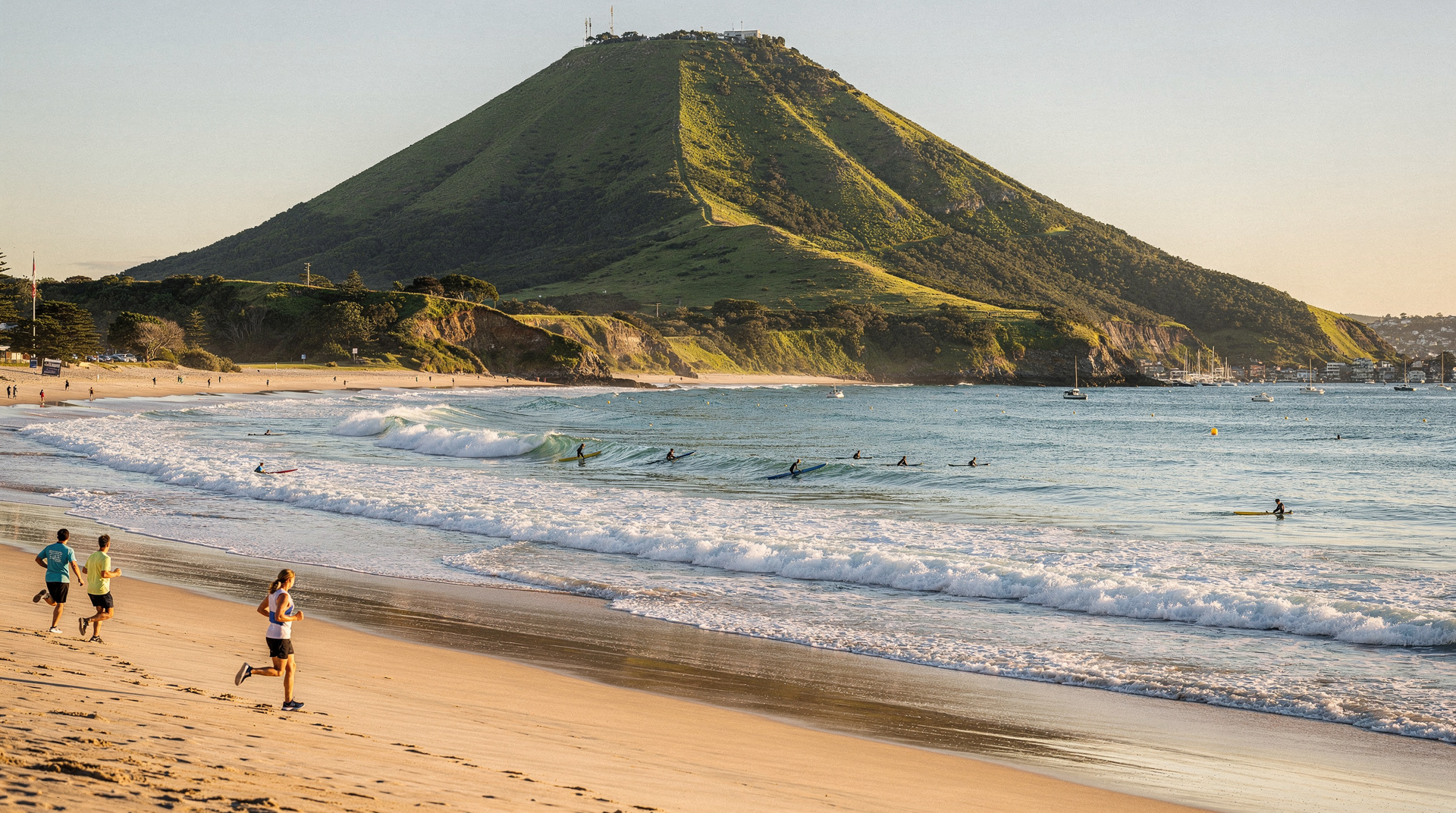
Mount Maunganui — known locally as The Mount — is a beach town at the base of Mauao, a 232-metre volcanic cone that rises from the narrow peninsula separating Tauranga Harbour from the Pacific. The town’s reputation rests on its long, surf-friendly Main Beach, its relaxed summer atmosphere, and the Mauao base track and summit walk that gives extraordinary views over the Bay of Plenty. It’s the kind of New Zealand beach town that locals love and international visitors discover only if they happen to be passing through. For visitors with time between Rotorua and Auckland (or Rotorua and Wellington), it’s an excellent half-day to full-day addition.
What makes The Mount worth a stop
Mount Maunganui is one of those places that New Zealanders regard as a holiday destination and visitors from elsewhere treat as a pleasant add-on rather than a destination. Both are correct. The town is genuinely attractive: the beach is long (4 km), consistently good for swimming in summer, and backed by the volcanic cone that gives the place its character.
Mauao (the Maori name, meaning “caught by the dawn light”) is the defining feature. The base track circles the entire cone in 45 minutes — a flat, paved path popular with locals year-round. The summit track takes 1–1.5 hours from the base and rewards with panoramic views over Tauranga, the Bay of Plenty coastline, and on clear days toward White Island (Whakaari) in the distance.
The town itself has good cafes, surf shops, and a cluster of bars and restaurants along Pacific Avenue and Maunganui Road. It’s a beach-town economy: summer is vibrant and sometimes crowded; winter is quiet and peaceful.
For cruise ship passengers: Tauranga is a major port for Pacific cruise ships, and The Mount (7 km from Tauranga Harbour) is a popular shore excursion destination. The proximity to Hobbiton (1 hour) and Rotorua (1 hour) makes the Bay of Plenty an efficient excursion hub.
What to do at Mount Maunganui
Mauao summit walk: The most rewarding activity in the area. The summit track branches off the base track and climbs through native bush to the trig point at 232 metres. The views extend over Tauranga Harbour, the coastal strip south toward Papamoa, and on clear days the full arc of the Bay of Plenty toward Cape Runaway. Allow 1.5–2 hours return. Free. Start early to beat summer crowds.
For the audio-guided version of the walk, the Mount Maunganui self-guided audio tour provides historical and cultural context as you walk. NZD 12–18 / USD 7–11 / EUR 6–10. Useful for understanding the ecological and Maori history of Mauao.
Main Beach: The 4 km stretch from the base of Mauao to Papamoa is excellent for swimming from November to March. The beach is patrolled by surf lifesavers in summer. The break is consistent enough for beginner surfing; the Mount Maunganui group beginner surf lesson is a popular option at NZD 75–95 / USD 45–57 / EUR 41–52. For private instruction, the Mount Maunganui private surf lesson gives more individual attention at NZD 120–150 / USD 72–90 / EUR 66–83.
Skydiving: The Bay of Plenty coastal view makes Mount Maunganui one of the most scenically rewarding skydive locations in New Zealand. The 12,000-foot skydive over Mount Maunganui from Tauranga is a premium experience — the coastline, volcanic cone, and harbour below make the freefall genuinely beautiful. NZD 290–359 / USD 174–215 / EUR 160–197.
Tauranga harbour cruise: The sheltered harbour adjacent to The Mount provides good sailing conditions. The Tauranga Mount Maunganui harbour sightseeing cruise covers the inner harbour and offers views of Mauao from the water. NZD 65–85 / USD 39–51 / EUR 36–47.
Mount Hot Pools: Operated by the local council, the hot pools at the base of Mauao are fed by geothermally heated water and are a genuine local institution. Outdoor pools with harbour views. NZD 19–25 / USD 11–15 / EUR 10–14. Very good value and excellent after a long hike.
Day trips from Mount Maunganui / Tauranga
Hobbiton (1 hour): Easily the most popular day trip from Tauranga for cruise ship passengers and visitors based at The Mount. The Hobbiton Movie Set shore excursion from Tauranga port is designed for cruise ship timing. See the Hobbiton guide.
Rotorua (1 hour): The geothermal parks and Maori cultural experiences at Rotorua are easily accessible from Mount Maunganui. The Rotorua geothermal valley shore excursion from Tauranga is a pre-structured option. See the Rotorua guide.
Whakatane and White Island scenic flight (1 hour to Whakatane): Note that Whakaari/White Island has been closed to land-based visits since the December 2019 eruption. Aerial views are still possible via scenic flights operating from Whakatane. The White Island scenic flight and crater tour from Tauranga is available but check current status before booking — operator availability has fluctuated significantly since 2019.
Coromandel Peninsula (1.5 hours): Cathedral Cove and Hot Water Beach are accessible from Mount Maunganui by a long day drive. The Coromandel coastal road is slow but scenic.
Getting around The Mount
The town itself is compact and walkable — Main Beach, Pacific Avenue, and Maunganui Road are all within a 15-minute walk of most accommodation. A car is not necessary for a day or two focused purely on the beach and Mauao. Free street parking is available around the base of Mauao and along Marine Parade, though it fills up in summer weekends; the paid parking building on Maunganui Road is a reliable fallback.
For day trips to Hobbiton, Rotorua, or the Coromandel, a rental car is the practical option — public transport between Tauranga/The Mount and these destinations is limited to infrequent regional buses not designed around tourist schedules. Cruise ship passengers should rely on the free shuttle between the port and Main Beach rather than attempting to arrange independent transport during a short port call.
Where to stay
Mount Maunganui has a wide range of accommodation:
Ocean Beach resort precinct: Several holiday parks and motels within a short walk of the beach, running NZD 130–220 / USD 78–132 / EUR 72–121 for good motel units. Oceanside Resort is well-regarded.
Boutique / mid-range: Trinity Wharf Tauranga (across the harbour, 10 min drive) is the most architecturally interesting accommodation option in the wider area at NZD 220–340 / USD 132–204 / EUR 121–187.
Holiday parks: Mount Maunganui Holiday Park (directly under Mauao) has powered sites from NZD 50 and cabins from NZD 120. Popular with families and campervans.
Budget: Backpacker options in Tauranga (7 km away) from NZD 35–50 / USD 21–30 / EUR 19–28.
What to eat and drink
The Mount’s café and restaurant scene is consistently good for a New Zealand beach town.
Slow Cuts — excellent coffee and breakfast on Maunganui Road.
Maketu Pies — a regional institution. The Maketu pie (from the original Maketu Pies bakery, 30 min drive east) is a Bay of Plenty staple. Stocked at most local dairies and cafes.
The Baa Bar — reliable pub meals and a good NZ craft beer selection.
Harbourside restaurant at Tauranga — for a smarter dinner, the Tauranga waterfront has better dining than The Mount proper.
Skip / worth it / splurge
- Skip: Mount Maunganui as a primary destination if you have under 10 days in New Zealand — Rotorua and Taupo are a better use of one night on a similar route
- Worth it: The Mauao summit walk — free, genuinely beautiful, and shows a different side of the Bay of Plenty than the tourist centres
- Worth it: The Mount Hot Pools after hiking Mauao — the combination of exercise and thermal soaking at a very modest price
- Splurge: Skydiving over the bay — the coastal backdrop genuinely does elevate a skydive over the inland alternatives
Tauranga as a cruise ship port
Tauranga Harbour is one of New Zealand’s busiest cruise ship ports, and Mount Maunganui is the shore-excursion destination for thousands of cruise visitors each year. If you are visiting The Mount as a cruise passenger, the logistics are straightforward: the cruise terminal is at Mount Maunganui’s Port of Tauranga (adjacent to the CBD side of the harbour, 7 km from the beach and Mauao). Free shuttle buses operate between the terminal and the Main Beach area during port calls.
The Hobbiton Movie Set is the most popular excursion from Tauranga — the Hobbiton shore excursion from Tauranga port is specifically designed around cruise ship schedules, with guaranteed return to the vessel before departure. Rotorua geothermal experiences (1 hour) and White Island scenic flights (when available) are also standard excursion options. For cruise passengers with limited time, the Mauao base track (45 minutes) plus Main Beach walk plus a coffee at a Pacific Avenue café gives an authentic Mount Maunganui experience in 2 hours from the terminal.
How Mount Maunganui fits in your itinerary
Mount Maunganui fits naturally as a half-day stop between Hobbiton/Matamata and Rotorua (30 min from The Mount to Rotorua via SH29). Alternatively, it works as an overnight beach stop between Auckland and Taupo on a southbound itinerary.
For the 7-day North Island itinerary, Mount Maunganui is typically omitted in favour of more time at Rotorua and Tongariro. On a 14-day New Zealand itinerary, it can be included as a one-night beach break between Rotorua and Taupo.
The history of Mauao
The volcanic cone at Mount Maunganui is not just a scenic backdrop — it has deep significance in Maori tradition and history. Mauao (the current preferred name, meaning “caught in the morning light” or alternatively “surrounded by the sea”) is traditionally associated with a legend involving a lonely mountain who, despairing of not being named, asked the forest spirits to drag it to the sea. The spirits pulled the mountain overnight toward the ocean, but dawn caught them mid-journey — leaving Mauao precisely where it stands, permanently surrounded by water on three sides.
The summit and flanks of Mauao contain archaeological evidence of Maori settlement from approximately 500 years ago. The terracing visible on the upper slopes represents the defensive earthworks of a pa (fortified village). The base track and summit track pass through this archaeological landscape, and some of the carved rock outcrops near the summit are associated with Maori tradition.
Understanding this context transforms a walk that might otherwise be experienced purely as exercise or scenic photography into something that sits within a much longer human story.
Surfing at The Mount: conditions and learning
Mount Maunganui’s Main Beach is one of New Zealand’s most accessible learner surf breaks. The beach works best on southeast swells with light offshore winds, creating clean, gentle waves appropriate for beginners and intermediates. In summer (December to February), conditions are consistent enough that surf schools operate daily.
The break is monitored by Surf Life Saving New Zealand, with flags indicating patrolled swimming areas. The flags move according to conditions; swim and surf within the flags.
For experienced surfers, the Mount also has breaks at the northern end of the beach (near the Mauao base) that offer slightly more power on larger swells. Omanu Beach (10 minutes south) is a more powerful, less crowded break preferred by intermediate and advanced surfers.
Bay of Plenty surf culture is genuinely embedded in the local identity — this is where many of New Zealand’s top professional surfers grew up. The surf shop culture on Pacific Avenue and Maunganui Road reflects this: several good independent surf shops with knowledgeable staff who can advise on current conditions.
The Bay of Plenty wine and food scene
The Bay of Plenty is not primarily known as a wine region (that’s Hawke’s Bay to the south), but the area around Tauranga and The Mount has developed a genuine food and beverage scene built around local produce.
The region is the heart of New Zealand’s kiwifruit industry — gold and green kiwifruit orchards cover the hinterland between Tauranga and Te Puke. If visiting between May and August, you can buy fresh kiwifruit from roadside stalls at a fraction of the export price. The Kiwi360 farm visitor experience south of Tauranga (NZD 20–30 / USD 12–18 / EUR 11–17) provides context for the industry.
Avocado, citrus, and subtropical produce are grown extensively in the Bay of Plenty. Local farmers’ markets (Mount Maunganui night market in summer, Saturday Tauranga CBD market) showcase the produce quality.
Several small craft breweries operate in Tauranga and The Mount: Good George, Mount Brewing Co, and Sundowner Bar all have good tap lists featuring local beers. The Mount’s bar and restaurant strip along Pacific Avenue is the evening hub.
Waihi Beach: an easy day trip east
If you want a quieter beach experience than The Mount’s main strip, Waihi Beach (50 km east on SH2) is worth knowing about. A 9-km beach backed by a large dune system, facing the Pacific with consistent swell and minimal development. The town of Waihi Beach is small and relaxed. Good camping options.
Waihi town itself (inland, 5 km from the beach) has a historic gold mining operation — the Waihi Gold Mine is one of the largest open-pit gold and silver mines in New Zealand, and the Goldfields Heritage Experience provides tours of the historic Martha Mine workings.
Connection to the Northern Explorer scenic train
Tauranga and Mount Maunganui are accessible from Auckland by road, but not directly by the scenic train network. The Northern Explorer (Auckland to Wellington, Fridays and Sundays) runs via Hamilton, National Park, and Palmerston North — bypassing the Bay of Plenty coast. The closest the train gets is Hamilton (1.5 hours from The Mount). See the scenic trains overview guide for details.
Mount Maunganui vs Rotorua and Taupo
Travellers with limited time on a Bay of Plenty / central North Island loop often have to choose between adding a beach stop and spending more time at Rotorua or Taupo. The honest comparison: Rotorua and Taupo offer more variety of activity (geothermal parks, Maori cultural experiences, adventure sports, a lake), while Mount Maunganui offers a genuinely relaxing beach day and one of the best short summit walks in the North Island. If your itinerary already has 3+ nights around Rotorua and Taupo, a half-day or overnight stop at The Mount is a good change of pace rather than a competing priority. If time is very tight, Rotorua and Taupo are the higher-value use of a single free day.
Best time to visit month by month
| Months | Conditions | What it means for you |
|---|---|---|
| Dec–Feb | Warmest, busiest, best surf consistency | Peak beach season — book surf lessons and accommodation ahead |
| Mar–Apr | Still warm, thinning crowds | Best value shoulder window for beach and Mauao walk |
| May–Aug | Cold for swimming, quiet town | Mauao walk still excellent; beach for walking, not swimming |
| Sep–Nov | Warming up, town waking up again | Good value before peak season, fewer crowds |
Frequently asked questions about Mount Maunganui
Is Mount Maunganui the same as Tauranga?
They are separate but adjacent. Tauranga is the city on the western side of the harbour; Mount Maunganui is the beach town on the peninsula to the east, connected to Tauranga by the Harbour Bridge (10-minute drive). They share the same airport (Tauranga Airport). Most visitor activities at The Mount are distinct from Tauranga, though the harbour and marina are shared.
Is Main Beach suitable for families?
Yes — the 4 km stretch is shallow at the shore, patrolled in summer, and the consistent gentle waves are ideal for children learning to swim. Facilities include changing rooms, showers, and excellent cafes within walking distance.
Is the Mauao summit walk suitable for all fitness levels?
The base track (flat, paved, 45 minutes) is suitable for all abilities. The summit track is steeper and involves some rough terrain — suitable for most reasonably fit adults and children over 8. Good shoes are helpful; the path is not technical.
What is the difference between Mount Maunganui beach and Papamoa beach?
Papamoa (beginning about 5 km south of the Mauao base) is an extension of the same long sand beach but without the town infrastructure and surf scene of The Mount. Papamoa is residential and quieter, preferred by families who want a more local feel. Surf conditions are similar. If you’re specifically seeking the café/restaurant/bar strip, stay at The Mount; for a quieter beach experience with self-catering, Papamoa has holiday parks and good accommodation.
When is the best time of year to visit Mount Maunganui?
November through March is the main beach season — warm water, consistent surf, and the full range of water sports and beach activities available. January and February are busiest and most expensive. April and May are excellent shoulder months: warm enough for outdoor activities, less crowded, lower accommodation prices. June through August is quiet and can be cold; the beach is still beautiful but swimming is for the determined. September and October see the town waking up again and offer good value before peak season.
What is Whakaari/White Island and can I visit it?
Whakaari/White Island is an active volcanic island 48 km offshore. It was open to commercial tours until the 9 December 2019 eruption, which killed 22 people. Land-based tours to the island remain suspended pending legal proceedings and safety reassessment. Aerial scenic flights over the island are available from Whakatane — check current operator status before booking.
Is Mount Maunganui worth visiting if I’m already going to Rotorua?
Yes, as a half-day or overnight add-on rather than a competing multi-night stop. The two are only an hour apart, so pairing a morning Mauao walk or beach swim with an afternoon drive to Rotorua’s geothermal parks is an efficient way to see both without sacrificing time at either.
How busy does Mount Maunganui get during summer?
Very busy in January, particularly around New Year and school holidays — Main Beach, the town’s cafes, and accommodation all fill up. December and February are busy but more manageable. If you want the beach-town atmosphere without the peak crowds, aim for late November or March.
Top experiences: mount maunganui New Zealand
See all →Related guides
Bay of Plenty
Bay of Plenty region guide: Tauranga, Mount Maunganui surf, Whakatane, Whakaari/White Island eruption facts. Real NZD/USD/EUR costs, honest verdicts.
Taupo
Honest Taupo guide: Huka Falls jet boat, tandem skydive, Lake Taupo Maori rock carvings, Tongariro access, real prices NZD/USD/EUR.
Rotorua
Honest Rotorua guide: Te Puia, Wai-O-Tapu, Polynesian Spa, Maori hangi, real prices NZD/USD/EUR, tourist traps to avoid, and best 2 days.
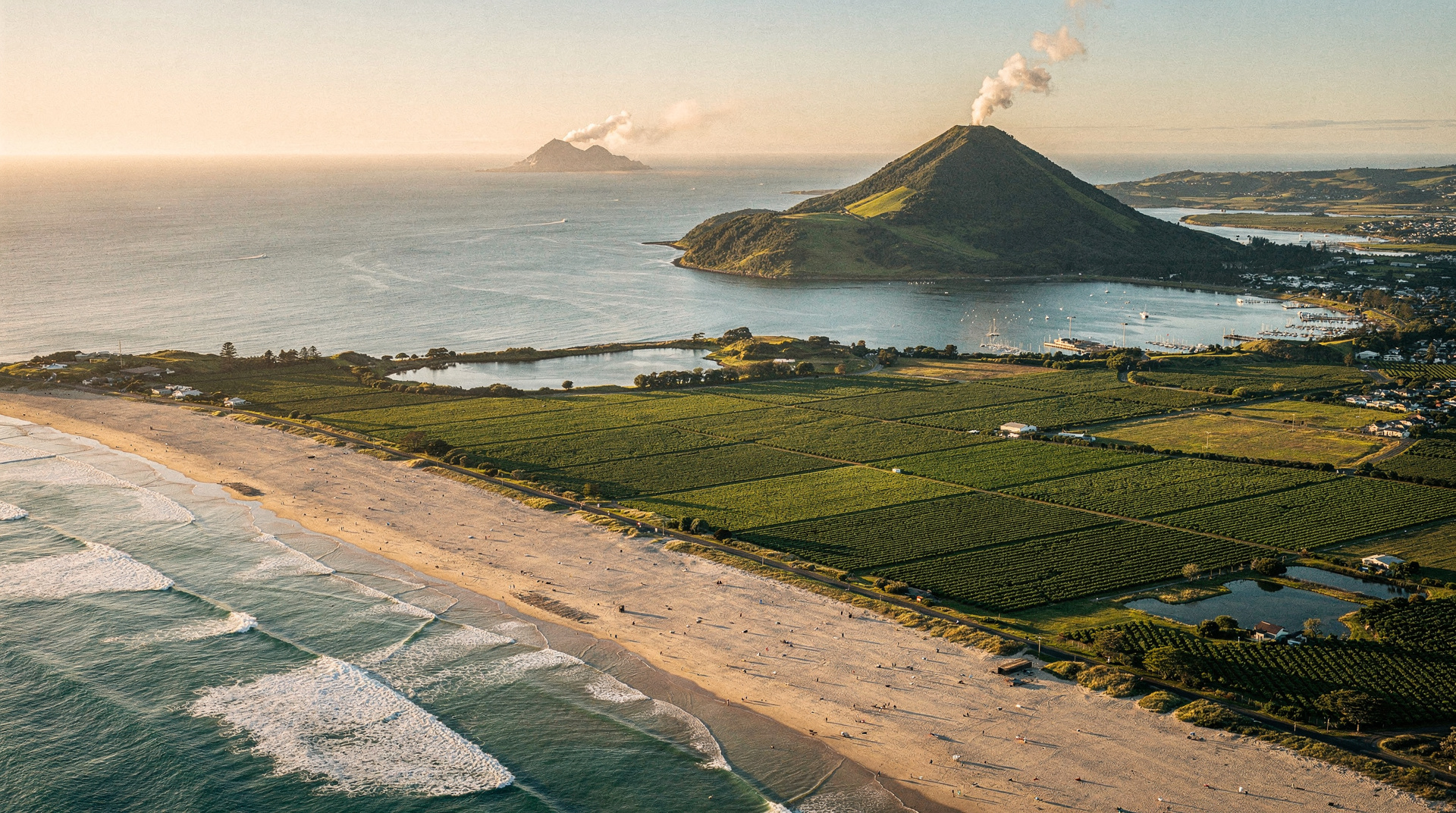
Bay of Plenty travel guide — Tauranga, Mount Maunganui, Whakatane
Bay of Plenty honest planner: best beaches, Whakaari context, White Island alternatives, where to base yourself, real costs NZD/USD/EUR.
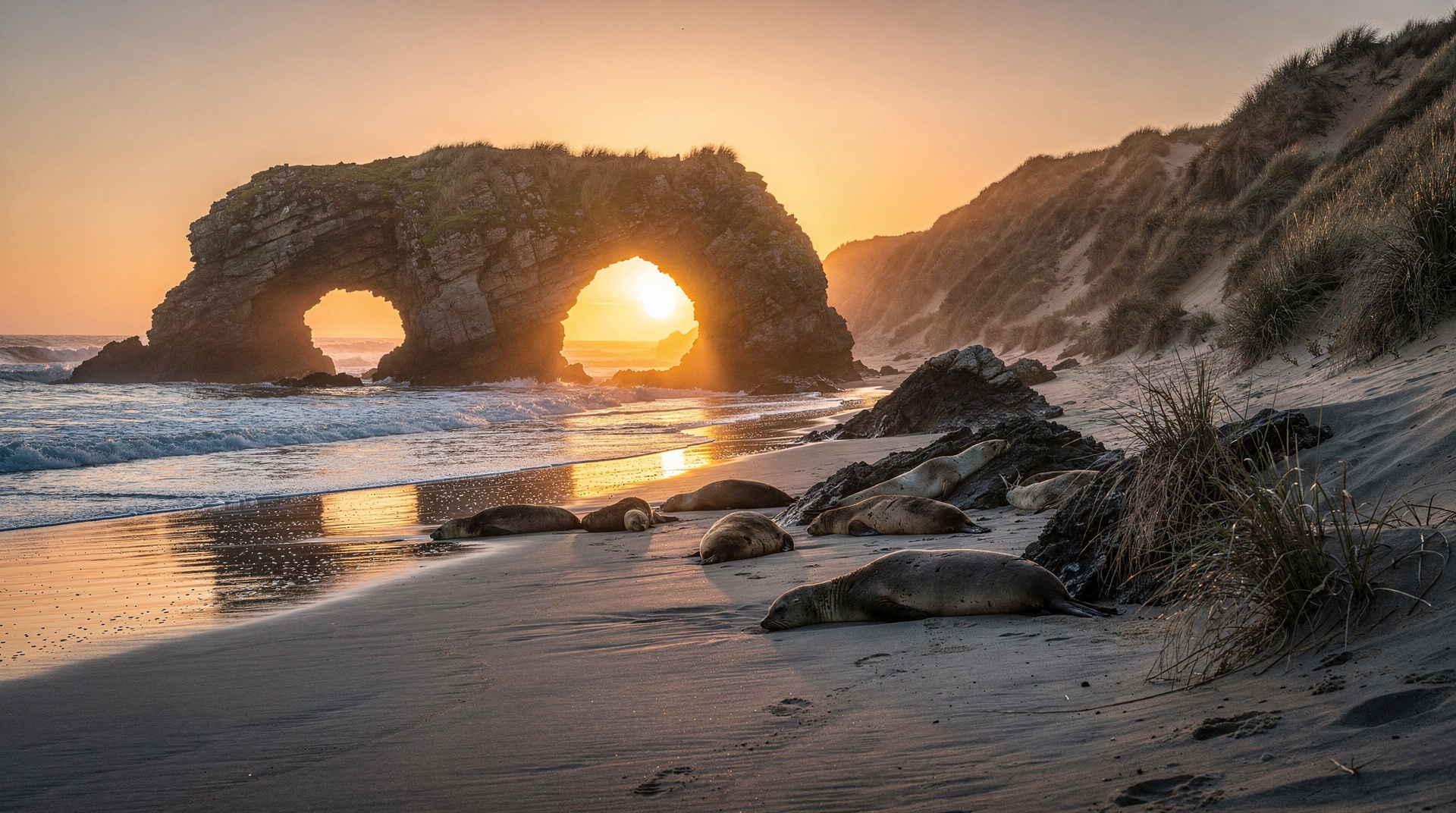
New Zealand beaches guide — best coastal experiences by region
Honest guide to NZ's best beaches: Cathedral Cove, 90 Mile Beach, Piha, Hot Water Beach, Wharariki, Karekare. Best by region, real swim safety info.
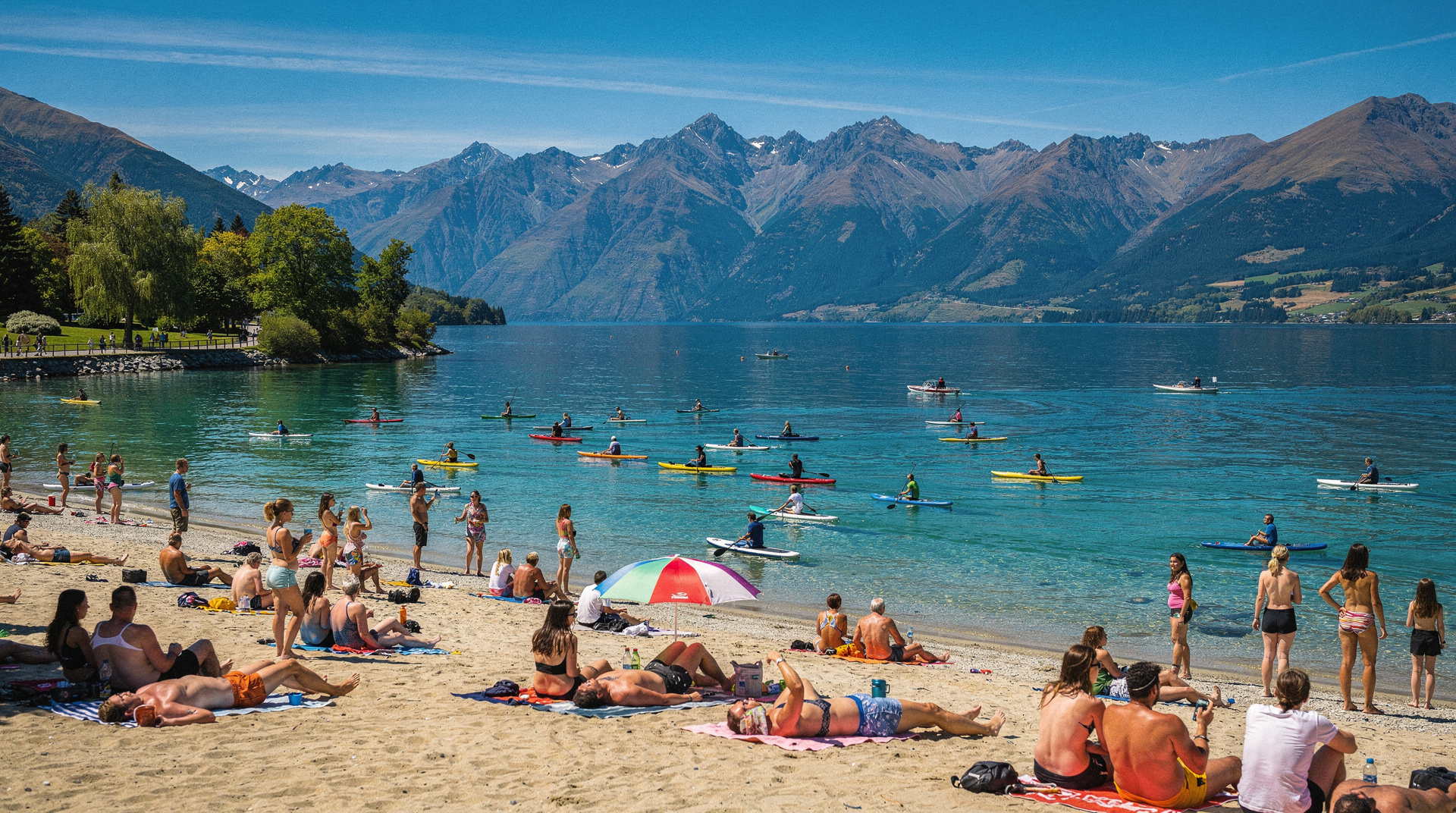
New Zealand in February
February is NZ's best month: warm summer, post-holiday crowds thinning, wine harvest starting. Real prices in NZD/USD/EUR and what to book ahead.
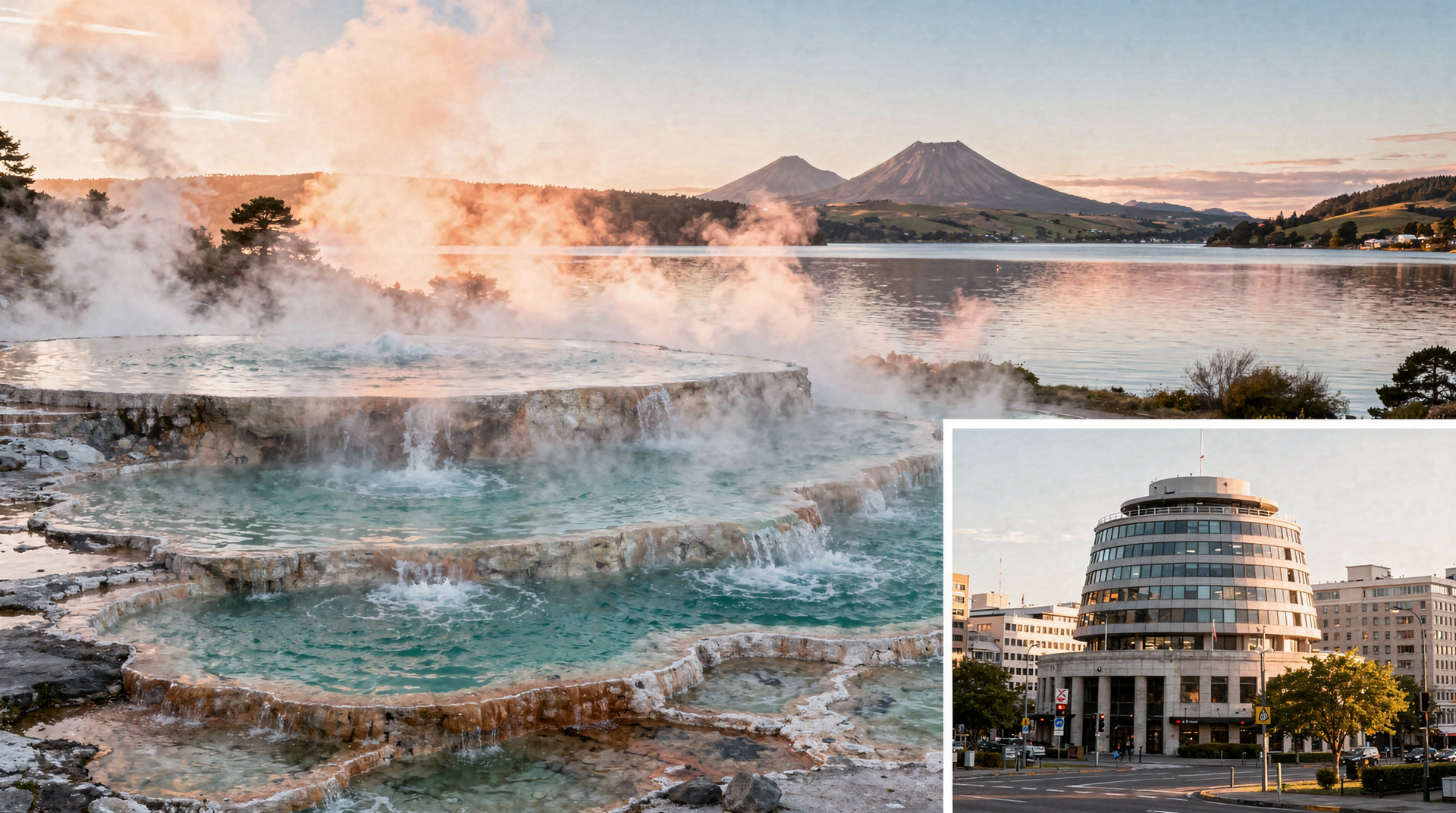
7-day North Island itinerary — the essential highlights
Auckland → Bay of Islands → Hobbiton → Waitomo → Rotorua → Taupo → Tongariro → Wellington. 7 days, both car and costs covered honestly.
Summer 2025-26 in New Zealand — what the season revealed
The New Zealand summer 2025-26 brought record visitors, infrastructure pressure, and a few surprises. A seasonal debrief for trip planners.
Last reviewed: