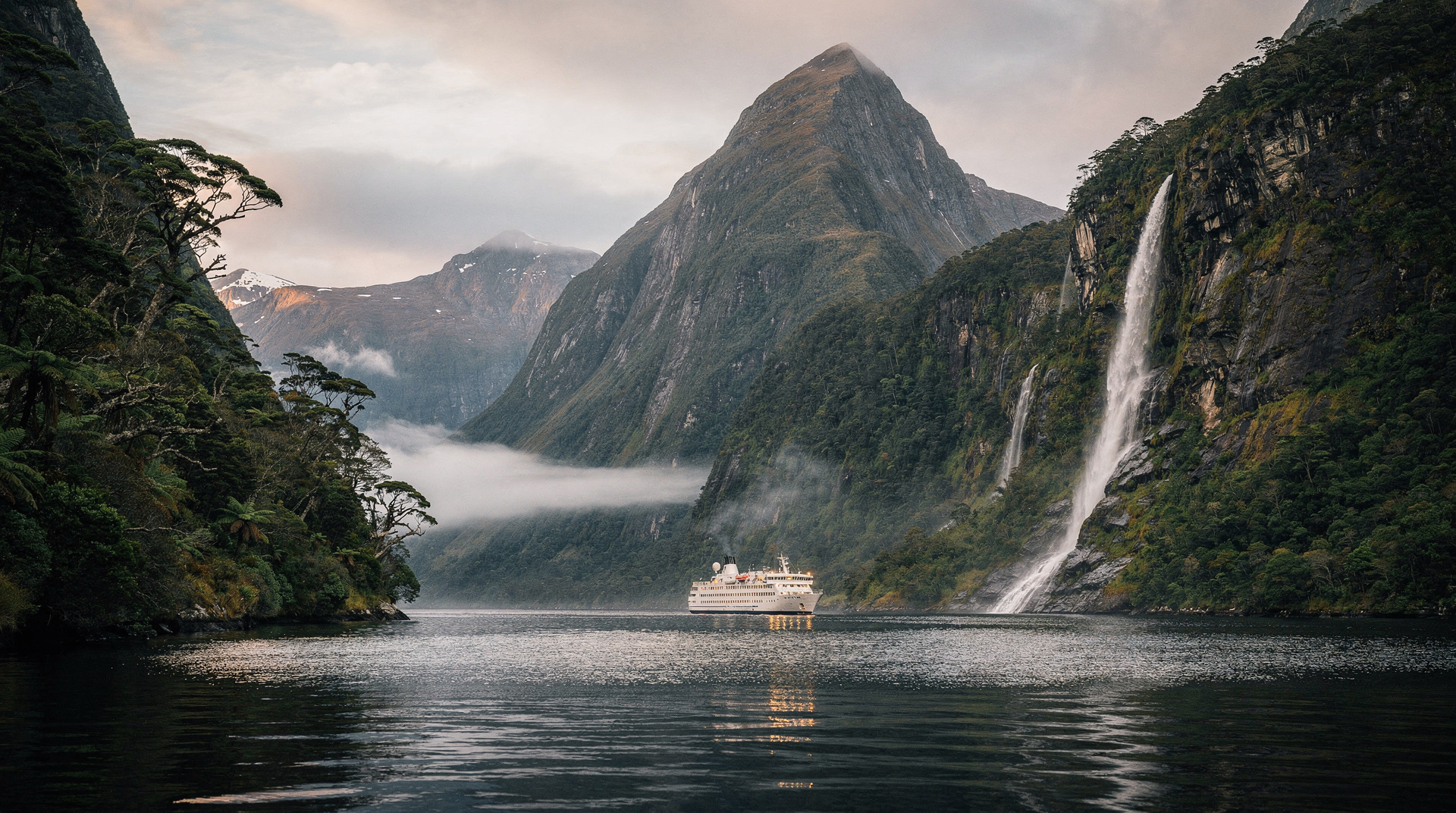
Milford Sound
Everything honest about Milford Sound: best cruises, scenic flights, real NZD/USD/EUR prices, and why you should stay in Te Anau first.
Quick facts
- UNESCO status
- Fiordland National Park World Heritage Area since 1986
- Annual rainfall
- 7–8 metres — among the wettest places on earth
- Drive from Te Anau
- 2 hours (120 km, allow 2.5–3 hours with photo stops)
- Drive from Queenstown
- 4 hours (290 km, allow 4.5 hours with stops)
- Currency
- NZD — 1 NZD ≈ USD 0.60 / EUR 0.55
Milford Sound — is it really worth the effort?
Yes. That’s the honest answer, and it comes with full acknowledgment that Milford Sound is one of the most visited, most photographed, most commercially packaged destinations in New Zealand. The fiord genuinely earns its reputation. Mitre Peak rising 1,692m straight from the water, waterfalls feeding directly from cliff faces, fur seals hauled out on rocks at the entrance, dolphins in the deeper channels — the scale and drama are real, not a construction of marketing.
| Where | Fiordland National Park, South Island |
| Time needed | 1 full day; 2 days if basing in Te Anau overnight |
| Cost | Around NZD 75–225 / USD 45–135 / EUR 41–124 for cruise or kayak |
| Getting there | Self-drive from Te Anau (2 hrs) or day tour from Queenstown (4 hrs) |
| Best time | October to April; rain is year-round and part of the experience |
The question is not whether it’s worth going. It’s how to go.
The worst version of a Milford Sound trip: a 6am bus departure from Queenstown, 4 hours of road, a 2-hour cruise on a boat with 300 other people, another 4 hours back, arriving at your hotel at 9pm exhausted. This is also the most commonly sold version. The Milford Road (SH94) is genuinely spectacular — you’re driving through one of the most scenically dense national park roads in the world — but the day-trip grind dilutes it.
The better version: base yourself in Te Anau the night before. Drive to Milford Sound in the morning (2 hours, plus stops), take a morning cruise before the day-trip buses arrive, kayak the afternoon, stay overnight on a cruise vessel if budget allows, or drive back to Te Anau and continue south the next day.
Popular experiences here
The Milford Road — what to stop for
The road from Te Anau to Milford Sound is 120 km and takes 2 hours without stops. Allow 2.5–3 hours with stops.
Key stops: the Mirror Lakes (30 km from Te Anau) on a calm morning reflect the Earl Mountains perfectly and take 15 minutes. The Avenue of the Disappearing Mountain (the mountain appears to shrink as you approach — optical illusion caused by a nearer ridge). Lake Gunn and the Cascade Creek campsite are beautiful for a short forest walk. Homer Tunnel (admission controlled by traffic lights — allow up to 15 minutes waiting) — a 1.3 km tunnel through the Darran Mountains, opened 1954 and barely wide enough for two cars. The Cleddau Valley beyond the tunnel is dramatic.
Avalanche and rock fall warning: the Milford Road closes in winter (particularly July–August) after heavy snowfall and avalanche conditions. Check NZTA road conditions before departing November–September. The road also floods occasionally in extreme rain events — not rare given 7–8 metres of annual rainfall.
Cruise options — what to actually book
The cruise is the main event at Milford Sound. It runs the full length of the fiord (15 km each way, from the Milford terminal to the Tasman Sea opening) and takes 1.5–2 hours on a standard boat or up to 3 hours on a nature-focused vessel.
Nature cruise on a catamaran — the standard option. The Milford Sound nature cruise by catamaran covers the full fiord with commentary, wildlife viewing, and views of Mitre Peak, Stirling Falls, and Bowen Falls. Book in advance in summer — boats fill completely.
Milford Sound: Nature Cruise on a Modern Catamaran
Full fiord cruise covering Mitre Peak, Stirling Falls, fur seals and Bowen Falls — the classic Milford Sound experience
From NZD 85–115 / USD 51–69 / EUR 47–63
Grand views cruise — the grand views cruise uses a larger vessel with better deck access. Similar route, slightly more seating and a café on board. NZD 90–120 / USD 54–72 / EUR 50–66.
Small boat cruise — the 2-hour small-boat cruise takes a maximum of 14 passengers, goes closer to waterfalls and wildlife, and includes a more personalised commentary. NZD 135–155 / USD 81–93 / EUR 74–85. Worth the premium if you want an intimate rather than mass-tourism experience.
Overnight cruise — the overnight cruise with water activities departs in the afternoon, anchors overnight deep in the fiord (often near Anita Bay), includes kayaking, snorkeling, and a guided walk. The fiord at night — in complete silence, with no other boats — is a completely different experience from the day-trip crowds. This is the best way to experience Milford Sound. Book 3–6 months ahead in summer.
Milford Sound: Overnight Cruise with Water Activities
Anchor overnight in Milford Sound with kayaking, snorkelling, and guided walk — the only way to experience the fiord without crowds
From NZD 395–485 / USD 237–291 / EUR 217–267
Wildlife and nature cruise — for travelers whose priority is the natural history rather than the scenery alone, the Milford Sound wildlife and nature cruise structures the commentary specifically around marine wildlife encounters — fur seals, Fiordland crested penguins, bottlenose dolphins, and the ecology of the fiord. The pace is deliberately slower than the standard catamaran, with more time at wildlife sites. Good complement to, or substitute for, the standard cruise.
Cruise with underwater observatory and lunch — the cruise with underwater observatory and lunch includes the Harrison Cove Underwater Observatory, a floating platform 10m below the surface where you watch black coral, sea urchins, and fish in the dark fiord water (unusual species thrive here because the layer of fresh rainwater on top blocks UV and simulates deep-water conditions). NZD 145–165 / USD 87–99 / EUR 80–91.
Kayaking Milford Sound
Kayaking from the shore of the fiord under the cliffs and past the waterfalls is a genuinely spectacular experience and completely different from the cruise. The Milford Sound kayak tour departs early morning (before most cruise boats) and paddles to Anita Bay at the mouth of the fiord. 3–4 hours on the water. Guides are experienced and safety equipment is provided; no prior kayaking experience needed. This is the best morning activity at Milford — do the cruise in the afternoon.
Milford Sound: Kayak Tour
Morning kayak to Anita Bay before cruise boats arrive — no experience needed, guides and equipment provided
From NZD 149–175 / USD 89–105 / EUR 82–96
The cruise and kayak combo combines both in a full day, NZD 185–225 / USD 111–135 / EUR 102–124.
Scenic flights to and from Milford Sound
Flying to Milford Sound from Queenstown or Te Anau is expensive but transforms the experience. The flight covers the Southern Alps, Darran Mountains, and the full fiord system from above before landing at Milford.
A one-way scenic flight to Milford Sound from Te Anau costs approximately NZD 225–285 / USD 135–171 / EUR 124–157. Return scenic flight from Queenstown via the fiords: NZD 550–750 / USD 330–450 / EUR 303–413.
The flight-cruise-flight combination from Queenstown is the premium version: fly over the alps, cruise the fiord, fly back. Budget NZD 750–1,100 / USD 450–660 / EUR 413–605. Expensive and weather-dependent, but the most complete way to see Milford Sound.
Weather — rain is not a reason to cancel
Milford Sound receives 7–8 metres of rain annually. It rains, on average, 182 days per year. This is not a reason to cancel your cruise. The waterfalls are at their most spectacular during and immediately after rain — dozens of temporary falls appear down every cliff face. The light is different (softer, more dramatic) in overcast conditions. Sunny clear days are excellent too, but the fiord does not require sunshine to be exceptional.
What rain does affect: helicopter tours and scenic flights (minimum visibility required). If you’ve booked a scenic flight to Milford Sound and it’s a heavy rain day, the flight may not operate. Ground-level activities — cruises and kayaking — generally run in all conditions.
Getting to Milford Sound
Self-drive from Te Anau: the best option. The 120 km Milford Road (SH94) is sealed end-to-end, well-maintained outside winter, and spectacularly scenic. Rental cars are permitted on this road. Fill up with petrol in Te Anau — there is no petrol in Milford Sound. Allow 2.5–3 hours for the drive each way.
Bus from Te Anau: daily coach services connect Te Anau to Milford Sound, timed to connect with cruises. Return bus + cruise packages from Te Anau typically cost NZD 140–185 / USD 84–111 / EUR 77–102.
Day trip from Queenstown: bus-cruise-bus packages cost NZD 165–220 / USD 99–132 / EUR 91–121. The round trip from Queenstown by road is 8–9 hours of driving. Not recommended if you have a choice. See the day trips from Queenstown guide for alternatives.
Scenic flight from Queenstown: see above. Best for those with tight itineraries and the budget to match.
Where to stay near Milford Sound
In Milford Sound itself: Milford Sound Lodge is the only accommodation within the national park, and it’s excellent for the overnight experience. Chalets and lodge rooms from NZD 185–380 / USD 111–228 / EUR 102–209. Book many months ahead. The lodge runs its own overnight cruise program.
Te Anau (base town, 120 km away): Te Anau has a full range of accommodation and is the better base if you’re spending multiple days in Fiordland. See the Te Anau guide for specifics.
DOC camping: basic DOC campsites exist along the Milford Road (Cascade Creek, Henry). No facilities except toilets. Permit required; book via DOC.
Milford Sound with children
Milford Sound works well for families, with a few adjustments. The standard cruise (1.5–2 hours) is comfortable for most children, with open decks, indoor seating, and enough visual drama (waterfalls, seals, the sheer face of Mitre Peak) to hold attention without needing much explanation. The overnight cruise is a memorable option for older children who can handle a full day of travel plus an evening on the water, but it’s a long day for younger kids — the standard daytime cruise is the better family choice.
The Milford Road itself, while spectacular, involves a lot of car time (2–2.5 hours each way from Te Anau) with genuine hairpin sections near the Homer Tunnel. Frequent stops at Mirror Lakes and Cascade Creek break up the drive and give children a chance to move around. Kayaking is better suited to teenagers and confident swimmers than young children, given the cold water and the need to follow guide instructions closely.
Facilities, phone signal and practical logistics
The Milford Sound terminal has toilets, a small café (airport-level prices, mediocre food — eat before you arrive), and a gift shop, but essentially no other services. There is no petrol station, no supermarket, and no ATM at Milford Sound itself — everything must be sorted in Te Anau. Fill the tank, withdraw cash if you’ll need it, and buy any snacks or picnic supplies before making the drive.
Phone signal along the Milford Road is patchy to non-existent for most of the 120 km stretch, improving only near the terminal itself. Download offline maps before leaving Te Anau, and don’t rely on being reachable during the drive. Toilets are available at several of the named stops (Mirror Lakes, Cascade Creek), which is worth knowing if travelling with children.
Parking at the Milford Sound terminal fills quickly in peak season (December–February), particularly between 10am and 2pm when the bus tours converge. Arriving before 9am or after 3pm generally means an easier parking experience alongside a quieter cruise.
Skip / Worth it / Splurge
✕ Skip : The glass-bottomed boat if you’ve already done the underwater observatory — repetitive. The Milford Sound airport café has airport-level prices and mediocre food; eat before you come or bring your own.
✓ Worth it : Morning kayak before the cruise boats arrive. The small-boat cruise if the standard catamaran feels too crowded. The Milford Road itself — stop often, especially at Homer Tunnel and the Mirror Lakes.
★ Splurge : The overnight cruise (NZD 395–485 / USD 237–291 / EUR 217–267) gives you the fiord in the evening and early morning with no other vessels nearby. If Milford Sound is a bucket-list experience for you, this is how to do it properly.
Cost breakdown
Milford Sound cruise and activity costs
| Item | NZD | USD | EUR | Verdict |
|---|---|---|---|---|
| Standard catamaran cruise (1.5–2 hrs) Same fiord as premium — budget option is fine | 75–115 | 45–69 | 41–63 | ✓ Worth it |
| Grand views cruise (larger vessel) Better deck access and café on board | 90–120 | 54–72 | 50–66 | ✓ Worth it |
| Small-boat cruise (max 14 pax) Worth the premium for an intimate experience | 135–155 | 81–93 | 74–85 | ✓ Worth it |
| Morning kayak tour Best before bus tours arrive — do this first | 149–175 | 89–105 | 82–96 | ✓ Worth it |
| Cruise + kayak combo Full day, best value for combined experience | 185–225 | 111–135 | 102–124 | ✓ Worth it |
| Cruise with underwater observatory + lunch Black coral at 10m — genuinely unusual | 145–165 | 87–99 | 80–91 | ✓ Worth it |
| Overnight cruise with water activities The correct way to experience Milford Sound | 395–485 | 237–291 | 217–267 | ★ Splurge |
| One-way scenic flight (from Te Anau) Transforms the experience; weather-dependent | 225–285 | 135–171 | 124–157 | ★ Splurge |
How Milford Sound fits into your itinerary
For a 7-day South Island itinerary, Milford Sound is typically day 6 or 7, approached from Te Anau after Queenstown. For a 14-day New Zealand itinerary, it fits naturally as a 2-night Fiordland segment (one night in Te Anau, one night at Milford Sound Lodge or an overnight cruise).
If choosing between Milford Sound and Doubtful Sound: Milford is more dramatic and accessible; Doubtful is quieter and takes longer to reach. Both are in Fiordland National Park and both are stunning. Milford wins for a single-day visit; Doubtful wins for those wanting to escape crowds. The Milford vs Doubtful comparison covers this in detail.
Milford Sound by month
| Months | Conditions | What it means for you |
|---|---|---|
| Dec–Feb | Warmest, busiest, most bus tours | Book cruises well ahead; go early morning to beat crowds |
| Mar–May | Cooler, thinning crowds, still good access | Strong shoulder window — good value, fewer buses |
| Jun–Aug | Coldest, highest avalanche risk on Milford Road | Road can close after snowfall; check NZTA conditions before departing |
| Sep–Nov | Improving access, waterfalls still full from winter melt | Good spring light, road conditions improving |
Frequently asked questions about Milford Sound
Is Milford Sound worth it if it’s raining?
Yes. The waterfalls are more impressive in rain and the fiord doesn’t require clear skies. Only cancel if there’s a severe weather warning or your cruise operator contacts you. Scenic flights may be affected by visibility, but ground-level activities run in all conditions.
How far is Milford Sound from Queenstown?
By road: 290 km, 4 hours without stops (allow 4.5–5 hours). Most visitors travel via Te Anau (170 km from Queenstown, 2 hours), then take the Milford Road (120 km, 2 hours). A same-day round trip from Queenstown is 8–9 hours of driving.
Can you kayak in Milford Sound as a beginner?
Yes. The guided kayak tours are suitable for beginners with no prior experience. The fiord is calm at its head (where kayaking takes place) even in moderate rain. The guides provide all safety briefing, equipment, and support.
What is Milford Sound actually called in te reo Maori?
Piopiotahi — named after the piopio bird (now extinct), which was said to have flown here after the legendary hero Maui was killed by Hine-nui-te-po. The name “Milford Sound” was given by European sealers in the early 19th century; it’s technically a fiord, not a sound (a fiord was carved by a glacier; a sound by a river).
Is it possible to walk the Milford Track?
Yes, but the Milford Track is a 4-day/53.5 km Great Walk requiring DOC hut bookings well in advance (typically 6 months ahead for the peak season, November–April). It’s one of the most popular and most rewarding multi-day hikes in New Zealand. See the Milford Track guide for booking details and preparation.
Is the Milford Road open year-round?
Not guaranteed. The road closes temporarily, particularly in July–August, after heavy snowfall or when avalanche risk is high — checked and managed by NZTA with controlled openings once conditions clear. Outside winter it’s rarely an issue. Always check current road status before departing Te Anau in the colder months.
Should I base myself in Te Anau or Queenstown for a Milford Sound visit?
Te Anau — decisively. It cuts the one-way drive from 4 hours to 2, lets you catch a morning cruise before the Queenstown bus tours arrive, and removes the exhausting 8–9 hour round trip. Queenstown is a fine base for everything else in the region, but not for Milford Sound specifically.
The ecology of Milford Sound
The fiord’s dark layer of fresh rainwater on top of the saltwater creates one of the most unusual marine ecosystems in the world. Because peat-stained fresh water absorbs UV light, the low-light conditions normally found at 100–200m ocean depth exist at 10–15m in Milford Sound. This allows cold-water deep-sea species to live in shallow, accessible water: black coral (normally found at 200–400m) grows at 10–30m here; brachiopods (living fossils with a lineage back 400 million years) attach to the fiord walls; deep-sea fish species appear at snorkeling depth.
The surface freshwater layer is about 3m deep in wet periods and almost absent in dry spells. This is why the fiord looks almost black from above in overcast weather and brilliantly clear in sunshine — the light penetration through the fresh water layer varies dramatically with turbidity after heavy rain.
Fiordland crested penguins (tawaki) breed in the sea cliffs around the mouth of the fiord, including visible nest sites accessible by kayak. These penguins have a yellow crest and are one of the rarest penguin species, with the Fiordland population considered critical. Bottlenose dolphins have a resident pod in Milford Sound and frequently play in the bow waves of cruise vessels.
The Milford Sound experience without crowds
The standard day-trip experience (large catamaran, 200–300 passengers, 2 hours) is legitimately good but crowded at peak times. The window between 7:30am and 9:30am, before the Queenstown bus tours arrive, is significantly less congested. Many cruise operators offer early morning departures that take advantage of this. If you’re self-driving from Te Anau and leaving at 7am, you’ll arrive at the terminal before most tours have departed.
Kayaking also inherently sidesteps the crowds — you’re on the water at your own pace, moving away from the boat traffic toward the quieter arms of the fiord. The overnight cruise vessel anchors in protected spots away from the main commercial wharf, giving you silence and space even in the peak season window.
The single most crowd-free Milford Sound experience: a scenic flight into Milford from Te Anau or Queenstown, arriving before the road traffic, with a kayak tour booked for the morning. By the time the bus tours arrive, you’ll be on the water heading toward Anita Bay, looking back at the cruise boats from a completely different perspective.
Milford Sound in Maori tradition and history
Piopiotahi (the Maori name for Milford Sound) was an important area for the Ngai Tahu iwi, used for sourcing pounamu (greenstone/jade) from the rivers of the Fiordland interior. The rivers flowing into the fiord — particularly the Cleddau — were known pounamu sources. Maori travel into this area was seasonal and purposeful rather than permanent settlement; the fiord’s weather and remoteness made sustained habitation difficult.
The first recorded European sighting was by John Grono, a Welsh sealer, in 1812, who named the inlet after his hometown of Milford Haven in Wales. The addition of “Sound” reflects the explorers’ geographical misidentification — they assumed it was a sound (formed by river erosion) rather than a fiord (carved by a glacier).
The Milford Track, which connects the fiord to Te Anau, was described as the “finest walk in the world” by a London writer in 1908 — an endorsement that set in motion 120 years of international tramper pilgrimages. The description may have been overambitious but the track remains among the world’s best.
The sounds’ waterfalls — when and why they’re most impressive
Milford Sound’s permanent waterfalls (Stirling Falls at 155m, Bowen Falls at 162m) flow year-round from permanent snowfields and glacier melt above. After significant rain (which happens approximately 182 days annually), hundreds of additional temporary waterfalls appear — streaming directly down the vertical cliff faces from the saturated slopes above. The effect on a rainy day is dramatically different from a clear day: more water, more mist at the base of falls, a more dramatic, primordial atmosphere.
The peak waterfall spectacle is typically in the 24–48 hours after heavy rain. If you’re at Te Anau after rain and considering postponing your Milford visit for better weather, consider visiting sooner rather than later — the falls are at their best when the ground is saturated, not on the clear day that follows.
The waterfalls, wildlife, and rainforest cruise specifically focuses the commentary on the waterfall system, the forest ecology of the fiord walls, and the wildlife encounters. NZD 95–125 / USD 57–75 / EUR 52–69. Good for those with a specific interest in the natural history rather than just the scenery.
Budget vs premium at Milford Sound
The range in cruise prices at Milford Sound is significant. The cheapest standard catamaran cruise runs NZD 75–95 / USD 45–57 / EUR 41–52 (typically 1.5 hours, basic facilities, larger vessel). The most expensive daytime cruise is NZD 165–195 / USD 99–117 / EUR 91–107 (nature focus, smaller vessel, longer duration). The overnight cruise sits at NZD 395–485 / USD 237–291 / EUR 217–267.
The honest assessment: the cheapest cruise shows you the same fiord as the most expensive daytime cruise. The difference is vessel size (more intimate vs more people), duration (1.5 hours vs 2.5 hours), and the quality of commentary. If you’re on a tight budget, the standard catamaran is completely fine — you will see Mitre Peak, Stirling Falls, and the mouth of the fiord regardless of which vessel you’re on. The overnight cruise is in a different category and worth its price for a completely different experience.
Top experiences: Milford Sound
See all →Guides for Milford Sound
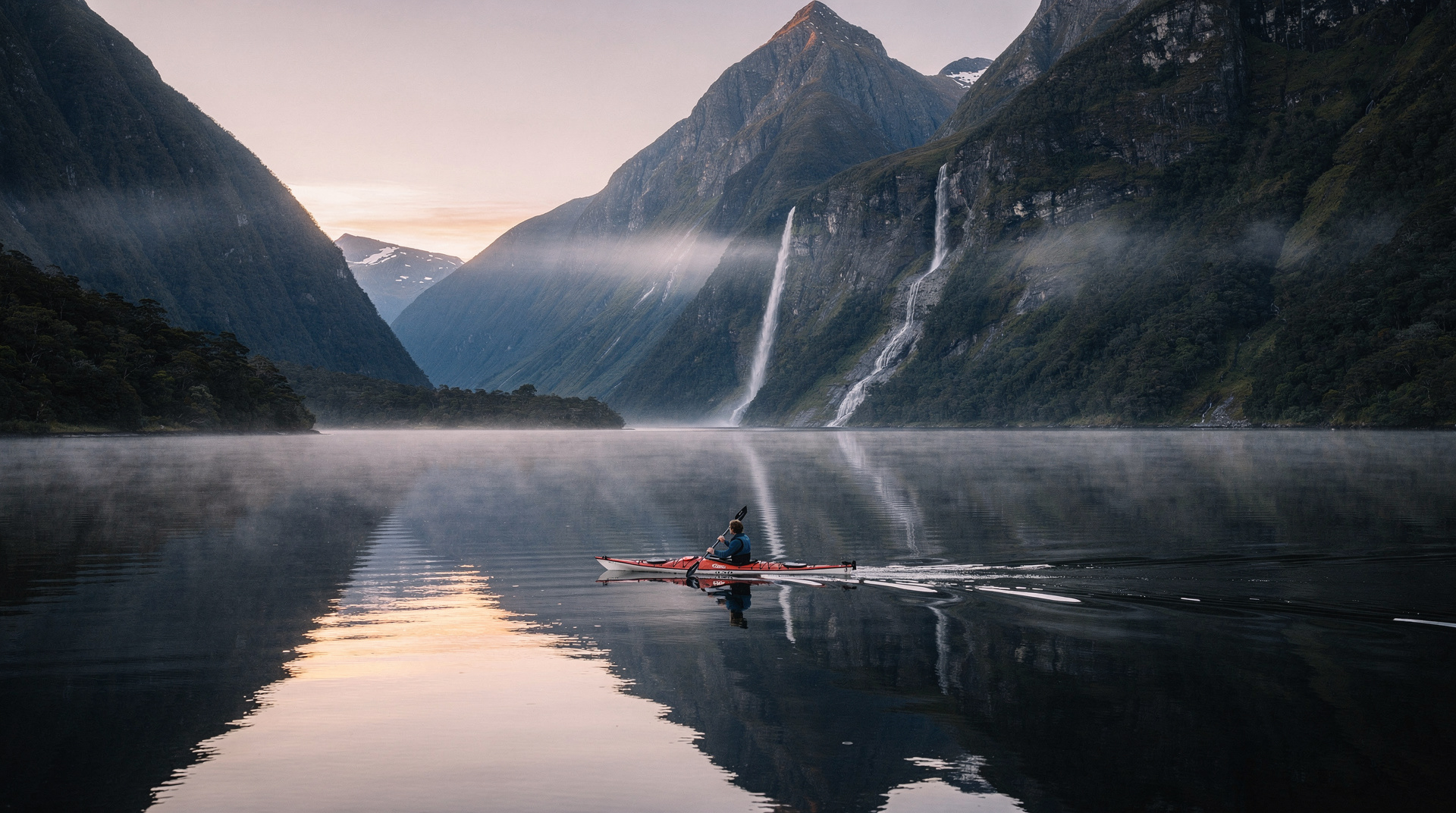
Kayaking in Milford Sound — paddling beneath the cliffs
Milford Sound kayaking guide: paddle beneath 1,692m Mitre Peak, see waterfalls and fur seals from water level. Prices NZD/USD/EUR and what to expect.
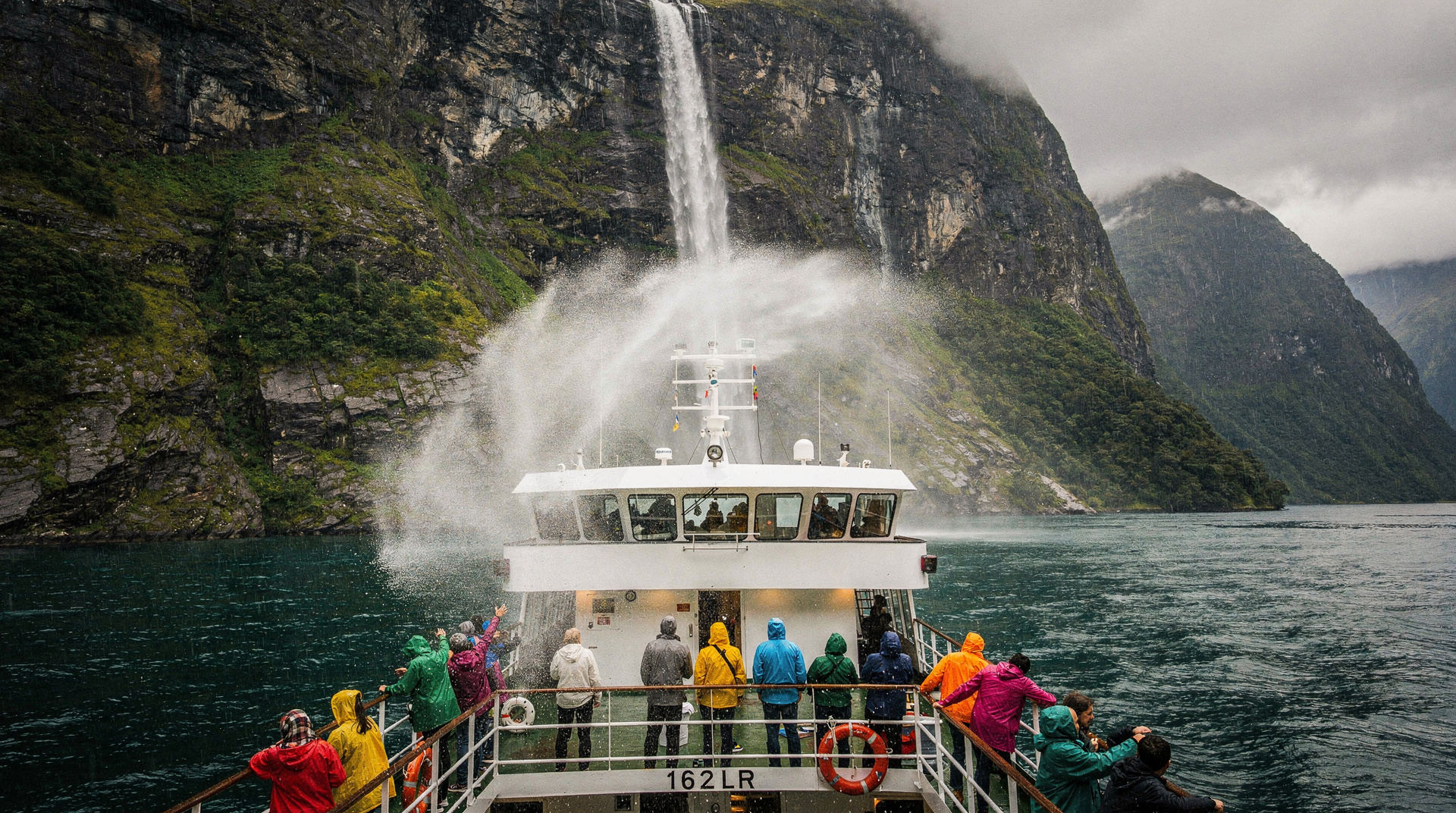
Milford Sound overnight cruise review — is it worth the premium?
Milford Sound overnight cruise review: waking on the fiord at dawn vs a day cruise. Real costs, who it's for, and whether the premium is justified.
Related guides
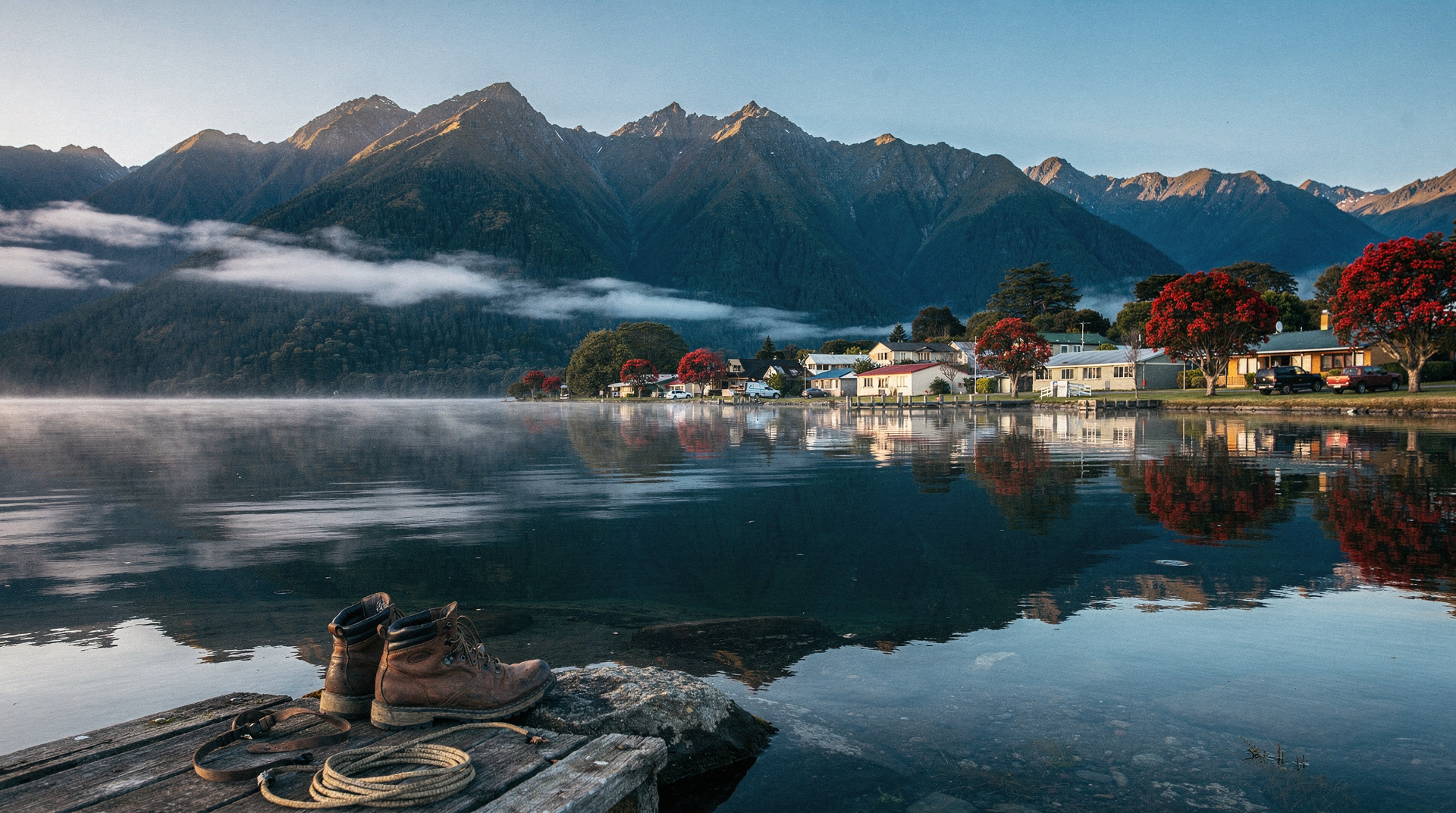
Te Anau
Everything you need to plan Te Anau: glowworm caves, Milford and Doubtful day trips, hiking, real NZD/USD/EUR prices, and where to stay.
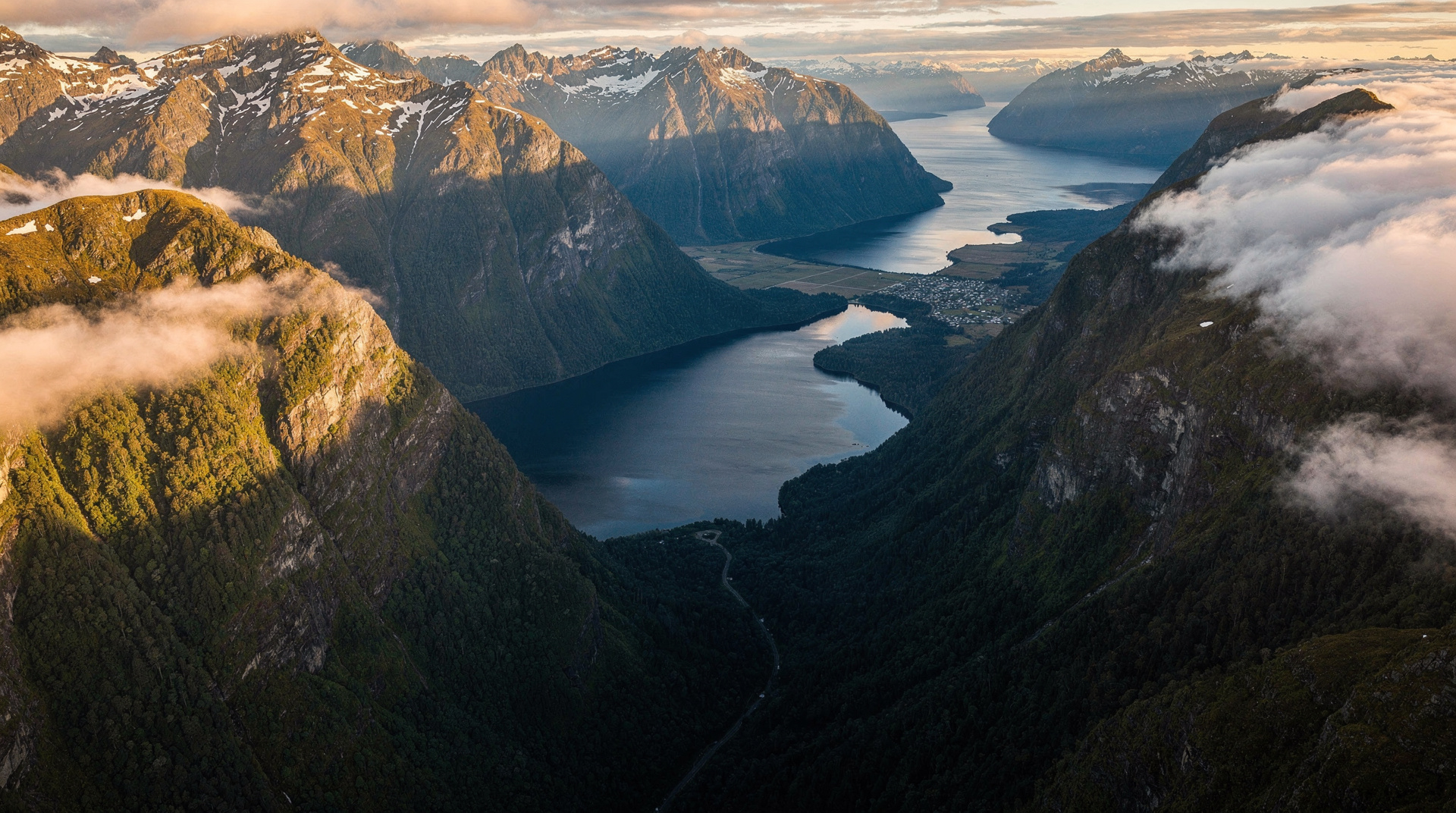
Fiordland
Honest Fiordland planner: Milford Sound vs Doubtful Sound, Te Anau base, Milford Track booking, real NZD/USD/EUR costs and what most guides won't tell you.
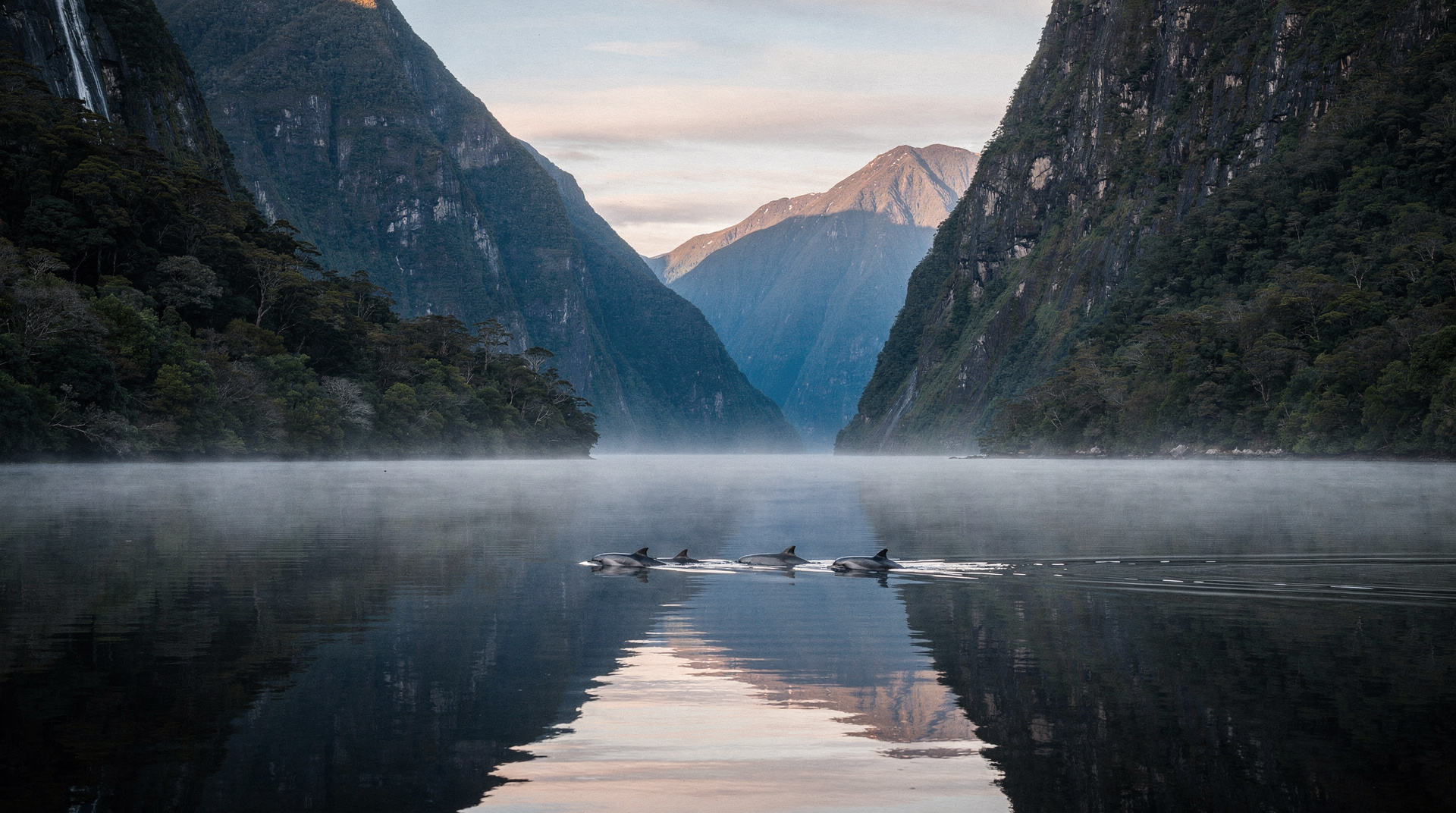
Doubtful Sound
Honest Doubtful Sound guide: how to get there, best cruises, overnight options — real NZD/USD/EUR costs and the honest Milford comparison.
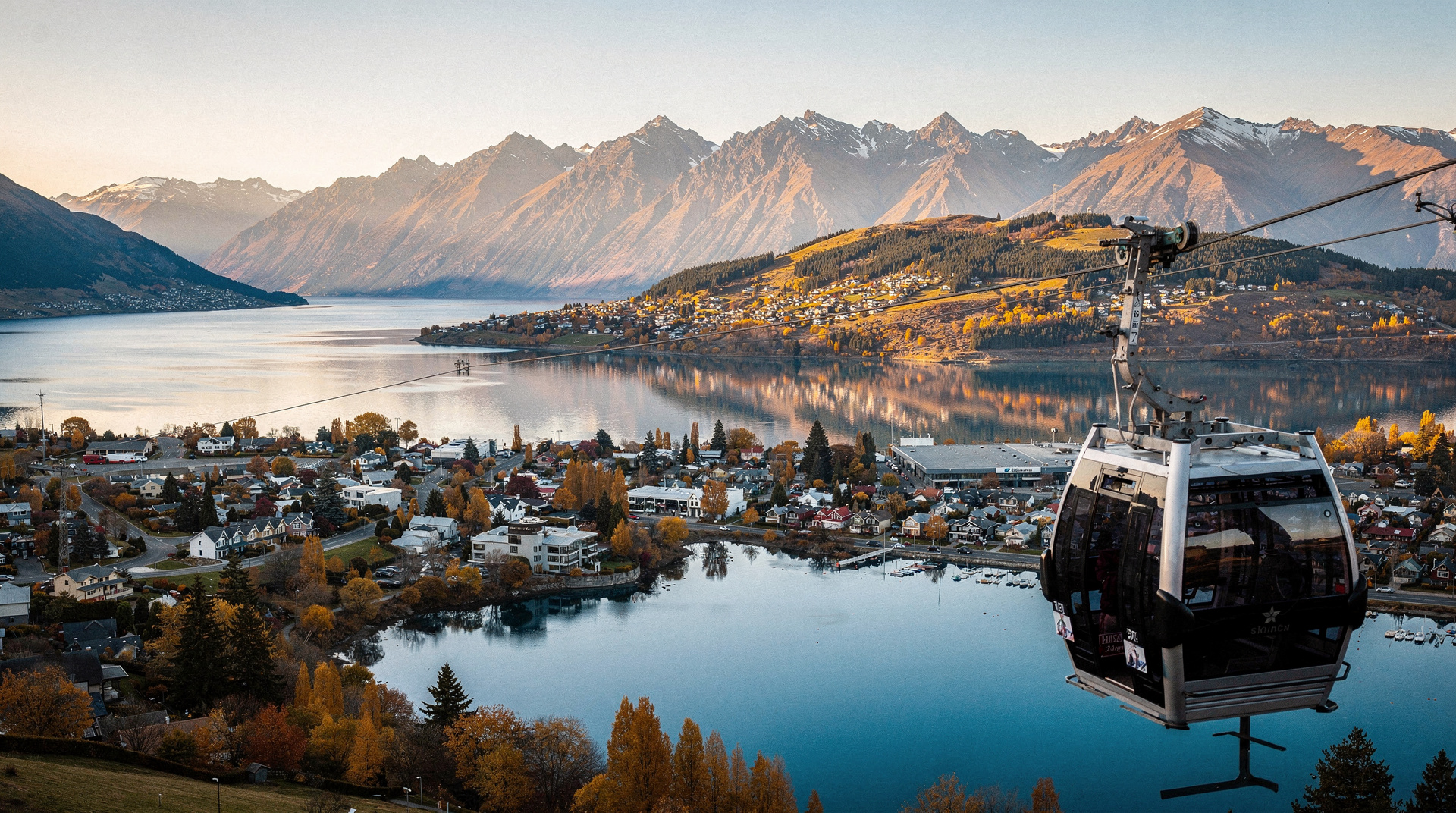
Queenstown
The honest Queenstown planner: bungy, jet boat, ski, scenic flights — real prices in NZD/USD/EUR, what to skip and what's worth your money.
Milford Sound cruise guide — how to get the most out of Piopiotahi
Milford Sound cruise guide: best operators, day vs overnight, getting there from Queenstown or Te Anau, prices NZD/USD/EUR, and honest tips for Piopiotahi.
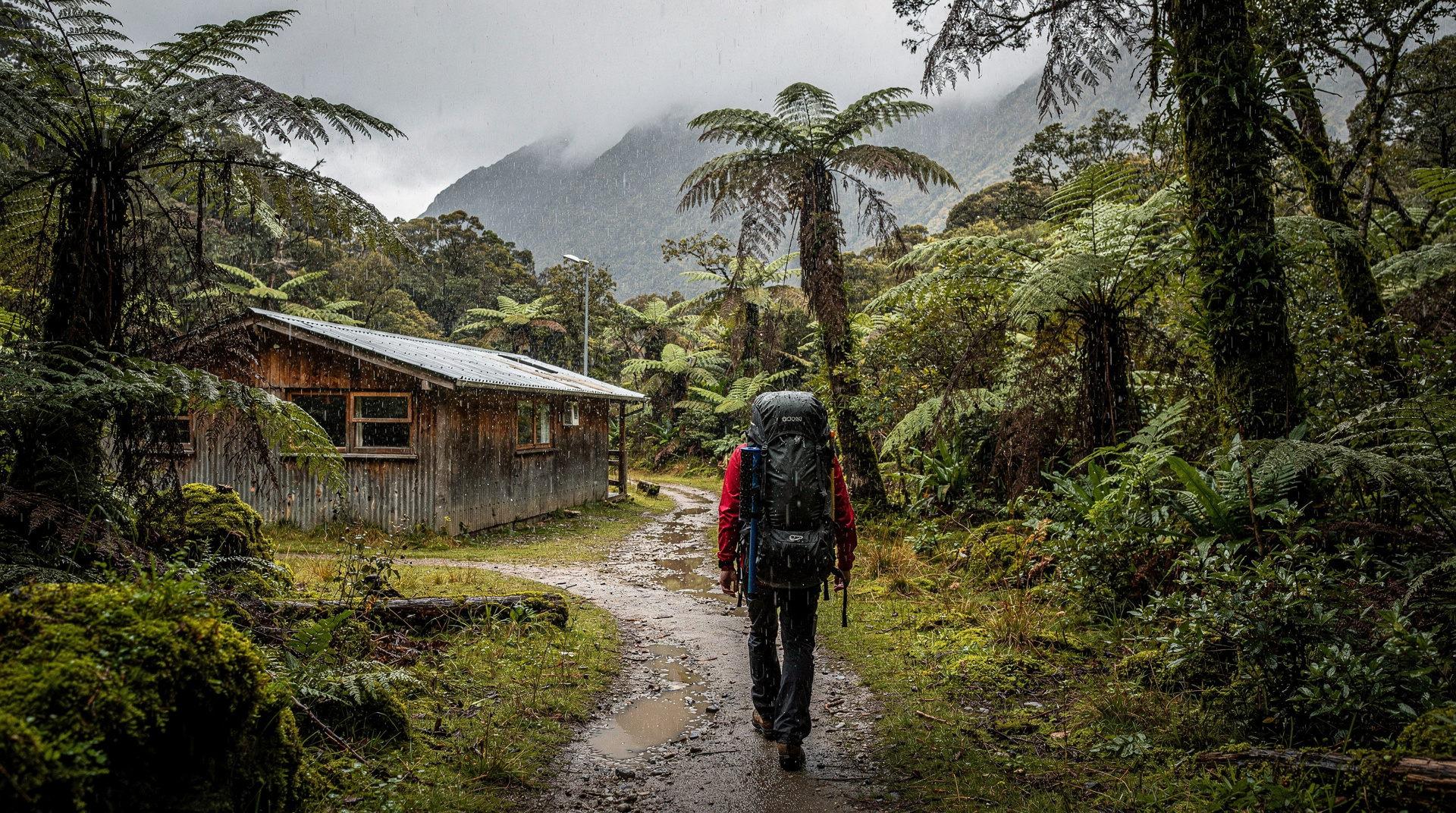
Milford Track — the world's finest walk
Milford Track: 53.5km, 4 days, one direction only, NZD 102/night huts. Book 6 months ahead. The most famous Great Walk in NZ — worth every step.
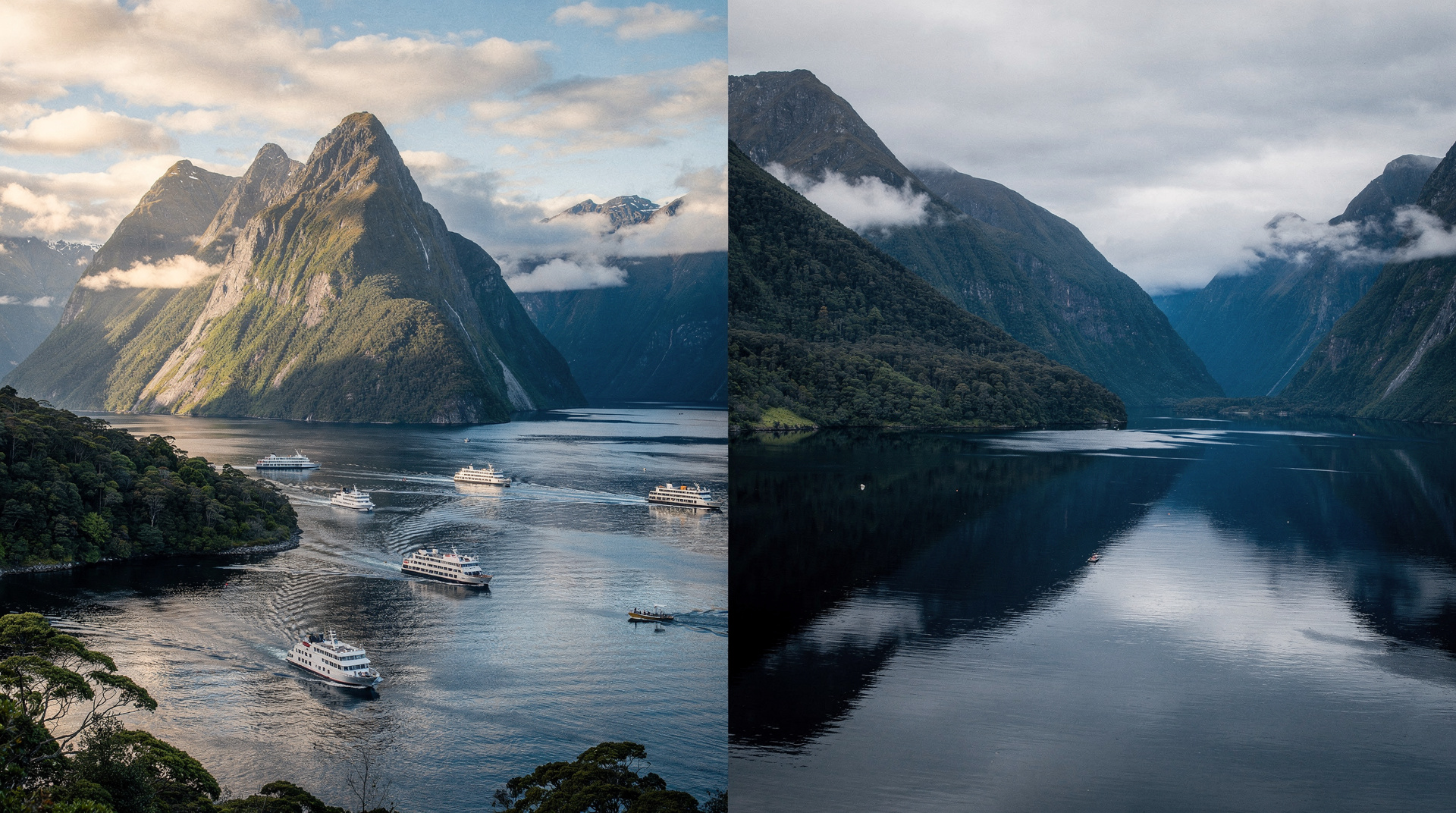
Milford Sound vs Doubtful Sound
Milford Sound vs Doubtful Sound: honest comparison of access, crowds, scenery and cruises. Clear verdict with prices in NZD/USD/EUR.
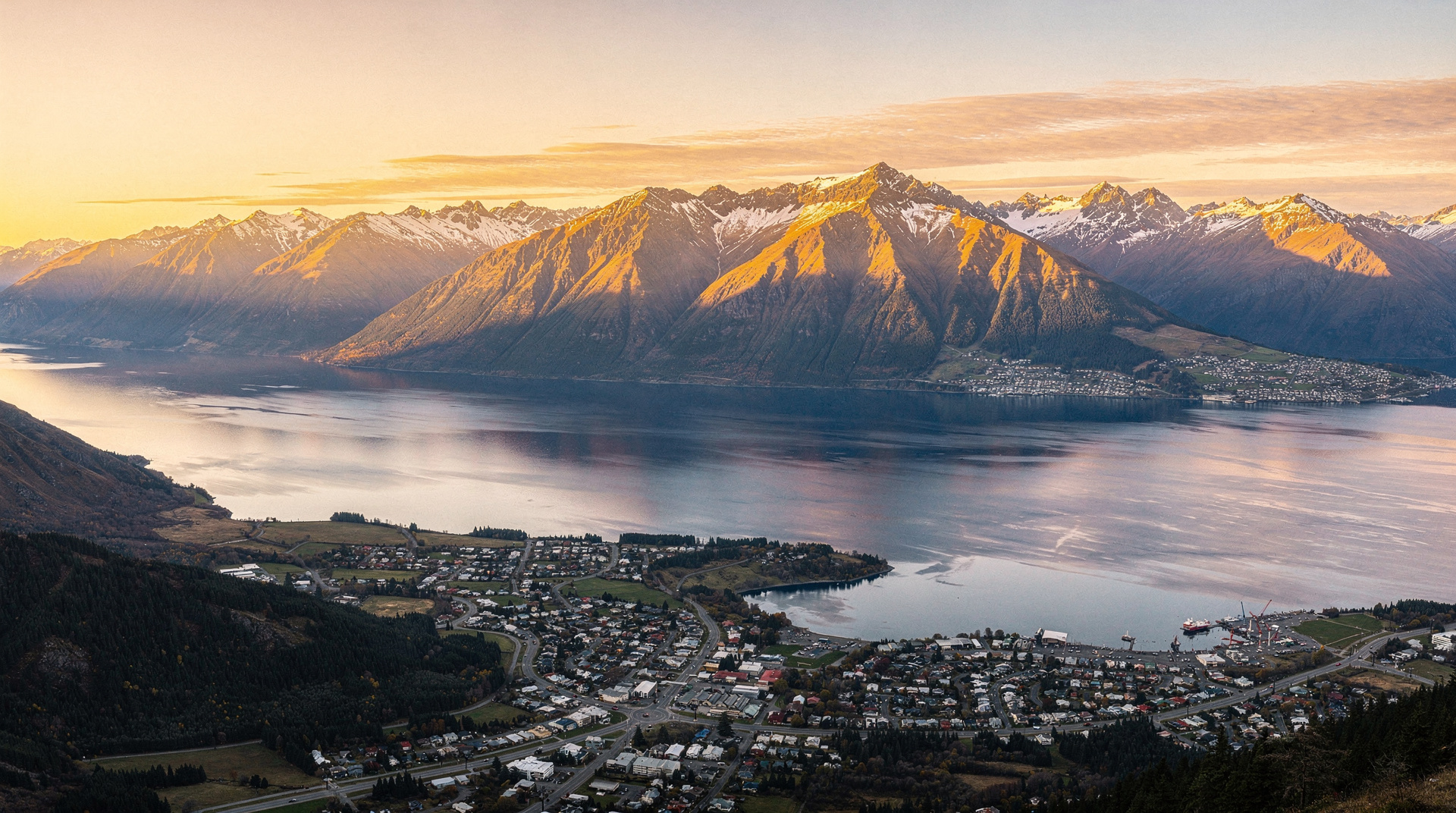
14-day New Zealand itinerary — both islands, grand tour
Honest 14-day NZ grand tour: Auckland, Bay of Islands, Hobbiton, Rotorua, Wellington, ferry, Kaikoura, Christchurch, Queenstown, Milford.
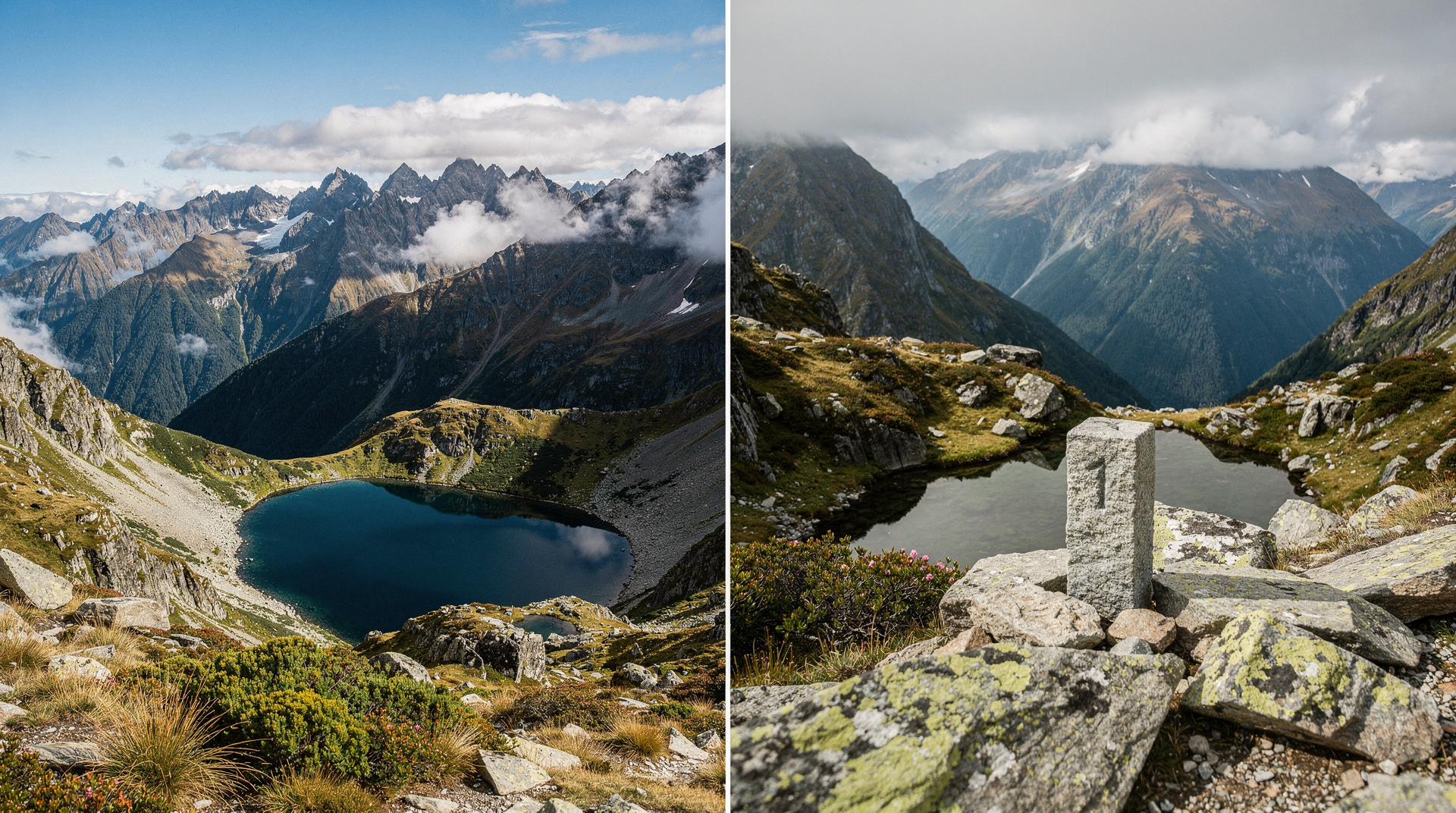
The Routeburn vs the Milford Track — an honest comparison
Both are iconic New Zealand Great Walks in Fiordland. But they're very different experiences. Here's a direct comparison to help you choose, or plan to do both.
Last reviewed: