Rotorua
Honest Rotorua guide: Te Puia, Wai-O-Tapu, Polynesian Spa, Maori hangi, real prices NZD/USD/EUR, tourist traps to avoid, and best 2 days.
Quick facts
- Distance from Auckland
- 230 km — allow 2.5–3 hours driving
- Distance from Wellington
- 330 km — allow 4 hours
- Currency
- NZ$ — USD ~$0.60 / EUR ~€0.55
- Best for
- Geothermal landscapes, Maori cultural experiences, adventure activities, thermal spas
- The smell
- Yes, Rotorua smells of sulphur — strong near the lake, moderate elsewhere, you adjust quickly
Rotorua in one minute
Popular experiences here
Rotorua sits on one of the most geothermally active regions on Earth, and the smell of sulphur is genuine — hydrogen sulphide in the air, rising from boiling mud pools and steaming vents that permeate the landscape and, in places, the streets of the town itself. Within two days, you stop noticing. What you are left with is a place of genuine drama: geysers erupting on cue, brilliantly coloured silica terraces, mud pools that pop and bubble, and Maori cultural experiences that range from tourist-oriented to deeply meaningful. Rotorua is not subtle, but it is extraordinary.
| Where | Bay of Plenty, 230 km / 2.5–3 hours from Auckland |
| Cost | Around NZD 35–185 per activity, most visitors do 2–3 |
| Time needed | 2 nights minimum; 3 nights for a relaxed pace |
| Getting there | Self-drive, InterCity coach, or domestic flight |
| Best time | Year-round; summer for outdoor extras, winter quieter and cheaper |
Why Rotorua is a North Island essential
The geothermal field beneath Rotorua is part of the Taupo Volcanic Zone, which stretches from Whakaari/White Island in the Bay of Plenty to Ruapehu in the central North Island. Geothermal activity here is not a minor feature: Lake Rotorua sits in a volcanic caldera, there are geysers in residential gardens, and the central government in the 1980s installed hundreds of bores across the city to release pressure and prevent random eruptions in populated areas.
Beyond the geology, Rotorua is the most significant centre of Maori cultural tourism in New Zealand. Ngati Whakaue and other local iwi have developed cultural experiences that vary considerably in depth and authenticity — and the honest guide makes this distinction clearly.
The adventure activity scene is also world-class. Rotorua competes directly with Queenstown for the breadth of adrenaline options: whitewater rafting on the Kaituna River (the highest commercially rafted waterfall in the world, at 7 metres), zip lines through native forest canopy, zorbing (rolling downhill in a giant inflatable ball), and mountain biking in the Redwoods (Whakarewarewa Forest).
The geothermal parks: which to choose
Rotorua has multiple geothermal parks within 20 minutes of the city centre, and they are genuinely different experiences. You do not need to visit all of them.
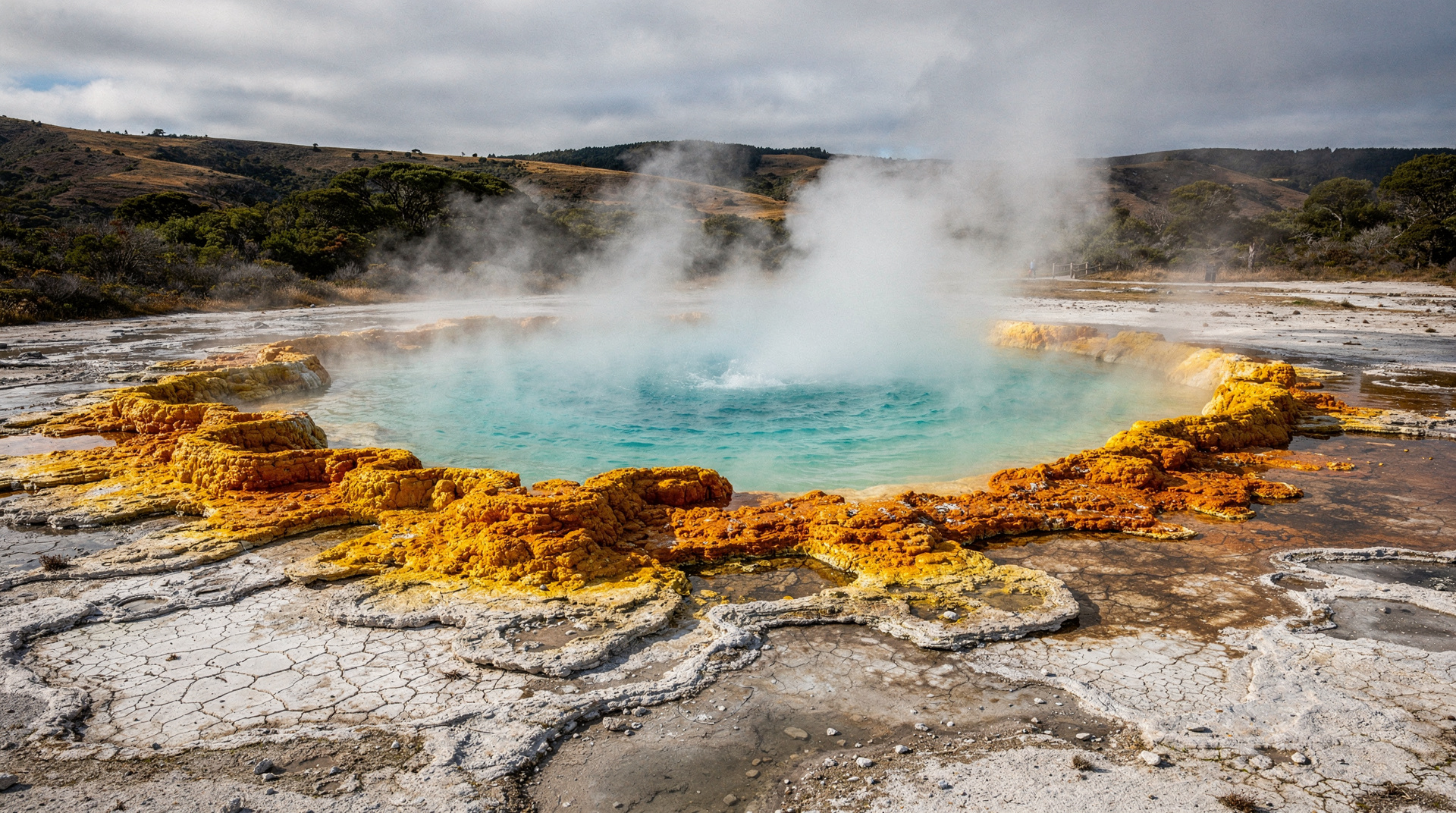
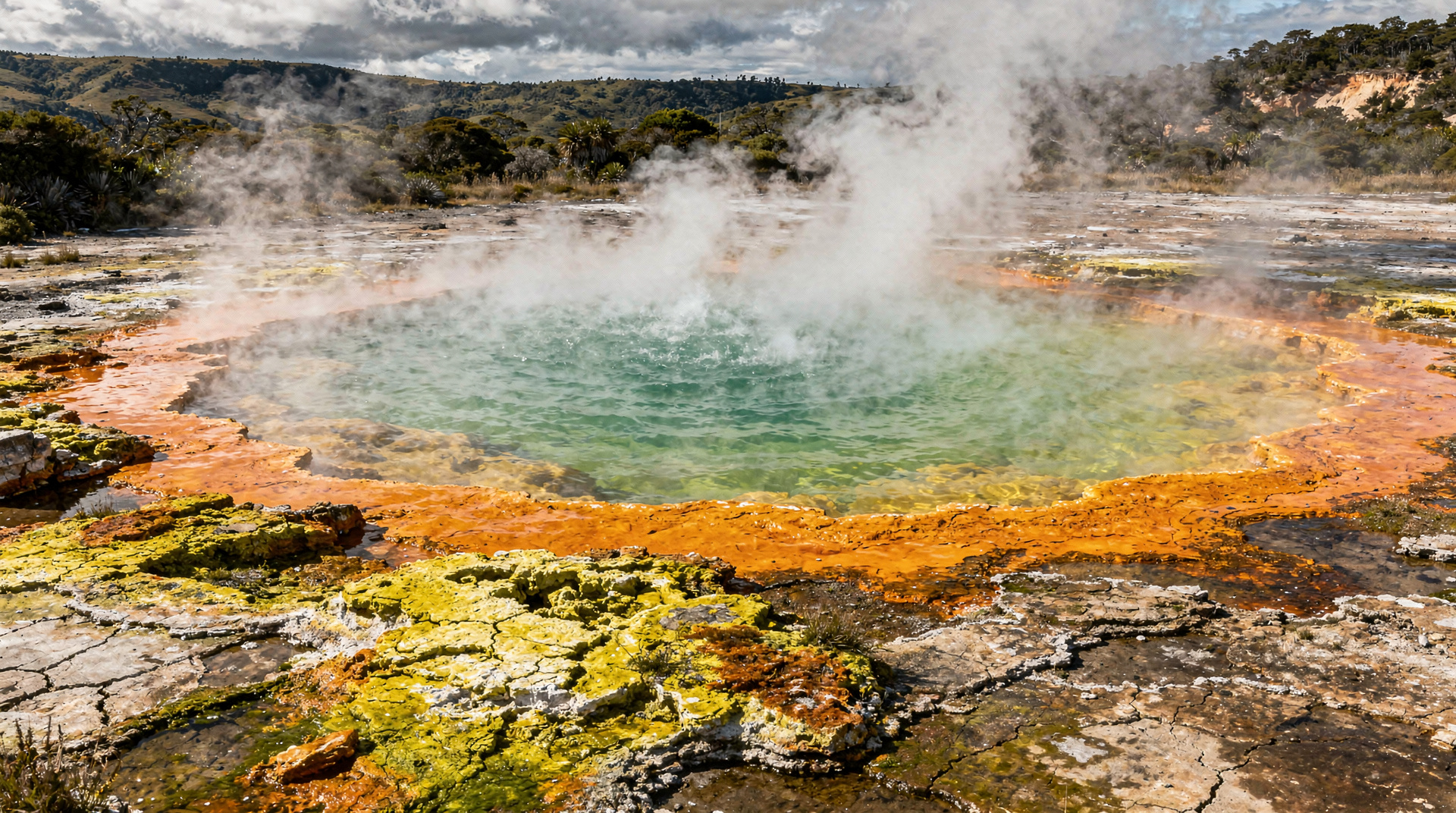
Wai-O-Tapu Thermal Wonderland (30 km south of Rotorua on SH5) is the most photogenic and the most frequently recommended. The Champagne Pool — a 65-metre-wide boiling crater ringed with orange-yellow silica terraces, steaming in cold morning air — is the most photographed geothermal feature in New Zealand outside Yellowstone comparisons. The Lady Knox Geyser performs daily at 10:15am (slightly aided by soap powder, but the geyser would erupt naturally regardless). Allow 2–3 hours.
Rotorua: Wai-O-Tapu Geothermal Park Entry Ticket
Wai-O-Tapu Thermal Wonderland entry — all park sections including the Champagne Pool, Artist's Palette, and Lady Knox Geyser at 10:15am. The most photogenic geothermal park in New Zealand.
From NZD 35 / USD 21 / EUR 19
Te Puia is the most culturally significant geothermal park — situated in the Whakarewarewa geothermal valley, which has been inhabited continuously by Ngati Whakaue for centuries. The living village where people actually reside (Whakarewarewa village) is adjacent. Te Puia includes the Pohutu Geyser (New Zealand’s largest active geyser), the geothermal field, and the New Zealand Maori Arts and Crafts Institute, where master carvers and weavers work and teach. Daytime guided tour NZD 59 / USD 35 / EUR 32 adult; evening hangi and concert NZD 110–135 / USD 66–81 / EUR 60–74.
Rotorua: Te Puia Guided Tour with Traditional Hangi Lunch
Te Puia guided tour with traditional hangi lunch — Iwi-governed park with Pohutu Geyser, master carvers at the Maori Arts and Crafts Institute, and a genuine hangi meal cooked underground.
From NZD 99 / USD 59 / EUR 54
For a more after-dark geothermal experience, the Marama Geyser Light Trail and geothermal experience takes the thermal landscape into the evening hours with atmospheric illuminated walking trails — a very different mood from the same daytime parks.
Waimangu Volcanic Valley (20 km south of Rotorua) is the world’s youngest geothermal system, formed in the eruptions of 1886. The Inferno Crater Lake, Frying Pan Lake (the world’s largest hot spring), and the valley walk to Lake Rotomahana are impressive, but the experience is more geological than theatrical. Better for visitors who want substance over spectacle. NZD 42 / USD 25 / EUR 23 adult entry.
Maori cultural experiences: the honest comparison
This is where Rotorua’s tourism industry creates genuine confusion. There are multiple Maori cultural experiences in Rotorua, and they are not equally authentic.
Te Puia is run by a Maori-governed trust (Whakarewarewa Inc) and the living element — actual carving and weaving instruction by masters — is genuine. The evening hangi and concert is commercial but has iwi involvement at the governance level. This is the most authentically grounded option.
Mitai Maori Village is family-owned and operated by Ngati Whakaue. The evening experience includes a waka (canoe) arrival on a river, hangi feast, and cultural performance. More intimate than the larger venues, genuinely well-regarded by visitors, slightly less polished. The Mitai Maori Village cultural experience and dinner buffet runs NZD 110–130 / USD 66–78 / EUR 60–72 including meal.
Tamaki Maori Village is the most commercialised option — specifically designed as a tourist product, with high production values but less community grounding. The Tamaki Maori Village cultural experience is NZD 110–130 / USD 66–78 / EUR 60–72. Visitor reviews are positive, but it’s the McDonald’s of Maori cultural experiences — consistent, comfortable, and somewhat manufactured.
For visitors who want a standalone Maori cultural performance without the full hangi dinner, the Rotorua Maori cultural performance with traditional dancing is a more accessible format — kapa haka and poi without the full evening commitment.
Te Pa Tu is a newer, distinctly Maori-led experience on a farm property south of Rotorua. The evening format includes forest walking, cultural performances in multiple outdoor stations, and a feast. Priced higher (NZD 155–185 / USD 93–111 / EUR 86–102). The Te Pa Tu Maori cultural experience with dinner is the most innovative of the evening options and the one most likely to feel genuinely immersive rather than performed.
The honest recommendation: choose Te Puia or Mitai over Tamaki if authentic community connection matters to you. If you want a highly polished performance with good logistics, Tamaki delivers that.
Thermal pools: Polynesian Spa
The Polynesian Spa on the lakefront is the best public hot spring experience in Rotorua. The mineral pools range from 36°C to 42°C, with alkaline (gentler) and acidic (more therapeutic) options. The lake views from the pools are excellent. Day passes approximately NZD 45–75 / USD 27–45 / EUR 25–41 depending on pool access level.
The Polynesian Spa deluxe lake spa hot spring bathing gives access to the premium lakeside adult pools (no under-14s). For a family visit, the Polynesian Spa family hot pools and freshwater pool is the appropriate option.
A newer addition to Rotorua’s thermal experience scene, the Sky View private pools experience offers elevated private thermal bathing with views over the city and lake — a more intimate alternative to the Polynesian Spa’s shared facilities, suited to couples or small groups wanting seclusion alongside the mineral soak.
Adventure activities
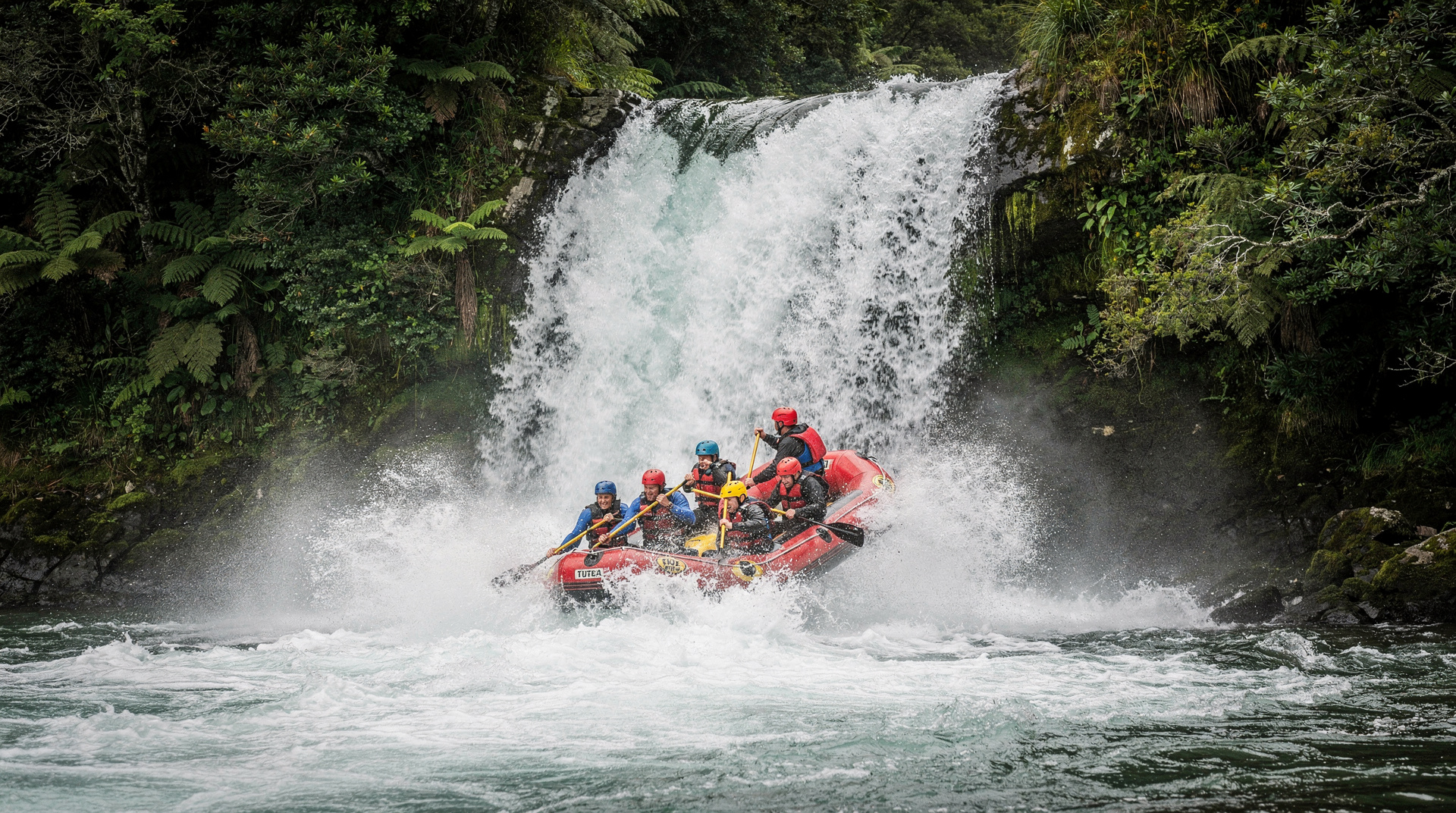
Kaituna River whitewater rafting includes the 7-metre Tutea Falls, the highest commercially rafted waterfall in the world. A 3-hour experience; minimum age typically 13.
Kaituna River and Tutea Falls Whitewater Rafting
Kaituna River and Tutea Falls whitewater rafting — the world's highest commercially rafted waterfall at 7 metres. 3 hours on the water, minimum age 13. Guides are excellent.
From NZD 105-115 / USD 63-69 / EUR 58-63
Zipline canopy tour through native forest: The Rotorua guided zipline adventure tour is 3 hours through the Whakarewarewa Forest on zip lines and bridges, with knowledgeable guides providing ecological context. Excellent for groups. NZD 135–155 / USD 81–93 / EUR 74–85.
Zorbing (OGO): Rolling inside a giant inflatable ball down a grass hillside, either with water inside (hydro) or dry. The Rotorua ZORB inflatable ball rides at the Ngongotaha Valley are genuinely fun and reasonably priced at NZD 45–75 / USD 27–45 / EUR 25–41 for 2–3 runs.
Skyline gondola and luge: Cable car up Mount Ngongotaha with views over Lake Rotorua; self-driving luge carts on the hillside tracks. The Skyline Rotorua gondola ticket includes unlimited scenic gondola rides; luge rides are priced separately. Family-friendly and accessible. NZD 32 / USD 19 / EUR 17 for gondola admission.
Redwoods Treewalk: A suspension bridge walk through the canopy of an old-growth redwood grove at Whakarewarewa Forest. Day and night versions available. The Redwoods Altitude night fast pass and treewalk combines the treewalk with an aerial adventure course. Reasonable prices (NZD 25–45 / USD 15–27 / EUR 14–25 for treewalk alone) and very photogenic.
Velocity Valley: A multi-activity adventure park with options including the Swoop freefall swing, Shweeb monorail racing, and the Agrojet waterjet boat. The Velocity Valley Pick Two pass is a good-value way to sample two of the park’s headline activities — useful for visitors who want varied thrills in a compact format without committing to a full-day adventure park.
For a guided day that combines Rotorua’s geothermal highlights, the Wai-O-Tapu, Redwoods, and Secret Spot day tour strings together the thermal wonderland, the redwood forest, and a local off-the-beaten-track location — a good structure for visitors who prefer not to self-drive between the geothermal parks.
Cost breakdown
2-day Rotorua trip, per person, NZD / USD / EUR
| Item | NZD | USD | EUR | Verdict |
|---|---|---|---|---|
| Mid-range hotel (city centre) | 180-280/night | 108-168 | 99-154 | ✓ Worth it |
| Wai-O-Tapu Thermal Wonderland entry | 35 | 21 | 19 | ✓ Worth it |
| Te Puia guided tour + hangi lunch | 99 | 59 | 54 | ✓ Worth it |
| Evening Maori cultural experience (Mitai or Te Pa Tu) | 110-185 | 66-111 | 60-102 | ✓ Worth it |
| Polynesian Spa (deluxe lake pools) | 45-75 | 27-45 | 25-41 | ✓ Worth it |
| Kaituna River rafting | 105-115 | 63-69 | 58-63 | ★ Splurge |
| Agrodome tourist farm show Dated; only for young families | 49 | 29 | 27 | ✕ Skip |
Where to stay
City centre (around Fenton Street, Eruera Street): Most accommodation concentrates here, ranging from budget backpackers to mid-range motels and hotels. The Distinction Hotel Rotorua is a reliable mid-range option at NZD 180–280 / USD 108–168 / EUR 99–154. The Holiday Inn Express Rotorua is a newer, good-value option.
Lakefront: Several properties on Tutanekai Street and the Lakefront Walkway have lake views. Regent of Rotorua Boutique Hotel (NZD 240–380 / USD 144–228 / EUR 132–209) is the quality boutique option in this zone.
Out of town: Treetops Lodge (20 km from Rotorua in native bush) is a genuine luxury lodge experience at NZD 800–1400 / USD 480–840 / EUR 440–770 per night. For a meaningful splurge.
Budget backpackers: Base Rotorua and YHA Rotorua both operate in the central city, with dorm beds from NZD 32–50 / USD 19–30 / EUR 17–28.
What to eat and drink
Rotorua’s dining scene is functional rather than exceptional. The city centre has good options for every budget.
Eat Streat (Tutanekai Street) is an outdoor dining precinct with multiple cuisines and a lively atmosphere on warm evenings. Good for groups with varied tastes.
Atticus Finch is a reliable mid-range option for pizza, burgers, and New Zealand craft beer. Abracadabra Cafe serves consistently good Indian food. Third Place Cafe is excellent for breakfast.
For a memorable food experience, the hangi meal at Te Puia, Mitai, or Tamaki is both dinner and cultural activity — efficient use of an evening.
Rotorua breweries: True South has a good craft selection. Volcanic Hills Winery (at the Skyline Gondola) offers local wines with lake views.
Farmers markets and self-catering: the Rotorua Night Market runs Thursday evenings on Tutanekai Street with food stalls and local produce, a cheaper and more casual alternative to a sit-down dinner. Countdown and New World supermarkets in the city centre cover self-catering for longer stays or budget travellers combining a hangi evening with simpler meals the rest of the trip.
Skip / worth it / splurge
- ✕ Skip : Multiple geothermal parks in one day — two maximum (Wai-O-Tapu in the morning plus Te Puia in the afternoon is the ideal pairing)
- ⚠ Tourist trap : The Agrodome (tourist farm show) unless visiting with young children — it’s dated and adds little beyond its novelty
- ✓ Worth it : Evening Maori cultural experience — this is what Rotorua does uniquely well; budget for one good-quality experience (Te Puia, Mitai, or Te Pa Tu)
- ✓ Worth it : Polynesian Spa — after a day walking geothermal fields, a soak in mineral hot pools is the perfect end
- ★ Splurge : Kaituna River rafting if you have any appetite for whitewater — the Tutea Falls drop is memorable and the guides are excellent
How to fit Rotorua in your itinerary
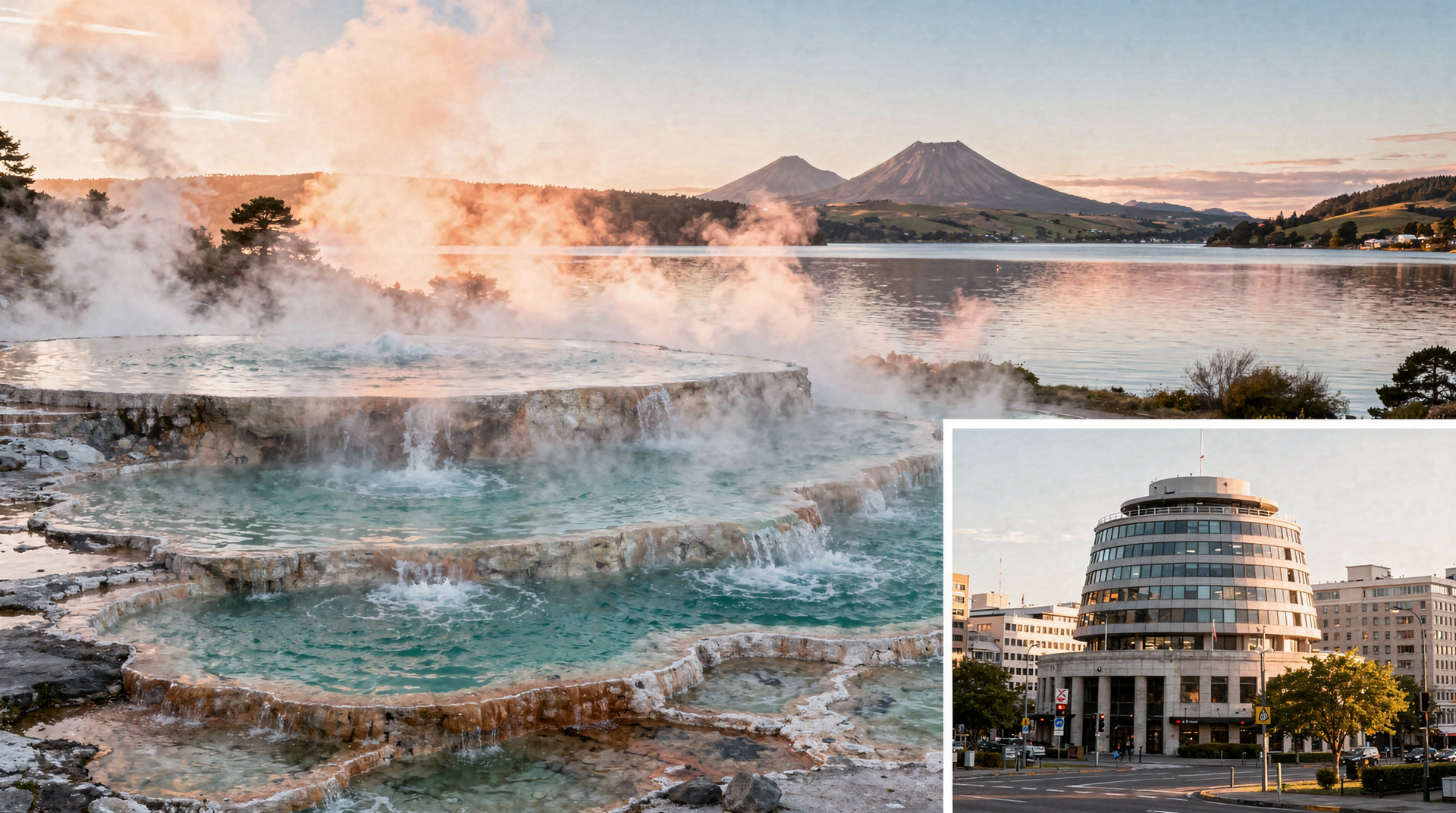
On a 7-day North Island itinerary, Rotorua is typically days 4–5 after Hobbiton and Waitomo. Two nights allows: day 1 in the morning at Wai-O-Tapu (including Lady Knox Geyser at 10:15am) and afternoon at Redwoods Treewalk or zorbing; evening Maori cultural experience. Day 2 at Te Puia in the morning (geothermal field + New Zealand Maori Arts and Crafts Institute), Polynesian Spa in the afternoon, and drive to Taupo in the evening.
See also the Taupo guide and Tongariro National Park guide for the natural continuation south.
The Taupo Volcanic Zone: understanding what you’re seeing
Rotorua’s geothermal activity is part of the Taupo Volcanic Zone (TVZ), a 350-km rift system extending from Whakaari/White Island in the Bay of Plenty to Ruapehu in the central North Island. The TVZ is one of the most productive geothermal areas in the world by heat output.
The geology involves a continental plate boundary where the Pacific Plate subducts under the Australian Plate at approximately 45 mm per year. The friction and heat from this subduction melts rock at depth, and that magma intrudes upward into the continental crust. In the Rotorua basin, the magma chambers sit relatively close to the surface (2–5 km), heating groundwater and driving the geothermal system.
The different colours in geothermal parks reflect different chemistry:
- Blue and green pools: High-temperature acidic water (sometimes 80–90°C), with silica and sulphur
- Orange and yellow crusts: Sulphur and iron oxide deposits at pool margins
- White/grey silica terraces: Dissolved silica precipitating as water cools and flows
- Black mud pools: Mixed sulphurous mud, cooler temperatures, lower silica content
Understanding this basic chemistry makes a visit to Wai-O-Tapu or Waimangu considerably more interesting than treating the colours as purely decorative.
Ngati Whakaue and the living village of Ohinemutu
In the centre of Rotorua, on the shore of Lake Rotorua, is Ohinemutu — a Maori village that has been continuously inhabited for centuries and continues to function today. Ohinemutu is home to Ngati Whakaue hapu (sub-tribe) and contains the Tamatekapua Meeting House (one of the finest meeting houses in New Zealand, beautifully carved), St Faith’s Anglican Church (a Maori church from 1914 with extraordinary carved interiors and a remarkable stained glass window depicting Christ in a Maori cloak appearing to walk on Lake Rotorua), and thermal pools used by villagers for cooking and bathing.
Ohinemutu is a living village, not a museum — residents live here, and visitors are guests. Access to the marae (meeting ground) and meeting house requires an invitation or guided tour. The church is typically open to respectful visitors outside service times. Steam venting from the ground throughout the village is a constant reminder that the geothermal field extends directly beneath the houses.
The proximity of the geothermal field to inhabited buildings is not incidental — it has historically been a feature, providing natural heating and cooking heat. Several residential properties have private thermal pools. The management of this is complicated: geothermal pressures have shifted over the decades as bores have been drilled and the field has been managed, and some areas that were once thermally active have cooled.
Mountain biking in the Whakarewarewa Forest
The Redwoods Whakarewarewa Forest (the “Redwoods”) is one of New Zealand’s premier mountain biking destinations, with over 130 km of trails ranging from beginner to black-diamond expert. The combination of a well-maintained trail network, the extraordinary setting among towering California redwoods (planted in the 1900s as a timber experiment, then abandoned when redwood was found to be too soft for New Zealand construction needs), and the proximity to Rotorua’s accommodation makes this a destination that draws mountain bikers from around the world.
Trail types include:
- Green (beginner): Flat, smooth, 2–5 km loops suitable for any ability
- Blue (intermediate): Rolling terrain, some roots and small drops, 5–15 km routes
- Red (advanced): Technical single-track with jumps, drops, and exposure
- Black (expert): For experienced riders only; significant technical challenges
Bike hire from NZD 50–95 / USD 30–57 / EUR 28–52 per half day from several operators at the Redwoods visitor centre. The visitor centre also has trail maps and current condition updates.
Connecting Rotorua to the rest of the North Island
Rotorua sits at a natural junction on the North Island’s central circuit. Coming from Auckland, most itineraries route via Hobbiton and Waitomo — both are worth stopping at rather than driving past, and the Hobbiton day trip from Rotorua guide covers whether to visit on the way in or as a side trip. Heading south, Taupo is under an hour away and pairs naturally with a Rotorua stay for anyone continuing to Tongariro National Park.
For those with extra time, the Bay of Plenty coast (Mount Maunganui, Tauranga) is under an hour east and offers a genuine beach contrast to the geothermal inland landscape — a good add-on for a longer North Island loop rather than a rushed detour.
Frequently asked questions about Rotorua
Does Rotorua really smell?
Yes — hydrogen sulphide is present in the air throughout the city, strongest near the lake and geothermal areas. The smell is similar to rotten eggs. Most visitors stop noticing within half a day. On still, warm days the smell is more concentrated. It is harmless at ambient levels.
How many days do I need in Rotorua?
Two nights is the sweet spot for most visitors: enough for two geothermal parks, one Maori cultural evening, and one adventure activity. Three nights allows a more relaxed pace and the addition of the Waimangu Valley or a Lake Taupo day trip. One night is possible but leaves you with difficult choices.
Is Rotorua good for families with children?
Yes — it is one of the most family-friendly destinations in New Zealand. The combination of geothermal parks, Skyline luge, zorbing, Kelly Tarlton’s-style exhibits, and the Te Puia cultural experience covers a wide age range. The Polynesian Spa has a family zone.
What is the best Maori cultural experience in Rotorua?
For authenticity and depth: Te Puia or Mitai. For production quality and polish: Tamaki or Te Pa Tu. For a newer, more immersive outdoor format: Te Pa Tu. The honest answer is that all four are good in different ways — choose based on your priorities (cultural authenticity vs entertainment value vs price).
Is Rotorua safe for swimming in the lake?
Lake Rotorua is generally safe for swimming, though water quality varies by area. Ohinemutu and the lakefront near the Polynesian Spa are reliable. Check with the Rotorua Lakes Council for current water quality advisories. Do NOT swim in any geothermal pools or streams outside designated bathing areas — some are boiling hot and others contain toxic compounds.
Can I visit Rotorua as a day trip from Auckland?
It’s a long day (2.5 hours each way, so 5 hours of driving for a 4–5 hour visit) but possible. The Auckland day trip to Rotorua with optional extras handles the logistics. For most visitors, an overnight stay is strongly recommended — the evening Maori cultural experience alone justifies staying, and the quality of experience is significantly higher without time pressure.
Which single geothermal park should I choose if I only have time for one?
Wai-O-Tapu, for the sheer visual variety — the Champagne Pool, Artist’s Palette, and Lady Knox Geyser cover the widest range of geothermal features in one visit. If cultural context matters more than pure spectacle, choose Te Puia instead; it combines a smaller but still impressive geothermal field with the living arts and crafts institute.
Can I do Rotorua and Taupo in the same trip without rushing?
Yes — they’re under an hour apart and pair naturally. A common structure is two nights in Rotorua for the geothermal parks and cultural evening, then a night or two in Taupo for the lake and the Huka Falls area. Splitting rather than day-tripping between them gives a more relaxed pace than trying to base in one town and see both.
Top experiences: Rotorua New Zealand
See all →Guides for Rotorua
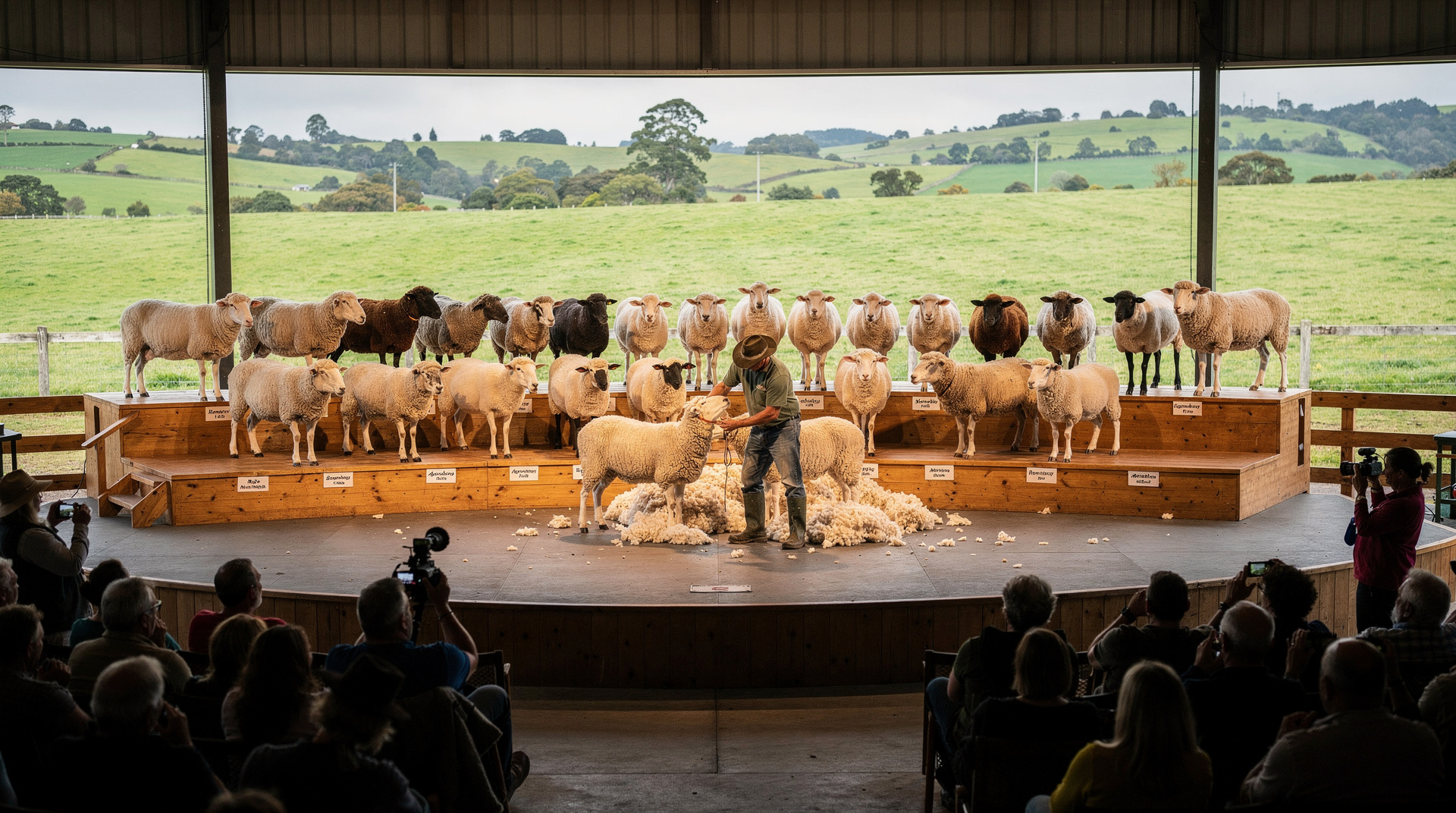
Agrodome Rotorua — the sheep show and farm experience guide
Agrodome Rotorua guide: sheep breed show, sheepdog demo, farm tours, jet boat. Ticket prices NZD/USD/EUR, honest review, best ages, and booking tips.
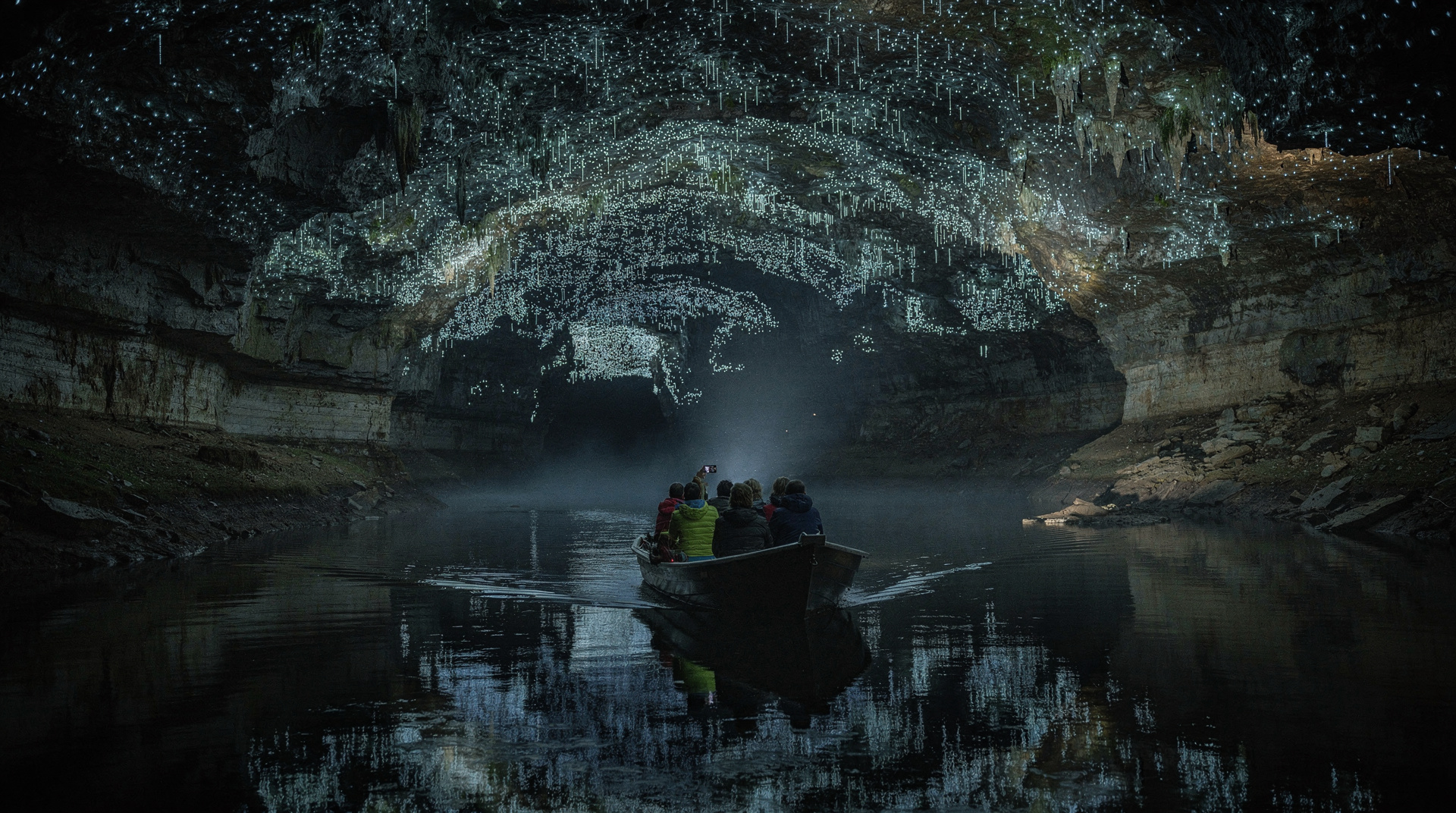
Best day trips from Rotorua
The best day trips from Rotorua: Waitomo Caves (1.5h), Taupo and Huka Falls (1h), Waimangu Volcanic Valley, and Coromandel. Drive times, costs, honest verdicts.
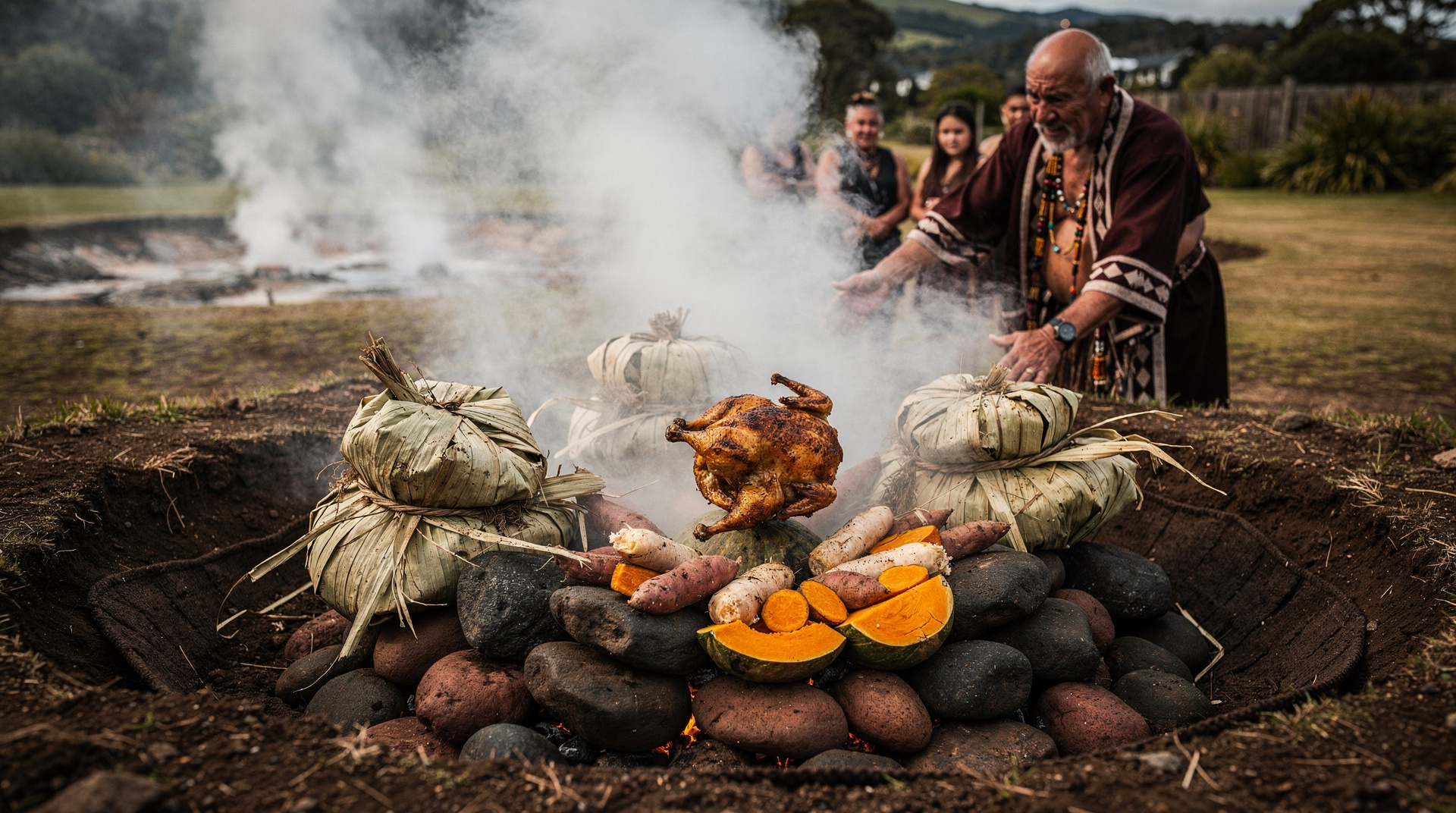
Hangi experience in New Zealand
A hangi is a traditional Maori feast cooked in an earth oven. Best operators in Rotorua, prices NZD/USD/EUR, cultural context, and te reo glossary.
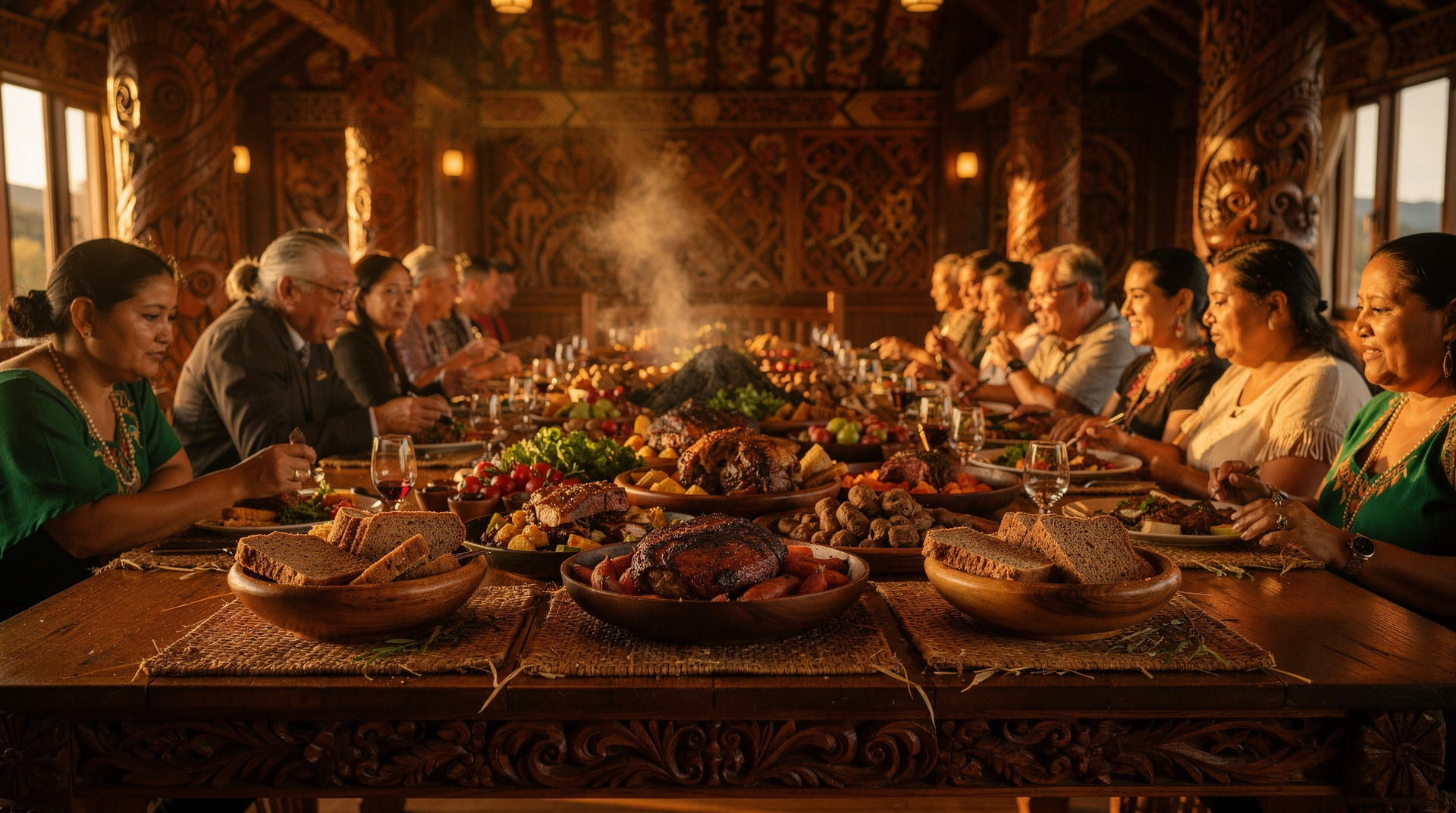
Hangi feast guide — New Zealand's earth oven cooking explained
What is a hangi? Earth oven cooking explained, cultural meaning, best places to try authentic hangi in NZ (Rotorua, Waitangi), and costs in NZD/USD/EUR.
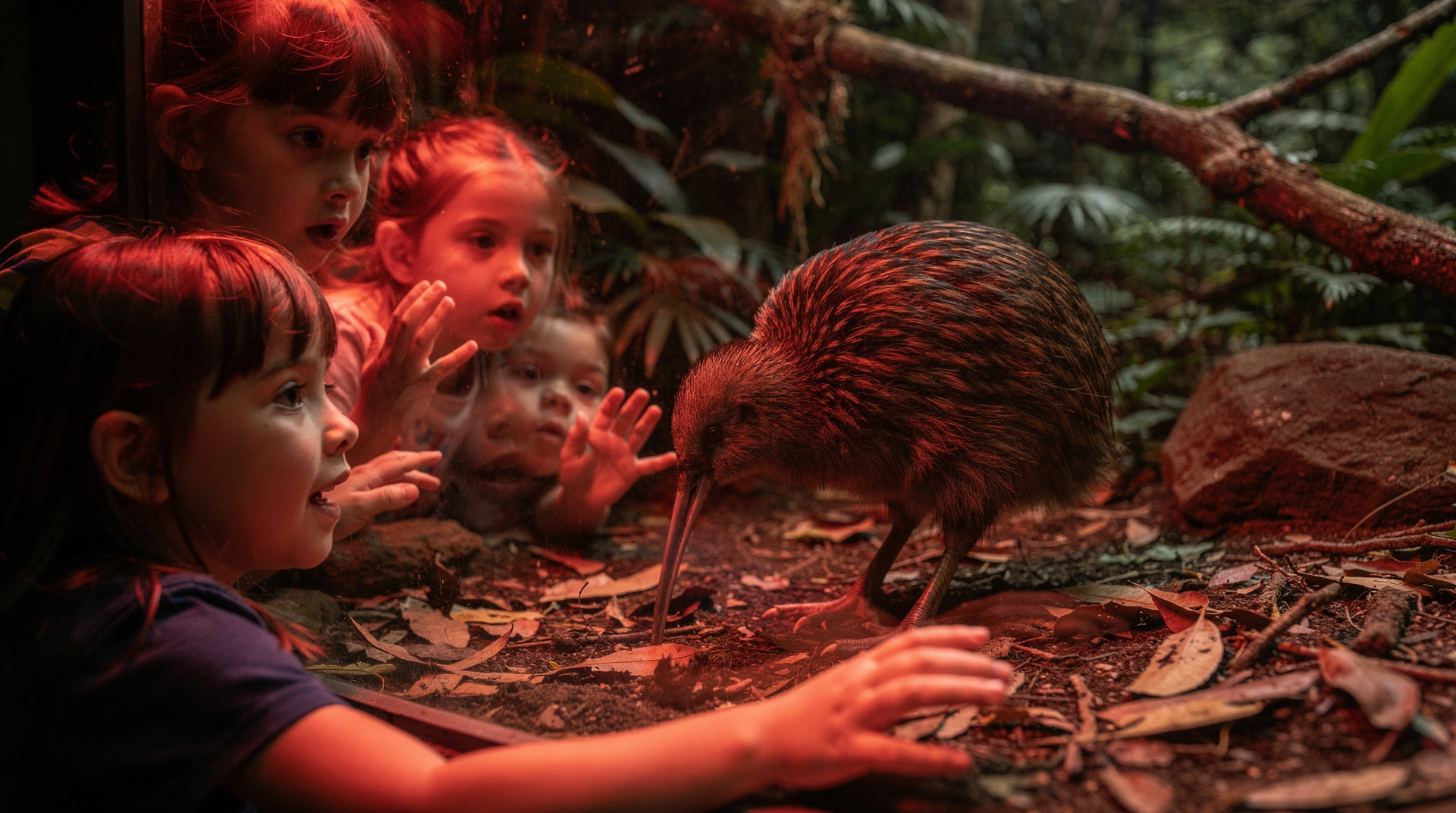
Kid-friendly activities in Rotorua — best things to do with children
Best kid-friendly activities in Rotorua: Te Puia geysers, zorbing, Agrodome, Rainbow Springs, gondola luge, and Polynesian Spa family pools. NZD/USD/EUR prices.
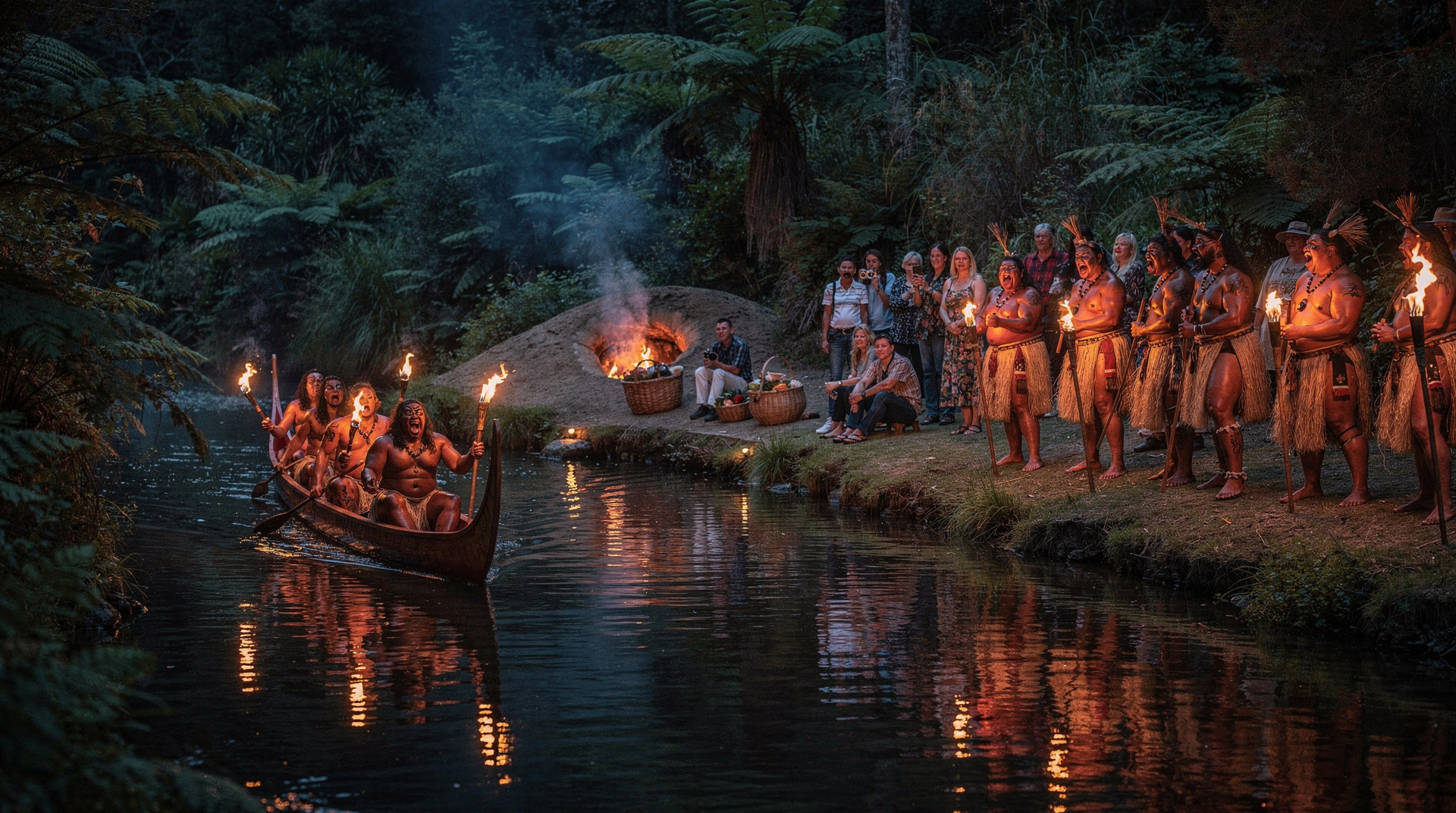
Mitai Maori Village Rotorua — honest review and visitor guide
Honest review of Mitai Maori Village Rotorua: the family-run waka arrival, kapa haka, hangi feast, and glowworm walk. Costs in NZD/USD/EUR and booking tips.
Related guides
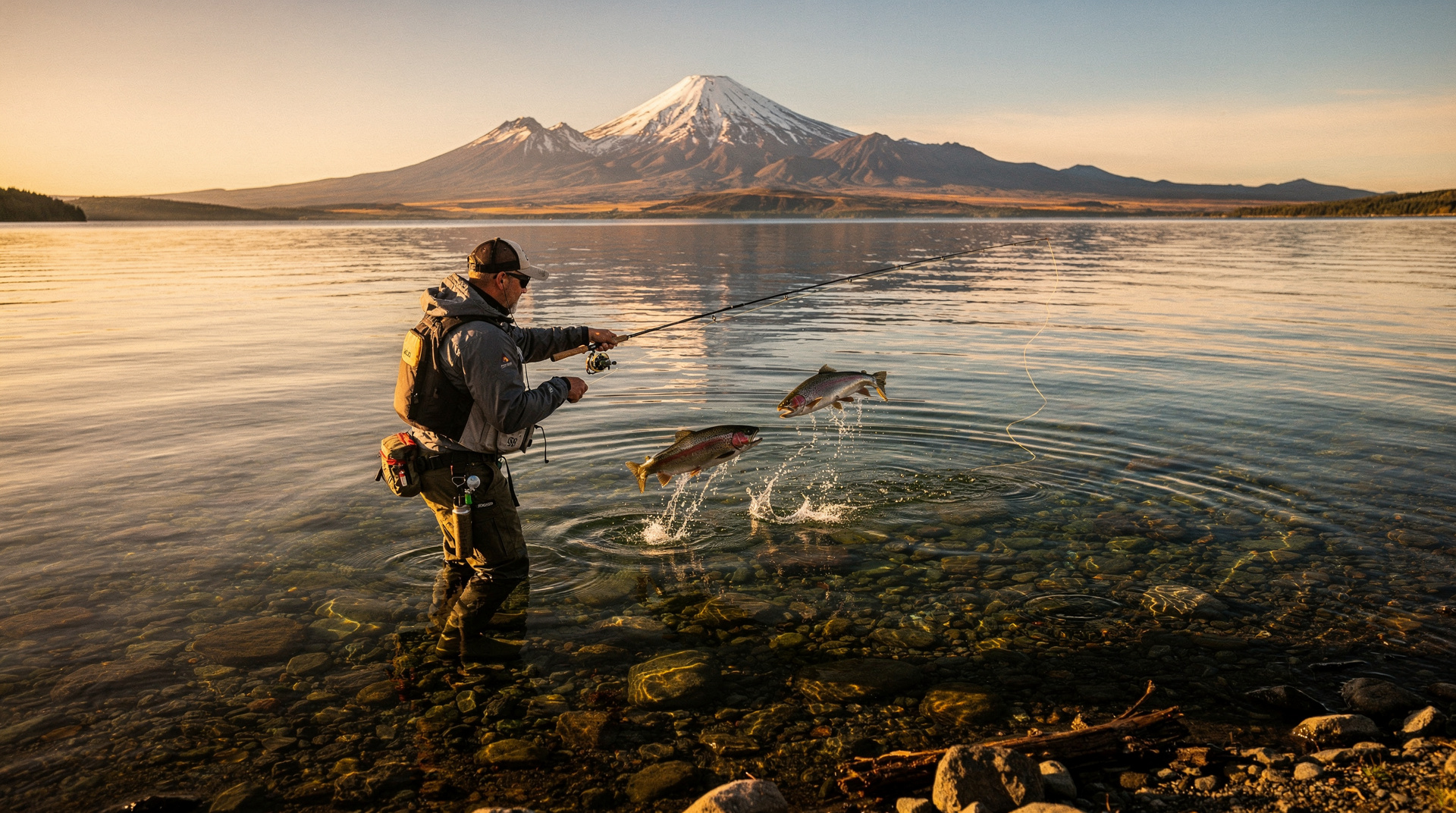
Taupo
Honest Taupo guide: Huka Falls jet boat, tandem skydive, Lake Taupo Maori rock carvings, Tongariro access, real prices NZD/USD/EUR.
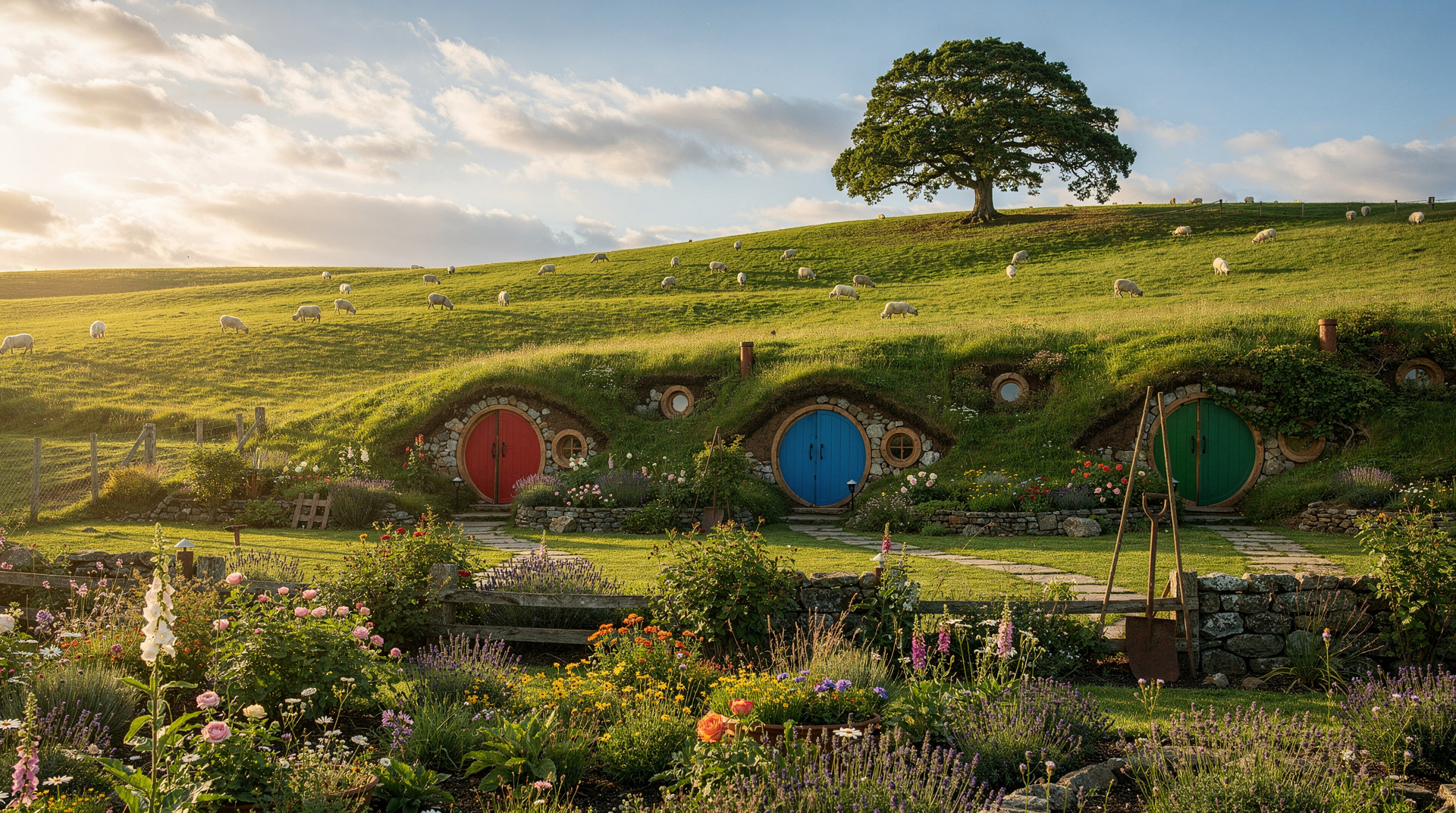
Hobbiton
Honest Hobbiton guide: what to expect on the movie set tour, real ticket prices NZD/USD/EUR, best time to visit, and whether it's worth the cost.
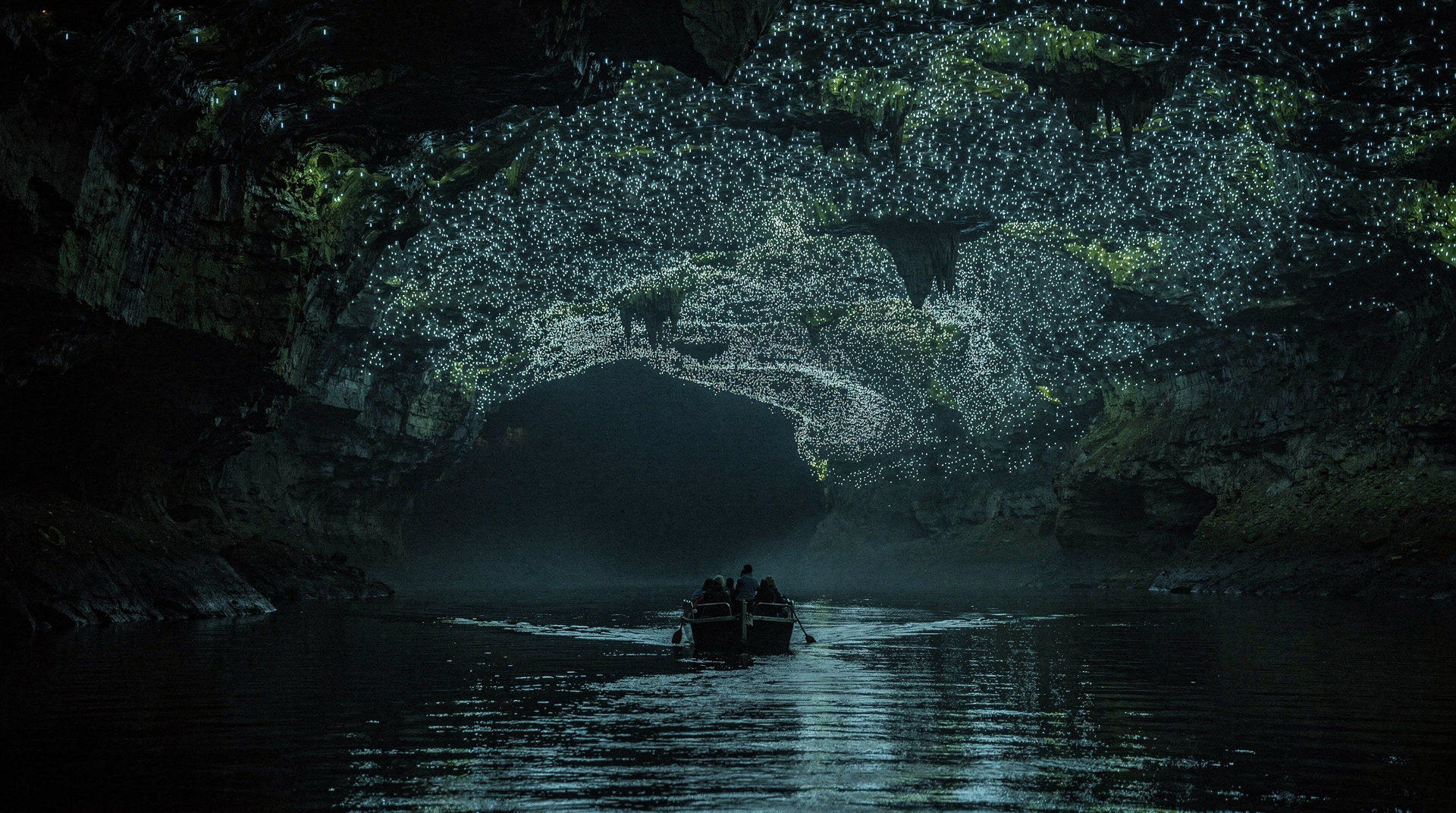
Waitomo
Honest Waitomo guide: glowworm cave boat tour, black water rafting, Lost World abseil, real prices NZD/USD/EUR, and how to combine with Hobbiton.
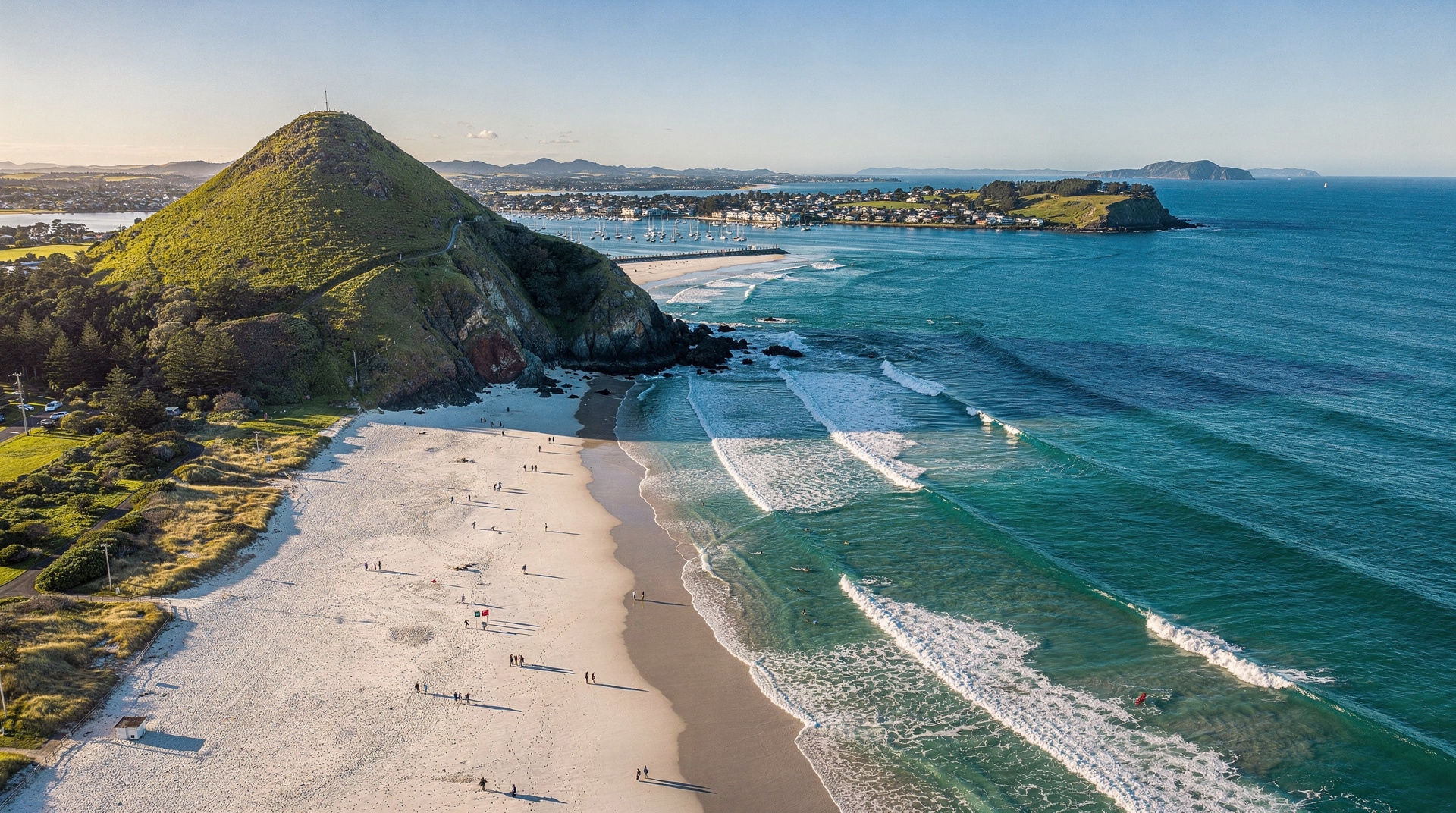
Bay of Plenty
Bay of Plenty region guide: Tauranga, Mount Maunganui surf, Whakatane, Whakaari/White Island eruption facts. Real NZD/USD/EUR costs, honest verdicts.
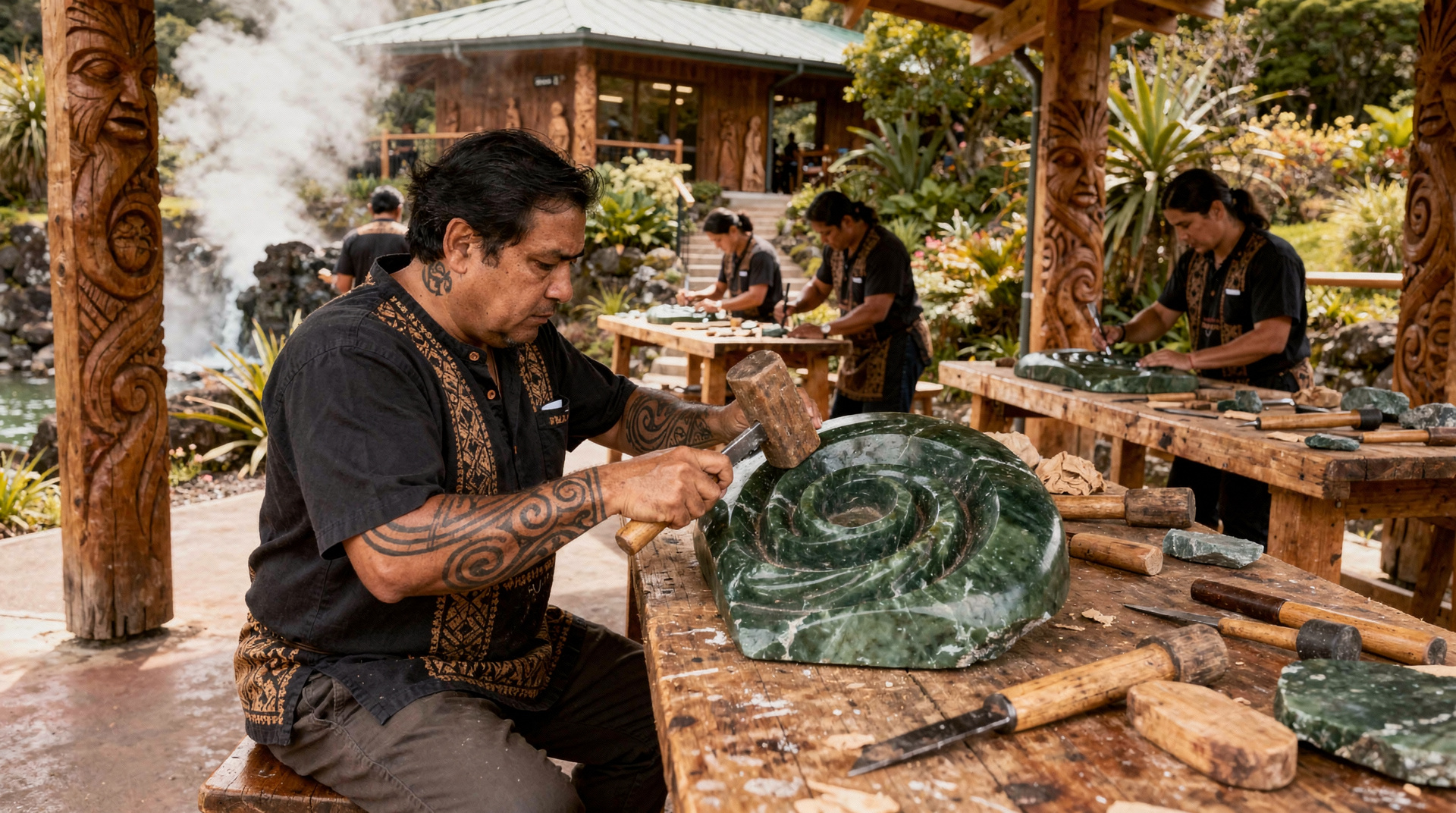
Te Puia Rotorua — the complete iwi-led cultural experience guide
Te Puia: Rotorua's iwi-led Maori cultural centre. Pohutu Geyser, living carving school, kapa haka, and hangi. Tickets, times, and honest verdict from NZD 60.
Wai-O-Tapu Thermal Wonderland
Wai-O-Tapu is NZ's most colourful geothermal park — Champagne Pool, Lady Knox Geyser, 18 km² of volcanic landscape. Entry NZD 42 / USD 25. Tour guide 2026.
White-water rafting in Rotorua — Kaituna Falls and Grade 5 rapids
Rotorua rafting guide: Kaituna River's 7m Tutea Falls (world's tallest commercially rafted waterfall). Prices NZD/USD/EUR, grade, operators, and booking tips.
7-day North Island itinerary — the essential highlights
Auckland → Bay of Islands → Hobbiton → Waitomo → Rotorua → Taupo → Tongariro → Wellington. 7 days, both car and costs covered honestly.
Matariki 2026 — where to celebrate New Zealand's Maori new year
Matariki falls on Friday 10 July 2026. Where to celebrate New Zealand's Maori new year — Rotorua, Auckland, marae — and what to expect as a visitor.
Last reviewed: