Queenstown
The honest Queenstown planner: bungy, jet boat, ski, scenic flights — real prices in NZD/USD/EUR, what to skip and what's worth your money.
Quick facts
- Reputation
- Adventure capital of the world — bungy jumping was born here
- Airport
- Queenstown Airport (ZQN) — direct flights from Auckland, Wellington, Sydney
- Currency
- NZD — 1 NZD ≈ USD 0.60 / EUR 0.55
- Best for
- Adrenaline, ski, scenic flights, LOTR locations, gateway to Fiordland
- Skip if
- You want quiet and fewer crowds — consider Wanaka instead
- High season
- December–February and June–August (ski); book 3–6 months ahead
The real Queenstown — hype, honest costs, and what’s actually worth it
Popular experiences here
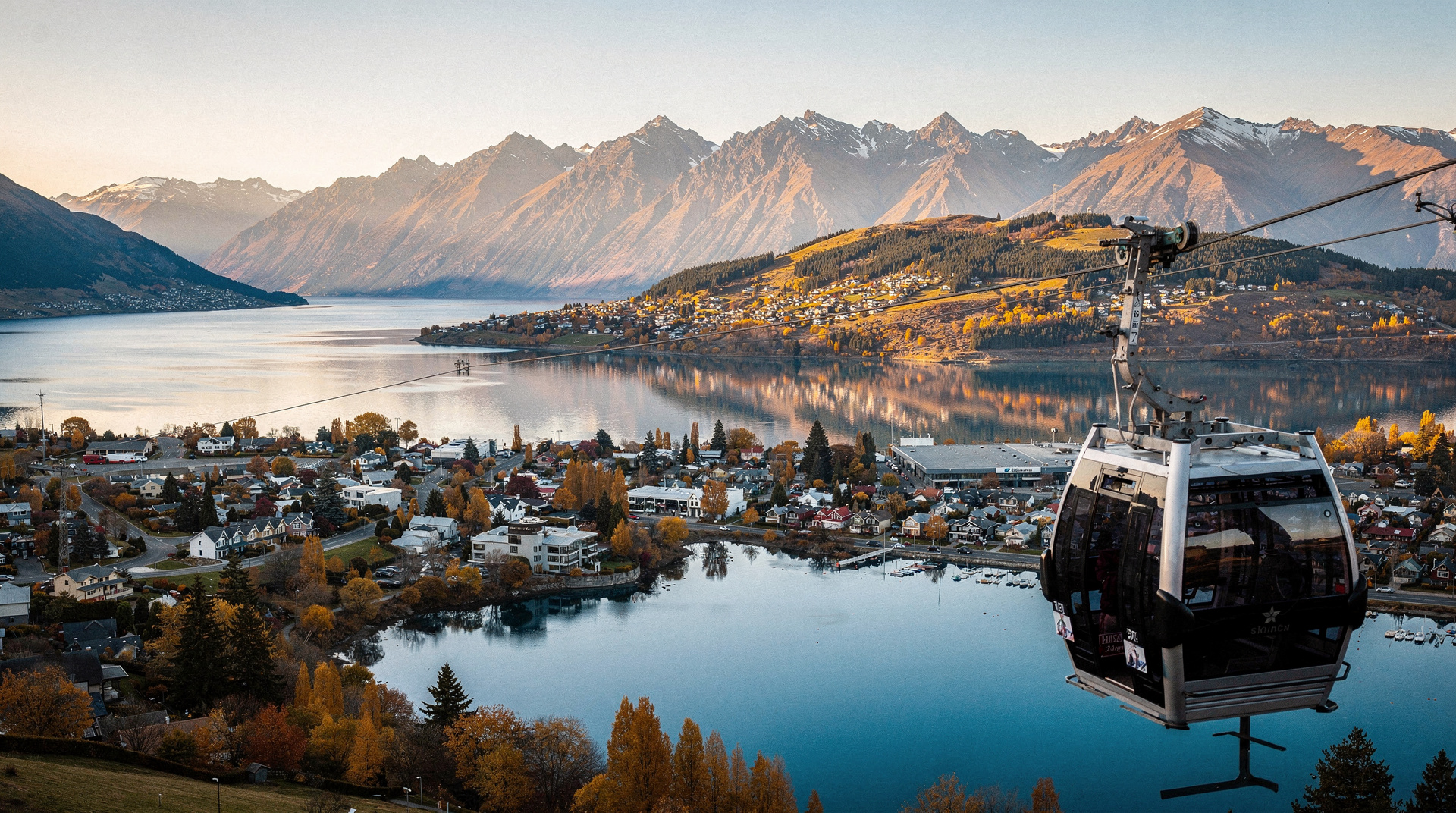
Queenstown sits on the eastern shore of Lake Wakatipu with the Remarkables mountain range rising sharply across the water. The setting is legitimately spectacular — one of those places where the landscape delivers everything the photos promise. The town itself is compact, lively, and relentlessly oriented toward selling you an experience. That’s not a criticism; it’s just useful to know before you arrive.
Plan for 3 days minimum. Five days lets you do the adventure activities without rushing and still squeeze in a Milford Sound day trip or a night in Glenorchy. If you’re choosing between Queenstown and Wanaka, know that Queenstown is louder, pricier, and has more choice; Wanaka is quieter, cheaper, and scenically on par. Many travelers do both.
| Where | Eastern shore of Lake Wakatipu, Otago |
| Cost | Around NZD 400–700/day for a mid-range couple with one activity each |
| Time needed | 3 days minimum; 5 days comfortable with ski or Milford Sound |
| Getting there | Direct flights from Auckland, Wellington, Christchurch, Sydney |
| Best time | December–March (warm weather) or June–September (ski season) |
Why Queenstown earned the “adventure capital” name
The story starts in 1988 on the Kawarau Bridge, 43 metres above the river, where AJ Hackett and Henry van Asch performed the world’s first commercial bungy jump. Queenstown didn’t invent adventure tourism, but it industrialised it — and the infrastructure that followed (jet boats, canyon swings, skydiving, zip lines, paragliding, white-water rafting) means you can do something genuinely terrifying every day for a week without repeating yourself.
The ski story is equally strong. Four ski areas sit within an hour of town: Coronet Peak (closest, best night skiing), The Remarkables (stunning basin, excellent for beginners), Cardrona (just over the Crown Range, great terrain parks), and Treble Cone near Wanaka (most challenging, least crowded). The season runs June to October, with July and August the busiest months. Day lift passes at Coronet or the Remarkables run NZD 145–175 / USD 87–105 / EUR 80–96. Book online in advance — walk-up prices are higher.
The LOTR connection is real and extensive. Glenorchy, 45 minutes from town, served as Isengard, the Argonath approach, and Lothlorien. The Dart River valley beyond it appeared in multiple films. Dedicated half-day and full-day tours from Queenstown cover the key locations with good guides who know the production detail.
What to do in Queenstown
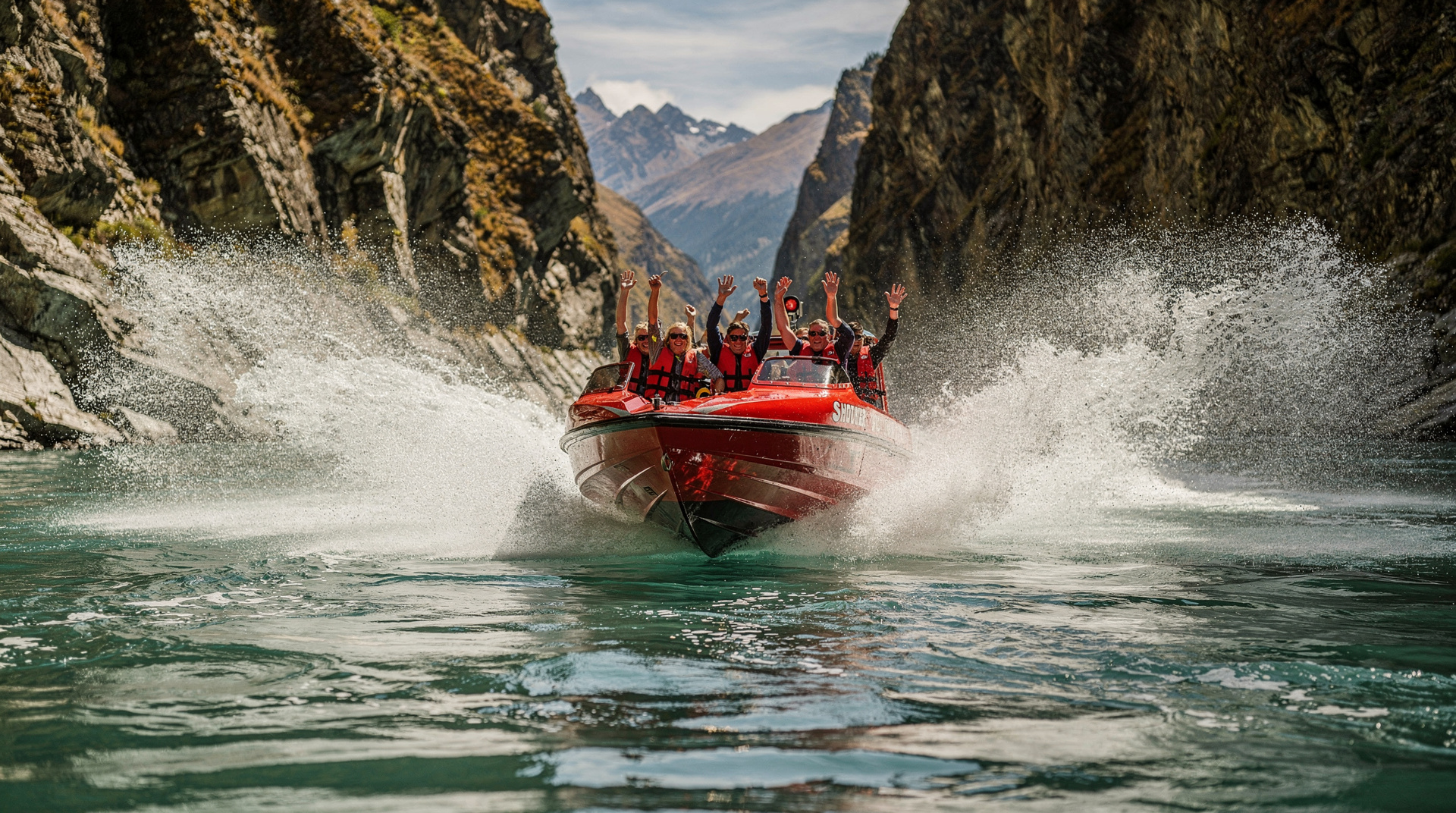
Jet boating on the Shotover and Kawarau rivers remains the single best value-for-thrills activity in town. The Shotover Jet sends a 12-person boat through the Shotover Canyon at 85 km/h, missing canyon walls by centimetres — it’s the original and still the best. Runs about 25 minutes on the water.
Queenstown: Shotover River Extreme Jet Boat Experience
Shotover Jet — 25 minutes through the canyon at 85 km/h with 360-degree spins. The original Queenstown jet boat experience, still the benchmark.
From NZD 169 / USD 101 / EUR 93
If you want to compare, the Skippers Canyon jet boat goes through the more dramatic upper Skippers Canyon — longer, wilder, and slightly more expensive at NZD 225 / USD 135 / EUR 124.
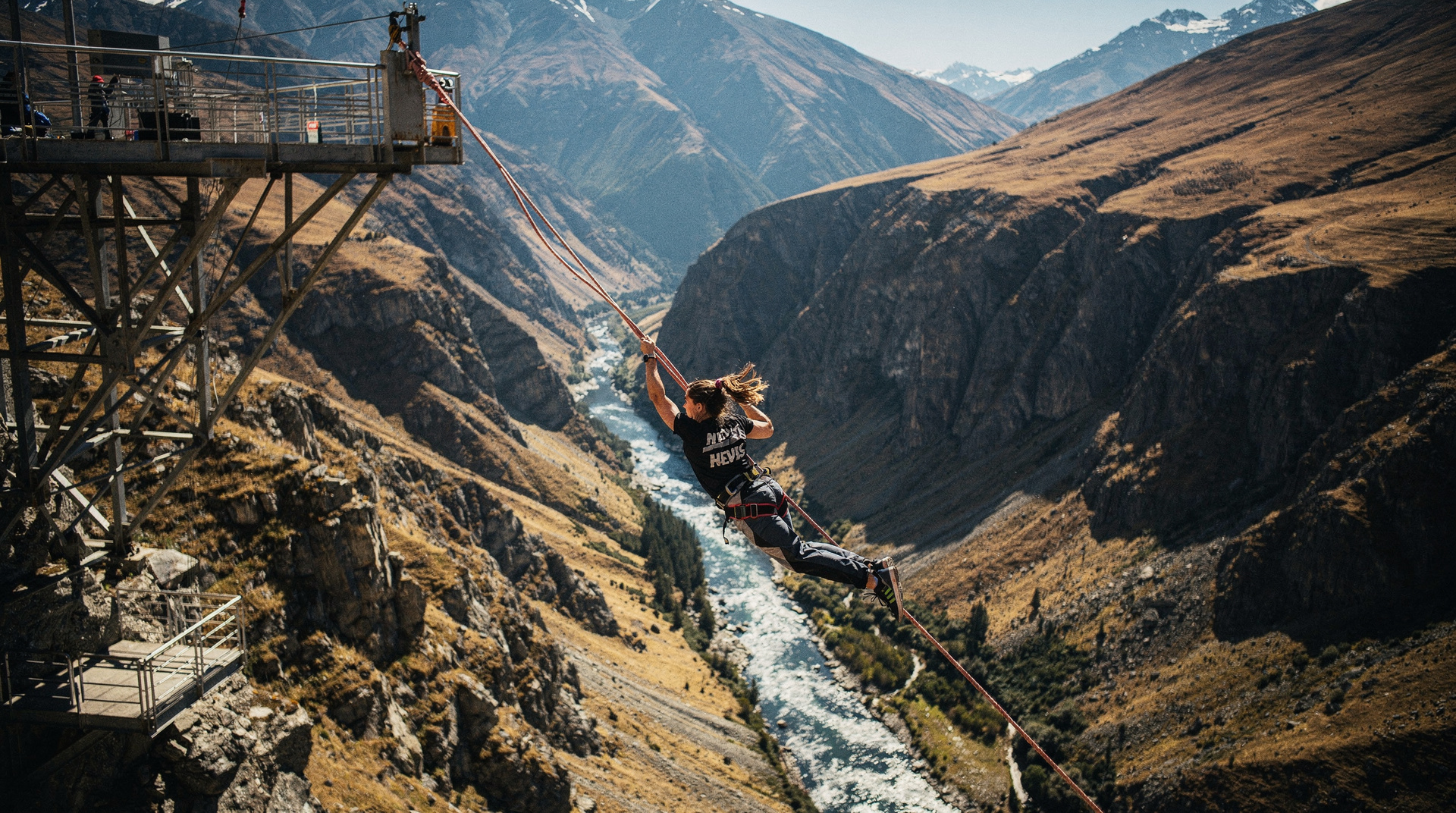
Bungy jumping — Queenstown has three AJ Hackett sites. The Kawarau Bridge (43m, NZD 225) is the historic one with water touch option. The Nevis (134m, NZD 275) is the biggest in New Zealand and legitimately terrifying. The Ledge (47m above Queenstown at the top of the gondola) is urban and great for photos. If you want the most dramatic bungy experience of your life:
Queenstown: Nevis Bungy - Australasia's Biggest Bungy
Nevis Bungy — 134 metres, the biggest in New Zealand. Eight seconds of freefall over a remote Nevis River canyon. Not comparable to anything else on the itinerary.
From NZD 275 / USD 165 / EUR 151
If budget or fear is a concern, start at Kawarau. The Nevis bungy and swing combo is worth it if you’re already there — NZD 345 / USD 207 / EUR 190.
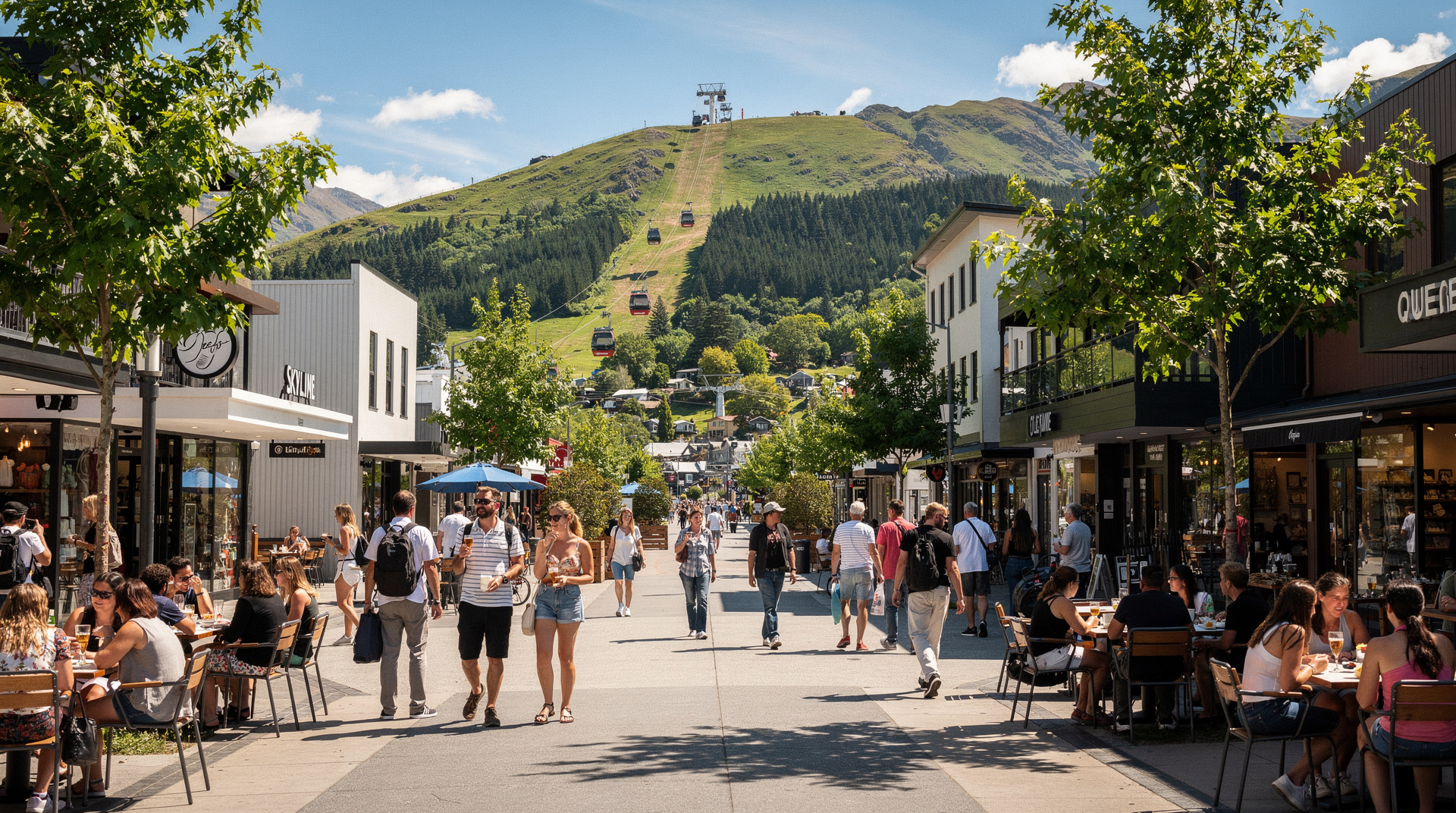
Skyline gondola and luge — the gondola ride plus luge is the highest-density fun-per-dollar activity in town and works for almost everyone including non-adrenaline travelers. The gondola rises 450m above town with a panoramic view of Lake Wakatipu and The Remarkables. The luge track (three runs recommended) is genuinely fun.
Combined ticket: NZD 62–78 / USD 37–47 / EUR 34–43. Sunset timing is particularly rewarding. For those who want to stay for dinner after the sunset views, the Skyline gondola with Stratosfare Restaurant lunch or dinner is a worthwhile upgrade — the restaurant rotates over the view and the Central Otago lamb and venison menu is good quality for a tourist attraction.
Jet boating alternatives — the Shotover Jet is the classic, but for a different river experience, the Shotover River and Kawarau River jet boat ride covers both rivers in a single session — more variety and a slightly different canyon experience. Good alternative if the Shotover Jet has a long wait or if you want to tick both rivers.
Scenic helicopter flights — arguably the best way to see the Southern Alps. A 45-minute flight from Queenstown airport over the Remarkables, Dart Glacier, and Mt Aspiring costs NZD 395–450 / USD 237–270 / EUR 217–248. Some itineraries fly you to Milford Sound with two or three alpine landings, which is spectacular but expensive (NZD 900–1,200 / USD 540–720 / EUR 497–660). See the scenic flights guide for operator comparisons.
TSS Earnslaw vintage steamer — the 1912 coal-fired steamship crosses to the historic Walter Peak Station; you get a farm tour, high country cooking demonstration, and a return crossing with great mountain views. One of the better “calm” afternoons available in an otherwise high-octane town.
Queenstown: TSS Earnslaw Cruise & Walter Peak Farm Tour
TSS Earnslaw cruise with Walter Peak high-country farm visit — a complete change of pace from Queenstown's adrenaline circuit. The farm tour and cooking demonstration are genuinely good.
From NZD 105 / USD 63 / EUR 58
Wine tours — Central Otago produces world-class Pinot Noir. The Gibbston Valley, 20 minutes from town, has five wineries in a single river valley. A half-day Central Otago wine tour with transport and tastings runs NZD 149–185 / USD 89–111 / EUR 82–102. Worth it if wine is your thing; skip if you’d rather drink at a bar in town.
Day trips from Queenstown
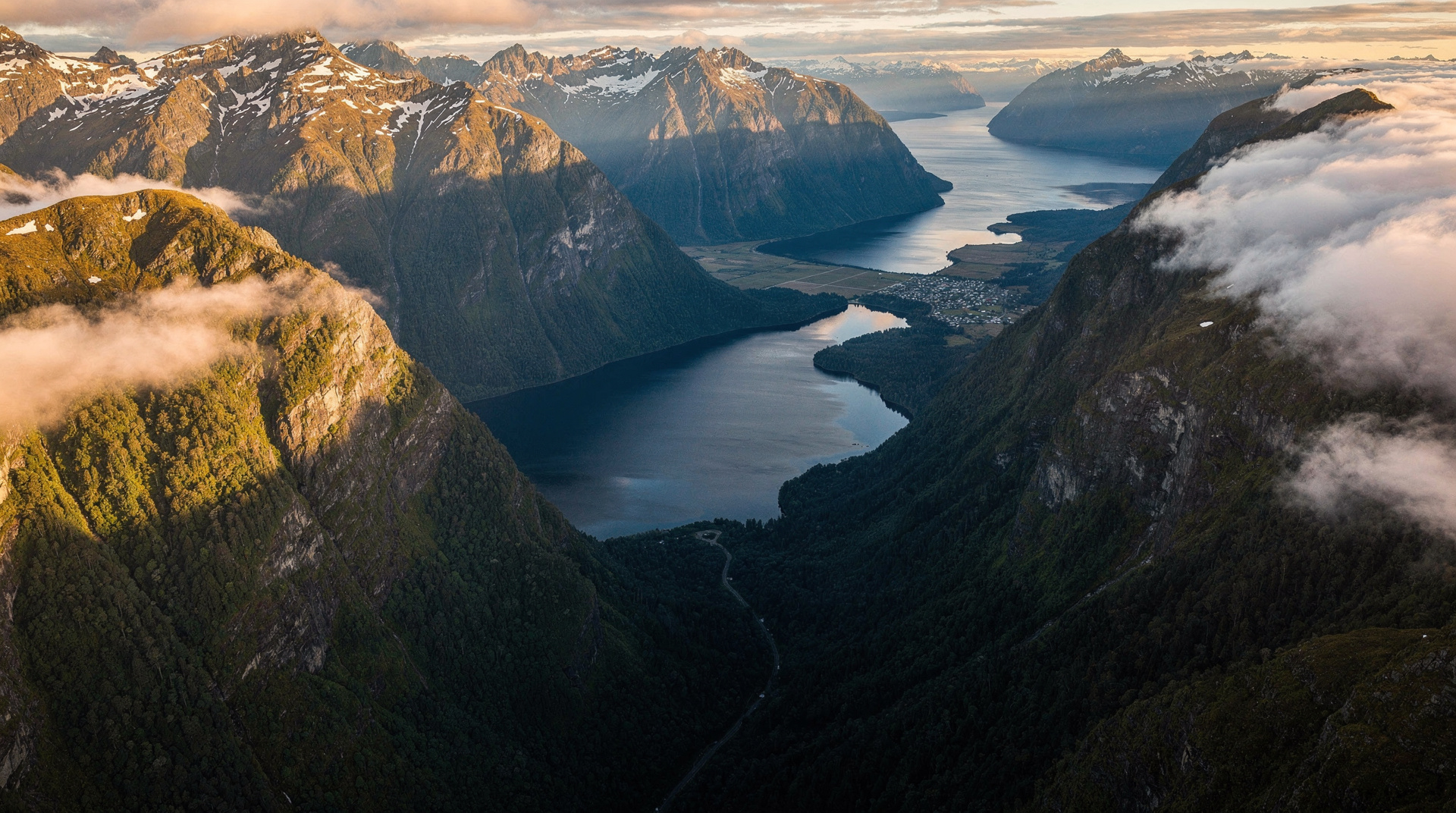
Milford Sound — the most popular day trip from Queenstown, and one you should think carefully about before booking. The drive is 4 hours each way on the Milford Road (SH94); add 2 hours for a cruise and you’re looking at a 12–13 hour day that starts at 6am. Bus-cruise-bus packages run NZD 165–220 / USD 99–132 / EUR 91–121.
A better option: spend a night in Te Anau, drive to Milford (2.5 hours with stops), cruise, and drive back to Te Anau or continue south. A flight-cruise-flight combo from Queenstown (see Milford Sound flights) is faster, more dramatic, and typically NZD 590–750 / USD 354–450 / EUR 325–413. See the full Milford Sound guide for all options.
Doubtful Sound — quieter, deeper, and more remote than Milford. Day trip from Queenstown requires either a long drive to Manapouri or a flight. Most people who do Doubtful Sound base themselves in Te Anau. See Doubtful Sound guide for detail.
Glenorchy — 45 minutes from Queenstown on a stunning lakeside road. The LOTR connections are excellent and the hiking (Routeburn and Rees-Dart trailheads) is world class. A half-day round trip is easily self-driven. The valley beyond Glenorchy toward Paradise (the actual place name) is one of the most beautiful drives in New Zealand.
Wanaka — 1 hour via the Crown Range (scenic) or 1.5 hours via Cromwell (easier driving). Wanaka is worth a full day or overnight — Roy’s Peak walk, Lake Wanaka itself, and the Cardrona ski area. Crowds are noticeably thinner than Queenstown.
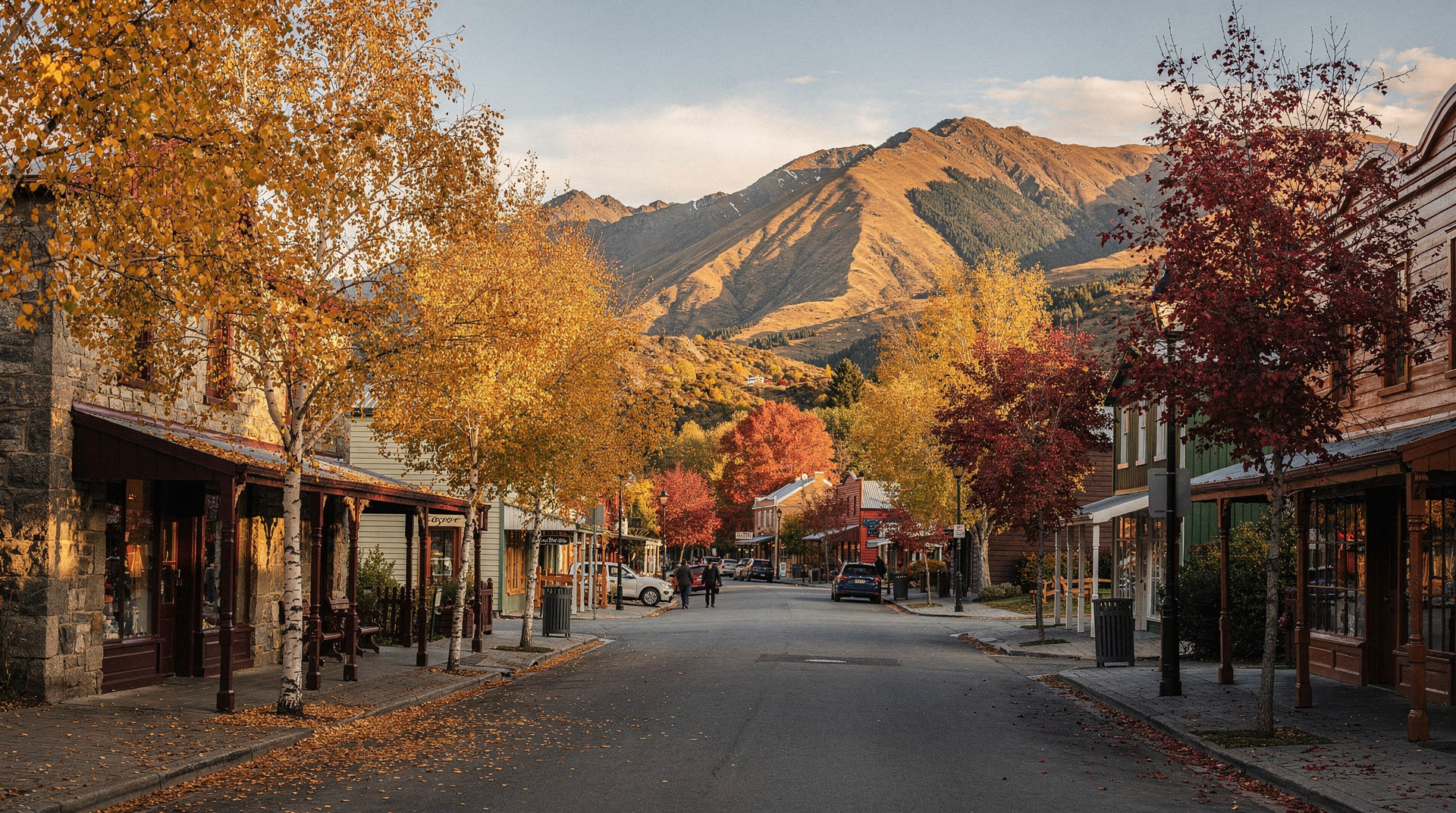
Arrowtown — 20 minutes from Queenstown, a well-preserved gold-rush village with a good museum and excellent autumn foliage (late April/May). Half-day visit; combine with the Gibbston Valley wineries. See the Arrowtown day trip guide for how it sits alongside the other options.
Booking ahead: what sells out first
Queenstown’s popularity means certain things need booking well before you land, while others can genuinely wait until you’re in town. The Nevis Bungy and Nevis Swing fill their daily slots first, especially in the December–February and July–August peaks — book these as soon as your dates are fixed. Milford Sound cruises (whether bus-cruise-bus or flight-cruise-flight) also sell out on clear-weather days in summer; if you have flexibility, book a day with a good forecast rather than locking in a fixed date weeks out. Accommodation in the town centre for peak weeks (Christmas–New Year, the July school holidays) can be gone three months ahead.
What can wait: the Skyline gondola and luge, most restaurant tables outside Rata, and the shorter zip line and paragliding slots usually have same-day or next-day availability outside the absolute peak weeks. Fergburger never takes bookings regardless of season — it’s queue-only, and the 9am or post-10pm strategy works year-round.
Getting around without a car
Queenstown’s town centre is compact enough to walk everywhere for meals, the gondola, and most adventure activity check-ins — operators typically run shuttle pickups from central accommodation as part of the booking. For day trips, the Orbus public bus network covers Frankton and the airport reasonably well but doesn’t reach Glenorchy or Arrowtown on a useful schedule; those routes are better done by rental car, shuttle, or a guided tour. If you’re not driving at all, build day tours into your plan for Milford Sound, Glenorchy, and the wineries rather than assuming you can self-drive on short notice.
Cost breakdown
3-day Queenstown trip, per person, NZD / USD / EUR
| Item | NZD | USD | EUR | Verdict |
|---|---|---|---|---|
| Mid-range hotel (town centre) | 195-280/night | 117-168 | 107-154 | ✓ Worth it |
| Shotover Jet (25 min) | 169 | 101 | 93 | ✓ Worth it |
| Nevis Bungy (134m) | 275 | 165 | 151 | ★ Splurge |
| Skyline gondola + luge | 62-78 | 37-47 | 34-43 | ✓ Worth it |
| TSS Earnslaw + Walter Peak farm | 105 | 63 | 58 | ✓ Worth it |
| Central Otago wine tour (half-day) | 149-185 | 89-111 | 82-102 | ★ Splurge |
| Nevis Catapult Canyon swing delivers more for less | 285 | 171 | 157 | ✕ Skip |
| Helicopter to Milford (glacier landing) Do on day 1 — weather-dependent | 900-1200 | 540-720 | 497-660 | ★ Splurge |
Where to stay
Queenstown has three distinct accommodation zones. The town centre has maximum convenience but noise — expect it. Frankton (near the airport and shopping) is quieter and cheaper. Arrowtown, 20 minutes away, is charming but requires driving in for activities.
Budget (hostel): Nomads Queenstown (central, lively, NZD 45–65 / USD 27–39 / EUR 25–36 per dorm bed); Base Queenstown (Kawarau Falls area, NZD 38–55 / USD 23–33 / EUR 21–30); YHA Queenstown Central (reliable DOC-affiliated hostel, NZD 45–60 per dorm / USD 27–36 / EUR 25–33).
Mid-range: Mercure Queenstown Resort (Frankton, great lake views, NZD 195–280 / USD 117–168 / EUR 107–154 per room); Copthorne Hotel and Resort (lakefront, dated but well-located, NZD 220–320 / USD 132–192 / EUR 121–176); Heartland Hotel Queenstown (central, solid value, NZD 175–250 / USD 105–150 / EUR 97–138).
Splurge: Eichardt’s Private Hotel (5-star, directly on the lakefront, 11 rooms, exceptional service, NZD 850–2,200 / USD 510–1,320 / EUR 468–1,210); Azur Lodge (9 private villas on the hill above town, stunning Wakatipu views, NZD 1,200–2,800 / USD 720–1,680 / EUR 660–1,540); Matakauri Lodge (on the lake 5 minutes from town, Relais and Chateaux property, NZD 1,100–2,500 / USD 660–1,500 / EUR 607–1,375).
Book all accommodation at least 3 months ahead for summer (December–February) and ski season (July–August). Last-minute rates in peak season are punishing.
What to eat and drink
Fergburger is simultaneously the most hyped and most justified food experience in Queenstown. The queue starts at 8am. The Big Al (NZD 16.50 / USD 10 / EUR 9) and the Bun Mee are both outstanding. Strategy: go at 9am when it opens, or after 10pm when lines drop. Don’t skip it on principle because it’s touristy — it’s genuinely excellent.
Rata (corner of Ballarat and Beetham, Chef Josh Emett) is the best fine-dining option in town. Modern New Zealand cuisine using South Island produce — venison, salmon, Central Otago stone fruit. Mains NZD 42–58 / USD 25–35 / EUR 23–32. Book well ahead.
Eichardt’s bar is worth a drink even if you’re not staying there. The lakefront terrace is the best spot in town to watch the Remarkables change colour at sunset. Cocktails NZD 22–28 / USD 13–17 / EUR 12–15.
The Bathhouse (lake edge, historic building) — café-restaurant with good brunches and reliable lunches. Reliable mid-range food in a beautiful setting; mains NZD 25–38 / USD 15–23 / EUR 14–21.
Public Kitchen and Bar (SKYCITY Queenstown, waterfront) — solid breakfast and casual dinner spot with lake views. Coffee NZD 6 / USD 3.60 / EUR 3.30, mains NZD 28–45 / USD 17–27 / EUR 15–25.
Botswana Butchery — steakhouse on the lakefront, excellent cuts of South Island beef and lamb, main courses NZD 45–75 / USD 27–45 / EUR 25–41.
For groceries and self-catering: New World supermarket on Gorge Road is the best option. Night-market at Earnslaw Park on Thursdays and Fridays in summer.
Coffee culture is genuinely strong for a town this size — Vudu Cafe and Larder (central, excellent brunch and single-origin coffee) and Atlas Beer Cafe (craft beer and pizza, good for a casual dinner) are both reliably good without the queue that Fergburger demands.
Skip / Worth it / Splurge
✕ Skip : AJ Hackett Nevis Catapult (NZD 285 / USD 171 / EUR 157) if you’ve already done bungy — it’s a different sensation but not dramatically better than the canyon swing at a lower price. Also skip the Ledge bungy if you’re doing the Nevis — the Ledge is 47m versus 134m and you’ll feel underwhelmed by comparison.
✓ Worth it : Shotover Jet (best 25 minutes in town per NZD spent). TSS Earnslaw and Walter Peak (completely different energy, afternoon well spent). Skyline gondola at sunset (NZD 35 for gondola alone is fine; add luge for groups). The Shotover Canyon Swing (NZD 269 / USD 161 / EUR 148) if bungy has a long wait.
★ Splurge : Helicopter to Milford Sound with alpine glacier landing — nothing else in New Zealand hits the same visual peak. Budget NZD 900–1,200 / USD 540–720 / EUR 497–660 for the full experience. Do it on day 1 weather permitting; Queenstown weather is variable and you want flexibility.
Air-based adventure (mid-range adrenaline): For visitors who want altitude without a helicopter price tag, Queenstown has two excellent options. The tandem paragliding experience launches from the Skyline area and gives 15–20 minutes of soaring flight over Lake Wakatipu with a qualified instructor — genuinely peaceful rather than terrifying, and the views are extraordinary. The tandem hang gliding experience is a longer, more dynamic alternative, flying further out over the lake. Both are weather-dependent; morning launches typically have the most stable air.
Skydiving — the 12,000-foot tandem skydive is Queenstown’s most accessible skydive option, giving around 40 seconds of freefall above the Remarkables and Lake Wakatipu before canopy opens at around 5,000 feet. If extreme altitude matters less to you than the location — which at Queenstown is spectacular regardless — this is a well-priced entry point into the sport.
Zip lines — the Ziptrek 6-line zipline adventure (3 hours) is a forest and urban zipline course above Queenstown with six increasingly dramatic lines and excellent mountain views. More engaging than a single big drop; the guides provide good environmental commentary about the native bush. The shorter 2-line Ziptrek option (1 hour) suits those who want a taste without the full commitment.
⚠ Tourist trap : The Kiwi Birdlife Park (NZD 59 / USD 35 / EUR 32) — genuinely good conservation work but you can see kiwi better at Te Anau or Stewart Island. The Underwater Observatory at Milford Sound (covered under that destination) is better value than the Queenstown version.
How to fit Queenstown in your itinerary
Queenstown is the hub of the South Island 7-day South Island itinerary and features in every longer circuit. Most 14-day New Zealand itineraries allocate 3–4 nights here.
If you’re flying in from the North Island, Queenstown airport receives direct flights from Auckland (1h55m), Wellington (1h15m), Christchurch (45m), and Sydney (3h15m). An Auckland–Queenstown flight in advance typically costs NZD 120–220 / USD 72–132 / EUR 66–121.
If driving from Christchurch: the classic route via SH1, Lake Tekapo, and Mt Cook takes 8–9 hours with stops — worth 2 nights en route. If driving from the West Coast: Franz Josef to Queenstown via Haast Pass is 5 hours on a spectacular but winding road. See the driving in New Zealand guide for advice on South Island roads.
Parking in central Queenstown is expensive (NZD 4–6 per hour) and scarce in peak season. The free parking at Frankton and the shuttle bus into town is the best approach if you have a rental car.
Frequently asked questions about Queenstown
How many days do you need in Queenstown?
Three days is the minimum to do Queenstown justice — one day for adventure activities, one for Milford Sound or Glenorchy, one for the gondola, wineries, and town exploration. Five days is comfortable if you’re adding ski or more remote day trips. Seven days is only warranted if you’re staying for a ski week.
When is the best time to visit Queenstown?
There are two distinct peak seasons. Summer (December–March) offers warm weather (18–24°C), long days, and all activities operating. Winter (June–September) brings ski season — the four ski areas within an hour of town make Queenstown a serious ski destination. Shoulder seasons (April–May and October–November) offer fewer crowds, lower prices, and still good weather. Autumn foliage in April is spectacular. Winter outside ski season (September, late October) is quiet and cheap but some activities close.
Is it better to fly or drive to Queenstown?
Flying is usually the better choice if you’re coming from Auckland or Wellington on a tight schedule. Driving from Christchurch (via Tekapo and Mt Cook) is worthwhile if you have 2+ extra days and want to see the inland South Island. Driving from the West Coast via Haast Pass is genuinely beautiful and recommended if you’re already on the West Coast.
Do you need a car in Queenstown?
For central Queenstown activities, you don’t — the town is walkable and most adventure operators offer pickup. For day trips (Glenorchy, Arrowtown, Wanaka, Milford as a self-drive), a car is useful but bus and tour options exist for everything. Check the transport guide for the South Island before renting.
Is Queenstown worth it for families with young children?
Partially. The gondola-luge, Earnslaw cruise, and Walter Peak farm are excellent for kids. Most bungy, jet boat, and canyon swing activities have minimum age/weight requirements (typically 10–12 years, 35+ kg). Queenstown lake is good for swimming in summer. It’s expensive for families — budget NZD 400–600 / USD 240–360 / EUR 220–330 per day for two adults and two kids doing activities.
Is Milford Sound worth doing as a day trip from Queenstown?
Technically yes, but it’s a long and tiring day. The bus-cruise-bus option means 8–9 hours of travel for a 2-hour cruise. Better options: stay a night in Te Anau and drive to Milford (2.5 hours), or take a scenic flight from Queenstown that includes the cruise. See the day trips from Queenstown guide for full options.
How expensive is Queenstown compared to the rest of New Zealand?
Queenstown is the most expensive destination in New Zealand by a significant margin. Expect to pay 20–35% more for accommodation and food than in Christchurch or Dunedin. A budget traveler spending carefully can get by on NZD 120–160 / USD 72–96 / EUR 66–88 per day (hostel, self-catering, one activity). A mid-range couple should budget NZD 450–700 / USD 270–420 / EUR 248–385 per day including accommodation, meals, and one major activity each.
What’s the ski situation — is Queenstown a serious ski destination?
Yes, legitimately. Coronet Peak is the closest field to town (30 minutes) with excellent groomed runs and the only night skiing in New Zealand. The Remarkables basin is spectacular and more beginner-friendly. Cardrona (45 minutes over the Crown Range) has the best terrain parks and snowmaking. Treble Cone near Wanaka has the most challenging terrain and the best ungroomed skiing. Day passes run NZD 145–175 / USD 87–105 / EUR 80–96. Queenstown ski season runs June to October; July–August are the peak months with highest snow reliability. Book accommodation well ahead — the town fills completely during school holidays.
Should I base myself in Queenstown or Wanaka?
Both work, and many travellers do a few nights in each. Queenstown has more activity variety, nightlife, and flight connections; Wanaka is calmer, has its own excellent walks (Roy’s Peak) and lake, and is closer to Treble Cone and the West Coast route. If adventure activity variety matters most, base in Queenstown; if you want a quieter home base with day-trip access to Queenstown’s activities, Wanaka works nearly as well, with the Crown Range adding about an hour of driving each way.
Is it worth renting a car just for Glenorchy?
Yes, if you have half a day free and no other Glenorchy plan — it’s one of the most scenic drives in New Zealand and gives you flexibility that a tour doesn’t. If you’re only doing Glenorchy once and don’t need a car for anything else, a half-day guided tour is a reasonable substitute and removes the need to navigate an unfamiliar lakeside road.
Top experiences: Queenstown New Zealand
See all →Guides for Queenstown
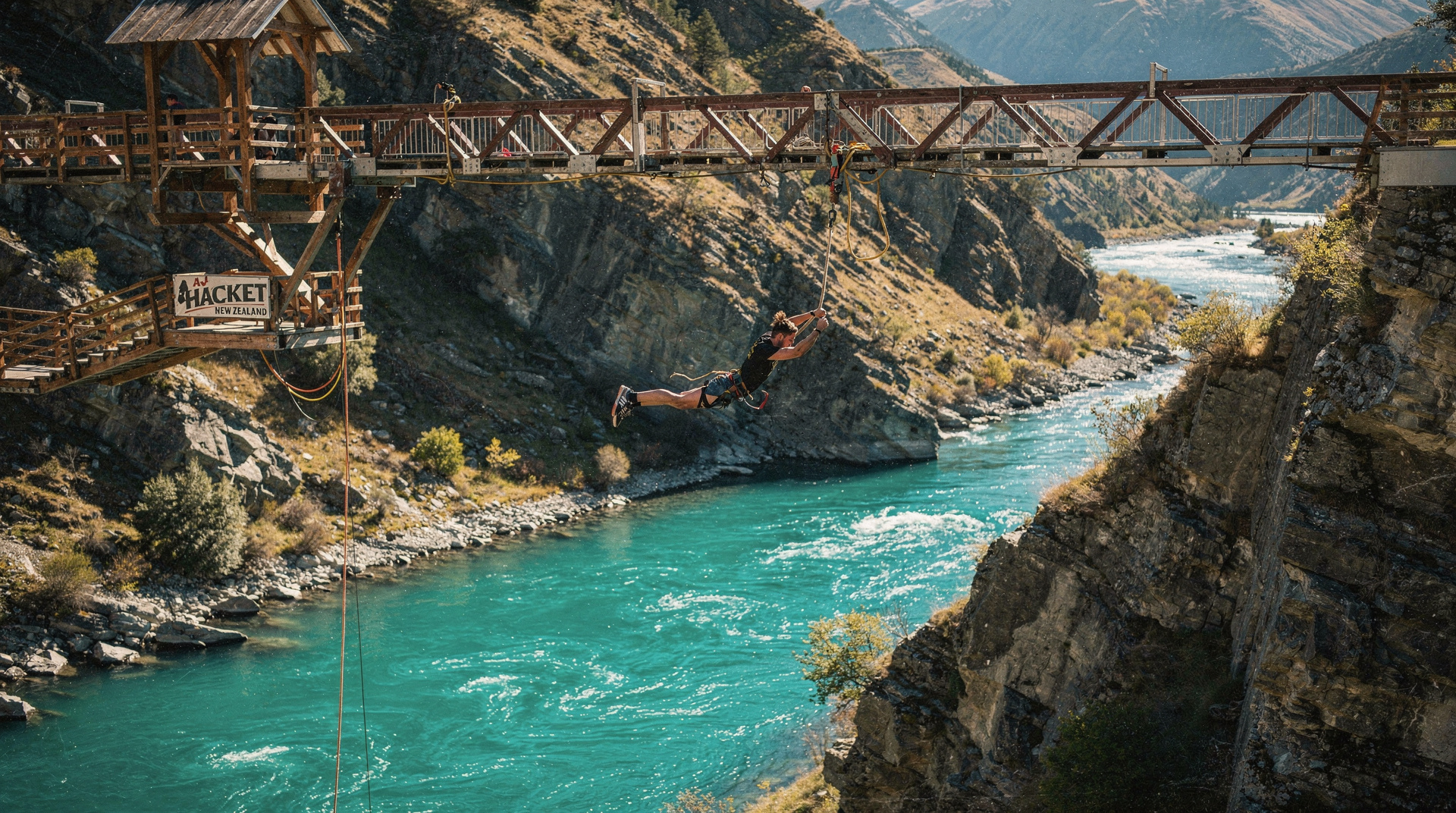
AJ Hackett Nevis Bungy review — 134m over a canyon, honest verdict
Nevis Bungy review: NZD 275 for Australasia's biggest bungy. Who should book, what the 8.5 seconds actually feel like, and the Swing combo verdict.
Bungy in Queenstown
Honest Queenstown bungy guide: Kawarau Bridge (the original 1988), the Nevis (134m), the Ledge — costs, age limits, and which is right for you.
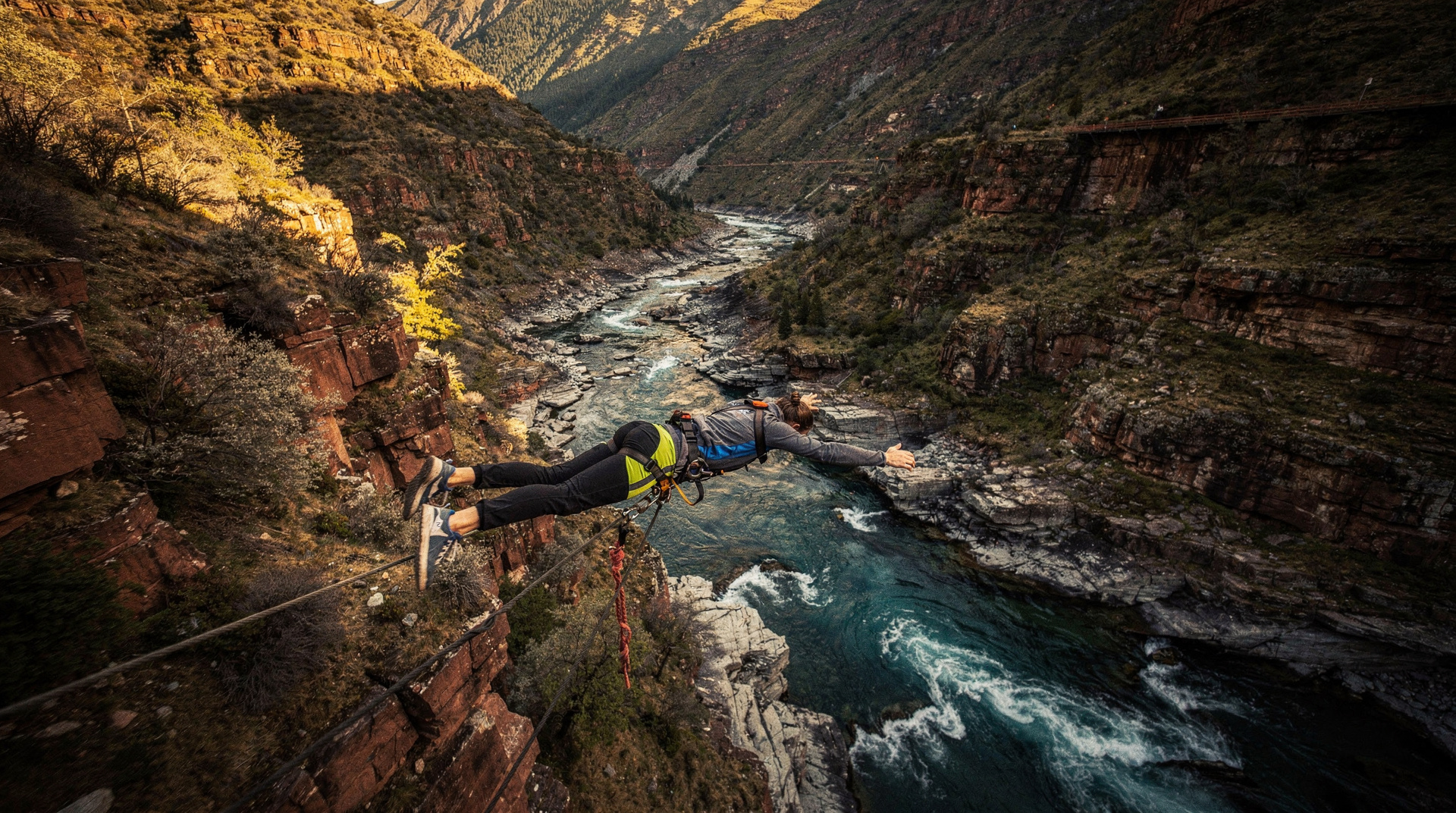
Canyon Swing at Shotover — Queenstown's underrated thrill
The Shotover Canyon Swing: 200m arc, 109m freefall, 150 km/h peak speed. Prices NZD/USD/EUR, launch positions, and how it compares to the Nevis Swing.
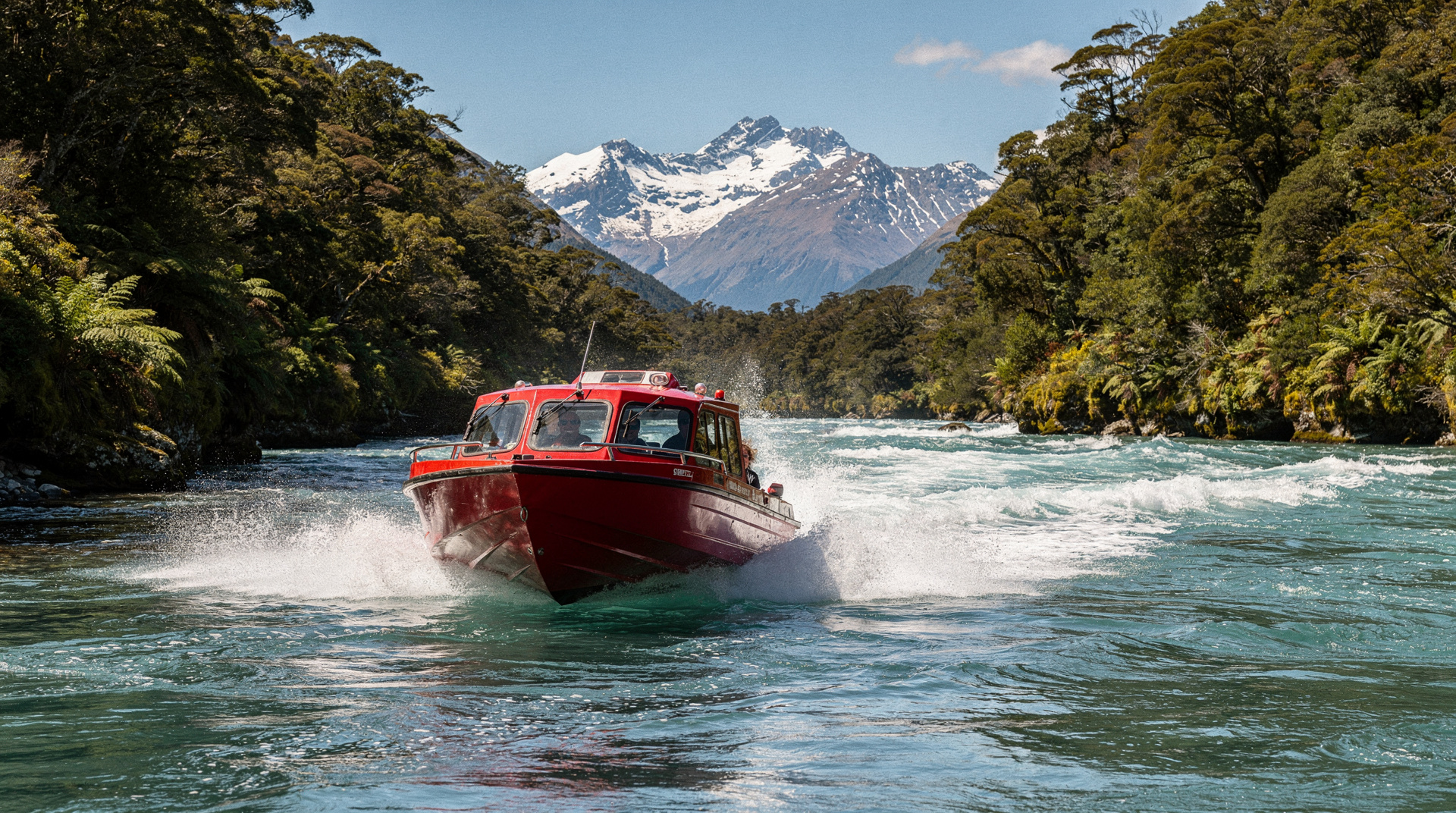
Dart River day trip from Queenstown
How to do a Dart River day trip from Queenstown: 45-minute drive to Glenorchy, jet boat through LOTR landscapes, Dart River wilderness, costs in NZD/USD/EUR.
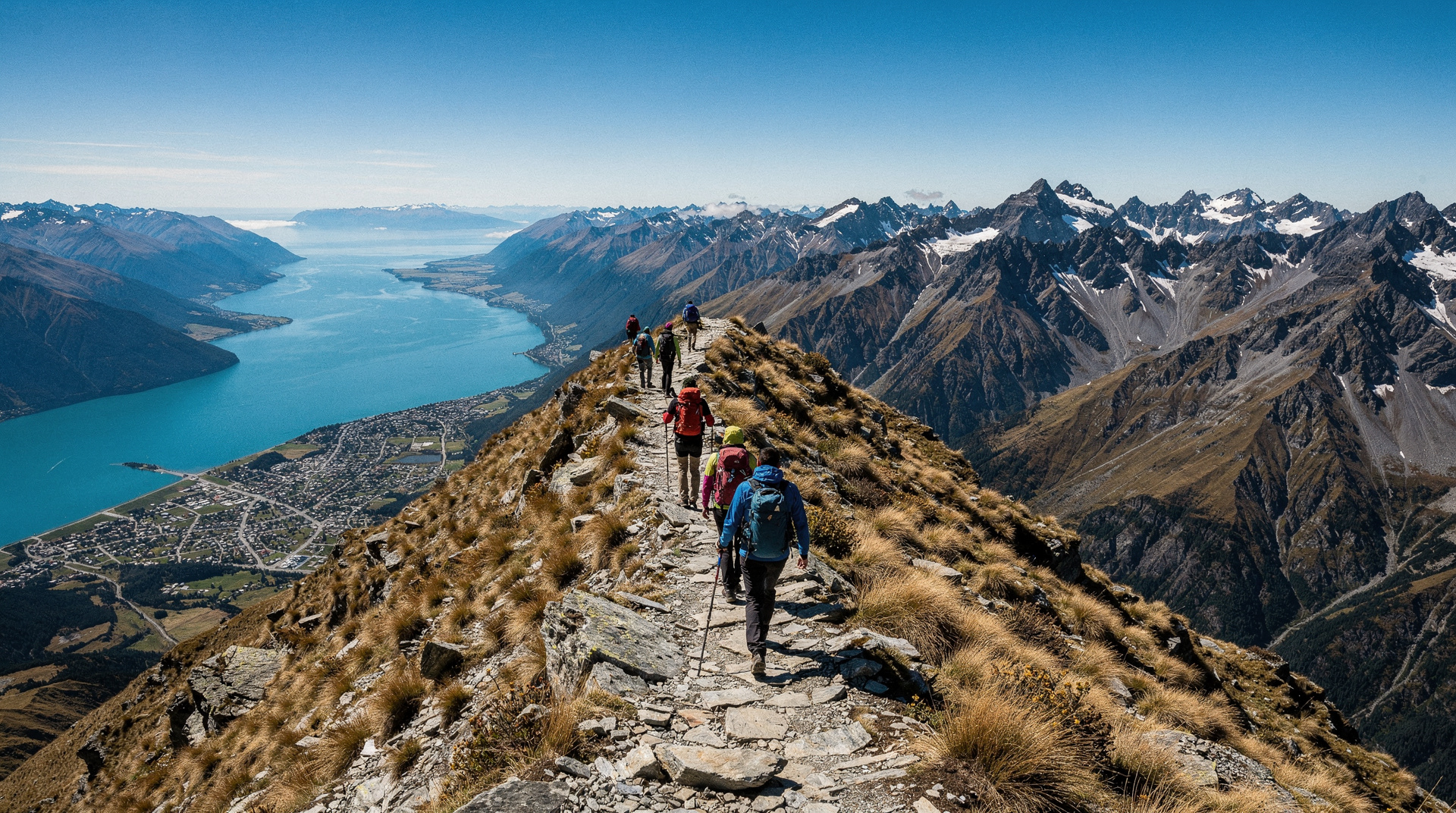
Day hikes around Queenstown — six best options
Six best day hikes near Queenstown: Ben Lomond (1748m), Queenstown Hill, Tiki Trail, Moke Lake loop, Bob's Peak, Deer Park Heights. Distances, times, costs.
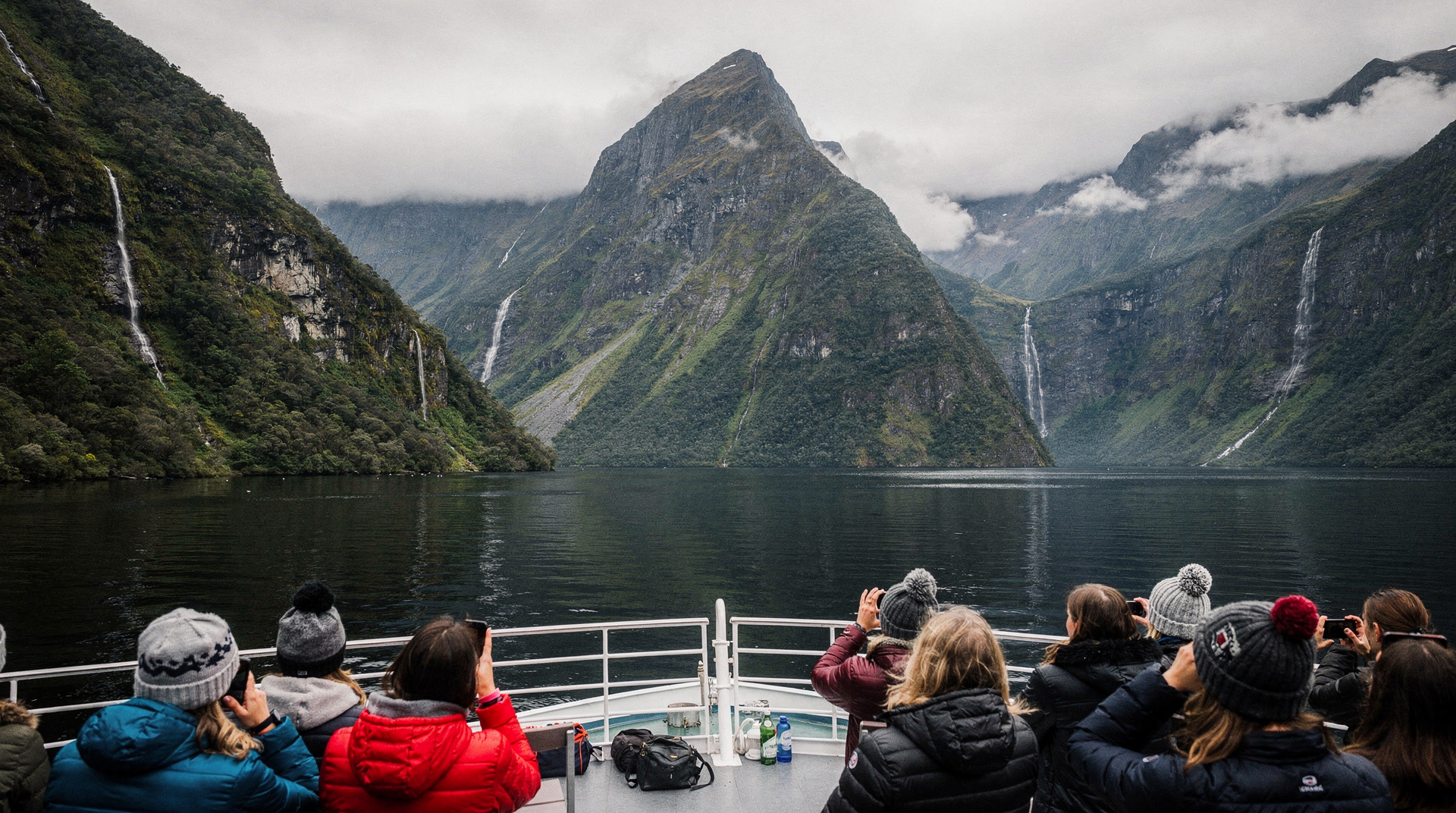
Best day trips from Queenstown
Day trips from Queenstown: Milford Sound (13h bus — honest), Glenorchy (45min), Wanaka (1h), Doubtful Sound, Dart River jet boat.
Related guides
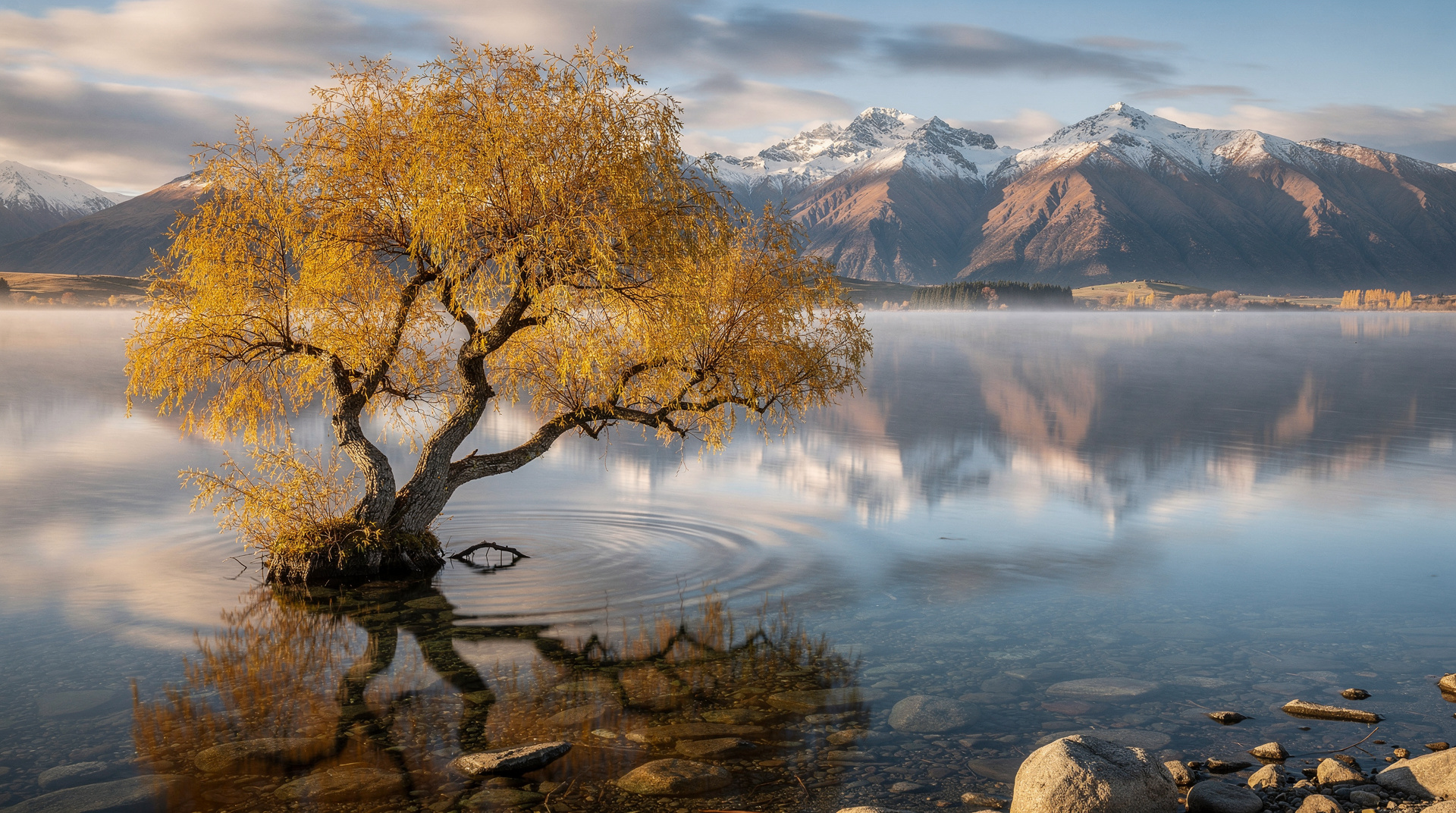
Wanaka
Honest Wanaka guide: Roy's Peak, Cardrona ski, lake kayaking — real NZD/USD/EUR costs and the honest Queenstown vs Wanaka verdict.
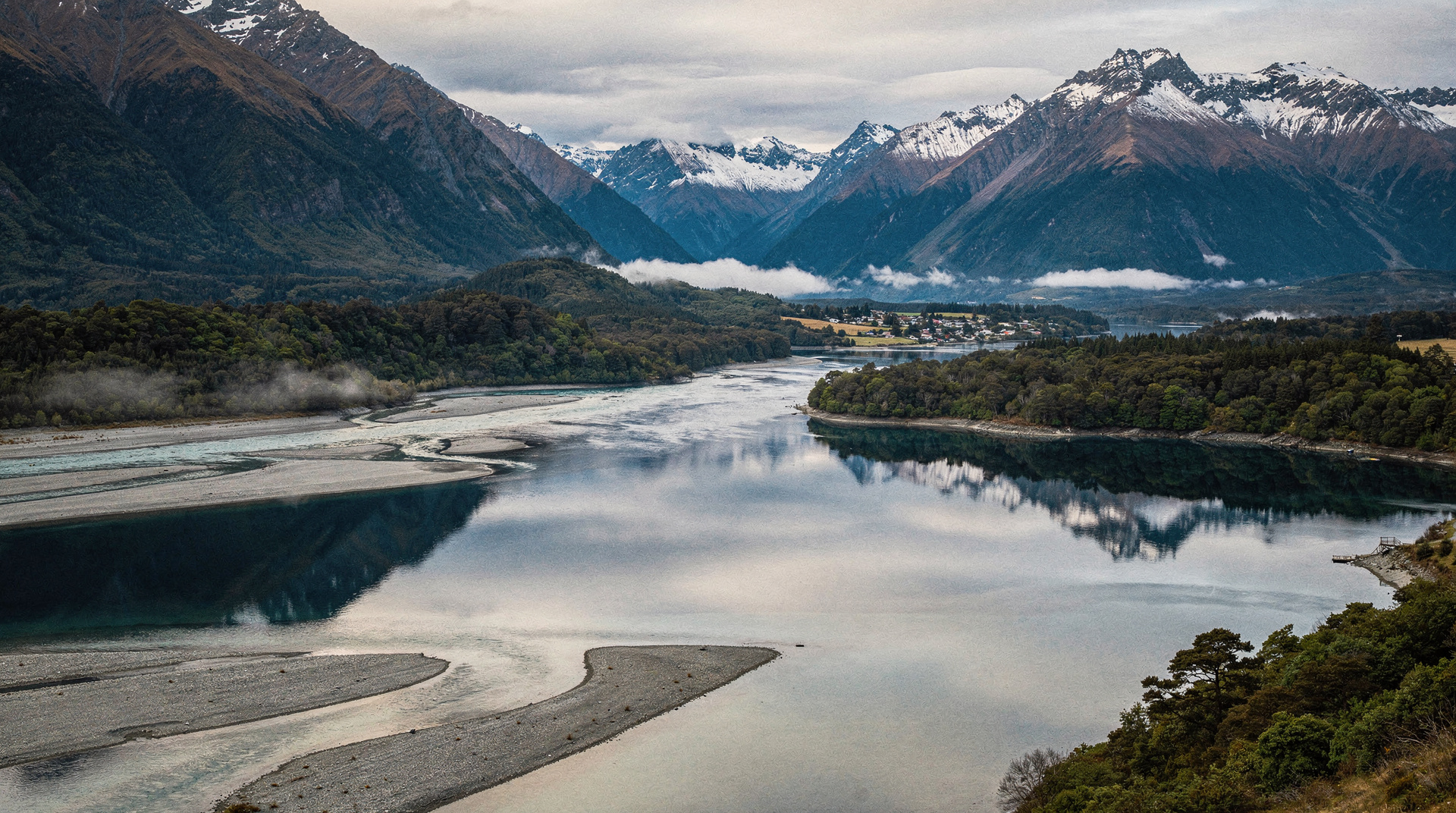
Glenorchy
Glenorchy: Isengard and Lothlórien filming country, Routeburn trailhead, Dart River jet boats, the quiet end of Lake Wakatipu. Real prices.
Arrowtown
Arrowtown: the best-preserved gold rush town in New Zealand, extraordinary autumn foliage, and Central Otago Pinot Noir. Half-day from Queenstown. NZD/USD/EUR.
Fiordland
Honest Fiordland planner: Milford Sound vs Doubtful Sound, Te Anau base, Milford Track booking, real NZD/USD/EUR costs and what most guides won't tell you.
Bungy in Queenstown
Honest Queenstown bungy guide: Kawarau Bridge (the original 1988), the Nevis (134m), the Ledge — costs, age limits, and which is right for you.
Shotover Jet — Queenstown's canyon jet boat ride
Everything about the Shotover Jet: prices, duration, canyon experience, age limits, and whether it lives up to the hype. Real costs NZD + USD + EUR.
Day hikes around Queenstown — six best options
Six best day hikes near Queenstown: Ben Lomond (1748m), Queenstown Hill, Tiki Trail, Moke Lake loop, Bob's Peak, Deer Park Heights. Distances, times, costs.
New Zealand adventure itinerary — 14 days for thrill-seekers
14-day NZ adventure itinerary for 20–40 year olds: bungy, Tongariro Crossing, Abel Tasman kayaking, Shotover Jet, skydiving, and Milford Sound. Real costs.
Is Queenstown overcrowded? A real answer
Queenstown gets accused of being over-touristed. Here's an honest answer: when it's genuinely crowded, when it's fine, and what to do instead.
Last reviewed: