Auckland Museum — visitor guide to Tamaki Paenga Hira
Is Auckland Museum worth visiting and how much does it cost?
Yes — Tamaki Paenga Hira (Auckland Museum) is one of the finest museums in the Southern Hemisphere. Entry costs NZD 32 / USD 19 / EUR 18 for adults (non-residents). Allow at least 3 hours. The Maori gallery with the Hotunui meeting house, the daily kapa haka performance, and the natural history floor are the standout draws.
Tamaki Paenga Hira: the museum in the Domain
| Where | The Auckland Domain, Parnell, 10-15 min walk from the CBD |
| Cost | Around NZD 32 adult / NZD 16 child (non-residents; NZ residents free) |
| Time needed | 2.5-3 hours minimum |
| Getting there | Walk from CBD, bus routes 70/75, or paid Domain parking |
| Best time | 10am arrival to beat tour groups and secure the 11am performance |
Auckland Museum — its full Maori name is Tamaki Paenga Hira, which can be understood as “the gathering place of Auckland’s treasures” — stands at the top of Auckland Domain, a volcanic crater park 15 minutes’ walk from the CBD. For an honest verdict on whether the paid cultural performance combo is worth the upgrade over general entry, see the Auckland Museum cultural performance review. The neoclassical 1929 building, extended in 2006 with a striking atrium addition, is as much a landmark as a museum: visible from much of central Auckland, it anchors the Domain in the same way the Domain anchors the isthmus.
The museum is Auckland’s only major civic museum and serves simultaneously as the city’s war memorial (the facade lists the names of Auckland’s war dead), the home of New Zealand’s most significant North Island Maori collection, and a comprehensive natural history and Pacific collections institution. That is a lot to ask of one building, and the museum carries it well — the different functions inhabit different floors without confusion.
Unlike Te Papa in Wellington, Auckland Museum charges non-resident entry fees. This is a point of genuine comparison that visitors should understand: New Zealand residents enter free; international visitors pay NZD 32 / USD 19 / EUR 18 (adult), NZD 16 / USD 10 / EUR 9 (child 5-14), with family passes available at NZD 75. These prices are reasonable for what is offered.
Getting there
Address: The Auckland Domain, Parnell, Auckland. The Domain is a 10-15 minute walk from the CBD via Park Road or through the Domain itself from Grafton Road. Bus routes 75 and 70 stop at the Domain gates (Parnell side). Paid parking is available inside the Domain.
Hours: Daily 10am–5pm (last entry 4:30pm). Extended hours during school holidays and some evenings. Closed Christmas Day and Good Friday.
Café: The Domain café (ground level, inside the museum) and the Domain Café (in the park itself) are both good options. The park café on a fine day, with views over the volcanic crater, is one of Auckland’s better lunch spots.
Auckland Museum entry ticket with interactive highlightsThe Maori galleries: the collection’s heart
The Maori collection at Auckland Museum is one of the finest in the world, representing primarily the carving traditions, taonga, and material culture of the iwi (tribes) of the upper North Island: Ngapuhi, Ngati Whatua, Tainui, Ngati Maru, and others.
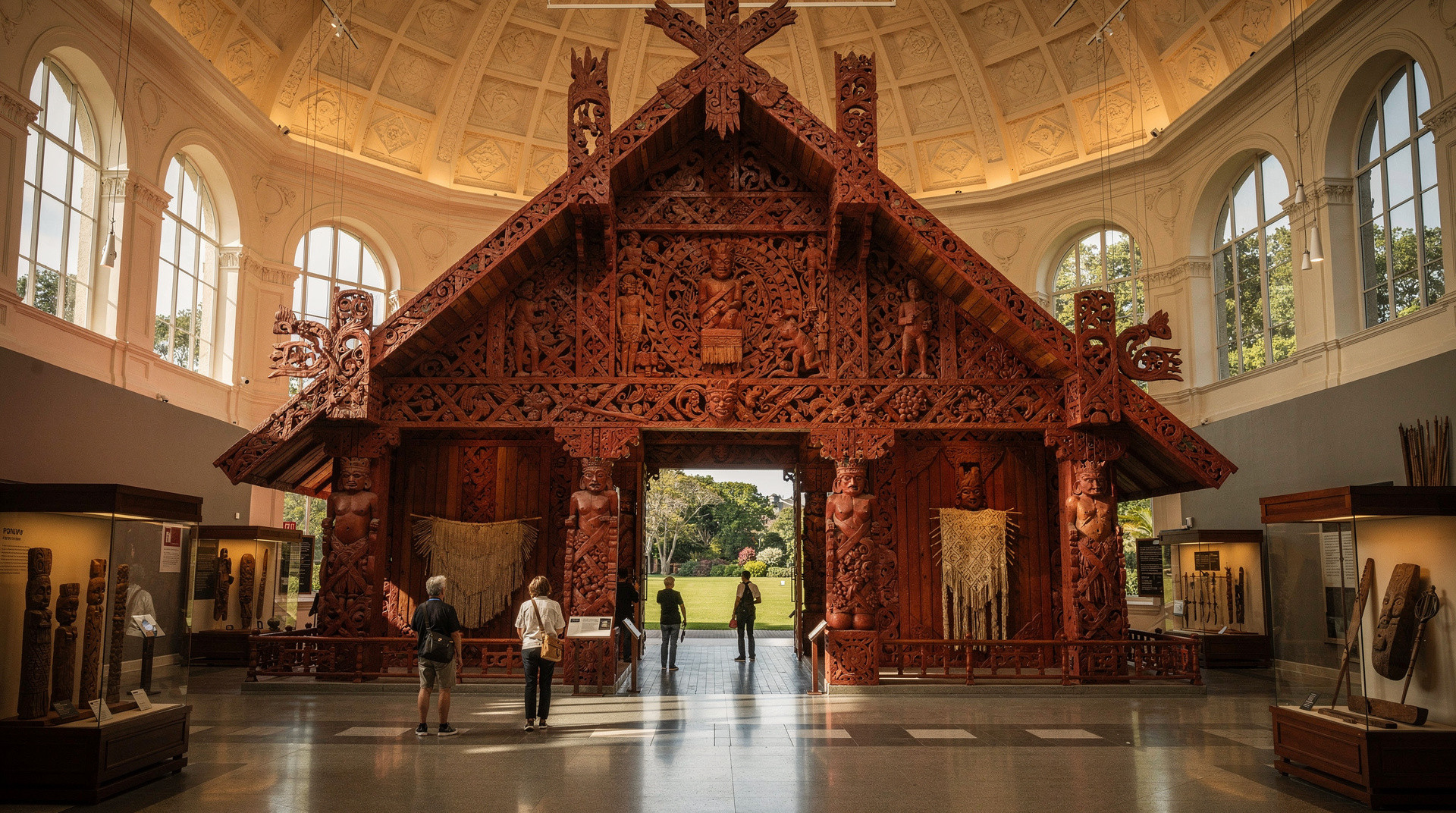
The carved meeting house (wharenui): The centrepiece of the Maori galleries is a sequence of carved architectural elements including the front facade of a wharenui (meeting house) and interior carvings from multiple houses. Unlike Te Papa’s Hotunui (which is a single, intact wharenui from the Hauraki region), Auckland Museum’s presentation assembles carvings from multiple traditions and periods — this gives a sense of the regional diversity of Maori carving across the North Island.
The waka taua (war canoe): One of the museum’s signature objects is a 25-metre carved waka taua, one of the longest and most elaborately decorated surviving canoes in New Zealand. The prow carving (tauihu) — a writhing, interlocking sequence of ancestors and guardians — is a masterwork of Maori carving tradition. These canoes were not merely transport; they were taonga representing the mana (authority and prestige) of the hapu (sub-tribe) that owned them.
Cloaks and garments: The collection of korowai (feather cloaks) and taniko-bordered garments is extraordinary. A single korowai of kiwi feathers represented years of gathering (kiwi were never abundant) and months of skilled weaving — these were garments of extreme prestige, worn only by rangatira (chiefs) on the most significant occasions.
Pounamu (greenstone) collection: Aotearoa’s greenstone deposits in the South Island (Pounamu, from which South Island’s Maori name Te Wai Pounamu — “the waters of greenstone” — derives) produced the most valued material in the Maori world. The museum’s collection of adzes, mere (weapons), hei tiki (pendants), and ornaments shows the full range of pounamu working over centuries.
The daily Maori cultural performance
Auckland Museum runs a daily kapa haka (Maori song and dance) performance in the atrium — one of the most accessible introductions to living Maori culture available in Auckland. The performance (approximately 45 minutes) includes poi, action songs, and haka, performed by professional Maori cultural performers.
This is a good, honest cultural introduction. It is not a ceremony — it is a deliberately curated performance for visitor audiences — but the performers are Maori, the content is genuine, and the experience has real cultural value. The inclusion of explanation and context by the performers themselves makes it more useful than passive spectacle.
Performances typically run at 11am, noon, and 1:30pm. Included in museum entry. The museum also runs guided tours that incorporate the performance and add collections commentary.
Auckland Museum — Maori cultural experience and admissionNatural history: New Zealand’s unique biodiversity
New Zealand’s natural history galleries occupy the ground floor and tell one of the planet’s most remarkable evolutionary stories: 80 million years of isolation produced an ecosystem dominated by birds (no terrestrial mammals evolved here) and with an extraordinary proportion of endemic species.
Moa: The most iconic exhibit. Full-size mounted skeletons of multiple moa species — the flightless birds that were New Zealand’s ecological equivalent of deer and horses, eliminated within approximately 100 years of Maori arrival through hunting and habitat change. The largest species (Dinornis robustus) stood 3.6 metres tall and weighed 230 kg — the largest bird that ever lived. Standing beside a full skeleton is genuinely affecting.
Huia and extinct birds: The museum holds specimens of the huia (Heteralocha acutirostris), a bird sacred to Maori and extinct since approximately 1907, as well as the haast’s eagle (Hieraaetus moorei), the world’s largest eagle species, which evolved to prey on moa. Both species are gone; understanding why (human arrival + introduced predators) is context for New Zealand’s current intense conservation effort.
Geology: New Zealand sits on the boundary of the Australian and Pacific tectonic plates — the country has 33 active volcanoes, experiences approximately 15,000 earthquakes per year (most imperceptible), and has experienced glaciation, volcanic eruptions, and sea level changes that have fundamentally shaped its geography. The geology gallery explains the landscape visitors will see.
Te Ro Nui — the forest: A ground-floor walk-through native forest installation showing kauri, rimu, totara, and podocarp species. Good for families with younger children.
For a more immersive experience combining the museum with the indigenous forest landscapes Auckland was built around, the Auckland city highlights and native forest tour pairs the museum collections with a guided walk through remnant native bush — providing ecological context for the plants and birds whose bones and specimens you’ve just been examining in the galleries above.
War memorial galleries
Auckland Museum is also the Auckland War Memorial Museum, with galleries on the top floor documenting Auckland’s involvement in the Boer War, World War I (Gallipoli and the Western Front), World War II, Korea, and later conflicts. The Hall of Memories — walls inscribed with 11,000+ Auckland war dead — is the emotional centre of the building.
For New Zealand visitors, particularly those with family history of the wars, these galleries have significant personal meaning. For international visitors, the exhibits provide context for the Anzac culture that pervades New Zealand public life.
The Pacific collections
New Zealand is a Pacific nation — Te Moana-nui-a-Kiwa (the Pacific Ocean) is central to national identity in ways most mainland European visitors do not expect. The Pacific galleries hold extensive collections from Samoa, Tonga, Fiji, Niue, Tokelau, Cook Islands, and other Pacific nations.
This collection is often overlooked in favour of the Maori galleries but is significant: the connections between Maori culture and wider Polynesian culture (in navigation, language, food cultivation, cosmology) are visible in the material parallels between the collections. The Maori culture overview puts this museum visit in context alongside marae visits, Rotorua performances, and other cultural experiences across both islands.
For a completely different marine collection nearby, the Kelly Tarlton’s Auckland guide covers the aquarium and Antarctic experience across town — a good pairing for families splitting a day between natural and cultural history. And for those planning beyond Auckland, the day trips from Auckland guide lists the other half-day and full-day options this museum visit competes with for your time.
Practical tips for visiting
Timing: Arrive at 10am to beat tour groups and get a seat for the 11am cultural performance without waiting. School holidays (December-January, April, July, October) bring significantly larger crowds — arrive early or visit on a weekday.
Combination with a Domain walk: The Auckland Domain is one of the city’s great public parks — a walk through the fernery and the glasshouses after the museum is worth 30 minutes. The Domain’s position on a volcanic cone means harbour views from the rim.
What to skip if time is short: The war memorial galleries, while important, are the least unique in terms of visitor experience — most countries have comparable WWI/WWII galleries. The natural history and Maori galleries are the distinctive draws.
Photography: Generally permitted in the public galleries. Follow restrictions in specific areas, particularly where tapu protocols apply to the Maori collection.
Auckland city sights tour including museum and Maori cultural performanceFor visitors who want the museum framed within a broader Auckland city introduction, the Auckland Museum and city highlights sightseeing tour combines the museum visit with the Domain, the waterfront, and the main volcanic cones in a single guided half-day. Efficient for first-timers on a tight schedule who want more context than they’d get independently.
Auckland Museum vs Te Papa: which should I visit?
Both are outstanding; if your schedule permits only one, the decision comes down to your itinerary:
Choose Auckland Museum if: You are spending more than 2 days in Auckland, you are particularly interested in North Island Maori carving traditions, or you want the Auckland Domain park experience combined with the museum visit.
Choose Te Papa if: You are in Wellington and have limited time, you want to see the Gallipoli exhibition (no equivalent at Auckland Museum), or the free entry is a significant factor in your budget.
Ideally: visit both. They complement rather than duplicate each other — different collections, different regional Maori traditions, different approaches.
Frequently asked questions
Do I need to book Auckland Museum tickets in advance?
Not usually — walk-in is possible. During peak summer (December-January) and school holidays, the Maori cultural performances can fill up. Online booking guarantees a performance seat.
How much time do I need for Auckland Museum?
Allow 2.5–3 hours minimum. A full morning (10am–1pm) covers the Maori galleries, a cultural performance, and the natural history floor at a comfortable pace.
Is Auckland Museum good for children?
Yes. The moa skeletons, the volcanic eruption simulator, the walk-through forest, and the hands-on natural history exhibits work well for ages 5 and up. Children under 5 are free. The kapa haka performance is usually appreciated by children — the haka in particular makes an impression.
Is the museum accessible to wheelchair users?
Fully wheelchair accessible with lifts throughout. Contact the museum in advance if you need specific assistance — staff are helpful.
What is the best way to combine Auckland Museum with other sights?
From the museum, the walk through Auckland Domain to Newmarket takes 20 minutes and connects to the inner suburbs. The alternative is to walk back to the CBD via Parnell village (Auckland’s oldest village, with good cafés) — a 20-25 minute walk through a pleasant neighbourhood. Combine with a day trip to Waiheke Island for a full Auckland experience.
Related guides
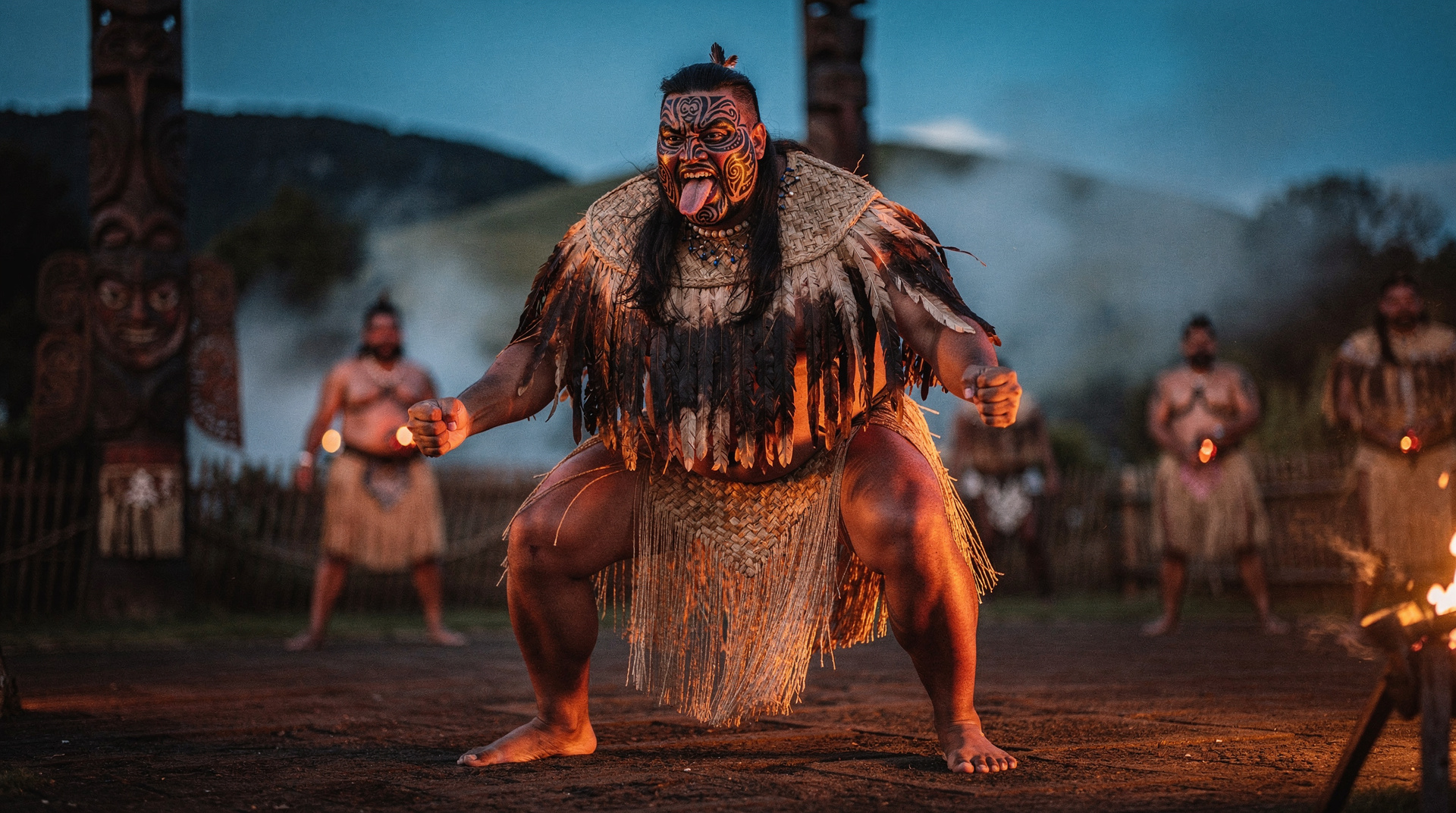
Maori culture overview — what every visitor should know
Respectful introduction to Maori culture for visitors: tangata whenua, Te Tiriti, tikanga basics, language, cultural experiences, and how to engage honestly.
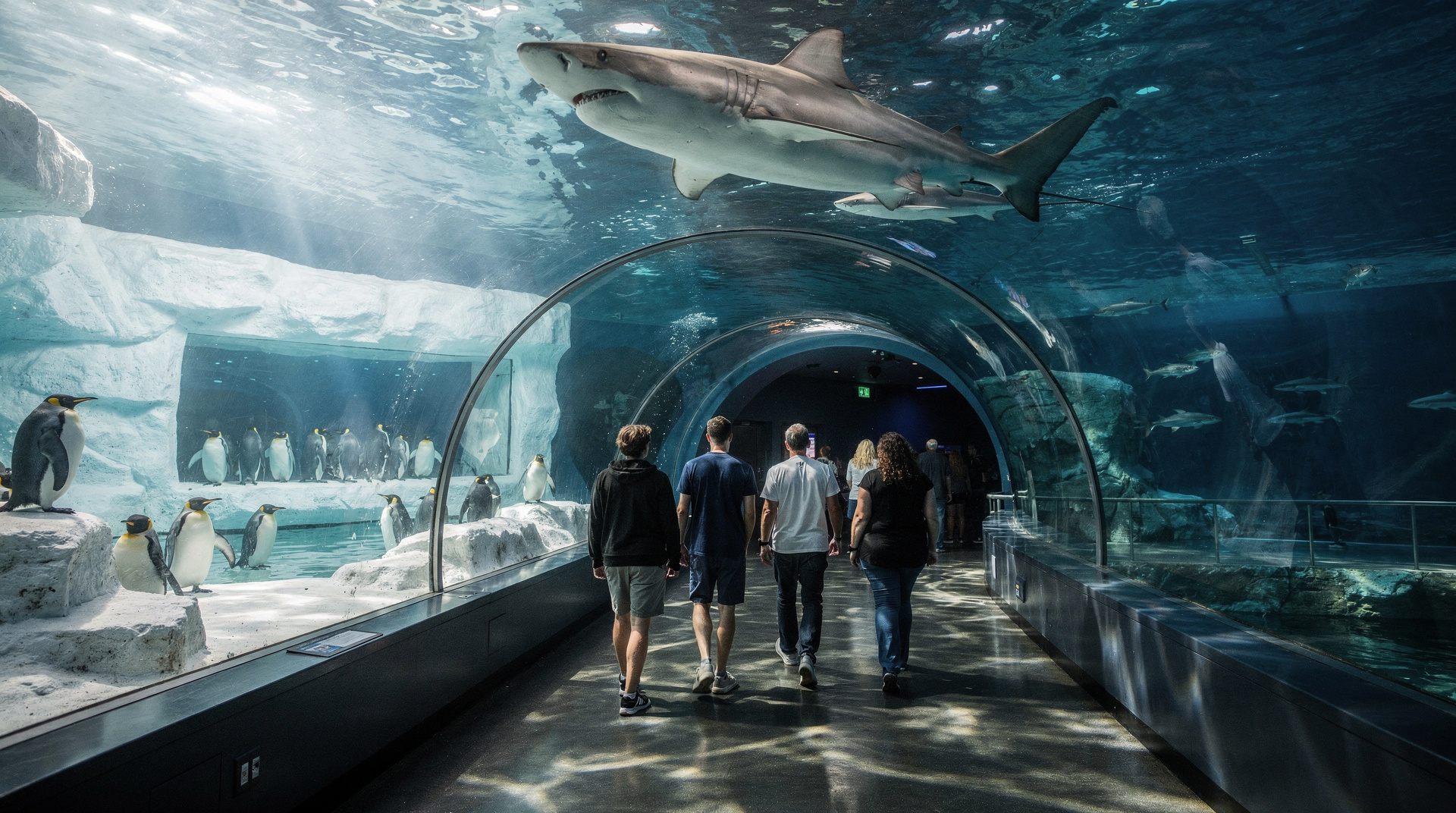
Kelly Tarlton's Sea Life Aquarium Auckland — visitor guide
Kelly Tarlton's Auckland guide: Antarctic penguins, shark tunnel, stingray touch pool. Entry NZD 39 adults online. Honest verdict and tips for families.
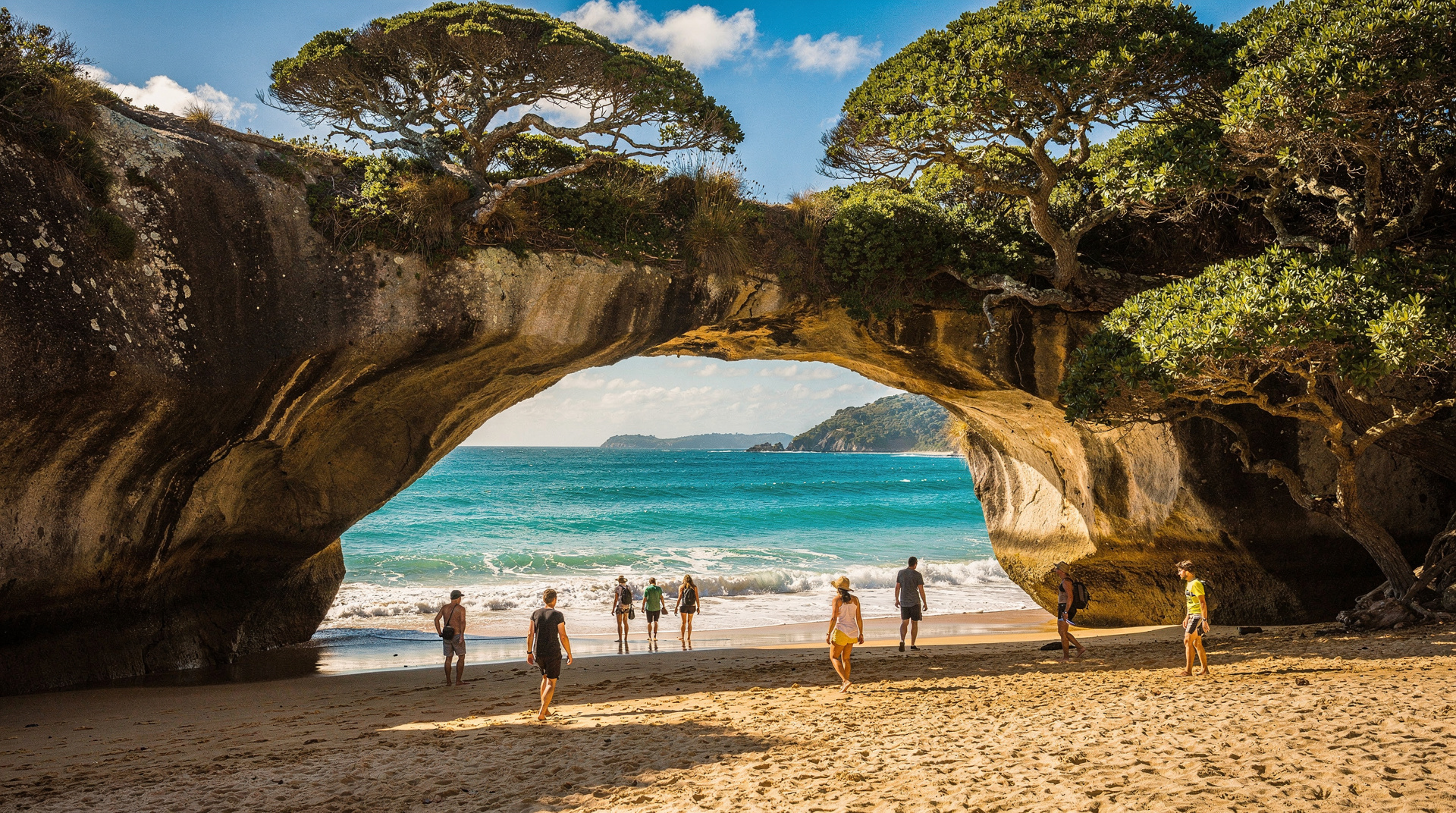
Best day trips from Auckland
Six great day trips from Auckland: Waiheke, Hobbiton, Waitomo, Coromandel, Rotorua and more — with drive times, GYG tours, and honest advice.
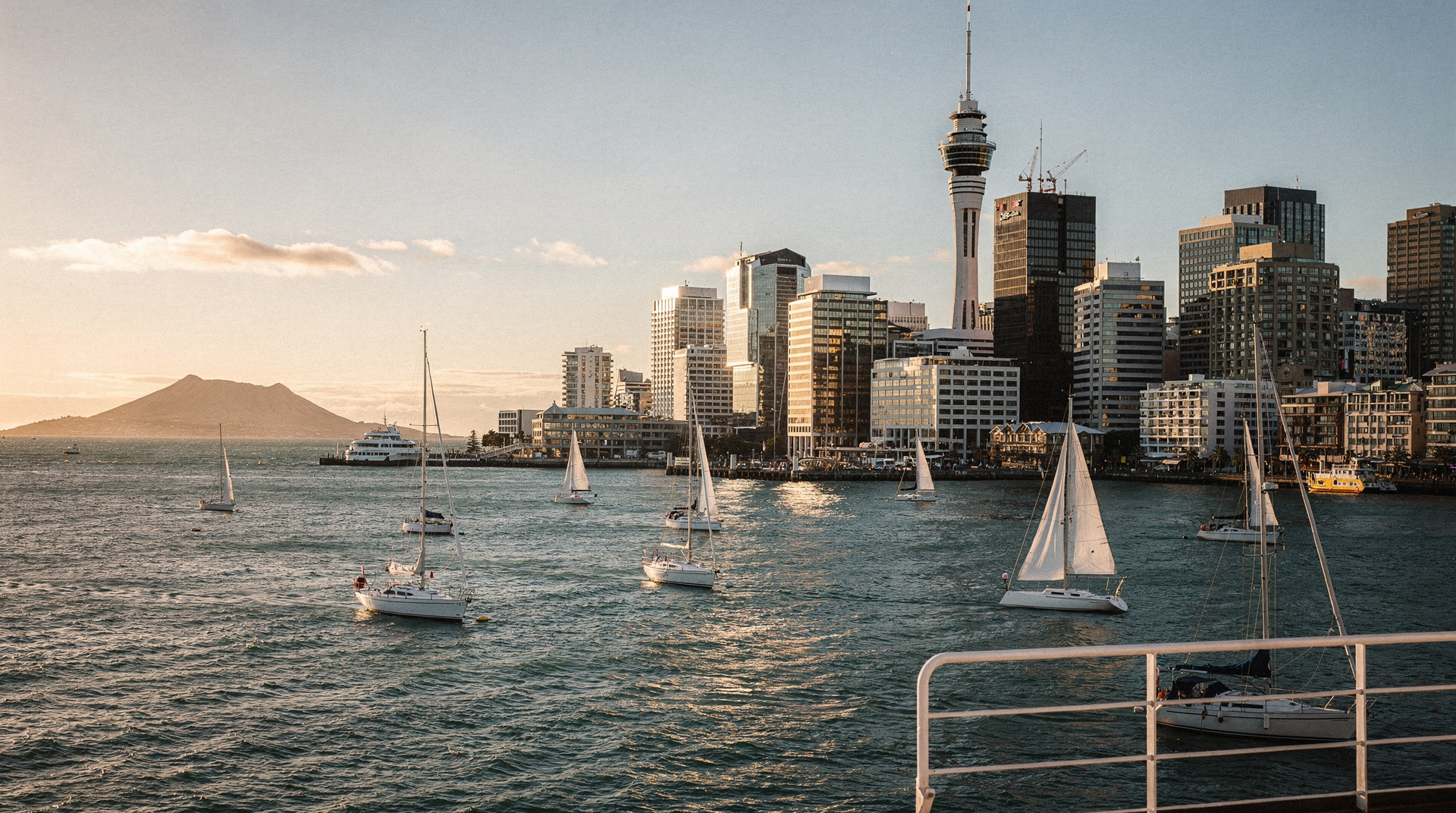
Auckland
Honest Auckland planner: harbour, Sky Tower, Waiheke wineries, day-trips to Hobbiton, real prices NZD/USD/EUR, and what's actually worth your time.
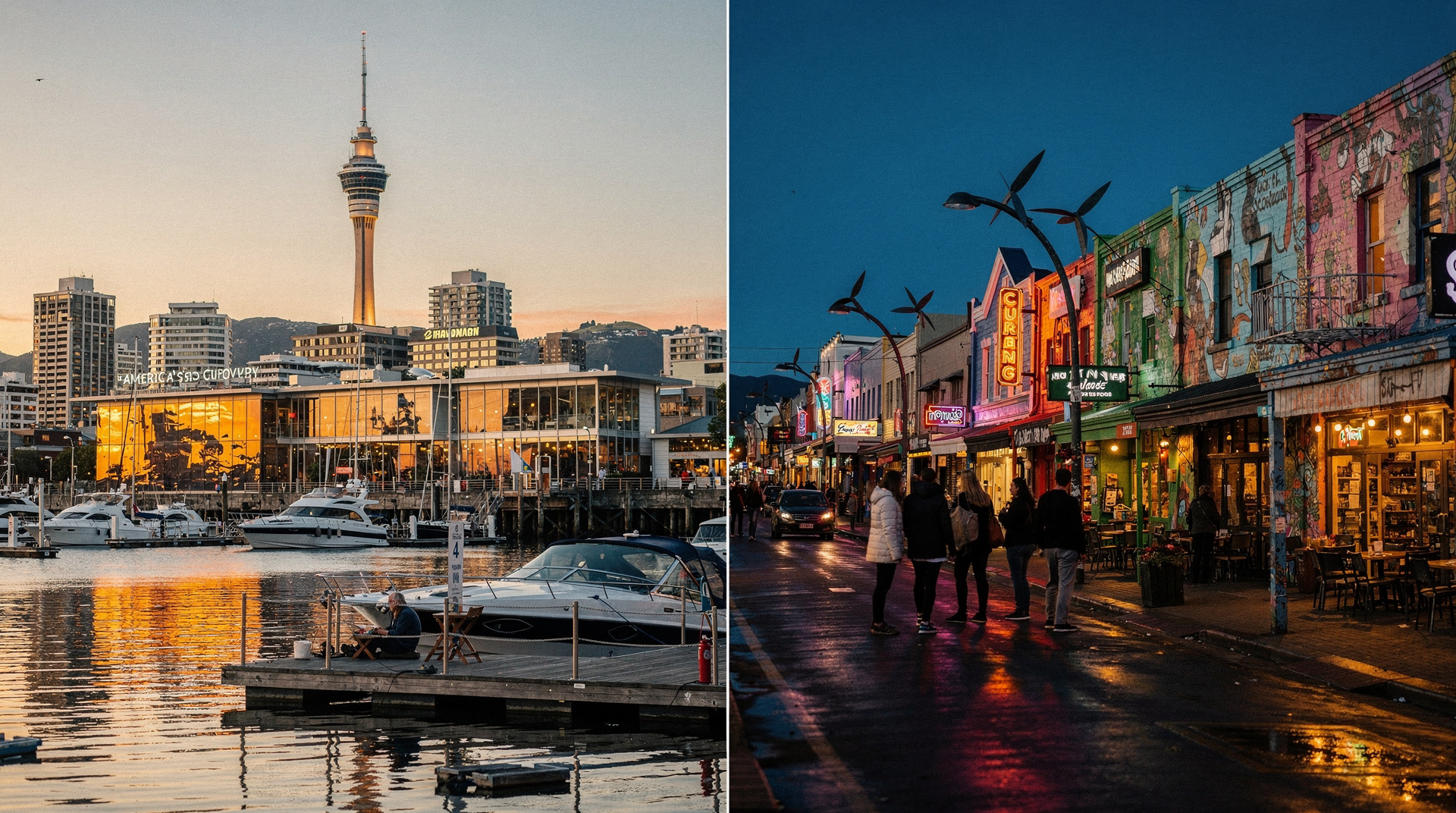
Auckland vs Wellington
Auckland vs Wellington honest comparison: food, culture, cost, day trips and vibe. Clear verdict for first-timers and repeat visitors. NZD/USD/EUR prices.
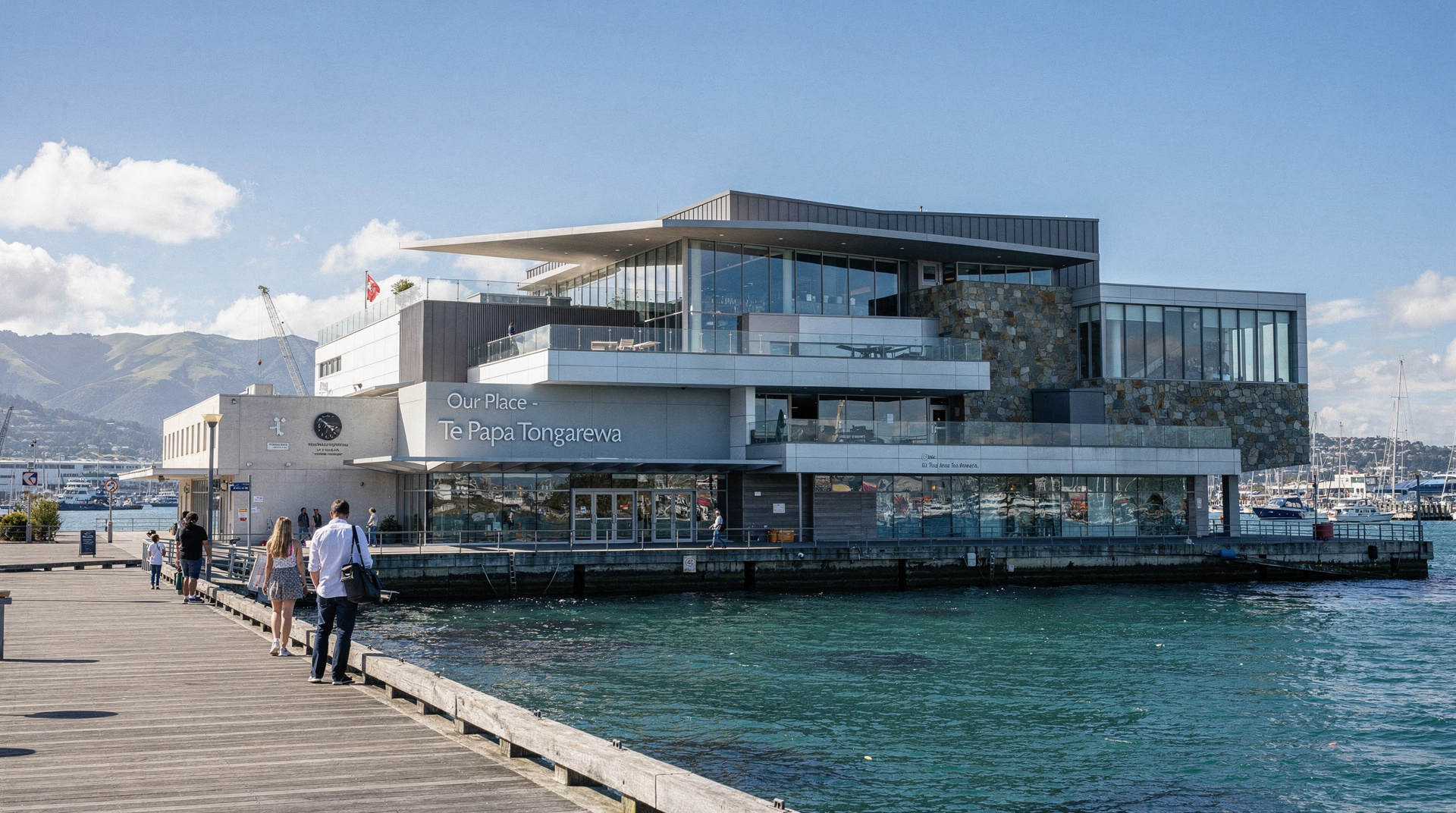
Te Papa museum Wellington — complete visitor guide
Complete guide to Te Papa Tongarewa in Wellington: must-see exhibits, Maori galleries, free admission, guided tours, and honest tips for your visit.
Last reviewed: