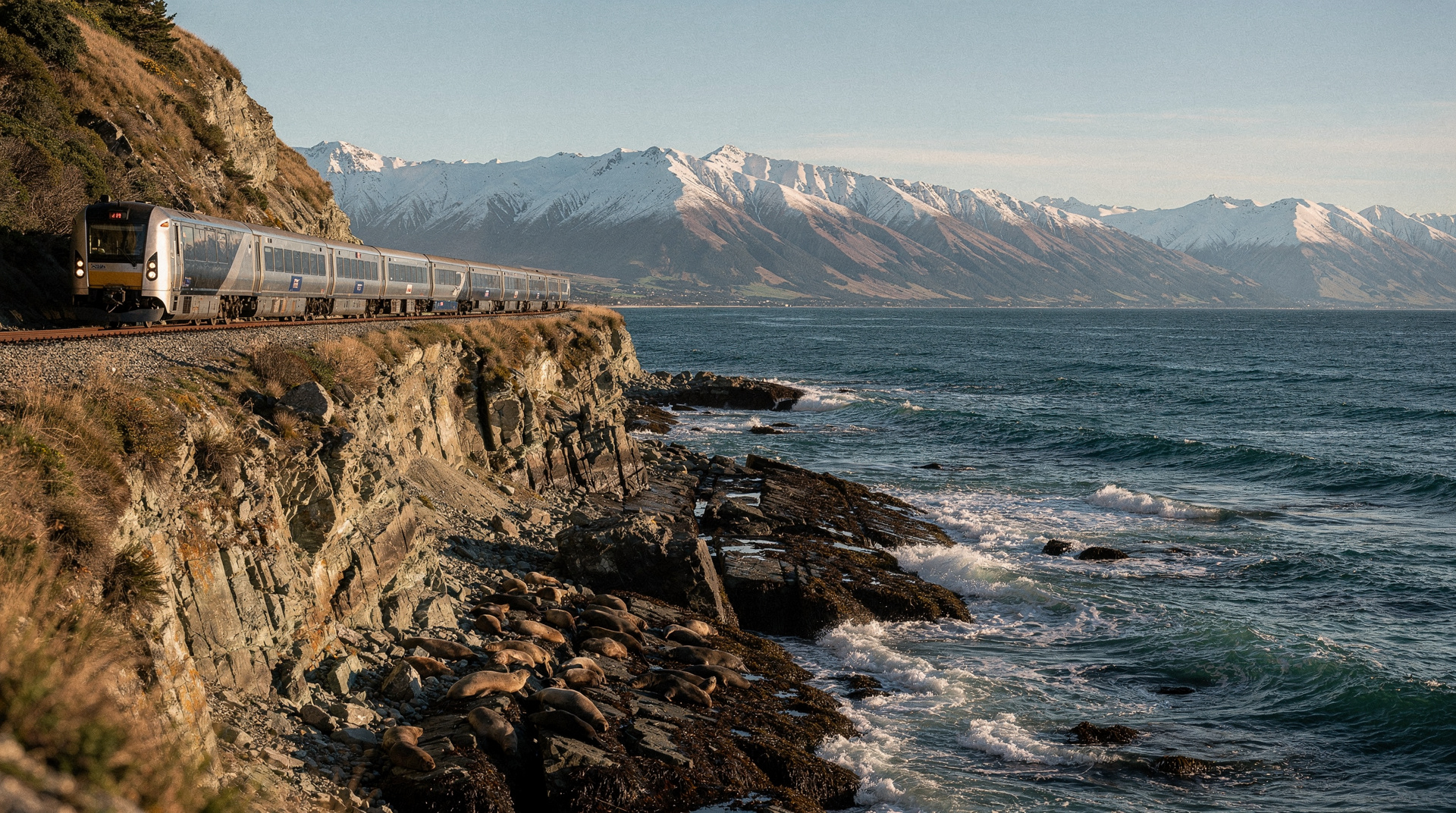
Coastal Pacific train — Christchurch to Picton along the Pacific coast
What is the Coastal Pacific train and is it worth taking?
The Coastal Pacific runs Christchurch to Picton (or reverse) along the coast between the Kaikoura mountains and the Pacific Ocean — one of New Zealand's most dramatic coastal routes. It runs September-April only. At 5h15 and NZD 129-199, it is slower than driving but far more scenic. Best combined with a Kaikoura stop (the train pauses for 40 minutes, time for coffee and whale watching booking).
A train rebuilt from disaster
The Coastal Pacific has a history that most visitors do not know. In November 2016, a magnitude 7.8 earthquake struck near Kaikoura, triggering massive landslides that destroyed 20km of the coastal rail line between Oaro and Kaikoura. The road was similarly destroyed; Kaikoura was completely cut off by land for weeks. The repair of both road and rail was one of the largest infrastructure rebuilds in New Zealand history — approximately NZD 1.4 billion over 24 months.
The Coastal Pacific returned to service in December 2018, rebuilt on a realigned track that in some sections runs closer to the sea than the original. The new alignment, while born of necessity, actually improved some of the visual access to the coastal scenery. The train that now runs between Christchurch and Picton is on a route that is, in parts, genuinely newer than 2018.
This history gives the Coastal Pacific a specific interest beyond its scenic credentials: it is a journey on infrastructure rebuilt after a major natural disaster, through a landscape that still shows the marks of the 2016 event — the rebuilt roads, the reinforced slopes, the occasional visible landslide scar on the hillsides above.
| Where | Christchurch to Picton (or reverse), via Kaikoura |
| Cost | Around NZD 129-199 one-way (Scenic / Scenic Plus) |
| Time needed | 5h15 one way |
| When it runs | September-April only (seasonal) |
| Booking | 2+ weeks ahead for December-February |
The route: what you see in 5 hours 15 minutes
Christchurch to Waipara: The initial section north of Christchurch crosses the Canterbury Plains — flat, agricultural, unremarkable. The Waipara Valley, where the plain gives way to limestone hills, marks the beginning of the interesting terrain. Waipara is wine country (North Canterbury) and the limestone gorges visible here prefigure the dramatic Kaikoura terrain ahead.
Waipara to Kaikoura (the main event): This 115km section is the reason to take the train. The line runs directly between the Kaikoura Ranges (mountains rising sharply from the coast, snow-capped most of the year) and the Pacific Ocean. The gap between mountain and sea varies from a kilometre to a few hundred metres — in places the train runs within sight of both simultaneously.
The Kaikoura Coast is biologically exceptional: the submarine canyon off the coast funnels cold, nutrient-rich upwellings to the surface, supporting sperm whales, dusky dolphins, New Zealand fur seals, Hutton’s shearwaters (found only on the Kaikoura ranges), and multiple albatross species. From the train window, seals sunning on rocks are commonly visible. Dolphin sightings are occasional but occur.
Kaikoura stop (40 minutes): The train makes a 40-minute stop at Kaikoura. This is enough time to walk to the seafront (5 minutes), photograph the mountains-meets-sea panorama, and have a coffee or fish and chips at the main street. It is not enough time for a whale watching tour — those require 2.5-3 hours. If Kaikoura is a priority destination, take the train one way and arrange road transport for the other leg to allow a proper stop.
Kaikoura to Picton (the Marlborough coast): North of Kaikoura, the dramatic coastal terrain gives way to a more pastoral route through the Marlborough district. The train approaches Blenheim through the wine country (Cloudy Bay, Villa Maria, and dozens of smaller producers visible from the window — the horizontal lines of vines on the Wairau Plain are unmistakable). From Blenheim, the train continues to Picton through the northern edge of the Marlborough Sounds, with occasional water views.
Picton arrival: The train terminates at Picton, the northern terminus of the South Island ferry route. From Picton, the Interislander or Bluebridge ferry (3.5 hours) crosses Cook Strait to Wellington.
Combining with the Cook Strait ferry
The Coastal Pacific-Cook Strait Ferry combination is one of the classic South Island transit options: take the train from Christchurch (or Blenheim) to Picton, walk from the train station to the ferry terminal (5 minutes), and board the ferry for Wellington. The connecting itinerary:
- Christchurch → (Coastal Pacific, 5h15) → Picton → (Interislander ferry, 3h30) → Wellington
This covers Christchurch to Wellington in approximately 9-10 hours (including connection time) — slower than flying (1 hour) but dramatically more scenic and a genuinely enjoyable travel experience. The combined ticket can be booked through KiwiRail (train) and Interislander separately; some travel agents package them together.
Wellington arriving in the evening: The Christchurch departure (7:15am) arrives Picton at 12:30pm; ferry to Wellington departs approximately 2pm, arriving Wellington approximately 5:30pm. A long but satisfying day.
Seasonal operation: September to April only
The Coastal Pacific does not operate in winter (May-August). This is a significant planning consideration: unlike the TranzAlpine (year-round daily), the Coastal Pacific runs only in the warmer months.
Why the seasonal operation? KiwiRail cites commercial demand as the primary reason — the route does not have sufficient winter demand to justify daily operation. The track itself is year-round capable. This makes the Coastal Pacific a spring/summer/autumn experience.
Implication for travellers: If your South Island visit is June-August, the Coastal Pacific is not an option. You drive or take the Interislander ferry from Wellington direct to Picton and continue south by road.
Ticket prices and booking
| Class | NZD (one way) | USD | EUR |
|---|---|---|---|
| Scenic class | 129 | 77 | 71 |
| Scenic Plus | 199 | 119 | 110 |
Children (2-14): 50% of adult fare.
Booking: At greatjourneysofnz.co.nz. Book at least 2 weeks in advance in December-February; the train sells out in peak season. The train operates Fridays, Saturdays, and Sundays in some shoulder periods — check the current schedule, as frequency varies by season.
Coastal Pacific vs TranzAlpine: the comparison
This comparison is addressed more fully in the TranzAlpine vs Coastal Pacific guide, but in brief:
TranzAlpine: More dramatic scenery (alpine gorge, Otira Viaduct), operates daily year-round, better suited to a standalone day trip.
Coastal Pacific: Coastal scenery (mountains + ocean), requires seasonal planning, pairs naturally with the Cook Strait ferry.
If you can only do one: TranzAlpine. It is the more dramatic journey and is universally available. If your itinerary includes the Marlborough Sounds or Wellington and you are visiting in spring/summer/autumn, the Coastal Pacific is worth adding.
If you want both: Take the TranzAlpine as a day trip from Christchurch, then take the Coastal Pacific one-way from Christchurch to Picton when departing the South Island.
Kaikoura: the key reason to choose the train
The Coastal Pacific’s strongest selling point over driving the same route (SH1 from Christchurch to Picton) is the Kaikoura section — and specifically the fact that on the train, you are closer to the coast, higher above the ocean, and better positioned to see the coastal wildlife than on the road.
If Kaikoura is part of your itinerary anyway, taking the train one-way (Christchurch to Kaikoura or vice versa) and arranging onward transport by car or bus from Kaikoura is a good strategy: you get the scenic train experience for the most dramatic section without being time-constrained by the train schedule for the whale watching and seal walks.
Christchurch to Kaikoura day tour with whale watchingOnboard experience
Scenic class seating is a standard 2+2 configuration with large windows and at-seat service for food and drink. Scenic Plus adds a slightly wider seat, priority boarding, and an included lunch, but the biggest practical difference for photography is the same for both classes: the open-air viewing carriage (an outdoor platform between carriages, available to all ticket holders) is where most of the memorable photos happen, since it removes window glare and glass reflections entirely.
It gets busy during the Kaikoura section — if you want a clear spot, head there as the train approaches Waipara rather than waiting until the coastline is already in view. Onboard commentary (via speakers, not a live guide) points out key landmarks and wildlife-spotting windows as they come up, which helps if you’re not familiar with the route already.
Driving vs the train: the honest cost and time comparison
Driving the same Christchurch-Picton route via SH1 takes approximately 5-5.5 hours non-stop — comparable to the train’s 5h15, though a self-driven trip lets you stop freely at seal colonies and Kaikoura viewpoints along the way. Fuel for a typical sedan costs roughly NZD 70-100 one-way; a Scenic class train ticket is NZD 129. The financial calculation therefore slightly favours driving for a solo traveller or if you already have a rental car you need to reposition anyway.
Where the train wins decisively: no one has to focus on the road, the open-air viewing carriage gives unobstructed photography impossible from a moving car, and it removes the need to arrange a one-way rental drop-off if you’re continuing north by ferry. If your itinerary already has a rental car booked for elsewhere in the South Island, driving is usually the more practical choice; if you’re relying on public transport throughout, the train-ferry combination is the standout option.
Practical tips for the journey
Best seat position: On the southbound (Christchurch to Picton) journey, sit on the right-hand (eastern) side for the main Kaikoura coastal section. On the northbound return, the left side. The open-air viewing carriage provides views on both sides regardless.
Dress: Coastal weather in New Zealand is variable year-round. A windproof layer for the viewing carriage is always wise. In September-October and March-April, the viewing carriage can be cold.
Food: The onboard café offers sandwiches, pies, hot drinks, and wine/beer. For the Kaikoura stop, the town’s main street has several good cafés and a famous fish and chip shop (Kaikoura Seafood BBQ, on the seafront) that serves crayfish at remarkably reasonable prices.
Photography: Bring a camera with a fast shutter speed for wildlife photography from the moving train. Seals on rocks are visible for a second or two; dolphin sightings are brief. A 100-400mm zoom is the ideal lens; a smartphone with a good telephoto mode is the minimum practical tool.
Frequently asked questions
Can I visit Kaikoura properly on the Coastal Pacific stop?
The 40-minute stop allows you to photograph Kaikoura from the seafront and have a coffee, but not a whale watching tour (minimum 2.5 hours). For a proper Kaikoura visit, detrain at Kaikoura, spend a day or two, and continue by bus or rental car.
Is the Coastal Pacific route accessible by road as well?
Yes — State Highway 1 follows approximately the same route. Driving gives more flexibility (stopping at seal colonies along the way, spending as long as desired in Kaikoura) but less dramatic views of the coast than the train provides. The rebuilt coastal highway is in excellent condition post-earthquake.
Does the Coastal Pacific connect to the ferry at Picton?
The timing works for a same-day connection. The train arrives Picton approximately 12:30pm; the Interislander afternoon sailing is typically 2pm, and the Bluebridge has a 2:30pm option. You have approximately 90 minutes to walk to the terminal, check in, and board. Do not cut it close if you have checked luggage.
What happens if the train is cancelled?
KiwiRail’s obligation is a refund or rebooking. If weather or track conditions cause a cancellation, inform your onward accommodation — KiwiRail will sometimes provide alternative transport to Picton in urgent cases. Travel insurance covering transport disruption is recommended.
Is the Coastal Pacific worth it if I have already driven the SH1 coastal road?
Only marginally. The coastal road from Kaikoura to Christchurch is genuinely scenic and includes side trips (seal colony at Ohau Point) not accessible from the train. If you have already driven it, the train offers a different perspective (higher, more coastal in places) but the incremental value is modest. Prioritise the TranzAlpine if this is your situation.
Where’s the best place to sit or stand for photos?
The open-air viewing carriage beats any window seat for photography, since it removes glass reflections entirely — head there as the train approaches Waipara, before the main Kaikoura coastal section begins, to secure a clear spot. If you’d rather stay seated, the right-hand side southbound (left-hand northbound) gives the best window views of the coast without needing to move.
Related guides
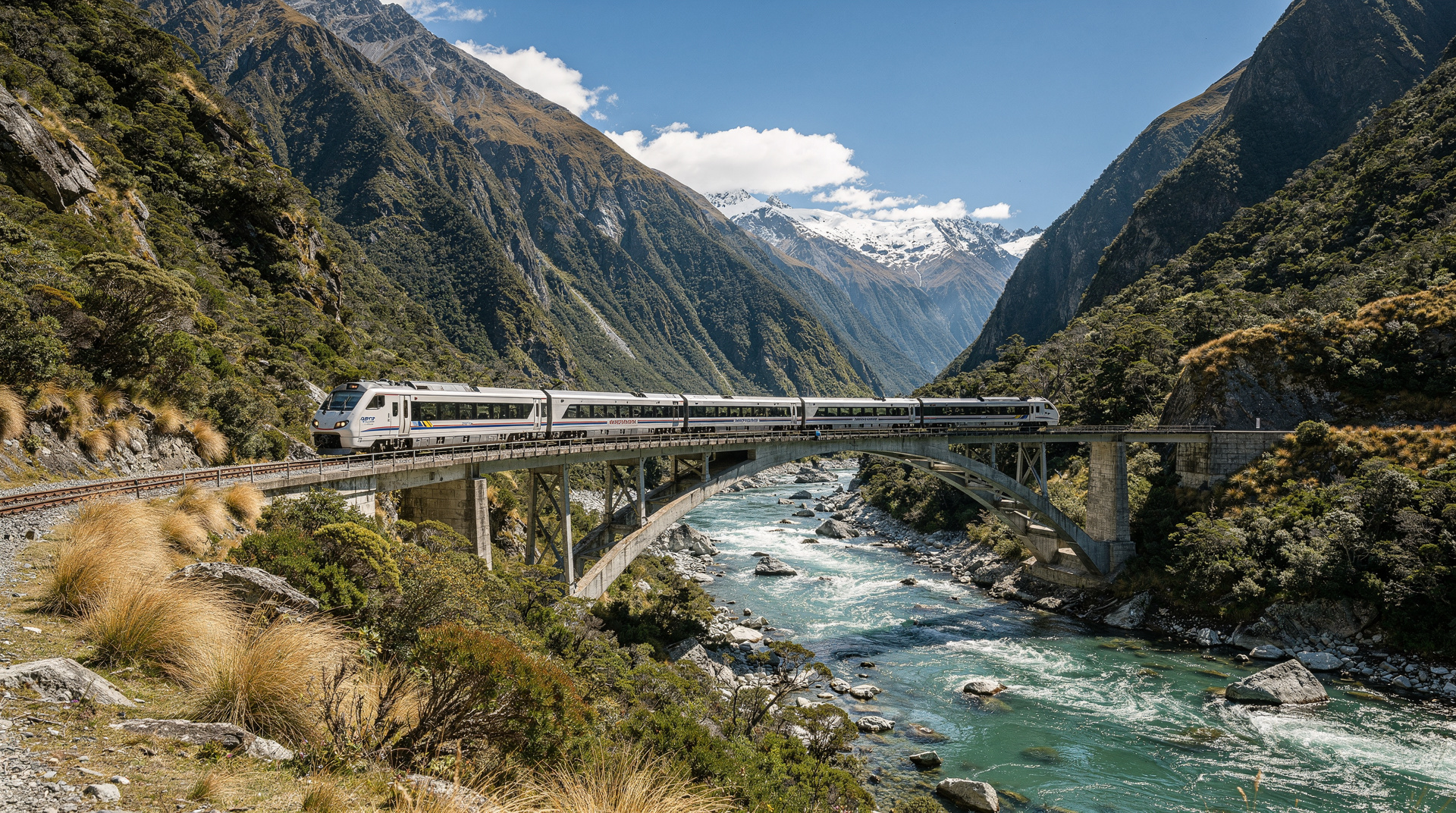
Scenic trains in New Zealand
Complete guide to NZ's three scenic trains: TranzAlpine, Northern Explorer, Coastal Pacific. Routes, costs, booking tips, and honest verdicts on each.
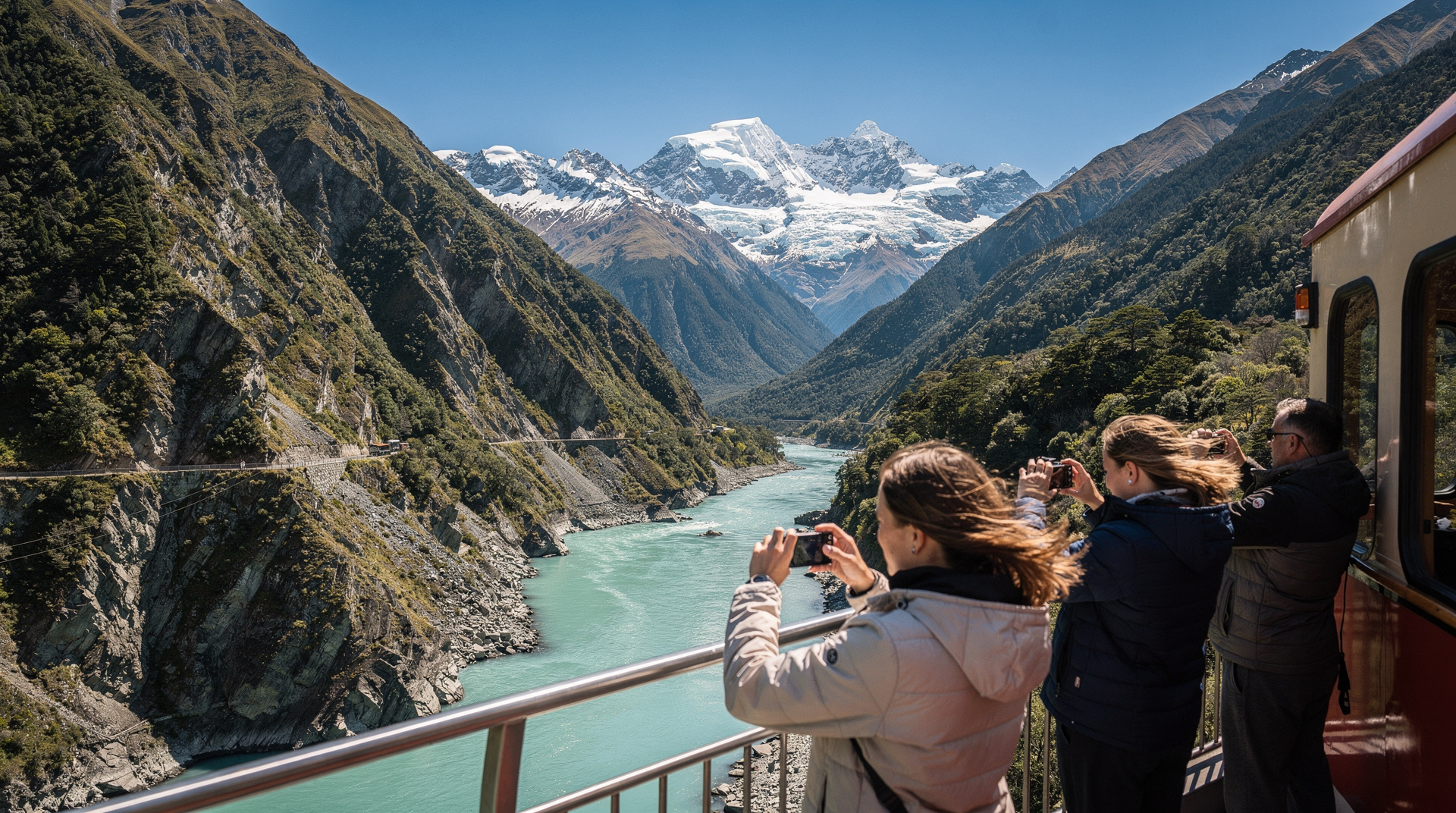
TranzAlpine train — the complete guide to New Zealand's most scenic rail journey
TranzAlpine guide: the 4h20 Christchurch to Greymouth route, what you see, ticket prices NZD/USD/EUR, booking tips, and honest verdict on NZ's finest train.
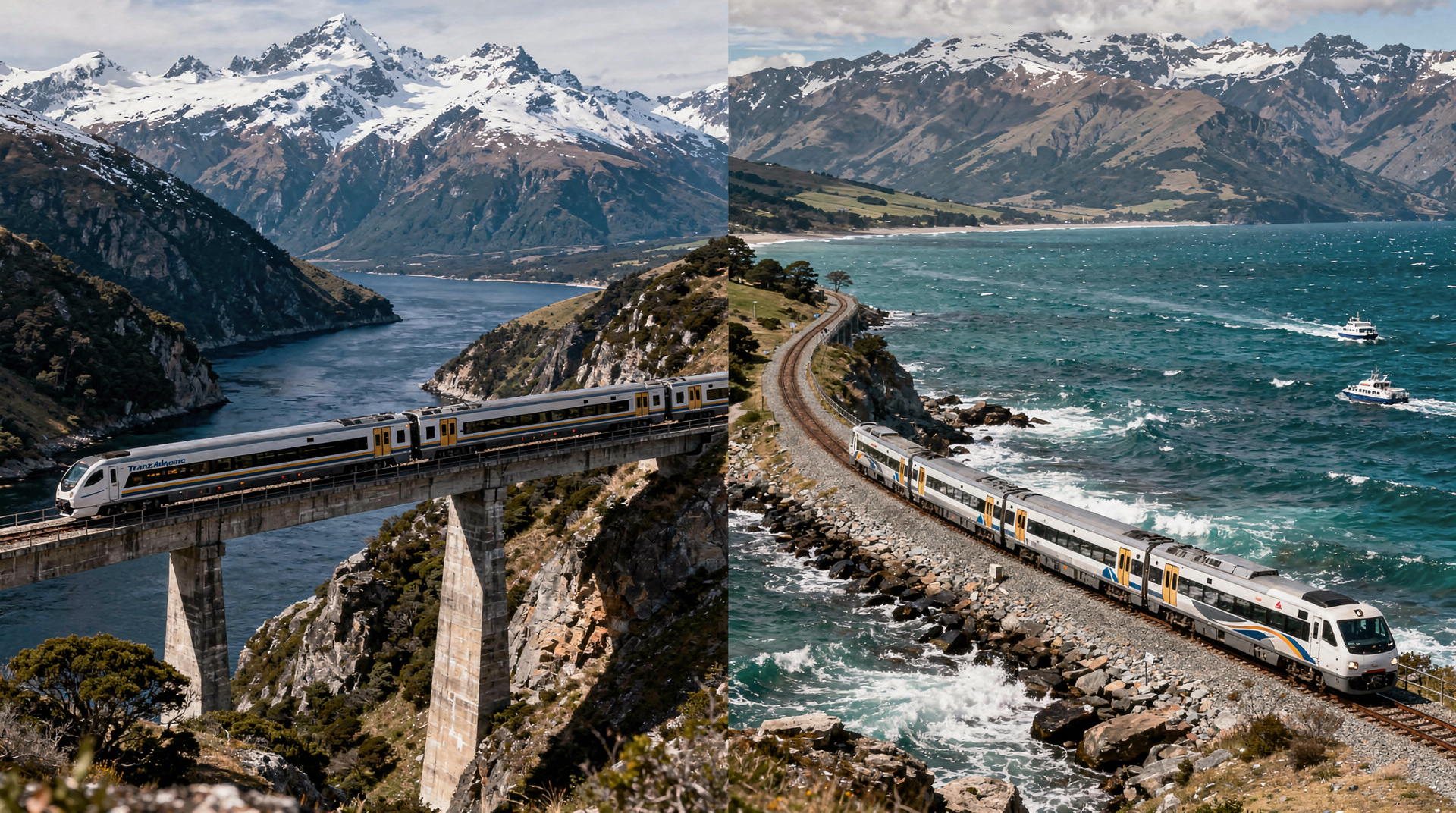
TranzAlpine vs Coastal Pacific scenic train
TranzAlpine vs Coastal Pacific honest comparison: scenery, routes, prices and which NZ scenic train is worth your time. NZD/USD/EUR prices.
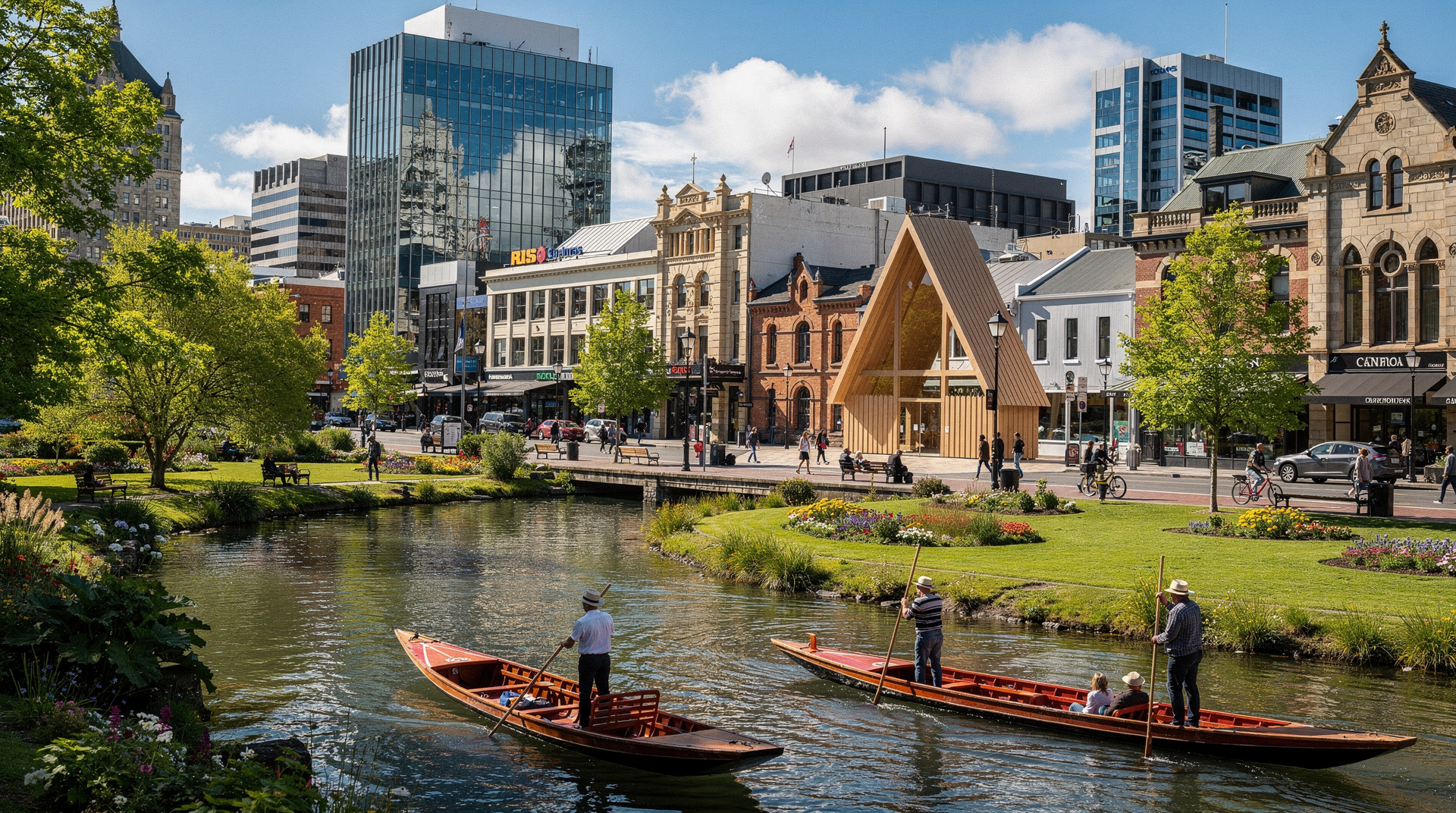
Christchurch
Honest Christchurch guide: the post-earthquake rebuild, best activities, Akaroa day trip — real NZD/USD/EUR prices and what's worth your time.
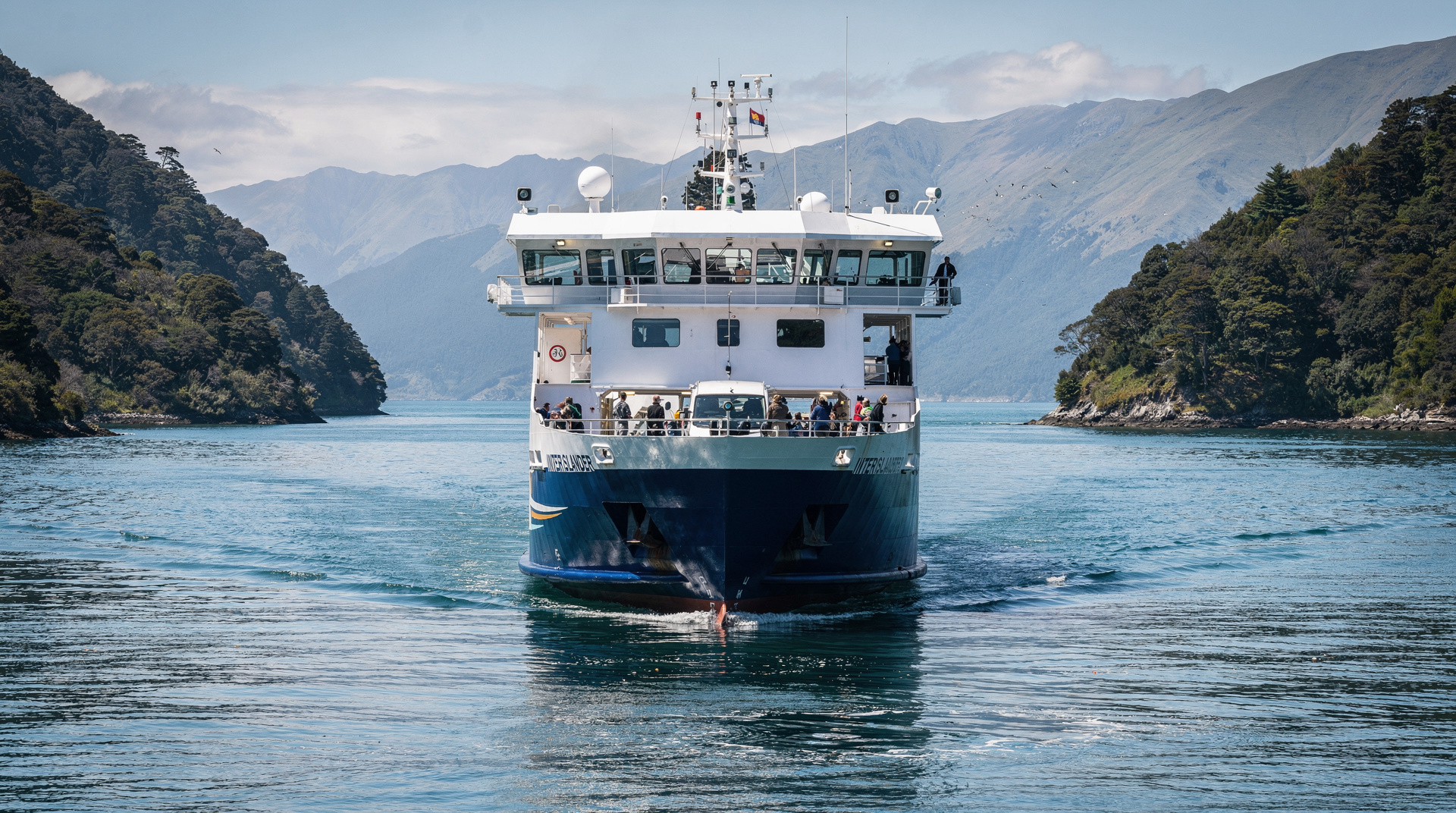
Cook Strait ferry guide
Complete Cook Strait ferry guide: Interislander vs Bluebridge, timetables, costs, booking tips, campervan advice, and the flying alternative.
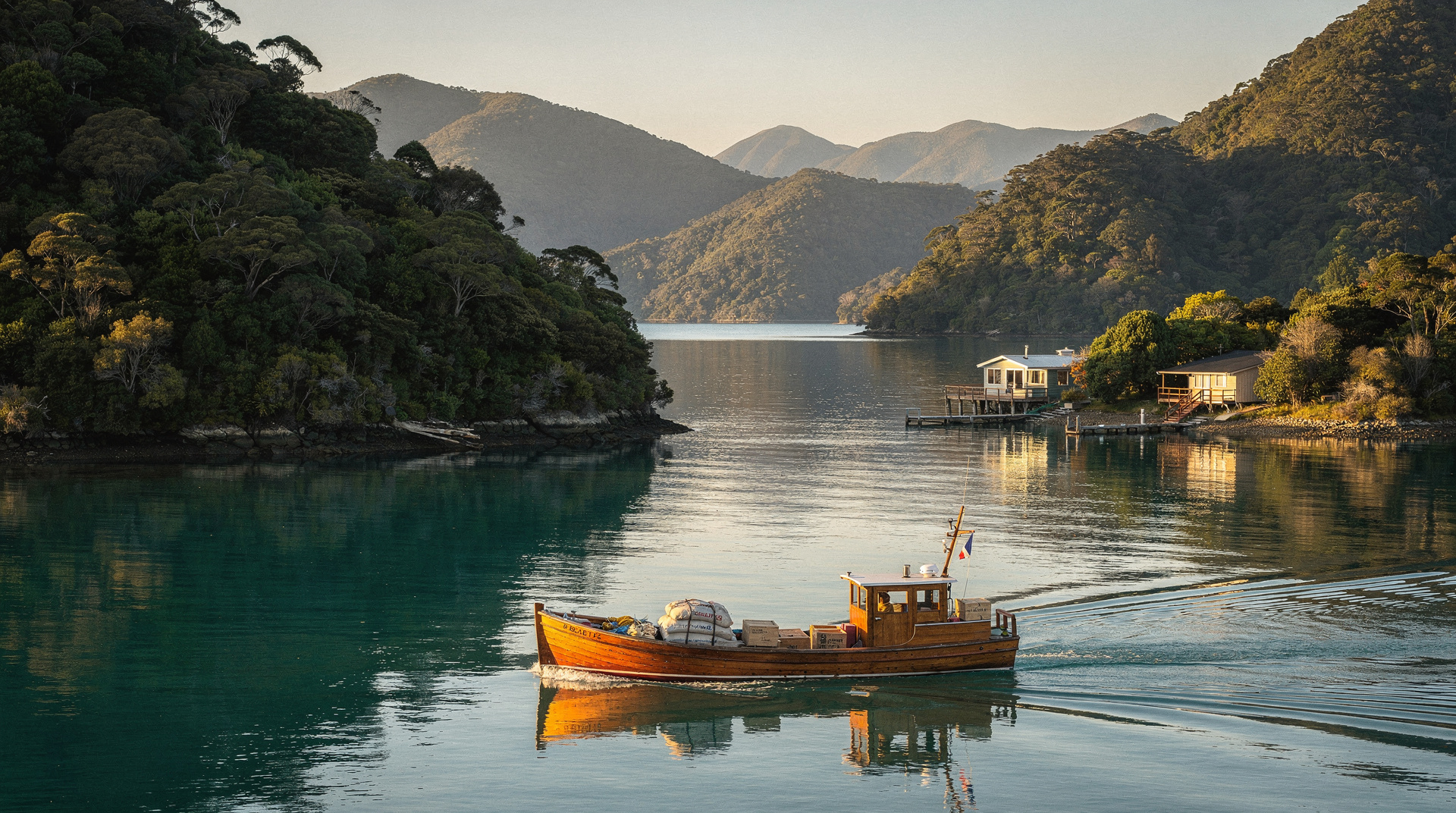
Marlborough Sounds cruise — the drowned valleys of the north
Marlborough Sounds cruise guide: seafood and mussel cruises from Picton or Havelock, Queen Charlotte Sound, mail boat, and Queen Charlotte Track boat access.
Last reviewed: