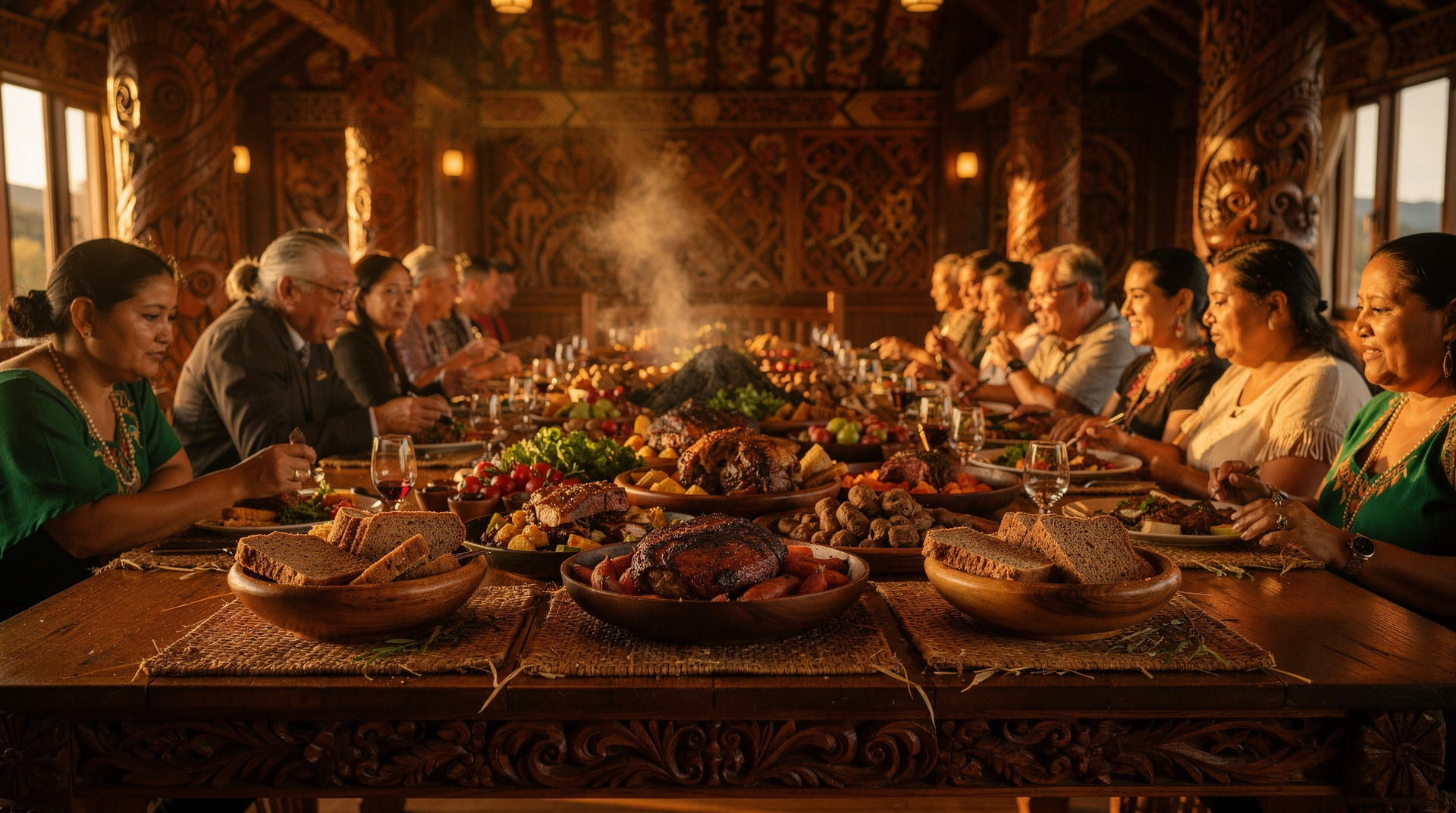
Hangi feast guide — New Zealand's earth oven cooking explained
What is a hangi and where can I try one in New Zealand?
A hangi is a traditional Maori earth oven meal: stones heated in fire for hours, lowered into a pit with food in baskets, covered with earth, and left to steam-cook for 2-3 hours. The result is distinctively flavoured meat and root vegetables — tender, slightly smoky, moist. The best places to try authentic hangi are the Rotorua cultural experiences (Te Puia, Mitai) and the Waitangi Treaty Grounds in the Bay of Islands.
Hangi: more than food
| What it is | Traditional Maori earth oven cooking, using heated stones and a covered pit |
| Where to try it | Rotorua (Te Puia, Mitai), Waitangi Treaty Grounds, Christchurch |
| Typical cost | around NZD 110–175 per adult, cultural experience included |
| Cooking time | 2–3 hours once the pit is loaded |
| Best for | Anyone wanting a genuine, non-touristy taste of Maori culture |
A hangi (the word is both singular and plural — you do not say “hangis”) is simultaneously a cooking method, a social event, a ceremonial practice, and an expression of manaakitanga — the Maori cultural value of generous hospitality. Understanding what makes a hangi significant requires understanding all of these layers, not just the cooking technique.
For Maori communities, a hangi is prepared for gatherings of consequence: tangihanga (funerals), hui (meetings), celebrations, the welcome of important guests, Matariki, Waitangi Day, and major community events. The preparation begins the evening before or early morning — gathering the stones, building and firing the wood, heating the stones for 3-4 hours until they glow red, digging the pit, preparing the food in baskets. This is collective labour: a hangi prepared by one person for one person would be a contradiction in cultural terms. The hangi is an expression of community.
When visitors eat hangi at a cultural experience in Rotorua or the Bay of Islands, they are eating a genuine food but in a tourist context — abbreviated from the full communal preparation process, adapted for serving to large groups. This does not make it inauthentic food, but it is worth understanding the difference between hangi-at-a-cultural-experience and hangi-for-a-community-gathering.
How a hangi is made
The process of making a hangi is precise and time-dependent. Here are the stages:
1. Gathering the stones: The best stones for hangi are dense, volcanic basalt — the same stones cannot be reused indefinitely (they eventually fracture from thermal cycling). In geothermal areas like Rotorua, river boulders of basalt are traditional; in other areas, specific stones are sourced.
2. Building the fire: A large fire is built over the stones, using dry wood (manuka is traditional and preferred — it burns hot and clean). The fire burns for 3-4 hours until the stones are heated through and have a red glow.
3. Preparing the pit: While the stones heat, a pit is dug in the ground — typically 60-80cm deep, sized for the amount of food. In geothermal Rotorua, the earth itself is warm, which accelerates cooking.
4. The food baskets: Food is prepared in wire baskets (traditional Maori used flax baskets) and wrapped in foil or wet cloth. The food typically includes: chicken (whole or pieces), lamb shoulder, pork, potato, kumara (sweet potato), pumpkin, and stuffing. Layering in the baskets is important — denser items at the bottom, root vegetables with the meat.
5. Loading the pit: When the stones are ready, they are shovelled into the pit. The baskets are lowered on top of the stones; wet cloth or sacks are placed on and around the baskets to create steam. The entire pit is then covered with soil — the steam has nowhere to escape and drives the cooking.
6. Cooking time: 2-3 hours, depending on the quantity of food and the heat of the stones. The experienced hangi operator gauges this by feel and experience rather than timer.
7. Lifting the hangi: When the cook judges it ready, the soil and sacking are removed, the baskets lifted, and the food revealed. At a large community hangi, this moment is ceremonial — the lifting brings the gathered community together.
The taste
Hangi food is distinctive and unmistakable once you know it. The combination of steam cooking (moist, no surface drying) and slight earth/smoke influence from the stones and pit produces:
- Meat that is extremely tender — chicken falls off the bone, lamb is soft without being mushy
- Root vegetables with concentrated flavour and a slightly glossy texture from the steam
- A subtle, warm, earthy undertone to the whole meal that is impossible to reproduce in conventional ovens
What hangi is not: it is not barbecue. It is not roasted. It is not grilled. It does not have a crust or browned surface. The textures are uniformly moist and the flavours are deep rather than sharp. First-time hangi eaters sometimes expect roasted meat and find the softer texture surprising — this is correct hangi, not underdone cooking.
Where to eat hangi in New Zealand
Rotorua has the highest concentration of genuine hangi because the geothermal area allows for year-round outdoor cooking and the city has the deepest commercial Maori cultural infrastructure:
- Te Puia — evening cultural experience with ground-cooked hangi, approximately NZD 150-175 / USD 90-105 / EUR 83-96 adult. The most visited; consistently good quality.
- Mitai Maori Village — similar pricing, more intimate setting, highly regarded by repeat visitors.
- Tamaki Maori Village — also genuine hangi; slightly more commercial orientation but well-executed.
Waitangi (Bay of Islands):
- Waitangi Treaty Grounds evening experience — seasonal hangi and concert, one of the most culturally significant settings to eat hangi (the grounds where the Treaty was signed). Approximately NZD 130-150 / USD 78-90 / EUR 72-83 adult.
Christchurch:
- Ko Tane Maori Cultural Experience — hangi and kapa haka at Willowbank Wildlife Reserve. Approximately NZD 110-130 / USD 66-78 / EUR 61-72 adult.
Auckland:
- Limited genuine hangi options in Auckland’s commercial tourism. The Maori cultural experience at Auckland Museum includes a performance but not a hangi feast. For hangi in Auckland, ask locals — community events rather than commercial tourism are the more authentic route.
Community events:
- The best hangi is always one prepared by a Maori community for a specific gathering. If you have connections to a New Zealand family or community that would invite you to a community hangi (at a marae, a family gathering, a sports club celebration), this experience is incomparably more meaningful than any commercial option.
Hangi versus “hangi-style” — an important distinction
Some New Zealand restaurants, cafés, and even some cultural experiences offer “hangi-inspired” or “hangi-style” dishes — food cooked in conventional ovens to approximate the flavour using liquid smoke, slow-cooking, or special seasonings. This is not dishonest, but it is also not hangi. A restaurant charging NZD 35 for a “hangi chicken” has not prepared it in a pit with heated stones.
If you are specifically seeking genuine ground-cooked hangi, ask explicitly: “Is this cooked in the ground?” or “Are the stones used for this?” The honest operators will confirm; the others will redirect.
Hangi and the geothermal factor in Rotorua
In Rotorua, where geothermal steam vents through the earth, traditional Maori cooking also used the earth’s own heat. The Whakarewarewa Thermal Village (adjacent to Te Puia) still has community residents who cook using steam from natural vents — a more direct connection to the traditional use of geothermal resources for cooking than the stone-heated hangi.
The geothermal steam cooking is not the same as hangi (which requires heated stones and burial to create the steam environment), but it represents the same principle: using the earth as a cooking medium.
Vegetarian and dietary considerations
Traditional hangi is meat-centred — the protein (chicken, lamb, pork) is the main component, with kumara, potato, and pumpkin as supports. For vegetarians and vegans:
- Most commercial hangi experiences can accommodate vegetarian requirements with notice — the vegetable portion of the hangi is inherently vegetarian, and additional options are usually available.
- Vegan hangi is less common — the rewena bread (Maori sourdough) often contains dairy; confirm with the operator.
- Gluten-free is generally manageable — the hangi itself is gluten-free; the bread and stuffing may not be.
Always communicate dietary requirements at time of booking, not on arrival. See the vegan and vegetarian travel in NZ guide for broader context.
The cultural meaning of eating hangi
In Maori culture, eating together is not merely a biological act — it is an expression of relationship, belonging, and mutual obligation. The word for meal (kai) also means food; the act of eating together (kainga) creates the conditions for community.
When you eat hangi at a cultural experience, you are participating — however briefly — in this relational logic. The manaakitanga of the hosts (the obligation to care for and feed guests generously) is expressed in the abundance of the meal, the quality of the food, and the welcome with which it is offered. Receiving this with gratitude and acknowledgement is the appropriate response.
This is not performance of cultural etiquette — it is genuine reciprocity. Saying thank you (“kia ora” is sufficient; “tino pai” — very good — is more specific) to the people who prepared and served the meal is a direct expression of the relational logic the meal embodies.
Hangi at Christchurch and beyond
Outside Rotorua and Waitangi, genuine hangi is harder to find commercially, but a few operators keep the tradition available in the South Island and Auckland. Ko Tane at Willowbank Wildlife Reserve in Christchurch combines a hangi dinner with kapa haka performance and a chance to see kiwi in a nocturnal house — a useful option for South Island travellers who won’t make it to Rotorua or the Bay of Islands. In Auckland, genuine hangi tourism is thinner; ask hotel concierges about any community events happening during your stay, since these are more authentic than anything commercially packaged in the city.
If your New Zealand itinerary only touches the South Island, Christchurch’s Ko Tane is worth prioritising over trying to squeeze in a side trip north purely for hangi — the experience quality is genuinely comparable to the smaller Rotorua operators.
Pairing hangi with the rest of a Rotorua evening
Most Rotorua hangi experiences are not a standalone dinner — they’re bundled with a cultural performance (pōhiri welcome, haka, poi, waiata) that runs either before or after the meal. Budget the full evening at 2.5–4 hours, and check whether transport is included: Te Puia and Mitai both offer hotel pickup and drop-off, which is worth taking if you plan to have a drink with dinner. If you’re staying in central Rotorua, walking or a short taxi to Te Puia or Mitai is also straightforward.
For visitors who want the geothermal and cultural elements combined into a single day, a Te Puia daytime visit (thermal valley, kiwi conservation centre) followed by the evening hangi and performance makes an efficient full day without doubling back. See the Te Puia Rotorua guide for how to sequence it.
Honest verdict
Frequently asked questions
Can I watch a hangi being prepared?
At most commercial cultural experiences, the hangi is prepared before visitor arrival. Some operators offer an early-arrival option to watch the lifting of the hangi, which is the most dramatic visual moment. Ask when booking. At community events, preparation is communal and watching (if invited) is a genuine experience.
How many people does a typical hangi feed?
A traditional community hangi feeds between 50 and 500 people. Commercial cultural experiences scale proportionally. The cooking time and stone quantity scale with the food volume — the method is remarkably efficient for large-group cooking.
Is hangi available year-round?
In Rotorua and the Bay of Islands, commercial hangi experiences run year-round. Community hangis are event-driven rather than seasonal but tend to increase around Matariki (June-July), Waitangi Day (6 February), and Christmas/New Year gatherings.
How much does a hangi cost to experience?
Commercial cultural experience hangi: NZD 130-175 / USD 78-105 / EUR 72-96 per adult (usually including the full cultural performance). This is for the combined cultural experience — the hangi alone is not separately priced at most venues. At a community event, hangi is typically provided free as manaakitanga.
Is the hangi at Te Puia different from the one at Mitai?
Both use genuine ground-cooking with heated stones. Te Puia’s hangi serves larger groups; Mitai’s is more intimate. The menu is broadly similar (chicken, lamb, root vegetables, rewena bread). Te Puia’s operation is more institutionalised; Mitai’s has a more personal character. The food quality at both is consistently good.
Related guides
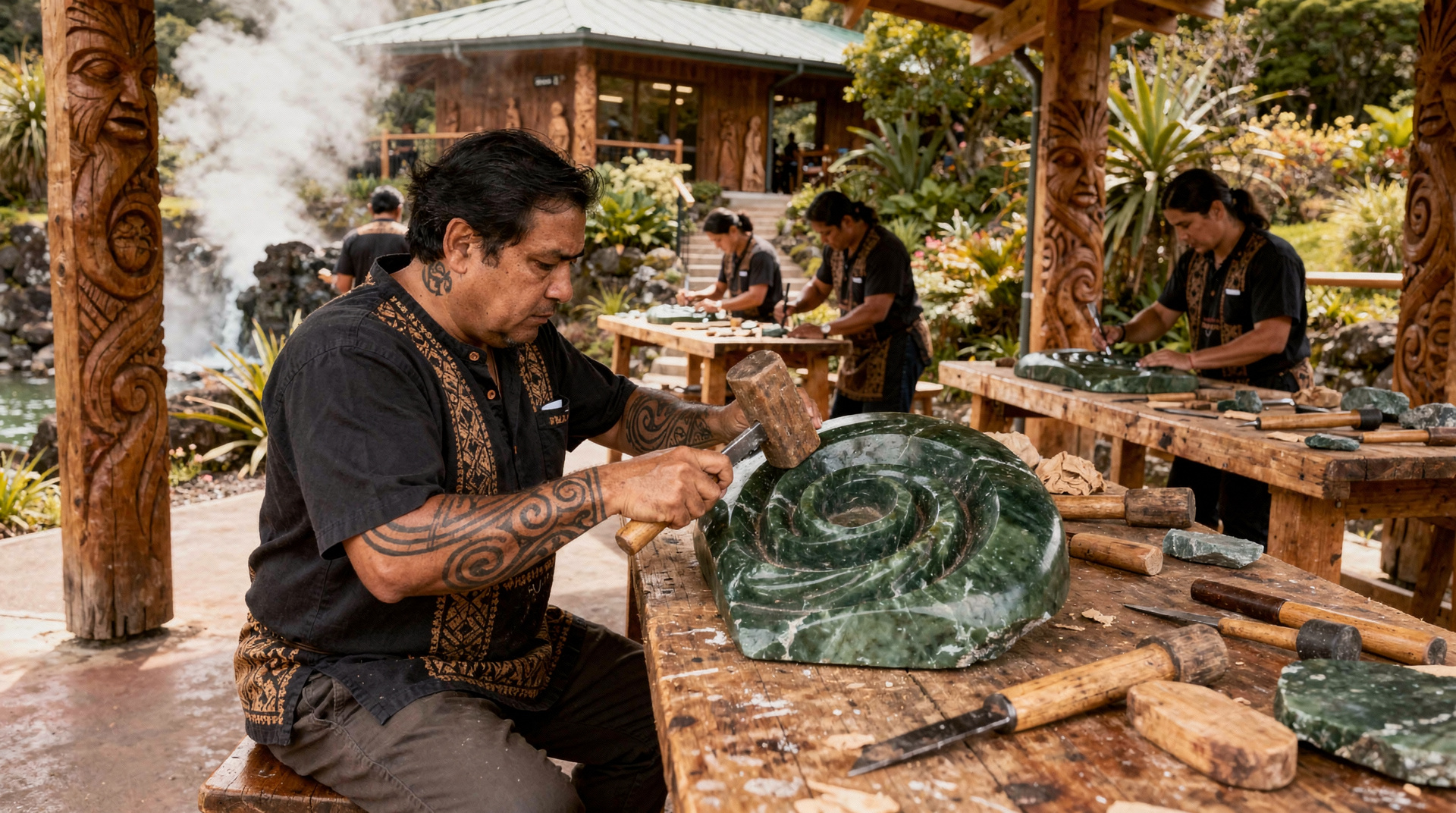
Te Puia Rotorua — the complete iwi-led cultural experience guide
Te Puia: Rotorua's iwi-led Maori cultural centre. Pohutu Geyser, living carving school, kapa haka, and hangi. Tickets, times, and honest verdict from NZD 60.
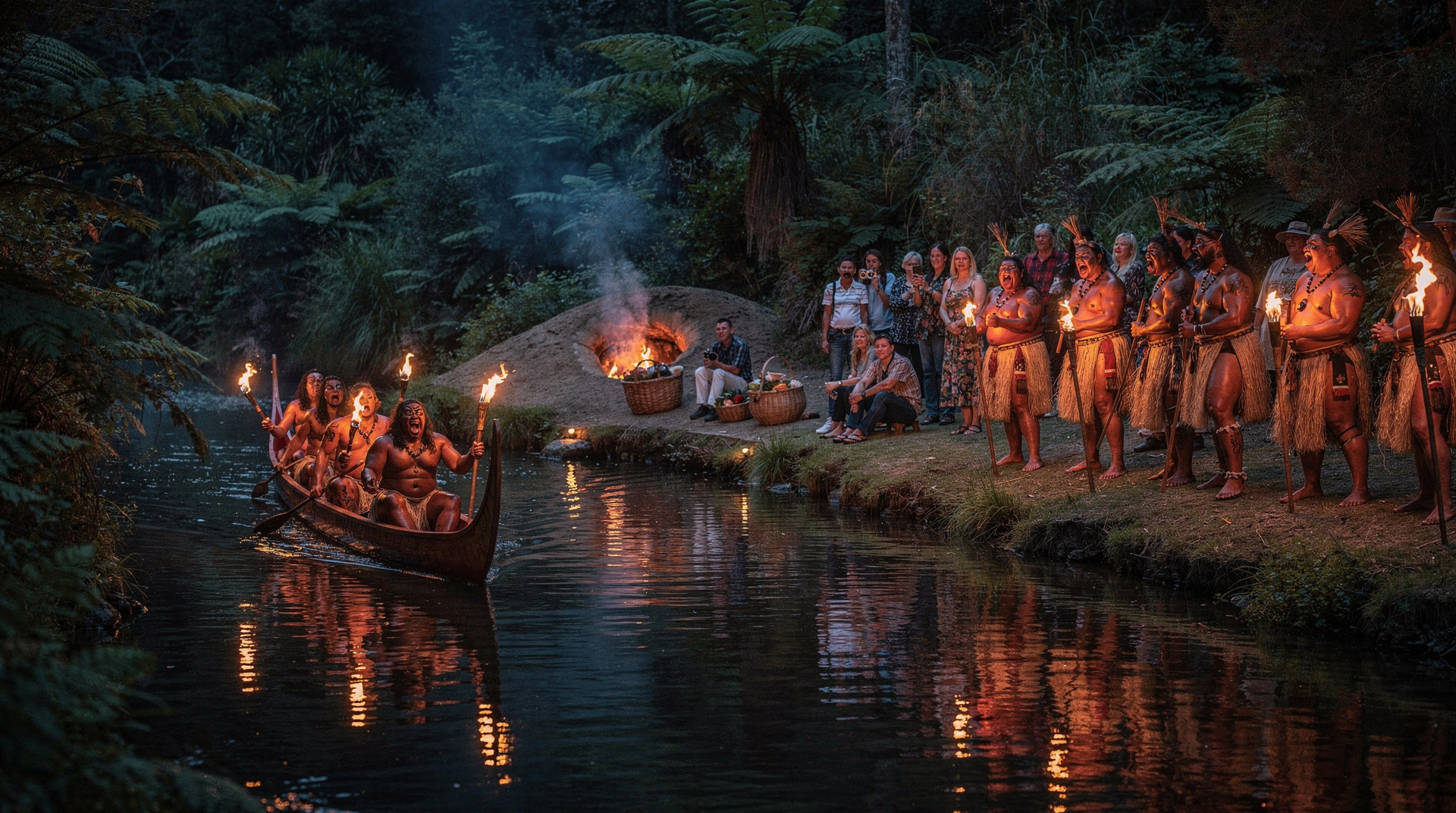
Mitai Maori Village Rotorua — honest review and visitor guide
Honest review of Mitai Maori Village Rotorua: the family-run waka arrival, kapa haka, hangi feast, and glowworm walk. Costs in NZD/USD/EUR and booking tips.
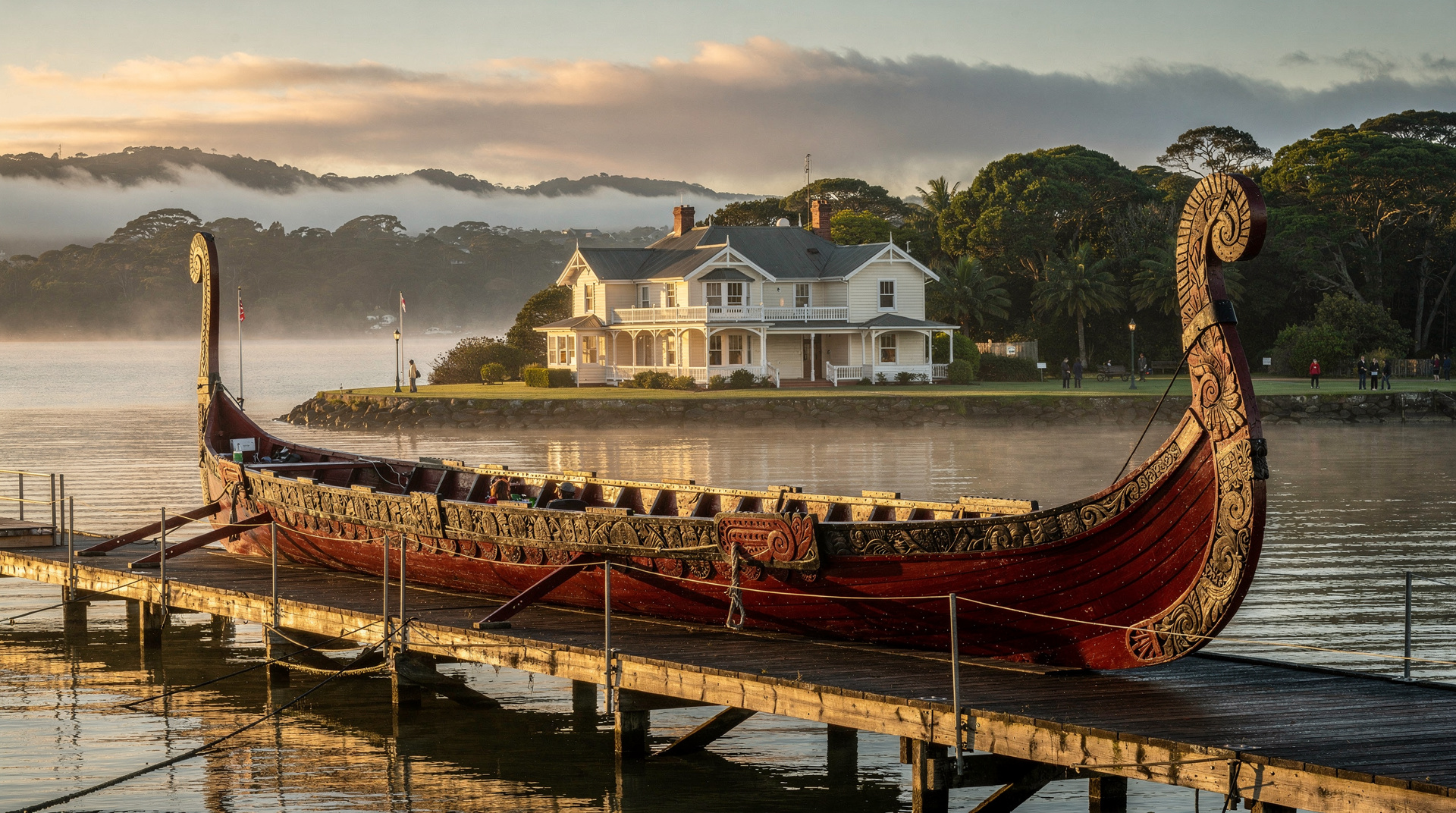
Waitangi Treaty Grounds — guide to New Zealand's most important site
Waitangi Treaty Grounds visitor guide: Treaty of Waitangi signed here 1840. Tickets, guided tours, hangi evenings, and essential NZ historical context.
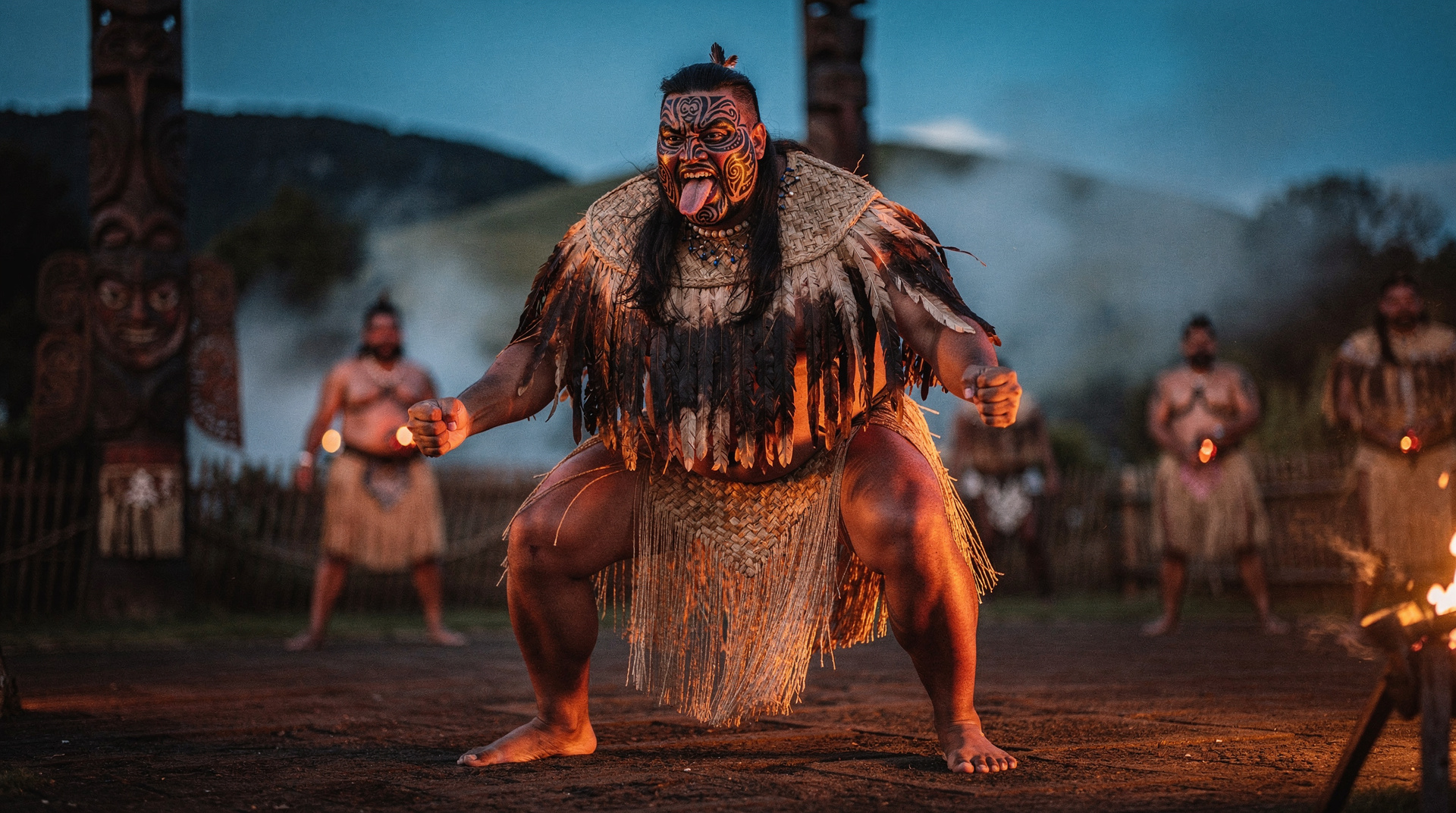
Maori culture overview — what every visitor should know
Respectful introduction to Maori culture for visitors: tangata whenua, Te Tiriti, tikanga basics, language, cultural experiences, and how to engage honestly.
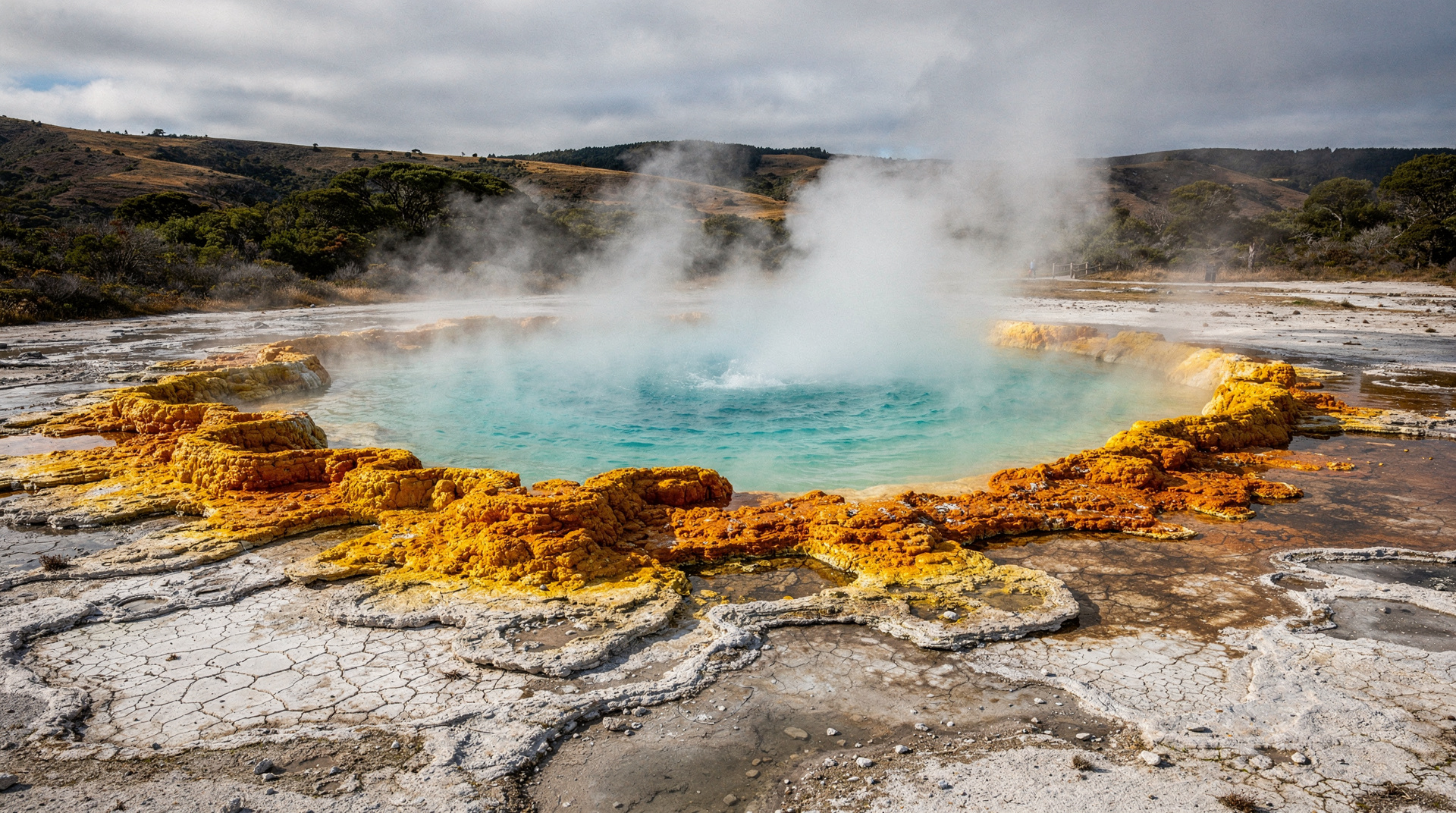
Rotorua
Honest Rotorua guide: Te Puia, Wai-O-Tapu, Polynesian Spa, Maori hangi, real prices NZD/USD/EUR, tourist traps to avoid, and best 2 days.
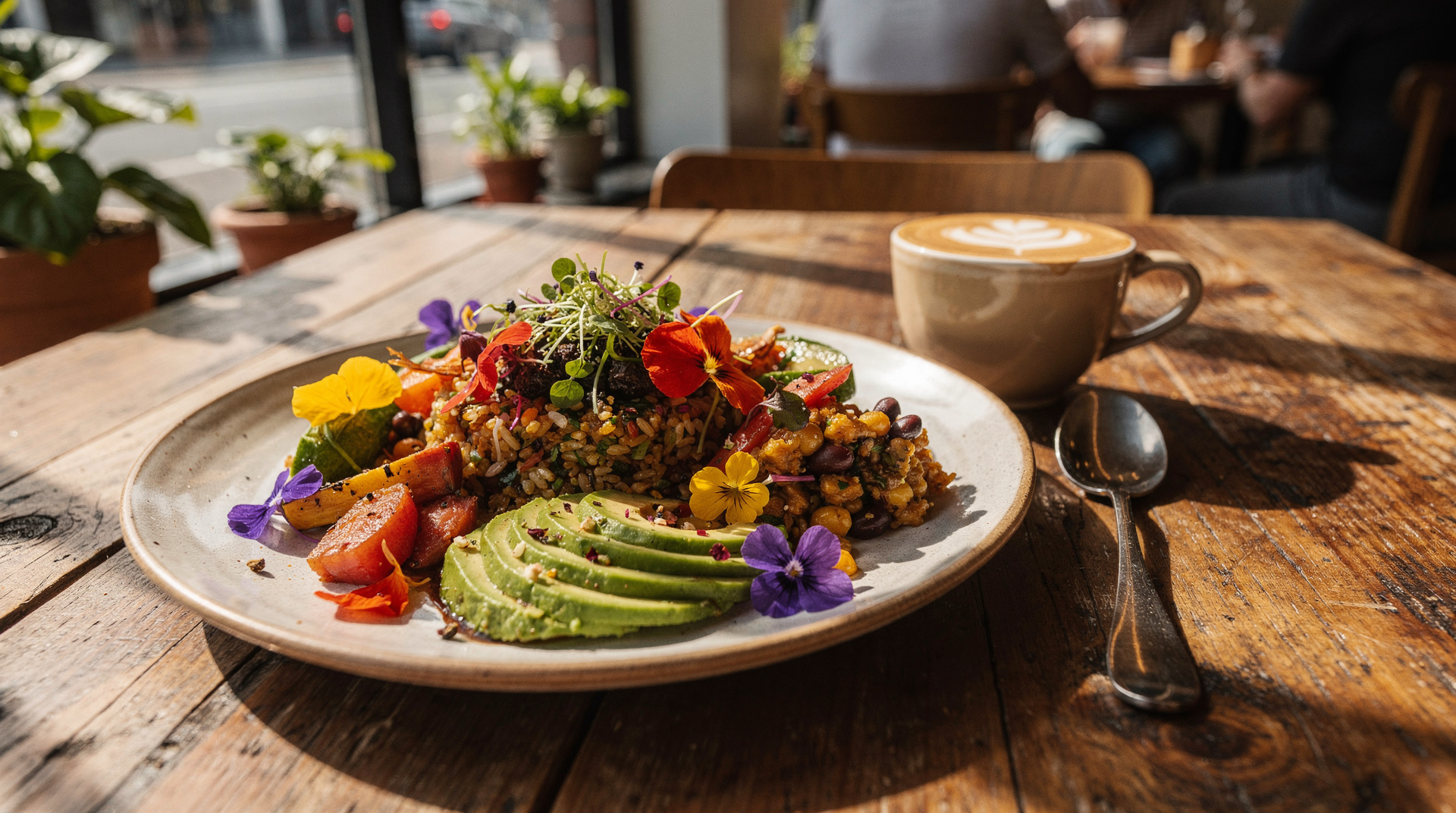
Vegan and vegetarian in New Zealand
Honest guide for vegans and vegetarians in NZ: where options are plentiful, where they're limited, best cities, supermarket staples, and eating on a budget.
Last reviewed: