Milford Sound cruise guide — how to get the most out of Piopiotahi
Which Milford Sound cruise should I book and how do I get there?
The standard day cruise (2-2.5 hours on the water, NZD 80-120 per adult) is the right baseline. For the best experience, stay overnight in Te Anau rather than doing a 13-hour coach day from Queenstown. The overnight cruise (kayaking, bioluminescence, early morning fiord) is NZD 480-600 per person and genuinely transforms the experience. Book early — Milford sells out.
| Where | Piopiotahi/Milford Sound, Fiordland National Park |
| Cost | Day cruise NZD 80–150; overnight cruise NZD 480–600 |
| Time needed | 2–2.5 hrs on the water (day) or overnight |
| Getting there | 2 hrs from Te Anau or 5 hrs from Queenstown by road; flights also available |
| Best time | Book weeks ahead in Jan–Feb; go regardless of forecast |
Piopiotahi: what you are looking at
Popular experiences here
Milford Sound — Piopiotahi in te reo Maori — is not actually a sound. It is a fiord: a valley carved by glaciers to below sea level and subsequently flooded by the sea. The distinction matters geologically (a sound is formed by river erosion; a fiord by glacial action) but not experientially — what you experience on the cruise is the same regardless of terminology.
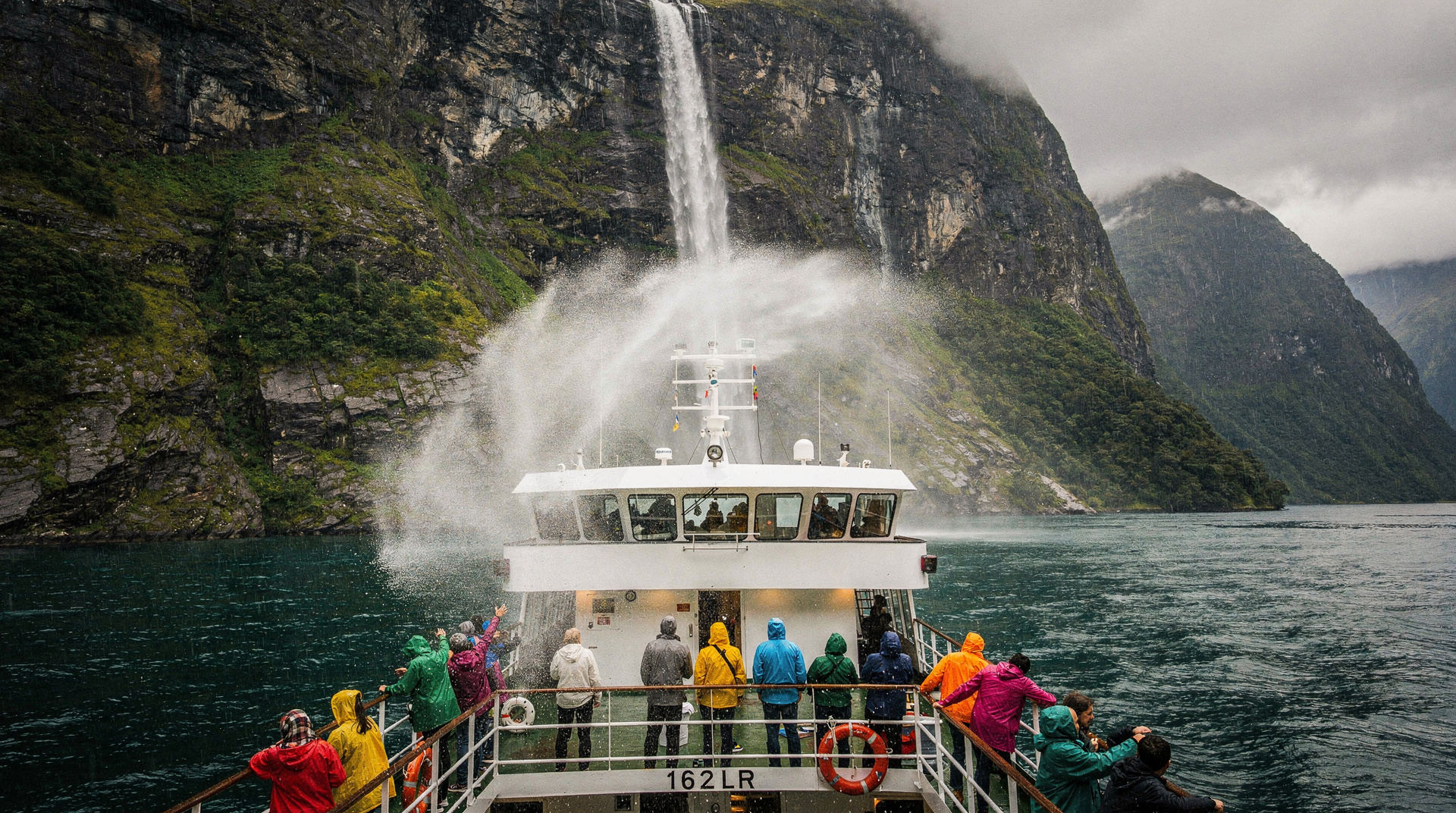
What makes Piopiotahi extraordinary is the combination of vertical scale and raw precipitation. The fiord walls rise 1,200-1,600m directly from the water — almost vertical in places — and the annual rainfall of 6,800mm (one of the world’s highest) feeds hundreds of cascading waterfalls down these walls. On an average day in any season, waterfalls are visible from everywhere on the fiord. After heavy rain, the walls stream with water from countless ephemeral falls, and the temporary waterfalls (Lady Bowen Falls, at 162m, is permanent; many others appear only during and after rain) outnumber the permanent ones by scores.
Mitre Peak (1,683m) is the visual signature of Milford Sound and one of New Zealand’s most photographed features — the dramatic pyramidal rock rising directly from the fiord is visible from the moment you arrive at the Sound and dominates the westward view throughout the cruise.
The operators
Multiple cruise operators run services from the Milford Sound cruise terminal. The main ones in 2026:
Real Journeys (now part of Real NZ): The market leader, with the largest fleet and most departure times. Offers standard day cruises, nature cruises (with more wildlife focus and slower speed), and overnight cruises on the Milford Mariner. Very professional.
Cruise Milford: Smaller operator with emphasis on smaller group sizes. Slightly more expensive but notably less crowded on the boat.
Milford Sound Lodge Cruises: Operated by the same company as the Milford Sound Lodge accommodation; slightly more intimate.
Southern Discoveries: Another established operator; competitive pricing on the standard day cruise.
All operators use broadly similar vessels and follow broadly similar routes (to the Tasman Sea mouth of the fiord and back). The primary differentiators are group size, vessel quality, and the quality of the guide commentary.
Day cruise: what to expect
The standard day cruise runs 2-2.5 hours. The typical route: depart the cruise terminal at the head of the fiord, cruise past the main waterfalls (Stirling Falls, Lady Bowen Falls), approach Mitre Peak from multiple angles, continue to the fiord mouth where the Tasman Sea is visible, then return.
Wildlife: Fiordland crested penguins (the rarest penguin in New Zealand, found only in Fiordland, with distinctive yellow eyebrow crests) are visible from boats in summer — typically on rocky outcrops near the fiord entrance. Bottlenose dolphins regularly accompany vessels, particularly near the mouth. New Zealand fur seals haul out on Seal Rock (a permanent colony). Common seabirds: kea (alpine parrot), kaka (bush parrot), Fiordland crested penguins, and various shearwaters in season.
The underwater observatory: Real NZ and some other operators offer access to the Harrison Cove Underwater Observatory — a cylindrical viewing chamber 10m below the surface of the fiord. The dark freshwater layer (from the heavy rainfall) on top of the seawater creates conditions where deep-sea species live unusually close to the surface. Black coral (typically at 40m+ depth elsewhere) grows at 10m in Milford Sound. The observatory reveals black coral gardens, red and black sea urchins, sea horses, nudibranchs, and fish species normally only seen by divers.
Verdict: ✓ Worth it The day cruise is sufficient for most visitors. The experience is complete — you see the major features, the waterfalls, the wildlife, and the Tasman Sea mouth. However, the overnight cruise transforms it.
Milford Sound: Nature Cruise on a Modern Catamaran
2-hour catamaran cruise from the terminal — the standard Milford Sound day experience.
From NZD 85–110 / USD 51–66 / EUR 47–60
Milford Sound: Cruise, Underwater Observatory, and Lunch
Cruise plus access to Harrison Cove Underwater Observatory and lunch included.
From NZD 100–130 / USD 60–78 / EUR 55–71
Overnight cruise: the definitive recommendation
The overnight cruise on the Milford Mariner (Real NZ) or equivalent vessels is the Milford Sound experience that is genuinely transformative. 12-18 passengers (versus 100-300 on day cruises), overnight in the fiord after day-cruise visitors have departed, kayaking at sunset, bioluminescent plankton visible in the water after dark, and the early morning fiord before weather systems arrive.
What the overnight delivers:
Empty fiord: By 5-6pm, the day-cruise boats have departed and the fiord empties. The scale and silence that descend are remarkable — the falls are still running, the peaks are lit by low evening light, and the sound (no engine noise) is Milford Sound as it is without human presence.
Kayaking: The overnight guests kayak at dusk and sometimes after dark — a very different perspective from the fiord at boat-deck height. Kayaking across the mirrored surface toward Mitre Peak at last light is the image that overnight guests consistently describe as the most memorable of their New Zealand trip.
Bioluminescence: On calm, dark nights, the fiord surface shows bioluminescence in the wave wash — the same Noctiluca scintillans that lights tropical beaches, visible in Milford Sound’s dark waters under the right conditions.
Early morning: The fiord at 5:30am — before cloud or wind, before the day boats arrive — has a quality of light and stillness that is unlike any other time.
Price: NZD 480-600 / USD 288-360 / EUR 264-330 per person, including all meals, berth, kayaks, and guide.
Booking: The overnight cruise has very limited capacity (12-18 berths) and books out months in advance in January-February. Book at least 6-8 weeks ahead in peak season; 3-4 weeks in shoulder season.
Milford Sound: Overnight Cruise with Water Activities
Overnight in Milford Sound with kayaking, bioluminescence, and the fiord entirely to yourself after dark.
From NZD 480–600 / USD 288–360 / EUR 264–330
Getting to Milford Sound
From Te Anau (120km, 2 hours by road): The best base for Milford Sound. Stay in Te Anau the night before, drive the Milford Road in the morning. The road passes through Fiordland National Park — the Eglinton Valley’s Mirror Lakes, the Cascade Creek beech forest, the Homer Tunnel (1.2km, single lane, no passing), and the dramatic descent to the fiord. The drive itself is one of New Zealand’s finest — allow 3 hours with stops.
From Queenstown (295km, 5 hours by road): See the Milford scenic flights guide for the fly-cruise-fly option. If driving from Queenstown, plan a 2-day visit (overnight in Te Anau) rather than the exhausting 13-hour round-trip day.
By coach: Intercity and Real NZ run coaches from Te Anau and Queenstown directly to the cruise terminal. This eliminates parking and driving stress on the Milford Road but reduces flexibility for roadside stops.
Day trip logistics if you’re staying elsewhere
If an overnight cruise isn’t in the budget or the schedule, both the Milford Sound day trip from Queenstown and Milford Sound day trip from Te Anau guides cover the full logistics of doing the road and cruise in a single day, including realistic departure times and what to expect from the drive. For a first-hand account of what the overnight product is actually like rather than the marketing version, see the Milford Sound overnight cruise review.
Combining with the Milford Track or a stop in Te Anau
Serious hikers sometimes see the fiord first by cruise, then return on foot via the Milford Track, one of New Zealand’s Great Walks; the cruise gives useful context for the track’s endpoint at Sandfly Point. If you’re overnighting in Te Anau either way, the Te Anau glowworm caves make a good complement for an evening before or after the Milford Road drive. For visitors who’d rather paddle than cruise, kayaking Milford Sound covers the guided options in more depth than the overnight-cruise kayaking session alone.
Costs summary
Cost breakdown
Prices approximate 2026 across main operators.
| Item | NZD | USD | EUR | Verdict |
|---|---|---|---|---|
| Standard day cruise (2 hours) | NZD 80–110 | USD 48–66 | EUR 44–60 | ✓ Worth it |
| Nature cruise (2.5 hours, smaller group) | NZD 110–150 | USD 66–90 | EUR 60–82 | ✓ Worth it |
| Cruise + underwater observatory | NZD 100–130 | USD 60–78 | EUR 55–71 | ✓ Worth it |
| Kayak + cruise combo | NZD 140–180 | USD 84–108 | EUR 77–99 | ★ Splurge |
| Overnight cruise Fiord to yourself after dark — genuinely worth it | NZD 480–600 | USD 288–360 | EUR 264–330 | ★ Splurge |
What to pack for the cruise
Fiordland’s weather changes fast, even within a two-hour cruise. Bring a waterproof jacket regardless of the forecast — spray from waterfalls and rain showers are both common, and open-deck viewing is where most of the good photographs happen. Layers matter more than a single heavy coat: the fiord is often 5-8°C cooler than Te Anau or Queenstown, and wind on the open water adds a real chill factor even in summer. A dry bag or waterproof phone case is worth having if you plan to photograph from the bow. Sunscreen and sunglasses are still relevant on clear days — reflected light off the water is intense.
Milford Sound in rain vs sun
Milford Sound divides visitors: some prefer rain (the fiord walls run with water, the atmosphere is dramatic, the mist creates mystery), some prefer sun (the peaks are clear, the colours more vivid, photographs work without post-processing). The honest answer is: both are beautiful, and you cannot choose the weather.
The single most common mistake is to cancel a Milford Sound visit on a rainy day. The fiord in heavy rain has more waterfalls than on any clear day; the mist at the peaks gives a scale-distorting, otherworldly quality to the rock walls. Go regardless of the weather forecast — the only condition that genuinely diminishes the experience is flat, overcast grey with no wind, which tends to flatten the visual drama.
Frequently asked questions
How crowded is Milford Sound?
In peak summer (January-February), approximately 1,200+ visitors per day reach Milford Sound. The cruise terminal (a joint facility) is busy, coach groups are large, and the day cruise boats carry 200-300 passengers each. The crowds are real. The solution: overnight cruise, or early morning departure (the 8:30am or 9am cruise typically has fewer passengers than the 10am-noon departures that coaches from Queenstown use).
Is the drive on the Milford Road difficult?
No — the road is well-maintained seal/asphalt. The Homer Tunnel (single lane, traffic-light controlled) is the only unusual feature. The road is narrow and winding in places; allow longer than GPS suggests, and do not drive after dark (the road closes to traffic from Milford Sound after a certain hour in winter). The road is avalanche-prone in winter — check the warning systems at the tunnel approach.
What is the best Milford Sound cruise operator?
All operators provide a reasonable experience. Real NZ (Real Journeys) has the most consistent quality and the best overnight product. Cruise Milford is preferred by visitors who want smaller group sizes on day cruises. The specific vessel matters more than the operator brand — check the current fleet details when booking.
Can I kayak independently on Milford Sound?
Independent kayaking is possible on Milford Sound without a tour, but is strongly advised against except for experienced sea kayakers. The fiord can develop significant conditions rapidly; the scale means that a paddle failure or weather change can strand a small craft far from assistance. The guided kayak tours and overnight cruise kayaking sessions are the appropriate option.
Should I book Milford Sound or Doubtful Sound?
Different experiences — see Milford Sound vs Doubtful Sound for the full comparison. In brief: Milford Sound is more visually dramatic (Mitre Peak, higher walls, more accessible); Doubtful Sound is quieter, larger, and harder to reach. For most visitors, Milford Sound is the right choice. For visitors returning to New Zealand or specifically seeking seclusion, Doubtful Sound is the better option.
Is the day cruise from Queenstown worth the long drive?
Yes, but plan carefully — it’s a genuinely long day. Read the Milford Sound day trip from Queenstown guide before committing to the coach-only version, and weigh it against flying one way (see the Milford scenic flights guide) or overnighting in Te Anau to shorten the drive.
Related guides
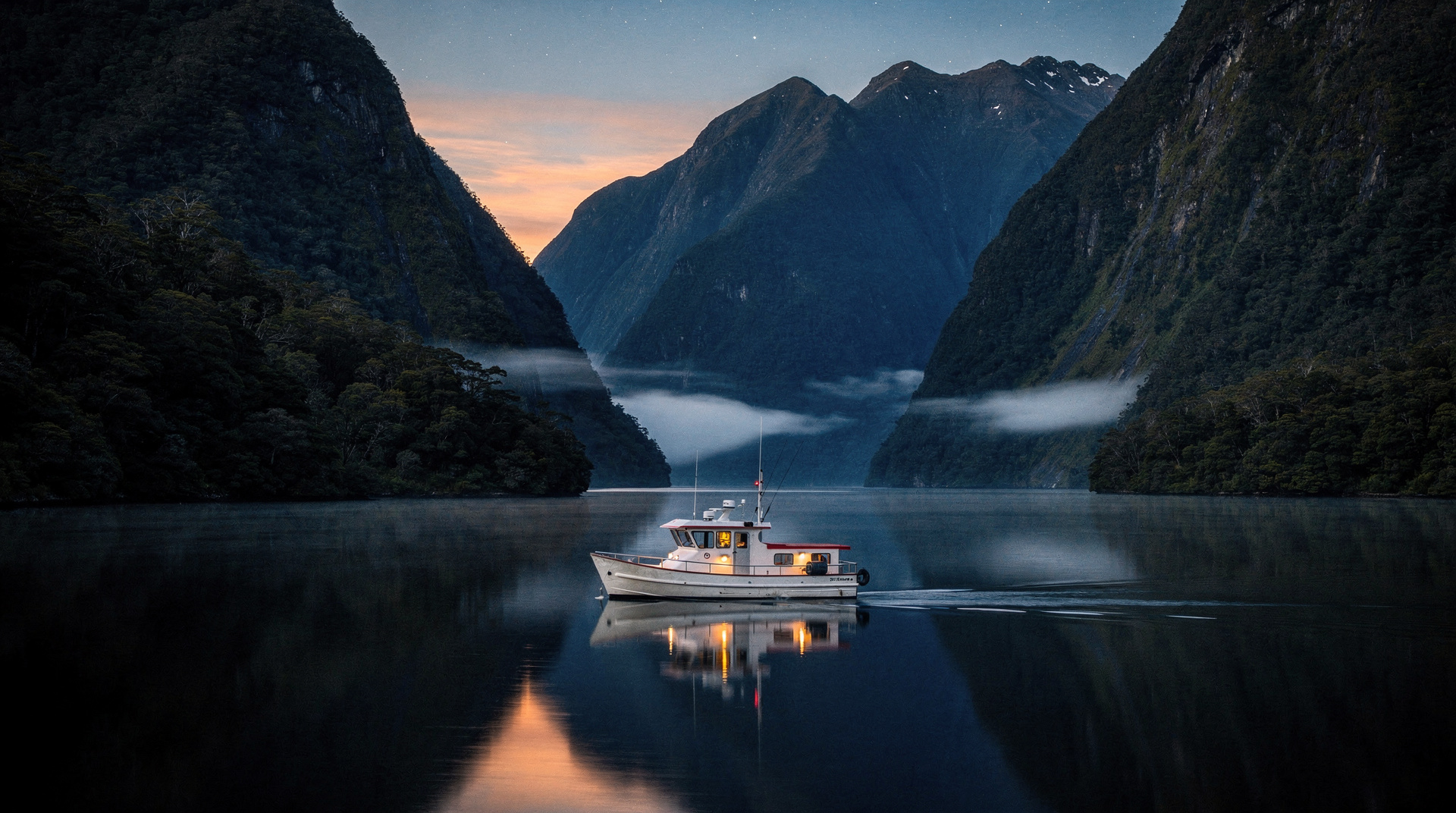
Doubtful Sound cruise guide — New Zealand's other fiord
Doubtful Sound cruise guide: Lake Manapouri boat access, day cruise vs overnight, wildlife, costs NZD/USD/EUR, and honest comparison with Milford Sound.
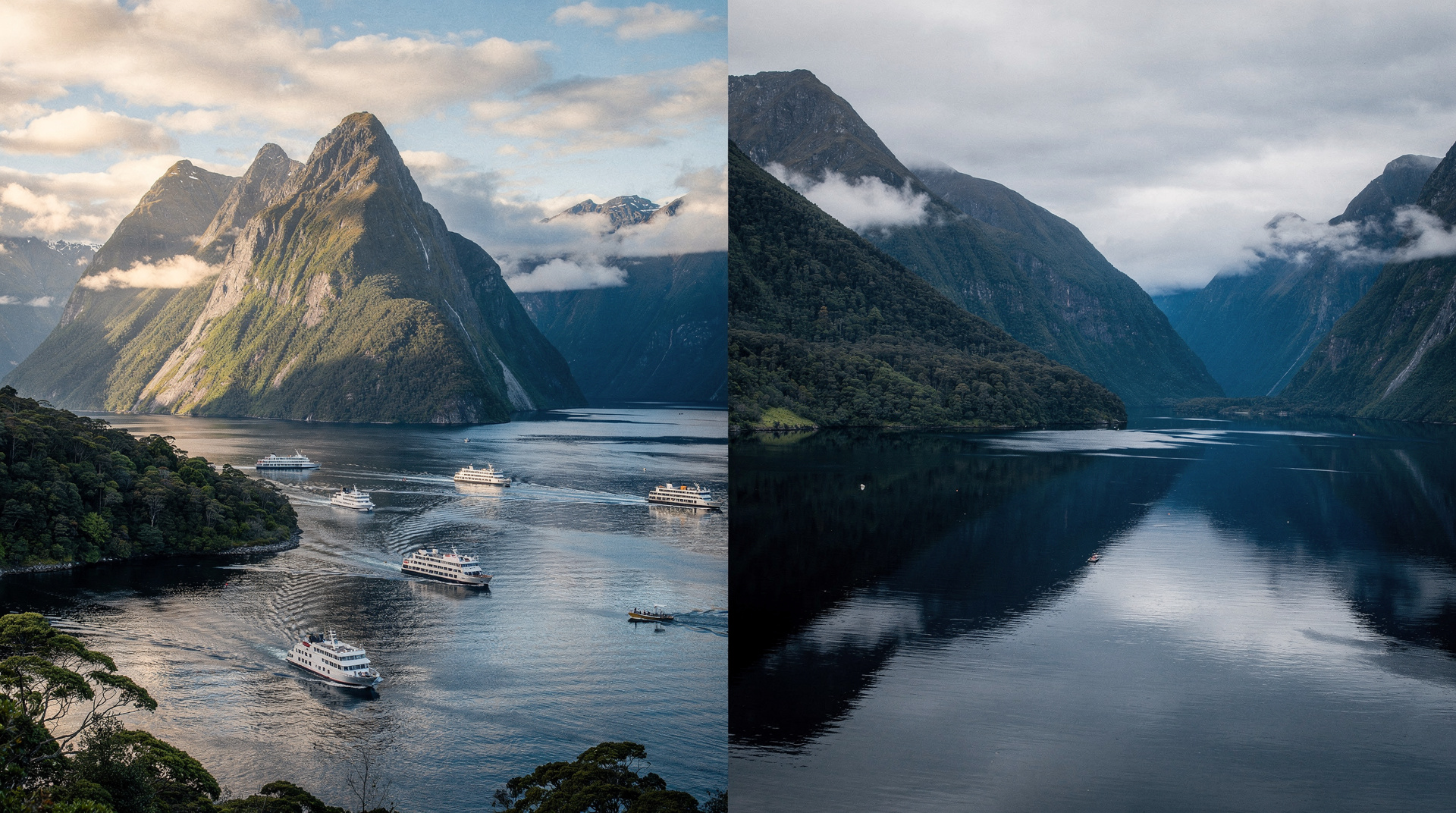
Milford Sound vs Doubtful Sound
Milford Sound vs Doubtful Sound: honest comparison of access, crowds, scenery and cruises. Clear verdict with prices in NZD/USD/EUR.
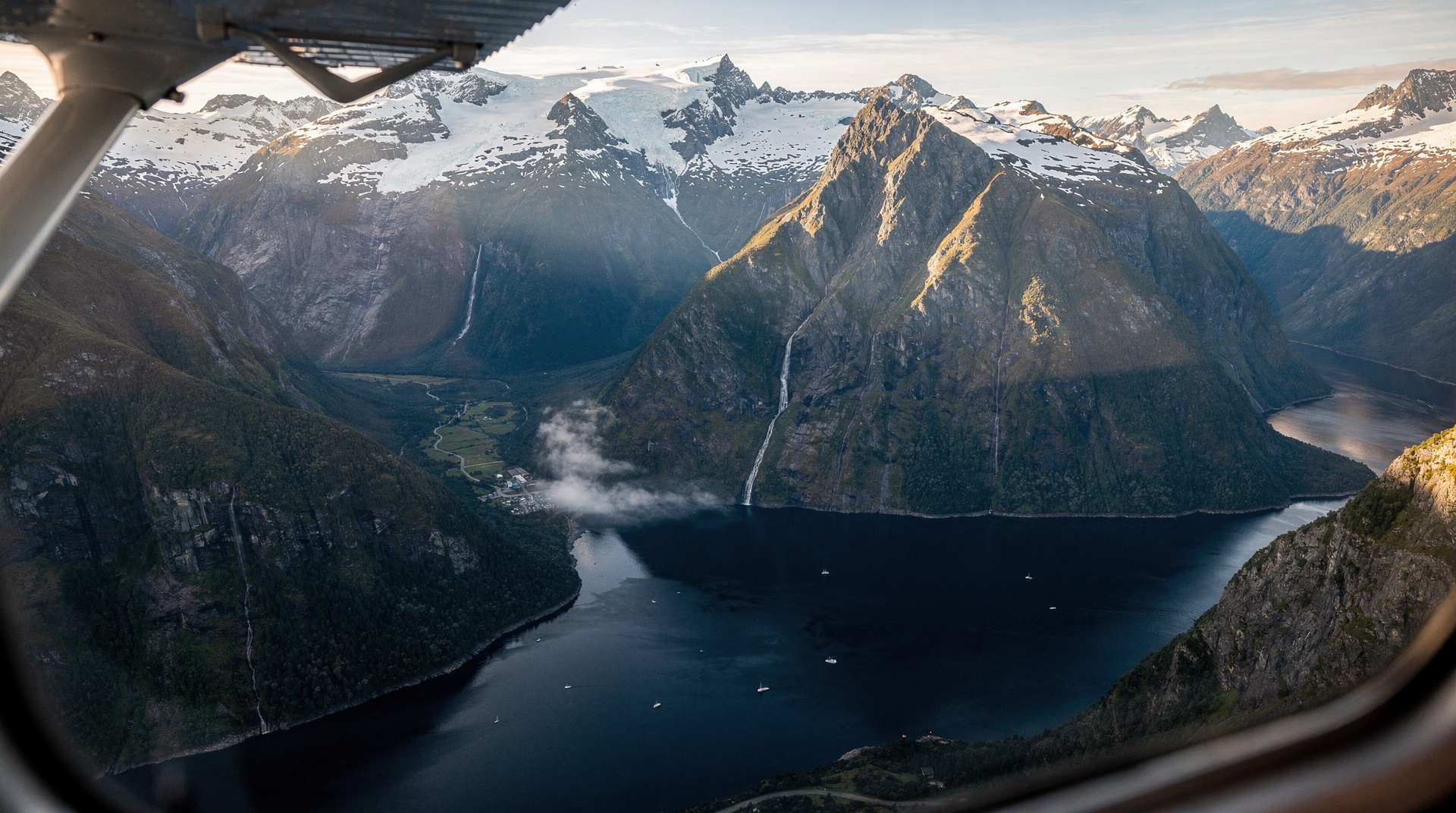
Milford Sound scenic flights — flying in and out of Fiordland
Milford Sound scenic flights: fly-cruise-fly from Queenstown or Te Anau, what you see, prices NZD/USD/EUR, and when flying beats the long coach from Queenstown.
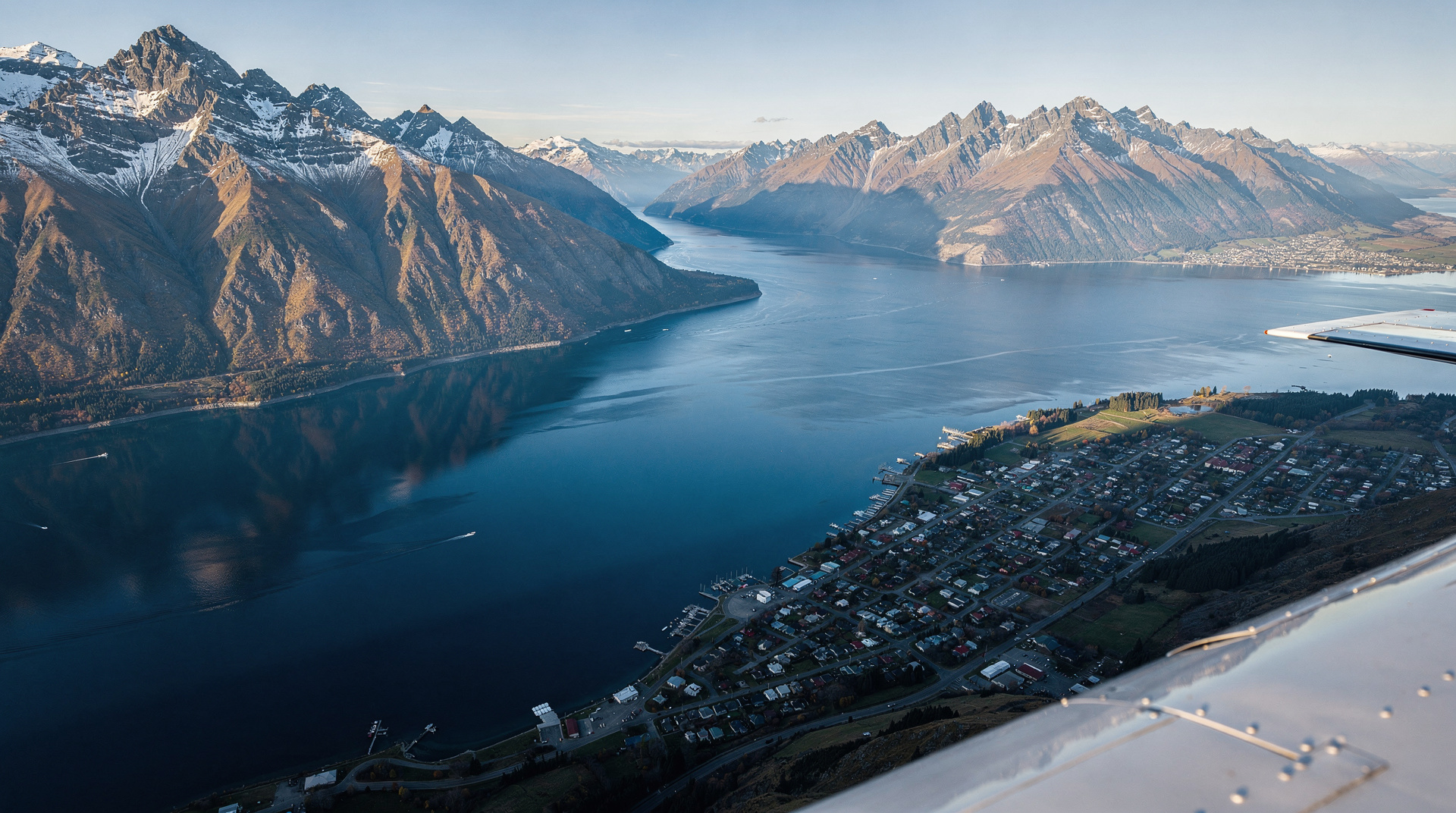
Queenstown scenic flights — helicopters, fixed-wing, and aerial tours
Queenstown scenic flights: Remarkables helicopter, Milford fly-cruise-fly, Earnslaw Burn heli-adventure. Prices NZD/USD/EUR and honest verdict on which to book.
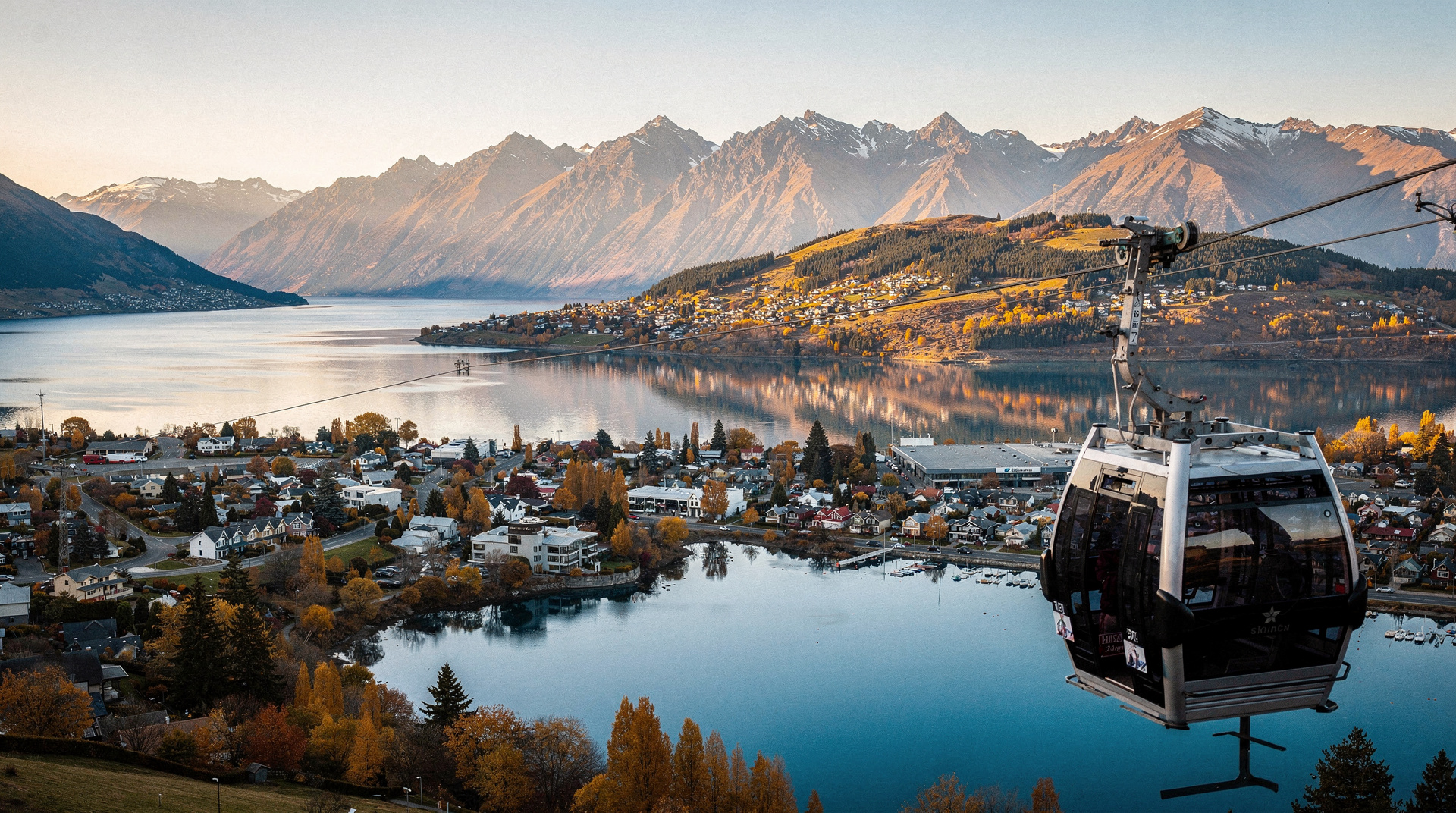
Queenstown
The honest Queenstown planner: bungy, jet boat, ski, scenic flights — real prices in NZD/USD/EUR, what to skip and what's worth your money.

Driving in New Zealand
Honest driving guide for NZ: left-side rules, gravel road etiquette, why GPS lies, fuel costs, one-lane bridges, and what rental companies don't tell you.
Last reviewed: