Waitangi Treaty Grounds — guide to New Zealand's most important site
Is visiting the Waitangi Treaty Grounds worth it and what will I learn?
Waitangi is the most historically significant site in New Zealand — the location where the Treaty between the British Crown and Maori chiefs was signed in 1840. A guided visit with context about both Treaty texts (Maori and English) and their ongoing political implications is one of the most valuable cultural experiences in the country. Adult entry is NZD 60; guided tours and hangi evenings are extra.
The Treaty and why this site matters
The Treaty of Waitangi was signed on 6 February 1840 on the lawn of the British Resident’s house at Waitangi, in the Bay of Islands — the most important event in New Zealand’s constitutional history. More than 500 Maori rangatira (chiefs) signed one of the two versions of the Treaty over the following weeks and months. The document created the conditions for British sovereignty over New Zealand while — in the Maori text — guaranteeing Maori rangatiratanga (chieftainship) over their lands, their villages, and their taonga (treasures).
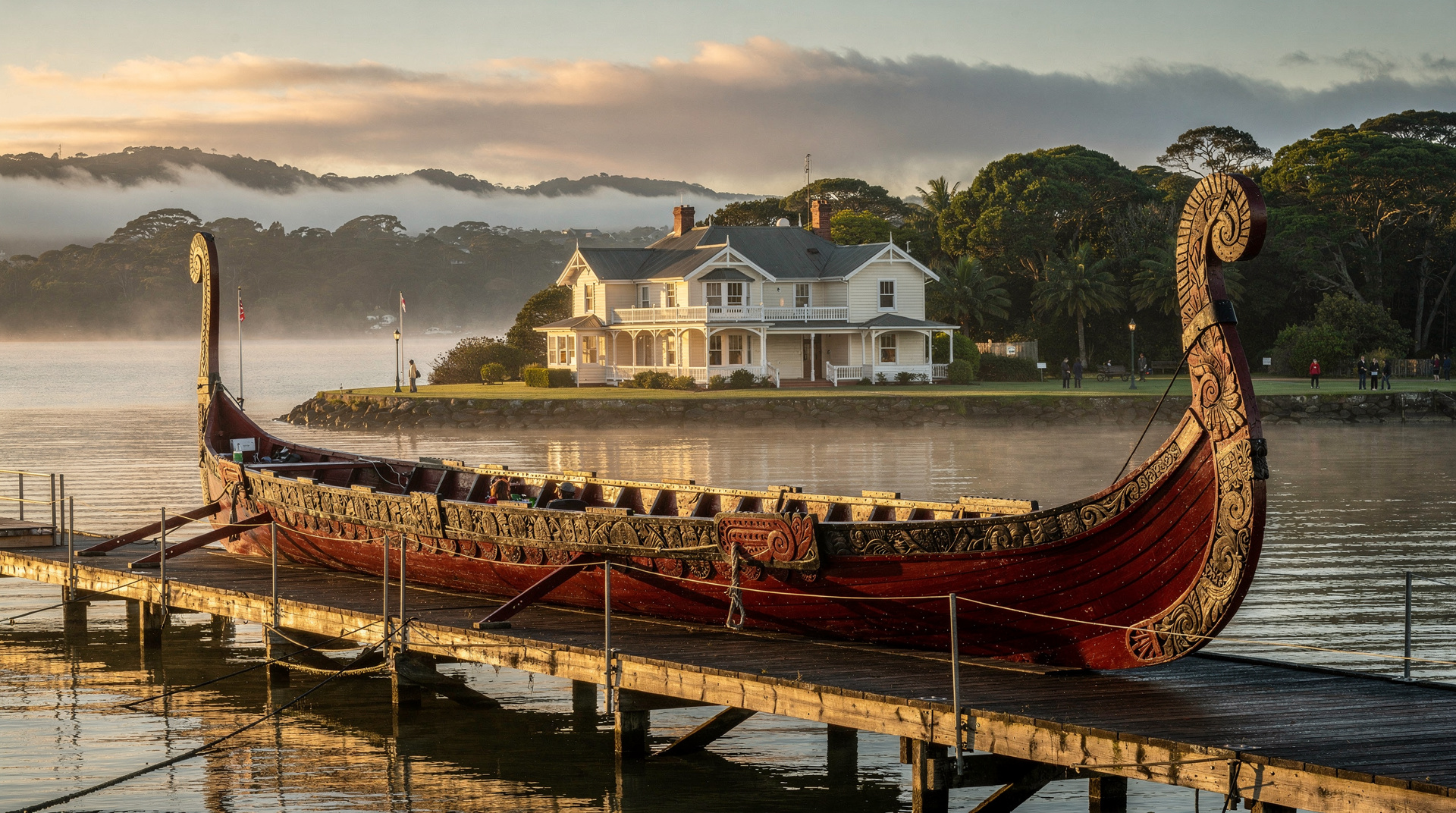
The Waitangi Treaty Grounds are where you can stand on that lawn, walk through the Treaty House where the British Resident James Busby lived, enter the wharenui (meeting house) where ceremonies still take place, and see the longest war canoe in the world. More than a monument, the Grounds are a living site used for Waitangi Day (the national day, 6 February) celebrations, formal government-Maori relationships, and ongoing cultural events.
Understanding the Treaty of Waitangi is not optional background reading for visiting New Zealand — it is the context for everything from land rights to language policy, from court cases to educational curriculum. The Grounds offer the best opportunity most visitors will have to receive that understanding from Maori voices directly.
| Where | Waitangi, Bay of Islands, adjacent to Paihia |
| Cost | around NZD 60 adult entry; NZD 130–150 for hangi evening |
| Time needed | 2-3 hours for grounds and museum; add an evening for the hangi |
| Getting there | 3.5h drive north of Auckland, or Intercity bus |
| Best time | Any day; 6 February (Waitangi Day) for a uniquely immersive visit |
The Treaty of Waitangi: the two texts
This is the most important piece of context for visiting the Grounds, and it is frequently oversimplified in popular accounts.
The Treaty exists in two versions: an English text signed by the British negotiators, and a Maori text (te Tiriti o Waitangi) translated into te reo Maori by the missionary Henry Williams and his son Edward, working overnight before the signing. The two texts are not equivalent.
The English text uses the word “sovereignty” — the cession of full Crown authority over New Zealand. In exchange, Maori are guaranteed “the full exclusive and undisturbed possession of their Lands and Estates, Forests, Fisheries and other properties.”
The Maori text (te Tiriti) uses “kawanatanga” (governorship — a considerably narrower concept than sovereignty) where the English uses “sovereignty,” and “rangatiratanga” (chieftainship, full authority) where the English uses “possession.” In the Maori text, Maori cede governance; in the English text, they cede sovereignty. These are not the same thing.
Most of the over 500 Maori who signed the Treaty signed the Maori text. The discrepancy between the two texts is not an accident of translation — it reflects the political reality of negotiation and the limits of overnight translation by missionaries who had their own interests. The Waitangi Tribunal (established 1975) takes the Maori text as the authentic version of what Maori agreed to.
This history is presented at the Treaty Grounds without whitewashing. The guides — who are Maori — explain both texts and their political implications. This is not comfortable history, but it is honest history.
What to see and do at Waitangi
The Treaty House (Busby House, 1836): The Georgian-style house built for British Resident James Busby is the oldest surviving European-built house in New Zealand. It is furnished approximately as it would have been in 1840. Standing on the verandah looking over the Bay of Islands, it is not difficult to imagine the signing event — there is little between you and the same view Busby had.
Te Whare Runanga (meeting house, 1940): Built for the centenary of the Treaty signing, this wharenui (meeting house) is unique in New Zealand — it is the only one whose carvings represent all of New Zealand’s iwi (tribes) rather than a single tribal affiliation. The carvings inside are the artistic heritage of the whole country, assembled in one building. Daily cultural performances take place here.
Ngatoroirangi / Ngatokimatawhaorua (war canoe): The largest war canoe in the world — 35 metres long, requiring 76 paddlers — was carved for the Treaty centenary in 1940. The canoe is stored in a specially constructed canoe house at the edge of the water and launched annually on Waitangi Day. Even hauled out of the water, the scale is breathtaking.
The Treaty grounds and flagstaff: The flagstaff on the hill above the grounds marks the spot where the British flag was raised following the signing. It has been cut down multiple times in protests by Maori challenging the Treaty’s implementation — the flagstaff itself has a political history.
The Hobson’s Residency: A smaller historic building documenting the role of William Hobson, the British naval commander who negotiated the Treaty. Worth including in a self-guided walk.
The Museum of Waitangi: Opened in 2016, the museum provides chronological and contextual interpretation of the Treaty’s history, the signing event, and its political consequences. The exhibits are well-designed and include original documents, maps, and artefacts. Strong Maori curatorial voice. Included in admission.
Waitangi Treaty Grounds — hangi feast and cultural performance evening Bay of Islands full-day cruise from Paihia — combine with Waitangi visitThe cultural performances
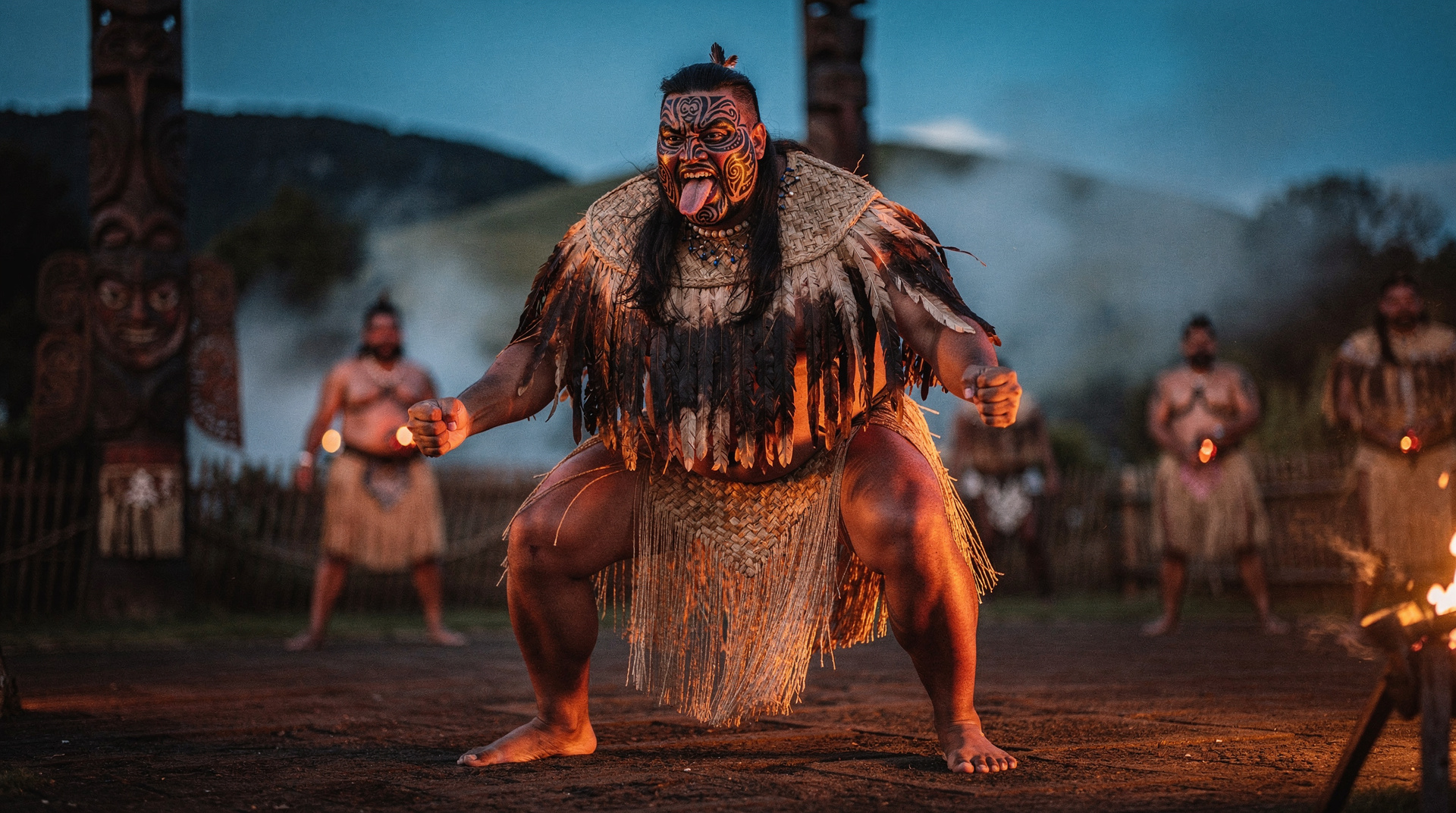
Daily kapa haka performances take place at Te Whare Runanga, typically at 10am, 12pm, and 2pm. The performances are by Ngapuhi (the local iwi) performers and include elements of traditional and contemporary kapa haka.
The evening cultural performance and hangi dinner (available on selected evenings — check the Waitangi website for current schedule) is the most comprehensive experience: a full powhiri welcome, kapa haka performance, and ground-cooked hangi feast served in the grounds. This is one of the most culturally significant evening experiences in New Zealand — you are eating on the lawn where the founding document of the country was signed, hosted by Ngapuhi, whose ancestors signed it.
Waitangi Day: 6 February
Waitangi Day is the national day of New Zealand and is observed at the Treaty Grounds with events that are simultaneously celebratory and politically contested. The Grounds host formal government ceremonies (the Prime Minister and Governor-General attend) and Maori cultural events — but they also host protests, political speeches, and challenges to the Crown that are a living expression of the Treaty relationship’s unresolved tensions.
For visitors, attending Waitangi Day (if your dates align) is an extraordinary window into New Zealand’s political culture. It is not a sanitised heritage celebration — it is a working through of a complicated history by people who have the most at stake in it. The ceremonies, the protests, the hangi, the kapa haka, the politicians, the rangatira, and the thousands of Maori families who come from across the country: all of it together is New Zealand honestly.
If you are in the Bay of Islands on 6 February, go.
Practical information
Address: 1 Tau Henare Drive, Waitangi, Bay of Islands (adjacent to Paihia — 2km, walkable).
Hours: Daily 9am–5pm.
Admission: Adults NZD 60 / USD 36 / EUR 33. Children (under 15) free. New Zealand residents NZD 25.
Guided tours: Included in admission at scheduled times. Additional guide services available (NZD 20–30 extra per person for premium guide).
Evening hangi and concert: Approximately NZD 130–150 / USD 78–90 / EUR 72–83 per adult. Seasonal — check website.
Getting there: Waitangi is immediately adjacent to Paihia, the main town in the Bay of Islands. From Auckland, it is a 3.5-hour drive north on SH1. Intercity buses and shuttle services also connect Auckland to Paihia.
Photography: Permitted in the grounds and most buildings. During performances, flash photography is usually permitted unless otherwise indicated. The wharenui interior — follow guidance from your guide.
Combining with the coast: Waitangi sits directly on the Bay of Islands waterfront, so a Treaty Grounds morning pairs naturally with an afternoon boat trip out to the Hole in the Rock or a dolphin-watching cruise departing from nearby Paihia — both run daily and take 3-4 hours, making a full and varied day without needing to change accommodation base.
Approaching the visit with respect
The Waitangi Treaty Grounds are not a theme park or a museum in the conventional sense. They are an active, politically significant site managed by Te Tii Marae (Ngapuhi) and the Waitangi National Trust. A few points worth carrying:
- The guides at Waitangi will give you the Maori perspective on the Treaty, which may challenge conventional colonial-history narratives you have encountered elsewhere. Listen with openness.
- The history of Treaty breaches — land confiscations (raupatu), cultural suppression, the banning of te reo Maori in schools (for much of the 20th century) — is part of the story presented here. This is not anti-British sentiment; it is documented history.
- Current Treaty settlements (the process of returning land and resources to iwi whose lands were taken) are ongoing. As of 2026, the Crown has completed settlements with many but not all iwi; some settlements remain contested.
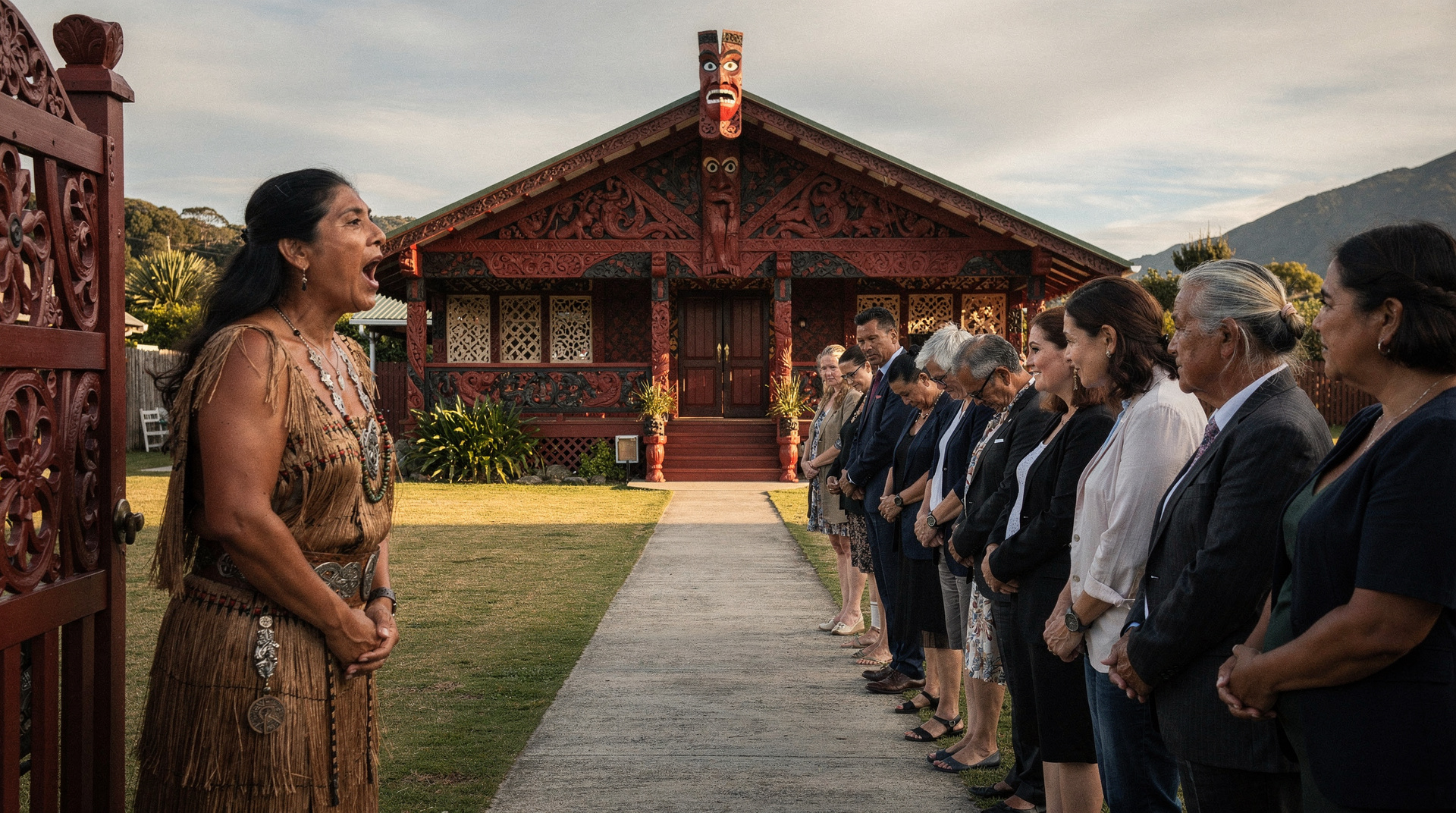
- The hongi (touching noses and foreheads) offered by Maori hosts during the powhiri is an invitation to be received respectfully. A gentle press of nose and forehead with eyes open, not a prolonged contact, is appropriate.
Day trip context from Auckland
Waitangi is 3.5 hours north of Auckland. It can be done as a long day trip — see the Bay of Islands day trip from Auckland guide for the logistics — but is better as a 2-night stopover in the Bay of Islands, combining the Treaty Grounds with the Hole in the Rock boat cruise (see also the Bay of Islands cruise guide), Cape Reinga (the tip of the North Island, a further 3 hours north of Paihia), and Kerikeri (New Zealand’s oldest surviving European settlement).
Preparing before you go: te reo and tikanga basics
A visit to Waitangi is considerably richer if you arrive with a small amount of preparation. Learning a handful of te reo Maori greetings and terms — kia ora (hello), whanau (family), marae (meeting ground) — helps you follow the guided commentary and cultural performances with more understanding; the te reo basics guide covers pronunciation and the most useful everyday phrases.
If your visit will include entering a wharenui elsewhere in New Zealand (Waitangi’s own Te Whare Runanga is generally open to visitors on guided tours), the marae etiquette guide explains the protocols around shoes, photography, and the powhiri welcome in more detail than this guide covers. For the wider picture of how Maori culture and history shape a New Zealand trip beyond Waitangi specifically, the Maori culture overview is a useful companion read before or after your visit.
Frequently asked questions
What is the Waitangi Tribunal and is it still active?
The Waitangi Tribunal was established in 1975 to hear Maori claims against the Crown for Treaty breaches. It is a standing commission of inquiry, not a court, and makes recommendations rather than binding decisions. As of 2026, it is still actively receiving and investigating claims — it is not a historical body but an ongoing institution. Its reports and findings have driven the Treaty settlement process.
Is it appropriate to debate the Treaty at the Grounds?
You are welcome to ask questions about the Treaty and its implications — the guides expect and encourage this. Engaging respectfully with the complexity of the history, including its contemporary political dimensions, is what visiting Waitangi is for.
How does the visit compare to Te Papa’s Treaty coverage?
Te Papa in Wellington covers the Treaty through museum exhibits and objects — excellent contextual coverage. Waitangi gives you the actual site, the actual ground, and the living cultural context of the iwi whose ancestors signed. They are complementary, not interchangeable. If you visit both, do Te Papa first — it provides the contextual framework that Waitangi then brings to life in place.
What is the relationship between Ngapuhi and the Treaty?
Ngapuhi is the largest iwi in New Zealand and the tribe whose chiefs were predominantly at Waitangi on 6 February 1840. Ngapuhi’s formal position is that their chiefs at Waitangi did not cede sovereignty — they signed te Tiriti (the Maori text) which guarantees rangatiratanga, not the English text which cedes sovereignty. The Waitangi Tribunal confirmed this interpretation in its 2014 Ngapuhi inquiry. As of 2026, the Crown and Ngapuhi are in Treaty settlement negotiations — an active, unresolved process.
What are the tikanga (protocols) I should know before visiting?
Follow your guide’s instructions. Do not touch carvings (tapu applies). In the wharenui, shoes may need to be removed — wait for guidance. During the powhiri, follow the lead of your group. Do not eat or drink in the wharenui. Accept food offered during the experience gratefully — refusing manaakitanga (hospitality) is considered impolite.
Related reading
Related guides
Maori culture overview — what every visitor should know
Respectful introduction to Maori culture for visitors: tangata whenua, Te Tiriti, tikanga basics, language, cultural experiences, and how to engage honestly.
Marae etiquette for visitors
Marae etiquette: powhiri protocol, hongi greeting, shoes off, what not to do, and how to be a respectful guest at a Maori meeting place.
Te reo Maori basics for travelers
Practical te reo Maori guide: vowel pronunciation, 40+ essential phrases, place name meanings, and everyday Maori words woven into New Zealand English.
Bay of Islands
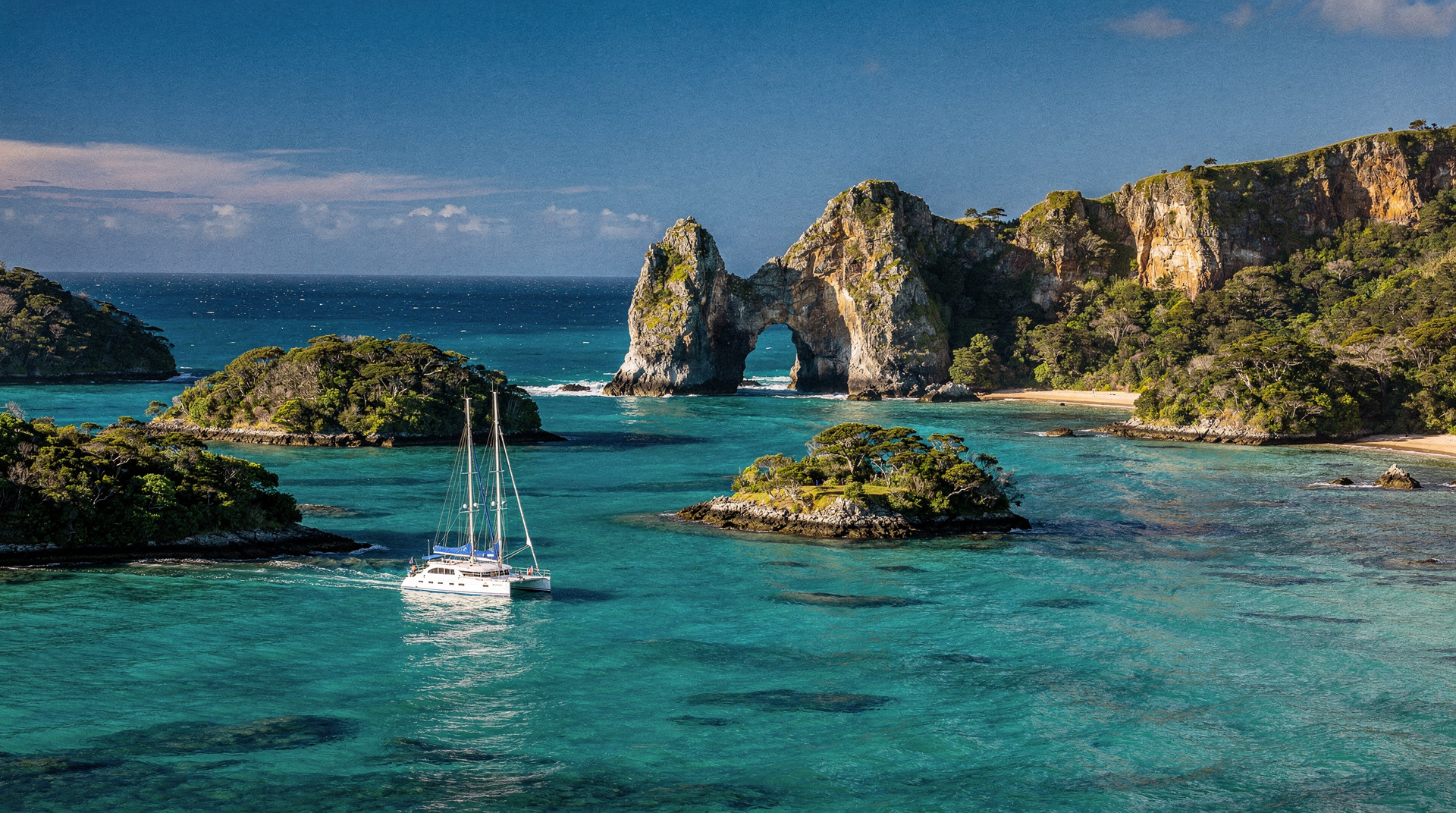
Honest Bay of Islands guide: Hole in the Rock cruise, dolphin swimming, Waitangi Treaty Grounds, Cape Reinga, real costs NZD/USD/EUR.
Best day trips from Auckland
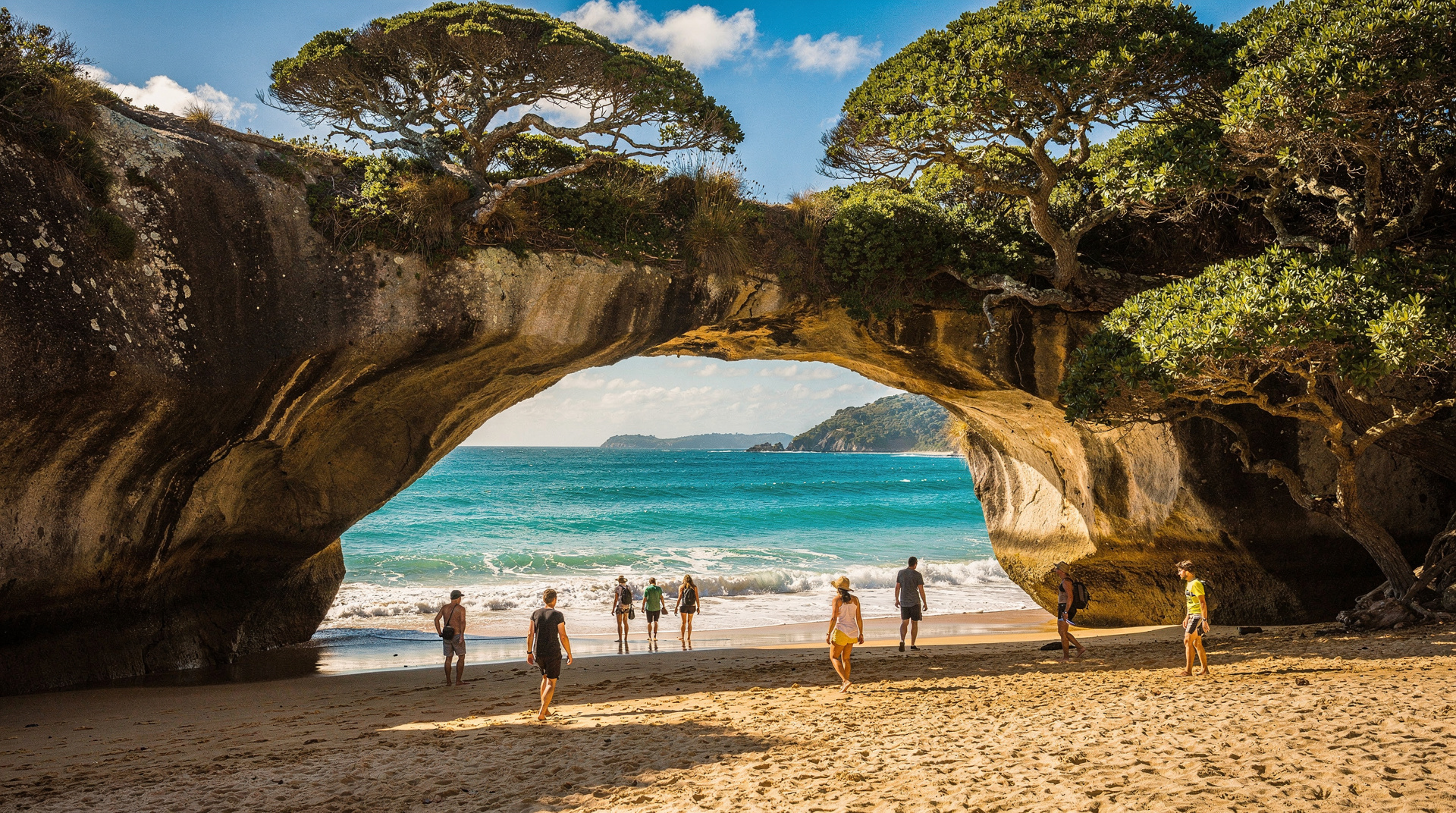
Six great day trips from Auckland: Waiheke, Hobbiton, Waitomo, Coromandel, Rotorua and more — with drive times, GYG tours, and honest advice.
North vs South Island — which is right for you
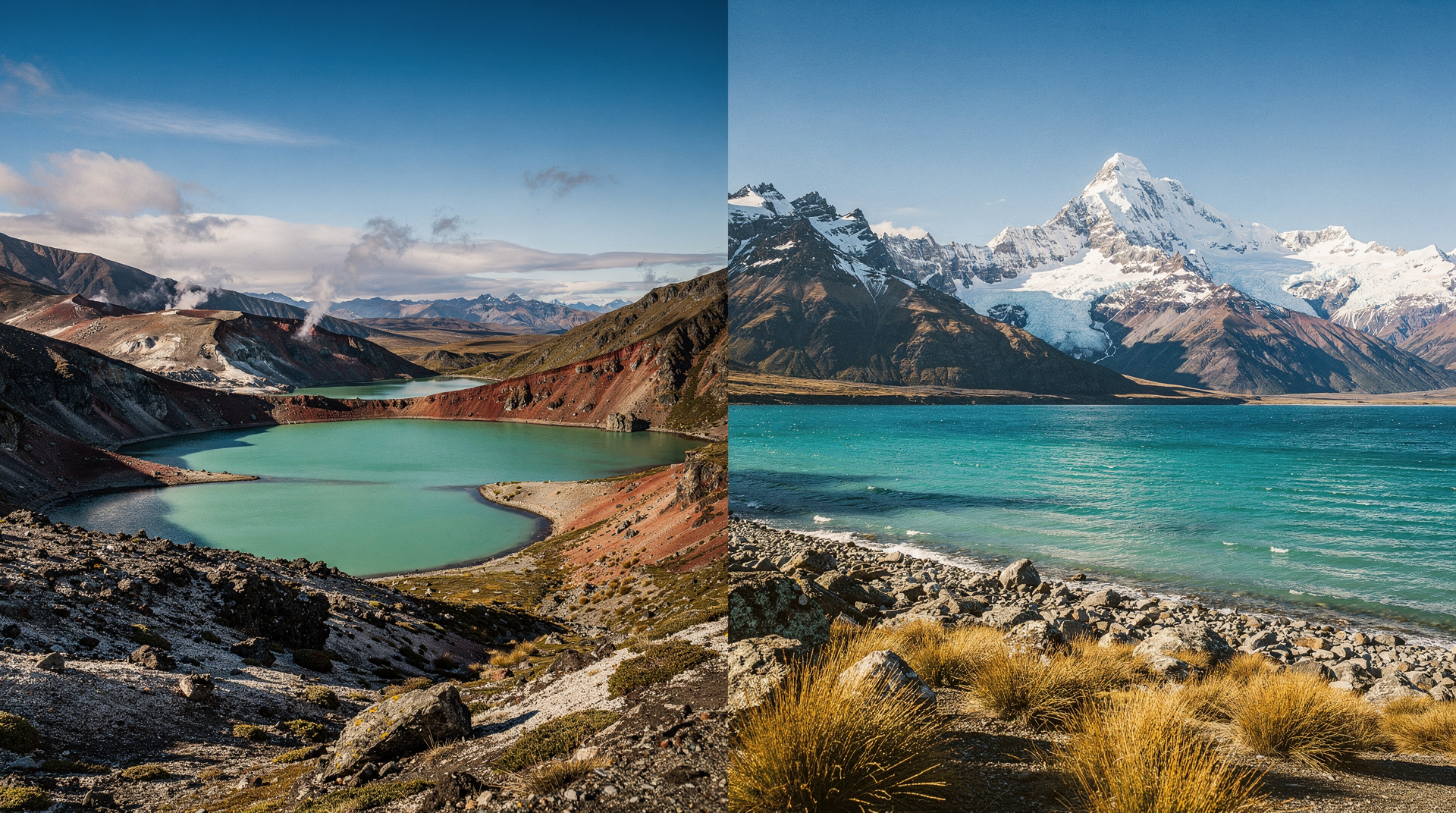
Honest North vs South Island comparison: culture, landscapes, costs and a clear verdict for first-timers, families and short trips.
Last reviewed: