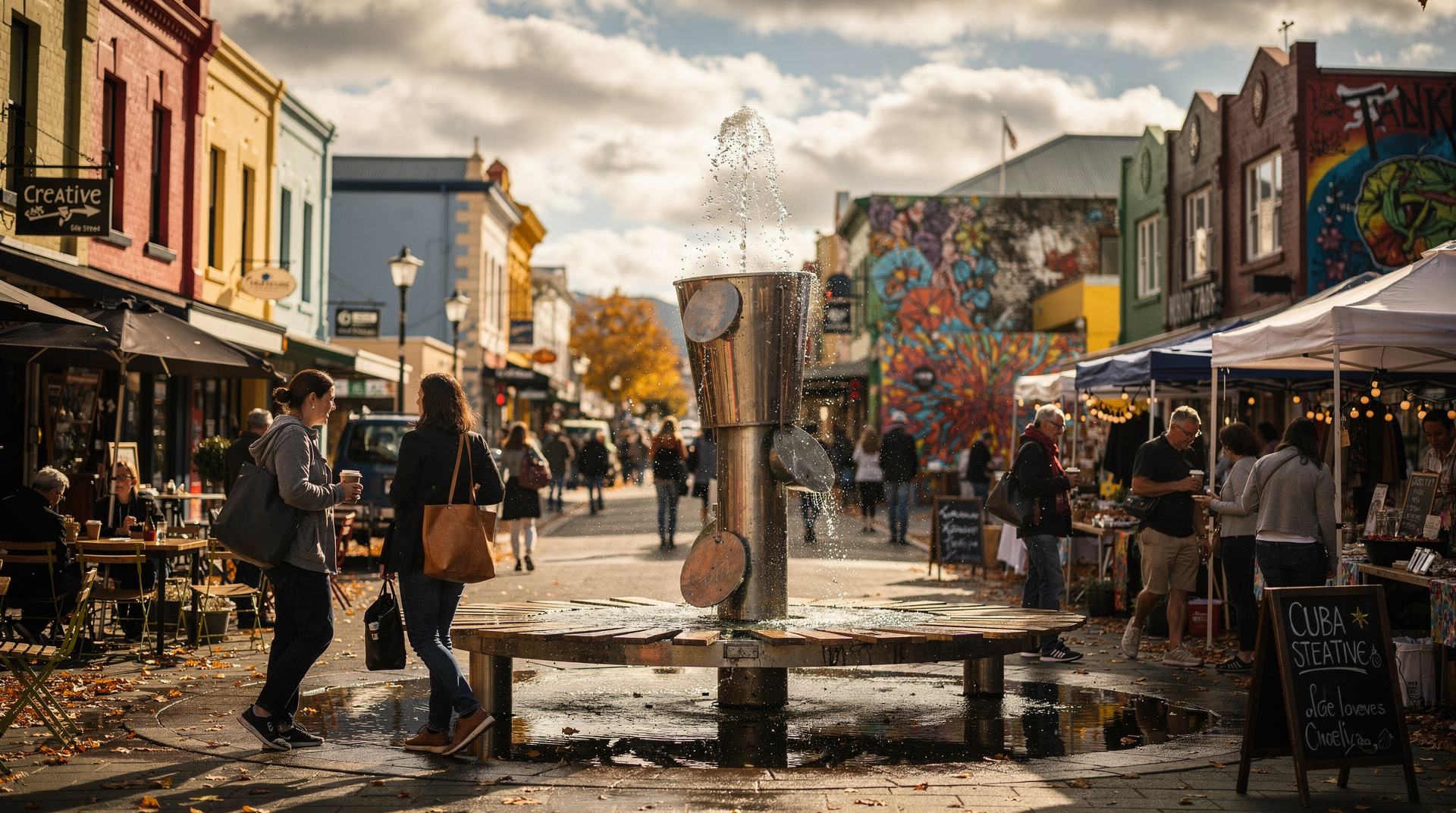
Wellington Cuba Quarter — the bohemian heart of the capital
What is Cuba Street Wellington and why should I visit?
Cuba Street is Wellington's bohemian main street — a pedestrianised strip of independent cafés, bars, vintage shops, live music venues, and street art running from the waterfront to the inner suburbs. It is the cultural antidote to the city's political centre, and arguably where Wellington's international reputation for food, coffee, and creativity is most concentrated.
Why Cuba Street matters
Wellington’s reputation as New Zealand’s creative capital — its self-description as the “coolest little capital in the world,” adopted earnestly by residents and slightly ironically by everyone else — is most legible on Cuba Street. The stretch of road running from Civic Square to Newtown (about 1.5km) and the surrounding blocks form the Cuba Quarter: a neighbourhood of independent businesses, street art, live venues, and food culture that has no equivalent elsewhere in New Zealand.
The comparison to Melbourne’s Fitzroy, Edinburgh’s Grassmarket, or Wellington’s own Edinburgh cousin is frequently made and moderately apt. Cuba Street has the same density of interesting places in a compressed urban format — but it also has Wellington’s specific character, which includes an unusually high concentration of public servants, academics, artists, and film industry workers who have collectively produced a food and coffee culture of remarkable quality for a city of 215,000 people.
Cuba Street did not arrive at its current character by accident. In the 1980s, when other New Zealand cities were demolishing Victorian commercial buildings for car parks and suburban malls, Wellington’s inner-city geography (a narrow, hilly strip between harbour and hills) made sprawl difficult and kept the inner suburbs dense and walkable. Cuba Street survived and evolved; its heritage buildings became the fabric of a creative neighbourhood.
| Where | Civic Square to Newtown, central Wellington |
| Cost | Free to walk; flat white around NZD 5.50-6.50, dinner around NZD 50-80pp |
| Time needed | An afternoon at minimum; a full evening for the bar and music scene |
| Getting there | 10-15 min walk from Wellington Railway Station or Te Papa |
| Best time | Tuesday-Thursday for the working-week energy; weekends for the market and brunch |
Cuba Street: walking from north to south
The bucket fountain (corner of Cuba Mall and Vivian Street): This is the landmark. The 1969 kinetic sculpture by Burren and Osborne — a series of red buckets on a water-driven mechanism that tip, fill, and cascade — is simultaneously beloved and bewildering as public art. It has been restored several times and remains as absurd and cheerful as ever. Meet at the bucket fountain is a Wellington instruction as natural as meet at the clock.
Cuba Mall (pedestrianised section): The middle section of Cuba Street is pedestrianised — market stalls on weekends, buskers most days. The shops here shift generation by generation: in 2026 you will find vintage clothing stores, independent bookshops, record stores, café-record hybrids, tattoo studios, and several excellent food operators.
Midnight Espresso: Cuba Street’s original late-night café, open until 4am on weekends, running since the early 1990s. The interior is exactly what you expect — mismatched furniture, magazine piles, aggressively independent music policy. The coffee is good. Go late.
Havana Coffee Works: A few blocks off Cuba Street on Tory Street, the roastery and café is one of the foundational institutions of Wellington coffee culture. The café runs brunch until mid-afternoon and serves their own-roasted blends.
Fidel’s Café: Long-running Cuba Street institution. The name, the Che Guevara décor, the “Yes, we have no bananas” menu approach — all of it slightly ironic in the way Wellington does irony, which is less ironic than it appears. Good all-day food. Popular with the political class on their lunch breaks, especially during parliamentary sitting weeks.
Prefab: A newer arrival that has become a benchmark for Wellington’s flat white culture. The building — a prefabricated commercial structure repurposed as a café — gives the name. The coffee is genuinely exceptional and has won awards that Wellington takes seriously.
Where to eat in the Cuba Quarter
Wellington’s food scene punches significantly above its weight. The Cuba Quarter and the surrounding streets (Tory Street, Ghuznee Street, Dixon Street) hold an extraordinary density of good restaurants for a city of this size.
Shepherd: Modern New Zealand cuisine in a refined space on the Cuba Quarter fringe. The focus on South Island ingredients — Canterbury lamb, Otago vegetables, Central Otago wines — makes this a genuine expression of New Zealand’s regional food character. Expect NZD 80-120 / USD 48-72 / EUR 44-66 per head for a full dinner.
Mekong Baby: Consistently excellent Vietnamese in a Cuba Street basement. Generous portions, genuine depth of flavour, and prices that make it a neighbourhood regular: NZD 35-50 / USD 21-30 / EUR 19-28 per person.
Loretta: The brunch institution on Cuba Street. Weekend queues are real and worth tolerating — the corn fritters, the eggs, and the baked goods justify the wait.
Charley Noble: On the waterfront end of the Cuba Quarter sphere, this craft beer bar and dining room represents the Wellington approach to brewing (serious, locally sourced, unstuffy). Good fish and chips; better beer.
Leeds Street Bakery: Off Cuba Street proper but within walking distance — bread and pastries of serious quality, open from 7am and usually sold out of the best items by 11am. Worth planning your morning around.
The bar scene and live music
Wellington’s bar scene concentrates in the Cuba Quarter and the waterfront. The key venues:
Bodega: Cuba Quarter’s principal live music venue. Mid-sized (capacity around 200), consistently excellent programming of New Zealand and international acts. The bar is good; the sound is better. Wellington’s local music scene — developed over three decades of intense small-city creative density — is at its most accessible here.
The Rogue and Vagabond: Craft beer bar that preceded Wellington’s current craft scene by enough years to seem prescient rather than trendy. Good selection; genuinely knowledgeable staff.
San Fran: Cuba Quarter bar with an eclectic booking policy — jazz, electronic, indie, comedy — and a back garden that is Wellington’s most pleasant outdoor drinking space in summer.
The Free House: Further from Cuba Street towards the Thorndon end of the inner city, but worth noting as Wellington’s best dedicated craft beer pub. Multiple rotating taps from New Zealand producers; a bottle shop with unusual selections.
Street art in the Cuba Quarter
Wellington City Council and various property owners have supported a substantial street art programme across the Cuba Quarter and the surrounding back streets. The result is one of New Zealand’s most concentrated urban art environments.
Ghuznee Street: The stretch between Cuba and Willis streets has multiple large-scale murals. The works rotate as walls become available — Wellington’s street art scene is genuinely dynamic rather than static.
The alleys: The laneways off Cuba Street (Allen Street, Tory Street, left and right off Cuba Mall) have smaller works, legal and semi-legal, that change frequently. Walking the alleys is more interesting than sticking to the main strip.
The City Gallery Wellington (Te Whare Toi): On Civic Square at the waterfront end of the Cuba Quarter axis, the City Gallery is Wellington’s main contemporary art venue. Free entry for permanent works; ticketed for major exhibitions. The programme is consistently adventurous by New Zealand standards.
Where the Cuba Quarter fits your Wellington trip
Cuba Street works well paired with the rest of central Wellington rather than as a standalone stop. Most visitors combine an afternoon here with a morning at Te Papa, Wellington’s national museum on the waterfront — the walk between the two is about 15 minutes through Courtenay Place.
If you’re comparing Wellington against Auckland for where to spend limited North Island time, the Auckland vs Wellington guide covers how the two cities differ, and the Cuba Quarter is usually the deciding factor for visitors who prioritise culture and food over harbour scenery. For a fuller sense of Wellington’s restaurant and craft beer scene beyond the Cuba Quarter’s cafés, see the dedicated Wellington food and drink guide — it goes deeper on Logan Brown, Hiakai, and Garage Project than this neighbourhood overview does.
If you’re building a first-time New Zealand itinerary and wondering how much time Wellington deserves, the first-time New Zealand guide has route-planning context; most itineraries allow Wellington one to two nights, and the Cuba Quarter is the neighbourhood that makes the shorter stay feel worthwhile. Visiting in December brings the added bonus of long daylight for an evening walk through the street art alleys — see New Zealand in December for what else is in season.
Wellington film and creative industry
The Cuba Quarter is also a neighbourhood of film and television production. Weta Workshop’s costume and props empire is concentrated further south in Miramar (a 15-minute drive), but many of the creative workers live and socialise in the Cuba Quarter. The combination has given Wellington an unusual concentration of designers, prop makers, visual effects artists, and concept artists in a compact urban area.
For visitors interested in the Lord of the Rings / Hobbit connection, the Cuba Quarter itself is not a filming location — the Weta Workshop tour at Miramar is the specific destination. But the general atmosphere of creative density that made Weta Workshop possible is most visible on Cuba Street.
Weta Workshop guided tour — props, costumes, and film craftCuba Street market and events
Cuba Dupa Festival: Annual street festival (usually March), transforming Cuba Street into a music and arts event with multiple outdoor stages, market stalls, and food vendors. Free entry. One of Wellington’s most enjoyable civic events.
Wellington on a Plate: Annual food festival (August) spread across the city but with Cuba Quarter as a major hub. Restaurant set menus, special events, and the extraordinary Burger Wellington competition (where every bar and café in the city creates a competition burger for public voting).
Cuba Street Craft Market: Weekend market along the Mall with local makers, vintage sellers, and food. Variable quality but pleasant.
Practical information
Getting there: Cuba Street is 10-15 minutes’ walk from Wellington Railway Station (walk through the CBD on Lambton Quay, then down Manners Street), or a 5-minute walk from Te Papa on the waterfront (up Cable Street, left on Tory Street). Bus routes 2, 3, and 17 all pass near Cuba Street.
Best time of day: Morning for coffee and bakeries; lunch for the full restaurant range; afternoon for browsing; evening for dinner and the bar scene. Cuba Street at 10pm on a Thursday, when Wellington’s parliamentary week is at peak energy, is the city at its most itself.
Costs: Cuba Street is not expensive. A flat white is NZD 5.50-6.50 / USD 3.30-3.90 / EUR 3.00-3.60. Lunch at a mid-range spot is NZD 20-35 / USD 12-21 / EUR 11-19. Dinner at a good restaurant NZD 50-80 / USD 30-48 / EUR 28-44 per person.
Verdict: The Cuba Quarter is essential Wellington. Do not leave the city without spending at least an afternoon here. It captures something genuinely distinctive about New Zealand’s creative culture that you will not find in Auckland or Christchurch.
Frequently asked questions
Is the Cuba Quarter safe at night?
Yes. Wellington’s inner city is one of the safest urban environments in New Zealand. Normal city common sense applies — the area around Courtenay Place (the main bar strip, adjacent to Cuba Quarter) can be raucous on Friday-Saturday nights — but the Cuba Quarter itself has a more mixed demographic and is calm by comparison.
Where can I get the best flat white in Wellington?
Wellington takes coffee extremely seriously — the flat white was arguably invented here (disputed with Melbourne). Regular picks from locals: Prefab, Havana, Customs (on Ghuznee Street), and Flight Coffee’s roastery. All are on or near Cuba Street.
Is Cuba Street good for vegetarians and vegans?
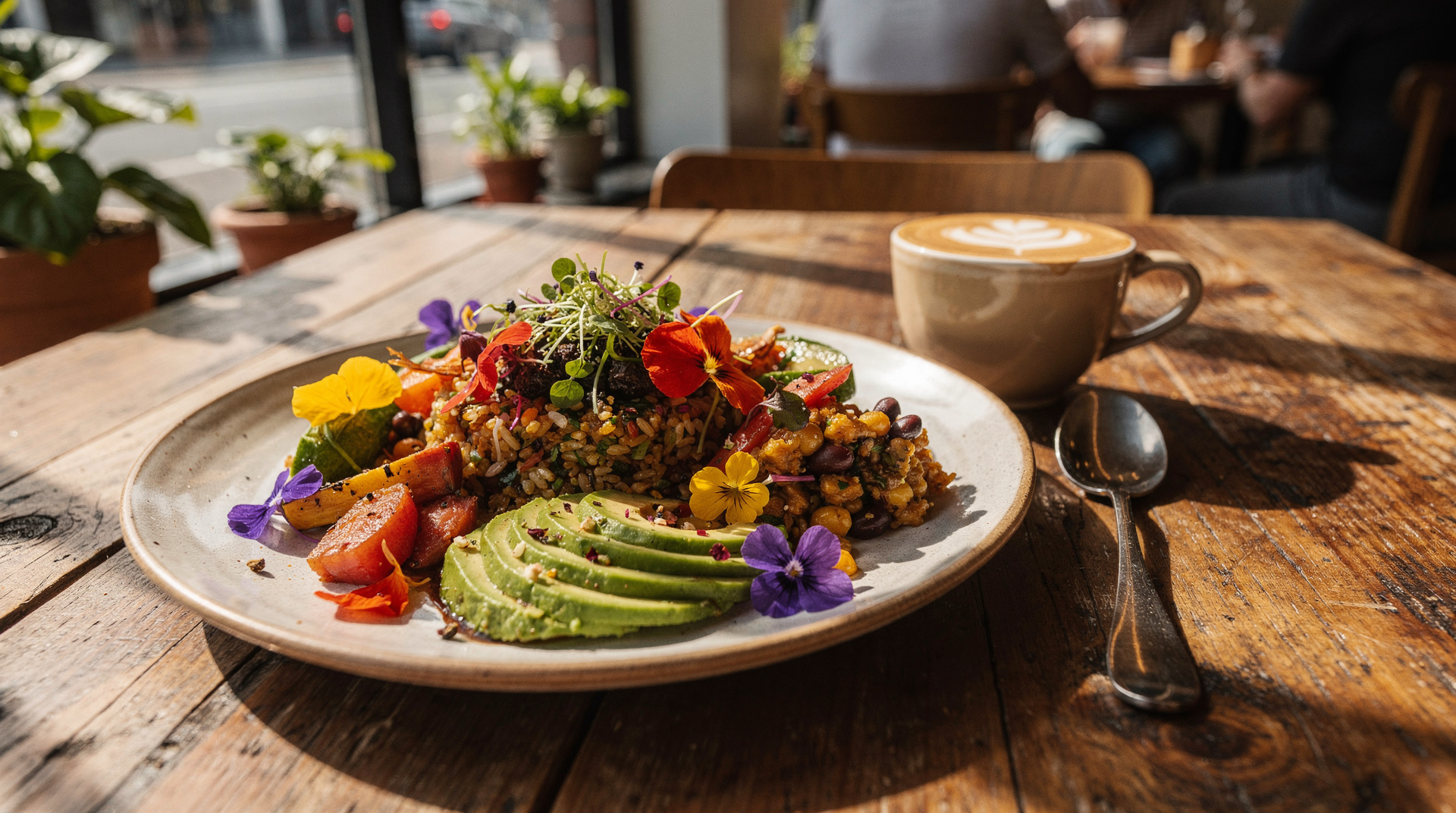
Exceptionally good. Wellington has the highest density of vegetarian and vegan options in New Zealand, and Cuba Street in particular skews progressive on dietary options. Vegan and vegetarian travel in NZ has a fuller breakdown.
What are the opening hours of Cuba Street?
The strip operates seven days. Cafés open from 7-8am; restaurants for dinner from 5:30-6pm. Bars run until 3am on weekends. The pedestrianised mall has street activity most days from 10am. The neighbourhood is at its best during the Wellington working week (Tuesday-Thursday), when the political and creative worker population creates a specific high-energy atmosphere.
Related guides
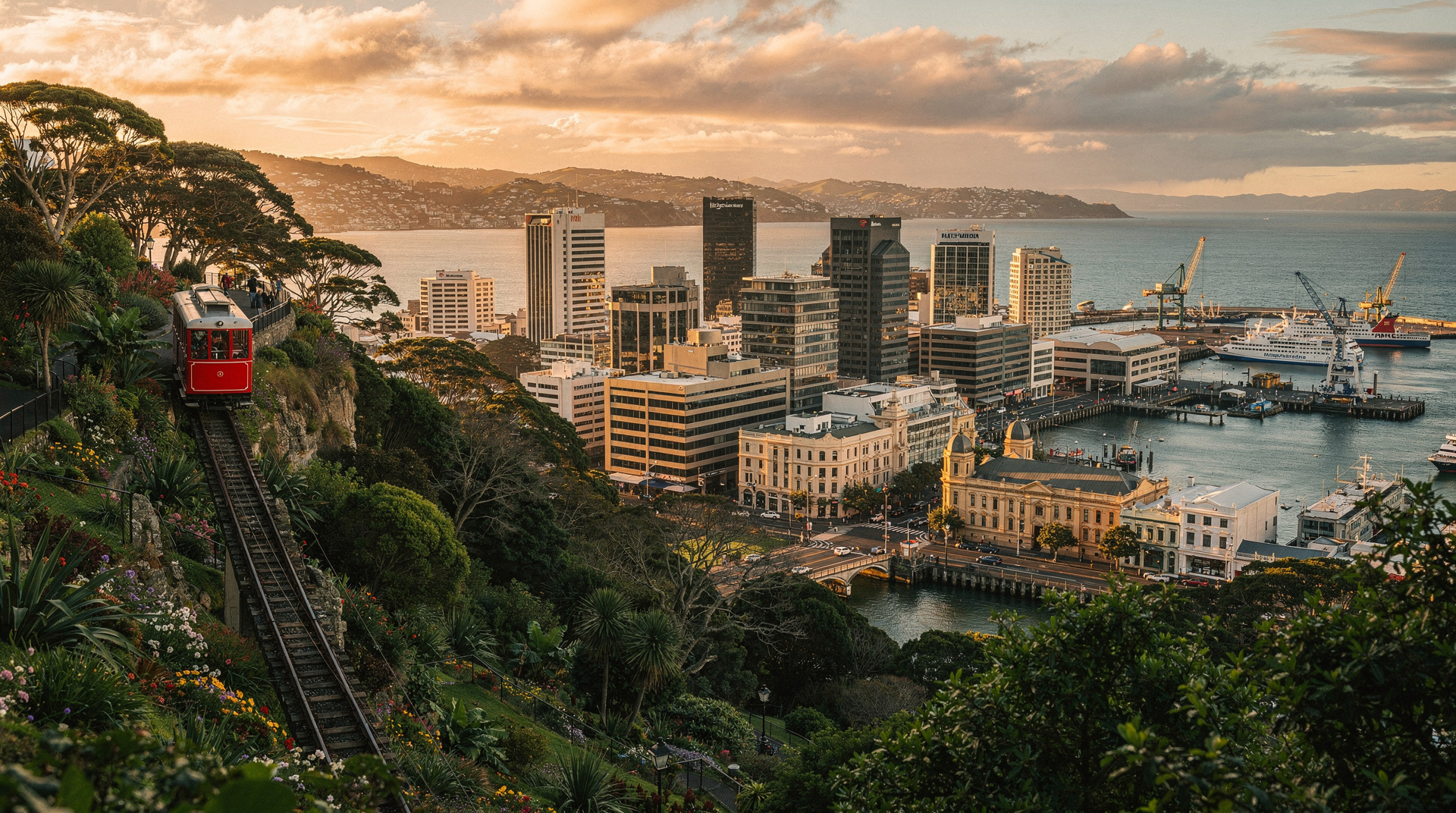
Wellington
Honest Wellington guide: Te Papa museum, Weta Workshop LOTR tours, Zealandia, Cuba Street, ferry to South Island, real prices NZD/USD/EUR.
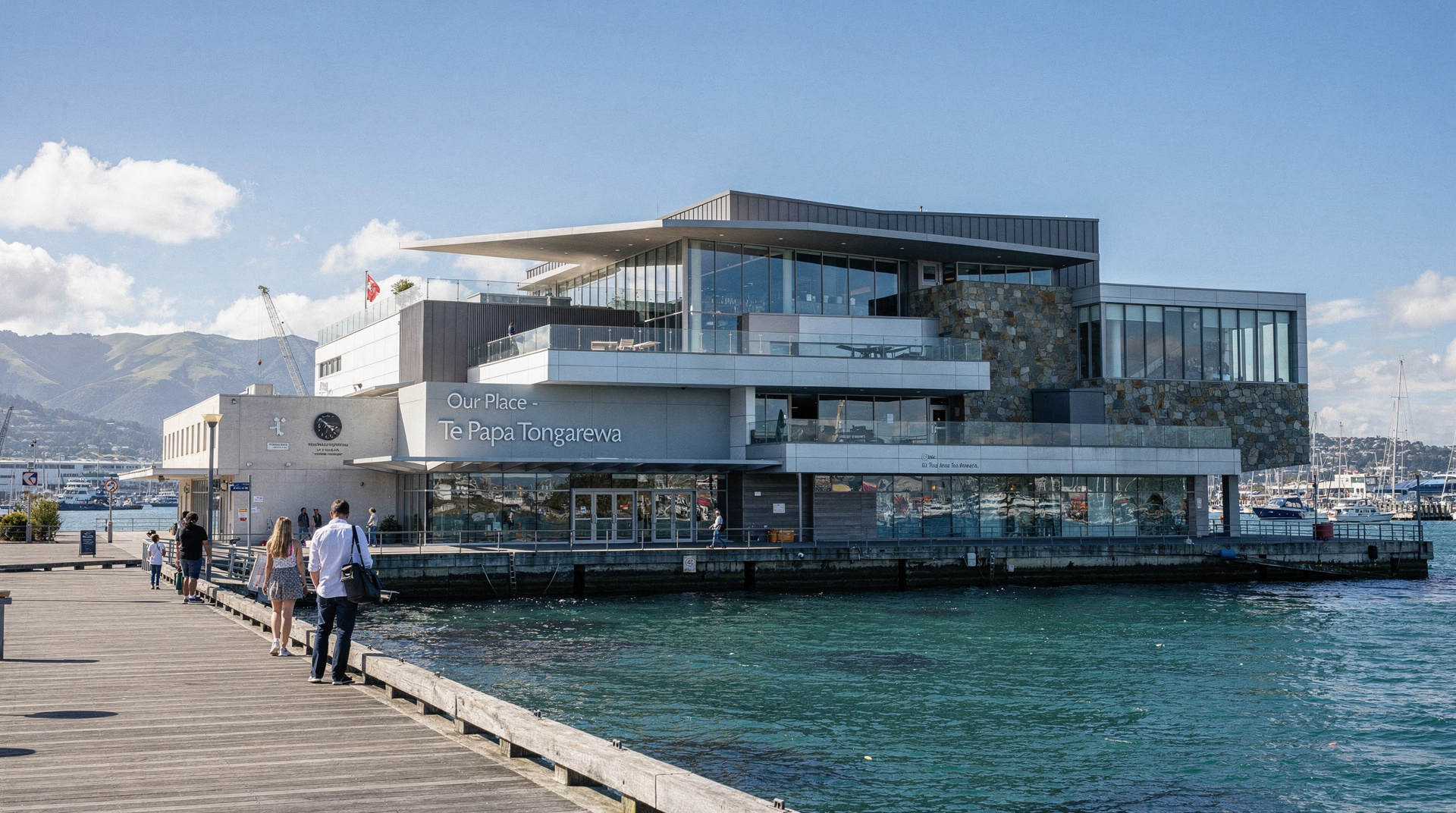
Te Papa museum Wellington — complete visitor guide
Complete guide to Te Papa Tongarewa in Wellington: must-see exhibits, Maori galleries, free admission, guided tours, and honest tips for your visit.
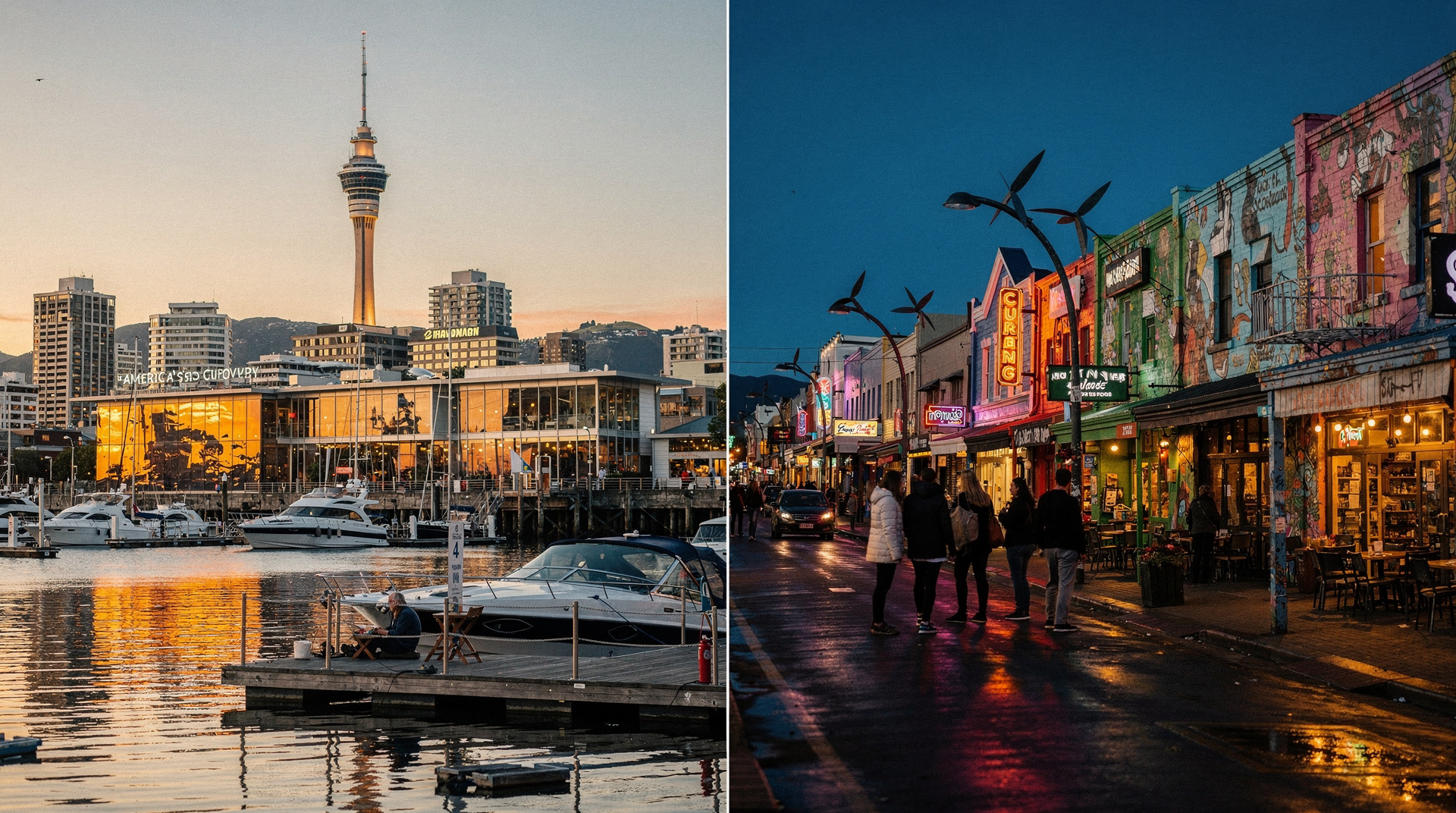
Auckland vs Wellington
Auckland vs Wellington honest comparison: food, culture, cost, day trips and vibe. Clear verdict for first-timers and repeat visitors. NZD/USD/EUR prices.
Vegan and vegetarian in New Zealand
Honest guide for vegans and vegetarians in NZ: where options are plentiful, where they're limited, best cities, supermarket staples, and eating on a budget.

First time in New Zealand
Complete first-timer's guide to NZ: costs, logistics, Maori culture, what to book early, and how to structure 7–21 days.
New Zealand in December
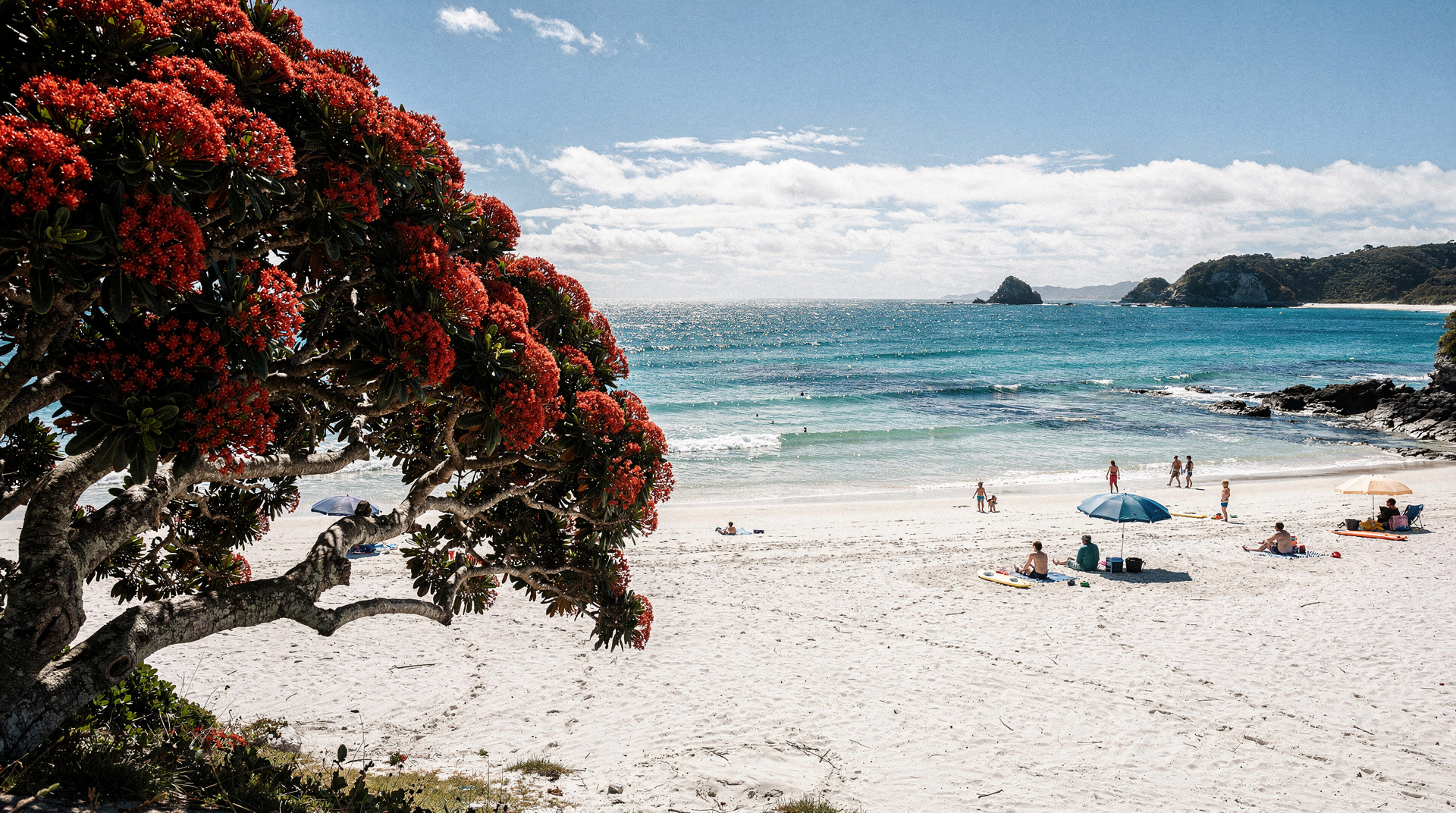
December means early summer in New Zealand: warm seas, long days, Christmas in sunshine. School holidays spike prices from mid-month. NZD/USD/EUR guide.
Last reviewed: