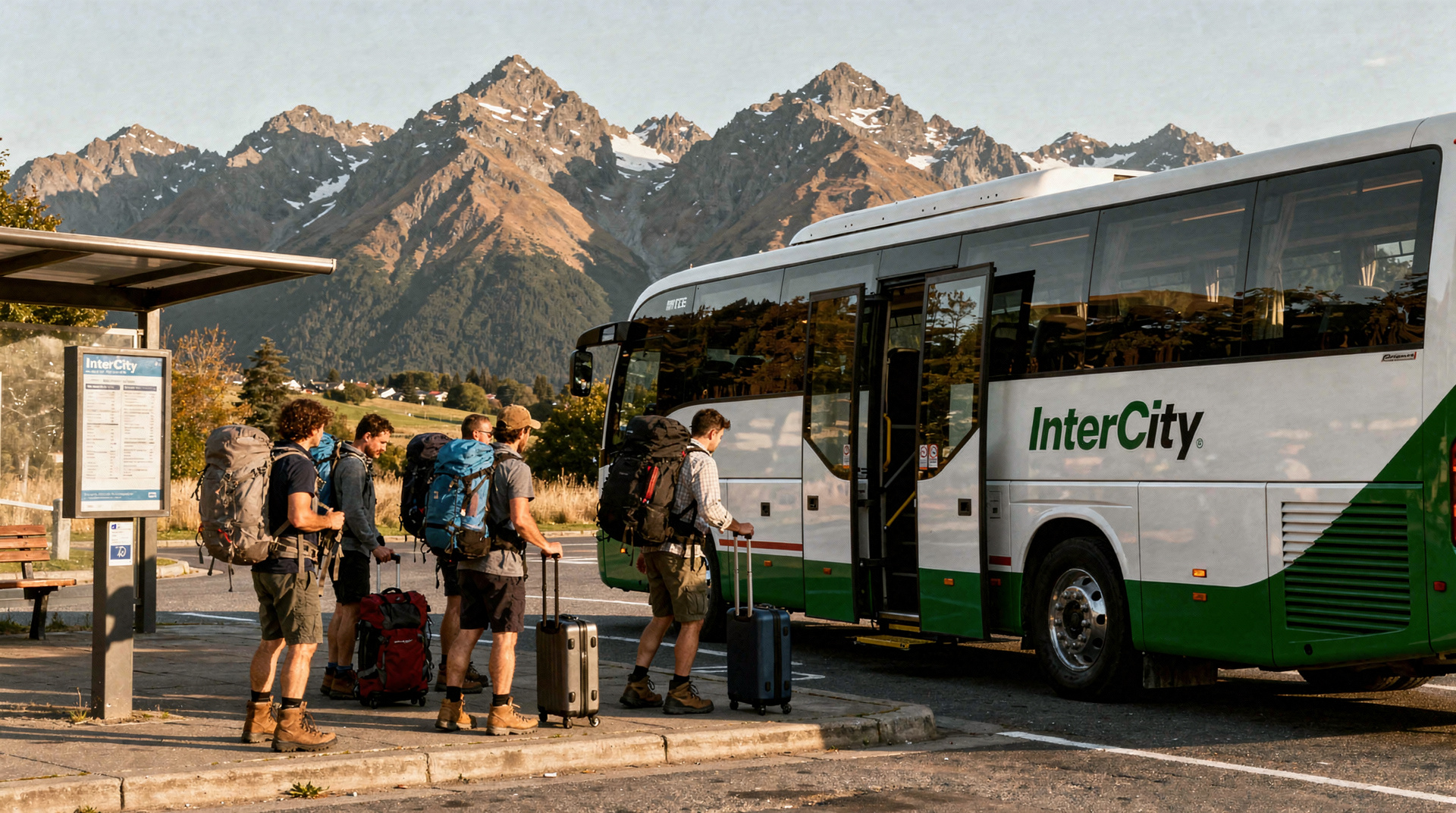
New Zealand without a car — 14 days by train, bus, and plane
The honest truth about visiting New Zealand without a car
New Zealand is not optimised for car-free travel. The country has no intercity rail network (the scenic trains carry tourists, not commuters), InterCity buses require planning and advance booking, and many of the best experiences — Hooker Valley Track at Aoraki/Mt Cook, the Coromandel Peninsula, the Catlins, Cape Reinga — are simply not accessible without a vehicle.
That said, a car-free 14-day New Zealand itinerary built around the nodes that public transport does cover well is genuinely possible and, in some respects, more interesting than a standard car-based route. The TranzAlpine train from Christchurch to Greymouth is one of the world’s great rail journeys. The Interislander ferry gives you the Cook Strait experience that car-based travellers sometimes rush through. The hop-on hop-off bus culture creates a community that independent car drivers miss.
This itinerary covers the highlights that are accessible without a car and is honest about what you sacrifice. It is best suited to: solo travellers who prefer not to navigate foreign roads, travellers who will be combining New Zealand with other destinations and don’t want car-hire logistics, and those who simply don’t hold a driving licence or prefer not to drive abroad.
| Route | Auckland to Queenstown, one-way, both islands |
| Cost per person | Around NZD 3,700–11,800 for 14 days, budget to comfort |
| Main tools | InterCity buses, scenic trains, domestic flights, Interislander ferry |
| Best for | Solo travellers, non-drivers, budget-conscious travellers |
| Not included | Aoraki/Mt Cook, the Catlins, Stewart Island |
If a driving licence isn’t the obstacle and it’s really about cost or logistics, campervan vs car and motel and driving in New Zealand are worth a look before ruling self-drive out entirely.
Transport network overview
InterCity: New Zealand’s primary intercity bus operator. Routes cover Auckland → Rotorua → Taupo → Wellington, and Picton → Kaikoura → Christchurch → Queenstown. Book online at intercity.co.nz. Nakedbus runs some competing routes at lower prices but with fewer departures.
Stray Bus / Kiwi Experience: Hop-on hop-off backpacker bus passes. Community-oriented, guide-driven. Stray’s Kia Kaha pass (both islands) includes the Interislander ferry.
Domestic flights: Air New Zealand and Jetstar cover: Auckland–Wellington (1h), Wellington–Queenstown (1h20m), Auckland–Queenstown (2h), Christchurch–Queenstown (1h). Very affordable when booked 6+ weeks ahead.
Scenic trains: Three operating scenic train services:
- TranzAlpine: Christchurch to Greymouth (4h20m, departs 8:15am daily, NZD 99–169 / USD 59–101 / EUR 54–93)
- Northern Explorer: Auckland to Wellington (Friday, Saturday, Sunday; 12 hours; NZD 99–169)
- Coastal Pacific: Picton to Christchurch (seasonal, summer only, 5h30m, NZD 89–149)
Interislander ferry: Wellington to Picton, 3h30m. Foot passenger NZD 65 / USD 39 / EUR 36.
Local shuttles: Many tour operators run activity-specific shuttles (Tongariro Crossing shuttle, Milford Sound from Te Anau and Queenstown, Kaikoura shuttle from Christchurch). These are how car-free travellers access what would otherwise require a vehicle.
Day-by-day breakdown
Day 1: Auckland — arrival
- Land at Auckland Airport (AKL). SkyBus to Auckland city centre: NZD 18 / USD 11 / EUR 10. Direct, reliable, 45-minute service to the downtown terminal.
- Check in to a central Auckland hotel — Britomart and Viaduct Harbour area is walkable to the ferry terminal and waterfront.
- Evening: Wynyard Quarter waterfront, dinner on the harbour.
- Cost: NZD 100–180 / USD 60–108 / EUR 55–99.
Day 2: Auckland — city and Waiheke
- Waiheke Island ferry from Auckland Ferry Terminal (35 min, NZD 48 return) — no car needed, the island has local buses and taxis. The Waiheke wine tour through three vineyards picks up from the ferry terminal on the island. NZD 115–145 / USD 69–87 / EUR 63–80.
- Auckland Museum afternoon (free shuttle from CBD to museum from Britomart). Maori cultural performance at 11am or 12pm worth booking ahead.
- Evening: Ponsonby Road for dinner (short taxi or bus from city centre, or walk 20 min from Britomart).
- Cost: NZD 160–280 / USD 96–168 / EUR 88–154.
Day 3: Auckland → Rotorua — by bus or tour
- InterCity bus Auckland to Rotorua: 3.5 hours, NZD 25–45 depending on advance booking. Or book a Hobbiton + Rotorua combined tour from Auckland — the Auckland to Waitomo and Rotorua day tour covers Waitomo glowworm caves and transfers to Rotorua for NZD 149–185 / USD 89–111 / EUR 82–102.
- Rotorua is one of the best destinations for car-free travellers — everything is accessible by local bus or taxi, including Wai-O-Tapu (hostel shuttle NZD 15) and Te Puia (walkable from town).
- Stay: Rotorua. Wide accommodation range.
- Cost: NZD 150–250 / USD 90–150 / EUR 83–138.
Day 4: Rotorua — geothermal and Maori
- Wai-O-Tapu: Take the hostel shuttle (NZD 15) or organised tour. Lady Knox at 10:15am, Champagne Pool, Artist’s Palette. NZD 39 entry.
- Te Puia cultural experience: walkable from Rotorua town centre (20 min) or 5-min taxi. NZD 55–110.
- Evening: Mitai Maori Village cultural experience (transport provided from Rotorua hotels in the tour package, NZD 120–145 / USD 72–87 / EUR 66–80).
- Cost: NZD 250–400 / USD 150–240 / EUR 138–220.
Day 5: Rotorua → Taupo → Tongariro — by shuttle and bus
- InterCity or Naked Bus from Rotorua to Taupo: 1 hour, NZD 10–20.
- Taupo without a car: the town is walkable (Huka Falls is 5 km north — bikeable or taxi). Huka Falls jet boat (NZD 69 / USD 41 / EUR 38) picks up from Taupo town centre. The Lake Taupo Maori rock carvings cruise departs from the Taupo Boat Harbour (NZD 45–65 / USD 27–39 / EUR 25–36, walkable from town centre, 10 min).
- Afternoon: InterCity bus Taupo to National Park Village (1.5 hours, NZD 25–35). Book Tongariro Alpine Crossing shuttle in advance.
- Stay: National Park Village. Walk-in accommodation. Book ahead.
- Cost: NZD 150–250 / USD 90–150 / EUR 83–138.
Day 6: Tongariro Alpine Crossing → Wellington
- Crossing shuttle from National Park Village (NZD 35–45 per person — mandatory even without a car). Complete the 19.4 km crossing (7–8 hours).
- Post-crossing: Northern Explorer train from National Park to Wellington (Saturday and Sunday only, 4 hours from National Park, NZD 89–149 / USD 53–89 / EUR 49–82). Or InterCity bus from National Park to Wellington (4 hours, NZD 30–50).
- Arrive Wellington evening. Stay: Wellington city. Mid-range hotel NZD 220–320 / USD 132–192 / EUR 121–176.
- Cost: NZD 100–200 / USD 60–120 / EUR 55–110.
Day 7: Wellington — full cultural day
- Wellington is the most walkable New Zealand city. No transport needed for most of the day.
- Morning: Te Papa Tongarewa Museum (free, 3 hours). The Te Papa Mana Maori guided tour gives deep cultural context for the taonga collection (NZD 45–65 / USD 27–39 / EUR 25–36).
- Cable car to Kelburn Botanic Gardens (NZD 6 return, departs from Lambton Quay — 5-minute walk from Te Papa).
- Afternoon: Wellington waterfront walk, Cuba Street for coffee and browsing. Zealandia eco-sanctuary (20 min bus ride from city, NZD 5 bus fare, NZD 40 sanctuary entry).
- Evening: Wellington craft beer scene — Garage Project, Parrotdog, and Panhead all have tasting rooms within walking distance of the CBD.
- Cost: NZD 100–200 / USD 60–120 / EUR 55–110.
Day 8: Wellington → Picton (ferry) → Kaikoura
- Morning: Weta Workshop tour for LOTR fans (NZD 45–65, take the Cable Car Lane bus from Courtenay Place).
- Interislander ferry: foot passenger NZD 65 / USD 39 / EUR 36. 3h30m crossing. The ferry terminal is accessible by local bus from Wellington CBD.
- Arrive Picton afternoon. Coastal Pacific train from Picton to Kaikoura (seasonal, summer only, 2 hours, NZD 59–89 / USD 35–53 / EUR 32–49) — the finest coastal train ride in New Zealand, mountains on one side, Pacific Ocean on the other.
- Or: InterCity bus Picton to Kaikoura (2 hours, NZD 20–35).
- Stay: Kaikoura. Mid-range motel. NZD 160–240 / USD 96–144 / EUR 88–132.
- Cost: NZD 200–350 / USD 120–210 / EUR 110–193.
Day 9: Kaikoura whale watching → Christchurch
- Morning: Kaikoura 2-hour whale watching cruise — NZD 165 / USD 99 / EUR 91. The Kaikoura town centre is walkable to the Whale Watch Kaikoura building. Book 2 weeks ahead.
- Kaikoura Peninsula Walkway (2 hours return, free, starts from the town centre).
- Afternoon: Coastal Pacific train (seasonal) or InterCity bus to Christchurch (2.5 hours, NZD 20–40). Christchurch arrival early evening.
- Stay: Christchurch. Mid-range hotel NZD 180–280 / USD 108–168 / EUR 99–154.
- Cost: NZD 250–400 / USD 150–240 / EUR 138–220.
Day 10: Christchurch → Greymouth (TranzAlpine) → return
- The TranzAlpine: One of the world’s great train journeys. Departs Christchurch at 8:15am, arrives Greymouth at 12:45pm. The route crosses the Canterbury Plains, climbs through Arthur’s Pass in the Southern Alps (passing through the 8.5 km Otira Tunnel), and descends the West Coast to Greymouth. NZD 99–169 / USD 59–101 / EUR 54–93.
- Greymouth: 3 hours before the return train at 2:05pm. Walk the Greymouth estuary, visit Monteiths Brewery (NZD 30 brewery tour and tasting). The West Coast Wildlife Centre at Franz Josef is not accessible as a Greymouth day trip without a car — Greymouth is genuinely quiet, but the train journey is the point.
- Return TranzAlpine arrives Christchurch at 6:30pm.
- Alternatively: Stay overnight in Greymouth and take a local shuttle to Hokitika the following day (see below).
- Stay: Christchurch again. Cost: NZD 200–350 / USD 120–210 / EUR 110–193.
Day 11: Christchurch → Lake Tekapo → Queenstown — shuttle day
- Lake Tekapo and Queenstown are accessible from Christchurch without a car via dedicated shuttle services.
- Christchurch to Lake Tekapo shuttle (Cook Connection or Alpine Tours, NZD 50–75 / USD 30–45 / EUR 27–41, 3 hours). Departs daily from Christchurch city hotels.
- Lake Tekapo: Church of the Good Shepherd, Cowan’s Hill walk (free). 2 hours in Tekapo is sufficient without a car — the shuttle moves on to Queenstown.
- Tekapo to Queenstown shuttle (same shuttle continuing, 2.5 hours via Twizel and Cromwell). Total Christchurch-Queenstown with Tekapo stop: 6 hours, NZD 100–140 / USD 60–84 / EUR 55–77.
- Arrive Queenstown early afternoon. Check in.
- Stay: Queenstown. Mid-range hotel NZD 220–350 / USD 132–210 / EUR 121–193.
- Cost: NZD 250–450 / USD 150–270 / EUR 138–248.
Day 12: Queenstown — adventure day
- Queenstown is excellent for car-free travellers — all major activities are walkable from the town centre or have transport included.
- Morning: Shotover Jet (NZD 169 / USD 101 / EUR 93) — pick-up from town centre accommodation included.
- Afternoon: Queenstown Skyline gondola (NZD 32 roundtrip, departs from Brecon Street, walkable from town) and luge runs. Or the Queenstown Ziptrek through the forest canopy — the Queenstown Ziptrek 4-line tour includes gondola transfer (NZD 169 / USD 101 / EUR 93).
- Evening: Fergburger, then bar crawl on Beach Street (all walkable).
- Cost: NZD 250–500 / USD 150–300 / EUR 138–275.
Day 13: Milford Sound — day trip from Queenstown
- The Queenstown Milford Sound coach-cruise-coach day trip is the standard car-free Milford option. Departs 7:30am from Queenstown town centre, arrives Milford by 12:30pm, 2-hour cruise, returns to Queenstown by 8pm. NZD 165 / USD 99 / EUR 91 including transport and cruise.
- Honest assessment: It’s a long day (13 hours), but the bus journey through the Fiordland landscape is itself remarkable — Eglinton Valley, Mirror Lakes, and the Homer Tunnel are all on the route and not accessible any other way without a car.
- Alternative: Bus from Queenstown to Te Anau (1.5 hours, NZD 25–35 InterCity), stay overnight in Te Anau, then morning bus to Milford for the cruise. Breaks the day more comfortably. Te Anau glowworm caves evening tour (NZD 79 / USD 47 / EUR 43) makes the overnight worthwhile.
- Cost: NZD 165–250 / USD 99–150 / EUR 91–138.
Day 14: Queenstown — Arrowtown and fly home
- Morning: Bus from Queenstown town centre to Arrowtown (no scheduled public bus — take an Uber/taxi, NZD 25) for the historic gold-rush village walk (free). The Arrow River gorge walk (1.5 hours) is one of the best free short walks near Queenstown.
- Return to Queenstown Airport (ZQN) by taxi (NZD 20–30) or hotel shuttle for an afternoon or evening international connection via Auckland.
- Cost: NZD 80–150 / USD 48–90 / EUR 44–83.
Total cost breakdown (14 days, per person)
Exchange rates 2026: 1 NZD = USD 0.60 = EUR 0.55.
| Category | Budget | Mid-range | Comfort |
|---|---|---|---|
| Accommodation (14 nights) | NZD 1,400 | NZD 2,800 | NZD 5,000 |
| Food and drink | NZD 700 | NZD 1,200 | NZD 1,800 |
| Activities and tours | NZD 800 | NZD 1,600 | NZD 3,000 |
| Transport (buses, trains, ferry, flights, shuttles) | NZD 800 | NZD 1,200 | NZD 2,000 |
| TOTAL per person | NZD 3,700 | NZD 6,800 | NZD 11,800 |
| USD | USD 2,220 | USD 4,080 | USD 7,080 |
| EUR | EUR 2,035 | EUR 3,740 | EUR 6,490 |
What you lose without a car — honest verdict
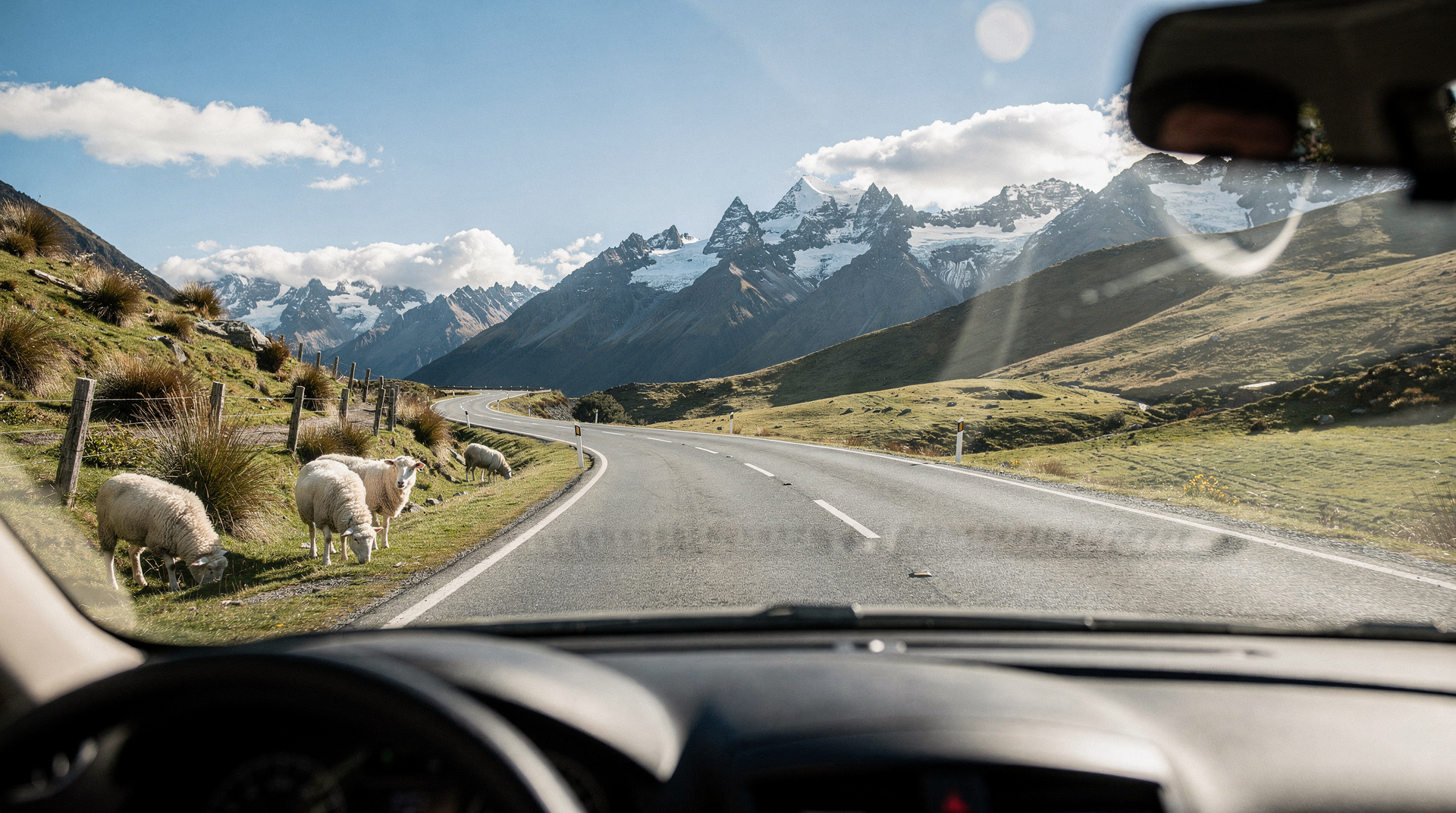
The in-between moments. The Lake Pukaki viewpoint, a random roadside kiwi crossing sign at dusk, the moment the Milford Road summit opens to a view. Much of what makes New Zealand extraordinary happens in a vehicle between the destinations.
Flexibility. If the Tongariro Crossing is closed on Day 6, you cannot drive to an alternative and return the next day easily. You are at the mercy of bus schedules.
The Catlins and Stewart Island. Both are inaccessible without a car or expensive private transfers. The 21-day itinerary including Stewart Island and the Catlins really needs a vehicle.
Aoraki/Mt Cook. Not included in this itinerary because there is no reliable scheduled public transport to Mt Cook Village. A dedicated shuttle (NZD 80–120 return from Tekapo) is available but requires careful coordination.
What you gain
No stress on mountain roads. Crown Range, Haast Pass, Lewis Pass — these are genuinely challenging drives in unfamiliar vehicles on the left-hand side. Many drivers report the mountain road sections as stressful.
Community. Bus and train travel in New Zealand creates connections — particularly on the Stray Bus and Kiwi Experience routes — that car-based travellers don’t experience.
Alcohol. You can drink at every vineyard and cellar door without designating a driver. This is more valuable in Marlborough and Central Otago wine country than it sounds.
Carbon footprint. Buses per passenger are significantly more efficient than rental cars. If this matters to you, the car-free itinerary is the lower-impact option.
Luggage and logistics between stops
Travelling without a car means carrying your own luggage between accommodation and terminals more often than on a self-drive trip — most InterCity buses, the Interislander, and the scenic trains all allow generous checked luggage, but factor in the walk or short taxi from hotel to terminal at each transfer.
A single medium suitcase plus a day pack is the realistic maximum for comfortable solo handling; travellers arriving with multiple large bags often find a luggage-forwarding service (available in Auckland, Wellington, and Queenstown) worth the modest fee on the busiest transfer days, particularly Day 6 (Tongariro Crossing plus a long transfer) and Day 8 (ferry crossing plus onward train). It’s also worth packing lighter than you would for a self-drive trip generally — every leg of this route involves at least one point where you’re physically carrying bags rather than loading a car boot once at the start.
Booking the trains and buses ahead
Unlike a self-drive trip, this itinerary depends on fixed departure times, so book the fixed-schedule legs as soon as dates are confirmed: the TranzAlpine (daily but fills in summer), the Northern Explorer (Friday–Sunday only, so it can dictate your Day 6 date), and the Coastal Pacific (seasonal, summer only — check it’s running before building Day 8 around it).
InterCity buses and the Interislander have more frequent departures and can usually be booked a few weeks out, but fares rise the closer you book, sometimes doubling in the final week. A rough rule for this itinerary: lock in the three scenic trains and the ferry first, then fill in InterCity buses and activity shuttles around them. Domestic flights (used as an alternative on Day 6 and elsewhere) follow airline pricing rather than fixed fares, so booking 6+ weeks ahead can more than halve the cost compared with booking a week out.
Adapting this route for less time or a different focus
Travellers with only 7–10 days should keep Rotorua, Wellington, and Queenstown (the three most walkable, best-connected stops) and cut either the TranzAlpine day trip or Kaikoura — both are wonderful but the first genuinely optional and the second replaceable with a shorter Christchurch stay. Solo travellers who want more social contact than trains and buses provide should look at the Stray Bus or Kiwi Experience hop-on hop-off passes mentioned above, which build in a group dynamic this fully independent itinerary doesn’t.
For a comparison of how solo, couple, and family logistics differ more broadly, solo vs couple vs family is a useful companion read, and is New Zealand safe covers solo-travel safety specifics not repeated here.
Related guides
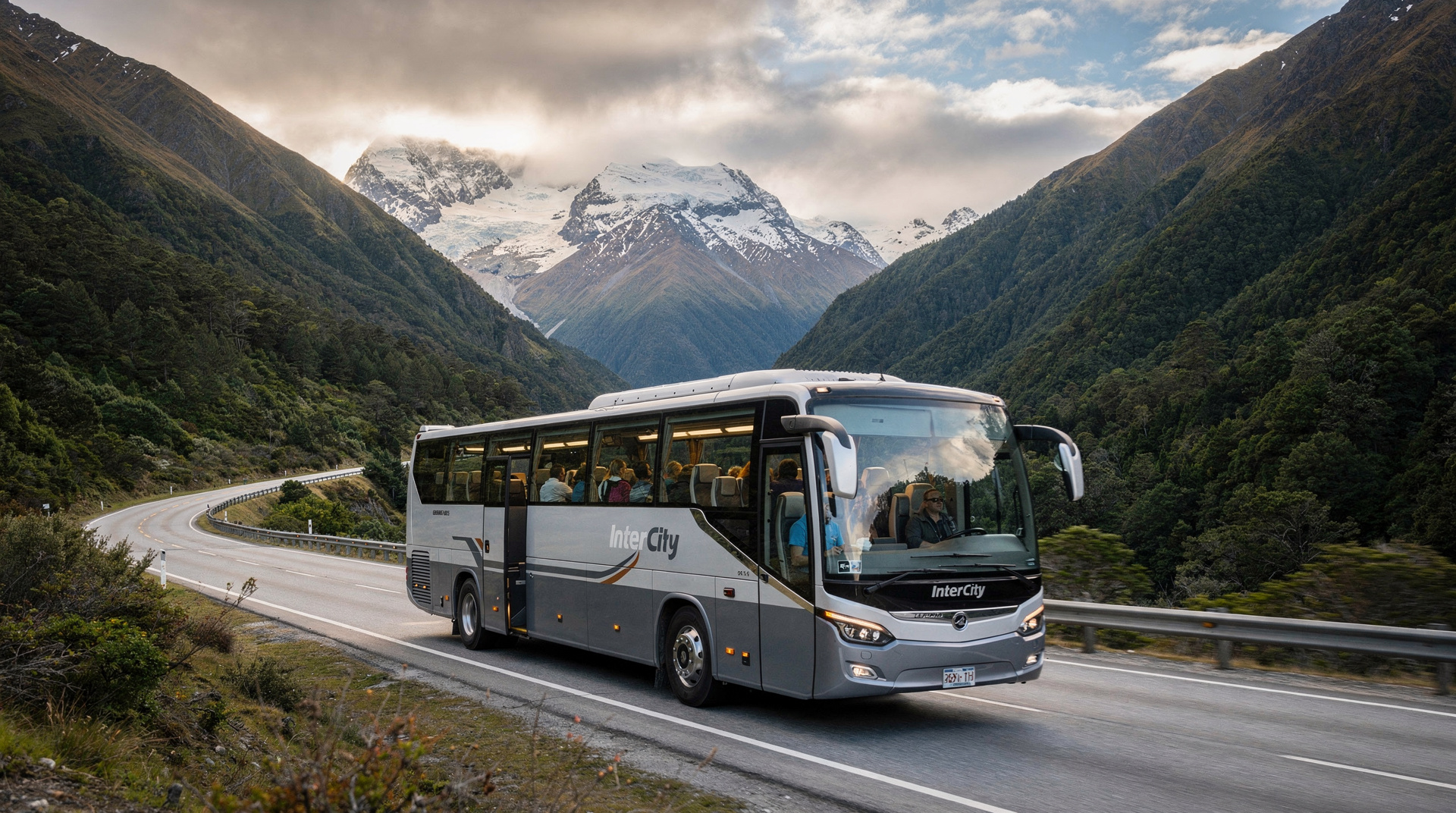
InterCity bus guide
Complete InterCity bus guide for NZ: main routes, FlexiPass vs point-to-point, actual journey times, and when the bus is smarter than renting a car.
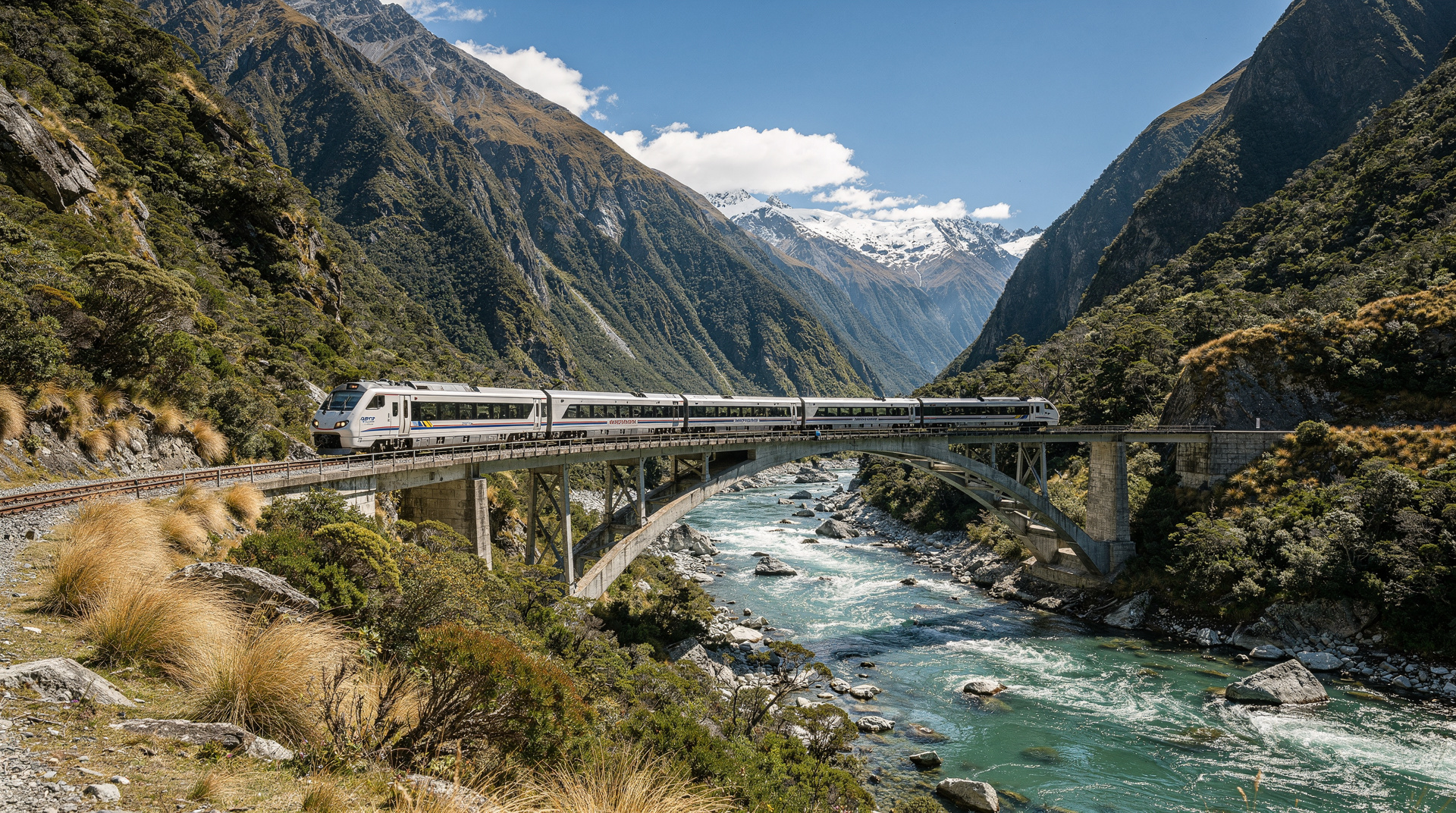
Scenic trains in New Zealand
Complete guide to NZ's three scenic trains: TranzAlpine, Northern Explorer, Coastal Pacific. Routes, costs, booking tips, and honest verdicts on each.
Domestic flights in New Zealand
Guide to flying domestically in NZ: Air New Zealand vs Jetstar, cheapest routes, Auckland-Queenstown timing, and when flying beats 10 hours of driving.
Driving in New Zealand
Honest driving guide for NZ: left-side rules, gravel road etiquette, why GPS lies, fuel costs, one-lane bridges, and what rental companies don't tell you.
Last reviewed: