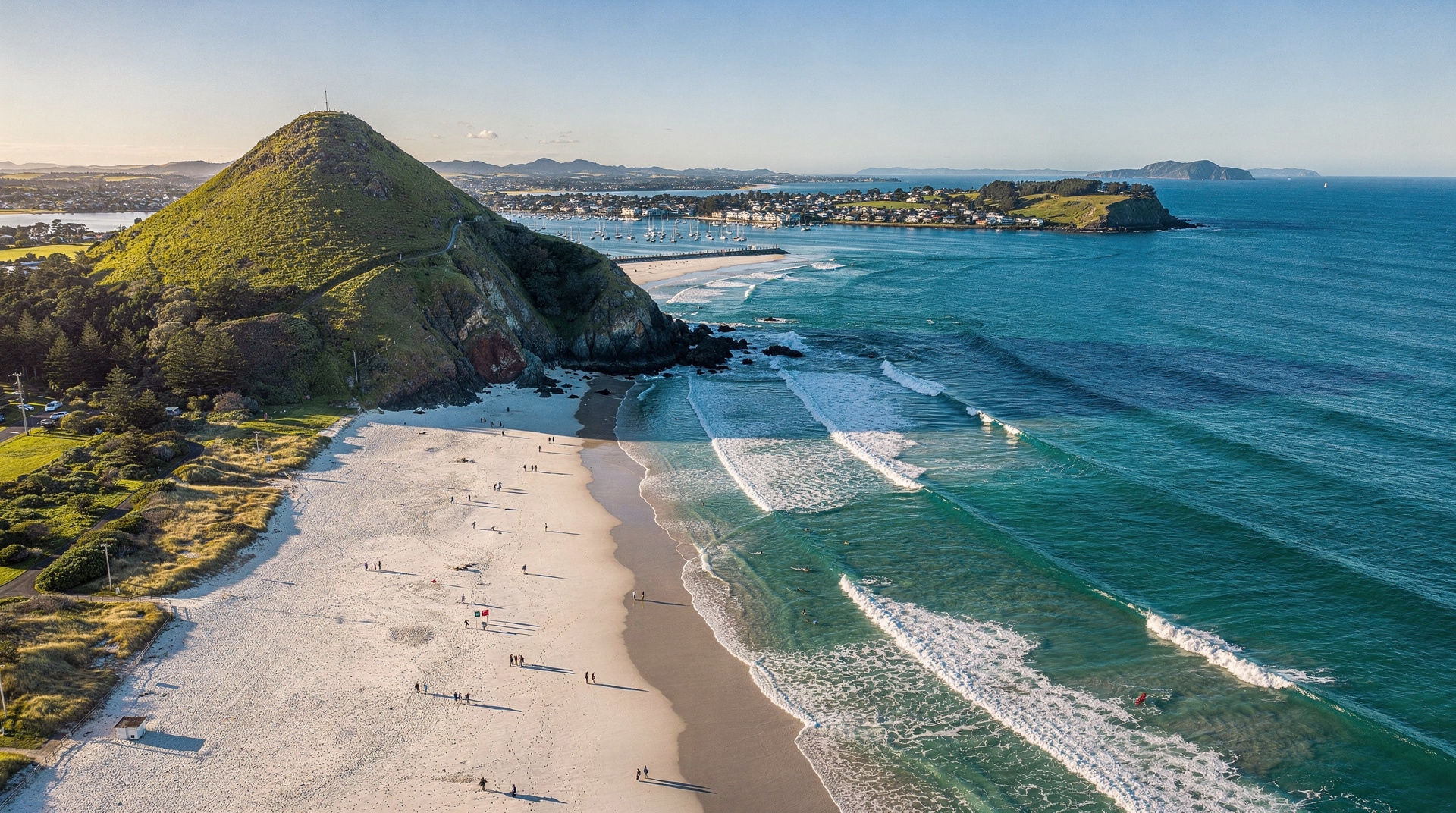
Bay of Plenty
Bay of Plenty region guide: Tauranga, Mount Maunganui surf, Whakatane, Whakaari/White Island eruption facts. Real NZD/USD/EUR costs, honest verdicts.
Quick facts
- Region
- Eastern North Island coast
- Major hubs
- Tauranga, Mount Maunganui, Whakatane
- Currency
- NZD — 1 NZD ≈ USD 0.60 / EUR 0.55
- Best for
- Surf beaches, harbour cruises, kiwifruit orchards, Rotorua day trips
- Skip if
- You are primarily interested in mountains or Maori culture (Rotorua is better)
Bay of Plenty in one minute
The Bay of Plenty is New Zealand’s sunniest mainland region — Tauranga consistently records more sunshine hours than any other city in the country. The curving harbour at Tauranga opens onto a coast of long sand beaches, and just offshore stands Mount Maunganui, a dormant volcanic cone that provides the best views in the region and a warm surf beach at its foot. The area is New Zealand’s kiwifruit capital: the drive between Te Puke and Whakatane passes orchards so extensive they feel like forest.
Most visitors pass through on the way from Auckland to Rotorua, spending a night or two at Mount Maunganui or Papamoa before heading inland. The Bay of Plenty rewards a slower pace — the beaches are genuinely among the best on the North Island, and the coastal cycling trail (Tauranga Moana) is one of the few in the country you can do on any fitness level.
The region also carries a shadow: Whakaari/White Island, the active submarine volcano 48km offshore, erupted on 9 December 2019, killing 22 people. Commercial tours to the island remain suspended. The island is still visibly active and any content suggesting you can visit should be treated with extreme caution.
| Where | Eastern North Island coast — Tauranga, Mount Maunganui, Whakatane |
| Getting there | 2.5-3 hours from Auckland (SH2), or 45-minute flight to Tauranga |
| Time needed | 2-4 days, especially combined with Rotorua |
| Cost | Around NZD 50-120 for a harbour cruise or surf lesson |
| Best time | November-March for warm surf beaches; year-round for Rotorua day trips |
The honest case for the Bay of Plenty
The Bay of Plenty is not a “must-do” in the way Queenstown or Milford Sound are. It’s genuinely excellent as a 2-3 day coastal stop that gives your itinerary breathing room — warm water, flat roads, and good food — before or after the intensity of Rotorua.
Tauranga itself is a prosperous port city with good cafes, a harbour side bar scene, and the momentum of a place growing fast. Mount Maunganui (the suburb, not just the cone) has excellent surf, a string of strong independent restaurants on Maunganui Road, and a walkable village atmosphere that works whether you’re 25 or 65.
Honest trade-off: the Bay of Plenty has fewer dramatic natural experiences than the Bay of Islands or Coromandel. It is, however, more accessible, better resourced (better roads, more accommodation at every price point), and more reliably warm.
Where to base yourself
Mount Maunganui (locals call it “the Mount”) is the obvious base. The main beach is Ocean Beach, a long stretch of Pacific surf with lifeguards in season. The base of the Mount itself — Mauao — circles on a flat walking track (3.4km, 45 min). The summit track (1 hour return) gives panoramic views of the bay, Matakana Island, and on clear days, Mayor Island offshore.
Tauranga CBD is 10 minutes across the harbour bridge. Better for restaurants and the ferry terminal; less atmospheric for beach mornings. Good option if you’re renting a car and using Tauranga as a base for Rotorua day trips.
Whakatane is the eastern gateway, 100km from Tauranga. Smaller and quieter, it’s the departure town for White Island scenic flights (the only way to legally see the volcano since 2019). Good surf at Ohope Beach, which many rate as the best beach in the Bay of Plenty.
Te Puke is kiwifruit country — pleasant stop rather than destination. Kiwi360, an orchard tour attraction, is well-organised and worth an hour if you have children.
Top experiences in the Bay of Plenty
Mount Maunganui — the summit and beach
Mauao (“caught by the dawn” in te reo Maori) rises 232m directly from the harbour. The base walk around it is flat and suitable for any fitness level; the summit track gains altitude quickly and requires some scrambling. At the top: ocean in every direction, the blue geometry of Tauranga Harbour below, and often a cold wind that makes the summit feel earned.
The beach at the foot of the Mount is one of New Zealand’s most consistently surf-able. Private surf lessons at Mount Maunganui are available year-round and run around NZD 120 / USD 72 / EUR 66 per person for a 2-hour session. Group lessons for beginners run NZD 75-90 / USD 45-54 / EUR 41-50. The water is warm enough to surf without a wetsuit from December to March.
Tauranga Harbour cruise
The Tauranga harbour is one of the largest natural harbours in New Zealand. Cruise options include dolphin-watching (common dolphins and bottle-nose are seen regularly) and a harbour sightseeing loop past Matakana Island — a sandspit island accessible only by water that protects Tauranga from Pacific swell.
Tauranga harbour sightseeing cruise runs a 1.5-hour loop from Tauranga Marina. NZD 50-70 / USD 30-42 / EUR 27-38.
Rotorua as a day trip
The Bay of Plenty’s biggest strategic advantage for travellers: Rotorua is 1 hour inland. You can base yourself at the Mount for beach mornings and drive to Rotorua for the geothermal parks, Maori cultural experiences, and adventure activities. This beach-geothermal combination is one of the most enjoyable itinerary moves on the North Island.
Shore excursion tours for cruise ship passengers from Tauranga port do this exact combination. Self-drivers have even more flexibility — leave the beach by 9am, reach Wai-O-Tapu by 10am, return to the Mount for sunset. See our Rotorua day trip from Tauranga guide for the logistics.
Rotorua Geothermal Valley shore excursion with lunch from Tauranga — this is the coach tour version and a good option if you’d rather not drive (NZD 175 / USD 105 / EUR 96).
Whakaari/White Island — the honest situation
Whakaari/White Island is New Zealand’s most active cone volcano — before the 2019 eruption, it was the most visited active volcano in the world. The eruption killed 22 people (out of 47 on the island at the time), and the disaster prompted criminal prosecutions of tour operators and the national science agency.
Commercial landing tours remain indefinitely suspended as of 2026. The legal situation involves ongoing trials, and any attempt to commercialise access to the island is being closely watched by iwi (it is an ancestral site for Ngati Awa) and regulatory bodies. Do not book any tour offering to land on White Island — they should not exist.
What is available: scenic flights over the island. White Island and Whale Island 1-hour volcanic scenic flight from Whakatane flies a circuit over the crater, giving views of the fumaroles, crater lake, and lava flows. NZD 350-450 / USD 210-270 / EUR 193-248. This is entirely safe (cruising altitude, no landing) and delivers dramatic aerial photographs.
The White Island/Whakaari complete guide covers this in full detail.
Skydive over Mount Maunganui
The combination of the volcanic cone, harbour, and Pacific Ocean makes this one of the most scenic skydiving drops in New Zealand. Exit altitude is 12,000 feet; freefall of about 45 seconds; total experience around 20 minutes. 12,000-foot skydive over Mount Maunganui from Tauranga — NZD 299 / USD 179 / EUR 165. Weather-dependent; morning slots have clearest conditions.
Getting there and getting around
From Auckland: 2.5-3 hours by car via State Highway 2 through the Kaimai Range. InterCity buses run daily (3-4 hours, NZD 30-70 / USD 18-42 / EUR 16-38). Domestic flights from Auckland to Tauranga Airport take 45 minutes; fares from NZD 80-150 / USD 48-90 / EUR 44-83.
From Rotorua: 1 hour via SH33 or SH30. Easy drive, pleasant through Tikitere and Te Puke.
Within the region: A rental car is recommended for any travel beyond the Tauranga-Mount Maunganui zone. Tauranga has local bus services; Mount Maunganui is walkable. For Whakatane, Ohope, and the broader eastern Bay of Plenty, a car is essential.
Where to stay
Budget (NZD 40-90 / night)
Base Backpackers Mount Maunganui is the main hostel option — functional, well-located on Maunganui Road, close to the beach. Dorm from NZD 38; doubles from NZD 90.
Ohope Beach TOP 10 Holiday Park is one of the better holiday parks in the region, with cabins from NZD 95 and powered sites from NZD 55. Good value and the beach is steps away.
Mid-range (NZD 140-280 / night)
Pacific Harbour Motor Inn (Tauranga) is reliable mid-range with harbour views. Around NZD 150-190.
Astrolabe Boutique (Mount Maunganui) is a tidy, well-run boutique option steps from the beach. NZD 180-250 for doubles.
Luxury (NZD 300+)
Hotel on Devonport (Tauranga CBD) is the best hotel in the city — heritage building, good restaurant, harbour views. NZD 300-450.
Mount Maunganui Luxury Rentals — the premium option in this region is often a holiday home rental for groups. Several 4-5 bedroom beachfront properties rent for NZD 500-1,000 / night, which is competitive for large groups.
Best time to visit
December to March is the clear choice for beach activities. Ocean temperatures reach 20-23°C; lifeguards are on patrol; surf is consistent. This is also peak season — accommodation at the Mount books out 3-4 months in advance in school holiday periods.
April to November brings quieter conditions, reduced crowds, and lower prices. Rotorua day trips remain excellent year-round (geothermal parks are open every day). The surf is smaller and water cooler but still surfable in a wetsuit. The Mount Maunganui Farmers’ Market runs year-round on Sunday mornings.
Winter (June-August) is the least popular but still workable. Temperatures in Tauranga rarely drop below 10°C at night. The harbour cruises run fewer schedules; some seasonal operators close. Good time for road cyclists doing the Tauranga Moana Coastal Trail.
Common mistakes
Booking only 1 night at the Mount. The beach deserves at least 2 days. The summit walk alone takes a morning.
Missing Ohope Beach. Most visitors stick to Mount Maunganui. Ohope, 15 minutes east of Whakatane, is quieter, longer, and often described by New Zealanders as the most beautiful beach in the North Island. Worth a detour.
Assuming White Island tours are available. They’re not (commercial land tours). Check current regulations before planning any visit.
Not planning the Rotorua combo. The Bay of Plenty plus Rotorua is one of the great 3-4 day North Island combinations. Don’t waste the proximity.
Underestimating Whakatane. The town itself is small but the surrounding area — Ohope, the Ohiwa Harbour, Opotiki — is genuinely beautiful and sees a fraction of the visitors that the Mount does.
Sample itineraries
1-day express
Auckland to Tauranga (fly or drive). Lunch at Mount Maunganui. Summit walk in the afternoon (1.5 hours return). Dinner on Maunganui Road. Overnight at the Mount.
3-day coastal-geothermal
Day 1: Auckland to Mount Maunganui. Check in. Afternoon beach and base walk. Dinner at Bask (excellent tapas on Maunganui Road).
Day 2: Summit of Mauao (morning). Drive to Rotorua for Wai-O-Tapu and lunch. Return to the Mount for sunset. See day trips from Rotorua.
Day 3: Tauranga harbour cruise. Drive to Whakatane if White Island scenic flight interests you. Back to Auckland (3 hours).
4-day full sweep
Days 1-3 as above. Day 4: Ohope Beach morning. Whakatane’s Muriwai (Ohope) and Opotiki drive. Return via Whakatane through the Waioeka Gorge to Opotiki and connect with the Rotorua-Wellington highway.
For the complete North Island route including Bay of Plenty, see the 7-day North Island itinerary.
FAQ
Is Mount Maunganui worth it versus other NZ beaches?
Yes — it is the best combination of accessible surf beach, dramatic landscape (the volcanic cone), and walkable town infrastructure in the North Island. It lacks the remoteness of Northland’s beaches but makes up for it in convenience and consistency.
Can you still visit White Island after the 2019 eruption?
Commercial land tours remain suspended as of 2026. Scenic overflights are available and completely safe. Do not book any tour that offers to land on the island — such operators are not operating legally and the iwi have not consented.
How far is Rotorua from the Bay of Plenty?
Tauranga to Rotorua is approximately 80km via SH29 — about 1 hour drive. This makes a same-day combination very practical. Mount Maunganui to Rotorua is 100km, around 1 hour 15 minutes.
What’s the water temperature at Mount Maunganui?
Summer (December-February): 20-23°C. Autumn (March-May): 18-20°C. Winter (June-August): 14-17°C. The bay is protected and warmer than the open coast. A 3mm wetsuit is comfortable October to May; 5mm in winter.
Is there a ferry from Tauranga to Auckland?
No regular passenger ferry. The Interislander and Bluebridge ferries operate between Wellington and Picton on the South Island. The nearest domestic flight from Tauranga Airport to Auckland is the practical alternative.
Is Ohope Beach better than Mount Maunganui?
Different rather than strictly better. Ohope, 15 minutes east of Whakatane, is longer, quieter, and often rated by New Zealanders as the North Island’s most beautiful beach, but it has far less in the way of restaurants, shops, and a walkable village. Mount Maunganui wins on convenience and infrastructure; Ohope wins on space and tranquillity. Many visitors do both — the Mount for a base, Ohope as a half-day detour.
Top experiences: bay of plenty New Zealand
See all →Related guides
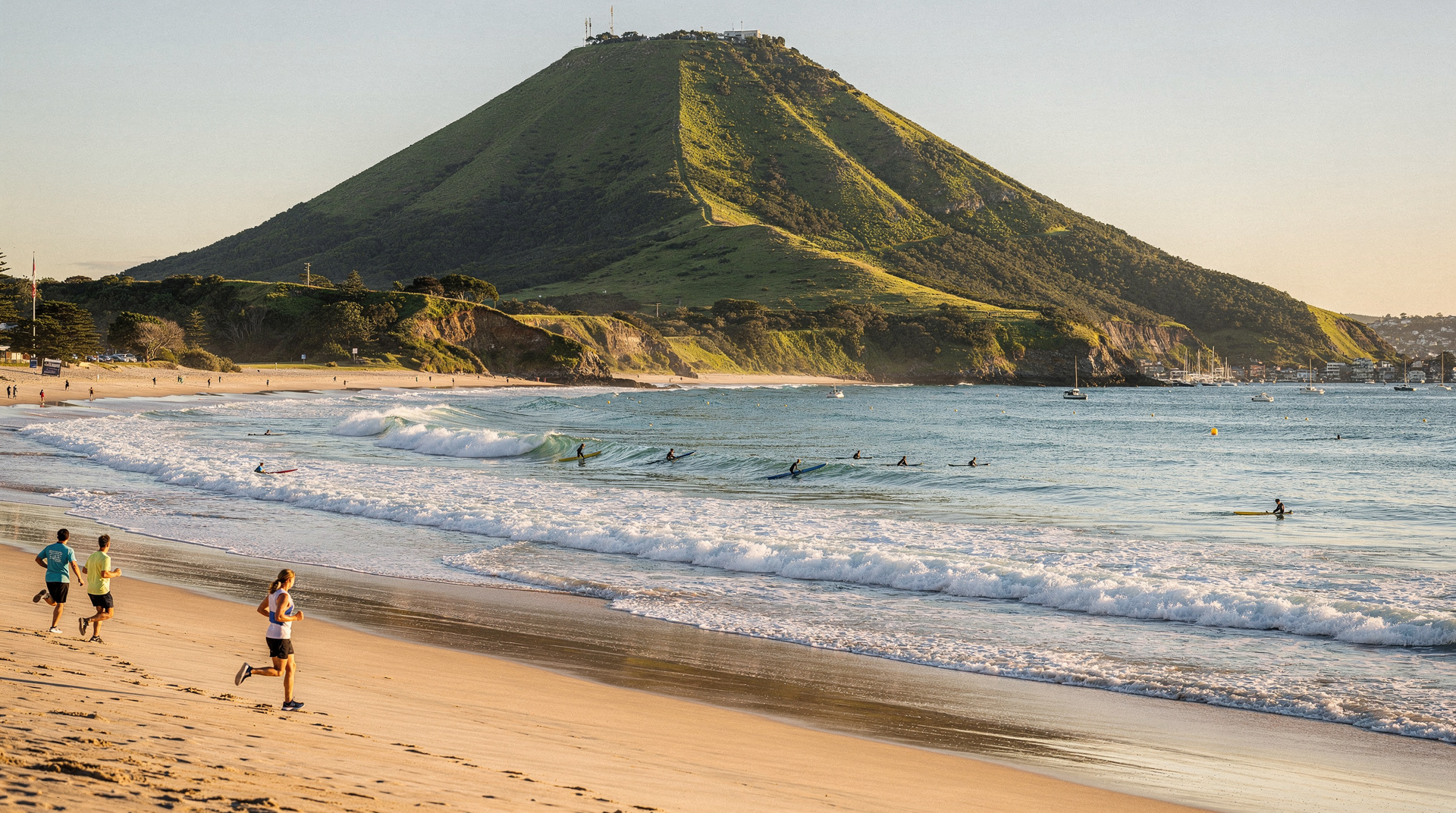
Mount Maunganui
Honest Mount Maunganui guide: Mauao base track, Main Beach surfing, hot pools, skydiving, real prices NZD/USD/EUR, day trips from Tauranga.
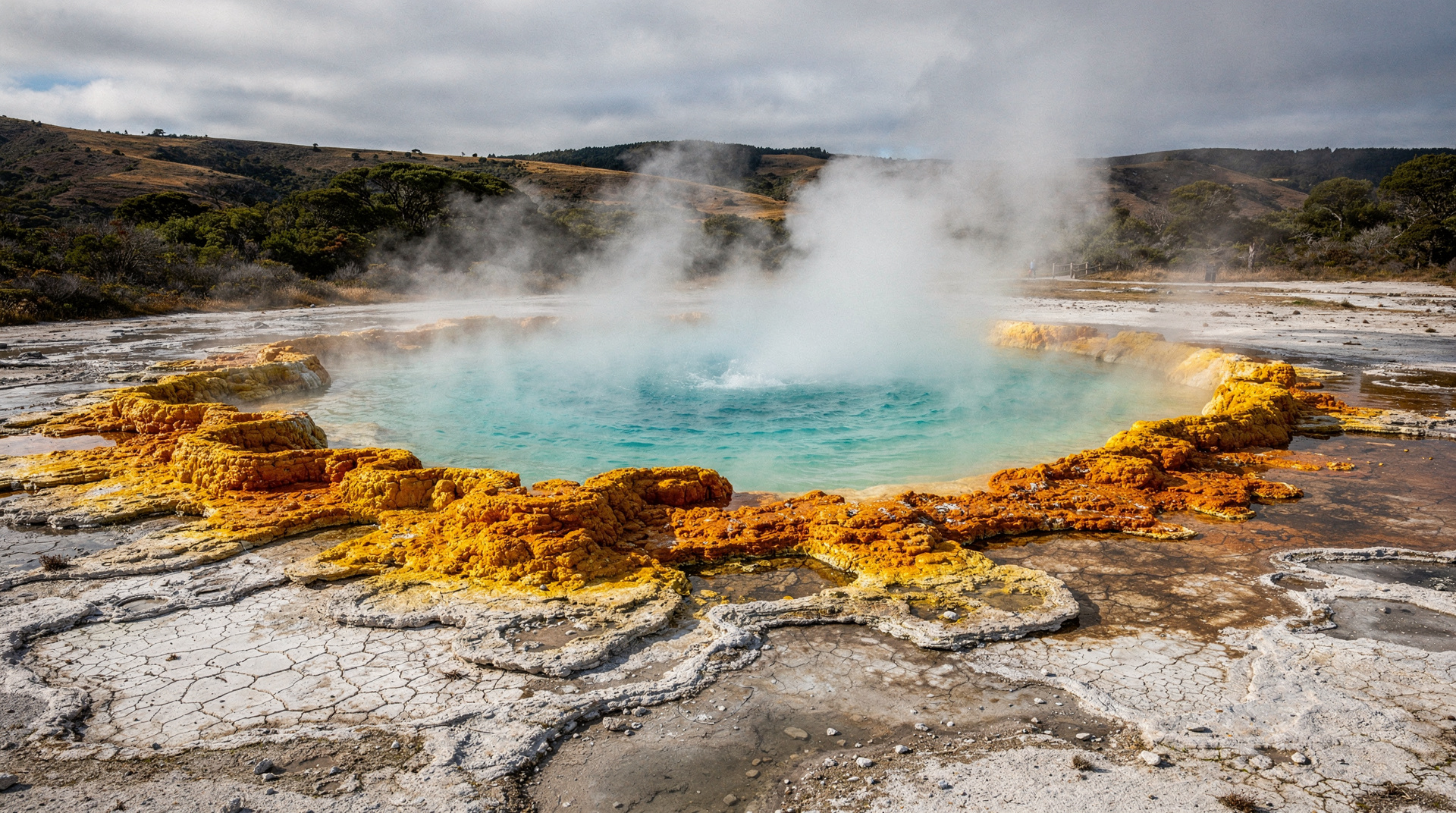
Rotorua
Honest Rotorua guide: Te Puia, Wai-O-Tapu, Polynesian Spa, Maori hangi, real prices NZD/USD/EUR, tourist traps to avoid, and best 2 days.
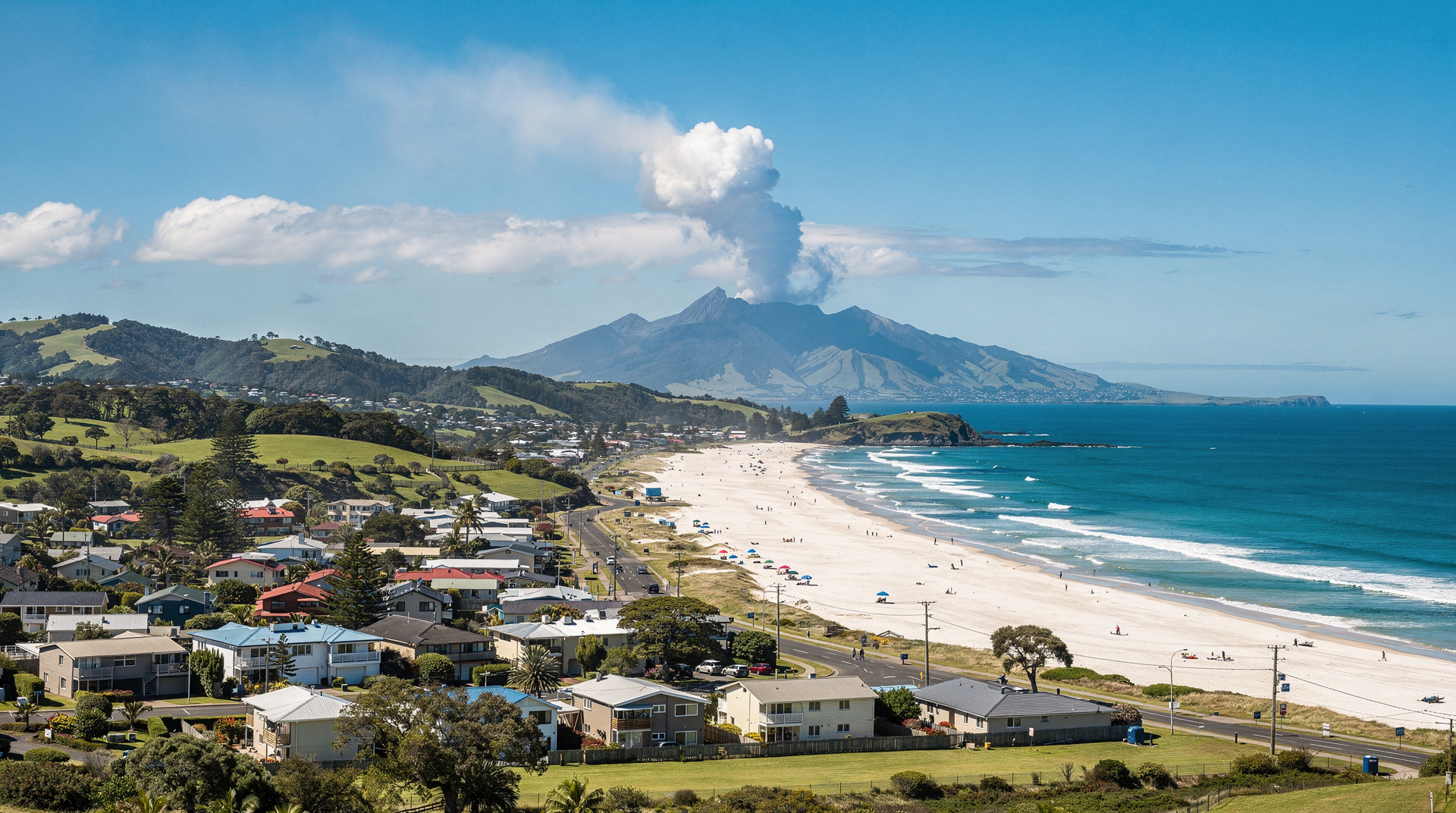
Whakatane
Whakatane: Bay of Plenty's most liveable town, Ohope Beach, dolphin swimming, and access to Whakaari/White Island's history. Real costs NZD/USD/EUR.
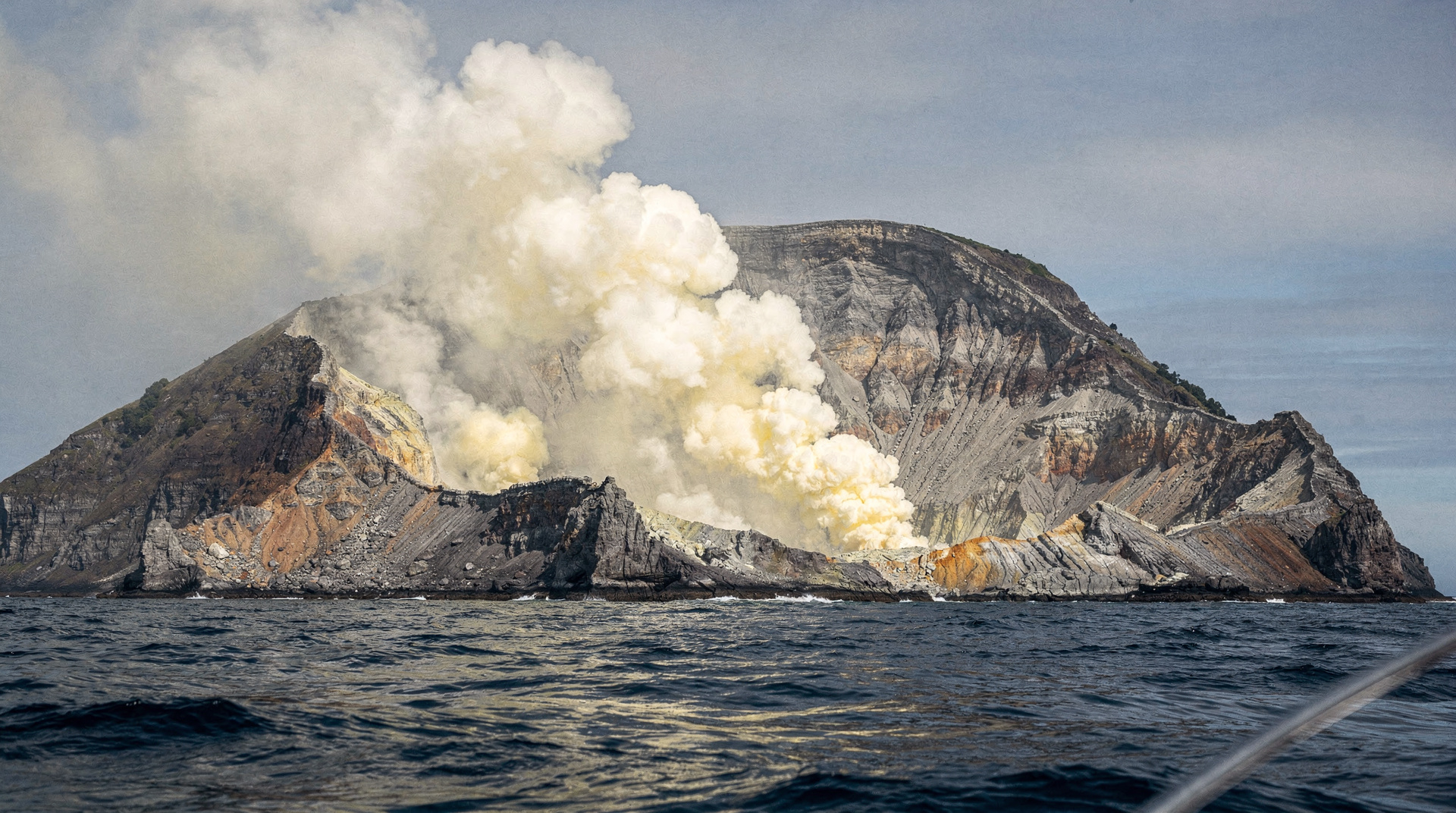
Whakaari / White Island
Whakaari/White Island: the December 2019 volcanic eruption that killed 22 people, the closure of New Zealand's most active marine volcano. A factual record.
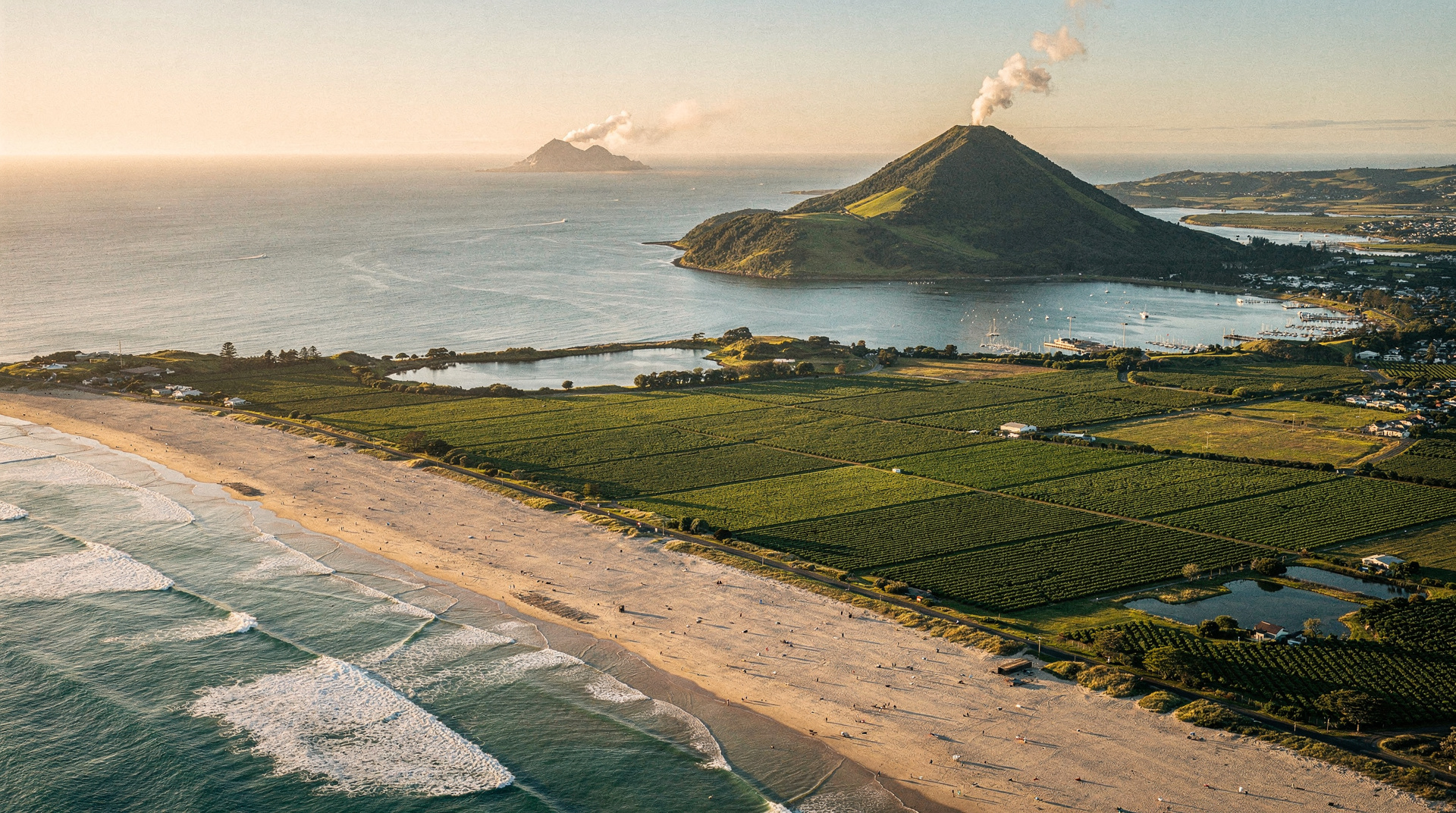
Bay of Plenty travel guide — Tauranga, Mount Maunganui, Whakatane
Bay of Plenty honest planner: best beaches, Whakaari context, White Island alternatives, where to base yourself, real costs NZD/USD/EUR.
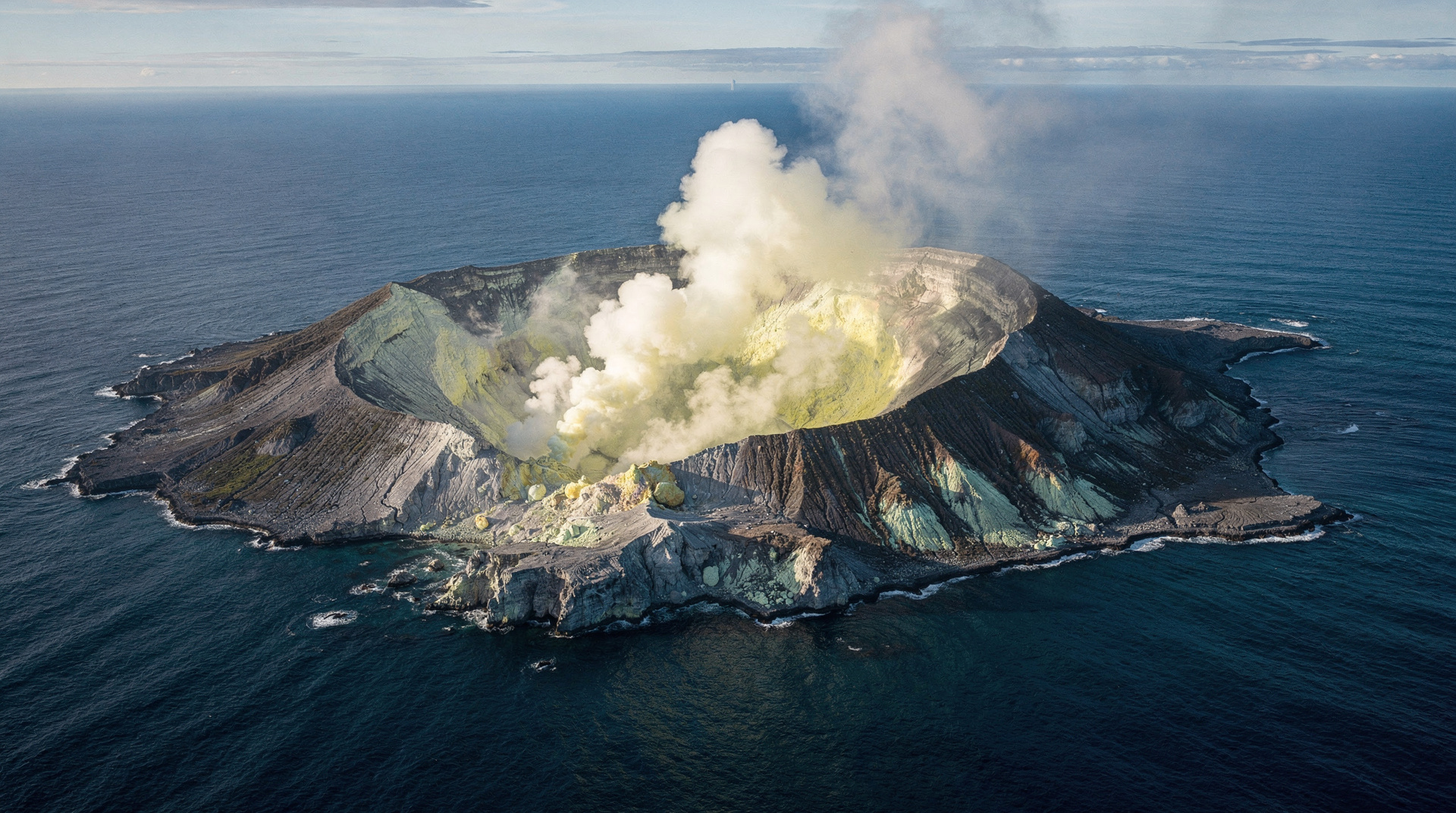
Whakaari/White Island — what visitors should know after the 2019 eruption
Whakaari/White Island erupted 9 December 2019, killing 22 people. Current access status 2026, what happened, legal proceedings, and Bay of Plenty alternatives.
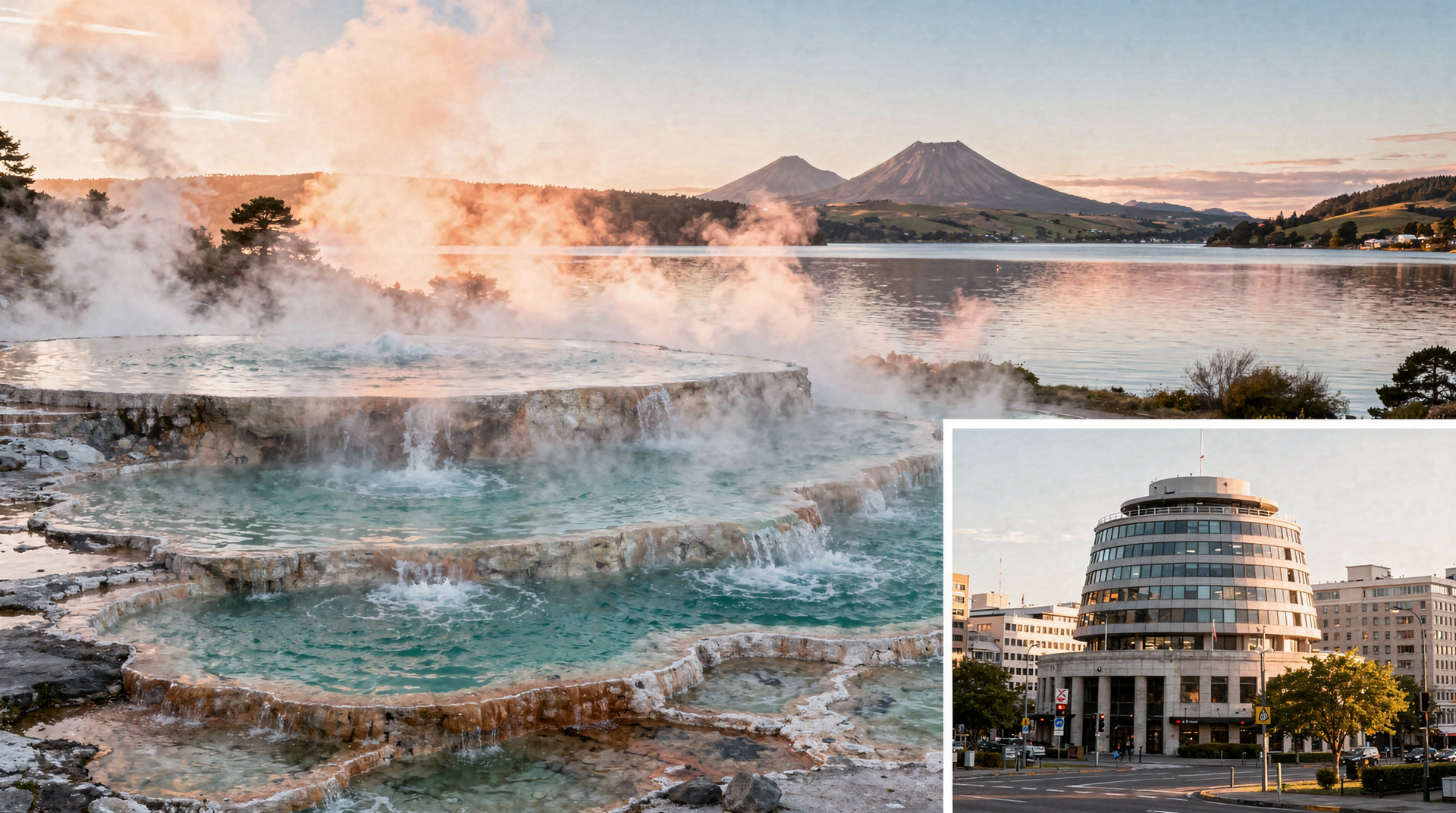
7-day North Island itinerary — the essential highlights
Auckland → Bay of Islands → Hobbiton → Waitomo → Rotorua → Taupo → Tongariro → Wellington. 7 days, both car and costs covered honestly.
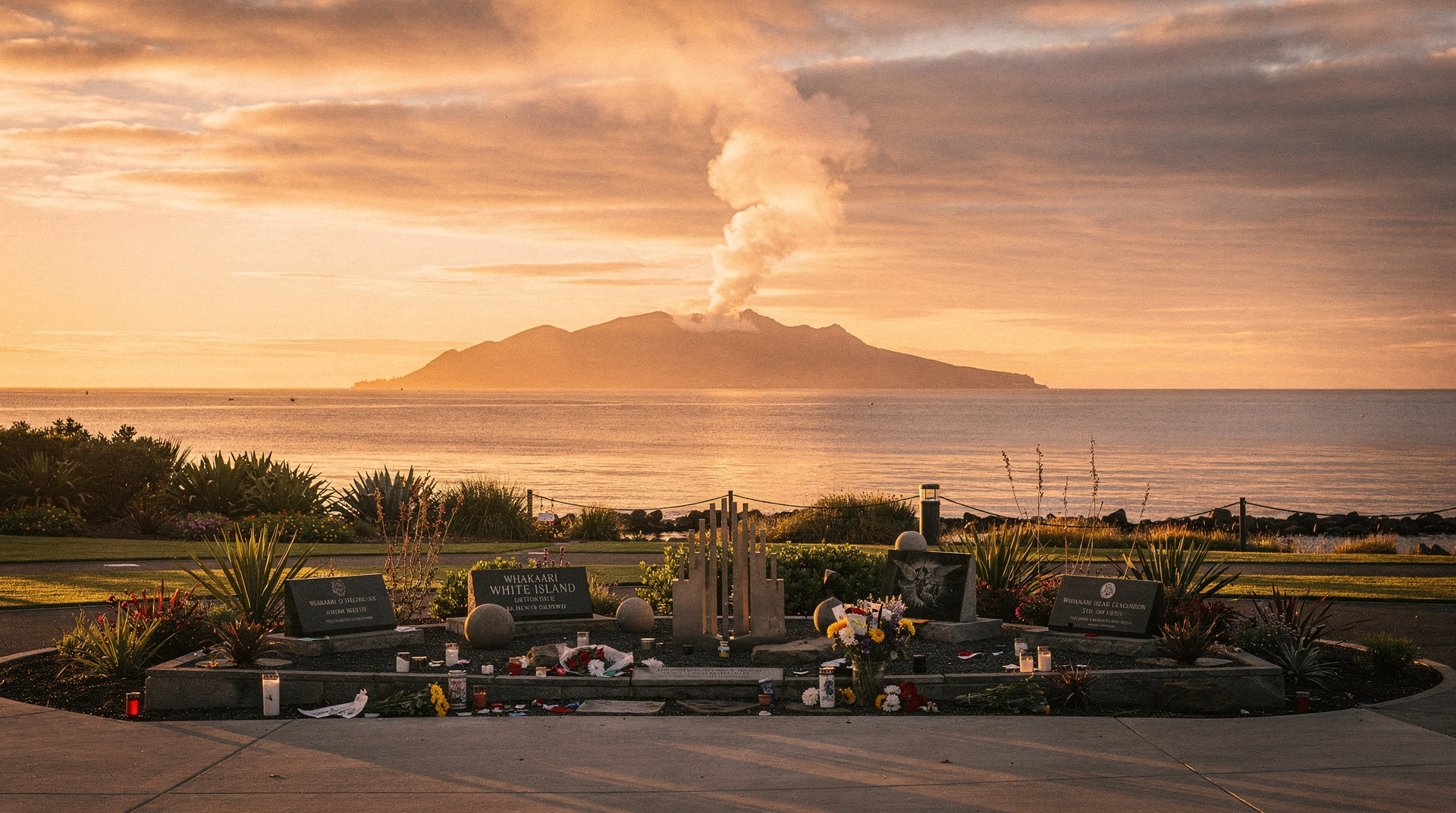
Whakaari/White Island — three years on from the eruption
Three years after the 9 December 2019 eruption that killed 22 people, Whakaari remains inaccessible and the legal proceedings continue. A factual update.
Last reviewed: