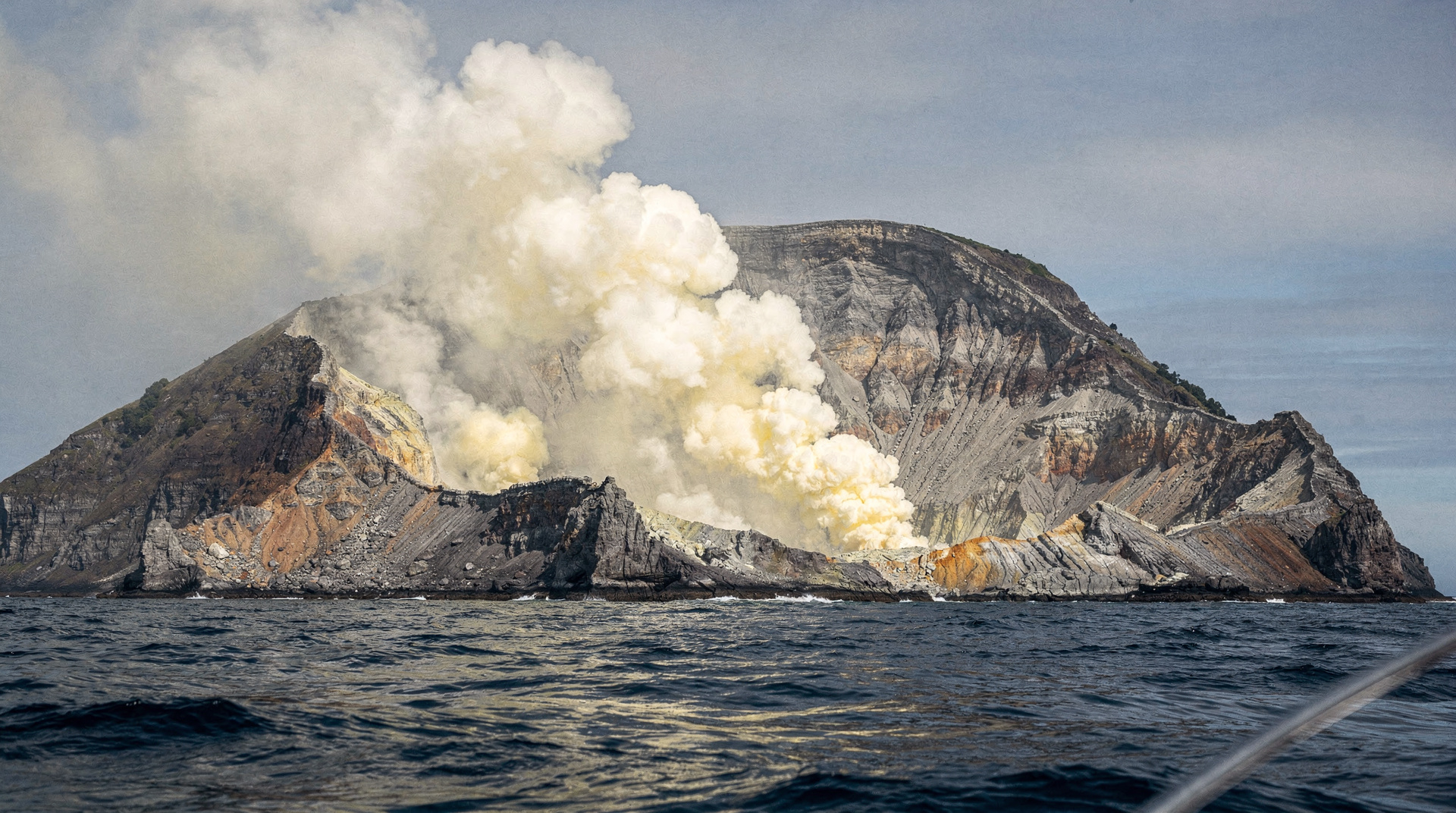
Whakaari / White Island
Whakaari/White Island: the December 2019 volcanic eruption that killed 22 people, the closure of New Zealand's most active marine volcano. A factual record.
Quick facts
- Status
- Closed to commercial tours since December 2019
- Eruption date
- 9 December 2019, approximately 2:11pm
- Deaths
- 22 confirmed deaths (including 2 who died after being airlifted)
- Injured
- 25 survivors with serious burns
- Location
- 48 km offshore from Whakatane, Bay of Plenty
A factual record of an inaccessible place
Whakaari — also known as White Island — is an active marine stratovolcano 48 km off the coast of the Bay of Plenty, visible from Whakatane on clear days as a white plume above the sea. It is the most active stratovolcano in New Zealand and has been erupting continuously, at varying levels of intensity, for at least 150,000 years.
Before December 2019, Whakaari was New Zealand’s most commercially visited active volcano. Tour operators based in Whakatane had taken visitors onto the island’s crater floor since the 1980s. The tours were popular, well-reviewed, and legally permitted under DOC concessions. The crater lake, yellow sulfurous vents, and extraordinary geological activity made it unlike any other tourist experience in New Zealand.
On 9 December 2019, at approximately 2:11pm, the volcano erupted without warning while 47 people were on the crater floor.
| Status | Closed to all commercial crater-floor tours |
| Location | 48 km offshore from Whakatane, Bay of Plenty |
| Nearest town | Whakatane (former tour departure point) |
| Alternative | Scenic overflights (no landing), where operators run them |
| Monitoring | Continuous, publicly available via GeoNet |
What happened on 9 December 2019
The eruption was classified as a phreatic event — caused by the sudden flashing of groundwater to steam as it contacted superheated rock, rather than a conventional magmatic eruption. Phreatic eruptions are inherently difficult to predict because they are driven by groundwater dynamics rather than magma ascent, which is the signal monitored by conventional volcanic monitoring.
At the time of the eruption, there were 47 people on the island: 38 tourists (a mix of New Zealand residents and foreign nationals, predominantly from Australia, Germany, the United Kingdom, the United States, Malaysia, and China, including a group from the cruise ship Ovation of the Seas) and 9 crew members from the tour operators.
The eruption produced a lateral blast and ashfall that killed people within minutes. First responders arrived by helicopter within approximately 30 minutes. The rescue operation was conducted under continued volcanic hazard; some bodies could not be retrieved until later.
The final death toll reached 22, including two people who died after being airlifted to specialist burns units. 25 survivors suffered serious burns injuries requiring extensive hospital treatment.
The volcanic context
Whakaari sits on the Taupo Volcanic Zone — the arc of volcanic and geothermal activity that runs from Ruapehu in the centre of the North Island northeast to the Kermadec Islands. The island is the emergent tip of a submarine volcano; the visible island is approximately 325 metres above sea level, but the submarine base reaches the ocean floor at approximately 1,600 metres below sea level.
The island has erupted repeatedly since European contact, with significant eruptions recorded in 1886, 1914 (when 11 workers at the island’s sulphur mining operation were killed), 1933, 1966–1971, 1976–1982, 1986, 2012, and the 2019 eruption. The 2019 event was not the island’s first fatal eruption; the 1914 eruption killed the sulphur workers in a lahar — a volcanic mudflow.
GeoNet, New Zealand’s geological monitoring service, monitors Whakaari continuously. The island’s volcanic alert level at the time of the December 2019 eruption was 2 on a scale of 0–5, indicating moderate to heightened volcanic unrest. The consensus among volcanologists after the event was that phreatic eruptions at this scale are inherently unpredictable with current technology at any alert level.
The legal aftermath
Following the eruption, New Zealand WorkSafe initiated prosecutions under the Health and Safety at Work Act 2015 against 13 parties, including tour operators, the island’s owner (Whakaari Management Limited), and aviation operators. The trials, spread across multiple proceedings, addressed questions of duty of care in high-risk environments, the adequacy of risk assessments, and the responsibility of operators for visitors in a demonstrably volatile geological environment.
This page is not the appropriate place to summarise the legal outcomes in detail; proceedings were ongoing or concluded at various stages as of the time of this review. The WorkSafe proceedings established important precedents for adventure tourism risk management in New Zealand.
The current status of Whakaari
The island is currently closed to commercial visitors. There is no confirmed date for resumption of tours.
GeoNet continues to monitor the island. The volcanic alert level and aviation colour code are updated regularly and are publicly available on the GeoNet website. Any future resumption of tourism would require the following: a significant and sustained period at reduced volcanic alert levels, new risk assessment frameworks appropriate to phreatic eruption hazard, and DOC concession review.
The island’s ownership (Whakaari Management Limited, a private family company) remains unchanged. The island is not a national park and was never a DOC-managed reserve; the commercial tour operation was conducted under DOC concessions.
Why this page exists
This page exists for several reasons.
First, Whakaari/White Island is a place that thousands of travellers searched for information about for decades and will continue to search for. Providing accurate information — including the clear statement that commercial visits are not possible — is more useful to visitors than the site’s absence from travel guides.
Second, the eruption and its aftermath constitute one of the most significant single events in New Zealand tourism history. The safety frameworks, risk management standards, and regulatory response that followed have implications for adventure tourism across the country.
Third, the volcano itself is extraordinary — a living, active geological system of the kind that shaped New Zealand’s entire landscape. Understanding Whakaari in its volcanic context helps visitors understand the Taupo Volcanic Zone, the thermal activity at Rotorua and Wai-O-Tapu, and the risk landscape of the North Island more broadly.
Observing Whakaari from the mainland
The island is visible from the Whakatane waterfront and from Ohope Beach on clear days. The plume — steam and volcanic gases — is visible even on days when the island’s form is obscured. Looking east from the Bay of Plenty coast and seeing that white plume is a reminder of what lies offshore.
Aerial observation (not landing) by scenic flight has operated intermittently since the eruption. Contact White Island Flights in Whakatane for current availability and GeoNet alert status before booking.
The Whakatane guide covers the town that was the departure point for the White Island tours and its current character as a Bay of Plenty destination in its own right.
Remembering those who died
The 22 people who died at Whakaari on 9 December 2019 and in the days that followed were visitors from eight countries who had come to see something extraordinary. They were on the crater floor of an active volcano — a place that required specific permission, organised access, and the implicit assumption that the operators and authorities had assessed the risks adequately.
A memorial to the victims was established in Whakatane. The families of many victims have been vocal about the need for improved risk communication and safety standards in New Zealand’s adventure tourism industry. Their advocacy has contributed to the regulatory response.
For visitors to New Zealand who want to understand what happened and why, the official New Zealand Police, WorkSafe, and GeoNet public reports provide the most comprehensive account.
Whakaari in the context of New Zealand’s volcanic disasters
Understanding where the 2019 eruption sits among New Zealand’s historical volcanic events helps put the risk — and the country’s overall safety record — in perspective.
| Event | Year | Deaths | Type |
|---|---|---|---|
| Mount Tarawera eruption | 1886 | ~120 | Magmatic, destroyed Maori villages and the Pink and White Terraces |
| Tangiwai disaster (Ruapehu lahar) | 1953 | 151 | Lahar sweeping away a rail bridge before an express train |
| Whakaari sulphur mine eruption | 1914 | 11 | Lahar at the island’s mining operation |
| Whakaari/White Island eruption | 2019 | 22 | Phreatic, on the crater floor during a commercial tour |
New Zealand sits on the Pacific Ring of Fire and has a genuine, long-documented history of volcanic hazard — but it also has one of the world’s most sophisticated public volcanic monitoring systems in GeoNet, and the vast majority of visitors to the country’s volcanic sites, including the popular Tongariro Alpine Crossing near Ruapehu and Ngauruhoe, do so without incident every year.
Frequently asked questions about Whakaari/White Island
Can I book a tour to White Island?
No. All commercial tours to the island’s crater floor have been suspended since the December 2019 eruption. Any service claiming to offer crater access should be treated with extreme skepticism and verified directly with DOC and the relevant operators. Scenic overflights (without landing) may be available; check locally with White Island Flights in Whakatane.
Was the eruption predictable?
This is one of the central questions in the subsequent legal proceedings and scientific literature. The consensus among volcanologists is that phreatic eruptions — caused by groundwater flashing to steam — are inherently more difficult to predict than magmatic eruptions because they are driven by shallow groundwater dynamics rather than the ascending magma that produces the seismic and deformation signals monitored by standard volcanic monitoring. The volcanic alert level at the time of the eruption (level 2 of 5) indicated elevated volcanic unrest but not imminent eruptive activity at the scale that occurred.
When did New Zealand last have a major volcanic disaster before 2019?
The 1953 Tangiwai disaster, in which a lahar from the crater lake of Mount Ruapehu swept away a railway bridge moments before an express train crossed it, killing 151 people, was New Zealand’s worst volcanic disaster prior to Whakaari. The 1886 eruption of Mount Tarawera, which destroyed three Maori villages and the famous Pink and White Terraces, killed approximately 120 people.
Is New Zealand safe to visit given its volcanic activity?
Yes. New Zealand’s volcanic monitoring systems are among the best in the world, and GeoNet’s public alert system provides real-time information on all monitored volcanic sites. The Tongariro Alpine Crossing — which passes within 2 km of active volcanic vents — remains open when the volcanic alert level allows. The risks are real but understood; the monitoring is excellent; and millions of visitors experience New Zealand’s volcanic landscape safely every year.
Can I still see Whakaari at all as a visitor?
Only from a distance. The island is visible from the Whakatane waterfront and Ohope Beach on clear days as a distant landform with a visible steam plume. Scenic flights that circle the island without landing have operated intermittently since 2019, subject to current GeoNet alert status — contact operators in Whakatane directly for availability rather than assuming any listing is current.
Where can I learn more about Rotorua’s geothermal and volcanic areas safely?
Rotorua sits on the same Taupo Volcanic Zone as Whakaari and offers extensively monitored, publicly accessible geothermal parks such as Wai-O-Tapu and Te Puia, where boardwalks and safety infrastructure make the geothermal activity safe to view up close. See the Rotorua destination guide and the Bay of Plenty overview for how the region’s volcanic landscape fits into a wider itinerary.
Top experiences: white island whakaari New Zealand
See all →Related guides
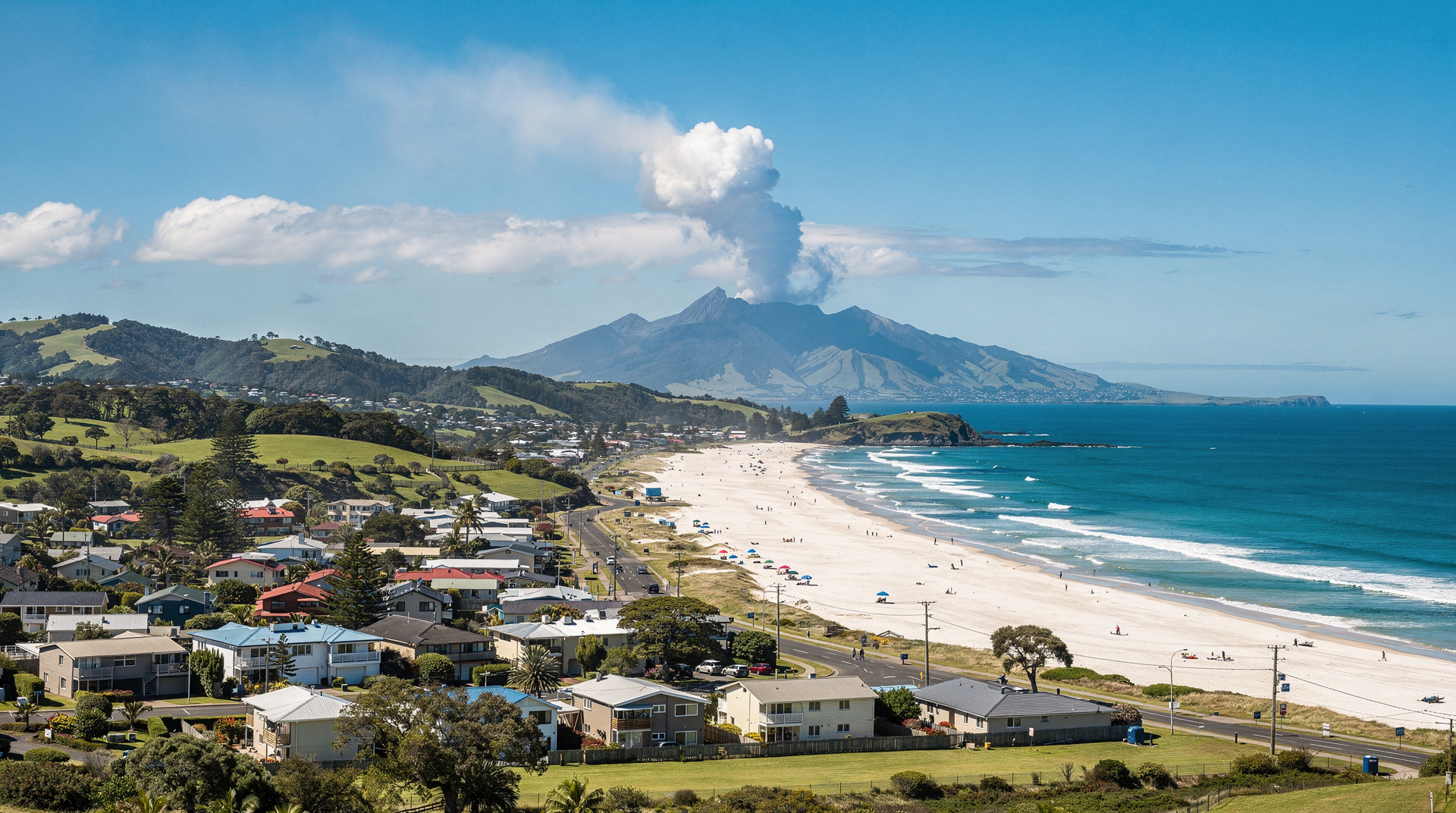
Whakatane
Whakatane: Bay of Plenty's most liveable town, Ohope Beach, dolphin swimming, and access to Whakaari/White Island's history. Real costs NZD/USD/EUR.
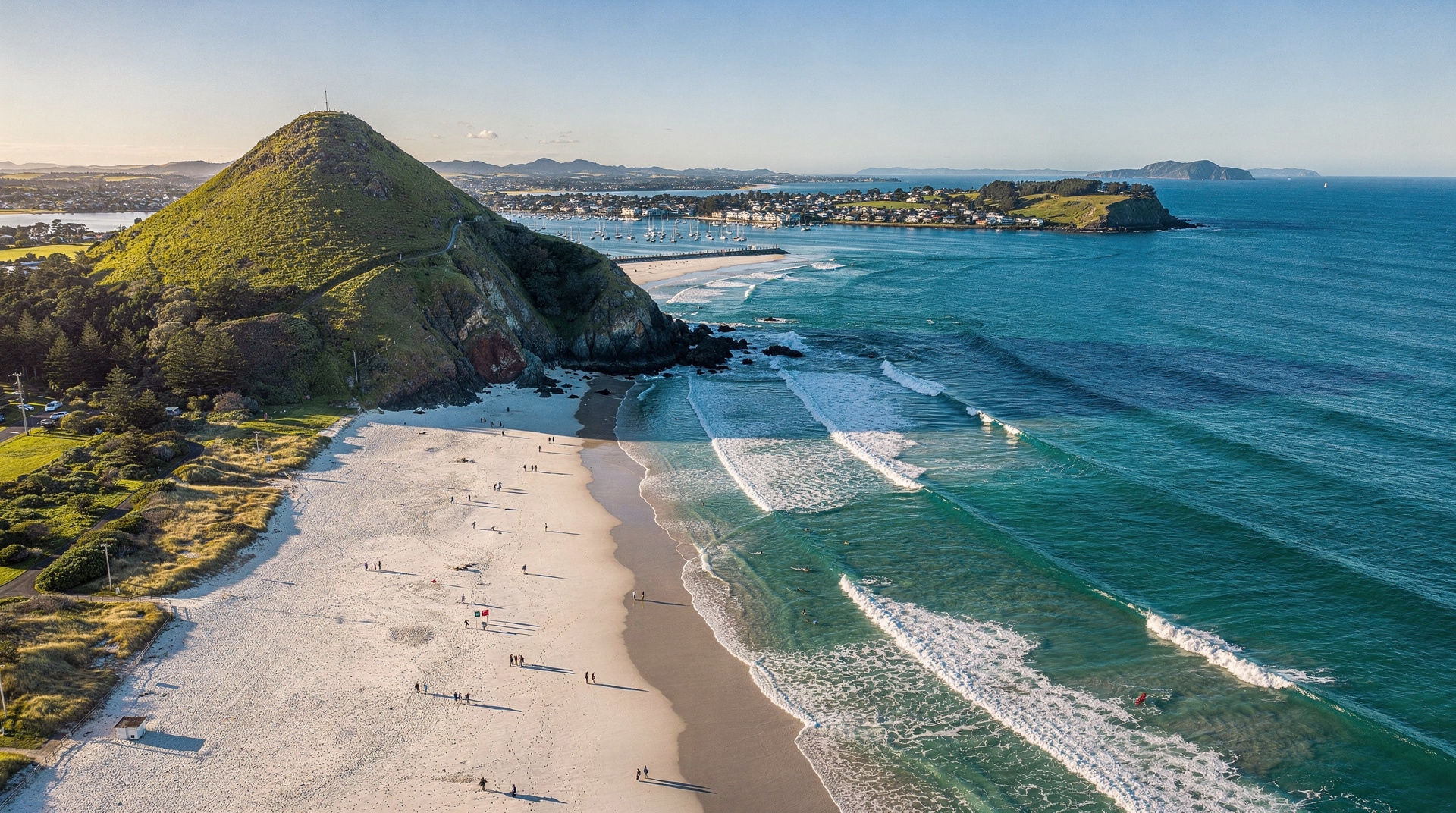
Bay of Plenty
Bay of Plenty region guide: Tauranga, Mount Maunganui surf, Whakatane, Whakaari/White Island eruption facts. Real NZD/USD/EUR costs, honest verdicts.
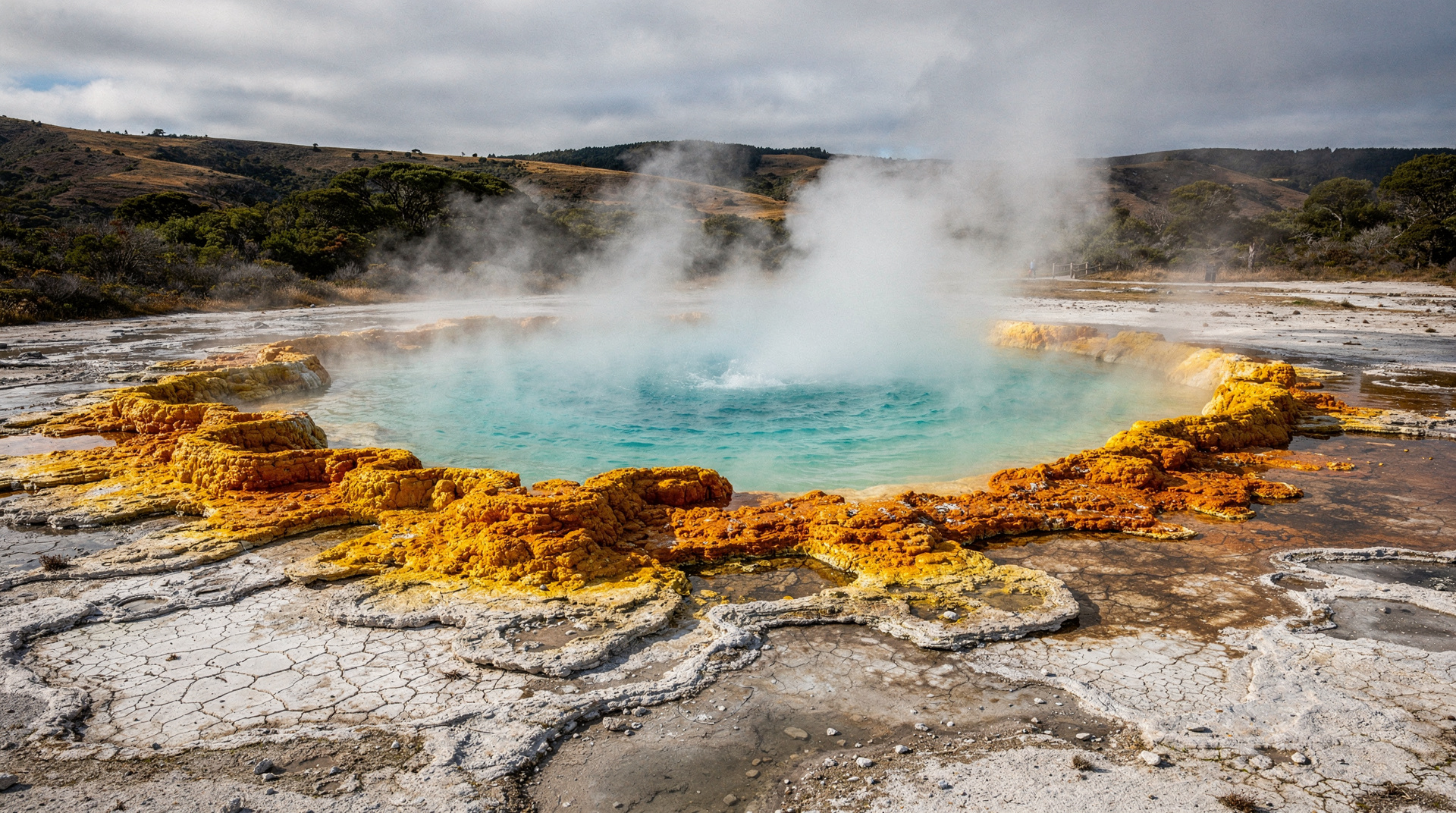
Rotorua
Honest Rotorua guide: Te Puia, Wai-O-Tapu, Polynesian Spa, Maori hangi, real prices NZD/USD/EUR, tourist traps to avoid, and best 2 days.
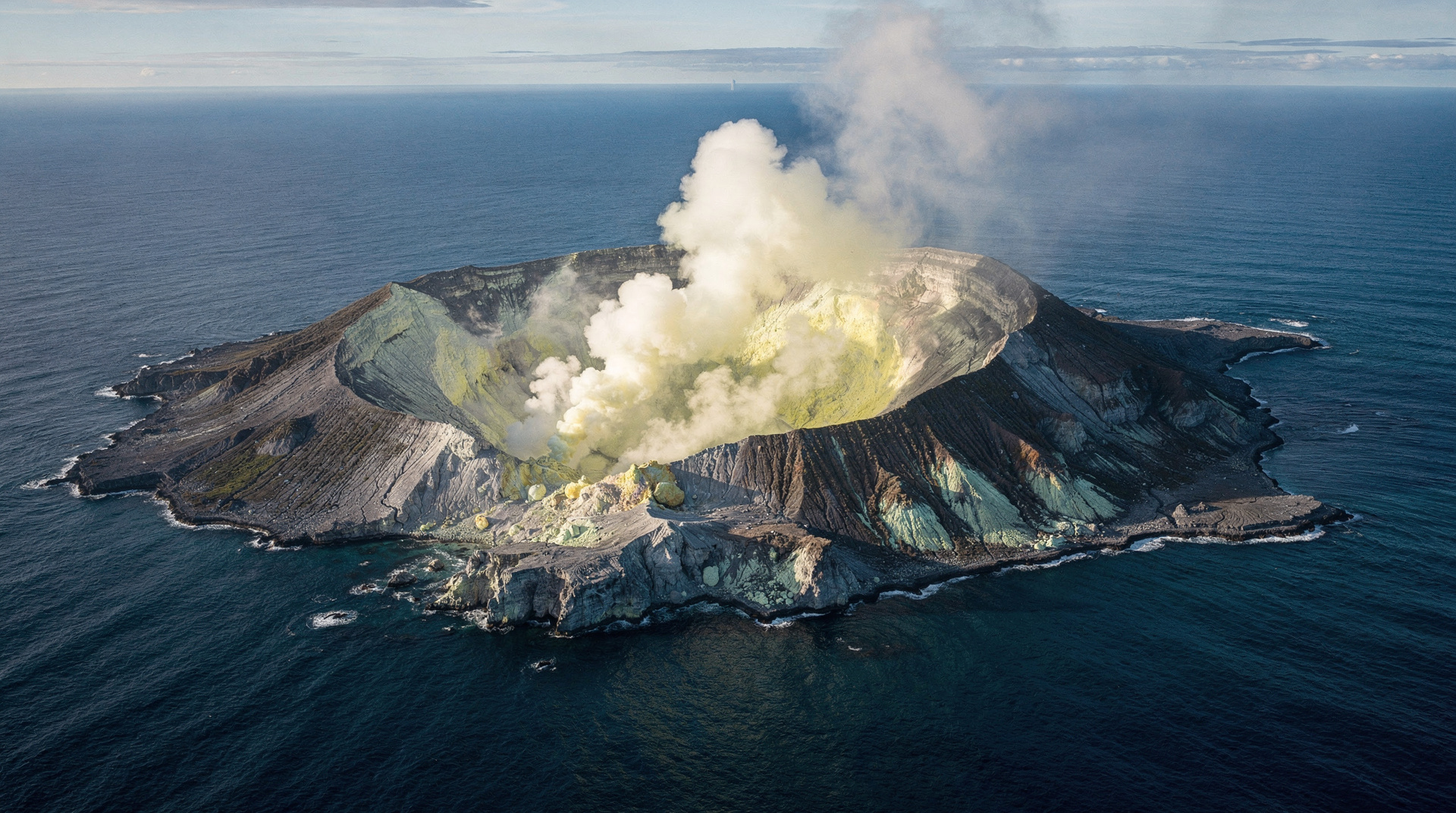
Whakaari/White Island — what visitors should know after the 2019 eruption
Whakaari/White Island erupted 9 December 2019, killing 22 people. Current access status 2026, what happened, legal proceedings, and Bay of Plenty alternatives.
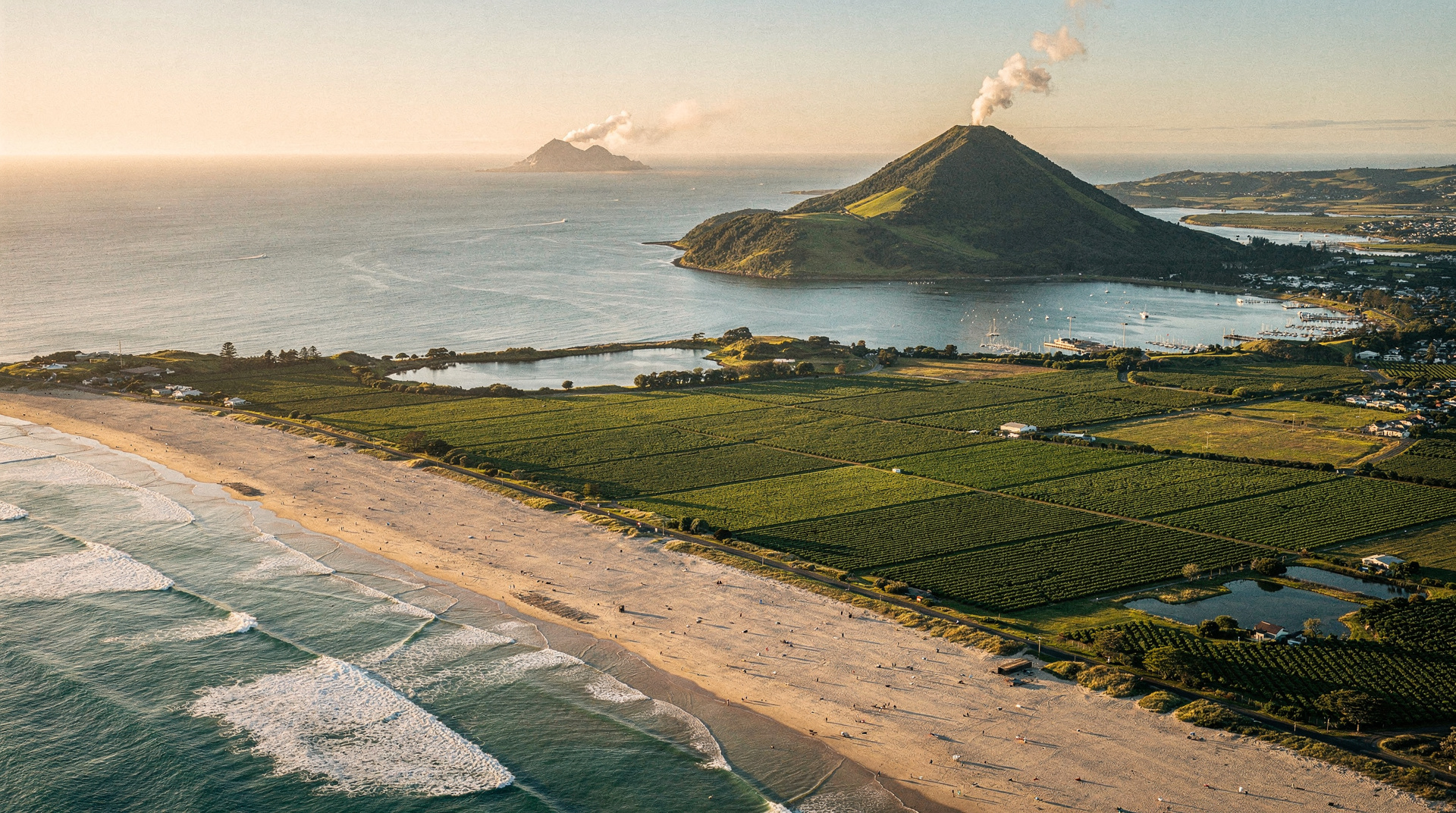
Bay of Plenty travel guide — Tauranga, Mount Maunganui, Whakatane
Bay of Plenty honest planner: best beaches, Whakaari context, White Island alternatives, where to base yourself, real costs NZD/USD/EUR.
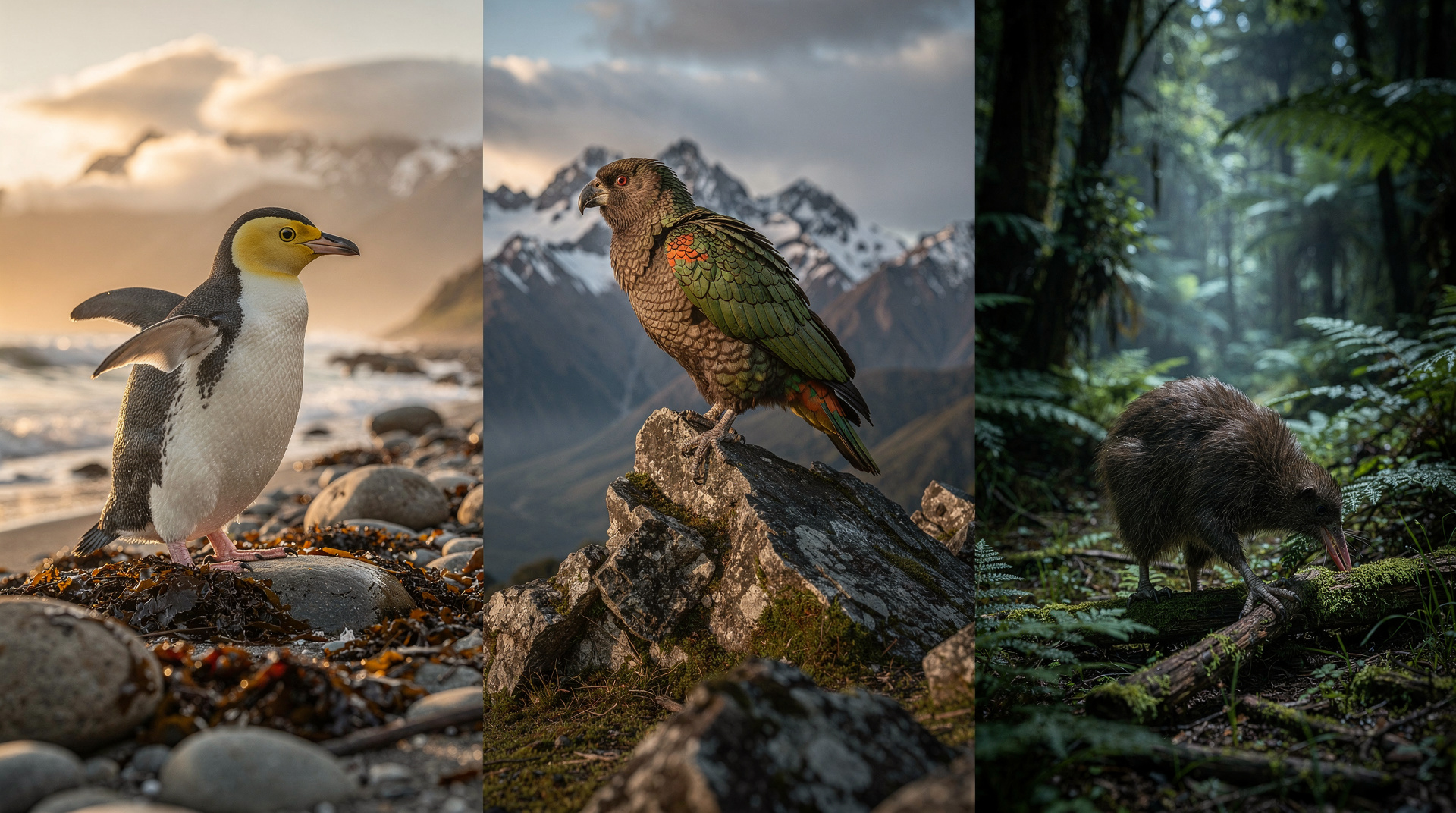
Wildlife in New Zealand — kiwi, penguins, whales, and more
Where to see NZ wildlife honestly: kiwi nights, yellow-eyed penguins, sperm whales at Kaikōura, royal albatross, fur seals. Best locations, real costs.
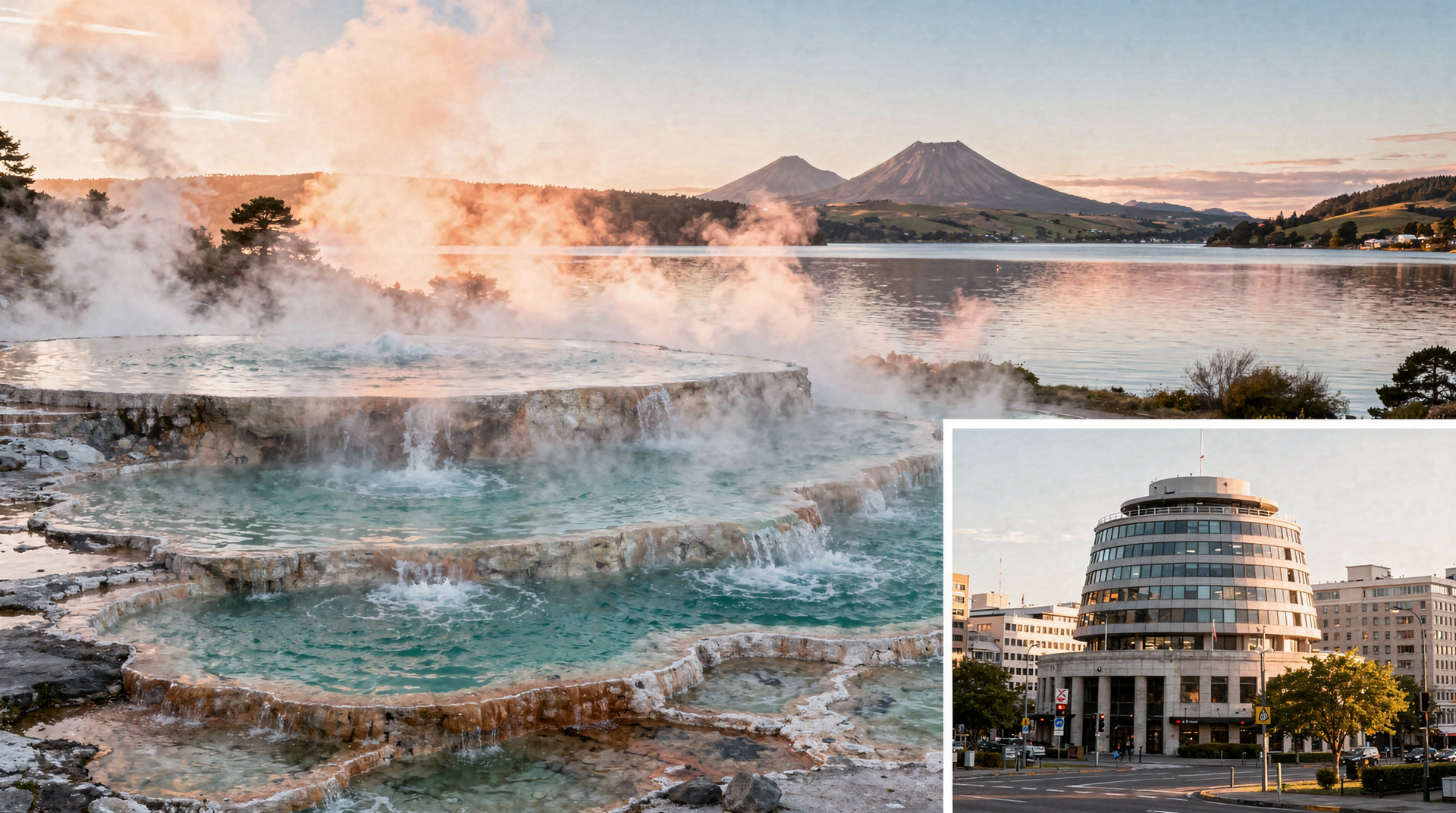
7-day North Island itinerary — the essential highlights
Auckland → Bay of Islands → Hobbiton → Waitomo → Rotorua → Taupo → Tongariro → Wellington. 7 days, both car and costs covered honestly.
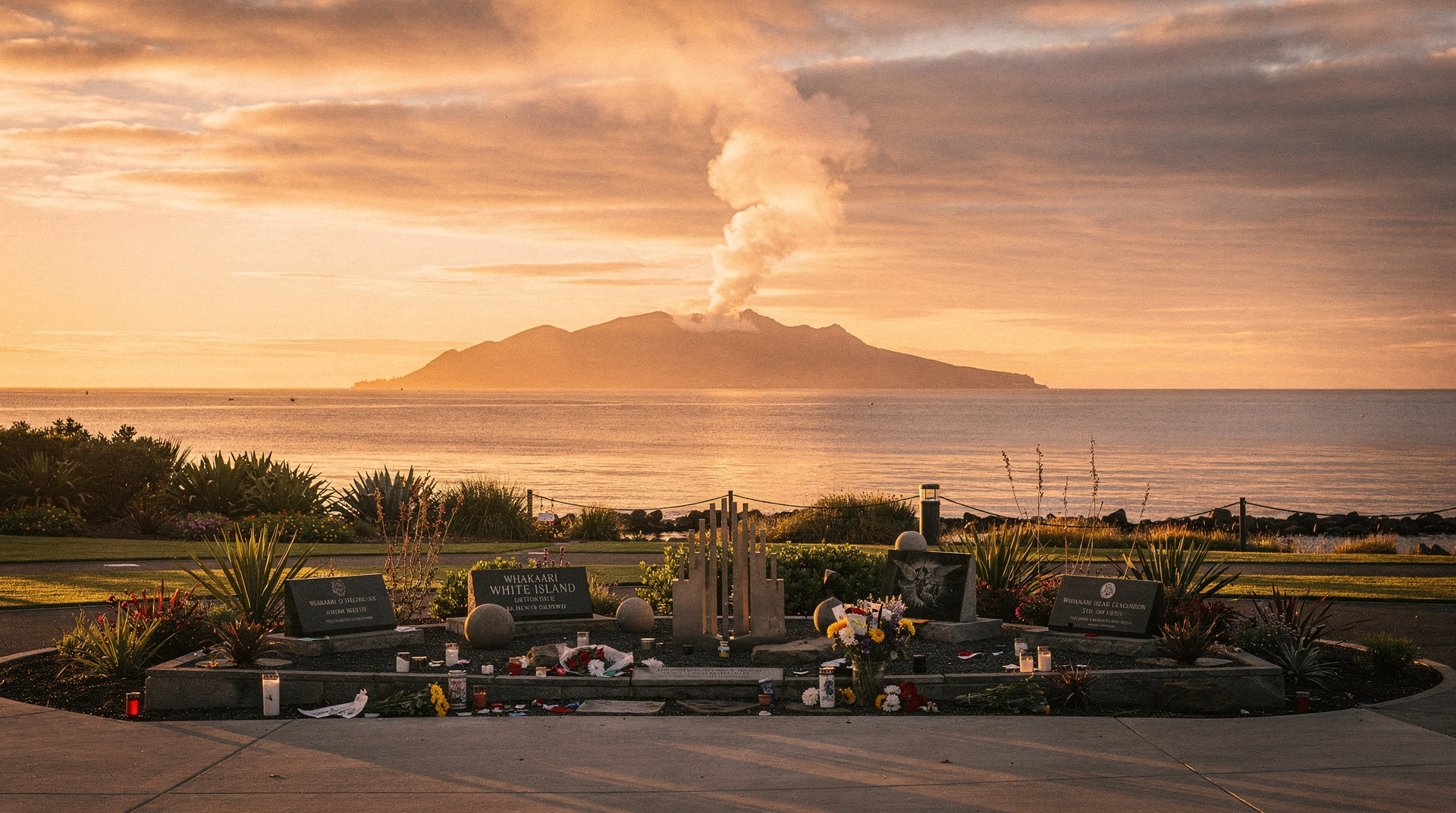
Whakaari/White Island — three years on from the eruption
Three years after the 9 December 2019 eruption that killed 22 people, Whakaari remains inaccessible and the legal proceedings continue. A factual update.
Last reviewed: