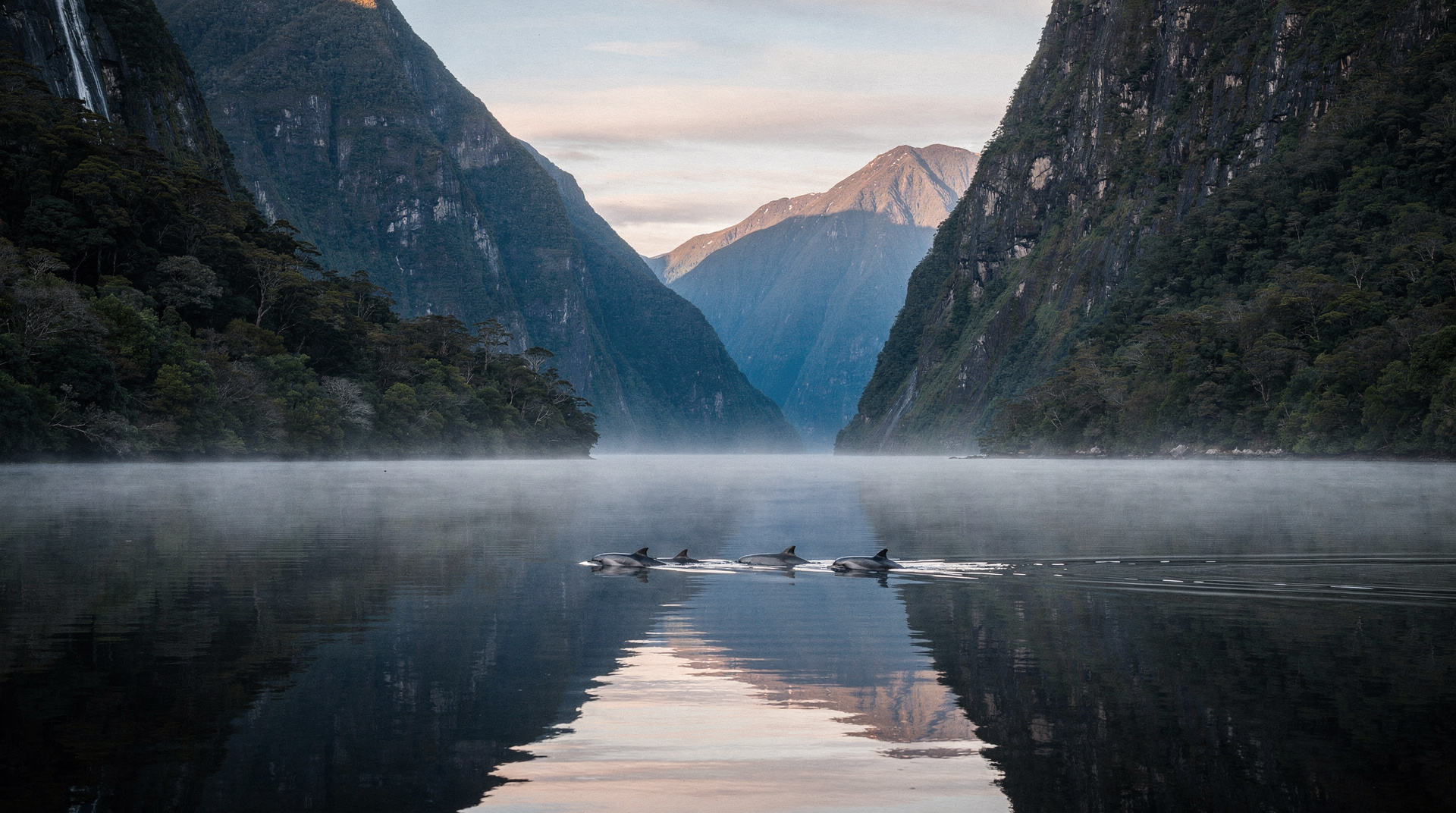
Doubtful Sound
Honest Doubtful Sound guide: how to get there, best cruises, overnight options — real NZD/USD/EUR costs and the honest Milford comparison.
Quick facts
- Size vs Milford
- 3x the area of Milford Sound, 10x less visited
- Access
- Lake Manapouri + boat crossing + bus — no road to the fiord itself
- Drive from Te Anau
- 30 minutes to Manapouri, then boat + bus (2.5 hours total)
- Drive from Queenstown
- 2.5 hours to Manapouri
- Currency
- NZD — 1 NZD ≈ USD 0.60 / EUR 0.55
Doubtful Sound — the fiord that earned its solitude
Doubtful Sound is three times the area of Milford Sound and receives roughly one-tenth the visitors. That ratio is not an accident. The access alone filters out the casual traveler: you cannot drive to Doubtful Sound. The route involves a scenic cruise across Lake Manapouri, a bus over Wilmot Pass (670m), and arrival at Deep Cove — the head of the fiord. The journey itself takes about 2.5 hours each way, before you’ve even started a cruise.
Captain James Cook named it Doubtful Harbour in 1770 because he was doubtful that the winds inside would allow him to sail back out. He was right to be cautious; the fiord is 40 km long, flanked by cliffs up to 1,200m high, and the weather can change rapidly. Modern visitors don’t need to worry about sailing out, but the remoteness that concerned Cook is precisely what makes Doubtful Sound exceptional today.
The honest Milford vs Doubtful question is covered in the comparison guide. The short version: if you have one day and are based in Te Anau, do Milford. If you have two days in Fiordland, or if you’ve already done Milford, Doubtful Sound is the better second experience. If you’ve never done either and want the more isolated, quieter experience, Doubtful Sound is a legitimate first choice.
| Where | Fiordland, accessed via Manapouri (30 min south of Te Anau) |
| Cost | Day cruise NZD 285–350; overnight NZD 395–525 |
| Time needed | Full day minimum; overnight recommended if possible |
| Getting there | Boat + bus from Manapouri — no independent road access |
| Best time | October to April for road access; open year-round |
The access route — Lake Manapouri and Wilmot Pass
Everything starts in Manapouri, 22 km south of Te Anau. The township is small (a few hundred residents) with a good café and basic accommodation. Lake Manapouri, which you cross to reach the Wilmot Pass road, is widely regarded as one of the most beautiful lakes in New Zealand — deep blue, ringed by forested mountains, with small islands including Pomona Island in the middle.
The lake crossing takes about 1 hour on the boat. At West Arm, the Manapouri Power Station (a remarkable 1960s engineering project built almost entirely underground to minimise impact on the landscape) sits partially visible at the water’s edge. From West Arm, a bus travels the 22 km Wilmot Pass road — unsealed, steep in places, spectacular in all weathers — to reach Deep Cove.
The round trip by boat and bus is included in all commercial day-cruise packages. There is no way to reach Deep Cove independently.
Day cruise options
The full-day Doubtful Sound coach and cruise from Te Anau is the standard day-trip option, covering the Lake Manapouri crossing, Wilmot Pass bus, and a 3-hour cruise of the main fiord arm and Secretary Island. Full day (10–11 hours from Te Anau departure to return). Price: NZD 285–350 / USD 171–210 / EUR 157–193. Book in advance — tours fill, especially in summer.
For a more aerial perspective, the Dusky and Doubtful scenic flight from Te Anau covers both Doubtful Sound and the more remote Dusky Sound in a single scenic flight — the only way to see Dusky Sound, which has no commercial vessel access. Flight time approximately 1.5 hours; NZD 395–480 / USD 237–288 / EUR 217–264.
A seaplane option is also available: the 40-minute seaplane flight over Doubtful Sound gives you the full fiord aerial view and lands on the water surface. NZD 345–420 / USD 207–252 / EUR 190–231. Weather-dependent.
Overnight cruise
The overnight cruise is the definitive Doubtful Sound experience. Vessels anchor deep in the fiord at night — in Secretary Island arm or further in — and you wake at 6am to complete silence, morning mist on the cliffs, and the sound of waterfalls. Bottlenose dolphins are frequently encountered overnight; Fiordland crested penguins appear on rocks near the fiord head.
Overnight cruises depart Manapouri in the afternoon, spend the night in the fiord, and return the following morning. Included activities typically cover kayaking, small-boat wildlife excursions, and a guided walk on the fiord’s edge. Price: NZD 395–525 / USD 237–315 / EUR 217–289 per person. Book 2–4 months ahead; capacity is limited to 60–80 passengers maximum per vessel.
This is the best overnight experience in Fiordland and one of the best wilderness overnight experiences in New Zealand. If Doubtful Sound is a priority rather than an add-on, allocate two days (one night) to it.
Day cruise vs overnight cruise: which to choose
| Day cruise | Overnight cruise | |
|---|---|---|
| Cost | NZD 285–350 | NZD 395–525 |
| Time | 9–11 hours from Te Anau | Afternoon departure to next morning |
| Wildlife odds | Good — dolphins, seals, birds | Better — dawn stillness, resident pods |
| Booking window | 2–4 months ahead in summer | 3–6 months ahead, capacity-capped |
| Best for | Time-limited visitors | Those prioritising the fiord experience |
The overnight cruise is the better experience by a meaningful margin if your schedule and budget allow it — the value isn’t just more time on the water, it’s being present for the transition from evening stillness to dawn mist that day visitors never see. But the day cruise remains a completely legitimate way to experience Doubtful Sound if two days simply isn’t available.
Wildlife in Doubtful Sound
The fiord has permanent populations of bottlenose dolphins, fur seals (hauled out on rocks at the mouth), and Fiordland crested penguins (one of the rarest penguin species in the world, breeding in the fiord from June to November). The dolphins are frequently playful around boats — the cruise operators know the resident pod well.
Underwater, the same phenomenon as Milford Sound applies: a thin layer of fresh peat-stained water on the surface blocks UV light, allowing deep-water species (black coral, brachiopods, deep-sea fish) to live at 10–15m depth instead of 100m+. The underwater ecosystem is the same type as Milford but without the underwater observatory infrastructure.
Birds are abundant: kea (alpine parrot) on Wilmot Pass, kaka (forest parrot) in the fiord forest, bellbirds and tui audible from the vessel. The fiord forest is one of the most intact temperate rainforests in New Zealand — untouched by introduced predators in most of the cliff areas.
Where to stay near Doubtful Sound
Manapouri: Manapouri Lakeview Motor Inn (lakefront, reliable, NZD 155–210 / USD 93–126 / EUR 85–116), Manapouri Holiday Park (budget, NZD 40–80 / USD 24–48 / EUR 22–44 per site), Freestone Backpackers (hostel, NZD 35–52 / USD 21–31 / EUR 19–29).
Te Anau (30 minutes from Manapouri): better range of accommodation and restaurants — see the Te Anau guide for options. Te Anau is the better base if you’re doing multiple Fiordland day trips.
Overnight on the fiord itself: commercial overnight cruise vessels are fully catered with cabins or bunks. This is both transport and accommodation — you’re sleeping on the fiord. The per-person price includes all meals and activities.
Getting to Doubtful Sound
From Te Anau: 30 minutes south to Manapouri on SH95. All commercial tours depart from Manapouri Pearl Harbour. Parking at Manapouri is free. Most Te Anau accommodation can arrange early morning transfers to Manapouri.
From Queenstown: 2.5 hours south on SH6 to Manapouri, passing through Frankton and Kingston. Queenstown-based operators sell all-inclusive Doubtful Sound day tours (including transport from Queenstown to Manapouri), but the round trip is a very long day — 13+ hours. Better to overnight in Te Anau first.
From Invercargill: 1.5 hours northwest on SH99 and SH95 — Doubtful Sound is reasonably accessible from the south if you’re on a southland route.
By public transport: There is no scheduled bus service to Manapouri outside organised tour transfers. If you don’t have a rental car, book a tour package that includes pickup from Te Anau or Queenstown accommodation — nearly all operators offer this as standard, so the lack of independent transport is rarely a practical obstacle.
Skip / Worth it / Splurge
Skip: Combining Milford Sound and Doubtful Sound on consecutive days from Queenstown without overnight stops — both days will be exhausting and you’ll underappreciate both. Pick one if you’re on a tight schedule.
Worth it: The day cruise if your primary driver is seeing the fiord, meeting the dolphins, and crossing Lake Manapouri. The Wilmot Pass bus crossing is scenically worthwhile even before you reach the fiord.
Splurge: The overnight cruise. Nothing in New Zealand more efficiently delivers complete wilderness silence. Worth the two-day commitment for anyone whose travel priorities include remoteness and wildlife over activity-density.
What to pack for a Doubtful Sound cruise
Fiordland’s weather changes fast regardless of forecast, so dress in layers even on a forecast-clear day: a warm mid-layer, a genuinely waterproof outer shell (not just water-resistant), and closed-toe shoes with grip for the Wilmot Pass bus stop and any short walks. Sunglasses and sunscreen matter even under cloud, since UV reflecting off the water is strong. If you’re doing the overnight cruise, most operators provide bedding and towels, but bring your own toiletries and any medication — there is no shop once you’re on the fiord. Binoculars significantly improve the dolphin- and penguin-spotting experience, and a rain cover for your camera is worth the small extra weight given Fiordland’s average annual rainfall.
How Doubtful Sound fits into your itinerary
On a 7-day South Island itinerary, Doubtful Sound typically doesn’t fit unless you’re skipping Milford. On a 14-day New Zealand itinerary, a 2-night Fiordland segment covering Te Anau, Milford Sound, and Doubtful Sound is ambitious but doable. Most travelers who do both Fiordland fiords are on 3-week itineraries or longer.
The most logical combination: Queenstown (3 nights) → Te Anau (1 night) → Milford Sound day trip → Doubtful Sound overnight cruise → Manapouri → Invercargill or Dunedin.
Frequently asked questions about Doubtful Sound
Is Doubtful Sound better than Milford Sound?
“Better” depends on what you’re looking for. Milford Sound is more dramatic, more accessible, and more famous. Doubtful Sound is quieter, larger, and more remote. Most travelers who’ve done both prefer Doubtful Sound for the experience but acknowledge that Milford is more visually striking. The honest answer: Milford is the headline, Doubtful is the depth. See the Milford vs Doubtful comparison.
Can you visit Doubtful Sound independently without a tour?
No. There is no road to Deep Cove and no way to independently cross Lake Manapouri and Wilmot Pass without commercial transport. All visits to Doubtful Sound require a commercial tour from Manapouri. Freedom kayakers and private charter boats do enter the fiord but this is beyond the scope of a standard visitor itinerary.
How long is the journey to Doubtful Sound from Te Anau?
From Te Anau to the fiord itself takes approximately 2.5 hours (30 minutes driving to Manapouri, 1 hour lake crossing, 45 minutes on the Wilmot Pass bus). The full day tour from Te Anau typically departs at 9am and returns at 6pm — allow 9 hours.
Does it matter if it rains at Doubtful Sound?
No more than at Milford Sound. Rain activates dozens of temporary waterfalls down the cliff faces and the fiord looks spectacular in overcast conditions. Scenic flights and helicopter options may be cancelled in poor visibility, but all cruise and boat activities operate in rain.
How far ahead should you book Doubtful Sound tours?
2–4 months ahead for summer (December–March). Overnight cruises fill significantly faster than day cruises — book those 3–6 months ahead. In shoulder season (April, September–October), 2–4 weeks ahead is usually adequate, but don’t leave it to the day before.
What’s the Manapouri Power Station and is it worth seeing?
The Manapouri Power Station is a remarkable 1960s hydroelectric engineering project built almost entirely underground to minimise the visual impact on the lake. The turbine hall sits 200m below the surface of Lake Manapouri, accessed by a 2 km spiral tunnel. It generates 850 MW and supplies power to the Rio Tinto Aluminium smelter at Bluff (the largest industrial power user in New Zealand). The station is visible at West Arm on the lake crossing (the buildings and tailrace canal are at water level) and the day-cruise operator provides commentary.
The project was also the focus of New Zealand’s first major environmental campaign in 1970, when 265,000 New Zealanders (one-tenth of the population) signed a petition against raising the lake level to increase power output — a campaign that directly influenced the creation of New Zealand’s first Environment Act. The campaign is considered a defining moment in New Zealand environmental history.
Can you kayak in Doubtful Sound?
Yes, but access requires commercial transport to Deep Cove first. Some overnight cruise operators include kayaking as a morning activity on the second day. Independent kayaking expeditions to Doubtful Sound require organising your own transport to West Arm, which is not straightforward. The fiord is 40 km long with limited exit points and rapidly changing weather — it’s a serious expedition rather than a day trip. For accessible guided kayaking in Fiordland, Milford Sound is the practical choice.
What wildlife can you see in winter at Doubtful Sound?
Winter (June–August) is actually excellent for Doubtful Sound. The waterfalls are at their highest after winter rain. Fur seals and Fiordland crested penguins are present (penguins are breeding November–January but visible year-round on rocks). Bottlenose dolphins are resident year-round. The main difference from summer: fewer tourists (the day-tour frequency drops), shorter daylight hours, and the overhead cloud that creates atmospheric drama. The overnight cruise in winter gives you complete solitude that’s harder to find in December–February.
Is Doubtful Sound suitable for children?
Yes, for the standard day cruise — children generally cope well with the boat crossing, bus ride, and cruise, and the dolphin and seal sightings are genuinely exciting for kids. The overnight cruise works for families too, though the early wake-up and cooler evening temperatures suit older children better than toddlers. Life jackets and safety briefings are standard on all vessels.
The three arms of Doubtful Sound
The fiord has three main arms extending from Hall Arm (the deepest, running 40 km to the Tasman Sea opening): First Arm, Thompson Sound (a separate fjord accessed via the outer reaches), and the main fiord stretching to the coast. Day cruises typically cover the main arm and part of First Arm; overnight cruises go further into the system, sometimes reaching Secretary Island (the largest island within Fiordland) and exploring the more remote reaches where no roads or facilities exist at all.
The Tasman Sea entrance to Doubtful Sound is not visited by most commercial vessels — it’s exposed to open ocean swells and requires appropriate sea conditions. The entrance point, where the fiord walls drop into the open Pacific, represents the western boundary of one of the most intact temperate wilderness areas in the Southern Hemisphere.
Hall Arm, at its deepest, reaches 421m. The fiord walls on either side rise up to 1,500m. Walking across the Wilmot Pass (670m) between Lake Manapouri and Deep Cove, you’re crossing the spine of the range that separates the freshwater fiord lakes from the saltwater fiords on the Tasman side. The landscape visible from Wilmot Pass on a clear day — the fiord below to the west, the lake basin behind you to the east — is extraordinary.
Doubtful Sound and the Fiordland World Heritage Area
Fiordland National Park is the core of the Te Wahipounamu South West New Zealand World Heritage Area, a 2.6 million hectare property that also encompasses Mt Aspiring National Park, Westland Tai Poutini National Park (where Franz Josef Glacier sits), and Mt Cook National Park. The combined property is one of the largest temperate wilderness areas in the Southern Hemisphere and is listed for its outstanding natural values.
Doubtful Sound’s inclusion in this heritage area underlines what’s at stake environmentally. The fiord has no road access on its natural sides, no farming, no introduced pests (the surrounding mountains act as natural barriers), and receives approximately 7 metres of rainfall annually. The landscape you see on a cruise is essentially what it looked like before European settlement. This is a genuinely rare situation for a landscape that can be visited this easily — understanding the World Heritage context transforms what might feel like “just a boat trip” into something considerably more significant.
The DOC manages the fiord system under strict visitor limits — the number of commercial vessels permitted to operate overnight is capped, which is why overnight cruise bookings are limited and fill quickly. These limits are a conscious conservation choice that makes Doubtful Sound quieter than it would otherwise be.
Top experiences: Doubtful Sound
See all →Related guides
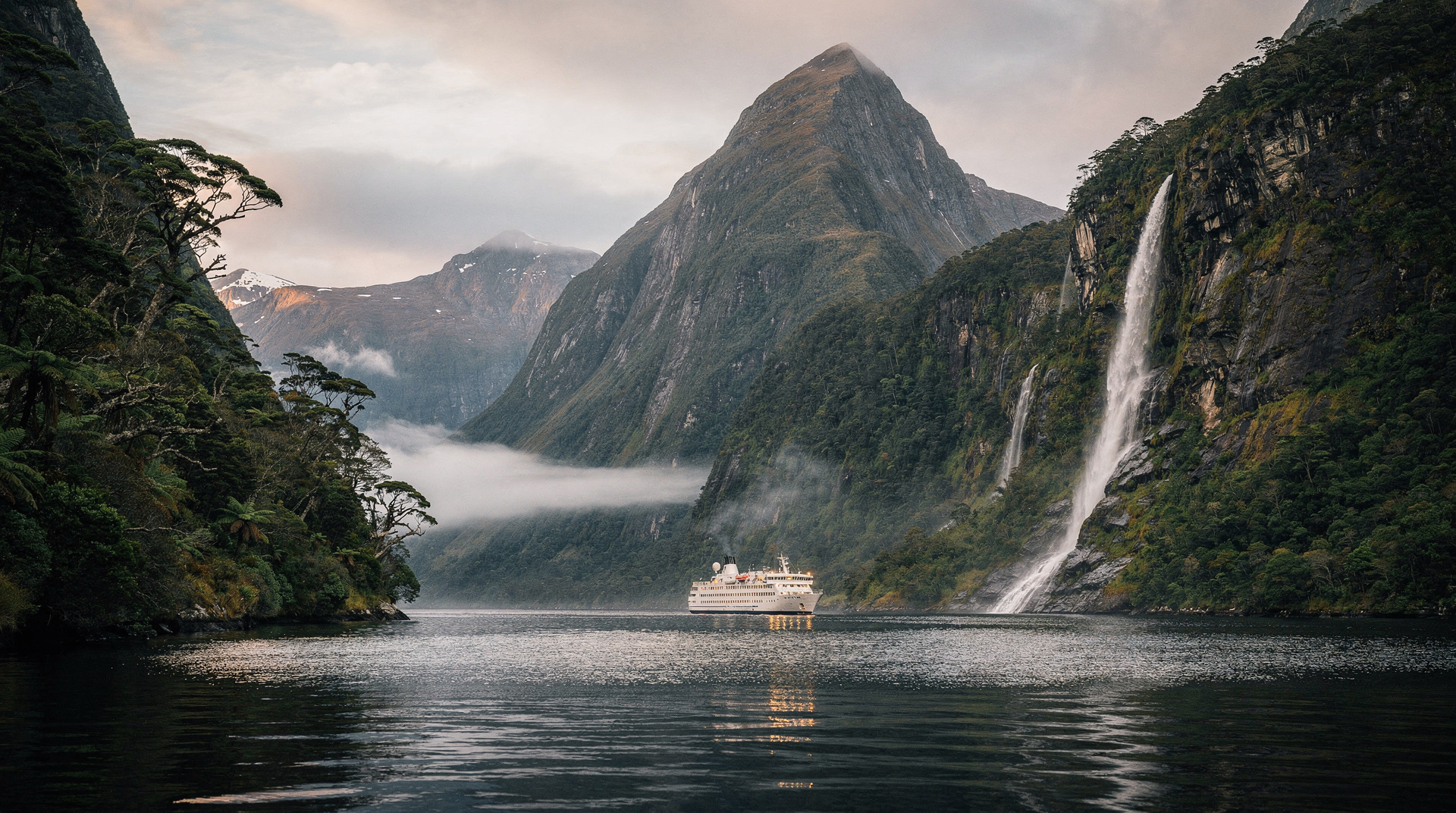
Milford Sound
Everything honest about Milford Sound: best cruises, scenic flights, real NZD/USD/EUR prices, and why you should stay in Te Anau first.
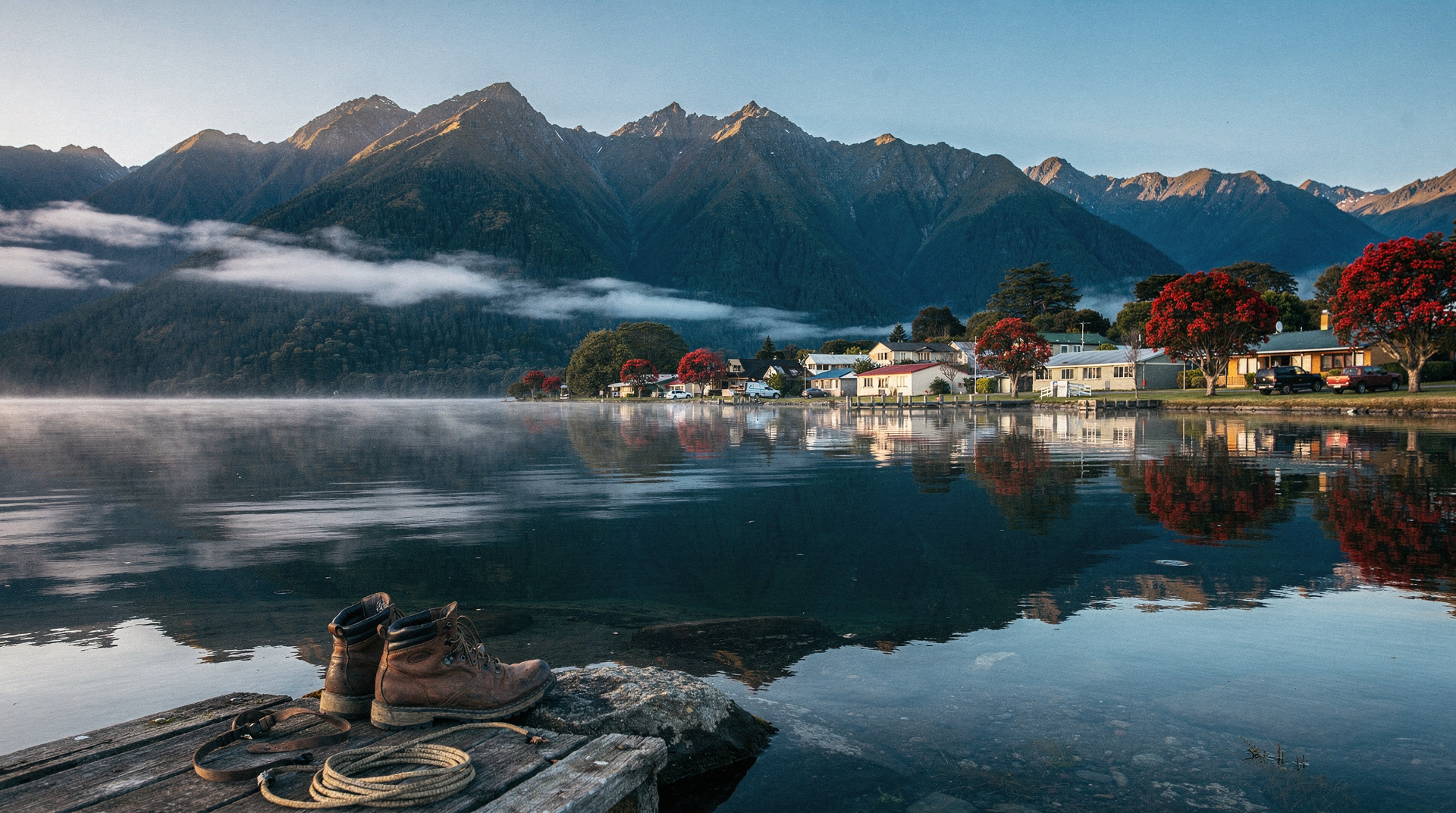
Te Anau
Everything you need to plan Te Anau: glowworm caves, Milford and Doubtful day trips, hiking, real NZD/USD/EUR prices, and where to stay.
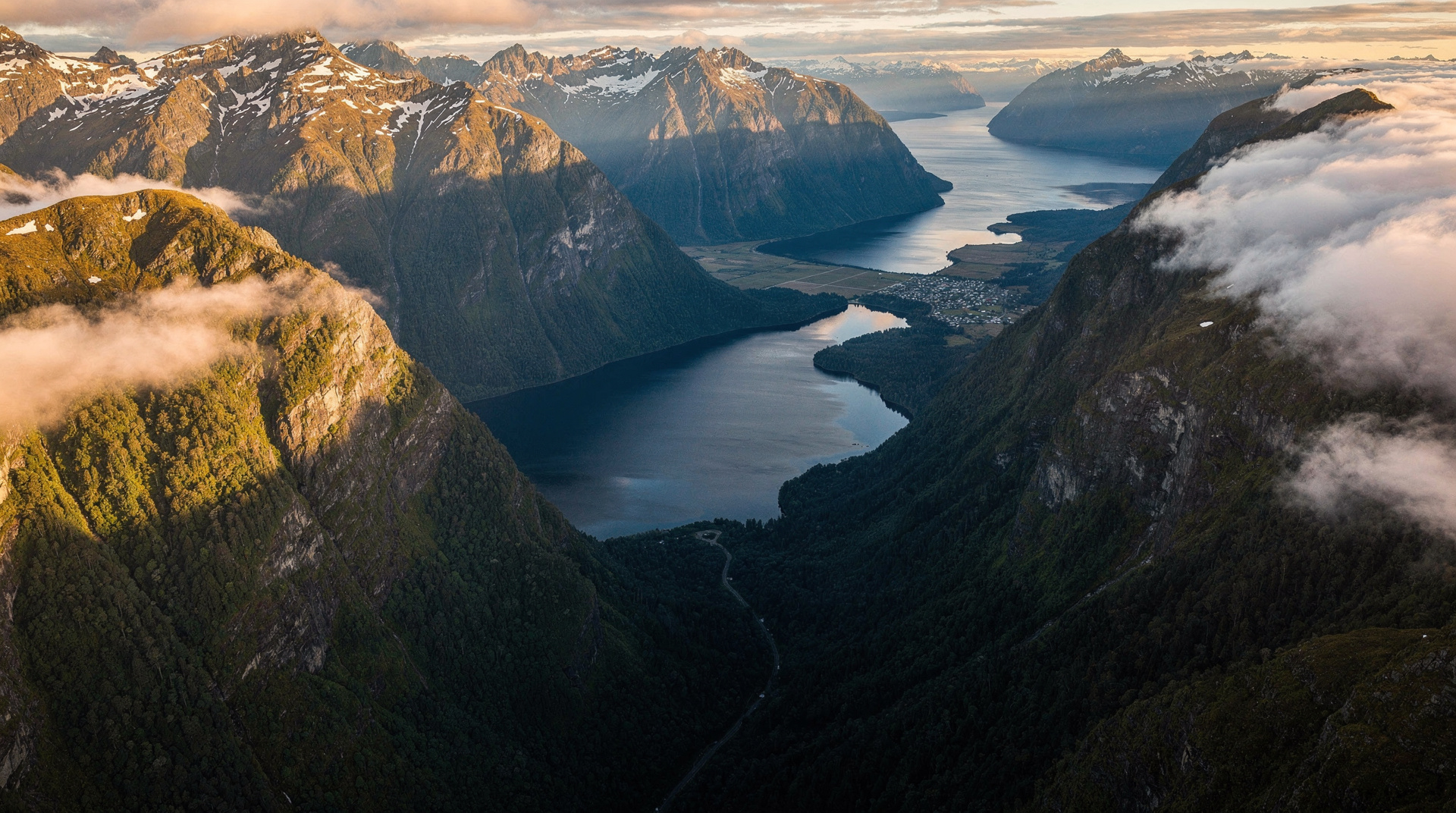
Fiordland
Honest Fiordland planner: Milford Sound vs Doubtful Sound, Te Anau base, Milford Track booking, real NZD/USD/EUR costs and what most guides won't tell you.
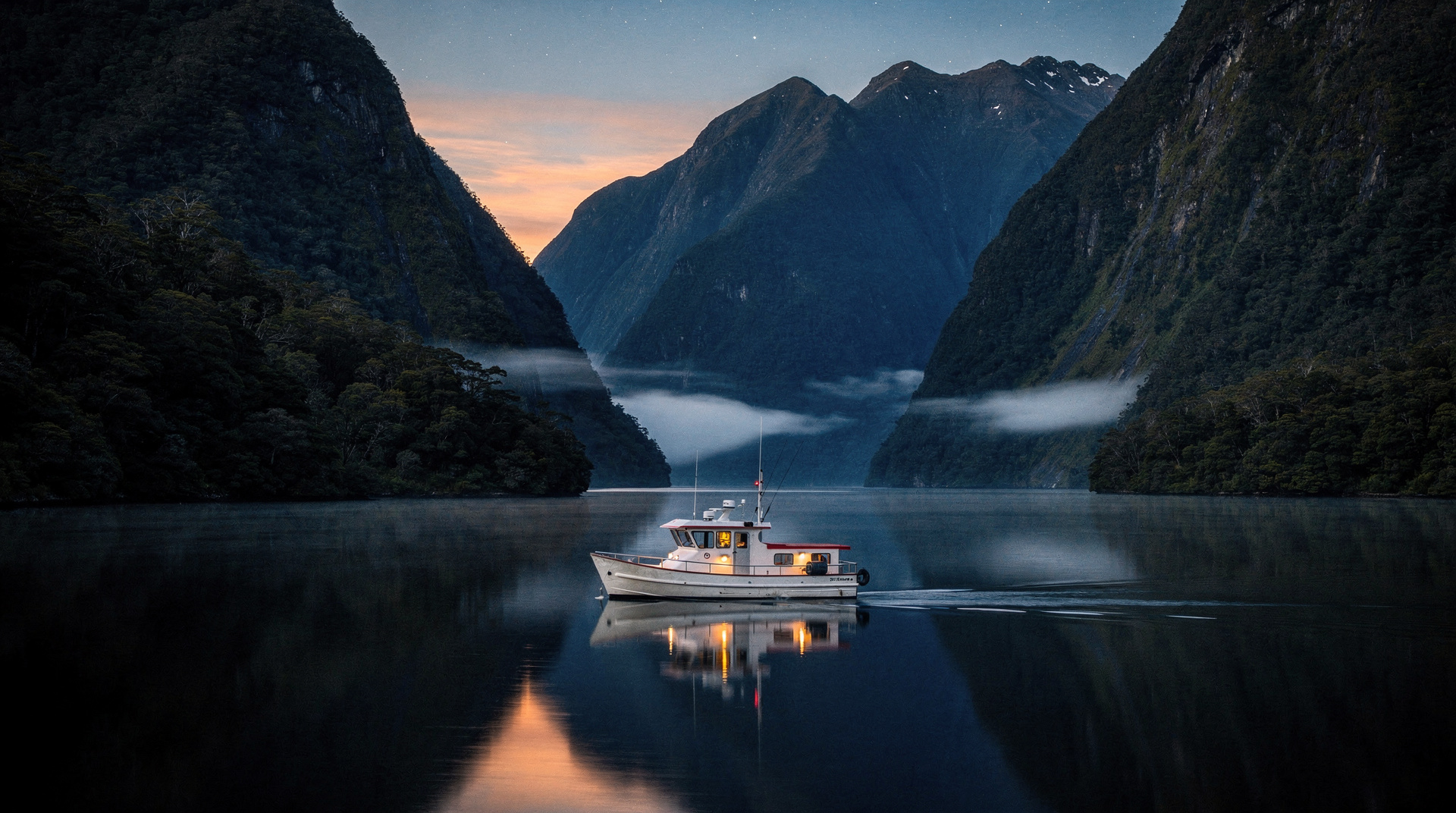
Doubtful Sound cruise guide — New Zealand's other fiord
Doubtful Sound cruise guide: Lake Manapouri boat access, day cruise vs overnight, wildlife, costs NZD/USD/EUR, and honest comparison with Milford Sound.
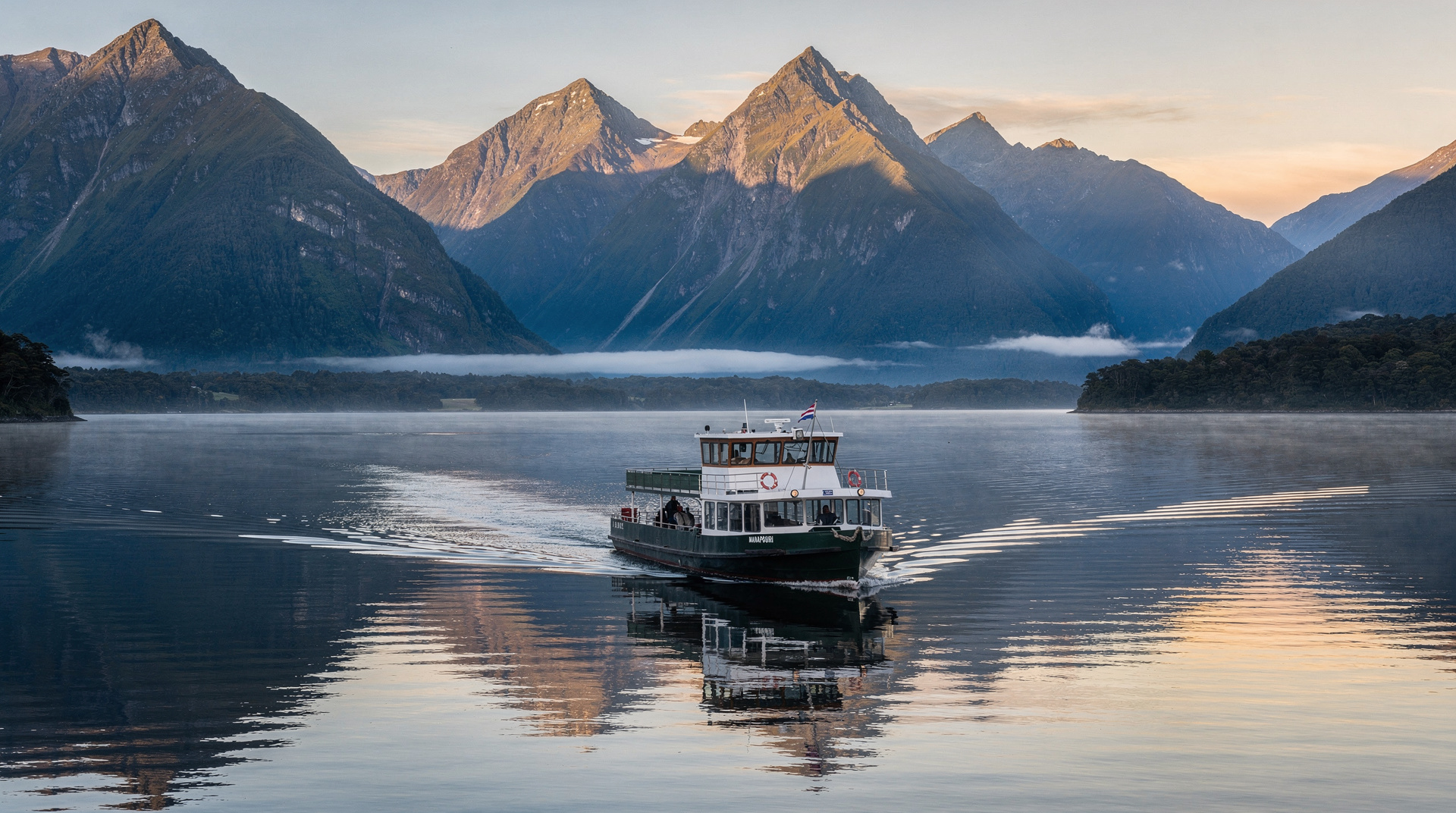
Doubtful Sound day trip from Te Anau
Doubtful Sound day trip from Te Anau: 25-min drive to Manapouri, lake crossing, Wilmot Pass bus, wilderness cruise. Quieter than Milford. Costs in NZD/USD/EUR.
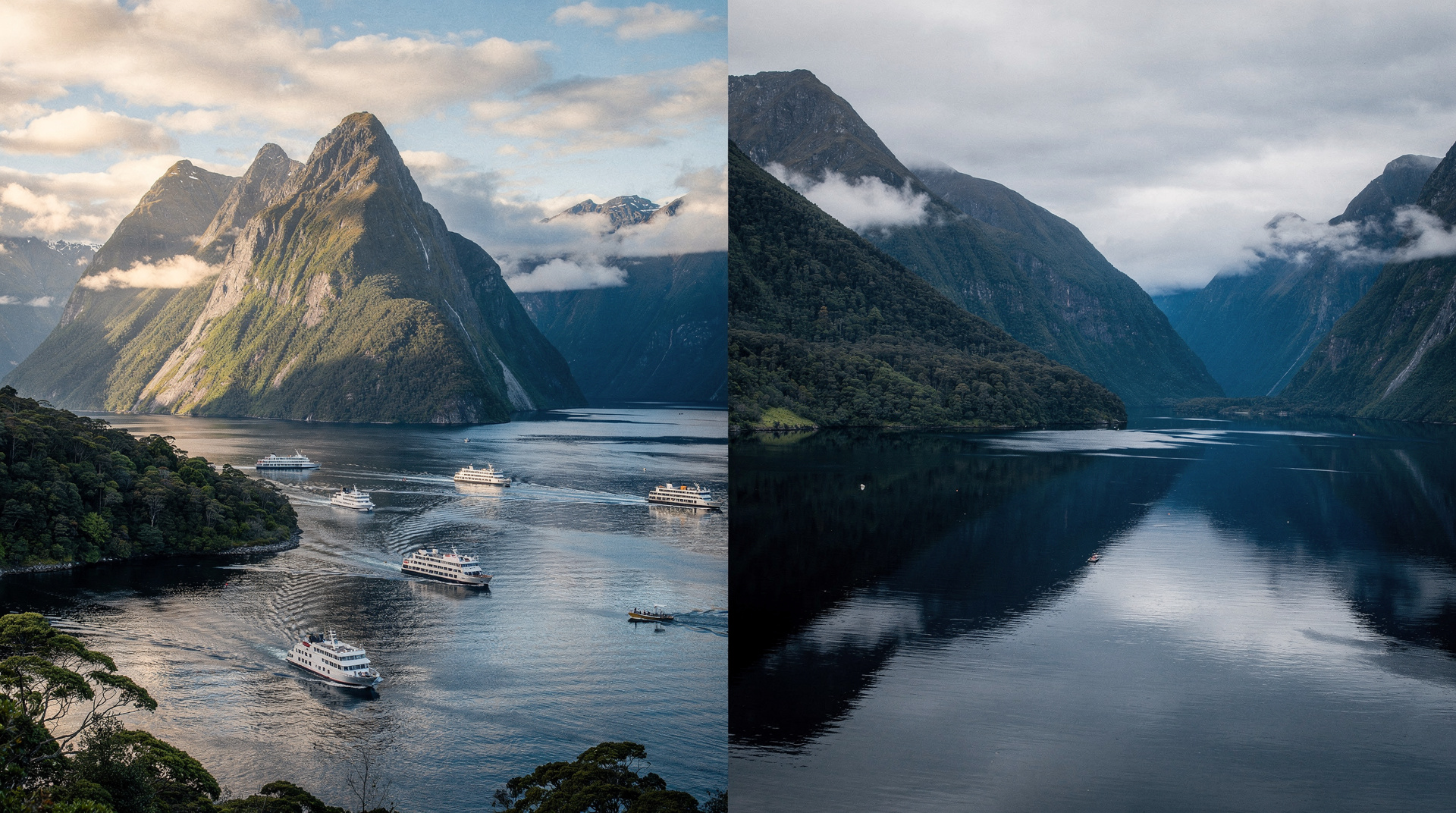
Milford Sound vs Doubtful Sound
Milford Sound vs Doubtful Sound: honest comparison of access, crowds, scenery and cruises. Clear verdict with prices in NZD/USD/EUR.
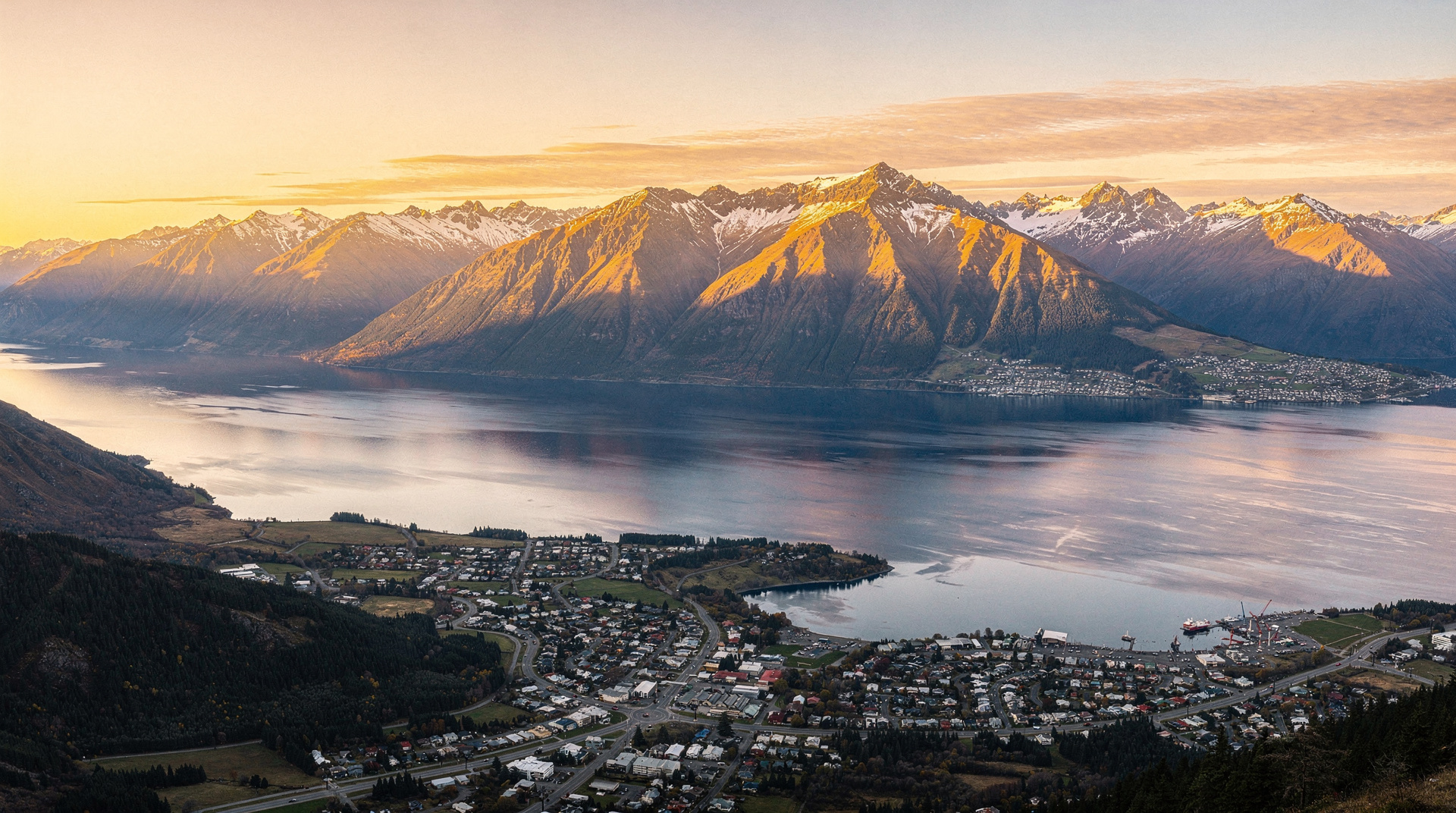
14-day New Zealand itinerary — both islands, grand tour
Honest 14-day NZ grand tour: Auckland, Bay of Islands, Hobbiton, Rotorua, Wellington, ferry, Kaikoura, Christchurch, Queenstown, Milford.
The Routeburn vs the Milford Track — an honest comparison
Both are iconic New Zealand Great Walks in Fiordland. But they're very different experiences. Here's a direct comparison to help you choose, or plan to do both.
Last reviewed: