Napier
Honest Napier guide: Art Deco architecture, Hawke's Bay wine tours, Cape Kidnappers gannets, real prices NZD/USD/EUR, and how long to stay.
Quick facts
- Distance from Taupo
- 145 km — 2 hours driving
- Distance from Wellington
- 320 km — 3.5 hours driving
- Currency
- NZ$ — USD ~$0.60 / EUR ~€0.55
- Best for
- Art Deco architecture, Hawke's Bay wine, gannet colony at Cape Kidnappers
- Skip if
- Wine and architecture aren't your primary interest — Taupo or Rotorua offer more activity variety
Napier in one paragraph
| Where | Hawke’s Bay, east coast of the North Island |
| Time needed | 1–2 days |
| Cost | Around NZD 40–245 / USD 24–147 / EUR 22–135 for a walk or wine tour |
| Getting there | 2 hrs from Taupo, 3.5 hrs from Wellington |
| Best time | October to April; January for the Art Deco Festival |
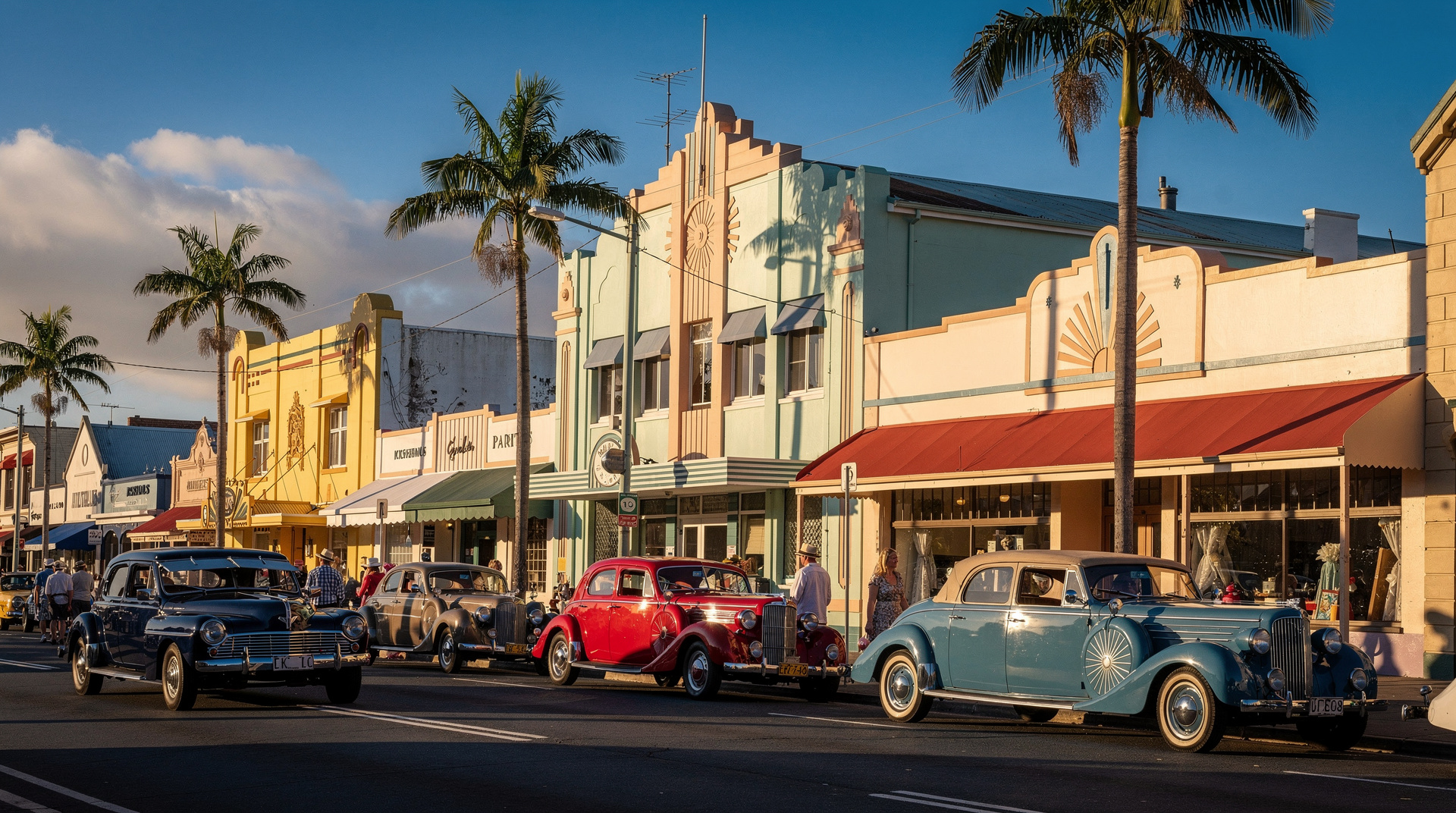
Napier is one of the most architecturally distinctive cities in New Zealand — and arguably in the world. Following a catastrophic earthquake on 3 February 1931 (magnitude 7.8, killing 256 people in Napier and Hastings), the city was rebuilt almost entirely within two years in the dominant architectural style of the era: Art Deco. The consistency of the rebuild — the same pastel facades, decorative friezes, and geometric ornament along the main streets — creates a streetscape unlike any other in the Southern Hemisphere. Paired with the extraordinary wines of Hawke’s Bay (New Zealand’s oldest wine region) and the world’s largest mainland gannet colony at Cape Kidnappers, Napier makes a compelling 1–2 day destination.
Why Napier is more than a curiosity
The Art Deco appeal of Napier is frequently underestimated by visitors who haven’t been there. This isn’t a street or a precinct with a few decorated facades — it is an entire city centre. Emerson Street, the main shopping street, is flanked by consistent Art Deco buildings. The civic buildings — the Municipal Theatre, the Daily Telegraph Building, the T&G Building — are textbook examples of the style. The city fathers made the deliberate decision in the 1931 rebuild to maintain the style, and the result is a remarkable piece of accidental architectural heritage.
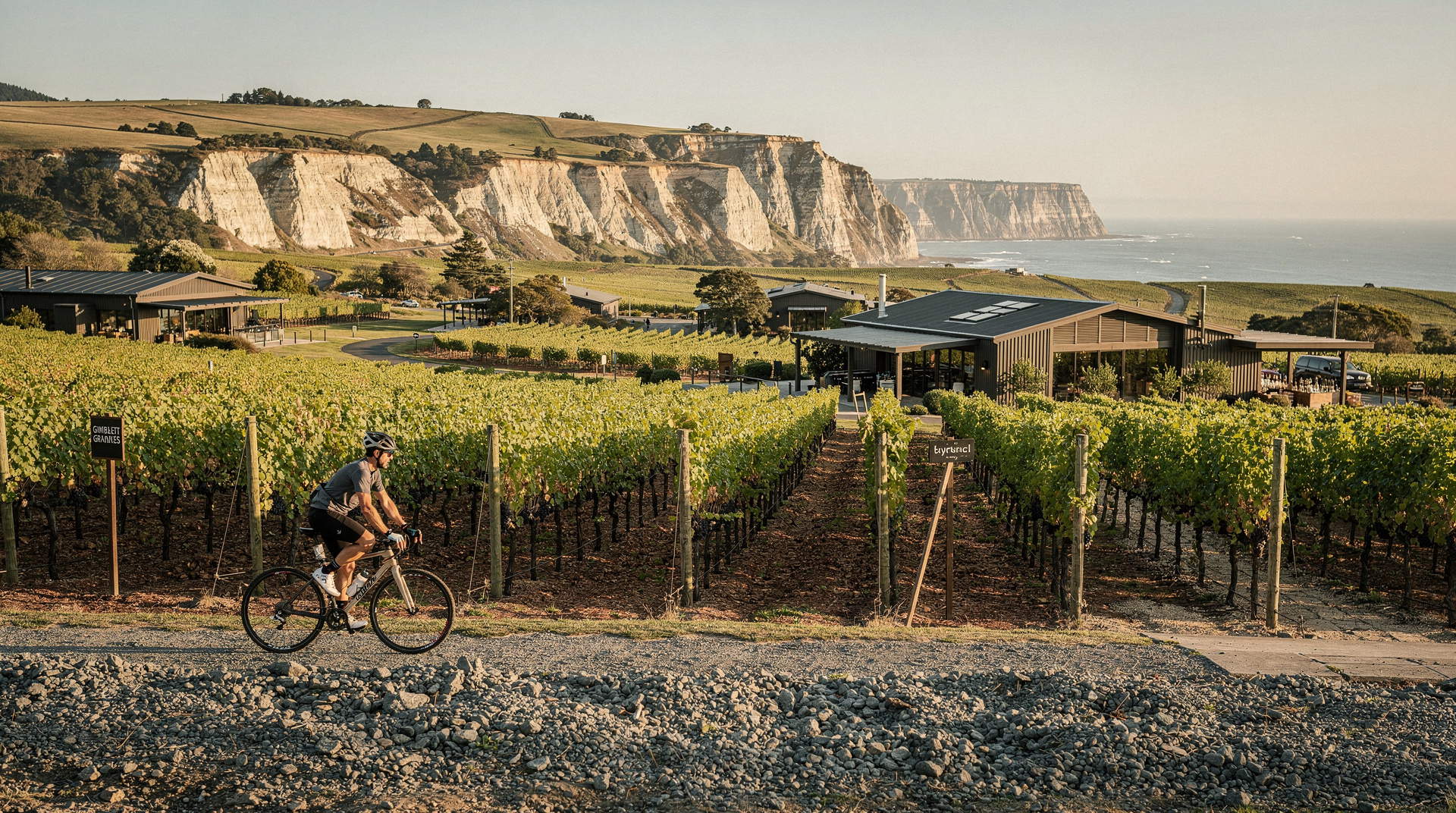
Beyond the aesthetics, Napier is the gateway to Hawke’s Bay’s wine country. The Bay is New Zealand’s second-largest wine region after Marlborough, but its emphasis on red wines (Merlot, Cabernet Sauvignon, Cabernet Franc, Syrah) and Chardonnay gives it a distinct identity. The Hawke’s Bay wine trail covers wineries from the Gimblett Gravels (volcanic riverbed soils, exceptional for reds) to the Heretaunga Plains (broader plantings including quality whites).
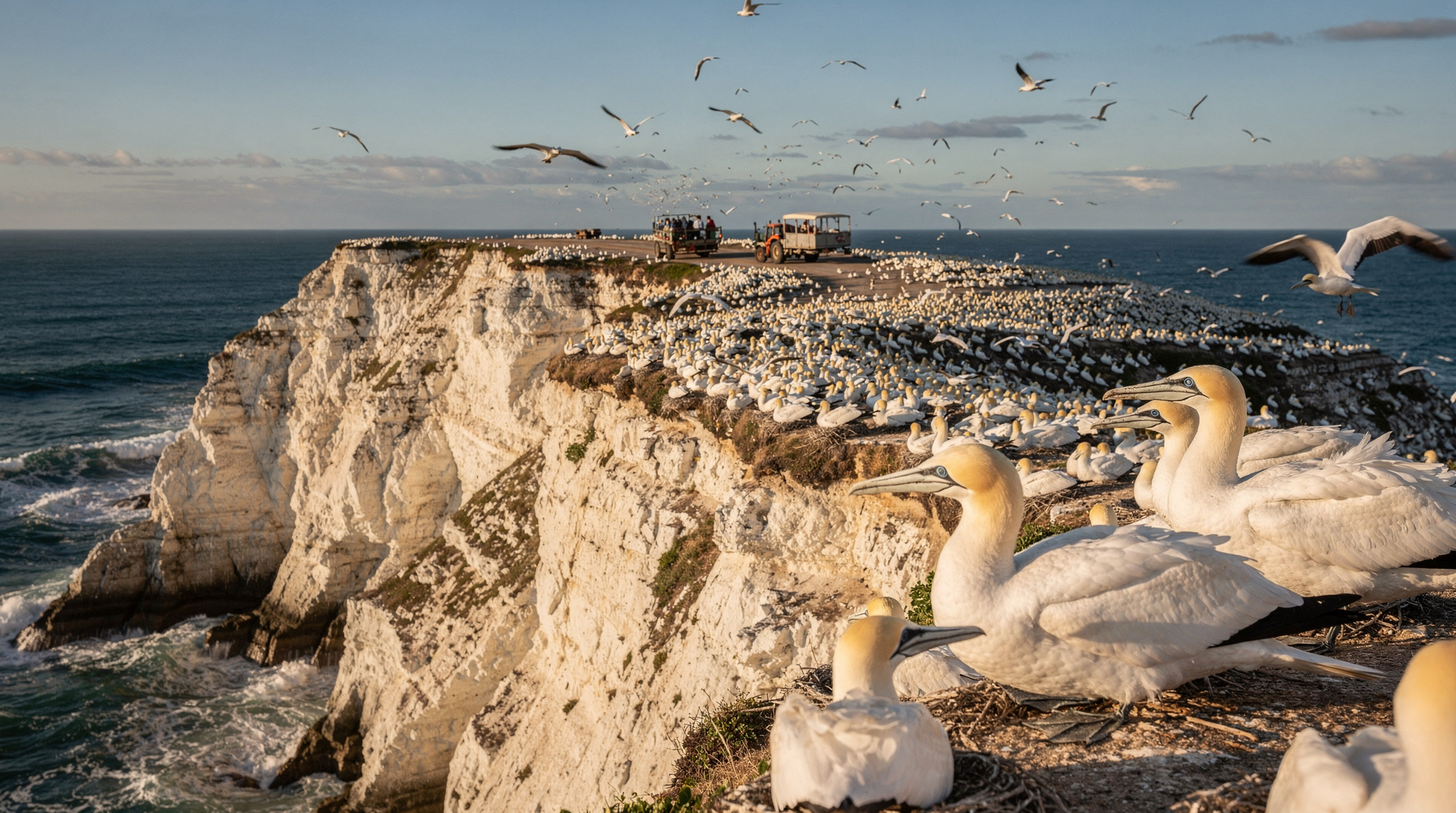
Cape Kidnappers, 30 km south of Napier, hosts the world’s largest mainland gannet colony. Up to 6,500 pairs of gannets nest on the coastal headland from October to April. Access is by guided tour along the beach from Clifton Bay.
The Art Deco walking tour
Self-guided: The Art Deco Trust produces an excellent walking guide to Napier’s Art Deco precinct, available from the i-SITE on Marine Parade. The walk covers approximately 20 buildings in 1–2 hours. Free to self-guide; the audio tour app is a modest improvement on the printed map.
Guided walking tour: The Napier Art Deco guided walk is the official Art Deco Trust offering, run by trained guides who explain the architectural history and earthquake context. NZD 40–50 / USD 24–30 / EUR 22–28. A good investment for those who want the full narrative rather than just the facades.
Audio walking tour: The Napier Art Deco self-guided audio walking tour allows you to walk at your own pace with recorded commentary. NZD 15–20 / USD 9–12 / EUR 8–11. The most flexible and economical option. A second independently operated audio guide — the Wonderful Napier Art Deco self-guided audio tour — covers a slightly different route with its own script and perspective; worth comparing if you’re spending two days in Napier and want fresh commentary for a second circuit.
City highlights tour: For visitors who want a broader introduction to Napier beyond the Art Deco precinct, the Napier Art Deco city highlights tour combines the architectural streetscape with the Marine Parade, the foreshore, and context on the 1931 earthquake rebuild. A good structured option for first-time visitors who prefer a single guided experience over self-navigating.
Vintage bus tour: The Napier vintage bus tour of Art Deco highlights covers the city in a restored 1930s-era vehicle. Slightly kitsch, but fun. NZD 55–65 / USD 33–39 / EUR 30–36.
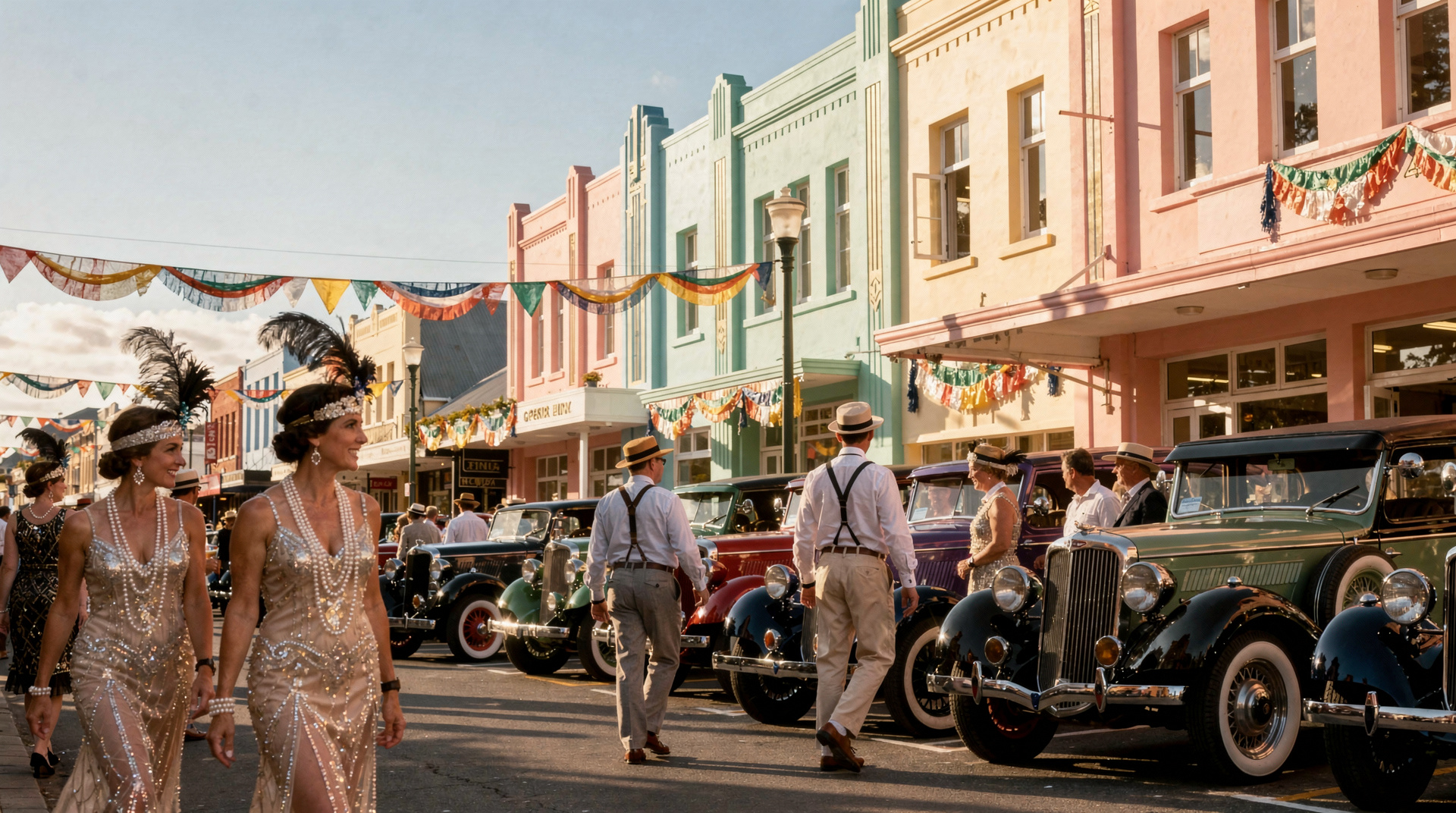
Art Deco Festival (February): The annual Art Deco Weekend brings thousands of visitors in 1930s dress, vintage cars, swing dancing, and special events. Book accommodation months ahead — this is Napier’s busiest event.
Wine tours
Hawke’s Bay wine country is centred on Hastings, Havelock North, and the Gimblett Gravels sub-region west of Hastings. Napier is the accommodation hub; most wineries are 15–30 km from the city centre.
Recommended wineries (visit independently or via guided tour):
- Craggy Range (Te Mata Estate Road) — premium estate, outstanding Bordeaux-style reds, excellent restaurant
- Trinity Hill (Hastings) — Gimblett Gravels specialist, well-designed tasting room
- Mission Estate — New Zealand’s oldest winery (est. 1851 by Marist Brothers), historic estate, good quality and great story
- Black Barn Vineyards — beautiful estate, excellent Chardonnay, popular summer Saturday markets
For a structured introduction, the Hawke’s Bay small group wine tour from Napier covers the main wine corridor with transport included. NZD 145–165 / USD 87–99 / EUR 80–91. Alternatively, the Napier full-day tour with wine tasting is a more comprehensive day-long option at NZD 175–210 / USD 105–126 / EUR 96–116.
For a full-day experience that combines wine tasting with food — particularly good for those who want to eat well at the wineries rather than simply taste — the Napier full-day wine and food experience structures the day around both winery visits and proper meals, making it the right choice for food-focused travelers visiting Hawke’s Bay.
For a premium multi-winery lunch experience, the Napier gourmet winery lunch and tastings at 4 wineries is the best-value high-end option at NZD 195–245 / USD 117–147 / EUR 108–135, including a proper seated gourmet lunch at one winery.
Cycling the wine trail: Hawke’s Bay has excellent flat cycling infrastructure connecting Napier and Hastings with many wineries. Bike hire from NZD 35–55 / USD 21–33 / EUR 19–30 per day. The Cape Coast winery tour on pedal or e-bikes is a guided cycling option combining coastal views with winery stops. E-bikes highly recommended for anyone who isn’t a regular cyclist.
Cape Kidnappers gannet colony
The gannet colony at Cape Kidnappers is accessible from October to April (the breeding season) only. Access is along a 7 km beach walk from Clifton, only possible at low tide, or by 4WD tractor-guided tour from Black Barn Farm.
The colony is substantial — up to 6,500 nesting pairs, thousands of birds in close proximity, and gannets almost entirely unafraid of humans (they evolved on a predator-free headland). The birds are dramatic in themselves — 94-cm wingspan, bright yellow head, plunge-diving for fish offshore.
The Napier Cape Kidnappers gannet, nature and sightseeing tour covers the colony and broader Hawke’s Bay coastal landscape in a structured day. NZD 135–165 / USD 81–99 / EUR 74–91.
For a truly memorable experience, the Cape Kidnappers gannet colony exclusive sunrise tour visits before the general public arrives, at dawn, when the colony is at its most active. NZD 195–225 / USD 117–135 / EUR 108–124.
Where to stay in Napier
CBD / Marine Parade: Most accommodation concentrates near the Art Deco streetscape. The Crown Hotel Napier (NZD 150–220 / USD 90–132 / EUR 83–121) is centrally located and reliable. Art Deco Hotel Napier is a boutique option in the historic precinct at NZD 180–260 / USD 108–156 / EUR 99–143.
Havelock North: The village 12 km from Napier has more character and proximity to the Gimblett Gravels wine region. Black Barn Retreat offers vineyard accommodation at NZD 280–450 / USD 168–270 / EUR 154–248.
Cape Kidnappers Lodge: The most famous accommodation option in Hawke’s Bay — a luxury lodge on the clifftop above the gannet colony, with private wildlife experiences and exceptional cuisine. NZD 3,000–5,000+ / USD 1,800–3,000+ / EUR 1,650–2,750+ per night. A serious splurge.
Budget accommodation: Napier YHA and several motel options on the outskirts at NZD 90–140 / USD 54–84 / EUR 50–77.
Getting around Napier without a car
The Art Deco precinct and Marine Parade are entirely walkable, and most CBD accommodation puts you within 10–15 minutes of the main sights on foot. For Havelock North and the closer Gimblett Gravels wineries, a taxi or rideshare is realistic (15–20 minutes, NZD 30–45 / USD 18–27 / EUR 17–25). For the wider wine trail or Cape Kidnappers, a guided tour or rental car is the practical choice — Napier’s regional bus network is limited and not designed around visitor schedules.
Cruise ship passengers arriving at the Port of Napier should note the port sits 5 km from the CBD; most cruise lines run a shuttle into town, and independent taxis are also readily available. For a short port call, the Art Deco precinct plus a coffee is achievable in 2–3 hours without needing a tour.
What to eat and drink
Napier punches well above its size for dining quality.
Milk and Honey — one of the most-reviewed restaurants in New Zealand, consistently excellent for dinner. Book well ahead.
Bistro Tempo — reliable mid-range dining in the Art Deco precinct, good local wine list.
Mister D — brunch and lunch institution, excellent for breakfast before the Art Deco walk.
For combining wine tasting with a food experience, the Napier Art Deco heritage and distillery tour with tasting covers both the architectural heritage and the growing craft spirits scene (Hawke’s Bay now has several small distilleries). NZD 85–110 / USD 51–66 / EUR 47–60.
Skip / worth it / splurge
- Skip: Multiple wine tours — one good half-day tour or self-guided cycling day is enough; wine fatigue is real
- Skip: Napier if Art Deco architecture is not an interest and you’re pressed for time — Wellington to Taupo direct is a valid alternative route
- Worth it: The Art Deco guided walk — the 1931 earthquake context makes the streetscape dramatically more meaningful than a casual wander
- Worth it: Cape Kidnappers gannet colony — genuinely impressive, and the 4WD tractor tour is a fun experience
- Splurge: Craggy Range dinner — one of the best winery restaurants in New Zealand at NZD 90–140 / USD 54–84 / EUR 50–77 for mains
How Napier fits in your itinerary
Napier is an easy add-on from either Taupo (2 hours) or Wellington (3.5 hours). On a 14-day New Zealand itinerary, Napier works as a 1–2 night diversion between the central North Island and Wellington. On a 7-day North Island itinerary, most travellers skip Napier in favour of time at Rotorua and Tongariro, which is a reasonable trade-off.
Wine-focused travellers might replace the Bay of Islands section of a North Island itinerary with 2 nights in Napier/Hawke’s Bay — it’s the more interesting wine region for the North Island.
The 1931 earthquake: what happened and why it matters
The earthquake that created modern Napier struck at 10:47am on 3 February 1931, when the city’s streets were at their most populated — shops were open, businesses were busy. The 7.8 magnitude quake killed 256 people in Napier and Hastings and destroyed virtually every building in both city centres. Fires broke out following the quake and burned unchecked through the rubble for 24 hours.
The human scale of the disaster for Napier’s then-population of approximately 16,000 was catastrophic. But the reconstruction that followed was equally remarkable. Within two years, virtually the entire city centre had been rebuilt — primarily because insurance payments came through quickly, because the New Zealand government provided reconstruction loans, and because there were enough professional architects available to design to the prevalent style of the era.
The dominant architectural style in 1931 was Art Deco — clean geometric lines, stylised natural motifs, pastel colours, flat roofs with decorative parapets. It was the style of the Chrysler Building in New York, of Miami’s South Beach, of ocean liner design. In Napier, the architects used it consistently and rapidly, creating the unprecedented unity of streetscape that exists today.
One additional factor made Napier distinctive: the earthquake and subsequent uplift of the seabed created 40 square kilometres of new land around the bay. The inner harbour disappeared; the coastal mudflats became solid ground that was quickly transformed into the suburb of Marewa — also built in the Art Deco style. The regional airport and racecourse now sit on land that was underwater before 1931.
The Hawke’s Bay wine region in detail
Hawke’s Bay is New Zealand’s oldest wine region, with viticulture dating to the 1851 Marist mission at what is now Mission Estate Winery. The region covers a large area — from the limestone soils of the Gimblett Gravels near Hastings to the cooler elevated Te Mata Peak area and the broader Heretaunga Plains.
Gimblett Gravels: The volcanic riverbed soils of the Gimblett Gravels (a 800-hectare sub-region near Hastings) are the foundation of Hawke’s Bay’s reputation for full-bodied reds. The free-draining, heat-retaining gravel creates conditions for exceptional Merlot, Cabernet Sauvignon, Cabernet Franc, and Syrah. Wineries like Trinity Hill, Craggy Range, and Stonecroft have made the Gimblett Gravels internationally recognised.
Chardonnay: Hawke’s Bay Chardonnay from the cooler sites (Te Mata, Bridge Pa Triangle) is outstanding — often more textured and complex than Marlborough’s version. Mission Estate’s Hawke’s Bay Chardonnay represents good value at the accessible end; Craggy Range’s Gimblett Gravels and Villa Maria’s Single Vineyard offerings represent the premium tier.
The Faustino/Mission Estate story: Mission Estate (est. 1851) is not only New Zealand’s oldest winery but also produces some of its most interesting visitor experiences — the stone building designed by the Marist Brothers is architecturally significant, and the on-site restaurant has excellent bay views. The winery was instrumental in establishing Hawke’s Bay as a legitimate fine-wine region.
For a comprehensive wine tour that includes the Gimblett Gravels, the Te Mata area, and a gourmet lunch, the Hawke’s Bay small group wine tour from Napier is the recommended introduction.
The gannet colony in ecological context
The Australasian gannet (Morus serrator) is a large, striking seabird — predominantly white with a golden-yellow head, black wingtip markings, and a wingspan of nearly a metre. They are spectacular divers, plunge-diving from up to 30 metres to catch fish.
The Cape Kidnappers colony is one of only three mainland gannet colonies in the world (most nest on offshore islands or sea stacks). The combination of the coastal headland’s inaccessibility (until recently — the erosion of coastal cliffs has changed the access point over generations) and the absence of ground predators on the narrow promontory created conditions that allowed mainland nesting to persist.
Colony size fluctuates seasonally: the first pairs arrive in July, breeding peaks September–November, and chicks fledge from February onward. The maximum colony size (September–November) of up to 6,500 pairs is impressive. Outside breeding season (May to June) the colony is largely empty.
The Cape Kidnappers gannet, nature and sightseeing tour is timed to the breeding and fledging season to maximise what you see. The Cape Kidnappers gannet colony private tour is available for visitors who prefer a more focused, smaller-group experience.
Napier vs Gisborne and Wairarapa for wine and coast
Hawke’s Bay competes with two other North Island wine and coastal destinations for travellers’ time: Gisborne to the north and Wairarapa near Wellington. The honest comparison: Napier/Hawke’s Bay has the strongest combination of architecture, wine, and wildlife in one compact area, making it the best single stop for travellers who can only choose one.
Gisborne is more remote and less visited, appealing to those actively seeking fewer crowds; its Chardonnay is excellent but the town itself has less to do. Wairarapa is the better choice if Wellington is your base and you want a day trip rather than an overnight — see the Wairarapa day trip from Wellington guide for that option.
Napier by season
| Months | Conditions | What it means for you |
|---|---|---|
| Oct–Dec | Warming, gannets arriving and breeding | Good wine touring weather, colony building up |
| Jan–Feb | Peak summer, Art Deco Festival in Feb | Book accommodation 3–6 months ahead for the festival |
| Mar–Apr | Harvest season, cooling | Best value window — vineyards at their most dramatic |
| May–Jun | Quiet, gannet colony largely empty | Lower prices, Art Deco walks still excellent |
| Jul–Sep | Cool, colony rebuilding from July | Fewer crowds; wait until October for full gannet numbers |
Frequently asked questions about Napier
Is Napier’s Art Deco architecture the best in the world?
It is one of the three finest concentrations of Art Deco architecture in the world, alongside Miami’s South Beach and Mumbai’s Marine Drive district. The consistency of the Napier rebuild — an entire city centre in the same stylistic moment — is what makes it remarkable. Miami has larger buildings; Napier has more stylistic coherence.
When is the Art Deco Festival in Napier?
The Art Deco Weekend (now 5 days) is held annually in mid-February. It involves vintage car displays, swing and jazz performances, garden parties, and significant costume participation from locals. Book accommodation 3–6 months ahead. Outside festival week, Napier is quieter and accommodation is much more affordable.
Can I visit Cape Kidnappers without a guided tour?
The 7 km beach walk from Clifton Bay is free and self-guided, but only accessible at low tide (approximately 4 hours around low water). Tidal times must be checked — people have been cut off by rising tides on the headland. The guided tractor tour from Black Barn Farm is a safer, more comfortable option.
Is Hawke’s Bay better for wine than Marlborough?
Different rather than better. Marlborough is New Zealand’s dominant wine region for Sauvignon Blanc and Pinot Noir. Hawke’s Bay specialises in Bordeaux-style reds, Syrah, and Chardonnay. Both regions are world-class; which you prefer depends on your wine style. Visitors who prefer full-bodied reds will generally prefer Hawke’s Bay.
Is it worth hiring a bike to visit the Hawke’s Bay wineries?
For reasonably fit cyclists, yes — emphatically. The Hawke’s Bay cycle trail network is flat, well-signed, and connects Napier and Hastings to over 20 wineries via dedicated shared paths and quiet back roads. The only caveat is distance: Napier to the main winery cluster in Havelock North and the Gimblett Gravels is approximately 20–25 km each way — comfortable on an e-bike, a longer day on a standard bike. The Cape Coast winery tour on pedal or e-bikes is a guided option that covers 40+ km of coastal and vineyard terrain in a structured day; the guide handles the routing so you focus on cycling and tasting.
How far is Napier from Wellington?
Approximately 320 km, taking 3.5 hours by SH2 via the Hawke’s Bay and Wairarapa routes. The drive via the Manawatu Gorge on SH3 is shorter but slower and not recommended for campervans. Direct bus services (InterCity) run between Wellington and Napier in approximately 4.5 hours.
Should I choose Napier or Gisborne for Hawke’s Bay-style wine touring?
Choose Napier if you want architecture and gannets alongside the wine, or if convenience matters — it has far more accommodation, restaurants, and tour operators. Choose Gisborne if you specifically want fewer crowds and don’t mind a more remote, less developed base; its Chardonnay reputation is excellent but the town offers less to fill a multi-day stay.
Is one day enough to see Napier’s Art Deco precinct and visit Cape Kidnappers?
It’s tight but possible. A self-guided or guided Art Deco walk takes 1–2 hours in the morning, and the gannet colony (with travel time) takes most of an afternoon. Doing both in one day works if you start early and skip an extended wine tour; two days lets you add wine tasting without rushing either highlight.
Top experiences: napier New Zealand
See all →Guides for Napier
Hawke's Bay wine routes — the honest guide
Hawke's Bay wine: Mission Estate, Craggy Range, Black Barn, Te Mata, Trinity Hill. Gimblett Gravels reds, real costs NZD/USD/EUR, car vs cycle vs guided tour.
Napier art deco — the 1931 earthquake that rebuilt a city
Napier's art deco architecture resulted from rebuilding after the 1931 earthquake. Guided walks, self-guided routes, festival dates, and honest visitor tips.
Related guides
Hawke's Bay
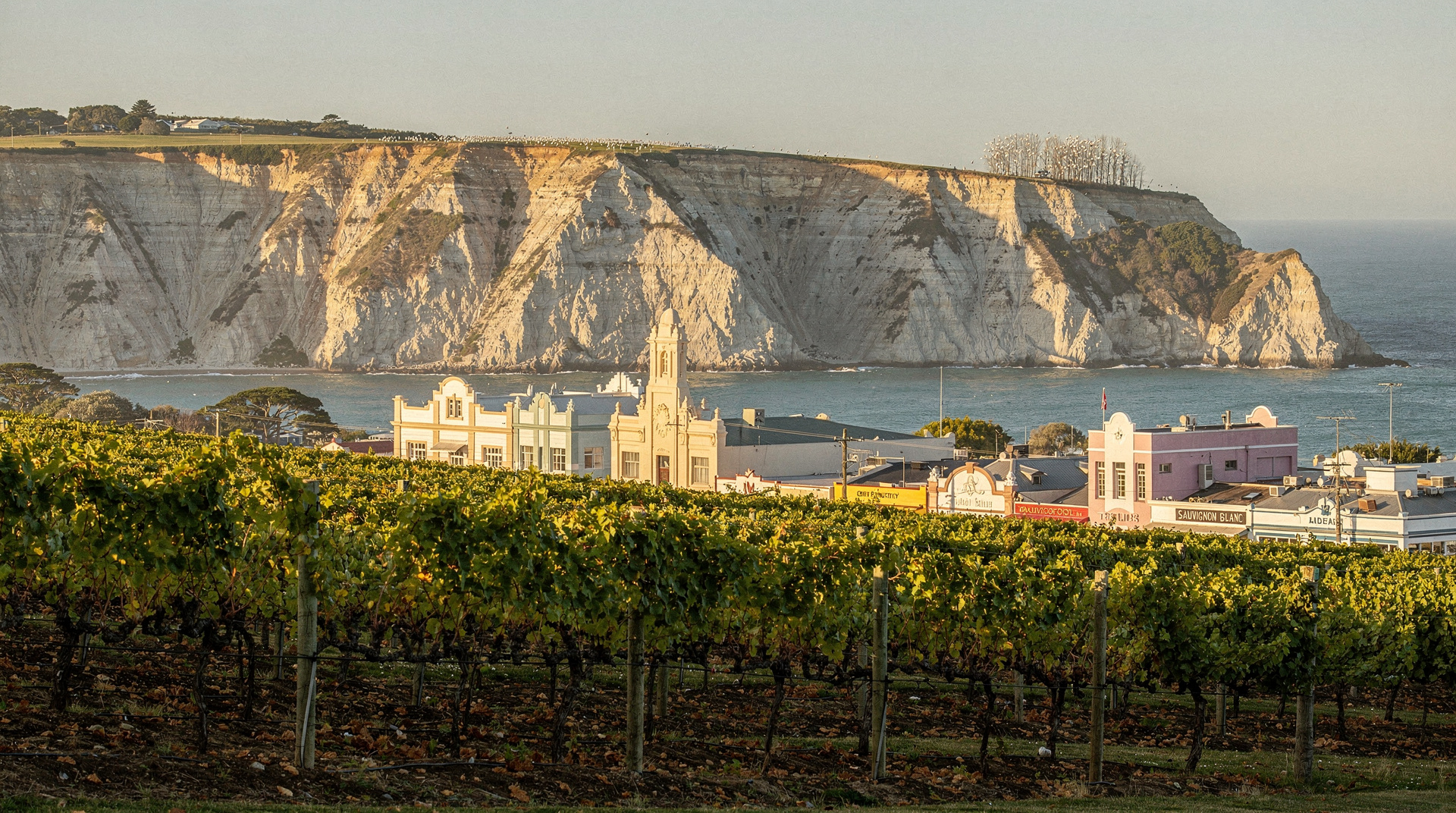
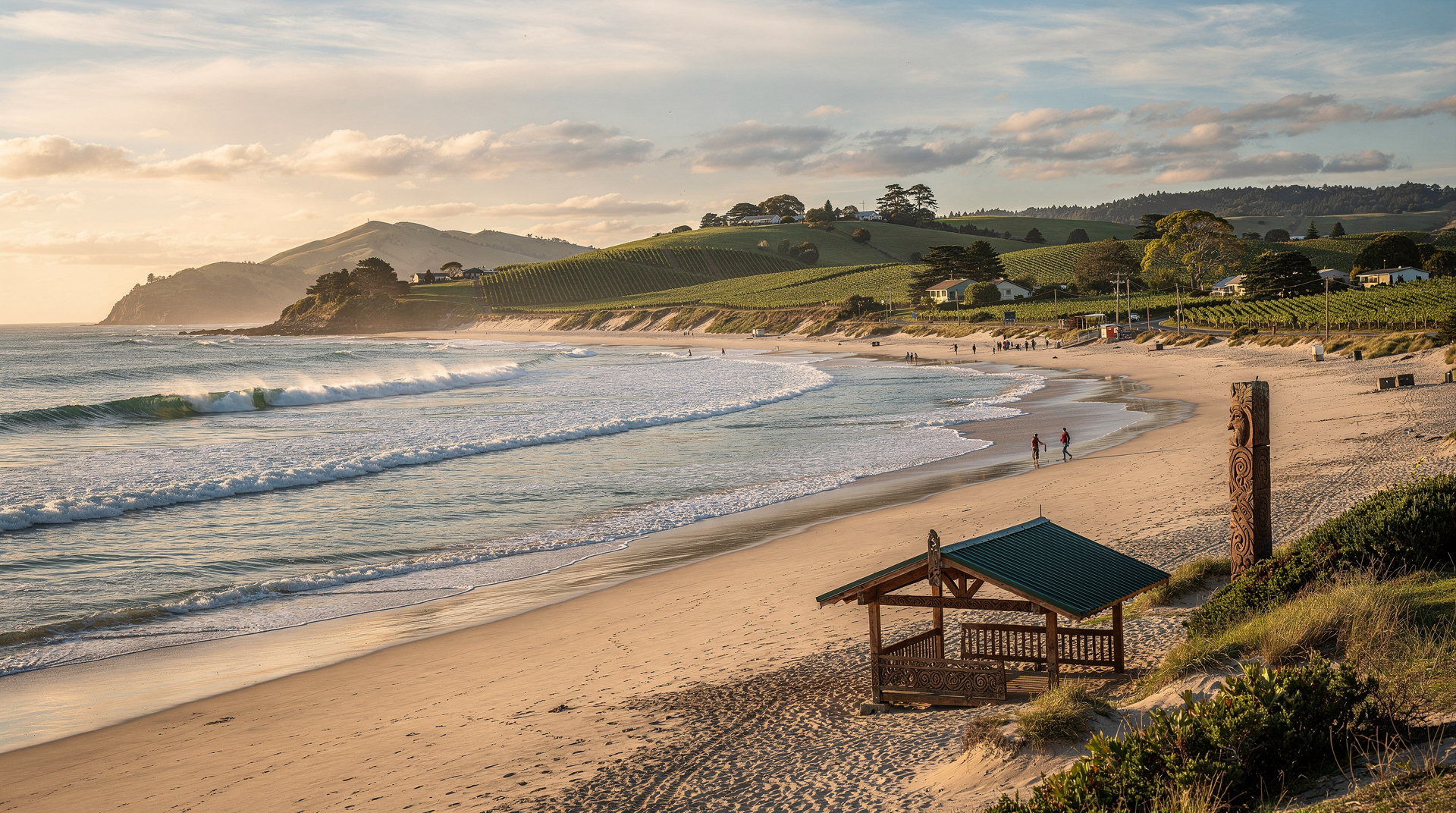
Honest Hawke's Bay guide: Napier Art Deco, Marlborough-rivalling wines, Cape Kidnappers gannets, real NZD/USD/EUR costs. Best time to visit and what to skip.
Gisborne
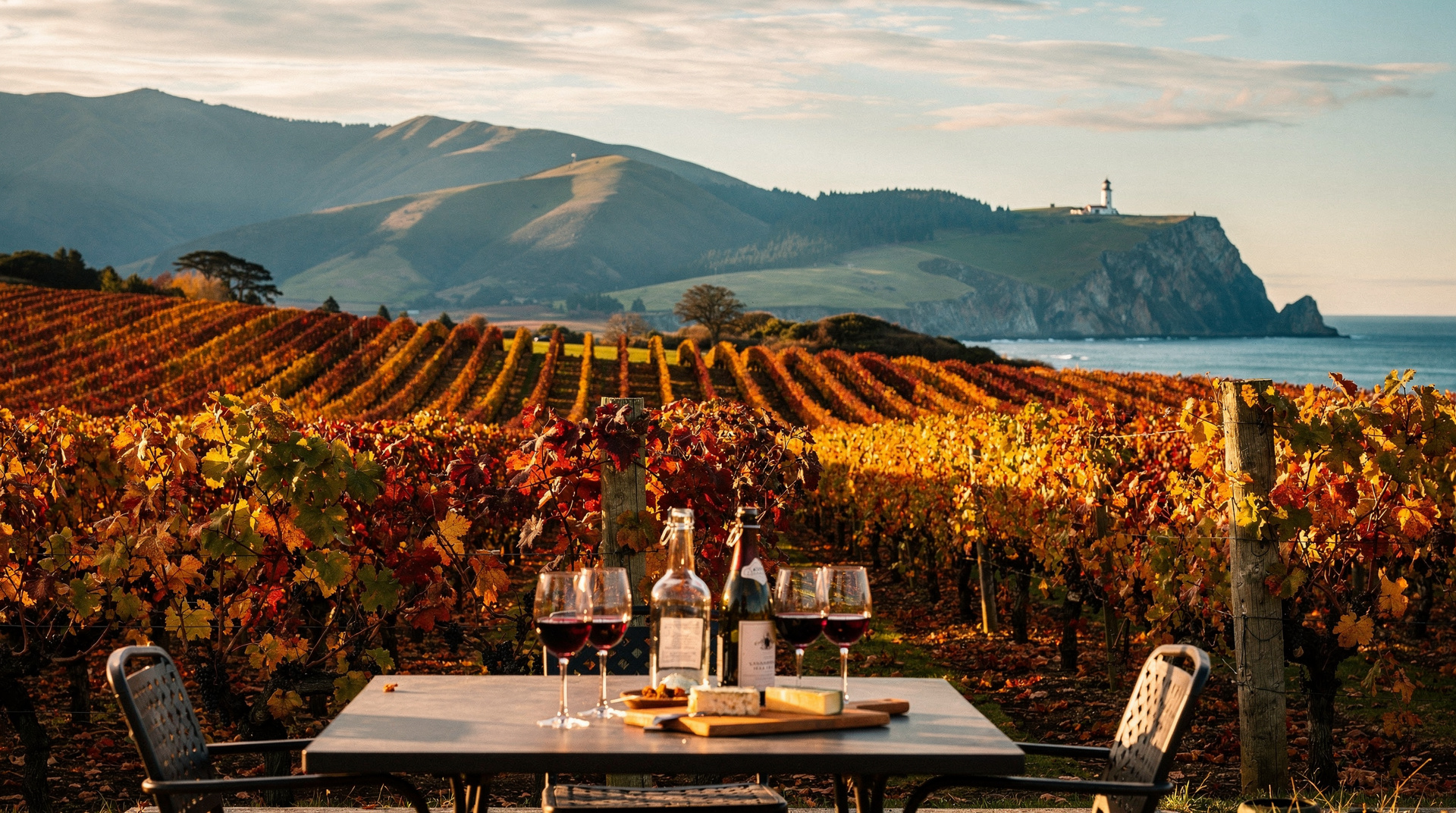
Gisborne: world's first city to see the sun, NZ's surf capital, Chardonnay and Chenin Blanc country — no GYG tours, book direct. Real prices.
Wairarapa
Wairarapa: Martinborough Pinot Noir, Cape Palliser fur seals and lighthouse, Castlepoint — Wellington day trip or overnight. NZD/USD/EUR.
Napier art deco — the 1931 earthquake that rebuilt a city
Napier's art deco architecture resulted from rebuilding after the 1931 earthquake. Guided walks, self-guided routes, festival dates, and honest visitor tips.
Hawke's Bay wine routes — the honest guide
Hawke's Bay wine: Mission Estate, Craggy Range, Black Barn, Te Mata, Trinity Hill. Gimblett Gravels reds, real costs NZD/USD/EUR, car vs cycle vs guided tour.
Gannets at Cape Kidnappers
Cape Kidnappers holds the world's largest mainland gannet colony. Tractor tours, prices (NZD/USD/EUR), best season, and how to visit from Napier or Hawke's Bay.
7-day North Island itinerary — the essential highlights
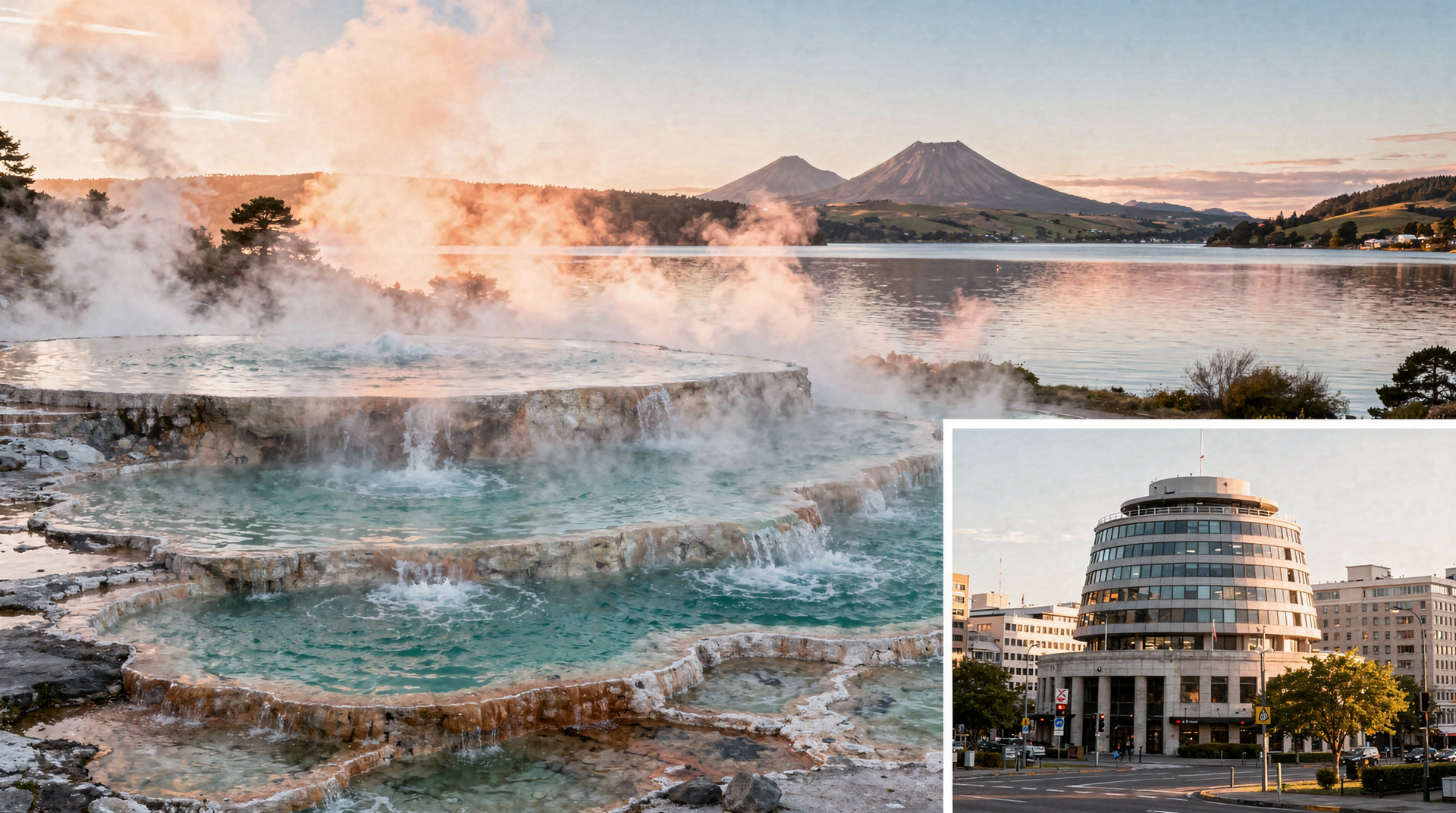
Auckland → Bay of Islands → Hobbiton → Waitomo → Rotorua → Taupo → Tongariro → Wellington. 7 days, both car and costs covered honestly.
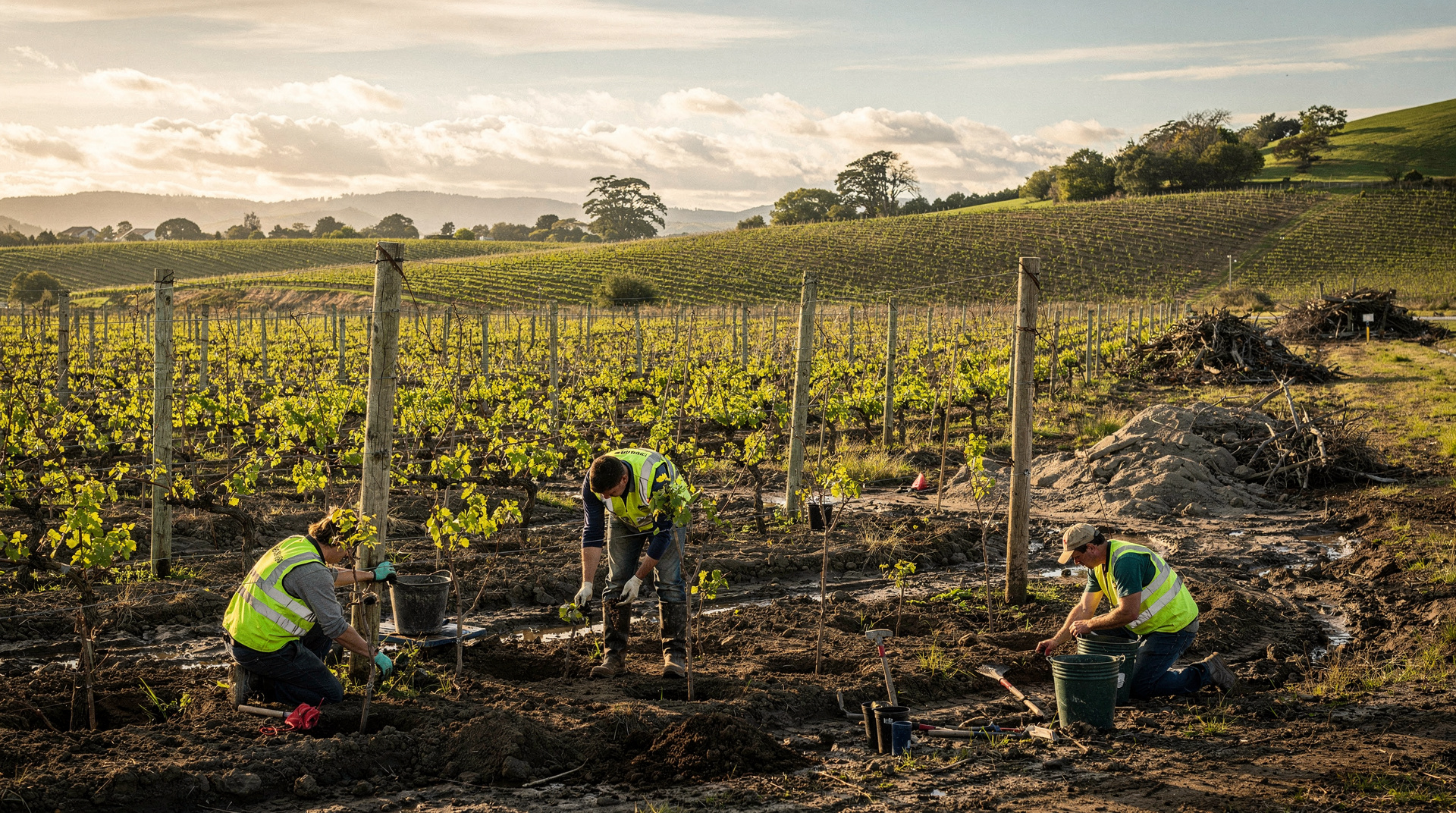
Cyclone Gabrielle and Hawke's Bay — recovery, and why you should still visit
Cyclone Gabrielle hit Hawke's Bay in February 2023. Six months on, here's the honest picture: what's open, what's changed, and how tourism supports recovery.
Last reviewed: