Waitangi
Waitangi Treaty Grounds: where the Treaty of Waitangi was signed in 1840. Maori cultural performances, waka taua, and the waitangi museum. NZD/USD/EUR.
Quick facts
- Distance from Paihia
- 3 km, 5 minutes
- Significance
- Site of the signing of the Treaty of Waitangi — New Zealand's founding document
- Currency
- NZ$ — USD ~$0.60 / EUR ~$0.55
- Admission
- NZD 50 / USD 30 / EUR 27.50 — includes cultural performance and hangi
- Opening hours
- 9am–5pm daily (grounds); cultural show times vary
Where New Zealand’s history began (and continues)
On 6 February 1840, representatives of the British Crown and over 500 Maori chiefs gathered on the lawn of the British Residency at Waitangi to sign the Treaty of Waitangi — Te Tiriti o Waitangi — a document that established British sovereignty, guaranteed Maori land rights and chieftainship (tino rangatiratanga), and gave Maori British subject status. The treaty was imperfect, contested, and differently understood by its Maori and British signatories. It remains the constitutional and moral foundation of New Zealand, and the debates it started have never fully resolved.
Waitangi is three kilometres from Paihia, at the northern end of the Bay of Islands. The Waitangi Treaty Grounds — the site of the original signing and the surviving colonial buildings — are managed by the Waitangi National Trust as a significant cultural and historical site. For visitors interested in understanding New Zealand as a country rather than just its landscape, Waitangi is the most important site in the country.
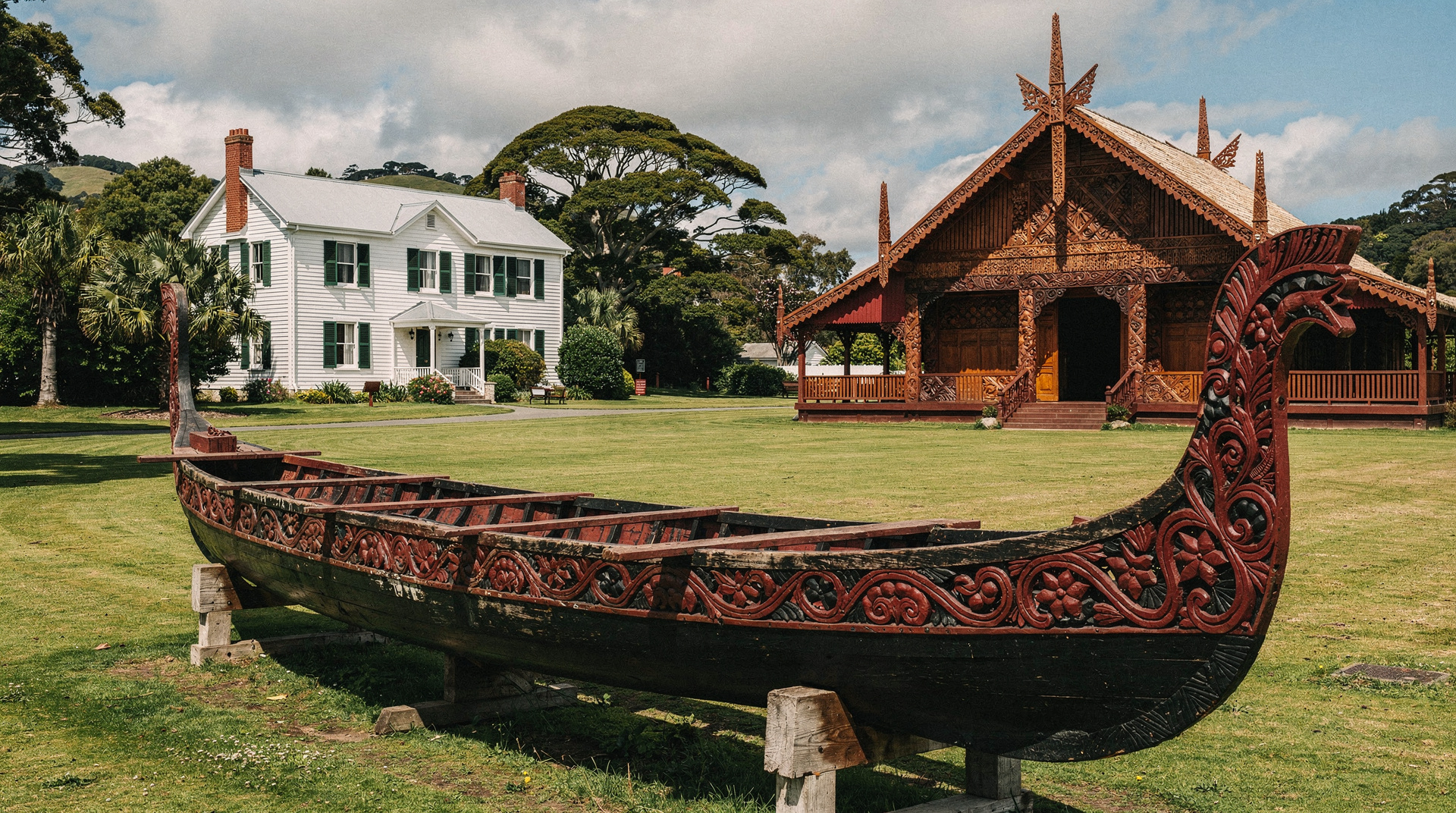
The Treaty Grounds include the original Treaty House (the British Residency where the signing occurred), the whare runanga (carved meeting house, 1940), the waka taua (war canoe) house, and a museum presenting both the Maori and Crown perspectives on the treaty and its ongoing significance.
| Where | Bay of Islands, Northland, 3 km from Paihia |
| Getting there | 5-minute drive or walk from Paihia; day tours from Auckland (4 hrs) |
| Time needed | Half a day (2-3 hours) for grounds, museum and cultural performance |
| Cost | Around NZD 50 standard admission; NZD 115-140 with hangi |
| Best time | Year-round; 6 February (Waitangi Day) for national commemoration |
What to see and do at Waitangi
Treaty House and Museum: The Treaty House (1833) is the original British Residency, built for James Busby (the British Resident in New Zealand before formal annexation). A modern museum building adjacent presents the treaty’s history, the negotiations of 1840, and the ongoing significance of the treaty in contemporary New Zealand law and politics. The museum is honest about the contested nature of the treaty and does not present a sanitised version — this is one of the things that makes it genuinely educational rather than merely commemorative.
Maori cultural performance: A traditional performance — haka, poi, waiata (songs), and cultural demonstrations — is included in the grounds admission. The performance takes place in the whare runanga (meeting house) and is led by Ngapuhi kaumatua (elders from the iwi of the Bay of Islands). The context at Waitangi gives the performance a weight and authenticity that commercial venues in Rotorua cannot replicate. Times vary; check at the entrance gate.
Waka taua: The largest traditional war canoe in New Zealand is housed in a purpose-built shelter on the grounds. Te Tii Waka Taua is 35 metres long and carries up to 80 paddlers. It is launched on Waitangi Day (6 February) and on other significant occasions.
Guided tour option — Hangi and concert: The Waitangi: Treaty Grounds Hangi and Concert Combo Pass combines grounds access, the cultural performance, and a traditional hangi (earth-oven cooked meal) — the most complete version of the Waitangi experience. NZD 115–140 / USD 69–84 / EUR 63–77.
Standard admission: The Waitangi Treaty Grounds 2-Day Pass gives extended access for those who want to return for both morning and evening cultural activities. NZD 50 / USD 30 / EUR 27.50.
Day tour from Auckland: The Auckland: Bay of Islands Tour with Waitangi Treaty Grounds combines a Bay of Islands day cruise with a Waitangi Treaty Grounds visit, departing Auckland and returning the same day. Long but doable; NZD 185–250 / USD 111–150 / EUR 102–138. For visitors who want to focus on Waitangi itself rather than the cruise, the Waitangi Treaty Grounds day tour from Auckland is a more history-focused alternative; NZD 165–210 / USD 99–126 / EUR 91–116.
Waitangi Day (6 February): The national day of commemoration, held annually at Waitangi. The Prime Minister and senior government ministers attend; Maori iwi delegations from across New Zealand gather for formal proceedings and, sometimes, protest. The day combines genuine ceremony with genuine political tension — it is complicated in the way that a nation’s founding document should be complicated.
The treaty and why it still matters
The Treaty of Waitangi was signed in two languages: English and te reo Maori. The two texts are not precise translations of each other. The English version transferred sovereignty (complete governance) to the Crown; the Maori text preserved tino rangatiratanga (chieftainship) to Maori. This discrepancy has been the source of treaty-related legal and political disputes for over 180 years.
In the 1970s and 1980s, the Treaty of Waitangi was incorporated into New Zealand legislation, and the Waitangi Tribunal was established to hear and make recommendations on Maori claims against the Crown for treaty breaches. Major settlements have been made with many iwi, covering land confiscations, fisheries, and other resources taken without adequate consent.
Understanding this context is not required to visit the grounds, but it transforms the experience from a historical curiosity into an engagement with a living document that continues to shape New Zealand’s law and politics.
The flagstaff and Hone Heke’s rebellion
On the hill above the Treaty Grounds stands a flagstaff with a history almost as significant as the treaty signing itself. In 1844 and 1845, the Ngapuhi rangatira Hone Heke Pokai — one of the first chiefs to sign the treaty in 1840 — cut down the British flagstaff at Kororareka (now Russell, visible across the bay from Waitangi) four separate times, in escalating protest at what he saw as the Crown’s failure to honour the treaty’s promises and at the erosion of Ngapuhi authority and trade under British administration. The fourth felling, in March 1845, triggered the Flagstaff War (also called Hone Heke’s War), the first significant armed conflict between Maori and the Crown following the treaty’s signing.
The flagstaff standing today at Waitangi is a replacement, but the site and the story are a useful corrective to any visitor who arrives expecting a simple, settled narrative of partnership. Hone Heke’s actions were not a rejection of the treaty itself but a demand that it be honoured as he and other rangatira understood it — a tension that runs through the entire history covered in the Treaty Grounds museum and remains directly relevant to contemporary Treaty settlement politics. Our Maori culture overview guide and dedicated Waitangi Treaty Grounds guide go further into this history than fits on a single destination page.
Where to stay near Waitangi
Waitangi itself is a residential area adjacent to Paihia — for accommodation, see the Bay of Islands guide or the Paihia section for detailed options. The 3 km between Paihia’s main waterfront and the Treaty Grounds is an easy walk or 5-minute drive.
Peppers Waitangi: The only accommodation within the Treaty Grounds boundary — boutique hotel in a heritage setting. NZD 280–480 / USD 168–288 / EUR 154–264.
What to eat at Waitangi
Treaty Grounds cafe: Good quality cafe on site, with museum admission. Good for lunch. Mains NZD 16–24 / USD 10–14 / EUR 9–13.
Hangi meal (included with combo pass): The traditional hangi is served as part of the Hangi and Concert package — meat (lamb, pork, chicken), kumara (sweet potato), pumpkin, and bread cooked in an earth oven. Genuinely good and the context at Waitangi is appropriate.
For full restaurant options, Paihia (3 km) has a good waterfront dining strip. See the Bay of Islands guide.
Skip / worth it / splurge
- Skip: Waitangi if history and cultural context are not interesting to you — the grounds are beautiful but the site’s value is entirely historical and cultural
- Worth it: Standard admission with cultural performance (NZD 50 / USD 30 / EUR 27.50) — the most significant historical site in New Zealand and the Maori cultural performance here has a gravitas that commercial venues lack
- Splurge: Hangi and Concert combo (NZD 115–140 / USD 69–84 / EUR 63–77) — the full experience, with a traditional meal
How to fit Waitangi into your itinerary
Waitangi is almost always combined with a Bay of Islands visit — the two are inseparable geographically (3 km apart) and thematically (the Bay of Islands is where European-Maori contact was most concentrated in the early colonial period).
The structure on a standard Bay of Islands visit: Paihia overnight → Waitangi Treaty Grounds (morning, 2–3 hours including cultural performance) → Bay of Islands cruise (afternoon) → Russell by ferry (evening).
On a 7-day North Island itinerary that includes Bay of Islands, Waitangi is the mandatory half-morning that anchors the historical dimension of the north.
Frequently asked questions about Waitangi
Is the Treaty of Waitangi the equivalent of a constitution?
Not precisely. New Zealand does not have a single written constitution. The Treaty of Waitangi is not legally binding in itself but has been incorporated into numerous pieces of New Zealand legislation — particularly from the 1980s onward — and is increasingly recognised in common law and Treaty settlements as a constitutional document. Its status is unusual and contested; this is part of what makes New Zealand’s constitutional history genuinely interesting.
Who can attend the Waitangi Day ceremony (6 February)?
The Waitangi Day ceremony at the Treaty Grounds is partially public — some elements, including the formal treaty signing commemoration, are open to visitors. The marae proceedings and some formal government sessions may be restricted. Attendance at the public sections requires purchasing grounds access (normal admission applies). Crowd sizes can reach 15,000–20,000; book accommodation in Paihia months in advance if visiting on Waitangi Day.
Is the cultural performance at Waitangi as commercial as Rotorua?
The Waitangi performance is less theatrical and more contextually grounded than the commercial shows in Rotorua (Mitai, Tamaki). It is performed by Ngapuhi kaumatua and cultural practitioners in the meeting house adjacent to the treaty site. The gravitas of the location — the actual site of a founding constitutional moment — gives the performance a quality that commercial venues cannot replicate. It is also notably less slick, which some visitors prefer.
What was the Flagstaff War and how does it connect to Waitangi?
The Flagstaff War (1845-46) began after Ngapuhi rangatira Hone Heke repeatedly cut down the British flag at Kororareka (now Russell), across the bay from Waitangi, in protest at the Crown’s failure to honour the treaty as he understood it. It was the first significant armed conflict between Maori and the Crown after 1840. The flagstaff standing above the Treaty Grounds today marks this history, and it’s a useful reminder that the treaty relationship was contested from very early on rather than smoothly settled.
Top experiences: waitangi New Zealand
See all →Related guides
Bay of Islands
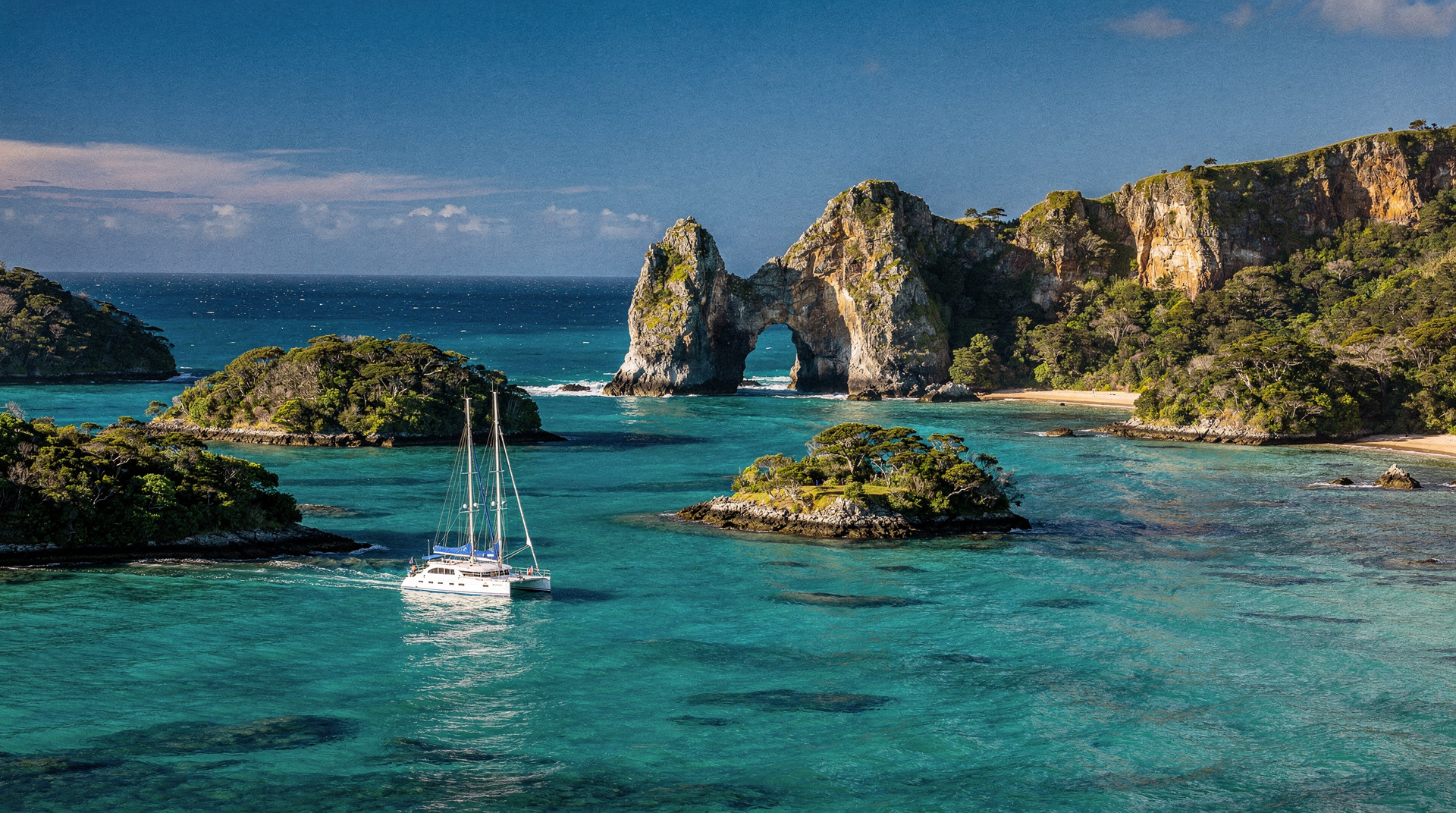
Honest Bay of Islands guide: Hole in the Rock cruise, dolphin swimming, Waitangi Treaty Grounds, Cape Reinga, real costs NZD/USD/EUR.
Northland
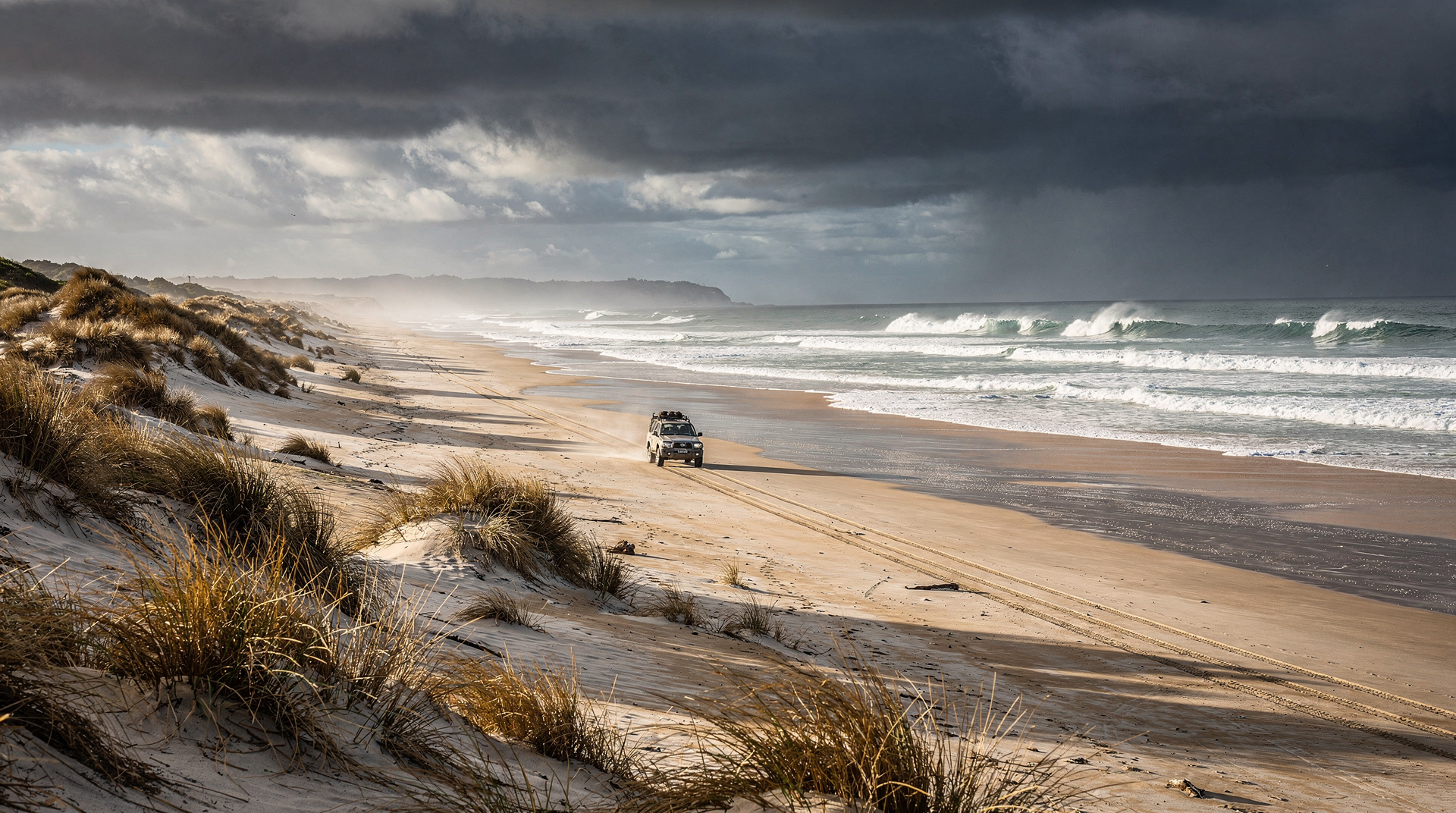
Honest Northland planner: Bay of Islands, Cape Reinga, 90 Mile Beach, Paihia, Russell, Whangarei. Real NZD/USD/EUR costs, what's worth your time.
Russell
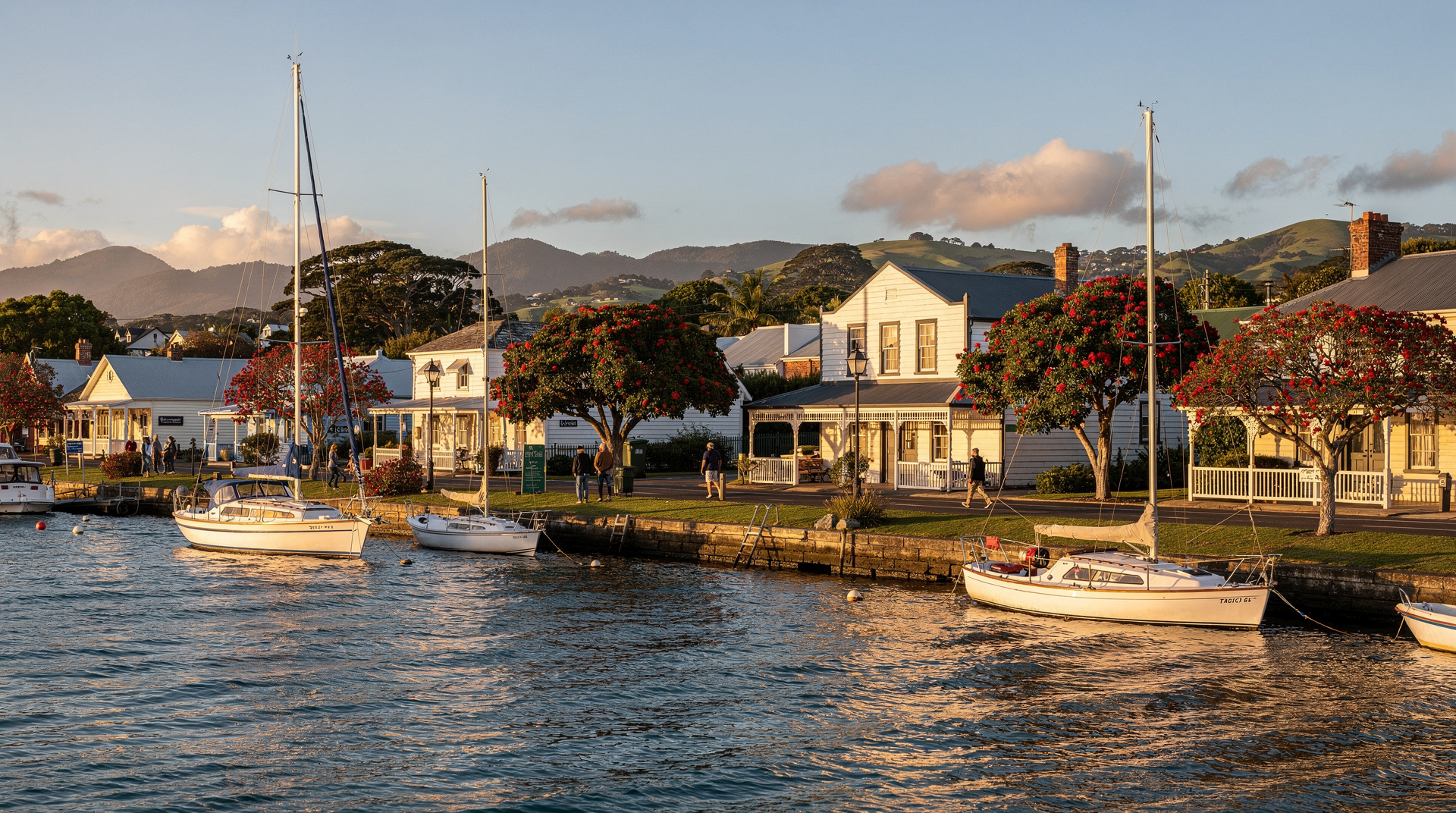
Russell: New Zealand's first capital, once called the 'hell hole of the Pacific', now a charming waterfront village in the Bay of Islands. NZD/USD/EUR costs.
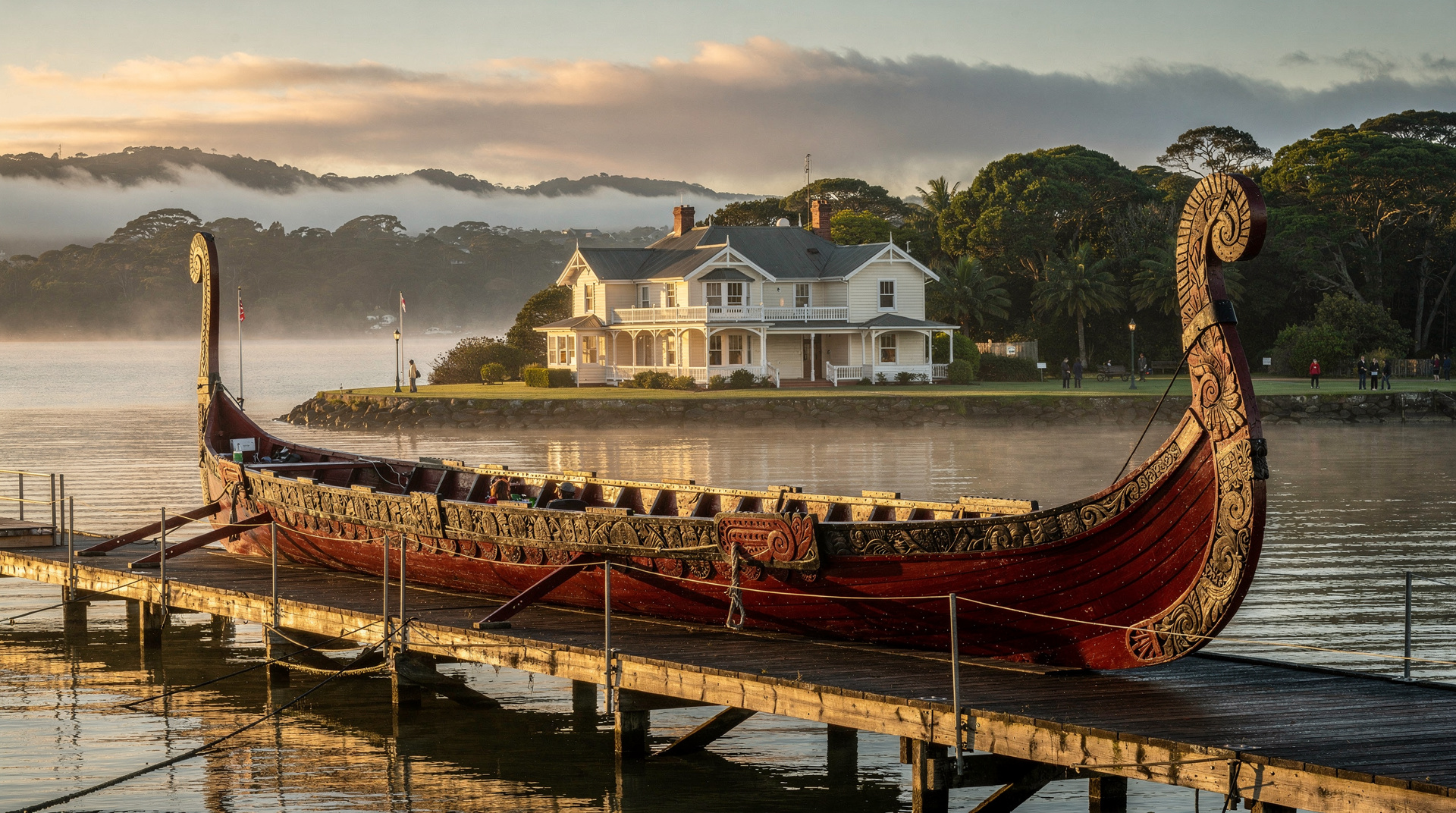
Waitangi Treaty Grounds — guide to New Zealand's most important site
Waitangi Treaty Grounds visitor guide: Treaty of Waitangi signed here 1840. Tickets, guided tours, hangi evenings, and essential NZ historical context.
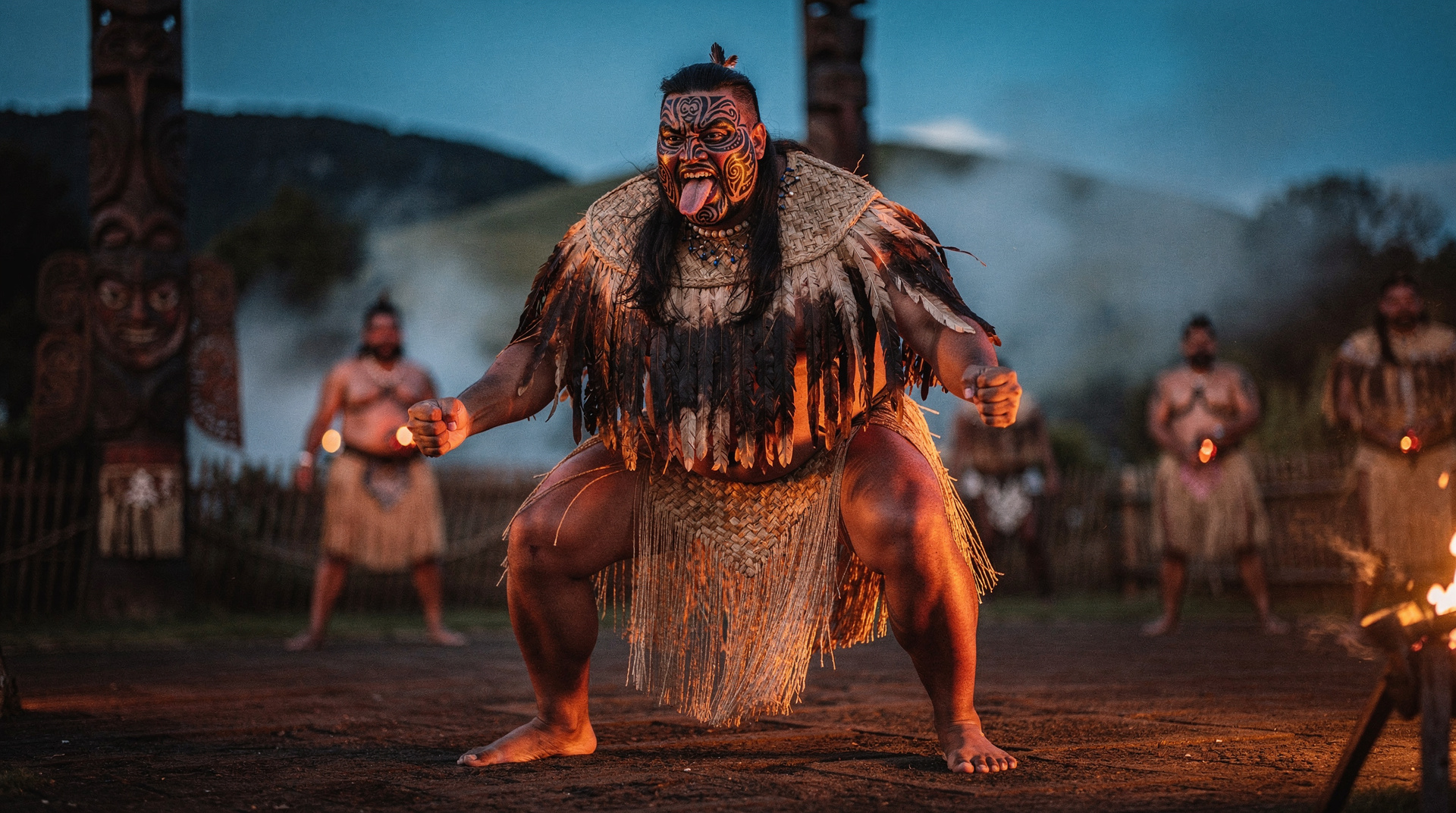
Maori culture overview — what every visitor should know
Respectful introduction to Maori culture for visitors: tangata whenua, Te Tiriti, tikanga basics, language, cultural experiences, and how to engage honestly.
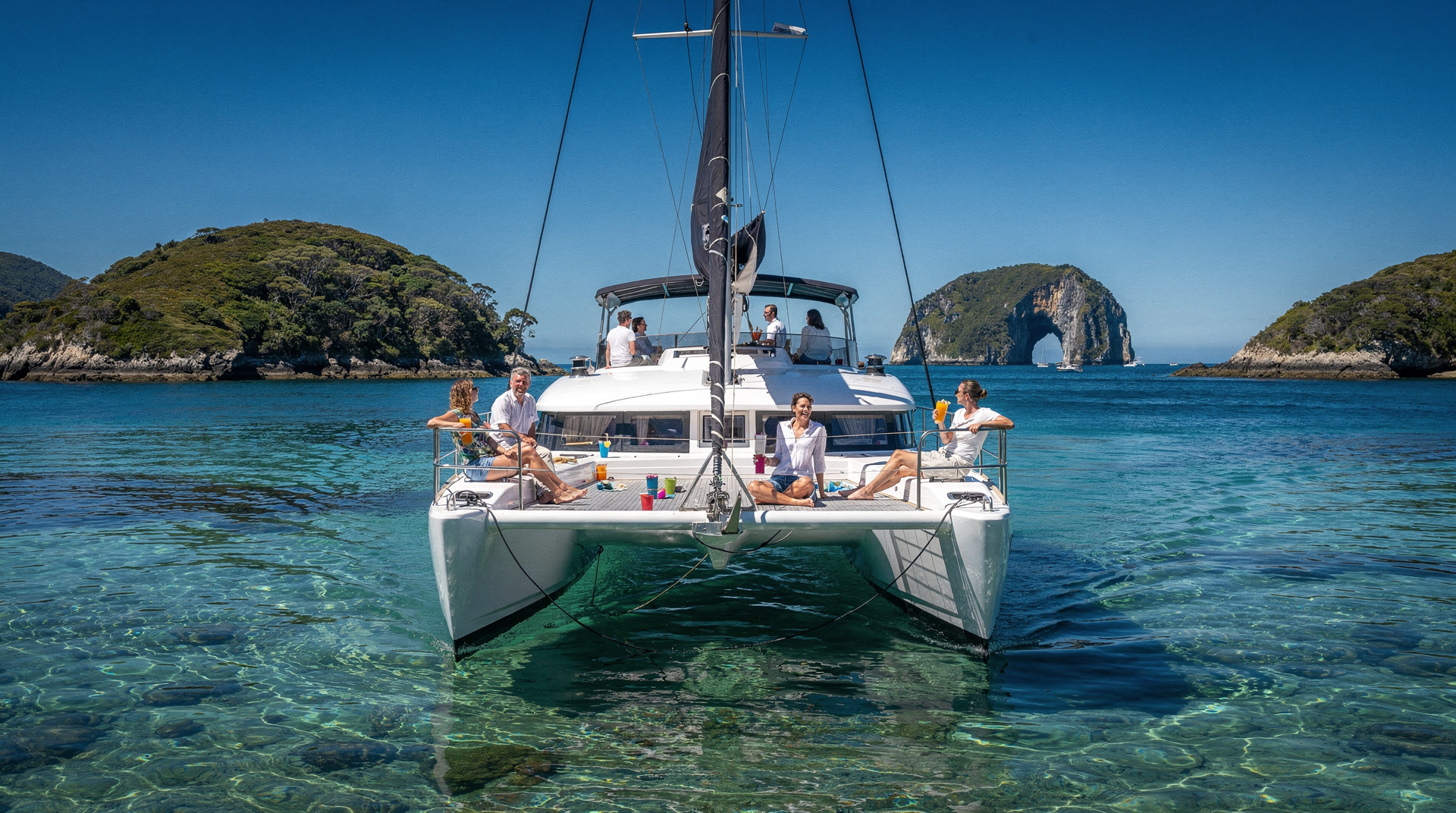
Bay of Islands cruise guide — Hole in the Rock and beyond
Bay of Islands cruise guide: Hole in the Rock fast boat, full-day sailing, dolphin encounters, island exploring. Costs NZD/USD/EUR from Paihia or Russell.
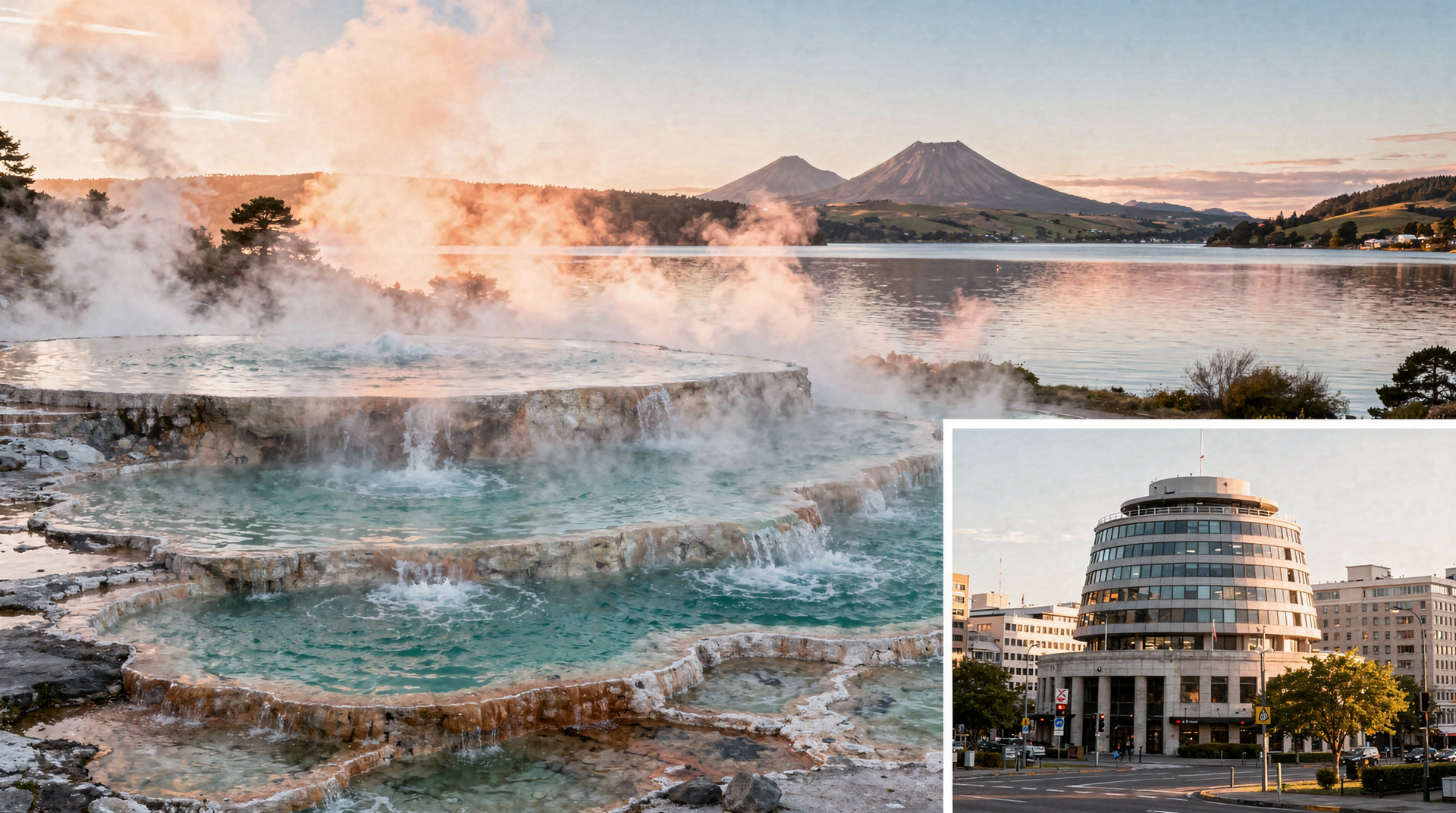
7-day North Island itinerary — the essential highlights
Auckland → Bay of Islands → Hobbiton → Waitomo → Rotorua → Taupo → Tongariro → Wellington. 7 days, both car and costs covered honestly.
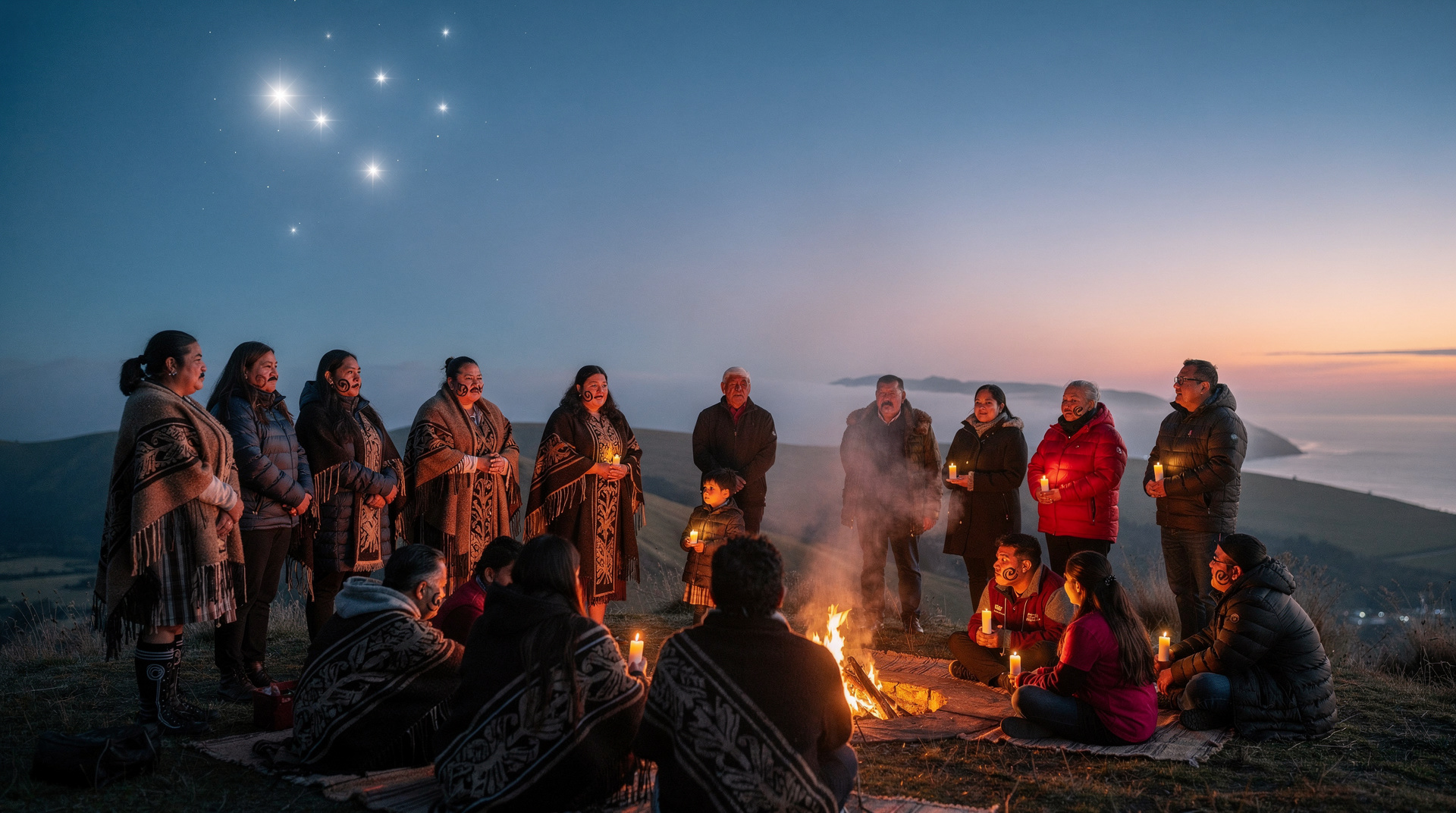
Matariki becomes a public holiday — what it means for travellers in New Zealand
On 24 June 2022, NZ observed Matariki as a public holiday for the first time. What it means, how it's celebrated, and what to expect as a visitor.
Last reviewed: