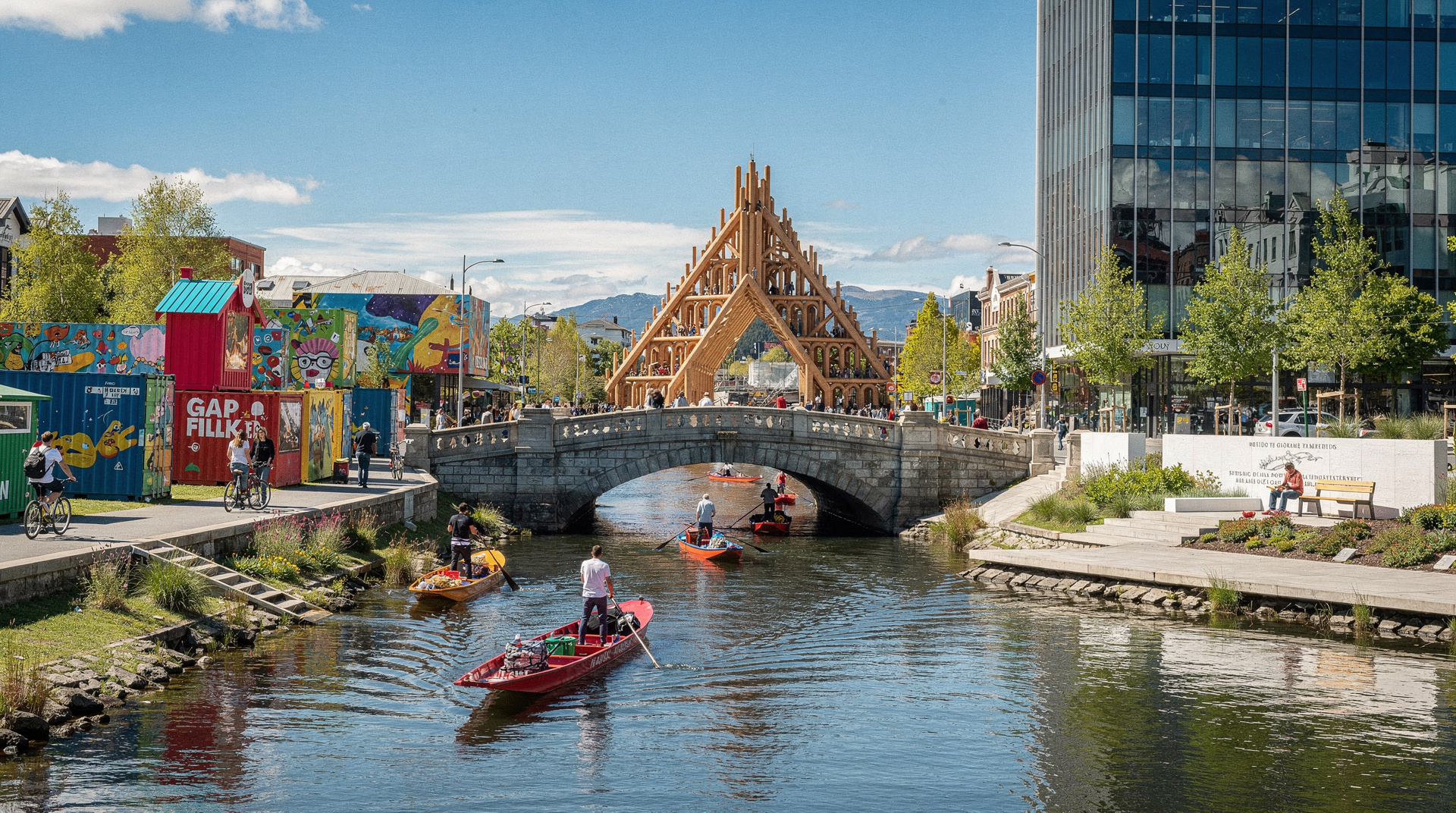
Christchurch rebuild — the city reborn after the 2011 earthquake
Is Christchurch worth visiting after the 2011 earthquake?
More than ever. The catastrophe that destroyed the old city centre created space for a genuinely experimental urban rebuild — shipping container precincts, avant-garde architecture, botanical gardens expansion, and a new arts and culture scene. The rebuilt city is more interesting to visit than the pre-earthquake city most travellers remember from guidebooks.
The earthquake and what it changed
At 12:51pm on 22 February 2011, a magnitude 6.3 earthquake struck Christchurch — shallow (5km depth), directly below the suburb of Lyttelton, during the midday lunch break when the CBD was at maximum occupancy. The CTV building collapsed. The Canterbury Television building, a 6-storey office tower, killed 115 people in approximately 30 seconds. The Pyne Gould Guinness building collapsed. 185 people died in total; the CBD was cordoned off and inaccessible for months.
This was not Christchurch’s first earthquake — a magnitude 7.1 struck in September 2010, destroying buildings but killing no one directly. The February 2011 quake struck at a different time, in a different location, with devastating vertical acceleration that the buildings of the CBD were not designed to withstand. The subsequent series of aftershocks through 2011-2012 (including a magnitude 6.3 in June 2011) made rebuilding tentative.
The recovery that followed is one of the largest urban reconstruction projects in Southern Hemisphere history. By 2026, approximately NZD 40 billion has been spent on the rebuild — government, insurance, and private investment combined. The result is a city that in some ways resembles its predecessor (the grid street layout was retained, the cathedral precinct is at the centre) and in other ways is completely new.
| Where | Christchurch CBD, Canterbury, South Island |
| Cost to visit | Mostly free — Botanic Gardens, Cardboard Cathedral, Art Gallery all no charge |
| Time needed | 2 nights minimum; 1 full day for the CBD sights |
| Getting there | Christchurch Airport (CHC), the main South Island gateway |
| Best time | Year-round; spring/autumn for mild weather and fewer crowds |
What happened to the old Christchurch
Before the earthquakes, Christchurch’s reputation was as New Zealand’s most English city — the “Garden City” with its Avon River, Victorian Gothic cathedral, Botanic Gardens, and the flat Canterbury Plains stretching to the Southern Alps. Much of this remains. What is gone:
The Cathedral: The Anglican ChristChurch Cathedral, the city’s most photographed landmark, was badly damaged in the 2011 earthquake and further damaged by aftershocks. After years of debate about whether to restore, deconsecrate, or demolish it, the decision was made to restore — work is ongoing, with full reopening projected for 2027-2028. Until then, the building stands behind scaffolding as both a construction site and a monument.
The Red Zone: Approximately 8,000 houses in the eastern suburbs were demolished and the land returned to open space — the Otakaro/Avon River Corridor. The decision not to rebuild in flood-prone and liquefaction-affected land east of the CBD created 616 hectares of new parkland running from the CBD to the sea.
The retail CBD: The old enclosed Cashel Street Mall, the department stores, the mid-20th century commercial buildings — all gone. Replaced by a new open-air retail precinct (Cashel Mall / Re:Start / The Strip) and a more dispersed commercial landscape.
What the rebuild created
The empty lots and emergency clearances of 2011-2013 created an opportunity that cities almost never get: blank space in a functioning urban core, available for experimental use.
Re:Start Mall / Cashel Mall: The immediate post-earthquake response was a temporary retail precinct built from shipping containers — brightly painted, structurally ingenious, commercially functional. What began as emergency infrastructure became an icon of Christchurch’s resilience narrative and attracted international architecture and design attention. The “transitional city” concept — temporary, adaptive, experimental urban fill — influenced urban planning internationally. In 2026, the shipping container aesthetic has been partially superseded by permanent rebuild construction, but the spirit of adaptive use persists in the city’s commercial culture.
Cardboard Cathedral (Te Tari o te Atua): Japanese architect Shigeru Ban — best known for his humanitarian architecture using recycled materials — designed a temporary cathedral for Christchurch using cardboard tubes and polycarbonate panels. Opened in 2013, it holds 700 people and is visually extraordinary. It was intended as a transitional structure for 10 years; it has become a permanent landmark. Located on Hereford Street, free to enter.
The Arts Centre: The original University of Canterbury buildings on Worcester Boulevard — a magnificent Gothic Revival complex — were extensively damaged and closed from 2011. After a NZD 290 million restoration, they reopened progressively from 2015, now housing galleries, restaurants, market stalls, and cultural events. This is one of the finest restored Gothic Revival complexes in the southern hemisphere.
Christchurch Art Gallery Te Puna o Waiwhetu: Closed after the earthquake, the glass and aluminum art gallery on Worcester Boulevard reopened in 2015 with a reinvigorated programme. Free entry; strong New Zealand and international contemporary art collection.
The Botanic Gardens: Survived the earthquake largely intact and remain Christchurch’s finest public asset — 21 hectares of Victorian-era gardens on a loop of the Avon River. The gardens are one of the best in the southern hemisphere. Free.
Christchurch city highlights half-day tourThe Avon River / Otakaro
The Otakaro/Avon River Corridor — the 616-hectare cleared zone east of the CBD — is Christchurch’s most ambitious and most contested rebuild project. The decision to clear 8,000 houses and create a linear park from the CBD to the Estuary was traumatic for many residents whose communities were dissolved; the park that has replaced them is genuinely beautiful and ecologically significant.
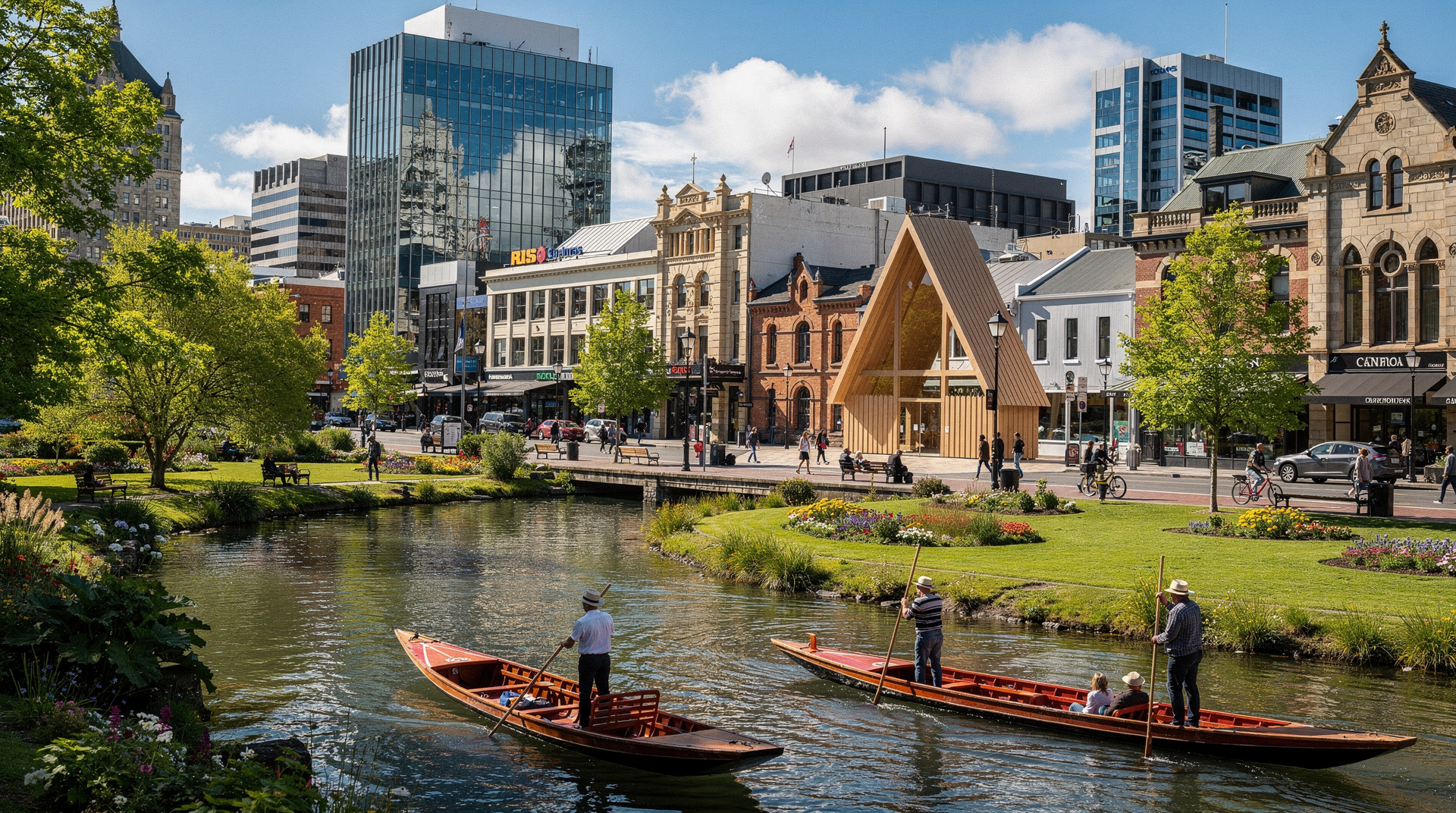
The inner section of the Avon through the CBD — the stretch from Hagley Park through the city — was always the city’s most distinctive feature. Punting on the Avon (flat-bottomed boats guided by pole, in the Cambridge style) is a genuinely pleasant experience and one of the few activities in Christchurch that existed before the earthquake, survived it, and continues unchanged.
Christchurch River Avon 30-minute puntThe rebuilt city: what to see in 2026
Te Pae Convention Centre: Opened 2021, designed by Woods Bagot — a substantial building that anchors the southern edge of the CBD and signals the recovery of Christchurch’s commercial conference economy.
Tūranga (Christchurch Central Library): Opened 2018, designed by Architectus — a major public building that has become a social hub for the city, with 24-hour access to some areas. The building’s ground floor is deliberately permeable and public.
Isaac Theatre Royal: A heritage theatre on Gloucester Street, restored after earthquake damage and now Christchurch’s premier live performance venue.
Christchurch Market: Held on Saturdays in the Arts Centre — farmers market, craft stalls, street food, and live music. One of the best weekend markets in New Zealand.
New Regent Street: A heritage precinct of Spanish Mission shopfronts from the 1930s, surviving (with repairs) from the pre-earthquake city. The trams run through it; the cafés and boutiques make it one of the most pleasant streets in the city.
Christchurch vintage tram — city loop and heritage commentaryThe Antarctic connection
Christchurch is the primary gateway for Antarctic expeditions — the United States Antarctic Programme, Antarctica New Zealand, and Italian Antarctic expeditions all base their southern operations through Christchurch Airport. The city has an Antarctic identity that predates the rebuild and continues to define its global profile.
The International Antarctic Centre (adjacent to the airport, 15 minutes from central Christchurch) is the best Antarctic experience available outside the continent itself. The Hägglund vehicle ride, the storm simulation room (wind chill to -25°C), the live blue penguin colony, and the Antarctic research exhibits make this an excellent half-day visit.
International Antarctic Centre — ChristchurchDay trips from Christchurch
The rebuilt city’s position — coastal edge of the Canterbury Plains, with the Southern Alps to the west and Banks Peninsula to the east — provides some of New Zealand’s finest day trip options:
Akaroa and Banks Peninsula (90km, 90 minutes): The French settler village on a drowned volcanic crater harbour, with Hector’s dolphins (world’s smallest and rarest), native penguin colonies, and one of New Zealand’s finest scenic drives over the summit of the Banks Peninsula ridge. See the Akaroa and Banks Peninsula guide.
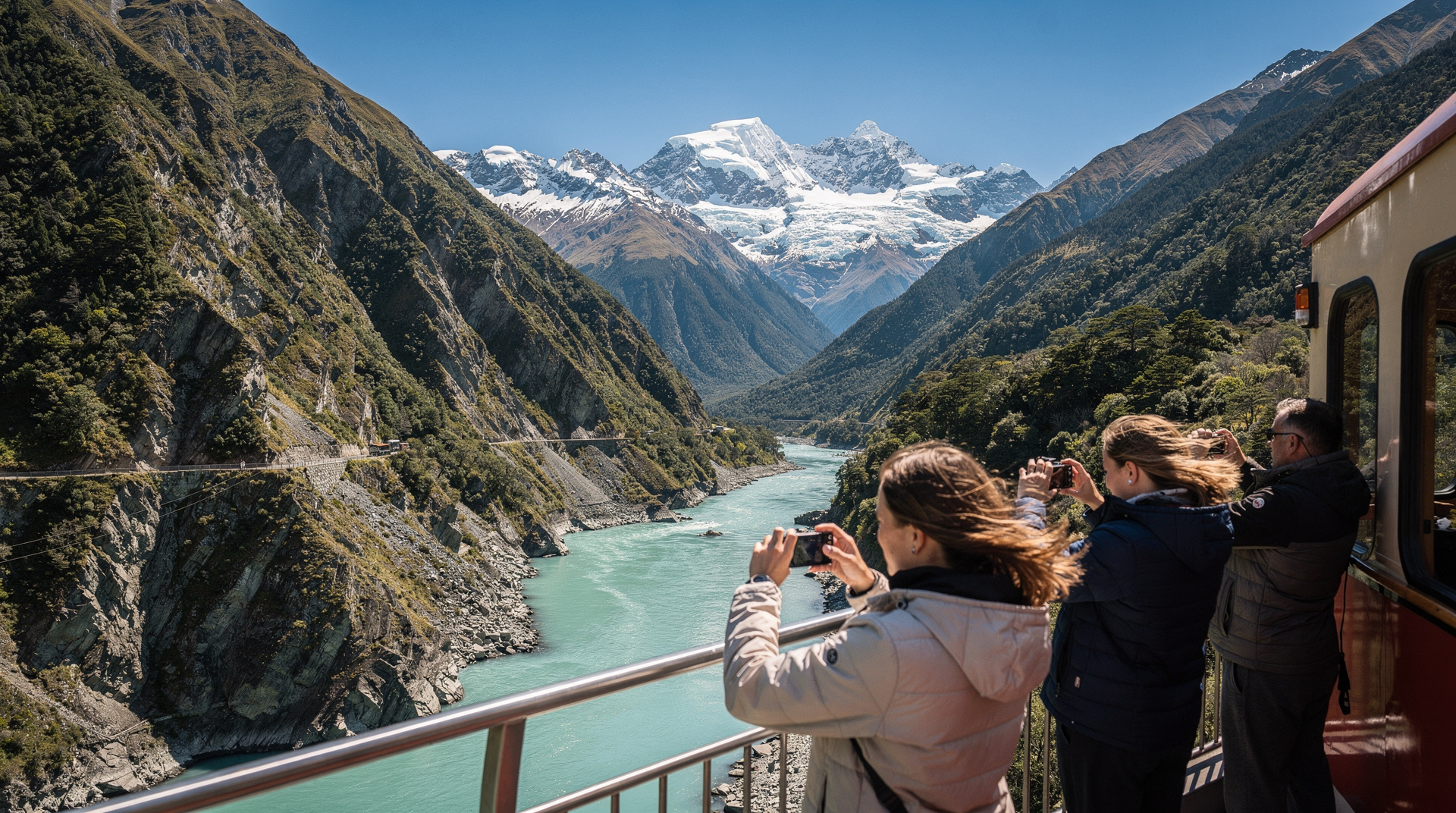
TranzAlpine to Greymouth (4h20 one way): The most scenic train journey in the country. An excellent full-day option from Christchurch — ride to Greymouth, have lunch, ride back. See the TranzAlpine guide.
Kaikoura (180km, 2.5 hours): Whale watching, dolphin swimming, seal colonies, and excellent seafood on the coast between the Kaikoura mountains and the sea. The coastal road was damaged in the 2016 Kaikoura earthquake and rebuilt by 2017.
Lake Tekapo and Aoraki/Mt Cook: A full-day drive through the Mackenzie Basin — Lake Tekapo’s turquoise glacial water, the Church of the Good Shepherd, Mt John Observatory, and then the drive to Aoraki/Mt Cook Village and the Hooker Valley Track.
Public art and the transitional city legacy
Beyond the named landmarks, Christchurch’s post-earthquake years produced an unusually dense scattering of public art and murals across the CBD — a byproduct of empty lots needing something on them while rebuild plans were finalised. The Gap Filler and Life in Vacant Spaces initiatives (both grassroots, community-driven projects born directly from the earthquake response) placed temporary installations, a dance floor, a mini golf course, and even a wool-based sound garden on cleared sites over the years; some have since made way for permanent buildings, others persist.
Self-guided street art walks through the CBD (High Street, Sydenham, and the New Regent Street area) reveal large-scale murals from local and international artists, several explicitly referencing the earthquake and recovery. Christchurch’s tourism office publishes a rough map of current mural locations, though the fastest way to see the best examples is simply to walk the CBD grid — Colombo, High, and Manchester Streets have the highest concentration.
Where to eat in the rebuilt city
The dining scene rebuilt alongside the architecture, and arguably improved in the process — younger operators moved into the transitional retail spaces early and many have since become permanent fixtures. The Riverside Market (on the Avon, central CBD) is the best single stop for variety: a covered food hall with dozens of vendors ranging from fresh produce to ready-to-eat options, open daily.
The Colombo Street precinct in Sydenham has an established café and restaurant strip with a more local, less touristy feel than the CBD core. For a sit-down dinner, the Terrace (riverside strip near the casino) has a concentration of mid-range restaurants with outdoor seating — pleasant on a warm evening. Saturday’s Christchurch Market at the Arts Centre adds street food and produce stalls to the weekend rotation.
Costs and practical information
Accommodation: Post-rebuild Christchurch has a full range. Budget hostels from NZD 35-50 / USD 21-30 / EUR 19-28 per night in a dorm. Mid-range hotels NZD 180-280 / USD 108-168 / EUR 99-154. The Chateau on the Park (near Hagley Park) and The Terrace offer excellent mid-range options.
Getting around: Christchurch’s flat terrain makes cycling viable — the city has an expanding cycle network and several bike share options. The vintage tram runs a CBD loop. Uber and taxis available.
Air access: Christchurch Airport (CHC) is New Zealand’s second-busiest, with direct international flights from Australia, Singapore, and select Pacific routes, plus multiple daily connections to Auckland, Wellington, and Queenstown.
Verdict: Christchurch is worth it and underrated. The post-earthquake city is genuinely interesting, the Canterbury Plains + Alps day trips are excellent, and the city’s size (400,000 people) means it has real urban amenity without the density and cost of Auckland. Two nights minimum.
Frequently asked questions
Is it respectful to visit earthquake sites in Christchurch?
Yes. The city has established memorial sites specifically for visitor and community engagement. The 185 White Chairs memorial (on Oxford Terrace — 185 empty white chairs representing the 185 victims, placed in an empty lot near the cordon line) is the most moving and appropriate site for reflection. The Cathedral precinct is open to viewing. The eastern suburbs Avon River Corridor is public parkland.
What is the best way to spend one day in Christchurch?
Morning: Botanic Gardens walk and punting on the Avon. Midday: Arts Centre market and Cardboard Cathedral. Afternoon: Christchurch Art Gallery and the New Regent Street tram ride. Evening: dinner in the Colombo Street precinct or the Terrace area.
How does Christchurch compare to Dunedin?
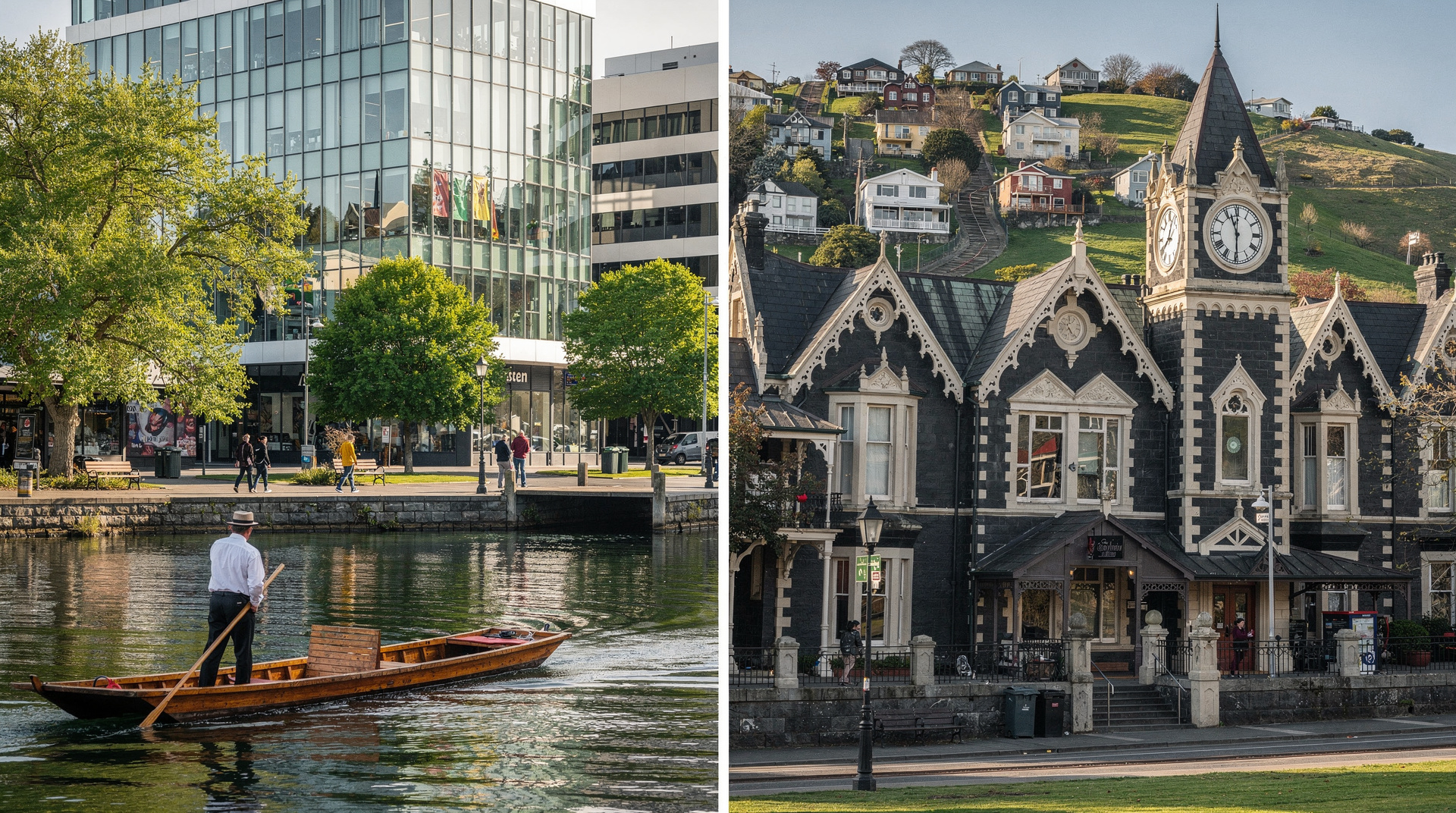
Different character entirely. Christchurch is larger, flatter, and more immediately connected to South Island outdoor activities. Dunedin has more historical depth, a stronger student character, and the Otago Peninsula wildlife. See Christchurch vs Dunedin for the full comparison.
Is Christchurch still recovering from the earthquake?
Yes and no. The civic rebuild is largely complete as of 2026; the Cathedral restoration is ongoing. Some eastern suburban communities never fully recovered. The psychological recovery — for a city whose centre was suddenly removed — is an ongoing process that residents describe in complex terms. As a visitor, you will see a functioning, interesting city; the history of loss is visible if you look for it and ask about it.
Where’s the best public art or street art in Christchurch?
The High Street, Sydenham, and New Regent Street precincts have the highest concentration of large-scale murals, many created directly in response to the earthquake and rebuild. A self-guided walk through the CBD grid takes 1-2 hours and costs nothing; combine it with the Arts Centre market on a Saturday for a fuller cultural afternoon.
Related guides
Christchurch
Honest Christchurch guide: the post-earthquake rebuild, best activities, Akaroa day trip — real NZD/USD/EUR prices and what's worth your time.
Christchurch vs Dunedin
Christchurch vs Dunedin honest comparison: architecture, wildlife, day trips and character. Clear verdict for first-time South Island visitors. NZD/USD/EUR.
TranzAlpine train — the complete guide to New Zealand's most scenic rail journey
TranzAlpine guide: the 4h20 Christchurch to Greymouth route, what you see, ticket prices NZD/USD/EUR, booking tips, and honest verdict on NZ's finest train.
Driving in New Zealand
Honest driving guide for NZ: left-side rules, gravel road etiquette, why GPS lies, fuel costs, one-lane bridges, and what rental companies don't tell you.

First time in New Zealand
Complete first-timer's guide to NZ: costs, logistics, Maori culture, what to book early, and how to structure 7–21 days.
New Zealand in February
February is NZ's best month: warm summer, post-holiday crowds thinning, wine harvest starting. Real prices in NZD/USD/EUR and what to book ahead.
Last reviewed: