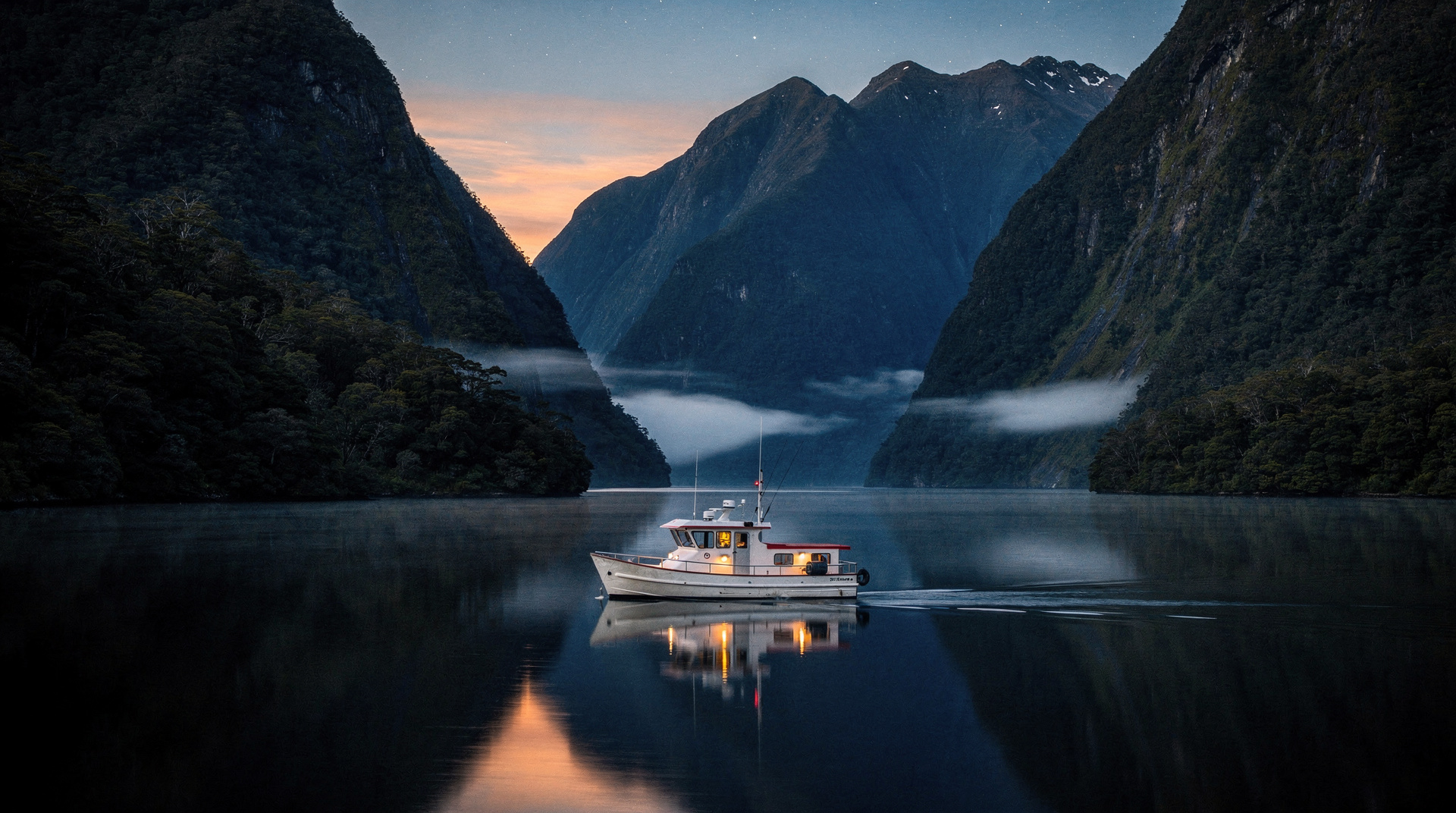
Doubtful Sound overnight cruise — honest review
Is the Doubtful Sound overnight cruise worth the cost over the Milford day cruise?
Yes, decisively, if you want genuine wilderness immersion. Doubtful Sound is three times larger than Milford, sees a fraction of the visitors, and the overnight format gives you the fiord at dawn — the most spectacular light. Book well ahead; departures are limited.
Doubtful Sound is what Milford Sound would be if it hadn’t been discovered
✓ Overnight cruise: Worth it — exceptional ✓ Day cruise: Worth it if overnight is sold outFrom Manapouri: Doubtful Sound Wilderness Day Trip
Day trip to Doubtful Sound from Manapouri — wilderness cruise through the fiord.
From from NZD 289 / USD 173 / EUR 159
Doubtful Sound is the second most famous of Fiordland’s fiords — behind Milford, ahead of Dusky, ahead of everything else. It is also, by most metrics, the more remarkable place. Three times larger than Milford Sound by surface area. No road access whatsoever — you reach it by boat across Lake Manapouri, then coach over the Wilmot Pass, then boat onto the fiord. The total approach takes 2 hours before you’ve seen a single metre of the fiord itself.
This complexity is the filter that keeps it quiet. In the height of summer, Milford receives over 1,000 visitors per day. Doubtful Sound receives perhaps 100-150. The Fiordland Navigator — Real Journeys’ purpose-built overnight vessel — carries a maximum of 70 passengers. You will see more penguins, seals, and dolphins in two hours on Doubtful Sound than most visitors see in a week on Milford.
| Where | Deep Cove, via Manapouri and the Wilmot Pass |
| Base town | Te Anau, 30 minutes from Manapouri |
| Overnight cost | around NZD 499-799 per person, bunk to en-suite |
| Season | October to April |
| Booking lead time | 4-8 weeks ahead in December-February |
The approach: getting to Doubtful Sound
The journey to Doubtful Sound is itself an experience. From Manapouri (26 km south of Te Anau):
Step 1: Pearl Harbour, Lake Manapouri. A small vessel takes you across the lake (approximately 40 minutes) to the West Arm power station — a remarkable piece of mid-20th-century engineering, a hydroelectric facility built almost entirely underground in the 1960s to power the Bluff aluminium smelter.
Step 2: Coach over Wilmot Pass. The 22 km gravel road over the pass (674 m elevation) was constructed specifically to supply the power station. It is not open to the public — you cross it only as part of the Doubtful Sound tour. The pass itself has outstanding views over the drainage of the Cleddau and Wilmot rivers.
Step 3: Deepwater Basin, Doubtful Sound. You board the Fiordland Navigator here for the overnight portion.
The entire approach from Manapouri takes approximately 2 hours. Add the 26 km drive from Te Anau (30 minutes). Most visitors overnight in Te Anau the night before departure.
The Fiordland Navigator
The Fiordland Navigator is a purpose-built overnight vessel with cabin accommodation, a restaurant, a small lounge, and open deck space.
Cabins: A mix of four-berth bunk cabins (budget) and double en-suite cabins. The bunk cabins are compact but not uncomfortable — think comfortable ferry cabin, not cruise ship stateroom. The double en-suite cabins are significantly more comfortable and worth the premium for couples.
Meals: Dinner (buffet style, substantial — local fish, lamb, salads), breakfast, and a light morning tea are included. The food is significantly better than you might expect on a wilderness vessel. The kitchen handles dietary requirements with advance notice.
Activities onboard: Kayaking from the stern platform (included, in sheltered arms), wildlife spotting, tender boat trips into side arms and waterfalls, and the option to swim in the fiord (very cold — 12-14°C even in summer). A naturalist guide provides commentary throughout.
What you actually see
The evening
Departure from Deepwater Basin in the afternoon. The first hours cover Hall Arm and Elizabeth Island — the most enclosed parts of the fiord, flanked by walls of beech forest and granite. Waterfalls appear on every cliff face after rain (Fiordland receives 7-8 metres of rain annually — there is almost always rainfall in residence somewhere on the fiord walls).
In the late afternoon, wildlife becomes more active. Bottlenose dolphins are resident in Doubtful Sound year-round — a pod of approximately 60 individuals has been studied here for over 30 years. Fiordland crested penguins (tawaki) nest on the rocky shores from June to November. New Zealand fur seals haul out on the outer rocks.
Sunset, if it happens: Fiordland sunsets, when the cloud breaks, are extraordinary — pink light on the granite cliffs with still water below. This is not guaranteed; Fiordland clouds clear perhaps 3-4 days per week on average in summer.
The overnight anchor
The Navigator anchors in one of the fiord’s side arms overnight. The water in Doubtful Sound is distinctively layered — a 3-5 metre lens of fresh rainwater sits above the salt water, creating a phenomenon called the Deep Water Exclusion Zone. Black coral (usually a deepwater species) grows at depths of 20-30 metres here because the light exclusion of the fresh water layer creates deepwater darkness at shallow depth. The effect visible from the tender is otherworldly.
At night in clear conditions, the Milky Way over the fiord is the best stargazing in New Zealand. No light pollution reaches Doubtful Sound.
The morning
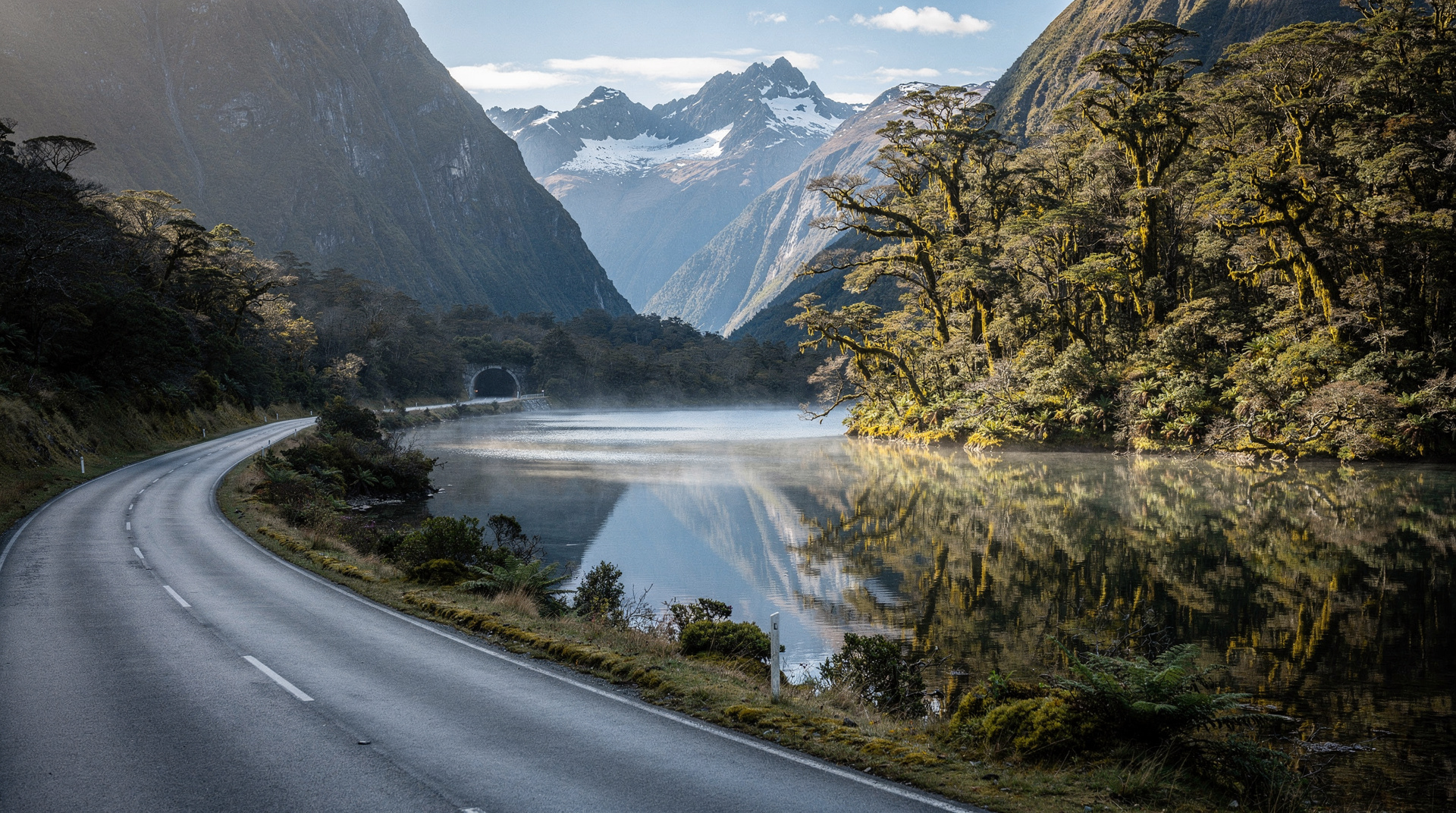
★ Dawn: The real reason to book overnightThis is the main event. After an early breakfast (departures from the anchor at approximately 7am), the fiord at dawn is in a different register from the afternoon. Early morning mist rolls off the water. The walls of the fiord are perfectly reflected in the glass-calm surface (rain usually settles overnight). Wildlife is at its most active.
If you have been anywhere near the fjords of Scandinavia, Patagonia, or British Columbia, this still warrants a second look. The scale is different — Doubtful’s main arm is 40 km long — and the vegetation is subtropical rather than subarctic, which changes the character entirely.
Breakfast is served before the return crossing, and the vessel is usually back at Deepwater Basin by mid-morning, in time for the coach over the Wilmot Pass and the Lake Manapouri crossing back to Manapouri. Most passengers are back in Te Anau by early afternoon, which leaves the rest of the day free — a walk on the Kepler Track, a visit to the Te Anau Glowworm Caves, or simply recovery time before the next Fiordland day.
Doubtful Sound vs Milford Sound
The comparison comes up constantly. Honest assessment:
| Milford Sound | Doubtful Sound | |
|---|---|---|
| Access | Road (2.5 hours from Te Anau or Queenstown) | Boat + coach + boat (2 hours from Manapouri) |
| Visitors per day (summer) | 1,000+ | 100-150 |
| Size | 15 km long | 40 km long |
| Mitre Peak | Yes — iconic | No single iconic summit |
| Wildlife density | Moderate (crowded out) | High — dolphins, penguins, seals |
| Overnight option | Yes (Milford Sound Lodge, cruise available) | Yes — better product |
| Day cruise | Yes — multiple operators, easy | Yes — requires full-day commitment |
| Cost overnight | NZD 350-550 (cruise) | NZD 499-799 (Navigator) |
Verdict: If you have time for only one, and you are making your decision in January with no prior knowledge of NZ, most visitors book Milford because it is easier and cheaper to access. Travellers who have done both consistently rate Doubtful higher. If you are in Fiordland for 3+ nights, do both.
The day cruise alternative
If the overnight is sold out or the budget is a constraint, the Doubtful Sound coach and cruise from Te Anau covers the same approach and a portion of the fiord in a single day. It is a significantly less immersive experience but does cover the essential geography. Duration from Te Anau: approximately 10 hours return. Full logistics for the day version, including a realistic hour-by-hour schedule, are in the dedicated Doubtful Sound day trip from Te Anau guide and the Doubtful Sound day trip from Queenstown guide if you are not basing in Te Anau.
How this compares to the rest of Fiordland
Doubtful Sound is one part of a wider Fiordland picture. If this is your only fiord, Milford Sound is the more efficient choice — shorter access, lower cost, and the iconic Mitre Peak. If you have multiple nights in Te Anau, the standard pattern among repeat visitors is Milford one day, Doubtful the next (or the overnight), with a rest day for the Te Anau Glowworm Caves or a Kepler Track section in between. See the full Fiordland destination guide for how all the pieces fit together, and the Milford Sound vs Doubtful Sound comparison for a side-by-side breakdown.
Getting there
Doubtful Sound departures are from Pearl Harbour, Manapouri. Manapouri is 21 km south of Te Anau.
Te Anau from Queenstown: 170 km, approximately 2 hours via SH-6 and SH-94. Straightforward drive on good roads.
Te Anau from Christchurch: 600 km, approximately 6.5 hours — typically done over 2 days with a Dunedin or Invercargill overnight.
Accommodation in Te Anau: Te Anau is a genuine overnight base, not a day-trip town. Stay one or two nights before the Doubtful Sound cruise. Good options at all price points from NZD 50-200 per person.
Booking: Real Journeys is the primary operator of the Fiordland Navigator. Book directly on realjourneys.co.nz or via GYG. The overnight cruise runs October to April and sells out 4-8 weeks ahead in peak season (December-February). Booking via the Doubtful Sound wilderness day trip covers the day option through GYG; for the overnight, Real Journeys’ direct booking is more flexible on cabin selection.
Scenic flight alternative
For travellers who want Doubtful Sound’s scale without the water time, the Doubtful Sound scenic flight with two landings covers the fiord from the air with two touchdowns — one at a remote location accessible only by air. Different experience but extraordinary in its own right. Cost is higher; duration approximately 2-3 hours. The combined flight over both Doubtful and Milford Sound from Te Anau is the most efficient way to cover Fiordland’s signature geography if ground time is limited.
Red flags
- Weather cancellation: Real Journeys will not cancel for rain (Doubtful Sound is always wet — rain is part of the character). They will cancel for severe forecast weather (cyclonic conditions, extreme swell). If your visit is in winter (June-August), build a day’s contingency.
- Seasickness: The outer arm of Doubtful Sound opens to the Tasman Sea. In southwesterly swell, the outer basin can be rough. The navigator is a stable vessel but not immune to swell. Take medication if susceptible — departure times mean you’ll need to dose the night before.
- The “luxury” expectation mismatch: The Fiordland Navigator is comfortable but not luxury. The bunk cabins are functional. If you are expecting a boutique hotel experience on water, adjust expectations. If you are fine with a well-run wilderness vessel, it exceeds expectations.
- Real Journeys monopoly: Real Journeys operates essentially all Doubtful Sound access by agreement with DOC. This is not a competitive market — there is one overnight operator, one day cruise operator, and one scenic flight operator. Prices are what they are.
Who this cruise suits: Travellers who have already done Milford Sound and want a genuinely different Fiordland experience; couples and small groups who value quiet and dark skies over convenience; and anyone building a multi-night Te Anau base rather than a single Fiordland day. It suits less well: families with children under 8, travellers on a tight one-day Fiordland budget, and anyone prone to severe seasickness who cannot medicate in advance.
Cost breakdown
Cost breakdown
All prices approximate 2026. Real Journeys prices — book direct or via GYG.
| Item | NZD | USD | EUR | Verdict |
|---|---|---|---|---|
| Fiordland Navigator overnight — bunk cabin (per person) All meals included, kayaking included | NZD 499–599 | USD 299–359 | EUR 274–329 | ✓ Worth it |
| Fiordland Navigator overnight — double en-suite (per person) Significantly better comfort | NZD 699–799 | USD 419–479 | EUR 384–439 | ★ Splurge |
| Doubtful Sound day cruise from Te Anau If overnight unavailable | NZD 289–320 | USD 173–192 | EUR 159–176 | ✓ Worth it |
| Doubtful Sound scenic flight with 2 landings Different experience — air over water | NZD 490–560 | USD 294–336 | EUR 269–308 | ★ Splurge |
| Accommodation in Te Anau (per night, mid-range) Night before cruise | NZD 150–280 | USD 90–168 | EUR 83–154 | |
| Queenstown to Te Anau by car (fuel) | NZD 30–45 | USD 18–27 | EUR 17–25 |
Frequently asked questions about Doubtful Sound overnight cruise — honest review
Can I visit Doubtful Sound independently?
No. The only road access is the restricted Wilmot Pass road (power station supply route, not public). All public access to Doubtful Sound is via boat across Lake Manapouri and the guided coach crossing. There is no independent kayak launch point at the fiord.
How does Doubtful Sound compare to Milford for photography?
For photographers, Doubtful Sound is superior in almost every condition. Fewer boats mean the fiord surface is undisturbed by wakes. The side arms the Navigator enters are inaccessible to day visitors. The overnight format gives you both sunset and dawn light. The only thing Milford has that Doubtful lacks is Mitre Peak — the iconic single-summit profile that appears on most New Zealand tourism imagery.
When do the Fiordland crested penguins (tawaki) nest?
June to November. The penguins are visible on the rocky shores year-round but are present in greatest numbers during the nesting season. The chicks are visible from September. If you visit outside of nesting season, you will still see seals and dolphins but the penguin sightings are less reliable.
Is the overnight cruise suitable for children?
Yes, from around age 8-10. Younger children find the confined cabin and long water time challenging. The kayaking and wildlife spotting are excellent for older children. Real Journeys can advise on family cabin arrangements.
What clothing is appropriate?
Layering is essential. Even in January, Fiordland’s weather changes rapidly. A proper waterproof jacket (not a shower-proof shell) is required — the rain here is serious. Deck shoes or trail shoes with grip on wet surfaces. Bring one set of warm clothes for evenings regardless of the season.
Is the deep-water exclusion zone visible underwater?
The freshwater lens is visible as a distinct colour shift when looking down from the vessel deck — the water below the fresh layer is a deeper, colder blue. Snorkellers who go below the fresh layer (approximately 3-5 metres) experience an immediate temperature drop. The black coral at 20-30 metres is only visible by dive or via the Fiordland Navigator’s tender.
Is there phone reception on Doubtful Sound?
None. There is no cellular coverage anywhere on the fiord or the Lake Manapouri crossing. The Navigator has satellite communication for emergencies. This is the correct and expected state of affairs — it is part of the appeal.
Should I do the overnight cruise or the day trip if I’m short on time?
The overnight, if your schedule and budget allow it — it consistently rates higher with repeat Fiordland visitors because of the dawn light and stargazing. If you only have a single day available, the Doubtful Sound day trip from Te Anau or from Queenstown still covers the essential geography and wildlife.
How does Doubtful Sound fit into a wider Fiordland itinerary?
Most visitors pair it with Milford Sound and a Te Anau-based rest day. See the Fiordland destination guide for how to sequence Doubtful, Milford, and the Te Anau Glowworm Caves across a 3-4 night Fiordland stay.
Related guides
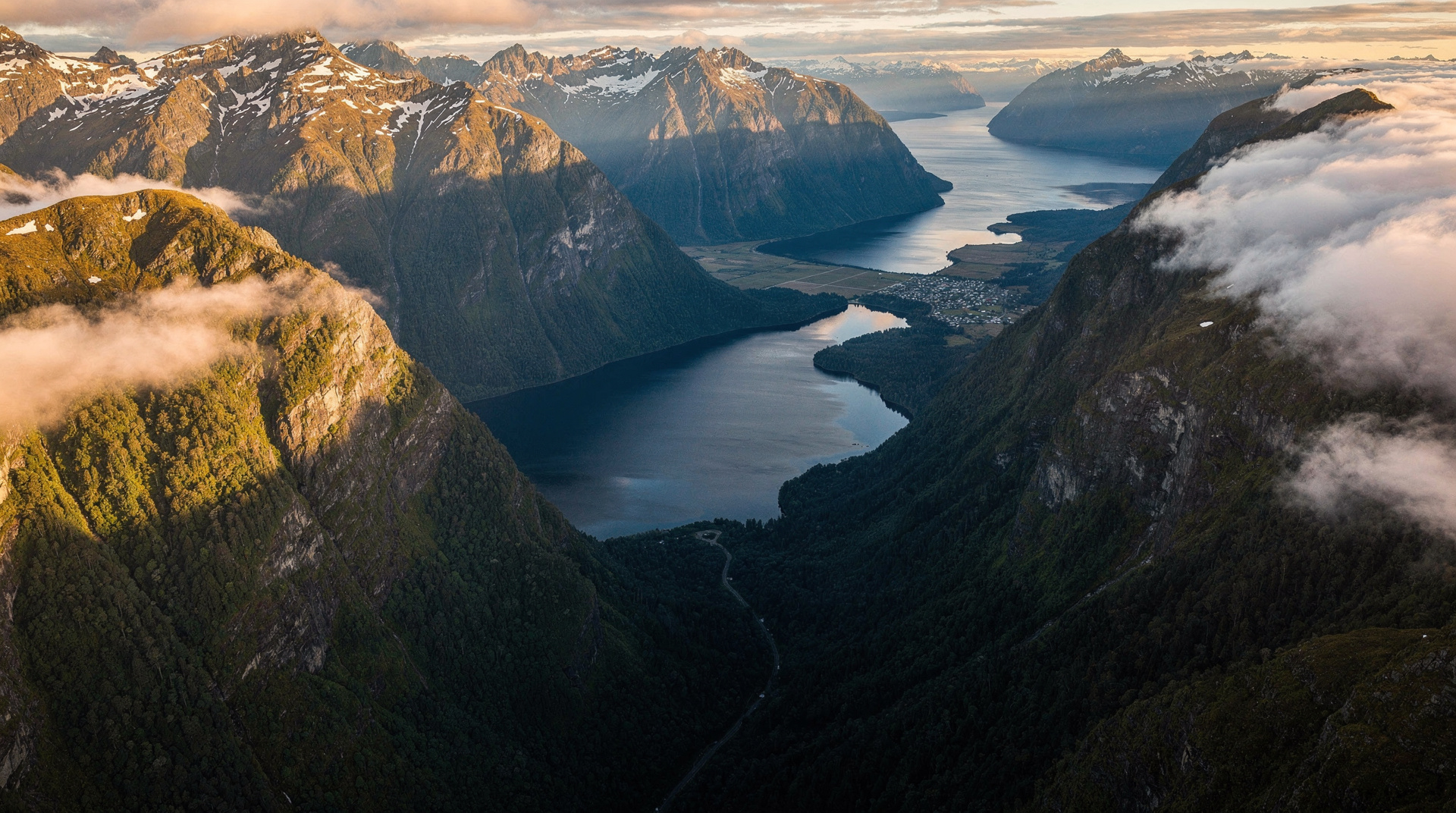
Fiordland
Honest Fiordland planner: Milford Sound vs Doubtful Sound, Te Anau base, Milford Track booking, real NZD/USD/EUR costs and what most guides won't tell you.
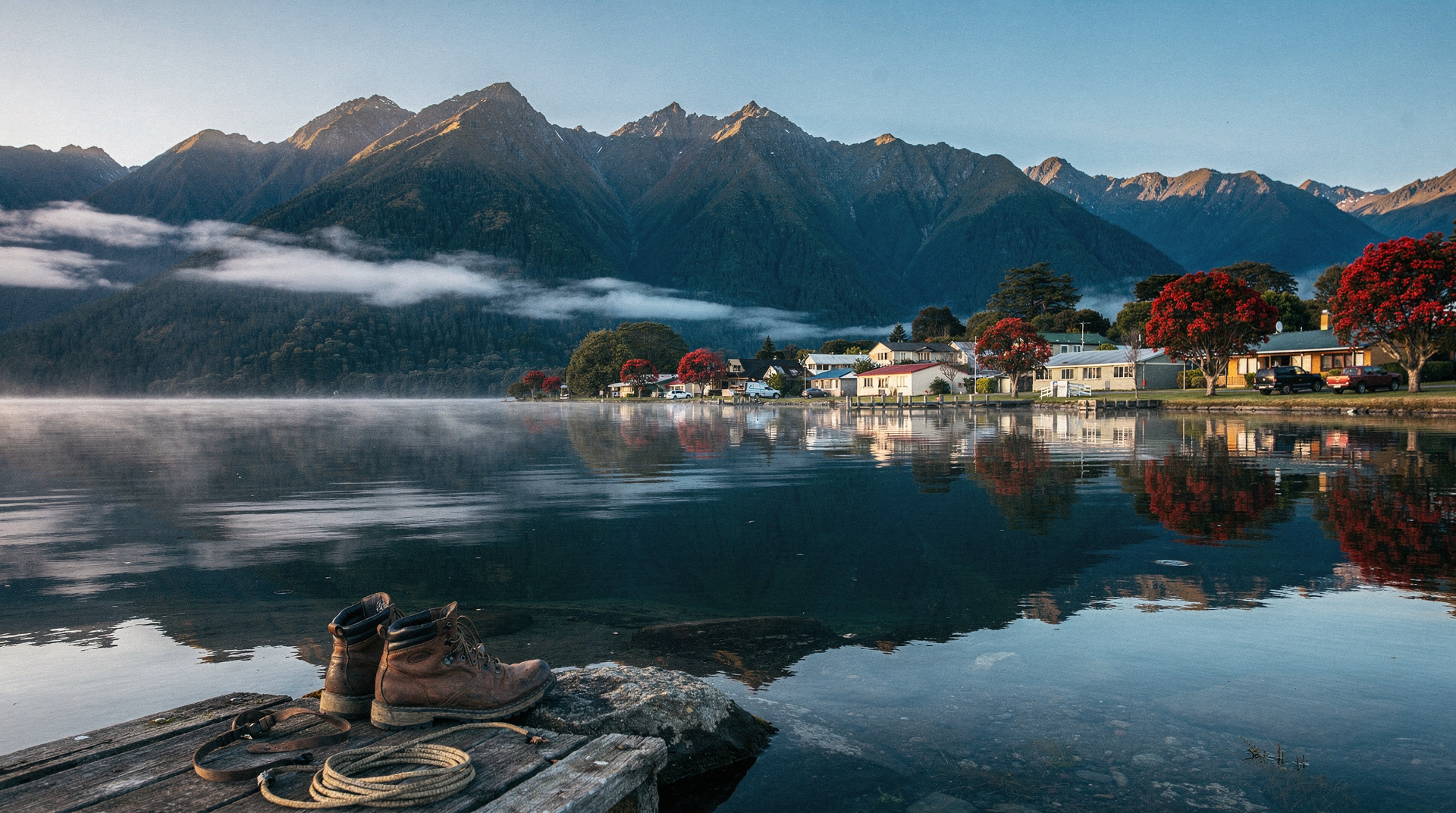
Te Anau
Everything you need to plan Te Anau: glowworm caves, Milford and Doubtful day trips, hiking, real NZD/USD/EUR prices, and where to stay.
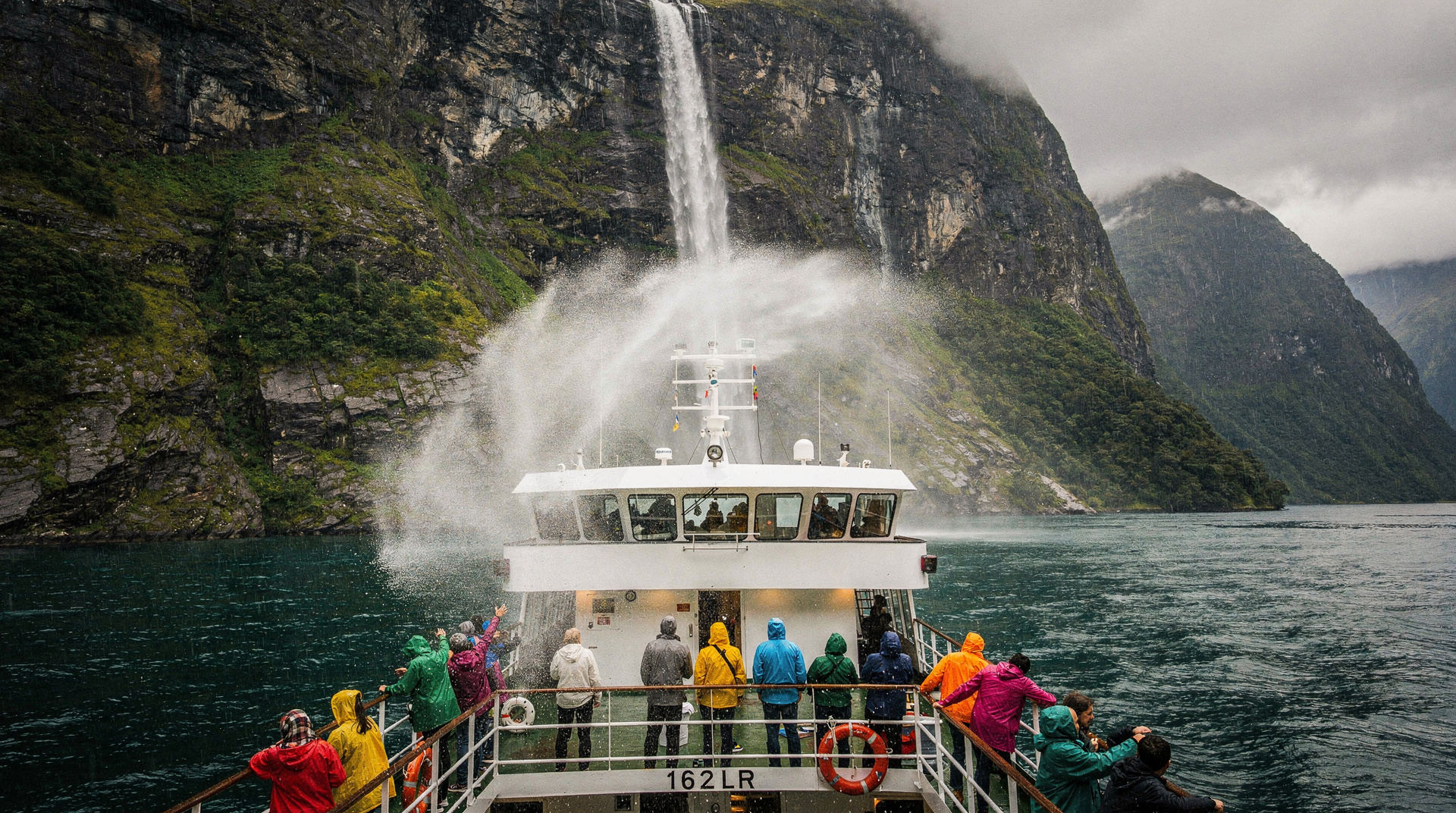
Milford Sound cruise guide — how to get the most out of Piopiotahi
Milford Sound cruise guide: best operators, day vs overnight, getting there from Queenstown or Te Anau, prices NZD/USD/EUR, and honest tips for Piopiotahi.
Fiordland
Honest Fiordland planner: Milford Sound vs Doubtful Sound, Te Anau base, Milford Track booking, real NZD/USD/EUR costs and what most guides won't tell you.
Milford Sound day trip from Queenstown — the honest guide
Milford Sound from Queenstown: 13-hour bus round trip vs fly-cruise-fly, real costs in NZD/USD/EUR, and why Te Anau is the better base. Honest guide.