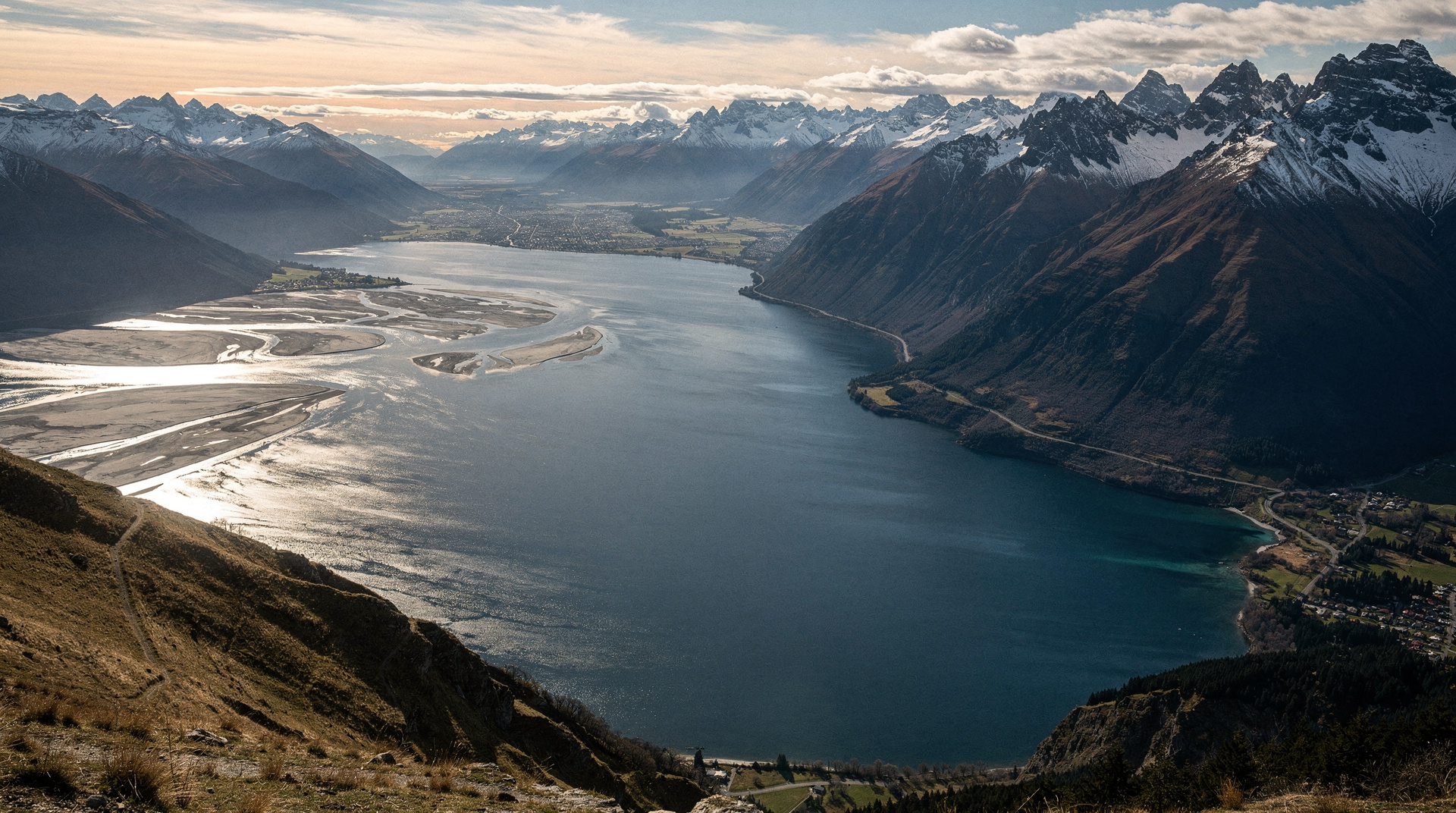
Lake Wakatipu — Queenstown's glacial lake guide
What is the best way to experience Lake Wakatipu from Queenstown?
The TSS Earnslaw is the iconic experience — a 1912 twin-screw steamship that still uses its original coal-fired engines. For active visitors, a kayak from the Queenstown Bay launches in any season. The lakefront walkway (free) gives the best photograph of The Remarkables over the water. Walter Peak farm cruise is the scenic splurge.
Queenstown’s defining body of water
Lake Wakatipu is 80 kilometres long, 378m deep, and occupies a glacially carved valley that once contained a glacier over 300m thick. The S-shaped lake (visible from any high viewpoint around Queenstown) dominates the geography of the southern Otago region — Queenstown, Glenorchy, Kingston, and Frankton all exist in relation to its shores.
| Where | Queenstown lakefront, Otago, South Island |
| Cost | Free lakefront walk; TSS Earnslaw cruise |
| Time needed | 1-3 hours for a cruise, half a day with Glenorchy |
| Getting there | Central Queenstown, walkable from town |
| Best time | Year-round; summer evenings for sunset light, winter for Remarkables snow |
The lake’s name in te reo Maori (Whakatipu-waka-tāpui — “the place where the demon is buried”) refers to the Maori legend of Matau, a giant (tipua) who slept in the valley. The burning of the giant by the hero Matakauri is said to have formed the lake — the giant’s heartbeat is said to cause the lake’s documented oscillating water level (a phenomenon called a seiche, now understood as barometric pressure-driven, but the correspondence with “heartbeat” is remarkable). The lake rises and falls approximately 12cm every 5 minutes.
On the water: what’s worth doing
TSS Earnslaw cruise
The TSS Earnslaw is a 1912 twin-screw coal-fired steamship — the oldest vessel in the southern hemisphere still operating commercially. The ship still uses its original 1911 compound steam engines. The engine room is viewable on tours, and the coal-shovelling crew (approximately 50 tonnes of coal per year) are part of the experience.
The Earnslaw runs several routes:
The Queenstown: TSS Earnslaw Cruise of Lake Whakatipu is the standard scenic cruise — 60-90 minutes around the lake with mountain views.
The Queenstown: Walter Peak Gourmet BBQ & Lake Whakatipu Cruise combines the Earnslaw crossing with a farm barbecue dinner at Walter Peak Station (a historic sheep station on the western shore, accessible only by boat). The Walter Peak experience — farm demonstrations, high-country sheepdog work, and the Earnslaw return — is the best single activity for visitors to Queenstown who want something beyond adventure sports.
The Queenstown: TSS Earnslaw Cruise & Walter Peak Farm Tour covers the daytime version of the Walter Peak crossing with farm tour.
For an extended Walter Peak experience, the Queenstown: Walter Peak Horse Trek & Queenstown Lake Cruise includes a 2-hour horse trek through the high-country station before the return cruise.
Kayak and paddleboard
Queenstown Bay (the main waterfront) has kayak and paddleboard hire from several operators. A gentle paddle along the bay with mountain views costs NZD 35-55 / USD 21-33 / EUR 19-30 per hour. The water temperature (10-14°C in summer, 6-8°C in winter) requires respect — capsize in winter is a genuine cold-water risk. Wear provided wetsuits in all seasons.
Scenic cruise (smaller boats)
The Spirit of Queenstown Lake Wakatipu Scenic Cruise operates a smaller vessel for more intimate lake cruises.
The Queenstown: Lake Wakatipu Scenic Cruise covers standard scenic cruising with on-board commentary.
The lakefront: walking and views
The Queenstown lakefront walkway runs 2.5 km from the Queenstown Gardens peninsula to the Frankton arm. The path is flat, paved, and accessible to all mobility levels. The best photographic position is from the Queenstown Gardens promontory — looking south across the lake to The Remarkables — ideally in the late afternoon when the mountains catch golden light.
The Queenstown Gardens themselves (free, pleasant, 1 hour to walk) occupy the peninsula and include a disc golf course, rose gardens, and the flat skating rink in winter.
Glenorchy: 46 km north of Queenstown at the head of Lake Wakatipu, Glenorchy is where the lake narrows and the surrounding mountains close in dramatically. The drive is one of the finest in Queenstown region — the road hugs the western shore through Paradise and Kinloch. From Queenstown: Glenorchy and Paradise Scenic Half-Day Tour makes this accessible as a half-day from Queenstown with a guide.
Frankton and the eastern shore
Away from the postcard views of central Queenstown, the eastern arm of the lake toward Frankton has its own character. Frankton is now largely commercial and residential (the airport, retail parks, the marina), but the lakefront path along this stretch is quieter than the town centre and offers a different angle on The Remarkables — full-on rather than side-lit. Kelvin Peninsula, jutting into the lake near Frankton, has some of Queenstown’s more understated residential streets and a small public beach that locals use more than visitors. It’s a useful loop for runners and cyclists staying at Frankton-area accommodation who want lake access without walking into town first.
Choosing between the cruises
With so many boat options on the same lake, it helps to decide what you actually want from the time on the water. If you simply want to see the lake and the mountains from a deck with a coffee in hand, the standard Earnslaw sailing or one of the smaller scenic boats does that job. If you want to understand how a high-country sheep station works, the Walter Peak options add the farm, the dogs and the setting that you cannot reach by road. And if you would rather spend the afternoon in the saddle, the horse trek combination turns the same crossing into a proper outing.
Couples often prefer the evening dinner sailing for the light, while families with younger children tend to get more out of the daytime farm visit, where the animals and the engine room keep attention from drifting. Travellers who get restless on boats should lean towards the shorter scenic sailings rather than the long combinations. Whichever you pick, a windproof layer matters more than most people expect: the lake generates its own breeze, and the open decks feel colder than the weather in town suggests.
For a wider view of how the lake fits among the other things to do around town, the Queenstown food tour and the TSS Earnslaw steamer guide are useful companions, and the kid-friendly Queenstown guide covers which of these suit children best.
The Maori legend of Wakatipu in full
The legend of Whakatipu-waka-tāpui tells of Matau (also called Kāhu in some versions), a giant demon who slept in the valley and abducted a chief’s daughter, Manata. The hero Matakauri (Manata’s lover) burned the sleeping Matau to rescue her, setting the giant’s bed of bracken alight. The fire burned so intensely that the giant’s body melted into the earth, forming the lake depression. The S-shape corresponds to the giant’s curled sleeping position. The heartbeat rhythm of the seiche corresponds to the giant’s still-beating heart at the bottom.
The legend was well-documented by early ethnographers and represents one of the richest origin narratives associated with any New Zealand lake.
Wildlife on the lake
Black-backed gull (karoro): Common. Less common in winter.
Canada goose: Large flocks winter at Frankton Arm and the Kingston end of the lake. Non-native, controversial, but visually dramatic.
Black shag (kawau-paka): Seen diving and roosting on rocky outcrops throughout the lake.
Scaup: Small diving ducks, found in sheltered bays. New Zealand’s only endemic diving duck species.
Waders at Frankton marshes: Stilts and oystercatchers in the shallow tidal zone at Frankton arm.
Seasonal variations
Summer (December-February): Long evenings, the lake is at its warmest (12-14°C for swimming — cold but manageable). The Earnslaw runs maximum schedules. Sunset cruises run until 9:30pm in December.
Autumn (March-May): Exceptional light quality, the eastern-facing mountains catch golden morning light on the lake. Less crowded than summer. The lake water remains swimmable in March.
Winter (June-August): The Remarkables in snow above the lake is one of New Zealand’s great winter spectacles. The Earnslaw and Walter Peak cruises continue year-round. The lake surface remains open (unlike some high-altitude lakes) — winter cruising is possible but cooler.
When the weather turns
Queenstown weather changes quickly, and the lake is where you notice it first. Low cloud can hide the mountains for a morning and then clear by lunchtime, so it is worth keeping the schedule flexible rather than locking the lake into a single fixed slot. A cruise on a grey day is still atmospheric, with cloud sitting on the peaks and the water turning slate, but the postcard photographs of The Remarkables belong to clear spells. If the forecast is poor, move the lakefront walk and the Glenorchy drive to a better day and use the grey one for something indoors or on the water.
Strong wind can also change how the lakefront feels, and it affects small craft far more than the larger steamship. If you plan to hire a kayak or paddleboard, go early in the day when the surface is usually calmer, and ask the operator about conditions before you commit. For other ideas that work in changeable weather, see the guide to day trips from Queenstown and the adventure activities overview.
Fitting the lake into a longer trip
Most visitors give the lake a single evening or a half-day, and that is a sensible amount for a town visit. Those staying longer can treat it as the hub of the area: the lakefront for slow mornings, the water for one standout outing, and the surrounding valleys for the rest. A few other pages help when you are building the wider plan.
- If you are deciding where to base yourself in the region, the Queenstown vs Wanaka comparison sets the two lakeside towns side by side.
- For active days that start from the lakefront, the day hikes around Queenstown are the natural next step.
- For a heavier dose of adrenaline after a gentle cruise, the Shotover jet boat guide and the bungy options in Queenstown are the usual choices.
- If your trip continues towards the fiords, the Milford Sound day trip from Queenstown and the Fiordland destination page show what lies beyond the lake.
- Travellers building a full South Island route can slot Wakatipu into the 7-day South Island itinerary.
Combining Wakatipu with Glenorchy and the Dart River
For visitors with more than a day in Queenstown, the lake is also the gateway to some of the region’s best scenery further afield. The road to Glenorchy hugs the western shore, and beyond the township the Dart River valley opens into the landscape used for several Lord of the Rings scenes. A jet boat trip on the Dart, or a half-day 4WD tour into the Paradise valley, extends a lake visit into a fuller day out of town — see the day trips from Queenstown guide for how this fits alongside other half-day options like Arrowtown or the wine trail.
Cost breakdown (NZD / USD / EUR)
| Experience | NZD | USD | EUR |
|---|---|---|---|
| TSS Earnslaw scenic cruise | 75-95 | 45-57 | 41-52 |
| Walter Peak BBQ dinner cruise | 145-165 | 87-99 | 80-91 |
| Walter Peak farm tour (day) | 105-125 | 63-75 | 58-69 |
| Horse trek + Earnslaw combo | 235-265 | 141-159 | 130-146 |
| Lakefront walk | Free | Free | Free |
| Kayak hire (per hour) | 35-55 | 21-33 | 19-30 |
Frequently asked questions about Lake Wakatipu — Queenstown’s glacial lake guide
Why does Lake Wakatipu fluctuate?
The lake level oscillates approximately 12cm every 5 minutes — a phenomenon called a seiche, caused by pressure waves from barometric pressure changes. The frequency and amplitude are consistent enough that in the 19th century, before scientific explanation, local residents linked it to a heartbeat, leading to the Maori legend.
Is Lake Wakatipu good for swimming?
The lake is swimmable in summer but cold. Water temperatures peak at 12-14°C in January-February. The Queenstown beach (near the wharf) is the main swimming spot, with gradual depth. Frankton arm is shallower and slightly warmer. Do not swim in winter — cold water incapacitation risk is significant.
Can I walk from Queenstown to Glenorchy via the lake?
Not entirely — the road (SH6) hugs the lake on sections but there’s no complete shoreline walking track between Queenstown and Glenorchy. The Glenorchy–Paradise road does have excellent walking options at the northern end of the lake.
Related guides and reading
Related guides
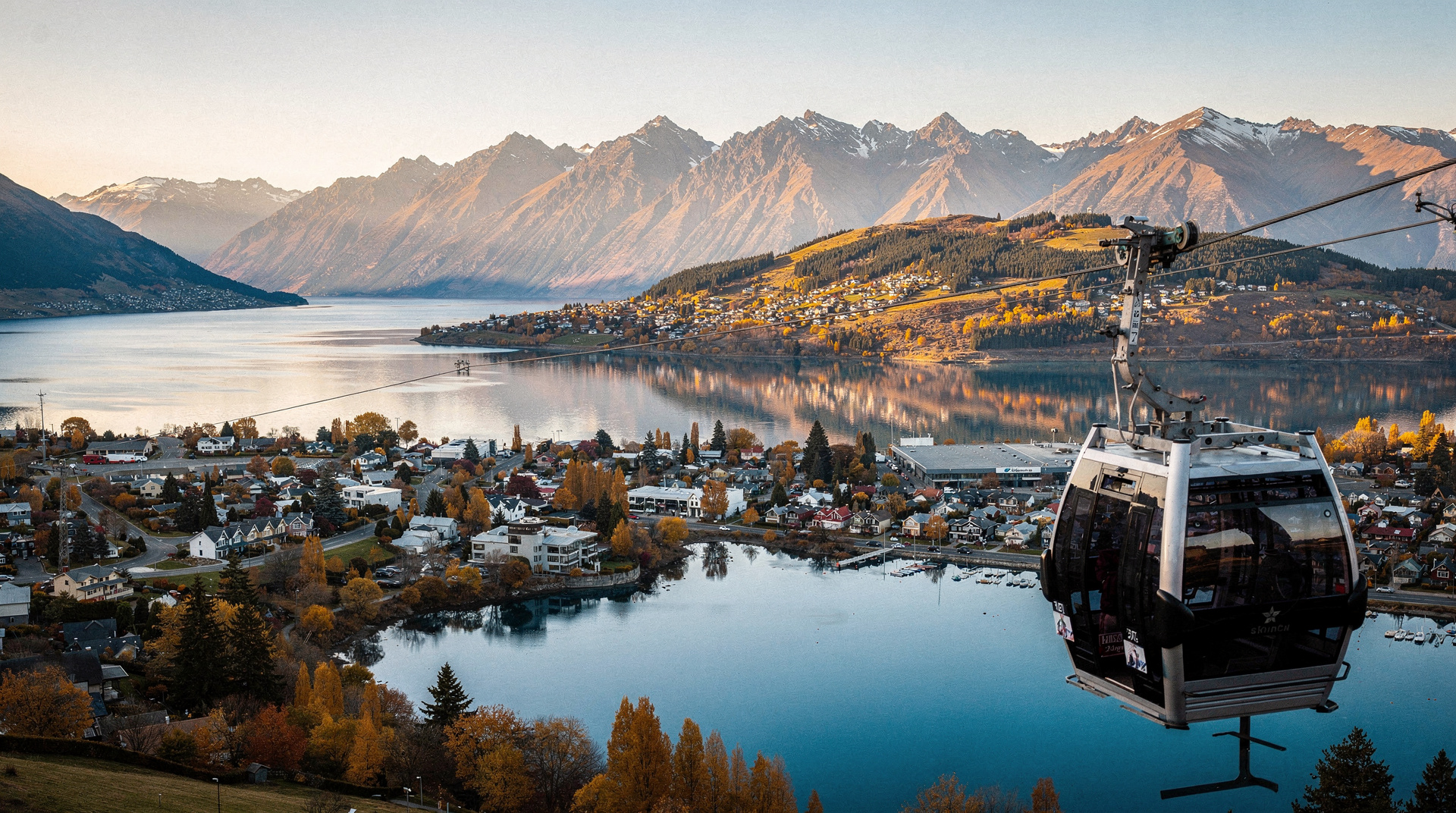
Queenstown
The honest Queenstown planner: bungy, jet boat, ski, scenic flights — real prices in NZD/USD/EUR, what to skip and what's worth your money.
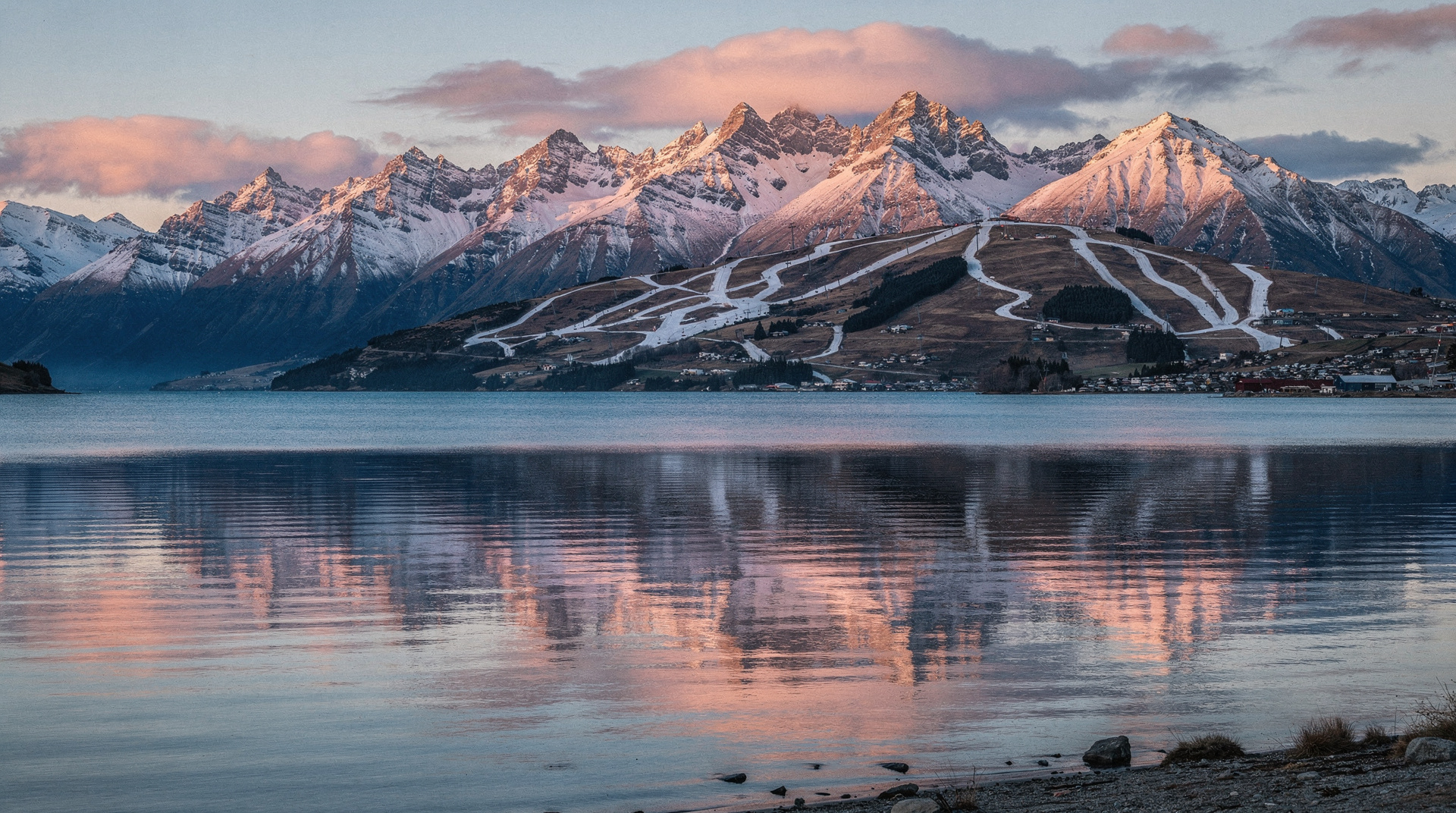
The Remarkables — Queenstown's ski field guide
The Remarkables ski guide: lift passes, terrain, access, summer hiking. Queenstown's iconic ski backdrop. NZD 139-165 day pass. Honest 2026 guide.
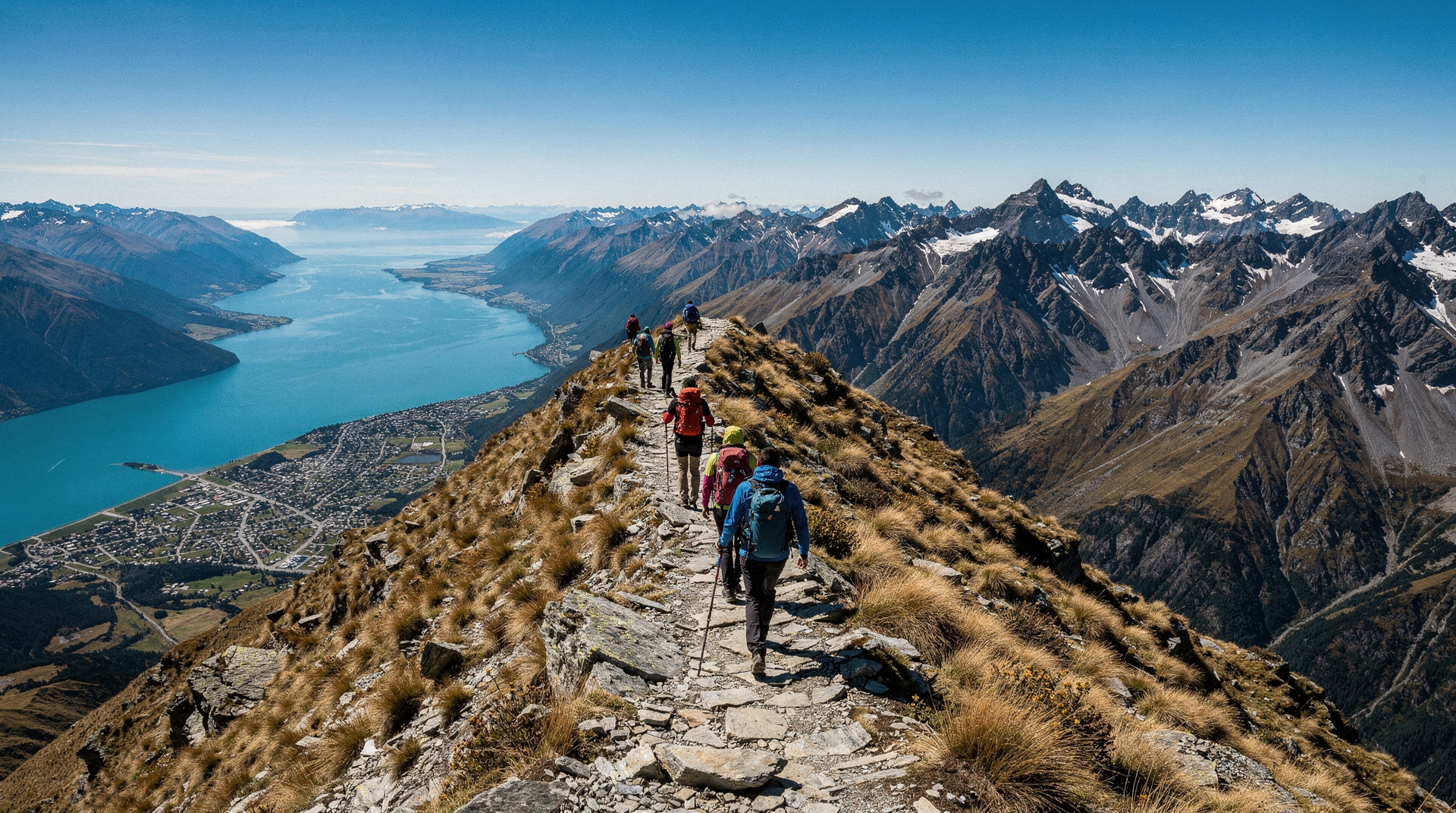
Day hikes around Queenstown — six best options
Six best day hikes near Queenstown: Ben Lomond (1748m), Queenstown Hill, Tiki Trail, Moke Lake loop, Bob's Peak, Deer Park Heights.
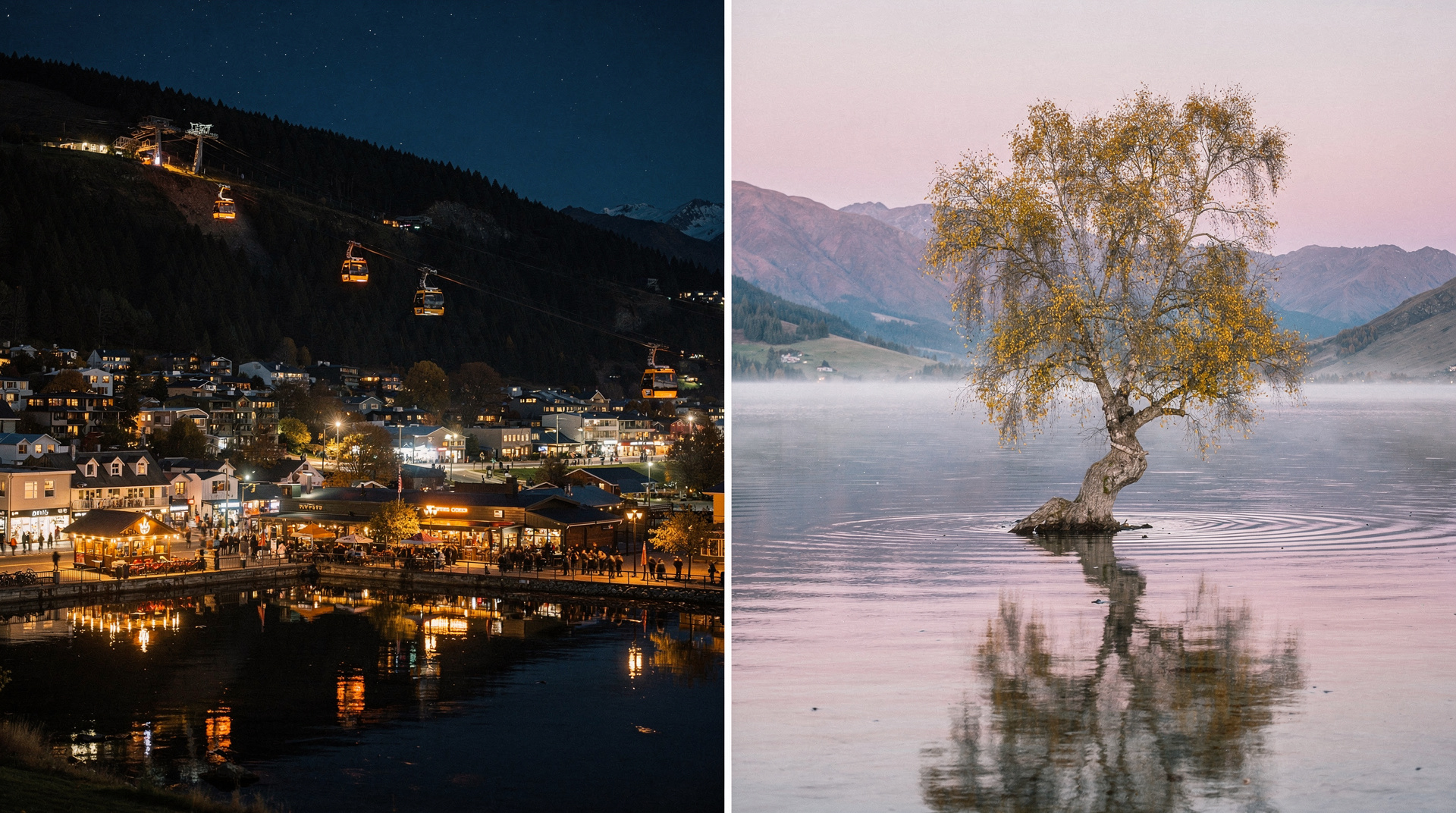
Queenstown vs Wanaka
The honest Queenstown vs Wanaka comparison: prices, crowds, ski, hikes, vibe — with a clear verdict for adventure, families, couples and budget travelers.
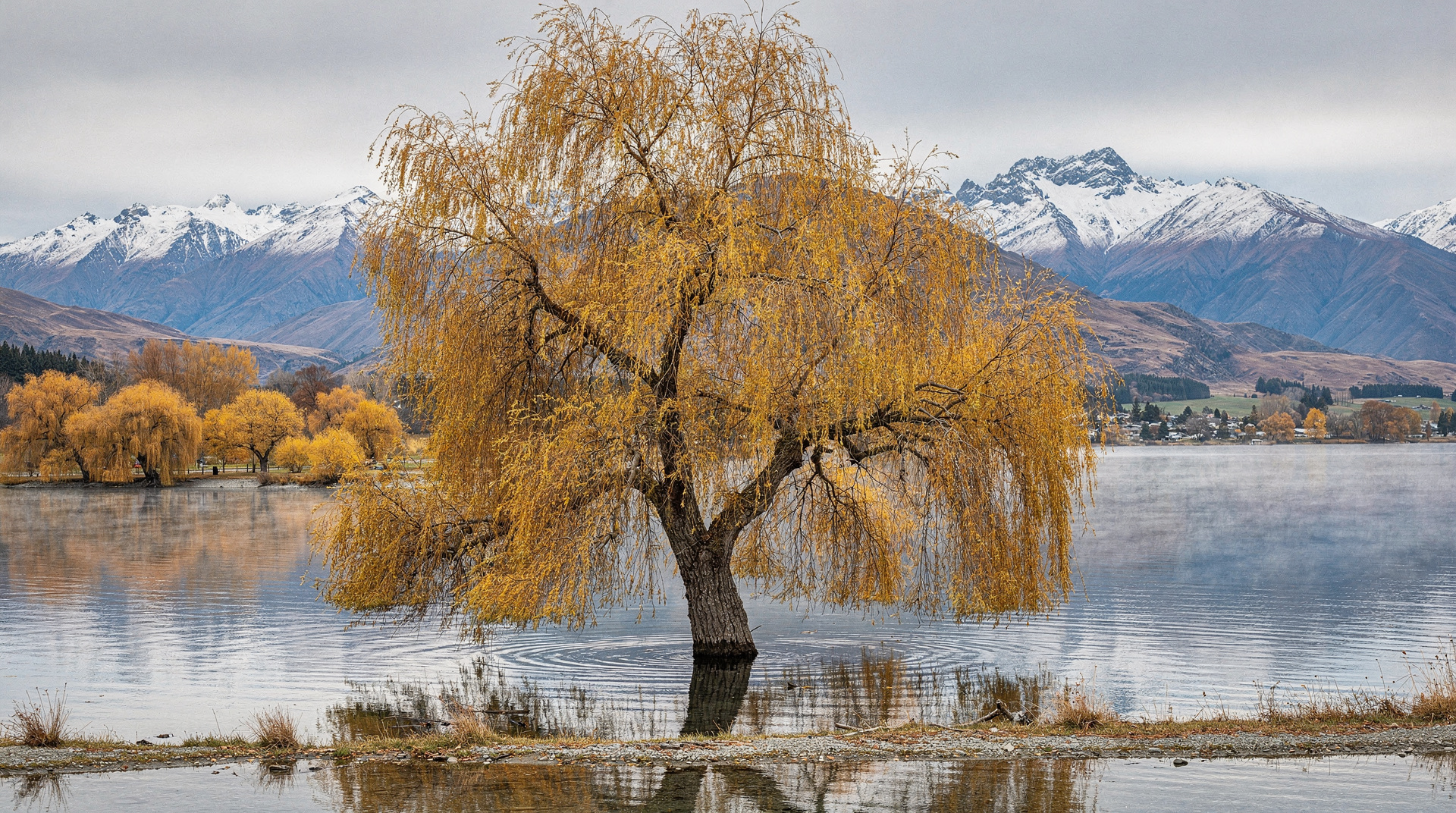
Lake Wanaka — guide to Queenstown's quieter rival
Lake Wanaka guide: 192 sq km glacial lake, the famous willow tree, kayak, paddleboard, hiking, cruises.