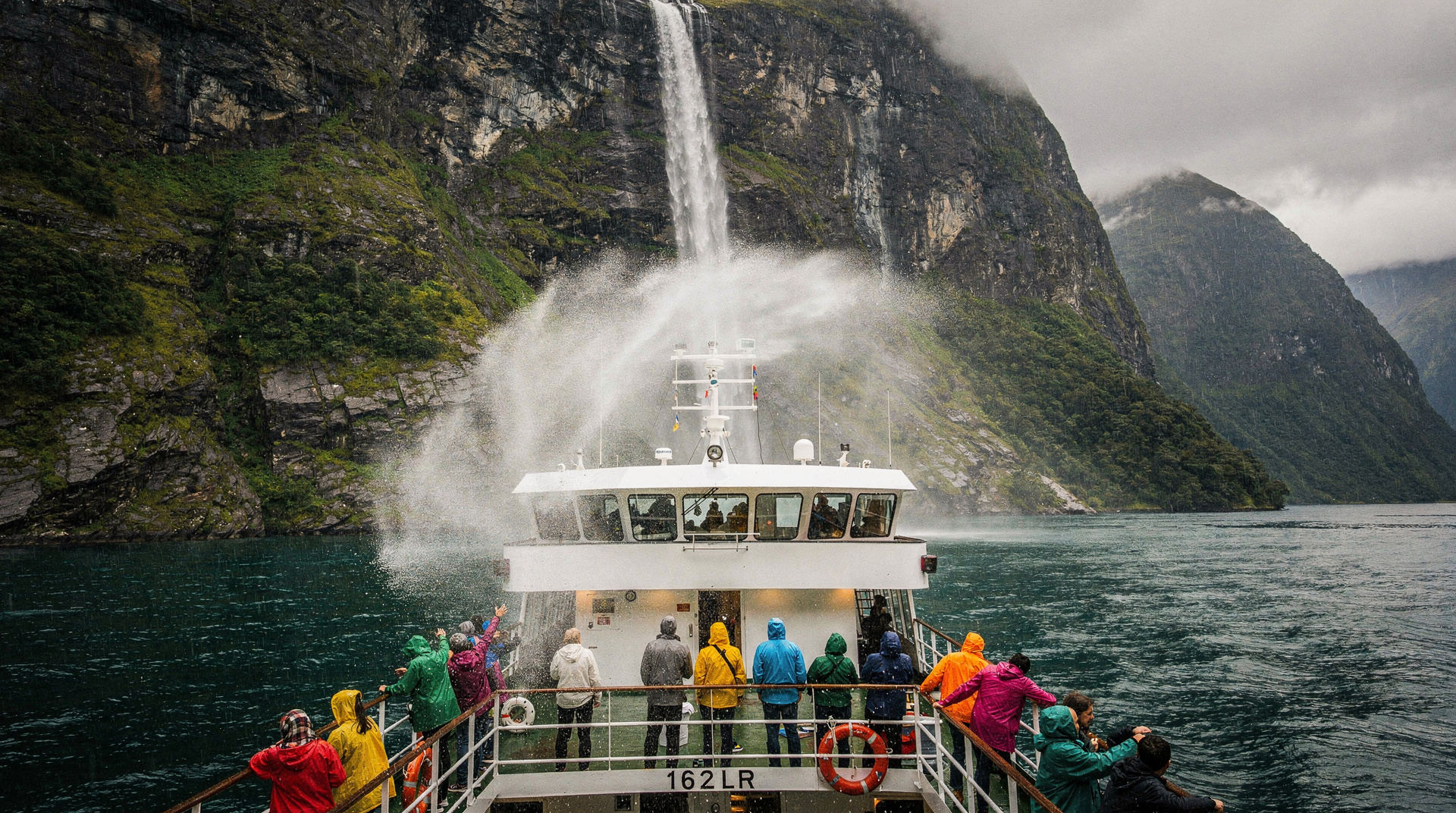
Milford Sound overnight cruise review — is it worth the premium?
Is the Milford Sound overnight cruise worth it over a day cruise?
Yes, for specific travellers — primarily those who want the fiord at dawn without other boats, who want to kayak in silence at 6am, or who are combining with a Te Anau base. The overnight experience costs NZD 295-450 versus NZD 75-120 for a day cruise, so the premium is significant. It is not a luxury product — cabins are compact and the boat is a working vessel.
| Where | Milford Sound wharf, departing late afternoon |
| Cost | NZD 295–450 per person, standard to premium cabin |
| Time needed | Overnight, roughly 4pm departure to 9am disembark |
| Getting there | 1.5 hrs from Te Anau or 3.5 hrs from Queenstown to the wharf |
| Best time | December–March for weather and daylight; book 3–4 weeks ahead |
The verdict — ★ Splurge
Milford Sound — Piopiotahi in te reo Maori — is one of the most visited natural attractions in New Zealand. The day cruise is genuinely excellent and the right choice for most visitors. The overnight cruise is something different: a quieter, slower, more atmospheric version of the same fiord that rewards patience and penalises those who expect hotel-standard comfort.
The fundamental case for the overnight is simple. The fiord at 6am, with no other boats and the granite walls catching the first light, is not the same experience as Milford Sound at 11am with five other cruise vessels in frame. The overnight product puts you there. It also gives you kayaking in still water before the day-trip traffic arrives, which is the single most compelling activity on offer.
The fundamental case against it is also simple. The cabins are small. The beds are bunks in many configurations. The boat rocks in any weather above calm. The food is hearty and abundant but not refined. If your expectation is a boutique lodge experience on water, this will disappoint. If your expectation is a functional vessel that positions you in an extraordinary location at extraordinary times, you will leave satisfied.
Milford Sound: Overnight Cruise with Water Activities
Milford Sound overnight cruise with water activities — kayaking, nature walk, fiord at dawn.
From NZD 295–450 / USD 177–270 / EUR 162–248
What you actually get
Departure is typically from the Milford Sound wharf in the late afternoon, between 4pm and 5pm depending on the operator and season. The vessel spends the evening cruising to the mouth of the fiord — the point where Milford Sound meets the Tasman Sea — before anchoring in a sheltered bay overnight. The fiord is 16 km long from the wharf to the sea; the journey takes 2-3 hours with stops.
The afternoon cruise covers the main day-trip route in reverse, with most other boats heading back toward the wharf. You will see Stirling Falls (155 metres), Mitre Peak (1,692 metres), Lady Bowen Falls, and the dark walls of the Pembroke Glacier path. The guides on overnight cruises tend to be more relaxed than day-cruise commentary — there is less urgency, and the evening light is often better than midday.
After anchoring, dinner is served. Typically a hot buffet — roast meats, vegetables, bread, soup. The quality is better than the price point might suggest. Wines and beer are available at bar prices (NZD 8-14 per drink). The night sky from the deck, well inside the no-light-pollution Fiordland National Park boundary, is genuinely spectacular on clear nights. Milford receives 182 rain days per year; clouds are common and the full star view is not guaranteed.
The early morning is the reason to be here. By 5:30am, before any day-trip boats have arrived from Te Anau (3.5 hours away), the fiord is yours. The silence is real — no engine noise from other vessels, no commentary announcer, no crowds. Mitre Peak in morning light is a different mountain from Mitre Peak at 11am. Guided kayak sessions typically depart at 6am. Paddling in Milford Sound in that light and silence is an experience with no close equivalent in New Zealand.
Breakfast is served back on board before disembarkation around 9am, roughly when the first day-trip boats are beginning their 3.5-hour drive from Queenstown.
What it costs and what’s not included
Cost breakdown
Milford Sound overnight cruise, 2026 prices. NZD/USD/EUR at 1 NZD ≈ 0.60 USD ≈ 0.55 EUR.
| Item | NZD | USD | EUR | Verdict |
|---|---|---|---|---|
| Overnight cruise (standard cabin, per person) | 295–380 | 177–228 | 162–209 | ★ Splurge |
| Overnight cruise (premium cabin, per person) Private cabin with window, not bunk configuration | 380–450 | 228–270 | 209–248 | ★ Splurge |
| Day cruise for comparison (2h nature cruise) | 75–120 | 45–72 | 41–66 | ✓ Worth it |
| Kayak session add-on (dawn) Often included in premium cabin packages | 55–75 | 33–45 | 30–41 | |
| Te Anau–Milford shuttle (return) | 80–120 | 48–72 | 44–66 | |
| Queenstown–Milford coach (return, day trip) Compare: 13h round trip vs overnight | 110–160 | 66–96 | 61–88 | |
| Drinks on board (bar prices) BYO not permitted on most vessels | 8–14 | 5–8 | 5–8 |
Included in the overnight price on most operators: dinner, breakfast, guided nature walk on shore, kayak use or guided kayak session, and all in-fiord activities. Excluded: transport to Milford Sound wharf, drinks, and any Queenstown-based day-trip package costs.
Who should book this — ★ Splurge
Photographers and anyone who cares deeply about light quality. Milford Sound at 6am in calm conditions is one of the most photographable environments in the southern hemisphere. The still water reflections of Mitre Peak that appear in magazine covers are taken in this window. Day-trip visitors almost never see this light.
Travellers based in Te Anau. If you’re sleeping in Te Anau rather than Queenstown, the overnight adds one night on the fiord and returns you to Te Anau in the morning. The total cost and logistical complexity are much lower than the Queenstown calculation. This is the highest-value version of the overnight.
People who have already done the day cruise. If you’ve been on a Milford Sound day cruise previously and want a genuinely different experience, the overnight delivers what the day cruise cannot: solitude, dawn, and extended time in the fiord. It is not just a longer version of the same thing.
Small groups or couples for whom shared cabin logistics are not a deterrent. The bunk cabin format means you’re sharing a small space with strangers unless you book a private cabin (priced higher). If you’re travelling solo or as a couple and comfortable with basic shared accommodation, the standard cabin is workable.
Slow travellers with 3+ weeks in New Zealand. If your South Island itinerary includes a week in Fiordland, the overnight cruise fits naturally into a Milford Track or Kepler Track itinerary. For visitors with a tight 10-day schedule, the day cruise is more time-efficient.
Who should skip this — ✕ Skip
Anyone prone to motion sickness. The fiord is calmer than open ocean but is not glassy in all conditions. Milford receives over 6,000 mm of rain annually and the weather comes in fast. Rough conditions in the fiord are not rare. If you get nauseated on boats, the day cruise is also affected but the overnight means you’re sleeping on a rocking vessel. Bring medication regardless.
Families with young children. The cabins are small. The 5:30am kayak session does not work with young children’s sleep rhythms. The vessel is a working boat, not a family resort. The day cruise is significantly better suited to families.
Visitors expecting boutique comfort. Standard cabins are compact, bunks are functional rather than comfortable, and the bathrooms are shared. The product is aimed at travellers who prioritise experience over accommodation quality. If the Blanket Bay Lodge is your normal South Island standard, the overnight cruise will be a significant step down in physical comfort.
Anyone on a tight 10-day New Zealand itinerary. The day cruise returns you to Te Anau or Queenstown by 5pm. The overnight costs an extra day. On a compressed schedule, the day cruise delivers the core visual content of Milford Sound — Mitre Peak, the waterfalls, the dark geology — more efficiently.
Choosing between the two main operators
Real Journeys’ Milford Mariner is the largest and most established overnight product, with the most departures and the most consistent booking availability — the safe default if you’re booking within a few weeks of travel. Smaller operators running 8-12 passenger vessels charge more but offer a genuinely different feel: fewer strangers sharing your dawn, more flexible timing on the kayak session, and a crew that has more time per guest. For most first-time visitors, the larger operator delivers the core experience (dawn, silence, kayaking) reliably; the smaller boutique operators are worth the premium mainly for travellers who have already done a Milford overnight once and want a quieter repeat.
Day cruise vs overnight — the direct comparison
The standard day cruise from Te Anau or Queenstown is not a lesser experience. The fiord is dramatic at any time. A quality 2-hour nature cruise covers the full 16 km of navigable water, stops near the waterfalls, provides good chances of seeing fur seals and bottlenose dolphins, and delivers the views that have made Milford Sound famous. On a clear day, the day cruise is extraordinary.
The overnight adds: extended time, the dawn window, the silence of early morning before other boats arrive, and kayaking access. It subtracts: comfort, convenience, and a good night’s sleep.
The Queenstown day-trip format specifically — coach from Queenstown, day cruise, coach back — involves approximately 13 hours including 6+ hours of driving for 2.5 hours on the fiord. This is a genuinely tiring format and one of the more complained-about NZ experiences. Staying in Te Anau and doing the day cruise from there (1-hour drive each way) is categorically better than the Queenstown day trip, and often comparable in cost once accommodation is factored in. The Queenstown to Milford Sound coach and cruise day trip is worth knowing exists, but Te Anau-based logistics are preferable for anyone with the flexibility.
Milford Sound: Nature Cruise on a Modern Catamaran
Milford Sound 2h nature cruise on modern catamaran — the standard day cruise for comparison.
From NZD 75–120 / USD 45–72 / EUR 41–66
Getting to Milford Sound
Milford Sound is at the end of SH-94, 120 km northwest of Te Anau and 290 km from Queenstown. The drive from Te Anau takes approximately 1.5 hours in good conditions; from Queenstown, allow 3.5 hours. The Homer Tunnel (1,270 metres) is a single-lane controlled tunnel — delays of 10-20 minutes are common in both directions during peak season.
SH-94 is subject to avalanche closures in winter and is sometimes impassable in severe weather. Check the NZTA website before departure in any season. The road is sealed throughout but narrow with no passing lanes on the alpine section.
There is no public bus service between Queenstown and Milford Sound. Scheduled shuttles operate from Te Anau. Rental car access to Milford is unrestricted.
Honest red flags
Rain is not exceptional — it is normal. Milford Sound averages 182 rain days per year, with annual rainfall of around 6,000 mm at the wharf. This is nearly 10 times the annual rainfall of London. Many visitors arrive expecting dramatic sunshine and find grey mist instead. The fiord in rain is still worth seeing — the waterfalls multiply during heavy rain, and the cloud effects on the granite walls are striking. But the photography is different, and the dawn window on an overcast night is less spectacular. This is not a problem to be solved; it is the nature of the place.
Overnight boat rocking. In any wind above calm, vessels at anchor move noticeably. Light sleepers will have an interrupted night. Earplugs help with noise; the motion is harder to mitigate.
The cabin bathroom situation. Standard cabin configurations mean shared bathrooms with other guests. On a busy overnight sailing (which is most of them in high season), queuing for showers in the morning before breakfast is realistic. Plan accordingly.
Sandflies. Milford Sound has a significant sandfly population on shore. The shore walk and kayaking sessions involve exposure to sandflies during the warmer months. Bring DEET-based repellent. This is not an exaggeration. Sandflies at Milford Sound are aggressive and persistent.
Phone signal and connectivity. There is little to no mobile signal once the vessel is anchored overnight in the fiord. Download anything you need (maps, entertainment, messages to send later) before boarding. For most travellers this turns out to be a feature rather than a drawback — an enforced disconnection that matches the pace of the experience — but it’s worth knowing in advance rather than discovering it once underway.
Getting to the wharf if you’re not staying overnight elsewhere
If the overnight cruise doesn’t fit your schedule or budget, both the Milford Sound day trip from Queenstown and Milford Sound day trip from Te Anau guides cover the full day-cruise logistics referenced above, including realistic timings and Homer Tunnel wait times. For a comparison of flying versus the coach for the Queenstown leg specifically, see the Milford scenic flights guide — some visitors fly in for the overnight cruise and coach back the next day, splitting the difference on cost and comfort.
Alternatives if you skip the overnight
Doubtful Sound overnight cruise. Doubtful Sound is less visited than Milford and in many respects more dramatic — it is three times the size, deeper, and requires a boat crossing of Lake Manapouri and a coach transfer over Wilmot Pass to access. There are no road connections to Doubtful Sound, which limits day-trip volume significantly. The overnight experience at Doubtful Sound involves even less human traffic than Milford. It is this site’s preferred alternative for visitors seeking solitude over convenience — see the Doubtful Sound cruise guide for the full write-up, and Milford Sound vs Doubtful Sound if you’re still deciding between the two.
Kayaking Milford Sound (day session). The Milford Sound kayak tour is available as a standalone activity, not requiring the overnight cruise. A 3-hour paddle into the fiord reaches distances no cruise vessel does. You get close to waterfalls and fur seal haul-outs. The water-level perspective is fundamentally different from the deck of a cruise boat. Not as dramatic as the dawn session from the overnight, but an excellent standalone activity.
Milford Track (4-5 days, Great Walk). The track follows the Clinton Valley from Lake Te Anau to the Milford Sound wharf, crossing the MacKinnon Pass at 1,154 metres. It is widely considered New Zealand’s most scenic multi-day walk. The end point is Milford Sound — you arrive having walked into the fiord rather than driven or flown. Bookings through DOC open in May for the following season. See the Milford Track guide for booking logistics.
What to pack for the overnight
The overnight cruise involves more time outdoors than the day cruise, and the shoreline nature walk plus the dawn kayak session both put you in direct contact with Fiordland’s weather and sandflies. Bring a proper waterproof jacket (not just water-resistant), warm layers for the evening deck and pre-dawn kayak — temperatures on the water at 5:30am are noticeably colder than at anchor mid-evening — and closed shoes for the shore walk. DEET-based insect repellent is non-negotiable; sandflies at the shore stops are aggressive regardless of season. A dry bag or waterproof phone pouch protects your camera during the kayak session, and a headlamp is useful for the early pre-dawn wake-up call, since cabin lighting on most vessels is minimal.
Frequently asked questions about Milford Sound overnight cruise review — is it worth the premium?
What is the best season for the Milford Sound overnight cruise?
December to March for the best weather probability and the longest daylight hours. The 6am dawn window in summer sees the light arrive by 5:30am — very early by winter standards. April-May and September-October are the best shoulder-season options, with fewer boats and good weather windows. June-August is operational but winter conditions in Fiordland are full and the daylight for the dawn session is limited to around 7:30am.
Do I need to book the overnight cruise far in advance?
Yes. December-February: 3-4 weeks minimum, often longer for specific sailing dates. Outside peak season: 1-2 weeks. The product has limited berths (typically 20-40 passengers per vessel) and demand is consistent throughout the year.
Are there alternatives to the Real Journeys Milford Mariner?
Several operators run overnight cruises on the fiord. Real Journeys’ Milford Mariner is the most established. The Southern Discoveries Milford overnight is another well-rated option. Smaller, more boutique operations with 8-12 passengers also run on the fiord and offer a more exclusive experience at significantly higher price points.
Is seasickness a concern at anchor overnight?
The vessel is anchored in a sheltered bay inside the fiord rather than in open water, which reduces motion significantly compared to coastal anchorages. In calm conditions, motion overnight is minimal. In wind conditions, the rocking is noticeable. If you have significant motion sickness history, take preventative medication — it is more effective when taken before symptoms appear.
Can I combine the overnight cruise with the Milford Track?
Yes. Milford Track walkers exit at the Milford Sound wharf and can board an overnight cruise directly. This is a well-established combination — you arrive at Milford Sound on foot, spend a night on the fiord, and depart by cruise the following morning. Logistically it requires pre-booking both the track (DOC) and the cruise, and coordinating your exit day. The end-to-end experience is exceptional.
Should I book the overnight cruise on Milford Sound or Doubtful Sound?
Milford is more accessible (road access, more frequent departures) and more visually dramatic with Mitre Peak; Doubtful Sound is quieter and larger but requires a Lake Manapouri crossing and Wilmot Pass coach transfer to reach. See Milford Sound vs Doubtful Sound for the full comparison — if solitude matters more than convenience, Doubtful Sound’s overnight is arguably the better version of this same experience.
Related guides
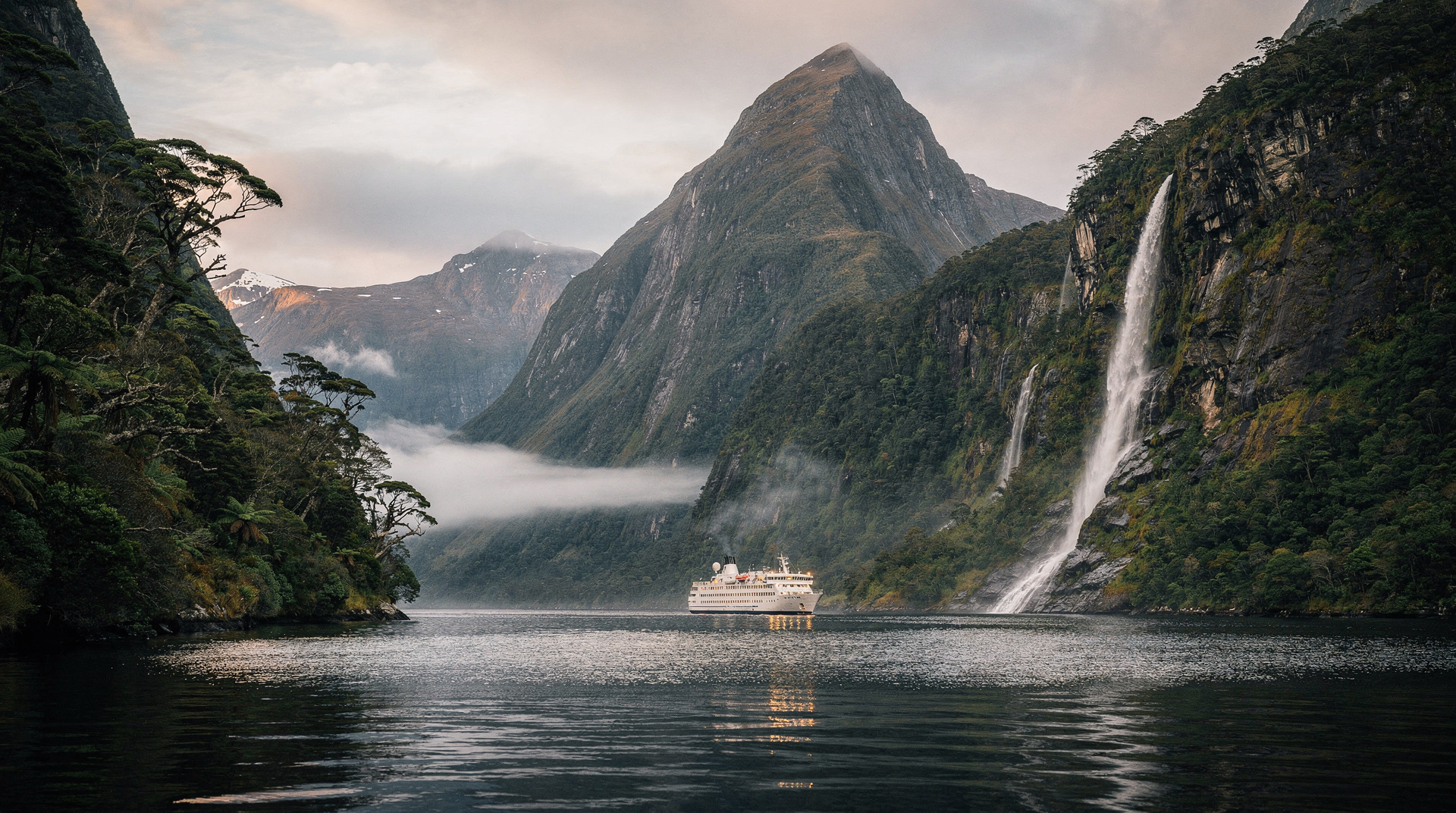
Milford Sound
Everything honest about Milford Sound: best cruises, scenic flights, real NZD/USD/EUR prices, and why you should stay in Te Anau first.
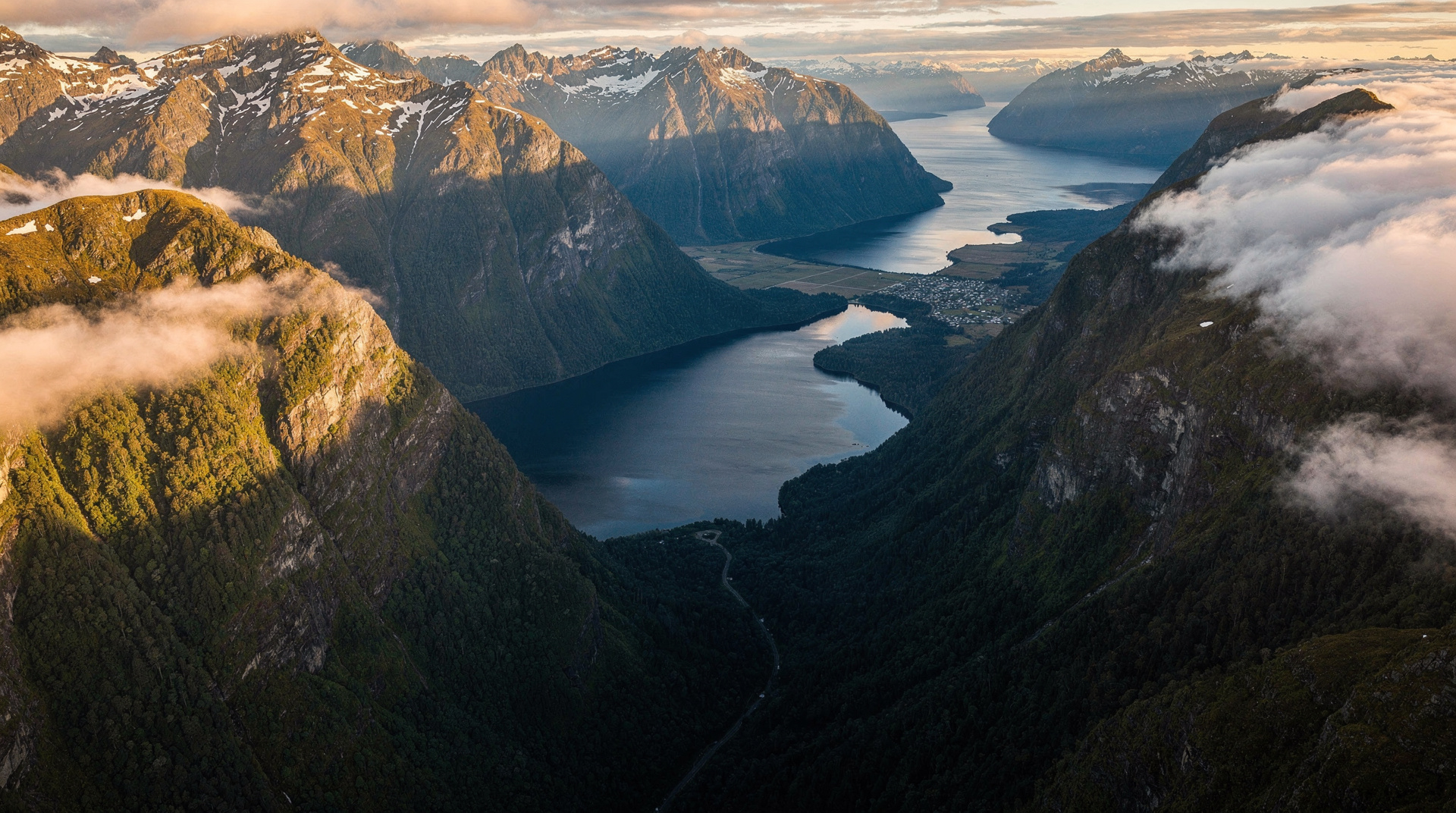
Fiordland
Honest Fiordland planner: Milford Sound vs Doubtful Sound, Te Anau base, Milford Track booking, real NZD/USD/EUR costs and what most guides won't tell you.
Milford Sound cruise guide — how to get the most out of Piopiotahi
Milford Sound cruise guide: best operators, day vs overnight, getting there from Queenstown or Te Anau, prices NZD/USD/EUR, and honest tips for Piopiotahi.
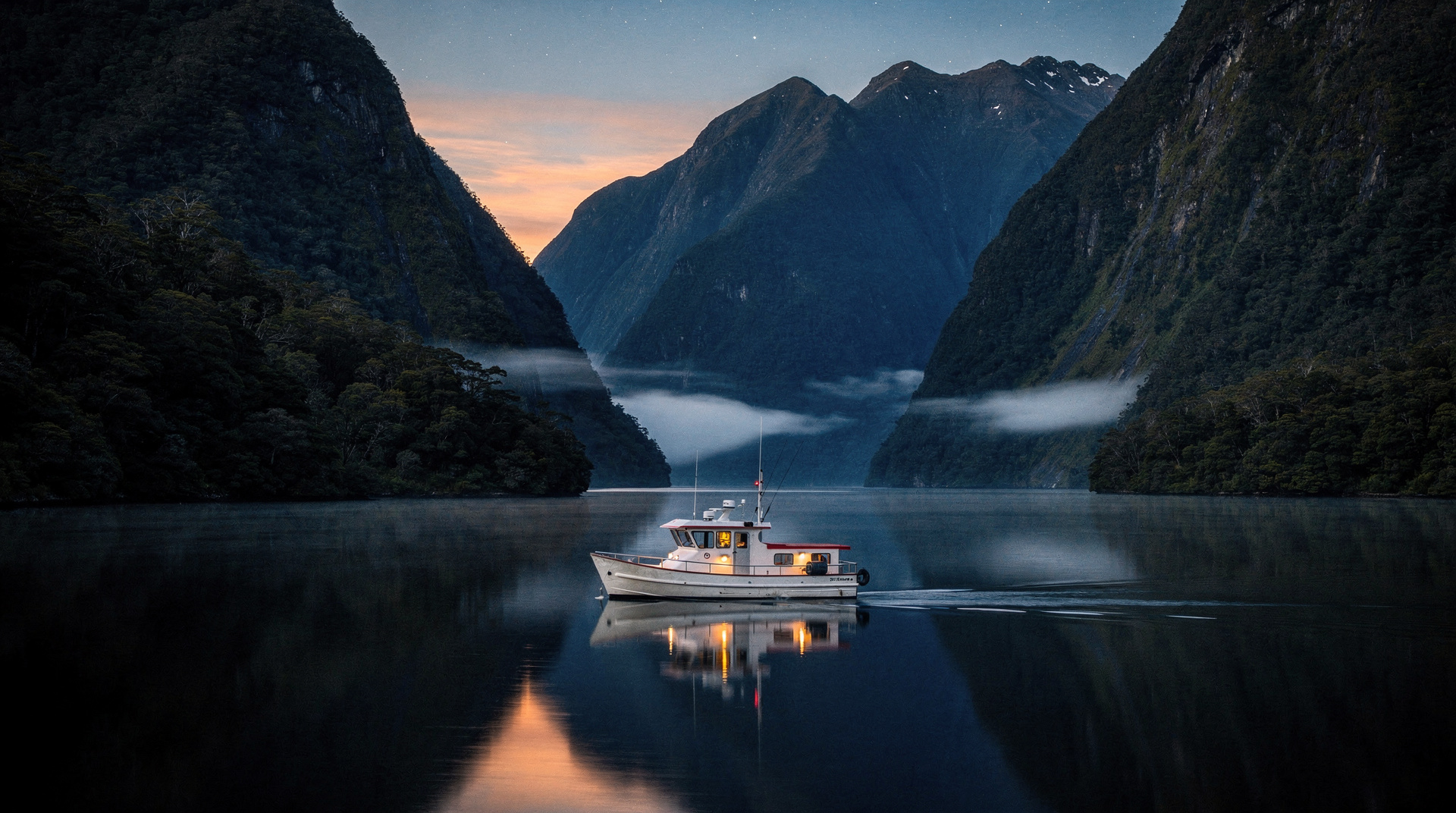
Doubtful Sound cruise guide — New Zealand's other fiord
Doubtful Sound cruise guide: Lake Manapouri boat access, day cruise vs overnight, wildlife, costs NZD/USD/EUR, and honest comparison with Milford Sound.
Te Anau
Everything you need to plan Te Anau: glowworm caves, Milford and Doubtful day trips, hiking, real NZD/USD/EUR prices, and where to stay.

Milford Track — the world's finest walk
Milford Track: 53.5km, 4 days, one direction only, NZD 102/night huts. Book 6 months ahead. The most famous Great Walk in NZ — worth every step.