New Zealand in September
Is September a good time to visit New Zealand?
September is early spring — a transitional month with genuine character. Lambs are everywhere in the paddocks, daffodils line roadsides nationwide, and the Tongariro Alpine Crossing becomes safely walkable again by mid-September (check DOC conditions daily). Ski season continues into September on the best years, making it the only month that genuinely offers both skiing and spring walking. Prices are at shoulder-season lows. Some Great Walk huts are still closed until mid-to-late October.
The shoulder season’s best surprise
September in New Zealand has the quality of discovery. The country is visibly waking up: lambs appear in paddocks within days of being born, daffodils line every roadside from Kaikoura to Northland, and the light has a freshness that the long winter months don’t offer. It’s not quite spring, not quite summer, but it has the best elements of both in a package that’s priced well below peak season.
The ski mountains are still running in September — typically into mid-to-late September, with Mt Hutt and Cardrona sometimes extending to early October in good years. This makes September the only month in the New Zealand calendar where you could plausibly ski in the morning and walk in the afternoon without either experience feeling like a stretch. The Coronet Peak night skiing often continues into September.
By mid-September, the Tongariro Alpine Crossing is typically snow-free enough on the main summer route to be safely walkable without crampons. DOC issues daily track conditions on their website — check before booking shuttles, as some years see snow persistence on the Emerald Lakes section through late September. The crossing in September has a quality that summer doesn’t match: cool, crisp air, fewer than 200 walkers on the track (versus 1,500 in January), and often extraordinary visibility. The full logistics for the walk itself — trailheads, shuttle timing, what to pack — are in the Tongariro Alpine Crossing guide.
| Best for | Ski-and-walk combo, lamb season, Kaikoura whale peak |
| Avoid for | Milford, Routeburn, Kepler (unstaffed until October) |
| Typical daily budget (mid-range) | NZD 340–520 / USD 204–312 / EUR 187–286 per couple |
| Booking lead time | 1–3 weeks for most; Tongariro shuttles 3–5 days |
| Great Walks open | Abel Tasman, Heaphy, Paparoa, Rakiura, Lake Waikaremoana, Whanganui Journey |
Weather: real numbers, not the brochure
Auckland and Northland: 16–19°C days, 10–12°C nights. Daylight hours increasing — 12 hours by late September. Spring showers are common but short. The Bay of Islands in September is quiet, mild, and charming. Sea temperature at the Bay of Islands: 17–19°C — cold but wetsuits make diving and snorkelling viable.
Rotorua and Central North Island: 13–17°C days, 6–9°C nights. The geothermal parks are in spring mode — green vegetation, active geysers, and early lambs visible in surrounding farms. Taupo lake temperature 16–17°C, warming noticeably from August.
Wellington: 13–16°C days. The spring wind has energy. The city is at its most colourful — Botanical Garden spring flowers, daffodils along the waterfront, blossom trees in the suburbs.
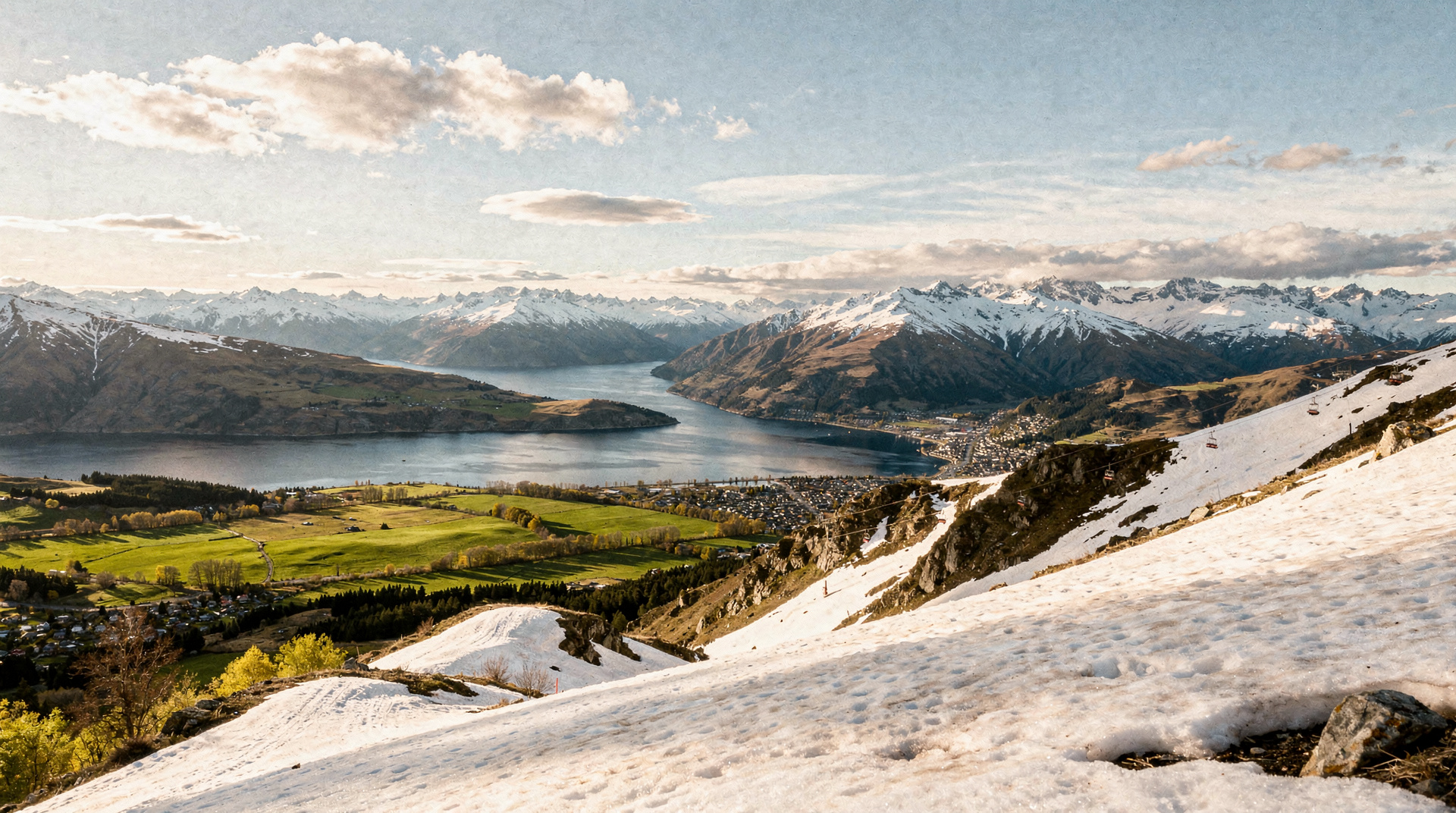
Queenstown and Central Otago: 12–17°C days, 4–8°C overnight. Early spring in the Wakatipu basin means snow still on the Remarkables (ski season potentially still running) while the valley floor shows daffodils and new-green grass. A particularly beautiful contrast.
Canterbury and Mackenzie Basin: 14–19°C days. Mt Hutt may be open until mid-September. The Mackenzie Basin lupins are not yet in bloom (that’s late October–November) but the spring green of the basin with snow-capped mountains is lovely.
Fiordland: Cool and wet as always. Milford Sound cruises operate. The Milford Track huts remain closed until mid-to-late October. Day walks near Te Anau are viable.
Nelson and Marlborough: 15–19°C days, increasingly sunny. Abel Tasman in September is quiet and beautiful — the water is cool but the beaches are largely to yourself. The huts are open year-round on this track.
Best things to do in September
Tongariro Alpine Crossing (from mid-September) — the crossing is one of the most dramatic single-day walks in the world, and September conditions (from mid-month when usually safe) offer something January doesn’t: you are essentially alone on the volcanic plateau. The crater lake is crisp and vivid, Ngauruhoe’s slopes are dusted with late snow, and the silence between you and the next walker is genuine. The Tongariro Crossing roundtrip shuttle from National Park Village is the standard access method. Always check DOC conditions at the Tongariro visitor centre before booking, and choose the guided option if any ice is reported on the upper sections.
Late ski season at Cardrona or Mt Hutt — September skiing can be the season’s best or worst depending on the year. A La Nina year that brought abundant July snow can deliver exceptional September skiing with deep consolidated snowpack, few lift queues, and the unique pleasure of skiing in spring sunshine. The Cardrona–Treble Cone multi-day pass is the best value for a September ski visit to the Wanaka area — Cardrona often has the best September conditions of any Queenstown-area field due to its snowmaking backup.
Abel Tasman in quiet season — September is ideal for walkers who want the Abel Tasman Coast Track without the January crush. The huts are open year-round, the water taxis run (though with fewer departures than summer), and the golden beaches are yours. Bring warm layers for hut nights (8–10°C overnight). The Abel Tasman full park cruise from Nelson covers the entire coastline in a day — excellent for seeing the park scope before committing to a multi-day walk.
Kaikoura whale watching — September and August are the peak months for sperm whale aggregation near Kaikoura. The sighting rate is at its annual maximum. The Kaikoura whale-watching boat cruise operates multiple daily departures; sea conditions are improving from winter but can still be rough. The half-day wildlife kayaking tour at Kaikoura gives access to dusky dolphins and fur seals from sea level — dolphins are extremely active in spring.
Rotorua Maori culture and geothermal parks — September crowds at Te Puia, Wai-O-Tapu, and the Polynesian Spa are 40–60% lower than January. The geothermal parks in spring sunshine have extraordinary colour contrast — sulphur terraces, the vivid blue of the Champagne Pool, and the surrounding spring green of the hills. A genuine highlight of the North Island at this time of year.
Bay of Islands spring sailing — September sailing in the Bay of Islands has a pure quality that summer’s busier version lacks. Dolphins are very active in spring, the water is clear, and the 140 islands are largely unvisited. The Bay of Islands dolphin eco cruise from Paihia has excellent sighting rates in September with less boat traffic.
What to avoid in September
The Tongariro Crossing before checking conditions. In early September, the crossing above the Red Crater is often still icy and dangerous without crampons. The DOC Tongariro Visitor Centre issues morning conditions updates — check before booking shuttles. Do not proceed to the trailhead and discover ice on the track without an ice axe.
The Milford Track. Huts remain closed until mid-to-late October; independent walking is emergency-shelter-only conditions. The track is not safe or hospitable for unsupported winter-spring walking. Guided walk operators (Ultimate Hikes) do run private hut options from October.
Assumptions about ski season continuity. Some years, Queenstown-area fields close in late August. Others, Cardrona runs to mid-October. Check individual mountain websites for current-year closing dates before planning a September ski trip.
Crowds and prices in September
September is still shoulder season, with pricing near its annual low:
- Mid-range hotel (Queenstown): NZD 150–220 / USD 90–132 / EUR 83–121
- Mid-range hotel (Christchurch, Kaikoura area): NZD 120–170 / USD 72–102 / EUR 66–94
- Hostel dorm: NZD 32–50 / USD 19–30 / EUR 18–28
- Cardrona day ski pass (September): NZD 129–155 / USD 77–93 / EUR 71–85 (often discounted late season)
- Kaikoura whale-watching cruise: NZD 155–180 / USD 93–108 / EUR 86–99
- Abel Tasman Great Walk huts: NZD 65–75 / USD 39–45 / EUR 36–41 per night
Booking lead time for September: essentially all accommodation available 1–3 weeks ahead. Tongariro Crossing shuttles — book 3–5 days ahead maximum. Kaikoura whale watching — 1 week ahead usually sufficient.
Best regions in September
Tongariro/Taupo area — the volcanic plateau spring crossing is the standout September experience. Combine Tongariro with Taupo (jet boating on the Waikato River, Huka Falls, bungy at Taupo) for a perfect North Island adventure 3-day block.
Kaikoura — the whale watching is at its reliable peak. The drive from Christchurch to Kaikoura on SH1 is spectacular in spring: snow-capped Kaikoura Range on one side, Pacific Ocean on the other, seals on rocks at every layby. Allow an overnight minimum.
Abel Tasman in early spring — quiet, open, beautiful. The track is fully accessible year-round and September gives the best quiet-season experience. Combine with Nelson (3 nights) for a relaxed top-of-South-Island spring week.
Queenstown in the ski-season tail — if the fields are still running, September in Queenstown is an extraordinary value proposition: ski in the morning, walk in the afternoon, dine in a town without summer queues. Check conditions and book ski passes on the day rather than in advance (late-season closures happen quickly).
Planning a September ski-and-walk combination
The rare overlap between ski season and walkable spring conditions is worth planning around deliberately rather than hoping it lines up. The ski New Zealand guide has current-season field-by-field detail, but the September-specific logic is: base yourself in Wanaka or Queenstown for the first half of your trip (skiing at Cardrona or Treble Cone in the morning, wine or lake activities in the afternoon), then move north to Tongariro for the walking half once you’ve confirmed DOC has cleared the Crossing.
Trying to do both in a single location rarely works — the ski fields and the volcanic plateau are 6+ hours apart by road. For a broader read on how September compares to the rest of the calendar, the best time to visit New Zealand guide puts it in context, and summer vs winter in New Zealand explains why this shoulder month gets a taste of both.
September weather hacks
Dress for unpredictability: September mornings can be cold (3–6°C in Queenstown), September afternoons can be warm (16–18°C on sunny days), and September evenings are cold again. Three lightweight layers outperform one heavy jacket for this variability. On the Tongariro Crossing: even when the track is clear, carry a warm layer and waterproof for the exposed plateau section — wind chill at 1,800m is significant regardless of valley temperatures. Spring UV is rising: SPF 30 minimum for full-day outdoor activities.
Frequently asked questions about visiting in September
Is the Tongariro Crossing safe in September?
From approximately mid-September, yes — but check DOC conditions daily. The lower sections (Mangatepopo Valley, Devil’s Staircase) clear earliest. The upper section near South Crater and the Emerald Lakes descent is the last to clear. DOC’s daily track conditions report is the definitive source; it’s updated each morning during spring. A guided crossing is the recommended option in September if ice is present on any section.
Are the Great Walks open in September?
Year-round Great Walks: Abel Tasman Coast Track, Heaphy Track, Paparoa Track, Rakiura Track, Lake Waikaremoana, and Whanganui Journey (the canoe journey). Staffed-season Great Walks (Milford, Routeburn, Kepler, Tongariro Northern Circuit, Hump Ridge) typically reopen in mid-to-late October. September walkers on these tracks are emergency-shelter only.
Can I still ski in September?
In most years, yes — some fields run into September and occasionally early October. The most reliable late-season mountains are Mt Hutt (Canterbury) and Cardrona (Wanaka). Coronet Peak in Queenstown typically closes earlier. Check each mountain’s current status on their website from mid-August.
Are lambs actually everywhere in September?
Yes — visibly, genuinely everywhere, particularly in Southland, Canterbury, and the Waikato. New Zealand has roughly 5 times more sheep than people (approximately 28 million sheep, 5 million people). September lamb season is when every paddock seems to have newborns. The sight of a paddock of ewes with brand-new lambs on a clear South Island morning is one of those unexpected New Zealand pleasures that no tour advertises.
How much should I budget per day in September?
Budget traveler: NZD 85–120 / USD 51–72 / EUR 47–66 per person. Mid-range couple: NZD 340–520 / USD 204–312 / EUR 187–286 per day. Add ski pass (NZD 129–155 per person) if skiing. September is approximately 5–10% cheaper than October and 30–40% cheaper than January.
Is Kaikoura worth visiting in September?
Absolutely. September is actually one of the best months for Kaikoura — whale sighting rates are peak, dolphins are extremely active, and the fur seal colony at Point Kean is nursing spring pups. The town is quiet, prices are low, and you get the experience without summer cruise-ship day-trippers.
Should I do the North Island or South Island in September?
If skiing matters, South Island first (Queenstown/Wanaka fields, potentially still running). If the Tongariro Crossing and lamb-season countryside matter more, the North Island delivers a fuller September experience without the ski-closure uncertainty. Most travelers on a 2+ week trip do both, as the sample itinerary above shows.
How to combine September travel with the rest of New Zealand
September suits a mixed-month New Zealand trip beautifully. A classic September structure: Auckland (3 nights) → Bay of Islands (2 nights, spring dolphins) → Rotorua (2 nights) → Tongariro Crossing day (from Taupo) → Wellington (2 nights) → ferry → Kaikoura (1 night, whales) → Christchurch (2 nights) → Queenstown (4 nights, possible ski). This covers the core New Zealand circuit in about 16–18 days at shoulder-season prices with spring conditions throughout. Cross-reference the October guide for Great Walk reopening timing, and the August guide for the winter-tail whale watching context.
Related guides
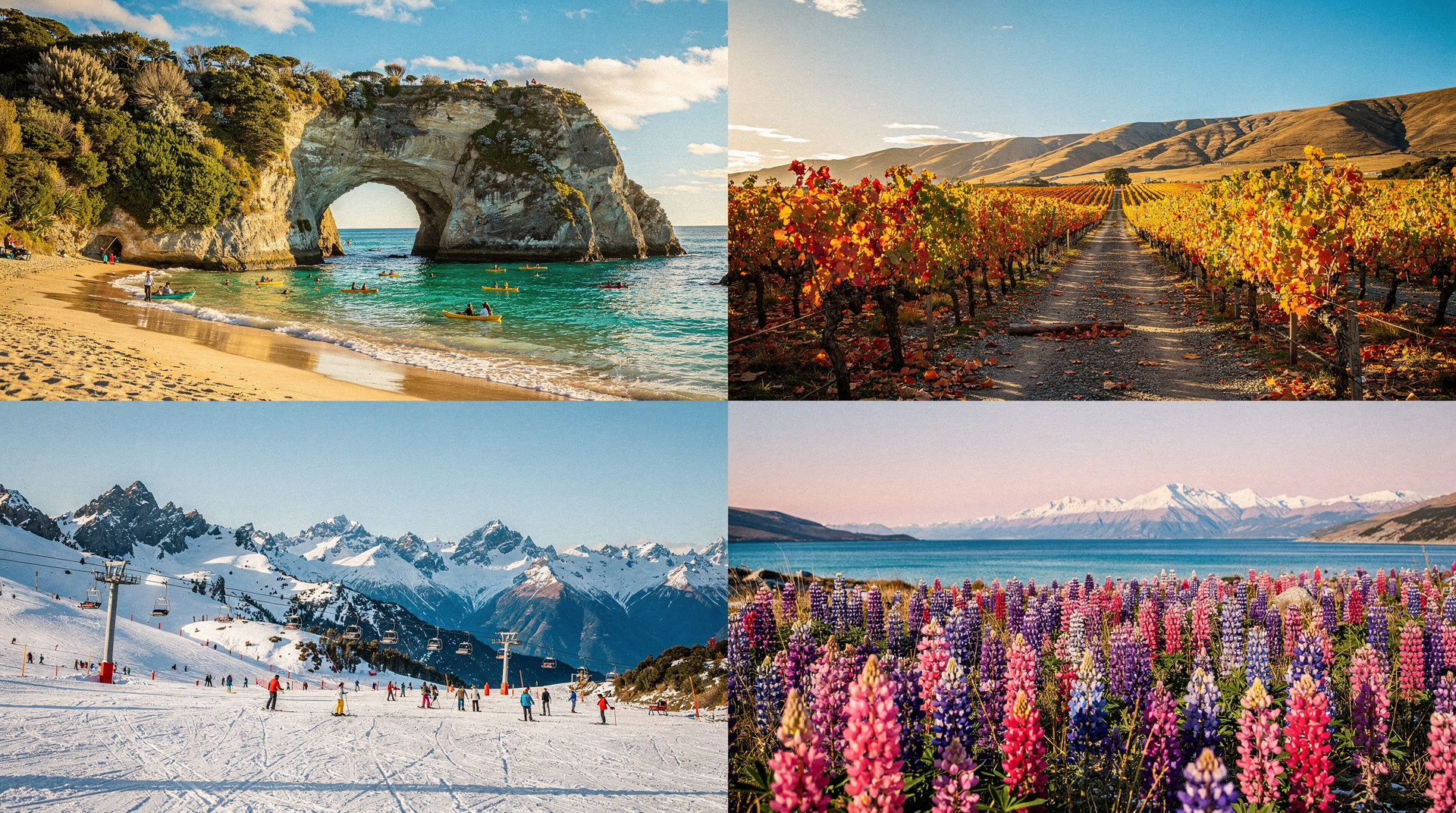
Best time to visit New Zealand
When to visit New Zealand: honest breakdown by season, region, and activity type. Summer is not always best. Spring and autumn often outperform the peak season.
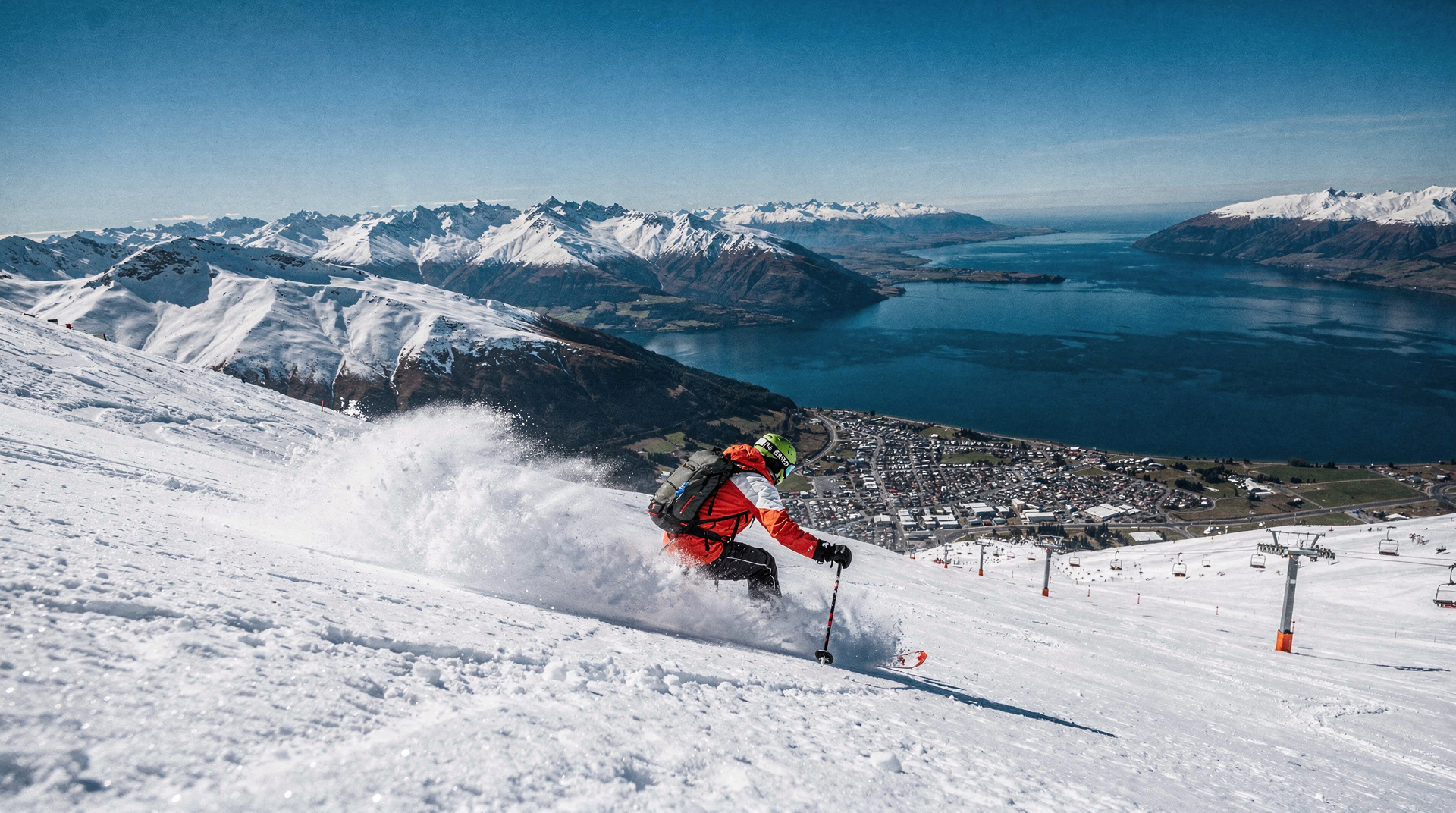
New Zealand in August
August combines late ski season at Queenstown with peak whale watching at Kaikoura. Lower prices than July. Real NZD/USD/EUR costs and what to book.
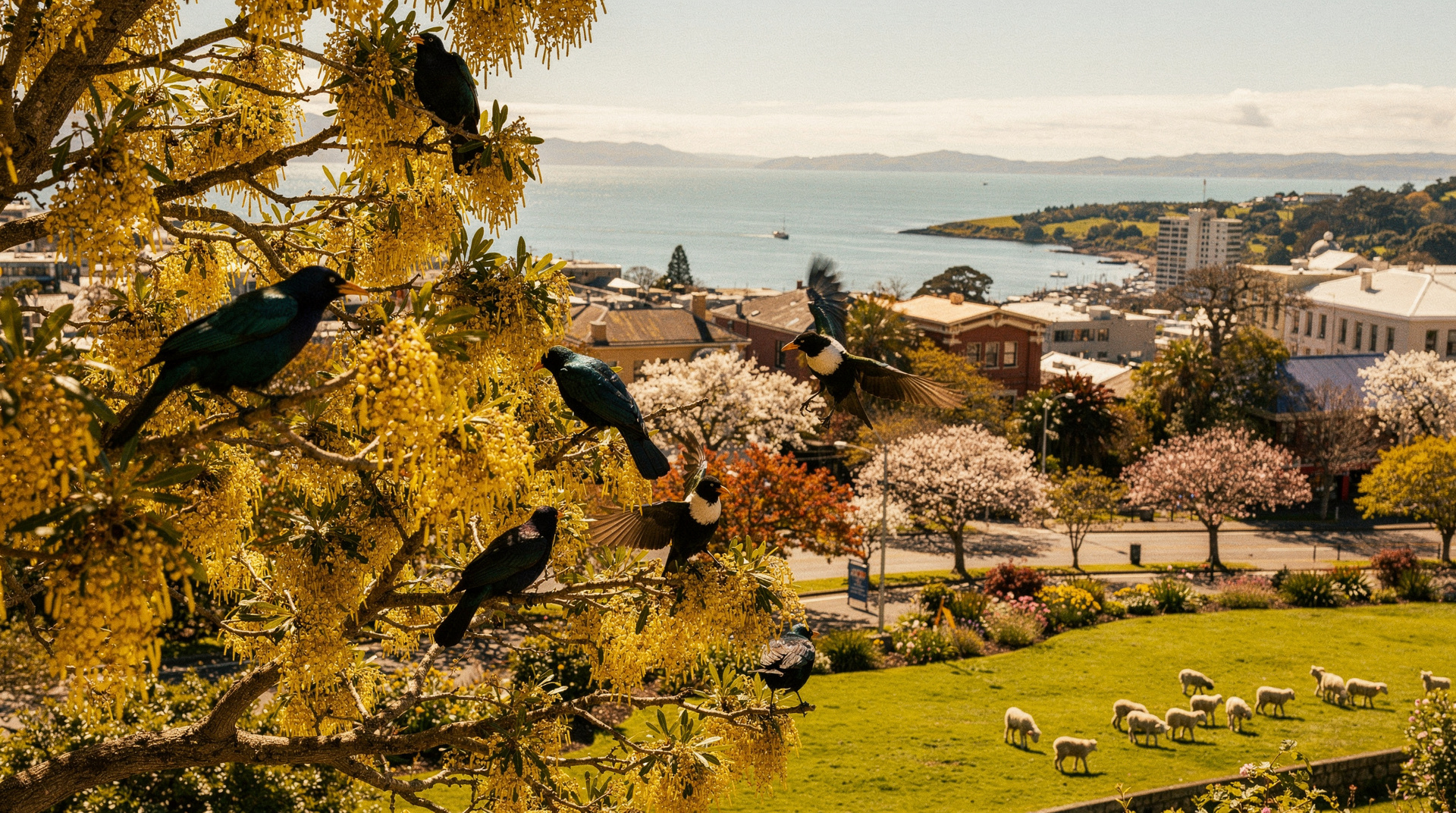
New Zealand in October
October is spring in New Zealand: Great Walks officially open, Tongariro Cross reopens, wildflowers bloom, prices stay low. NZD/USD/EUR pricing inside.
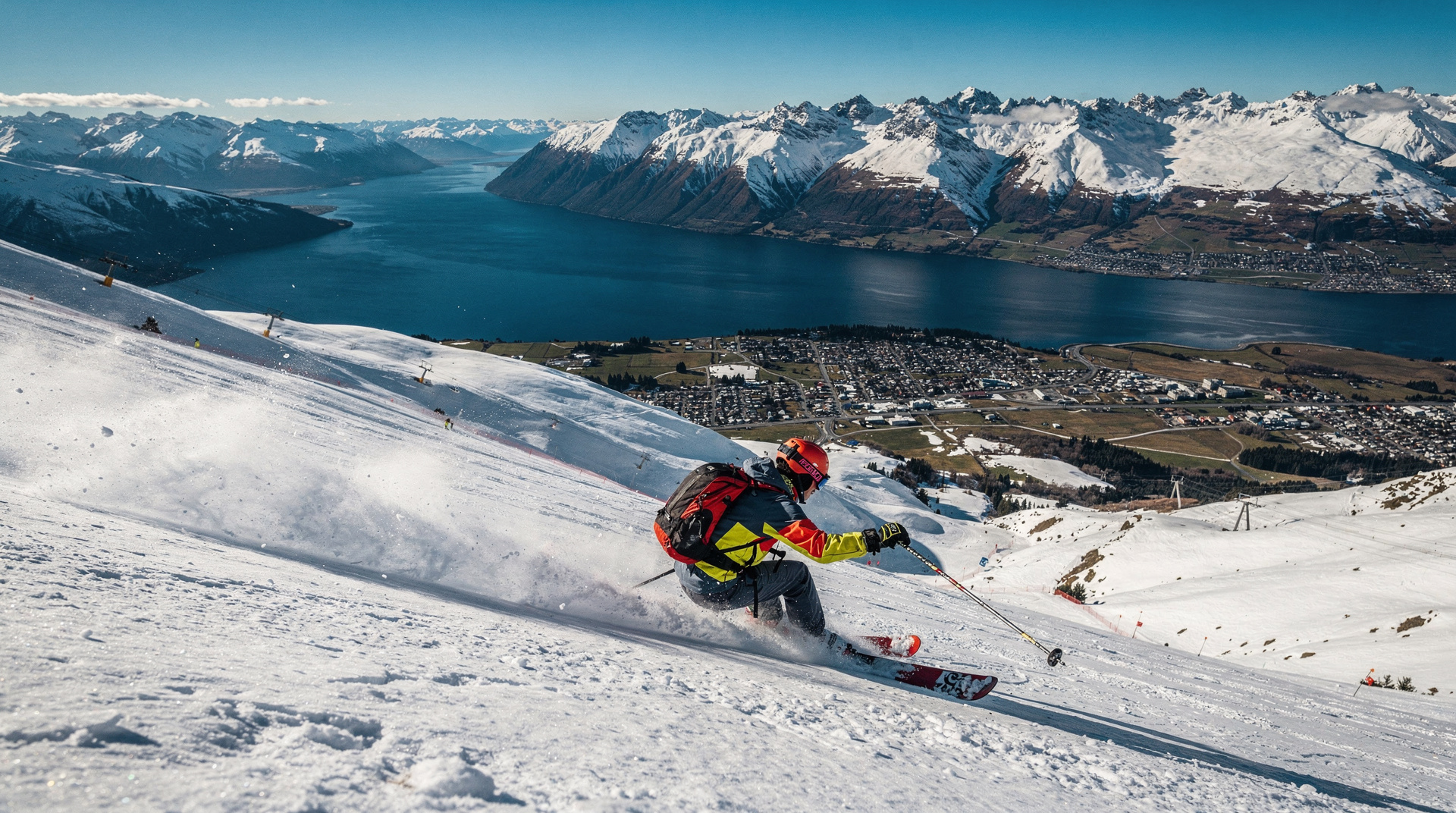
Skiing in New Zealand — complete resort guide 2026
Complete NZ ski guide: Coronet Peak, Remarkables, Cardrona, Treble Cone, Mt Hutt, Ruapehu. Season, lift passes, real costs NZD/USD/EUR.
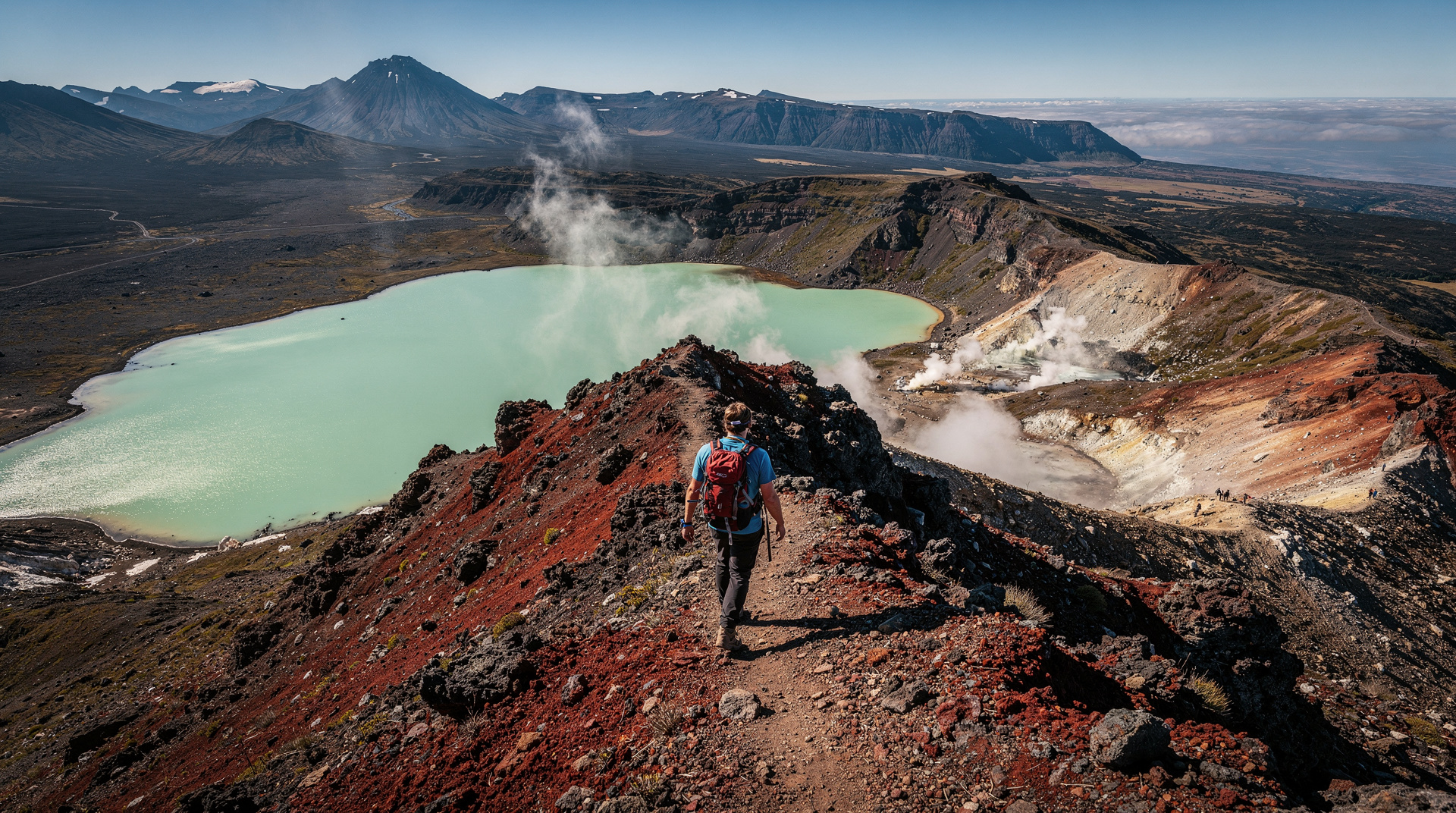
Tongariro Alpine Crossing
Honest Tongariro Crossing guide: 19.4km, 7-9 hours, shuttle logistics, gear, and why winter without a guide has killed people.
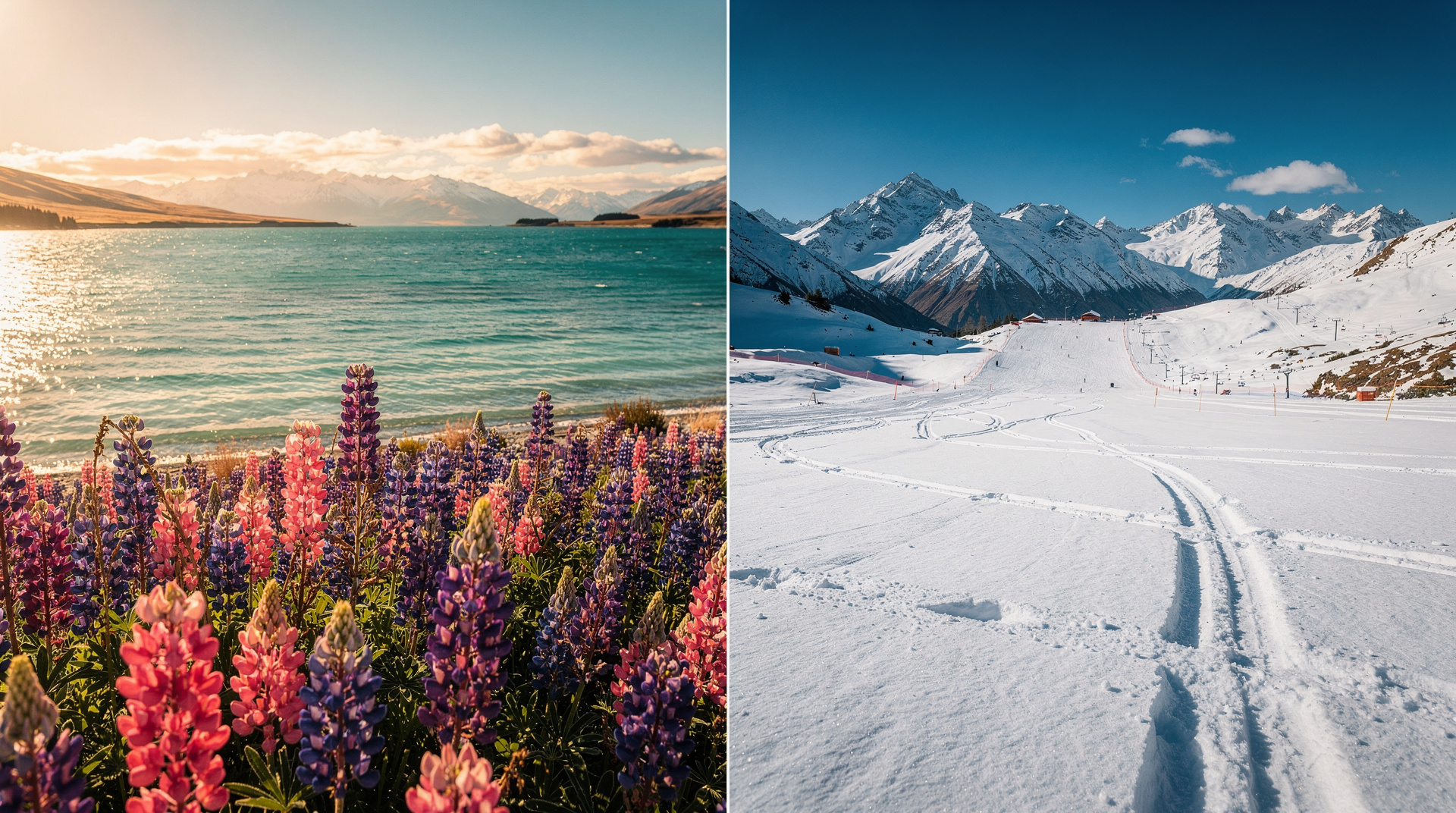
Summer vs winter in New Zealand
Summer vs winter in New Zealand: weather, crowds, costs and the honest verdict on which season suits your trip. NZD/USD/EUR prices throughout.
Last reviewed: