Queen Charlotte mail boat cruise — Marlborough Sounds the working way
What is the mail boat cruise in the Marlborough Sounds?
The Pelorus Mail Boat is a working delivery boat that carries mail, groceries, and supplies to remote farms and communities in Pelorus Sound, inaccessible by road. Tourists ride along on a full day (7 hours from Havelock), visiting remote communities and seeing the inner Sounds. Adult fare approximately NZD 130-150. One of New Zealand's most authentic and underrated experiences.
| Where | Departs Havelock, 35km west of Picton |
| Cost | around NZD 130–150 adult |
| Time needed | Full day, approximately 7 hours (9am–4pm) |
| Getting there | Self-drive or shuttle to Havelock via SH6 |
| Best time | Runs Tue/Thu/Fri year-round; summer for warmth, winter for fewer crowds |
The mail boat: working New Zealand, not tourist New Zealand
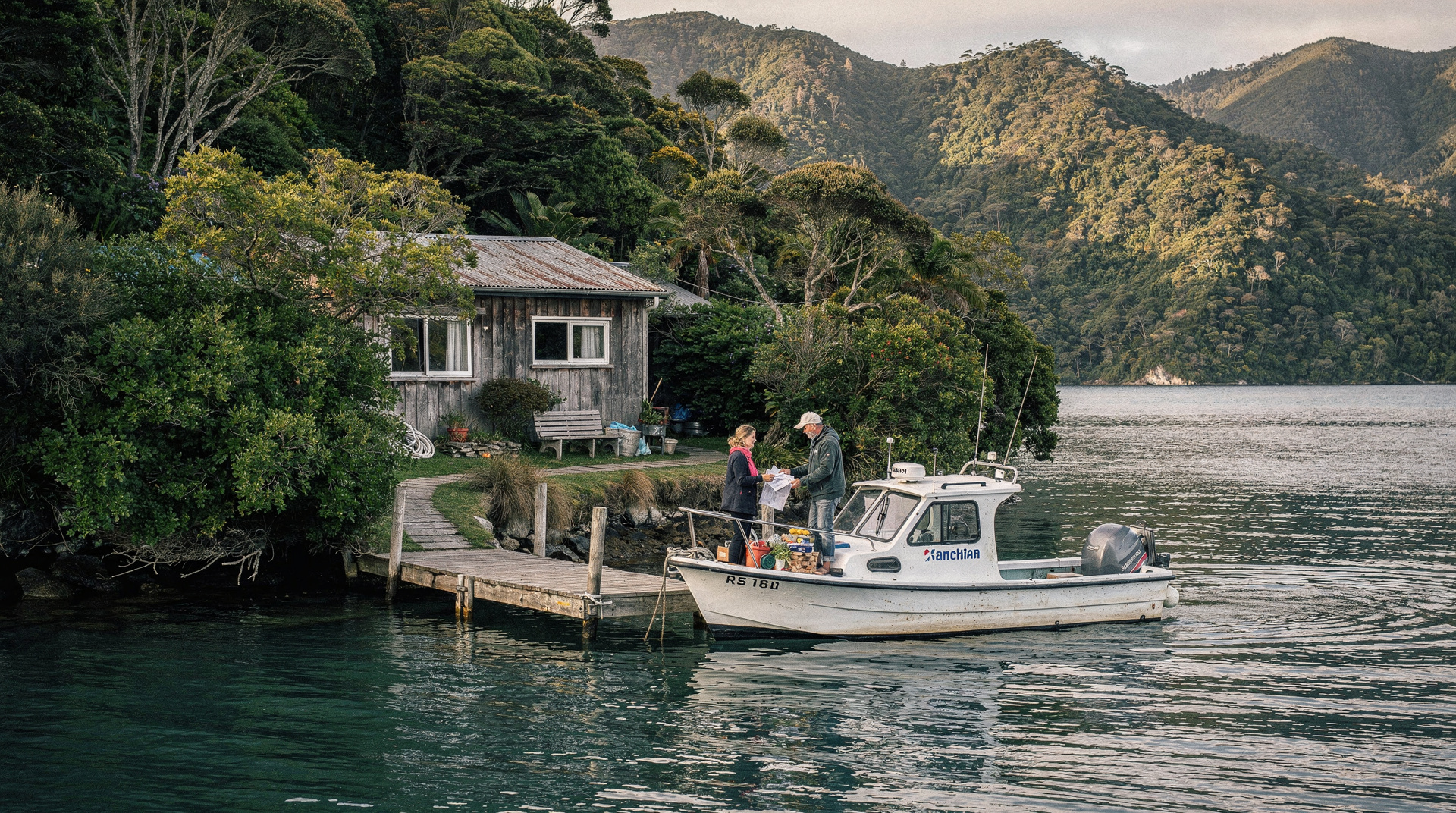
The Pelorus Sound Mail Boat is one of the genuine anomalies in New Zealand tourism: an authentic working service that tourists can join. The boat departs from Havelock (the “green-lipped mussel capital of the world,” as the local sign proclaims, at the head of Pelorus Sound) on Tuesdays, Thursdays, and Fridays, carrying mail, groceries, building materials, fuel, and whatever else the remote communities scattered around Pelorus Sound need and cannot get by road (because there is no road to most of them).
Passengers pay to come along. There is nothing special about the vessel (a sturdy work boat, not a tourist catamaran) or the service beyond the scenery and the people. No commentary track, no curated wildlife spotting, no hospitality upgrade. What you get is a working day on a working boat: the captain navigating through the channels of Pelorus Sound, pulling into remote wharves, handing boxes to people who walked down from their farm or bach, exchanging news, and moving on.
This is New Zealand that most tourists never see — the everyday life of remote Sound residents, the self-sufficient communities that exist without road access, the geography of the inner Sounds that feels genuinely wild until you pull up to a small wharf and hand a crate of milk to a retired couple who have lived on the water for 40 years.
The route and what you see
The Pelorus Mail Boat departs Havelock at approximately 9am and returns in the late afternoon (approximately 4pm). The route is not fixed — it varies based on the deliveries required — but typically covers 30-40 stops across Pelorus Sound and sometimes into Kenepuru Sound.
Pelorus Sound: The largest of the Marlborough Sounds waterway systems, with 379km of coastline. The inner channels are narrow (some as little as 200m wide), the ridgelines dense with regenerating native bush, and the visibility of human presence minimal except at the delivery stops. The outer reaches of Pelorus Sound, near the D’Urville Island area, have a more open maritime character with sea conditions that remind you this is ultimately connected to Cook Strait.
The stops: Each delivery stop is different. Some are small farms (sheep, cattle, deer) with a family wharf. Some are holiday houses (baches) open only seasonally. Some are permanent residents, many of them older people who chose this life deliberately — accessible by water only, in contact with the mainland but not dependent on it. The interaction at each stop — the exchange of goods, the brief conversation, the waving off — builds a cumulative picture of a way of living that most New Zealand visitors never encounter.
Wildlife: The Sounds en route have the same species as the broader Marlborough Sounds — shags, kingfishers, white-fronted terns. The boat moves at a pace that allows reasonable wildlife observation without the speed of the fast-boat tourist options.
The landscape: Inner Pelorus Sound in good weather is beautiful in a quieter register than the main Queen Charlotte Sound. The light on the regenerating native bush, the reflections in the still water of the protected channels, the receding ridgelines — this is a landscape that rewards looking rather than photographing.
Practical information
Departure: Havelock, 35km west of Picton via SH6. Havelock is a small town (population approximately 400) with a handful of cafés and the Pelorus Mail Boat wharf on the waterfront.
Schedule: Tuesdays, Thursdays, and Fridays year-round.
Duration: Approximately 7 hours (9am-4pm). Bring lunch — the boat is a working vessel, not a restaurant.
Price: Adults approximately NZD 130-150 / USD 78-90 / EUR 72-82. Children (typically half price, confirm when booking). Book directly with Pelorus Mail Boat (Havelock) — available online.
What to bring: Lunch and snacks (there may be a brief stop at Linkwater or another point for supplies, but the boat does not cater). A warm layer (even in summer, the open water channels can be cool). Rain gear in any season. Comfortable shoes.
Accessibility: The boat has limited accessibility for people with significant mobility limitations — the working-boat design means steps and uneven surfaces. Contact the operator directly if you have specific needs.
Picton Queen Charlotte Sound mail boat cruiseQueen Charlotte Sound mail boat (Picton-based)
In addition to the Pelorus Mail Boat (Havelock), a Queen Charlotte Sound mail boat service also operates from Picton, delivering to communities along the Queen Charlotte Sound and the Queen Charlotte Track resorts (Furneaux Lodge, Te Mahia, Punga Cove, etc.). The Picton mail boat has a more established tourist component — it is the same working delivery service, but the Queen Charlotte Sound communities are more used to visitor presence (the Queen Charlotte Track accommodation providers receive their supplies this way).
This option works well for visitors who want to start a Queen Charlotte Track section — the mail boat can drop walkers at any of the track entry points while delivering to the accommodation there.
Price (Picton-based Queen Charlotte mail boat): NZD 130-160 / USD 78-96 / EUR 72-88. Schedule varies — check directly with operator.
Who this experience is for
The mail boat cruise self-selects for visitors who are comfortable with an unscripted, working experience. If you need structured commentary, curated wildlife spotting, and hospitality service — this is not your cruise. If you are genuinely curious about how people live in geographic isolation, if you want to see the Sounds in their working rather than their scenic register, and if you are prepared to spend a long day on the water doing not very much except watching and being — the mail boat is one of New Zealand’s most memorable half-days.
Many visitors who rate it highly specifically mention that it was unlike anything else in their New Zealand trip. Many visitors who rate it poorly expected something closer to a standard scenic cruise. The review split is not about quality — it is about expectation alignment.
Comparing mail boat to standard scenic cruise
| Factor | Mail Boat | Standard Scenic Cruise |
|---|---|---|
| Duration | 7 hours | 2-3 hours |
| Commentary | None (informal captain) | Professional guide |
| Wildlife focus | Incidental | Deliberate |
| Catering | Bring your own | Café onboard |
| Vessel | Working boat | Tourist catamaran |
| Experience type | Authentic working | Curated scenic |
| Price | NZD 130-150 | NZD 60-150 |
Combining with the Queen Charlotte Track
The mail boat can be used as access transport for the Queen Charlotte Track — the 73km walking track from Ship Cove to Anakiwa along the Sound ridgeline. Rather than booking a dedicated boat taxi, take the mail boat from Picton to your chosen start point (the mail boat visits most of the track access points) and begin walking. This combines the mail boat experience with the first section of the track on the same day.
The Queen Charlotte Track is well-maintained and does not require technical walking equipment for most sections (good walking shoes, rain gear). It is covered in the Queen Charlotte Track section of the Marlborough Sounds guide and in the dedicated Queen Charlotte Track guide.
Getting to Havelock and staying nearby
Most visitors reach Havelock as a day trip — self-driving the 35km from Picton along SH6 takes about 30 minutes, or basing in Blenheim/Picton and driving out for the 9am departure. There’s no dedicated public shuttle to Havelock on mail boat days, so a rental car is the practical option; check parking near the wharf, which is limited but free.
If you’re touring the wider Marlborough Sounds region, Havelock also makes sense as an overnight base — it’s central to both Pelorus and Queen Charlotte Sound activities and considerably quieter than Picton in peak season. Combine the day with Cook Strait ferry logistics if you’re crossing between islands around the same time — Picton’s ferry terminal is only 35 minutes away.
What makes this different from a scenic tour operator
It’s worth being explicit about why the mail boat doesn’t behave like other Marlborough Sounds cruises: there’s no marketing department shaping the experience. The captain’s priority each day is the deliveries, not passenger satisfaction metrics, and the route, pace, and stops are dictated entirely by what the Sound communities need that day. That’s precisely the appeal for the right traveller — and precisely the disappointment for a traveller expecting a curated, photogenic itinerary. Set expectations before booking rather than after.
Frequently asked questions
Can I choose which stops the mail boat makes?
No — the route is determined by the deliveries needed on that particular day. The captain does not take requests from passengers. This unpredictability is part of the authentic character.
Is the mail boat child-friendly?
Yes for children 5 and older who are comfortable being on a working boat for 7 hours. The lack of structured activities means younger children may find it long. It is not a children’s activity; it is an adult experience that children can share if they have the patience for it.
Is the mail boat better in summer or winter?
Summer (December-March) has longer days, clearer weather, and warmer temperatures for the open-water sections. Winter (June-August) is cooler but the inner Sound is typically calm; fewer tourists means the delivery stops feel even more intimate. Year-round is fine with appropriate clothing.
Do the residents mind tourists on the mail boat?
The communities along Pelorus and Queen Charlotte Sounds are accustomed to the tourist presence on the mail boat — it has been operating this way for decades. Most residents are friendly and curious about visitors; some prefer minimal interaction. Follow the lead of the captain in terms of how much engagement is appropriate at each stop.
What is the difference between the Pelorus and Queen Charlotte Sound mail boats?
The Pelorus Mail Boat (Havelock-based) covers the more remote and less-touristed Pelorus Sound. The Queen Charlotte Sound mail boat (Picton-based) serves communities along the more accessible and walker-oriented Queen Charlotte Sound. Both are authentic working services; the Pelorus is slightly more remote and less structured.
Does the mail boat run in bad weather?
Generally yes — it’s a working service and deliveries still need to happen — but sailings can be cancelled or shortened in genuinely severe weather (strong Cook Strait-driven storms). If your trip dates are inflexible, check with the operator the day before, and have a backup day in your Marlborough itinerary if possible.
Related guides
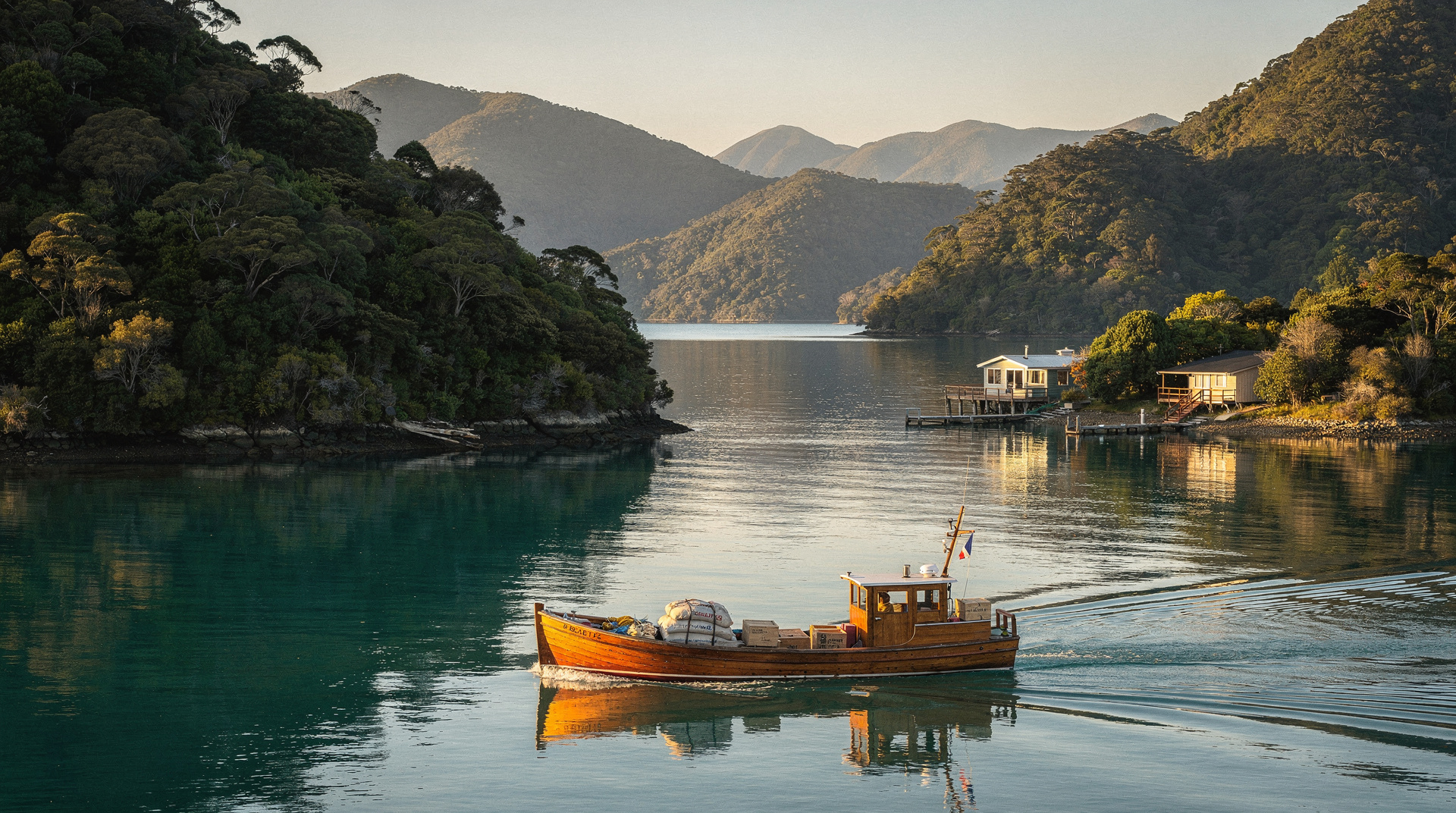
Marlborough Sounds cruise — the drowned valleys of the north
Marlborough Sounds cruise guide: seafood and mussel cruises from Picton or Havelock, Queen Charlotte Sound, mail boat, and Queen Charlotte Track boat access.
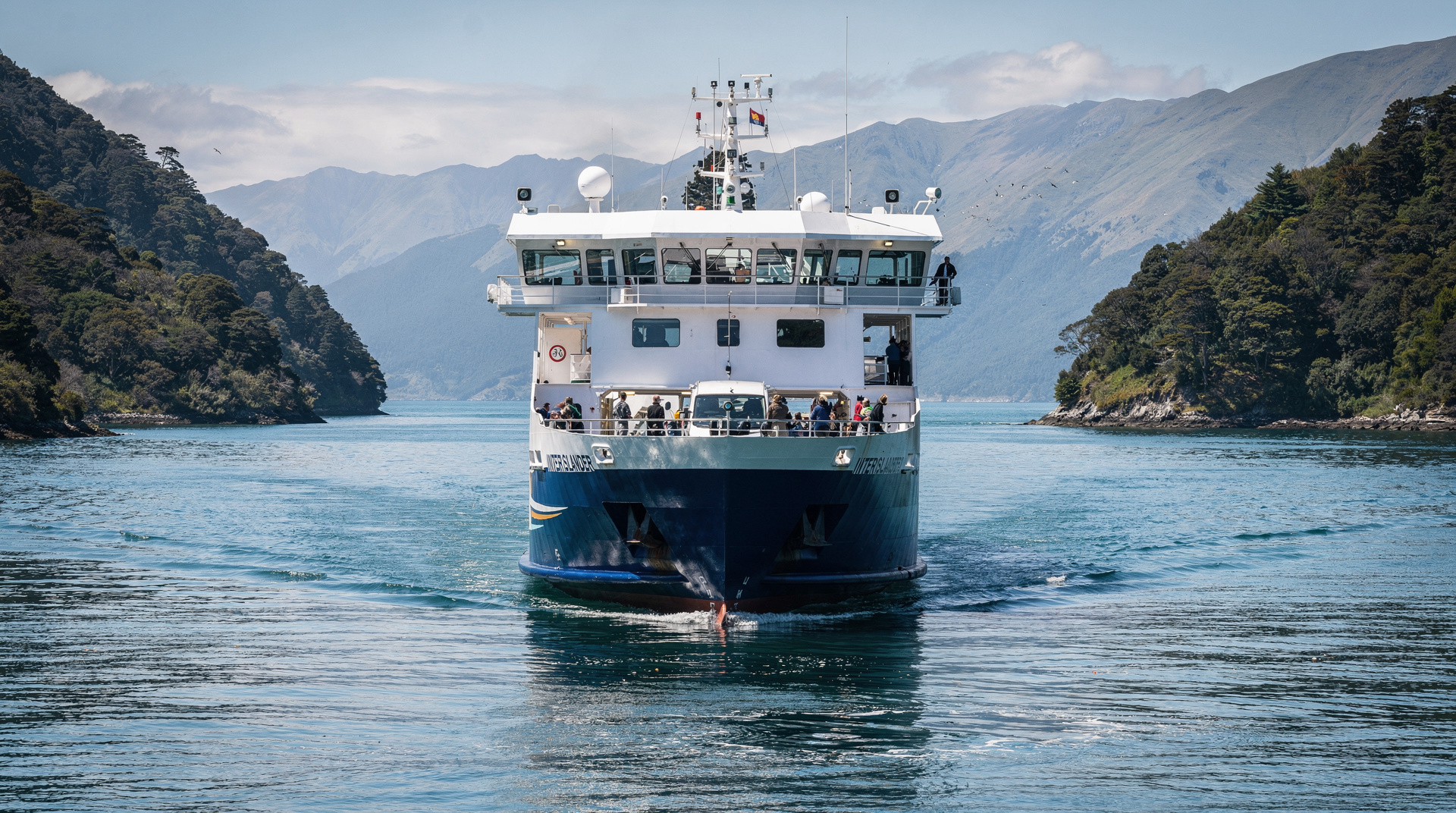
Cook Strait ferry guide
Complete Cook Strait ferry guide: Interislander vs Bluebridge, timetables, costs, booking tips, campervan advice, and the flying alternative.
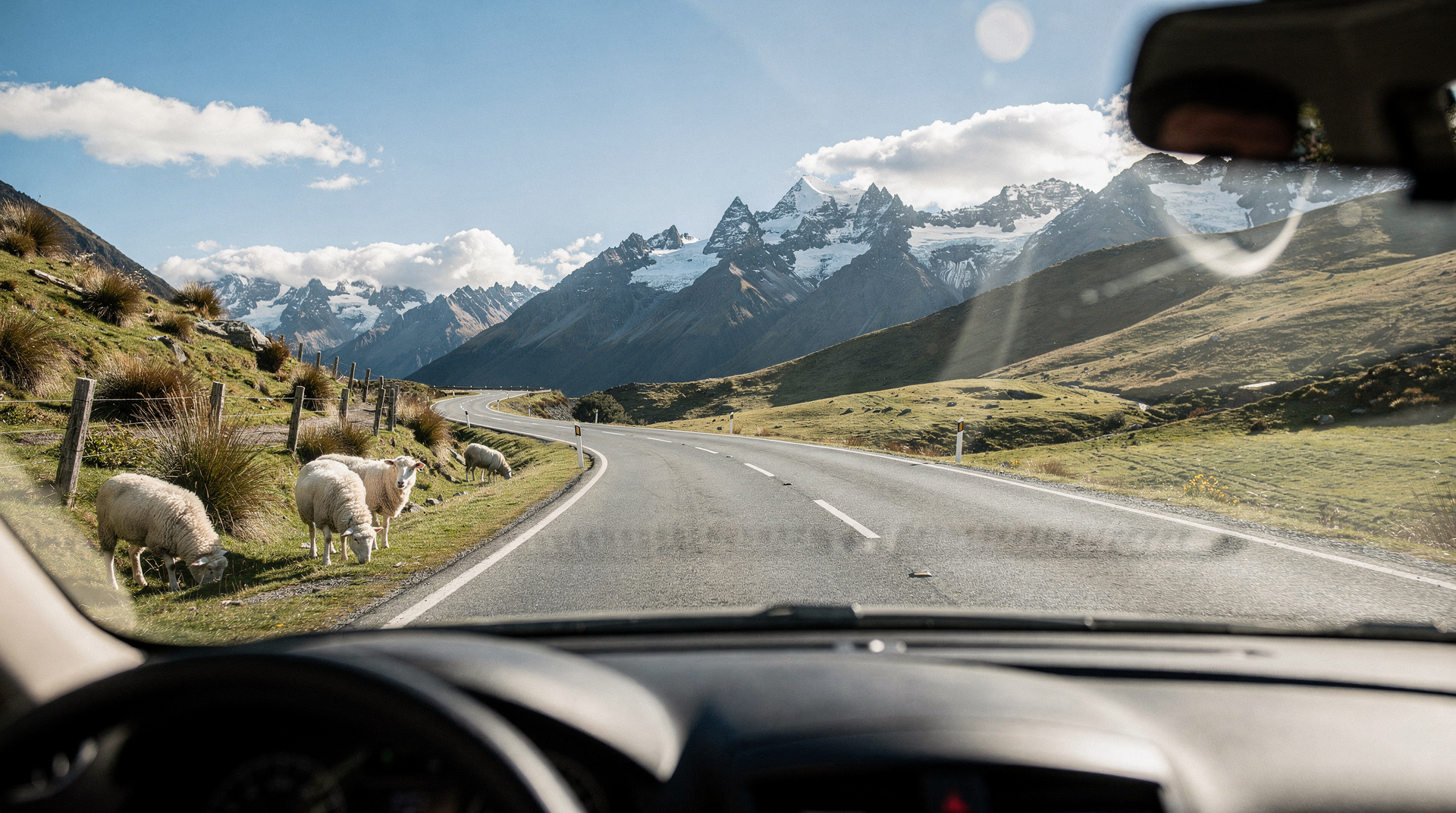
Driving in New Zealand
Honest driving guide for NZ: left-side rules, gravel road etiquette, why GPS lies, fuel costs, one-lane bridges, and what rental companies don't tell you.
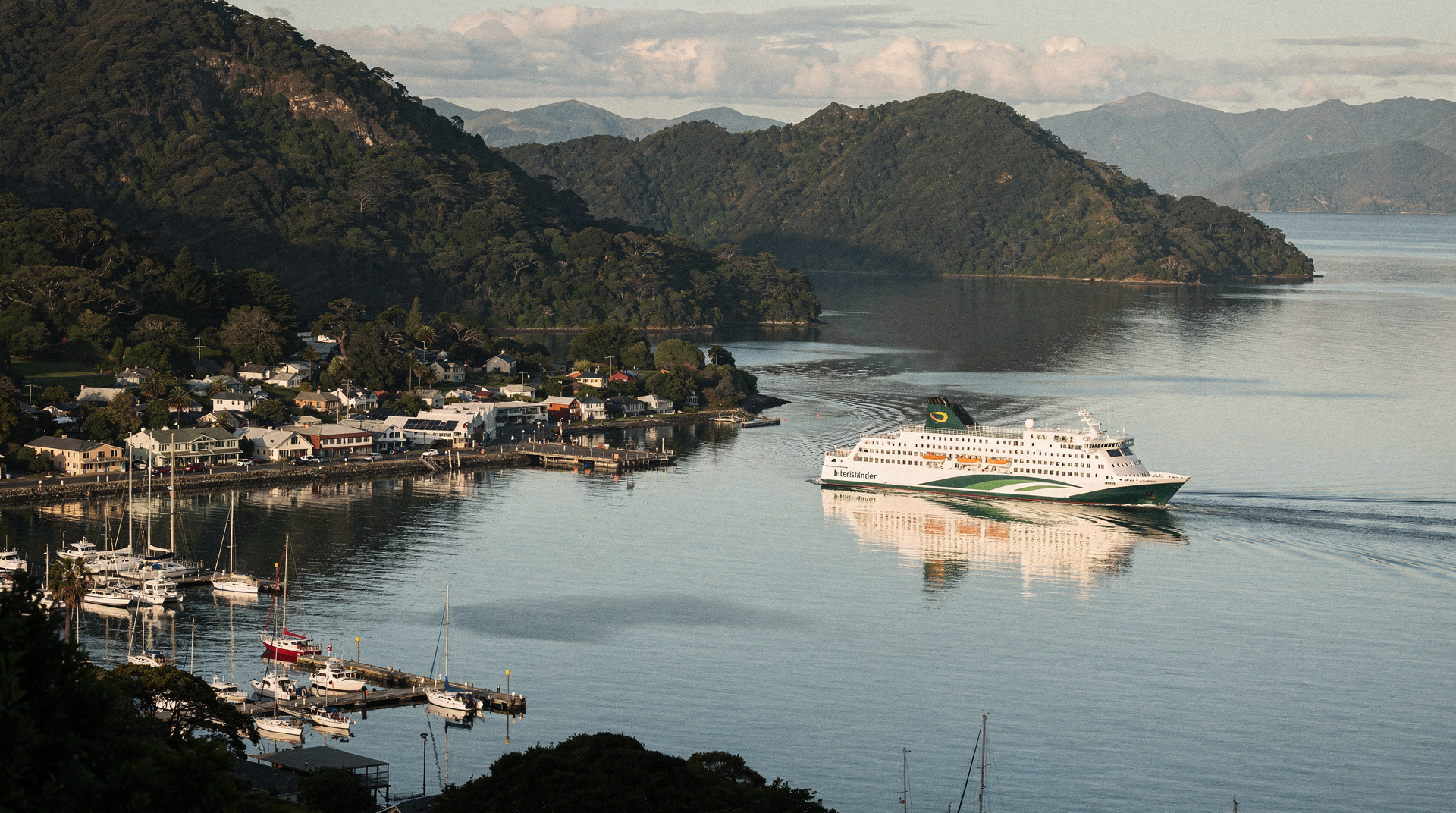
Picton
Picton: your Cook Strait ferry arrival point, gateway to Marlborough Sounds, Queen Charlotte Track, and the wine region. Real costs NZD/USD/EUR.
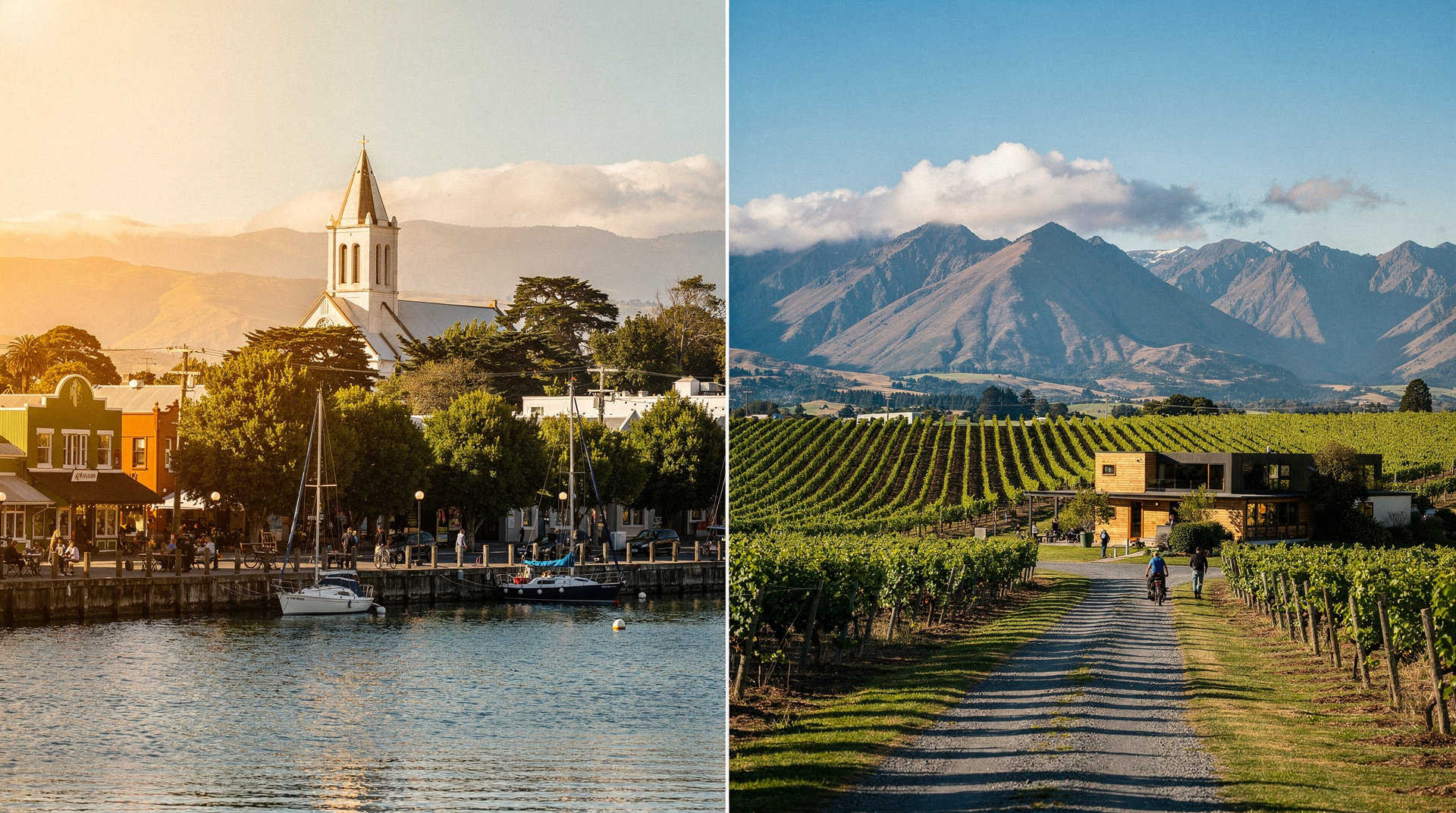
Nelson vs Marlborough
Nelson vs Marlborough honest comparison: wine, national parks, beaches, access and which region to prioritise. Clear verdict with prices in NZD/USD/EUR.
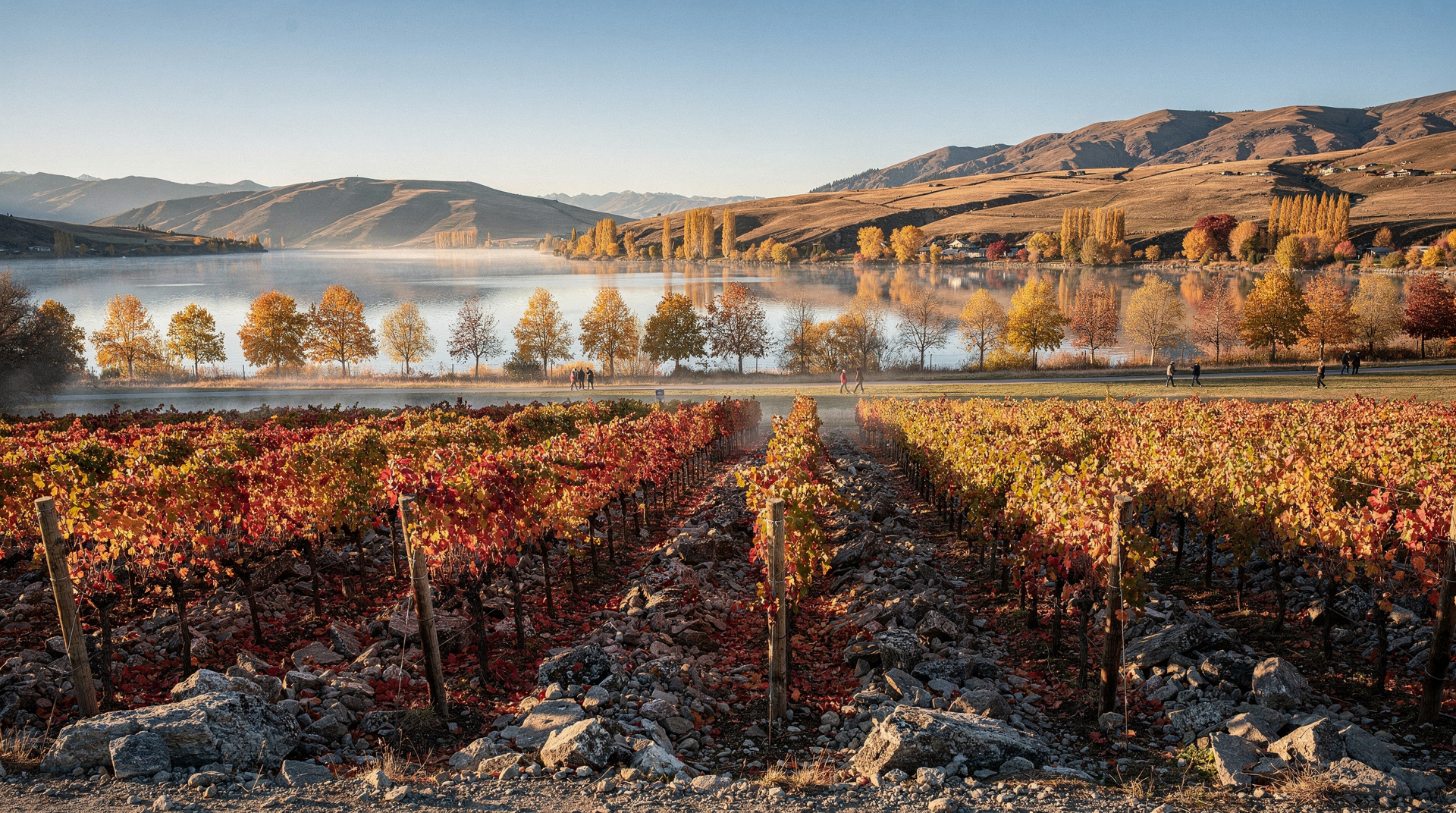
New Zealand in April
April brings brilliant autumn colours to Arrowtown and Wanaka, ANZAC Day commemorations, and the year's first genuine price drops. NZD/USD/EUR pricing.
Last reviewed: