
NZeTA fee increase 2025 — what the higher IVL means for your trip
| Who pays | Most visa-waiver nationals (US, EU, UK, Canada) — not Australians or NZ citizens |
| Cost | NZeTA application fee + IVL, paid together online |
| Validity | 2 years, multiple entries, up to 90 days per visit |
| Apply where | Immigration New Zealand website or official app (inz.govt.nz) |
| Processing | Usually 24–72 hours; apply at least 72 hours before travel |
What changed
The New Zealand Electronic Travel Authority (NZeTA) has been required for most nationalities visiting New Zealand since 2019. When it was introduced, the cost was structured as two components: the NZeTA application fee (NZD 9 online) and the International Visitor Conservation and Tourism Levy (IVL) of NZD 35.
Those fees were revised in subsequent years. By 2023, the NZeTA online application fee was NZD 23 and the IVL was NZD 100 — a combined cost of NZD 123 / USD 74 / EUR 68.
The 2025 changes under discussion — and at the time of writing, confirmed policy — have raised the IVL component substantially. The total cost of entry for NZeTA-required nationals in 2025 is now higher than the 2023 baseline. The specific current figures are on the Immigration New Zealand website; always check there for the most current fee schedule, as this article reflects the policy direction rather than a number that may continue to change.
Who pays the NZeTA
The NZeTA applies to nationals of countries that have visa-free access to New Zealand but are not exempt from the electronic travel authority requirement. This includes:
- US citizens
- EU nationals (French, German, Italian, Spanish, Portuguese citizens)
- UK citizens
- Canadian citizens
- Most other visa-waiver country nationals
Exempt from NZeTA: Australian citizens and permanent residents. New Zealand citizens. Diplomatic passport holders.
Nationals of countries that require a standard visa are not on the NZeTA system — they go through the full visa application process.
The IVL component is specifically a tourism and conservation levy. The stated policy rationale is that international visitors use New Zealand’s conservation infrastructure — national parks, DOC tracks, Great Walks huts, freedom camping sites — and should contribute financially to its maintenance. The tourism industry has had mixed views on whether the levy is correctly structured and whether it’s effectively ring-fenced for its stated purpose.
What you get for it
The NZeTA (once approved) is valid for two years and allows multiple entries to New Zealand within that period, each for up to 90 days. For most leisure travellers, the two-year validity means the per-visit cost is effectively the NZeTA fee amortized across multiple potential trips — though the IVL is paid per visit, not per NZeTA application.
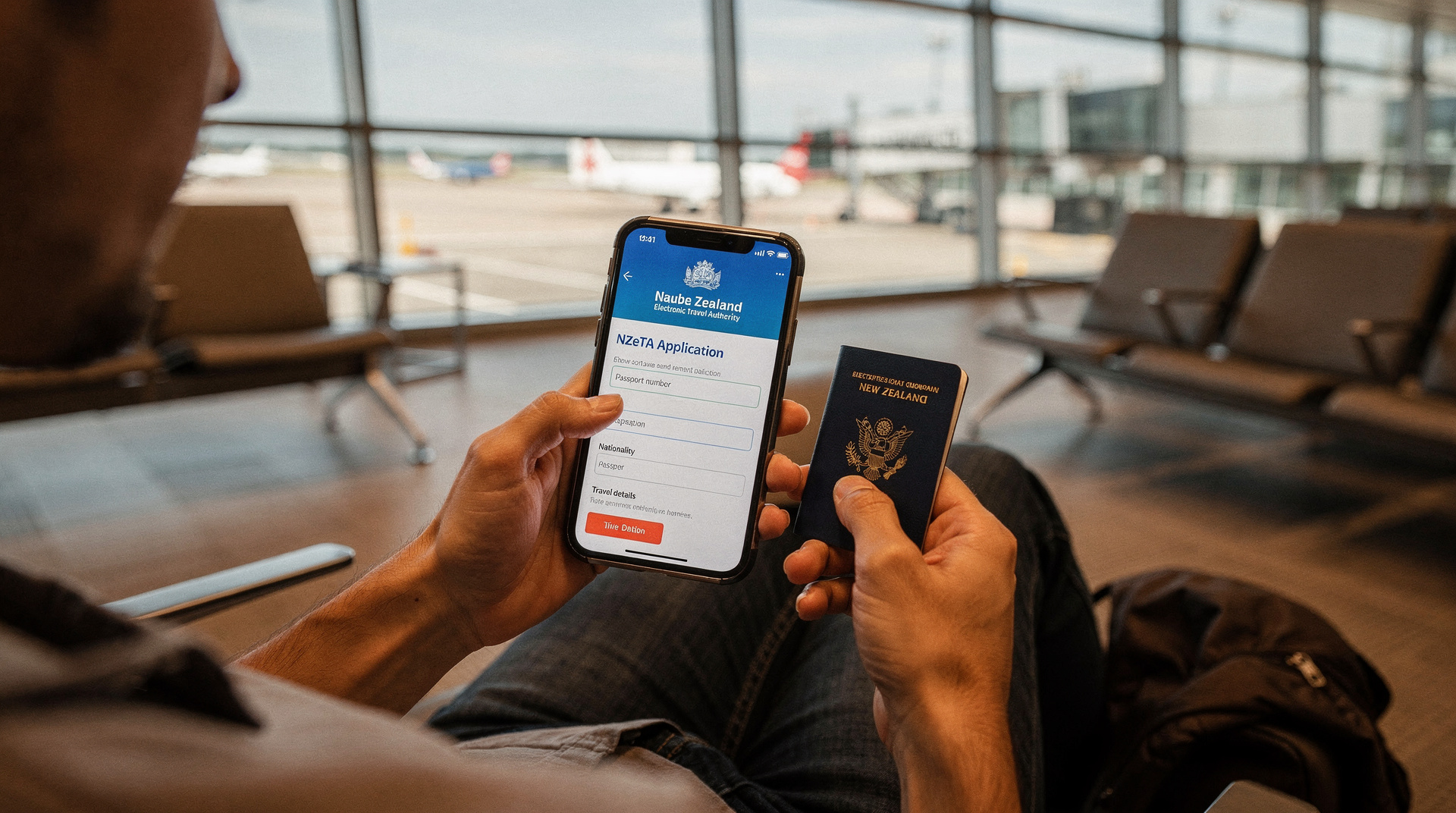
The practical experience of the NZeTA: apply online (Immigration New Zealand’s website or the official app), pay the fees, receive an email confirmation within 24-72 hours (usually faster). You don’t receive a stamp or sticker — the NZeTA is linked electronically to your passport. Border officials see it in the system. The process is straightforward.
How this affects travel planning
The total entry cost has increased. For a couple from the UK or Europe visiting New Zealand once, the NZeTA fees add a per-person cost that’s now meaningfully higher than a few years ago. On a trip of NZD 5,000-8,000 / USD 3,000-4,800 / EUR 2,750-4,400 total cost, the NZeTA fees are a small fraction. For a single traveller on a tight budget, they’re more significant.
The increase doesn’t change the fundamental economics of a New Zealand trip significantly. The flight is the dominant cost; accommodation follows. The entry fee is real but not a deciding factor for most visitors who have already committed to the trip.
Where it may matter: for visitors considering a short trip (under 10 days) where the cost-per-day of the entry levy is higher proportionally. The argument for longer trips — which I make independently on cost grounds — is reinforced when you amortize fixed entry costs over more days.
The IVL as a conservation tool
It’s worth saying something about the policy intent, because it affects how you think about what you’re paying.
New Zealand’s conservation estate is extraordinary and expensive to maintain. The DOC (Department of Conservation) manages over 8 million hectares of national parks and reserves, including the Great Walks system. Visitor numbers to this infrastructure increased dramatically from 2010 onwards, before COVID, and have recovered strongly since.
The IVL is one mechanism for connecting visitor revenue to conservation funding. Whether it’s well-designed for that purpose — whether the money actually flows to DOC rather than general government revenue, whether it’s correctly sized relative to the conservation impact of tourism — are legitimate policy questions. The tourism industry and conservation advocates have both raised concerns about specificity of ring-fencing.
From a visitor perspective: you’re paying an entry fee that is framed as a conservation contribution. If you’re visiting New Zealand partly for its natural environment — and most visitors are — there’s a reasonable argument that this framing reflects something real.
Practical checklist for NZeTA
- Check whether your nationality requires an NZeTA (Immigration NZ website — inz.govt.nz).
- Apply online at least 72 hours before travel. The approval is usually faster but don’t rely on it.
- Pay by credit or debit card. The fee is non-refundable.
- Keep your confirmation email — you don’t need to print it, but have it accessible in case of questions at the border.
- Check that your passport is valid for at least 6 months beyond your travel dates — a standard requirement for New Zealand entry.
- Ensure your return flight booking is in order — you need evidence of onward travel.
The working holiday visa
Working holiday visa holders from eligible countries (UK, Ireland, France, Germany, Italy, Spain, Netherlands, and many others) are on a different track — they apply for a working holiday visa rather than an NZeTA. The Working Holiday Visa for most nationalities runs around NZD 280-320 / USD 168-192 / EUR 154-176 and covers 12 months with the right to work. No IVL applies on top. For travellers aged 18-30 (35 for some nationalities), this is typically the better entry route.
Travelling with pets is a separate process again — New Zealand’s biosecurity rules for animals are strict and have nothing to do with the NZeTA system. See the pets in New Zealand visa guide if that applies to you.
How the fee lands in a real budget
The fee increase is easiest to judge against an actual trip cost rather than in isolation. If you’re planning a 10-day, 14-day, or 21-day trip, the entry fee is a fixed cost that gets diluted the longer you stay — which is one more argument, alongside the flight cost, for not doing New Zealand as a short stopover.
Solo travellers, couples, and families experience the cost differently too: a family of four pays the fee per person, so it’s worth checking current per-person figures against your itinerary style before finalising a budget. For a wider sense of what else has moved on price, the adventure activity price snapshot covers tours and experiences rather than entry fees.
FAQ
Do children need their own NZeTA? Yes. Every traveller who needs an NZeTA, including children and infants, requires an individual application and pays the applicable fees — there’s no family bundling.
Can I apply for the NZeTA on arrival? No. The NZeTA must be approved before you board your flight to New Zealand; airlines can deny boarding without one. Apply online at least 72 hours ahead to be safe.
Related reading
Related guides
NZeTA visa guide (by nationality)
Complete NZeTA guide: who needs it, costs (NZD 23 + IVL 100), validity, and a per-nationality table for FR, DE, IT, ES, PT, US, CA, UK.

First time in New Zealand
Complete first-timer's guide to NZ: costs, logistics, Maori culture, what to book early, and how to structure 7–21 days.

New Zealand prices in 2025 — an inflation snapshot
What has New Zealand travel cost since 2019? A 2025 price snapshot: accommodation, food, activities, and transport in NZD, USD, and EUR.
How many days do you need in New Zealand
7 days, 14 days, or 3 weeks? Honest guide to how much time you need for New Zealand, island by island, with sample day-counts by priority and travel style.
Published: