
New Zealand prices in 2025 — an inflation snapshot
The honest picture
New Zealand has always been expensive. Since 2020, it’s become more expensive — but perhaps not as dramatically as travellers fear. What follows is a 2025 price snapshot for the costs that actually matter for a typical trip, with comparison to pre-COVID baselines where relevant.
| Overall inflation since 2019 | Roughly 15–25% across most categories |
| Biggest increase | Accommodation and rental cars |
| Most stable | Café food and coffee |
| Backpacker daily budget | NZD 110–150 per person |
| Comfortable daily budget | NZD 500–750 per person |
Exchange rate baseline for 2025: NZD 1.00 ≈ USD 0.60 ≈ EUR 0.55. These rates fluctuate; treat the figures as indicative.
Flights
Return flights from Europe to Auckland have seen some easing from the 2022-2023 peaks. In 2025, economy return fares from London, Paris, or Amsterdam typically range NZD 2,400-3,800 / USD 1,440-2,280 / EUR 1,320-2,090 depending on airline, routing, and how far in advance you book. Singapore Airlines and Emirates via Dubai/Singapore remain the dominant routing options. Cathay Pacific has returned to capacity.
From the US West Coast (Los Angeles, San Francisco): NZD 1,600-2,800 / USD 960-1,680 / EUR 880-1,540 return economy.
From Australia: much cheaper — NZD 400-800 / USD 240-480 / EUR 220-440 return economy from Sydney or Melbourne on Air New Zealand, Jetstar, or Qantas.
Book at least 4-5 months ahead for peak season (December–February). The deals are real but they disappear fast.
Accommodation
This is where New Zealand travel budgets feel the inflation most. Hostel dorm beds in the main tourist towns (Auckland, Queenstown, Christchurch) now run NZD 45-70 / USD 27-42 / EUR 25-39 per night — up from NZD 35-55 pre-COVID.
Mid-range double rooms (motels, mid-tier hotels): NZD 200-320 / USD 120-192 / EUR 110-176 per night in cities and tourist areas. In Queenstown in January, the same room can hit NZD 380-500 / USD 228-300 / EUR 209-275.
Boutique lodges and premium accommodation: NZD 400-800 / USD 240-480 / EUR 220-440 per night is the mid-luxury range. The true high end — Matakauri Lodge in Queenstown, Blanket Bay in Glenorchy, Farm at Cape Kidnappers in Hawke’s Bay — starts at NZD 900 / USD 540 / EUR 495 per night per couple and goes well beyond that.
DOC campsites and freedom camping: NZD 0-21 / USD 0-13 / EUR 0-12 per night per person. Freedom camping restrictions have tightened in many areas (see freedom camping 2025 update) but DOC basic sites remain excellent value for self-contained vehicles and tent campers.
Food
Café culture is New Zealand’s culinary signature, and it remains relatively affordable:
- Flat white or long black: NZD 5.50-7 / USD 3.30-4.20 / EUR 3.00-3.85
- Café brunch for two (with coffee): NZD 60-90 / USD 36-54 / EUR 33-50
- Supermarket grocery shopping (per day, self-catering): NZD 30-50 / USD 18-30 / EUR 16-27 per person
Restaurant meals (mid-range, dinner, no alcohol):
- Main course: NZD 28-45 / USD 17-27 / EUR 15-25
- Dinner for two with wine: NZD 120-200 / USD 72-120 / EUR 66-110
Expensive cities: Queenstown and Auckland consistently top any NZ meal price comparison. Wellington is slightly cheaper. Christchurch is broadly mid-range. Regional towns are the best value.
The standout splurge that’s worth it: crayfish (rock lobster) in Kaikoura. A whole crayfish in season — September to May for the main season — runs NZD 80-120 / USD 48-72 / EUR 44-66. The informal crayfish shacks on the road into Kaikoura sell them fresh off the boat and are the best value option.
Transport
Rental cars: the main surprise for 2025. Rental car prices spiked dramatically during COVID when fleets were sold off, and while they’ve moderated somewhat, they remain higher than 2019. Economy cars (manual, smallest category): NZD 70-110 / USD 42-66 / EUR 39-61 per day. Mid-size automatic: NZD 90-140 / USD 54-84 / EUR 50-77 per day.
Book rentals early — fleet availability is still tighter than pre-COVID in peak season, and prices rise as availability shrinks. Booking 3-4 months ahead saves meaningful money.
Campervans (basic, 2-berth): NZD 140-220 / USD 84-132 / EUR 77-121 per day. The math on campervans only works if you’re using them every night (avoiding accommodation costs) and for trips longer than 10 days.
Petrol: approximately NZD 2.60-2.90 / USD 1.56-1.74 / EUR 1.43-1.60 per litre. A 1,000km week of driving (typical for a South Island itinerary) costs around NZD 170-200 / USD 102-120 / EUR 94-110 in fuel.
Domestic flights: Air New Zealand’s domestic network. Auckland to Queenstown from NZD 80-250 / USD 48-150 / EUR 44-138. Book early; Air New Zealand’s cheap fares disappear quickly and the walk-up prices are significantly higher. The regional routes (Wellington to Nelson, Invercargill to Dunedin) are often expensive for short distances.
Interislander/Bluebridge ferry (Wellington to Picton): NZD 80-160 / USD 48-96 / EUR 44-88 per adult foot passenger; NZD 200-400 / USD 120-240 / EUR 110-220 per vehicle including driver. Book ahead in summer, especially with campervans.
Activity prices
The 2024 adventure activity price breakdown covers Queenstown activities in detail. Here’s a summary for 2025:
- Standard Queenstown bungy (Kawarau): NZD 265 / USD 159 / EUR 146
- Nevis bungy (134m): NZD 285 / USD 171 / EUR 157
- Tandem skydive 15,000 feet: NZD 359 / USD 215 / EUR 197
- Glacier heli-hike (Franz Josef or Fox): NZD 480-530 / USD 288-318 / EUR 264-292
- Hobbiton movie set tour: NZD 99 / USD 59 / EUR 55
- Weta Workshop Wellington: NZD 49-59 / USD 29-35 / EUR 27-32
Daily budgets in 2025
Backpacker (hostel dorm, self-catering most meals, limited paid activities): NZD 110-150 / USD 66-90 / EUR 61-83 per person per day.
Mid-range (motel or mid-tier hotel, mix of self-catering and café meals, 1 major activity per day): NZD 280-420 / USD 168-252 / EUR 154-231 per person per day (couple sharing accommodation).
Comfortable (good hotels, restaurant dinners, 1-2 activities per day): NZD 500-750 / USD 300-450 / EUR 275-413 per person per day.
Luxury (premium lodges, all meals, helicopter experiences): NZD 900+ / USD 540+ / EUR 495+ per person per day.
The conclusion
New Zealand in 2025 costs roughly 15-25 percent more than in 2019 across most categories. This is significant but not transformative — the cost hierarchy (which activities are worth it, which cities are expensive, which routes offer value) is unchanged. The best way to manage costs is the same as it always was: book flights and accommodation early, be flexible on dates to catch cheaper windows, and go deep on one region rather than shallow on all of them.
The country’s value proposition is unchanged: there is no other place with New Zealand’s combination of landscapes, and the cost of accessing them is still, in global terms, competitive with comparably ambitious trips.
Where your money goes further
Regional towns consistently beat the tourist hubs on price. Dunedin runs meaningfully cheaper than Queenstown or Auckland for food and accommodation while offering comparable South Island scenery and wildlife access. If your itinerary has flexibility, weighting time toward regional towns and away from Queenstown and Auckland is the single biggest lever for controlling a New Zealand budget without cutting activities.
Basing in Wanaka rather than Queenstown is a similar move for the Otago leg of a trip — accommodation and dining run noticeably cheaper while adventure activities remain a short drive away. And the crayfish splurge mentioned above is best done as a planned stop on a Kaikoura day trip from Christchurch rather than an impulse buy — the shacks along SH1 are meaningfully cheaper than restaurant crayfish in Queenstown or Auckland.
Planning around the numbers
None of these prices should change whether you go — they should change how you allocate the budget you have. The first-time New Zealand planner and how many days in New Zealand guides are worth reading together with this price snapshot: pacing and cost are linked, since a slower trip with fewer relocations saves meaningfully on both rental cars and accommodation change-over costs.
Related reading
Related guides
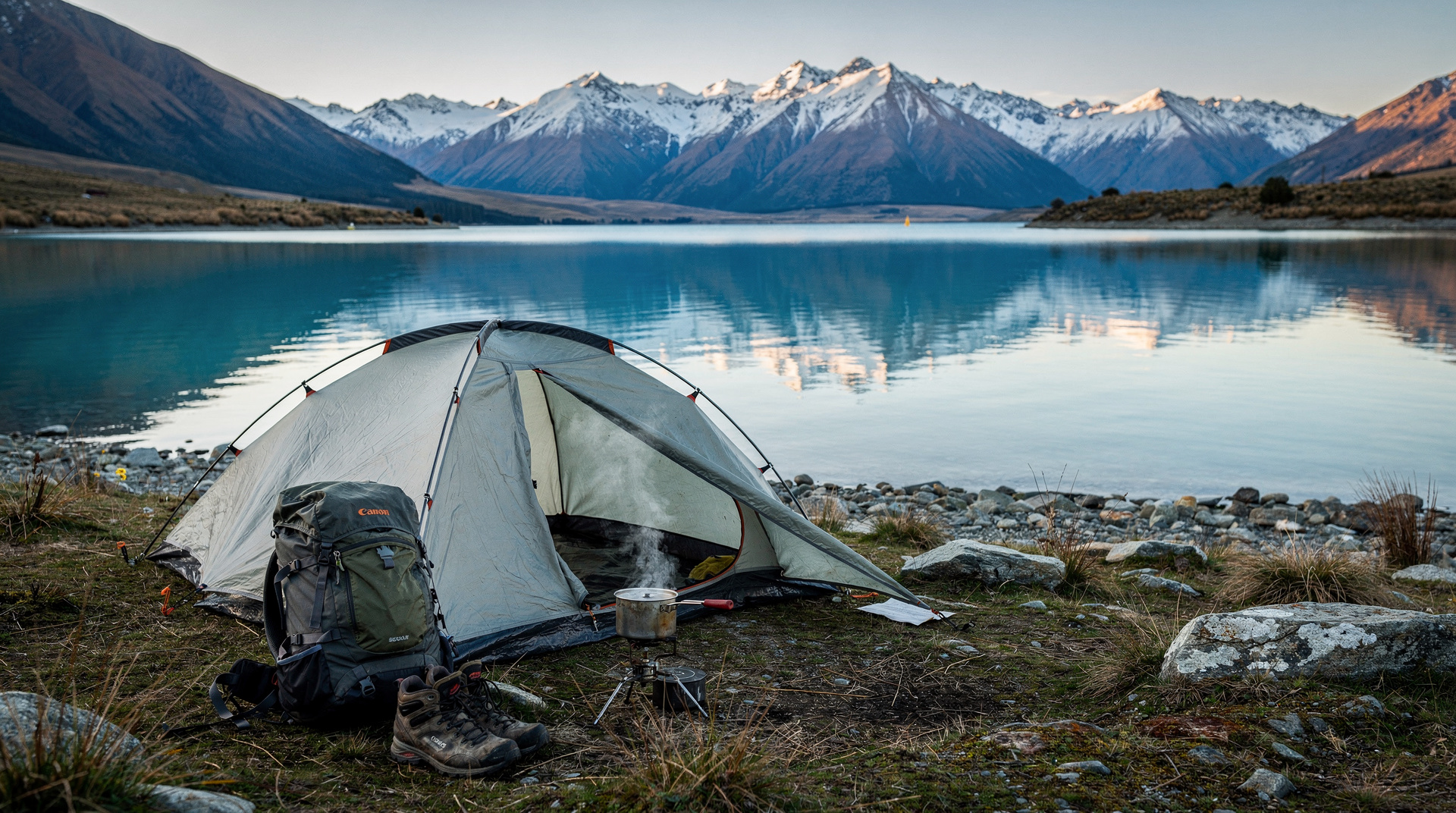
New Zealand on a budget
Honest budget guide to NZ: real daily costs, where to save, where not to cheap out, free things, and how to stretch NZD on a backpacker or mid-range budget.
How many days do you need in New Zealand
7 days, 14 days, or 3 weeks? Honest guide to how much time you need for New Zealand, island by island, with sample day-counts by priority and travel style.
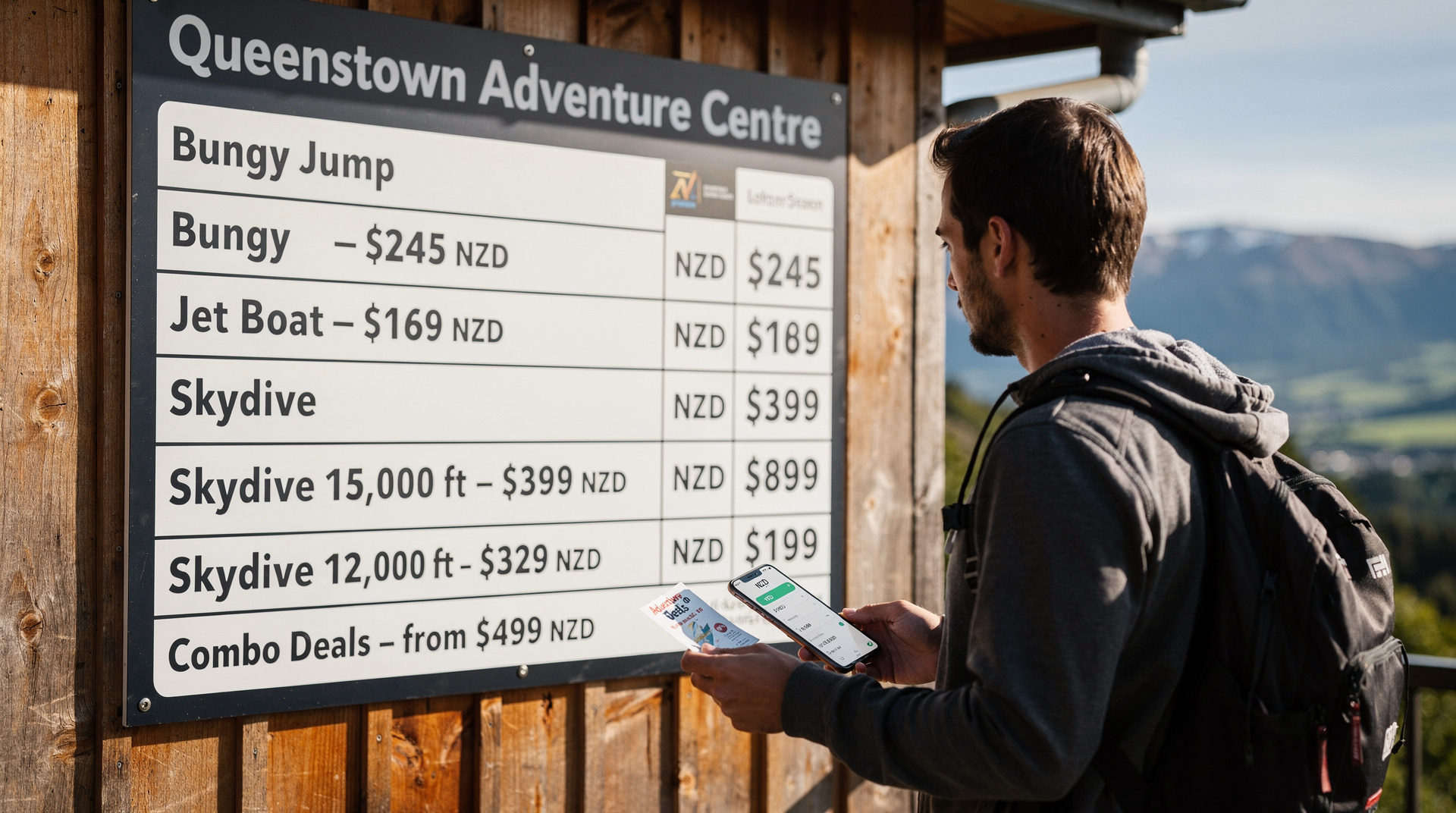
New Zealand adventure activity prices in 2024 — what things actually cost
Bungy, skydiving, glacier heli-hikes, jet boats, canyoning — here are the 2024 prices for New Zealand's major adventure activities, in NZD, USD and EUR.

First time in New Zealand
Complete first-timer's guide to NZ: costs, logistics, Maori culture, what to book early, and how to structure 7–21 days.
Published: