
First time in New Zealand
What do first-time visitors to New Zealand most need to know?
The country is much longer than it looks on a map — add 30% to all driving estimates. Cards work nearly everywhere. The NZeTA (NZD 123) must be arranged before arrival. Pack layers for all four seasons in one day. The South Island alone rewards 10+ days. And the landscapes are not exaggerated in photos — they genuinely look like that.
What nobody tells first-time visitors
New Zealand is consistently ranked among the world’s top travel destinations, and the photographs are not misleading. The mountains, fiords, geothermal fields, indigenous forest, and coastal scenery genuinely look like that. What surprises first-time visitors is not disappointment — it is the gap between how the country looks in two dimensions and how it functions in three.
Distance. New Zealand is 1,600km from Cape Reinga to Invercargill. The roads are winding, spectacular, and rarely faster than 80km/h average. You cannot drive from Auckland to Queenstown in a day. You cannot do “a quick loop of the South Island” in 3 days. Plan more time than you think you need.
The weather is genuinely variable. “Four seasons in one day” is a real thing. Pack layers regardless of when you visit. See the packing list for New Zealand.
Biosecurity is serious. New Zealand’s ecosystem is unique and fragile. The customs declaration process is rigorous. Declare everything organic, clean your outdoor gear before travel, and take the biosecurity rules seriously. Failing to declare food items can result in fines of NZD 400 on the spot.
The NZeTA is mandatory and not free. Most international visitors need to apply before travel. See the NZeTA guide — the total cost including the International Visitor Levy is NZD 123 (NZD 117 via the app). This is non-negotiable for citizens of the UK, EU, US, Canada, and most other visa-waiver countries.
Cards work everywhere. You rarely need cash except in rural areas. The card infrastructure is excellent, and contactless payments are near-universal even at small cafes and market stalls.
With those adjustments made, New Zealand rewards first-timers generously. In my 12 years guiding international visitors around this country, I have never met someone who left disappointed — only someone who left wishing they had more time.
The 5 numbers every first-timer should know
These five figures will save you from the most common planning mistakes:
350km — the maximum comfortable driving distance in a single day on New Zealand roads. The speed limit is 100km/h but the average between towns rarely exceeds 70-80km/h due to curves, single-lane bridges, and the reality that you will want to stop repeatedly. GPS says 3h30 from Queenstown to Milford Sound. Budget 5h to account for photo stops and reality.
7,000mm — the annual rainfall in Fiordland, making it one of the wettest places on Earth. Milford Sound receives rain on roughly 182 days per year. This is not a reason to skip it (rain creates the waterfalls; the fiord looks extraordinary in mist) but it is a reason to bring waterproofs and to go regardless of the forecast.
NZD 200–350 — the realistic daily budget per person for a mid-range trip: motel or mid-range accommodation NZD 70-120pp, two sit-down meals NZD 50-80pp, fuel NZD 20-30pp, one paid activity or attraction NZD 60-120pp. Backpackers can do NZD 90–130pp. Comfort travellers should budget NZD 350-550pp. See the budget guide for regional breakdowns.
NZD 123 — the cost of the NZeTA plus International Visitor Levy, the mandatory pre-travel authorisation for most nationalities. Apply at immigration.govt.nz. Allow 72 hours minimum, though it is usually granted in minutes.
6 months — the recommended lead time for booking the Milford Track Great Walk huts in peak season (November–April). The track has a hard capacity limit enforced by the Department of Conservation. Other Great Walks (Routeburn, Kepler) book out 3-4 months ahead. Tongariro Alpine Crossing shuttles in peak season sell out 4-6 weeks ahead. If any of these are on your list, book them before you book your flights.
Getting there: the flight situation
New Zealand is a long-haul destination from anywhere except Australia.
| Origin | Flight time | Approximate one-way fare |
|---|---|---|
| London | 24–27h (via Singapore or Dubai) | NZD 1,200–2,200 |
| Paris | 25–28h (via Dubai or Singapore) | NZD 1,100–2,100 |
| Frankfurt | 24–26h (via Singapore or Dubai) | NZD 1,000–2,000 |
| New York | 19–22h (via Los Angeles) | NZD 1,100–2,000 |
| Los Angeles | 13–14h (direct) | NZD 900–1,500 |
| Singapore | 10h (direct) | NZD 700–1,200 |
| Sydney | 3h (direct) | NZD 250–600 |
Auckland (AKL) is the main international gateway. Christchurch (CHC) and Queenstown (ZQN) receive some international flights from Australia, Singapore, and the US (Queenstown: Los Angeles during peak season). If your itinerary is South Island-focused, flying direct to Christchurch or Queenstown saves 2 days of transit.
Booking strategy: Book 3–6 months ahead for best fares in peak season (December–February, July). Air New Zealand and Singapore Airlines are consistently rated the best carriers on Auckland routes. Consider open-jaw tickets (fly into Auckland, out of Queenstown) to avoid backtracking.
Pre-arrival checklist
Before you leave home:
- NZeTA applied (immigration.govt.nz) — do at least 72 hours before departure
- Travel insurance purchased (including adventure activities coverage if relevant)
- Type I power adapter packed or ordered (NZ uses 230V, three-pin angled)
- Outdoor gear cleaned (boots, tent, bike — biosecurity)
- eSIM or local SIM plan arranged — see best eSIM for New Zealand
- Google Maps offline data for New Zealand downloaded
- Main activities/tours pre-booked (especially peak season): Cook Strait ferry, Great Walk huts, Milford Sound cruises
- Driving licence checked for validity (see driving in New Zealand guide)
- NZD cash (or plan to withdraw at airport ATM on arrival — Travelex rates are poor, use Westpac or ANZ ATMs)
- Supermarket identified near your first night’s accommodation (New World, Countdown/Woolworths, Pak’nSave for cheapest)
Your day-by-day arrival checklist
The first 72 hours set the tone for the whole trip. Follow this sequence:
Day 0 (at home, 1 week before): Apply for the NZeTA online. Cross-check your accommodation bookings. Download offline maps. If you are doing the Milford Track or Tongariro, confirm your DOC hut bookings.
Day 1 (arrival day): International flights typically arrive in Auckland in the early morning after overnight travel from Europe or the Americas. Do not plan anything ambitious. Priority tasks: clear biosecurity (declare everything — honest declarations are waved through, undeclared items get fines), get a local SIM or activate eSIM at the airport, withdraw NZD 200 cash from an ATM, get to accommodation, eat a proper meal, go to bed. The jet lag from a European crossing is 11-13 hours — it is real.
Day 2 (gentle start): Short drive only — maximum 1.5 hours. Visit a supermarket and stock up on basics. Take a short walk to recalibrate your body. Auckland’s waterfront area is ideal — flat, scenic, and full of café options. Do not attempt Waiheke Island today; you need the ferry logistics to be stress-free, and today is not that day.
Day 3 (first real day): You are ready. This is the day to do Auckland properly — Auckland Museum, the Maori cultural performance (see below), a harbour cruise, or your first significant drive north or south.
Day 4 onwards: Your itinerary takes over. By this point you have your bearings, your SIM is working, you have stocked up, and you know how long it actually takes to drive between points.
The Maori cultural intro you should do first
Te ao Maori — the Maori world — is not background decoration in New Zealand. It is the foundation of the country’s identity, legal system, place names, and increasingly its tourism economy. First-time visitors who engage with it early come away with a completely different quality of trip.
Where to start: The Auckland Museum’s Maori galleries are world-class and free to enter the museum’s permanent collection. The daily cultural performance gives context before you travel further into the country. This is the best single starting point.
Start with the Auckland Museum Maori experience
Maori Cultural Experience & Auckland Museum Admission — the highest-rated cultural introduction in the country for first-timers. Daily performances include haka, poi, and whaikorero (oratory).
Why Te Puia in Rotorua is worth the trip: Te Puia, in Rotorua, is operated by the local Ngati Whakaue hapu and is the most authentic large-scale Maori cultural experience in the country. The geothermal setting — live geysers, boiling mud pools, carved meetinghouse — makes it unlike any other cultural venue globally. The evening kapa haka (cultural performance) followed by a hangi (earth-oven feast) is the definitive New Zealand cultural evening. ✓ Worth it
Te Puia: Guided Tour with Traditional Hangi Lunch
The benchmark Maori cultural experience in New Zealand. Operated by Ngati Whakaue. Geothermal park + guided tour + hangi feast. Book ahead — popular year-round.
Essential te reo glossary for first-timers:
- Kia ora — hello / thank you (the most useful phrase in NZ)
- Aotearoa — New Zealand in te reo Maori (“Land of the Long White Cloud”)
- Whenua — land
- Iwi — tribal grouping / people
- Hapu — sub-tribe, clan
- Marae — tribal meeting ground (not a tourist attraction unless you are invited)
- Hangi — food cooked in an earth oven
- Kapa haka — traditional performing arts (singing, dance, haka)
- Mana — prestige, authority, spiritual power
- Manaakitanga — hospitality and generosity — the core of how visitors are received
- Tapu — sacred, prohibited
- Noa — free from tapu, ordinary
Place names in New Zealand are te reo: Rotorua, Whanganui, Taranaki, Whakaari, Rakiura. When a local corrects your pronunciation of a Maori name, say thank you — they are doing you a favour.
The two-island question
Every first-time visitor to New Zealand faces this question: North Island, South Island, or both?
If you have 7 days: Choose one island and go deeper. The North Island is logistically easier (more concentrated highlights, better road network). The South Island is more dramatic scenery (mountains, fiords, glaciers, alpenglow). Do not try to do both in a week — you will exhaust yourself on the road.
If you have 14 days: Cover both islands at a purposeful pace. The Cook Strait ferry crossing (Wellington to Picton, 3h30) is the bridge. See the how many days guide for detailed day-count planning.
The common mistake: Trying to do both islands in 10 days by car. This results in too much driving and too little experiencing. If you have less than 12 days, fly one leg to save time — Auckland to Queenstown is ~2h and often cheaper than the time cost of driving.
North Island vs South Island — which suits your trip?
| Dimension | ||
|---|---|---|
The North Island’s must-sees
Auckland (2 nights minimum): First port of call for most visitors. Auckland Museum, Waiheke Island ferry and wine country, harbour sailing, Sky Tower. See the Auckland guide.
Bay of Islands (2 nights): Paihia as a base. The Hole in the Rock cruise, Waitangi Treaty Grounds (where New Zealand was founded as a nation in 1840), dolphins, and the most beautiful bay clusters in the North Island. ✓ Worth it
Bay of Islands: Hole in the Rock & Bay Cruise
The classic Bay of Islands experience — sailing through 144 islands with dolphin encounters and the famous rock archway at Cape Brett. Departs Paihia daily.
Rotorua (2 nights): Geothermal landscapes at Wai-O-Tapu and Waimangu; Maori cultural experiences at Te Puia or Mitai; Polynesian Spa. ✓ Worth it One of the best value destinations in the country.
Waitomo (day trip from Rotorua or Hamilton): The glowworm caves are genuinely extraordinary — a subterranean boat ride under a galaxy of bioluminescent larvae. Not to be skipped if you are in the area.
Taupo (1 night): Huka Falls, Lake Taupo (largest lake in Australasia by surface area), optional Tongariro Alpine Crossing. ✓ Worth it
Tongariro Alpine Crossing (1 day): Ranked among the world’s best single-day hikes — a 19.4km traverse across an active volcanic plateau with emerald crater lakes and alien landscape. Must be completed with a shuttle as there is no circular route. Book shuttles 4–6 weeks ahead in peak season.
Wellington (1–2 nights): New Zealand’s coolest capital. Te Papa museum (world-class, free, not to be missed), Cuba Street’s independent hospitality scene, craft beer, Zealandia wildlife sanctuary — the world’s first urban wildlife sanctuary of its kind, where kiwi roam freely at night. See the Wellington guide.
The South Island’s must-sees
Marlborough / Kaikōura (1–2 nights): Blenheim wine region immediately off the Interislander ferry; Kaikōura for sperm whale watching year-round (one of the most reliable whale-watching sites on Earth). ✓ Worth it
Christchurch (1 night as hub): Recovering post-earthquake with a remarkable arts and food scene built in the spaces left by demolition; base for the TranzAlpine train (one of the great scenic rail journeys globally). See the Christchurch guide.
West Coast (2–3 nights): Franz Josef Glacier, Fox Glacier, wild Pancake Rocks at Punakaiki, temperate rainforest, and remote black-sand beaches. The helicopter-and-hike glacier experiences here are unique in the world.
Franz Josef: Glacier Heli-Hike
Land on the glacier by helicopter and walk on ancient ice with a guide — an experience unique to New Zealand's West Coast. 2.5 hours including 45 min on the ice. One of the most-booked activities in the country.
Aoraki/Mt Cook (1–2 nights): New Zealand’s highest mountain (3,724m). Scenic flights over the summit, the Tasman Glacier (one of the longest outside the polar regions), the flat-but-spectacular Hooker Valley Track, and some of the darkest skies in the Southern Hemisphere. See the Aoraki/Mt Cook guide.
Queenstown (2–3 nights): Adventure capital of the world. Bungy, jet boat, gondola, Milford Sound day trip, Central Otago wine tasting. A destination that earns its reputation. See the Queenstown guide.
Milford Sound (must be visited, best as overnight at Te Anau with Milford cruise next day): The most famous fiord in New Zealand, and arguably the most beautiful place in the Southern Hemisphere. Do not do the Queenstown–Milford bus day trip (13h total) unless you have no alternative — it is exhausting. Stay in Te Anau the night before, drive the Milford Road in the morning, cruise, return. ✓ Worth it
Milford Sound: Nature Cruise on a Modern Catamaran
The benchmark Milford Sound experience — 2-hour cruise on a glass-roof catamaran with close passes to waterfalls, dolphin encounters, and views of Mitre Peak. Departs year-round.
Dunedin (1 night optionally): Scotland-meets-Pacific. Larnach Castle, Otago Peninsula for penguin and albatross colonies, the world’s steepest street, and a university city food scene that punches well above its weight. See the Dunedin guide.
Adventure activities: minimum ages and what first-timers underestimate
New Zealand markets itself heavily on adventure tourism, and for good reason — but first-time visitors often either avoid it entirely out of nervousness or underestimate what’s actually required. A quick reality check:
| Activity | Typical minimum age | What people underestimate |
|---|---|---|
| Bungy jumping | 10 (35kg minimum) | The wait and the walk to the platform are more nerve-wracking than the jump itself |
| Jet boating | 5 | How wet you get — bring a spare set of dry clothes |
| Skydiving | 13 (with guardian consent) | Cloud cover cancels flights regularly in Queenstown; build a buffer day |
| White water rafting | Varies by grade, often 13+ | Grade III-IV rivers are genuinely physically demanding, not a passive float |
| Glacier heli-hikes | Around 8 | Flights are weather-dependent with no refund, only rescheduling — plan 2 nights |
| Tongariro Alpine Crossing | No formal minimum, but fitness-dependent | It is a 19.4km full-day hike, not a casual walk — allow 6-8 hours |
None of these require prior experience — operators brief and equip you fully — but nearly all are weather- or fitness-dependent in ways that catch first-timers out. Building a buffer day around any weather-dependent activity (skydiving, heli-hikes, scenic flights) is the single most useful piece of adventure-planning advice for a first trip.
What it actually costs
Daily budget per person
Excludes international flights. IVL levy (NZD 100) is part of the NZeTA application — a one-off per trip. Exchange rate snapshot 2026: 1 NZD ≈ 0.60 USD ≈ 0.55 EUR.
| Item | NZD | USD | EUR | Verdict |
|---|---|---|---|---|
| Backpacker (hostel dorm, self-catering, free hikes) | NZD 90–130 | USD 54–78 | EUR 50–72 | |
| Mid-range (motel, café meals, some paid activities) | NZD 200–350 | USD 120–210 | EUR 110–193 | |
| Comfortable (hotel, restaurants, guided tours) | NZD 350–550 | USD 210–330 | EUR 193–303 | |
| Luxury (lodge, fine dining, helicopter transfers) Blanket Bay, Huka Lodge, Eagle's Nest — world-class properties | NZD 800+ | USD 480+ | EUR 440+ | |
| NZeTA + IVL levy (once per trip) Apply via immigration.govt.nz — allow 72h before departure | NZD 123 | USD 74 | EUR 68 | |
| Cook Strait ferry (Wellington–Picton) Per person — book weeks ahead in peak season, especially campervans | NZD 55–120 | USD 33–72 | EUR 30–66 | |
| Domestic flight (Auckland–Queenstown) Book 6–8 weeks ahead for best fares on Air New Zealand | NZD 90–300 | USD 54–180 | EUR 50–165 | |
| Milford Sound cruise 2h standard cruise; lunch combos cost more | NZD 89–189 | USD 53–113 | EUR 49–104 | |
| Hobbiton Movie Set Guided tour only — no independent entry. Book ahead. | NZD 99 | USD 59 | EUR 54 | |
| Great Walk hut pass (per night, per person) Milford Track and Routeburn are highest demand — book 6 months ahead | NZD 70–140 | USD 42–84 | EUR 39–77 |
Budget-saving strategies that actually work in New Zealand:
- Buy lunch and breakfast from supermarkets (Pak’nSave is cheapest). Restaurant markups are high — eat dinner out, self-cater everything else.
- Camp in DOC campgrounds (NZD 8–15 per night) instead of holiday parks when doing the South Island’s scenic routes. Many of the best locations (Hooker Valley, Lake Ohau) have DOC grounds.
- Book domestic flights instead of driving between islands — the time cost of 2 days driving from Auckland to Queenstown often exceeds the flight cost.
- Get a supermarket-brand eSIM instead of Vodafone or Spark retail pricing. Skinny Mobile and 2degrees have the best value prepaid plans for visitors.
- Visit free DOC walks instead of paid guided hikes — most of New Zealand’s greatest scenery is accessible without a guide.
See the budget guide for full destination-by-destination breakdown.
Self-drive vs guided tour: which is right for you?
Self-drive vs guided tour for first-timers
| Dimension | ||
|---|---|---|
See the driving in New Zealand guide for the full guide to left-hand driving, single-lane bridges, and the New Zealand road rules that catch international visitors out.
Where to sleep: accommodation types
Hostels (NZD 35–65 per night for a dorm): YHA New Zealand has reliable quality across the main tourist circuit. Base (budget party hostel), Nomads (mid-range backpacker). Breakfast not usually included.
Motels (NZD 130–220 per night for a double): New Zealand’s most common accommodation type. Reliable, straightforward, often include kitchen facilities. Brands: Comfort Inn, Best Western, Heritage, and thousands of independent operators. Quality varies — read recent reviews.
Airbnb: Strong supply in all regions. Rural homestays are often the most authentic accommodation experiences.
Holiday parks (NZD 35–55 per night for a powered campervan site): Everywhere. Kitchen and bathroom facilities shared. Some have self-contained cabins (NZD 80–150). Top 10 Holiday Parks is the main quality-assured chain.
Hotels (NZD 200–500 per night for a standard double): Full-service hotels concentrated in Auckland, Queenstown, Wellington, and Christchurch. Prices significantly higher in peak season.
Luxury lodges (NZD 1,000–5,000+ per night): New Zealand has some of the world’s finest luxury eco-lodges. Blanket Bay (Glenorchy), Huka Lodge (Taupo), Matakauri Lodge (Queenstown), Eagle’s Nest (Bay of Islands). ★ Splurge Worth knowing about if budget is not the constraint.
The 7 things first-timers regret not booking
In order of how often I hear about them after the trip:
1. Milford Track hut passes. The Great Walk most people want to do, and the one that sells out first. DOC opens bookings 6 months before season start (late May for an October start). If it is sold out: try the Routeburn Track (equally spectacular), or do the Milford Sound cruise without the walk.
2. Hobbiton Movie Set. You cannot wander in independently — it is a working farm with guided access only. Peak season queues for walk-up slots are long and sometimes the day sells out. ✓ Worth it
Hobbiton Movie Set: Guided Tour Ticket
The only way to enter the Shire — a guided 2.5h walk through the actual set from the Peter Jackson films. Includes the Green Dragon Inn. Book weeks ahead in summer.
3. Franz Josef glacier heli-hike. Flight-dependent (no refund for cancellations, just reschedule). This creates a logistical problem in multi-night stays — book your second night in Franz Josef for free cancellation, in case the first day’s flight is grounded. Plan 2 nights. The experience is worth it.
4. Tongariro Alpine Crossing shuttle. There is no car park at the trailhead that operates in peak season — you must take a shuttle. Popular shuttle companies fill up weeks ahead in summer. Book before you book accommodation.
Tongariro Alpine Crossing: Roundtrip Shuttle
The mandatory shuttle for New Zealand's most famous single-day hike. Departs National Park Village from 5:30am. Book early — sells out weeks ahead in November–April.
5. Cook Strait ferry (Interislander or Bluebridge). Especially if you have a campervan. The peak season sailings fill up weeks ahead. Book both legs before you arrive in New Zealand.
6. Kaikōura whale watching. Weather- and sea-dependent. If your itinerary allows only one day in Kaikōura and that day is cancelled (rough sea), you miss it entirely. Allow 2 days if whale watching is a priority.
Kaikōura: Whale Watch Cruise
One of the world's most reliable sperm whale viewing sites — deep underwater trench close to shore means whales feed here year-round. 2.5h cruise. Weather dependent — book refundable.
7. Auckland Museum Maori cultural performance. Not always available every day, and the premium morning and evening shows have limited seats. This is the single best orientation experience for a first trip and it belongs on Day 2 or 3 of your visit.
Maori Cultural Experience & Auckland Museum Admission
Daily Maori cultural performance inside the Auckland Museum — haka, poi, and whaikorero in an iwi-operated setting. The best first cultural experience in the country for international visitors.
What you’ll see that you didn’t expect
Single-lane bridges. New Zealand has hundreds of single-lane bridges on main roads. There are give-way signs at each end. The protocol: check the sign, yield to oncoming traffic if indicated, and proceed when clear. Tourists freeze the first time and then adapt within a day.
GPS optimism. Google Maps calculates New Zealand drive times assuming steady progress on straight roads. New Zealand’s roads are sinuous mountain passes, lakeside tracks, and gravel-choked back routes. The standard adjustment is +30%. Wellington to Picton ferry terminal: Google says 2h10 — budget 2h50 plus a petrol stop.
Sandflies. The South Island’s sandflies (ngaro) are not a metaphor. They are a relentless, silent biting insect concentrated around still water, especially on the West Coast and around lake margins in Fiordland. DEET-based repellent is essential for anyone spending time outdoors in these areas. Pack it before you arrive — it is available in all supermarkets but you do not want to discover you need it at 8am on the Milford Track.
The flat white culture. New Zealand invented the flat white (yes, ahead of Australia — this is contested and important). The coffee culture here is world-class and widespread. Even small towns with populations of 500 have cafes producing espresso that would be notable in Milan. Starbucks exists in the main cities but is largely unnecessary and regarded with mild suspicion by locals.
Real Maori place names in daily use. Whanganui, Taupō, Ōtautahi (Christchurch’s Maori name), Tāmaki Makaurau (Auckland). The increasing normalisation of te reo Maori in public signage, news media, and conversation is not performative — it is a genuine language revitalisation project. Visitors who engage with it respectfully are received warmly.
The scale of the silence. In Fiordland, Aoraki/Mt Cook National Park, and the Rakiura/Stewart Island wilderness, you can be genuinely far from other humans. For visitors from densely populated European or Asian countries, this stillness — forests with no human sounds, night skies with the Milky Way overhead, coasts with no development on the horizon — is often the most transformative part of the trip.
New Zealand’s honesty about its history. The Treaty of Waitangi, Maori land confiscations, and the colonial history are discussed openly and critically at Waitangi Treaty Grounds, Te Papa, and in mainstream New Zealand culture. This candour, unusual in many countries’ tourism contexts, gives New Zealand a moral seriousness that visitors from Europe and North America often find refreshing.
A first-timer’s orientation to the Great Walks
New Zealand’s Great Walks — the Department of Conservation’s ten officially managed multi-day tracks — are one of the country’s genuinely world-class experiences, and first-time visitors often either overlook them entirely or overreach into a track that doesn’t suit their fitness or timeframe. A brief orientation:
You don’t need to be an expert tramper. The Great Walks are built to a higher standard than backcountry routes — graded, benched trails with huts or campsites at manageable intervals. The Milford Track, Routeburn, and Kepler are the three most popular and most bookable well ahead; the Abel Tasman Coast Track is the most forgiving for families or less experienced walkers, with boat transfer options that let you shorten sections.
Booking is the hard part, not the walking. DOC opens Great Walk hut bookings around May for the following October–April season, and Milford Track sells out first — often within days for peak dates. If a Great Walk is a priority, book your huts before you book your flights, not after.
A day-walk taste is entirely legitimate. If a multi-day hut booking doesn’t fit your schedule, most Great Walks have accessible day sections from either end — the first few hours of the Routeburn from the Divide, or a return walk on the Kepler from Te Anau, give a genuine sense of the track without the logistics of a multi-night booking.
Fitness and footwear matter more than gear. Most Great Walks require solid but unspecialised fitness — several hours of walking per day with a loaded pack. Broken-in trail shoes or boots and a properly fitted daypack matter more than expensive technical gear for a first attempt.
See the Great Walks circuit itinerary for a framework that combines two or three tracks into one trip, and the Tongariro Alpine Crossing — technically a day walk, not a Great Walk, but New Zealand’s most famous single-day hike and a good litmus test for fitness before committing to a multi-day track.
Seasonality — when to go
The best time to visit New Zealand depends entirely on what you want to do. Summary:
December–February (summer): Peak season. Best weather for beaches, coastal activities, Great Walks, and the North Island. Fiordland open. Prices 20–40% higher. Book everything months ahead.
March–May (autumn): ✓ Worth it Quieter crowds, Central Otago and Wanaka in autumn colour (late March–April is exceptional), Great Walks still open, accommodation more available. Weather still good. This is the secret sweet spot.
June–August (winter): Ski season at Queenstown/Wanaka (Coronet Peak, The Remarkables, Cardrona, Treble Cone), Ruapehu (Whakapapa, Turoa), and Mt Hutt. Some Great Walk huts closed. Fiordland can be spectacular in rain and mist. Lower prices outside ski areas. Good for wildlife (whale watching year-round, penguins visible at Otago Peninsula in winter).
September–November (spring): Warming up. Lambs everywhere. Great Walks begin to open from October. Slightly unpredictable weather but rewards patience. Good shoulder-season pricing.
Matariki (Maori New Year — 10 July 2026, public holiday since 2022): Celebrations across the country, particularly at Rotorua, Auckland, and Wellington. If you are visiting in early–mid July, this is worth planning around.
FAQ
Is New Zealand safe for first-time solo travellers?
Genuinely yes. New Zealand consistently ranks among the world’s safest countries for international visitors. Violent crime in tourist areas is extremely rare. The main risks for visitors are outdoor — underestimating New Zealand’s rapidly changing weather, getting lost on mountain tracks, and driving tired on unfamiliar roads. See is New Zealand safe for a full breakdown.
Is it safe to drink tap water in New Zealand?
Yes. New Zealand’s tap water is clean and excellent throughout the country, including rural towns. Carry a reusable bottle and refill it at accommodation, cafes, and public facilities. Buying single-use plastic water bottles is both unnecessary and expensive.
Can I rent a car without an international driving permit?
Yes, provided your licence is in English (or accompanied by an official translation). EU, US, UK, Australian, and Canadian licences are accepted directly. Japanese and Chinese licences require a translation or IDP. See the driving guide.
Is New Zealand LGBTQ+ friendly?
Genuinely yes — same-sex marriage has been legal since 2013, and New Zealand consistently ranks among the most LGBTQ+-welcoming countries globally. See the LGBTQ+ travel guide for full details.
What vaccinations do I need for New Zealand?
No mandatory vaccinations for entry (no yellow fever certificate required unless arriving from a yellow fever-endemic country). Standard travel health preparations (hepatitis A and B, tetanus/diphtheria up-to-date) are sensible. No malaria risk in New Zealand.
Will my phone work in New Zealand?
Most modern smartphones work on New Zealand’s networks (4G/LTE). Check your carrier’s international roaming rates before departure — they are often expensive. An eSIM or local SIM is much more cost-effective for stays over a few days. See the eSIM guide. Spark, Vodafone, and 2degrees are the three networks. Coverage is good in all major tourist areas; expect gaps in remote Fiordland and the more isolated West Coast roads.
What is the food like?
Genuinely excellent and under-discussed internationally. New Zealand has world-class lamb (slow-cooked with local wine: mandatory), venison, seafood (Bluff oysters May–August, green-lipped mussels year-round, crayfish on the Kaikōura coast), artisan dairy, and a café culture that leads the world. Auckland’s dining scene is excellent by any international standard. Vegan and vegetarian options are widely available in cities, and even small towns usually have at least one café with strong plant-based options.
Do I need to hire a car, or can I travel by public transport?
New Zealand’s public transport between cities is limited. Intercity buses (InterCity, Naked Bus) connect the main tourist circuit but are slow and infrequent between smaller towns. There is no passenger rail network of practical use for tourist routing (the TranzAlpine, Northern Explorer, and Coastal Pacific are scenic experiences, not transport). For any meaningful exploration — especially the South Island — you need a rental car or campervan. The exceptions are multi-day guided tours and the hop-on-hop-off bus passes aimed at backpackers.
What is the best way to get between the North and South Islands?
The Cook Strait ferry (Interislander or Bluebridge, Wellington to Picton, 3h30) is the scenic and practical way — you can take your rental car or campervan. Flying (Wellington–Christchurch or Auckland–Queenstown) is faster and useful if time is the constraint. Most first-timers combine both: drive the North Island, take the ferry south, explore the South Island, and fly back north for departure.
How long do I need in New Zealand?
The minimum for a meaningful first visit is 14 days. This allows a reasonable coverage of both islands without feeling rushed. Most visitors who stay less than 10 days leave wishing they had stayed longer. See the how many days guide for detailed itinerary frameworks from 7 to 21 days.
Is the Hobbiton Movie Set worth it?
✓ Worth it At NZD 99 per adult, Hobbiton is one of New Zealand’s most expensive single attractions. It is also genuinely excellent — the level of detail in the set is extraordinary, the guide narration is engaging, and the Green Dragon Inn finale is memorable. That said: if you have no connection to the Lord of the Rings or The Hobbit films, you will appreciate the craft but feel the price more keenly. If you are a fan, it is unmissable.
Should a first-time visitor attempt a Great Walk?
Yes, if your dates and fitness allow it — a Great Walk is one of the most rewarding things you can do on a first New Zealand trip, and the tracks are graded and hut-serviced rather than backcountry routes requiring expert skills. The catch is booking lead time: Milford Track and Routeburn huts sell out within days of DOC opening bookings, months before the season starts. If you can’t secure a multi-day slot, a day-section of any Great Walk still gives a genuine taste of the experience.
How much Maori culture should a first-time visitor engage with?
As much as your itinerary allows — it is one of the things that most distinguishes a New Zealand trip from other long-haul destinations. A single cultural performance (Auckland Museum or Te Puia) is the minimum worthwhile engagement; learning a handful of te reo Maori phrases and understanding basic place-name meanings adds depth to everything else you see. It is not a bolt-on cultural activity — it shapes how the whole country is named and understood.
Closing — your next steps
You now have the framework for a first trip to New Zealand. The next step is to turn it into a plan.
If you are still at the “should I go?” stage: The answer from everyone who has been is yes. The country is expensive by global standards, the flights are long, and the logistics require planning — and none of that matters once you are standing in the Hooker Valley looking at Aoraki, or on a Milford Sound cruise watching waterfalls pour off 1,200m cliffs into a fiord that was carved by glaciers 15,000 years ago.
If you are ready to plan:
- Start with time: Read the how many days in New Zealand guide to calibrate your itinerary.
- Sort the NZeTA: Do the NZeTA guide next — it takes 10 minutes and costs NZD 123.
- Choose your base itinerary: The 14-day New Zealand itinerary is the most realistic for first-timers covering both islands. The 10-day itinerary works for South Island focus.
- Decide on driving: Read the driving in New Zealand guide — left-hand driving, single-lane bridge etiquette, and what the road conditions are actually like.
- Set your budget: Use the budget guide to price the trip realistically.
- Check when to go: The best time to visit guide breaks down seasons, crowds, and weather region by region.
- Pack right: The packing list covers the gear choices that actually matter — layers, waterproofs, sandfly repellent, power adapters.
New Zealand will exceed your expectations. That is not tourism copy — it is the consistent report of every visitor who has done the trip. Plan it properly, book the things that sell out, leave more time than you think you need, and go.
Kia ora.
Related guides and itineraries
- NZeTA visa guide — mandatory pre-travel step
- How many days do you need in New Zealand
- Best time to visit New Zealand
- Packing list for New Zealand
- Driving in New Zealand — left-side driving guide
- New Zealand on a budget
- Is New Zealand safe
- North Island vs South Island — which to visit
- 14-day New Zealand itinerary
- 10-day New Zealand itinerary
Related guides
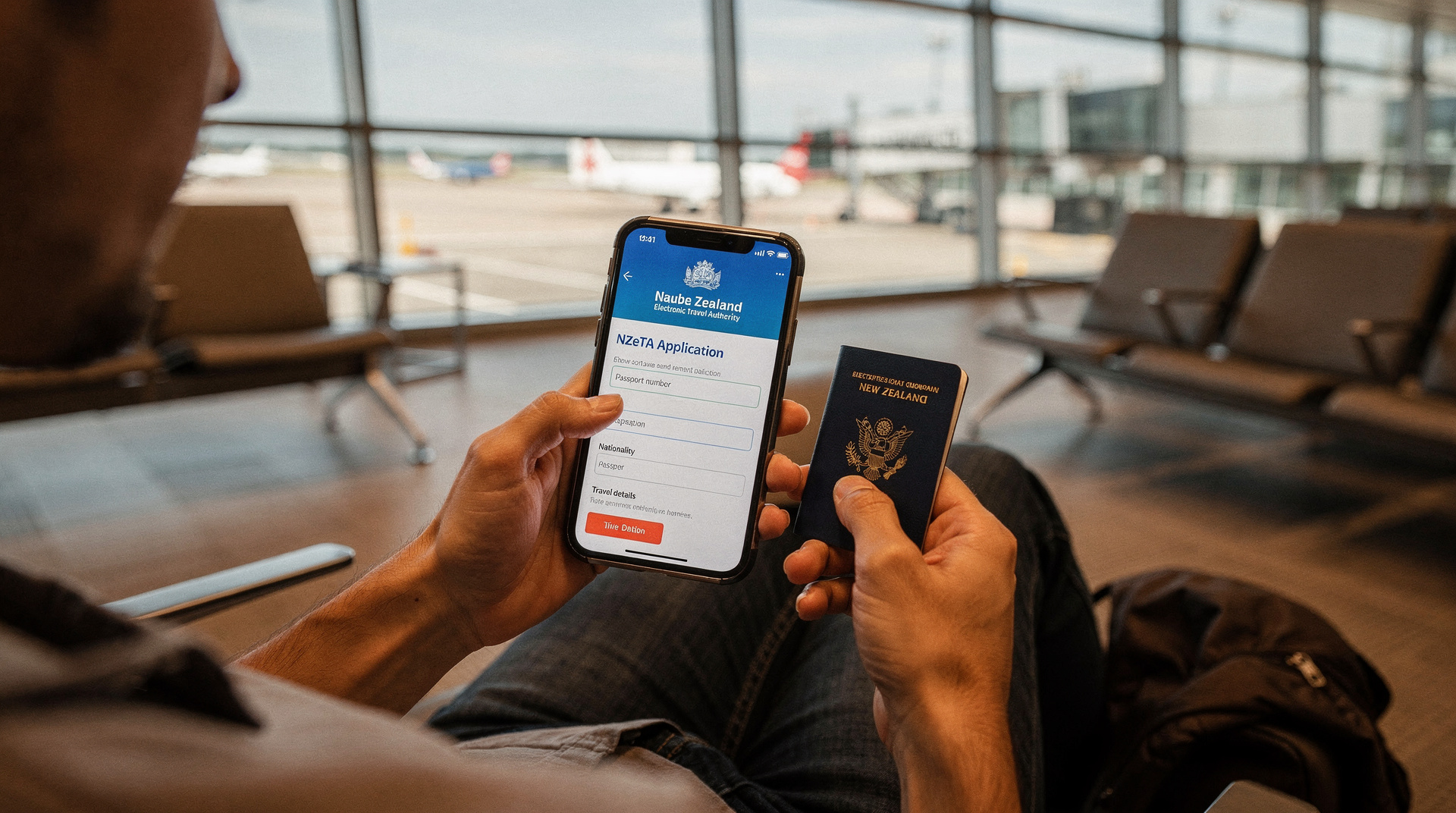
NZeTA visa guide (by nationality)
Complete NZeTA guide: who needs it, costs (NZD 23 + IVL 100), validity, and a per-nationality table for FR, DE, IT, ES, PT, US, CA, UK.
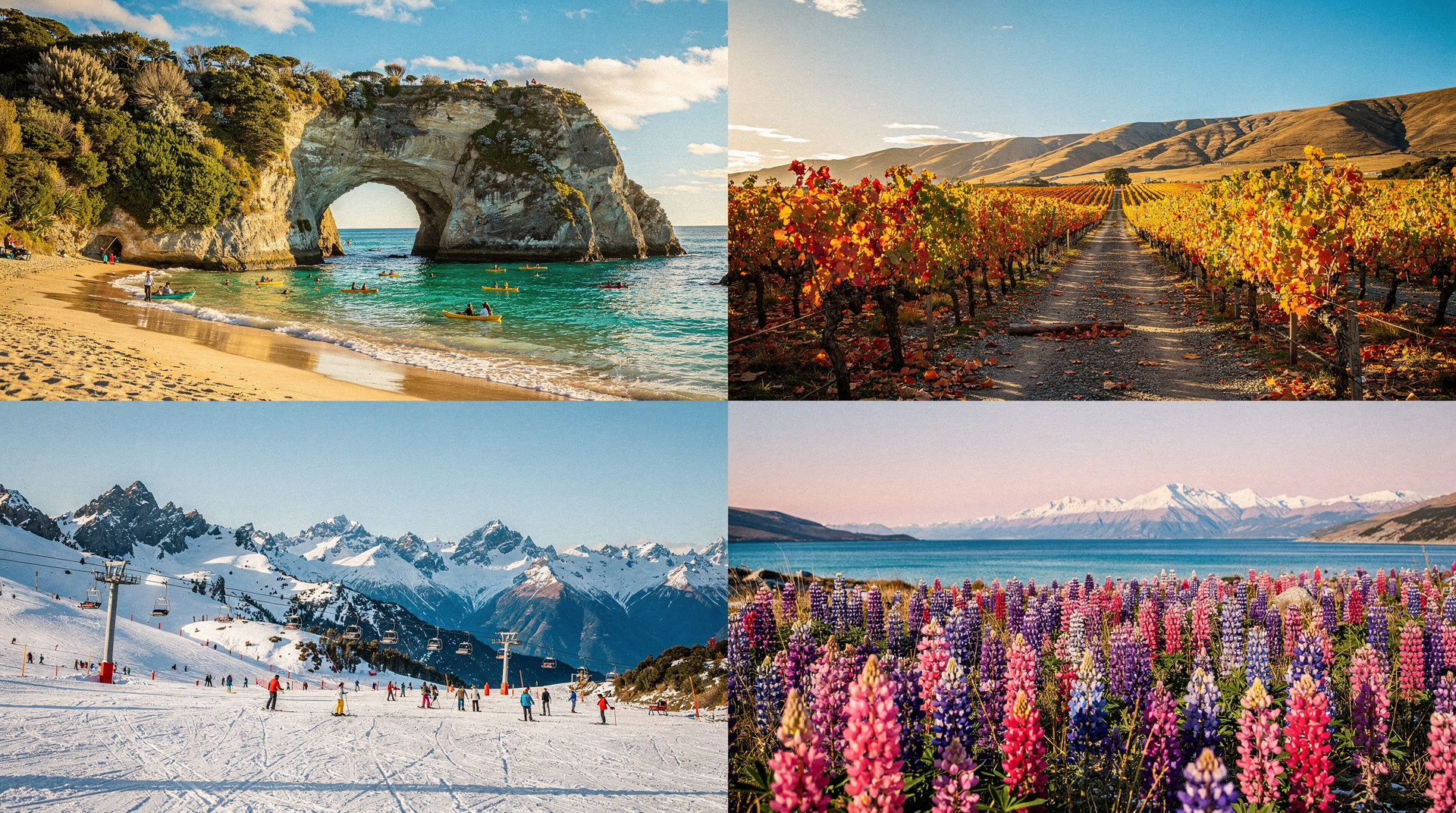
Best time to visit New Zealand
When to visit New Zealand: honest breakdown by season, region, and activity type. Summer is not always best. Spring and autumn often outperform the peak season.
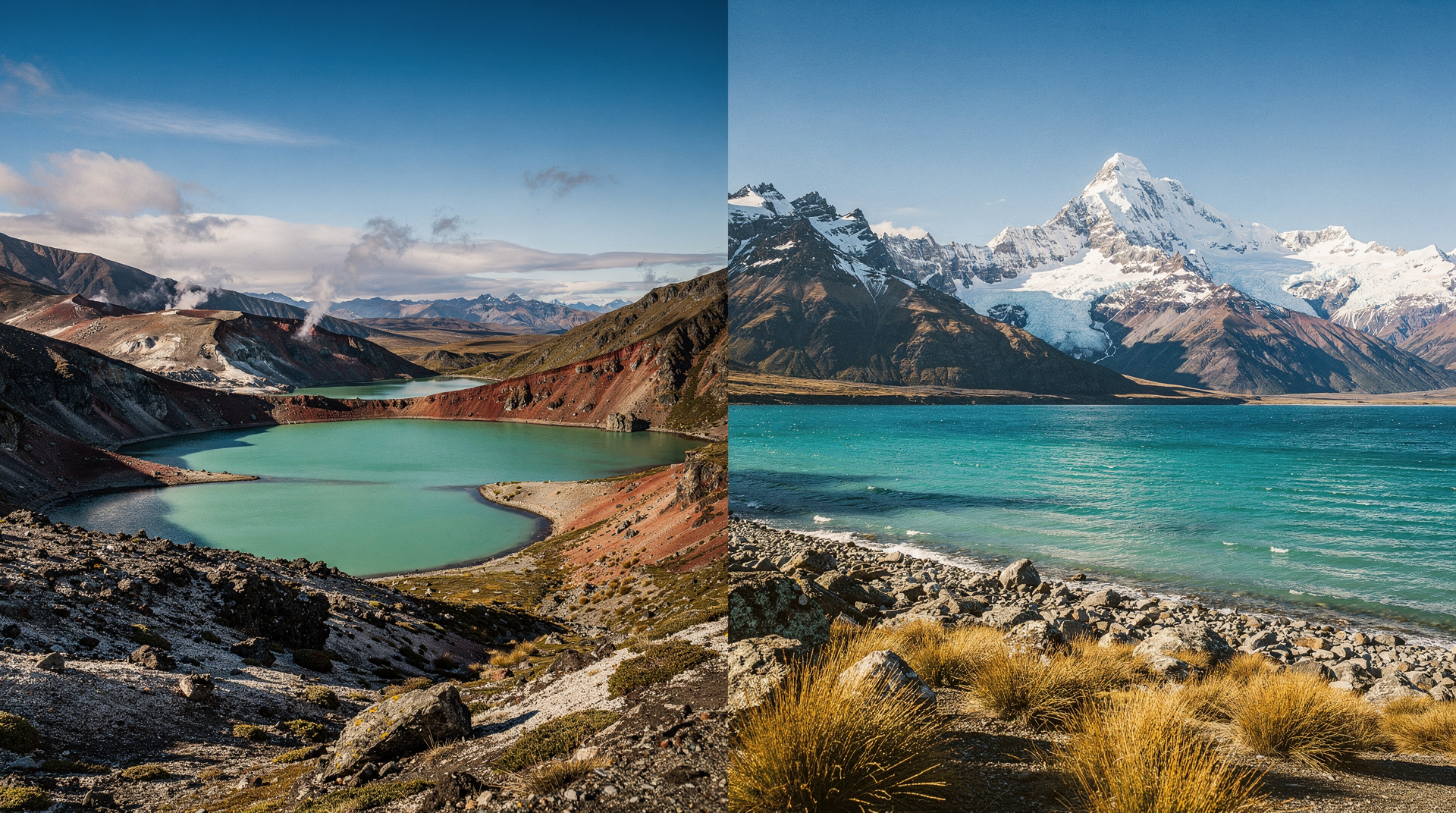
North vs South Island — which is right for you
Honest North vs South Island comparison: culture, landscapes, costs and a clear verdict for first-timers, families and short trips.
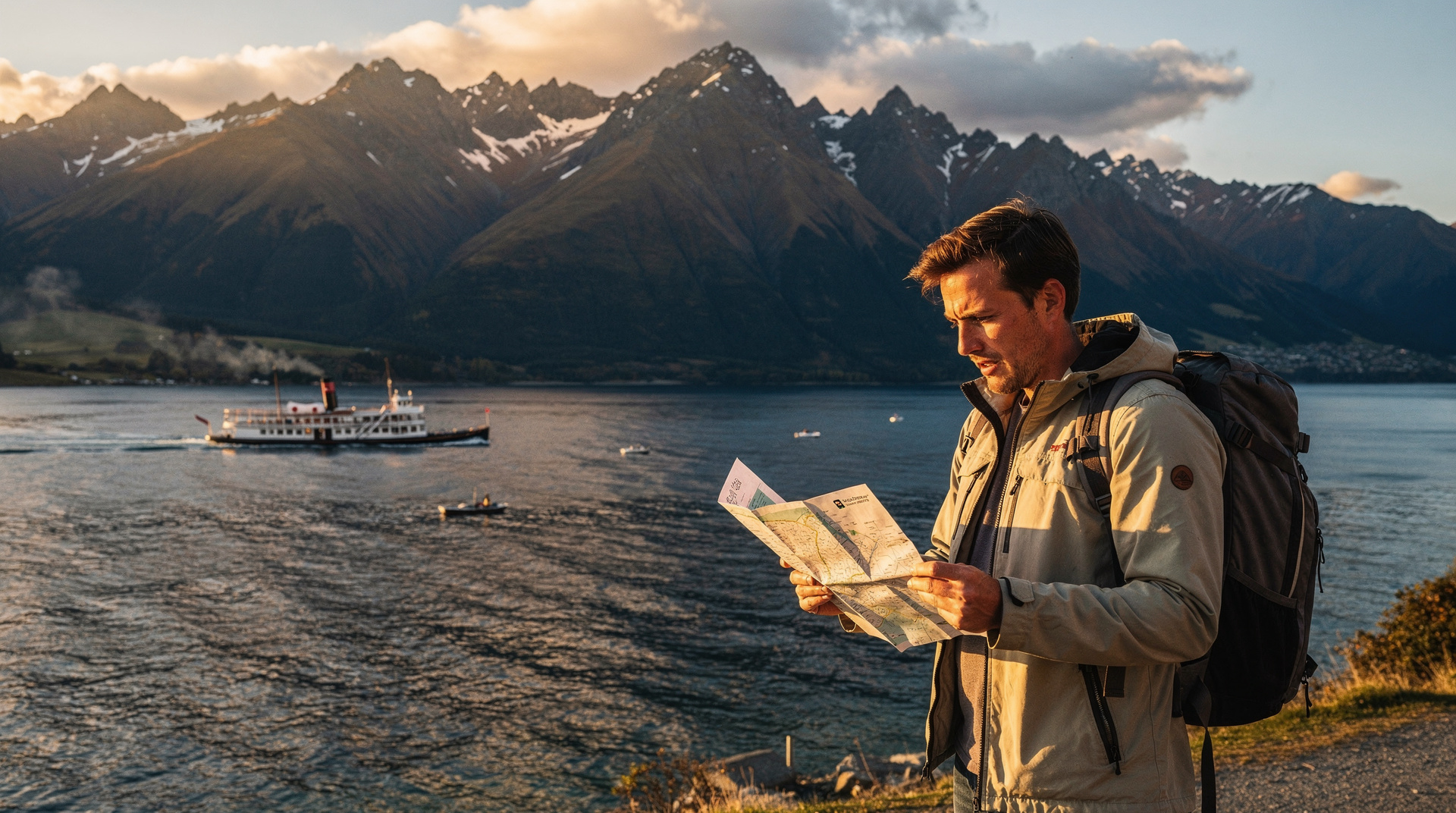
How many days do you need in New Zealand
7 days, 14 days, or 3 weeks? Honest guide to how much time you need for New Zealand, island by island, with sample day-counts by priority and travel style.
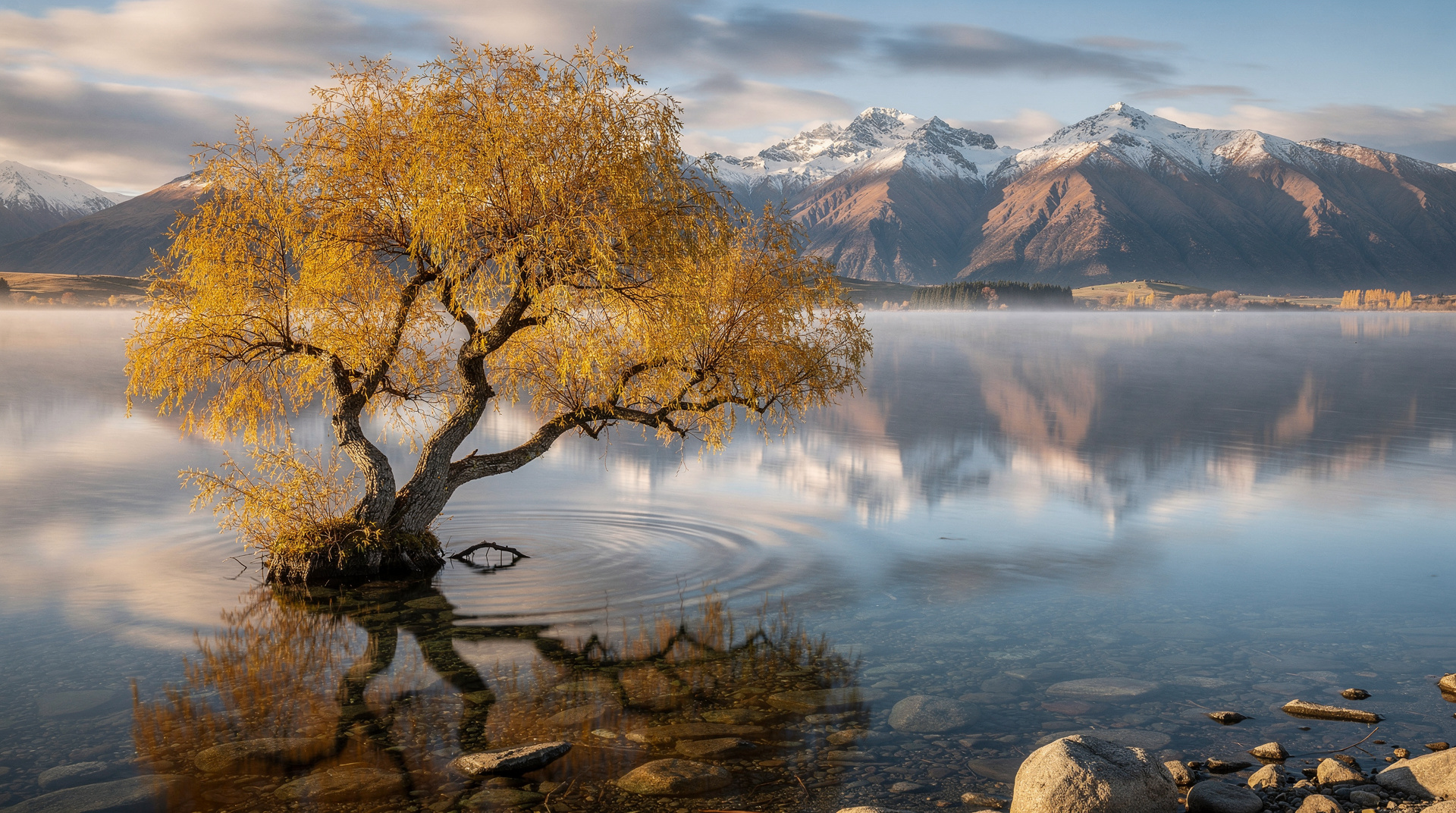
Packing list for New Zealand
Practical NZ packing list: layers for 4-season weather, hiking essentials, biosecurity musts, and what NOT to bring through customs. Season-by-season breakdown.
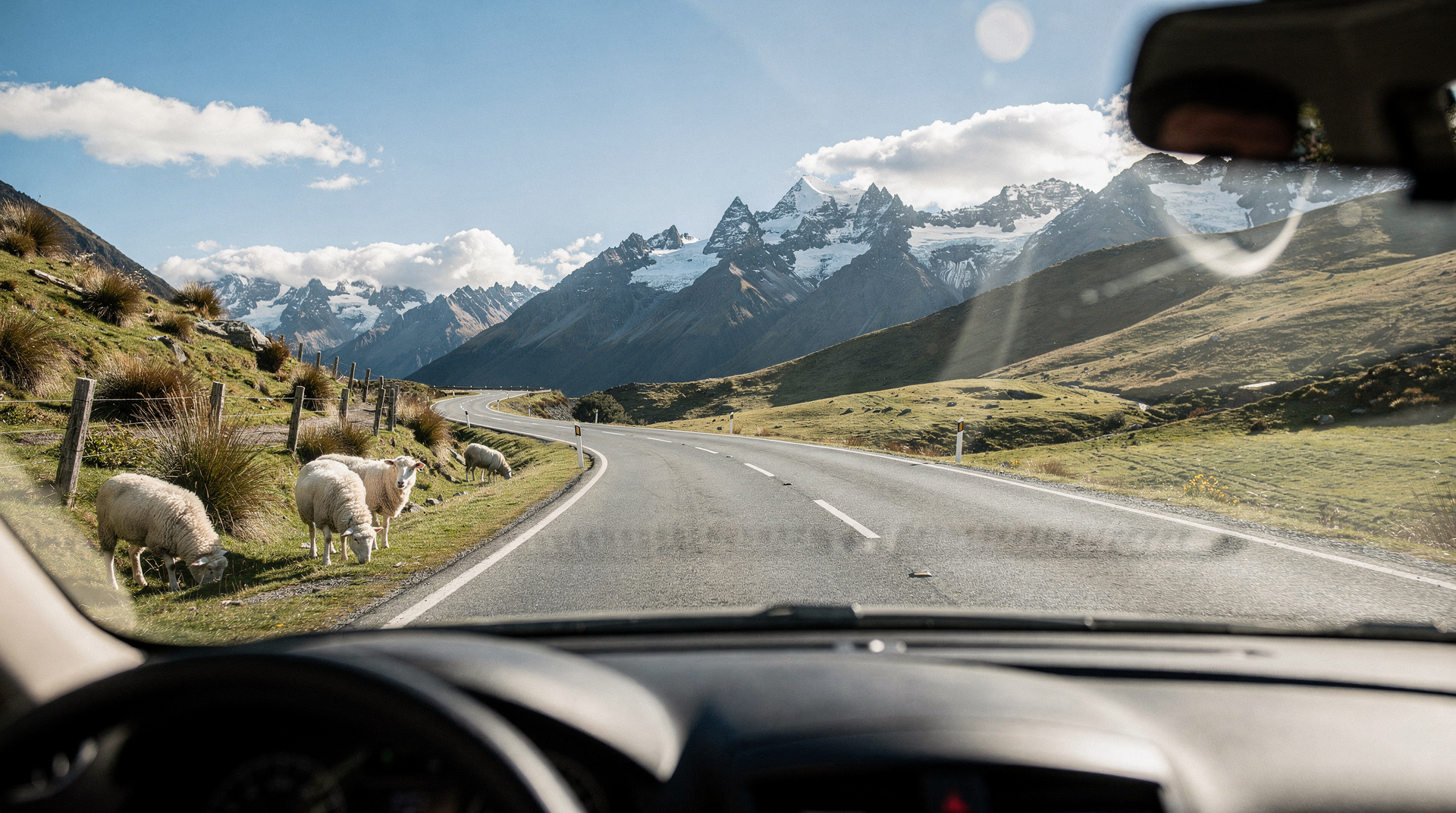
Driving in New Zealand
Honest driving guide for NZ: left-side rules, gravel road etiquette, why GPS lies, fuel costs, one-lane bridges, and what rental companies don't tell you.
Last reviewed: