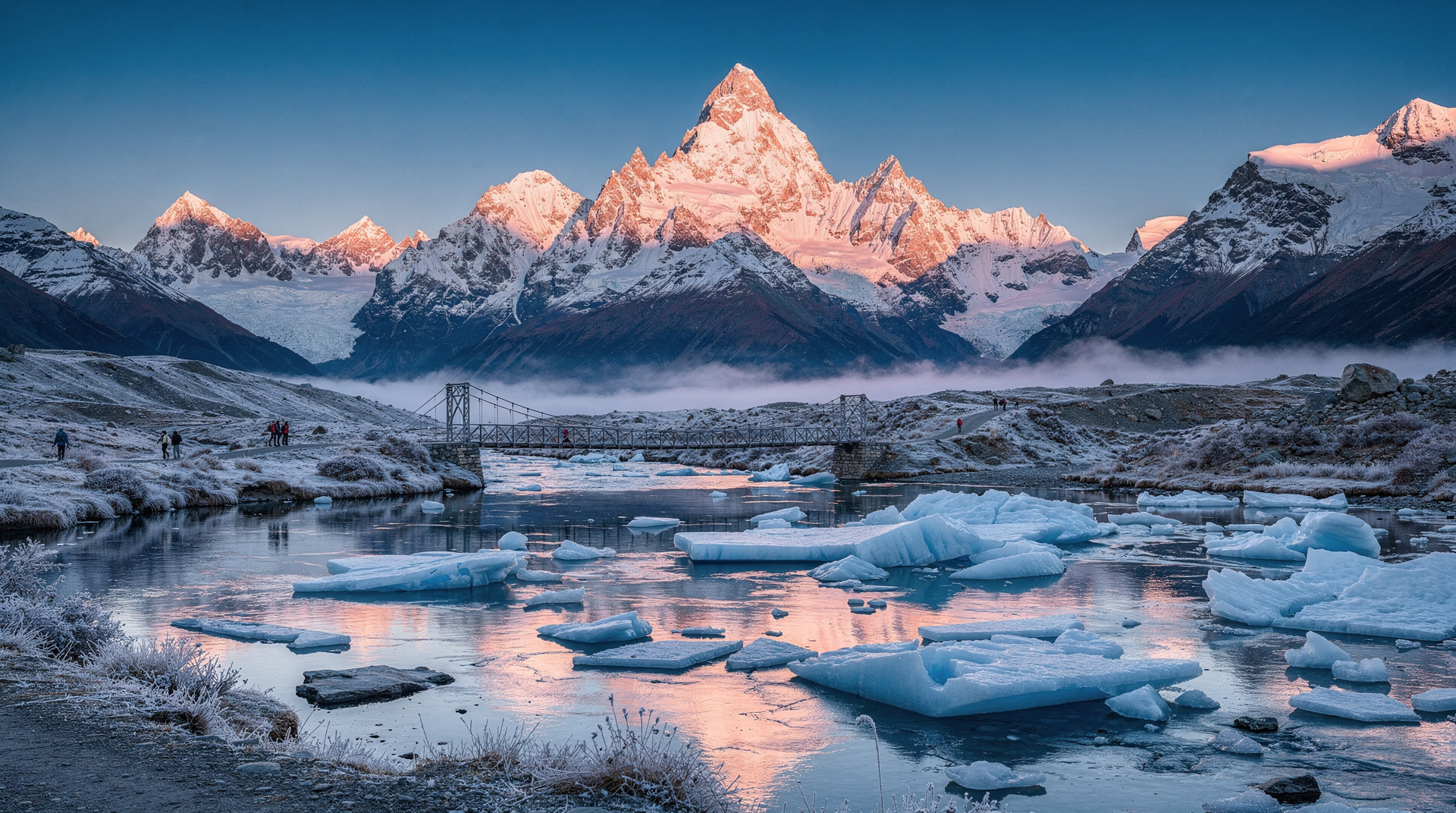
Aoraki / Mount Cook
Honest Aoraki / Mount Cook guide: Hooker Valley Track, Tasman Glacier, scenic flights — real NZD/USD/EUR prices and what to expect in all seasons.
Quick facts
- Height
- Aoraki / Mt Cook — 3,724m, highest peak in New Zealand and Australia
- Drive from Christchurch
- 3.5 hours (330 km, SH1 to SH80 via Lake Pukaki)
- Drive from Queenstown
- 4 hours (260 km, via Cromwell and Twizel)
- Currency
- NZD — 1 NZD ≈ USD 0.60 / EUR 0.55
- Service warning
- Mt Cook Village has limited shops — stock up in Twizel (1 hour south)
Aoraki / Mt Cook — New Zealand’s highest peak and what that actually means for visitors
| Where | Aoraki/Mt Cook National Park, inland Canterbury |
| Time needed | 1–2 days |
| Cost | Around NZD 65–750 / USD 39–450 / EUR 36–413 depending on activity |
| Getting there | Self-drive via SH80 from Lake Pukaki (3.5 hrs from Christchurch) |
| Best time | November to April for track access; flights operate year-round weather permitting |
Popular experiences here
Aoraki/Mt Cook is the highest mountain in New Zealand and Australia at 3,724m. It sits in Aoraki/Mt Cook National Park, a 700 km2 World Heritage area flanked by the Tasman Glacier (New Zealand’s longest glacier at 23 km) and surrounded by 19 other peaks above 3,000m. In Maori cosmology, Aoraki (“Cloud Piercer”) is the eldest son of the sky father Rakinui and an ancestor of the Ngai Tahu iwi — the mountain carries spiritual significance that the visitor experience should acknowledge.
The village (Aoraki/Mt Cook Village, population 350) sits at 760m, directly below the southern face of the mountain. The drive up SH80 from Lake Pukaki is one of the most dramatic approach roads in New Zealand — the turquoise lake in the foreground, the mountain looming directly ahead, getting bigger for 60 km. This approach alone justifies the detour.
For non-mountaineers, the primary experiences are: the Hooker Valley Track (3 hours, stunning), scenic helicopter flights to glacier landings, and stargazing. One overnight gives you the sunset alpenglow on the mountain and a clear-sky evening. Two nights lets you add a second hike and a scenic flight without rushing.
Hiking — the Hooker Valley Track and more
The Hooker Valley Track is the premier day walk at Aoraki/Mt Cook and one of the finest flat valley walks in New Zealand. The track follows the Hooker River through the valley directly toward the mountain’s southern face, crossing three swing bridges and ending at Hooker Lake (a glacial tarn at the base of the Hooker Glacier). Total: 10 km return, 3 hours, grade 2 (easy). The terminal moraine at Hooker Lake has icebergs calved from the glacier floating in it — a genuinely remarkable sight at the end of what feels like an accessible family walk.
Sunrise and sunset on this track are exceptional. The summit of Aoraki turns orange and pink at dawn; start walking at 6am to beat the day-trippers and have the swing bridges to yourself.
Sealy Tarns Track — harder, more rewarding for views. The track climbs steeply from the White Horse Hill campsite to the Sealy Tarns (alpine lakes) with a full view of the entire valley below. 7.5 km return, 3–4 hours, grade 4. The climbers hut at Mueller Hut (a further 3 hours return from the tarns) is an extraordinary overnight experience in winter but requires avalanche awareness and proper gear.
Governors Bush Walk — an easy 1.5-hour loop through native kahikatea forest, good for a morning warm-up or with young children. 4 km, flat.
Tasman Valley Walk — a 4 km return walk to the Tasman Glacier viewpoint and the Tasman Lake. The lake has formed entirely since the 1970s as the glacier has retreated — in 1973 it didn’t exist; now it’s 7 km long. Icebergs calve and float here. This is one of the most visible demonstrations of glacier retreat in the Southern Hemisphere. Budget 2 hours return.
Helicopter and ski-plane glacier flights
Scenic flights from the Glentanner or Mt Cook airport are the marquee activity for non-hikers and a significant upgrade for anyone who wants to see the glacier system from above.
Mount Cook: 50-Minute Aoraki Scenic Helicopter Flight
50-minute Aoraki helicopter flight with snow landing at 2,500m — full glacier system views over 23 km of Tasman Glacier ice.
From NZD 495–570 / USD 297–342 / EUR 272–314
The helicopter flight with alpine landing includes a longer time on the snow, with guides and crampons, giving you the sensation of standing in a high alpine environment without technical mountaineering skills required. NZD 545–620 / USD 327–372 / EUR 300–341.
The ski-plane and helicopter combo is the most comprehensive experience: ski-plane lands on the Tasman Glacier surface, you take a short walk on the ice, then transfer to a helicopter for the return flight. Different views from both aircraft. NZD 625–750 / USD 375–450 / EUR 344–413. This is the best value combination for those serious about the glacier experience.
Mount Cook: 3 Hour Heli Hike to the Tasman Glacier
Heli-hike on the Tasman Glacier — fly to the glacier surface for a 2-hour guided walk on the ice with crampons and poles. No mountaineering experience needed.
From NZD 545–620 / USD 327–372 / EUR 300–341
Book in advance — weather windows close quickly and this tour operates on fewer days than the pure flight options.
All scenic flights are weather-dependent. Book early in your stay (or first thing in the morning) to maximise the chance of clear conditions. The village front desk or operators will advise on the morning forecast.
Tasman Glacier boat tour
The Tasman Glacier helicopter flight can be combined with a boat tour on Tasman Lake to view the glacier face and icebergs at water level. The boat tour (separate booking, NZD 65–85 / USD 39–51 / EUR 36–47) gives you the scale of the glacier terminal face from a completely different perspective from the aerial views. If doing the helicopter flight, add the boat tour for a full day’s glacier experience.
Stargazing in the Mackenzie Basin
Aoraki/Mt Cook sits within the Aoraki Mackenzie International Dark Sky Reserve, one of only four Gold-tier dark sky reserves in the world. On a clear night away from the village lights, the Milky Way is visible in extraordinary resolution. The DOC campsite at White Horse Hill (basic tent-only camping, NZD 15 / USD 9 / EUR 8 per person) is 2 km from the village and offers the best stargazing with minimal light interference.
The Earth and Sky observatory at Lake Tekapo (80 km south) runs the most comprehensive stargazing tours in the Mackenzie Basin — see the Lake Tekapo guide for details. Many visitors combine a Mt Cook visit with a Lake Tekapo stargazing night.
Where to stay at Aoraki / Mt Cook
The village has limited accommodation. Book as far ahead as possible — options fill completely in summer.
Budget: White Horse Hill DOC Campsite (tent only, NZD 15 / USD 9 / EUR 8 per person; basic but excellent location); Aoraki/Mt Cook YHA (the only hostel in the village, NZD 48–75 / USD 29–45 / EUR 26–41, dorms and private rooms, excellent facilities for trampers).
Mid-range: Mt Cook Motels (self-contained units in the village, NZD 195–280 / USD 117–168 / EUR 108–154); Glentanner Park Centre (28 km south of the village, camping and motel units, NZD 95–195 / USD 57–117 / EUR 52–107).
Splurge: Hermitage Hotel (the iconic grand hotel at the foot of the mountain, renovated historic property, rooms from NZD 345–650 / USD 207–390 / EUR 190–358; the premium Wing rooms with Aoraki views are NZD 650–980 / USD 390–588 / EUR 358–539). The Hermitage is the only full-service hotel in the village; it’s expensive by South Island standards but the views justify the location premium.
Twizel as an alternative base: For travellers who can’t get village accommodation or prefer lower prices, Twizel (65 km south, 1 hour) has a wider range of motels and holiday parks at meaningfully lower rates. The trade-off is losing the sunrise and sunset views of Aoraki from your accommodation, and an extra hour of driving each way. Twizel works well combined with a stop at Lake Tekapo, which sits roughly midway between Twizel and the wider Mackenzie Basin routes to Queenstown or Wanaka.
What to eat and drink at Aoraki / Mt Cook
The Hermitage Hotel has three dining options: the Panorama Room restaurant (expensive, good NZ cuisine, mains NZD 38–58 / USD 23–35 / EUR 21–32), the Alpine Restaurant (buffet breakfast and dinner, included in some packages), and the Old Mountaineers’ Café (excellent coffee, sandwiches, pies, NZD 14–22 / USD 8–13 / EUR 7–12 for lunches). The Old Mountaineers’ Café is the best value food stop in the village.
The YHA has a self-catering kitchen; most budget travelers bring supplies from Twizel (1 hour south) or Christchurch. The village has a small general store (opening hours variable) but expect limited selection and premium prices.
Stock up advice: bring 2 days of food from Twizel or Christchurch if you’re on a budget. The Twizel New World is the last properly stocked supermarket before Mt Cook.
Skip / Worth it / Splurge
✕ Skip : Hiring a guide for the Hooker Valley Track — it’s a well-signposted, wide track with no navigation required and no dangerous terrain. The NZD 95–125 guided option is money better spent on the scenic flight. Also skip the Hermitage Hotel’s Panorama Room if you’re budget-conscious — the Old Mountaineers’ Café is 40% cheaper and the views from the window seats are identical.
✓ Worth it : The Hooker Valley Track (free, world class, 3 hours) at either sunrise or late afternoon light. The Tasman Valley walk to see the glacial lake and icebergs (free). Stargazing from the DOC campsite on a clear night.
★ Splurge : The helicopter heli-hike or ski-plane glacier combo. Standing on the Tasman Glacier surface, looking up at the Southern Alps, is one of the definitive New Zealand experiences. Book it for day 1 of your stay (weather permitting) so you have a backup day if it doesn’t operate.
Cost breakdown
Aoraki / Mt Cook activity costs at a glance
| Item | NZD | USD | EUR | Verdict |
|---|---|---|---|---|
| Hooker Valley Track World-class free walk — do it at sunrise | 0 | 0 | 0 | ✓ Worth it |
| Tasman Glacier boat tour Ground-level glacier face view | 65–85 | 39–51 | 36–47 | ✓ Worth it |
| 50-min Aoraki helicopter flight Full glacier system, snow landing at 2,500m | 495–570 | 297–342 | 272–314 | ★ Splurge |
| Helicopter with alpine landing Longer snow time with crampons | 545–620 | 327–372 | 300–341 | ★ Splurge |
| Heli-hike on Tasman Glacier 2-hr guided ice walk — limited availability | 545–620 | 327–372 | 300–341 | ★ Splurge |
| Ski-plane + helicopter combo Best value for serious glacier experience | 625–750 | 375–450 | 344–413 | ★ Splurge |
How Aoraki / Mt Cook fits into your itinerary
On the 7-day South Island itinerary, Mt Cook is typically days 3–4, after Lake Tekapo and before Queenstown. The Christchurch → Tekapo → Mt Cook → Queenstown route is the most popular inland South Island drive.
The Christchurch to Queenstown drive covers this route in detail. Allow 2 nights: one at Lake Tekapo, one at Mt Cook. This pacing gives you: lake views and Church of the Good Shepherd at Tekapo, the full Hooker Valley Track at Mt Cook, and arrival in Queenstown on day 3.
A 14-day New Zealand itinerary comfortably accommodates 2 nights at Mt Cook for hiking and a scenic flight.
For those weighing up their South Island glacier options, Aoraki/Mt Cook’s Tasman Glacier is inland and reached by helicopter, ski-plane or a short valley walk, which is a fundamentally different experience from the West Coast glaciers. The glaciers of New Zealand guide compares Tasman with Franz Josef and Fox, and is worth reading before deciding whether to add both to an itinerary.
Aoraki / Mt Cook by season
| Months | Conditions | What it means for you |
|---|---|---|
| Nov–Feb | Warmest, longest days, busiest tracks | Best hiking window; book flights and accommodation ahead |
| Mar–Apr | Cooling, clearer air, fewer crowds | Strong shoulder season for both hiking and stargazing |
| May–Aug | Cold, possible snow at village level | Flights still operate weather permitting; pack proper layers |
| Sep–Oct | Warming, variable weather | Track conditions improving, fewer visitors than summer |
Frequently asked questions about Aoraki / Mt Cook
Can you see Aoraki/Mt Cook peak on a typical visit?
The summit is visible roughly 50–60% of days. The peak generates its own weather (cloud, cloud cap) even on otherwise fine days. The Hooker Valley and lower glacier areas are almost always visible even when the summit is in cloud. Allow two days to maximise your chance of a clear-summit view.
Is the Hooker Valley Track suitable for children?
Yes. The track is sealed and boardwalked in sections, flat throughout, and the three swing bridges are genuinely exciting for children. Young children can do the full 10 km (3 hours) comfortably. The only caution: wind is very strong on exposed sections — warm layers essential even in summer.
How cold does it get at Aoraki / Mt Cook?
The village sits at 760m. Summer (December–February) averages 15–18°C in the day, 5–8°C at night. Winter (June–August) averages 4–8°C in the day, -5 to -8°C at night. Snowfall at village level is not unusual in winter. The glacier areas (accessed by helicopter or ski-plane) are significantly colder — -5 to -15°C year-round. Proper layers are essential regardless of season.
Is the Tasman Glacier shrinking?
Yes, significantly. The glacier has retreated approximately 7 km since 1900 and is losing approximately 180 million cubic metres of ice annually. The Tasman Lake, which now occupies the lower glacier basin, did not exist before 1973. This is one of the most visible and measurable examples of glacier retreat in the Southern Hemisphere. It’s worth understanding this context before visiting — the landscape you see is different from what climbers saw 50 years ago.
Do you need a guide to climb Aoraki/Mt Cook?
Technical climbing of Aoraki is for experienced high-altitude alpinists only. There are no guided tourist summit options — this is not a peak like those on commercial trekking programs. The DOC visitors centre can advise on route conditions and you should register intentions with them. Helicopter landings on the summit plateau are possible for experienced climbers. For non-climbers, the scenic flights and glacier hikes are the closest you’ll get to the summit area.
How does Aoraki/Mt Cook compare to the West Coast glaciers?
Differently accessed and differently experienced. Aoraki/Mt Cook’s Tasman Glacier sits inland, reached by helicopter, ski-plane, or a valley-floor walk to the terminal lake — you rarely touch the ice without flying to it. Franz Josef and Fox Glacier on the West Coast are more directly walkable to a viewpoint and offer heli-hikes onto the ice from a shorter flight. Aoraki has the more dramatic mountain backdrop and better stargazing; the West Coast glaciers are closer to the ice itself at ground level.
Is one night at Aoraki/Mt Cook enough?
It’s workable but tight. One night gives you the Hooker Valley Track and either a scenic flight or an evening of stargazing, not both comfortably. Two nights lets you add a second walk (Sealy Tarns or Tasman Valley) and a flight without rushing either.
Aoraki in Ngai Tahu cosmology
In Ngai Tahu tradition, Aoraki (also spelled Aorangi) is the eldest son of Rakinui (the Sky Father) and the most sacred ancestor of Ngai Tahu. The Ngai Tahu creation narrative describes how Aoraki and his brothers were travelling in a waka (canoe) that tilted and became Te Waka o Aoraki — the South Island itself. Aoraki and his brothers were petrified and became the highest peaks of the Southern Alps, with Aoraki as the tallest.
The mountain’s Maori name was officially restored when the National Park was renamed Aoraki/Mount Cook National Park in 1998, as part of New Zealand’s Treaty of Waitangi settlement process with Ngai Tahu. The iwi at that time gifted the mountain back to the nation on condition that its Maori name always appears first. This dual naming reflects a genuine reconciliation process and the mountain’s ongoing spiritual significance to Ngai Tahu.
Visitors are asked to treat Aoraki with appropriate respect — the DOC interpretation throughout the park includes this cultural context, and it shapes how the park is managed. Summit rocks should not be removed (a request that applies both for ecological reasons and because the mountain is an ancestor).
The alpine environment and safety
The Aoraki/Mt Cook area has extremely unpredictable weather. The mountain generates its own cloud cover regardless of regional conditions; storms can develop within hours; and the combination of altitude, crevassed glaciers, and avalanche terrain makes the backcountry dangerous even for experienced parties.
For day-walkers on the Hooker Valley Track and Governor’s Bush: the main risks are weather changes and wind chill. Carry extra layers regardless of how warm it is when you set out; afternoon southerlies can drop temperatures by 10°C in under an hour.
For those planning multi-day backcountry or climbing: register your intentions with the DOC visitors centre (staff there know the mountain’s conditions better than any other source) and carry a PLB (personal locator beacon). Rental PLBs are available from the visitors centre.
The Alpine Club Hut at 1,820m (accessed from White Horse Hill campsite, approximately 3 hours) is a popular overnight destination for experienced trampers wanting to experience the alpine environment without technical climbing. DOC hut pass required.
Top experiences: Aoraki Mt Cook
See all →Guides for Aoraki / Mount Cook
Related guides
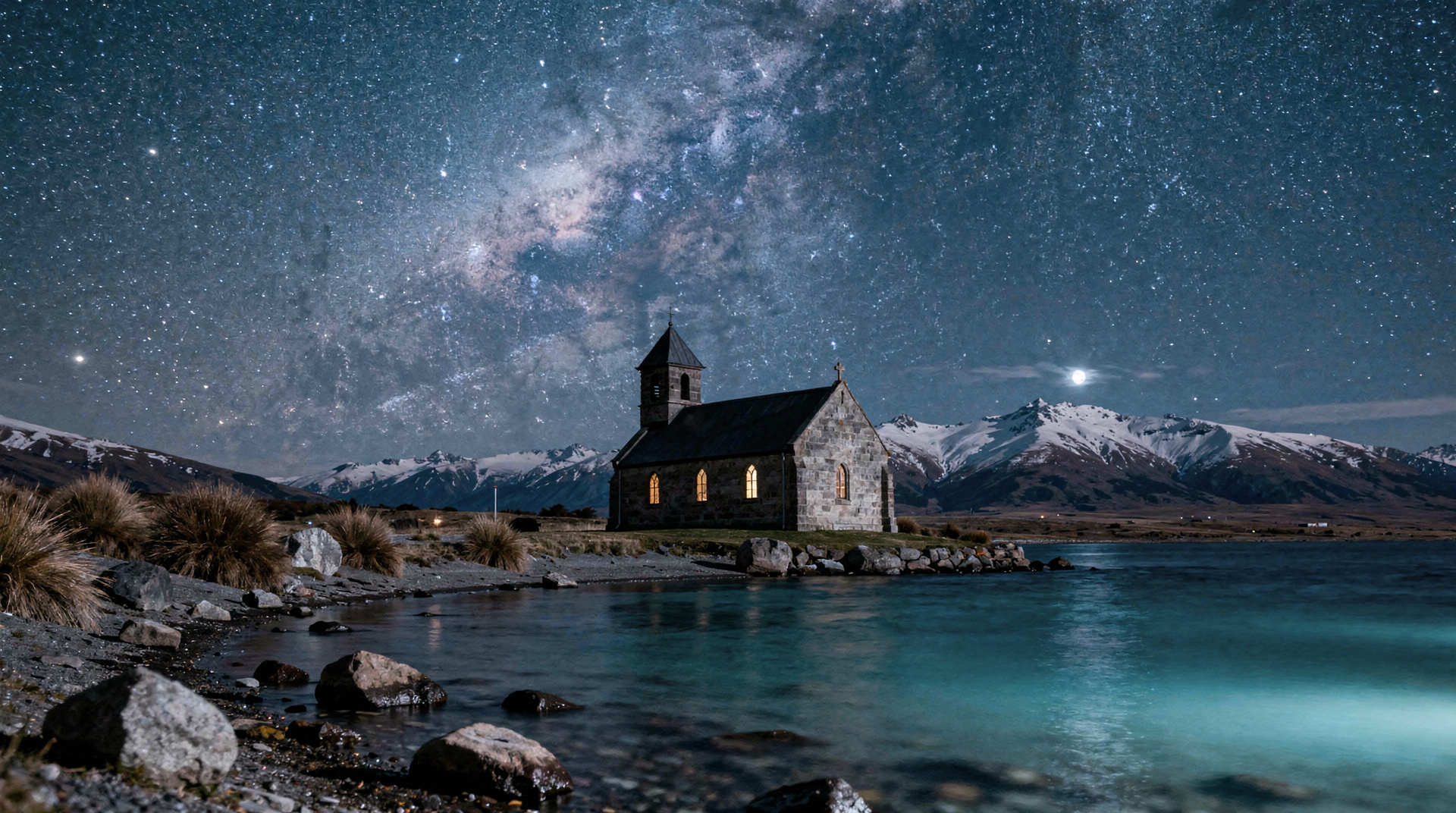
Lake Tekapo
Honest Lake Tekapo guide: stargazing, Church of the Good Shepherd, hot pools — real NZD/USD/EUR costs and how long you actually need here.
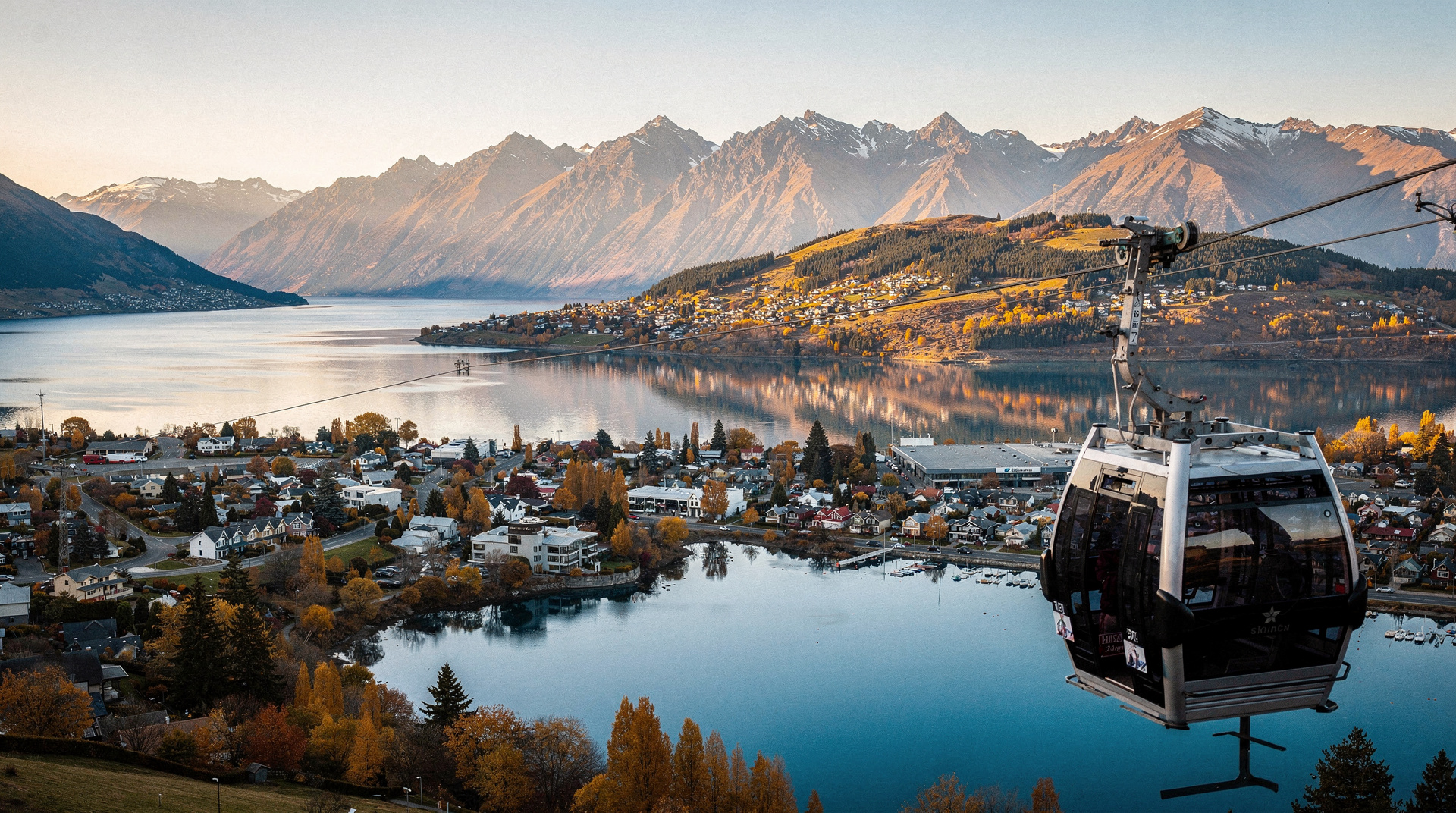
Queenstown
The honest Queenstown planner: bungy, jet boat, ski, scenic flights — real prices in NZD/USD/EUR, what to skip and what's worth your money.
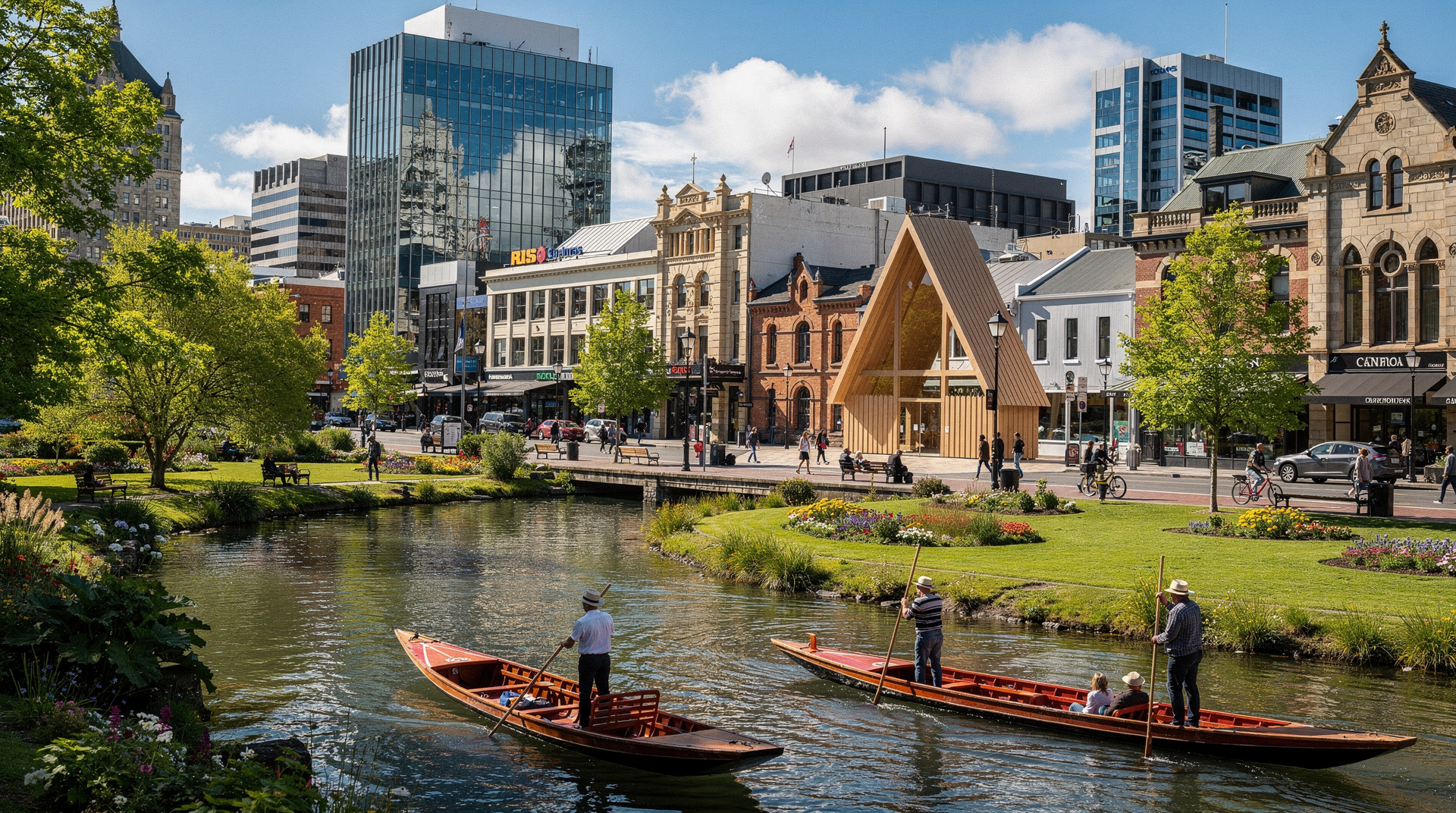
Christchurch
Honest Christchurch guide: the post-earthquake rebuild, best activities, Akaroa day trip — real NZD/USD/EUR prices and what's worth your time.
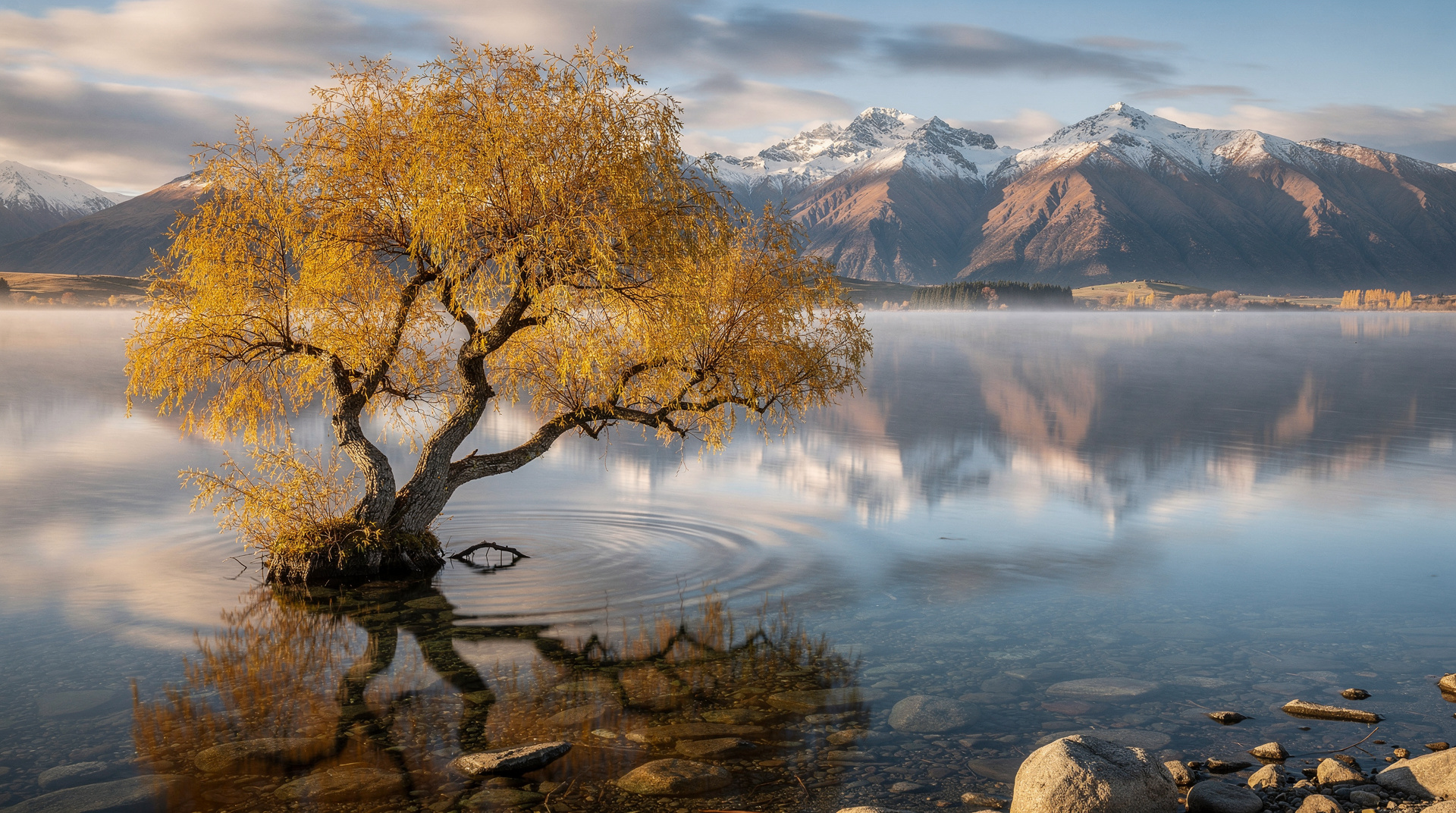
Wanaka
Honest Wanaka guide: Roy's Peak, Cardrona ski, lake kayaking — real NZD/USD/EUR costs and the honest Queenstown vs Wanaka verdict.
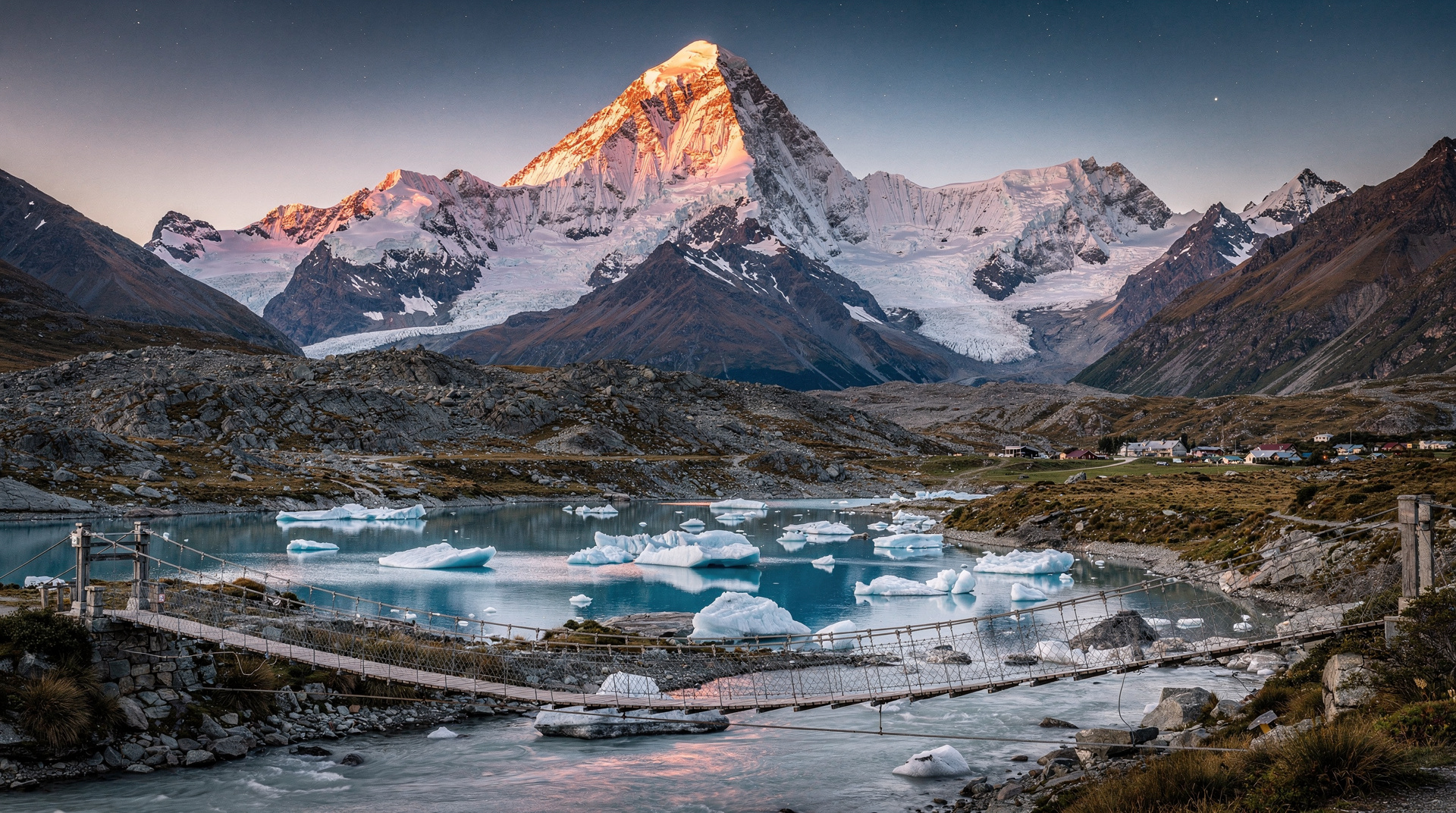
Aoraki/Mt Cook — complete visitor guide
Aoraki/Mt Cook complete guide: Hooker Valley Track, Tasman Glacier heli-hike, stargazing, accommodation. NZ's highest peak 3724m. Plan your visit.
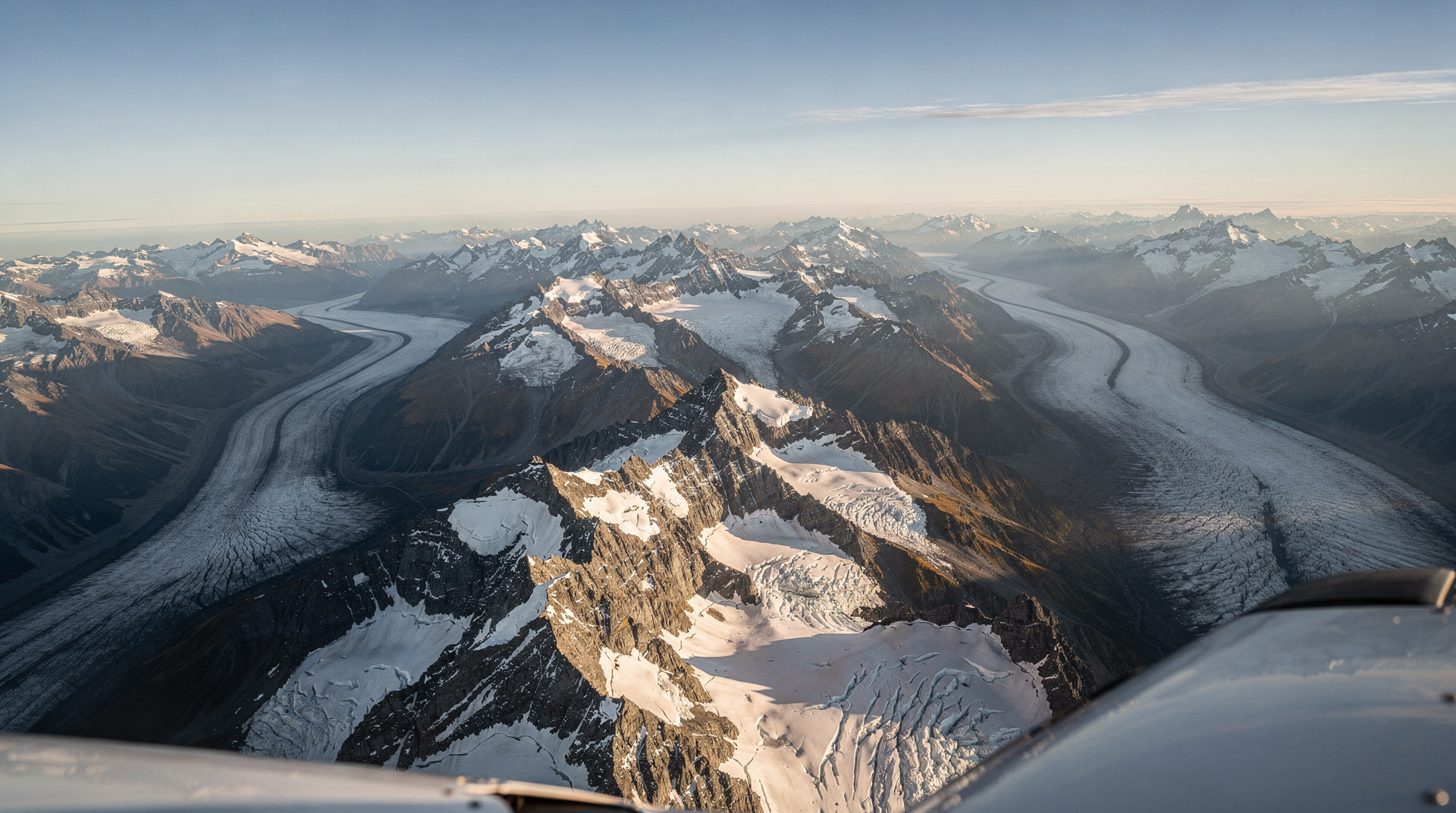
Aoraki/Mt Cook scenic flights and ski planes — the complete guide
Ski planes on Tasman Glacier and helicopters over Aoraki/Mt Cook: operators, NZD/USD/EUR prices, heli-hike options and honest verdict.
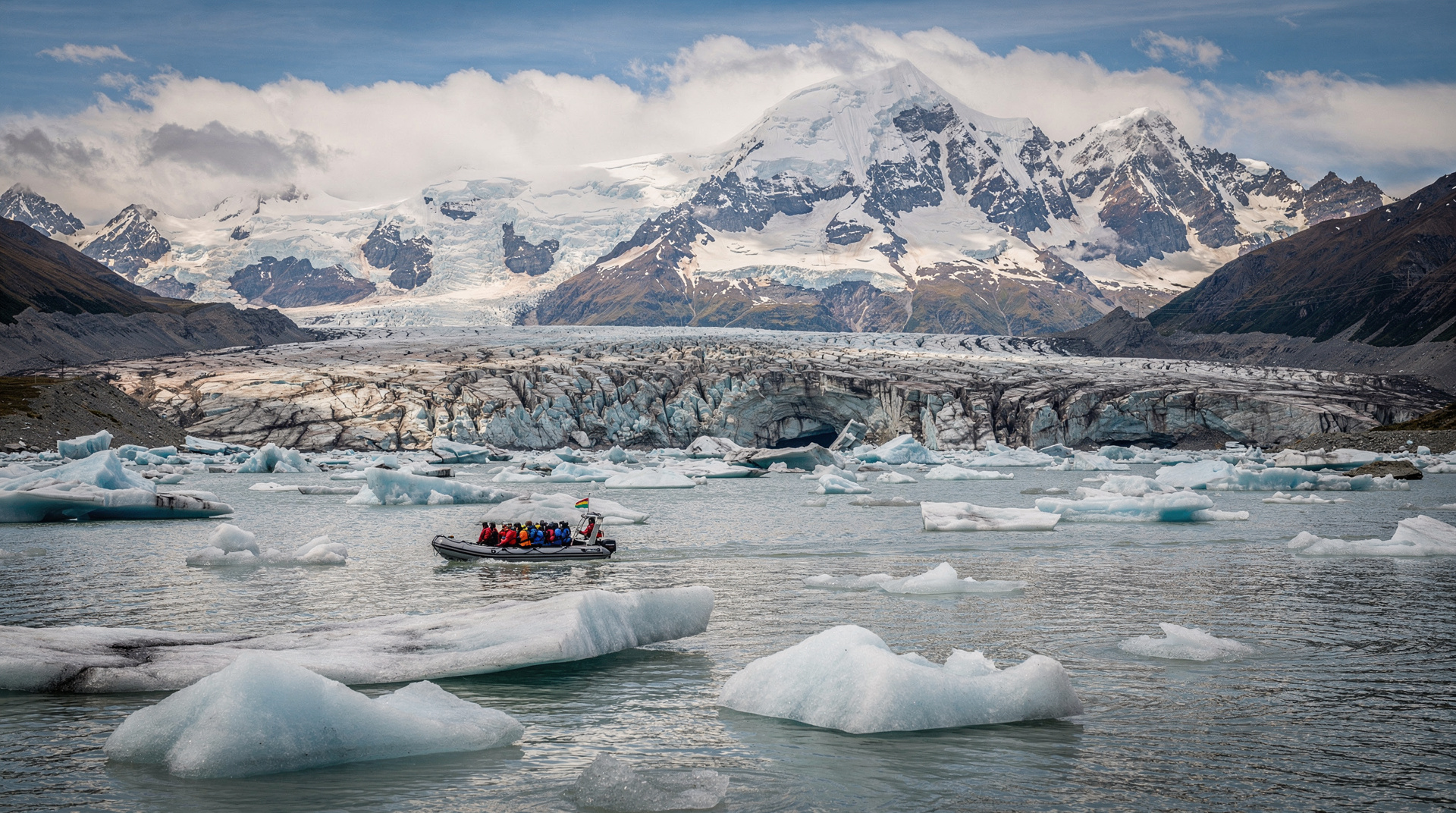
Tasman Glacier — New Zealand's longest glacier by helicopter or boat
Tasman Glacier guide: NZ's longest glacier, accessible by heli-hike or glacier lake boat tour among icebergs. Prices NZD/USD/EUR and retreat context.
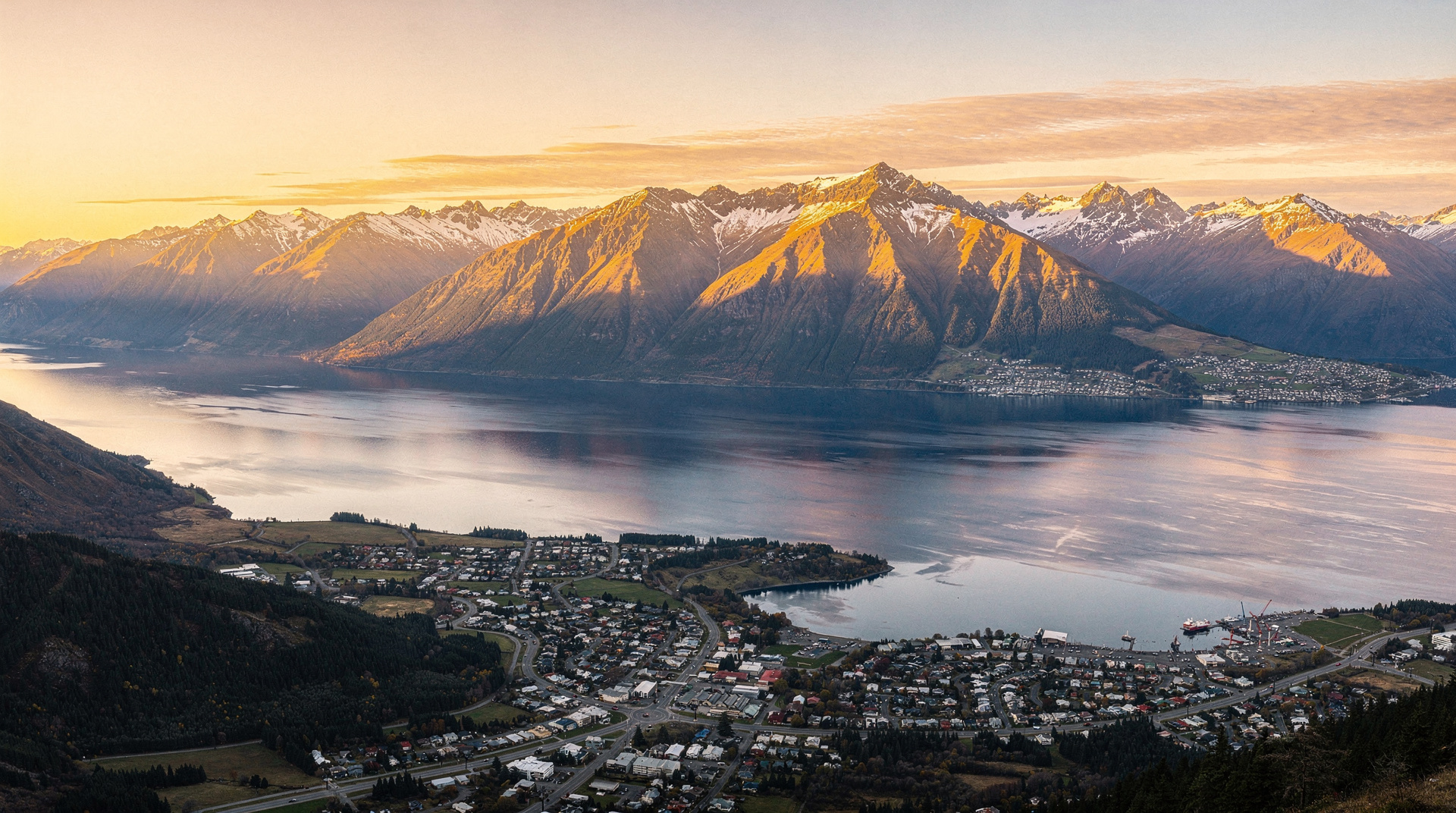
14-day New Zealand itinerary — both islands, grand tour
Honest 14-day NZ grand tour: Auckland, Bay of Islands, Hobbiton, Rotorua, Wellington, ferry, Kaikoura, Christchurch, Queenstown, Milford.
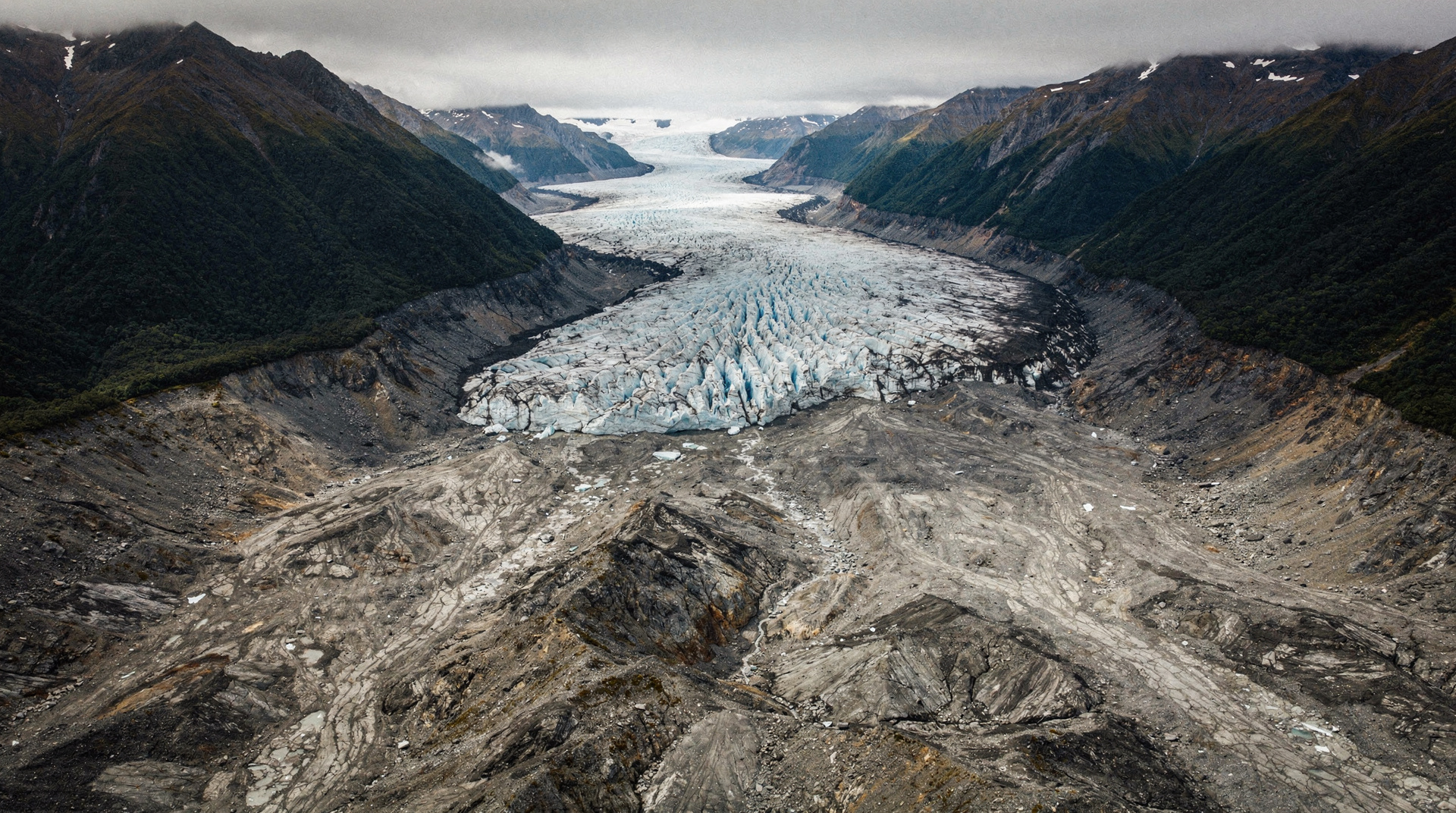
West Coast glaciers retreating — what to see now before the ice changes again
Franz Josef and Fox glaciers have retreated significantly. Here's what the glacier experience actually looks like now, and what's worth your time and money.
Last reviewed: