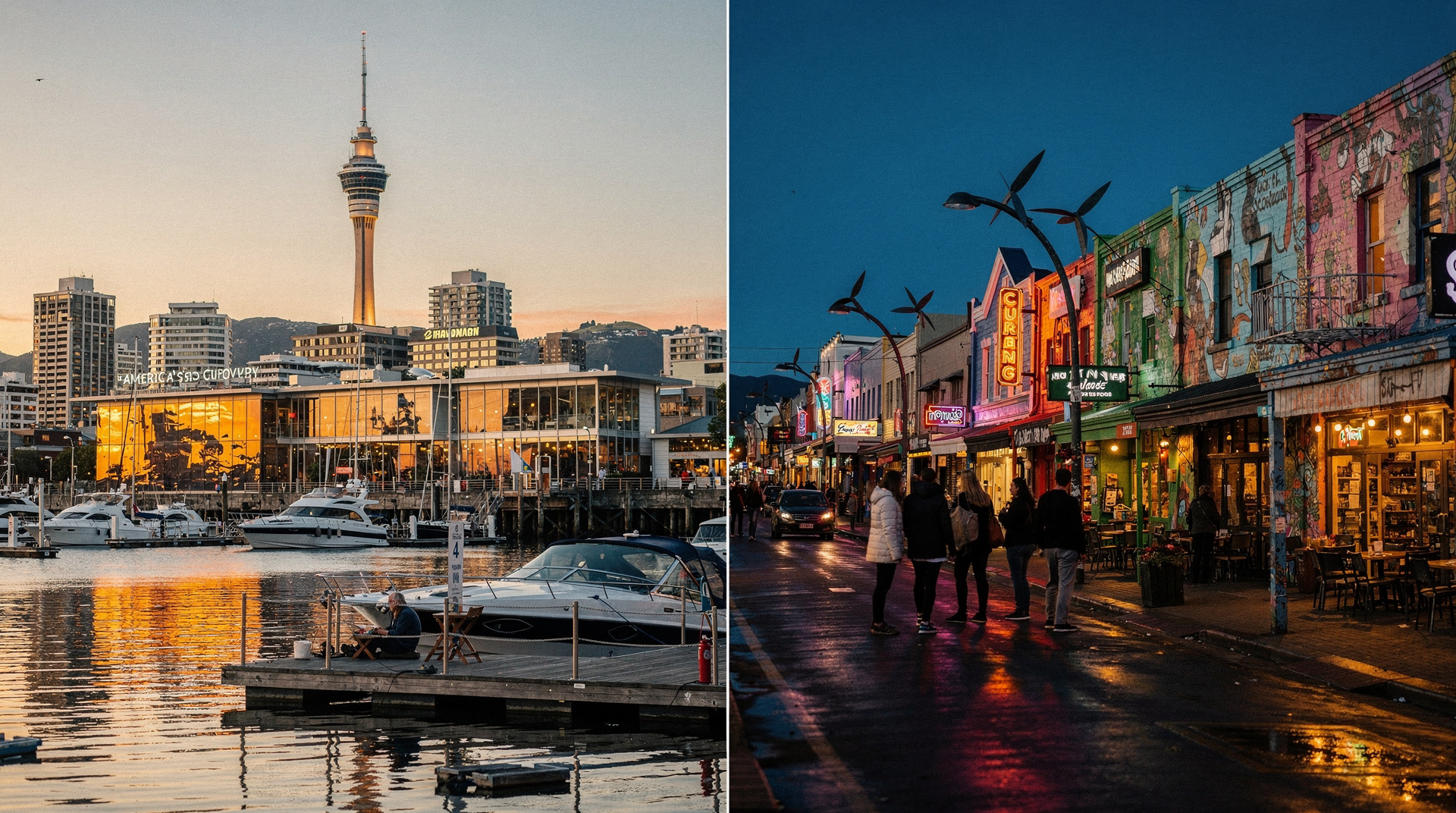
Auckland vs Wellington
Should I visit Auckland or Wellington?
Auckland if you're entering New Zealand (most international flights land there) or want Pacific harbour culture, Waiheke wine, and day trips to Hobbiton and the Bay of Islands. Wellington if you want the best food scene in New Zealand, Te Papa museum, Weta Workshop, craft beer, and a compact walkable capital city. Most two-week itineraries visit both.
The honest verdict
| Best for arrival | Auckland — most international flights land at AKL |
| Best for food/café culture | Wellington |
| Best for day trips | Auckland (Waiheke, Hobbiton, Bay of Islands) |
| Best museum | Wellington’s Te Papa (free) |
| Minimum time each | 2 days |
Auckland is bigger, wealthier, and more internationally connected. Wellington is cooler, more concentrated, and more culturally interesting per square metre. These are genuinely different cities with different characters, and the comparison reveals more about what kind of traveler you are than it does a clear winner.
Auckland is the Pacific city — 1.7 million people, built around two harbours, with Polynesian Auckland (the largest Polynesian city in the world) sitting alongside Asian Auckland (world-class Chinese, Korean, and Japanese food) and the original British colonial grid. The Sky Tower is there. Waiheke Island is there. The harbour bridge is there. It’s a city that sprawls and requires a car for most of it.
Wellington is the capital — 215,000 people in a compact bowl at the southern tip of the North Island. It’s walkable, has the wind (not a rumour), has New Zealand’s finest museum (Te Papa), the best café and craft beer culture in the country, Weta Workshop, and an arts scene disproportionate to its size. Lonely Planet named it the coolest little capital in the world in 2011, and it hasn’t lost the title.
The default answer for a first New Zealand trip: Auckland first (you land there), Wellington last before taking the ferry to the South Island. Both are worth 2 days minimum.
Side-by-side comparison
| Dimension | Auckland | Wellington |
|---|---|---|
| Population | 1.7 million (metro) | 215,000 (city) / 440,000 (metro) |
| Vibe | Pacific harbour, multicultural, sprawling | Compact, bohemian, windy, European |
| International airport | Yes — AKL, main gateway | Domestic + trans-Tasman (WLG) |
| Best museum | Auckland War Memorial Museum | Te Papa Tongarewa (free) |
| Best day trip | Waiheke Island or Hobbiton | Martinborough wine or Wairarapa coast |
| Food scene | Excellent Asian food, good restaurants | Best café + craft beer culture in NZ |
| Nightlife | Good, spread across suburbs | Concentrated on Cuba St / Courtney Place |
| Walkability | Low — car recommended for most areas | High — city centre very walkable |
| LOTR relevance | Hobbiton (2.5h drive) | Weta Workshop (20 min from centre) |
| Avg mid-range hotel | NZD 200–350 / USD 120–210 / EUR 110–193 | NZD 180–300 / USD 108–180 / EUR 99–165 |
| Best free thing | Auckland Waterfront walk | Te Papa Museum (free entry) |
| Weather | Milder (subtropical influence) | Windier and cooler, more variable |
| Ferry to South Island | No | Yes — Interislander and Bluebridge to Picton |
When Auckland wins
You’re arriving in New Zealand. 90% of international flights into New Zealand land at Auckland. This makes it the default starting point for almost every New Zealand itinerary, regardless of preference.
You want Waiheke Island. The 35-minute ferry from Auckland’s downtown brings you to an island with world-class wineries, beaches, olive groves, and arts studios. Waiheke Island wine tour is one of the best half-day wine experiences in New Zealand — the Bordeaux-style reds and rosés from Stonyridge, Cable Bay, and Mudbrick are genuinely exceptional. Waiheke is not reachable without going through Auckland.
You want Hobbiton as a day trip. The Hobbiton Movie Set at Matamata is 2.5 hours from Auckland — a viable day trip, though a long one. From Wellington, it’s 4.5+ hours and not realistic. Auckland to Hobbiton and Waitomo day trip covers both sets in a single day for LOTR enthusiasts.
You want Pacific and Asian cultural diversity. Auckland’s Polynesian community (Samoan, Tongan, Niuean, Cook Islander, Maori) gives it a Pacific urban character unique in New Zealand. The Asian food scene — Dominion Road’s Chinese restaurants, Newmarket’s Korean BBQ, the city’s Japanese offerings — is better here than anywhere else in NZ.
You’re doing a multi-day harbour itinerary. Auckland’s two harbours (Waitemata and Manukau), the numerous islands (Tiritiri Matangi for wildlife, Rangitoto for volcanic walking, Motuihe for beaches), and the sailing culture make it genuinely maritime in a way Wellington’s choppy Cook Strait harbour is not.
Auckland whale and dolphin eco cruise into the Hauraki Gulf is a legitimately wild experience — orca are a realistic sighting, and the Hauraki Gulf Marine Park holds species found nowhere else in New Zealand.
When Wellington wins
You want New Zealand’s best food and café scene. Wellington has more cafés per capita than New York City (a statistic locals cite often, and it feels accurate). The coffee is excellent, the brunch culture is serious, the restaurant density in the central city is higher than Auckland relative to city size. Ortega Fish Shack, Logan Brown, The Larder, Shepherd — these are genuine destination restaurants.
You want Te Papa Tongarewa. The Museum of New Zealand (free entry) is among the best national museums in the Southern Hemisphere. The Maori collection is extraordinary; the natural history displays are world-class; the Gallipoli exhibition (closed during some periods — check) used scale models to tell the Anzac story in a way that’s genuinely moving. Te Papa guided tour adds context to what’s otherwise a self-directed museum with a lot of ground to cover.
You want Weta Workshop. The special effects studio behind The Lord of the Rings and dozens of other major productions offers guided tours of working departments. Weta Workshop guided tour (NZD 35–55 / USD 21–33 / EUR 19–30) is the best creative-industry tour in New Zealand by a comfortable margin.
You want craft beer. Wellington’s craft beer scene is serious and concentrated — Garage Project, Garage Project, Parrotdog, Yeastie Boys, Fortune Favours — all within walking distance of each other in the central city. Wellington craft beer brewery tour is a solid evening programme covering 3–4 breweries with tastings.
You’re connecting to the South Island. Wellington is the North Island terminus for the Interislander and Bluebridge ferry services to Picton. For a two-island New Zealand trip using surface transport, Wellington is the logical handover point. The ferry crossing takes 3.5 hours and the Marlborough Sounds scenery on arrival in Picton is beautiful.
You want a walkable city. Wellington’s central city — from Te Papa on the waterfront to Cuba Street to Courtenay Place to Oriental Parade — is genuinely walkable in a way Auckland is not. You can do everything worth doing in central Wellington without a car.
What they share
Both cities have excellent Maori cultural content (Auckland’s Tamaki Herenga Waka festival, Wellington’s Te Papa). Both have strong art gallery scenes. Both have good day trips — Rotorua from Auckland, Martinborough from Wellington. Both have waterfront precincts worth walking. Both are entry/exit points for New Zealand itineraries.
The food comparison in detail
Auckland: best for variety. If you want the widest range of cuisines in New Zealand, Auckland wins. Dominion Road for Chinese (multiple regional styles), Henderson and Royal Oak for South Asian, Ponsonby for upmarket fusion, the central city for modern New Zealand.
Wellington: best for quality concentration. The ratio of good-to-mediocre restaurants in the central Wellington strip is better than Auckland. The café scene (serious, specialty coffee, excellent eggs on toast) is genuinely one of the best in the Australasian region. Budget roughly NZD 20–35 / USD 12–21 / EUR 11–19 for a good café breakfast in both cities.
Day trips from each city
Auckland: Waiheke Island (35 min ferry), Hobbiton/Matamata (2.5h drive), Bay of Islands (3.5h drive or short flight), Waitomo Caves (2.5h drive), Coromandel (2.5h drive), Tiritiri Matangi Island (1.5h ferry for wildlife).
Wellington: Martinborough wine country (1h drive), Kapiti Coast beaches (50 min drive), Wairarapa coast (1.5h), Palmerston North (2h — less interesting), Castlepoint (2.5h) — and the Interislander to the South Island if you’re ready to leave.
Cost comparison (NZD + USD + EUR)
| Category | Auckland | Wellington |
|---|---|---|
| Budget hostel dorm | NZD 35–55 / USD 21–33 / EUR 19–30 | NZD 32–50 / USD 19–30 / EUR 18–28 |
| Mid-range hotel | NZD 180–320 / USD 108–192 / EUR 99–176 | NZD 160–280 / USD 96–168 / EUR 88–154 |
| Café breakfast | NZD 18–28 / USD 11–17 / EUR 10–15 | NZD 18–26 / USD 11–16 / EUR 10–14 |
| Restaurant dinner (mid) | NZD 28–55 / USD 17–33 / EUR 15–30 | NZD 25–50 / USD 15–30 / EUR 14–28 |
| Public transport day pass | NZD 18–25 / USD 11–15 / EUR 10–14 | NZD 6–10 / USD 3.60–6 / EUR 3.30–5.50 |
Wellington is consistently 5–15% cheaper across most categories. Public transport in Wellington is significantly cheaper and more usable — the city is small enough that buses and the cable car cover almost everything.
Getting between the two
Flying between Auckland and Wellington takes about 1 hour 10 minutes and is the fastest option, with Air New Zealand and Jetstar both running frequent services — fares typically run NZD 79-180 / USD 47-108 / EUR 43-99 depending on how far ahead you book. Driving is the scenic alternative at roughly 8 hours via SH1, usually broken into a two-day trip with a stop in Taupo or Rotorua.
There is no direct rail passenger service between the two cities; the Northern Explorer train runs Auckland–Wellington but takes a full day and is better thought of as a scenic journey in its own right than efficient transport. Most itineraries that visit both cities either fly one direction and drive the other, or fly both ways and use a separate rental car in each city.
If you’re short on time: the one-city verdict
For visitors with fewer than 5 days total in New Zealand who must pick one city, Auckland is the more defensible single choice for most travelers — it has the international airport, Waiheke Island, and the widest range of day trips reachable without backtracking. Wellington is the better single choice specifically for food-and-culture-focused visitors who don’t plan to rent a car, or for anyone connecting onward to the South Island by ferry, since Wellington doubles as the Cook Strait crossing point. Neither choice is wrong; it depends on whether your trip is built around day trips (Auckland) or a walkable urban base with excellent food (Wellington).
Frequently asked questions
How many days do I need in each?
Auckland: 2 days minimum (city + Waiheke), 3–4 if adding Hobbiton or Bay of Islands day trips. Wellington: 2 days is enough for Te Papa, Weta Workshop, Cuba Street, and the waterfront. 3 days if you want Martinborough wine or the Kapiti Coast.
Which is more expensive?
Auckland edges slightly higher for accommodation, but the difference is small. Both are on par for food. Wellington’s compactness means lower transport costs — you walk more and taxi/Uber less.
Is Wellington really that windy?
Yes. The Te Aro suburb and harbour area are genuinely exposed — Wellywood locals call the wind “the Windy City’s birth defect.” It’s not usually dangerous, just persistent. Pack a wind-resistant layer regardless of season.
Is it worth visiting both on a short trip?
On 7–10 days, Auckland and Wellington together eat a lot of North Island time. Most 7-day North Island itineraries include Auckland (2 nights), a stop in between (Rotorua or Taupo, 2 nights), and Wellington (1–2 nights) before the South Island ferry. This works.
Related comparisons and guides
Related guides
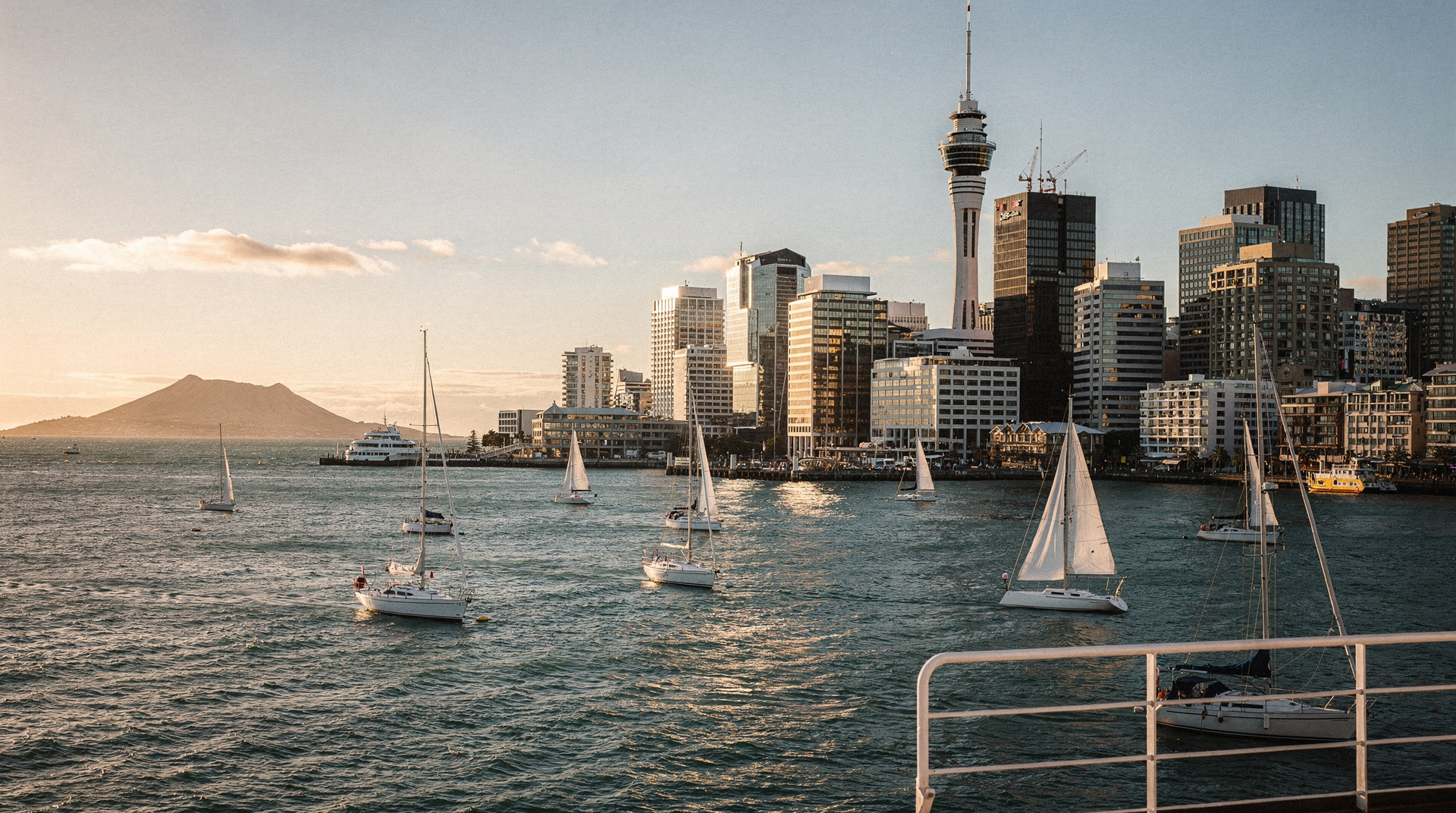
Auckland
Honest Auckland planner: harbour, Sky Tower, Waiheke wineries, day-trips to Hobbiton, real prices NZD/USD/EUR, and what's actually worth your time.
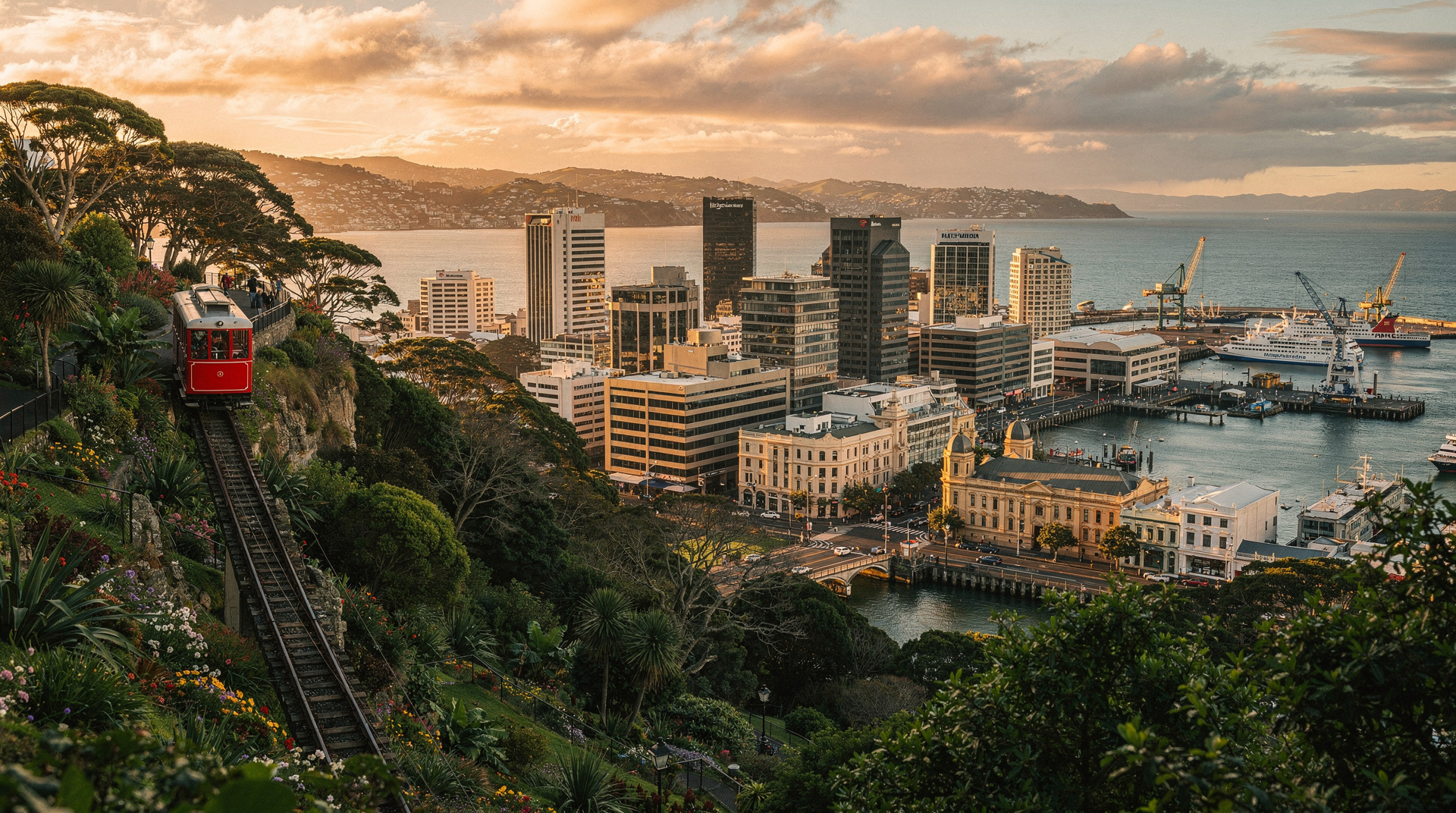
Wellington
Honest Wellington guide: Te Papa museum, Weta Workshop LOTR tours, Zealandia, Cuba Street, ferry to South Island, real prices NZD/USD/EUR.
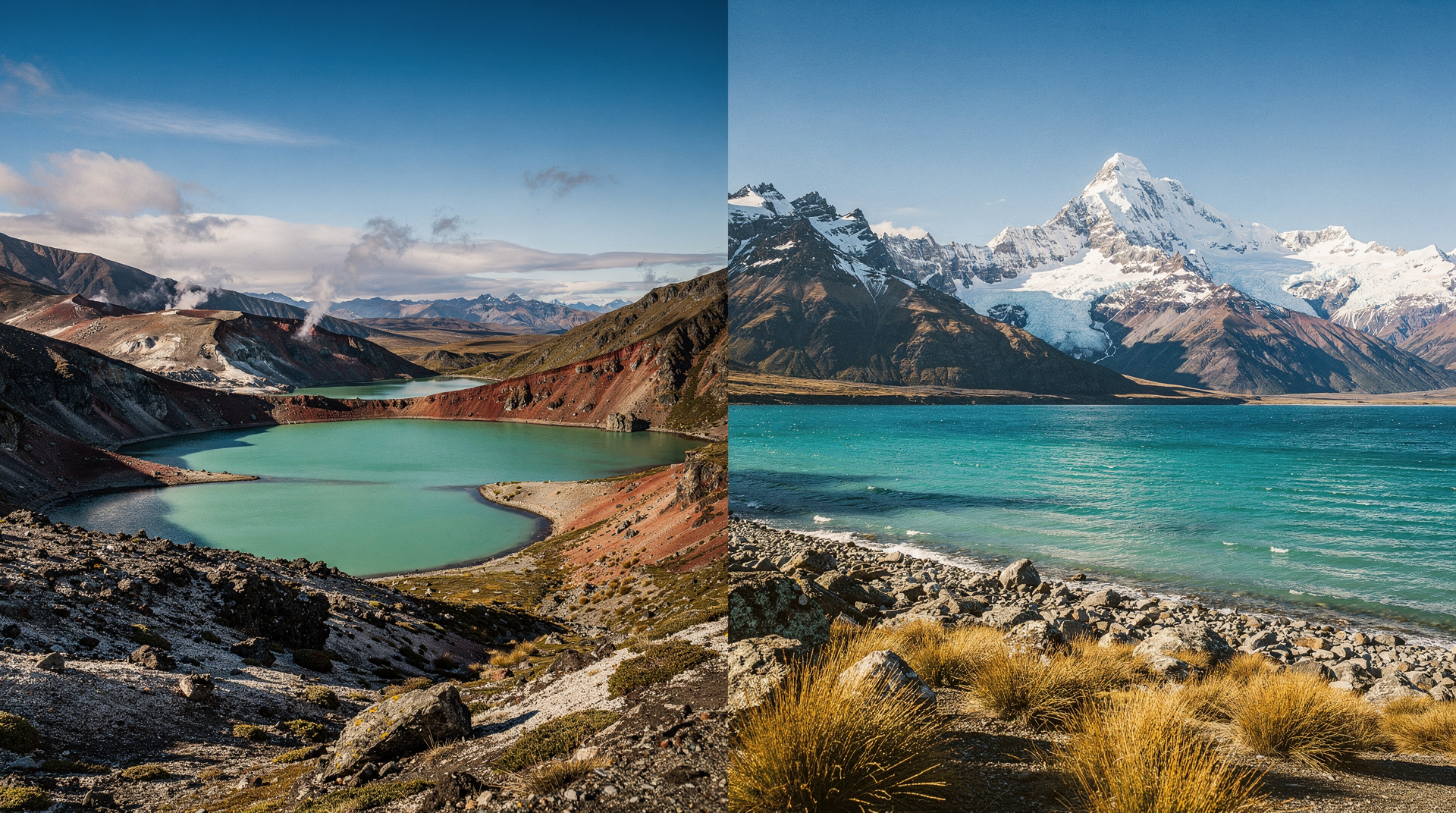
North vs South Island — which is right for you
Honest North vs South Island comparison: culture, landscapes, costs and a clear verdict for first-timers, families and short trips.
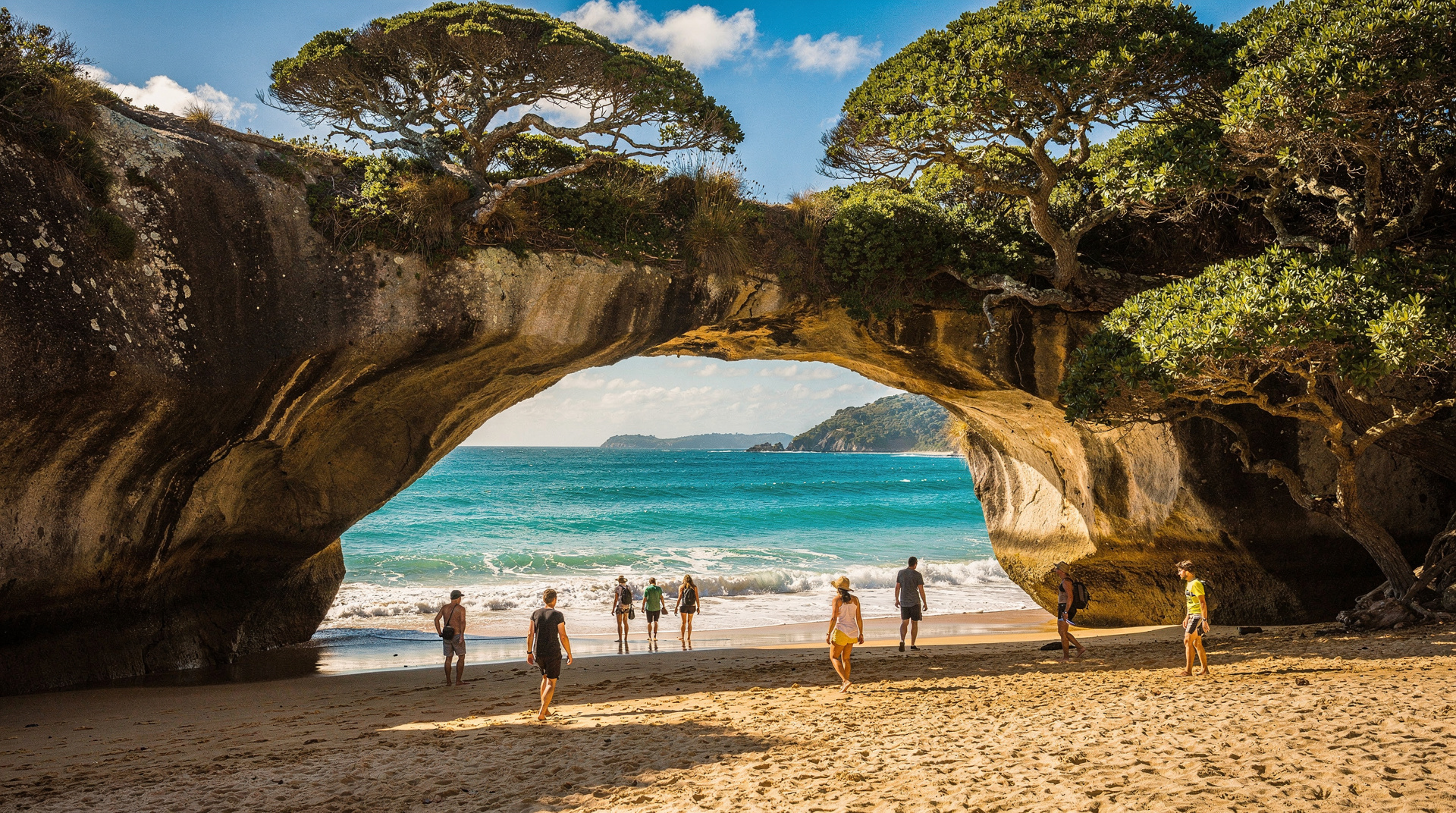
Best day trips from Auckland
Six great day trips from Auckland: Waiheke, Hobbiton, Waitomo, Coromandel, Rotorua and more — with drive times, GYG tours, and honest advice.
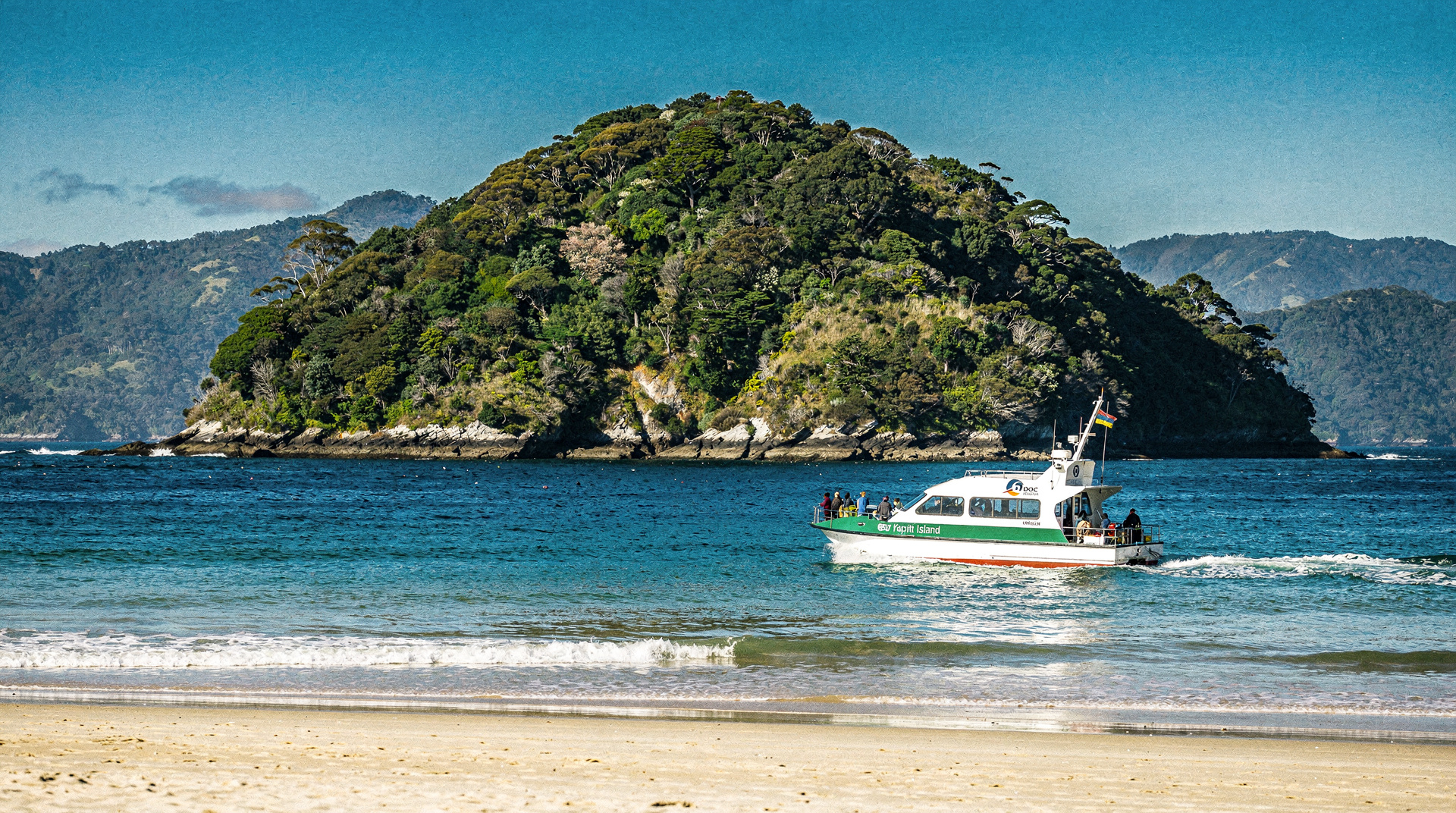
Best day trips from Wellington
Best day trips from Wellington: Martinborough wine (1h), Wairarapa coast (1.5h), Kapiti Island (permit required). Drive times and honest verdicts.
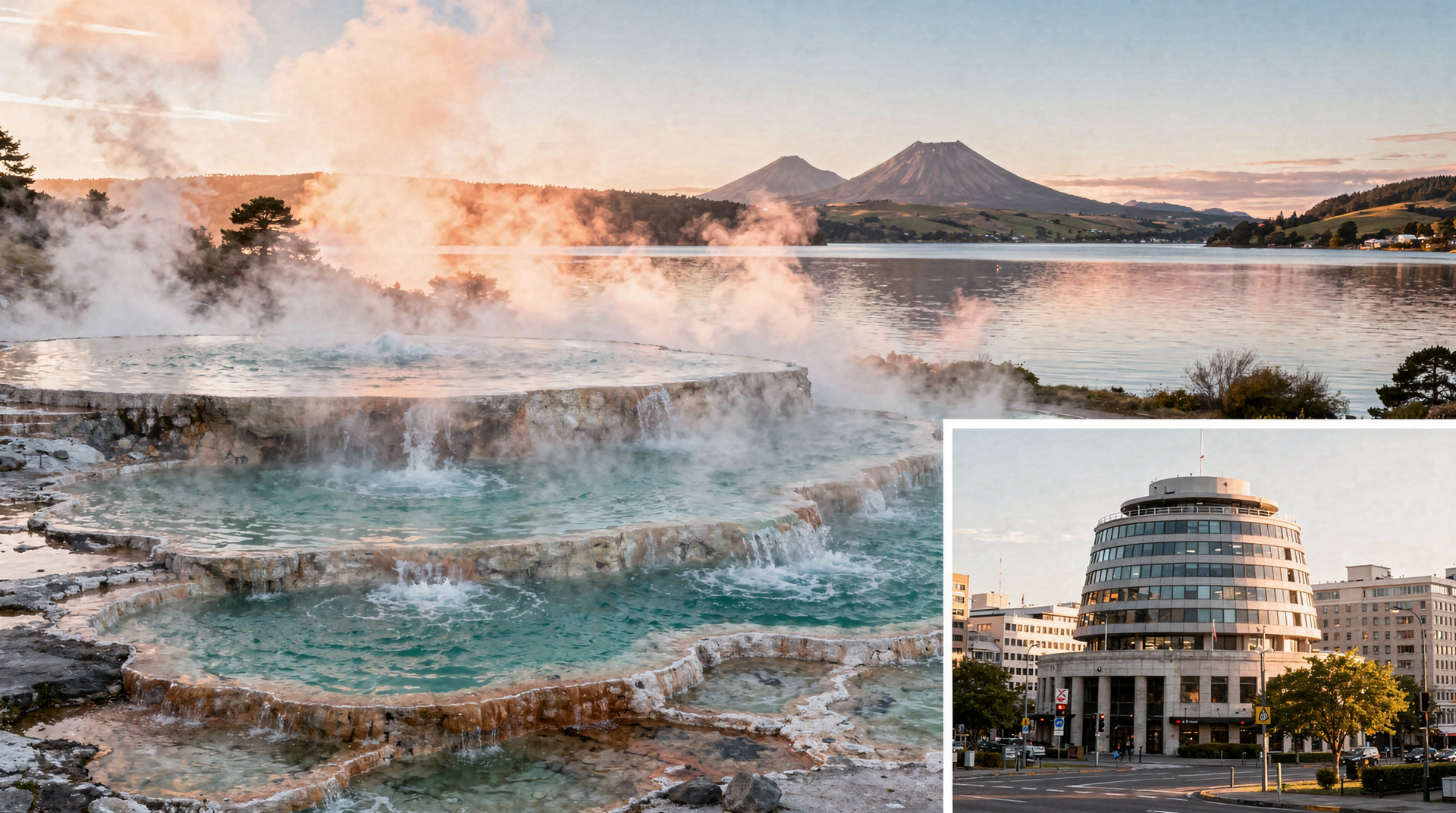
7-day North Island itinerary — the essential highlights
Auckland → Bay of Islands → Hobbiton → Waitomo → Rotorua → Taupo → Tongariro → Wellington. 7 days, both car and costs covered honestly.
Last reviewed: