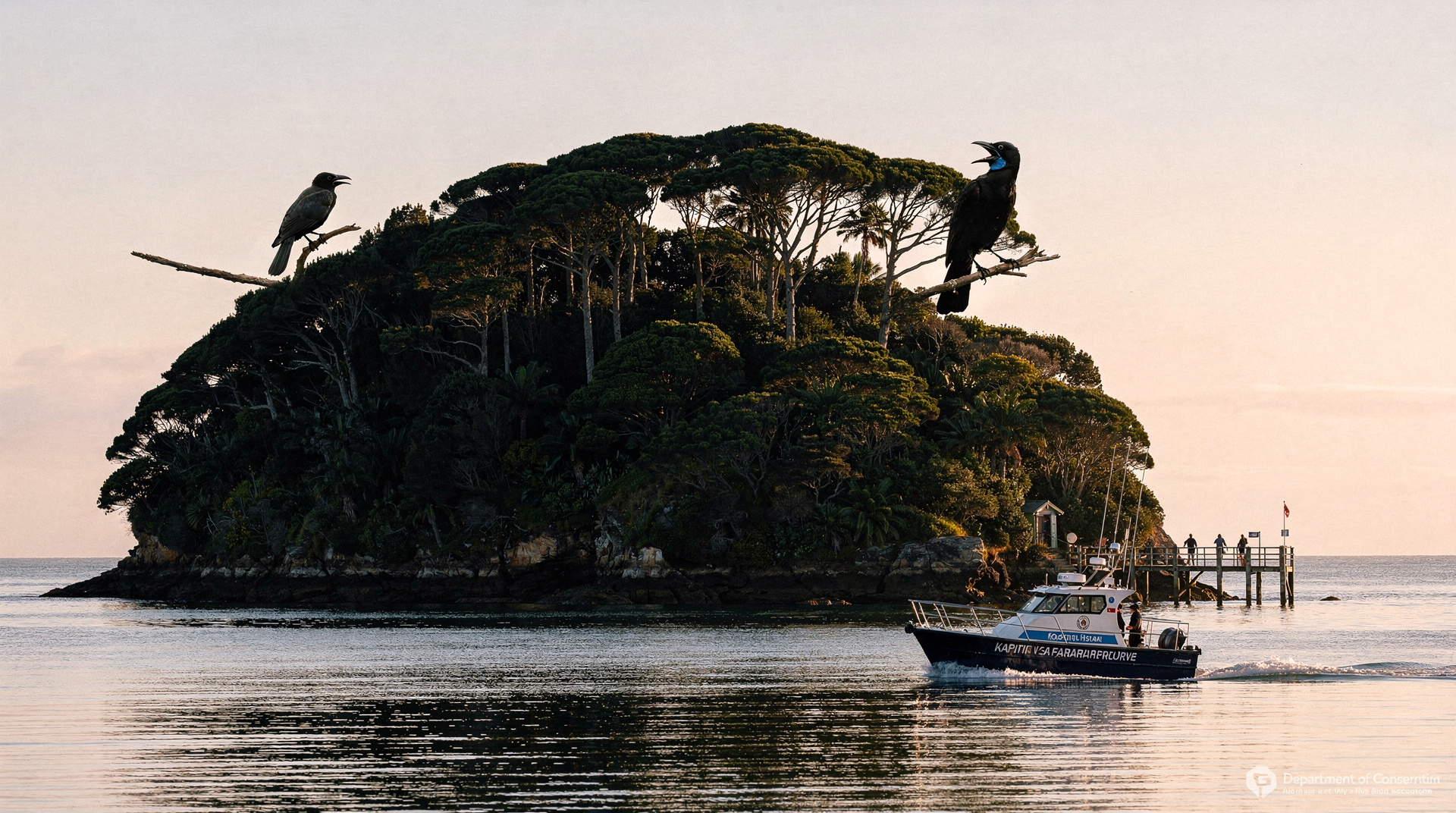
Kapiti Island day trip from Wellington
How do I get to Kapiti Island from Wellington?
Kapiti Island requires a DOC permit (strictly limited to 56 people/day on the southern section) booked through the Kapiti Island Nature Tours or Kapiti Island Alive operators, who handle both the permit and the ferry crossing from Paraparaumu Beach (45 minutes north of Wellington). Book weeks to months in advance. Day trips depart around 9am and return by 4-5pm.
Kapiti Island: New Zealand before humans arrived
Kapiti Island is New Zealand’s most compelling near-shore conservation sanctuary — a 1965-hectare island 50 km north of Wellington that has been systematically cleared of every introduced predator (rats, stoats, cats, weasels) and is now a living record of what New Zealand’s native bush and birdlife sounded like before European settlement. It is the only place in greater Wellington where you can stand in native forest and hear the full native dawn chorus — a soundscape that once covered the entire country and now exists in just a handful of predator-free sanctuaries.
What makes Kapiti exceptional is scale and accessibility. Unlike Zealandia in Wellington (excellent, but a relatively small urban sanctuary), Kapiti is a full-sized island of native bush, with a significant interior, genuine hiking, and the complete absence of any predator threat to the wildlife. The birds have not had predators for long enough that they no longer flee from humans — you can stand within a few metres of weka, kaka, and kokako going about their business.
| Where | Kapiti Island, 45 min north of Wellington via Paraparaumu |
| Cost | around NZD 100-130/person, guided day visit incl. ferry |
| Time needed | Full day, ferry departs around 9am, returns 4-5pm |
| Getting there | Train or car to Paraparaumu Beach, then operator ferry |
| Booking | Weeks to months ahead — DOC caps visitors at 56/day |
What you’ll encounter on Kapiti Island
Little spotted kiwi (kiwi pukupuku): The island is the stronghold of the little spotted kiwi — New Zealand’s smallest kiwi species, now extinct on the mainland due to predation. Kapiti has over 1000 individuals. They are nocturnal; daytime visitors occasionally hear them in dense vegetation.
Kaka: New Zealand’s large native forest parrot — loud, intelligent, curious, and largely fearless on Kapiti. They will land near you and investigate at close range. Seeing a kaka is almost guaranteed on any Kapiti visit.
Weka: The large, flightless weka is a constant companion on island walks — bold, curious, and inclined to investigate bags and unattended items. Their foraging behaviour around visitors is charming (and occasionally inconvenient).
Takahe: One of New Zealand’s most remarkable conservation stories — the takahe was thought extinct until 1948, when a small population was discovered in Fiordland. Kapiti supports a breeding population. Large, flightless, brilliantly coloured in blue-green, the takahe is one of the most striking birds you will encounter anywhere in New Zealand.
Kokako: The haunting two-note call of the kokako — a large grey bird with blue wattles and one of New Zealand’s most beautiful songs — is the sound of the Kapiti forest. Once common across New Zealand, now restricted to a few predator-free sanctuaries.
Tuatara: Not a bird, but equally remarkable — the tuatara is a reptile species unchanged for 200 million years, the sole survivor of an ancient order that lived alongside dinosaurs. Kapiti supports a healthy population, and guides routinely find tuatara for visitors.
How to visit Kapiti Island
Access to Kapiti Island is strictly controlled. The Department of Conservation (DOC) limits the number of visitors to 56 people per day on the southern (Rangatira Point) section of the island. This limit is non-negotiable and ensures the sanctuary experience remains meaningful rather than crowded.
Step 1: Book through an authorised operator. Two operators are licensed to take visitors to Kapiti Island’s southern section:
- Kapiti Island Nature Tours — the longer-established operator, with guided walks focused on wildlife
- Kapiti Island Alive — an iwi-led operation run by Ngati Toa, the traditional guardians of Kapiti
Both operators handle the DOC permit as part of the booking, and include the ferry crossing from Paraparaumu Beach in the package. You do not need to separately acquire a DOC permit.
Step 2: Book well in advance. Summer weekends (December-February) fill months ahead. Weekday visits in shoulder season (October-November, March-May) are easier to secure. Even winter visits can be booked out.
Step 3: Allow flexibility for weather cancellations. The Kapiti Channel can be rough, and crossings are sometimes cancelled in strong winds or high swell. Operators maintain wait-lists and will rebook cancelled visits.
The ferry crossing and landing
Paraparaumu Beach is approximately 45 minutes north of Wellington by train (Metlink Kapiti Line, frequent services) or 50 minutes by car via SH1. The ferry crossing from Paraparaumu Beach to Kapiti Island takes approximately 15-20 minutes over the Kapiti Channel.
The landing requires a short wade from the boat to the beach — wear shoes that can get wet, or sandals. The operators brief you on this at departure.
The island experience
Most day visits follow a guided walk structure with the operator’s guide covering wildlife identification, ecology, and conservation history. The trails to Trig (the highest point, 521 metres) and the coastal northern trails offer different terrain — the Trig walk takes 3-4 hours round trip, the coastal trails 1.5-2 hours. Most guided day trips focus on the lower coastal areas.
Wildlife encounters are nearly guaranteed: kaka and weka are ubiquitous; tuatara are regularly located by guides; takahe are reliably present in the lower forest. The experience of walking through native bush with birds landing nearby and tuatara sunning themselves on logs is unlike anything available on the New Zealand mainland.
The dawn chorus on Kapiti — heard from the earliest ferry if it operates at dawn — is one of the most extraordinary natural sound experiences available in New Zealand. The full pre-human soundscape of native birdsong, once silenced across most of the country, is recreated in its entirety in Kapiti’s forest.
Guided vs self-guided
Both operators offer guided and self-guided options for the southern island access. Guided is strongly recommended for first visits — the guides are expert at locating tuatara and other wildlife, explaining the ecological restoration story, and ensuring you don’t miss the most significant species.
Self-guided access (with DOC permit included through the operators) is available for experienced New Zealand birdwatchers who prefer their own pace.
Kapiti Island northern access
A small number of permits (10 per day) are available for the northern section of Kapiti Island, accessed through a separate permit system from DOC and requiring a private boat. This is for experienced visitors with their own means of reaching the island. The northern section includes older forest and different bird populations.
Best time of year to visit Kapiti Island
| Season | Months | What to expect |
|---|---|---|
| Summer | Dec-Feb | Warmest crossings, best birdsong volume, books out months ahead |
| Shoulder | Oct-Nov, Mar-May | Easier availability, mild weather, good value for weekday trips |
| Winter | Jun-Sep | Fewest crowds, cooler crossings, still books out for weekends |
What to pack for Kapiti Island
Bring sturdy walking shoes or sandals that can get wet for the beach landing, a light rain jacket (weather on the Kapiti Channel changes quickly), sun protection, water, and a packed lunch if your operator doesn’t include one. Binoculars are genuinely useful — kaka and takahe sightings are close-range, but birds like kokako are easier to appreciate with them. Bring a fully charged camera or phone; there is no power on the island. Cash is rarely needed once you’re on Kapiti itself, as there is nothing to buy beyond what the operator provides.
If Wellington’s Te Papa museum is also on your list, note that a Kapiti day trip takes the whole day, so plan them on separate days rather than trying to combine them.
Cost breakdown (NZD + USD + EUR)
| Item | NZD | USD | EUR |
|---|---|---|---|
| Guided day visit (permit + ferry + guide) | NZD 100-130 | USD 60-78 | EUR 55-72 |
| Wellington-Paraparaumu train return | NZD 12-18 | USD 7-11 | EUR 6-10 |
| Self-guided access (permit + ferry) | NZD 75-95 | USD 45-57 | EUR 41-52 |
Getting to Paraparaumu from Wellington
By train: The Metlink Kapiti Line operates from Wellington Station to Paraparaumu, with frequent services on weekdays and good weekend service. Journey time approximately 45-50 minutes. Trains run early enough to connect with 9am departures. This is the recommended option — it avoids parking logistics and the SH1 traffic north of Wellington.
By car: SH1 north to Paraparaumu (50-60 minutes in normal traffic, allow 75 minutes in morning rush). Parking at Paraparaumu Beach is available but limited in summer.
Frequently asked questions
How far in advance should I book Kapiti Island?
For summer weekends: 2-4 months. For weekdays in summer: 4-8 weeks. For shoulder season (October-November, March-May): 2-4 weeks. For winter: 1-2 weeks usually sufficient, but earlier is always better.
Is Kapiti Island suitable for children?
Yes, for children with an interest in wildlife and nature. The walks are not technically difficult on the lower trails, though the Trig summit walk is a full day’s hike. The bird encounters are immediately engaging for children — the kaka’s curiosity and the weka’s boldness are consistently described as highlights by families.
Can I see kiwi during the day on Kapiti?
It is unusual. Kiwi are nocturnal and rarely seen in daylight on Kapiti. However, during winter and in dense bush sections, daytime sightings do occur. Night-walking permits are available for the northern section through DOC — not typically available for the main southern access.
What’s the weather like on the crossing?
The Kapiti Channel can be rough in northerly or southerly winds. Operators check weather and cancel if the crossing is unsafe — a genuinely useful safeguard. Operators will rebook cancelled visits. If you’re prone to seasickness, take medication before the crossing as a precaution.
Is Kapiti Island different from Zealandia in Wellington?
Yes, significantly. Zealandia is a 225-hectare urban sanctuary 2 km from the Wellington CBD — accessible daily, no permits needed, excellent for a 2-3 hour visit. Kapiti is a full-sized island (1965 hectares) requiring advance booking, a ferry crossing, and a full day — but offers a wider range of species, more natural habitat, and the “pre-human New Zealand” experience at a different scale. Both are worth doing; they complement each other rather than compete.
Zealandia sanctuary day visit from WellingtonRelated reading
Related guides

Wellington
Honest Wellington guide: Te Papa museum, Weta Workshop LOTR tours, Zealandia, Cuba Street, ferry to South Island, real prices NZD/USD/EUR.
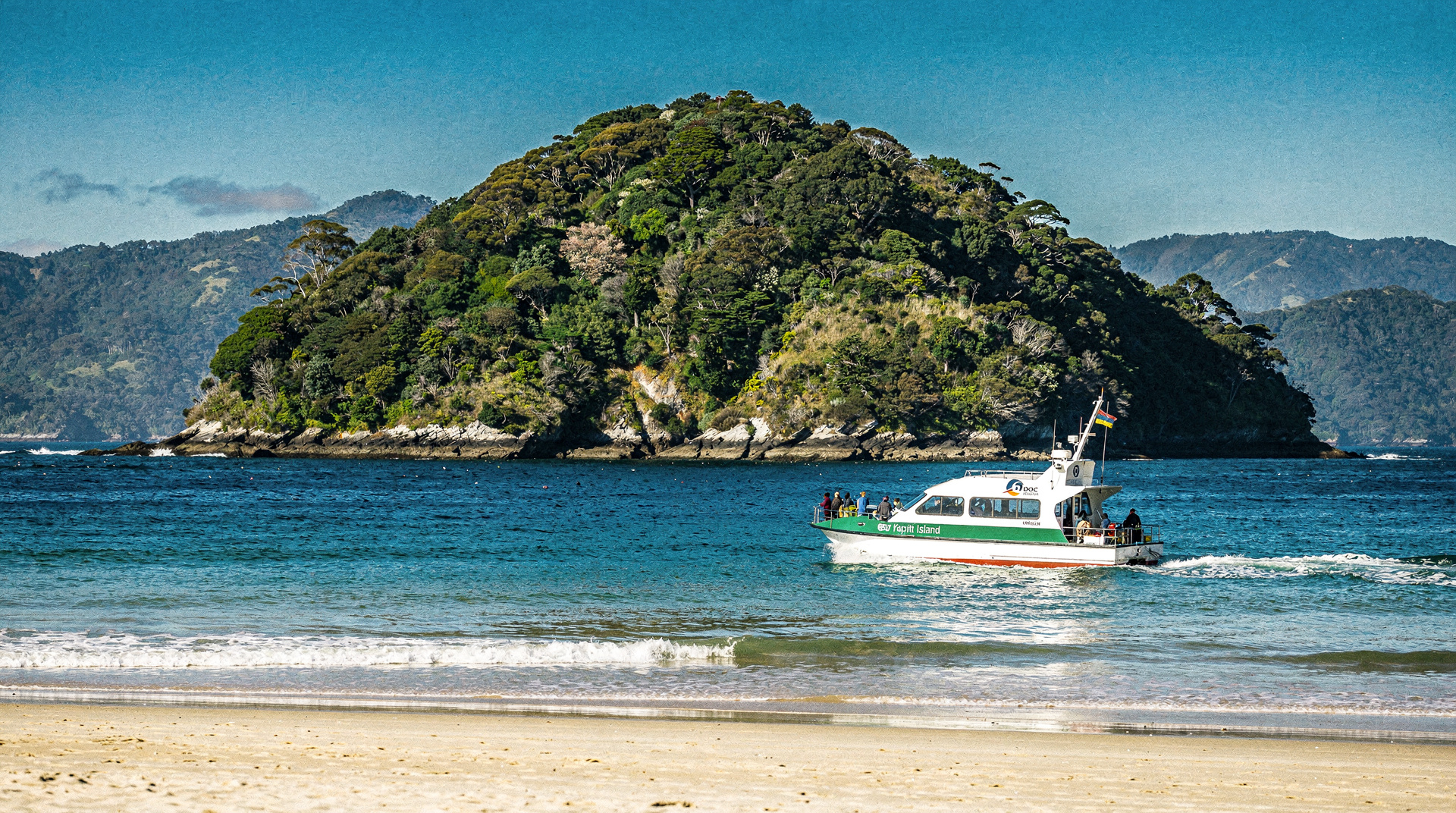
Best day trips from Wellington
Best day trips from Wellington: Martinborough wine (1h), Wairarapa coast (1.5h), Kapiti Island (permit required). Drive times and honest verdicts.
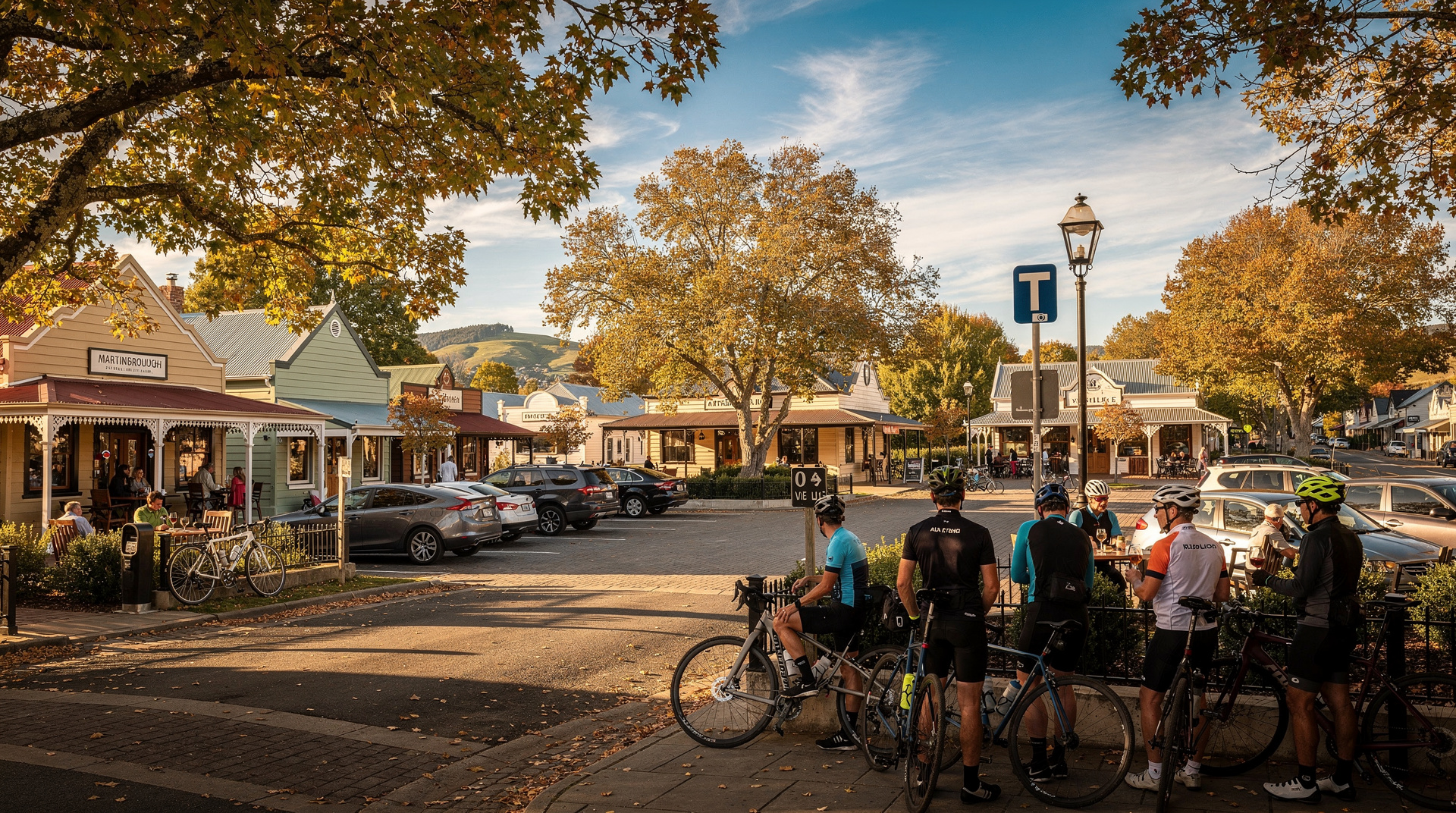
Martinborough day trip from Wellington
Martinborough day trip from Wellington: 1-hour drive, best pinot noir wineries, cycling between cellar doors, vineyard lunch, costs in NZD/USD/EUR.
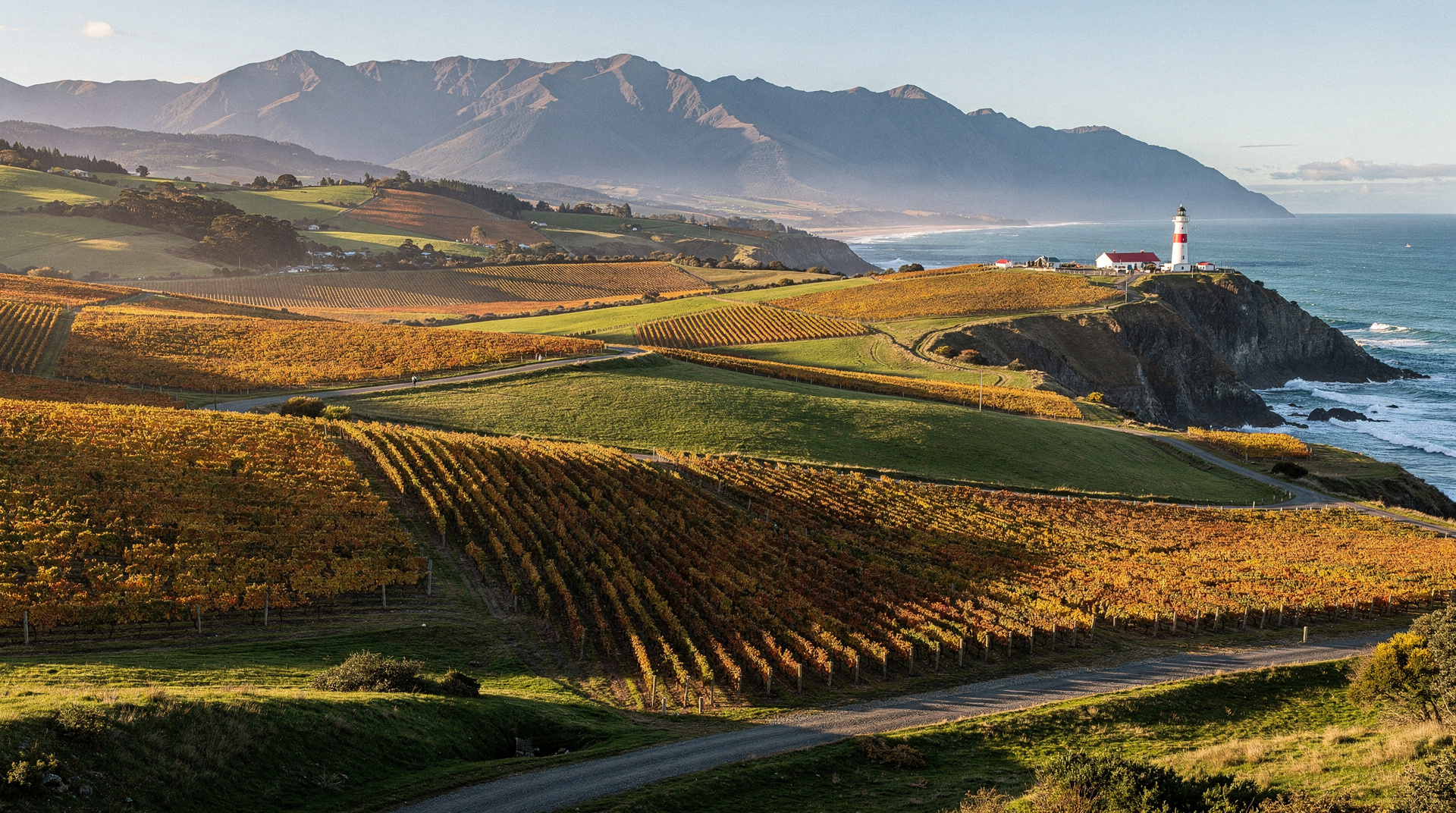
Wairarapa day trip from Wellington
How to do a Wairarapa day trip from Wellington: Cape Palliser fur seals and lighthouse, Castlepoint, coastal scenery, and drive times in NZD/USD/EUR.
Last reviewed: