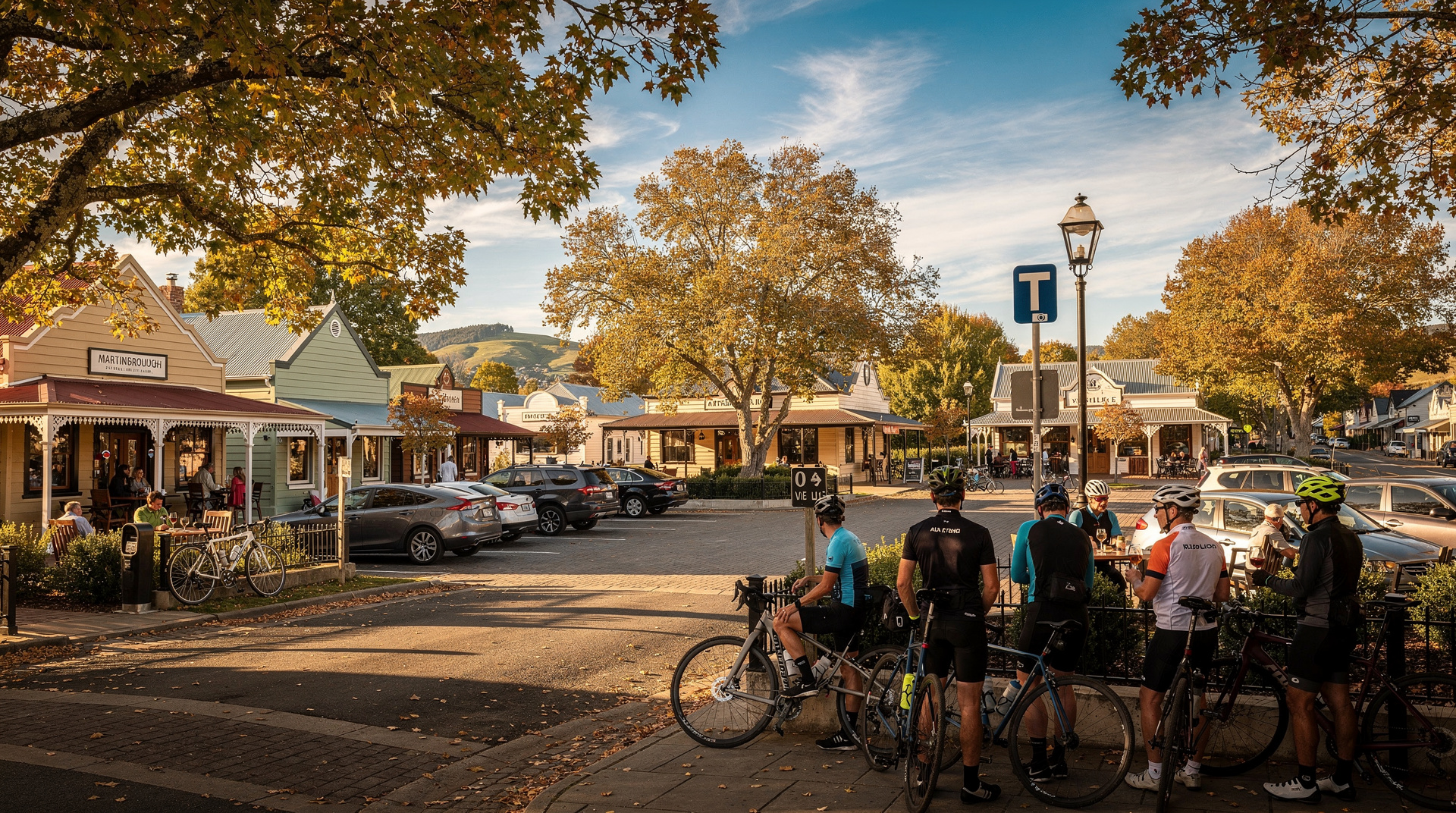
Martinborough day trip from Wellington
How far is Martinborough from Wellington?
Martinborough is approximately 80 km from Wellington via SH2 over the Remutaka Hill — a drive of 1 hour to 1 hour 15 minutes. The Remutaka Hill Road is scenic but steep; allow extra time in poor weather. The train to Featherston (1 hour) plus taxi to Martinborough (20 min) is a good alternative for those who want to drink freely at the cellar doors.
| Where | Martinborough village, Wairarapa, 80 km from Wellington |
| Cost | Guided tour NZD 149–195; self-drive from ~NZD 15 fuel + tastings |
| Time needed | Full day, 8–9 hours door to door |
| Getting there | 1–1.25 hrs by car over Remutaka Hill, or train to Featherston + taxi |
| Best time | March–May (autumn) or the November food and wine festival |
Martinborough: Wellington’s best wine day trip
Martinborough is New Zealand’s most accessible quality wine village — a small, flat settlement in the Wairarapa basin where boutique wineries cluster around a central square within easy cycling distance of each other. The wine style is primarily pinot noir and riesling, with several producers consistently ranked among New Zealand’s finest. The village is beautiful in a modest, unhurried way; the wine is excellent; and the 1-hour drive from Wellington through the Remutaka Range is pleasantly scenic.
The format is simple: drive to Martinborough in the morning, spend the day cycling or self-driving between cellar doors with a vineyard lunch in the middle, return to Wellington by evening. No major logistics, no complex planning. This is one of New Zealand’s most straightforward and genuinely enjoyable day trips.
Getting from Wellington to Martinborough
By car: SH2 north from Wellington through Lower Hutt, then over the Remutaka Hill (the steep, winding stretch — not difficult but requires attention, and allow extra time in rain or fog). Down the other side to Featherston on the flat Wairarapa plain, then 20 minutes southwest on SH53 to Martinborough. Total: 1 hour to 1 hour 15 minutes.
By train + taxi: Metlink Kapiti Line trains do not go to Martinborough — use the Metlink Wairarapa Line from Wellington Station to Featherston (approximately 1 hour). From Featherston, a taxi or Martinborough village shuttle takes 20-25 minutes. This is the better option for those planning to taste seriously at multiple cellar doors — driving after multiple wine tastings is not advisable.
Guided tour from Wellington: The Wellington to Martinborough wine tasting day trip handles all transport and visits 3-4 wineries in a guided format. Good for those who want structure and the driving handled.
The Wellington chef’s private Martinborough experience is the premium option — a private vehicle, chef-selected winery visits, and a vineyard lunch.
The wineries — which ones to visit
Martinborough’s wine village is small enough that the major producers are accessible on foot or by bike from the central square. The following are the most established and consistent:
Ata Rangi: One of New Zealand’s most respected pinot noir producers. Ata Rangi’s regular release pinot noir is excellent; their Célèbre blend (Cabernet Sauvignon, Merlot, Syrah) is distinctive. The cellar door is modest — the focus is on the wine, not the setting — but the quality speaks for itself. Book ahead.
Palliser Estate: Martinborough’s largest winery, with a well-designed cellar door experience, reliable pinot noir, excellent riesling and sauvignon blanc, and a consistent approach to quality. Good starting point as the service is accessible and the range broad.
Martinborough Vineyard: One of the original Martinborough producers, established in 1980. Historically significant to the region’s reputation. The Reserve Pinot Noir is the flagship. The cellar door is pleasant and the grounds attractive.
Craggy Range Te Muna: The Hawke’s Bay powerhouse has a Martinborough outpost focused on pinot noir from the Te Muna Road sub-region — cooler, with distinctive minerality. Worth visiting for comparison with the village’s other styles.
Te Kairanga: Excellent entry-level pinots at more accessible prices than some of the region’s premium producers. Good for those who want to explore the style without committing to premium price points.
Cycling Martinborough’s wine trail
Martinborough is the best cycling wine destination in New Zealand. The village and the surrounding vineyards are entirely flat, the roads are quiet, and the distances between cellar doors are manageable even for occasional cyclists. Most visitors do the loop from the village square to the outer vineyards (Ata Rangi, Palliser, Martinborough Vineyard) in a gentle 2-3 hour pedal with stops.
Bike hire is available in the village. Multiple operators rent hybrid and e-bikes. E-bikes are the easy option for those who haven’t cycled recently or want to conserve energy for drinking.
Note on cycling and wine tasting: New Zealand’s drink-driving limits are the same whether you’re on a bike or in a car on public roads — a DUI applies. The practical approach is a small tasting glass at each cellar door rather than a full flight, or designating one member of the group to stay below the limit. Most cellar doors are aware of this and will accommodate accordingly.
A day in Martinborough
9:00am — Depart Wellington (or arrive Featherston by train, taxi to Martinborough).
10:00-10:30am — Arrive Martinborough. Coffee at Café Medici on the village square. Pick up bikes from hire shop.
11:00am — Palliser Estate cellar door. Starting here gives you a broad overview of the region’s styles.
12:00pm — Ata Rangi cellar door (book ahead). This is the prestige stop.
1:00pm — Lunch at Tirohana Estate restaurant (the finest vineyard dining in Martinborough — book well in advance) or Kitchener Street café options in the village.
2:30pm — Martinborough Vineyard cellar door. The historic context and the Reserve range.
3:30pm — Te Kairanga for accessible pinot and a final browse.
4:30pm — Return bikes, drive or taxi to Featherston for the 5:30pm train back to Wellington (or self-drive back over the Remutaka — coffee and water first).
6:30-7pm — Arrive Wellington.
Martinborough Wine and Food Festival
The Martinborough Food and Wine Festival takes place annually in November (typically the third Saturday) — a ticketed event with stalls from all major producers, food vendors, and live music in a park setting. The festival is extremely popular and Martinborough accommodation books out months ahead. Wellington visitors need to plan well in advance but many rate it as one of New Zealand’s finest one-day events.
The Wellington Martinborough Wine guided tour options
The Wellington Martinborough winery tour (5 hours) is a solid guided format with transport included and visits to 3 established producers.
The Martinborough wine and food experience with lunch adds a vineyard lunch and pairs food with the tastings — the better option for those who want the full gastronomic day rather than a cellar door tour.
If you’d rather stay overnight instead of a day trip
A day trip covers the essentials, but Martinborough rewards a slower pace if your schedule allows it. Staying one night removes the pressure of a return drive after tasting, lets you fit in a fifth or sixth cellar door, and means you can eat a proper dinner in the village rather than rushing for the last train. The trade-off is obvious — an extra night’s accommodation and one more day away from Wellington — but for a special-occasion trip or a couple without children, it’s worth weighing against the tighter single-day version described above.
Martinborough vs a dedicated Marlborough wine trip
Travellers building a longer South Island route sometimes wonder whether to prioritise Martinborough or wait for Marlborough, New Zealand’s largest wine region. They’re genuinely different experiences: Martinborough is a compact, walkable-to-cycling village focused almost entirely on pinot noir, reachable from Wellington in an hour; the Marlborough wine tour guide covers a much larger sauvignon-blanc-dominated region near Blenheim, best reached via the Cook Strait ferry. If your trip only allows one, pick Martinborough for convenience and pinot noir, Marlborough if sauvignon blanc and a bigger valley-floor wine region matter more.
For Hawke’s Bay specifically, the region’s own wine routes guide is the fuller reference if you decide the overnight trip north is worth it after all.
Cost breakdown (NZD + USD + EUR)
| Item | NZD | USD | EUR |
|---|---|---|---|
| Wellington-Featherston train (return) | NZD 14-20 | USD 8-12 | EUR 7-11 |
| Featherston-Martinborough taxi/shuttle | NZD 25-35 | USD 15-21 | EUR 14-19 |
| Bike hire (half day) | NZD 30-50 | USD 18-30 | EUR 16-28 |
| Cellar door tasting fee per winery | NZD 10-25 | USD 6-15 | EUR 5-14 |
| Vineyard lunch (Tirohana or similar) | NZD 55-95 | USD 33-57 | EUR 30-52 |
| Guided wine tour from Wellington | NZD 149-195 | USD 89-117 | EUR 82-107 |
| Self-drive fuel (Wellington return) | NZD 15-25 | USD 9-15 | EUR 8-14 |
Frequently asked questions
Is Martinborough better than Hawke’s Bay for a day trip from Wellington?
Martinborough is far easier as a Wellington day trip — 1 hour vs 4 hours to Hawke’s Bay. For pinot noir specifically, Martinborough is the better choice. For the full range of Bordeaux styles, Syrah, and Chardonnay, Hawke’s Bay is superior but requires an overnight. Both are outstanding wine regions.
What’s the best time of year to visit Martinborough?
Autumn (March-May) is classic wine country time — harvest energy, turning leaves, excellent weather, and the tail end of summer warmth. Spring (September-November) offers blossom, lambs, and the November food and wine festival. Summer is the busiest period. Winter is quieter; some cellar doors reduce hours.
Can I do Martinborough and Wairarapa coast in one day?
Yes — see the Wairarapa day trip guide for the combined Cape Palliser and Martinborough structure. The combined day works well and covers both faces of the Wairarapa region.
Is the Remutaka Hill Road safe?
Yes, for careful drivers. The Remutaka Hill section of SH2 is steep and winding — the descent from the summit toward Featherston requires low gear to avoid brake fade, and visibility can be limited in fog. Drive attentively and below the posted limit on the bends. The road is excellent in dry conditions.
Related reading
Related guides
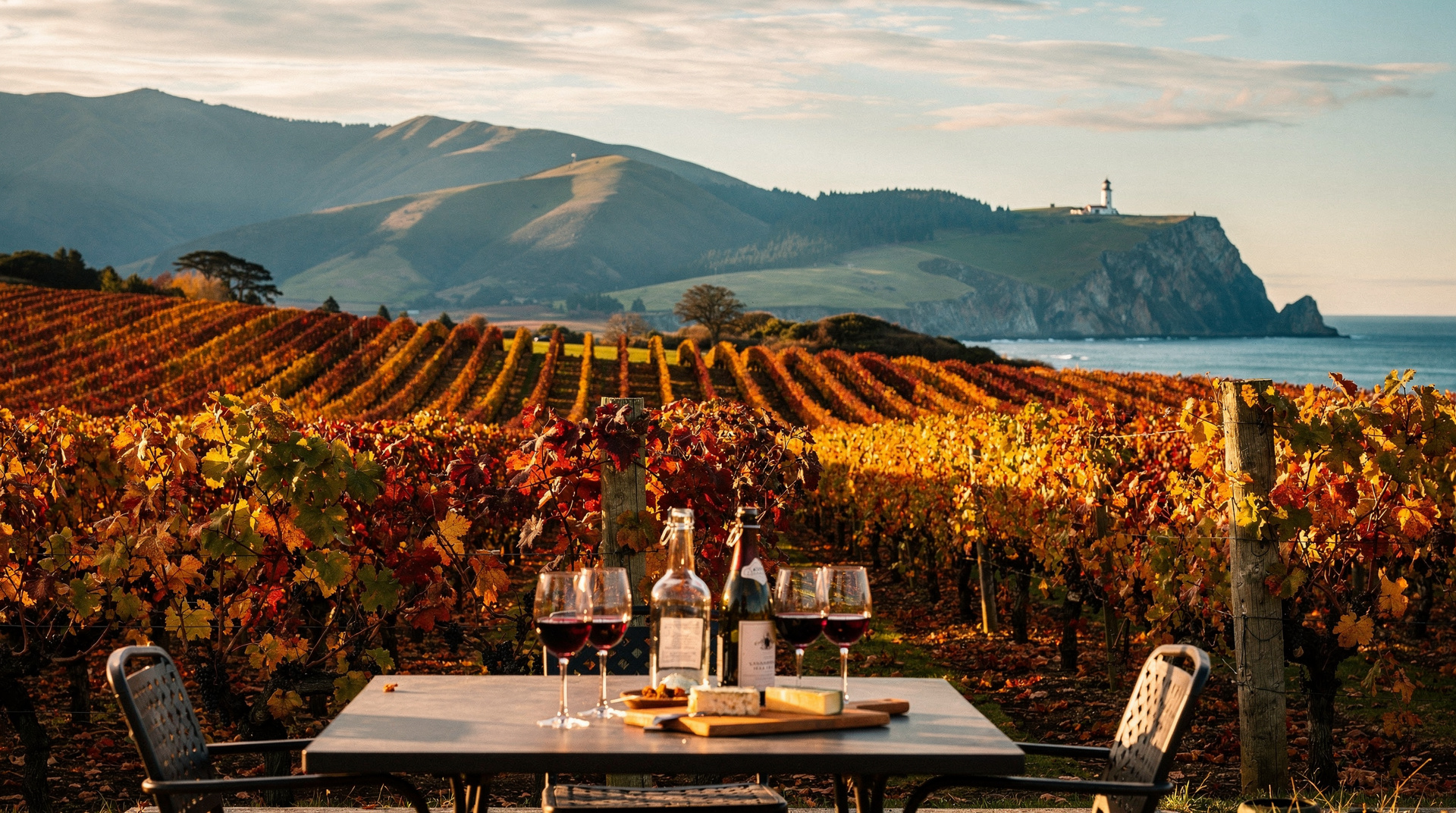
Wairarapa
Wairarapa: Martinborough Pinot Noir, Cape Palliser fur seals and lighthouse, Castlepoint — Wellington day trip or overnight. NZD/USD/EUR.
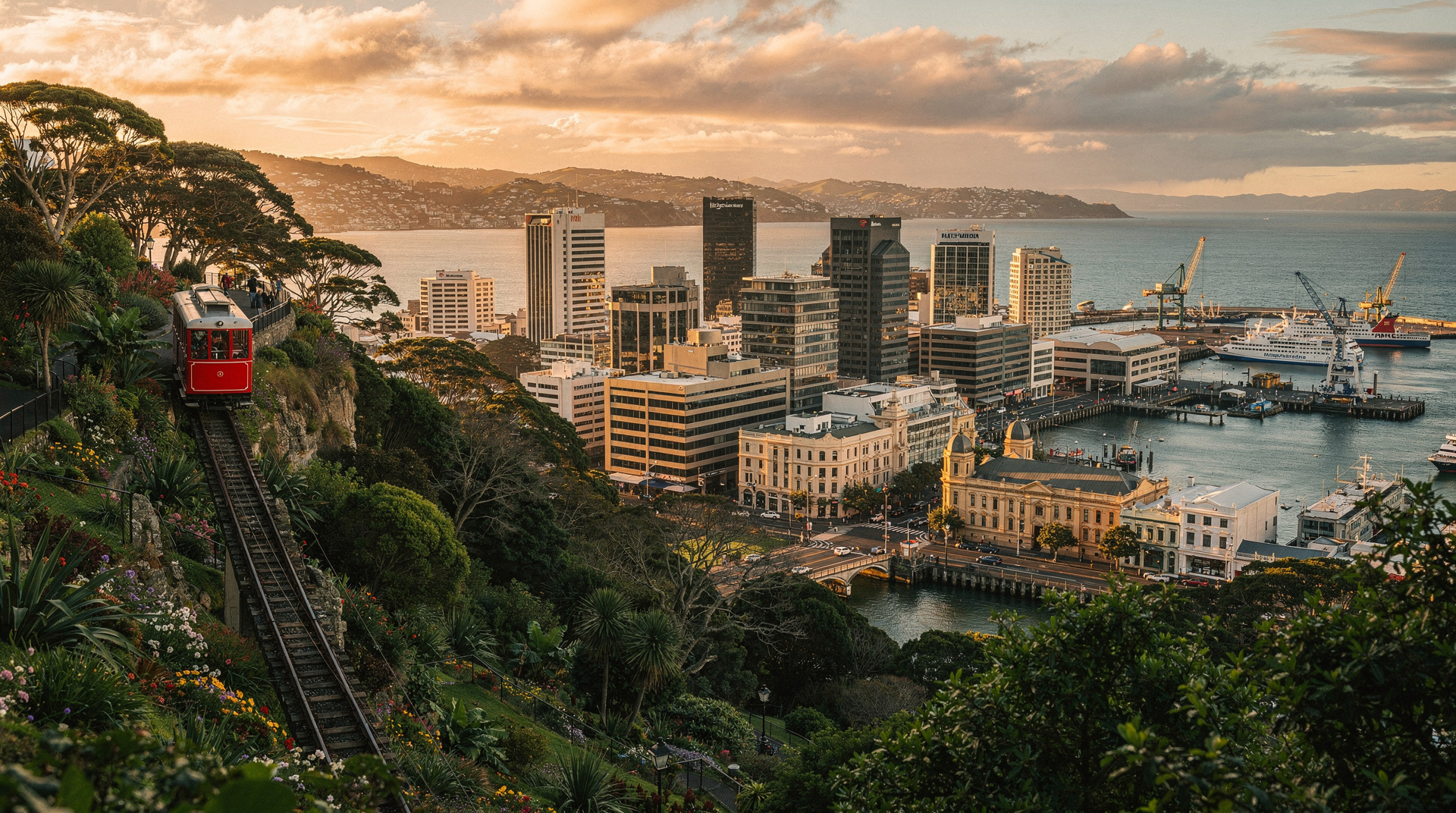
Wellington
Honest Wellington guide: Te Papa museum, Weta Workshop LOTR tours, Zealandia, Cuba Street, ferry to South Island, real prices NZD/USD/EUR.
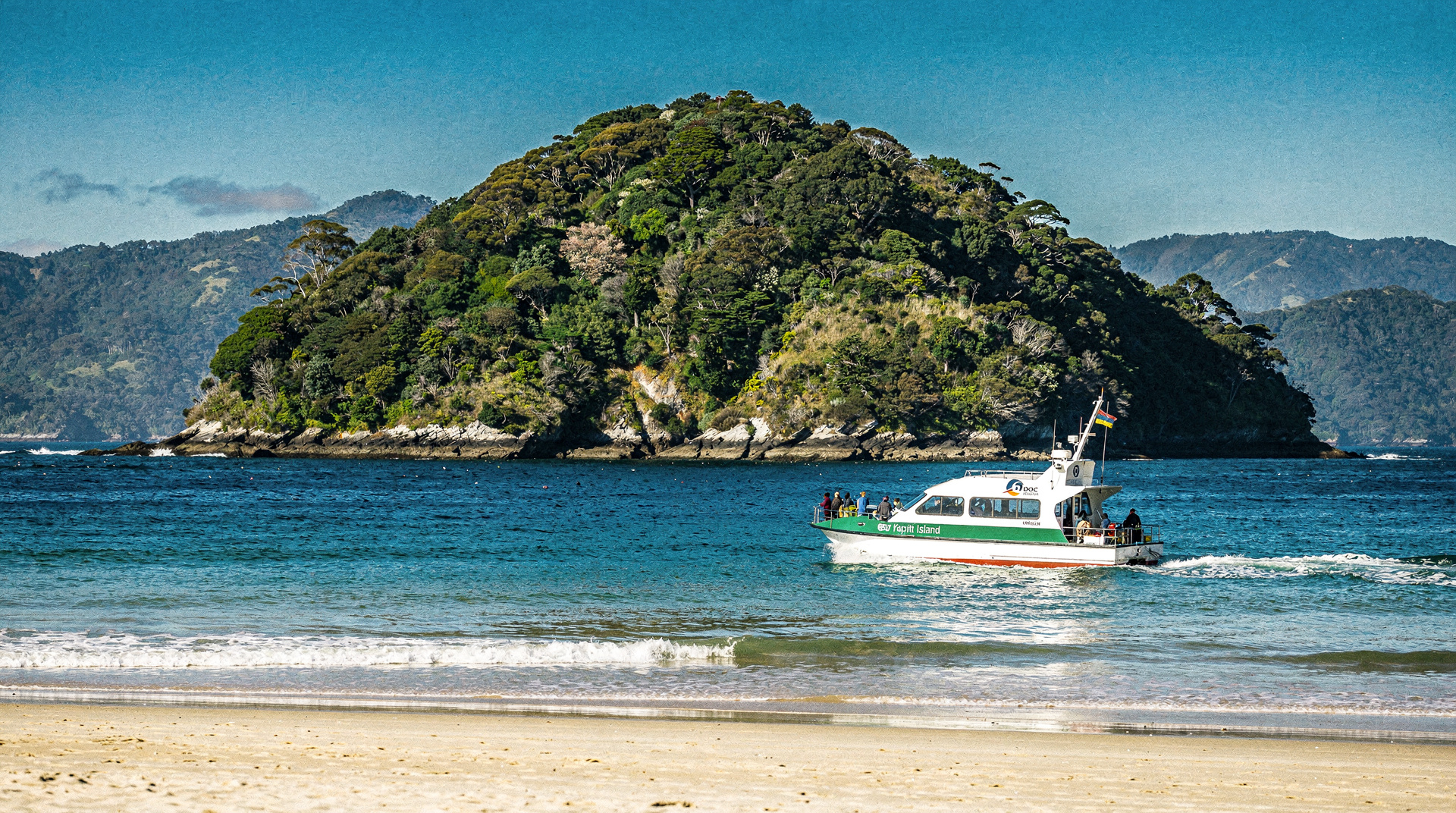
Best day trips from Wellington
Best day trips from Wellington: Martinborough wine (1h), Wairarapa coast (1.5h), Kapiti Island (permit required). Drive times and honest verdicts.
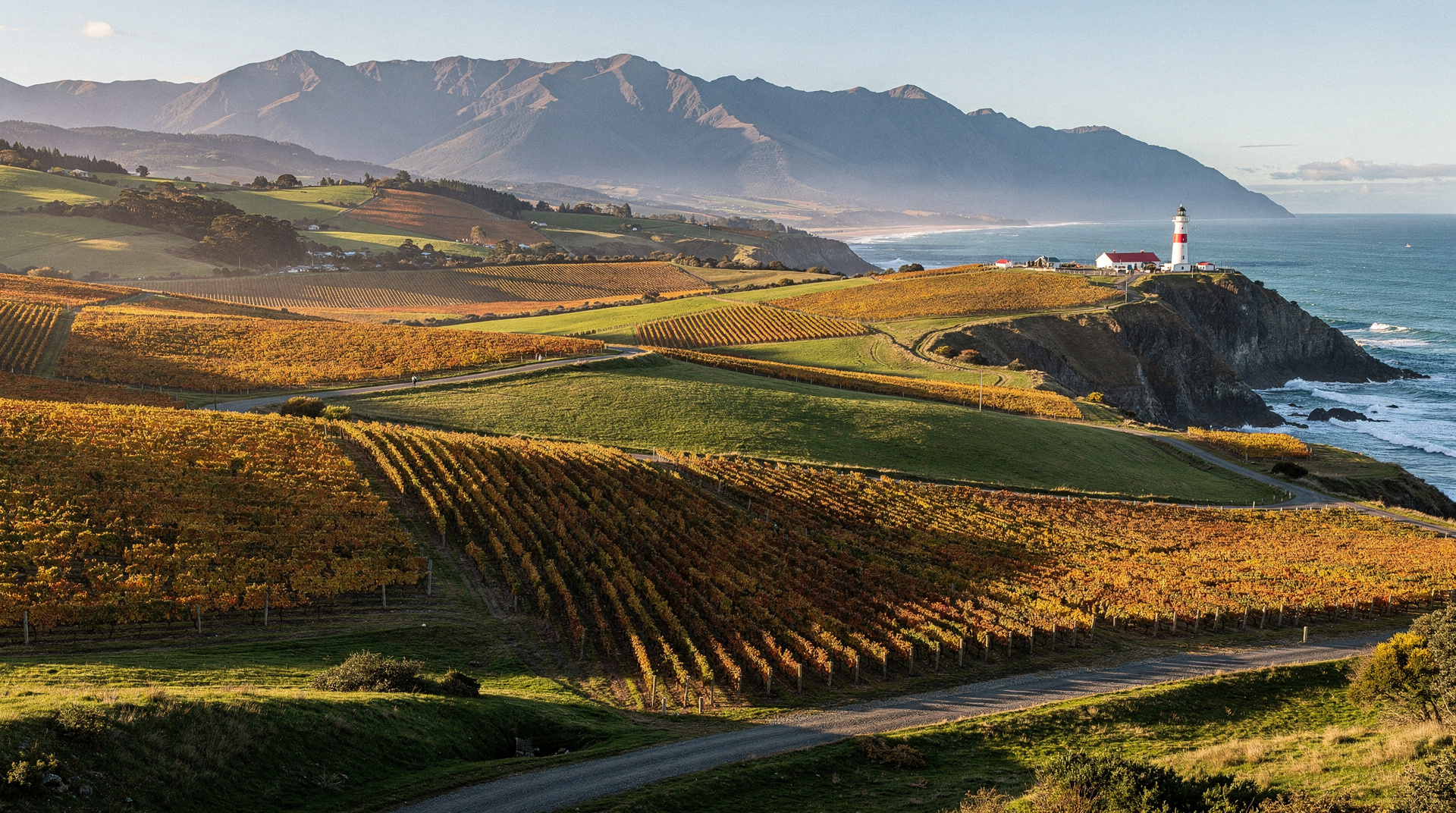
Wairarapa day trip from Wellington
How to do a Wairarapa day trip from Wellington: Cape Palliser fur seals and lighthouse, Castlepoint, coastal scenery, and drive times in NZD/USD/EUR.
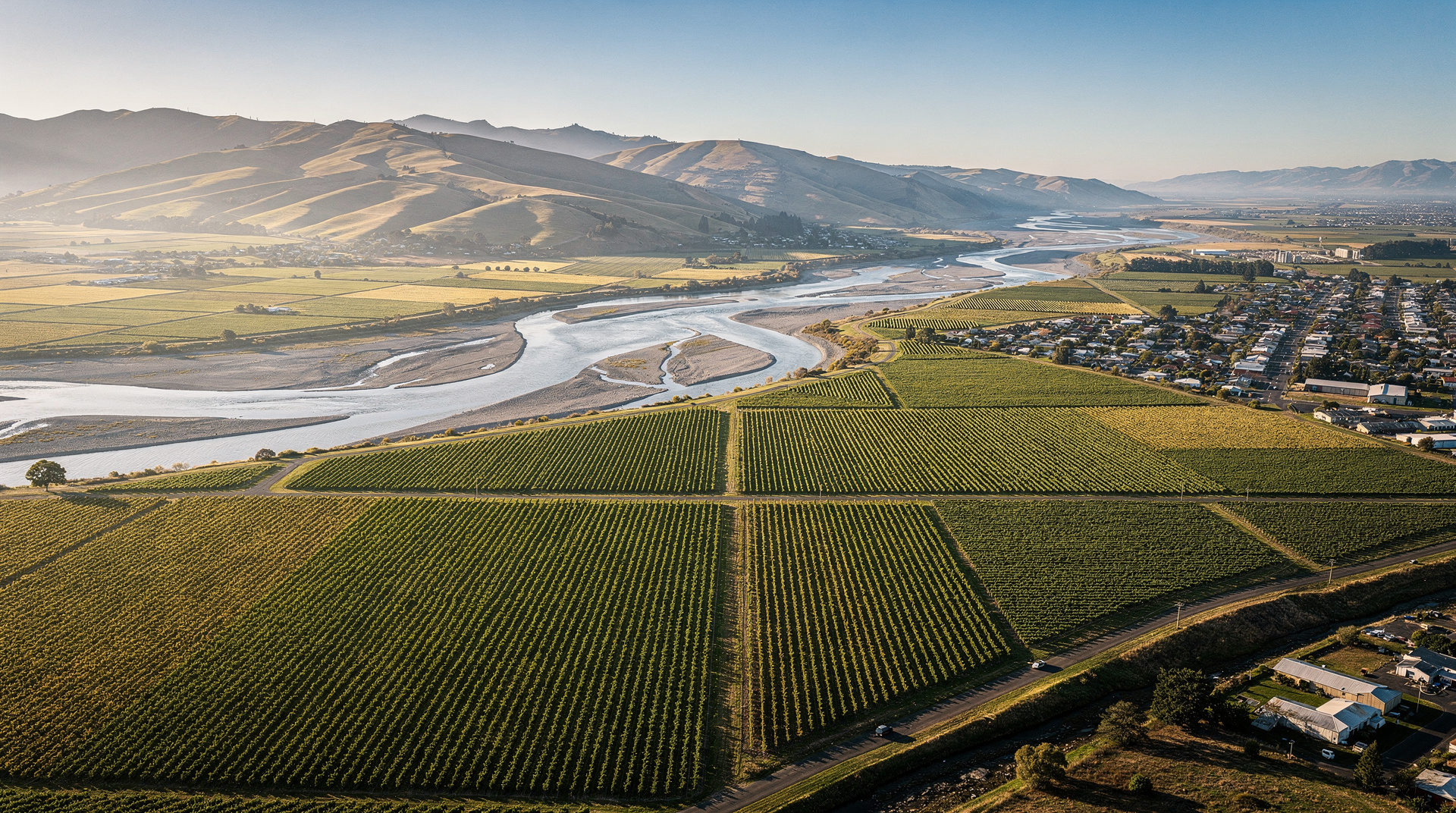
New Zealand wine regions — complete guide
Complete guide to New Zealand's 10 wine regions: Marlborough, Central Otago, Hawke's Bay, Martinborough and more. Which to visit, what to taste, prices.
Last reviewed: