Mitai Maori Village review — honest verdict on Rotorua's best-known evening
Is Mitai Maori Village worth NZD 135?
Yes — it is the most complete single evening in Rotorua for visitors who want kapa haka, hangi, and a natural bonus in the glow-worm walk. It is more theatrical than Te Puia and less iwi-institutional, which makes it more accessible for first-time visitors to Maori cultural events. The glow-worm stream walk at night is the experience that distinguishes Mitai from every other Rotorua evening.
The verdict — ✓ Worth it
Mitai Maori Village has been running in Rotorua since 1984. The site is family-owned — the Mitai family, who are local Arawa people — which gives it a different character from both the fully institutionalised Te Puia experience and the commercial Tamaki Maori Village operation. The product lands between those two reference points: more theatrically designed than Te Puia, less overtly manufactured than Tamaki, and with one feature that neither competitor offers.
That feature is the glow-worm walk. Mitai sits on the Fairy Springs stream, a clear freshwater stream fed by an underground spring. The banks of this stream, in the native bush that surrounds the village, support a population of Arachnocampa luminosa — the New Zealand glow-worm (titiwai in te reo Maori). After the hangi and the kapa haka performance, guests walk to the stream in darkness and view the glow-worms in situ on the stream bank. No artificial light is used during the glow-worm section. The effect is the same photoluminescent blue-green constellations visible in the Waitomo Glowworm Caves, but in an open-air bush setting rather than underground.
For readers new to the format entirely, our Maori culture overview explains the broader context — kapa haka, hangi, and marae protocol — that every Rotorua cultural evening draws on, Mitai included.
At a glance
| Format | Waka arrival, pōwhiri, kapa haka, hangi buffet, glow-worm stream walk |
| Duration | Approximately 3 hours (arrival ~5:30–6pm) |
| Cost (adult) | around NZD 120–135 (USD 72–81 / EUR 66–74) |
| Cost (child 5–12) | around NZD 55–65 |
| Location | 196 Fairy Springs Road, ~3km from central Rotorua |
| Booking lead time | A few days ahead; a week+ in Jan–Feb and school holidays |
This addition changes the calculation for Mitai against its competitors. The kapa haka and hangi are excellent but comparable to what Te Puia offers. The glow-worm walk is not offered elsewhere in Rotorua and makes Mitai the more complete evening package for most visitors.
Mitai Maori Village: Cultural Experience and Dinner Buffet
Mitai Maori Village: 3-hour evening — kapa haka performance, hangi buffet, and glow-worm stream walk.
From NZD 120–135 / USD 72–81 / EUR 66–74
What you actually get
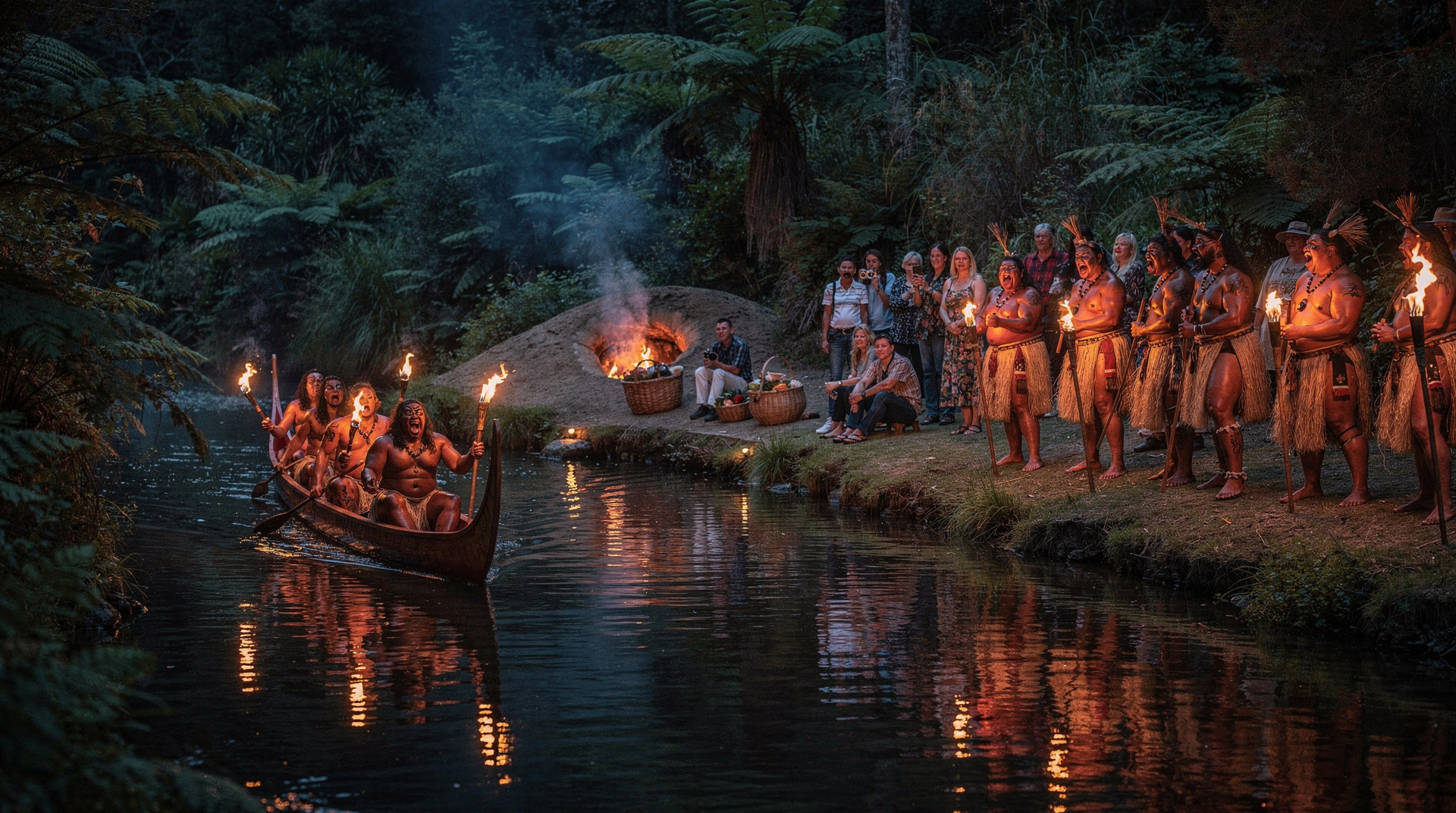
The evening begins at 5:30pm (typical winter) or 6pm (summer) with arrival at the Mitai village site on Fairy Springs Road, approximately 3 km from central Rotorua. A waka (traditional Maori canoe) arrives on the stream — occupants performing traditional chants — as the ceremonial entry to the evening. This is the visual opening of the experience and is one of the more memorable arrival sequences in Rotorua’s cultural offerings.
The pōwhiri (welcoming ceremony) follows. Less formal in structure than Te Puia’s version, but the fundamental elements — the karanga (call), the haka pōwhiri (welcome haka), and the hongi — are present and conducted sincerely. You do not need to know protocol in advance; the guide explains each element before it occurs.
The kapa haka performance runs approximately 45-60 minutes. This is the core cultural content. The Mitai performers are primarily young — the programme involves training the next generation of performers — and the performance has energy and confidence that reflects regular practice rather than rote repetition. The haka includes a sequence that invites the audience into a haka challenge, which generates the predictable mix of enthusiastic participation and awkward sideline-standing from most tour groups. Your response is entirely your own.
The hangi buffet follows the performance. The Mitai hangi is prepared in a traditional earth oven on the property — not the geothermal-steam method available at Te Puia, but a traditional pit fire method using volcanic rocks heated in a fire then placed in an earth pit with the food. This is the slower, more labour-intensive method and the results are distinctive: the meat picks up a smoky, mineral character from the rocks and earth that differentiates hangi from any other cooking method. Chicken, pork, lamb, kumara, rewena bread, and seasonal vegetables form the core spread. Dessert typically includes pavlova and seasonal fruit. The quality is consistently above average for the format.
The glow-worm walk departs after the meal. Groups of 15-20 walk with a guide to the stream bank via a bush path (sealed in the first section, unsealed near the stream — sturdy footwear is appropriate, sandals are not). On the stream bank, torches are extinguished and the group sits in darkness while eyes adjust. The glow-worm colonies on the overhanging bank become visible as the eyes adapt — blue-green bioluminescence from the larval stage of the fungus gnat. At Mitai, the concentration is lower than in the Waitomo cave system, but the open-air setting is completely different — you hear the stream, feel the forest air, and see the glow-worms without the enclosed cave acoustic of Waitomo.
The guide explains the life cycle of Arachnocampa luminosa during the walk. The larva produces light via a chemical reaction to attract flying insects, which are then caught in sticky threads hanging from the larva’s position. The light is turned off if the larva is disturbed — guests are asked not to use torches or phone screens during the walk. Photography in very long exposure is possible but handheld shots will not capture the effect without a tripod.
Total evening duration: approximately 3 hours. Transport back to Rotorua central is included in most booking packages.
What it costs and what’s not included
Cost breakdown
Mitai Maori Village evening, 2026 prices. NZD/USD/EUR at 1 NZD ≈ 0.60 USD ≈ 0.55 EUR.
| Item | NZD | USD | EUR | Verdict |
|---|---|---|---|---|
| Mitai evening (adult) — performance + hangi + glow-worm walk | 120–135 | 72–81 | 66–74 | ✓ Worth it |
| Mitai evening (child 5–12) | 55–65 | 33–39 | 30–36 | |
| Te Puia Te Pō evening for comparison Geothermal park access — no glow-worms | 170 | 102 | 94 | |
| Tamaki Maori Village evening for comparison More theatrical, fully commercial | 130–145 | 78–87 | 72–80 | |
| Hotel pickup and return transfer Included from most Rotorua hotels — confirm at booking | 0 | 0 | 0 | |
| Drinks at dinner (not included) | 8–15 | 5–9 | 5–8 |
The Mitai booking price includes the performance, dinner, and glow-worm walk. Hotel pickup from most Rotorua accommodation is included — confirm this at booking as a few outlying properties may charge a supplement. Drinks at dinner are not included and are available at bar prices.
Who should book this — ✓ Worth it
First-time visitors to New Zealand seeking a one-evening introduction to Maori culture. Mitai delivers the three core components — cultural performance, traditional food, and natural context — in a format that is accessible without prior knowledge and genuinely engaging rather than purely educational. The theatrical design of the evening is considered a positive here: it serves people encountering kapa haka for the first time, without the formal protocol weight of a fully ceremonial experience.
Visitors who haven’t done Waitomo Caves. The glow-worm walk at Mitai is not a substitute for Waitomo — the cave system at Waitomo is larger, the concentration of glow-worms is higher, and the boat ride is unique. But if Waitomo is not on your itinerary (it requires a specific half-day from Hamilton or Rotorua), the Mitai stream walk provides meaningful glow-worm exposure in a different natural setting. If you’ve already done Waitomo, the Mitai glow-worm walk is a pleasant addition rather than a revelation.
Families with children aged 6 and above. The performance is engaging for children — the haka challenge section specifically. The glow-worm walk is a genuinely impressive experience for children who haven’t encountered bioluminescence before. The pace is manageable and the total length (3 hours) is within most families’ tolerance. The hangi food is straightforward and not challenging for children.
Visitors who prefer a warmer, more social atmosphere over formal ceremony. Mitai is designed for enjoyment. The guides are personable, the performance has moments of levity and audience engagement, and the dinner table format encourages interaction with other guests. If you want to spend the evening in good spirits rather than primarily in learning mode, Mitai is the right choice over Te Puia.
Who should skip this — ✕ Skip
Visitors already doing Te Puia Te Pō. The two evenings share significant content overlap: a welcoming ceremony, kapa haka performance, and hangi dinner. The glow-worm walk (Mitai) and the after-dark geothermal park (Te Puia) are the differentiators. Doing both is not recommended for a standard Rotorua visit — choose based on which addition matters more to you.
Visitors on a tight schedule who cannot allocate a full evening. The Mitai evening requires a 3-hour commitment starting late afternoon. If you’re planning to drive from Rotorua to Taupo after dinner (90-minute drive), the timing is tight but manageable. If you’re driving to Auckland the same evening, the math does not work comfortably.
Solo travellers who find group social dynamics uncomfortable. The haka challenge and the communal dinner format both involve group participation. Mitai is designed for groups and the experience reflects that design. Solo travellers who prefer observation over participation will enjoy elements of the evening but may find the communal structure challenging.
Visitors who have already had several hangi experiences. The hangi itself, while excellent, is not dramatically different from other Rotorua hangi meals. If you’ve eaten at multiple Maori cultural evenings and the food is the primary draw, the marginal return diminishes.
The glow-worm walk in detail
The titiwai (glow-worm) walk is the component that most frequently exceeds expectations at Mitai, including for visitors who expected it to be a lesser version of Waitomo.
The key difference from Waitomo is environmental. At Waitomo, you observe glow-worms from a boat on an underground river — spectacular but mediated by the cave environment, the group size, and the darkness management. At Mitai, you’re outside in native bush, beside an actual stream that you can hear and smell, with the glow-worms on the natural stream bank above you rather than on a cave ceiling. The experience is more intimate and less controlled.
The light of glow-worm colonies at Mitai is most visible on new moon nights when the ambient light is minimal. In full moon conditions, the effect is reduced — the sky brightness affects the contrast. This is not something you can control but is worth knowing if you’re a photographer specifically pursuing glow-worm images.
Photography advice. Bring a DSLR or mirrorless camera with a wide aperture lens (f/1.8 or wider) if glow-worm photography matters to you. A tripod or Gorillapod is necessary — the exposures required (20-60 seconds) cannot be hand-held. Phone cameras with dedicated long-exposure modes produce moderate results; the Pixel 7 and iPhone 15 Pro’s astrophotography modes both work at Mitai with patience. Do not expect Waitomo-cave-quality images from the Mitai stream — the density and ceiling height are different.
Booking timing and seasonal notes
Glow-worm density at Mitai’s stream bank is not constant year-round — it peaks in late summer (February–March) and is noticeably lower in deep winter (June–July), though the walk still runs and is still worthwhile in any season. If glow-worms specifically are your priority and you have flexibility in your travel dates, aim for the summer months.
Booking pressure follows Rotorua’s general tourism calendar: January and February (New Zealand’s summer school holidays plus peak international arrivals) are the tightest, with Mitai frequently selling out a week or more ahead. Shoulder months (March–April, October–November) usually allow 2-3 days’ notice. Winter (June–August) is the easiest to book on short notice, though Rotorua evenings are noticeably colder — dress in layers for the outdoor sections regardless of season.
Honest red flags
The path to the stream walk gets muddy. After rain (which is frequent in Rotorua — the region receives significant rainfall year-round), the bush path to the stream bank is slippery. Close-toed shoes with grip are the correct footwear. Sandals are inappropriate. Flip-flops are a bad choice. The Mitai team provide information about footwear at booking, but visitors sometimes arrive in inappropriate footwear anyway.
The waka arrival is atmospheric but brief. The opening sequence — a waka arriving on the stream with performers — is visually striking but lasts approximately 3 minutes. Visitors who have this as their primary mental image of the evening from pre-trip research sometimes find the brevity surprising. It is a beginning, not a centrepiece.
Drinks are not included and the bar is not cheap. Rotorua’s general hospitality pricing applies at Mitai — NZD 12-15 for a glass of wine or beer is standard. Pre-dinner drinks are available. This is not exceptional and the amounts are modest if you’re monitoring budget.
The performance is designed for an international audience. The guides speak English and the cultural context is explained primarily for visitors who have no prior exposure to Maori culture. New Zealand visitors (particularly Pakeha who have grown up with Maori cultural exposure through school and community) may find the explanatory framing slightly elementary. This is not a criticism — it is appropriate calibration for the primary audience. But it is worth noting for domestic visitors who want deeper cultural engagement to consider Te Puia instead.
Mitai vs Tamaki — the honest comparison
Tamaki Maori Village is the other main competitor in Rotorua’s cultural evening market. The experiences are similar in structure but the cultural ownership is different: Tamaki is a commercial operation that employs Maori performers rather than a family or hapu-owned venue. The performance at Tamaki is more overtly theatrical and the evening more designed as entertainment.
Neither experience is dishonest about what it is. Tamaki is well-organised and the performers are skilled — the theatrical polish is real, not superficial. But the cultural authenticity register is different from Mitai, where the Mitai family’s connection to the land and the performance tradition is direct and not mediated by commercial tourism structure.
For visitors who care about this distinction: Mitai or Te Puia. For visitors who prioritise a comfortable, high-quality entertainment experience: Tamaki is also a valid choice. If you want the full breakdown of Te Puia specifically — including the geothermal park and the living carving school — the Te Puia cultural evening review covers it in the same honest format as this page.
| Mitai | Te Puia | Tamaki | |
|---|---|---|---|
| Ownership | Family-run (Mitai/Searancke whanau) | Iwi-operated (Te Arawa) | Commercial operator |
| Glow-worms | Yes — signature feature | No | No |
| Geothermal park | No | Yes — Pohutu Geyser | No |
| Group size | Smaller, more intimate | Larger, coach-group scale | Mid-to-large |
| Price (adult evening) | around NZD 120–135 | around NZD 170 | around NZD 130–145 |
Visitors who want the full geothermal picture alongside the culture sometimes pair a Mitai evening with a daytime visit to Waimangu Volcanic Valley — Rotorua’s other major thermal area, distinct from Te Puia’s park and worth doing regardless of which evening experience you pick.
Rotorua: Tamaki Maori Village Cultural Experience
Tamaki Maori Village cultural experience — for comparison with Mitai.
From NZD 130–145 / USD 78–87 / EUR 72–80
Making the most of the evening
A little preparation changes how the evening lands. If the pōwhiri and the haka are new to you, read our guide to marae etiquette beforehand, and skim the te reo Maori basics so that the greetings and terms you hear from the guides feel familiar rather than foreign. None of this is required, but visitors who arrive with a little context tend to join in more comfortably.
The hangi is the centrepiece of the meal, and our hangi experience guide explains how the earth-oven method works and what to expect on the plate, so you can compare what you eat at Mitai with other versions around Rotorua.
If you would rather weigh the alternatives before committing, an evening at the fully commercial end of the spectrum is available as a theatrical Maori village evening with dinner , while those who prefer the iwi-run, geothermal setting can look at a daytime Maori culture visit inside the Te Puia park . Our Te Puia guide describes that park in more detail.
Because the evening only takes up the late afternoon and night, the daytime is free for other things. Our list of day trips from Rotorua and the wider Rotorua destination page will help you fill it, and the Wai-O-Tapu Thermal Wonderland guide covers another geothermal option that pairs well with a cultural evening.
How to get to Mitai
Mitai Maori Village is on Fairy Springs Road, approximately 3 km north of central Rotorua. The site is included in the hotel pickup service from most Rotorua accommodation — confirm at booking. Self-drive is straightforward; free parking is available on-site.
The address: 196 Fairy Springs Road, Rotorua. Allow 10 minutes from central Rotorua.
Visitors without transport and not using the hotel pickup should arrange an Uber or taxi to the site — public transport options are limited on this route after 6pm.
Frequently asked questions about Mitai Maori Village review — honest verdict on Rotorua’s best-known evening
How does Mitai’s glow-worm walk compare to Waitomo Caves?
Different experiences rather than comparable ones. Waitomo is underground — a cave system with a higher concentration of glow-worms on the cave ceiling, viewed from a boat on a subterranean river. The Waitomo boat ride in darkness under a ceiling of glow-worms is one of New Zealand’s most distinctive single experiences. Mitai’s stream walk is outdoors, less densely populated with glow-worms, and set in bush rather than a cave. Mitai is worth experiencing on its own terms; it does not replace Waitomo but is not attempting to.
Can I attend Mitai without doing the full evening package?
The venue does not typically offer component-only tickets — the evening programme is sold as a complete experience (performance + hangi + glow-worm walk). Daytime access to the village is available as a separate product for those who want a cultural tour without the evening meal format.
Is the hangi food appropriate for dietary restrictions?
Vegetarian options are available at the buffet. Advise at booking. Vegan and halal options require advance notice — contact Mitai directly. Gluten-free options depend on specific dishes and advance notification is also recommended. The rewena bread contains gluten.
What is the minimum age for children?
Children from age 5 are included in the evening programme at the child ticket price. Children under 5 are at the host’s discretion and should be flagged at booking. The glow-worm walk at night may be too long for very young children.
Is Mitai accessible for visitors with limited mobility?
Partially. The village and meeting house are accessible. The bush path to the glow-worm stream is unsealed and uneven — a wheelchair or walking frame is not appropriate for this section. Guests with mobility limitations should inform Mitai at booking; alternative viewing points may be arranged for the glow-worm section. The hangi dinner and kapa haka performance are fully accessible.
Is it worth booking Mitai through GYG or directly?
Both options are valid. GYG booking provides standard cancellation terms and is more flexible on date changes. Direct booking through Mitai may provide slightly better communication on specific requirements (dietary, mobility). The price is the same either way.
How does Mitai compare to Te Puia for first-time visitors?
Mitai is more accessible for first-time visitors who have no prior exposure to Maori cultural events. The atmosphere is warmer and the performance is designed for audience engagement. Te Puia has greater cultural weight and the geothermal park adds a significant natural dimension. If you can do only one evening in Rotorua: Mitai for the complete package including glow-worms and a comfortable atmosphere; Te Puia if your primary interest is cultural depth and the geothermal environment after dark.
Does Mitai suit visitors who are also doing Waitomo Caves?
Yes, and it’s a genuinely complementary pairing rather than a redundant one. Mitai’s stream-bank glow-worm walk is outdoors and social; the Waitomo Glowworm Caves boat ride is underground and more dramatic in scale. Visitors doing both on the same trip — Waitomo as a day trip from Waikato or Auckland, Mitai as a Rotorua evening — consistently report that neither diminishes the other.
Is Mitai a good choice for a first Maori cultural experience with no prior context?
Yes — it’s arguably the most beginner-friendly of Rotorua’s three main evenings, since the guides assume no prior knowledge and explain each protocol element as it happens. Reading the Maori culture overview beforehand adds useful context but isn’t required to enjoy the evening.
Related guides
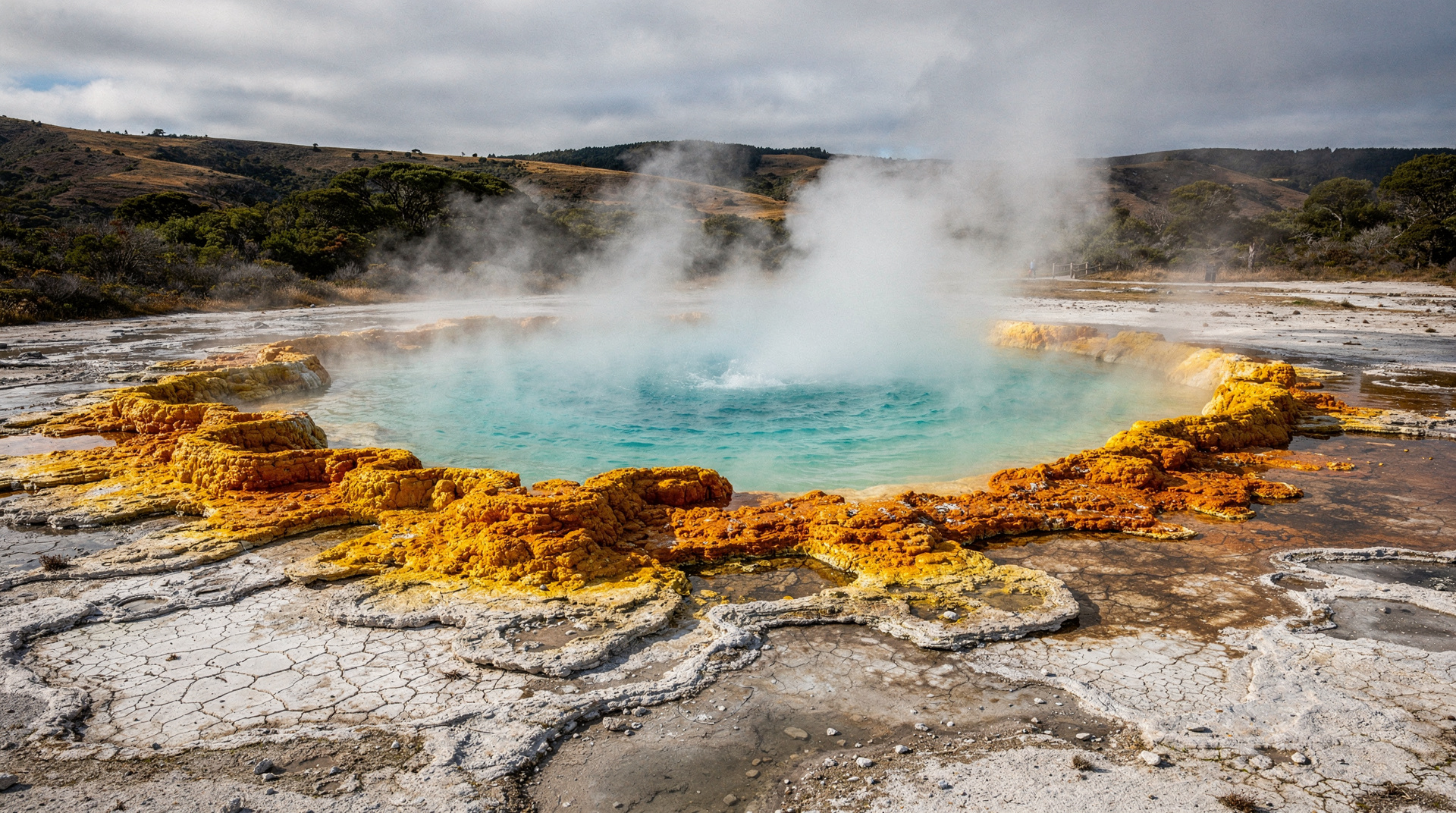
Rotorua
Honest Rotorua guide: Te Puia, Wai-O-Tapu, Polynesian Spa, Maori hangi, real prices NZD/USD/EUR, tourist traps to avoid, and best 2 days.
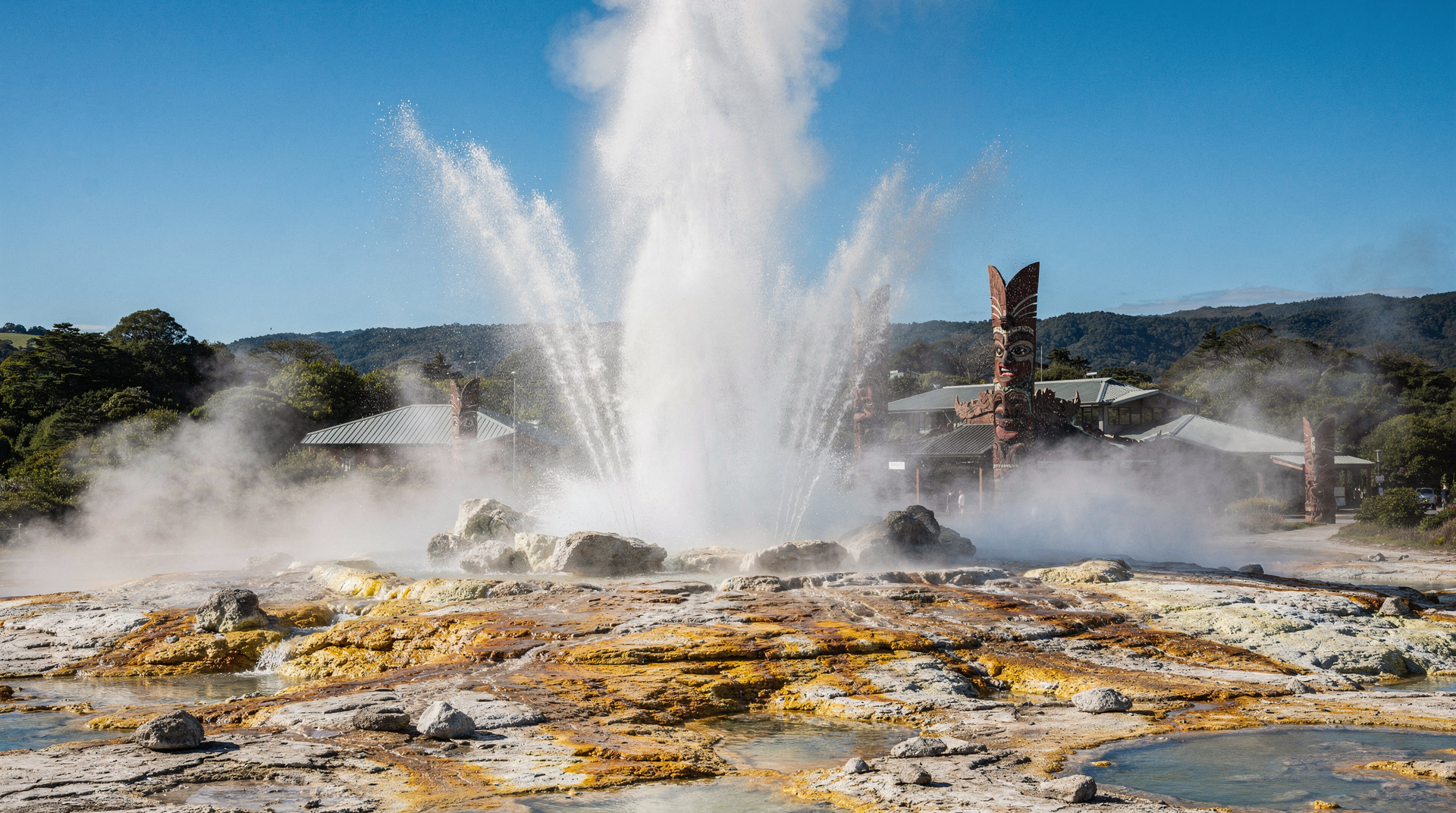
Te Puia Te Pō evening review — hangi, kapa haka, and the geyser at night
Te Puia Te Pō evening review: hangi feast, kapa haka performance, and geothermal park after dark. Real verdict on NZD 170 and who this is genuinely for.
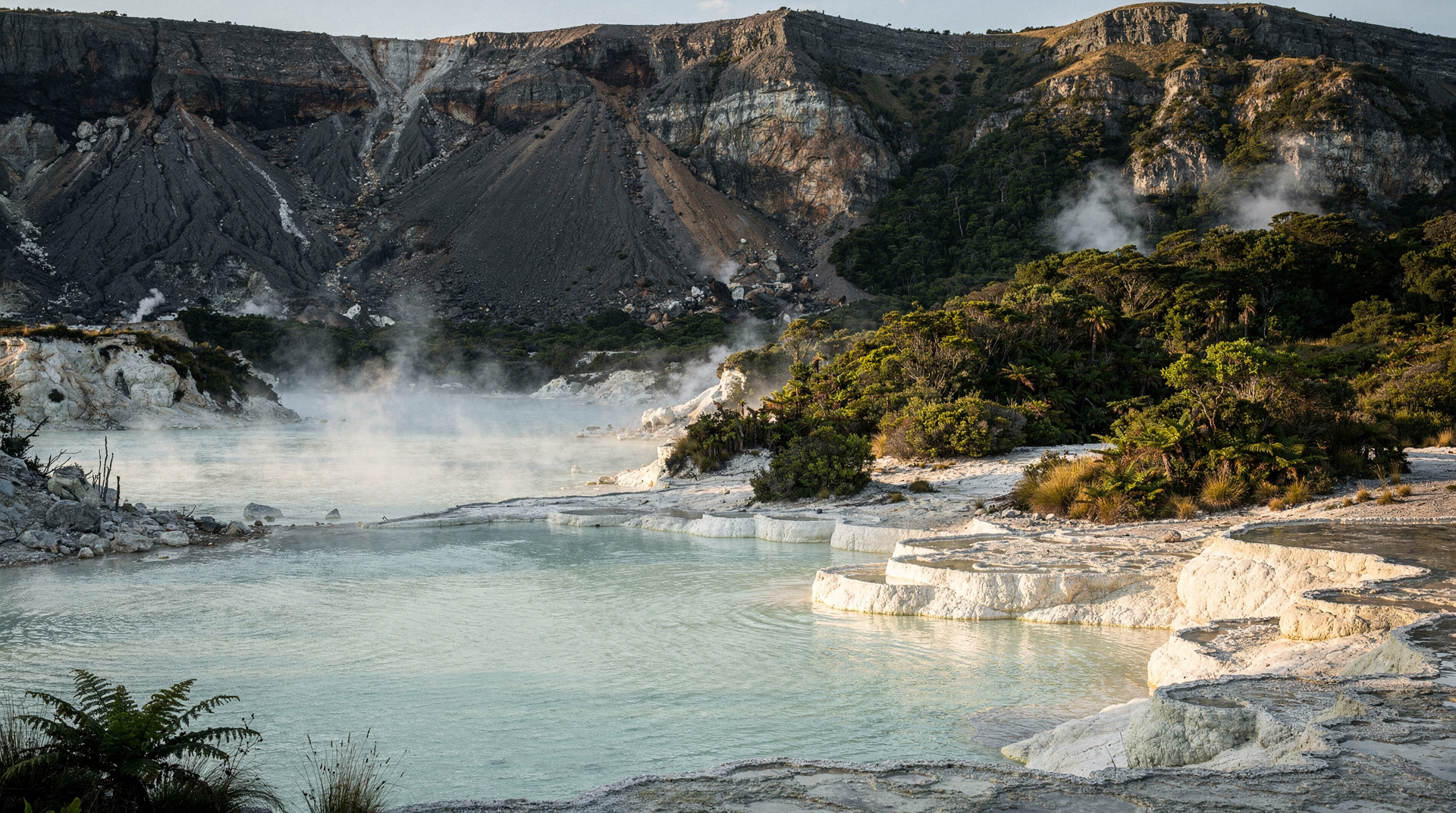
Waimangu Volcanic Valley
Waimangu was created by the 1886 Mt Tarawera eruption — earth's youngest geothermal system. Frying Pan Lake, Inferno Crater, boat tours.
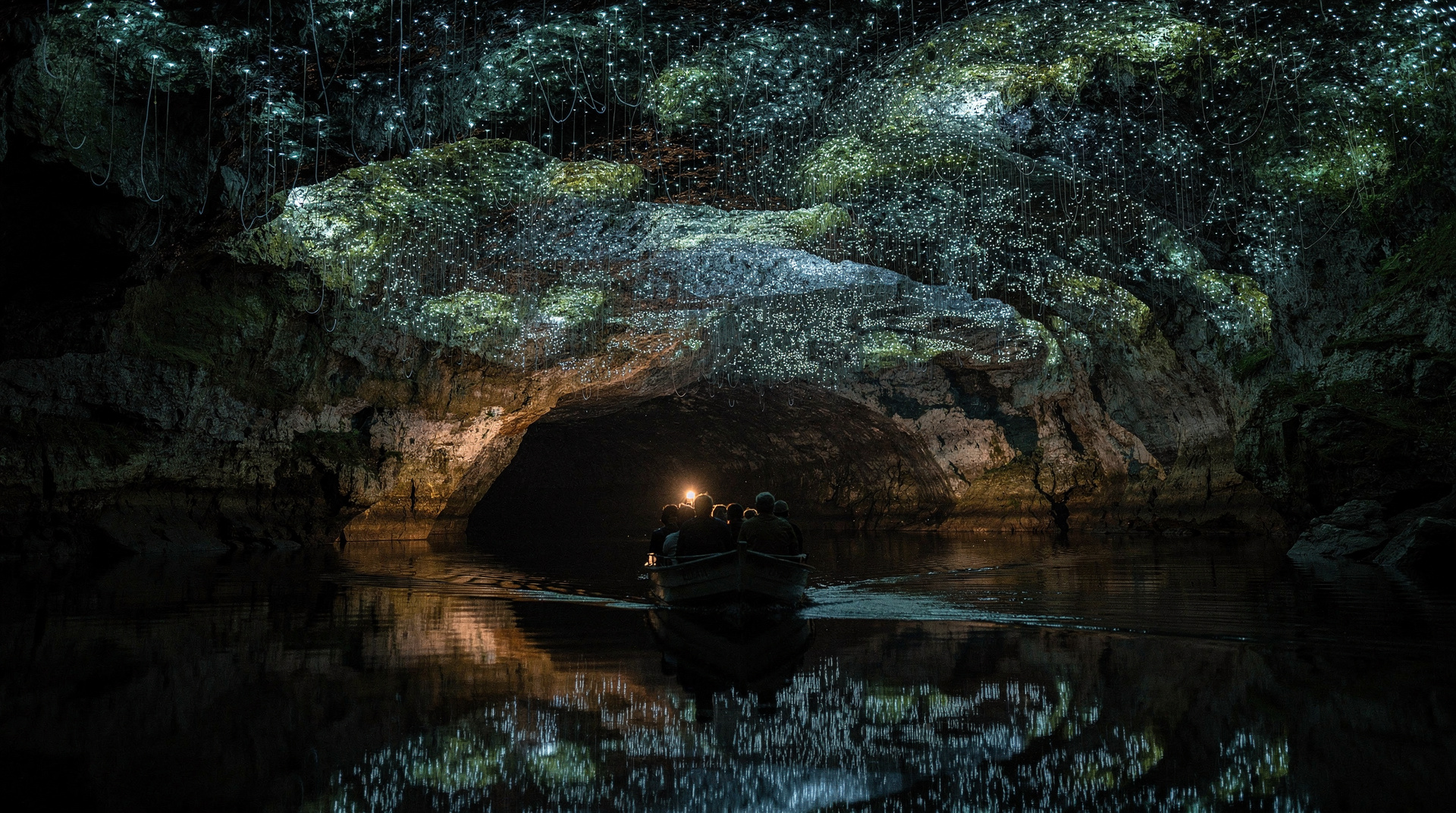
Waitomo Glowworm Caves — visitor guide
Waitomo Glowworm Caves: 45-min boat tour under a bioluminescent ceiling, NZD 75 adult. Three cave systems. Honest guide to what's worth doing.
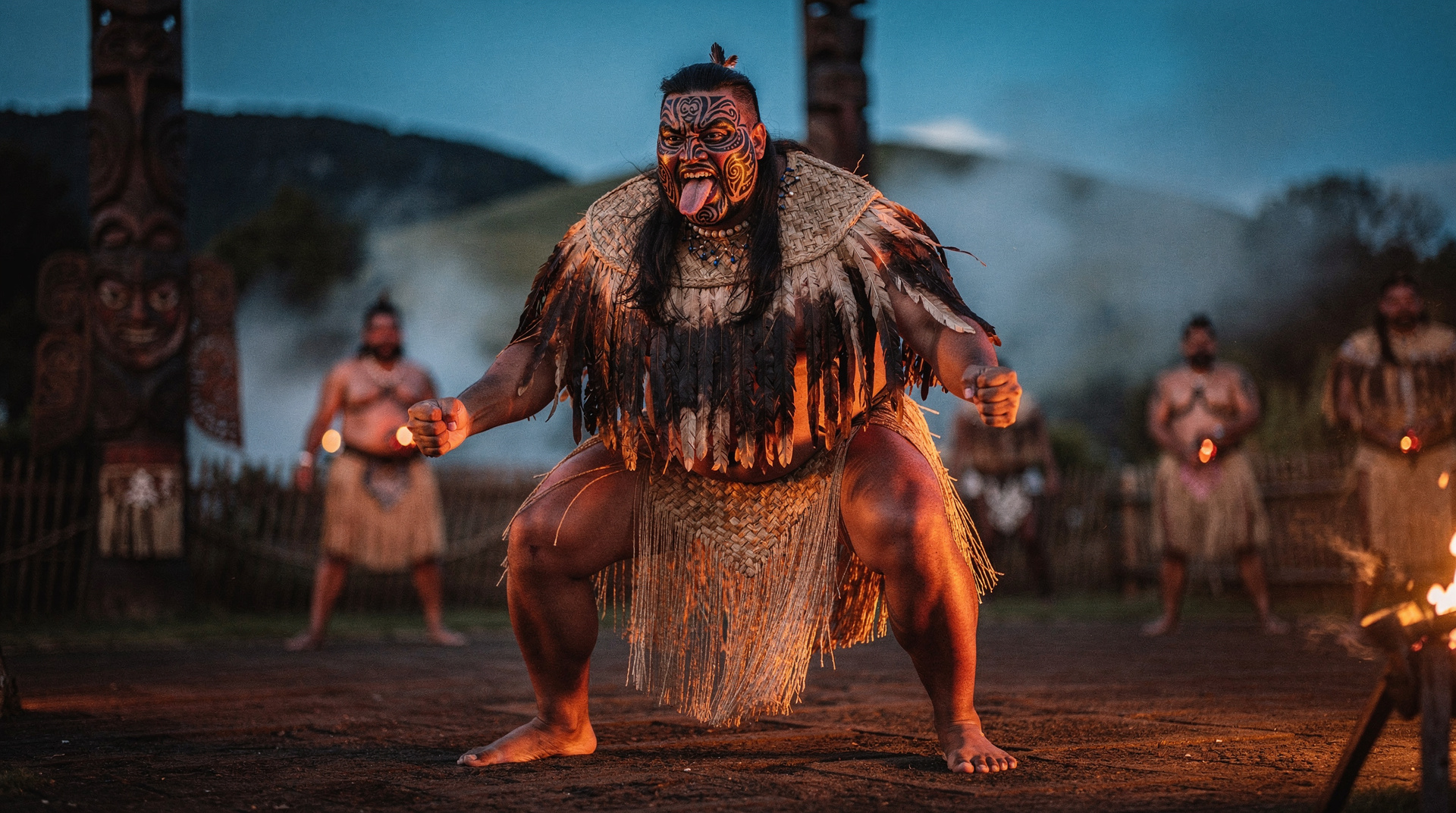
Maori culture overview — what every visitor should know
Respectful introduction to Maori culture for visitors: tangata whenua, Te Tiriti, tikanga basics, language, cultural experiences.
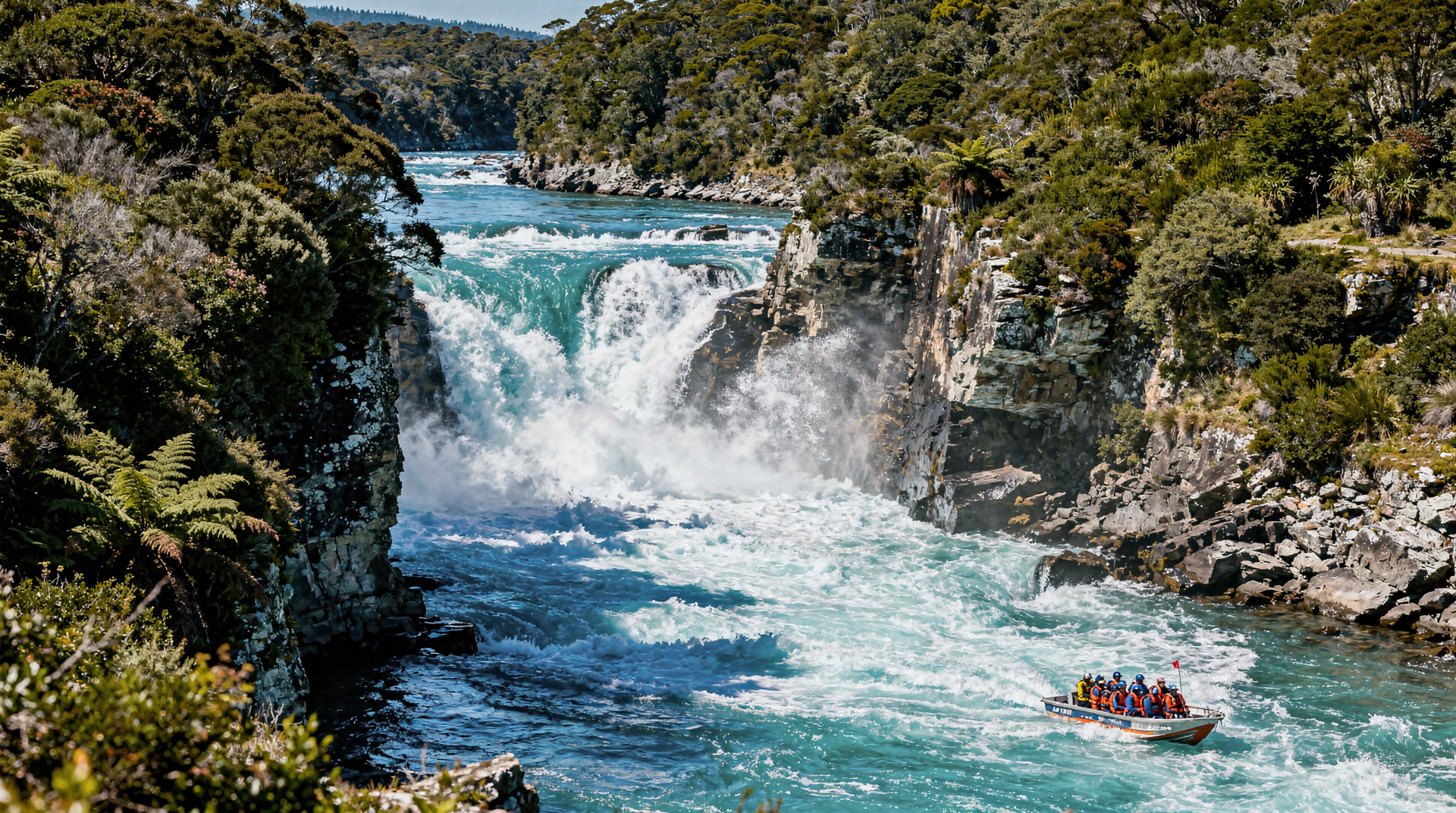
Waikato
Honest Waikato guide: Hobbiton Movie Set, Waitomo glowworm caves, Hamilton Gardens, Raglan surf. Real NZD/USD/EUR prices, what's worth your time.