Waitomo Glowworm Caves — visitor guide
What is the Waitomo Glowworm Caves tour like?
A 45-minute guided walk through limestone caverns ending in a silent boat ride under a ceiling of thousands of glowworms (Arachnocampa luminosa — a bioluminescent fungus gnat larva found only in NZ). NZD 75 adult / NZD 37 child. Book ahead in summer. The black water rafting and abseiling options are a completely different, more physically demanding experience.
A ceiling of living light
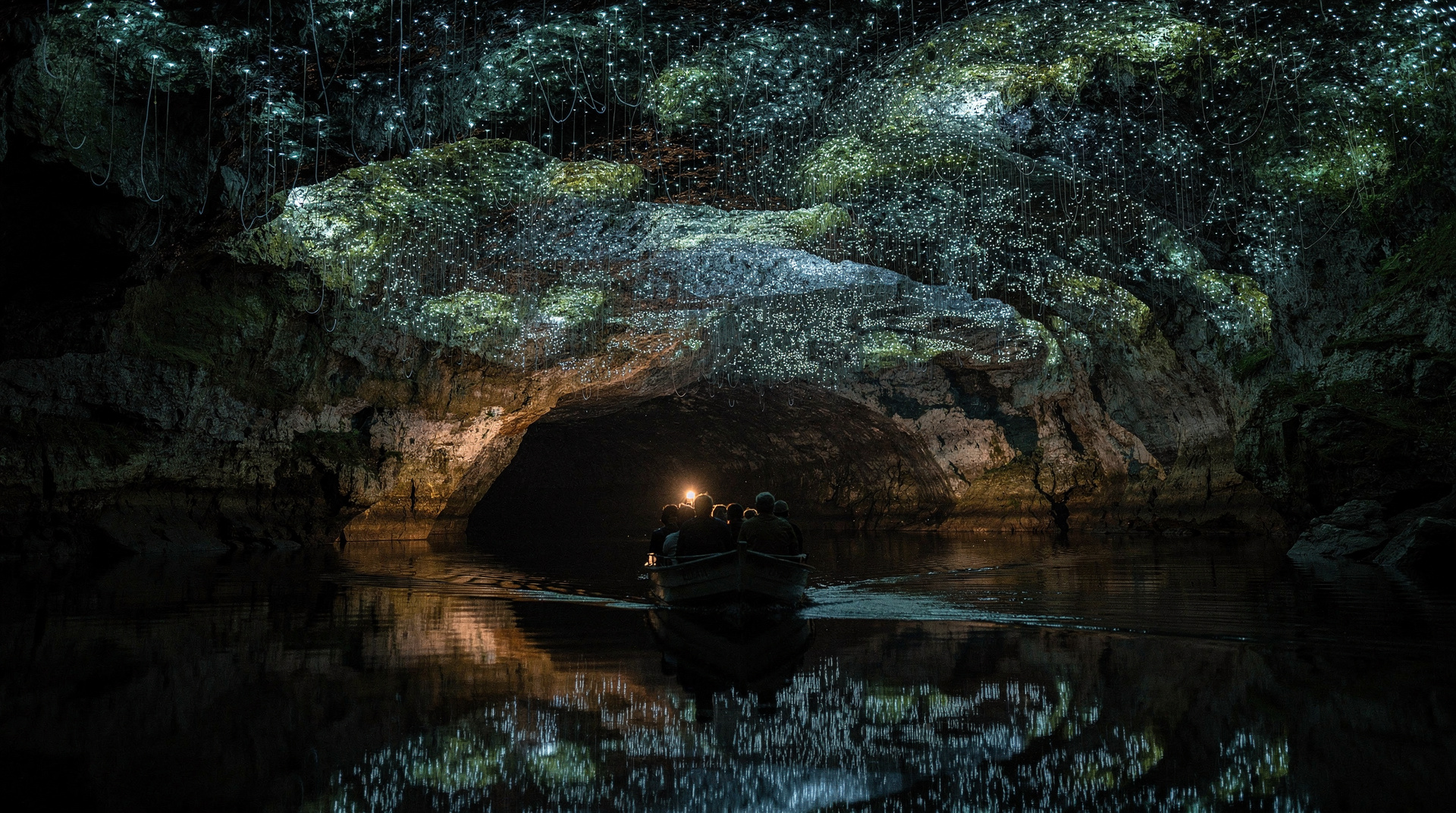
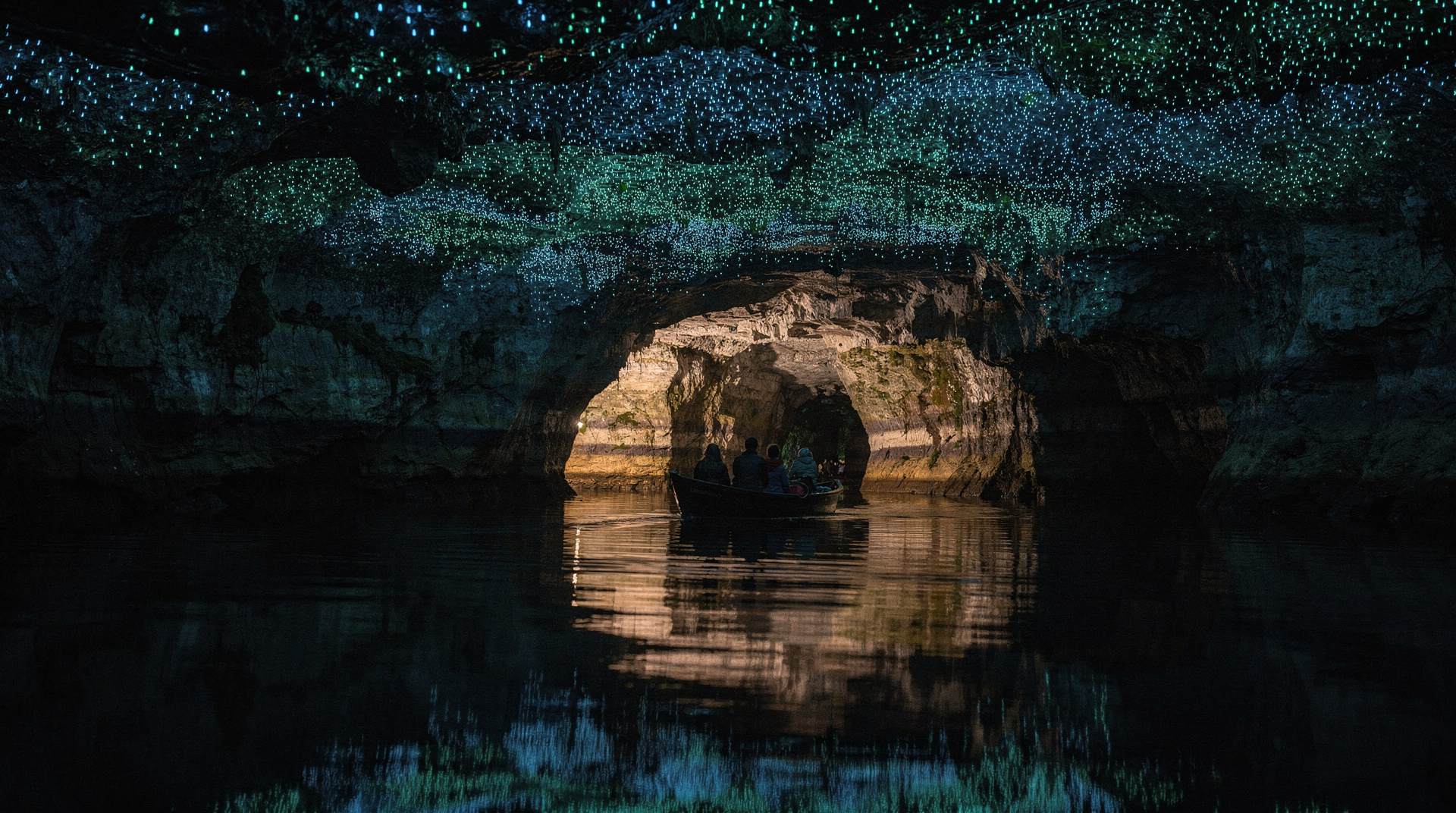
The Waitomo glowworms are Arachnocampa luminosa — a species of fungus gnat larva found nowhere else on Earth outside New Zealand and Australia. The larvae produce a bioluminescent blue-green light to attract prey into sticky threads that hang from the cave ceiling. A cave full of hundreds of thousands of them looks, from a boat on the underground river below, exactly like a night sky of dense stars.
This is not hyperbole. The Waitomo Glowworm Cave boat ride genuinely delivers on the premise. The effect is produced by living biology, not technology, and the silence that accompanies it — guides stop speaking as the boat enters the main chamber — makes it one of the most distinctive ten minutes of any New Zealand itinerary.
The cave complex near Waitomo village also offers two other cave systems (Ruakuri and Aranui) and the famous black water rafting experience — floating through darkness in a rubber ring. This guide covers all of them.
| Where | Waitomo village, 80 km south of Hamilton, ~2.5hrs from Auckland |
| Cost | Glowworm Cave from NZD 75 adult; combo tickets NZD 135-155 |
| Time needed | 45 min for the main cave; half a day for two caves; a full day for three or with black water rafting |
| Getting there | Self-drive, or a day tour from Auckland or Rotorua |
| Best time | Weekday mornings outside January-February |
The Glowworm Cave (main cave)
The standard Waitomo Glowworm Cave experience is a 45-minute guided tour with three sections:
Cathedral Chamber: A large limestone formation chamber with stalactites and stalagmites. The acoustics are remarkable — the cave was used for Maori ceremonies and was formally documented in 1887 by Tane Tinorau and Frederick Mace (a Maori chief and English surveyor who explored it together).
The Glowworm Chamber: A smaller, lower chamber where glowworm density increases.
The Boat Ride: The final 10 minutes, in complete silence, gliding under the main glowworm colony. This is the payoff. Torches off. No flash photography. The light is entirely biological.
Booking: The Waitomo: Glowworm Caves Guided Tour by Boat (45-min) covers the standard cave experience. NZD 75 adult / NZD 37 child. Book ahead for December-February — the cave limits visitor numbers per tour and popular times fill early.
Ruakuri Cave
Ruakuri is Waitomo’s second cave system and the most spectacular in terms of limestone formations. The cave name means “place of the dog” in te reo Maori, referring to wild dogs encountered at the entrance historically.
The Waitomo Caves: Ruakuri Glowworm Cave Guided Walking Tour is a 2-hour tour through 1.5 km of passages featuring massive stalagmites, underground waterfalls, and a smaller glowworm colony than the main cave. The formations here dwarf those in the Glowworm Cave. NZD 85 adult / USD 51 / EUR 47.
The cave entry is via a unique spiral ramp descending 15m — specifically designed to avoid disturbing the Maori burial site at the original entrance. This is a visible example of how the Waitomo caves balance tourism with cultural respect.
Aranui Cave
Aranui is the driest and most ornate of the three caves — a narrow corridor decorated with delicate limestone formations including transparent stalactites, coral-like formations (helictites), and rare brown cave coral. No glowworms, but the formations are the most detailed of the three caves.
A 45-minute tour, included in the Waitomo caves combined package. Less popular than Glowworm Cave or Ruakuri, and therefore usually quieter. Worth doing for those interested in cave geology.
Which caves to actually book
Most visitors only have time for one or two caves, so it’s worth being deliberate. If you’re choosing a single cave, the Glowworm Cave is the obvious pick — it’s the only one with the boat ride and the dense main colony, and it’s the shortest at 45 minutes. If you can spare half a day, add Ruakuri: the formations are genuinely more dramatic and the 2-hour walking format suits people who found the Glowworm Cave’s pace too brisk.
Aranui is the specialist’s choice — skip it unless cave geology specifically interests you or you want a quieter experience away from the tour-bus crowds that cluster around the main two caves in peak season. The three-cave combo ticket (NZD 135-155) is worth it only if you’re genuinely doing all three in one visit; buying it and skipping one cave wastes money compared to booking individually.
The eco and alternative cave experiences
For those who want a less structured experience, the Waitomo: Guided Eco-Cave Tour (3h) covers the natural formation sections of the cave system in a small-group setting with more geological interpretation. NZD 120-145 / USD 72-87 / EUR 66-80.
The The Waitomo Experience: Okohua Glowworm Cave Tour visits the Okohua glowworm cave in the Pureora Forest — a less developed site with a more intimate, less commercial atmosphere than the main Waitomo tourist complex. NZD 95-115 / USD 57-69 / EUR 52-63.
Black water rafting: a completely different experience
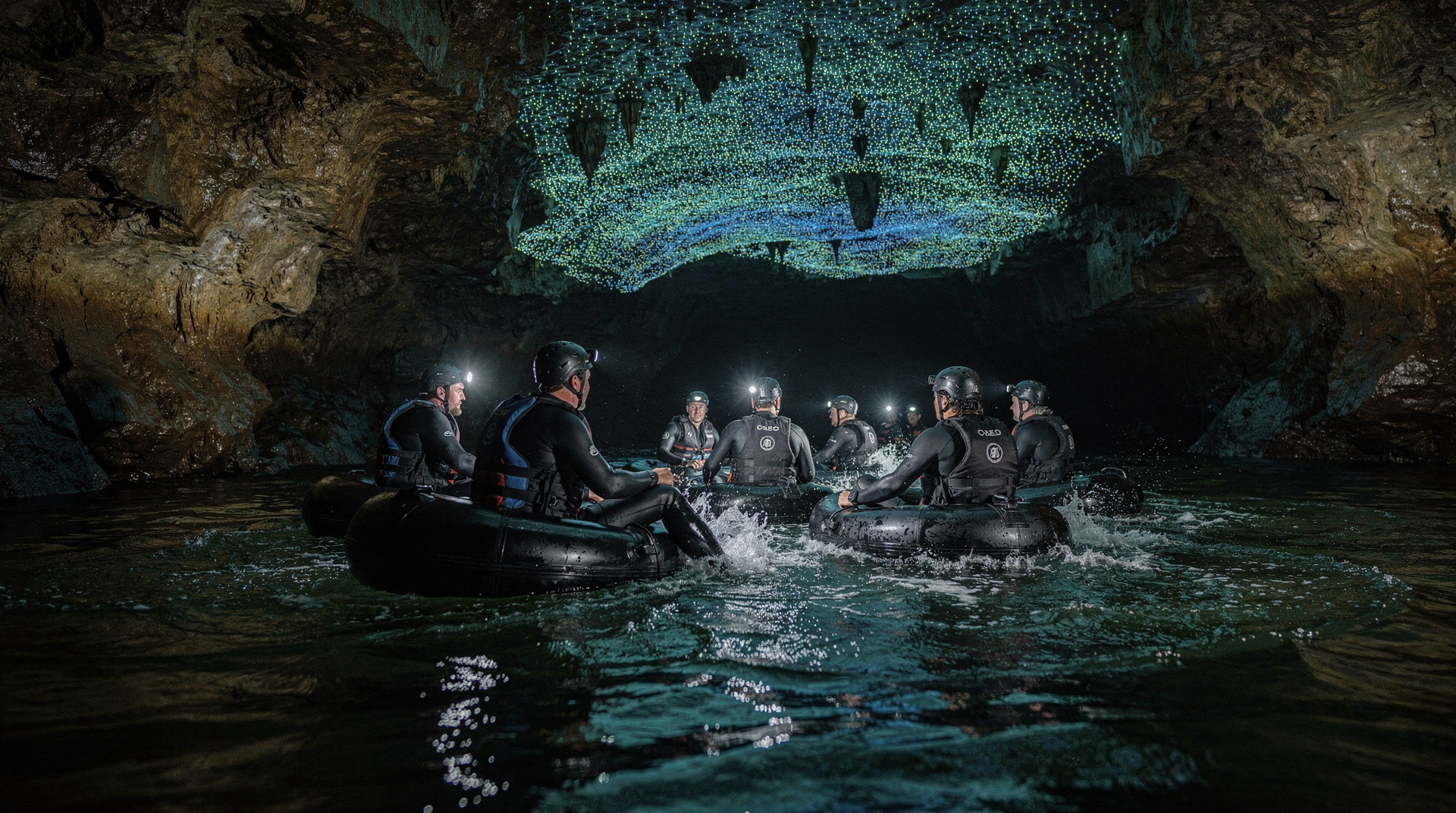
The Waitomo Black Water Rafting experience — floating through cave systems in rubber rings in the dark — is entirely separate from the standard cave tours. It’s a wet, physical, adrenaline activity rather than a scenic walk. See the full Black Water Rafting Waitomo guide.
Getting to Waitomo
Waitomo is 80 km south of Hamilton, approximately 2.5 hours from Auckland. The village is small — a cluster of accommodation, cafes, and cave entrances — with no public transport connections.
The most practical visit approaches:
- Auckland to Waitomo day trip: Long but doable (2.5 hours each way). Combine the cave tour with a Hobbiton day trip from Auckland if staying overnight in Matamata.
- Auckland-Waitomo-Rotorua route: The classic North Island loop — Auckland → Waitomo → Rotorua → Taupo → Tongariro, all on the road south.
What not to bother with
Skip the souvenir photo package sold at the Glowworm Cave entrance unless you specifically want a printed keepsake — the price is disproportionate to what you get, and your own memory of the boat ride is better than any photo of it anyway (cameras can’t capture the glowworms well regardless).
Don’t add the Lost World abseil combo purely because it’s the most expensive option on the price list — at NZD 475-625 it’s a serious multi-hour caving and abseiling commitment, not an add-on, and it suits people who specifically want an adrenaline caving day rather than those who came for the glowworms. If your schedule is tight, prioritise the standard Glowworm Cave over the combo tickets; seeing all three caves in one rushed day tends to blur together and dilutes the impact of the boat ride, which is genuinely the highlight.
Day trips from Auckland: The Auckland: Waitomo Glowworm Caves Explorer Small Group Tour handles the transport and cave entry from Auckland as a full day trip. NZD 185-225 / USD 111-135 / EUR 102-124. The From Auckland: Waitomo Glow Worm Caves & Rotorua Tour extends the day to include both Waitomo caves and Rotorua geothermal features — extremely long (14+ hours) but covers two major attractions in one day. NZD 245-285 / USD 147-171 / EUR 135-157.
When to visit
Best time: Weekday mornings outside January-February. The cave tour operates year-round and is unaffected by weather. Morning tours (first departure 9am) tend to have the smallest groups.
January-February: Book at least a week in advance. Group sizes can reach the maximum (around 40-50 per tour) and the village is significantly busier.
Evening: Some accommodation stays offer dusk and evening cave tours with smaller groups — check directly with Waitomo Glowworm Caves Ltd.
Cost breakdown (NZD / USD / EUR)
| Experience | NZD | USD | EUR |
|---|---|---|---|
| Glowworm Cave standard (adult) | 75 | 45 | 41 |
| Glowworm Cave (child 4-14) | 37 | 22 | 20 |
| Ruakuri Cave tour | 85 | 51 | 47 |
| All 3 caves combo | 135-155 | 81-93 | 74-85 |
| Black Water Rafting (basic, 3 hours) | 155-175 | 93-105 | 85-96 |
| Lost World abseil combo | 475-625 | 285-375 | 261-344 |
| Day trip from Auckland (transport + cave) | 185-225 | 111-135 | 102-124 |
Frequently asked questions
What exactly are glowworms?
They are the larvae of Arachnocampa luminosa, a species of fungus gnat unique to New Zealand and Australia. The larvae produce bioluminescent light to attract flying insects into silken threads. The light is produced by a chemical reaction involving luciferin and luciferase — the same mechanism as fireflies, but produced by a completely different organism.
Is the glowworm boat ride appropriate for children?
Yes — children typically love it. The boat section requires quiet but not stillness. There are no physical requirements and no health restrictions. The main cave tour is suitable for all ages, including very young children.
How do Waitomo glowworms compare to the Te Anau glowworm caves?
Both are Arachnocampa luminosa. The Waitomo boat ride is larger scale and more dramatically staged, with a larger colony visible at once. Te Anau’s glowworm caves are smaller, accessed by a longer boat ride across the lake, and often feel more remote and intimate. Both are worth experiencing. See our Te Anau Glowworm Caves guide.
Can I photograph the glowworms?
During the boat ride, photography is permitted but flash is strictly prohibited (it disturbs the larvae). The blue-green bioluminescence is dim — you’ll need a camera capable of long exposure in very low light. A phone camera generally doesn’t capture it well. Most visitors find that watching rather than trying to photograph is more rewarding.
Should I visit Waitomo if I’m also going to Te Anau?
Yes, if the itinerary allows it. The experiences are similar in concept but different enough in execution and atmosphere to both be worthwhile. Waitomo is more accessible from Auckland (North Island); Te Anau caves are most conveniently visited as part of a Fiordland trip.
Related guides and reading
Related guides
Waitomo
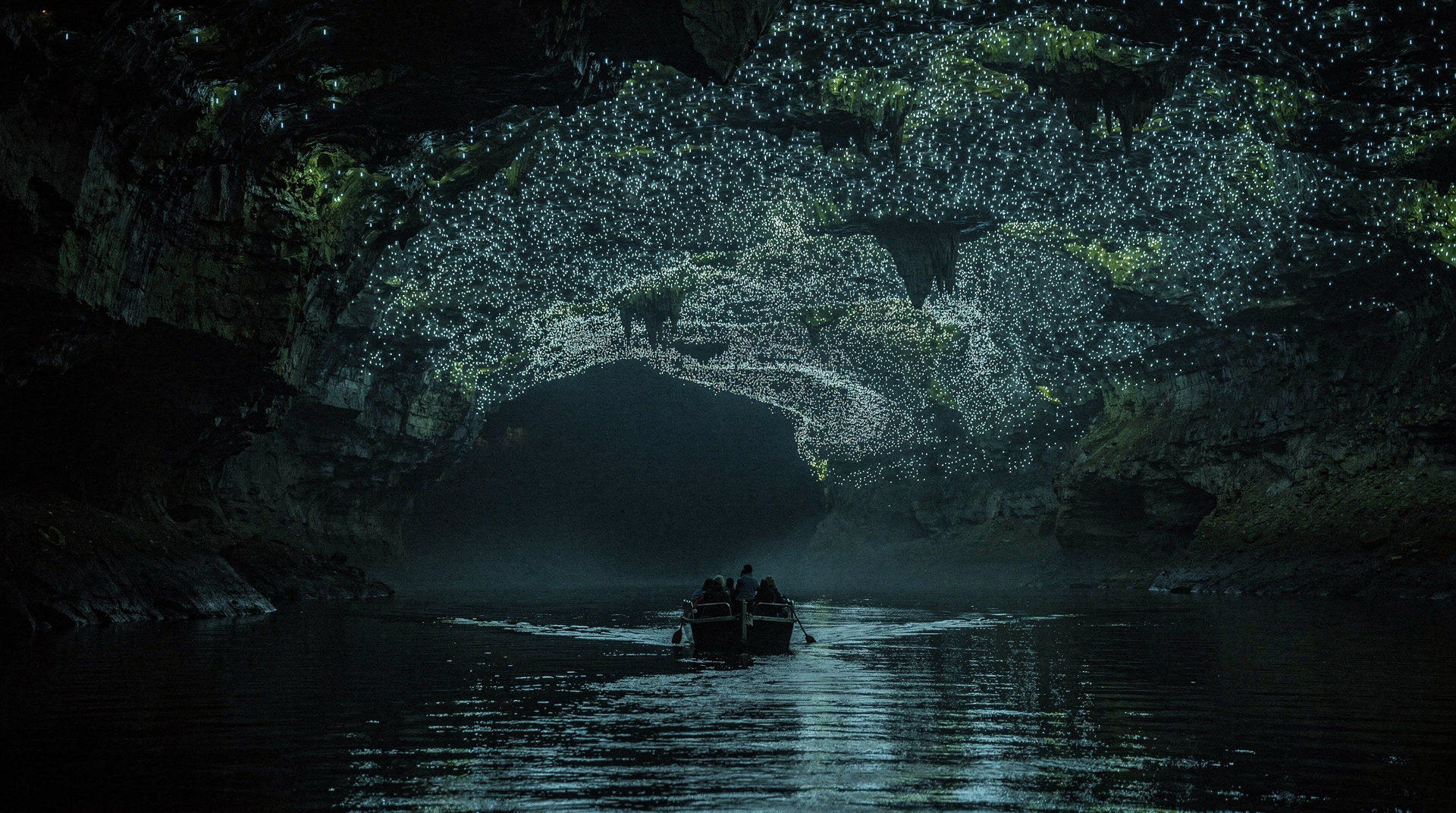
Honest Waitomo guide: glowworm cave boat tour, black water rafting, Lost World abseil, real prices NZD/USD/EUR, and how to combine with Hobbiton.
Waikato
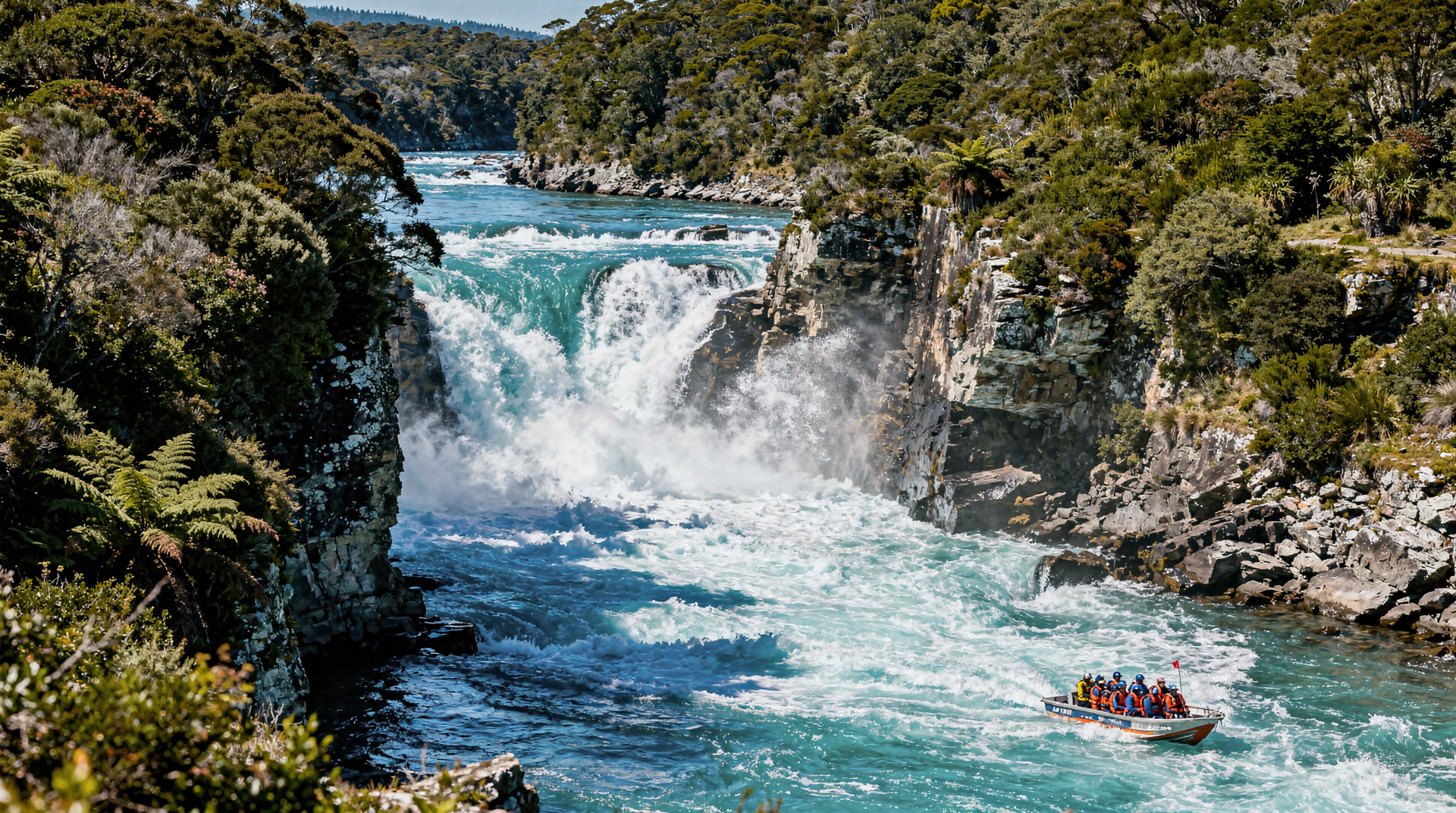
Honest Waikato guide: Hobbiton Movie Set, Waitomo glowworm caves, Hamilton Gardens, Raglan surf. Real NZD/USD/EUR prices, what's worth your time.
Black water rafting at Waitomo — full activity guide
Black water rafting Waitomo: float underground rivers past glowworm caves on rubber rings. Black Labyrinth 3h NZD 155, Black Abyss 5h NZD 245. Wetsuit included.
Te Anau Glowworm Caves — Fiordland underground guide
Te Anau Glowworm Caves: evening boat cruise across lake, guided cave walk, glowworm grotto. NZD 115 adult. Only accessible by boat. Book through RealNZ or GYG.
Hobbiton
Honest Hobbiton guide: what to expect on the movie set tour, real ticket prices NZD/USD/EUR, best time to visit, and whether it's worth the cost.
Last reviewed: