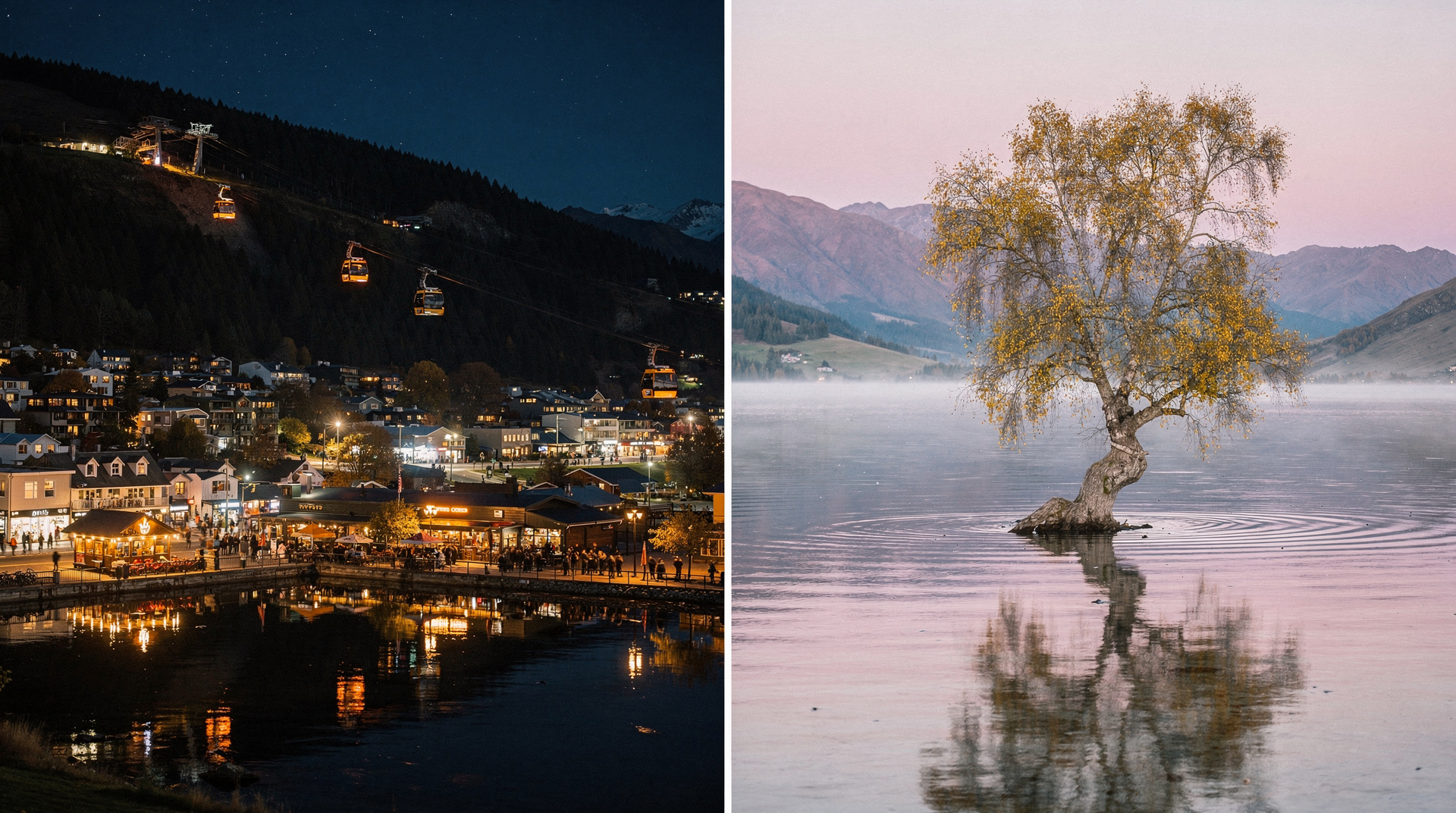
New Zealand vs Japan — trip of a lifetime, which to do first
Should I go to New Zealand or Japan for my first major international trip?
Japan if you want urban culture, history, food, and efficient transport in one of the world's most visitor-friendly countries. New Zealand if you want landscape, outdoor adventure, and road-trip freedom in a country where English is the working language. Budget: Japan is cheaper day-to-day but flights are shorter from Europe and North America. New Zealand requires 2-3 weeks minimum to do it justice.
The honest two-line answer
Japan is easier, cheaper per day, more culturally dense, and works well in 10-14 days. New Zealand is more demanding (large country, road-trip-dependent, expensive), requires 14-21 days to see the highlights, but delivers landscape and adventure experiences that Japan simply cannot match.
Most travelers who’ve been to both say Japan is the more efficient trip and New Zealand is the more emotionally memorable one. Pick Japan first if you’re unsure. Pick New Zealand first if landscape and outdoor experience are the primary goal.
| Dimension | New Zealand | Japan |
|---|---|---|
| Flight from London | ~24h (Auckland, one or two stops) | ~12h (Tokyo direct from most UK airports) |
| Flight from Paris/Frankfurt | ~22-25h (via Dubai, Singapore, or Sydney) | ~11-13h (direct or one stop) |
| Flight from New York | ~17-19h (via LA or Honolulu) | ~13-14h (direct to Tokyo) |
| Flight from Sydney | ~3h (Auckland) | ~9-10h (Tokyo) |
| Language barrier | None — English is the working language | Significant outside tourist areas — signage often in English, conversation harder |
| Driving requirement | High — self-drive is the best way to see NZ, and necessary in South Island | Low — trains cover the country efficiently; driving is optional |
| Budget per day (mid-range) | NZD 200-350 / USD 120-210 / EUR 110-193 | JPY 15,000-25,000 / USD 95-160 / EUR 87-147 |
| Minimum trip length | 14 days to see North and South Island highlights | 10 days to cover Tokyo, Kyoto, Osaka, and one day trip |
| Best season (from EU/North America) | Dec-Feb (NZ summer) or Mar-Apr/Sep-Nov (shoulder) | Mar-Apr (cherry blossom) or Oct-Nov (autumn foliage) — avoid Jul-Aug heat |
| Primary appeal | Landscape, adventure, road trip, Maori culture | Urban culture, food, history, temples, efficiency |
| Visa requirements | NZeTA (NZD 23 + NZD 100 IVL conservation levy) for most EU/NA visitors | Visa-free for most EU/NA visitors (90 days) |
| Book it | Book Auckland Maori cultural experience | Book Rotorua Maori cultural evening |
Verdict: Japan if you want cultural density and efficiency in a shorter trip. New Zealand if you want landscape, road-trip freedom, and outdoor adventure with no language barrier.
New Zealand in plain language
New Zealand is a large country (2,700 km from Cape Reinga to Bluff, roughly the same north-south distance as Japan) with a small population of 5 million. It is primarily a landscape and outdoor destination. The infrastructure for tourism is good, prices are high, and the country runs primarily on a road-trip model — the train network is scenic but limited, domestic flights are a useful supplement but expensive per segment.
The landscape case for New Zealand is genuinely exceptional by any global standard. Fiordland’s fjords (Milford Sound, Doubtful Sound), the volcanic plateau of Tongariro National Park, Queenstown’s mountain and lake setting, the West Coast’s glaciers and wild beaches — these are landscapes that do not have close equivalents elsewhere. The Tongariro Alpine Crossing is, genuinely, one of the world’s great single-day walks. The Routeburn Track in Fiordland, the Abel Tasman Coast in Nelson-Tasman, the Marlborough Sounds — the concentration of outstanding natural landscapes in a single country is unusual.
Maori culture — te ao Maori — adds a layer that most visitors underestimate until they encounter it. This is not a museum exhibit. Te reo Maori is an official language, Matariki (the Maori New Year, based on the Pleiades star cluster rising) became a national public holiday in 2022, and the relationship between iwi (tribes) and the Crown over land and resources remains active and contested. A Maori cultural experience in Rotorua — Te Puia is the most authentic, run by the Ngati Whakaue people — is a genuinely meaningful encounter with a living culture, not a heritage reconstruction.
Rotorua: Te Puia Guided Tour with Traditional Hangi Lunch
Te Puia: hangi lunch and Maori cultural experience at the Ngati Whakaue iwi's geothermal park — genuine cultural encounter, not a recreation.
From NZD 65-85 / USD 39-51 / EUR 36-47
The honest limitations of New Zealand: it is expensive. A mid-range traveler should budget NZD 200-350 / USD 120-210 / EUR 110-193 per day for accommodation, car rental, petrol, food, and activities. A 2-week trip for two people costs NZD 5,000-9,000 / USD 3,000-5,400 / EUR 2,750-4,950, excluding international flights. The country also requires time — doing justice to both islands demands 14 days minimum, and 21 days is better.
Auckland Maori cultural tour is a good introduction to te ao Maori for travelers whose NZ itinerary centers on Auckland — it covers the historical relationship between Ngati Whatua Orakei (the tangata whenua of Auckland) and the city that grew on their land.
Rotorua: Maori Culture Small Group Afternoon Tour incl. Te Puia
Rotorua afternoon at Te Puia — geothermal landscape, cultural performance, carving and weaving schools on-site.
From NZD 55-75 / USD 33-45 / EUR 30-41
Japan in plain language
Japan is, by most measures, the most visitor-friendly country in East Asia. Signage in Tokyo, Kyoto, and Osaka is extensively bilingual, the train system (including the Shinkansen bullet train network) is comprehensible to foreign visitors within a day, and the combination of efficient public transport, dense tourist infrastructure, and extraordinary food at every price point makes it possible to have an excellent 10-day trip without a rental car, a guide, or any prior knowledge of the country.
The cultural case for Japan is equally exceptional. Tokyo and Kyoto represent two entirely different versions of the country — one relentlessly modern, one preserving the most concentrated collection of Buddhist temples, Shinto shrines, and traditional urban fabric outside China. A week in Kyoto covers the core: Kinkakuji, Fushimi Inari, Arashiyama, Nishiki Market, Gion. A week in Tokyo covers something else entirely. Neither exhausts what’s there.
Japanese food — in Japan, not in Japanese restaurants abroad — is one of the great arguments for the trip. The ramen shop in a Kyoto side street, the 200-seat conveyor-belt sushi in Tokyo’s Tsukiji outer market, the kaiseki dinner that costs a month’s food budget but represents a form of culinary culture unlike anything in European fine dining — food is a reason in itself to go to Japan.
The honest limitations: the language barrier is real outside the main tourist corridors. If you wander off the standard tourist circuit (and you should), apps like Google Translate and DeepL become essential tools. Japan is also not a landscape destination in the way New Zealand is — the countryside between cities is pleasant, and areas like Nikko or the Japanese Alps are beautiful, but landscape is not the primary reason to go. Summer (July-August) is hot, humid, and crowded with domestic tourists; avoid unless specifically seeking this.
Season and timing
For New Zealand from Europe or North America: The southern hemisphere inversion means New Zealand’s summer (December-February) is the European winter. This is the practical solution for travelers who have to travel in European summer: NZ summer is warm, days are long, and most activities (Great Walks, scenic flights, jet boats) operate at full capacity.
March-April (NZ autumn) is excellent and increasingly popular: Wanaka’s poplar trees turn gold, crowds thin, accommodation prices fall, and the Great Walks are less crowded. September-November (NZ spring) works well for the South Island but North Island hiking season is shorter.
For Japan from Europe or North America: Cherry blossom season (late March-mid April) is Japan’s peak tourist moment — visually spectacular, extremely crowded, and requires booking accommodation 3-6 months ahead. Autumn foliage (late October-November) is equally beautiful and slightly less crowded. Both are genuinely worth the hype, but require advance planning.
July-August in Japan is hot, humid (particularly in Tokyo, Kyoto, and Osaka), and crowded. Not recommended unless you specifically want summer festival season (Obon in August is culturally significant but extremely busy).
The practical answer for Europeans: Japan’s shorter flight (11-13 hours vs 22-25 hours for NZ) makes it the easier first trip from Europe. New Zealand’s 3-hour flight from Australia makes it a common second component for travelers doing an Australia-NZ combination.
Verdicts — Skip / Worth it / Splurge
New Zealand in a one-week trip — ✕ Skip — one week is not enough. You’ll spend 2-3 days on international flights and jet lag recovery, leaving 4 days to see a country that requires 14-21 days. If you can only spare one week, Japan is the better choice.
New Zealand 14-day road trip combining both islands, self-drive — ✓ Worth it — the standard benchmark trip. Enough time to see the main North Island highlights (Auckland, Hobbiton, Rotorua, Tongariro) and South Island highlights (Queenstown, Fiordland, West Coast or Marlborough).
Hobbiton Movie Set guided tour from Matamata — ✓ Worth it — NZD 130 per adult, genuinely impressive as a film set and as an example of what rural New Zealand looks like on a fine day. Not for everyone, but delivers on its promise.
Queenstown’s 43m AJ Hackett Ledge Bungy — ✓ Worth it — the most accessible NZ bungy, NZD 200-240, and one of the few bungy setups where non-jumpers can watch from a nearby platform. The higher-end Nevis (134m, NZD 290-320) is a bigger experience but also a significantly more daunting commitment.
Japan 10-day trip combining Tokyo + Kyoto by Shinkansen — ✓ Worth it — the standard Japan trip structure, and one that works very well. The Japan Rail Pass makes the logistics simpler; book accommodation in Kyoto well in advance.
What it actually costs (NZD + USD + EUR)
Cost breakdown
Per person, 14-day trip, mid-range, 2026 prices
| Item | NZD | USD | EUR | Verdict |
|---|---|---|---|---|
| New Zealand — international flights (London return) Economy; business adds NZD 8,000-15,000+ | 2,700-4,500 | 1,620-2,700 | 1,485-2,475 | |
| New Zealand — accommodation per night (mid-range) | 180-280 | 108-168 | 99-154 | |
| New Zealand — car rental per day (compact) | 85-145 | 51-87 | 47-80 | |
| New Zealand — petrol per day (average driving) | 30-60 | 18-36 | 17-33 | |
| New Zealand — food per day (cafes + self-catering mix) | 65-110 | 39-66 | 36-61 | |
| Japan — international flights (London return) Economy; easier to find deals than NZ | 2,100-3,500 | 1,260-2,100 | 1,155-1,925 | |
| Japan — accommodation per night (mid-range hotel) Tokyo is expensive; ryokan adds authenticity | 150-250 | 90-150 | 83-138 | |
| Japan — Japan Rail Pass 14 days Covers most Shinkansen routes — good value for 2+ cities | 720-850 | 432-510 | 396-468 | |
| Japan — food per day (ramen + convenience stores + one restaurant) Japan food is excellent at all price points | 65-100 | 39-60 | 36-55 |
Summary: A 14-day New Zealand trip for one person from Europe costs NZD 8,000-14,000 / USD 4,800-8,400 / EUR 4,400-7,700 all-in (including flights). The same length Japan trip costs roughly 20-30% less, primarily because accommodation and food are cheaper and the flight is shorter (less expensive and less time lost).
New Zealand is one of the most expensive per-day destinations in the world for international visitors. This is a real consideration, not a minor detail.
The 14-day New Zealand itinerary (brief)
For those who’ve decided New Zealand, the core 14-day structure:
Days 1-2: Auckland — arrive, recover from jet lag, explore the waterfront, Auckland Museum (free entry to permanent collection).
Days 3-4: Hobbiton + Waitomo — drive south to Matamata for the Hobbiton movie set tour, then west to Waitomo for glowworm caves.
Days 5-6: Rotorua — geothermal parks (Wai-O-Tapu, Te Puia), Maori cultural evening.
Day 7: Tongariro Alpine Crossing — drive to National Park Village or Taupo the previous evening, early shuttle, full day walk.
Day 8: Fly Auckland to Queenstown (1h 50min, NZD 120-250 — book ahead) — airport pickup, settle in.
Days 9-10: Queenstown — adventure activities (bungy, jet boat, Shotover), Glenorchy day trip.
Days 11-12: Te Anau — Milford Sound day trip (Milford Road is one of the world’s great scenic drives; the cruise is 2 hours, add small boat option for wildlife).
Day 13: Wanaka — drive Crown Range from Queenstown (1 hour), Roy’s Peak hike or Rob Roy Valley Track.
Day 14: Return to Queenstown for international departure, or fly to Auckland for onward connection.
This structure leaves the West Coast (Franz Josef/Fox Glacier) and Marlborough/Nelson entirely — both require a full week to do properly. The West Coast is best saved for a second trip or as a car-swap extension (fly Queenstown-Christchurch, drive south to north via the West Coast).
Frequently asked questions about New Zealand vs Japan — trip of a lifetime, which to do first
Is New Zealand safe for solo travelers?
Yes, consistently rated among the safest destinations for solo travelers globally. English language, low violent crime, good tourist infrastructure, active backpacker scene. Solo female travelers report fewer issues in New Zealand than most European destinations. The main safety concerns are outdoor-related (weather, track conditions) rather than personal safety.
Can I drive in New Zealand on a European or US license?
Yes. New Zealand accepts European Union licenses (French, German, Italian, Spanish, Portuguese), US licenses, Australian licenses, and UK licenses without requiring an international driving permit, for stays of up to 12 months. You must carry your license and, if it’s not in English, a certified translation or international permit. Drive on the left — the same as Australia and the UK.
How does New Zealand compare to Japan for food?
Japan wins on cuisine variety, depth, and value. New Zealand has good food in cities (Auckland, Wellington, Queenstown), excellent café culture, quality lamb and seafood, and growing wine credentials. But Japan’s food at every price point — from JPY 800 convenience store meals to Michelin-starred kaiseki — is one of the world’s genuine food tourism destinations. If food is a priority, Japan wins.
Is Japan good if you don’t speak any Japanese?
Yes, better than most non-English-speaking countries. Major cities have bilingual signage, railway ticketing machines have English options, and smartphone translation has reduced the language barrier significantly. Rural Japan is harder; the further you go from the tourist circuit, the more Japanese you’ll benefit from knowing (even 50 words makes a difference). The main cities are very manageable without any Japanese.
What about New Zealand vs Australia — is this the same choice?
Different question. Australia (Sydney, Uluru, Great Barrier Reef, outback) and New Zealand (fjords, volcanoes, Great Walks) have very little overlap. Many international visitors combine both on one trip — fly into Sydney, spend a week in Australia, then fly to Auckland (3 hours) and do New Zealand. This two-country combination is excellent value on flight time once you’ve committed to the southern hemisphere.
Should I do New Zealand before or after Japan?
Most travelers who plan a “once in a lifetime” Pacific trip combine both — Japan on the outbound (shorter flight from Europe/NA, easier to hit the ground running) and New Zealand on the return, or via Australia. The two countries are 10 hours apart by air and complement each other well: Japan’s urban intensity followed by New Zealand’s landscape openness.
When to pick each
Pick New Zealand if: Landscape, outdoor adventure, and road-trip freedom are your primary motivators. You have 14+ days. You’re comfortable driving on the left. You want English as the working language throughout. You’re already doing Australia and want the obvious addition. You’re a hiker, kayaker, cyclist, or adventure sports enthusiast.
Pick Japan if: Cultural density, food, history, and efficiency are your primary motivators. You have 10-14 days. You prefer public transport over road trips. You’re interested in one of the world’s most distinctive urban civilizations. You’ve already been to New Zealand (or Australia) and want a different kind of Asian-Pacific trip.
The honest answer for undecided travelers: if you can’t decide, go to Japan first. It’s cheaper, shorter flight, easier to organize, and delivers enormous satisfaction in a shorter time. New Zealand is the trip you’ll plan more carefully the second time, knowing what you’re committing to — and it will be better for the planning.
If you’re choosing based on a specific interest
Some travelers already know the one thing they want most from the trip, which makes the decision easier than the general comparison suggests:
Hiking and multi-day tramping → New Zealand. The Great Walks infrastructure (staffed huts, rangers, well-graded tracks) has no real Japanese equivalent — Japan’s mountain trails are excellent but the hut culture and track maintenance are a different tier. See the North vs South Island guide for which island suits your available days.
Food as the central activity → Japan, decisively. New Zealand has good food; Japan has food as a cultural pillar at every price point.
A trip that also works for non-hikers or older travelers → Japan’s train network removes the self-drive dependency that New Zealand requires, and city-based itineraries need far less physical stamina than a South Island road trip.
Adventure sports as the trip’s spine → New Zealand, unambiguously. Queenstown’s concentration of bungy, skydiving, jet boating, and heli-hiking has no Japanese parallel. The Queenstown vs Wanaka guide helps pick a base once New Zealand’s the answer.
Budget as the deciding factor on a fixed total → Japan, both because daily costs run 20-30% lower and because the shorter flight from Europe saves real money that can go toward the ground trip instead.
The New Zealand experience that surprises most travelers
One consistent pattern among European visitors who’ve been to New Zealand: the distances and driving times are the biggest initial surprise. The Google Maps estimate for Queenstown to Milford Sound is 4 hours; allow 5.5 hours with stops and the tunnel wait at Homer. Wellington to Auckland is 8 hours by road; most travelers fly (1 hour) and don’t account for the time in that comparison.
The second consistent pattern: the friendliness of New Zealanders — specifically the genuine curiosity toward visitors, not the service-industry politeness of a high-tourism country — is frequently described as what makes the trip memorable. New Zealand had 3 million international visitors per year pre-COVID; it has not yet developed the defensive distance that overtourism produces in Venice or Kyoto’s Gion district. The country is small enough that an encounter with a DOC ranger on a remote track, a farmer who stops to ask if you need directions on a back road, or a café owner who gives you twenty minutes of honest local advice over coffee — these happen regularly enough to matter.
Japan delivers a different warmth — the extraordinary courtesy of the omotenashi (hospitality) culture, the meticulous care extended to every transaction and interaction, the effort that goes into aesthetics at every level of the service sector. Both countries treat visitors well by international standards. The character of the welcome is genuinely different.
This is ultimately a choice between two of the world’s finest destinations in entirely different categories. Both are worth planning carefully, approaching slowly, and returning to more than once.
If New Zealand wins: where to go next
Once New Zealand is the answer, the useful question becomes how to shape the trip. Start with the practical groundwork in the first-time New Zealand guide, which covers the decisions that are easiest to get wrong from far away. Entry rules are covered in the NZeTA visa guide, and it is worth reading well before you book flights.
The driving question deserves its own thought, because it is the biggest difference from a Japan trip. The driving in New Zealand guide explains what left-side driving and long rural stretches feel like in practice. If you would rather skip the wheel entirely, the New Zealand without a car itinerary shows how far trains, buses and the odd flight can take you, and the self-drive vs guided tour comparison helps you weigh freedom against effort.
For travelers who like to see the landscape on foot, the Great Walks overview is the natural next read. For a fuller picture of what the country offers beyond the headline sights, the Maori culture overview is a good companion to the cultural sections above.
Before you commit to either country
Whichever way you lean, book the long-lead items first: flights, peak-season accommodation, and the handful of experiences that sell out. Then work backwards to a realistic daily pace. A trip that tries to include everything tends to feel rushed in both countries, and the better trips usually pick fewer places and stay longer in each. If you are still undecided after reading this page, imagine your best day of the trip: if it involves a trail, a lake or an open road, that points to New Zealand; if it involves a market, a temple or a late dinner in a busy city, that points to Japan.
Related comparisons and guides
Related guides
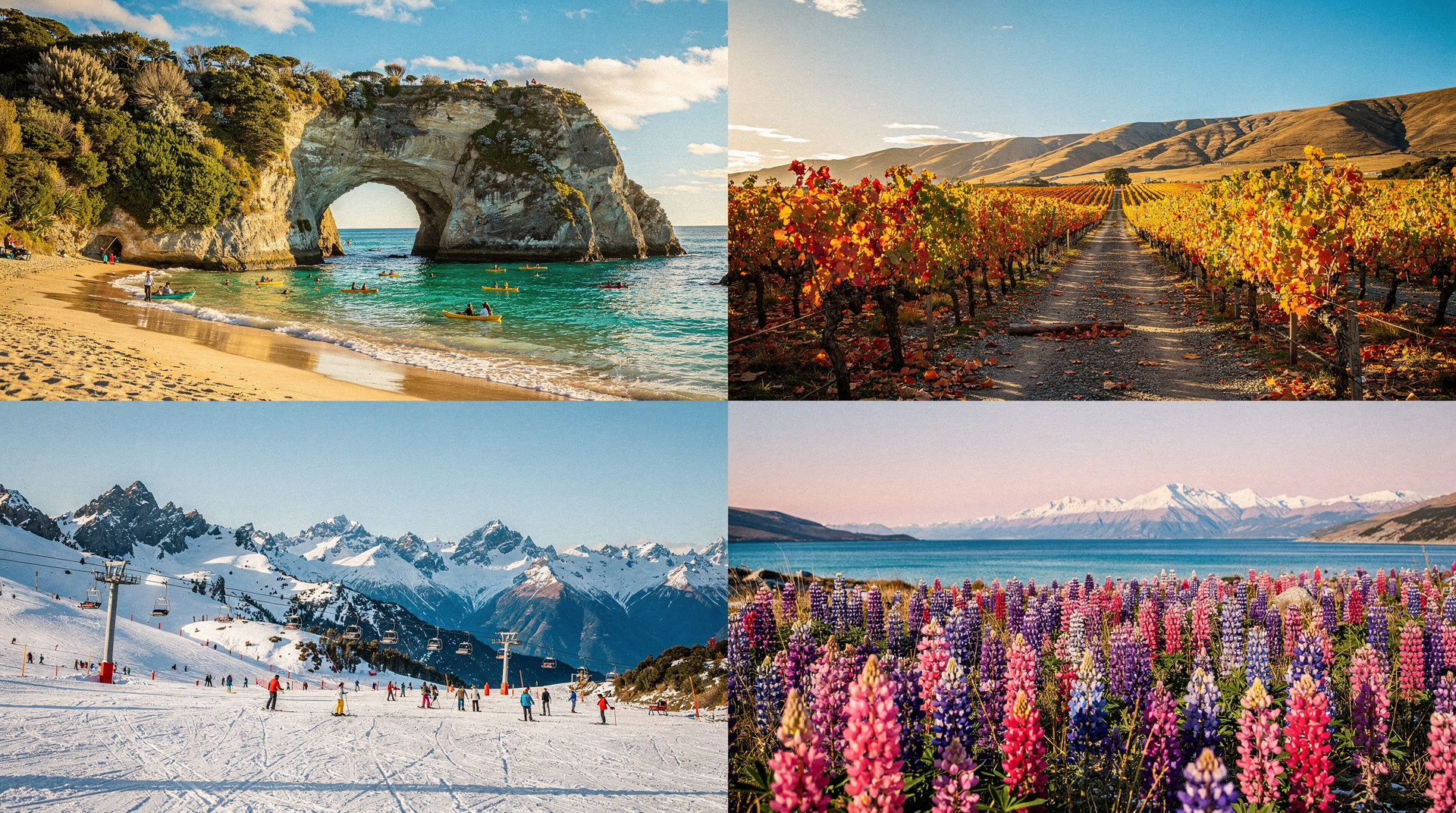
Best time to visit New Zealand
When to visit New Zealand: honest breakdown by season, region, and activity type. Summer is not always best.
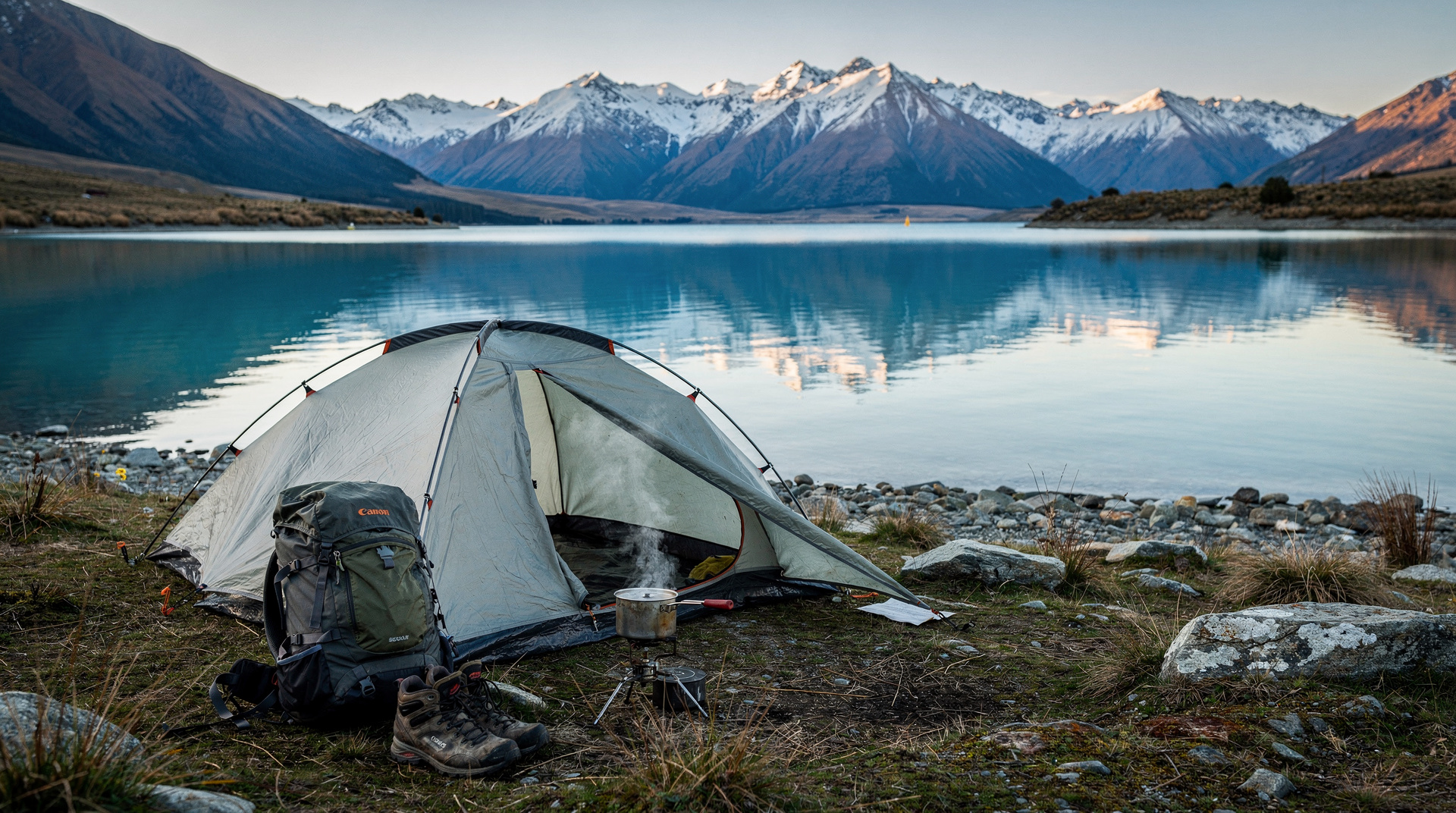
New Zealand on a budget
Honest budget guide to NZ: real daily costs, where to save, where not to cheap out, free things.
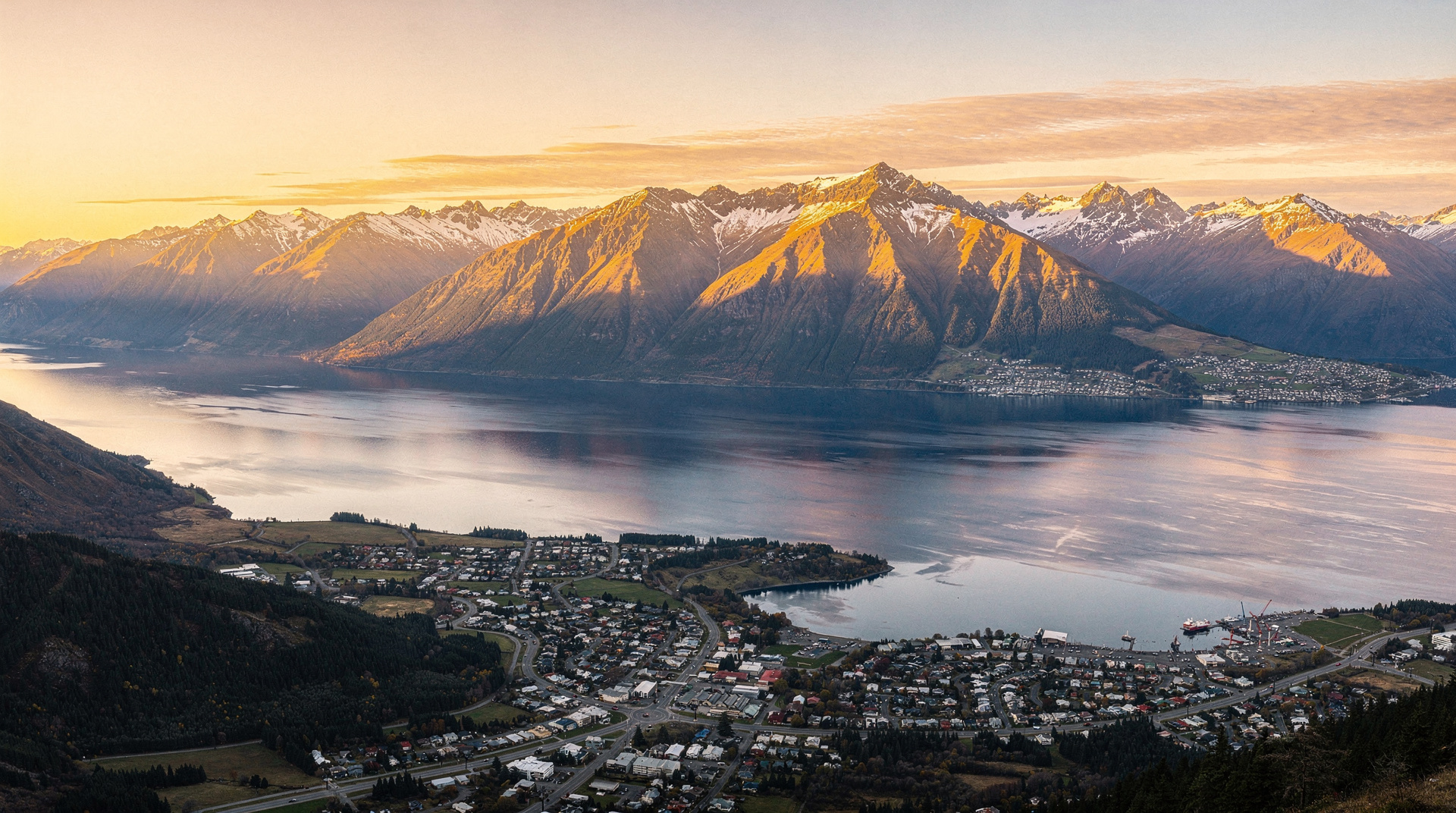
14-day New Zealand itinerary — both islands, grand tour
Honest 14-day NZ grand tour: Auckland, Bay of Islands, Hobbiton, Rotorua, Wellington, ferry, Kaikoura, Christchurch, Queenstown, Milford.
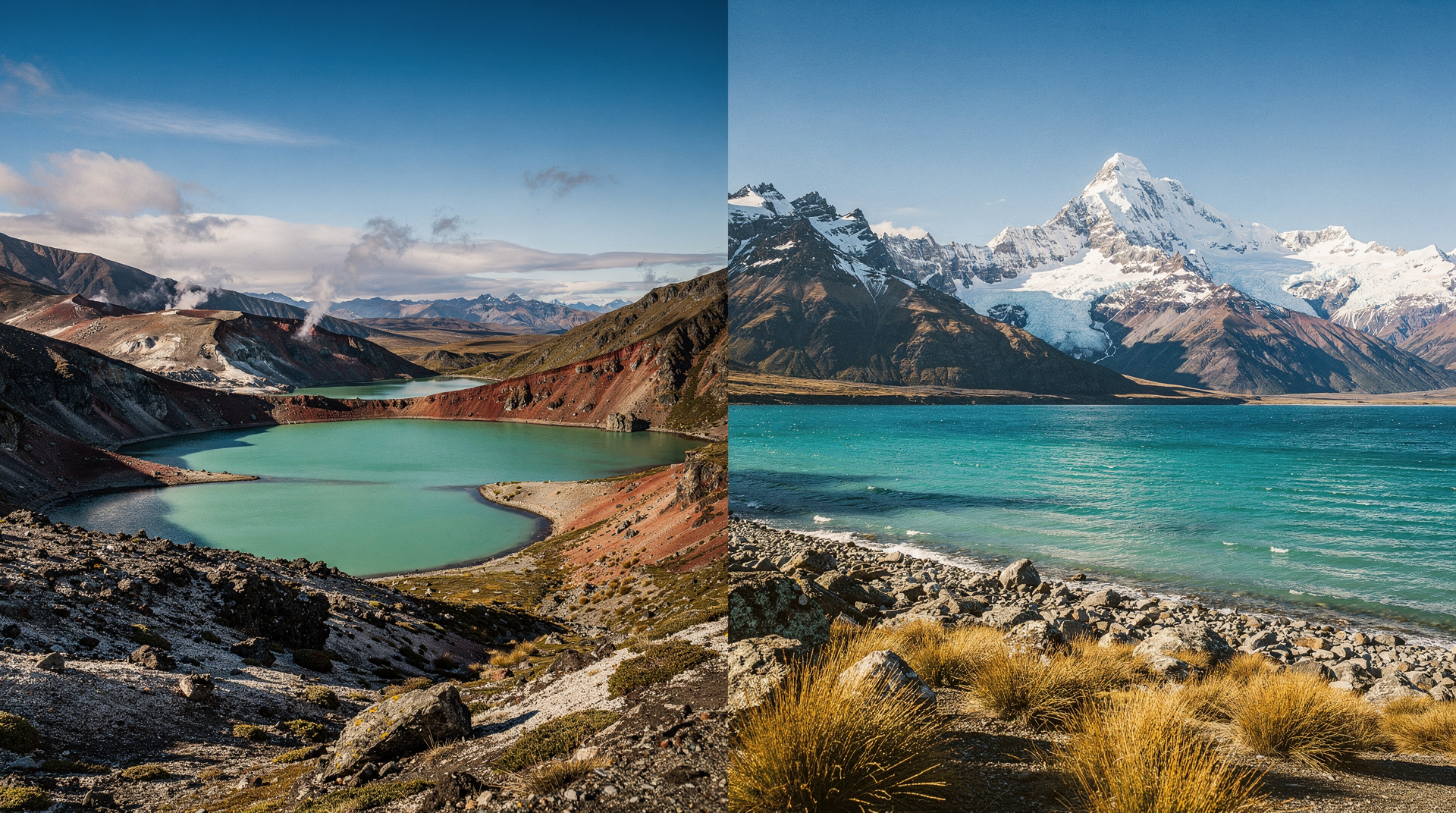
North vs South Island — which is right for you
Honest North vs South Island comparison: culture, landscapes, costs and a clear verdict for first-timers, families and short trips.
7 vs 10 vs 14 days in New Zealand
7, 10 or 14 days in New Zealand: what each trip length achieves, sample itineraries for both islands, and honest advice on what gets cut. NZD/USD/EUR.