Best time to visit New Zealand
When is the best time to visit New Zealand?
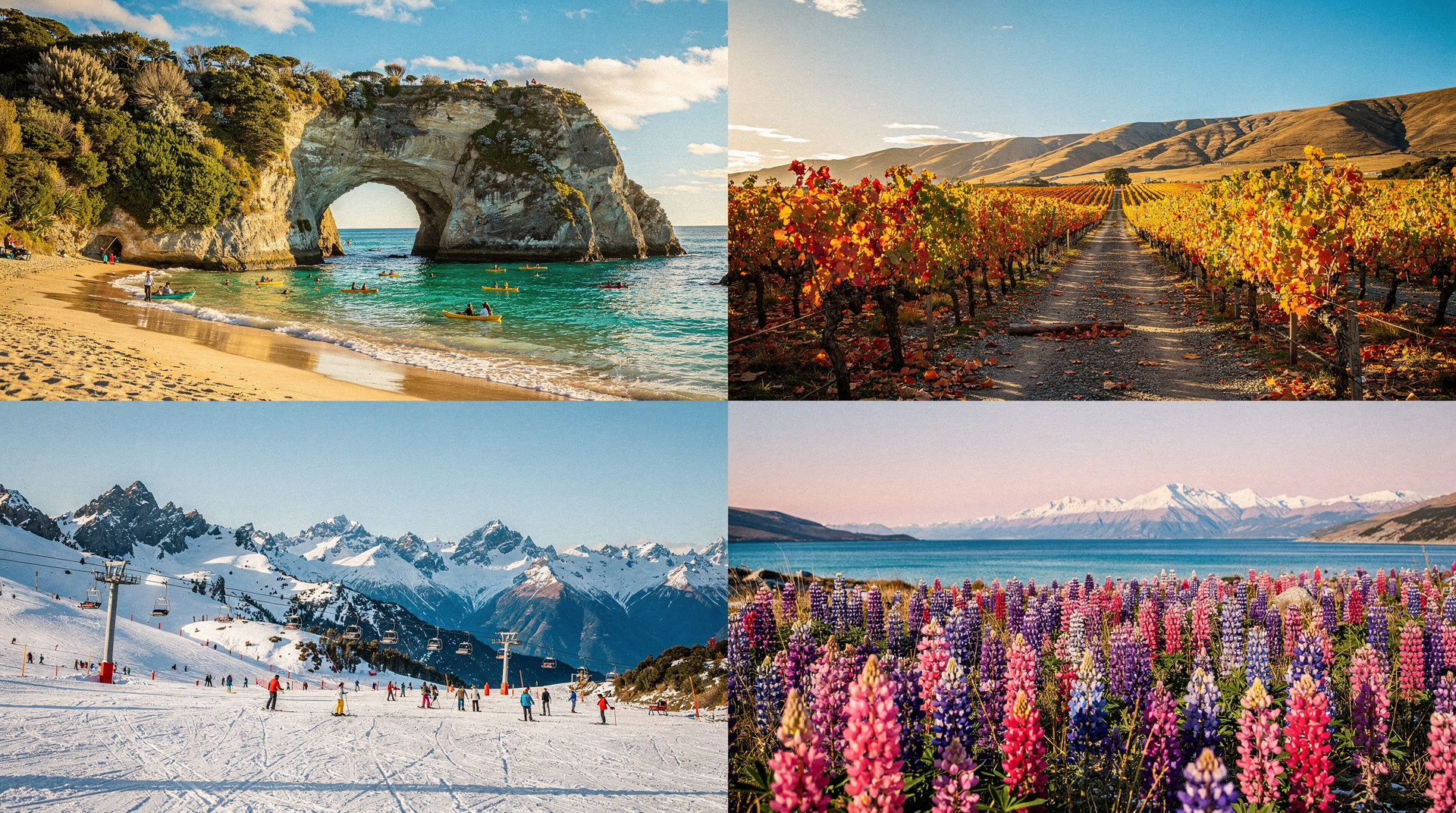
For most visitors, November-April (southern hemisphere spring through autumn) offers the best combination of weather, open activities, and Great Walk availability. December-February is peak with highest prices. March-May is the hidden sweet spot — warm, uncrowded, beautiful autumn colour in Central Otago. Winter (June-August) is for skiing or Fiordland's dramatic mood.
When to go: the honest answer
The “best time to visit New Zealand” depends on what you want from the trip. There is no universal answer, because the country’s varied climate zones and activity calendar mean different months suit different priorities.
| Best overall | November-April, spring through autumn |
| Cheapest | September, May-June (shoulder season) |
| For Great Walks | October-April, book huts ~6 months ahead |
| For skiing | June-September, Queenstown/Wanaka/Ruapehu |
| Avoid if crowd-averse | Late December-mid January |
The broad framework:
Summer (December-February): Peak season. Warmest temperatures, Great Walks open, longest daylight hours, beaches busy, prices highest, accommodation books out weeks ahead.
Autumn (March-May): The locals’ favourite season. Crowds thin after mid-January, Central Otago turns gold and red, weather is still warm and stable, prices drop, and the landscape is arguably at its most photogenic.
Winter (June-August): Ski season in Queenstown/Wanaka and Tongariro. Fiordland is dramatic and brooding. Some Great Walks close. Campervanning in the South Island requires proper gear. Good for visitors who do not need beaches.
Spring (September-November): Variable. Lambs everywhere (genuinely charming). Great Walks reopen from October. Weather unpredictable. Wildflowers and blossoms in abundance.
Month by month
January-February: peak season reality
This is when everyone comes. Domestic New Zealanders are also on holiday (NZ schools close mid-December to late January), so the pressure on accommodation is extreme — campgrounds overflow, Queenstown hotel rates triple, and Milford Sound is at capacity most days.
Pros: Best swimming conditions north of Wellington; Hauraki Gulf sailing; all Great Walks operating; long evenings (Auckland sunset 8:30pm).
Cons: Book everything 3-6 months ahead; prices 20-40% above shoulder season; popular trails and beaches are crowded.
Best for: Beach-focused itineraries (Northland, Coromandel, Bay of Plenty), Waiheke Island, Auckland Harbour activities.
March-April: the sweet spot
The crowds diminish rapidly after Waitangi Day (6 February). By March, Queenstown accommodation drops to reasonable rates, tramping tracks empty out, and the Central Otago landscape (the wine region around Cromwell, Gibbston Valley, the Wanaka basin) transforms into the most beautiful autumn tones in the Southern Hemisphere.
Pros: Summer warmth persists through March; autumn colour peaks in April; price drop of 15-25% across accommodation; easier campervan freedom camping; Great Walks still open until end of April.
Cons: Great Walks on guided tracks transition from peak to shoulder pricing (cheaper, but huts are less staffed).
Best for: Wine regions, Central Otago, Marlborough, hiking, photography.
May: transition
May can be beautiful — often described by long-time New Zealand hands as one of the best months. It can also be wet and cold, particularly in Fiordland and the West Coast. Expect the first snow on alpine routes, and prepare for some Great Walk huts to have closed or reduced staffing.
Best for: Budget travel; off-peak Queenstown; uncrowded Milford Sound (the road is open but tourism volumes drop sharply).
June-July: ski season
The South Island’s ski resorts — Coronet Peak, The Remarkables (near Queenstown), Cardrona and Treble Cone (near Wanaka), and Mt Hutt (Canterbury) — open in June. The North Island’s Whakapapa and Turoa ski areas on Mt Ruapehu also open.
Queenstown and Wanaka pack out with domestic Australian skiers in July, which is their school holiday period. Queenstown in July can feel as crowded as January, with prices to match.
The non-ski winter option: Fiordland in winter is extraordinary — Milford Sound, Doubtful Sound, and the fjord country receive their highest rainfall in winter, which means the waterfalls are at maximum volume and the mist creates an otherworldly atmosphere. This is not a consolation prize — it is a genuinely different and spectacular experience.
Best for: Skiing, Fiordland drama, Rotorua geothermal experiences (always good, weather-independent).
2026 note: Matariki (Maori New Year) falls on Friday 10 July 2026, a public holiday. Queenstown and ski areas will be particularly busy that weekend.
August-September: shoulder ski, early spring
August is still firmly winter in the mountains. September sees the season transition — the first warm days arrive in the North Island, spring lambing begins, and the landscape turns green. Many hikers avoid September due to unpredictable weather on mountain tracks.
Best for: Last ski weeks (cheaper ski lift passes in August as resorts run late-season deals), North Island cities, early lamb-viewing in rural areas.
October-November: the Great Walks window opens
October is when the guided Great Walks season begins, and DOC Great Walk huts reopen with staffing. This matters: Milford Track, Routeburn, and Kepler are among the world’s great multi-day hikes, and booking them opens approximately 6 months in advance on DOC’s website. If the Great Walks are on your list, October-November gives you all the access without the peak-season prices or crowds of December-February.
Pros: Great Walks available; spring wildflowers; increasingly warm temperatures; no peak-season crowds; no ski-season crush in Queenstown.
Cons: Weather can be unstable, particularly in Fiordland; some very early-season huts not yet fully stocked.
Best for: Serious trampers and hikers, Milford Track, Routeburn, Kepler.
By region: when each area is best
| Region | Best months | Avoid |
|---|---|---|
| Auckland and Northland | Nov-Apr (warm, dry) | July-Aug (wet and cool) |
| Bay of Islands | Nov-Apr | Jun-Aug (rain, cold) |
| Rotorua | Year-round (geothermal, indoors) | — |
| Tongariro | Oct-Apr for crossing; Jun-Aug for skiing | May, Sep (changeable) |
| Wellington | Nov-Mar (settled winds) | Jun-Aug (very windy) |
| Marlborough/Kaikoura | Dec-Apr (dry, sunny) | Jul-Aug (some attraction closures) |
| Nelson/Abel Tasman | Nov-Apr | Jun-Aug (cold, Abel Tasman less appealing) |
| West Coast | Dec-Mar (relatively drier) | Jun-Aug (very wet) |
| Canterbury | Nov-Apr | Jul-Aug (cold, Central Canterbury beautiful but cold) |
| Queenstown summer | Dec-Mar | — |
| Queenstown ski | Jun-Aug | — |
| Aoraki/Mt Cook | Nov-Apr (accessible, wildflowers) | Jun-Aug (very cold, icy roads) |
| Fiordland | Any — winter for maximum drama, summer for hiking | |
| Stewart Island | Oct-Apr | Jun-Aug (cold, limited ferry service in rough weather) |
Timing it around Maori culture and the Great Walks
If Maori culture is a priority, timing matters more than most visitors realise. Matariki (the Maori New Year, marked by the rising of the Matariki star cluster) is the single best window for cultural events nationwide — Rotorua, Auckland, and Wellington all run performances, night markets, and ceremonies around the date. Outside Matariki, Rotorua’s cultural experiences (Te Puia, Mitai, Tamaki Maori Village) run year-round regardless of season, since they’re largely indoor or purpose-built venues — see our Maori culture overview for the full picture of where and how to experience this respectfully.
For the Great Walks, timing is close to non-negotiable: the guided and independent hut seasons run roughly October to April, bookings open around May-June for the following season on DOC’s website, and the most popular tracks (Milford, Routeburn) sell out within hours. If a specific Great Walk is the anchor of your trip, choose your travel dates around the hut booking calendar first and build everything else around it — not the other way round.
Public holidays and events to know
Some dates are worth planning around (either to attend or to avoid):
Waitangi Day (6 February): National holiday commemorating the Treaty of Waitangi. Waitangi itself (Bay of Islands) has significant commemorations and is worth attending for the cultural depth. Elsewhere, it is a quiet public holiday.
Anzac Day (25 April): Dawn services nationwide. Queenstown, Wellington, and Auckland all have significant commemorations. A moving and genuinely important national event.
Easter (variable March-April): Domestic travel peaks. Accommodation in tourist regions books solid 4-6 weeks ahead.
Queen’s/King’s Birthday (first Monday of June): Long weekend; some domestic travel surge.
Matariki (Maori New Year, variable June-July; 2026: 10 July): Public holiday since 2022. Events and cultural performances nationwide, particularly in Rotorua, Auckland, and Wellington. Worth experiencing if timing aligns.
Rugby season: Super Rugby (Feb-June), All Blacks international season (Jul-Oct). Accommodation in test match cities books out on game weekends. Not necessarily to avoid — attending an All Blacks test is a genuine cultural experience.
Cost comparison by season
| Season | Accommodation premium | Booking notice needed |
|---|---|---|
| Dec 20-Jan 31 (peak summer) | +25-45% | 3-6 months |
| Oct-Dec 19 | Base rate | 4-6 weeks |
| Feb-Apr | -5-15% | 2-4 weeks |
| May-Jun | -20-30% | 1-2 weeks |
| Jul-Aug (ski season, QT/WK) | +10-30% in ski areas | 4-8 weeks in Queenstown |
| Sep | -25-35% | 1-2 weeks |
Frequently asked questions about timing
Is it too cold to visit New Zealand in winter?
Not at all, for most activities. Rotorua, Waitomo, and the North Island’s cultural and geothermal experiences are weather-independent. Queenstown and Wanaka in winter are lively ski destinations. Fiordland is spectacular. The West Coast can be cold and wet, but Franz Josef Glacier is accessible year-round. Pack properly and you will be fine.
When are Great Walks bookings released?
DOC opens Great Walk hut and camping bookings approximately 6 months before the start of the season (October). The Milford Track in particular sells out within hours of booking opening — set a reminder and book the moment the system goes live if this is a priority.
Is New Zealand crowded at Christmas?
Yes. Late December through January 20 is the most crowded period in New Zealand’s year. Every New Zealander who has moved abroad comes home; domestic holidaymakers fill campsites and beaches; international peak season coincides with this. If you have flexibility, shift to October-November or March-April.
What is the weather like on the South Island in December?
Warm and mostly clear in Queenstown, Wanaka, Central Otago, and Marlborough. The West Coast receives rain year-round — December is drier than winter but not dry. Fiordland is beautiful but wet. Aoraki/Mt Cook is best accessed in clear settled spells; December can have those, but also afternoon thunderstorms.
Is March or November better for a first New Zealand trip?
Both are strong choices and beat peak summer for value and crowds. March edges ahead if wine, autumn colour, and warm-but-settled weather matter most; November edges ahead if the Great Walks and spring wildflowers are the priority, since huts have just reopened with full staffing. Neither has the crowd or price pressure of December-January.
Related guides and itineraries
- How many days do you need in New Zealand
- First time in New Zealand
- New Zealand on a budget
- Packing list for New Zealand — pack for the right season
- 14-day New Zealand itinerary
- 7-day South Island itinerary
- Queenstown guide — year-round destination
- Milford Sound guide — seasonal access information
Related guides
Summer vs winter in New Zealand
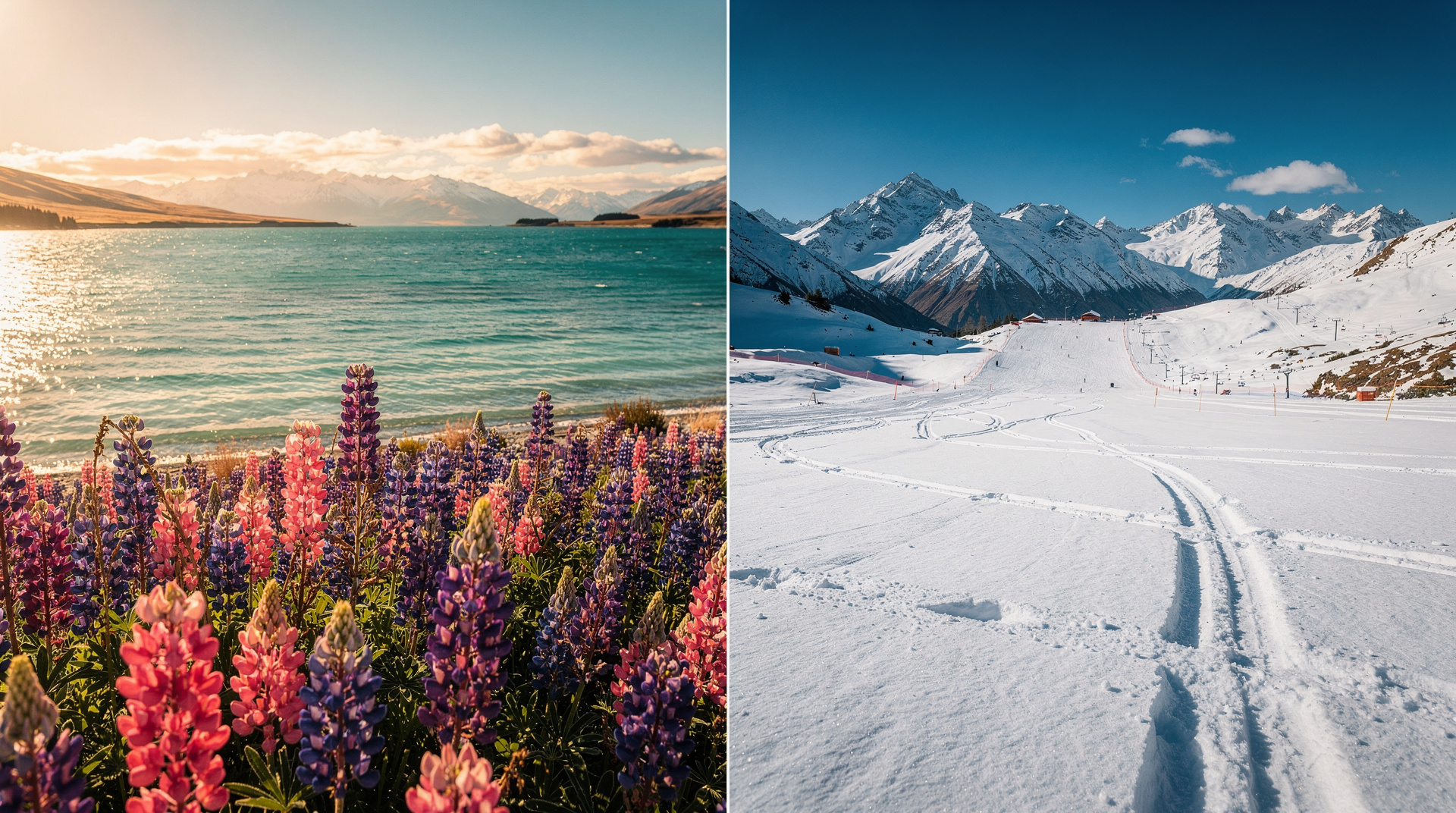
Summer vs winter in New Zealand: weather, crowds, costs and the honest verdict on which season suits your trip. NZD/USD/EUR prices throughout.
New Zealand in February
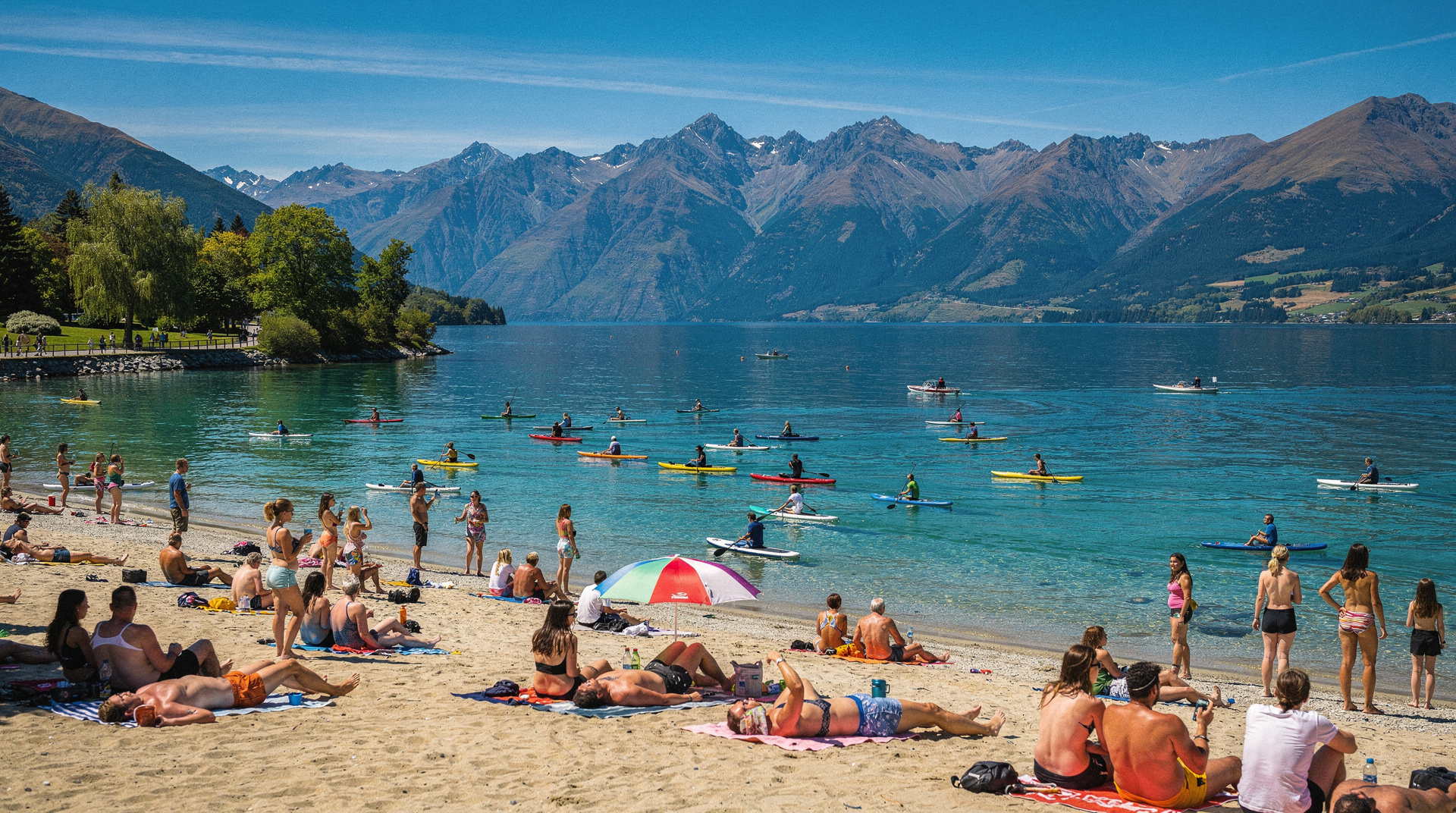
February is NZ's best month: warm summer, post-holiday crowds thinning, wine harvest starting. Real prices in NZD/USD/EUR and what to book ahead.
New Zealand in November
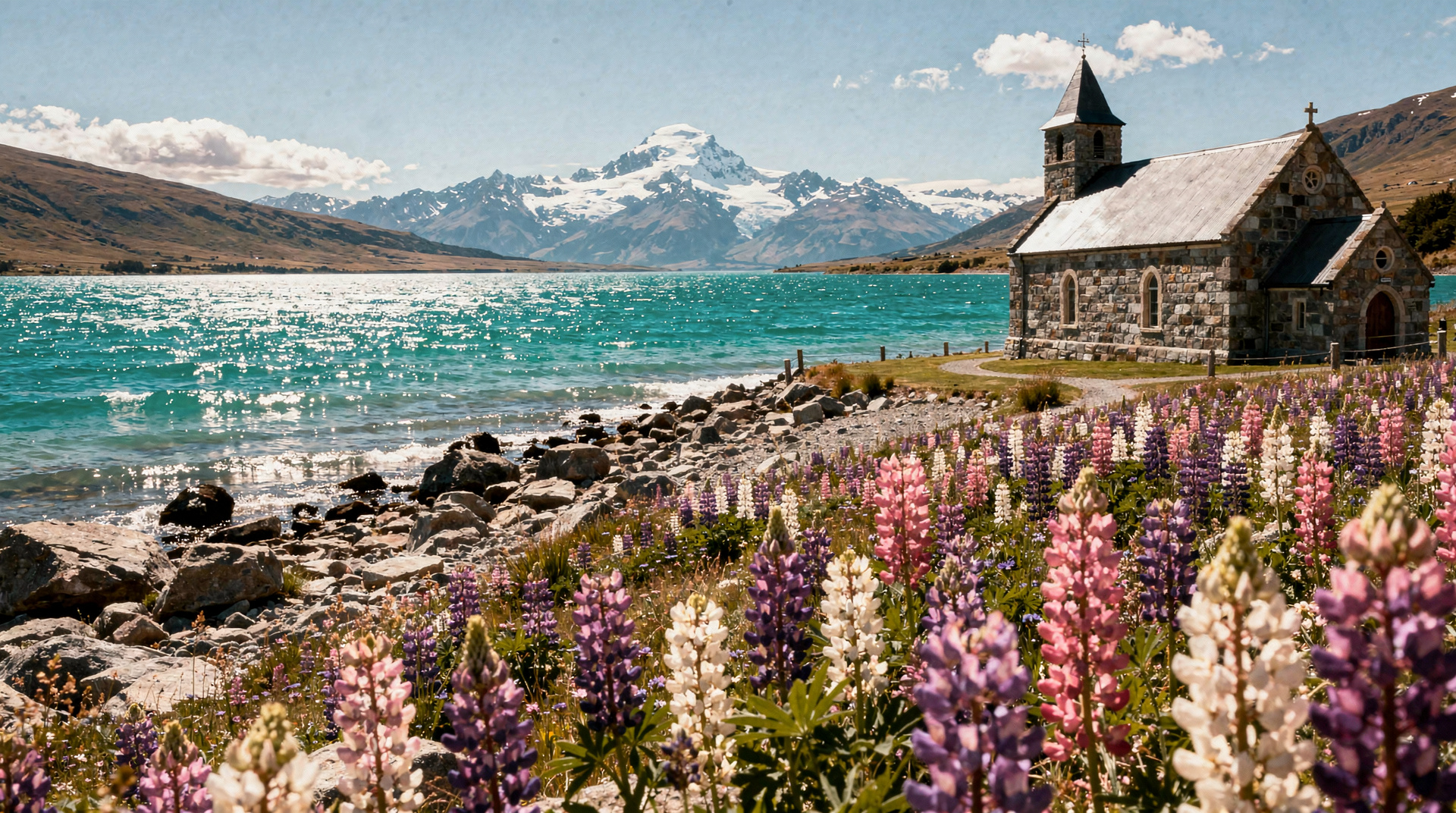
November has lupins at Tekapo, all Great Walks open, low prices before summer rush. The last cheap month before December peak. NZD/USD/EUR inside.

First time in New Zealand
Complete first-timer's guide to NZ: costs, logistics, Maori culture, what to book early, and how to structure 7–21 days.
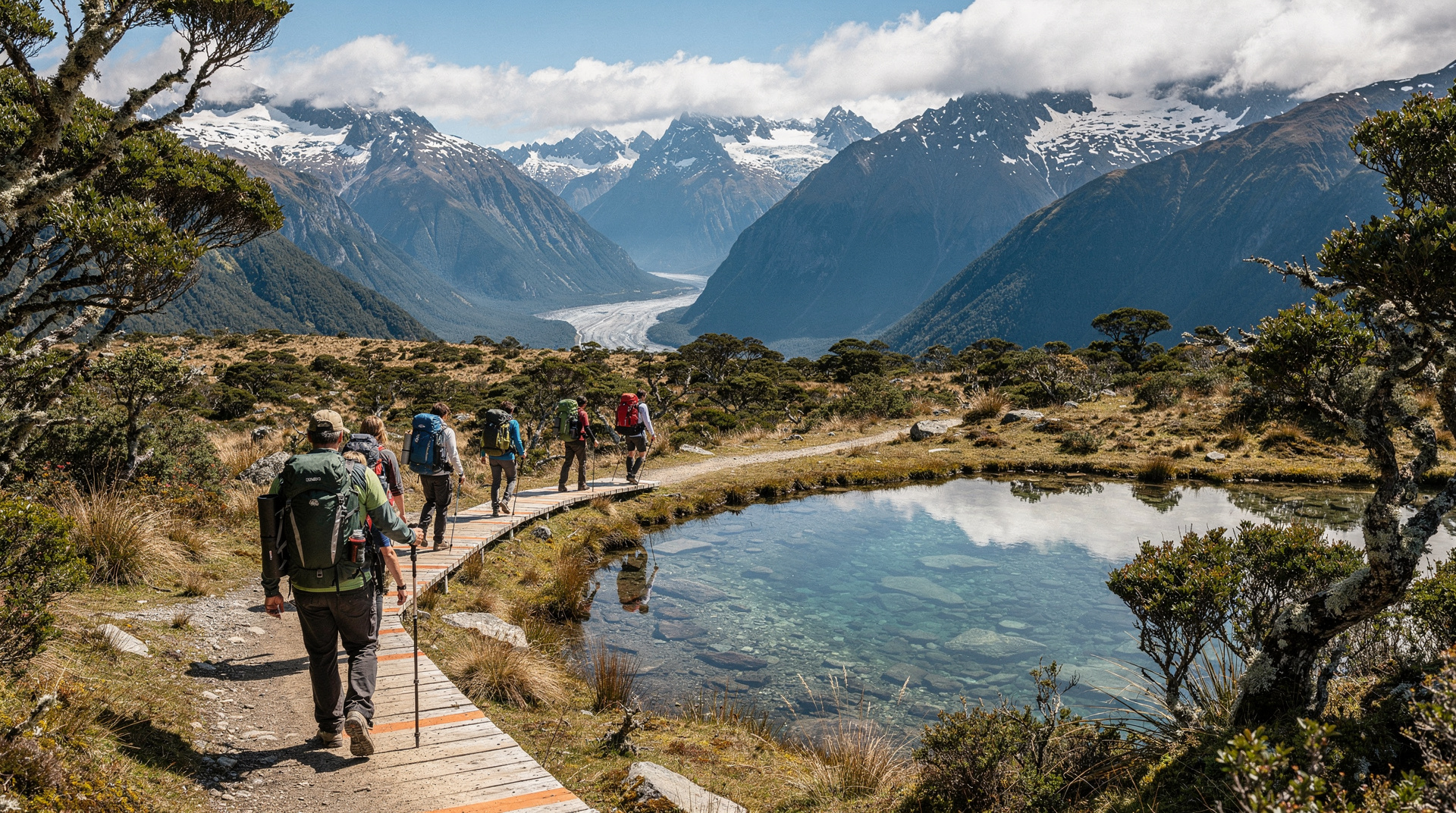
New Zealand Great Walks — complete comparison guide
All 11 Great Walks compared: Milford vs Routeburn vs Kepler, difficulty, season, hut prices. Which one fits your trip and fitness level.
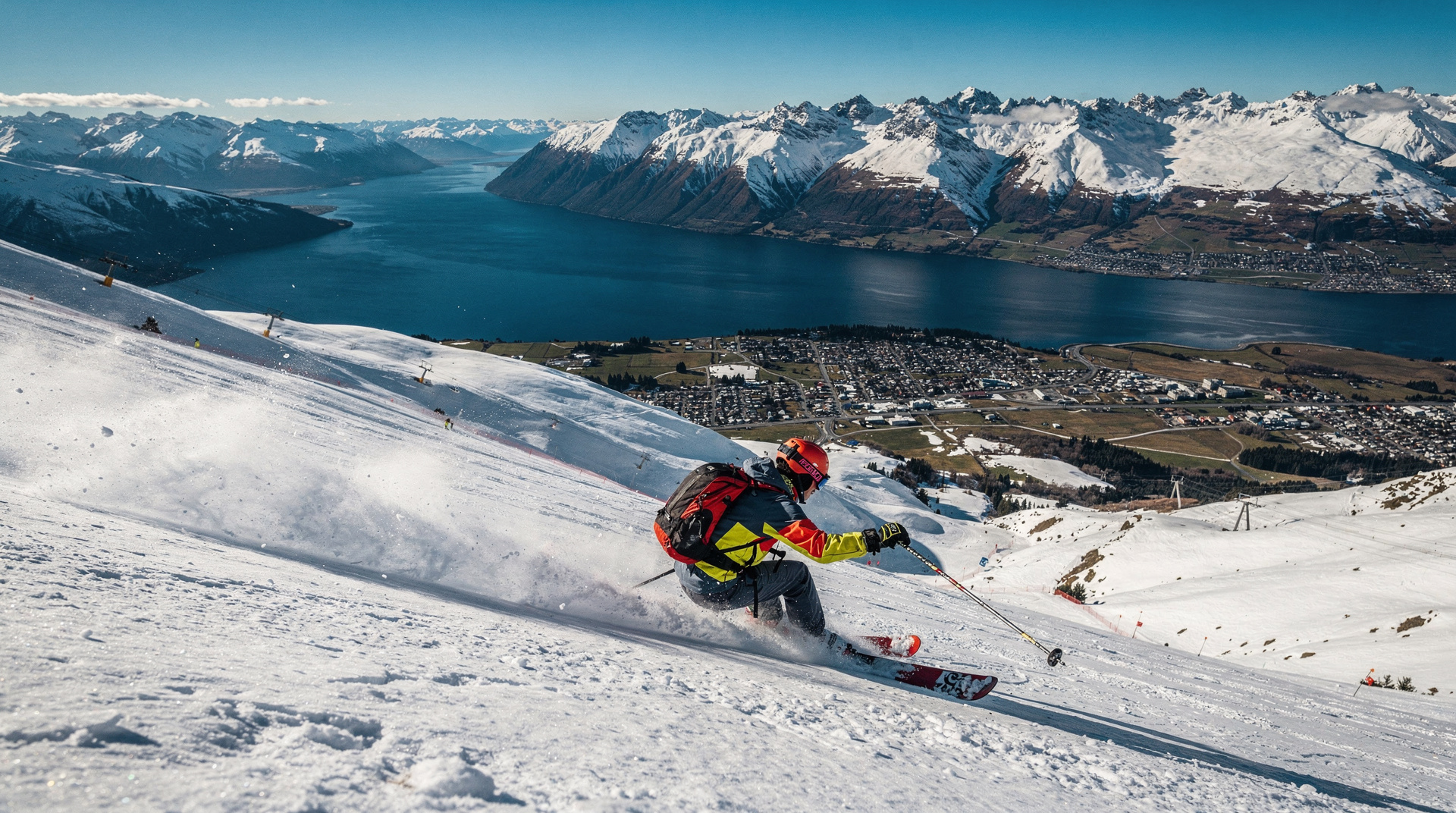
Skiing in New Zealand — complete resort guide 2026
Complete NZ ski guide: Coronet Peak, Remarkables, Cardrona, Treble Cone, Mt Hutt, Ruapehu. Season, lift passes, real costs NZD/USD/EUR.
Last reviewed: