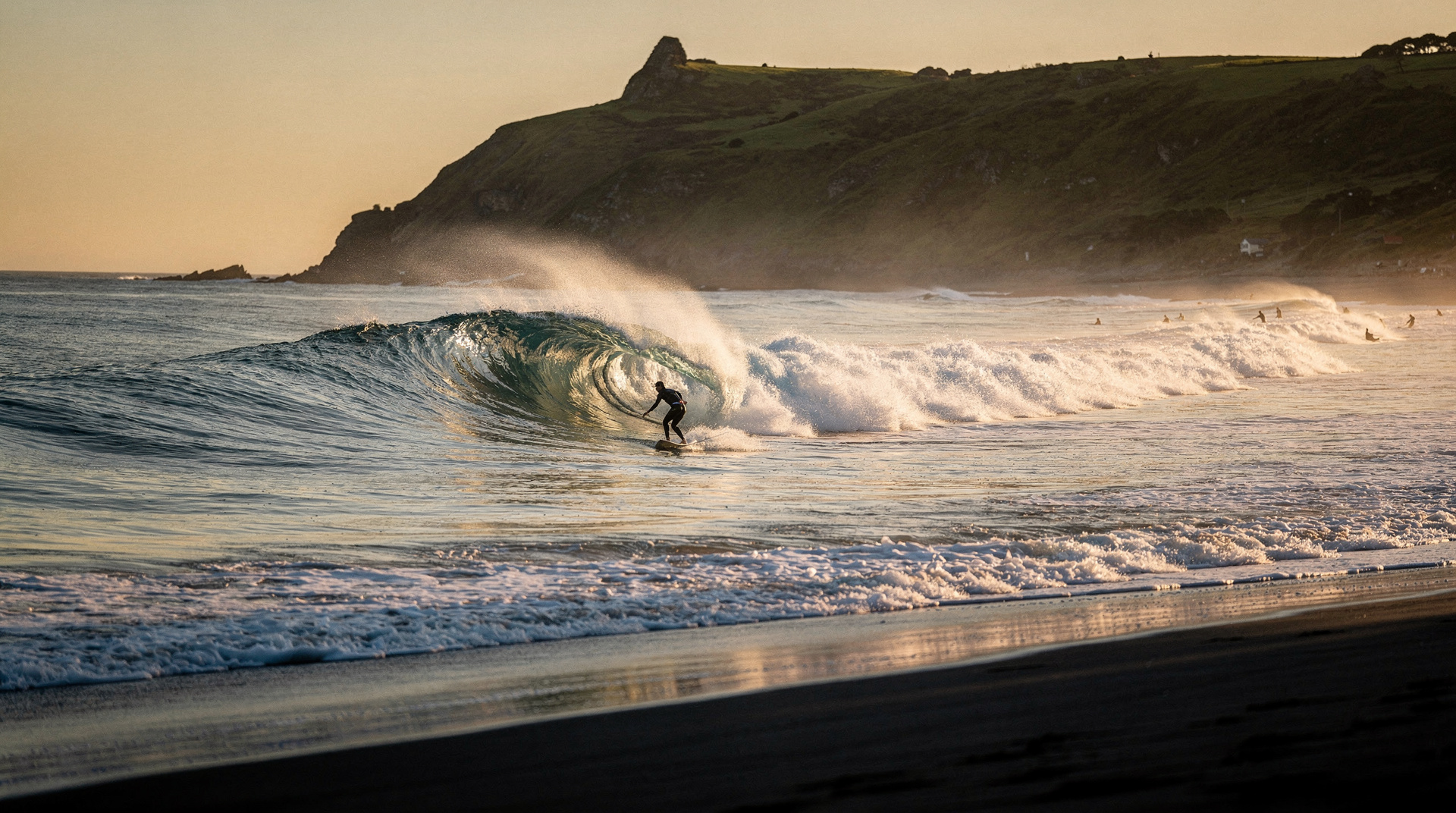
Surfing in Raglan — New Zealand's best left-hand break
Is Raglan good for beginner surfers?
Raglan has one of the longest left-hand waves in the world (Manu Bay), but this is advanced territory. Beginners go to Ngarunui Beach — a patrolled, beginner-friendly beach break 2 km from town. Surf lessons from NZD 75–95 / USD 45–57 / EUR 41–52.
The longest left-hand wave in New Zealand — and how to approach it as a visitor
Raglan is a small town on the west coast of the Waikato region, 48 km west of Hamilton. The town itself has 3,000 permanent residents plus a rotating population of travelling surfers. The beach breaks and point breaks at the edge of the town have been drawing surfers since the 1960s, when New Zealand’s first surf culture developed here.
| Where | Raglan, Waikato — 2hrs from Auckland |
| Beginner spot | Ngarunui Beach (patrolled, gentle) |
| Advanced spot | Manu Bay (long left-hand point break) |
| Lessons | Around NZD 75-95/person, 2 hours |
| Best season | Year-round; winter (May-Aug) has better swell |
The famous break is Manu Bay — a left-hand point break that, on a good swell, provides rides of several hundred metres. It is consistently listed among the best left-hand point breaks in the Southern Hemisphere. The film Endless Summer II (1994) featured Raglan; the location has been internationally known since.
For intermediate and advanced surfers, Raglan is a genuine pilgrimage destination. For absolute beginners, the correct approach is different — start at Ngarunui Beach (the patrolled beach 2 km from the point breaks), learn in the white water, and work up.
The breaks at Raglan
Manu Bay (left-hand point break): The main break. Works on south to southwest swells, best at 1.5–2.5m. Advanced surfers only — the wave has a fast section and requires accurate positioning. Can be crowded in summer; locals have priority in the lineup and the etiquette is seriously observed.
Indicators (left-hand point break): A longer, slower version of Manu Bay that begins further out and runs further in. More forgiving than Manu Bay but still a point break requiring competence. Popular with intermediate surfers and longboarders.
Whale Bay: A shorter, more variable break between Manu Bay and Indicators. Good for intermediate surfers on smaller days when Manu Bay is too powerful.
Ngarunui Beach (beach break): The learner and family beach. Patrolled by lifeguards in summer. Gentler white water on the inside, manageable conditions for beginners. Surf schools operate here.
Surf lessons — what’s available and what it costs
Several surf schools operate in Raglan, most with bases at Ngarunui Beach. A standard group lesson (2 hours) runs NZD 75–95 / USD 45–57 / EUR 41–52 and includes board and wetsuit hire. Private lessons (1:1) cost NZD 130–150 / USD 78–90 / EUR 72–83.
Lesson format: 30 minutes of land instruction (pop-up technique, wave reading basics, surfing etiquette) followed by 90 minutes in the water on the inside section of the beach break. Most beginners stand up within the first session — the white water at Ngarunui is forgiving.
Board hire without a lesson is available from shops in town: NZD 25–40 / USD 15–24 / EUR 14–22 per day for a foam learner board, NZD 40–60 / USD 24–36 / EUR 22–33 per day for a fibreglass longboard.
What to know about Raglan surf etiquette
Manu Bay and Indicators have a functioning local surf culture with real etiquette norms. Visiting surfers who ignore these cause problems. The essentials:
- Right of way: The surfer closest to the peak (the breaking part of the wave) has priority. Do not drop in on a surfer already riding.
- Locals: Raglan locals have been surfing these breaks for decades and are not obligated to accommodate visiting surfers of equal ability. Respect in the water generates goodwill.
- Paddling out: Do not paddle through the impact zone. Use the channel (the non-breaking section) to paddle out.
- Sitting in the lineup: Do not aggressively position for waves you can’t surf. Patience is respected.
For first-time visitors to Manu Bay, watch from the clifftop for 20–30 minutes before paddling out. Assess the wave, the crowd, and the level of surfers in the water. If everyone in the lineup is surfing significantly better than you, wait until conditions are smaller or go to Whale Bay.
Raglan as a destination beyond surfing
Raglan has developed a town culture well beyond surfing — good cafés (especially on Wainui Road), excellent artisan food and craft beer, an active arts and music scene, and the volcanic landscape of the Waikato coast. The black-sand beaches are striking, if different from the white-sand aesthetics of the Bay of Plenty.
The town is 2 hours from Auckland by road, making it accessible as a day trip from the city — though the traffic on SH1 to Hamilton and the subsequent Raglan road means leaving Auckland early (before 7am) to arrive before other day-trippers. Staying one or two nights in Raglan allows proper early-morning sessions when the water and crowds are at their best.
For a non-surfing outing on a flat-swell day, the region around Raglan and Hamilton also has canyoning and glowworm caving. The Hamilton and Raglan canyoning and glowworm experience combines abseiling and canyon walking with an evening glowworm cave visit — a good alternative when the surf report doesn’t cooperate.
Getting to Raglan
From Hamilton: 48 km west, approximately 40 minutes. From Auckland: 160 km, approximately 2 hours via SH1 to Hamilton, then Te Kowhai Road to Raglan.
There is no public transport to Raglan from Auckland — a rental car or private hire is required.
Season and conditions
Raglan surfs year-round. The best swells are generated by Southern Ocean storm systems, which peak in late autumn and winter (May–August). Wave quality in winter (cold but consistent) is generally higher than summer (warmer, more variable, more surfers).
Water temperature: 16–19°C in summer, 14–16°C in winter. A 3mm wetsuit is appropriate year-round; 4mm in winter for extended sessions.
Summer: Warmer water, more beginners, more crowded point breaks. Best for learners who prefer comfortable conditions. Winter: Better wave quality, fewer tourists, more serious surfers. The lifeguarded beach at Ngarunui is not patrolled outside November–April — beginners should factor this in.
Accommodation in Raglan
Raglan is small — accommodation fills quickly in summer and over long weekends. Options range from basic surf hostels (NZD 30–50 / USD 18–30 / EUR 16–28 per night in a dorm) to self-contained baches and holiday homes (NZD 150–300 / USD 90–180 / EUR 83–165 per night). Book ahead from December through February.
Renting gear and what to bring yourself
Most visiting surfers hire a board and wetsuit rather than travel with their own, especially for a short Raglan stop. Surf shops in town rent boards by the day or by the week, with multi-day rates working out cheaper per day than single hires — worth asking if you’re staying more than two nights. Bring your own rash vest or wear a t-shirt under the wetsuit if you’re doing multiple sessions a day, as hire wetsuits see heavy use and fit varies. Reef booties are not generally needed at Raglan’s sandy and cobblestone breaks, but a leash is essential at Manu Bay and Indicators, where losing your board in the rocks at the point is a real risk, not just an inconvenience.
Frequently asked questions
Can a complete beginner surf Manu Bay?
No — not safely or ethically. Manu Bay is a fast, powerful point break with an experienced local lineup. Beginners attempting Manu Bay risk collision with other surfers, damage to equipment, and disrespecting established surf etiquette. Ngarunui Beach is where beginners belong, and this is not a temporary limitation — for most visitors on a 3–5 day surf trip, Ngarunui and the lower section of Indicators is the appropriate progression.
What’s the water temperature at Raglan?
16–19°C in summer (December–February), dropping to 14°C in winter. A full wetsuit is required year-round. Board shorts are not appropriate even in peak summer — the water is too cold for extended sessions without neoprene.
Is Raglan better than the Bay of Plenty for surfing?
For point break surfing (the hallmark of Raglan), Raglan is clearly better. The Bay of Plenty (Mt Maunganui, Ohope) has consistent beach breaks, good for learners and intermediates, and warmer water in summer. For an advanced surfer seeking left-hand point breaks, Raglan is the correct destination.
Are there other surf spots near Raglan?
Ruapuke Beach (30 km north of Raglan) is a less-known beach break with occasional quality waves and virtually no crowds. Suitable for intermediates who prefer uncrowded conditions. No facilities — self-sufficient visit required.
More water activities in New Zealand
Related guides
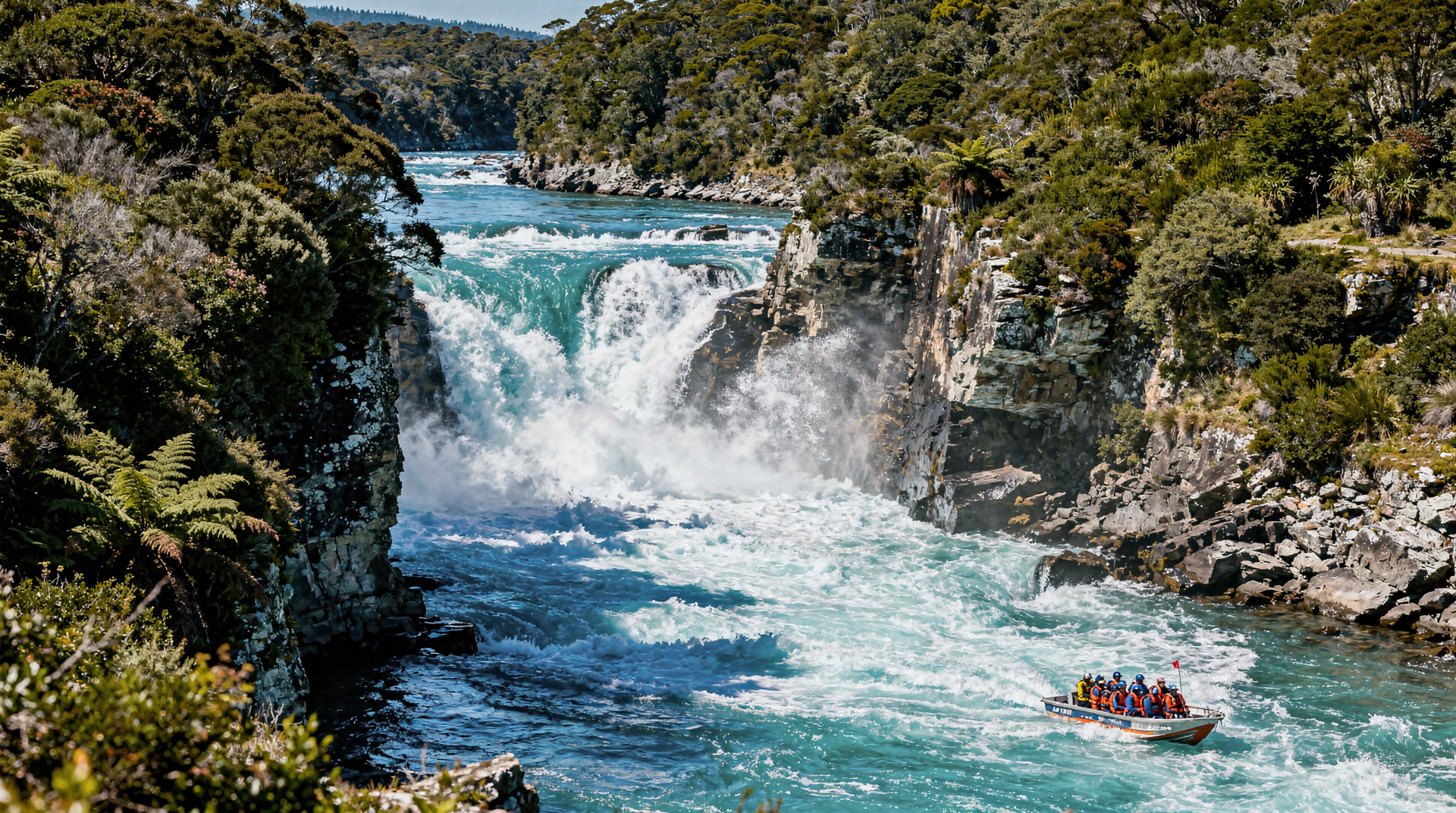
Waikato
Honest Waikato guide: Hobbiton Movie Set, Waitomo glowworm caves, Hamilton Gardens, Raglan surf. Real NZD/USD/EUR prices, what's worth your time.
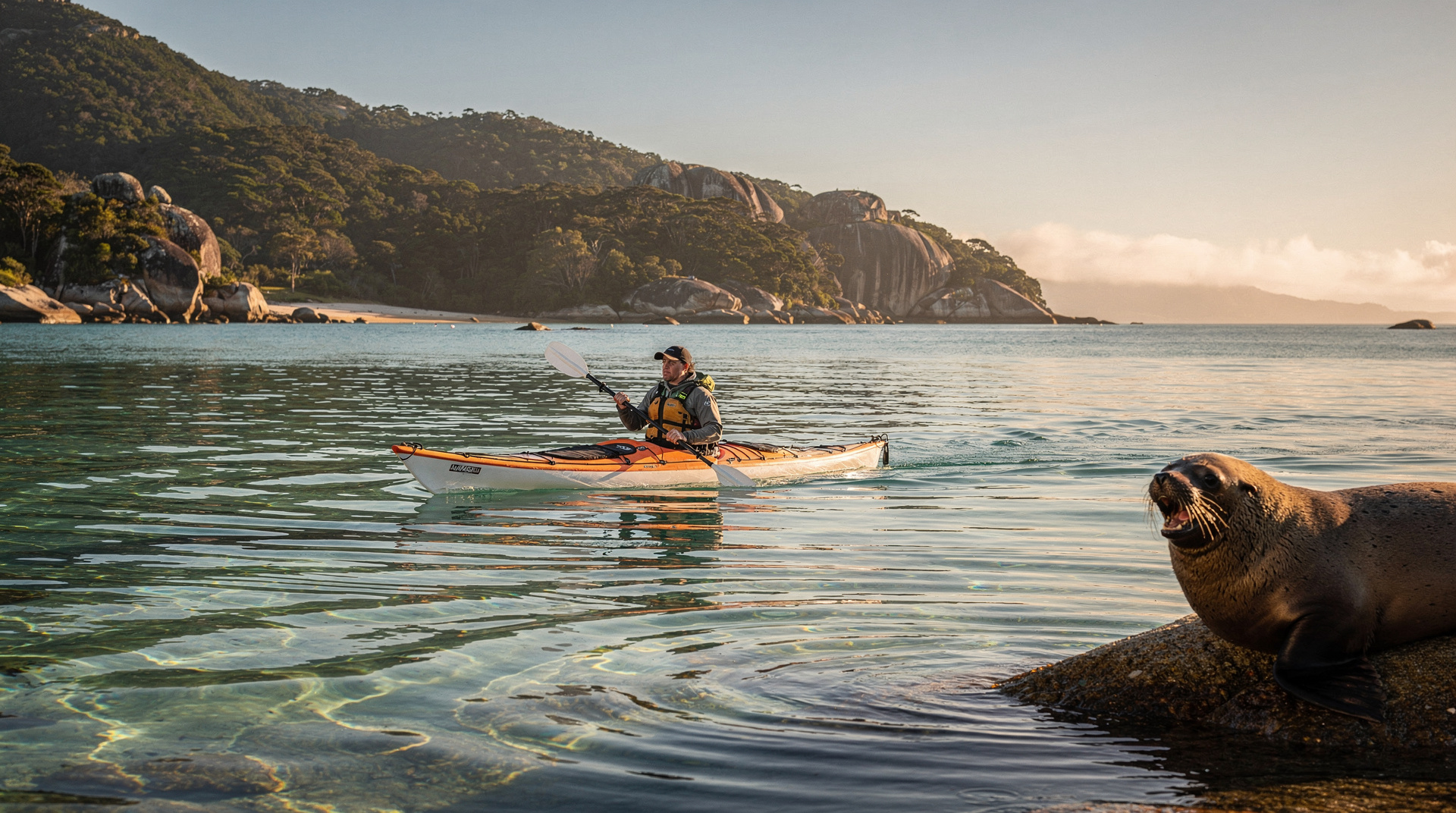
Kayaking in Abel Tasman National Park
Abel Tasman kayaking guide: guided day tours, multi-day freedom kayaking, water taxis, and seal colonies. Prices NZD/USD/EUR and honest operator comparison.
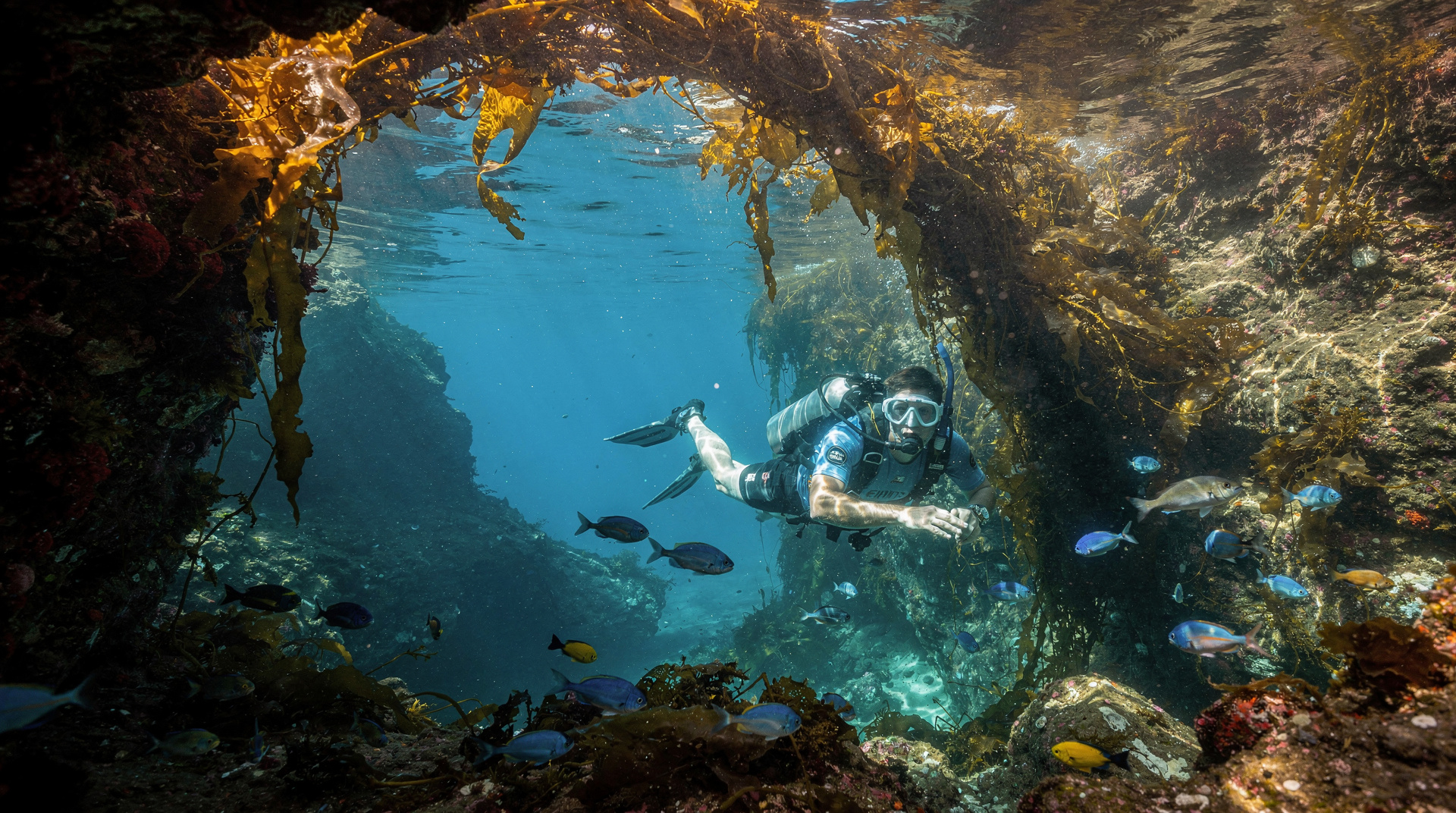
Snorkelling at Poor Knights Islands — New Zealand's best dive site
Poor Knights Islands snorkelling guide: Jacques Cousteau's acclaimed dive site, tours from Tutukaka, prices NZD/USD/EUR, marine life, and seasonal tips.
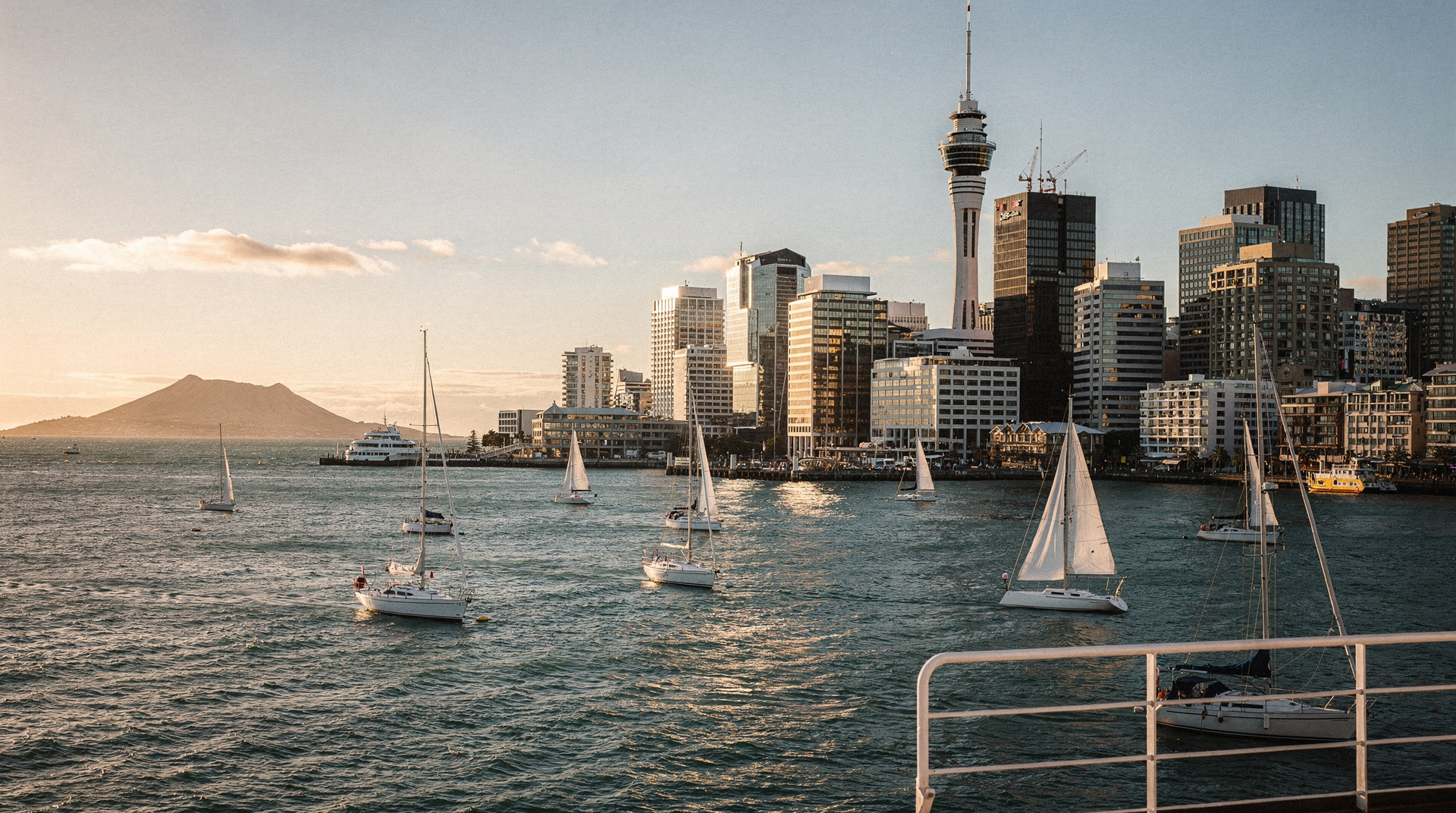
Auckland
Honest Auckland planner: harbour, Sky Tower, Waiheke wineries, day-trips to Hobbiton, real prices NZD/USD/EUR, and what's actually worth your time.
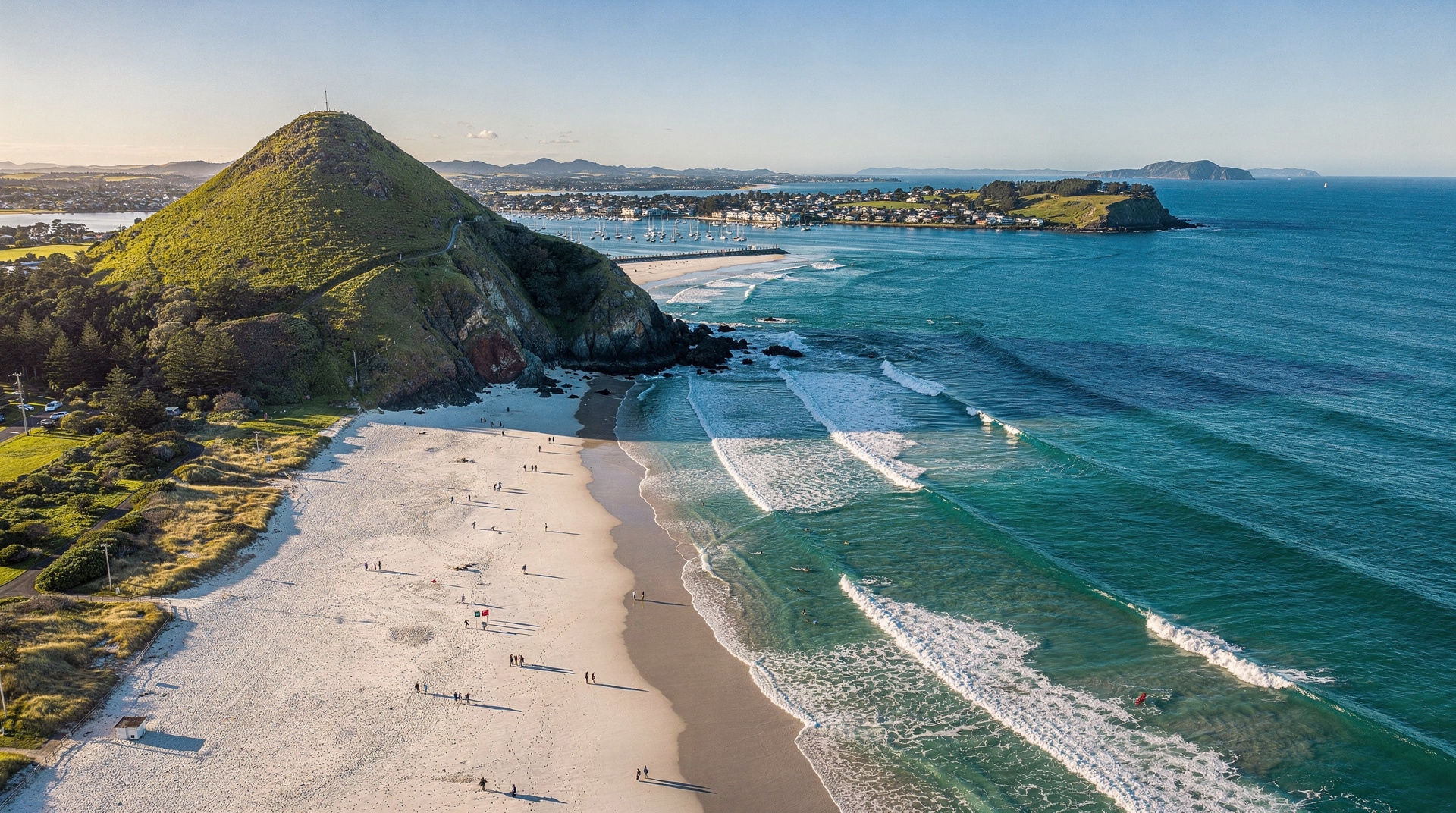
Bay of Plenty
Bay of Plenty region guide: Tauranga, Mount Maunganui surf, Whakatane, Whakaari/White Island eruption facts. Real NZD/USD/EUR costs, honest verdicts.
Last reviewed: