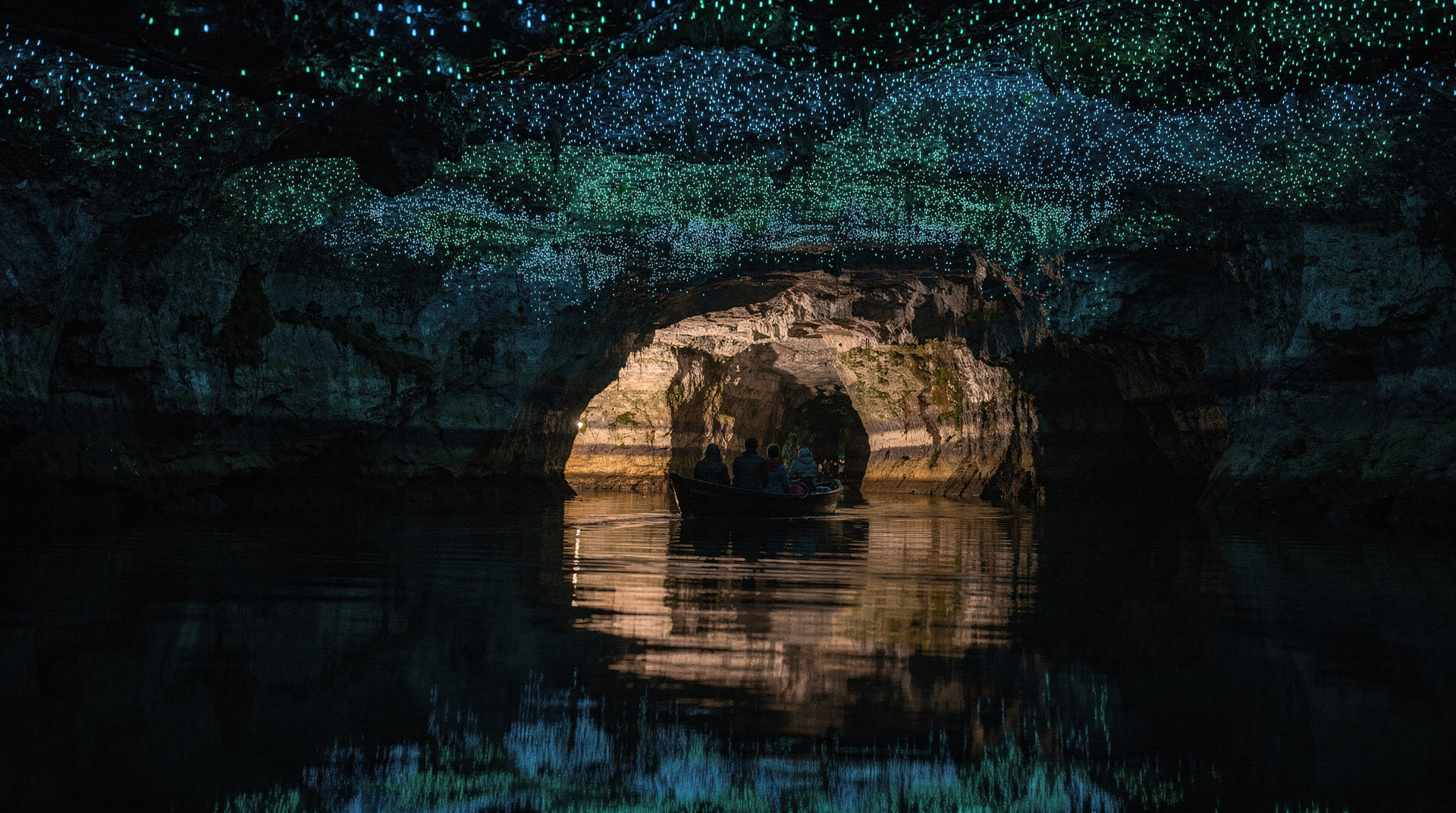
Te Anau Glowworm Caves — Fiordland underground guide
How do I visit the Te Anau Glowworm Caves?
The caves are accessible only by boat across Lake Te Anau (20-minute boat ride from Te Anau township). Tours run in the evening (departure 2pm and 5:30pm typically). NZD 115 adult, NZD 55 child. Book through RealNZ or GYG — they fill weeks ahead in summer. The caves were rediscovered in 1948 and are smaller but more intimate than Waitomo.
Fiordland’s hidden underground world
| Where | Western shore, Lake Te Anau (boat only) |
| Cost | NZD 115 adult, NZD 55 child |
| Duration | 2.5-3 hours total |
| Departures | Typically 2pm and 5:30pm |
| Booking | RealNZ direct or via GYG — book ahead in summer |
The Te Anau Glowworm Caves were “rediscovered” in 1948 — known to local Maori for centuries, but lost to colonial knowledge until a surveying party found them while examining the western wall of Lake Te Anau. They are accessible only by boat, accessed from Te Anau township by a 20-minute cruise across the lake’s southern arm.
What visitors find inside is a system of water-carved limestone passages lit by Arachnocampa luminosa glowworm colonies — the same bioluminescent larva that illuminates the famous Waitomo Caves on the North Island. The Te Anau version is smaller and less theatrical than Waitomo, but its cave character is genuinely different: the cave’s active waterfall, its smaller passages, and the lake approach all produce a more immersive, less commercial atmosphere.
For anyone spending time at Te Anau — typically as a base for the Milford Sound day trip, the Kepler Track, or Doubtful Sound — the glowworm cave tour is the most distinctive evening activity available. Most day visitors to Milford Sound return to Te Anau in late afternoon, making the 5:30pm departure the natural post-drive activity.
The tour structure
The Te Anau Glowworm Caves tour operates exclusively through RealNZ (formerly Real Journeys), who manage the cave under licence. Third-party booking via GYG is the most convenient booking method.
The Te Anau: Glowworm Caves Guided Tour covers the complete experience: return boat transfer, guide, and cave entry. NZD 115 adult / USD 69 / EUR 63. Children (5-14): NZD 55 / USD 33 / EUR 30.
Tour timing: Typically departs at 2pm and 5:30pm from the Te Anau township pier. Check the current schedule when booking — seasonal adjustments are common. The 5:30pm departure is popular because it coincides with return from Milford Sound day trips.
Duration: 2.5-3 hours total (including boat transfers and cave walk).
The cave experience
Boat transfer: A covered launch departs the Te Anau pier and crosses the calm southern arm of Lake Te Anau. The western shore — visible from the boat — is part of Fiordland National Park and has no road access. The crossing gives excellent views of the Murchison Mountains (home to takahe, the world’s largest rail species).
Cave entry: The caves are entered from a small dock on the western shore. The entrance chamber has an active underground river with a waterfall audible throughout the tour. The limestone formations are less developed than Waitomo (the cave is younger geologically) but the water features are more prominent.
Glowworm grotto: The finale is a small underground chamber accessed by a punt (a flat-bottomed boat pushed by pole). This is where the glowworm colony is densest — ceiling and walls lit by the blue-green bioluminescence. The chamber is smaller than Waitomo’s main glowworm ceiling, but the enclosed space and water surroundings make the effect highly concentrated.
Photography: Tripod and long exposure can capture the glow; phone cameras generally cannot. No flash permitted.
Comparing Te Anau and Waitomo
| Feature | Waitomo | Te Anau |
|---|---|---|
| Colony size | Larger (main chamber) | Smaller (intimate grotto) |
| Cave accessibility | Road-accessible | Boat only |
| Geological features | Dry formations, stalactites | Active waterfall, younger |
| Commercial scale | Larger, more tour operators | Single operator |
| Setting | Rural Waikato | Fiordland lake |
| Duration | 45 min (standard) | 2.5-3 hours total |
| Price (adult) | NZD 75 | NZD 115 |
Both are genuinely worthwhile. Waitomo is more accessible and more dramatically staged; Te Anau is more intimate and benefits from the extraordinary Fiordland landscape context.
Combining with Te Anau activities
The standard Te Anau evening: Return from Milford Sound day trip (approximately 5pm), dinner in Te Anau, then the 5:30pm glowworm cave departure (returns approximately 8pm, with summer daylight until 9:30pm in December-January).
Te Anau + Kepler Track: If you’re doing the Kepler Track, the glowworm caves make an ideal evening activity the night before starting. The caves’ atmospheric quality aligns well with the preparation mood of a multi-day walk.
Doubtful Sound + caves: The From Manapouri: Doubtful Sound Wilderness Day Trip departs from Manapouri (23 km from Te Anau) in the morning and returns mid-afternoon — allowing the evening glowworm cave tour. NZD 265-295 / USD 159-177 / EUR 146-162.
Practical information
Where to book: The Te Anau Glowworm Caves is bookable through the GYG key above or directly via the RealNZ website. Book at least 3-5 days ahead in December-February. The tour is popular and has limited capacity.
What to wear: The cave is cool (approximately 11°C) and sometimes damp — a light fleece layer and waterproof jacket are appropriate. The boat crossing can be cool in wind. Sturdy footwear (the cave floor is damp).
Accessibility: The cave involves narrow passages and some steps. Not suitable for those with significant mobility restrictions. The boat pier has step access.
Weather effect: The cave tour operates in most weather conditions — the cave interior is entirely unaffected by rain. The boat crossing can be choppy in strong wind, but is rarely cancelled.
Fitting the caves into a Fiordland plan
Te Anau works best as a base of several nights rather than a single stopover, and the glowworm tour is the piece that ties the days together. Mornings belong to the big landscapes: the Milford Sound day trip from Te Anau and the Milford Sound cruise guide cover the road and the water, while the day trips from Te Anau page lays out the other options. The caves then give you something calm and close to town for the evening, when the long drive is behind you and nobody wants another early alarm.
If you are weighing where to sleep, the Te Anau vs Queenstown comparison is worth reading before you book. Staying in Te Anau is what makes the evening departure realistic; from Queenstown the same activity turns into a very long day, and most people who try it regret the driving. Those who are visiting from Queenstown on a Milford Sound day trip from Queenstown will usually not have the slack for the caves at all, which is a good argument for splitting the region across two bases.
For a longer route through the south, the 7-day South Island itinerary and the 14-day New Zealand itinerary both pass through Fiordland, and the glowworm evening slots naturally into the Te Anau night of either. Walkers will find that the caves pair well with the Kepler Track or the Routeburn Track: a gentle, seated evening before or after a few days on foot is a welcome change of pace.
What to expect from the crossing and the grotto
The boat is part of the experience, not just transport. Settle on the side that faces the western shore, keep your jacket zipped, and spend the crossing looking at the mountains rather than at your phone. The light on the lake changes through the evening, and on a clear day the far shore looks wilder the closer you get, with forest running straight down to the water and no sign of a road or a building.
Inside, the guide sets the pace. Move slowly, keep your voice low, and let your eyes adjust before you judge the glow: the dark is what makes the colony appear, and the first minute in the grotto is always the least impressive. Once your eyes settle, the pinpoints resolve into long threads and the whole ceiling seems to hang over the punt. Listen to the guide’s explanation of the larval cycle, because it turns a pretty sight into something you actually understand.
A few habits make the visit better for everyone on the boat:
- Switch off phone screens and keep torches pointed at the ground, since a single bright light will make the larvae dim their glow.
- Follow the guide’s instructions about where to stand and when to stay silent in the grotto.
- Keep hands off the walls and formations, which are fragile and wet.
- Wear shoes you do not mind getting damp, and leave bulky bags at the pier if you can.
Who gets the most out of this tour
Couples and small groups looking for a quiet evening tend to rate this tour highest, because the small chambers and the punt keep the group close and the mood hushed. Families with school-age children usually enjoy it too: the boat ride, the waterfall and the dark grotto give younger visitors several different things to remember. Photographers should arrive with realistic expectations and a steady tripod, as noted above.
Visitors who prefer something more active in the region should look at the kayaking in Milford Sound option or the Doubtful Sound day trip from Te Anau instead, while those who want a second glowworm experience later in their trip can read the Waitomo glowworm caves guide and plan the North Island leg accordingly. If you are still choosing between caves, the Waitomo day trip from Auckland shows how the North Island version fits into a day. For a wider look at the region’s wildlife, including the birds mentioned on the crossing, see the wildlife in New Zealand guide.
How the glowworms actually work
The blue-green light comes from Arachnocampa luminosa, a fly larva found only in New Zealand, that produces bioluminescence through a chemical reaction (luciferin and luciferase, the same basic mechanism as fireflies) in a modified excretory organ at its tail. Each larva builds a nest of silk threads on the cave ceiling and dangles sticky fishing lines below it — the light lures small flying insects, which get caught in the threads.
Colonies form where conditions are stable: still air, high humidity, and complete darkness, all present in the Te Anau caves’ inner chambers. The larval stage lasts around 9 months before the insect pupates and emerges as a short-lived adult fly (which doesn’t feed and lives only to breed) — meaning the glow you see is a snapshot of larvae at various stages, not the same individuals lighting up year after year.
Cost breakdown (NZD / USD / EUR)
| Item | NZD | USD | EUR |
|---|---|---|---|
| Cave tour (adult) | 115 | 69 | 63 |
| Cave tour (child 5-14) | 55 | 33 | 30 |
| Milford Sound day cruise (same day) | 95-185 | 57-111 | 52-102 |
| Te Anau accommodation (per night) | 35-250+ | 21-150+ | 19-138+ |
| Doubtful Sound day cruise (Manapouri) | 265-295 | 159-177 | 146-162 |
Frequently asked questions about Te Anau Glowworm Caves — Fiordland underground guide
Can I visit the Te Anau Glowworm Caves independently (without a tour)?
No. The caves are on the western shore of Lake Te Anau with no road access. All visits are via the RealNZ boat tour. There is no self-guided option.
Is it worth doing if I’m also going to Waitomo?
Yes — the two experiences are different enough that both are worthwhile for visitors doing the full New Zealand tour. If you can only visit one, Waitomo is more accessible and more dramatic in scale; Te Anau is more intimate and the surrounding Fiordland landscape adds significantly to the experience.
Are the caves appropriate for young children?
Yes, children aged 5+ are welcome. The boat crossing and dark cave environment are well-managed. The glowworm grotto is genuinely magical for children — the bioluminescence produces the kind of instinctive wonder that makes the experience memorable for young visitors.
What time of year is best?
The caves operate year-round. Summer (December-February) requires advance booking. Winter (June-August) has fewer visitors and the cave conditions are unchanged — the glowworms produce light year-round regardless of season.
Related guides and reading
Related guides
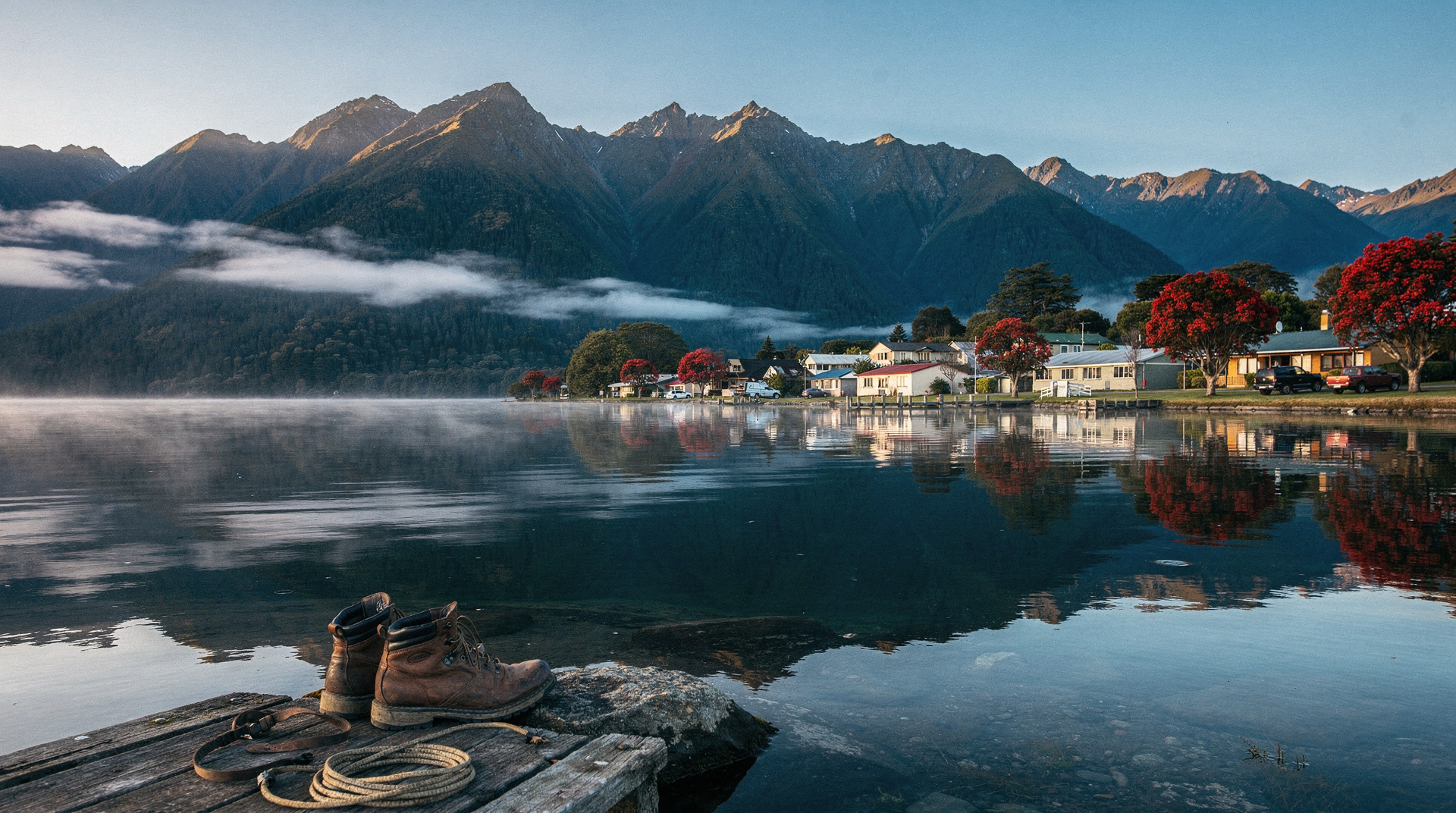
Te Anau
Everything you need to plan Te Anau: glowworm caves, Milford and Doubtful day trips, hiking, real NZD/USD/EUR prices, and where to stay.
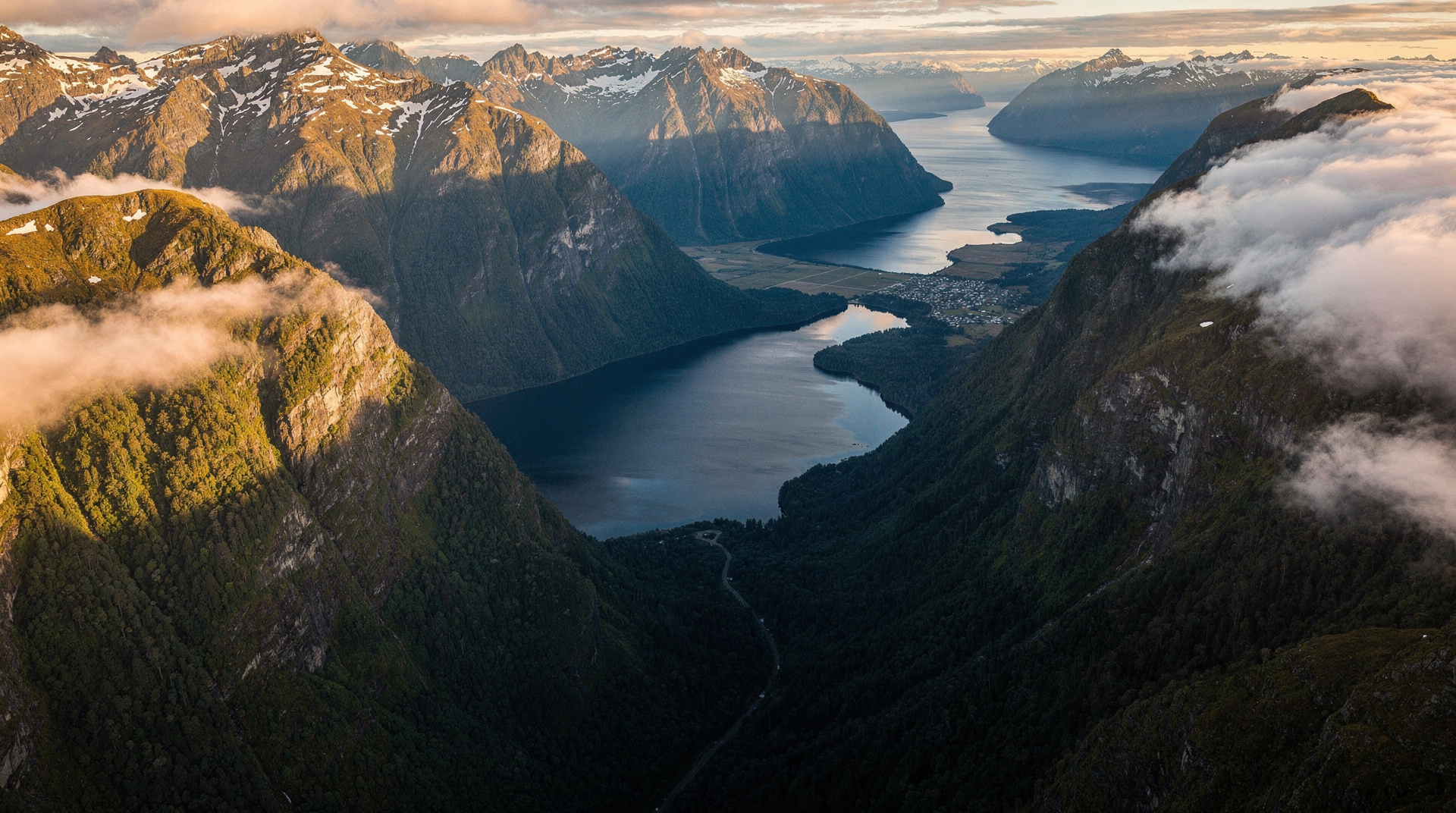
Fiordland
Honest Fiordland planner: Milford Sound vs Doubtful Sound, Te Anau base, Milford Track booking, real NZD/USD/EUR costs and what most guides won't tell you.
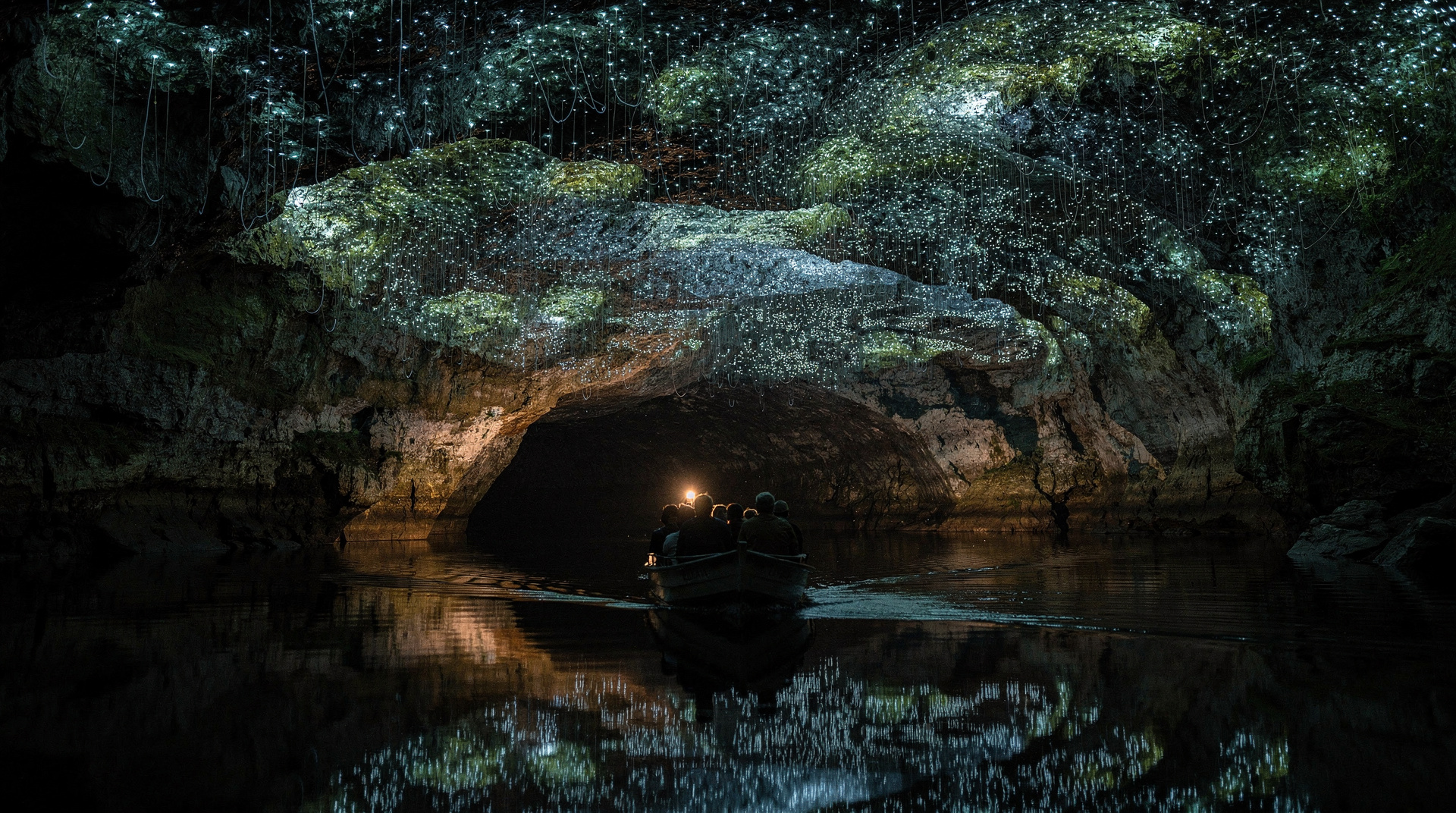
Waitomo Glowworm Caves — visitor guide
Waitomo Glowworm Caves: 45-min boat tour under a bioluminescent ceiling. Three cave systems. Honest guide to what's worth doing.
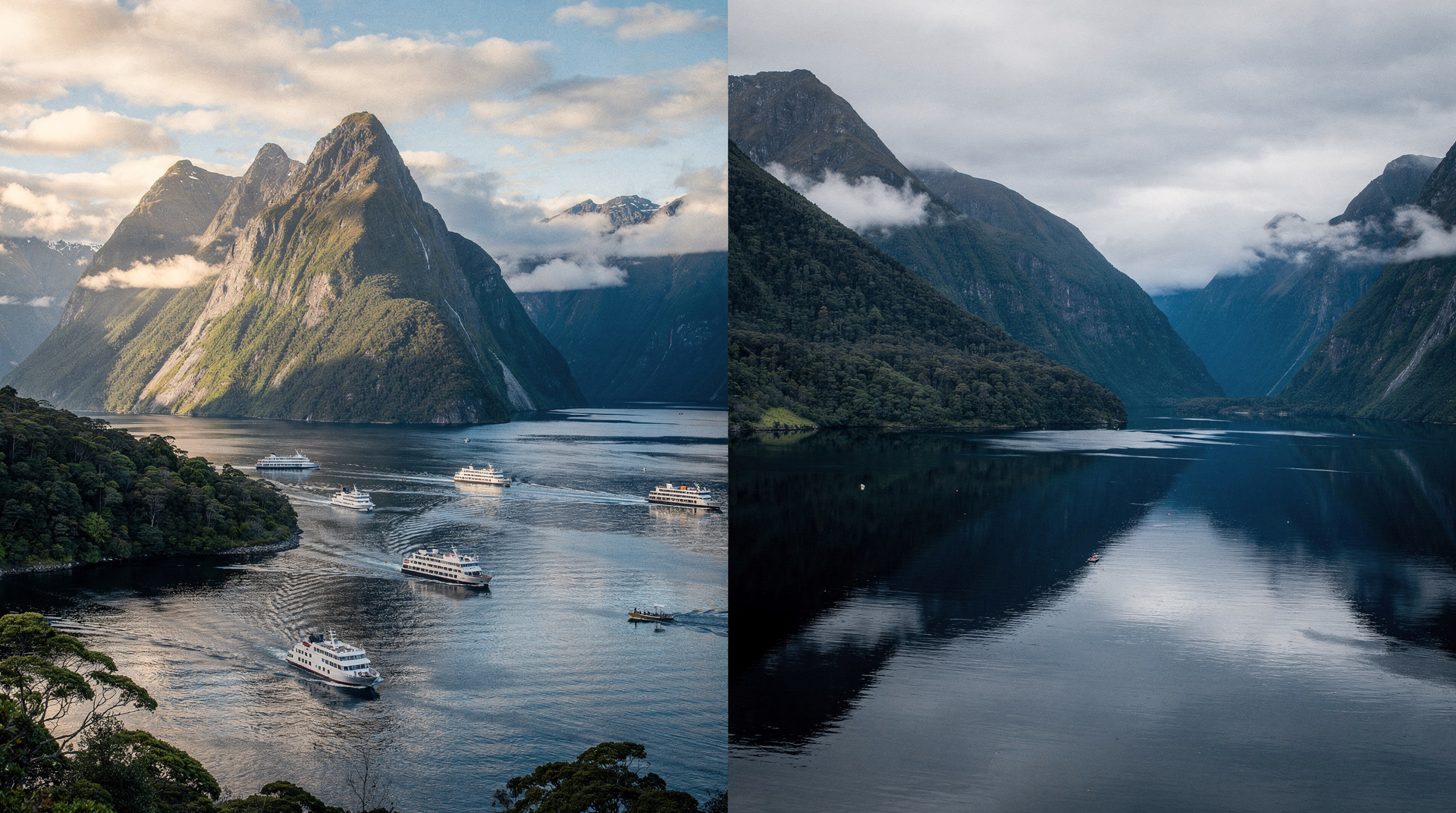
Milford Sound vs Doubtful Sound
Milford Sound vs Doubtful Sound: honest comparison of access, crowds, scenery and cruises. Clear verdict with prices in NZD/USD/EUR.
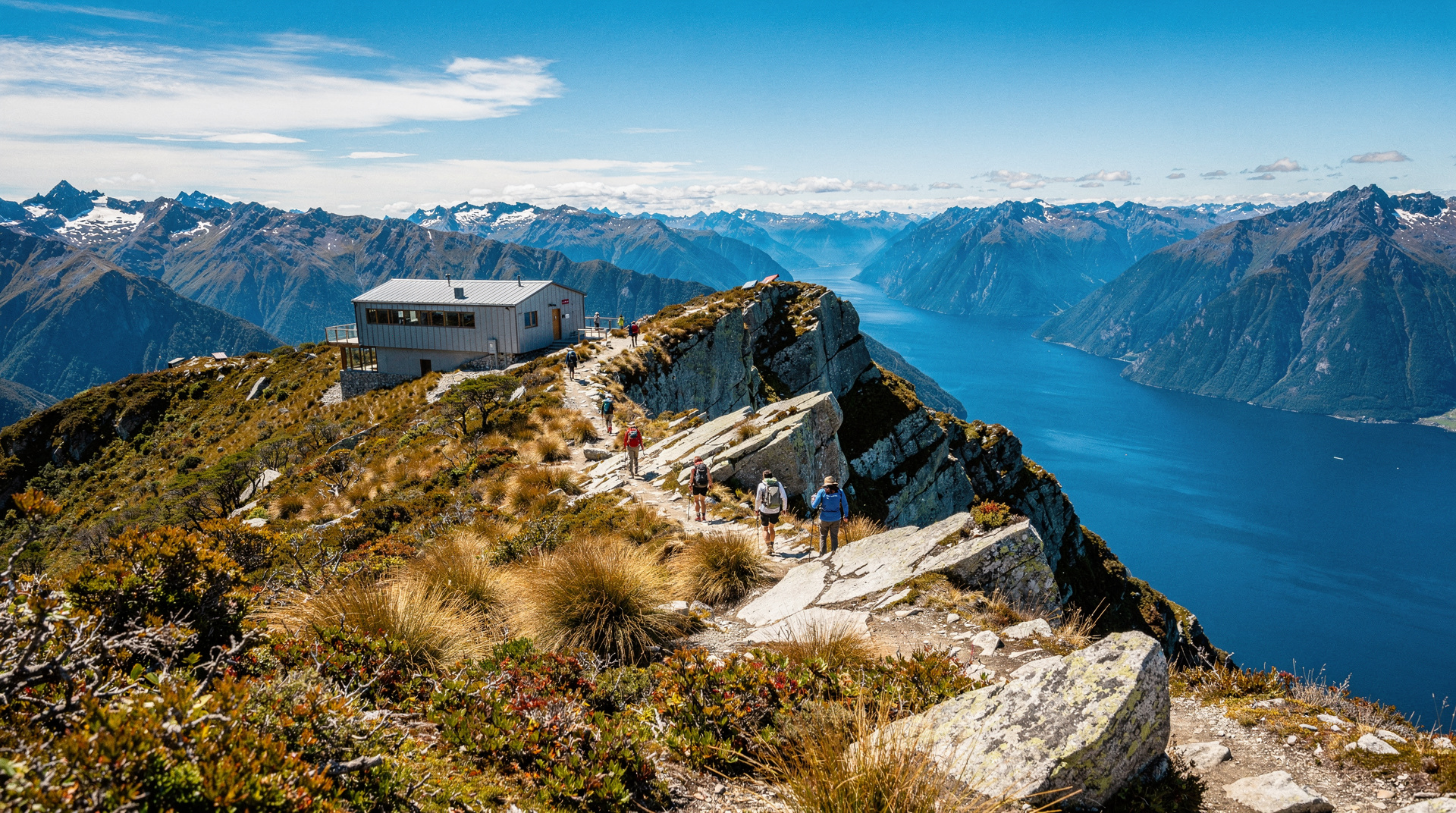
Kepler Track — Fiordland Great Walk full guide
Kepler Track: 60km circuit, 3-4 days, starts/ends at Te Anau. Book from June, NZD 132/night huts. Fiordland's most accessible Great Walk — full guide.