TranzAlpine day trip — Christchurch to Greymouth and back
Can you do the TranzAlpine as a day trip from Christchurch?
Yes — the TranzAlpine departs Christchurch daily at 8:15am and reaches Greymouth at 12:45pm. The return train departs Greymouth at 1:45pm and arrives Christchurch at 6:05pm. This gives you approximately 1 hour in Greymouth — enough for lunch, not much else. Many visitors prefer doing it one-way with an overnight on the West Coast.
The TranzAlpine: New Zealand’s finest train journey
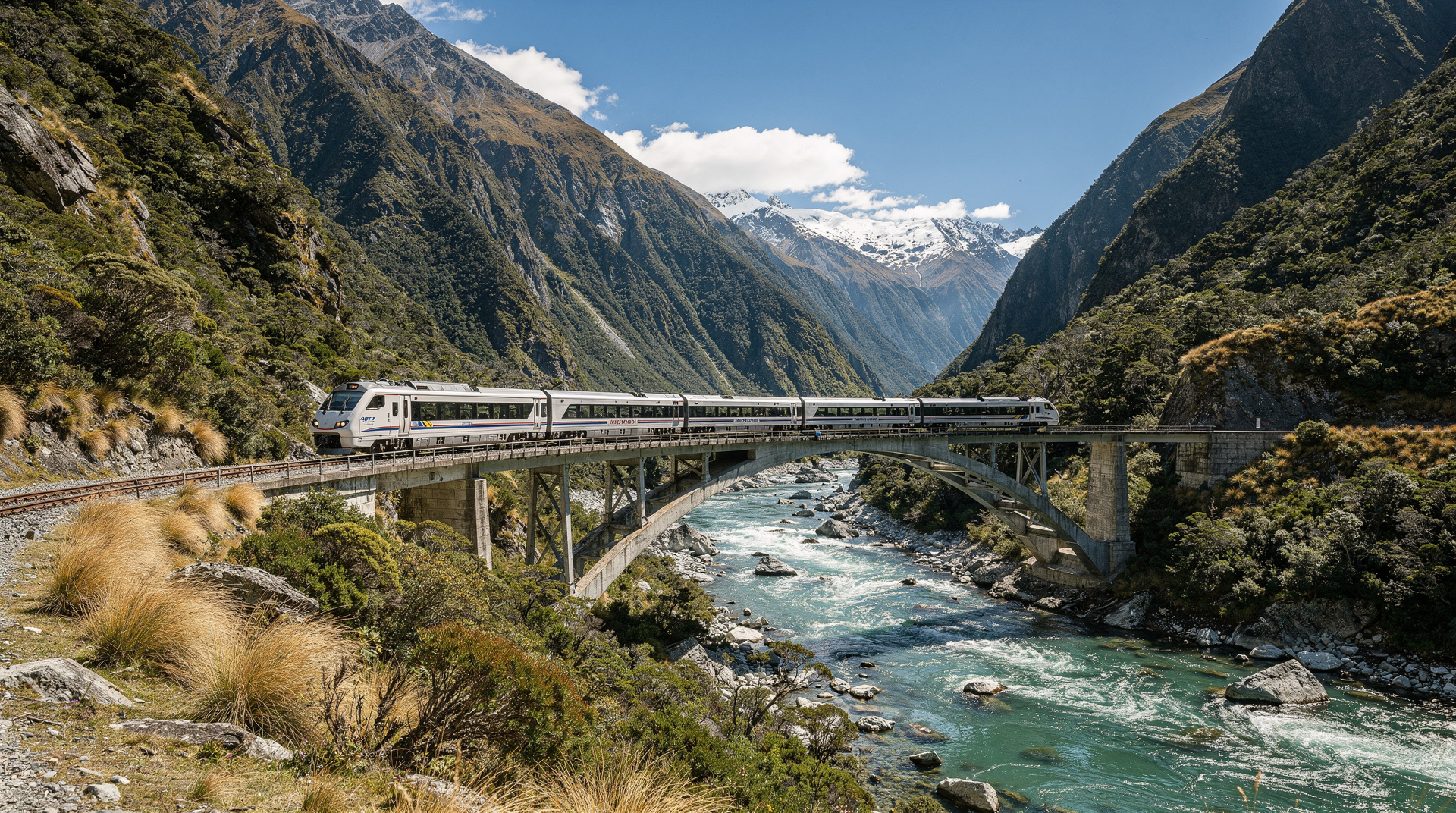
The TranzAlpine is widely regarded as the finest scenic train journey in New Zealand and one of the great train journeys of the world. In 4.5 hours, it crosses the Canterbury Plains, threads through the Waimakariri River Gorge, climbs to the Southern Alps through Arthur’s Pass (altitude 737m), tunnels through the Main Divide, and descends through beech forest and alpine lakes to the West Coast at Greymouth. The terrain includes:
- 16 tunnels (the Otira Tunnel alone is 8.5 km)
- 4 major viaducts (the Staircase Viaduct is the most dramatic)
- The braided Waimakariri River with its glacial gravel channels
- The alpine landscape of Arthur’s Pass National Park
- The descending West Coast forest, with the TranzAlpine river and Lakes Brunner and Hochstetter visible
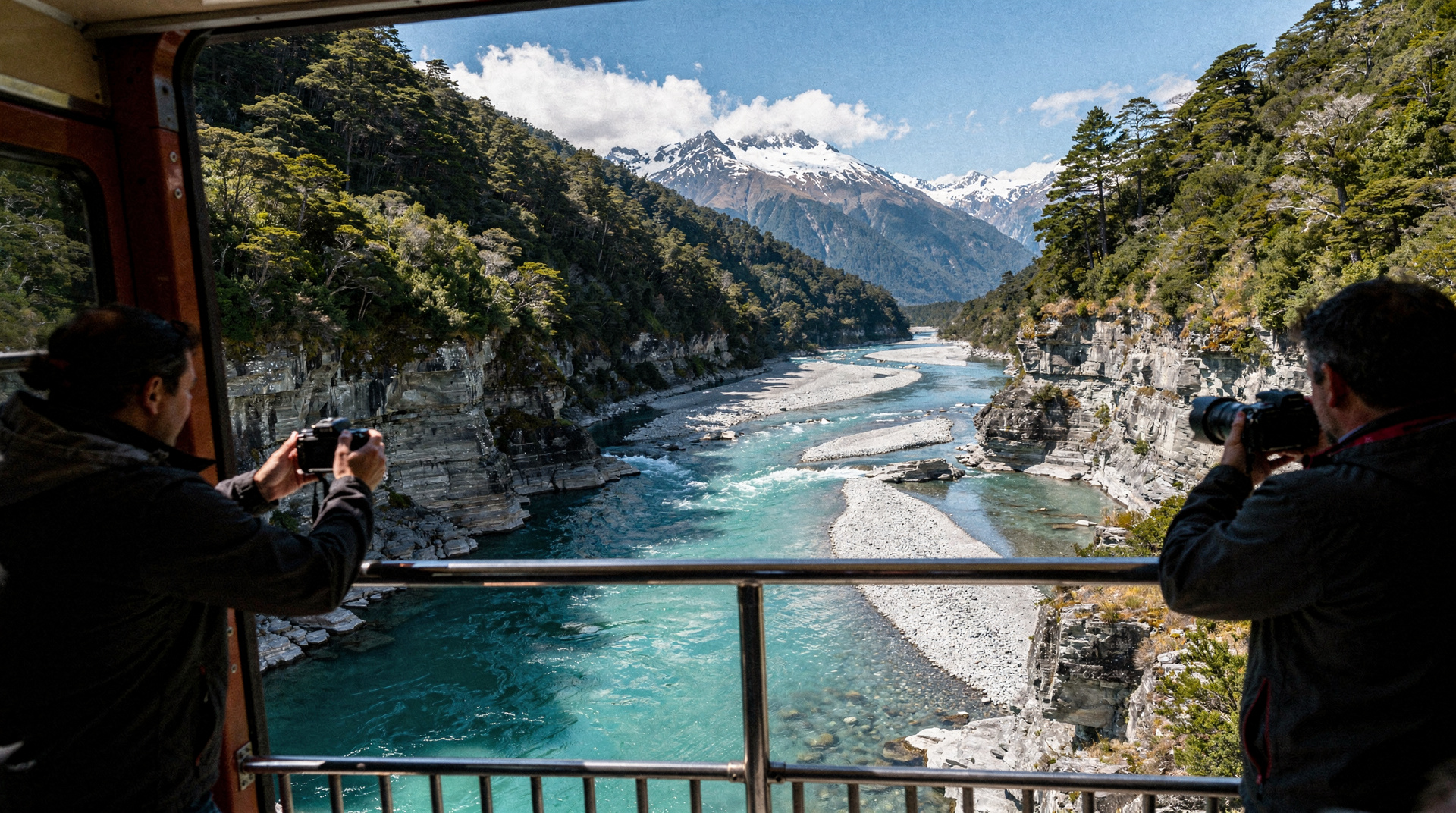
The train operates daily year-round (seasonal schedule variations — check KiwiRail’s website). There is an open-air observation carriage — the central experience of the TranzAlpine, especially for the Arthur’s Pass section.
| Where | Christchurch to Greymouth, Southern Alps via Arthur’s Pass |
| Time in Greymouth (day trip) | Around 1 hour |
| Cost | Fares vary by date and class: see the official Great Journeys New Zealand site |
| Getting there | Departs Christchurch Railway Station, 8:15am daily |
| Best time | Year-round; book 2–4 weeks ahead in summer |
As a day trip vs one-way
The round-trip day option leaves Christchurch at 8:15am, arrives Greymouth at 12:45pm, departs Greymouth at 1:45pm, and returns to Christchurch at 6:05pm. You have approximately 1 hour in Greymouth — enough for lunch at a waterfront café, not enough to explore the West Coast properly.
The honest verdict on the round trip: It works as a pure scenic train experience. The journey itself is the attraction — the 4.5-hour crossing of the Alps is the event, and returning by the same route gives you the chance to see the western approach in the opposing direction (different light, different perspective). Many TranzAlpine day-trippers report finding the two crossings complementary rather than repetitive.
The one-way option is better for those who want to see the West Coast. Alight at Greymouth, stay one or two nights (Franz Josef Glacier is 2.5 hours south; Punakaiki is 1 hour north), and return to Christchurch by shuttle bus or rental car. This is the recommended format for those building a South Island itinerary.
The Arthur’s Pass option: Alight at Arthur’s Pass (mid-journey), hike for several hours, then reboard the returning train. This requires checking current TranzAlpine Arthur’s Pass stop times, which allow a window for a walk before the returning train passes through.
The booking
Book the TranzAlpine directly through KiwiRail Scenic Journeys (the operator) or through third-party platforms. Prices vary by season and booking window — early booking gets the best fares.
The TranzAlpine day trip with Arthur’s Pass stop and lunch is the structured tour version that includes transport and a guided experience.
Booking note: The TranzAlpine’s open-air carriage is the highlight for most passengers — ensure your booking confirms access to it (it’s open to all passengers in the standard configuration, but confirm conditions). The observation carriage is cold at the Arthur’s Pass section even in summer — dress accordingly.
What to see from the train
Christchurch to Springfield (km 0-75): The Canterbury Plains — flat, rural, crossing braided rivers. The Alps appear ahead as the terrain gently rises.
Springfield to Otira (km 75-130): The climb through the Waimakariri Gorge is the most dramatic section of the eastern approach. The Staircase Viaduct (km 120, approximately 73 metres high) is the most photographed TranzAlpine structure. The gorge narrows significantly, and limestone bluffs rise on both sides.
Arthur’s Pass village (km 130): The brief stop in the alpine village. The DOC visitor centre and the famous kea parrots are both visible from or near the platform.
Otira Tunnel (km 135-145): 8.5 km tunnel through the Main Divide — the heart of the Southern Alps. Cold and dark for 8-10 minutes.
West Coast descent (km 145-232): The transition from alpine tussock to West Coast rainforest is rapid and visually striking. Lake Brunner (Moana Roto) appears to the south as the train reaches the coastal plain.
Greymouth (km 232): The West Coast’s largest town (population 8000), at the mouth of the Grey River. Modest but functional, with good seafood and a coal-mining history.
The open-air observation carriage
The observation carriage is the TranzAlpine’s signature feature — an open platform at the rear of the train that exposes you to the wind, the noise, and the unobstructed views. It is not a comfortable seat (there are none — it’s standing room at the railing) but it provides photographs and views impossible from inside the enclosed carriages. Cold on the Arthur’s Pass section year-round; consider it a 5-10 minute experience per interesting section rather than a continuous platform.
Christchurch to Greymouth — what else to do
If taking the TranzAlpine as part of a broader West Coast visit:
Greymouth: Coal mining history museum, the Monteith’s Brewing Company tour (one of New Zealand’s most characterful regional breweries), the Point Elizabeth Walkway (1.5 hours, coastal views north of the river mouth).
Hokitika (45 minutes south): Greenstone (pounamu) carving workshops, Hokitika Gorge (stunning turquoise water, 30 min from town), and the Hokitika Treetop Walk. The Greymouth to Hokitika Gorge and Treetop half-day tour covers both Hokitika highlights efficiently from Greymouth.
Punakaiki (1 hour north): The Pancake Rocks and Blowholes at Punakaiki (Paparoa National Park) are one of New Zealand’s most remarkable coastal formations — layered limestone pancake formations with sea-filled caverns that blowhole dramatically in swell. The Greymouth to Punakaiki Pancake Rocks and Blowholes covers this as a guided half-day from Greymouth.
Cost breakdown (NZD + USD + EUR)
| Option | NZD | USD | EUR |
|---|---|---|---|
| TranzAlpine return (Christchurch) | See the official Great Journeys New Zealand site | — | — |
| TranzAlpine one-way | See the official Great Journeys New Zealand site | — | — |
| TranzAlpine + Arthur’s Pass guided day | NZD 165-225 | USD 99-135 | EUR 91-124 |
Verdict: essential for train enthusiasts, worthwhile for all
The TranzAlpine is genuinely one of the world’s great train experiences — the engineering achievement, the mountain scenery, and the geographic crossing of the Southern Alps give it a significance beyond ordinary scenic rail. For New Zealand visitors with a day available from Christchurch, the round-trip is worthwhile even with only 1 hour in Greymouth.
The one-way format (return by bus, car, or shuttle) is the better structure if you want to experience the West Coast rather than returning to Christchurch the same day.
Verdict: Worth it. If scenic trains appeal to you at all, the TranzAlpine should be near the top of your South Island list.
Frequently asked questions about TranzAlpine day trip — Christchurch to Greymouth and back
When is the best time of year for the TranzAlpine?
Year-round — but summer (December-February) provides the longest daylight hours and the greenest alpine vegetation. Winter (June-August) adds snow to the alpine section and a stark beauty to the Waimakariri Gorge. Autumn (March-May) brings stunning colours on the western descent through beech forest. All seasons work well.
Do I need to book the TranzAlpine in advance?
Yes — particularly in summer and NZ school holidays. The train has a fixed capacity and popular dates sell out. Book at least 2-4 weeks ahead in peak season; earlier where possible.
Is the TranzAlpine better than the Coastal Pacific?
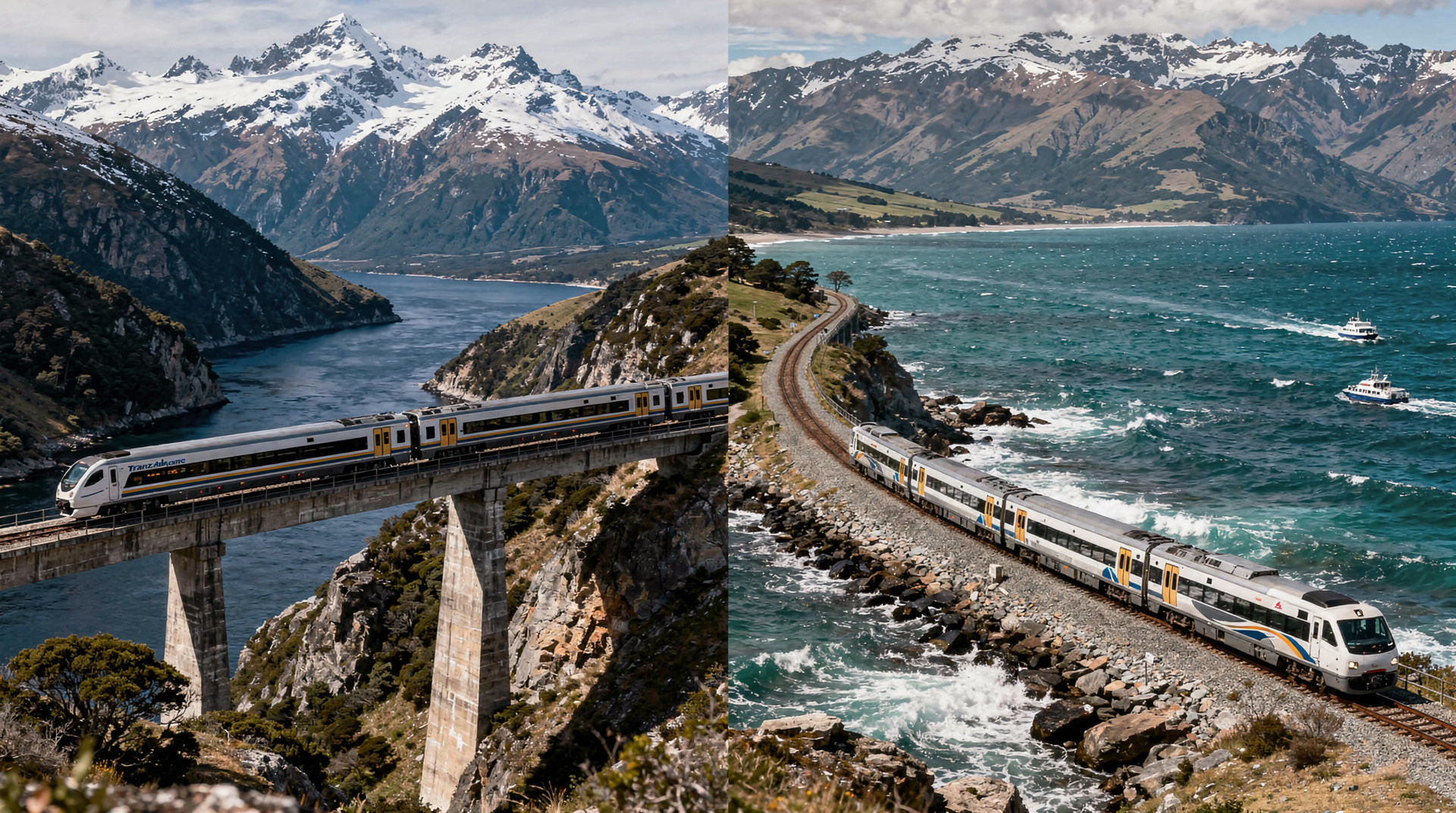
Different experiences. The TranzAlpine crosses mountains; the Coastal Pacific (Christchurch-Picton) follows the coast. Both are excellent. The TranzAlpine is the more dramatic engineering feat; the Coastal Pacific has more consistent coastal scenery. Full comparison at TranzAlpine vs Coastal Pacific.
Can I bring luggage on the TranzAlpine?
Yes — standard luggage is permitted, and there’s storage space. This is the practical advantage of using the TranzAlpine as part of an itinerary that continues to the West Coast.
Is the day-trip round trip tiring?
Honestly, yes. Total time on the train is around 9 hours out of a roughly 10-hour day, and the 1 hour in Greymouth doesn’t allow for anything beyond a quick lunch. It’s genuinely worthwhile as a pure scenic-train experience — many day-trippers find the return leg’s different light on the Waimakariri Gorge complementary rather than repetitive — but if time sensitivity matters (an onward flight from Christchurch that evening, for example), build in a comfortable buffer.
Making the day trip work logistically
If you’re set on the round-trip rather than a one-way with a West Coast overnight, a few adjustments make the day meaningfully better. Book a window seat on the right-hand side heading west for the best Waimakariri Gorge views on the outbound leg, then move to the open-air observation carriage for 15–20 minutes around the Arthur’s Pass and Otira sections specifically — standing the whole journey isn’t necessary or comfortable, but missing the observation deck for the gorge crossing is the main regret day-trippers report.
In Greymouth, skip trying to see the town itself in the 1-hour window — head straight to a waterfront café near the station for a fast lunch, since the walk back with margin for the 1:45pm departure doesn’t leave room for detours. If a full West Coast day genuinely appeals rather than just the train ride, the TranzAlpine day trip with Arthur’s Pass stop and lunch restructures the day around a coach return instead, which allows an actual walk at Arthur’s Pass rather than just a photo stop from the platform.
For anyone weighing whether the round trip or a West Coast overnight suits their itinerary better, the day trips from Christchurch overview and the Arthur’s Pass day trip guide cover the alternative structures in more depth.
Deciding between the day trip and a longer West Coast plan
The round trip suits a particular kind of traveller: someone who wants the crossing of the Southern Alps as an experience in its own right and is happy to let the train be the whole day. If that sounds like you, the TranzAlpine train overview explains the route and the carriages in more general terms, while the TranzAlpine train review gives a more opinionated account of how the journey feels from a seat. Reading both before booking helps you decide whether the day format or the one-way format fits your trip.
If your plans also include the north, the TranzAlpine vs Northern Explorer comparison is a useful way to choose between the two long-distance scenic journeys, and the Northern Explorer guide covers the North Island route. For a coastal alternative from the same city, the Coastal Pacific guide describes the other main departure from Christchurch. Anyone who wants the broader picture of rail in the country can start from the scenic trains overview and work outwards.
Travellers who choose the one-way option should think early about how they will get back east. Some will hire a car and enjoy the drive; the driving in New Zealand guide covers the habits worth knowing, from keeping left to allowing generous time on mountain roads. Others would rather not drive at all, and the New Zealand without a car itinerary shows how trains, buses and shuttles can be strung together. Either way, decide before you book, because the return leg shapes how many nights you can spend on the coast.
Where to spend the extra night on the coast
The West Coast rewards a slower pace, and the train drops you at its doorstep. Hokitika is a natural base if you like small-town character and craft studios, and Punakaiki suits those who would rather wake up beside the coastal limestone formations and the sound of the sea. Both are described in more depth on the wider West Coast destination guide, which helps you choose a base according to your interests rather than just your timetable.
If glaciers are the real goal, read the Franz Josef Glacier guide and the glaciers in New Zealand overview before deciding how far south to continue. Seeing the ice at the end of a train journey across the Alps makes for a satisfying arc, and the Southern Alps overview places the mountains you crossed by rail in their wider geographic context. It also helps you appreciate what the train has just done: lifted you over the main divide without a single hairpin bend.
Building the crossing into a wider South Island trip
The TranzAlpine fits neatly into a longer loop. A traveller with a week might ride west by train, spend a night or two on the coast, and then continue south or return east by road. The 7-day South Island itinerary shows how a trip of that length can be paced so the train is a highlight rather than a rushed tick-box. For those continuing towards the lakes and mountains of Otago, the Christchurch to Queenstown drive describes the classic overland route, which pairs well with a West Coast detour if time allows.
Whatever structure you pick, keep the practical lessons of the day trip in mind: dress for the open-air carriage, book ahead in the busy months, and treat the stop at Arthur’s Pass as an opportunity rather than a formality. The train is only part of the day; the way you frame the hours around it is what turns a long ride into a memorable one.
Related reading
Related guides
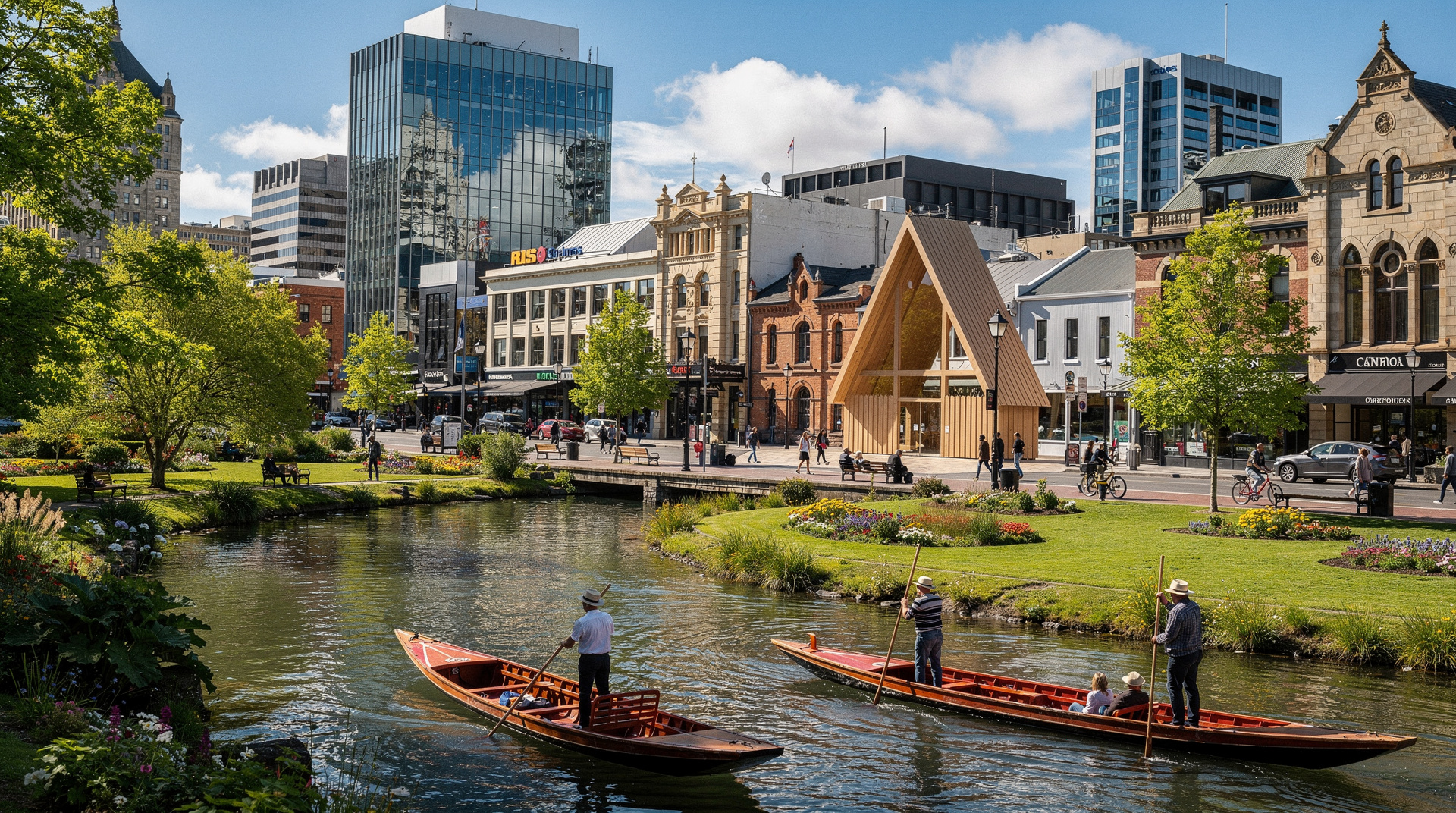
Christchurch
Honest Christchurch guide: the post-earthquake rebuild, best activities, Akaroa day trip — real NZD/USD/EUR prices and what's worth your time.
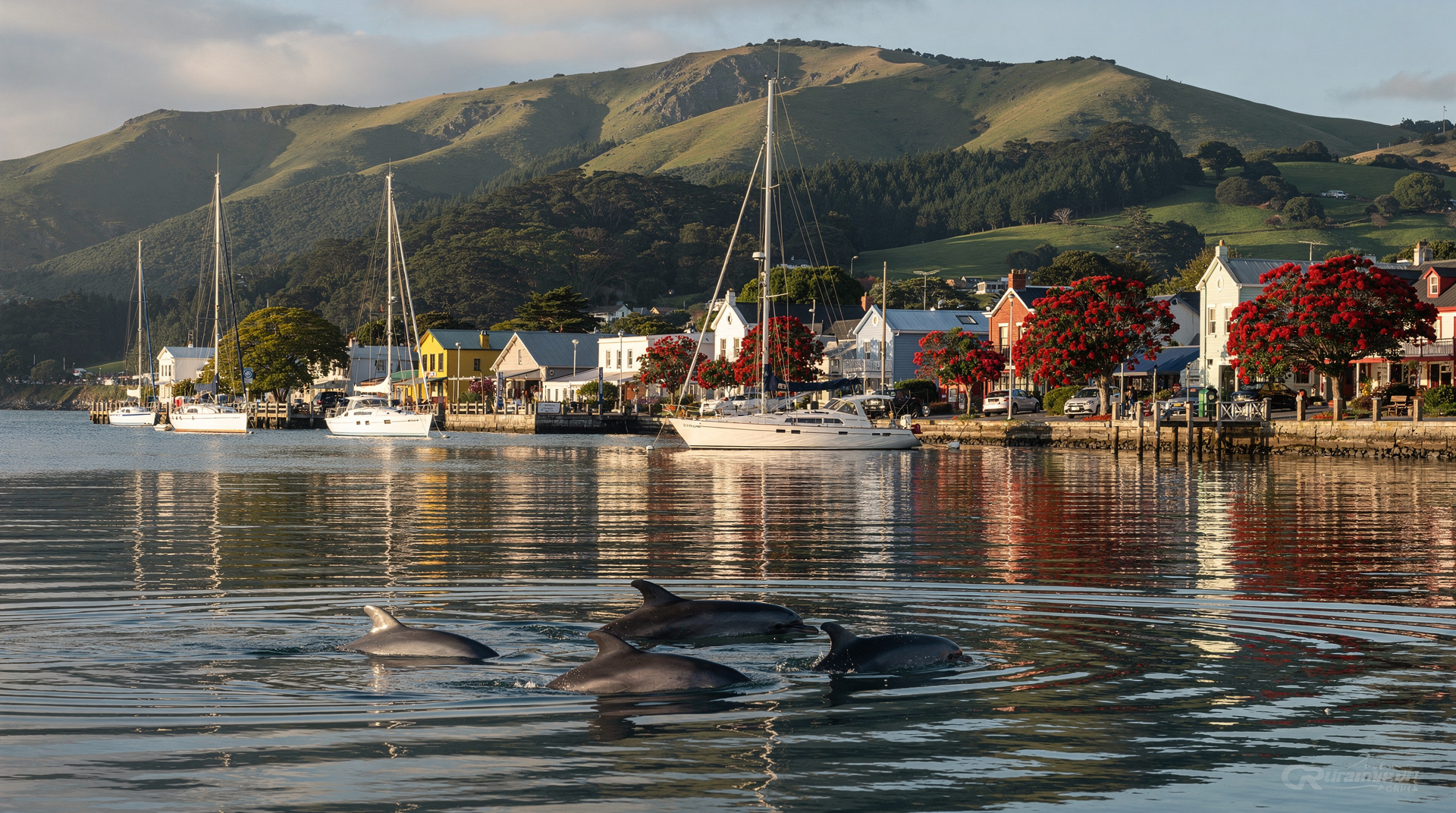
Best day trips from Christchurch
Best day trips from Christchurch: Akaroa dolphins (1h), Kaikoura whales (1.5h), Hanmer Springs pools, Arthur's Pass hikes.
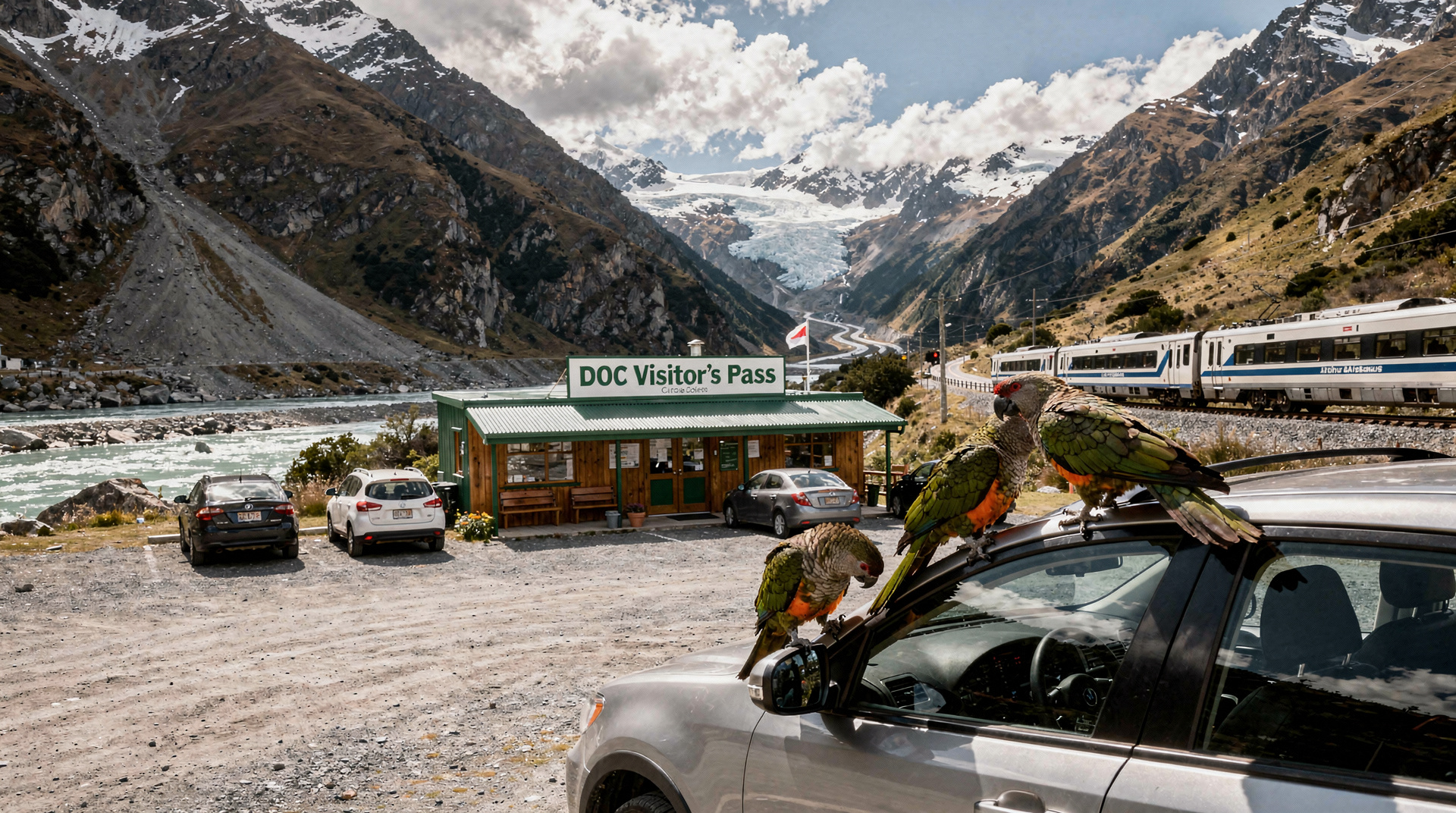
Arthur's Pass day trip from Christchurch
Arthur's Pass day trip from Christchurch: 1.5-hour drive, Castle Hill limestone boulders, kea parrots, alpine hikes, TranzAlpine option.
TranzAlpine vs Coastal Pacific scenic train
TranzAlpine vs Coastal Pacific honest comparison: scenery, routes, prices and which NZ scenic train is worth your time. NZD/USD/EUR prices.
Scenic trains in New Zealand
Complete guide to NZ's three scenic trains: TranzAlpine, Northern Explorer, Coastal Pacific. Routes, costs, booking tips, and honest verdicts on each.