West Coast
Honest West Coast guide: Franz Josef and Fox Glacier heli-hikes, Punakaiki Pancake Rocks, Hokitika, Greymouth. NZD/USD/EUR prices, what's worth it.
Quick facts
- Region
- Western South Island between the Alps and the Tasman Sea
- Major hubs
- Greymouth, Hokitika, Franz Josef, Fox Glacier, Westport
- Currency
- NZD — 1 NZD ≈ USD 0.60 / EUR 0.55
- Best for
- Glacier heli-hikes, Pancake Rocks, rainforest, TranzAlpine train
- Skip if
- You're very tight on time — the West Coast requires 3+ dedicated days to reach and do properly
West Coast in one minute
The West Coast is New Zealand’s most dramatic road trip — and its wettest region, rainfall exceeding 5,000mm per year in some valleys. The Southern Alps rise abruptly from a narrow coastal strip, and between the mountains and the Tasman Sea there is very little: rainforest, wild beaches, ancient kahikatea swamps, and two glaciers that descend closer to sea level than almost any temperate glacier on earth.
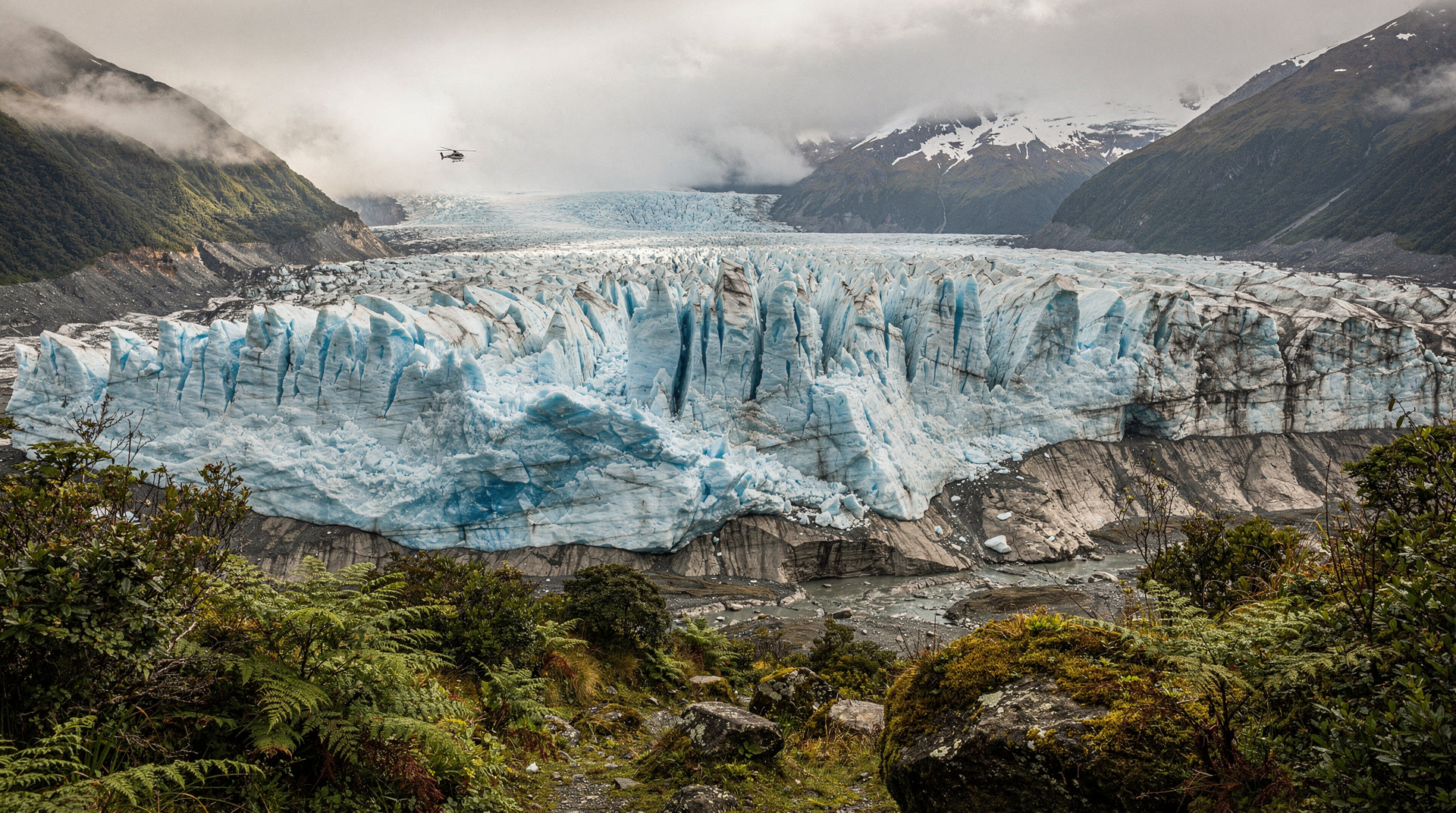
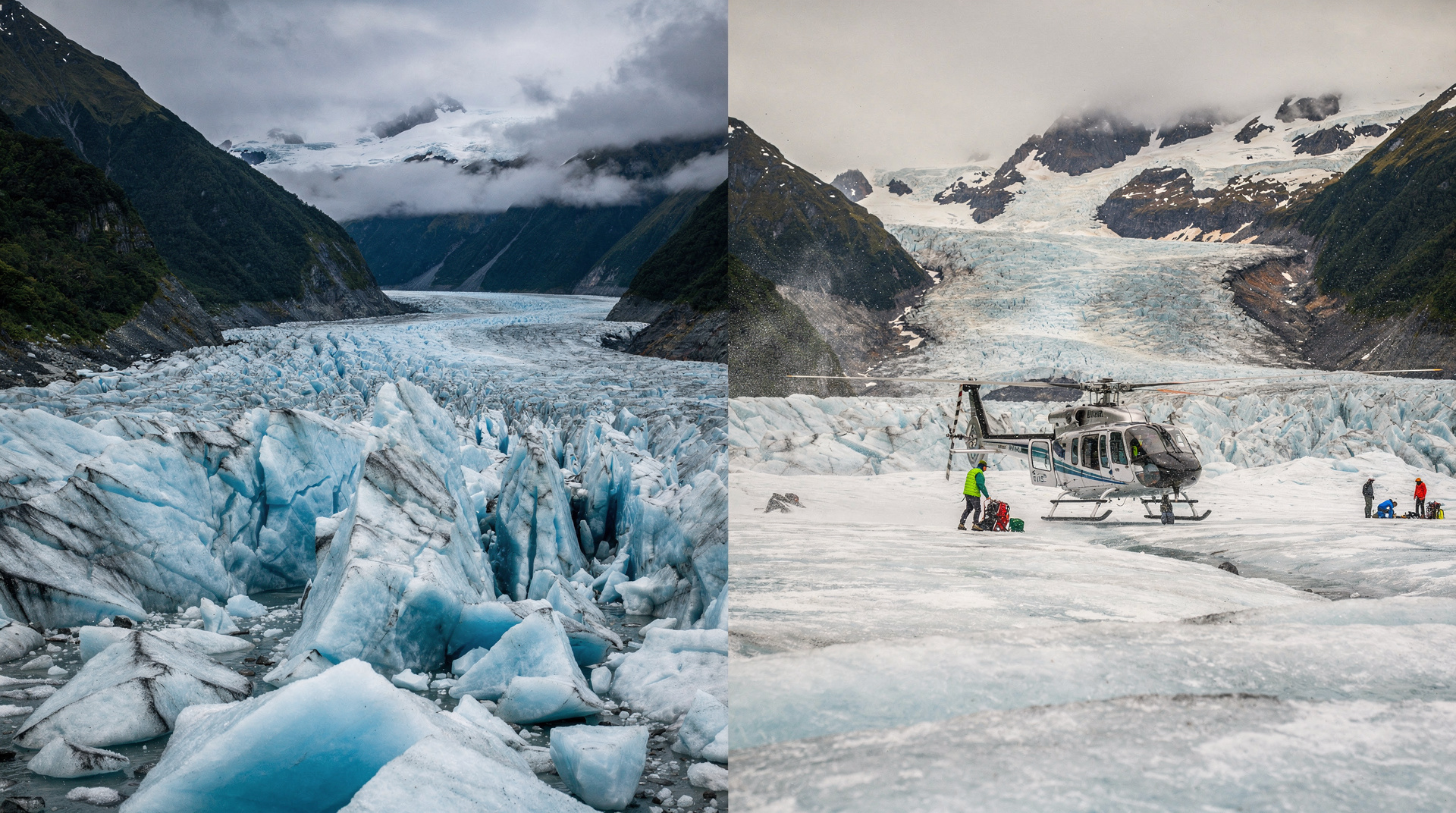
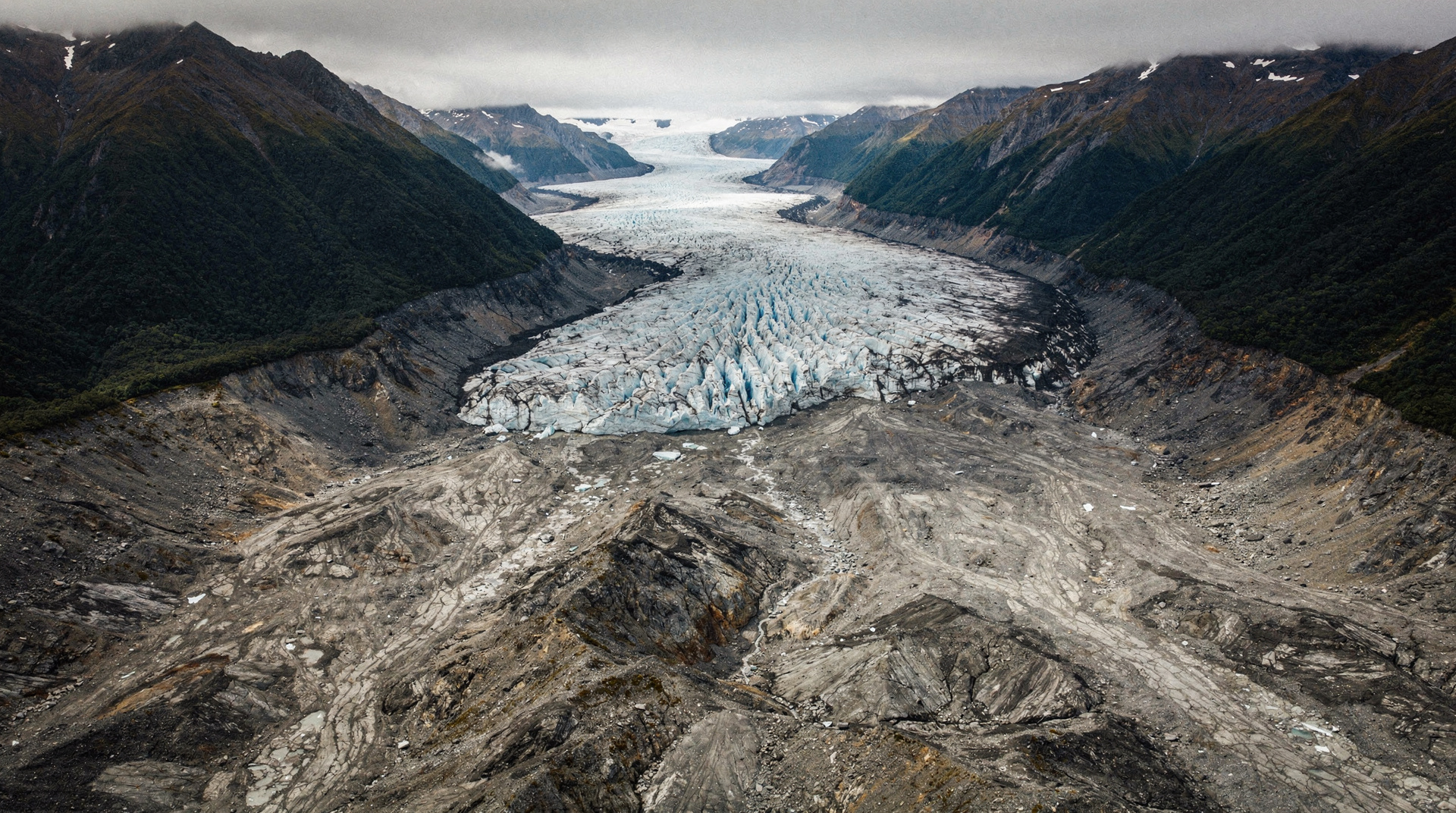
Franz Josef Glacier and Fox Glacier are the twin centrepieces. Both were accessible on foot until the early 2010s, when rapid recession moved the ice above safe hiking distance from the terminal. The standard experience now is a helicopter flight to the upper glacier with a guided hike on the ice — an extraordinary 2.5-3 hour experience at NZD 450-600 / USD 270-360 / EUR 248-330. No other activity in New Zealand combines aerial views, snow fields, and crevassed ice in the same way.
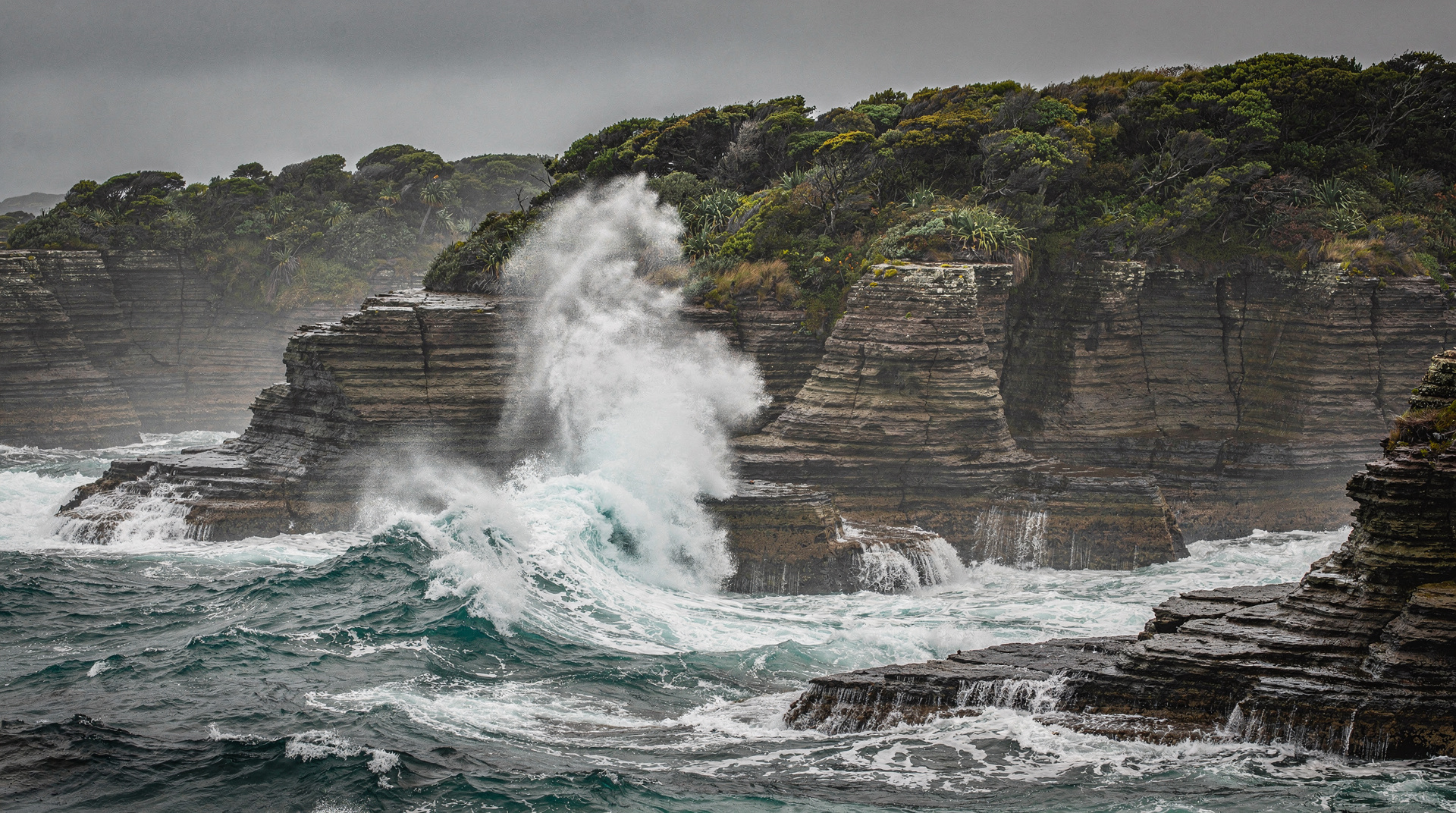
Further north: Punakaiki’s Pancake Rocks (limestone formations that look exactly as the name suggests, with blowholes in rough sea conditions). Hokitika has greenstone carving and a gorge walk. Greymouth is the largest town (pop ~9,000) and the western terminus of the TranzAlpine train.
| Where | Western South Island, between the Southern Alps and the Tasman Sea |
| Time needed | 3–5 days for the full Christchurch-to-Queenstown route |
| Cost | Around NZD 430–480 for a glacier heli-hike; Pancake Rocks and Hokitika Gorge are free |
| Getting there | Self-drive only — no reliable scheduled bus between glacier towns |
| Best time | October–April for heli-hike weather windows |
The honest case for the West Coast
The West Coast is not convenient. It requires commitment — typically either the Christchurch-Greymouth-Franz Josef highway (State Highway 73 then 6, 6-7 hours to Franz Josef), or the Queenstown/Wanaka-Haast-Franz Josef road (4 hours through the Haast Pass). Many travellers underestimate the drive times.
The reward is commensurate. The West Coast is the most “other” part of New Zealand — geologically young, sparsely populated (35,000 people in an area the size of Switzerland), dramatically wild. The green-lipped mussels are fresher here than anywhere. The skies, when they clear, show the Alps in crystal light. The rainfall gives the bush a depth of green that photographs never quite capture.
Worth it without question: A glacier heli-hike at Franz Josef or Fox. Punakaiki Pancake Rocks. The TranzAlpine train from Christchurch (even if you only go one-way and return by bus). The Hokitika Gorge walk.
Honest skip: The township of Franz Josef itself (small, almost entirely tourism-service accommodation and restaurants, not charming). Driving too fast — most West Coast driving mistakes are about pace, not distance.
Where to base yourself
Franz Josef (official name: Franz Josef / Waiau township) is the helicopter base. Small, slightly tatty, almost entirely tourism-focused. You don’t go for the town — you go for the glacier access. Stay 1-2 nights, do the heli-hike, leave.
Fox Glacier township is 24km south of Franz Josef. Slightly smaller and quieter. Some people prefer it as a base — the access road to the glacier terminal is longer (5km) but the glacier itself is wider. The Fox-Franz Josef comparison is covered in the Franz Josef vs Fox Glacier guide.
Hokitika is 140km north of Franz Josef — a more pleasant town with a genuine resident community. The greenstone (pounamu) carving workshops, the beach driftwood art, and the Hokitika Gorge (25km inland) give it independent reasons to stay. More relaxed pace than the glacier towns.
Greymouth is the largest town and the TranzAlpine terminus. Not scenic but practically useful — supermarkets, a working harbour, and the adjacent Shantytown heritage park. Most people stay 1 night in Greymouth and either take the morning train to Christchurch or continue driving north. For those based in Greymouth who want to explore the broader West Coast landscape without a long self-drive, two guided day-tour options are available: the West Coast highlights day tour from Greymouth covers the key scenic stops north and south of town — Punakaiki Pancake Rocks, the coastal strip, and the rainforest — in a single structured day.
For a southern focus, the full-day West Coast tour from Greymouth including Hokitika Gorge takes in the Hokitika Gorge’s turquoise glacial water, Hokitika town’s pounamu workshops, and the coastal scenery between the two towns. Both are a practical option for travelers who have arrived by TranzAlpine train and do not have a rental car.
Karamea is at the northern tip of the West Coast — the endpoint of the Heaphy Track Great Walk, a remote and largely unknown community. If you’re hiking the Heaphy, Karamea is essential. Otherwise it’s a long detour for limited rewards.
Top experiences on the West Coast
Franz Josef Glacier heli-hike
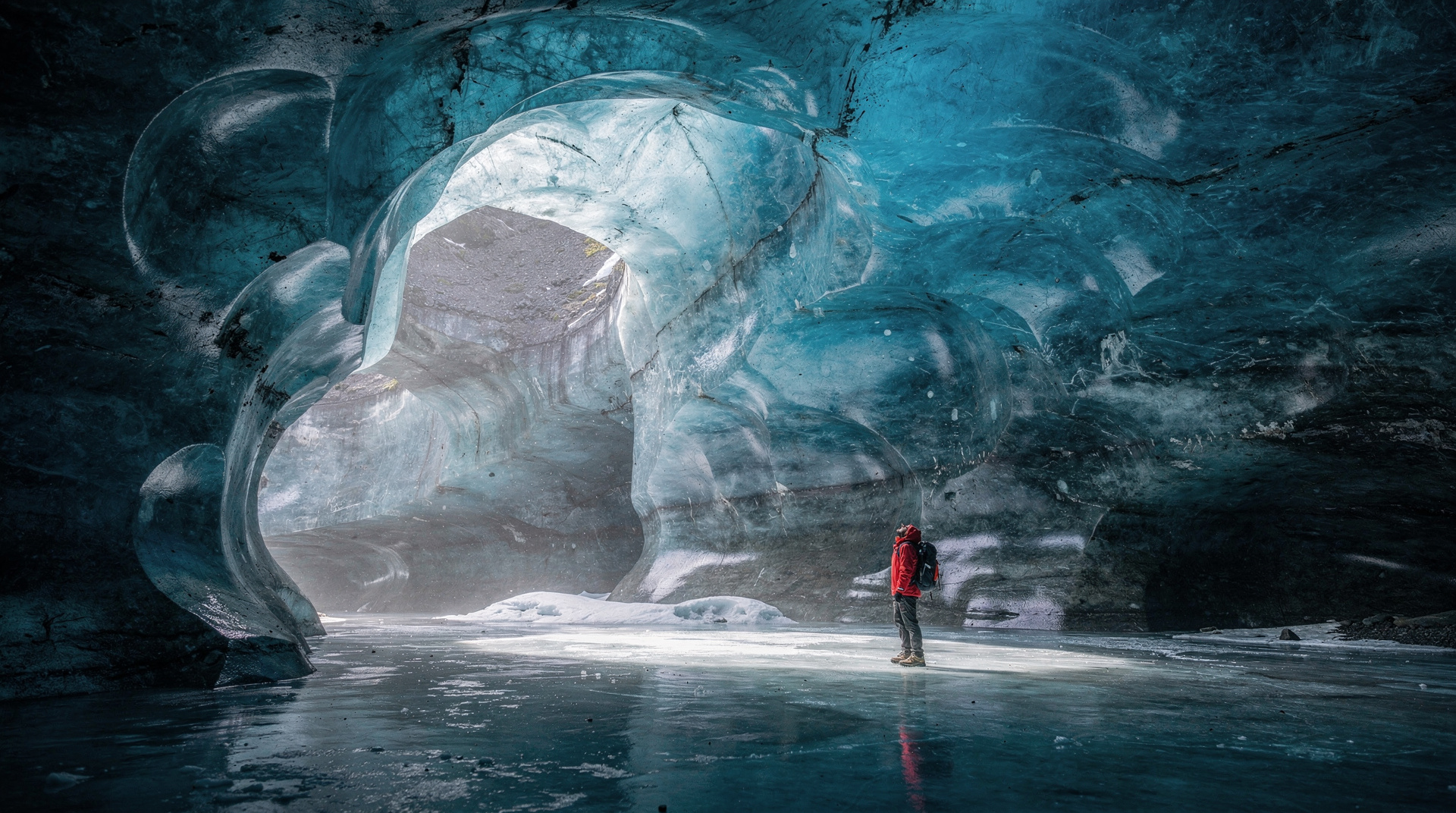
This is the West Coast’s unmissable experience. A helicopter lifts you from the Franz Josef helipad (town centre) to the upper glacier — the flight alone is extraordinary (fiords, snowfields, alpine ridges below). You land and spend 2-2.5 hours on ice with a guide: ice tunnels, crevasse exploration, seracs, blue ice. The guide provides crampons, equipment, and instruction.
The experience is weather-dependent — cloud or wind grounds the helicopters, and the West Coast weather can change in 30 minutes. Most operators run multiple sessions per day and will shift you to the next available slot if yours is cancelled. Always book the first morning slot and have flexibility in your schedule.
Franz Josef: 2.5-hour glacier hike with helicopter transfer — NZD 430-480 / USD 258-288 / EUR 237-264. The standard offering and consistently one of the best-reviewed experiences in New Zealand.
Franz Josef glacier ice climb experience with heli transfer — includes vertical ice climbing with proper gear. NZD 500-580 / USD 300-348 / EUR 275-319. For the more adventurous.
Comprehensive guide: Franz Josef Glacier guide and Franz Josef helicopter tours.
Fox Glacier heli-hike
Fox Glacier is 24km south of Franz Josef — wider, less visited, and from the air slightly more dramatic in the upper snowfields. The heli-hike experience is essentially identical: helicopter lift, 2.5-3 hours on ice, crampons and guide provided.
Fox Glacier: up to 3-hour hike with helicopter transfer — NZD 430-480 / USD 258-288 / EUR 237-264.
The aerial combination tour covers both glaciers: Franz Josef and Fox Glaciers helicopter flight with snow landing — NZD 350-400 / USD 210-240 / EUR 193-220 (flight only, no walking). A good option if the weather window is marginal.
See fox glacier guide and fox glacier helicopter tours.
Punakaiki Pancake Rocks and blowholes
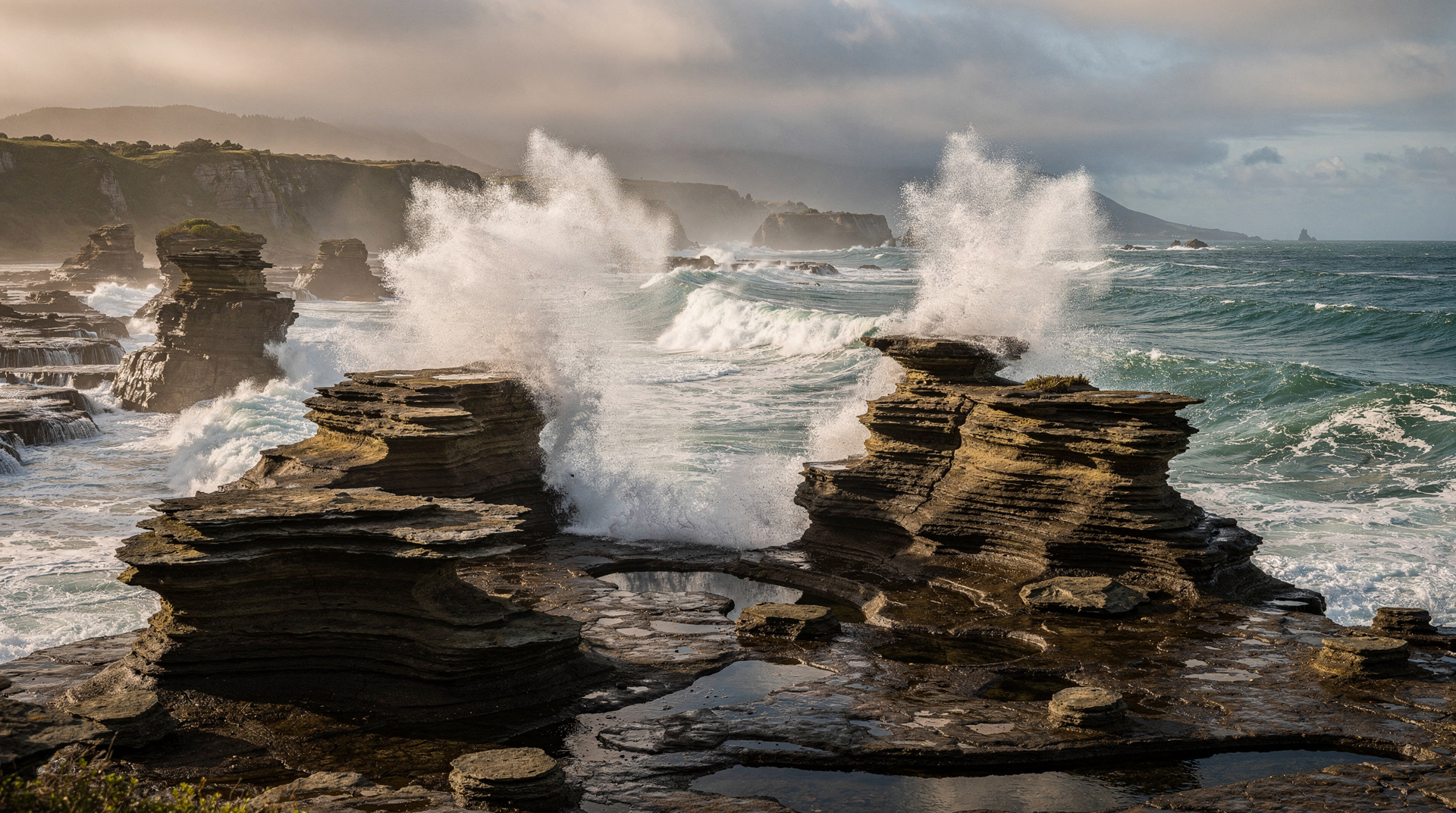
Punakaiki is 150km north of Greymouth on SH6. The Pancake Rocks are a limestone formation created by alternating layers of hard and soft rock that eroded at different rates — the resulting stack formations genuinely look like piles of pancakes. The blowholes alongside them shoot seawater 5-10m into the air in rough sea conditions. The walk is 20 minutes return from the car park and entirely free.
When to go: The blowholes are active in rough sea with a high tide. Check the tide table and aim for high tide in 2m+ swells. In flat calm conditions, the blowholes are inactive. The DOC visitor centre has tide times posted.
Punakaiki has no real town — a small cafe-restaurant (Punakaiki Rocks Café, good whitebait fritters), a backpacker hostel (Punakaiki Beach Camp), and the pancake rock car park. Most people visit as a stop on the SH6 journey north or south.
From Greymouth: Punakaiki blowholes and Pancake Rocks tour — a guided half-day tour if you prefer not to drive the narrow coastal road yourself. NZD 75 / USD 45 / EUR 41.
Hokitika Gorge
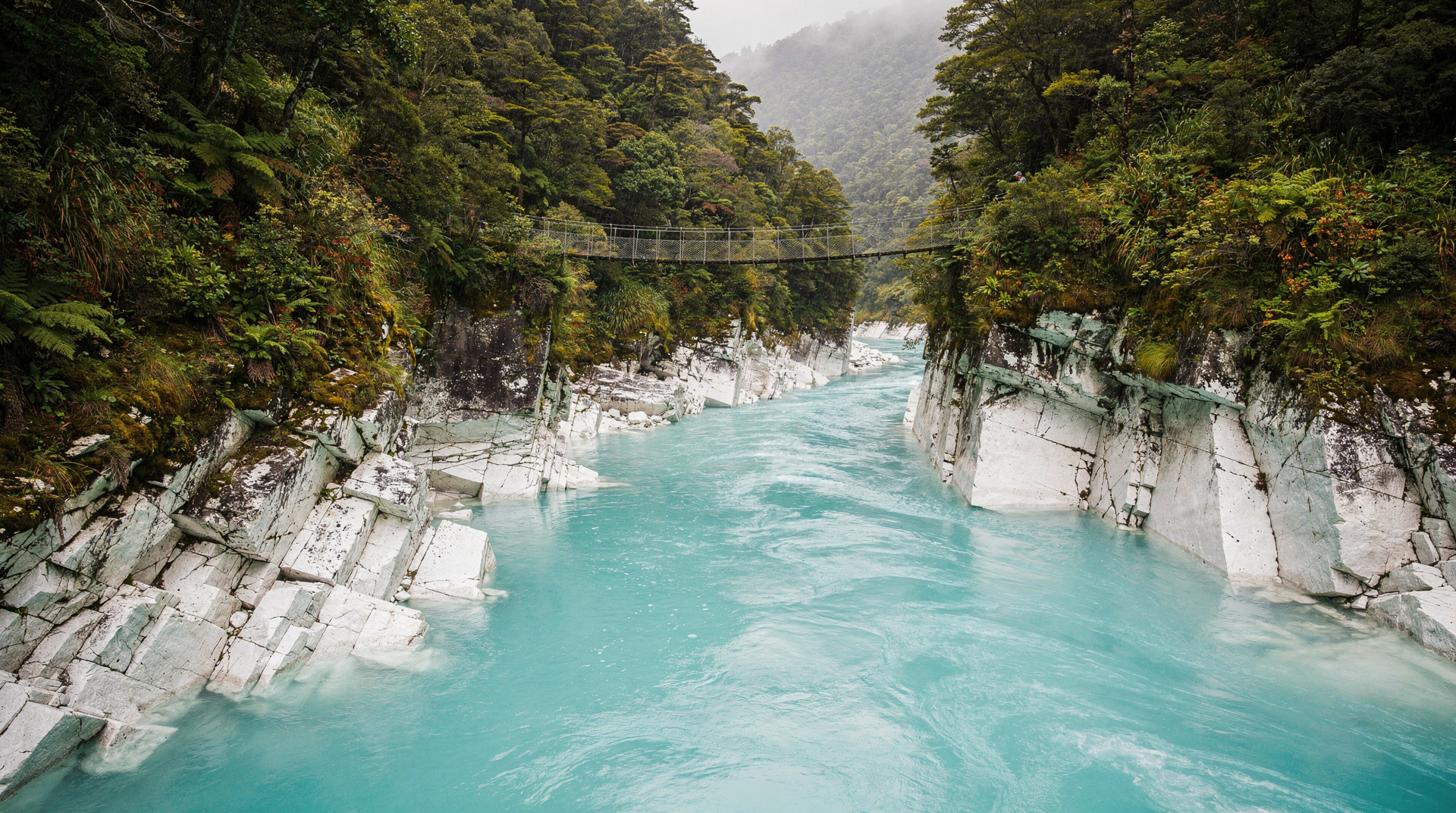
The Hokitika Gorge is 25km east of Hokitika town — a steep-sided gorge where the Hokitika River runs an extraordinary milky turquoise from glacial flour suspended in the water. The swing bridge above the gorge and the short walk through native forest are some of the best free photography in the South Island. Allow 1.5 hours return from the car park.
The treetop walkway 5km outside Hokitika is a separate attraction — 20m above the rainforest floor on suspended walkways. Excellent for children; interesting for everyone. Hokitika West Coast Treetop Walkway entrance ticket — NZD 32 / USD 19 / EUR 17.60.
The greenstone carving workshops in Hokitika town are worth 45 minutes — you can design your own koru or fish hook and watch it carved. Prices range NZD 60-300 / USD 36-180 / EUR 33-165 depending on size and complexity. Pounamu (New Zealand greenstone) carries genuine cultural significance for Maori — traditional designs like the koru (new life, growth) and the hei matau (fish hook, safe travel over water) have specific meanings, and buying from a workshop that explains this context is a more meaningful souvenir than a generic gift-shop version.
The TranzAlpine train
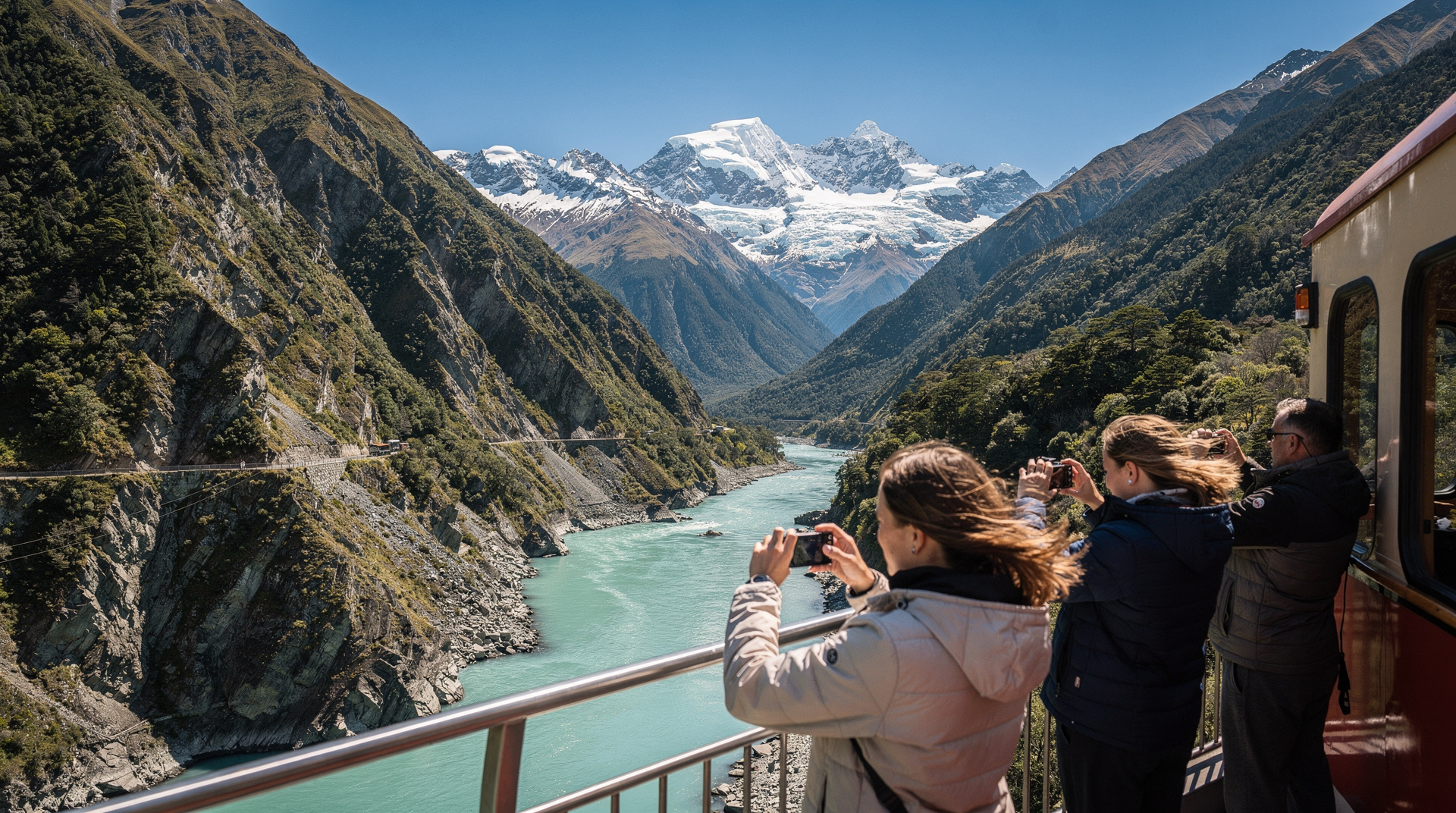
The TranzAlpine is one of the world’s great scenic railway journeys: 4.5 hours, Christchurch to Greymouth, crossing the Canterbury Plains, climbing through the Southern Alps at Arthur’s Pass, and descending through the Otira Gorge to the West Coast. The views from the open carriage (outdoor viewing deck available on all trains) include the Waimakariri River, Otira Viaduct (95m high), and the alpine watershed.
Day return from Christchurch to Arthur’s Pass (and back) is the most popular format. One-way Christchurch to Greymouth (then continue by bus or rental car) works if you’re doing the West Coast as part of a longer South Island circuit.
See TranzAlpine train guide for pricing, booking, and the best seats.
Getting there and getting around
The key routes:
Christchurch to Greymouth: 250km via SH73 (Arthur’s Pass — the TranzAlpine train route). Allow 3.5-4 hours by car. A spectacular drive; the pass itself (920m) can be snowy in winter. Check the NZ Transport Agency website for road closure information.
Greymouth to Franz Josef: 175km south on SH6. Allow 2.5-3 hours. The coastal section north of Hokitika is one of the most beautiful in New Zealand — rainforest on the left, the Tasman Sea crashing on grey-black beaches to the right.
Queenstown/Wanaka to Fox Glacier: 220km via the Haast Pass (SH6). Allow 3.5-4 hours. The Haast Pass road is spectacular and rarely driven — remote, wild, and far less touristed than the Franz Josef route. The Blue Pools (20-minute walk off the highway) are a free detour worth taking.
Getting around within the region: A rental car is the only practical option. No scheduled bus services connect the glacier towns reliably. Check rental car terms on the Haast Pass road — some companies have restrictions on the unsealed section south of Haast.
Fuel planning: Petrol stations are sparse and more expensive on the West Coast than in the main centres. Fill up in Greymouth, Hokitika, or Franz Josef rather than assuming you’ll find a station when you need one — the stretch between Haast and Wanaka in particular has long gaps with no services at all.
Where to stay
Budget (NZD 35-100 / night)
YHA Franz Josef Glacier — the most social backpacker in the glacier zone. Dorm NZD 36; private NZD 95-110.
Hokitika Backpackers (Hokitika) — central, clean, good common areas. Dorm NZD 38.
Mid-range (NZD 130-280 / night)
Rainforest Retreat (Franz Josef) — self-contained “treehouses” and chalets in native bush. NZD 180-250. Best mid-range in the glacier towns — the rainforest setting is lovely.
Beachfront Holiday Park (Hokitika) — absolute beachfront, excellent views of the Alps from the beach at sunset. Cabins NZD 100-140; powered sites NZD 48.
Punakaiki Beach Camp — the only accommodation at Punakaiki itself. Charming, basic, absolute Tasman Sea position. Dorm NZD 38; private NZD 95.
Luxury (NZD 350+)
The Terrace Motel (Franz Josef) — the best motel in the glacier area, well-maintained, glacier mountain views. NZD 280-360.
Lake Mapourika Motels (8km north of Franz Josef) — lakefront position on the most beautiful lake on the West Coast. NZD 200-280.
Best time to visit
October to April is glacier season. The longer daylight hours mean multiple helicopter sessions per day; the morning slots have the most stable weather. Heli-hike booking fills up in December-January — book at least 2-3 weeks ahead.
The weather reality: The West Coast is the wettest part of New Zealand. It can rain for 5 days straight without letting up. The glaciers require clear weather for helicopter operations. Travellers on tight schedules sometimes get frustrated by weather cancellations. Build flexibility into your West Coast days — don’t plan to do the heli-hike on the only day between fixed commitments. Most operators have a 24-hour cancellation/rebooking policy.
Winter (June-August): Fewer tourists, cheaper accommodation, and the glaciers are often in perfect condition. The Haast Pass can close briefly for snow (rare below the pass itself). The TranzAlpine runs year-round; Arthur’s Pass road remains open except in severe weather events.
Common mistakes
Booking the heli-hike for the only day on the West Coast. Weather cancellations are common. If you have only 1 day and it rains, you’ve missed the main attraction. Always book the first available slot and plan to stay an extra day if needed.
Underestimating the driving. Christchurch to Franz Josef via Greymouth is a 7-hour drive. Many visitors plan to “do it in a day” and arrive exhausted in the dark. Break the journey in Greymouth or Arthur’s Pass (1 night).
Treating Franz Josef township as a destination. It’s a service hub, not a destination. The town’s only redeeming quality is that the helicopter company is 200m from the motel.
Missing Hokitika. Franz Josef-only visitors miss the greenstone carving, Hokitika Gorge, and the genuinely pleasant town character. Build in half a day.
Skipping the TranzAlpine. Many self-drivers pass Arthur’s Pass on SH73 and treat it as just a road. The train does the same journey but with an open observation carriage, a commentary track, and you don’t have to concentrate on the road. Do both if possible — drive one way, train the other.
Sample itineraries
2-day glacier express (minimum)
Day 1: Fly to Greymouth or drive from Christchurch via TranzAlpine (arrive by afternoon). Overnight Greymouth.
Day 2: Drive south: Punakaiki stop (45 min), Hokitika Gorge (1.5 hours), arrive Franz Josef. Heli-hike (book first available slot, afternoon if needed). Overnight Franz Josef.
Continue south to Fox Glacier, then to Queenstown via Haast Pass next day (4 hours).
4-day West Coast circuit
Day 1: Christchurch to Greymouth by TranzAlpine or car. Afternoon: Shantytown heritage park or Greymouth brewery.
Day 2: Drive south: Punakaiki (1 hour), Hokitika Gorge, Hokitika greenstone. Overnight Hokitika.
Day 3: Drive to Franz Josef. Morning free. Afternoon heli-hike. Overnight Franz Josef.
Day 4: Fox Glacier (4WD lookout, or a second heli-hike if budget allows). Continue south via Haast Pass to Wanaka (4 hours) or overnight Haast.
Combine with Canterbury region guide for the Christchurch-to-Queenstown circuit, and day hikes Wanaka for the continuation.
Franz Josef vs Fox Glacier vs a scenic-flight-only option
Deciding which glacier — or which type of experience — suits your time and budget is the most common West Coast planning question.
| Best for | Cost | Commitment | |
|---|---|---|---|
| Franz Josef heli-hike | Most travellers, more accommodation/dining options in town | NZD 430–480 | Half-day, weather-dependent |
| Fox Glacier heli-hike | Travellers wanting fewer crowds, near-identical experience | NZD 430–480 | Half-day, weather-dependent |
| Combined flight with snow landing | Visitors short on time or budget, marginal weather windows | NZD 350–400 | 30–45 min, no walking |
| Terminal viewing walk (no helicopter) | Anyone wanting a free look at the glacier face | Free | 1–2 hrs return |
There’s no meaningful quality difference between Franz Josef and Fox for the heli-hike itself — the choice mostly comes down to where you’re staying and which town’s accommodation and food you prefer. See the Franz Josef vs Fox Glacier guide for the fuller comparison.
FAQ
Are the glaciers accessible on foot in 2026?
The terminal faces of both glaciers are accessible by walking track — Franz Josef to the Franz Josef Terminal marker is about 1km. You can see the ice from a safe viewing area, but the glacier face is eroded, crumbling, and dangerous close up. Guided walking on the glacier ice requires a helicopter to reach the upper snowfields — the lower sections are too broken and unstable for safe access. This has been the case since approximately 2012.
How long is the Franz Josef heli-hike?
The total experience runs 2.5-3.5 hours including briefing, helicopter flight (5-10 min each way), and approximately 2 hours on the glacier. The flight itself is 5-10 minutes each way. The walking on ice involves crampons, ice axe, and is guided — no prior glacier experience needed.
What if my heli-hike is cancelled due to weather?
Operators will offer the next available slot, usually the same day or next morning. Most have a no-cancellation-cost policy for weather holds — you don’t lose your money. The frustration is a hotel night with nothing to do — plan activities you can do in rain (Hokitika Gorge walk is excellent in rain; the treetop walkway has covered sections). Always book the earliest morning slot.
Is the Haast Pass road safe for standard rental cars?
Yes — the Haast Pass road (SH6) is fully sealed except for a short section south of Haast to Jackson Bay (which is not on the main route). Normal rental cars handle the pass without issue. The road is narrow and winding but well-maintained. Check weather conditions if travelling in winter — snow above the pass is possible.
How does Fox Glacier compare to Franz Josef?
Fox is slightly wider, quieter (fewer tourists), and the access road takes you closer to the terminal (though the glacier is behind a riverbed crossing). The heli-hike experiences are essentially the same in quality and price. Franz Josef has more accommodation and dining options; Fox is more peaceful. Most people choose one and consider the other a bonus.
Can I visit the West Coast without a rental car?
Not comfortably. The TranzAlpine train gets you to Greymouth, and a handful of guided day tours run from there (Punakaiki, Hokitika Gorge), but there’s no reliable scheduled bus network connecting the glacier towns to the rest of the Coast. If you’re not renting a car, plan on a multi-day guided package rather than trying to self-navigate by public transport.
How does the West Coast compare to Milford Sound or Wanaka for scenery?
They’re different registers of dramatic rather than direct competitors. Wanaka and Fiordland’s Milford Sound are alpine-lake and fiord landscapes; the West Coast is rainforest, wild beach, and glacier ice descending almost to sea level — a wetter, wilder, more remote feel. Most South Island itineraries include both rather than choosing one over the other, since the Haast Pass road connects Wanaka directly to the glacier towns.
Top experiences: west coast New Zealand
See all →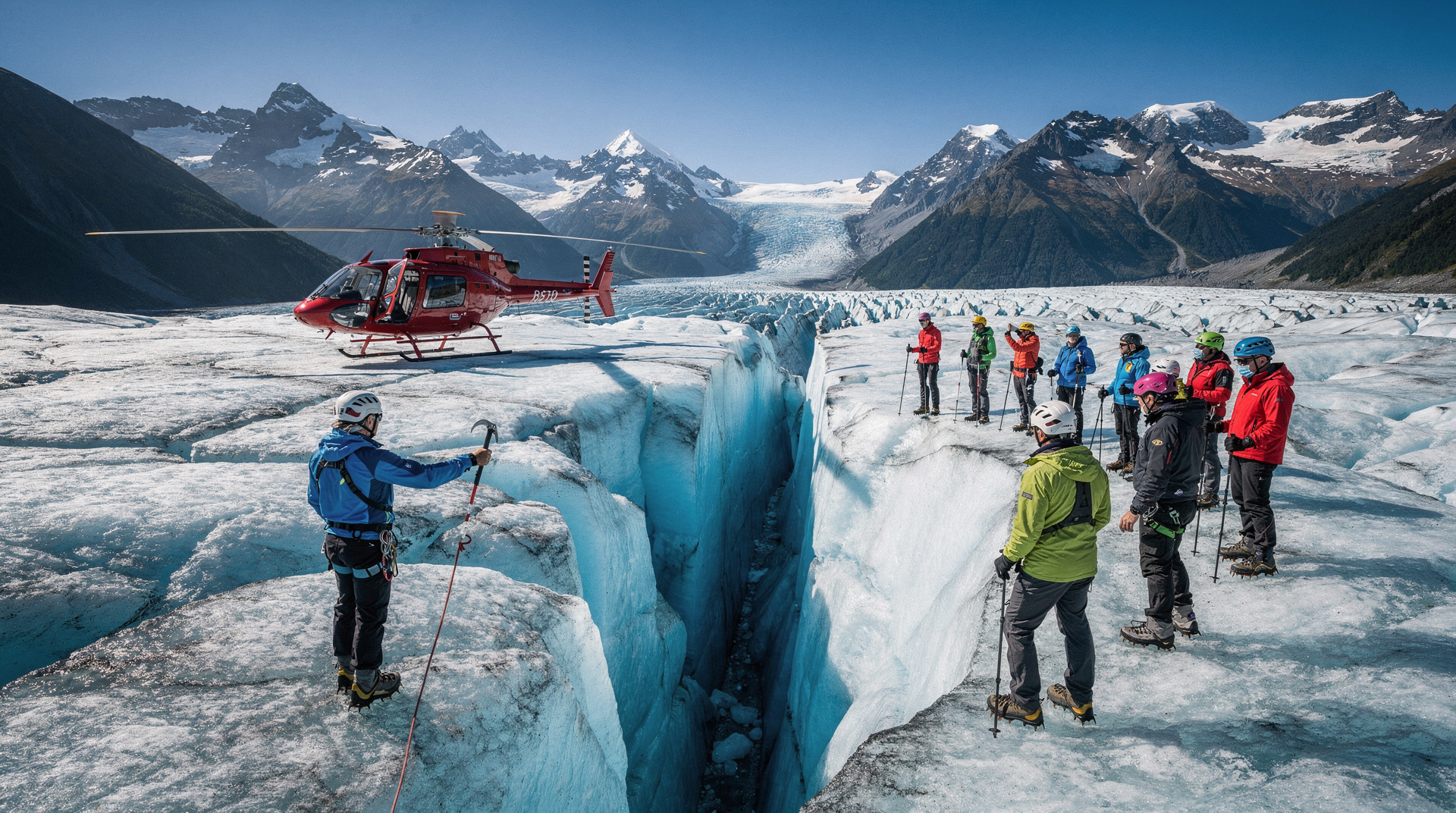
Related guides
Franz Josef Glacier
Honest Franz Josef guide: heli-hike vs ice walk, glacier retreat reality, real NZD/USD/EUR costs and what's possible after significant ice loss.
Fox Glacier
Fox Glacier: helicopter hikes on ice, the mirror-lake reflection at Lake Matheson, and a quieter alternative to Franz Josef. Real costs NZD/USD/EUR.
Hokitika
Hokitika: pounamu greenstone carving, the electric-blue gorge, a great driftwood beach, and the Wildfoods Festival. West Coast stop. Real costs NZD/USD/EUR.
Punakaiki
Punakaiki's Pancake Rocks and blowholes are the most dramatic coastal geology on the West Coast. Half-day stop on the Greymouth-Westport drive. NZD/USD/EUR.
New Zealand glaciers guide — Franz Josef, Fox, and the Tasman
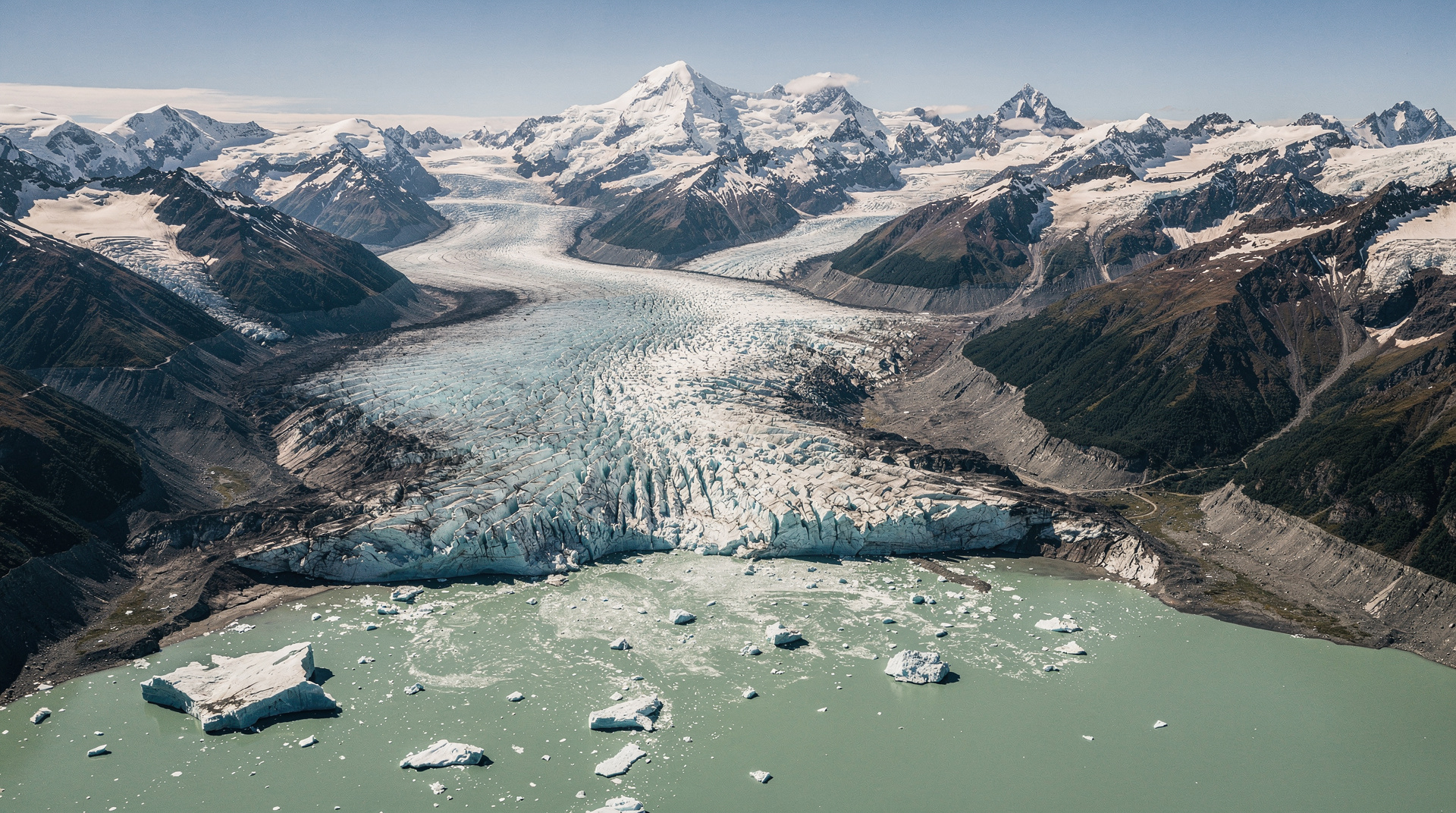
Honest NZ glacier guide: Franz Josef vs Fox vs Tasman Glacier comparison, heli-hike options, glacier retreat reality, what's still accessible in 2026.
TranzAlpine train — the complete guide to New Zealand's most scenic rail journey
TranzAlpine guide: the 4h20 Christchurch to Greymouth route, what you see, ticket prices NZD/USD/EUR, booking tips, and honest verdict on NZ's finest train.
Franz Josef vs Fox Glacier
Honest Franz Josef vs Fox Glacier comparison: heli-hike options, town facilities, Lake Matheson, and which glacier to choose. Prices in NZD/USD/EUR.
14-day New Zealand itinerary — both islands, grand tour
Honest 14-day NZ grand tour: Auckland, Bay of Islands, Hobbiton, Rotorua, Wellington, ferry, Kaikoura, Christchurch, Queenstown, Milford.
West Coast glaciers retreating — what to see now before the ice changes again
Franz Josef and Fox glaciers have retreated significantly. Here's what the glacier experience actually looks like now, and what's worth your time and money.
Last reviewed: