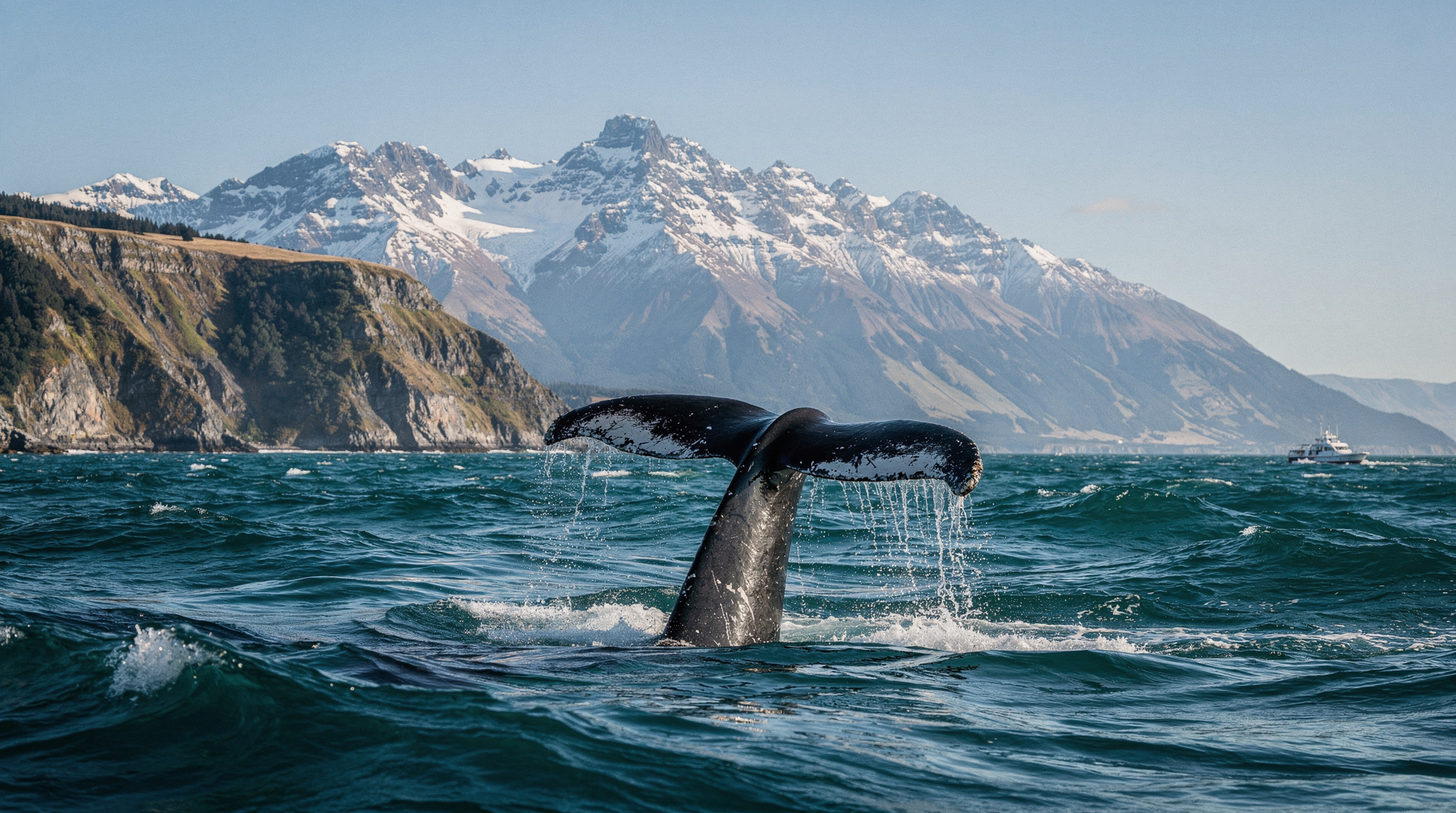
Kaikoura
Honest Kaikoura guide: sperm whale tours, wildlife kayaking, crayfish — real prices and the best time to visit after the 2016 earthquake rebuild.
Quick facts
- Signature wildlife
- Sperm whales year-round — Kaikoura is one of few places globally with resident males
- Drive from Christchurch
- 2.5 hours (185 km, SH1 north along the coast)
- Drive from Picton
- 2 hours (115 km, SH1 south — Coastal Pacific train covers this route)
- Currency
- NZD — 1 NZD ≈ USD 0.60 / EUR 0.55
- Post-earthquake
- SH1 and rail fully restored after the November 2016 earthquake
Kaikoura — the whale watching town that genuinely deserves the title
| Where | Canterbury coast, 185 km / 2.5 hrs from Christchurch |
| Time needed | 1–2 days for whale watching plus wildlife walks |
| Getting there | Self-drive SH1, Coastal Pacific train, or InterCity bus |
| Cost | Whale watching around NZD 165–195pp; fur seal walk free |
| Best time | Year-round for sperm whales; June–August for migrating humpbacks |
Popular experiences here
Kaikoura sits at the base of the Seaward Kaikoura Range, where the mountains drop almost directly into the Pacific Ocean. The deep-water Kaikoura Canyon runs offshore — a submarine canyon that rises sharply from 1,500m depth to near-surface, creating an upwelling of cold, nutrient-rich water that supports one of the most concentrated marine wildlife populations in the Southern Hemisphere.
The result: sperm whales are resident here year-round. This is exceptional globally — most whale watching destinations see migratory whales seasonally, but male sperm whales (which dive to 1,000–2,000m to feed on giant squid in the canyon) live here permanently. On a standard 2-hour whale watching cruise, you will almost certainly see a sperm whale. On a good day, you might see two or three.
Kaikoura was hit hard by a magnitude 7.8 earthquake in November 2016. The earthquake raised the seafloor along much of the coast by 0.5–2m (you can see the exposed rocky intertidal zone where kelp beds used to be), and blocked both SH1 and the Coastal Pacific rail line for nearly two years. As of 2026, the road and rail are fully restored and the town is in better shape than pre-earthquake by most measures.
Whale watching — what to actually expect
Kaikoura: Whale Watching Cruise (2-Hour)
Whale Watch Kaikoura — 2.5-hour boat tour with hydrophones to locate resident sperm whales. 90% sighting rate; 80% refund if no whale seen. Iwi-owned operator.
From NZD 165–195 / USD 99–117 / EUR 91–107
Advance booking is essential — the tours fill, particularly in summer (December–March) and during whale watching peak periods. The company only runs 2–3 departures daily.
What you see on a typical cruise: the boat locates a sperm whale at the surface (between dives, resting and breathing). The whale surfaces for 8–12 minutes, you observe from 50–100m, then it lifts its fluke (tail) for the terminal dive and descends. The fluke pattern is how individual whales are identified — you may be seeing a whale that researchers have known for decades.
Beyond sperm whales: in the right season you may also see orca (most commonly in summer, following rays and sharks), humpback whales (June–July, migrating north), dusky dolphins (year-round, often in pods of hundreds), New Zealand fur seals (year-round on the rocky peninsula), and various seabirds including albatross.
Whale watching by air — the whale watching scenic flight gives you an aerial view of the whale and the coastline simultaneously. 30-minute flight, small aircraft, NZD 195–245 / USD 117–147 / EUR 107–135. Good on days when the sea is rough and the boat tour might be rough going. Also offers a different perspective — the whale’s full body visible from above. The 1-hour whale watching helicopter combines whale viewing with scenic coastal flying, NZD 295–380 / USD 177–228 / EUR 162–209.
For those who want aerial whale watching with detailed running natural-history commentary throughout the flight, the Kaikoura whale watch flight with commentary is specifically designed around educational engagement — a guide provides identification of individual whales (many are known to researchers by fluke pattern), behavioural context, and ecological explanation of the Kaikoura Canyon during the flight. Particularly good for travellers who want to come away understanding what they saw rather than simply having seen it.
Wildlife kayaking and other activities
Kaikoura: Half-Day Wildlife Kayaking Tour
Paddle the Kaikoura Peninsula past the fur seal colony — dusky dolphins often join kayakers. No experience needed.
From NZD 125–155 / USD 75–93 / EUR 69–85
No prior kayaking experience required. One of the best wildlife encounters in the South Island for the price.
Fur seal colony — the Kaikoura Peninsula Walkway (3–4 hours, flat, fully accessible by car to the start) passes directly through the fur seal colony at the tip of the peninsula. Hundreds of seals visible year-round; pups are born November–January and are particularly engaging. Free, no booking required.
Swimming with dusky dolphins — a separate commercial operation (Dolphin Encounter) offers 3-hour guided swims with the resident dusky dolphin pods. Appropriate wetsuit provided. NZD 195–225 / USD 117–135 / EUR 107–124. The dolphins are genuinely interactive — they often approach swimmers out of curiosity. Dependent on dolphin presence and sea conditions; booking 2–3 days ahead recommended.
The Coastal Pacific train — the scenic train from Christchurch to Picton stops at Kaikoura. The coastal section between Kaikoura and Picton (the most dramatic part) runs directly along a narrow shelf between mountains and sea. If you’re traveling between Christchurch and Marlborough, the train is significantly more scenic than the road. See the Coastal Pacific guide for booking details.
Crayfish (rock lobster) — Kaikoura’s culinary claim
Kaikoura is famous for crayfish (called crock lobster in NZ — specifically the rock lobster, Jasus edwardsii). Multiple roadside stalls and restaurants sell freshly cooked crayfish from NZD 65–120 / USD 39–72 / EUR 36–66 per half or whole cray depending on size and season. It’s not cheap, but the quality is excellent — Kaikoura rock lobster is exported worldwide and eating it on the beach where it was caught is one of the better South Island food experiences.
The main crayfish season is April to September; December to March is the closed season for most rock lobster. Check availability when you arrive — prices and supply vary significantly by season.
Where to stay in Kaikoura
Budget: Dusky Lodge (NZD 38–55 / USD 23–33 / EUR 21–30 per dorm; popular backpacker hostel); Kaikoura YHA (NZD 40–60 / USD 24–36 / EUR 22–33; reliable); Hapuku Lodge Backpackers (NZD 42–60 / USD 25–36 / EUR 23–33).
Mid-range: Anchor Inn Motel (beachfront, NZD 165–245 / USD 99–147 / EUR 91–135); Kahutara Cottages (self-contained cottages 15 minutes north of town, NZD 195–295 / USD 117–177 / EUR 108–162); The White Morph (boutique hotel on the waterfront, NZD 225–355 / USD 135–213 / EUR 124–195).
Splurge: Hapuku Lodge (stunning tree-house accommodations in the Kaikoura foothills, sustainably built, excellent restaurant, NZD 650–1,200 / USD 390–720 / EUR 358–660 per treehouse). Hapuku is genuinely exceptional — one of the best boutique properties in the South Island.
What to eat
Hislops Wholefoods Café — breakfast and lunch institution, local and organic focus, NZD 18–28 / USD 11–17 / EUR 10–15. Reliable and reasonably priced for Kaikoura.
The Cray Pot — seafood restaurant, excellent crayfish and fish, mains NZD 28–65 / USD 17–39 / EUR 15–36. The crayfish preparation here is classic and straightforward.
Green Dolphin — mid-range restaurant with good seafood and NZ wine list. The best sit-down dinner option in town. Mains NZD 32–52 / USD 19–31 / EUR 18–29.
Roadside crayfish stalls — on SH1 north and south of town, look for the signs advertising fresh cray. Half a crayfish: NZD 45–75 / USD 27–45 / EUR 25–41. Buy it, eat it on the beach. This is the correct Kaikoura dining move.
Skip / Worth it / Splurge
The Kaikoura aquarium (NZD 22–28 / USD 13–17 / EUR 12–15) — the wildlife encounters in the wild (fur seal walk, dolphin kayak) are far superior value and more memorable.
The whale watching cruise (NZD 165–195) — the refund policy reduces the risk. The wildlife kayaking tour for those who want a more active wildlife experience alongside or instead of the cruise. The fur seal colony walk (free).
Hapuku Lodge dinner even if you’re not staying there — the restaurant serves excellent produce from the lodge’s own deer farm and garden. Booking required. Also worth considering: the helicopter whale watching if sea conditions are rough or if you want to combine a dramatic coastal scenic flight with the whale encounter.
How Kaikoura fits into your itinerary
Kaikoura sits naturally on the route between Christchurch and Marlborough/Picton — it’s the most scenic stretch of SH1 on the South Island and the whale watching is a significant enough draw that it justifies a full overnight stay rather than a pass-through.
On a standard South Island itinerary, Kaikoura usually appears at the start of the trip (day 1 or 2 after arriving in Christchurch) or at the end (before the Cook Strait ferry from Picton). On a 14-day New Zealand itinerary, it’s easily integrated as a 1-night stop.
Travelers combining both islands should consider the Coastal Pacific train (Christchurch → Kaikoura → Picton) for the scenic approach to the ferry. The train journey is one of the best rail experiences in New Zealand. See the Cook Strait ferry guide for connecting services.
Frequently asked questions about Kaikoura
Is Kaikoura whale watching guaranteed?
Near-guaranteed. Whale Watch Kaikoura reports approximately 90% of cruises result in sperm whale sightings. When a whale is not seen, guests receive an 80% refund. In practice, most tours see at least one whale. The only variable is sea conditions — rough weather can cancel tours (full refund given).
Are there whales in Kaikoura year-round?
Sperm whales (male individuals) are resident year-round in the Kaikoura Canyon. The canyon provides year-round squid — the sperm whale’s primary prey. Other species are seasonal: humpback whales pass through June–July (northward migration), orca appear unpredictably, blue whales are rare but have been seen.
How did the 2016 earthquake affect Kaikoura?
The November 2016 earthquake (magnitude 7.8) caused significant coastal uplift along the Kaikoura Peninsula, raising the seafloor and shoreline by 0.5–2m. SH1 and the Coastal Pacific rail line were blocked for approximately 20 months. Both have been fully restored since 2018. The earthquake also changed the whale watching logistics temporarily (whale locations shifted slightly with the canyon topography). The town and whale population are both operating normally in 2026.
How far is Kaikoura from Christchurch vs Picton?
Kaikoura is 185 km (2.5 hours) from Christchurch and 115 km (2 hours) from Picton. It sits roughly two-thirds of the way along SH1 from Christchurch to Picton, making it a natural midpoint stop on any north–south South Island itinerary. The Coastal Pacific train also covers both these segments with excellent coastal views.
What is the best season for Kaikoura?
Year-round is genuinely accurate — the sperm whales and fur seals are present in all seasons. The best overall weather is December–March (15–22°C, calm seas most days). July–August has the longest whale watching windows (calm winter seas are common) and migrating humpbacks. November–January is peak tourist season — book well ahead. April–June (autumn) offers excellent weather, lower prices, and good wildlife conditions.
The Kaikoura coastal landscape and its geology
The dramatic landscape at Kaikoura — mountains rising almost directly from the sea, a narrow coastal shelf, and the deep ocean immediately offshore — is a direct result of the tectonic collision between the Pacific and Australian plates. The Seaward Kaikoura Range is one of the world’s fastest-rising mountain ranges (rising approximately 5mm per year). The 2016 earthquake (which raised the coastal shelf by up to 2m in places) is the most recent visible expression of this ongoing tectonic activity.
The Kaikoura Canyon itself begins just offshore at a point where the continental shelf drops sharply from 100m to 1,500m depth, creating a permanent deep-water upwelling of cold nutrient-rich water. This upwelling is the ecological foundation for everything the Kaikoura whale watching industry is built on. Understanding this context makes the whale watching experience significantly more meaningful — you’re watching one of the ocean’s apex predators exploit a rare oceanic feature at a scale visible from the surface.
The coastal walk (Kaikoura Peninsula Walkway, 3–4 hours return, free) gives you excellent cliff-top views over the canyon entrance. On a clear day with binoculars, you can sometimes spot whale activity from the walking track — a low-cost alternative for those who can’t afford or don’t want the boat experience.
Getting around Kaikoura
Self-drive (SH1): Kaikoura sits on SH1, the main coastal highway between Christchurch (185 km south) and Picton (115 km north). The coastal section north of Kaikoura — where the road squeezes between the mountains and the sea — is one of the most scenic driving sections in New Zealand.
Coastal Pacific train: the scenic rail option between Christchurch and Picton, stopping at Kaikoura. The train runs the coast more closely than the road in several sections, with excellent coastal views. Christchurch to Kaikoura: 3 hours; Kaikoura to Picton: 2.5 hours. See the Coastal Pacific train guide for booking and seasonal schedules (the service doesn’t run all year — check current timetables).
Budget: from Christchurch, the InterCity bus stops at Kaikoura and runs multiple times weekly. NZD 35–55 / USD 21–33 / EUR 19–30 for the Christchurch–Kaikoura leg.
Kaikoura marine reserve
The Kaikoura Marine Reserve (established 2014, approximately 1,140 km2) protects the canyon and surrounding waters. It prohibits commercial fishing in its core zone, directly benefiting the squid populations that sperm whales feed on. The marine reserve is one of the reasons Kaikoura remains one of the most reliable whale watching destinations in the world, alongside the permanent upwelling that makes the area ecologically productive year-round. This conservation context is worth knowing — the tourism industry and the conservation framework are closely linked here, unlike at some wildlife destinations where they’re in tension.
Cost breakdown
Kaikoura activity costs at a glance
| Item | NZD | USD | EUR | Verdict |
|---|---|---|---|---|
| Whale watching cruise (boat) 80% refund if no whale sighting | 165–195 | 99–117 | 91–107 | |
| Wildlife kayaking (half-day) No experience required | 125–155 | 75–93 | 69–85 | |
| Whale watching scenic flight Good when sea is rough | 195–245 | 117–147 | 107–135 | |
| Helicopter whale watching (1h) Best aerial perspective | 295–380 | 177–228 | 162–209 | |
| Fur seal colony walk Pups born November–January | Free | Free | Free | |
| Kaikoura aquarium Wild encounters far superior | 22–28 | 13–17 | 12–15 |
Practical tips for Kaikoura visitors
Booking whale watching: book Whale Watch Kaikoura as soon as you know your travel dates. In summer (December–February), tours sell out days or weeks in advance. The company’s website (whalewatch.co.nz) is the only booking channel. The 80% refund policy for whale-not-seen cruises makes the booking risk minimal.
Weather and sea conditions: Kaikoura is exposed to strong nor’east swells, particularly in winter. Tours can be cancelled at 1–3 hours’ notice due to wave height (typically if swells exceed 1.5–2m for the standard vessel). Check conditions the morning of your tour. If your tour is cancelled, you usually get priority rebooking for the next day.
Combination with Marlborough: many travelers combine Kaikoura with a night in Marlborough wine country (Blenheim, 115 km north). Marlborough is the heart of New Zealand’s wine industry — Sauvignon Blanc, Pinot Noir, and Chardonnay. The drive from Kaikoura to Blenheim along SH1 is 1.5 hours with good coastal views. See the Marlborough Sounds guide for accommodation options.
Timing whale watching around the tide: sperm whale behaviour is influenced by tidal cycles in the canyon. While the commercial operators don’t publish specific “best tide” information, early morning departures often have calmer conditions and are worth prioritising if you have a choice of time slots.
Kaikoura as a first South Island night: if you’re taking the Cook Strait ferry from Wellington and arriving in Picton, Kaikoura is 2 hours south and makes a perfect first night on the South Island. You’re already on SH1 toward Christchurch; stopping at Kaikoura for the whale watching before continuing south is the most efficient way to include it without backtracking.
Is Kaikoura worth an overnight or just a day-trip stop?
An overnight is worth it if whale watching is a priority — early morning departures tend to have calmer seas, and staying the night before means you’re not racing a drive to make your slot. A day-trip stop from Christchurch works if your schedule genuinely can’t spare a night, but you’ll be at the mercy of the day’s remaining tour availability rather than choosing your preferred time.
Top experiences: Kaikoura whale watching
See all →Guides for Kaikoura
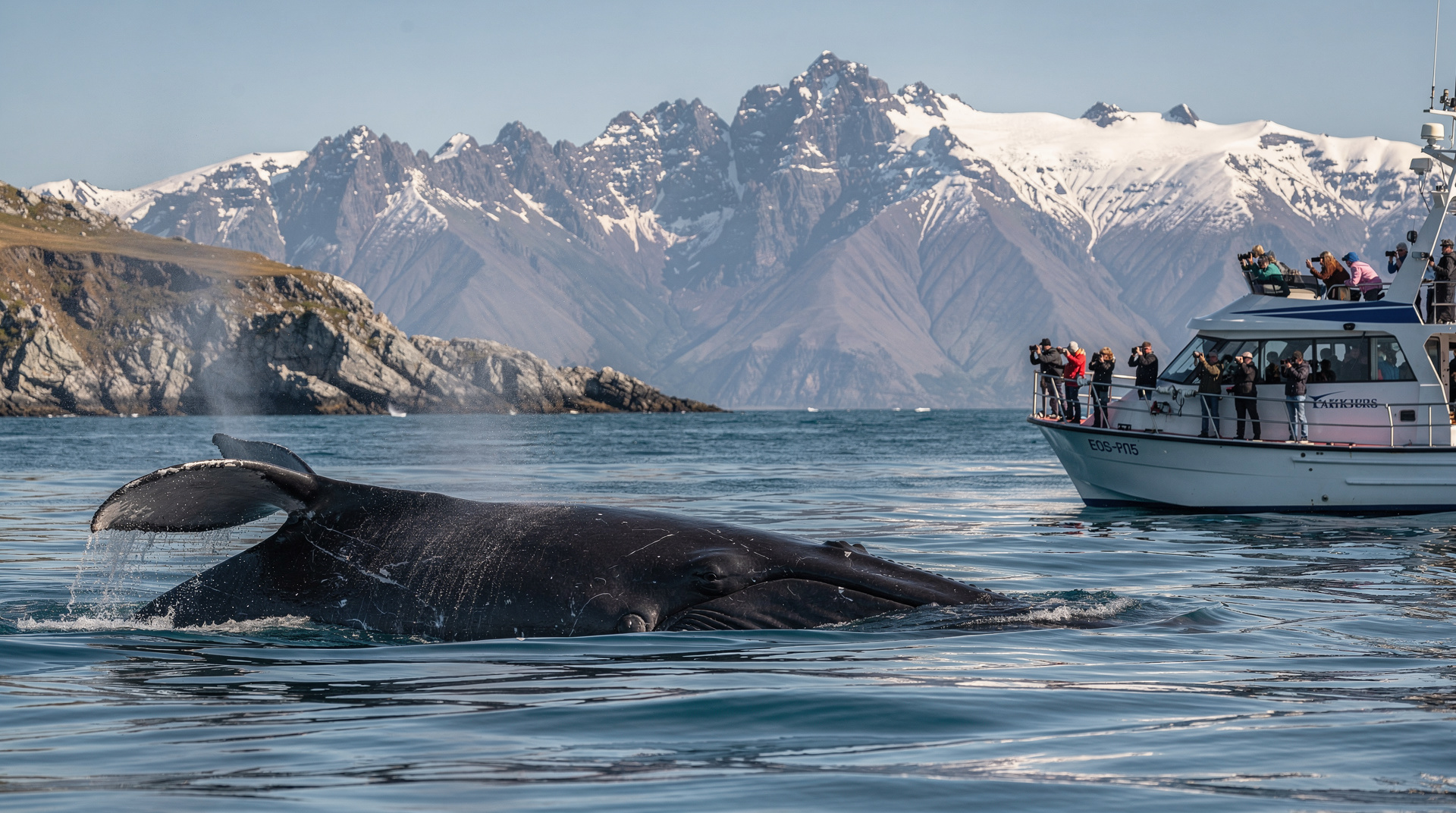
Whale Watch Kaikoura catamaran review — sperm whales, honest verdict 2026
Whale Watch Kaikoura 2.5-hour catamaran review: sperm whale sighting rates, what the boat is like, costs, and who should book or skip.
Kaikoura whale watching
Sperm whales off Kaikoura year-round: boat, flight, or kayak? Real prices (NZD/USD/EUR), sighting rates, and which operator to book.
Related guides
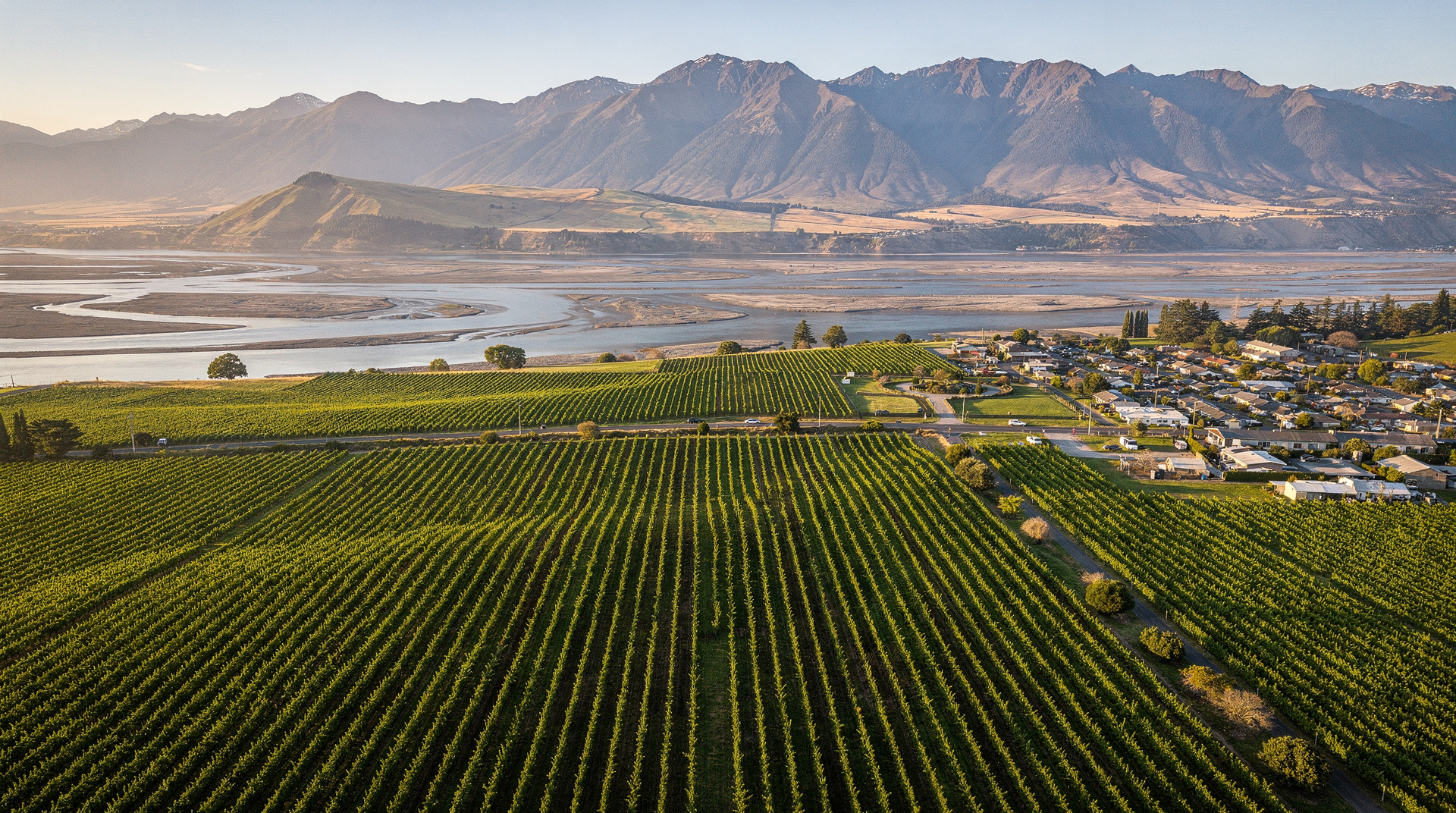
Marlborough
Honest Marlborough guide: Picton ferry gateway, Queen Charlotte Sound, Blenheim wineries, Havelock mussels. Real NZD/USD/EUR prices and practical logistics.
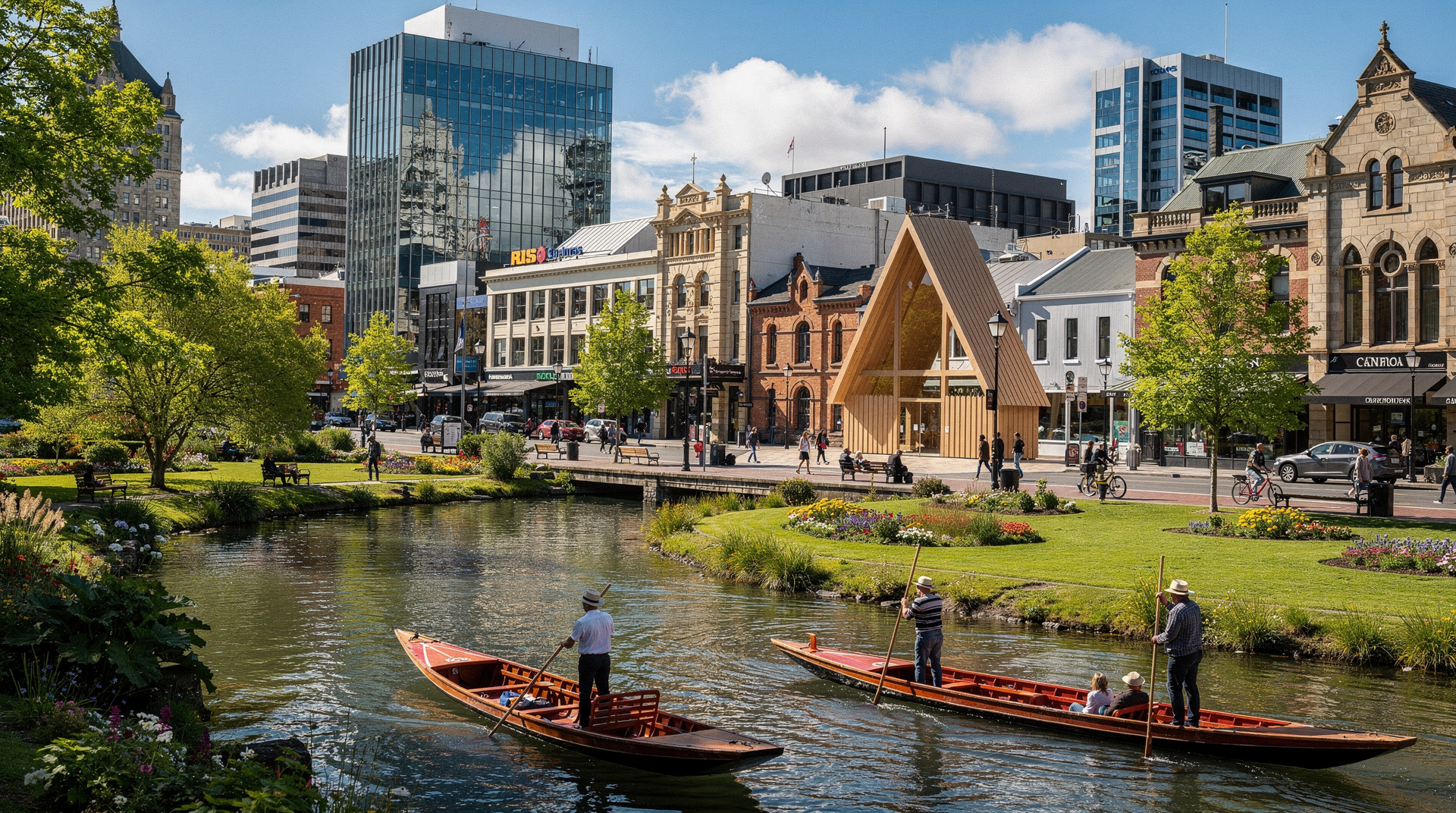
Christchurch
Honest Christchurch guide: the post-earthquake rebuild, best activities, Akaroa day trip — real NZD/USD/EUR prices and what's worth your time.
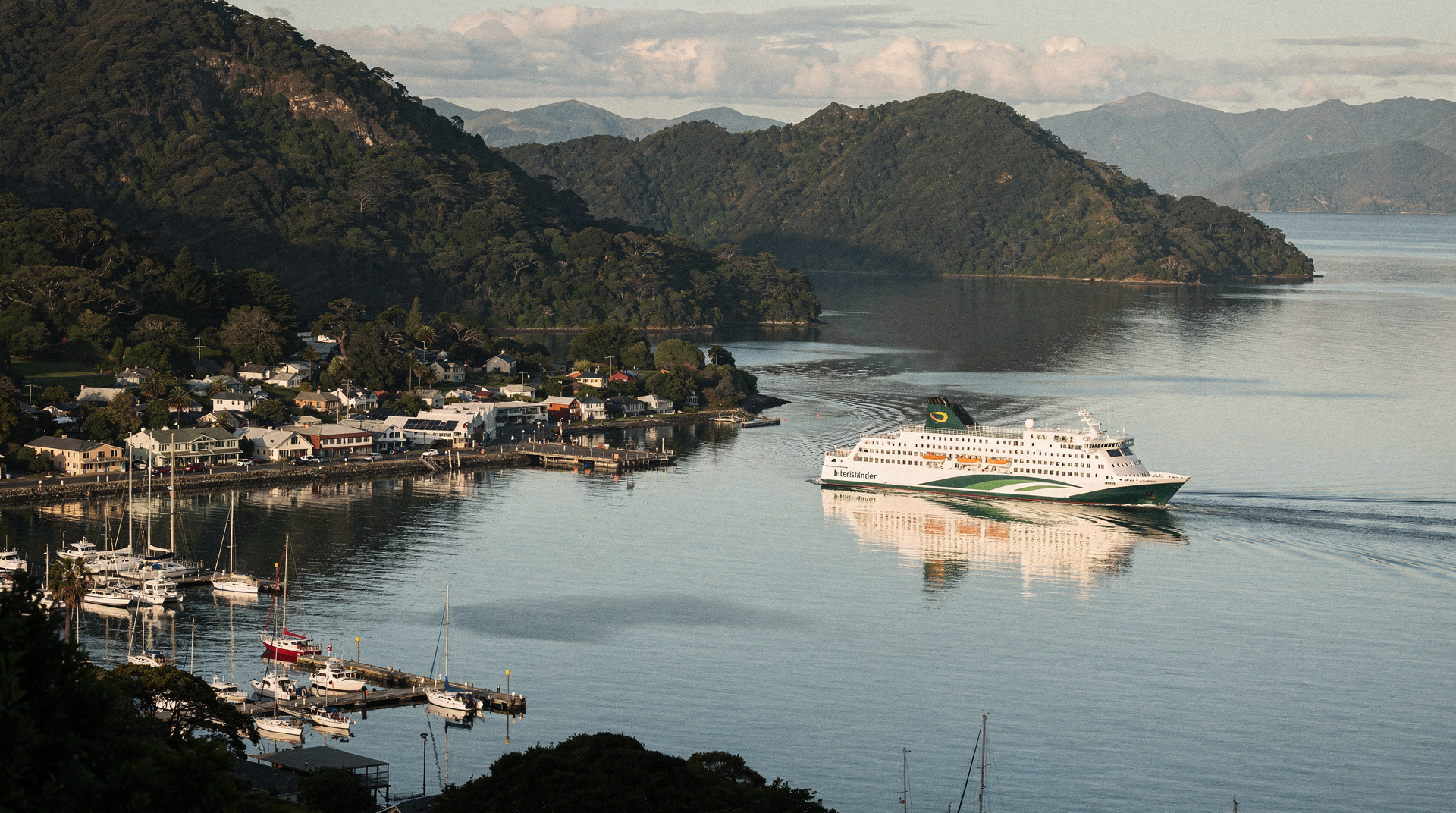
Picton
Picton: your Cook Strait ferry arrival point, gateway to Marlborough Sounds, Queen Charlotte Track, and the wine region. Real costs NZD/USD/EUR.
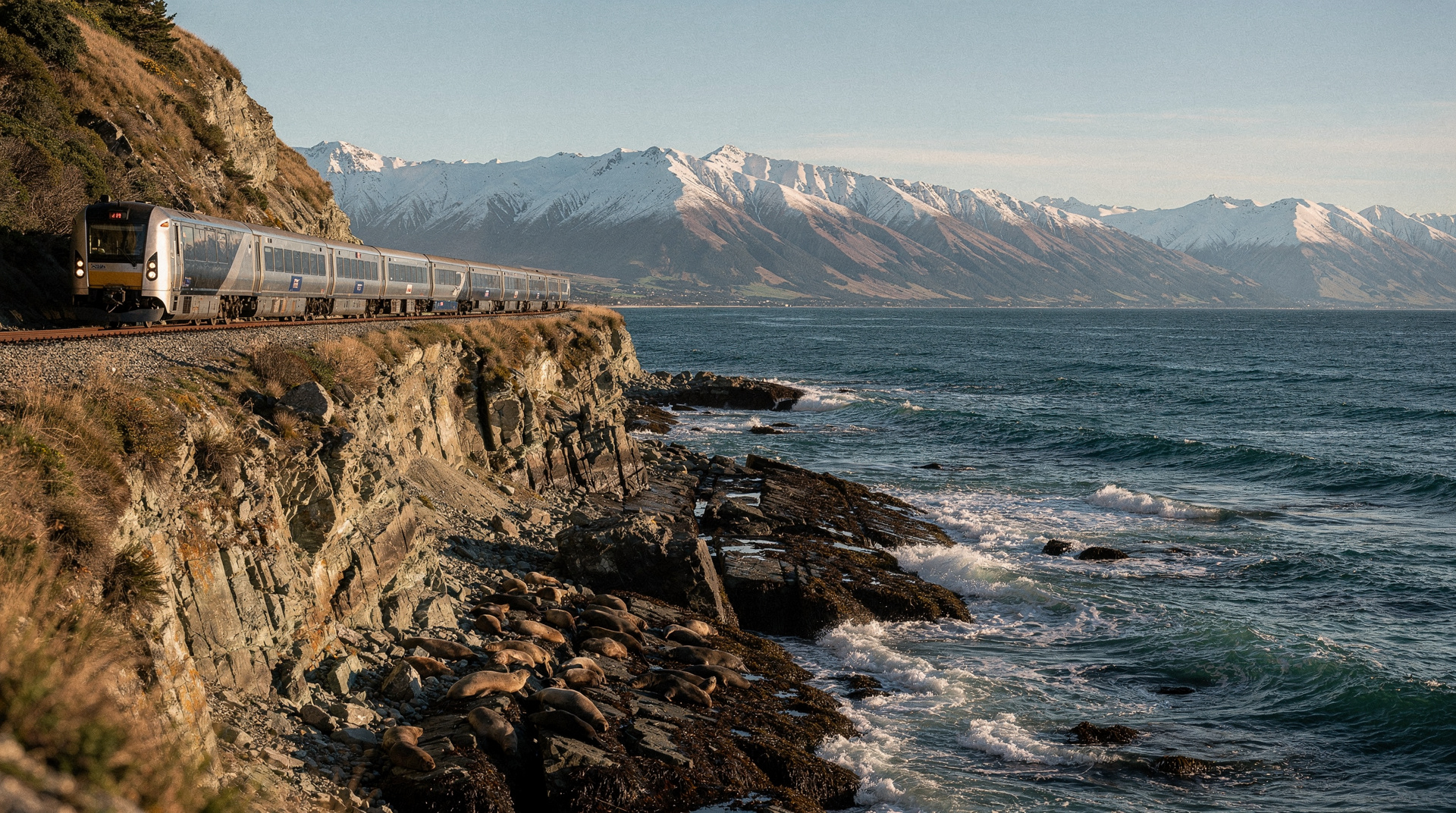
Coastal Pacific train — Christchurch to Picton along the Pacific coast
Coastal Pacific train guide: seasonal Christchurch-Picton route through Kaikoura, when it runs, ticket prices NZD/USD/EUR, and comparison with the TranzAlpine.
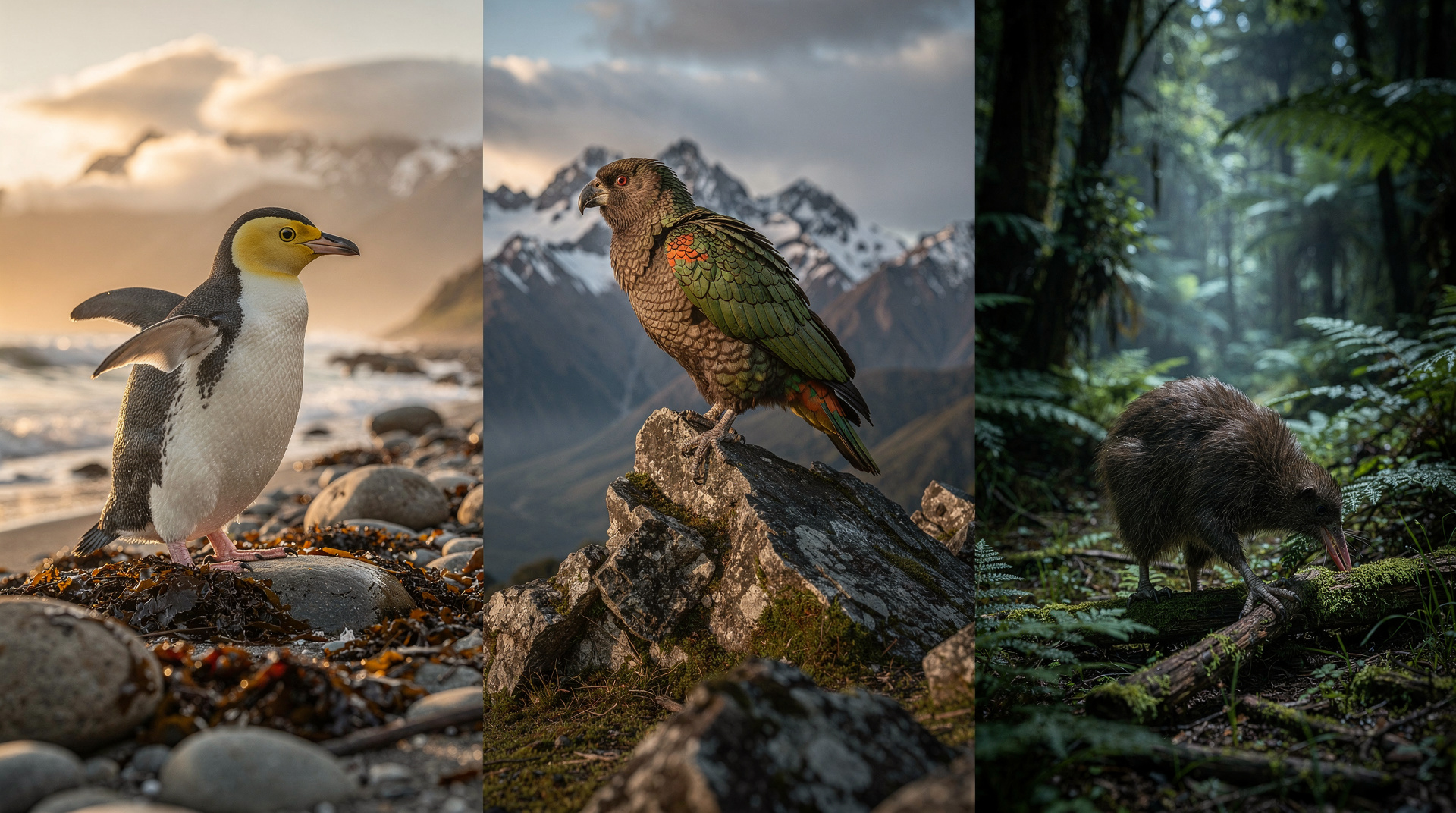
Wildlife in New Zealand — kiwi, penguins, whales, and more
Where to see NZ wildlife honestly: kiwi nights, yellow-eyed penguins, sperm whales at Kaikōura, royal albatross, fur seals. Best locations, real costs.
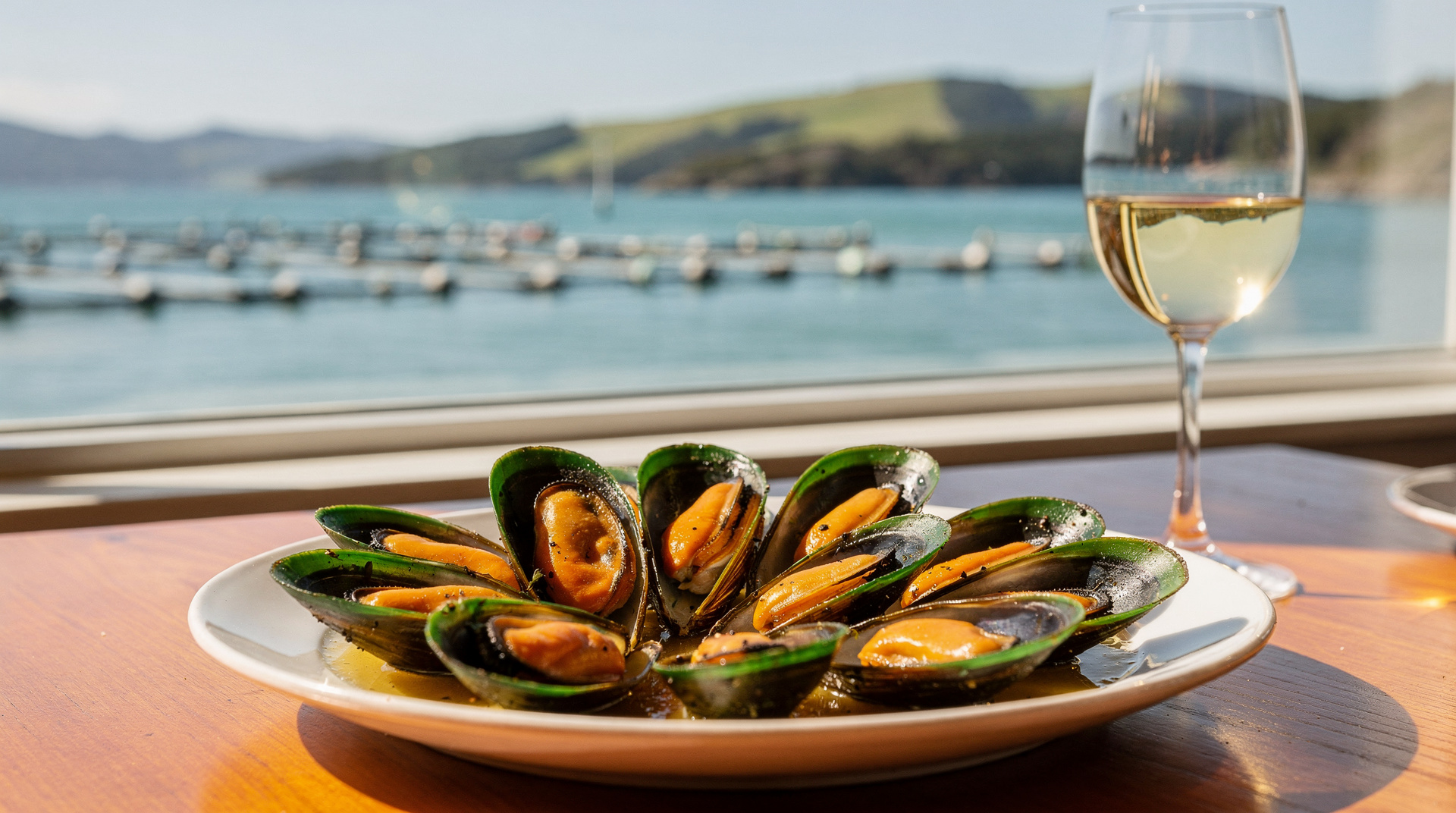
Green-lipped mussels of Marlborough
NZ green-lipped mussels are farmed in the Marlborough Sounds. Mussel cruises, best places to eat fresh, and why they're world-famous — prices NZD/USD/EUR.
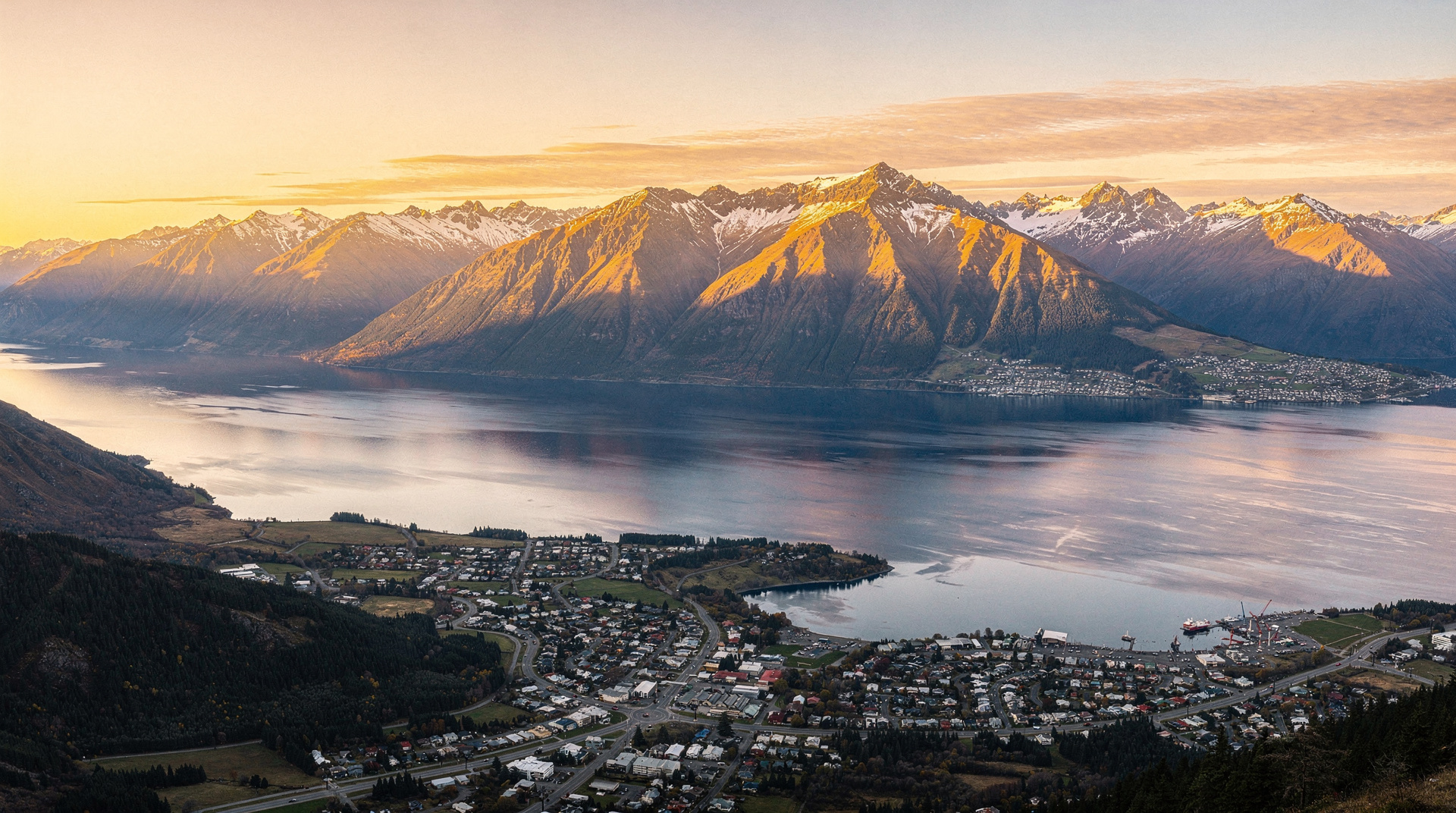
14-day New Zealand itinerary — both islands, grand tour
Honest 14-day NZ grand tour: Auckland, Bay of Islands, Hobbiton, Rotorua, Wellington, ferry, Kaikoura, Christchurch, Queenstown, Milford.
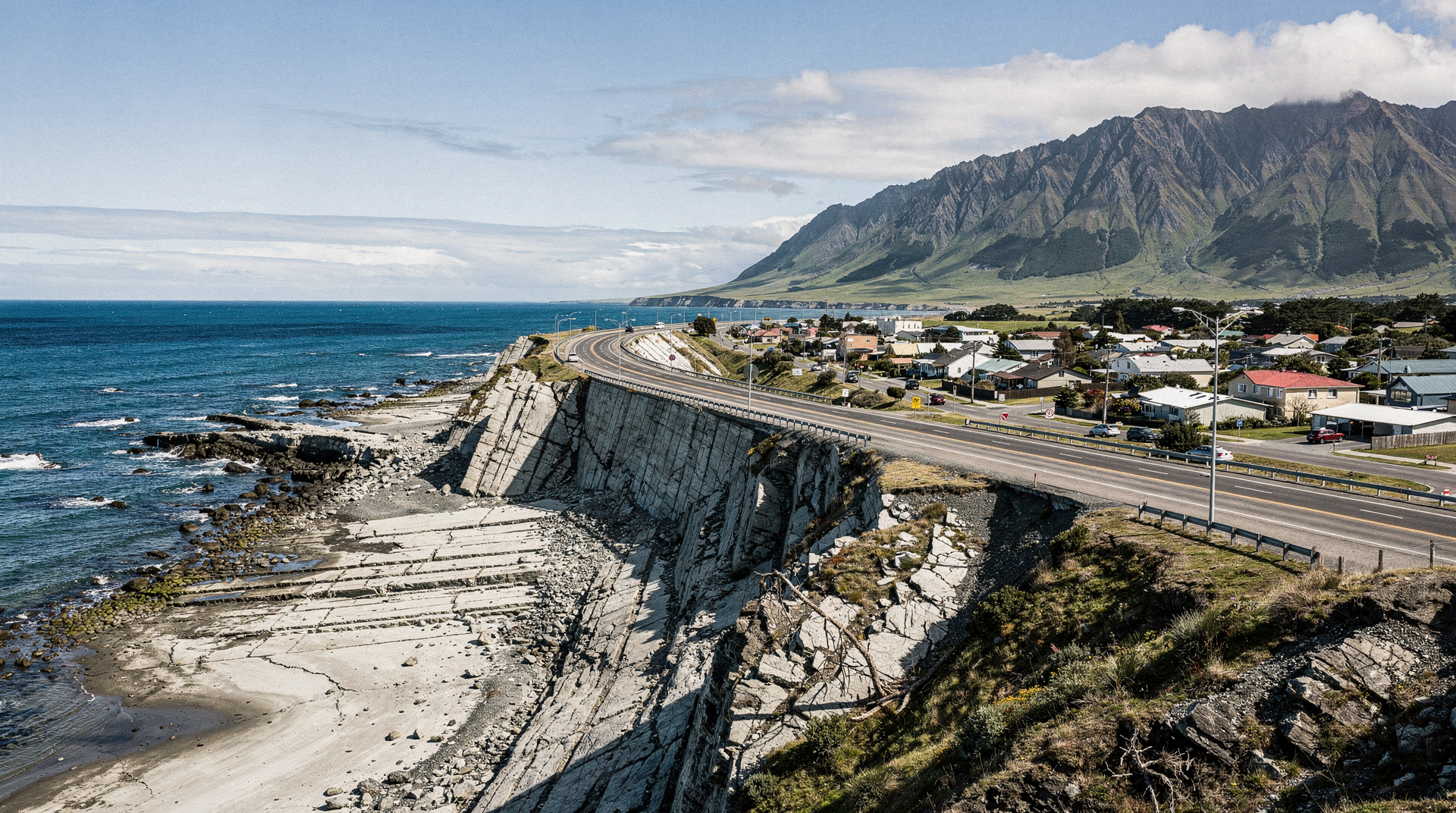
Kaikoura after the 2016 earthquake — what's changed
Three years after the 7.8 earthquake, Kaikoura is open for business — and in some ways more interesting than before the disaster.
Last reviewed: