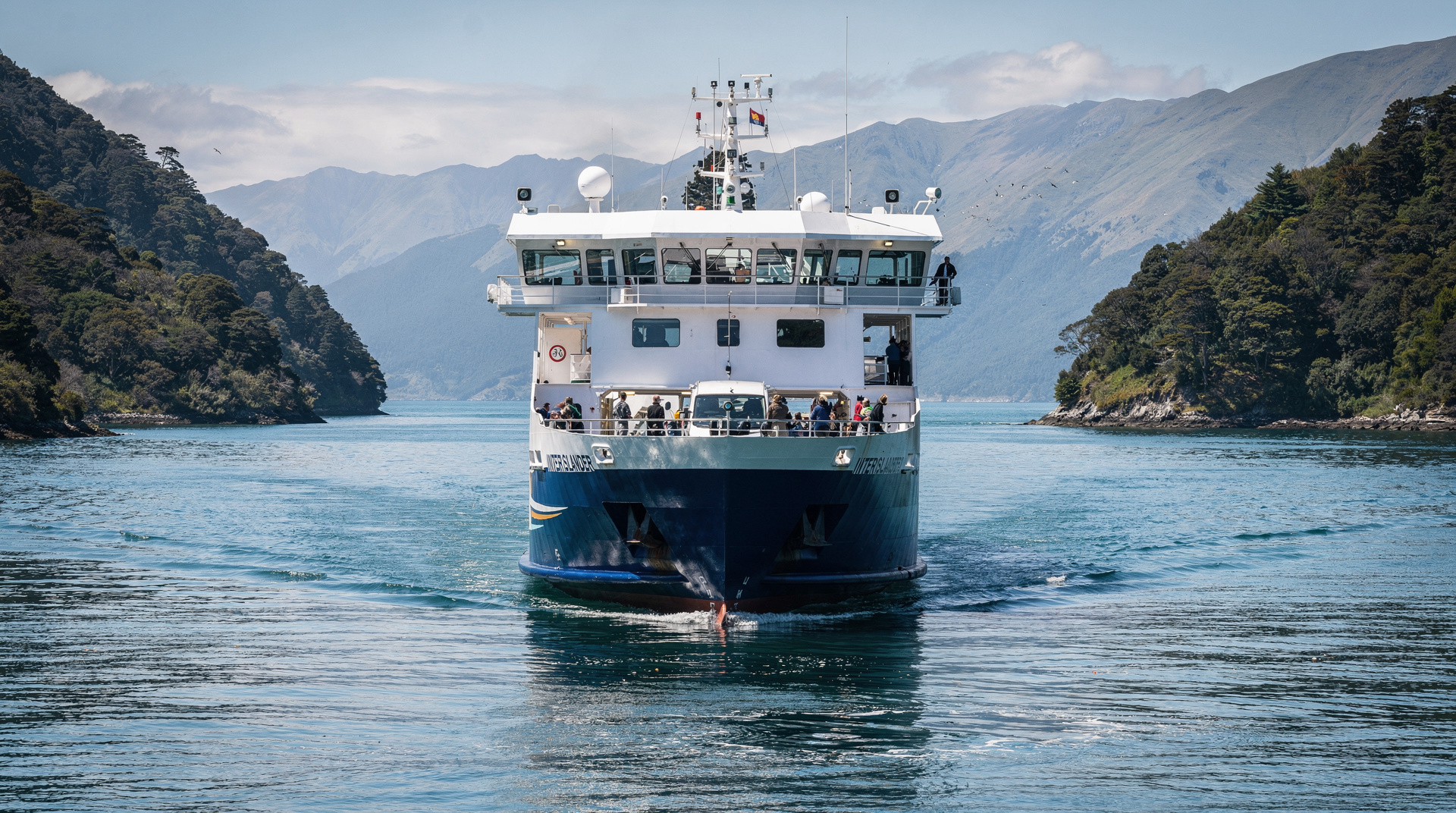
Cook Strait ferry guide
Which Cook Strait ferry should I take: Interislander or Bluebridge?
Both cover the Wellington-Picton crossing in approximately 3h30. Interislander is the larger, more established operator with more sailings. Bluebridge tends to be slightly cheaper and has a loyal following. Book vehicles 4-6 weeks ahead in peak season. Foot passengers can usually book much closer to sailing.
| Where | Wellington (North Island) to Picton (South Island) |
| Time needed | Around 3h20-3h45 crossing, plus 45-60 min check-in |
| Cost | Foot passenger from around NZD 50; car from around NZD 200 |
| Operators | Interislander and Bluebridge, both 2-4 sailings daily |
| Booking | 4-8 weeks ahead for vehicles in peak season (Nov-Feb) |
Crossing Cook Strait: what to expect
Cook Strait is one of the most dramatic maritime passages in the world. Twenty-six kilometres at its narrowest point, with the Tasman Sea and Pacific Ocean meeting at a shallow continental shelf — it can be mirror-flat on a summer’s day or genuinely violent in winter swells. The crossing connects Wellington (at the southern tip of the North Island) with Picton (at the northern tip of the South Island’s Marlborough Sounds).
For anyone driving the length of New Zealand, this is not optional. There is no road bridge and no tunnel. You either take the ferry, fly over (Wellington to Christchurch or Nelson), or arrange separate vehicles on each island.
The good news: even in rough weather, the ferries operate safely. The route is one of the busiest vehicle ferry crossings in the Southern Hemisphere, and the vessels are purpose-built for the conditions. Seasick patches are available on board, and the Marlborough Sounds section at the Picton end of the crossing is sheltered and beautiful regardless of weather.
Interislander vs Bluebridge: honest comparison
| Factor | Interislander | Bluebridge |
|---|---|---|
| Operator | KiwiRail (state-owned) | Strait Shipping (private) |
| Vessels | Multiple; larger vessels (Kaiarahi up to 1,500 passengers) | Smaller; typically 2 vessels |
| Sailings per day (each direction) | 3-4 | 2-3 |
| Journey time | ~3h20-3h45 | ~3h30 |
| Foot passenger fare | NZD 55-100 | NZD 50-90 |
| Car (standard, one way) | NZD 220-300 | NZD 200-280 |
| Campervan (up to 7.3m) | NZD 290-400 | NZD 270-380 |
| Bicycle | NZD 20-30 | NZD 20-30 |
| On-board facilities | Cafeteria, bar, lounge, children’s area | Café, lounge, movie lounge |
| Loyalty points | KiwiRail Rewards | — |
| Wellington terminal | Interislander Terminal, Aotea Quay | Bluebridge Ferry Terminal, Waterloo Quay |
Location note: The two terminals are approximately 2km apart in Wellington. Both are north of the CBD, accessible by taxi or shuttle from the city centre.
Both operators’ fares vary significantly depending on how far in advance you book and the season. The ranges above reflect typical pricing; early booking (4-6 weeks) consistently yields the lower end of the range. Last-minute foot passenger tickets (same-week) are available but vehicle bookings close when vehicle space is full.
Book the Wellington-Picton Interislander crossing — options include foot passenger, car, and campervan.
Timetable overview (2026)
Both operators run multiple sailings per day in each direction. Typical departure windows:
Wellington → Picton: Early morning (~6-8am), mid-morning (~10am-12pm), afternoon (~2-4pm), sometimes evening in peak season.
Picton → Wellington: Similar spread. Check exact times when booking — specific times change seasonally.
Travel time: Budget 3h30-3h45 door-to-door on the vessel. Add travel time to/from Wellington city centre (20-30 minutes to either terminal) and check-in time (45-60 minutes before departure for vehicles, 30 minutes for foot passengers).
Total Wellington-to-Picton day: Arriving at Wellington terminal at 8am for a 9am sailing, you arrive Picton around 12:30pm. Feasible to reach Christchurch (3.5-4 hours further south) by early evening — but it is a long day.
Booking strategy
Peak season (November-February, school holidays, Easter): Book vehicles 4-8 weeks ahead, especially for campervans. The vehicle deck fills from the largest vehicles inward; campervans and large motorhomes need to book earliest.
Shoulder season (March-May, September-October): 2-3 weeks ahead is usually sufficient.
Off-peak (June-August): Often possible to book 1-2 weeks ahead, but morning sailings in school holidays still fill.
Foot passengers: Much more flexibility — typically bookable a few days ahead in all seasons.
Flexibility vs. savings: Both operators offer cheaper fares for fully non-refundable bookings. If your travel dates are firm, this is worth it. If your road trip timing is fluid, book a flexible fare (the price difference is typically NZD 30-60 per booking) — weather delays or a detour that catches you can make a schedule change necessary.
What happens if the crossing is rough
Cook Strait can produce swells of 3-6 metres in winter storms. Both operators assess sea conditions before every sailing. In genuinely hazardous conditions, sailings are cancelled and rescheduled.
What to do if cancelled: Both operators have policies for rebooking cancelled sailings. Accommodation bookings in Picton or Wellington that cannot be kept due to cancellation may need to be renegotiated — travel insurance is recommended, particularly for peak season travel.
Rough weather tips:
- Eat lightly before boarding
- Sit in the middle of the vessel (least movement)
- Stay above deck if weather permits — fresh air helps
- Seasickness patches (Scopolamine) available at pharmacies and sometimes on board — apply 2-4 hours before boarding for best effect
- Antihistamine tablets (Avomine, Stugeron) available at NZ pharmacies without prescription
The Marlborough Sounds section (approximately the final 45 minutes of the Picton approach) is sheltered water regardless of conditions. Many passengers find the rough section manageable knowing the calm ending is coming.
Taking a campervan on the ferry
Booking: Make the campervan booking explicit — select the vehicle height and length carefully. Standard campervan categories: under 5.5m, 5.5-7.3m, 7.3m+. Excess height (above 2.5m-2.8m) may attract a surcharge.
Loading: Vehicles are loaded and unloaded by the ferry crew. You drive on under crew direction; do not leave anything loose in or on the vehicle that could move in swell.
Access during crossing: You cannot access the vehicle deck during the crossing. Pack anything you need (medication, snacks, entertainment, passports) in a bag you carry to the passenger decks.
Diesel vs petrol: Most campervans are diesel; refuel in Wellington or Picton as there is no fuel on the ferry.
The flying alternative
Wellington to Christchurch by air: approximately 1 hour, typically NZD 80-180 (USD 48-108 / EUR 44-99) depending on advance booking. One-way flexible fares NZD 150-250.
When flying makes sense:
- Solo traveller (no vehicle to move — ferry + car hire each island can be cheaper than one-way vehicle rental)
- Time-pressured itineraries (saves 4-5 hours vs ferry + drive)
- When you are not planning to drive the full length of New Zealand and can hire separate vehicles on each island
When flying does not make sense:
- You have a campervan or rental car that must cross
- Your itinerary requires passing through the Marlborough wine region, Kaikoura coast, or Marlborough Sounds (the ferry journey IS part of the scenery)
- You want the experience of the crossing itself — it is genuinely dramatic and beautiful
See the domestic flights guide for airline options and booking strategy.
Picton arrival: first 2 hours
Picton is a small, charming town with limited facilities. On arrival:
- Fuel up (there is a petrol station near the terminal)
- Get groceries if heading to Marlborough Sounds or Kaikoura (the road south is beautiful but limited shops)
- The SH1 south toward Kaikoura and Christchurch is immediately accessible — no navigation complexity
Marlborough diversion: The ferry terminal at Picton puts you at the doorstep of Marlborough wine country (Blenheim is 28km south). If the timing works, stopping for a winery lunch in Marlborough before continuing south is one of the most pleasantly spontaneous combinations in New Zealand travel.
Wellington departure: what to do the morning of
Terminal arrival times:
- Interislander: 45-60 minutes before departure for vehicles
- Bluebridge: 45 minutes before departure for vehicles
- Foot passengers: 30 minutes before both operators
Parking in Wellington while waiting: The Interislander terminal has a holding area. In the city, Te Papa car park (on the waterfront, 10-15 minutes from the terminal) is a sensible place to park if you arrive early and want to use the morning.
Wellington to terminal: By taxi/Uber, approximately NZD 20-30 from the CBD. There is no dedicated public transit service directly to the Interislander terminal (though the Bluebridge terminal is slightly closer to the CBD/Courtenay Place area, walkable with light luggage).
Food and facilities on board
Neither ferry is a cruise ship, but both are well set up for a 3.5-hour crossing. Interislander’s larger vessels have a cafeteria with hot food, a bar, a lounge with reclining seats, and a dedicated children’s play area — useful if you’re travelling with kids and want them to burn energy before the drive resumes. Bluebridge’s smaller vessels have a café and a movie lounge showing a film during the crossing, which suits travellers who’d rather sit still than wander the decks.
Both operators sell coffee, snacks, and simple hot meals on board, but prices are ferry-terminal prices — bring your own food if you’re budget-conscious, especially if travelling as a family. Neither vessel has cabins; this is a day crossing, not an overnight one, so there’s nowhere to lie down properly if you want to sleep through it.
Combining the ferry with Marlborough Sounds cruises
Because the Picton terminal sits right on Queen Charlotte Sound, some travellers choose to break the North-South Island transition with a separate half-day or full-day cruise into the Sounds rather than just the ferry crossing itself — the Sounds contain over 1,500km of coastline and are only lightly seen from the ferry deck.
Queen Charlotte Sound cruise with lunch from PictonThis works well for travellers arriving into Picton with time to spare before continuing to Blenheim or Kaikoura, or for those flying in and out of Picton/Wellington without a vehicle who still want to see the Sounds properly rather than just glimpsing them from the ferry rail.
Marlborough Sounds seafood cruise from PictonFrequently asked questions about the Cook Strait ferry
Can I take a bicycle on the ferry?
Yes. Both operators accommodate bicycles at a small surcharge (approximately NZD 20-30). Cycles are loaded in the vehicle deck separately — check in at the terminal and follow crew direction.
Is there Wi-Fi on board?
Both operators offer Wi-Fi on board, though speed varies. Streaming video is generally not practical, but browsing and messaging works adequately. For a 3.5-hour crossing, offline entertainment is recommended.
Can I walk on without booking?
Foot passengers can walk on without advance booking if space is available. In peak season, it is advisable to book a day or two ahead for foot passages to guarantee a specific sailing. Vehicle spaces cannot be assumed — book vehicles in advance.
What should I do if my campervan is too tall?
Some campervans exceed the standard height limits (2.5-2.8m). Both operators have vehicle height categories with surcharges for taller vehicles. Measure your campervan’s actual height at the highest point (roof rack, air vents) before booking and select the correct category to avoid reclassification charges at the terminal.
Is the Marlborough Sounds section of the crossing worth seeing?
Absolutely. The final 40 minutes approaching Picton through the Queen Charlotte Sound is one of the most beautiful ferry approaches in the world. If you have been inside the terminal watching movies, come out on deck for the final approach.
Which is better for a first-timer, Interislander or Bluebridge?
Neither is clearly “better” — the crossing time, route, and weather exposure are essentially the same. Interislander has more sailings and larger vessels with more facilities; Bluebridge is often slightly cheaper and its terminal sits closer to central Wellington. Pick whichever fits your schedule and budget rather than agonising over the choice.
Can I do a day trip to Picton and back without a car?
Yes. Foot passengers can take a morning sailing to Picton, spend a few hours in town or on a short Marlborough Sounds cruise, and return on an afternoon sailing — a full but workable day if you’re based in Wellington without a vehicle.
Related guides and itineraries
- Driving in New Zealand — before and after the crossing
- Campervan vs car rental — vehicle strategy
- Domestic flights in New Zealand — the flying alternative
- Wellington guide — what to see before/after the ferry
- Marlborough guide — wine region immediately off the ferry
- Kaikoura guide — first major stop heading south
- 14-day New Zealand itinerary
Related guides
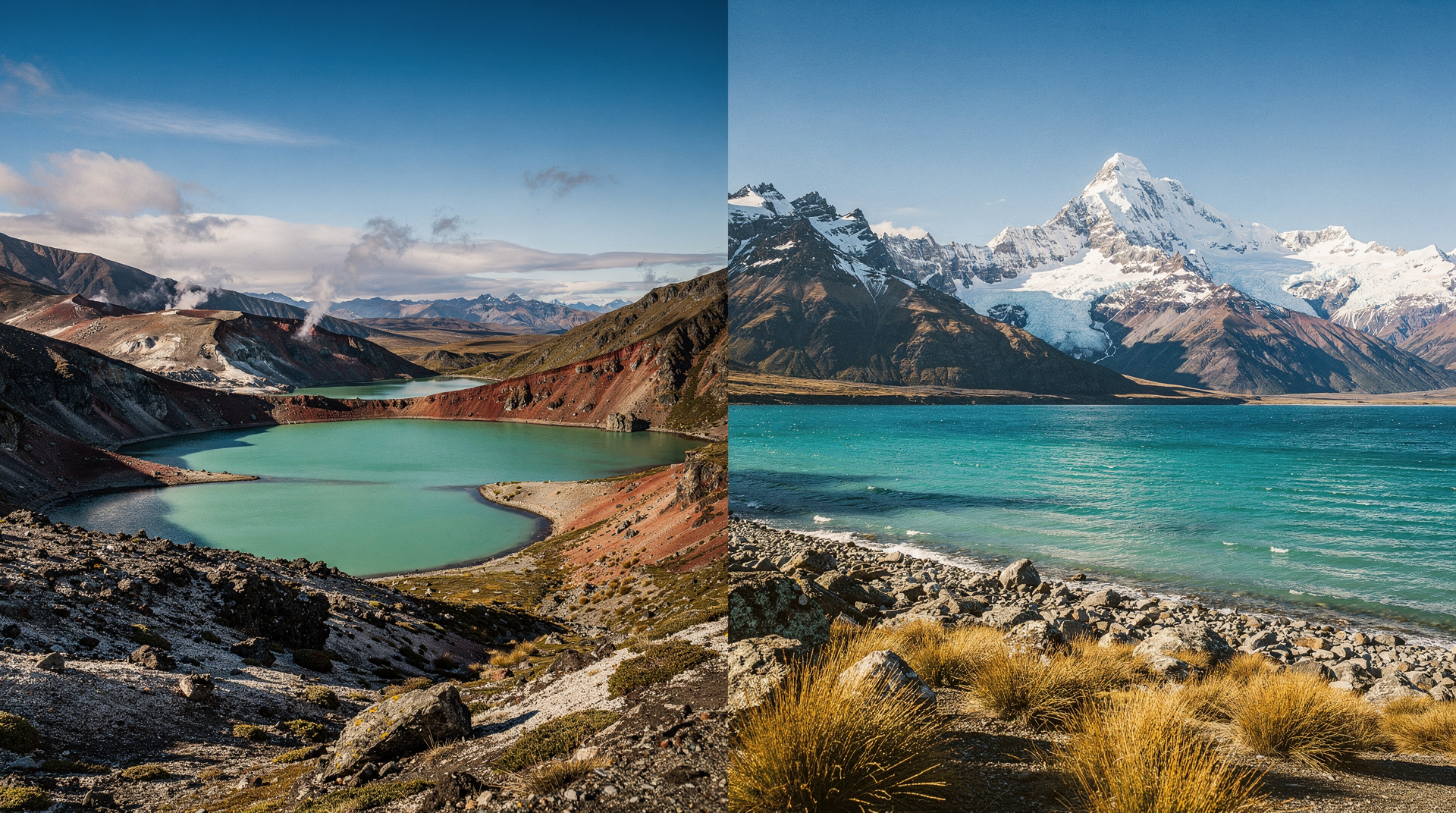
North vs South Island — which is right for you
Honest North vs South Island comparison: culture, landscapes, costs and a clear verdict for first-timers, families and short trips.

Domestic flights in New Zealand
Guide to flying domestically in NZ: Air New Zealand vs Jetstar, cheapest routes, Auckland-Queenstown timing, and when flying beats 10 hours of driving.

Campervan vs car rental in New Zealand
Honest campervan vs car rental comparison for NZ: real costs, freedom camping rules, who should choose each, and what the brochures don't tell you.
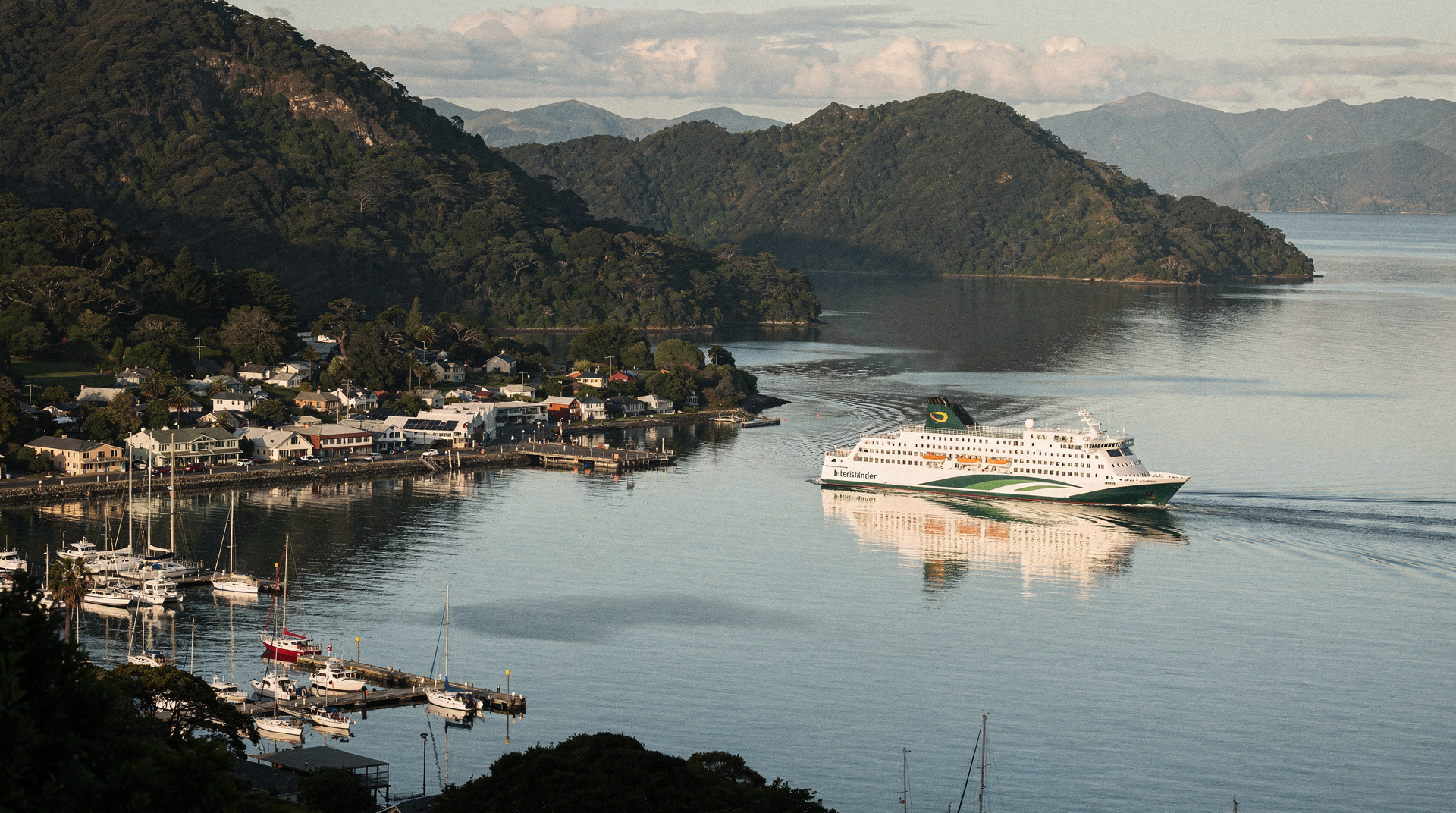
Picton
Picton: your Cook Strait ferry arrival point, gateway to Marlborough Sounds, Queen Charlotte Track, and the wine region. Real costs NZD/USD/EUR.

Wellington
Honest Wellington guide: Te Papa museum, Weta Workshop LOTR tours, Zealandia, Cuba Street, ferry to South Island, real prices NZD/USD/EUR.
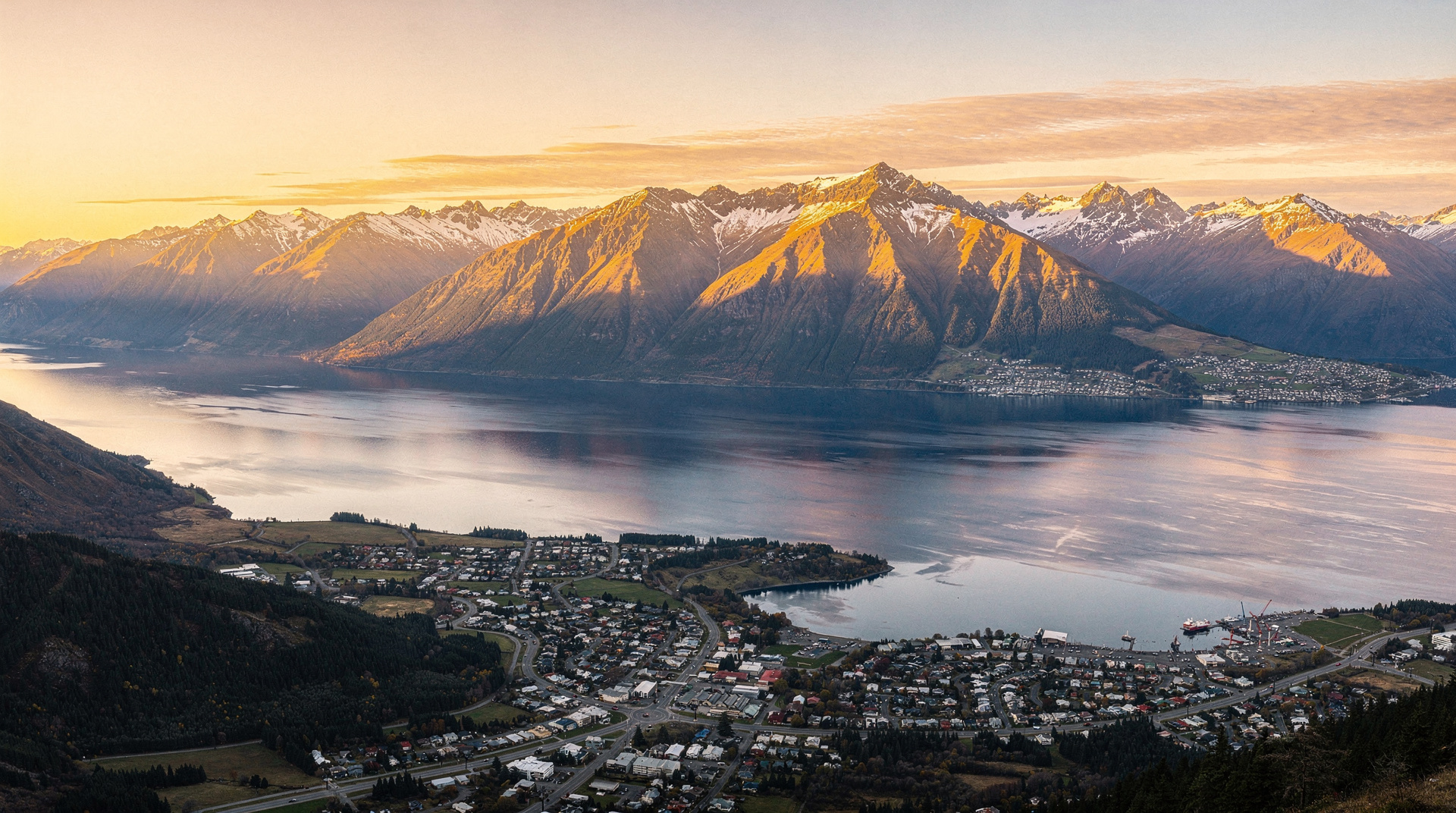
14-day New Zealand itinerary — both islands, grand tour
Honest 14-day NZ grand tour: Auckland, Bay of Islands, Hobbiton, Rotorua, Wellington, ferry, Kaikoura, Christchurch, Queenstown, Milford.
Last reviewed: