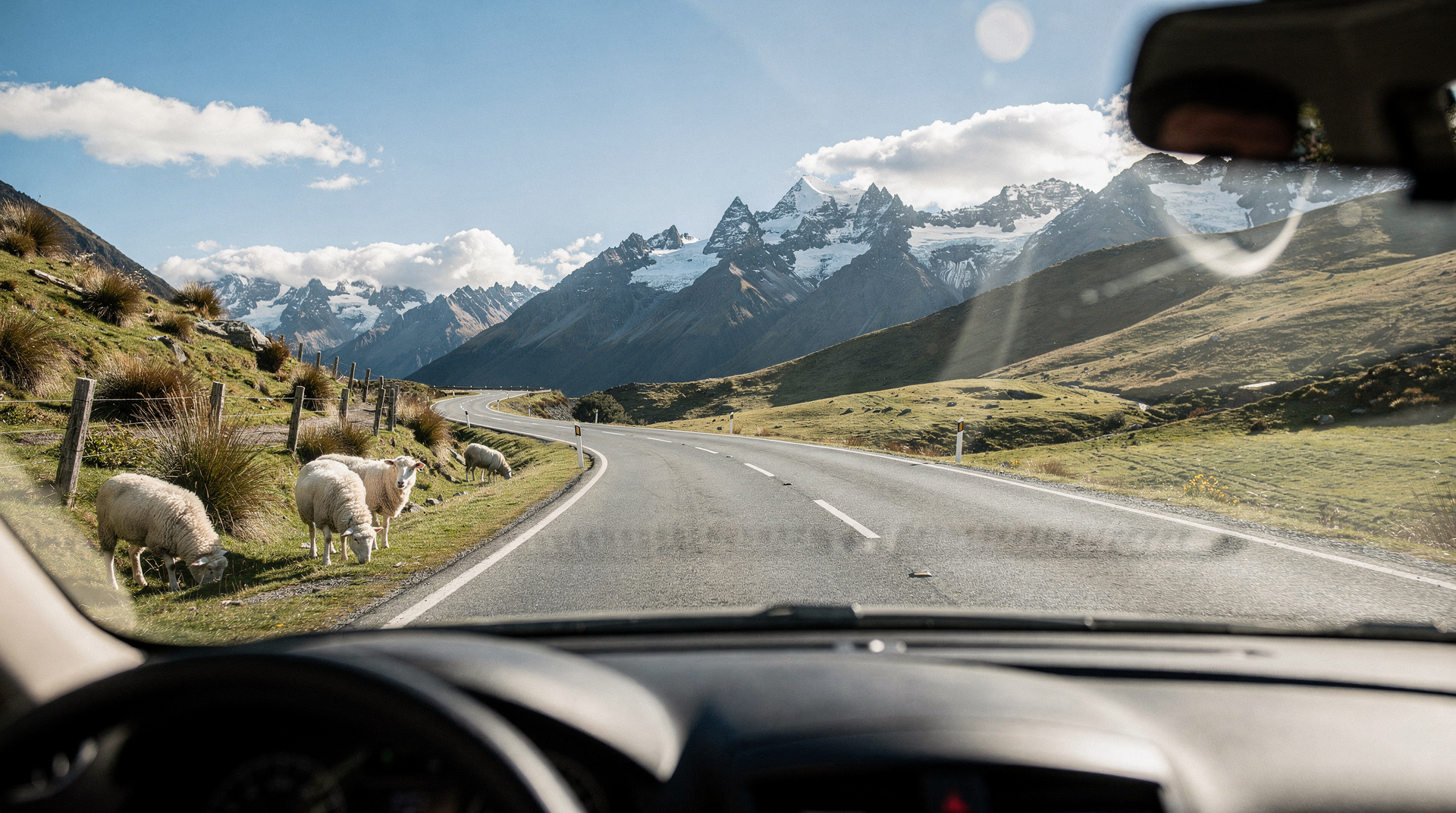
Driving in New Zealand
Is it hard to drive in New Zealand if you've never driven on the left?
Most visitors adapt within a day, especially on quiet rural roads. The biggest challenges are roundabouts (clockwise, give way to right), gravel roads in tourist areas, and the GPS being optimistic — actual NZ drive times are typically 30% longer than Google Maps suggests due to winding roads.
What no one tells you before you drive in New Zealand
New Zealand road trips are among the best in the world. The roads are genuinely spectacular — alpine passes, fjord edges, coastal headlands, volcanic plains. The traffic is minimal compared to almost any European or North American equivalent. And the distances, while longer than they look on a map, are entirely manageable.
| Side of road | Left (steering wheel on the right) |
| Adjustment time | 30 minutes to 2 hours for most visitors |
| GPS accuracy | Add 30-40% to any Google Maps drive time |
| Speed limit | 100 km/h open road, 50 km/h urban |
| Watch for | Roundabouts, one-lane bridges, gravel exclusions |
But there are things travel blogs gloss over, and rental companies never mention before you sign.
The GPS problem is real. Google Maps calculates drive times based on posted speed limits and road distance. In New Zealand, particularly on the South Island, roads wind through mountain passes, around lake edges, and over one-lane bridges. The posted limit is 100km/h, but you will rarely hold that speed for more than a few minutes on a scenic route. Add 30-40% to any Google Maps estimate. Auckland to Queenstown “via the scenic route” is not a one-day drive.
Gravel roads in tourist areas are not the same as gravel roads at home. Some of New Zealand’s most spectacular scenery is reached via unsealed roads that standard rental car agreements explicitly exclude from cover. Know which roads require a 4WD or carry extra excess (see the gravel section below).
Wildlife on the road. In rural areas, particularly from dusk to dawn, sheep, cattle, deer, and kea (alpine parrots, genuinely curious and dangerous to parked vehicles) can appear without warning. Speed cameras are common and trigger with no visual warning. Driving tired in New Zealand is as dangerous as anywhere.
With those realities stated, this is a country that rewards anyone willing to drive it. Here is how.
Driving on the left
New Zealand drives on the left. Steering wheel is on the right. Overtaking is on the right.
Adjustment time: Most visitors from right-hand traffic countries need approximately 30 minutes to 2 hours to feel comfortable. The biggest mental errors happen at:
- Intersections (instinct is to look left first; you need to look right first)
- Roundabouts (in NZ, vehicles circulate clockwise; give way to traffic from your right)
- Wide, empty roads (natural tendency to drift toward the centre; keep left)
Practical tips for the first day:
- Drive slowly. There is no shame in 70km/h on a rural road for the first hour.
- Have your passenger remind you. “Left, left” before every turn works.
- Avoid night driving for the first day if possible.
- Hire a car with a navigator (another driver or a passenger with offline maps ready).
Licence requirements
Foreign licences accepted: New Zealand accepts valid overseas driver’s licences for visits up to 12 months. Your licence must be in English, or accompanied by an official translation or International Driving Permit (IDP).
- EU/EEA licences (FR, DE, IT, ES, PT, NL): Accepted directly. No IDP required.
- UK licence: Accepted directly.
- US licence: Accepted directly.
- Japanese or Chinese licence: Non-Latin script — must be accompanied by an official translation or IDP.
- Australian licence: Accepted directly.
The translation or IDP must be carried alongside the original licence, not as a replacement for it. Always carry your physical passport as a second form of ID in your vehicle.
Speed limits
| Zone | Speed limit |
|---|---|
| Open highway | 100 km/h |
| Urban/town (default) | 50 km/h |
| Some urban zones near schools | 30 km/h |
| Temporary road works | Posted on signs |
Speed cameras are common and unannounced. Mobile units in unmarked vehicles are used on rural highways. The NZ Transport Agency’s attitude is zero tolerance at fixed cameras (no 10% buffer as in some countries). Fines start at NZD 30 for minimal speed and escalate sharply.
School zones: 30 km/h limits apply near schools during school hours (typically 8-9am and 3-4pm on school days). Signs indicate the zone boundaries.
Roundabouts
New Zealand roundabouts are clockwise. Traffic entering the roundabout gives way to vehicles already in the roundabout (coming from your right). In right-hand traffic countries, the priority direction is reversed — this is the single most common source of near-misses for international visitors.
Rule to remember: Before entering a roundabout, look right. If there is a vehicle coming from your right within the roundabout, stop and wait.
Gravel roads: the fine print
New Zealand’s most dramatic scenery often sits at the end of unsealed gravel roads. These are not maintained to sealed road standards.
Key gravel roads in tourist areas:
- Glenorchy to Paradise (via Paradise Road): 12km unsealed, spectacular. Most 2WD cars handle it in dry conditions; check with rental company.
- Skippers Canyon Road (near Queenstown): Narrow, sheer drops, unsealed. Most rental car agreements EXPLICITLY EXCLUDE this road — check before driving.
- Molesworth Station (Marlborough-Canterbury): Unsealed, remote, 4WD recommended.
- Forgotten World Highway (SH43, Taranaki-Whanganui): Paved but narrow; some short unsealed sections.
- Ninety Mile Beach (Northland): The beach itself is a public road, but driving on it requires insurance check — most rental agreements exclude beach driving.
Rental agreement reality: Standard rental car insurance (collision damage waiver) frequently excludes:
- Unsealed/gravel roads
- Beach driving
- Specific listed roads (Skippers Canyon, some West Coast roads)
- Off-road driving of any kind
If you damage the vehicle on an excluded road, you are liable for the full repair cost regardless of what your CDW covers. Read the excluded roads list before collecting the car.
For maximum flexibility, rent a 4WD vehicle if you intend to explore Glenorchy, Skippers, Paradise, or West Coast back roads. The extra cost (typically NZD 40-80/day more than a standard sedan) is worthwhile insurance against a very expensive mistake.
Mountain passes and winter closures
Several key mountain passes close or become hazardous in winter (June-September):
- Crown Range Road (SH89, Queenstown to Wanaka): NZ’s highest paved public road. Can ice and close in winter. Alternative: Kawarau Gorge via SH6 (longer but lower).
- Lewis Pass (SH7, Nelson to Canterbury): Open year-round but can be icy; chains may be required.
- Arthur’s Pass (SH73, Christchurch to West Coast): Snow and ice common in winter; chains required when signed.
- Homer Tunnel (to Milford Sound): May close temporarily due to avalanche risk in heavy snowfall.
Chain requirements: When chain signs are lit, it is legally required to carry chains (not necessarily fit them, but have them ready). Most rental companies offer chain hire in winter months for mountain pass routes; check in advance.
When to check conditions: NZTA Journeys website (journeys.nzta.govt.nz) shows real-time road conditions, closures, and chain requirements. Check the morning before driving any alpine pass in winter.
One-lane bridges
New Zealand has hundreds of one-lane bridges, including on main highways. They are marked well in advance with signs indicating which direction has priority (usually the direction of travel on the sign without a give-way arrow).
The rule: one direction of traffic has priority; the other must stop and wait. If you reach the bridge at the same time as an approaching vehicle and your side has the give-way, stop well before the bridge and flash your headlights to signal you are giving way.
On gravel back roads: One-lane bridges and single-lane sections are unmarked and require common sense — slow to walking pace when visibility is limited, give space for oncoming vehicles, use passing bays when available.
Fuel and petrol stations
New Zealand uses unleaded petrol (95-octane for regular, 98-octane premium) and diesel. Campervans typically run on diesel. LPG is available at some stations.
Fuel prices (April 2026): Approximately NZD 2.40-2.80 per litre for 95-octane (USD 5.80-6.80 / EUR 5.30-6.20 per gallon equivalent). Diesel is typically NZD 0.20-0.30 cheaper per litre.
Rural fuel stations:
- Many rural stations close by 5-6pm and are unmanned overnight
- 24-hour automatic card payment terminals exist at most stations
- Carry a debit or credit card with chip — some older rural terminals do not accept contactless, only chip-and-PIN
- The West Coast between Hokitika and Haast: fill up in Hokitika, Franz Josef, Fox Glacier, and Haast — do not assume you can fill between them
- Milford Sound road: no petrol station. Fill up in Te Anau.
Parking
Cities: Paid parking in Auckland, Wellington, Christchurch, and Queenstown CBD. Pay-and-display machines or PayByPhone app. Check signs carefully — many city streets have 1-hour or 2-hour limits with parking wardens who are efficient.
National parks and popular trailheads: Many now require a parking fee (NZD 5-15 per day) paid via self-registration or online booking. The Tongariro Alpine Crossing requires pre-booked parking or shuttle in peak season — you cannot simply park at the trailhead. See the Tongariro section of the central North Island guide.
Campervans: Freedom camping restrictions apply in many areas. The Freedom Camping Act designates specific areas as permissible or prohibited. Check CamperMate app for freedom camping locations by region.
Livestock on the road
This is not a rural novelty — on South Island back roads, sheep musters can put hundreds of animals on the road for 20-30 minutes. Stock trucks on gravel roads kick up serious dust. The etiquette: slow to a crawl behind a stock muster, do not beep or rev, wait for the farmer to clear a gap, proceed slowly.
What to do in an accident
- Stop immediately. Do not leave the scene.
- Call 111 if there are injuries.
- Exchange names, addresses, and vehicle registration with all parties.
- Photograph the scene and damage before moving vehicles.
- Report to New Zealand Police within 24 hours if there are injuries or significant damage.
- Contact your rental company’s 24-hour assistance line.
New Zealand’s ACC (Accident Compensation Corporation) scheme covers medical costs for injury regardless of fault — no suing, no personal injury claims. However, vehicle damage claims remain with your rental excess agreement and any travel insurance you hold.
Driving distances and realistic day plans
Because the roads wind so much, planning by kilometres rather than hours misleads almost everyone. A useful rule: cap any single driving day at 300-350km if you want time to stop, and treat anything over 4 hours behind the wheel as a genuinely tiring day, not a background activity you can squeeze around sightseeing.
Some of the routes that catch visitors out most:
- Queenstown to Milford Sound: 290km but 4.5-5 hours one way through Fiordland’s mountain roads — see the driving considerations in the Milford Sound day trip from Queenstown before attempting this as a single day.
- Christchurch to Queenstown: 485km, officially 5 hours, realistically 6-6.5 with stops via SH8. The Christchurch to Queenstown drive guide breaks the route into stages.
- Auckland to Rotorua: The most forgiving of the popular routes — mostly motorway and well-signed highway, genuinely close to the GPS estimate.
If a route regularly appears in itineraries as an “easy day,” check it against a dedicated route guide before committing, rather than trusting the map distance alone. The 14-day New Zealand itinerary and self-drive itinerary are both built around realistic, not optimistic, driving times.
Rental car vs campervan: driving differences
A campervan drives noticeably differently from a standard rental car — higher centre of gravity, slower acceleration, longer braking distance, and more sensitivity to crosswinds on exposed sections like the Desert Road or the Lindis Pass. Overtaking takes longer and should be planned well ahead, not attempted on a whim. Most campervan companies recommend a familiarisation drive in a quiet car park before setting off. For a full breakdown of which is right for your trip, see the campervan vs car rental comparison.
Frequently asked questions about driving in New Zealand
Can I use my phone for navigation while driving?
You may use a phone for navigation only if it is mounted in a fixed holder (dashboard or windscreen mount) and you do not touch it while driving. Handheld phone use while driving is illegal and carries a NZD 150 fine. Download offline maps (Google Maps or Maps.me) before entering areas with poor signal.
How does road policing work in New Zealand?
New Zealand Police operate both fixed speed cameras (clearly marked) and mobile speed detection in unmarked vehicles. Breath testing checkpoints (booze buses) operate at any hour. Blood alcohol limit is 50mg/100ml (lower than the US/UK at 80mg/100ml) — two standard drinks may put some people near or over the limit.
Is it worth renting a 4WD or campervan?
Depends on your itinerary. For Queenstown-Glenorchy, Abel Tasman, or West Coast back roads, a 4WD adds genuine safety margin and removes rental exclusion risk. For a sealed-road circuit (Auckland-Rotorua-Queenstown), a standard sedan is fine. For a campervan vs car rental comparison, see the dedicated guide.
How long does it take to drive between major cities?
Real driving times (not Google Maps estimates):
- Auckland to Rotorua: 3 hours (add 30 min for stops)
- Rotorua to Wellington: 5.5-6 hours
- Wellington to Picton (after ferry): 30 min
- Picton to Christchurch: 4.5-5 hours via SH1
- Christchurch to Queenstown: 5-6 hours via SH8 (inland)
- Queenstown to Milford Sound return: 5 hours each way (do not do this as a day trip without very early start)
What do I do if a kea lands on my car?
Move away from the vehicle slowly. A kea will dismantle rubber seals, windscreen wipers, and anything loose within minutes. They are protected, so you cannot chase them aggressively — but raising your arms, clapping, or making noise is fine. Do not leave food in or on the vehicle; it is the main attractant.
Do I need a different driving strategy for a campervan than a car?
Yes — allow longer for overtaking, expect more sway on windy sections like the Desert Road or Lindis Pass, and plan fuel and dump-station stops in advance since campervans typically run on diesel and freedom camping locations are limited. See the campervan vs car rental guide for the full comparison.
What’s the biggest driving mistake first-time visitors make?
Underestimating drive times on the South Island specifically. A route that looks like “3 hours” on Google Maps between, say, Queenstown and Milford Sound is realistically 4.5-5 hours each way once you account for curves, stops, and single-lane sections. Build buffer days into any itinerary that includes multiple long South Island drives.
Related guides and itineraries
- Campervan vs car rental in New Zealand — which is right for you
- Cook Strait ferry guide — crossing between islands
- Domestic flights in New Zealand — when flying beats driving
- How many days do you need in New Zealand
- Best eSIM for New Zealand — offline maps for road trips
- 14-day New Zealand itinerary
- Queenstown guide — southern driving hub
- Glenorchy guide — most scenic day drive from Queenstown
Private airport transfer to Queenstown CBD — useful for first arrival if you want to collect the rental car fresh the next morning rather than navigate from the airport after a long flight.
Related guides
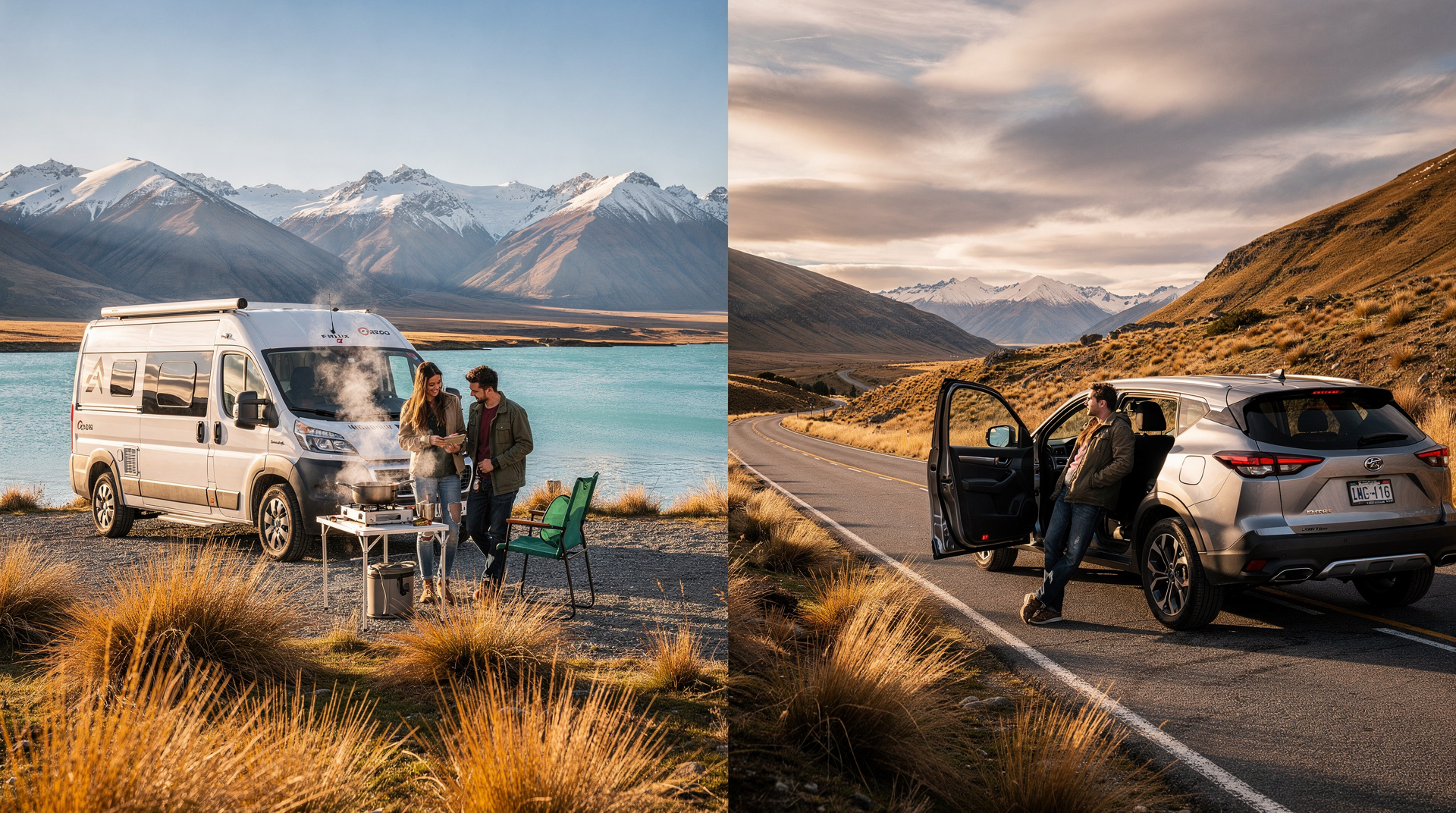
Campervan vs car rental in New Zealand
Honest campervan vs car rental comparison for NZ: real costs, freedom camping rules, who should choose each, and what the brochures don't tell you.
Domestic flights in New Zealand
Guide to flying domestically in NZ: Air New Zealand vs Jetstar, cheapest routes, Auckland-Queenstown timing, and when flying beats 10 hours of driving.
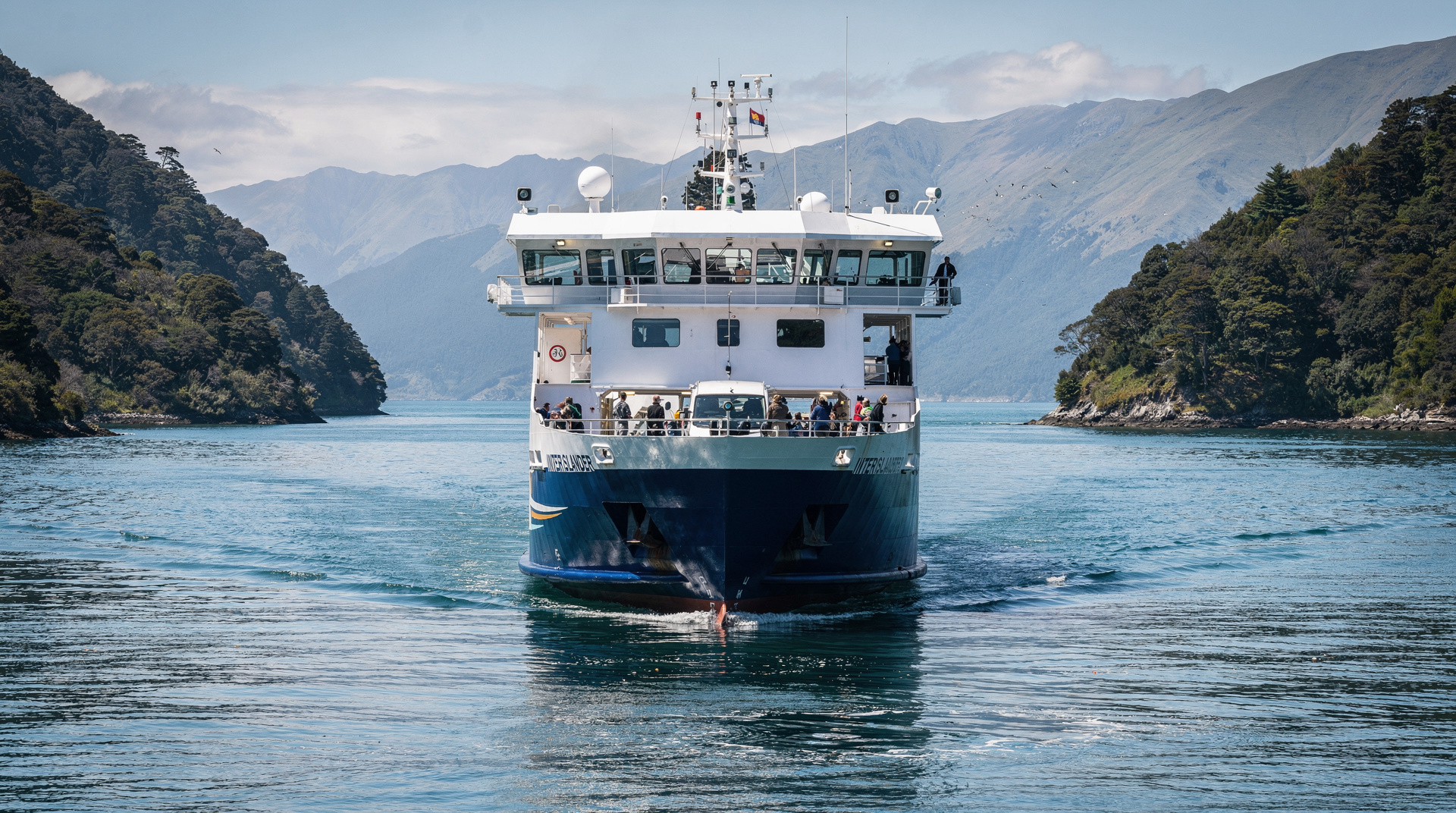
Cook Strait ferry guide
Complete Cook Strait ferry guide: Interislander vs Bluebridge, timetables, costs, booking tips, campervan advice, and the flying alternative.
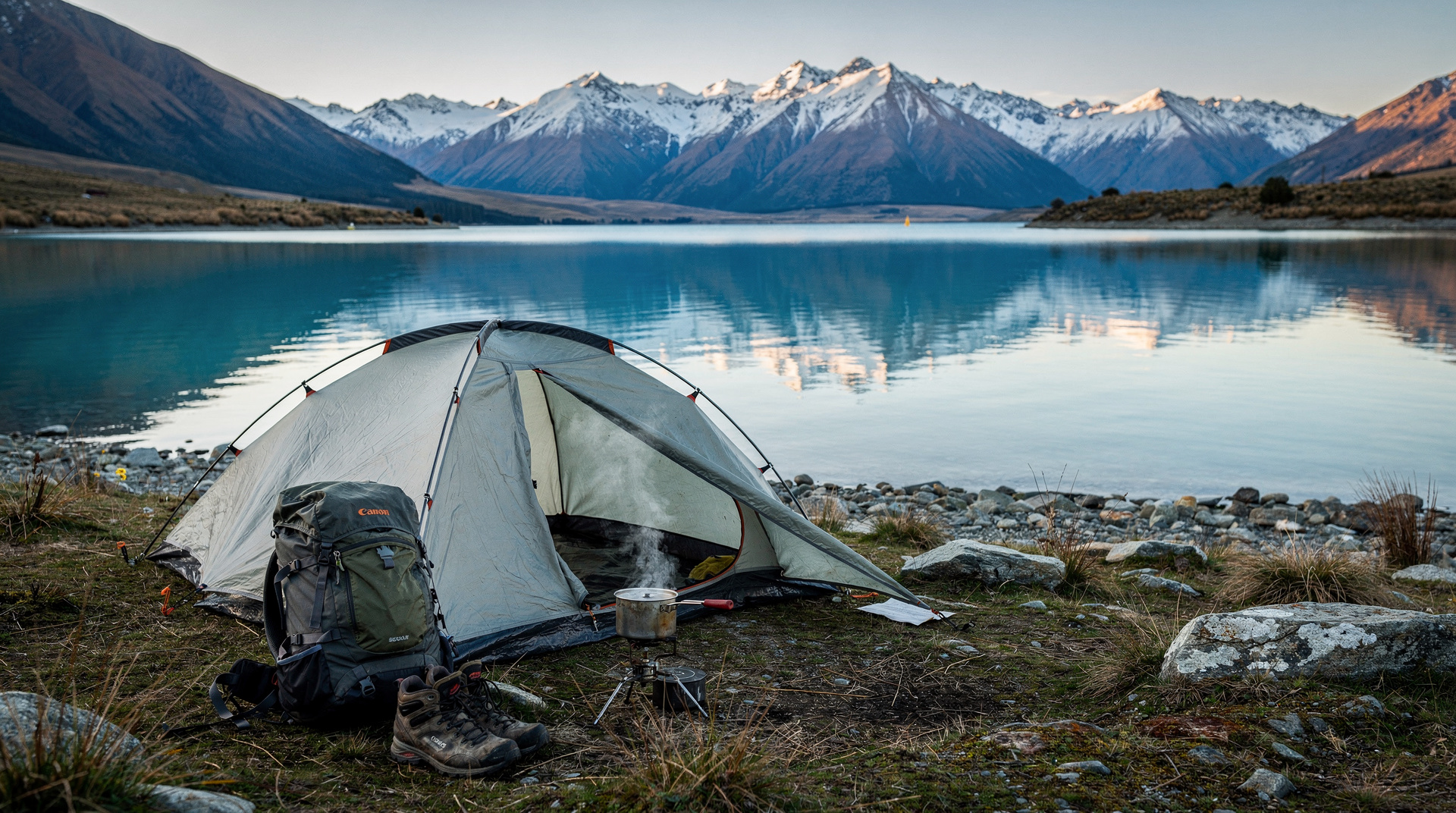
New Zealand on a budget
Honest budget guide to NZ: real daily costs, where to save, where not to cheap out, free things, and how to stretch NZD on a backpacker or mid-range budget.
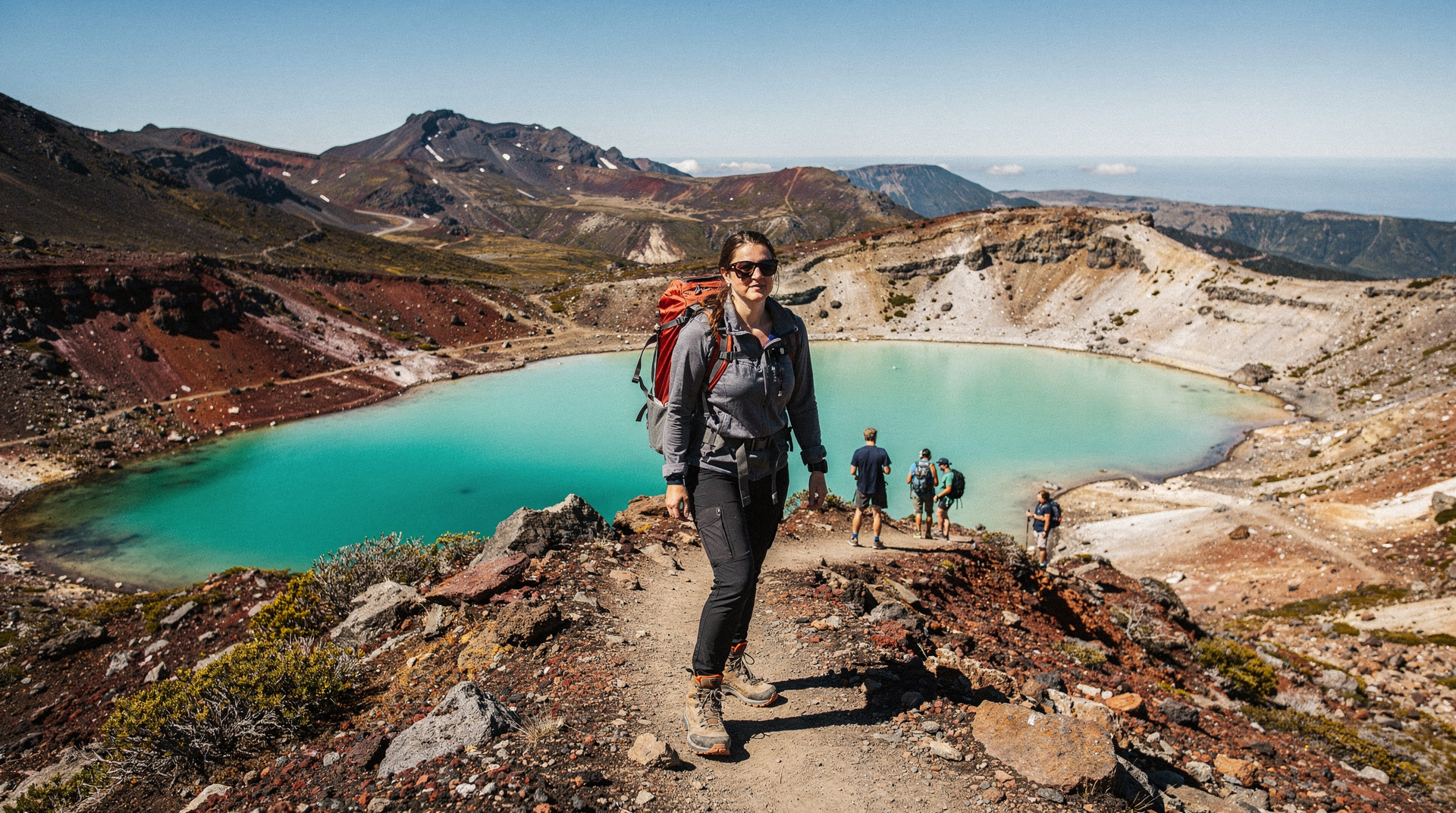
Is New Zealand safe
Honest safety guide to New Zealand: crime rates, road safety, natural hazards, ocean swimming, wilderness risks, and how safe NZ actually is for tourists.
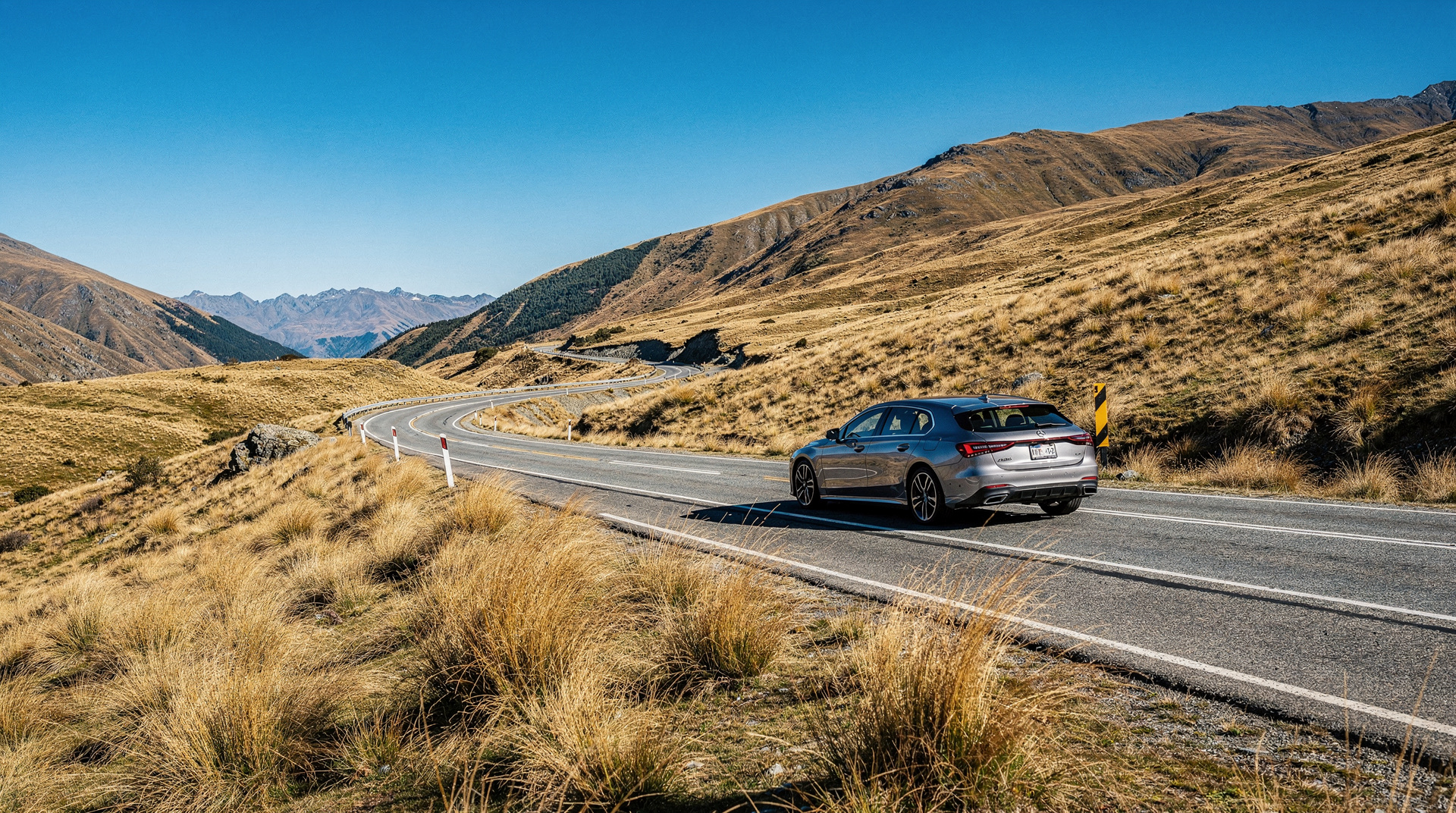
New Zealand self-drive itinerary — 14 days, car and motel
The classic 14-day NZ self-drive road trip by rental car and motels: both islands, ferry crossing, honest road times and costs in NZD, USD, and EUR.
Last reviewed: