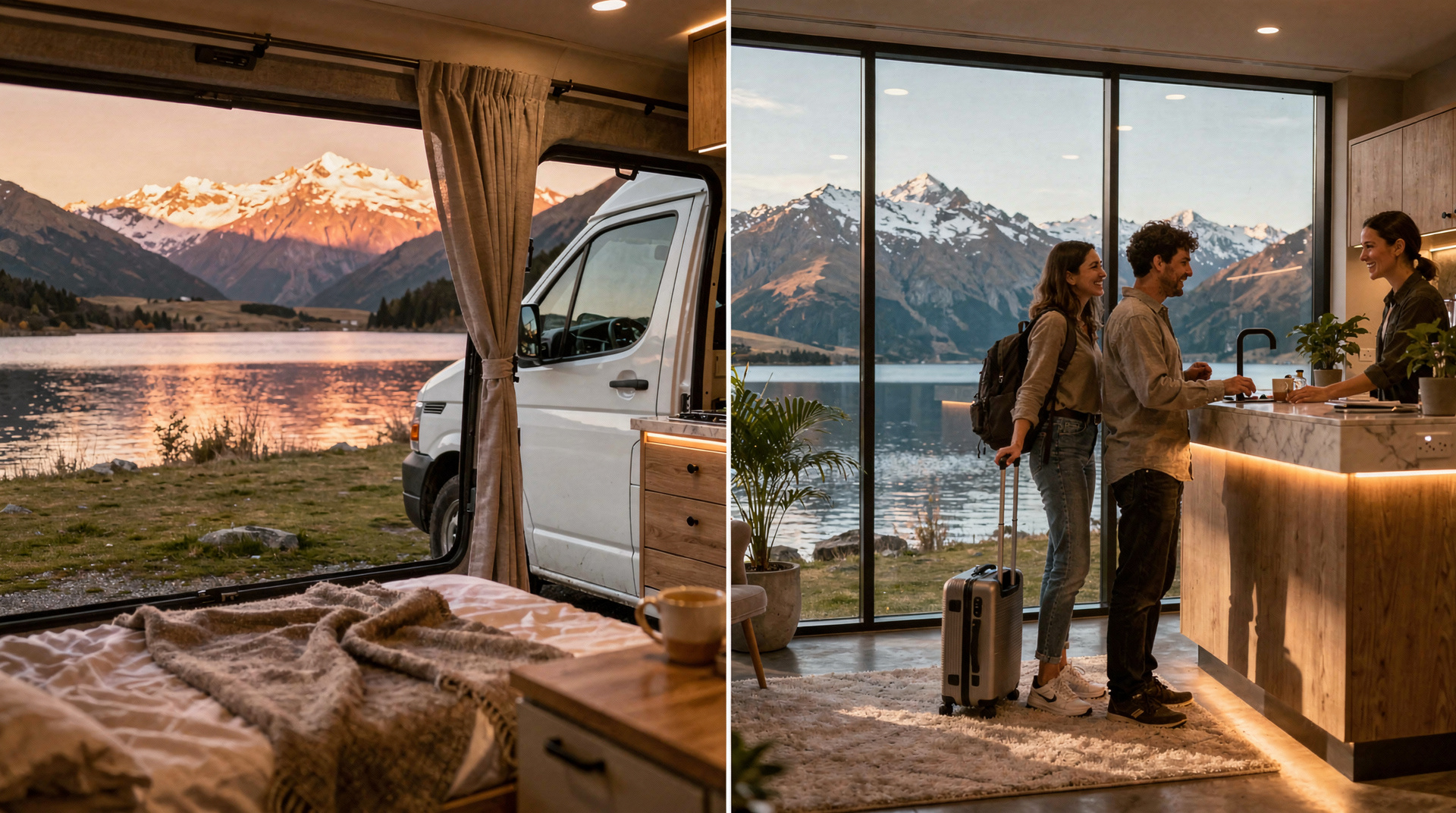
Campervan vs car and motel in New Zealand
Is a campervan or car and motel better value in New Zealand?
Campervan wins from 10+ days for 2+ travellers — the kitchen eliminates restaurant costs and the single daily rate covers accommodation and transport. Car and motel wins for trips under 7 days, solo travellers, and anyone who wants urban comforts or city-centre stays. The tipping point is typically 9–10 days for a couple.
The honest verdict
The campervan-vs-car-and-motel question is ultimately a maths problem, and the maths depends on trip length, group size, and travel style. Here is the framework:
| Where | Nationwide — both work equally well North and South Island |
| Cost | around NZD 5,000-7,700 for 2 adults over 14 days |
| Time needed | Break-even at roughly 9-10 days |
| Getting there | Pick up campervan or rental car at any main airport |
| Best time | Book 4-5 months ahead for Dec-Feb travel |
Campervans cost more per day for the vehicle but eliminate accommodation costs. For two people on a 14-day trip, the campervan often costs 20–30% less than the equivalent car-plus-motel combination — and saves the time of checking in and out, parking in separate car parks, and booking 12 different accommodation properties.
Car-plus-motel wins for short trips (under 7 days), city-heavy itineraries (urban motel parking is expensive and campervan sites within cities are limited), and travellers who want the comfort of a proper bed, a private bathroom, and restaurant access as their baseline.
The break-even point is approximately 9–10 days for two people at mid-range price levels, assuming one camp fee per campervan night of NZD 20–45 and a mid-range motel rate of NZD 160–250 per night.
The numbers: 14-day comparison (two adults)
| Cost category | Campervan (4-berth) | Car + motel |
|---|---|---|
| Vehicle / accommodation rental | NZD 250–380/day | NZD 50–80/day (car) + NZD 160–250/night (motel) |
| 14-day vehicle total | NZD 3,500–5,320 | NZD 700–1,120 (car) |
| 14-night accommodation | Included in campervan | NZD 2,240–3,500 |
| Combined vehicle + accommodation | NZD 3,500–5,320 | NZD 2,940–4,620 |
| Food (campervan cooks most meals) | NZD 80–120/day | NZD 150–220/day (café + restaurant dependency) |
| 14-day food total | NZD 1,120–1,680 | NZD 2,100–3,080 |
| Camp fees (campervan) | NZD 280–630 (NZD 20–45 x 14 nights) | Not applicable |
| Estimated 14-day total (2 adults) | NZD 5,000–7,600 | NZD 5,040–7,700 |
At mid-range, two adults on 14 days come out roughly equivalent — with the campervan slightly ahead once flexibility and food savings are factored in. For a family of four, the campervan wins more clearly because motel costs increase (two rooms or family rooms at NZD 250–380), while campervan costs barely change.
Campervan types and costs
New Zealand campervan rental companies (Maui, Britz, Jucy, Wilderness, Apollo, Wendekreisen) offer a range of vehicle sizes:
| Type | Sleeps | NZD/day (peak) | NZD/day (shoulder) | Suitable for |
|---|---|---|---|---|
| Compact 2-berth | 2 | NZD 180–280 | NZD 110–180 | Couples who want to save |
| Standard 2-berth | 2 | NZD 220–350 | NZD 140–220 | Couples preferring comfort |
| 4-berth | 2–4 | NZD 280–420 | NZD 180–280 | Families or groups of 3–4 |
| 6-berth | 4–6 | NZD 380–550 | NZD 240–380 | Families of 4–6 |
Peak season (December–February) adds 20–40% to daily rates. Booking 3–4 months ahead is standard; January bookings for premium vehicles require 5–6 months.
One-way rentals: New Zealand’s geography (two main islands) makes one-way rentals common. Auckland pickup to Christchurch drop (or reverse) avoids doubling back. Most companies offer this with a one-way fee of NZD 150–450 depending on direction — usually cheaper south-to-north than north-to-south.
Campgrounds and camp fees
New Zealand has three tiers of camping infrastructure:
DOC (Department of Conservation) campgrounds: The cheapest option — NZD 6–22 per adult per night. Basic facilities (water, toilets, sometimes hot showers). Located in extraordinary natural settings: Wainui in Abel Tasman, Totaranui, Hooker Valley near Mt Cook, Milford Sound. Many DOC campgrounds require self-containment certification — confirm your vehicle is self-contained (DOC issue a certification sticker) before planning DOC-only nights.
Holiday parks: The mainstream option — NZD 35–65 per adult per night. Full facilities: powered sites, dump stations, communal kitchens, showers, Wi-Fi. Found in every town and most tourist areas. Chains (Top10, Kiwi Holiday Parks, Big4) have reliable quality. These are the default base for most campervanning families.
Freedom camping: New Zealand allows freedom camping (overnight camping outside designated sites) subject to strict rules: self-contained vehicles only, no camping in restricted zones (which now cover most urban areas and many scenic spots). The rules tightened significantly after 2017. Check the Freedom Camping app and local council rules before assuming any spot is legal.
When car and motel wins
Trips under 7 days. With fewer than 7 nights, the cost advantages of the campervan don’t fully materialise. You’ll pay premium season rates on the vehicle, still pay camp fees, and may not save enough on food to offset the cost difference. A compact rental car (NZD 50–80/day) plus well-priced motels (NZD 140–200/night) is often the more economical short-trip option.
Urban-heavy itineraries. If your trip is centred on Auckland, Wellington, and Christchurch with limited rural travel, campervans are awkward: city holiday parks are often 20–30 minutes from central districts, parking a 7-metre campervan in city centres is difficult, and the cost advantage disappears when camp fees in urban areas reach NZD 55–75 per night.
Solo travellers. A solo campervan rental costs roughly the same as for two people but halves the per-person value. A solo traveller can find budget accommodation (hostels, budget motels) for NZD 35–80 per night — significantly cheaper than a solo campervan at NZD 200–300 per day.
Those who prioritise private bathrooms. Most campervan bathrooms are functional (wet bath: toilet, sink, shower in one small cubicle) but not spacious. Travellers accustomed to hotel bathrooms, or families with children who need bathing space, often find the communal shower blocks at holiday parks more practical than the on-board facilities.
Booking flexibility. Motels can often be booked last-minute; campervans in peak season cannot. If you prefer to plan loosely and decide each night where to stay, motel availability is more forgiving (particularly outside Queenstown and Milford Sound gateway).
When the campervan wins
10+ days for 2 or more people. The economics decisively favour campervans at this length. A couple on 14 days will typically spend NZD 1,000–2,000 less with a campervan than the equivalent car-plus-motel combination, primarily through food savings.
Families of 4. A 6-berth campervan at NZD 380–550/day covers transport, accommodation, kitchen, and beds for four — all in one daily charge. The equivalent in motels is a family room at NZD 250–380 plus a rental car at NZD 60–90/day plus restaurant or takeaway meals at NZD 50–80/day. The campervan family equation works strongly.
South Island road trips. The South Island’s circuit — Christchurch → West Coast → Queenstown → Milford Sound → Dunedin — is a classic 10–14 day campervan itinerary with outstanding DOC and holiday park options throughout. The flexibility to stop anywhere (Haast River, Lake Matheson, the Roaring Meg) without needing to book accommodation makes campervanning particularly well-suited to this route.
Spontaneous itinerary travellers. One of the campervan’s underrated advantages is itinerary flexibility: if you arrive at Lake Tekapo and it’s perfect, stay another night by simply paying an additional NZD 30–45 to the holiday park. Rerouting a motel-based itinerary requires last-minute booking changes, cancellation policies, and potential lost deposits.
Hobbiton and rural New Zealand. Many of New Zealand’s best experiences are in rural areas where accommodation is limited: the Catlins, the Wairarapa, the Mackenzie Basin. A campervan makes these areas accessible without the constraint of finding (and paying for) scarce rural accommodation.
Activity booking: same for both
A common misconception: campervans don’t limit your activity access. You can book the same guided glacier walks, Milford Sound cruises, and Hobbiton tours regardless of how you’re travelling. Tongariro Alpine Crossing shuttle transfers — NZD 35–55 / USD 21–33 / EUR 19–30 — pick up from local holiday parks as well as hotels. Milford Sound nature cruise — NZD 85–115 / USD 51–69 / EUR 47–63 — is booked online regardless of accommodation type.
The only logistical consideration: some guided multi-day walks (Milford Track, Routeburn Track) require you to leave your vehicle at a designated carpark — campervans park at the same sites as regular cars.
Practical campervan logistics
Driving: New Zealand drives on the left. Most rental campervans are automatics, which simplifies things. Mountain roads on the West Coast (particularly the Haast Pass, and the road to Milford Sound) have tight corners, but campervans navigate them regularly. Allow extra time for mountain roads — the GPS estimate to Milford Sound from Queenstown (via Te Anau) is typically 4 hours; allow 5–6 with stops and the winding final section.
Dump stations: Every self-contained campervan requires regular dumping at dump stations (waste disposal). Holiday parks have dump stations as standard. Fuel stations in tourist areas often have them. The CamperMate app (free) is the standard resource for finding dump stations, free camps, and scenic stops throughout New Zealand.
Insurance: Standard campervan rental insurance has an excess of NZD 2,500–5,000. Reducing the excess to NZD 0–500 costs NZD 25–45/day extra. For a 14-day rental, this is NZD 350–630 for full peace of mind — usually worth it, particularly for less experienced drivers navigating unfamiliar roads.
Ferry crossing (Interislander or Bluebridge): Campervans can cross between the islands on the Cook Strait ferry (Wellington to Picton, approximately 3 hours). Vehicle rate for a standard campervan runs NZD 180–350 depending on season and advance booking. Book the ferry 2–3 months ahead in peak season. For a comparison of the two ferries, see the campervan itinerary planning guide.
What about a guided tour instead of self-drive?
Neither campervan nor car-and-motel is the only option — a growing number of visitors, particularly first-time international travellers uneasy about left-hand driving or one-lane bridges, choose a guided small-group tour instead of self-driving either format. The trade-off is straightforward: you give up route flexibility and daily spontaneity in exchange for zero driving stress and a fixed, predictable cost. See the private tour vs self-drive comparison for the fuller breakdown — it’s worth reading before committing to either campervan or car-and-motel if driving confidence is a genuine concern rather than a budget question.
Great Walks and campervan logistics
If a multi-day hike like the Routeburn or Milford Track is on your itinerary, both campervan and car travellers face the same constraint: your vehicle sits in a trailhead carpark for several days while you’re on the track, and getting back to it (or arranging transport onward) needs planning ahead of time.
Campervanners have a slight edge here — some operators allow you to leave the van at a partner holiday park near the trailhead rather than an unattended carpark, which reduces security concerns for a vehicle you won’t be checking on for 3-4 days. Whichever option you choose, book Great Walk transport logistics before you book the hut, not after — trailhead shuttle services fill up in the same peak windows as the huts themselves.
Recommended configurations by trip length
| Trip length | Group | Recommended option |
|---|---|---|
| 5–7 days | Solo | Compact rental car + budget motel/hostel |
| 5–7 days | Couple | Compact rental car + mid-range motel |
| 5–7 days | Family 4 | Mid-size car + family motel rooms |
| 10–14 days | Couple | 2-berth campervan (shoulder) or car+motel (peak) |
| 10–14 days | Family 4 | 6-berth campervan — clear win |
| 14–21 days | Couple | 2-berth campervan |
| 14–21 days | Group 4–6 | 6-berth campervan |
Frequently asked questions
Do campervans need to be booked far in advance?
For December–February travel, book 4–5 months ahead. The most popular vehicle types (4-berth, 6-berth Maui/Britz/Wilderness) sell out. Budget options (Jucy) book out faster because they’re price-sensitive. For shoulder season (March–April, October–November), 6–8 weeks is sufficient. Winter campervanning is possible but off-peak — bookings are available closer to departure.
Can you wild camp (freedom camp) in New Zealand?
Technically yes, with restrictions. Freedom camping is legal only in self-contained vehicles (with a DOC self-containment certificate) and only in permitted zones. Most scenic viewpoints, beaches, and roadside spots that were previously used for freedom camping are now restricted. The Freedom Camping Act 2011 and subsequent amendments mean you need to verify each night’s planned stop through the CamperMate app or local council websites. Fines for non-compliant freedom camping are NZD 200–400.
Is campervan driving difficult in New Zealand?
New Zealand drives on the left, which is the primary adjustment for North American and European visitors. Mountain roads on the West Coast and in Fiordland have tight curves but are well-maintained. The main challenges are: one-lane bridges (give way to vehicles already on the bridge or to those displaying right-of-way signs), reversing large campervans in confined spaces, and wind exposure on the Cook Strait ferry crossing. None of these are serious obstacles — thousands of first-time campervan drivers do this route every summer without incident.
Is a guided tour cheaper than either self-drive option?
Usually not for a couple, though it depends heavily on the operator and inclusions. Guided small-group tours bundle transport, accommodation, and some meals into one price, which often lands above the mid-range campervan estimate but below a fully independent car-and-motel trip with premium hotels. The real value of a guided tour isn’t cost — it’s removing the driving and route-planning burden entirely. See the private tour vs self-drive comparison for exact numbers.
Does a campervan make sense for a North Island-only trip?
Yes, though the case is slightly weaker than for a South Island loop — North Island distances are shorter and motels are more plentiful in the cities you’re likely to pass through (Auckland, Rotorua, Wellington). It still works well if your North Island route includes rural stretches like Northland, the Coromandel, or the Tongariro area, where accommodation is scarcer.
Related comparisons and guides
Related guides
Campervan vs car rental in New Zealand
Honest campervan vs car rental comparison for NZ: real costs, freedom camping rules, who should choose each, and what the brochures don't tell you.
Driving in New Zealand
Honest driving guide for NZ: left-side rules, gravel road etiquette, why GPS lies, fuel costs, one-lane bridges, and what rental companies don't tell you.
New Zealand on a budget
Honest budget guide to NZ: real daily costs, where to save, where not to cheap out, free things, and how to stretch NZD on a backpacker or mid-range budget.
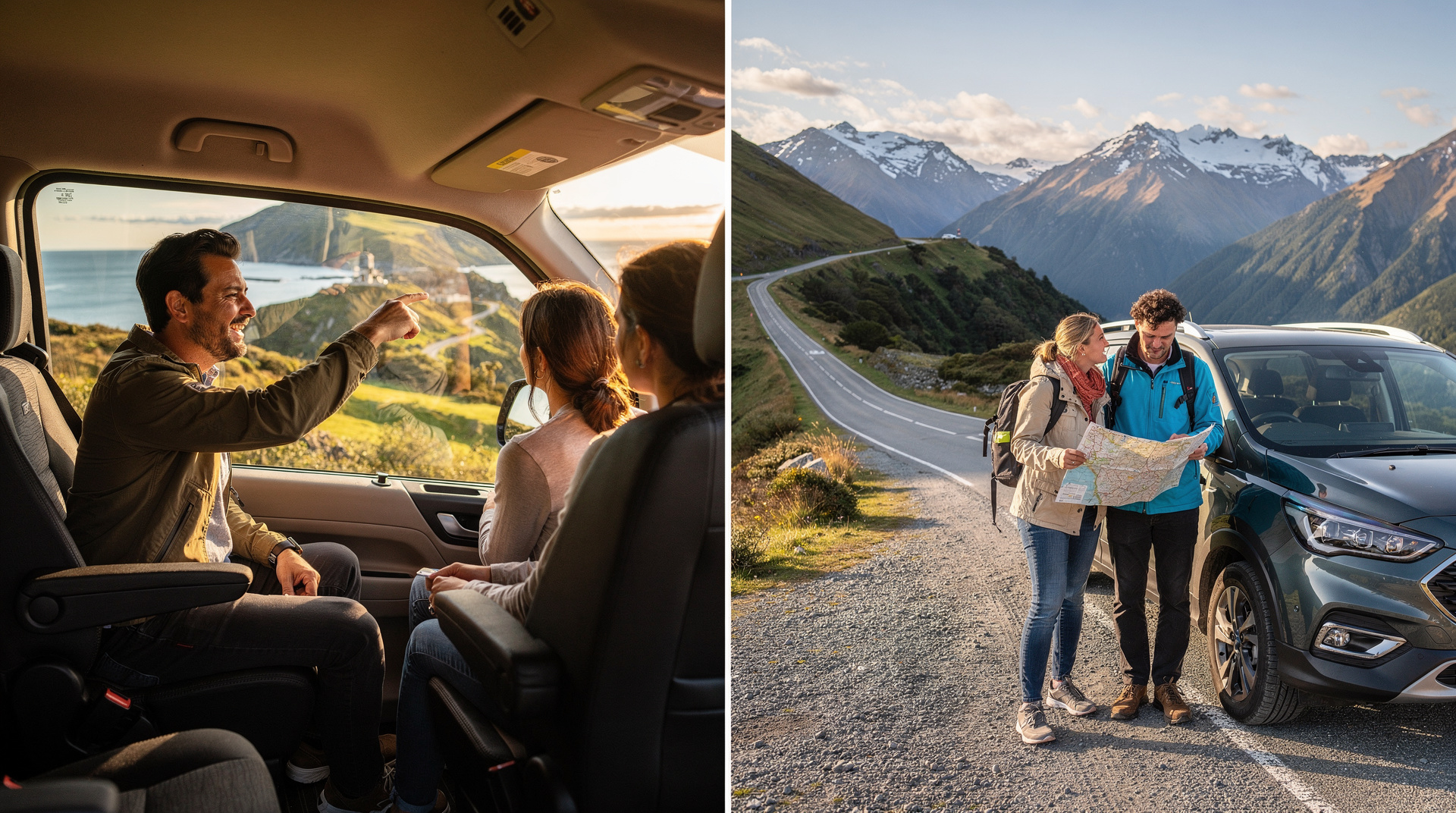
Private tour vs self-drive in New Zealand
Private tour vs self-drive in New Zealand: honest cost breakdown, when each wins, and how to combine both. NZD/USD/EUR prices throughout.
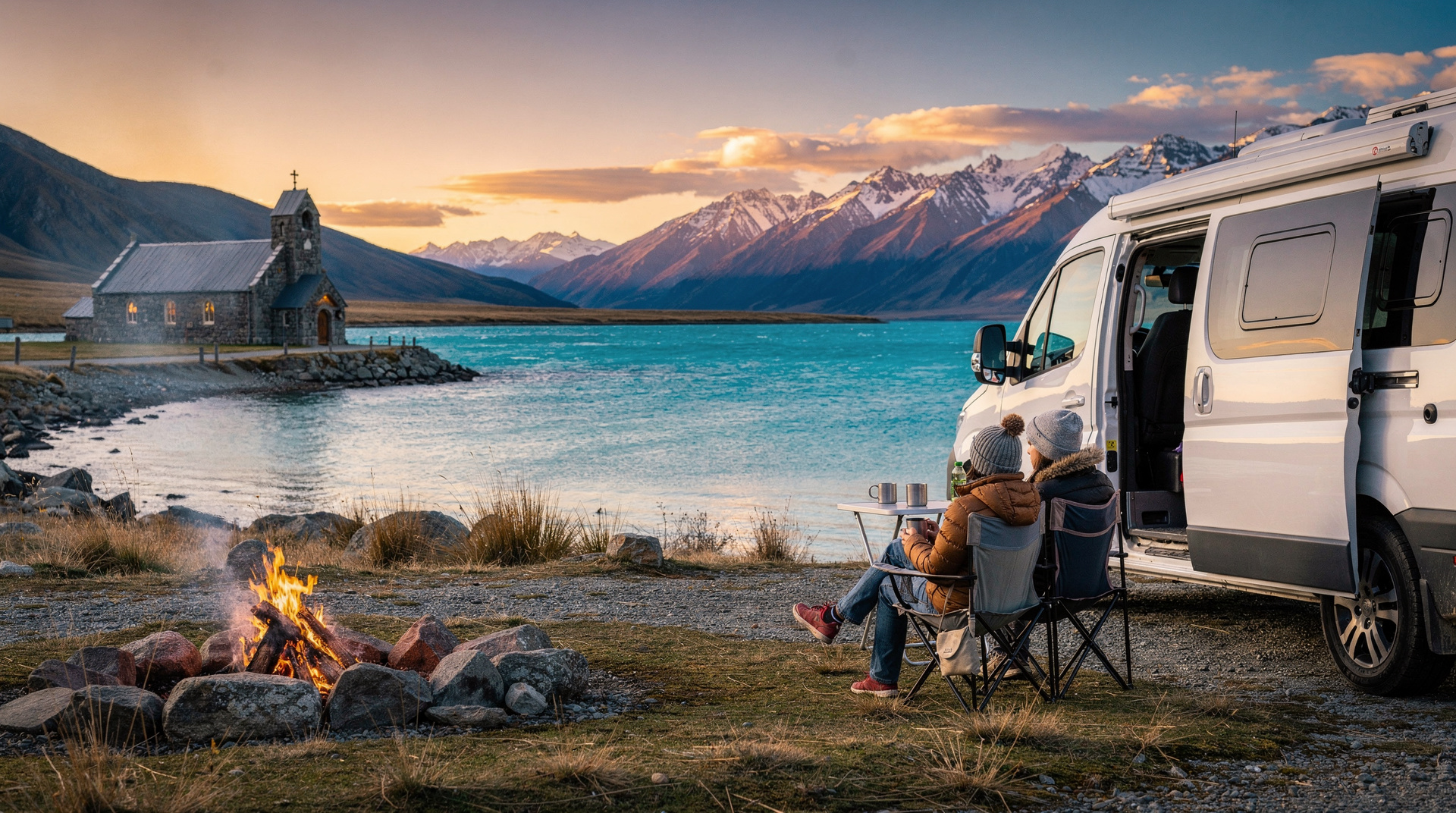
New Zealand campervan road trip — 21 days, both islands
21-day NZ campervan road trip covering both islands: freedom camping rules, dump stations, powered sites, and the best scenic stops. Real NZD/USD/EUR costs.
Last reviewed: