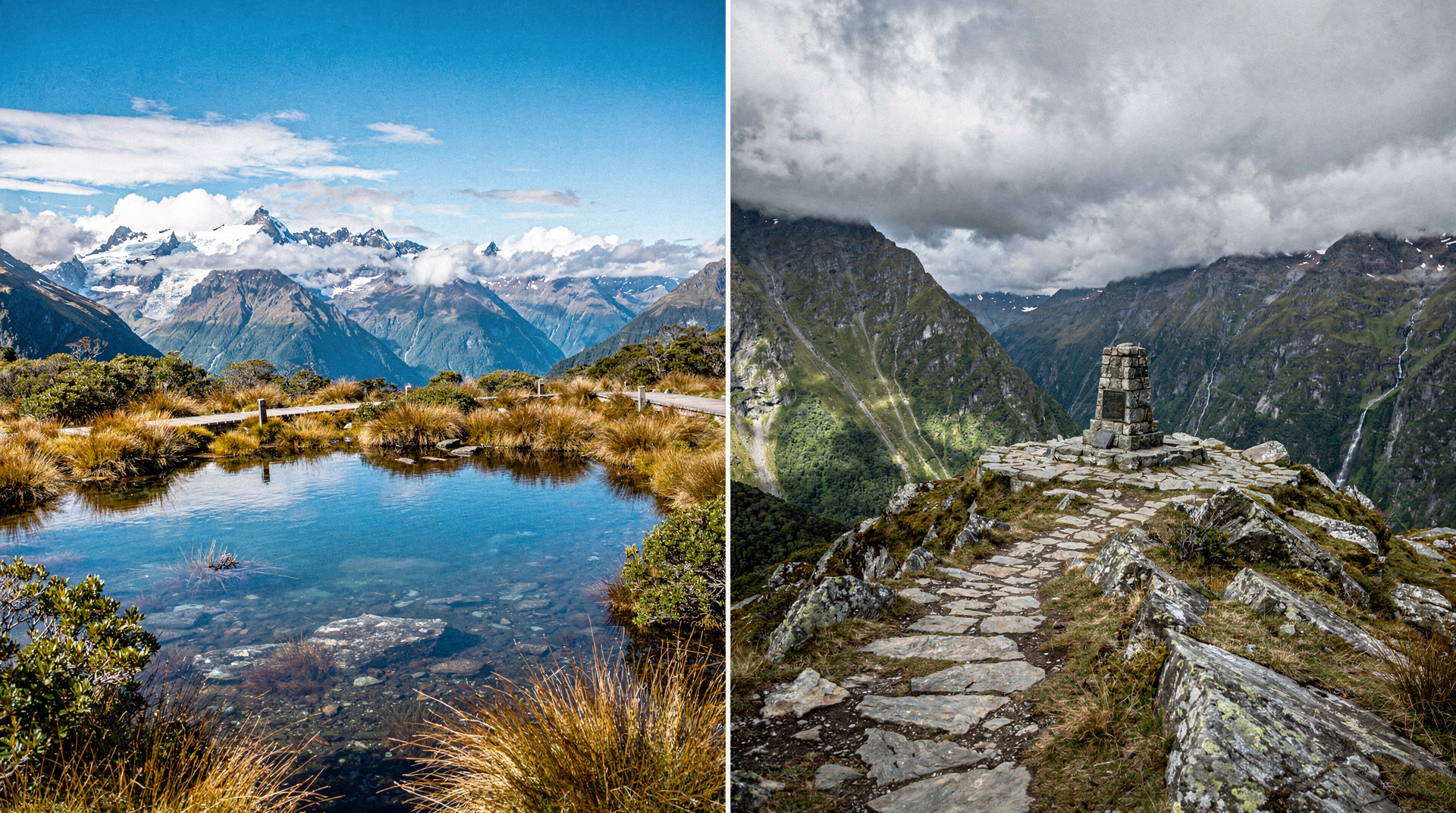
Routeburn Track vs Milford Track
Should I do the Routeburn Track or the Milford Track?
Routeburn Track if you want alpine scenery, flexible access (two entry points), and a shorter commitment (2-3 days). Milford Track if you want the most famous walk in New Zealand, waterfall drama and the full 4-day Great Walk experience. The Milford is harder to book — plan 6 months ahead for summer.
The honest verdict
Both tracks are in Fiordland National Park — part of the Te Wahipounamu World Heritage Area — and both are among the finest multi-day walks in the world. The question of which is “better” is genuinely hard, because they deliver different things.
The Milford Track (53.5 km, 4 days) carries its “world’s finest walk” label from an 1908 Spectator magazine article, and while that’s a marketing claim that stuck, the track delivers on it: the MacKinnon Pass crossing, Sutherland Falls (at 580m, one of the world’s tallest waterfalls), and the final approach to Milford Sound make it legitimately special. It’s also heavily managed, heavily booked (6 months ahead in summer), and in peak January involves walking with 80+ strangers through the same huts.
The Routeburn Track (33 km, 2–3 days) links the Glenorchy side (near Queenstown) with the Te Anau side (Fiordland). The alpine section above the bushline — the Harris Saddle and Conical Hill ridge — is arguably more dramatic than the MacKinnon Pass. The Routeburn is easier to book (2–3 months ahead is usually sufficient), slightly shorter, and offers the flexibility of entering from either end.
For experienced multi-day walkers who want the more dramatic alpine experience: lean toward Routeburn. For first-time Great Walk participants who want the prestige itinerary and the Milford Sound finale: Milford Track.
| Where | Fiordland National Park, South Island |
| Cost | around NZD 55-80/night hut fee, both tracks |
| Time needed | Routeburn 2-3 days, Milford 4 days |
| Getting there | Glenorchy/Te Anau shuttle (Routeburn), Te Anau ferry (Milford) |
| Best time | October-April (Great Walk season, both) |
Side-by-side comparison
| Dimension | Routeburn Track | Milford Track |
|---|---|---|
| Length | 33 km | 53.5 km |
| Standard duration | 2–3 days | 4 days |
| Direction | Linear: Glenorchy end to Te Anau-Divide end | Linear: Glenorchy-side to Milford Sound |
| Maximum altitude | 1,255m (Harris Saddle) | 1,154m (MacKinnon Pass) |
| Great Walk? | Yes | Yes |
| Hut fee per night | NZD 55–80 / USD 33–48 / EUR 30–44 | NZD 55–80 / USD 33–48 / EUR 30–44 |
| Booking lead time | 2–3 months (summer) | 5–6 months (summer — sells out fast) |
| Max trampers per day (hut) | Routeburn Falls: 48, Lake Mackenzie: 50 | Approximately 40 per hut group |
| Famous feature | Harris Saddle ridgeline | MacKinnon Pass, Sutherland Falls |
| Rain / waterfalls | Significant (Fiordland receives 8m+ rainfall/year) | Extreme — Fiordland wettest area; spectacular in rain |
| Guided option | Yes — Ultimate Hikes (guided) | Yes — Ultimate Hikes (guided) |
| Access from Queenstown | Yes — 1h to Glenorchy trailhead | 2h to Te Anau, then 2.5h to Glade Wharf |
| Access from Te Anau | Yes — the Divide, 1h west | Yes — ferry from Te Anau township |
| Connects to? | Either Queenstown or Te Anau ends | Milford Sound (then bus or flight back) |
| Season | October–April (Great Walk season) | October–April |
| Off-season walking | Possible with experience | Possible with experience |
The Routeburn Track in detail
Starting from the Routeburn Shelter near Glenorchy, the track climbs through beech forest for the first 2 hours before reaching the Routeburn Flats — a wide valley with the Routeburn Falls Hut, one of the most scenic huts in New Zealand’s Great Walk network. From here, the climb to the Routeburn Falls is steep but short.
Day 2 is the highlight: from Routeburn Falls Hut to Lake Mackenzie Hut via the alpine section. This section — above the treeline, with Lake Harris below and 360-degree views of the Harris Range — is what most hikers cite as the best single section of any New Zealand Great Walk. The Harris Saddle descent into the lake basin on the other side has a different character: sheer rock walls, waterfalls, and the intense green of the beech forest below.
Day 3 (or the second half of Day 2 for faster hikers) descends from Lake Mackenzie to the Divide junction on SH94 — the highway between Te Anau and Milford Sound. A shuttle runs from the Divide back to Te Anau or to the Routeburn carpark depending on your chosen direction.
Flexibility: The Routeburn can be started from either the Glenorchy end or the Divide/Te Anau end, making it integrable into either a Queenstown or a Fiordland itinerary. This flexibility makes logistics considerably easier than the Milford Track.
The Milford Track in detail
The Milford Track starts at Glade Wharf, accessible only by boat from Te Anau. This controlled access (boat bookings through the operator, arriving DOC accommodation) keeps the track at sustainable visitor numbers. The experience is different from the Routeburn’s relative freedom — everyone starts the same day, stays in the same huts on the same schedule.
Day 1: Short introductory walk through Clinton Valley to Clinton Hut. Day 2: Long valley walk to Mintaro Hut — forest, river, excellent birdlife (kea, kaka, bellbird). Day 3: The MacKinnon Pass crossing — the most dramatic day, gaining 700m to the pass at 1,154m before descending past Sutherland Falls (580m) to Dumpling Hut. Day 4: Final descent through rainforest and lakeside to Milford Sound — arrive at the Milford terminal, take a cruise or bus.
The Sutherland Falls — reached on a 30-minute detour from the main track on Day 3 — are one of the most extraordinary waterfalls in New Zealand. After significant rain (common in Fiordland), the valley fills with dozens of temporary waterfalls, and the track becomes a drainage channel in places.
Guided option: Ultimate Hikes runs guided versions of both tracks (private huts, meals provided, pack carrying optional). The Milford guided option runs NZD 2,495–3,195 / USD 1,497–1,917 / EUR 1,372–1,757 per person and sells out a year or more ahead.
Booking — the most practical difference
Milford Track: books 6 months ahead for January–February. The track has a strict daily quota. If you want a specific date in peak summer, book the day DOC’s system opens in mid-March (for the following October–April season). Mid-season and shoulder season (October–November, March–April) are easier — 2–3 months ahead is sufficient.
Routeburn Track: books 2–3 months ahead for peak dates, often less. The track has more per-hut capacity and more booking flexibility. If you’re planning a New Zealand trip with 2 months’ notice, the Routeburn is much more achievable than the Milford.
Both book at the DOC Great Walks booking system: greatwalks.co.nz.
Cost breakdown (NZD + USD + EUR)
| Cost item | Routeburn Track | Milford Track |
|---|---|---|
| DOC hut per night (2–3 nights) | NZD 55–80/night, USD 33–48, EUR 30–44 | NZD 55–80/night, USD 33–48, EUR 30–44 |
| Transport (Glenorchy shuttle) | NZD 45–65 / USD 27–39 / EUR 25–36 | Ferry from Te Anau NZD 40–60 / USD 24–36 / EUR 22–33 |
| Milford Sound cruise (end of Milford) | Not applicable | NZD 85–115 / USD 51–69 / EUR 47–63 |
| Guided version | NZD 1,850–2,400 / USD 1,110–1,440 / EUR 1,018–1,320 | NZD 2,495–3,195 / USD 1,497–1,917 / EUR 1,372–1,757 |
| Gear rental (full kit) | NZD 150–250 if needed | NZD 150–250 if needed |
What they share
Both tracks are in the same broad landscape — Fiordland’s beech forests, glacially-carved valleys, and alpine zones above the treeline. Both involve significant daily walking (15–20 km days with elevation change). Both are exposed to Fiordland’s extreme weather — rain is the norm, not the exception. Both require proper waterproof gear, sturdy boots, and preparedness for rapid weather changes.
Both close in winter (May–September for the Great Walk season) — off-season walking is possible but requires experience, appropriate gear, and no hut bookings.
Which one should first-time Great Walk trampers choose?
If this is your first multi-day hike in New Zealand, the Milford Track’s structure — fixed daily distances, one-direction booking, everyone on the same schedule — actually reduces decision fatigue, even though it sounds more restrictive. You know exactly where you’ll be each night and the logistics are handled once you’ve booked. The Routeburn rewards a bit more hiking experience because you’re choosing your own direction and coordinating your own transport at both ends.
Neither is objectively harder to walk, but the Milford is easier to plan for a first attempt, while the Routeburn is easier to book on short notice. For a wider view of Fiordland’s Great Walk options, see the Great Walks NZ overview and the Kepler Track guide, a third option based from Te Anau that’s often overlooked next to these two.
Day-hike alternatives if you can’t do either
Not every visitor has 2-4 days free for a Great Walk. If neither track fits your itinerary, several shorter Fiordland hikes give a taste of the same terrain: day hikes around Queenstown include sections near the Routeburn’s Glenorchy end, and a Milford Sound day trip from Queenstown covers the fiord itself by road and cruise without the multi-day commitment. Neither substitutes for the alpine walking, but both are honest compromises for a tighter schedule.
Frequently asked questions
Which track is harder?
Similar difficulty. The Routeburn’s Day 2 (Harris Saddle and Lake Mackenzie) involves more sustained exposure and altitude. The Milford’s MacKinnon Pass crossing is a bigger single day with greater elevation change. Both require reasonable fitness — neither is extreme but neither is casual.
Can I do both tracks on one trip?
Yes — the Routeburn and Milford share the Te Anau gateway, and it’s possible to walk both back-to-back with a Te Anau rest day between. Allow 10–12 days total including transit and the Milford Sound finale. This is an ambitious but achievable combination for fit trampers.
What if it rains the whole time?
Rain is likely in Fiordland (one of the wettest regions on earth). The tracks don’t close for rain (only avalanche conditions in winter). The MacKinnon Pass can be dramatic in rain and cloud — the valley fills with waterfalls. Pack full waterproofs and accept it as part of the experience. Many hikers say the Milford Track is more beautiful in heavy rain than in sun.
Is the guided version worth it?
For non-trampers, travelers who don’t want to carry heavy packs, or luxury-oriented visitors: yes. The Ultimate Hikes guided versions use superior private huts (meals provided, drier, less crowded) and the guide adds significant geological and natural history content. For experienced trampers happy to carry their own gear: the DOC huts are perfectly comfortable and the independent version costs a third of the price.
Which track books out first each season?
The Milford Track, consistently. Its stricter daily quota and smaller total capacity mean peak January-February dates can sell out within days of the DOC booking window opening in mid-March. The Routeburn has more per-night capacity across its three huts and rarely sells out as far in advance, though popular weekends still fill 2-3 months ahead.
Related comparisons and guides
Related guides
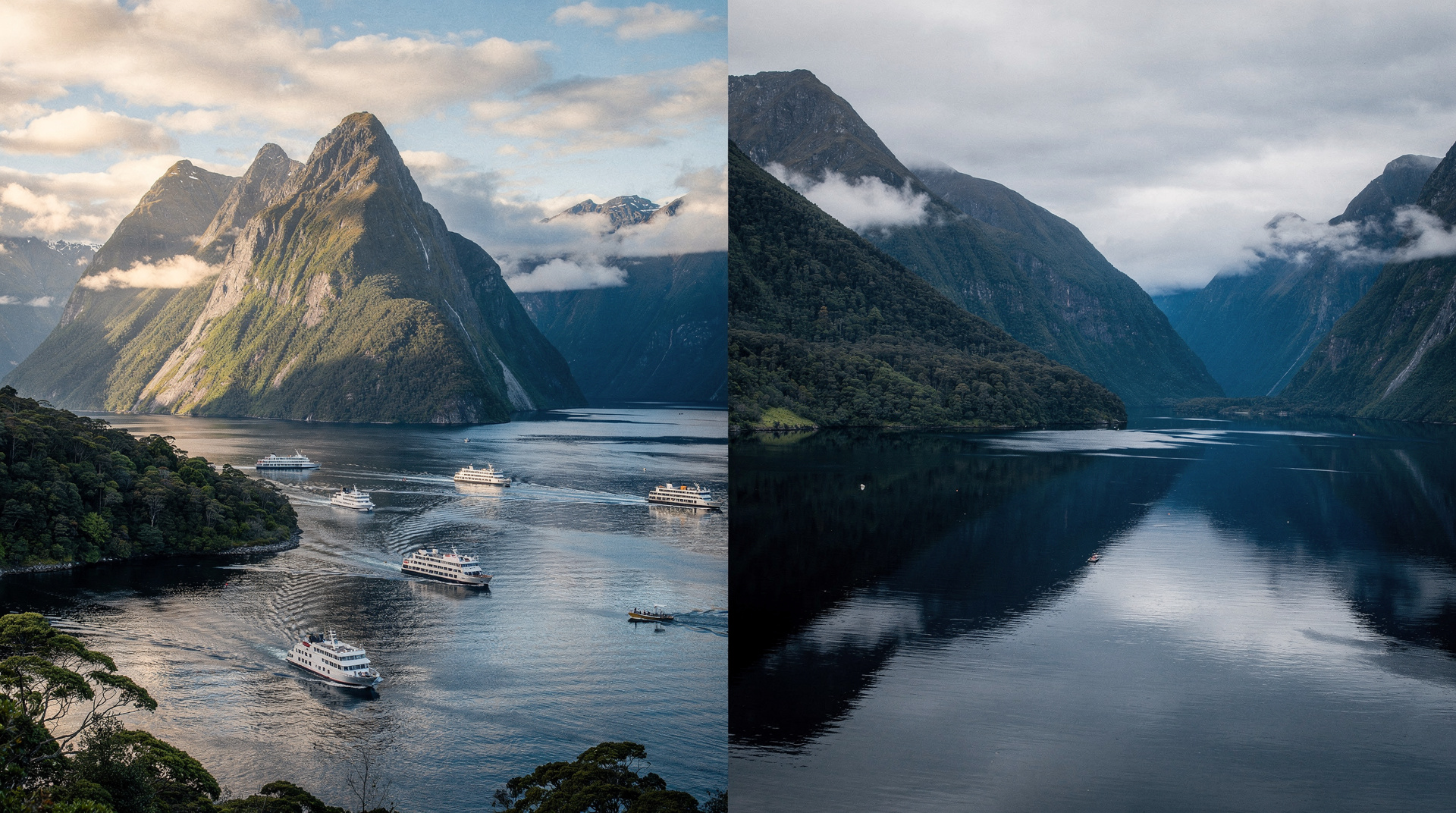
Milford Sound vs Doubtful Sound
Milford Sound vs Doubtful Sound: honest comparison of access, crowds, scenery and cruises. Clear verdict with prices in NZD/USD/EUR.

Routeburn Track — Great Walk on the Fiordland-Otago divide
Routeburn Track: 32km, 2-3 days, stunning alpine terrain. Book DOC huts from June. One-way transport required. Full logistics guide with costs.
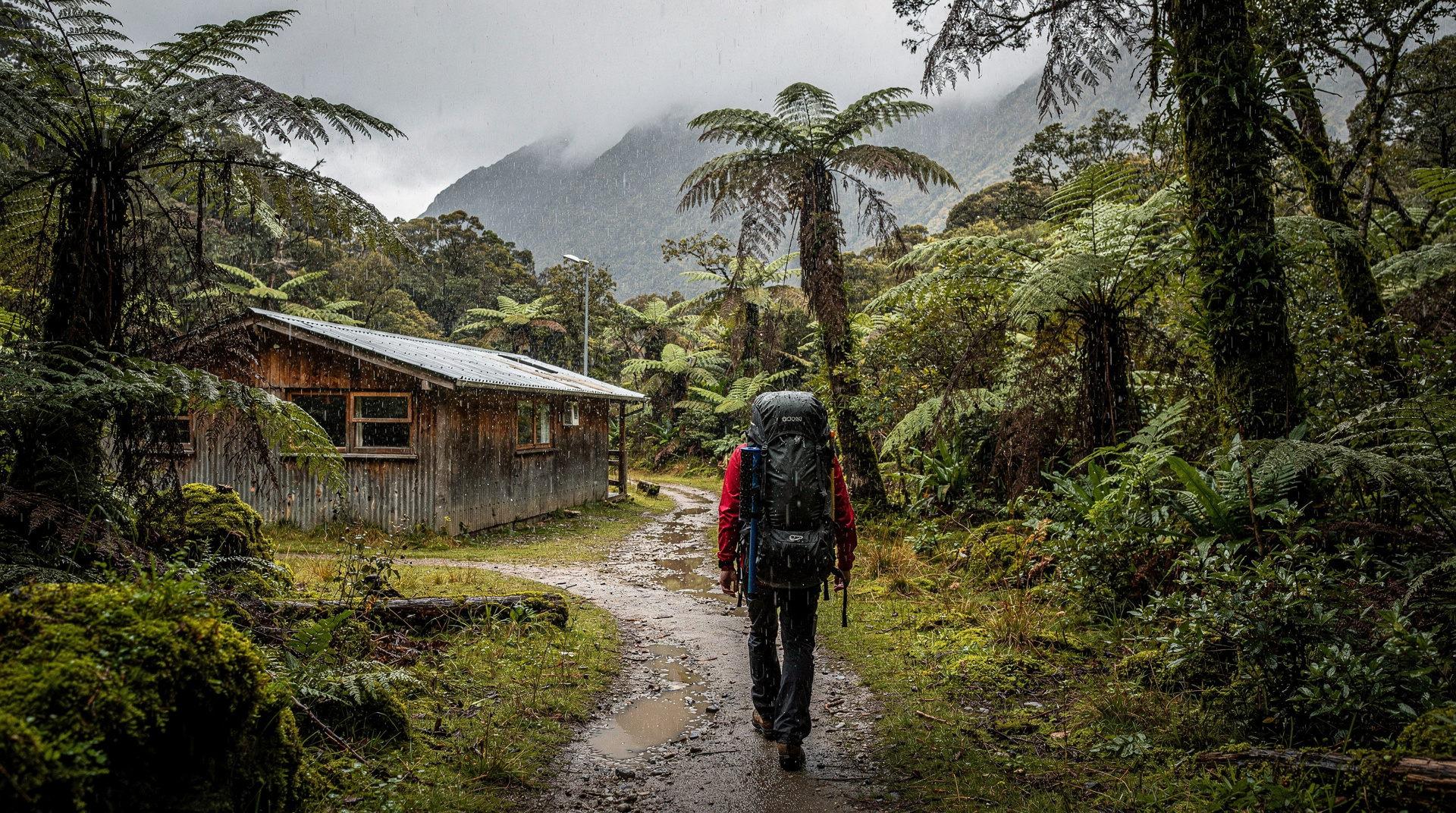
Milford Track — the world's finest walk
Milford Track: 53.5km, 4 days, one direction only, NZD 102/night huts. Book 6 months ahead. The most famous Great Walk in NZ — worth every step.
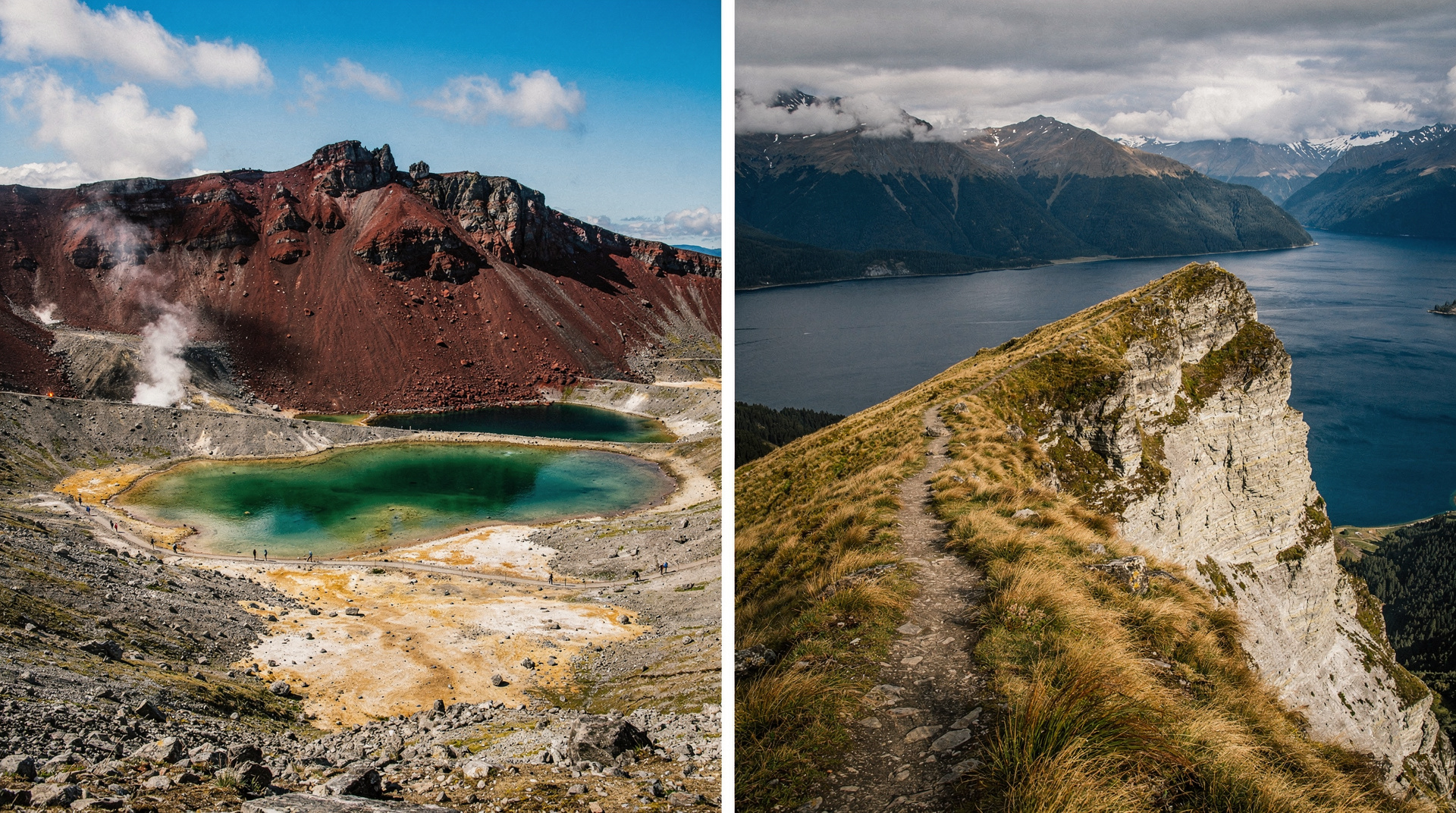
Tongariro Alpine Crossing vs Kepler Track
Tongariro Crossing vs Kepler Track: honest comparison of difficulty, booking, scenery and logistics. Clear verdict for day hikers and Great Walk planners.
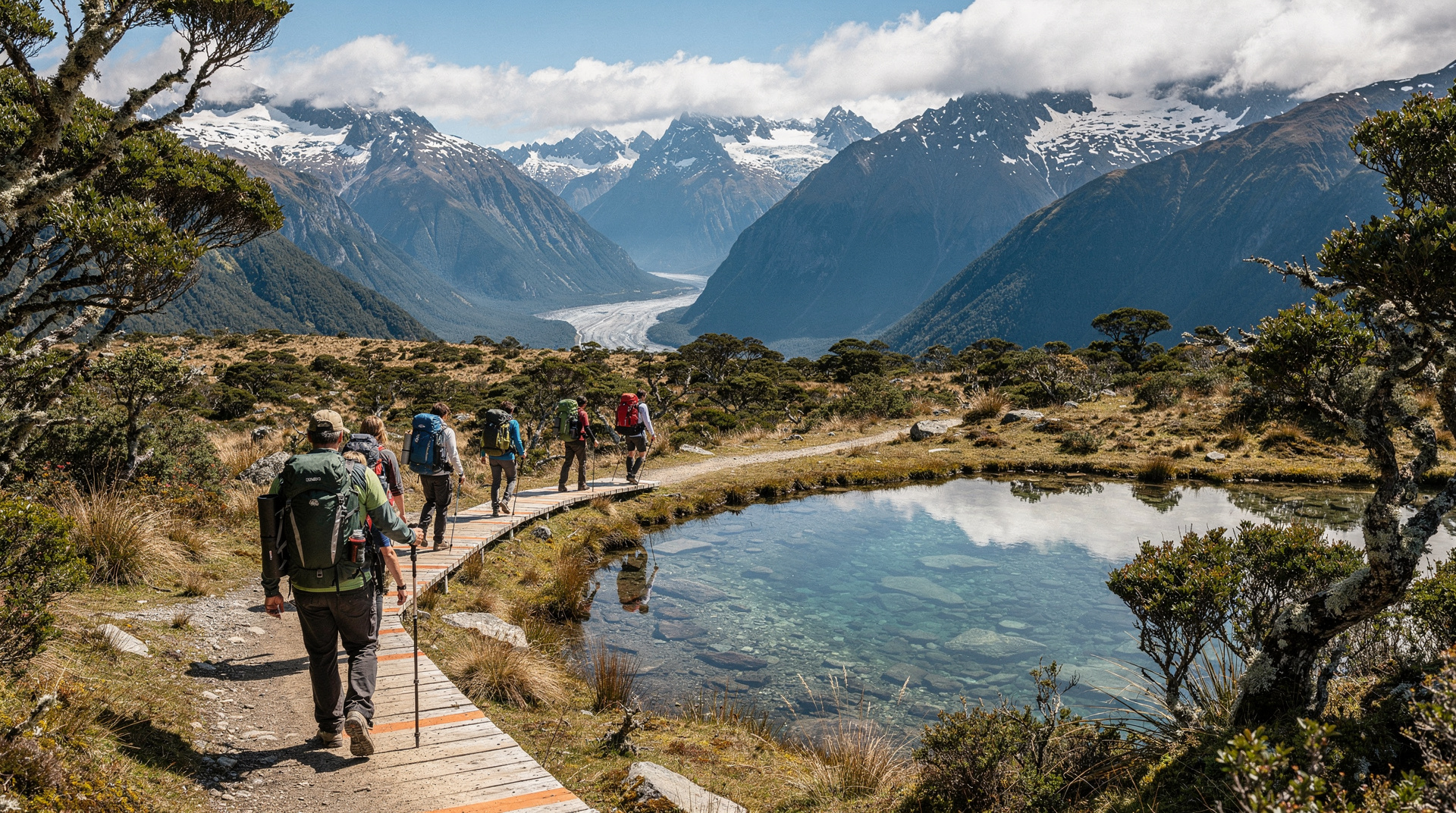
New Zealand Great Walks — complete comparison guide
All 11 Great Walks compared: Milford vs Routeburn vs Kepler, difficulty, season, hut prices. Which one fits your trip and fitness level.
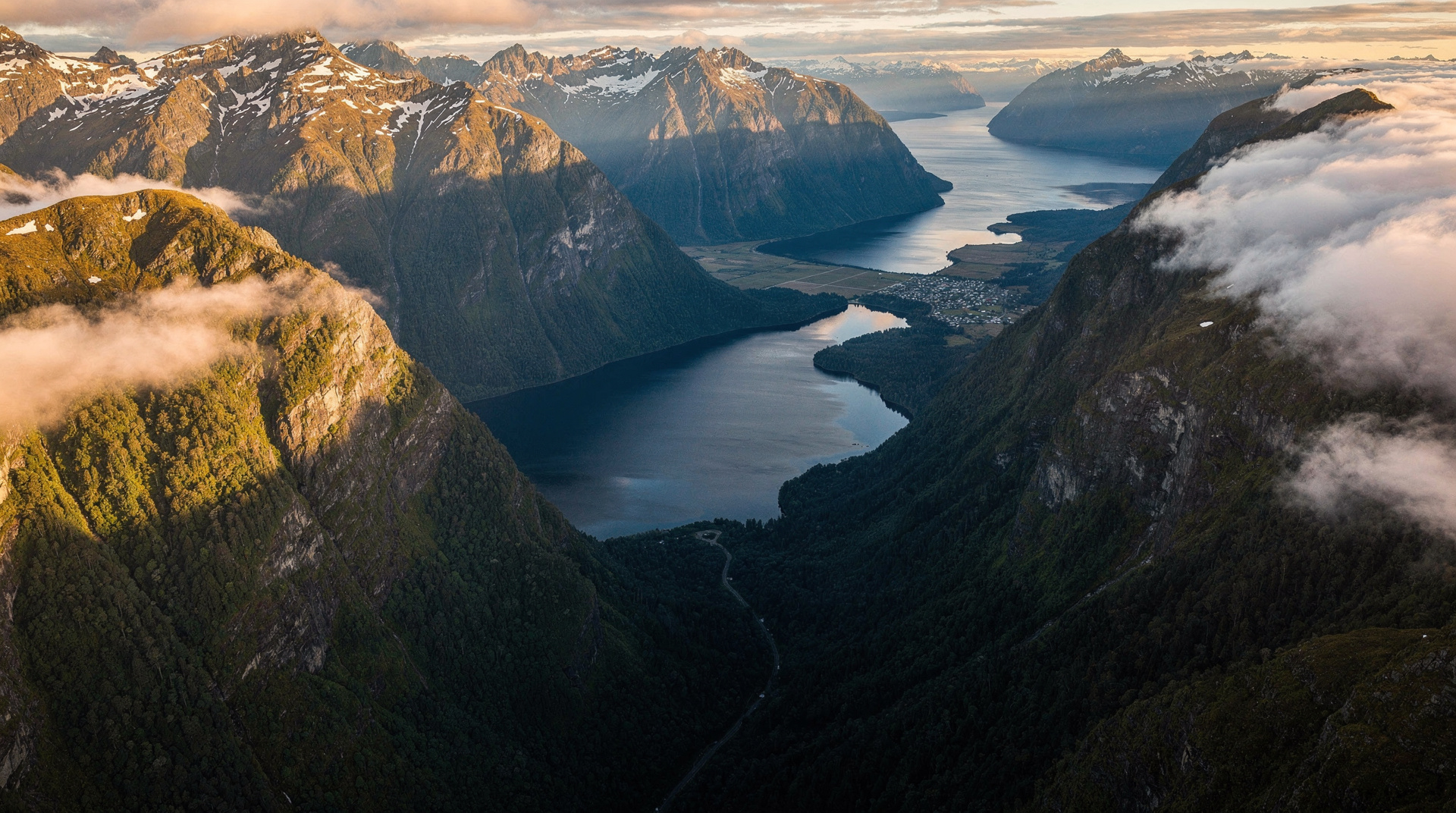
Fiordland
Honest Fiordland planner: Milford Sound vs Doubtful Sound, Te Anau base, Milford Track booking, real NZD/USD/EUR costs and what most guides won't tell you.
Last reviewed: