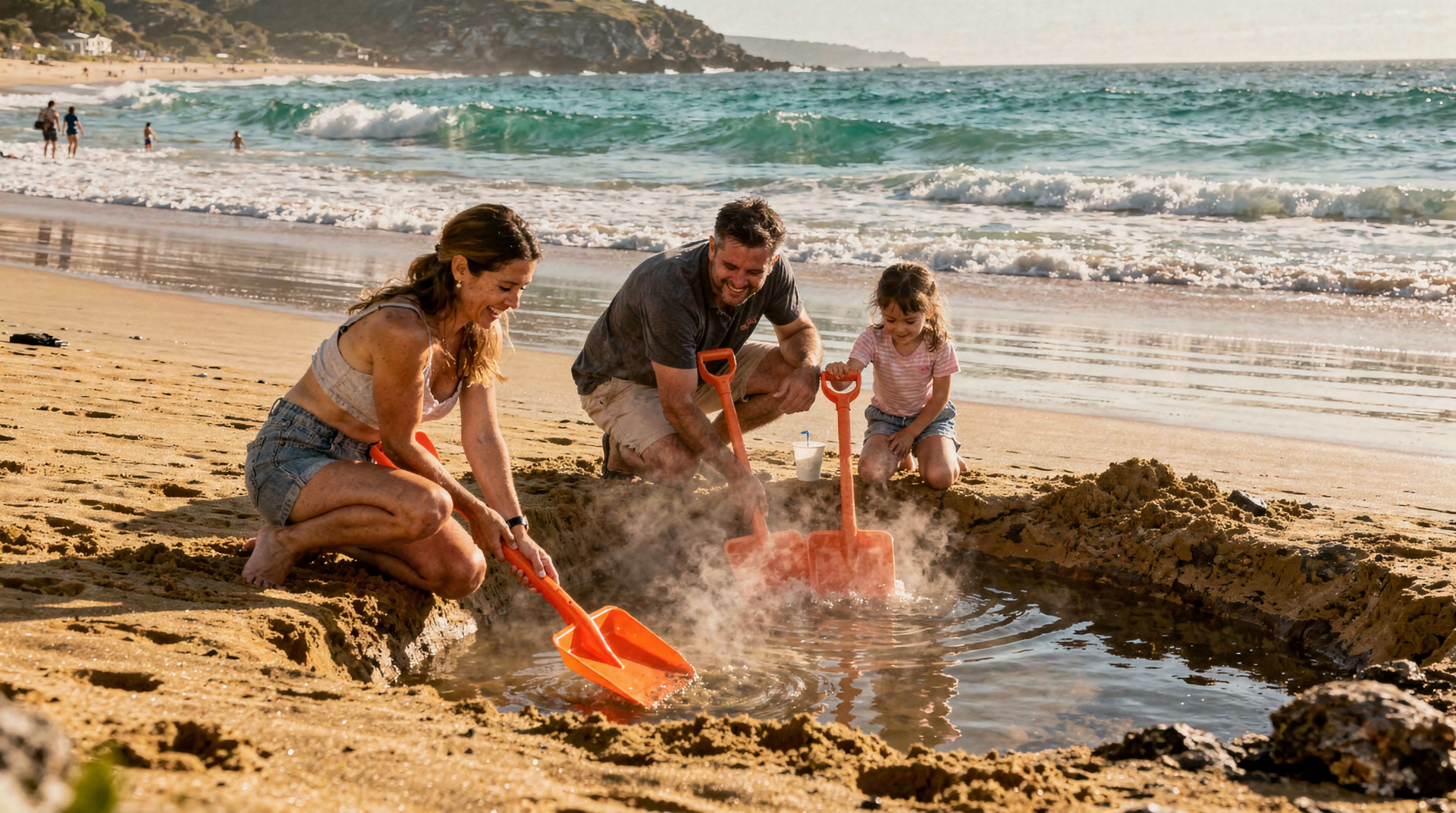
Hot Water Beach, Coromandel
How does Hot Water Beach work?
Hot Water Beach on the Coromandel Peninsula has geothermal springs beneath the sand. Within 2 hours either side of low tide, dig into the mid-beach area and hot water (up to 64°C) bubbles up. Hire a spade from the surf shop (NZD 5 / USD 3 / EUR 3) and mix with incoming sea water for a perfect temperature pool.
New Zealand’s most unusual beach experience
Hot Water Beach is a thermal anomaly — a beach where geothermal springs emerge directly through the sand. At low tide, a 50-metre section of mid-beach becomes accessible as the tide retreats below the spring location. Dig here and water at 64°C (147°F) wells up. Mix it with incoming sea water by adjusting your hole’s shape and depth, and you have a natural hot pool at whatever temperature you choose.
This is exactly as novel as it sounds. The activity is inherently communal — a hundred people digging individual pools across the same strip of sand, some sharing walls, some defending their territory, all sitting in geothermally heated water while a Pacific surf rolls in. It’s ridiculous and delightful.
The science: Hot Water Beach sits above a geothermal vent system in the volcanic Coromandel Range. The springs emerge specifically in the mid-beach zone because the geological fractures intersect the ground surface at that elevation. The same heat system that drives Rotorua’s more dramatic geothermal features is expressed here in a more accessible and participatory form.
| Where | Hot Water Beach, Coromandel Peninsula — 188 km / 2.5–3hrs from Auckland |
| Cost | around NZD 5 spade hire; free beach access |
| Time needed | the 2-hour low-tide window either side of low tide |
| Getting there | self-drive via SH1/Thames/SH25, or a guided day tour from Auckland |
| Best time | check Whitianga tide times before you go; shoulder season for smaller crowds |
The timing — the most critical information
The window: Hot Water Beach is only interesting within 2 hours either side of low tide. Outside this window, the geothermal zone is completely covered by the sea, and there’s nothing to do — the hot springs are no longer accessible.
Before visiting: Check the tide times for Whitianga (the reference station for the Coromandel peninsula) on the day you visit. Low tide at Hot Water Beach is typically 20–30 minutes later than Whitianga.
Planning your trip from Auckland:
- Low tide mid-morning (8–11 am): arrive by 8 am, 3.5 hours from Auckland means departing 4:30 am. Not practical for most visitors.
- Low tide midday (11 am–1 pm): depart Auckland 7:30–8 am, arrive 10:30–11 am, 2 good hours at the beach, depart by 1 pm. Ideal.
- Low tide afternoon (2–5 pm): most convenient departure from Auckland (leave by 10 am), arrive midday for Cathedral Cove first, then Hot Water Beach for the afternoon low tide. The most popular configuration.
Most guided tours from Auckland time their arrival to catch the low tide window. This is the primary advantage of a tour over self-drive — you don’t have to manage the tide timing yourself.
The spade hire and beach rules
Spade hire: The surf shop at the Hot Water Beach car park rents spades for NZD 5 / USD 3 / EUR 3. This is the single most important piece of equipment for the experience. You can bring your own spade (a garden spade works; a children’s beach shovel is too small for digging a serious pool).
Beach safety:
- The spring water itself can reach 64°C — scalding. Do not sit directly on a newly dug area without testing temperature first
- Keep children away from unmixed spring water
- The main pool zone is indicated by DOC signs; there’s also a danger zone directly above the primary vent where temperatures can be extreme
- The ocean surf at Hot Water Beach is not particularly safe for swimming — rips exist and there is no lifeguard (unlike Hahei, Whitianga). The beach is for the thermal experience, not surf swimming
Pool etiquette: Neighbouring diggers typically cooperate to optimise pool size and temperature. Start a pool, let others join if space allows. The informal social nature of the beach is part of the experience.
What the experience is actually like
The reality check: this is not a refined spa experience. It’s a crowded beach at low tide, people armed with spades digging in sand, with hot water and cold water intersecting imperfectly. The temperature control is approximate at best — too hot if the sea is far away, too cold if a wave washes through. It’s messy, sandy, and involves sitting on the beach in a hand-dug pit.
It’s also genuinely fun. The novelty is real; the thermal water feels different from a hotel hot pool precisely because it’s wild and geothermal. The social dynamic — strangers helping each other manage their pools, competing for the best spot, discussing temperature — creates an unusually friendly beach atmosphere.
The best spot: Aim for the mid-beach zone where DOC markers indicate the spring zone. Earlier arrivals at low tide get better positions and can dig deeper (better temperature control). If you arrive 2 hours after low tide, the best pools are already dug and the tide is returning.
Combining with Cathedral Cove
Cathedral Cove is 8 km from Hot Water Beach. Almost everyone who visits one visits the other on the same day. The standard Coromandel itinerary: Cathedral Cove for the first half of the day (no tide constraint), then time your Hot Water Beach arrival for the low tide window.
The Auckland day trip to Cathedral Cove and Hot Water Beach manages this timing automatically — the guide monitors the tide and ensures you arrive at Hot Water Beach within the thermal window.
Is Hot Water Beach worth a dedicated Coromandel day trip?
If Hot Water Beach and Cathedral Cove are the only two stops on your list, a dedicated Coromandel day trip from Auckland is the efficient way to do both without self-driving the narrow Purangi Road access yourself. For visitors weighing the wider peninsula against other North Island beach regions, the Coast beaches New Zealand overview puts Hot Water Beach in context against the country’s other signature coastlines, and the Coromandel destination guide covers where to stay if you want more than a single day here.
Base yourself in the Coromandel overnight if you can. A single low-tide window (roughly 2 hours) is a tight schedule for a 5-hour round-trip drive from Auckland — staying a night in Whitianga or Hahei removes the time pressure and lets you catch a second low tide the following morning if the first one is crowded or the weather turns.
Getting to Hot Water Beach
Hot Water Beach is 188 km from Auckland — approximately 2.5–3 hours by car via SH1 (south), Thames, and SH25. The last section on Purangi Road to the beach is narrow and popular; arrive early to secure a car park.
By tour from Auckland: The Cathedral Cove and Hot Water Beach day tour from Auckland handles all transport. Departures are timed to the day’s low tide. Duration: approximately 14 hours from Auckland. Long but comprehensive.
From Tauranga: 1.5–2 hours via the Pacific Coast Highway — a more convenient access point for visitors already on the Bay of Plenty coast.
From Whitianga: 20 minutes south on SH25A. Whitianga is a good base for exploring the southern Coromandel.
Costs summary (NZD / USD / EUR)
| Activity | NZD | USD | EUR |
|---|---|---|---|
| Spade hire (per hour) | 5 | 3 | 3 |
| Cathedral Cove + Hot Water Beach from Auckland | 145–195 | 87–117 | 80–107 |
| Coromandel day trip from Auckland | 130–180 | 78–108 | 72–99 |
| Car park (check current charges) | 0–10 | 0–6 | 0–6 |
Exchange rate: 1 NZD ≈ 0.60 USD ≈ 0.55 EUR.
Honest verdict
Worth it — Hot Water Beach is a genuinely unique experience with no direct equivalent anywhere else in New Zealand. The tide timing requirement adds logistical complexity but also guarantees you’ll arrive prepared and engaged. It’s not a world-class scenic beach, but the geothermal novelty makes it one of the most memorable beach days in the country. Always combine with Cathedral Cove (8 km away) for a full Coromandel day.
Frequently asked questions
What temperature is the water?
The raw geothermal spring water reaches up to 64°C — too hot to sit in. After mixing with incoming sea water in your dug pool, you control the temperature by adjusting how much sea water enters. Well-managed pools settle at 38–42°C (comfortable spa temperature). Less careful pools oscillate between too hot and too cold as waves intermittently flood through.
When is the best time to arrive?
30–60 minutes before low tide. You get a good spot, can dig a decent pool, and have the full 2-hour window before the tide returns. Arriving at low tide itself means the best spots are taken; arriving 2 hours before means the geothermal zone is still partially submerged.
Can children use Hot Water Beach?
Yes, with supervision. The springs directly above the primary vent reach scalding temperatures; keep young children away from the DOC-marked danger zone and test any pool temperature with your hand before allowing children in. The beach sand and pool-building aspect is very appealing to older children (7+). Younger children should be kept away from the thermal zone itself.
Is the beach crowded?
In summer (December–February) at peak low tide timing, the thermal zone becomes very busy — 100+ people on a 50-metre section of beach. The experience is still good but privacy is minimal. Shoulder season (October–November, March–April) reduces crowds significantly. Early morning low tides in summer offer the best combination of crowd level and temperature.
Can I visit Hot Water Beach without a car?
Yes — the guided day tours from Auckland handle the drive and, more importantly, the tide-timing logistics for you. Without a car or a tour, there’s no practical way to reach Hot Water Beach; there’s no public transport to the Coromandel’s eastern coast. See the Coromandel day trip from Auckland guide for tour options.
Related reading
Related guides
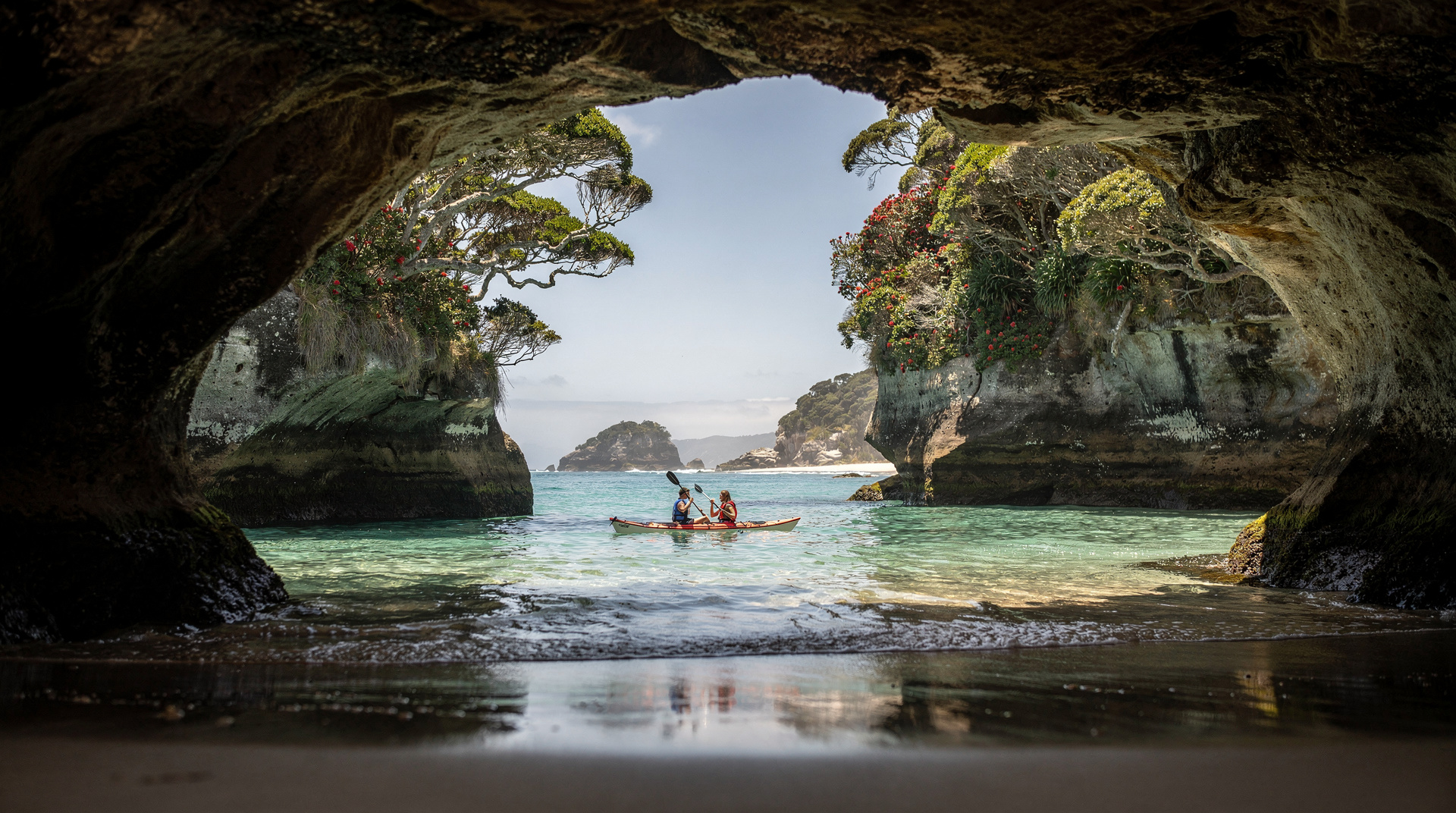
Cathedral Cove, Coromandel
Cathedral Cove is Coromandel's most iconic beach. Track access after Cyclone Gabrielle, kayak tours, combining with Hot Water Beach — costs NZD/USD/EUR.
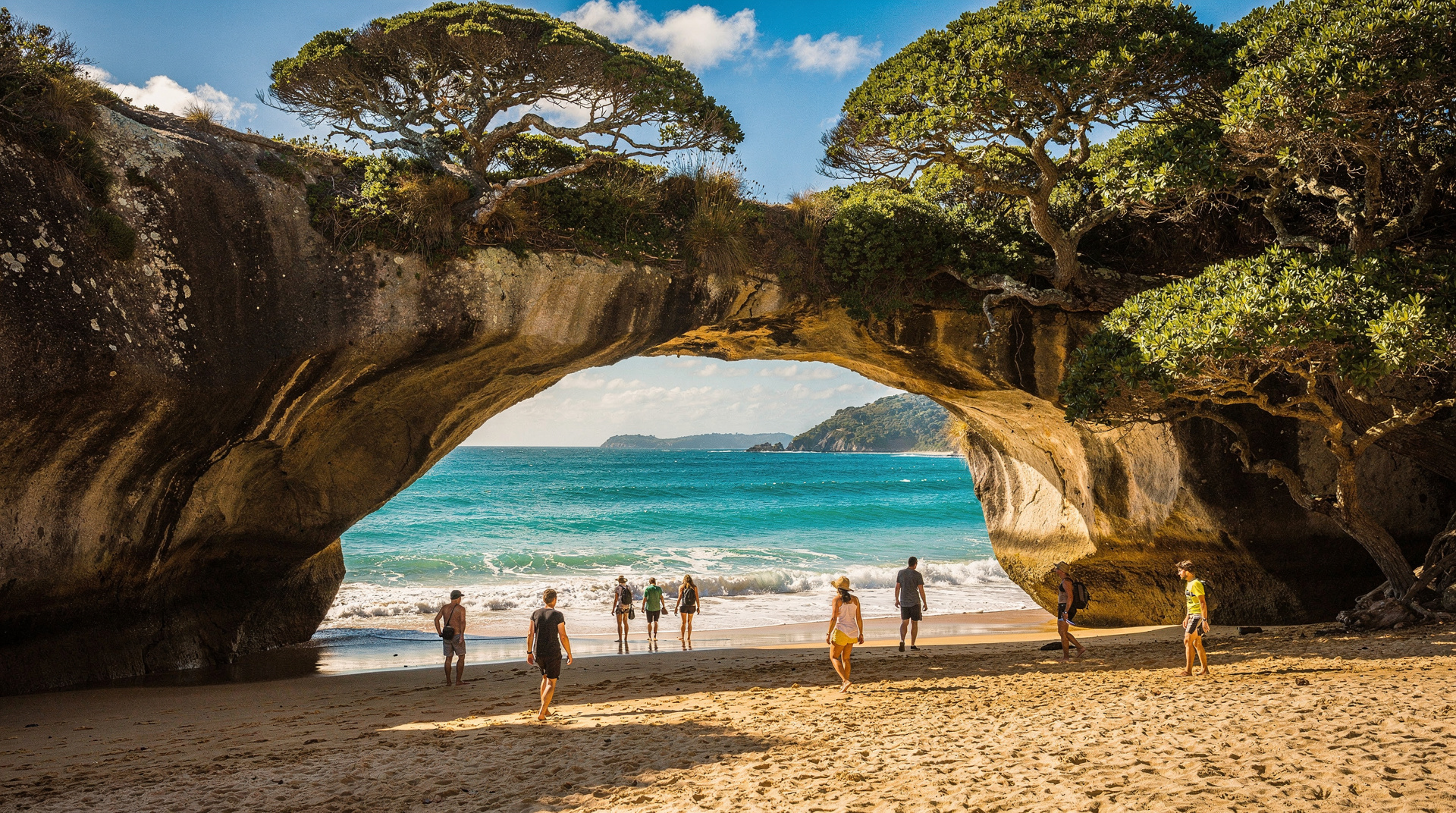
Best day trips from Auckland
Six great day trips from Auckland: Waiheke, Hobbiton, Waitomo, Coromandel, Rotorua and more — with drive times, GYG tours, and honest advice.
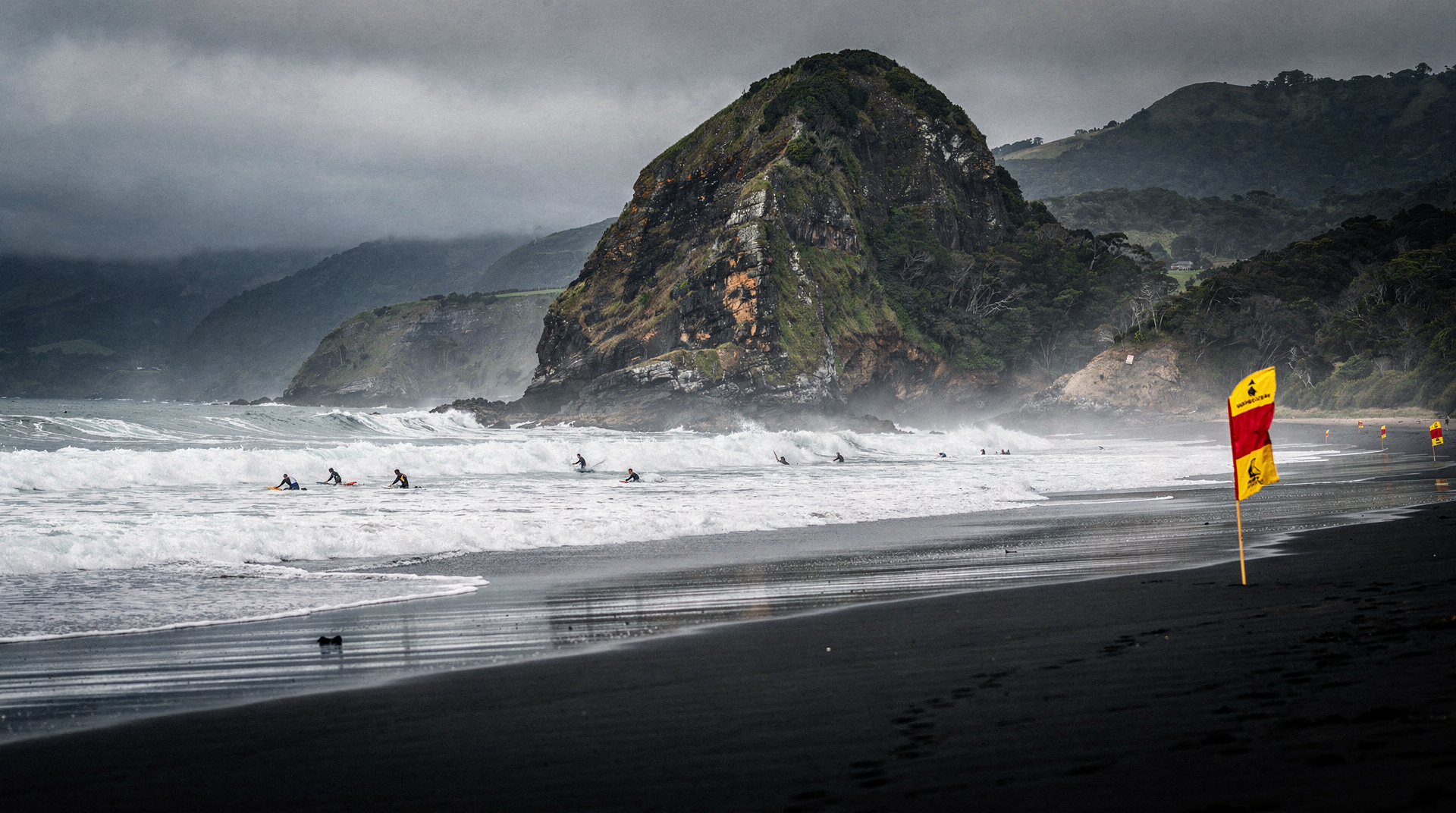
Piha beach — Auckland's wild black-sand coast
Piha is Auckland's most famous black-sand surf beach. Getting there, rip current safety, Lion Rock climb, and shuttle options — prices and practical tips.
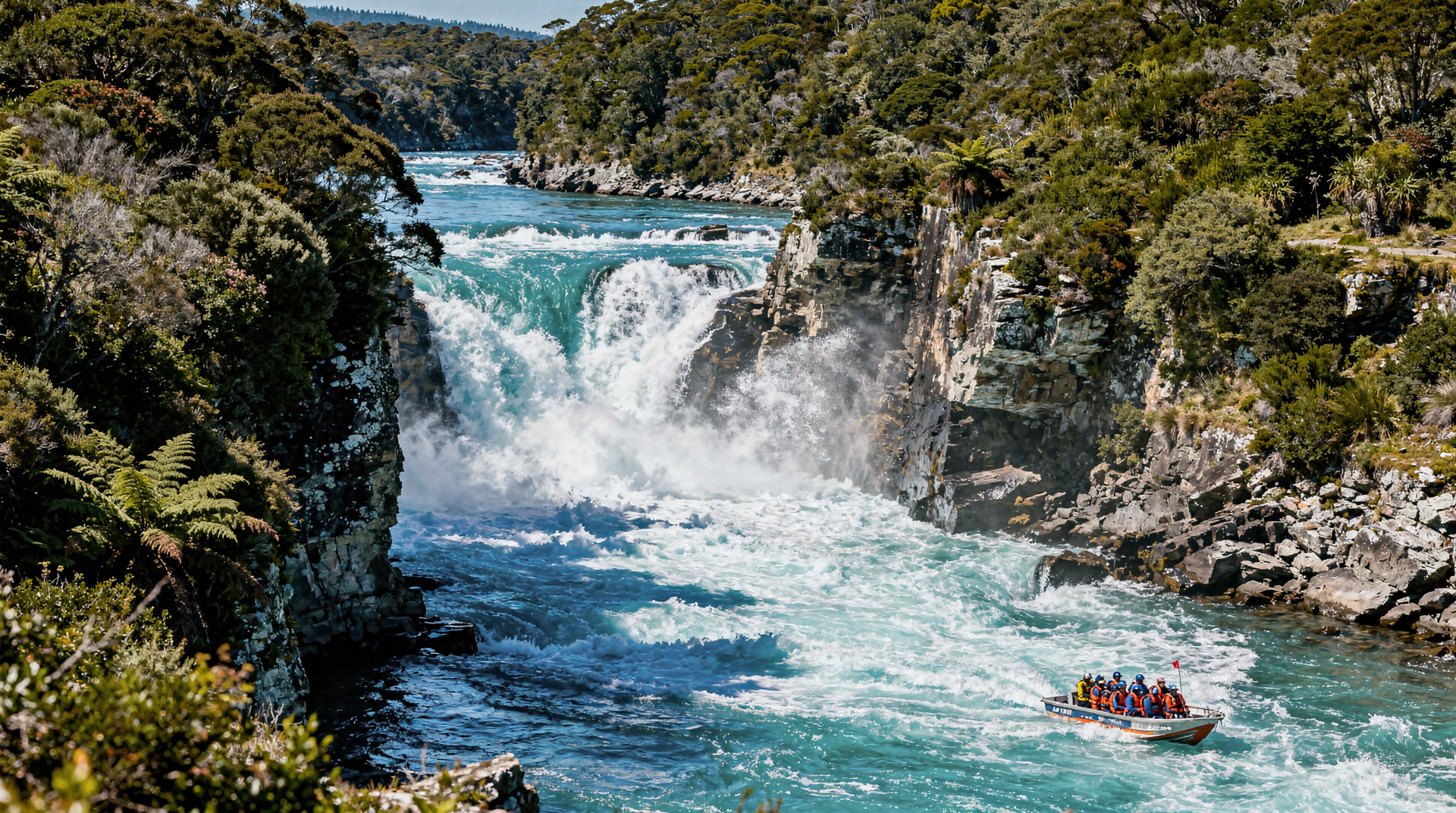
Waikato
Honest Waikato guide: Hobbiton Movie Set, Waitomo glowworm caves, Hamilton Gardens, Raglan surf. Real NZD/USD/EUR prices, what's worth your time.
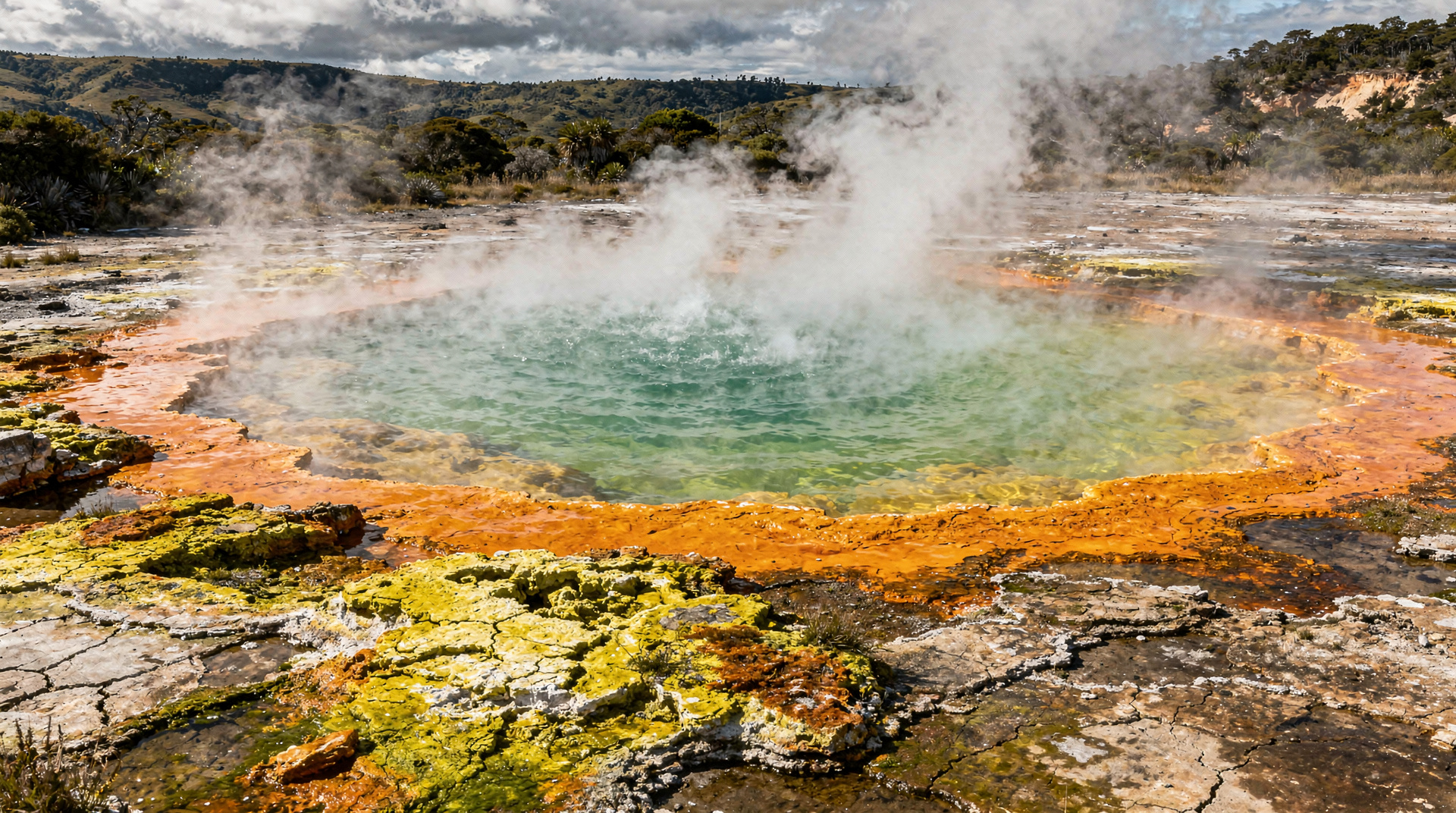
Wai-O-Tapu Thermal Wonderland
Wai-O-Tapu is NZ's most colourful geothermal park — Champagne Pool, Lady Knox Geyser, 18 km² of volcanic landscape. Entry NZD 42 / USD 25. Tour guide 2026.
Last reviewed: