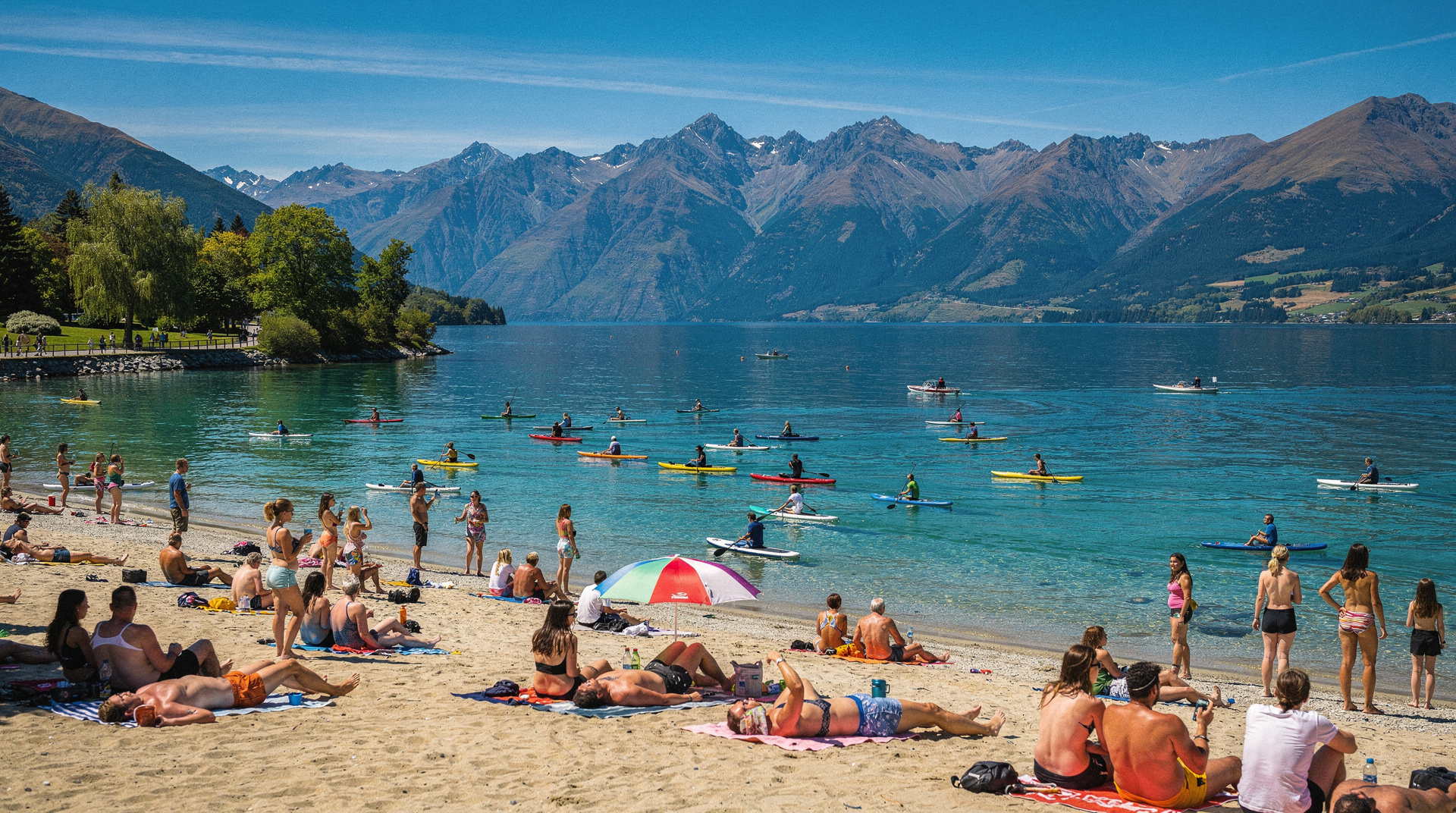
New Zealand in February
Is February a good time to visit New Zealand?
Yes — February is widely considered the best month to visit. Warm, reliable summer weather continues from January, but the school-holiday crowds have eased after late January. All Great Walks are fully open. The Marlborough wine harvest is beginning, vineyards are buzzing, and the light in Central Otago and the South Island is extraordinary. Book Queenstown, Wanaka, and Milford Sound accommodation 2–3 months ahead — it still fills.
Why locals quietly prefer February
Ask most New Zealanders when the best time to visit is and they’ll say February without hesitating. The summer heat is at its most stable, the domestic school holidays have ended in late January, and the country exhales slightly. Accommodation prices ease 10–20% from their January peak. Campgrounds are still busy but not packed. And in Marlborough, the Sauvignon Blanc harvest is beginning — wineries host harvest lunches and the region takes on a working, celebratory energy that’s genuinely special.
Waitangi Day falls on 6 February, New Zealand’s national day. Waitangi Treaty Grounds in the Bay of Islands hosts the most significant commemorations — a 3-day festival with cultural performances, waka (canoe) races, and fireworks. It’s worth building your itinerary around if you’re in the North Island. The day is a public holiday, which means some businesses close, but tourist infrastructure largely stays open.
| Best for | reliable summer weather with thinner post-holiday crowds |
| Weather | 20–28°C across both islands, extreme UV |
| Crowd level | high but noticeably lighter than January |
| Great Walks | all open, book 4–6 weeks minimum |
| Booking lead time | 2–3 months for Queenstown/Wanaka/Milford |
Weather: real numbers, not the brochure
Auckland and Northland: 23–26°C, occasional humidity, sea temperature 22–24°C. February is slightly more stable than January weatherwise. Daylight hours: around 14 hours. The Bay of Islands is at its very best — warm, calm seas with consistent visibility.
Rotorua and Central North Island: 22–27°C, warm overnight. The thermal regions are accessible and at peak tourist capacity. Taupo lake temperature around 21°C — warm enough for swimming and jet boating.
Wellington: 20–23°C with the characteristic northerly wind. The city is lively in February — buskers, outdoor events, and the Sevens rugby tournament typically falls in late January or early February.
Marlborough and Nelson: The sunniest region in New Zealand peaks in February. Marlborough averages 8–9 hours of sunshine per day. Temperatures 24–28°C. The Marlborough Sounds are flat and warm — arguably the best sailing and kayaking conditions of the year.
Queenstown and Central Otago: 24–28°C days, cool nights (10–14°C). Extremely dry. Wildfire risk can be elevated in a drought year. The lakes are warm enough for swimming. Wanaka lake temperature reaches 19–21°C in February.
West Coast and Fiordland: Rain persists year-round. Franz Josef and Fox Glacier areas receive 4,000–5,000mm of annual rainfall; February is wetter than average for the season. Always pack rain gear for this region regardless of the month.
UV index: Still at extreme levels in February. SPF 50 is non-negotiable for any outdoor activity.
Best things to do in February
Marlborough wine harvest is the defining February experience on the South Island. Marlborough produces roughly 75% of New Zealand’s Sauvignon Blanc, and the harvest (late February to early March) transforms Blenheim’s surroundings. A Marlborough gourmet wine tour from Blenheim takes in 4–6 wineries with a vineyard lunch — the harvest timing makes this far more interesting than at other times of year. The half-day Marlborough wine tour is the right choice if you only have a morning.
Abel Tasman National Park kayaking — February is the ideal month. The sea is at its warmest, the weather most stable, and the crowds slightly thinner than January. The 3-day Abel Tasman kayak and walk combo from Marahau is the gold-standard experience: combines sea kayaking with the Coast Track through private huts. Book at least 4–6 weeks ahead.
Tongariro Alpine Crossing remains fully operational. February offers possibly the best conditions of the year — the paths are dry, the crater lake is brilliantly coloured, and the risk of unexpected snow or ice is lowest. Shuttle services from Taupo, Turangi, and National Park Village operate daily. See the Tongariro Alpine Crossing guide for shuttle booking details and track conditions.
Waitangi Treaty Grounds (Waitangi Day, 6 February) — the most significant date in the New Zealand calendar. The Waitangi Day festival at the Treaty Grounds is free and extraordinary — formal ceremonies, haka performances, waka taua (war canoe) launchings on the Waitangi River. This is the kind of cultural experience you won’t find anywhere else. The Waitangi Treaty Grounds hangi and concert experience is the best structured introduction for visitors.
Milford Sound cruise — February’s weather gives the best odds of sunshine at Milford, though “best odds” still means around 50/50. The combination of waterfalls (always flowing) and glimpses of blue sky between rain creates the most photogenic conditions. A Milford Sound nature cruise from Te Anau is the recommended approach — stay a night in Te Anau rather than doing the 13-hour bus-cruise-bus day trip from Queenstown.
Central Otago cycling — February is the prime month for cycling the Otago Central Rail Trail or the Gibbston Valley wine roads. A self-guided bike tour in the Gibbston Valley from Arrowtown puts you on a rail trail through gorges and vineyards with tastings en route. Temperatures are warm but not oppressive; mornings are reliably clear.
What to avoid in February
Attempting the Milford Track without a booking. Hut spaces for February were allocated in August or September of the previous year. Walk-in spaces are not available on this track. If you haven’t pre-booked, consider the Kepler Track out of Te Anau — similar Fiordland scenery with better availability.
Driving to Franz Josef or Fox Glacier without checking the road. SH6 through the West Coast is subject to flooding and slips after heavy rain. The DOC website and NZTA’s Journey Planner are the best real-time sources. A helicopter alternative (helicopter to Milford Sound with alpine stops) is sometimes weather-forced anyway, which turns a frustrating road closure into an unexpected highlight.
Underestimating the Coromandel road. Cathedral Cove requires a 45-minute walk each way from the carpark — which itself fills by 9am in peak season. Water taxis from Hahei are the smarter February option.
Crowds and prices in February
February sits just below January in price but still well above shoulder season:
- Mid-range hotel (Queenstown): NZD 240–350 / USD 144–210 / EUR 132–193
- Mid-range motel (Nelson, Blenheim): NZD 160–220 / USD 96–132 / EUR 88–121
- Backpacker hostel dorm: NZD 40–65 / USD 24–39 / EUR 22–36
- Campervan rental: NZD 140–220 / USD 84–132 / EUR 77–121 per day
- Milford Sound cruise (2 hours): NZD 80–110 / USD 48–66 / EUR 44–61
- Marlborough wine tour (half-day): NZD 95–135 / USD 57–81 / EUR 52–74
February prices in Marlborough and Nelson are slightly lower than Queenstown. The post-school-holiday week (late January through first week of February) sees the biggest drop in domestic traveler density. International tourist arrivals remain high through February.
Booking lead time for February: Milford huts — book in August/September. Queenstown hotels — 2 months. Abel Tasman kayak multi-day — 4 weeks. Marlborough wine tours — 1–2 weeks.
Best regions in February
Marlborough is the February highlight. Wine harvest energy, exceptional sun, calm Marlborough Sounds for kayaking and sailing, and the best seafood season for Greenshell mussels from Havelock. A Marlborough mussel cruise from Picton combined with winery visits is two or three days well spent.
Nelson and Abel Tasman — February sun records here are the best in the country. Nelson city is relaxed with excellent coffee, galleries, and food. The Abel Tasman Coast Track is at peak condition. Allow 3 days minimum for the region.
Bay of Islands — still warm and perfect for sailing and dolphin encounters. The Waitangi Day festival makes the first week of February particularly worthwhile. The Bay of Islands dolphin eco cruise from Paihia runs daily.
Queenstown and Wanaka — at their summer peak. Central Otago wine country, cycling, jet boating, and adventure activities all operate at full capacity. The comparison guide (Queenstown vs Wanaka) helps with the decision if you’re short on time.
February weather hacks
Check the UV index daily on MetService — it’s consistently extreme (11–13) in February across both islands. Apply SPF 50 in the morning, reapply at midday. Alpine weather changes fast: the Tongariro plateau, the Remarkables, and any West Coast alpine environment can shift from warm sun to sleet in 30 minutes in February. Carry a layer. Fiordland: just assume it will rain and pack accordingly. The waterfalls look better in the rain anyway.
Frequently asked questions about visiting in February
Is February the best month to visit New Zealand?
By most measures, yes. The combination of reliable summer weather, post-school-holiday crowd reduction, wine harvest season in Marlborough, and all Great Walks in prime condition makes February stand out. If you can only visit once, aim for February.
What festivals and events happen in February?
Waitangi Day (6 February) is the biggest cultural event of the summer. Buskers Festival in Wellington (late January/early February). The Marlborough Wine and Food Festival (second weekend of February) — this specific event sells out well in advance and requires its own ticket. Passage to Auckland regatta racing continues in Auckland harbour.
How much should I budget per day in February?
Budget traveler: NZD 110–150 / USD 66–90 / EUR 61–83 per person per day. Mid-range couple: NZD 450–680 / USD 270–408 / EUR 248–374 per couple per day. Luxury: NZD 1,100+ / USD 660+ / EUR 607+ per couple per day. Marlborough adds wine tour costs of NZD 95–180 / USD 57–108 / EUR 52–99 per person.
Should I rent a campervan in February?
February is slightly more campervan-friendly than January because campgrounds are less completely booked. Still book holiday park spots ahead, especially on the South Island West Coast where there are limited options. A campervan is most cost-effective for couples or pairs doing 14+ days covering both islands.
Is the South Island hotter or cooler than the North Island in February?
Overall, cooler — but not uniformly. Central Otago (Cromwell, Alexandra) regularly hits 30°C+ and is hotter than Auckland in February. Christchurch averages 23°C. Dunedin is cooler at 18–20°C. The West Coast is milder but very wet. The North Island’s main advantage is warmer sea temperatures for swimming.
What about cyclones and tropical storms?
New Zealand is occasionally affected by ex-tropical cyclones in February — these form north of Fiji and track southeast. They are not common but can bring heavy rain, flooding, and wind to the North Island. Check MetService’s long-range forecast when planning outdoor activities. If a weather warning is issued, alter plans rather than push through.
Can I see the Milford Track in February?
Only if you booked a hut pass with DOC 5–6 months earlier. The Milford Track takes a maximum of 90 guided and 40 independent walkers per day. For February departures, bookings open the previous August and sell out within days for the independent walk. The guided walk (with Ultimate Hikes) books earlier still. Alternatives: the Kepler Track out of Te Anau, or Milford Sound as a day cruise or scenic flight.
How to combine February travel with the rest of New Zealand
February suits a 14-day structure starting in Auckland and ending in Queenstown (or vice versa, flying one direction). The 14-day New Zealand itinerary fits the month well. Add 3 days in Marlborough between the ferry crossing and Queenstown for the harvest experience. For a shorter trip, the 7-day South Island itinerary covers Queenstown, Milford, and the glaciers; for 7 days on the North Island, base in Rotorua with day trips to Waitomo and Taupo. Check the February vs March comparison if your travel dates are flexible — March offers autumn colours starting in Central Otago with similar weather at lower prices.
Related guides
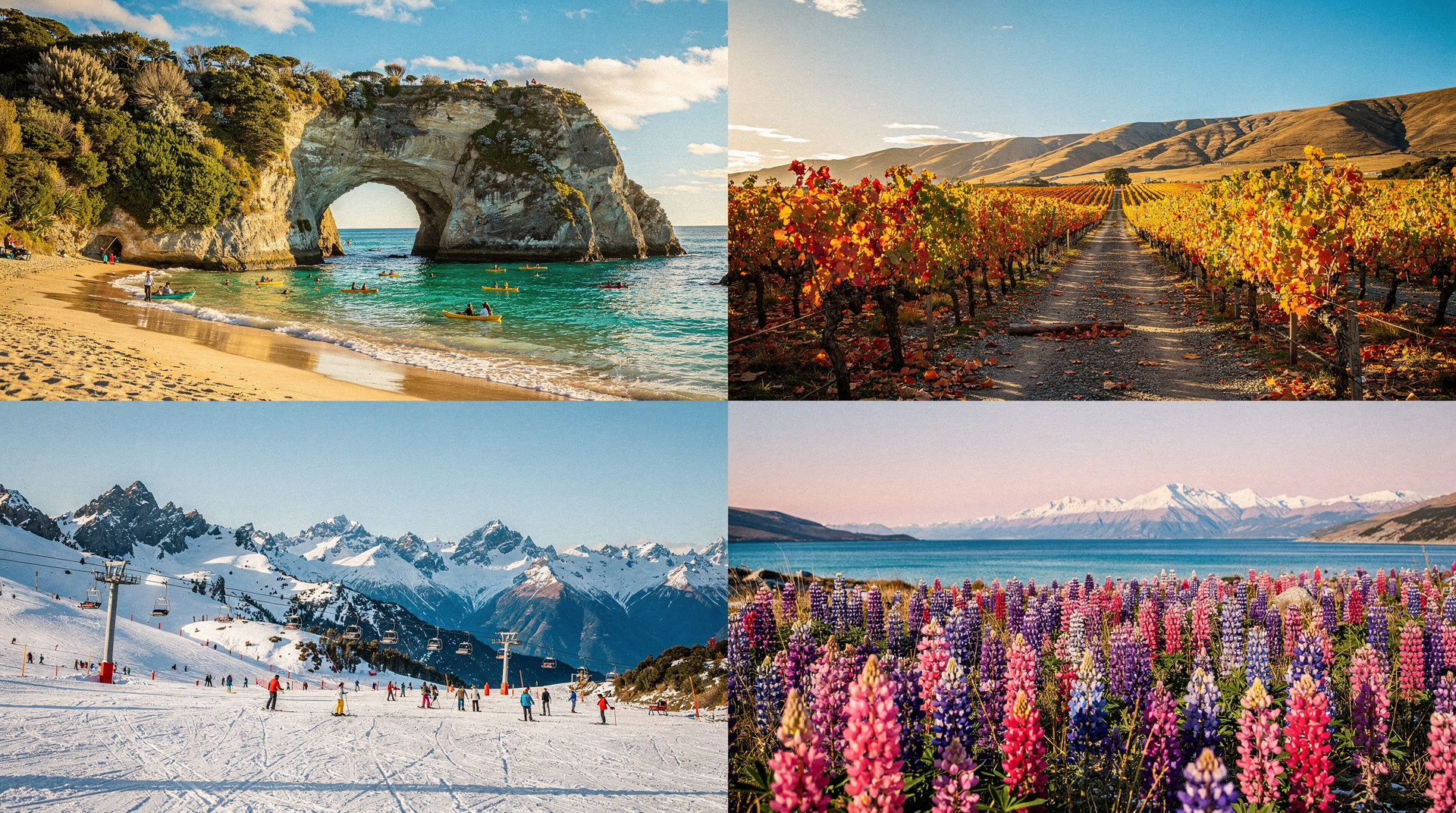
Best time to visit New Zealand
When to visit New Zealand: honest breakdown by season, region, and activity type. Summer is not always best. Spring and autumn often outperform the peak season.
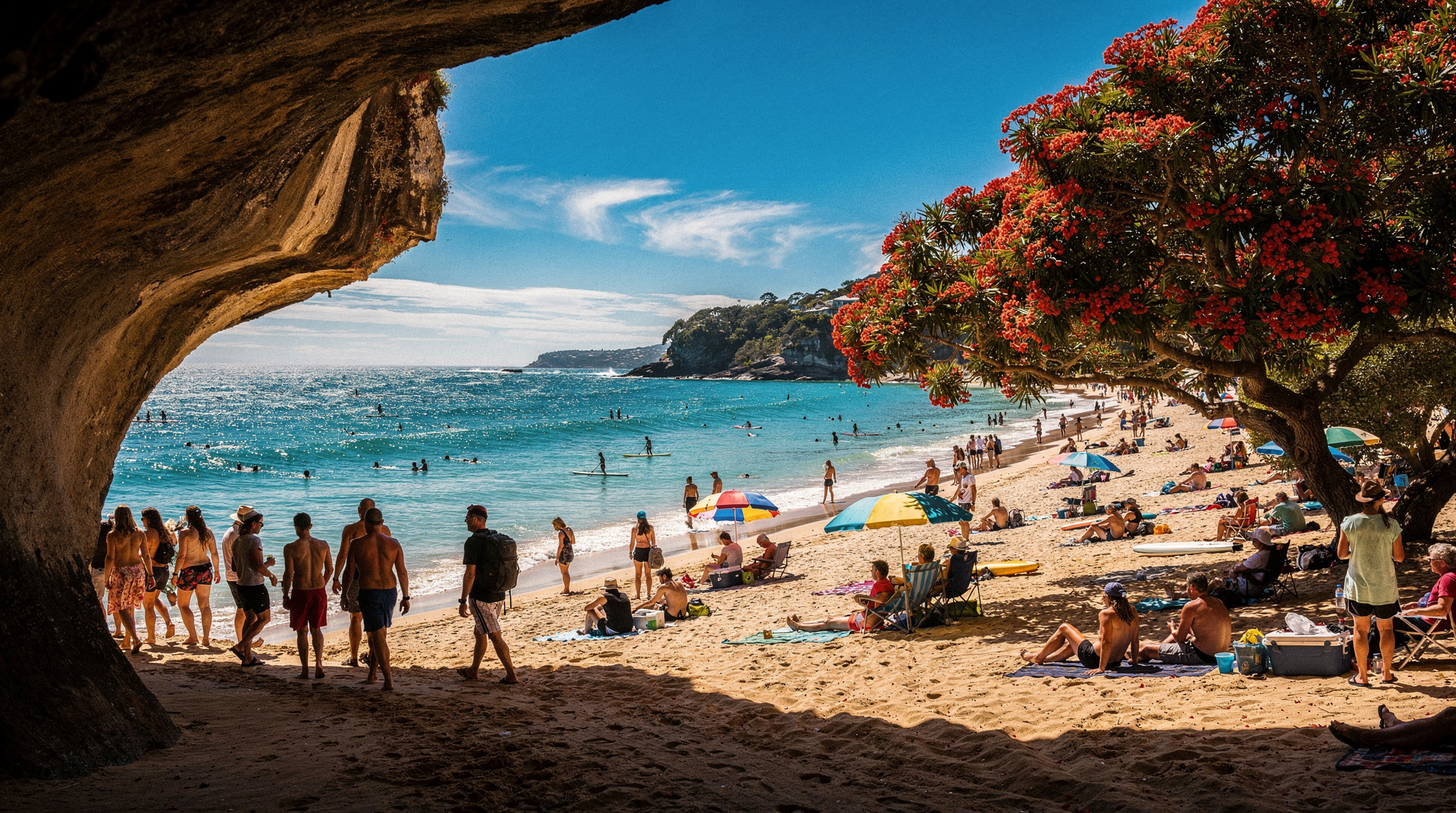
New Zealand in January
Peak summer, school holidays, full Great Walks — January in NZ is glorious but crowded. Real prices in NZD/USD/EUR and what to book months ahead.
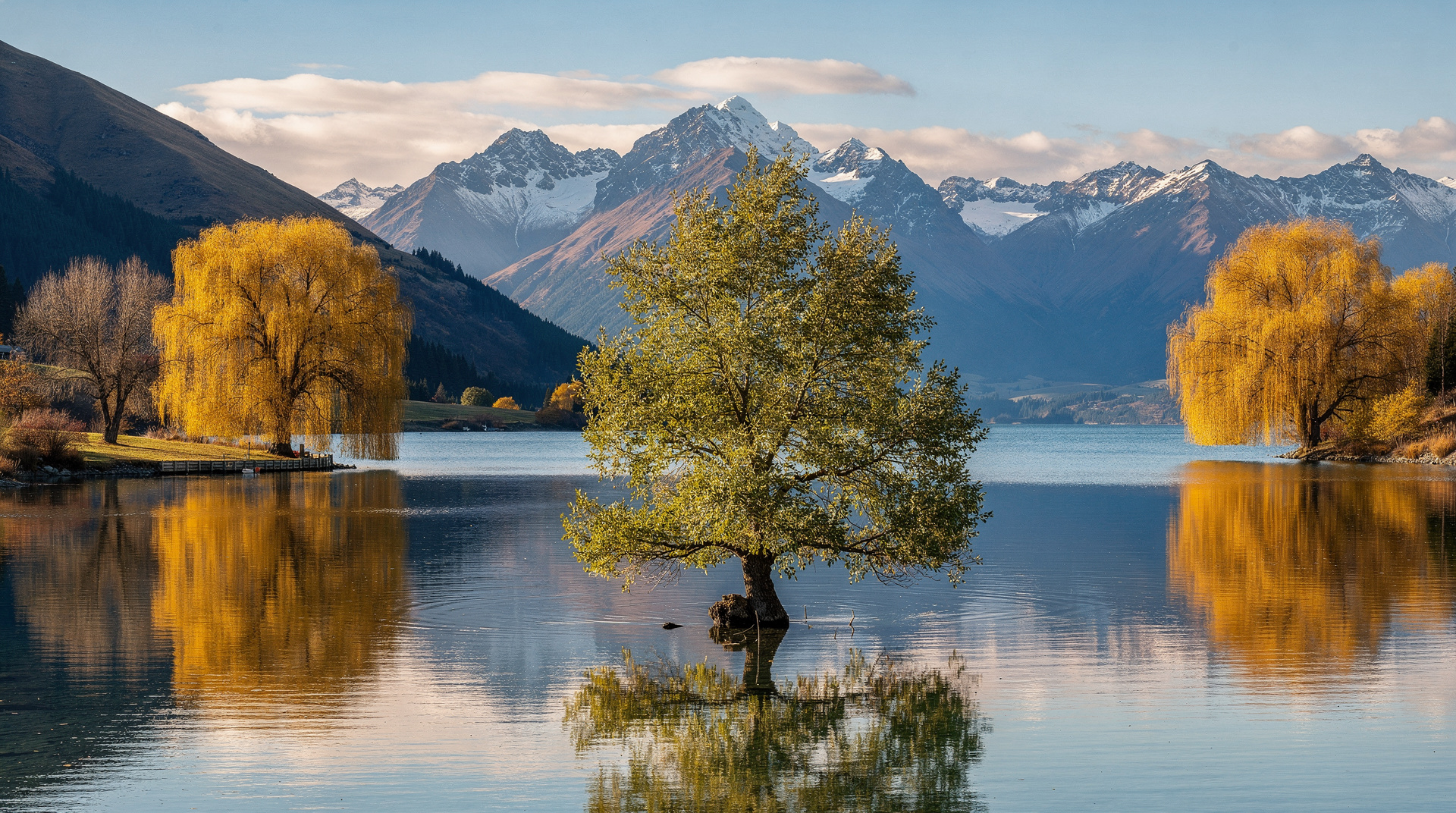
New Zealand in March
Late summer fades into early autumn in March. Fewer crowds, lower prices, autumn colours starting in Central Otago and Arrowtown. NZD/USD/EUR pricing.
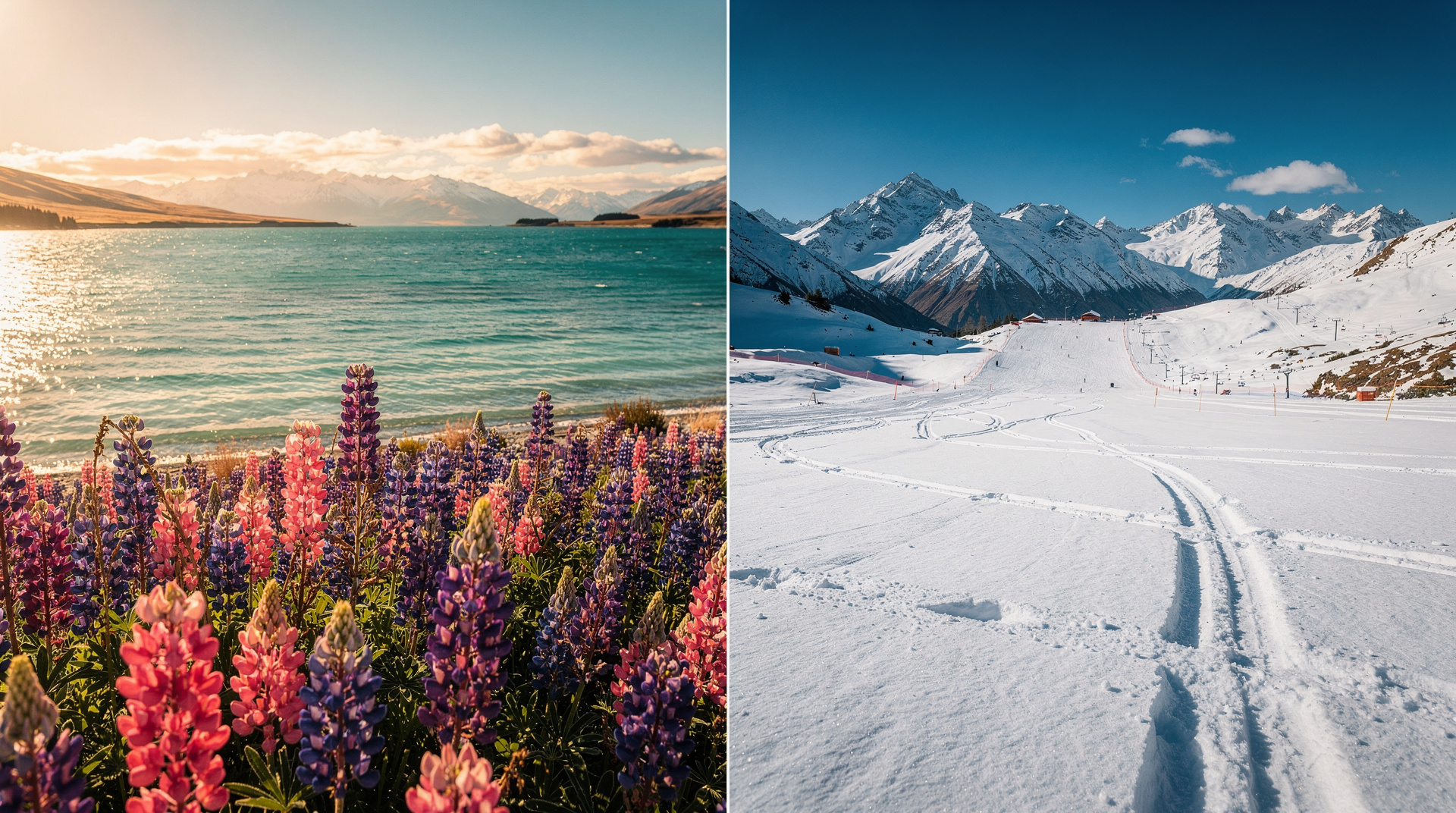
Summer vs winter in New Zealand
Summer vs winter in New Zealand: weather, crowds, costs and the honest verdict on which season suits your trip. NZD/USD/EUR prices throughout.
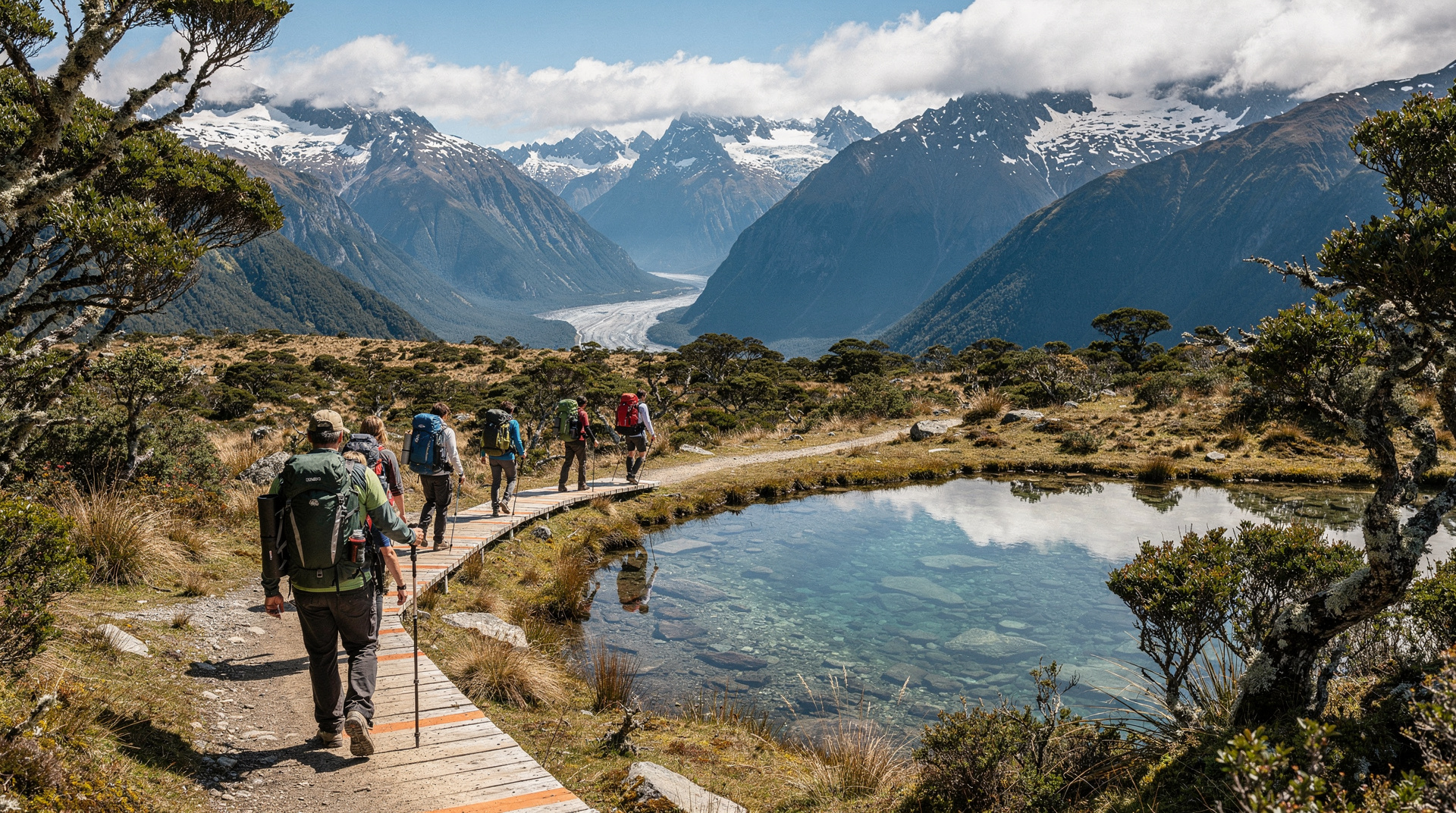
New Zealand Great Walks — complete comparison guide
All 11 Great Walks compared: Milford vs Routeburn vs Kepler, difficulty, season, hut prices. Which one fits your trip and fitness level.
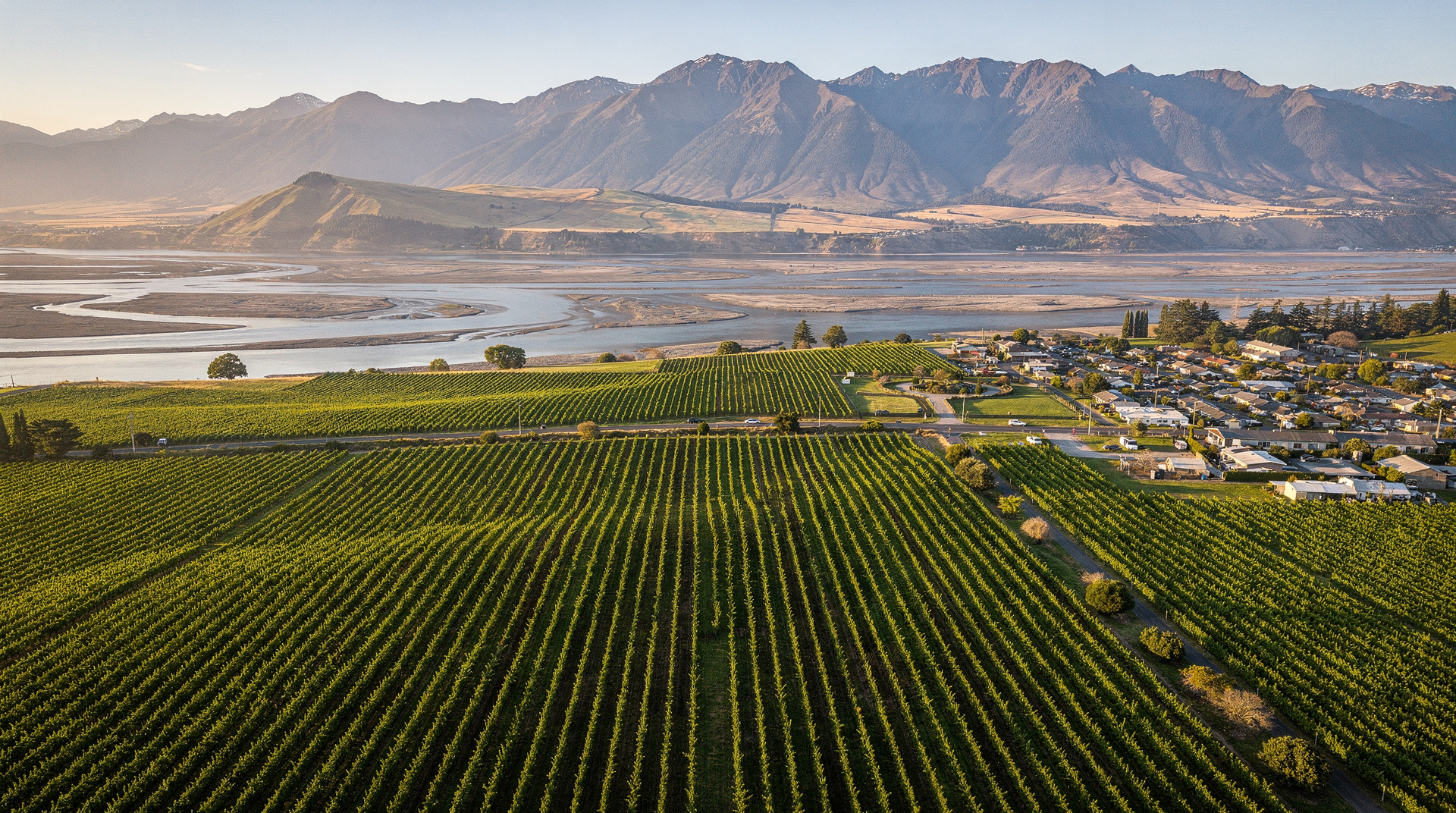
Marlborough
Honest Marlborough guide: Picton ferry gateway, Queen Charlotte Sound, Blenheim wineries, Havelock mussels. Real NZD/USD/EUR prices and practical logistics.
Last reviewed: