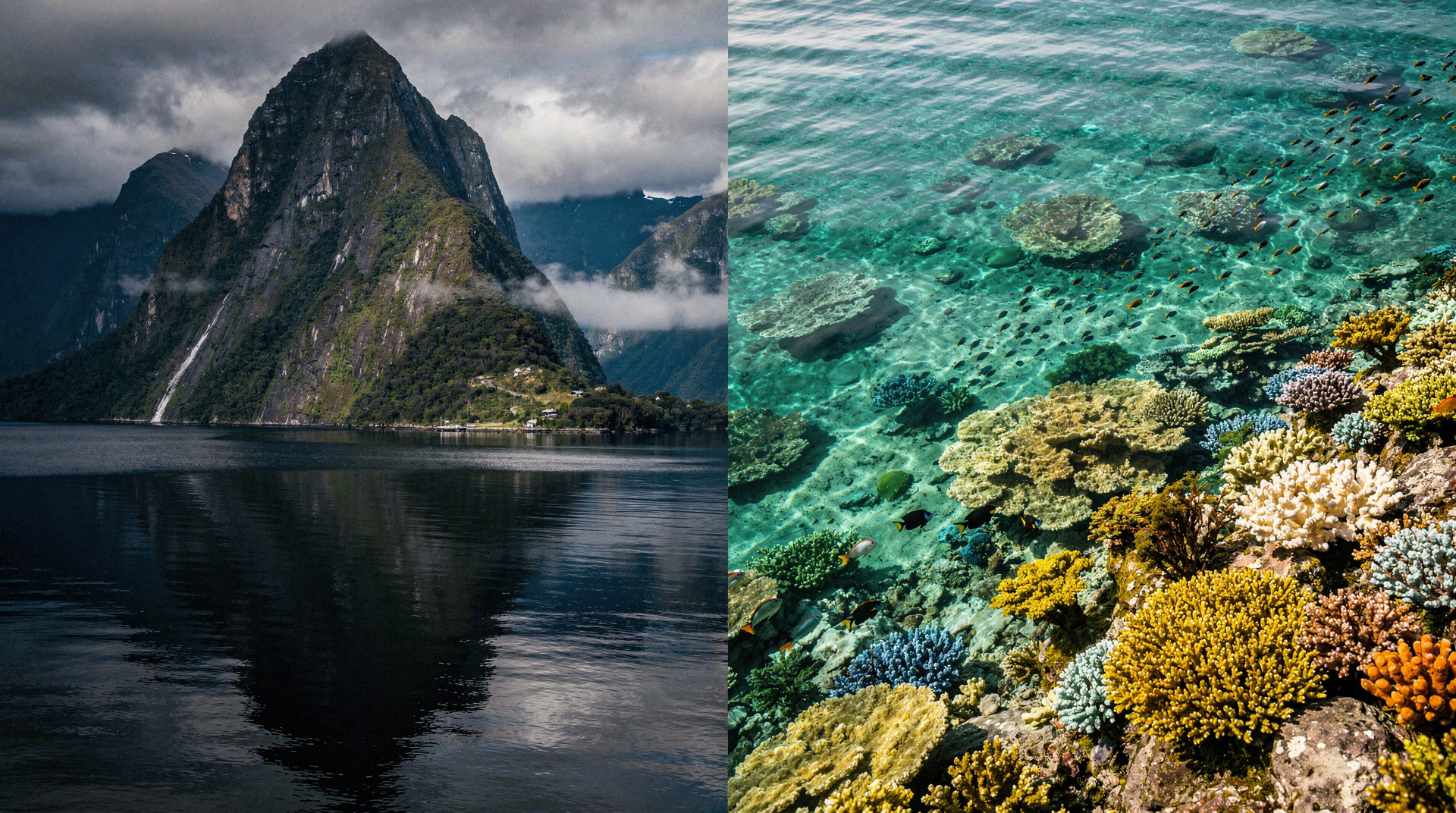
New Zealand vs Patagonia — the honest Southern Hemisphere comparison
Should I go to New Zealand or Patagonia?
New Zealand if you want infrastructure, road trips, multiple ecosystems in 2 weeks, and English. Patagonia if you want raw wilderness, iconic trekkable peaks (Torres del Paine, Fitz Roy), and are comfortable navigating Chilean/Argentine logistics. Budget-wise, NZ is 20-35% more expensive in-country but dramatically easier to plan.
Two wilderness destinations, one hemisphere, one hard choice
For Northern Hemisphere travelers dreaming of wild landscapes at the bottom of the world, New Zealand and Patagonia appear on the same shortlist. Both are remote. Both have jaw-dropping mountains, glaciers, and fjords. Both require long-haul flights from Europe or North America. Both are firmly on the “bucket list” circuit.
They are not interchangeable.
New Zealand is a functioning, English-speaking country with excellent roads, ubiquitous Wi-Fi, a mature tourism infrastructure, and a consistent standard of hospitality. You can rent a campervan and navigate 14 days without a guide, a Spanish phrasebook, or advance planning beyond booking ferries and Great Walks huts.
Patagonia — specifically Chilean Patagonia (Torres del Paine, Carretera Austral) and Argentine Patagonia (El Chaltén, El Calafate, Ushuaia) — is a genuinely remote wilderness experience. Logistics are harder, Spanish helps significantly, road conditions can be brutal, and the iconic circuits (the W Trek, the O Circuit) require more planning and physical preparation than any NZ Great Walk.
This is not a verdict on which is better. It’s an honest look at which is better for you.
Side-by-side comparison
| Dimension | New Zealand | Patagonia |
|---|---|---|
| Language | English — no barrier | Spanish — basic essential, intermediate makes it significantly easier |
| Infrastructure | Excellent roads, sealed highways, petrol stations every 60–120km | Carretera Austral is partly gravel; Torres del Paine internal roads good but remote |
| Hiking style | Well-marked tracks, huts every 10–15km, DOC infrastructure | Exposed ridgelines, technical weather windows, self-navigation sections |
| Best 1-week circuit | Routeburn Track or Milford Track (4 days) | Torres del Paine W Trek (5 days) — harder logistics, more dramatic finish |
| Glacier access | Franz Josef, Fox, Tasman (helicopter/guide required for on-ice) | Perito Moreno (walk-up access by foot at El Calafate, no guide needed) |
| Fjord / fiord access | Milford Sound, Doubtful Sound — day cruise, no hiking required | Last Hope Sound, various Carretera Austral fjords — remote, ferry required |
| Daily in-country cost | NZD 120–220 / USD 72–132 / EUR 66–121 pp mid-range | USD 60–110 / EUR 55–100 pp mid-range (CLP 56,000–102,000 / ARS highly variable) |
| Flight from Europe | ~24h (via Dubai, Singapore, or LA) | ~14–16h to Buenos Aires or Santiago, then 3h+ domestic to Punta Arenas/Bariloche |
| Season | Best: Nov–Apr (NZ summer/autumn) | Best: Nov–Mar (same summer window) |
| Season overlap warning | Jan peak — crowded Great Walks, book 6 months ahead | Dec–Jan peak — Torres del Paine near capacity |
| Solo safety | Very high — among safest in world | Good in tourist circuits; more remote areas require good planning |
| Wildlife | Kiwi, kea, fur seals, dolphin, whale (Kaikoura) | Puma (rare), condor, guanaco, penguin colonies, orca (Valdés) |
| Book it | Book Milford Sound cruise | Book Milford Sound from Queenstown |
Verdict: New Zealand is the easier, safer, and more varied two-week trip. Patagonia is the more physically demanding and emotionally raw experience. If you can only do one, pick based on your tolerance for logistics vs your desire for pure wilderness intensity.
When New Zealand wins
You have two weeks or less. New Zealand is remarkably compact for its diversity. In 14 days you can do Auckland + Coromandel + Rotorua + Queenstown + Milford Sound + Fiordland. Patagonia requires at minimum 10 days just to reach Torres del Paine from Europe, explore it properly, and return.
You want road trip freedom. New Zealand’s road network is one of its greatest assets. Drive the Crown Range between Queenstown and Wanaka, the Haast Pass to the West Coast, or the Route 6 TranzAlpine corridor. You can change your plan at noon based on weather without consequence. Patagonia’s Carretera Austral requires permits, gravel-competent vehicles, and advance ferry bookings.
You’re hiking for the first time abroad. The Great Walks are the most accessible multi-day hiking infrastructure in the Southern Hemisphere. Huts are staffed, there are mattresses, cooking facilities, and rangers. The Kepler Track from Te Anau (3 days, circular, moderate) is a first-time backcountry walk for someone with reasonable fitness. The Torres del Paine W Trek is significantly more exposed, with 15+ km days, unpredictable winds (sustained 80+ km/h gusts are common in November), and stream crossings that close trails.
Milford Sound: Nature Cruise on a Modern Catamaran
Milford Sound — the most iconic NZ fiord experience, accessible from Te Anau without a trek.
From NZD 95–165 / USD 57–99 / EUR 52–91
You want English-speaking customer service at every point. From rental car counters to DOC hut wardens to emergency services — New Zealand operates in English. This isn’t a trivial consideration for a two-week international trip with time constraints.
You want multiple ecosystems in one trip. New Zealand’s North-South Island structure gives you volcanic plateau, subtropical beaches, geothermal weirdness, glaciated Southern Alps, fjords, and rainforest within driving distance. Patagonia is essentially one biome — extraordinary steppe and Andean granite — but singular.
You want a family-friendly or older-traveler-friendly trip. New Zealand’s accessibility is exceptional. Milford Sound is reachable by road or scenic flight from Queenstown without hiking a single step. Queenstown to Milford Sound small-group coach and cruise is the most popular day trip in the country for good reason — it delivers the full Milford experience with zero hiking required. Torres del Paine has no equivalent non-hiking access to its iconic towers.
When Patagonia wins
You specifically want the W Trek or O Circuit. Torres del Paine’s classic circuits are arguably the most photogenic multi-day hikes in the world — the granite towers, the French Valley, the Grey Glacier. The New Zealand equivalent (Routeburn, Milford) is beautiful but more vegetated and less geometrically dramatic. If the granite towers are the image in your head, go to Patagonia.
You want genuine wilderness remoteness. New Zealand’s Great Walks are excellent, but they’re busy, managed, and comfortable. The Patagonian backcountry has stretches where you genuinely don’t see another person. If solitude and technical challenge are the point, Patagonia delivers more of it.
You want Perito Moreno. The Perito Moreno Glacier near El Calafate is the only major glacier in the world that is still advancing. Walking the walkway system as blocks of ice the size of apartment buildings calve into the lake is a different category of experience from anything in New Zealand. New Zealand’s glaciers are retreating and accessible only by helicopter or guided climb — the accessibility and scale of Perito Moreno is without equivalent.
You’re already going to South America. If you’re flying from Europe to Buenos Aires, Patagonia is an easy domestic extension. If you were already planning New Zealand, Patagonia requires a full separate trip.
Budget is critical. Patagonia is 20–35% cheaper per day than New Zealand at mid-range. The Chilean peso (CLP) and especially Argentine peso (ARS) pricing can be extremely favorable for travelers paying in USD or EUR — though Argentine inflation means the ARS advantage fluctuates wildly. New Zealand’s dollar is stable but not cheap.
The hiking comparison in detail
The comparison most travelers want: Great Walks vs Patagonian circuits.
| Dimension | NZ Great Walks | Torres del Paine W Trek |
|---|---|---|
| Duration (most popular) | Milford Track: 4 days / Routeburn: 3 days | W Trek: 5 days |
| Distance | Milford: 53.5km / Routeburn: 32km | W: ~80km |
| Elevation gain | Moderate (Routeburn: ~1,300m total) | Significant (Paso John Gardner: +1,241m in 5km) |
| Hut booking difficulty | High — 6+ months ahead for Milford in peak season | High — reserve through CONAF system, fills fast |
| Hut quality | Excellent — mattresses, heating, cooking, wardens | Good — Campo base, EcoCamp, or refugios depending on route |
| Exposed ridgeline time | Minimal — mostly forest and valley | Significant — Paso del Viento, John Gardner Pass |
| Gear requirement | Standard hiking gear, waterproof layers | Same plus serious wind protection — 80km/h gusts are normal |
| Weather predictability | Changeable but forecast-reliable | Less predictable — “four seasons in one day” is literal |
| Solo suitability | Excellent — huts are sociable, no navigation challenges | Good on W Trek but requires weather awareness |
| Best month | November, February | November–December (less wind than Jan) |
The Routeburn Track from New Zealand is the Great Walk most comparable to Patagonian terrain — exposed sub-alpine ridges, long views, dramatic passes. Kepler Track guided heli-hike from Te Anau shows the NZ approach: fly in, walk the most dramatic section, fly out. No equivalent exists in Torres del Paine — you earn the views on foot.
Cost breakdown: NZD / USD / EUR / CLP
Cost breakdown
| Item | NZD | USD | EUR | Verdict |
|---|---|---|---|---|
| NZ budget backpacker (per day) | NZD 85–125 | USD 51–75 | EUR 47–69 | |
| NZ mid-range (per day) | NZD 180–280 | USD 108–168 | EUR 99–154 | |
| Patagonia budget backpacker (per day) | — | USD 55–80 | EUR 50–74 | |
| Patagonia mid-range (per day) | — | USD 90–140 | EUR 83–129 | |
| NZ Milford Sound cruise (pp) | NZD 95–165 | USD 57–99 | EUR 52–91 | |
| Torres del Paine W Trek camping (total) | — | USD 180–320 | EUR 166–295 | |
| Helicopter flight over NZ glacier | NZD 380–620 | USD 228–372 | EUR 209–341 | |
| Perito Moreno walkway entry | — | USD 18–22 | EUR 17–20 |
Season parity — the shared summer window
Both New Zealand and Patagonia are best visited in their shared summer: November through March. This is the most important practical alignment. If you’re planning a Southern Hemisphere trip from the Northern Hemisphere winter, both destinations are at their optimum in the same window. December–January is peak for both, with crowds and booking pressure to match.
Key seasonal timing:
- October–November: Both excellent for lower crowds and full season access. NZ Great Walks open, Torres del Paine circuits accessible.
- December–January: Peak for both. NZ beaches busy, Milford huts full, Torres del Paine at capacity. Book 4–6 months ahead.
- February–March: Excellent — late summer, crowds dropping, autumn colours beginning (especially NZ Wanaka/Central Otago). Both destinations uncrowded relative to January.
- April: NZ extends season well (autumn is exceptional). Patagonia winds down from early April.
One important difference: New Zealand’s shoulder seasons are much longer. May–September in NZ is still functional (ski season, West Coast, Northland beaches). Patagonia is essentially closed for international tourism in this window.
Planning a New Zealand trip once you have chosen it
If New Zealand wins your shortlist, the next question is how to shape the trip. The how many days in New Zealand guide helps you match your time to the regions worth seeing, and the 7 vs 10 vs 14 days comparison shows what each length realistically allows. For a ready-made route, the 14-day New Zealand itinerary is the closest match to the two-week trip this page keeps coming back to.
Getting around is the other big decision. Road-trip freedom is one of the reasons New Zealand beats Patagonia for short trips, and the campervan vs car and motel guide walks through which style suits your group. If you would rather not drive on the left, driving in New Zealand explains what to expect before you commit to a self-drive plan.
Where New Zealand gives you the Patagonia feeling
Travelers who lean towards Patagonia for its mountains and glaciers often find that the South Island scratches part of the same itch. The Southern Alps overview is a good starting point, and Aoraki Mt Cook is the place where big alpine scenery sits closest to a road. For ice, the glaciers in New Zealand guide explains the options, and the Fiordland destination page covers the fjord country that has no real counterpart on the Patagonian side of the comparison.
If you want a sense of the hiking side before you decide, Great Walks of New Zealand lays out the tracks and how the hut system works, which is the fairest point of comparison with Torres del Paine’s refugios.
Which should you do first?
If you’ve never been to either: go to New Zealand first. The infrastructure will not overwhelm you, the English removes all friction, and the diversity of landscapes in two weeks is exceptional. Do Patagonia as a dedicated trip when you have more experience with remote travel logistics.
If you’re an experienced independent traveler who has already done New Zealand: Patagonia next. The W Trek is more physically demanding and logistically challenging, but the payoff — standing below the Torres at dawn — is in a different category of visual drama.
If you only ever go to one: there’s no wrong answer. New Zealand is arguably the more complete two-week destination. Patagonia is arguably the more spiritually memorable one-week destination.
Fitness and preparation — the honest gap
One dimension the side-by-side table understates: physical preparation. New Zealand’s Great Walks are graded for a broad range of fitness levels, with the Routeburn and Kepler being genuinely achievable for a reasonably fit first-time multi-day hiker who has trained for a few weeks. The Torres del Paine W Trek asks more: 15+ km days back-to-back, sustained exposure to wind that can exceed 80 km/h, and a final ascent (the John Gardner Pass on the O Circuit) that gains over 1,200m in a single push.
If you haven’t done a multi-day hike before, New Zealand’s Great Walks are the more forgiving place to start — see the Routeburn vs Milford Track guide for which one suits a first-timer best. If you’ve already done a Great Walk and want a bigger physical test, Patagonia is the natural next step up.
From Te Anau: Full Day Kepler Track Guided Heli-Hike
Kepler Track guided heli-hike — NZ's most efficient way to experience high-alpine terrain without a full multi-day hut walk.
From NZD 695–895 / USD 417–537 / EUR 382–492
Frequently asked questions about New Zealand vs Patagonia — the honest Southern Hemisphere comparison
How long do you need in Patagonia vs New Zealand?
Minimum meaningful trip: 10 days for Patagonia (including flights to/from Punta Arenas or El Calafate), 7 days for New Zealand (South Island only). For a comparable experience of both main regions, plan 14 days each. New Zealand scales better for shorter trips because its infrastructure brings the key landscapes closer together.
Is Patagonia more expensive than New Zealand?
Not necessarily. Chile and Argentina are 15–30% cheaper per day at mid-range compared to New Zealand. However, the flights to Patagonia (especially Santiago or Buenos Aires + domestic) often cost more than a direct flight to Auckland. Total trip costs including flights can be similar or higher for Patagonia depending on origin.
Can you combine both destinations in one trip?
Theoretically yes, but the routing is awkward. Auckland and Buenos Aires are in opposite longitude zones — combining them adds significant flight hours and usually a stop in the United States or Europe. It’s not a natural circuit. Most travelers treat them as separate multi-year goals rather than one combined trip.
Which has better wildlife?
Different wildlife. New Zealand wins on endemic birdlife (kiwi, kea, tui, kakapo sanctuary experiences) and marine mammals (Kaikoura whale watching, Otago Peninsula royal albatross, dolphin encounters). Patagonia wins on large mammals (guanaco, puma — rare but present), Andean condor, and the Valdés Peninsula orca and southern right whale experiences. Neither wins overall; it depends on what you’re hoping to see.
Which is safer for solo travel?
Both are safe. New Zealand is among the top 5 safest countries globally for solo female travel and ranks highly across all metrics. Chilean Patagonia (the main tourist circuit) is similarly safe. Argentine Patagonia’s main hubs (El Calafate, Bariloche) are safe; the remoteness itself is the main risk, not crime.
Related guides
Related guides
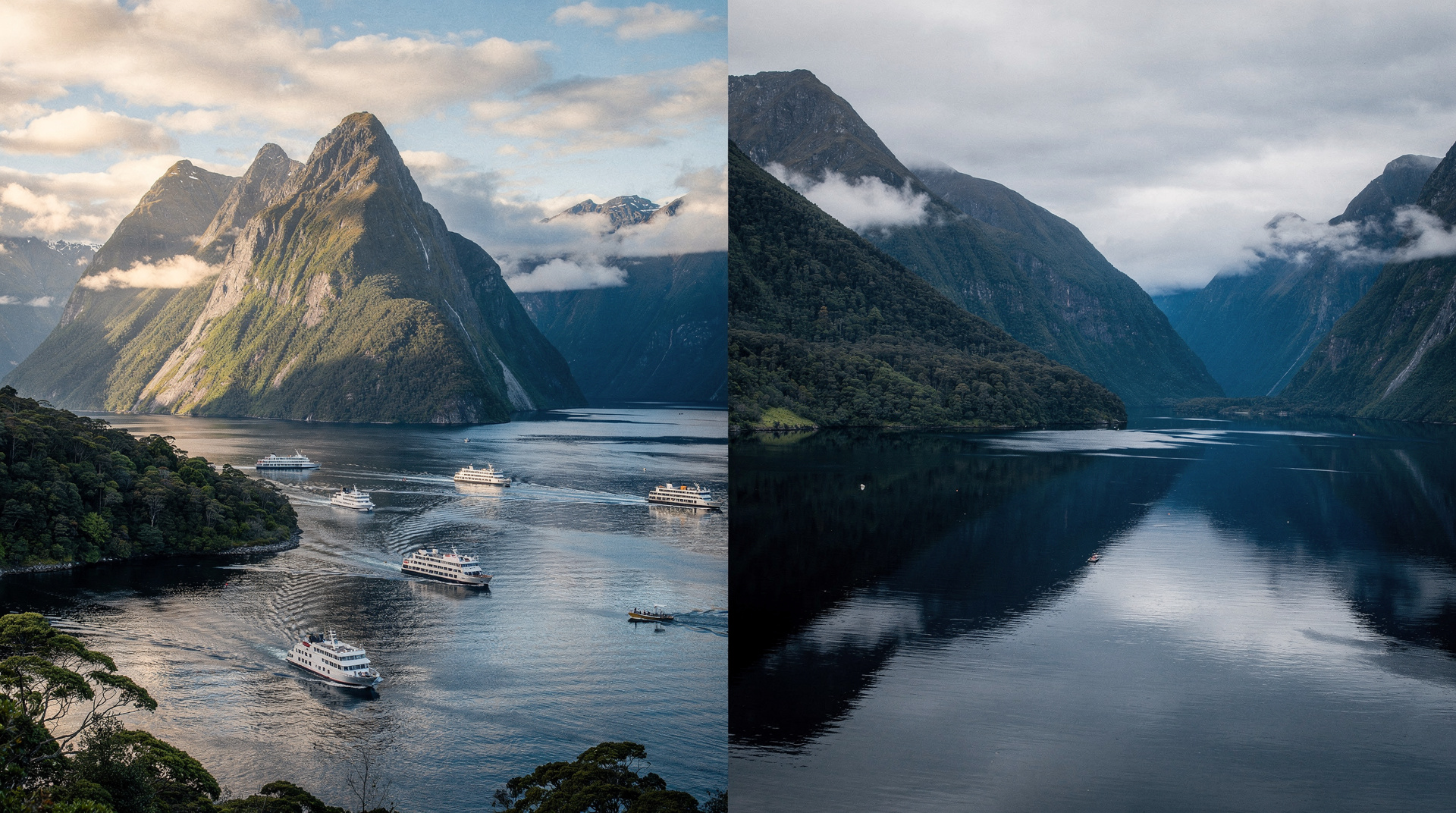
Milford Sound vs Doubtful Sound
Milford Sound vs Doubtful Sound: honest comparison of access, crowds, scenery and cruises. Clear verdict with prices in NZD/USD/EUR.
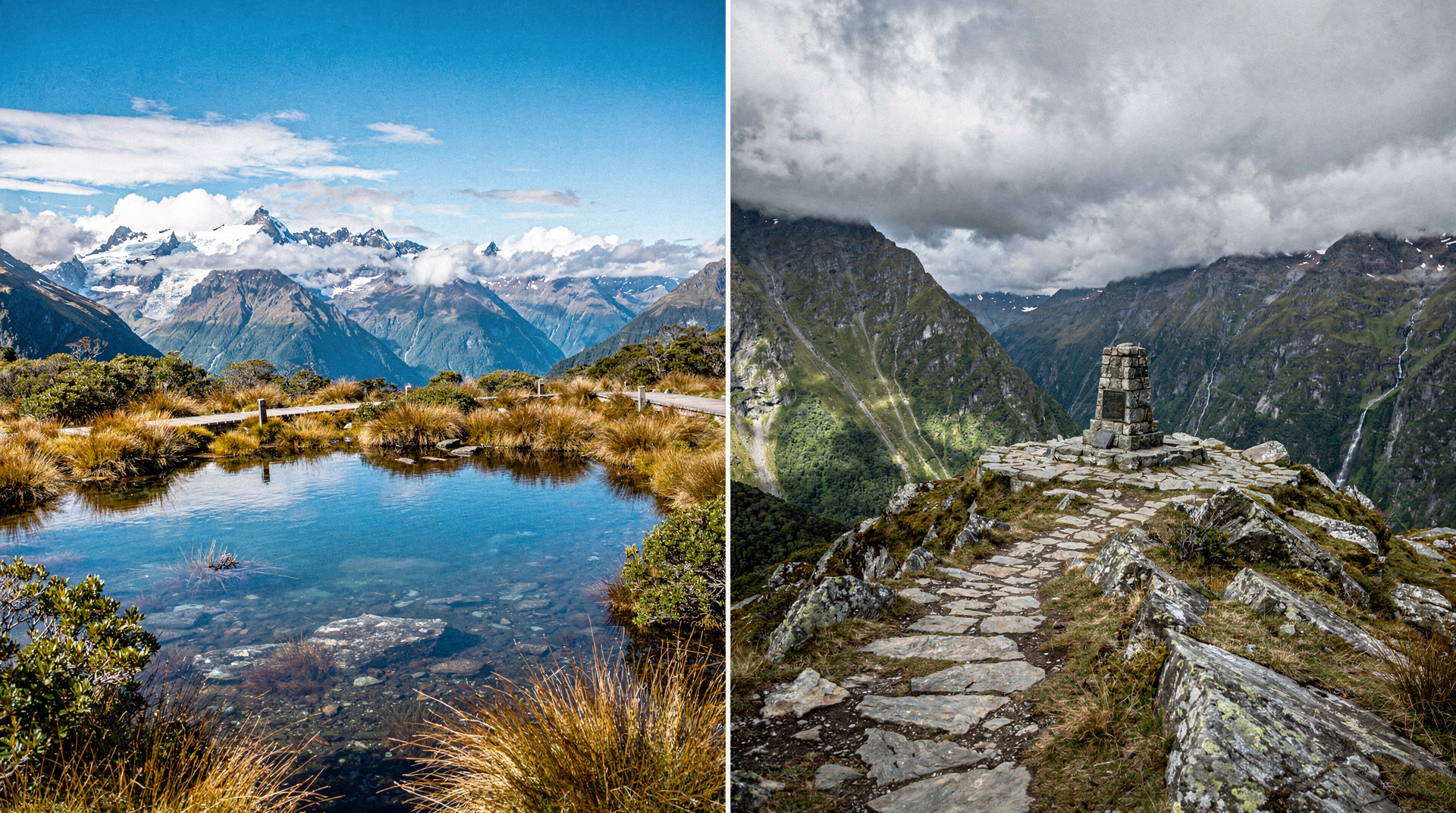
Routeburn Track vs Milford Track
Routeburn Track vs Milford Track honest comparison: scenery, difficulty, booking and which Great Walk is worth your time. Clear verdict with real prices.
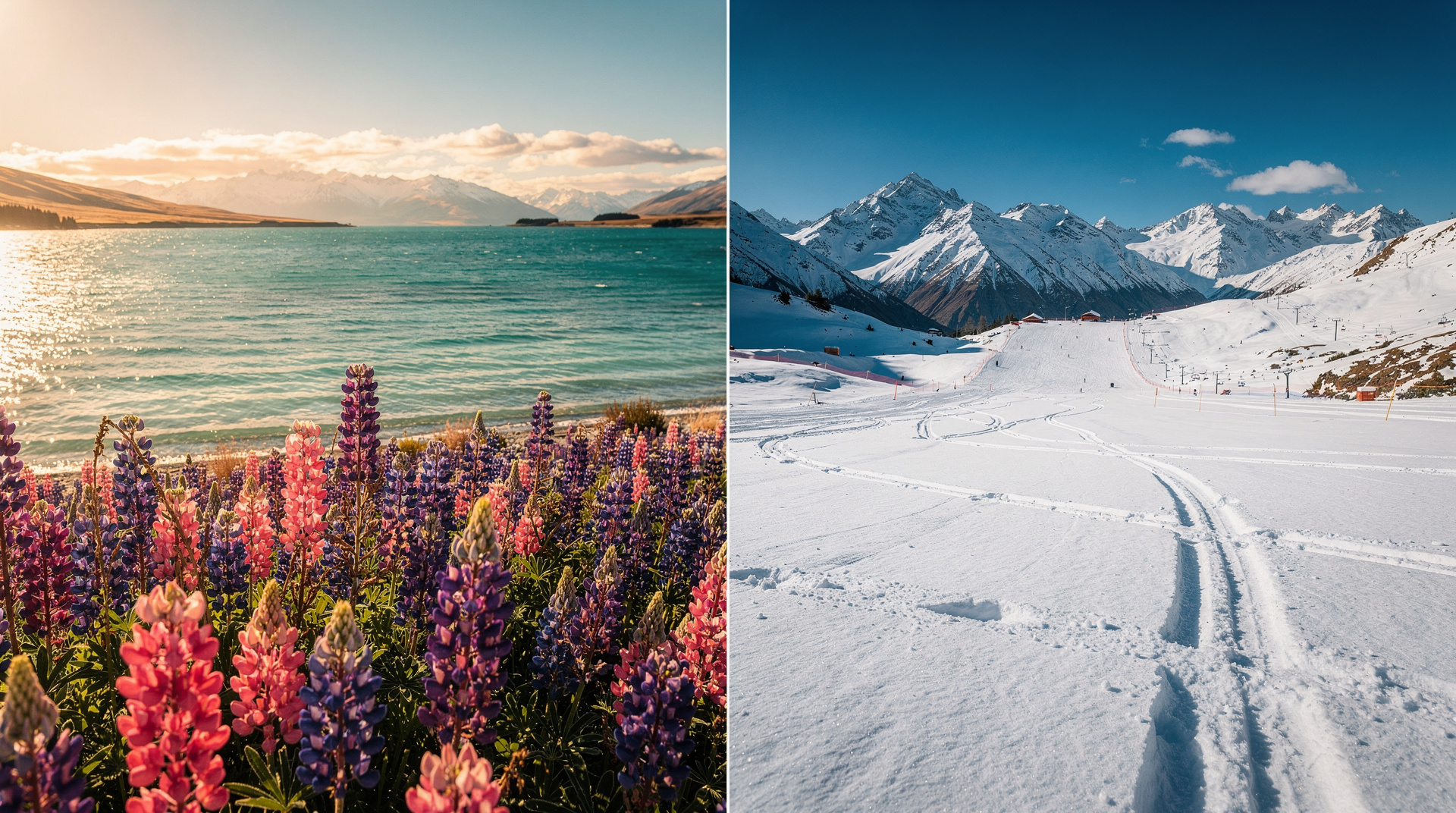
Summer vs winter in New Zealand
Summer vs winter in New Zealand: weather, crowds, costs and the honest verdict on which season suits your trip. NZD/USD/EUR prices throughout.
New Zealand backpacker itinerary — 28 days on a budget
28-day NZ backpacker trip for WHV travellers: Stray Bus, hostels, freedom camping, and the classic NZ experience. Budget under NZD 120/day with real costs.
New Zealand on a budget
Honest budget guide to NZ: real daily costs, where to save, where not to cheap out, free things.