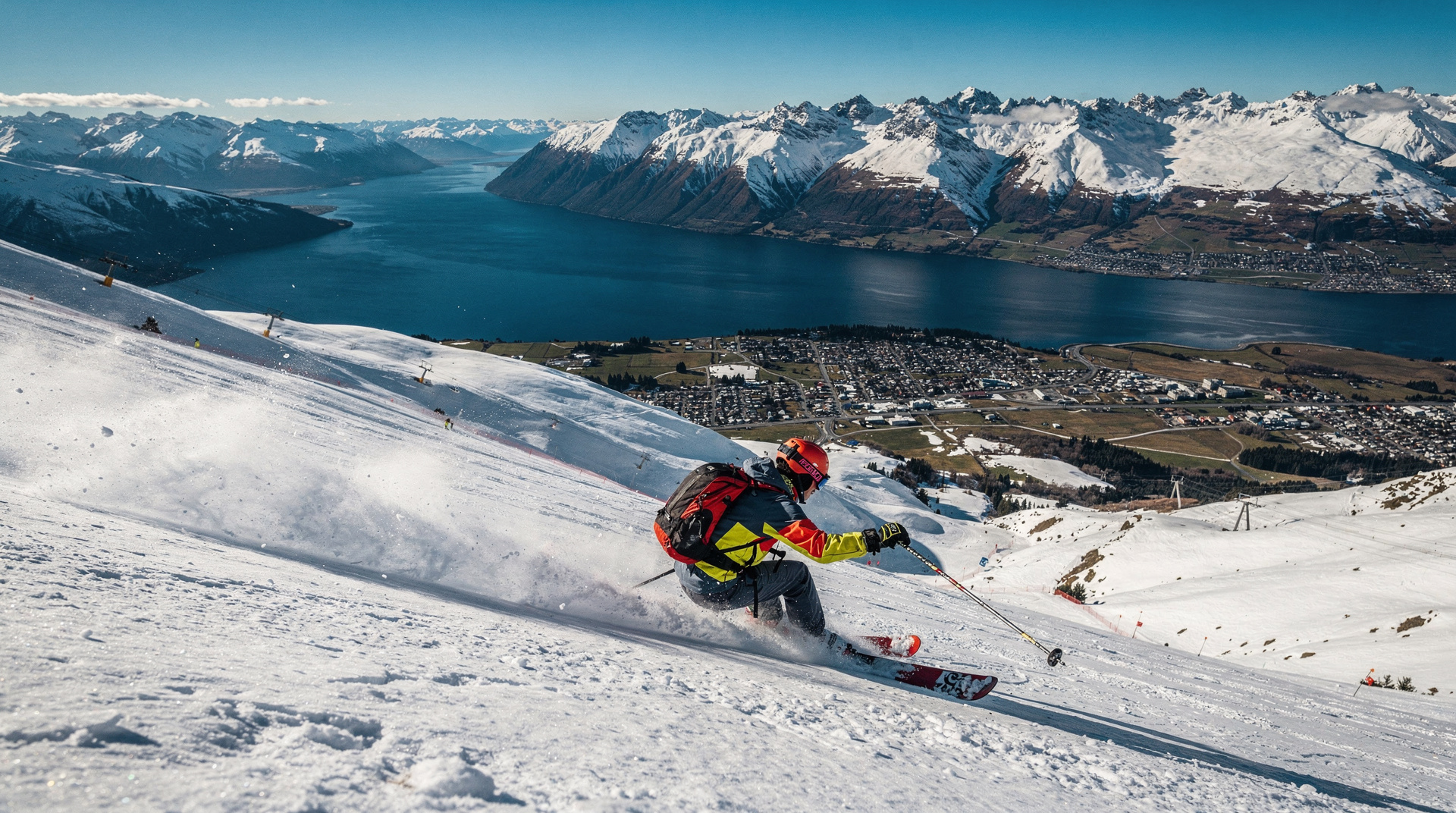
Skiing in New Zealand — complete resort guide 2026
When is ski season in New Zealand?
NZ ski season runs June to October (southern hemisphere winter). Peak conditions are usually mid-July to mid-September. Queenstown (Coronet Peak, The Remarkables) and Wanaka (Cardrona, Treble Cone) are the main hubs. Mt Hutt near Christchurch has the most reliable snowfall. Ruapehu (Whakapapa and Turoa) gives the North Island option.
| When | June–October (Southern Hemisphere winter); best window late July–mid September |
| Where | Queenstown/Wanaka (South Island, 4 fields), Methven (Mt Hutt), Tongariro NP (Ruapehu) |
| Cost | Day passes around NZD 115–180 depending on field |
| Getting there | Fly into Queenstown or Christchurch for South Island fields; Auckland/Wellington + road for Ruapehu |
| Best for | Northern-hemisphere skiers extending their season, and NZ residents |
Skiing New Zealand — southern hemisphere winter on the other side of the world
New Zealand’s ski season is the northern hemisphere’s summer — June to October — which is why it attracts professional ski racers training off-season, snowboard instructors extending their northern hemisphere winter, and European and North American recreational skiers who don’t want to wait until December.
The NZ ski offering is genuinely good, but calibrate your expectations first:
NZ skiing is different from Alpine skiing in these specific ways:
- Terrain is open and exposed. The mountains have few trees — you ski across open snowfields and down groomed wide runs. In the Alps, much skiing is through forest; in NZ, it’s open bowls. This makes NZ skiing particularly suited for big carving runs and boarders, and less suitable if you like tree skiing.
- Snowfall is variable. NZ snowfall is driven by frontal systems from the south, not consistent cold high-altitude climate. A good snow year is excellent; a bad snow year (warm winter, few storms) can produce icy or patchy conditions.
Snowmaking supplements natural snow at most major fields.
- No ski-in/ski-out villages. Unlike Verbier or Whistler, NZ resorts do not have accommodation at the base — you drive or take a bus from Queenstown, Wanaka, or Christchurch. This adds logistics but means nights in town (with restaurants and bars) rather than overpriced resort villages.
- Access roads are steep and demanding. Most NZ ski access roads are unsealed, steep switchback roads. Snow chains are required in some conditions. Check resort websites for road conditions before driving up.
The six major ski areas compared
Coronet Peak — Queenstown’s frontline mountain
What it is: The most polished ski resort in NZ, 18 km from Queenstown, rising to 1,649 m. Coronet Peak has full snowmaking capability (the most extensive in NZ), which gives it the most consistent early and late season conditions. It’s the only NZ resort with regular night skiing.
The terrain: 25 groomed runs, with runs for all abilities. The intermediate and advanced terrain is in the upper mountain (Home Basin, the North Face). For beginners, the lower mountain is well-suited with gentle gradient.
Best for: First-time skiers, families with children (ski school is well resourced), people who want reliable coverage in marginal seasons, and those who want the convenience of Queenstown nightlife after skiing.
Night skiing: Friday and Saturday nights (and some additional nights in peak season) — a distinctive NZ experience, skiing under lights with Queenstown glittering below.
Lift pass cost 2026: NZD 135-175 (USD 81-105 / EUR 75-96) per day adult. Multi-day passes reduce the rate significantly.
The honest caveat: Coronet Peak is the most commercial and crowd-heavy of the Queenstown fields. School holiday weekends (late July) see queues at the main lifts. It is undeniably well-run but lacks the wild character of its neighbours.
Read the detailed Coronet Peak guide.
The Remarkables — Queenstown’s mountain view ski area
What it is: 23 km from Queenstown, rising to 1,943 m. The Remarkables faces north-east and sits directly above Lake Wakatipu — on a clear day, the view from the ski area across the lake to the Humboldt Mountains is extraordinary.
The terrain: 6 main runs plus the Shadow Basin (for intermediate to advanced skiers), with terrain parks for boarders. The Remarkables has less snowmaking than Coronet Peak and is more dependent on natural snowfall. It’s typically more suitable when there’s been recent snow.
Best for: Intermediate to advanced skiers who want a more wild, open-bowl experience and the lake views. Families with confident children. Boarders in the terrain park.
The honest caveat: The access road is one of the most demanding in NZ — a steep unsealed switchback that requires care and sometimes chains. In early season, the road itself can close. Plan an extra 30-45 minutes for the drive from Queenstown.
Lift pass cost 2026: NZD 130-175 (USD 78-105 / EUR 72-96) per day. Combined Coronet/Remarkables passes available.
Read the detailed Remarkables guide.
Cardrona — Wanaka’s family-friendly mountain
What it is: 34 km from Wanaka (and 58 km from Queenstown), rising to 1,894 m. Cardrona is a well-developed resort with a mix of family runs, expert terrain (the High Noon Basin), and one of NZ’s best terrain parks. The base village has a cafe, rental shop, and learner area.
The terrain: 30 runs across four main basins. The upper basins (Big Easy, Wildside) have the most consistent snow. The learner area at the base is genuinely good for first-timers. Cardrona has won awards for its terrain parks — if freestyle snowboarding or skiing is your thing, this is the destination.
Best for: Families (strong learner infrastructure), freestyle snowboarders and skiers, Wanaka-based visitors.
Combined pass: Cardrona and Treble Cone multi-day ski lift pass covers both Wanaka mountains for the best value if you’re spending a week in Wanaka.
Lift pass cost 2026: NZD 140-180 (USD 84-108 / EUR 77-99) per day adult.
Read the detailed Cardrona guide.
Treble Cone — Wanaka’s serious mountain
What it is: 26 km from Wanaka, rising to 1,960 m. NZ’s largest skiable area by acreage per lift. Treble Cone is the mountain for experienced skiers and boarders — the terrain is mostly intermediate to advanced, with steep faces and long groomed runs. The high altitude and aspect mean it holds natural snow well.
The terrain: 550+ hectares of skiable terrain, the most in NZ. A single main gondola from the base serves the upper mountain; from there, wide-open intermediate cruising and expert off-piste in the Upper Saddle area. Beginners: honestly, Treble Cone is not ideal — the beginner area is limited and the intermediate sections are long and somewhat steep. Go to Cardrona instead.
Best for: Experienced skiers wanting long runs, back bowls, and less crowded terrain. Wanaka-based visitors on multi-day trips.
Lift pass cost 2026: NZD 135-175 (USD 81-105 / EUR 75-96) per day.
Treble Cone single-day and multi-day ski lift pass can be purchased in advance.
Read the detailed Treble Cone guide.
Mt Hutt — Christchurch’s gateway mountain
What it is: 100 km from Christchurch, 1.5 hours drive, rising to 2,086 m — the highest base elevation of any major NZ ski area. Mt Hutt is the main ski destination for Christchurch and the Canterbury region.
Why Mt Hutt is worth knowing about:
- Highest skiable terrain in NZ means the best natural snow reliability. When Queenstown’s mountains are marginal, Mt Hutt often has good cover.
- Less crowded than Queenstown fields (no international tourist concentration).
- Excellent learner and intermediate terrain.
- The access road is demanding (steep, unsealed, no chains required but advised in snow) — 30-40 minutes from Methven township.
Best for: Christchurch-based visitors, families, skiers wanting less crowded terrain, those on a South Island itinerary passing through Canterbury.
Lift pass cost 2026: NZD 130-165 (USD 78-99 / EUR 72-91) per day.
Read the detailed Mt Hutt guide.
Ruapehu (Whakapapa and Turoa) — North Island’s volcanic ski
What it is: Mt Ruapehu in the Tongariro National Park hosts two separate ski areas — Whakapapa on the north-west face and Turoa on the south-west face. Both are operated by Ruapehu Alpine Lifts (RAL). Whakapapa is larger (NZ’s biggest ski area by lift-served terrain) and more developed; Turoa is more suited to intermediate and expert skiers.
What’s unique: You’re skiing on an active stratovolcano. The Crater Lake (Te Wai ā-moe) sits above Whakapapa — it’s a living geological feature. Snow conditions at Ruapehu can include volcanic ash in the snow after eruption events (the volcano erupted most recently in 2022). The sulphur smell is intermittently detectable.
The honest complications:
- Ruapehu is 5-6 hours from Auckland and 4.5 hours from Wellington. It’s not a day-trip option from the major cities; plan at minimum 2 nights at Whakapapa Village or National Park Township.
- Snow reliability is lower than South Island fields — being on a volcanic peak with varying aspect means conditions can be inconsistent.
- The mountain is an active volcano — check GeoNet NZ volcanic alert levels before travel.
Best for: North Island visitors who can’t make it south, skiers who want to say they skied an active volcano, families based at National Park Village.
Lift pass cost 2026: NZD 115-155 (USD 69-93 / EUR 64-85) per day.
Read the detailed Ruapehu guide.
Season overview
| Month | Conditions | Notes |
|---|---|---|
| June | Early season | Variable — sometimes excellent, sometimes icy. Watch snowfall reports. |
| July | Reliable | School holidays second half of July = crowds, peak lift pass prices |
| August | Best overall | Most reliable natural snow, good coverage, fewer families |
| September | Excellent | Fewer crowds than August, longer daylight, often good conditions |
| October | Late season | Variable — can be excellent or end abruptly with warm fronts |
The best window for confident skiing is late July to mid-September.
Queenstown vs Wanaka as a ski base
This is the most common planning question for South Island ski trips. Read the full Queenstown vs Wanaka comparison for the complete picture. The ski-specific summary:
| Factor | Queenstown | Wanaka |
|---|---|---|
| Ski resorts | Coronet Peak, Remarkables | Cardrona, Treble Cone |
| After-ski nightlife | Extensive (pubs, restaurants, clubs) | Small-town, quieter |
| Accommodation cost | Higher | Lower |
| Family feel | More commercial | More relaxed |
| Best terrain | Coronet Peak for beginners, Remarkables for views | Cardrona for families, Treble Cone for experts |
Verdict: Queenstown for ski holiday atmosphere and beginners. Wanaka for experienced skiers who want terrain quality over nightlife and a calmer base.
Real costs
| Resort | Day lift pass (adult) | Day lift pass (child 6-15) | Season pass |
|---|---|---|---|
| Coronet Peak | NZD 135-175 | NZD 75-95 | NZD 1,100-1,400 |
| The Remarkables | NZD 130-175 | NZD 75-95 | (combined with Coronet) |
| Cardrona | NZD 140-180 | NZD 80-100 | NZD 1,200-1,500 |
| Treble Cone | NZD 135-175 | NZD 75-95 | (combined with Cardrona) |
| Mt Hutt | NZD 130-165 | NZD 70-90 | NZD 1,000-1,200 |
| Ruapehu (both fields) | NZD 115-155 | NZD 65-85 | NZD 900-1,100 |
All prices in NZD. Multiply by 0.60 for USD, 0.55 for EUR.
Equipment hire (per day): NZD 55-80 (USD 33-48 / EUR 30-44) for skis and boots at resort hire shops. Cheaper at town hire shops (Queenstown, Wanaka, Methven).
Return bus transfers from Queenstown:
- Coronet Peak: NZD 30-45/person
- The Remarkables: NZD 30-45/person
- Cardrona from Queenstown: NZD 45-65/person (direct ski bus)
Alternatives in bad snow years
NZ’s snowfall can be disappointing in warm winters (increasingly common with climate change). If you arrive and conditions are poor:
- Queenstown without skiing: The day hikes from Queenstown list includes exceptional walks (Ben Lomond, Queenstown Hill). Lake activities, wine tours, and the gondola are non-snow dependent.
- Heli-skiing: More consistent than resort skiing as helicopters access higher-altitude powder that standard lifts can’t reach. Available from Wanaka and Queenstown. Cost: NZD 1,200-2,500/day.
- Go to Ruapehu: When Queenstown resorts are marginal, a cold front from the south can produce good conditions at Ruapehu due to its different aspect. Monitor NZSki and Ruapehu webcams.
Choosing a base: matching your itinerary to a ski hub
If you’re planning a New Zealand trip with skiing as one component rather than the sole focus, the field you pick often follows from where you’re already going rather than the other way round:
- Flying into Christchurch, limited time: Mt Hutt is the only major field within realistic day-trip range of a main city — 90 minutes from Christchurch, with the longest season in the country.
- Doing a South Island loop with Queenstown as a base: Coronet Peak for proximity and night skiing, The Remarkables for beginners and scenery — both within 30 km of town.
- Wanaka rather than Queenstown: Cardrona for families and reliable inland snow, Treble Cone if the group is experienced and wants uncrowded advanced terrain. Read Queenstown vs Wanaka for the wider comparison beyond skiing.
- North Island only, not travelling south: Ruapehu (Whakapapa and Turoa) is the sole option, with the added novelty of skiing an active volcano in Tongariro National Park.
Most multi-day ski trips combine at least two fields in the same region — Coronet Peak and The Remarkables from a single Queenstown base, or Cardrona and Treble Cone from Wanaka — rather than travelling between the North and South Island hubs, which is a long and impractical combination for a single trip.
Booking equipment and lift passes in advance
Day lift passes for the five NZSki/Cardrona/Treble Cone fields are rarely fully sold out and generally don’t need advance booking outside peak July weekends, but equipment hire and accommodation are the pieces worth locking in early. Ski school lessons for children, in particular, book out during the July school holidays — reserve these as soon as your dates are fixed rather than assuming a walk-up slot will be available. None of the day passes for the fields covered here are sold through GetYourGuide; each resort operator (NZSki, Cardrona, Treble Cone, or Ruapehu Alpine Lifts) sells directly through its own website or at the mountain.
FAQ
Do I need chains to drive to NZ ski resorts?
Not always, but chain requirements are imposed in snow conditions on most access roads. Rental car companies typically supply chains for a daily fee — it’s worth taking them. Ruapehu and Mt Hutt access roads are most likely to require chains; Coronet Peak and Cardrona are sealed for more of their length.
Can beginners ski in New Zealand?
Yes. Coronet Peak, Cardrona, and Mt Hutt have excellent learner areas and ski schools. Ruapehu has a beginner area at Whakapapa Village. Treble Cone is not recommended for beginners (limited gentle terrain). Most resorts offer half-day group lessons for NZD 80-120 (USD 48-72 / EUR 44-66) including equipment hire.
Is NZ skiing expensive compared to Europe or North America?
Day lift passes are broadly comparable to mid-range European resorts — slightly cheaper than Verbier or Zermatt, roughly similar to mid-tier Austrian or French resorts. Equipment hire is similarly priced. Accommodation in Queenstown and Wanaka in peak ski season is at a significant premium.
What’s the best NZ ski resort for snowboarders?
Cardrona’s terrain parks are consistently rated the best in NZ — the superpipe and multiple jump lines attract professional freestylers during training camps. Treble Cone has excellent natural features. Coronet Peak and Remarkables are more suited to groomed-run carving than park riding.
Can I ski two different mountains in one day in Queenstown?
Technically yes — Coronet Peak opens early (8:30am) and closes mid-afternoon (4pm); a motivated skier could do a morning on Coronet and afternoon on Remarkables with a car. In practice, this is exhausting and not recommended. The ski bus schedules are also not designed for inter-mountain hopping. Pick one mountain per day.
Should I ski the South Island or North Island fields?
The South Island fields (Coronet Peak, The Remarkables, Cardrona, Treble Cone, Mt Hutt) offer more variety, better infrastructure, and easier multi-field trips. Ruapehu is the right choice specifically for North Island-only itineraries or for the novelty of skiing an active volcano — not generally a reason to add a South Island detour on its own.
How many days should I budget for a New Zealand ski trip?
3–7 days is the practical range for a dedicated ski trip. Fewer than 3 days limits you to essentially one field given travel time; 7+ days lets you comfortably combine two fields from one base (Queenstown or Wanaka) with a rest day for non-ski activities like the day hikes around Queenstown.
Related guides
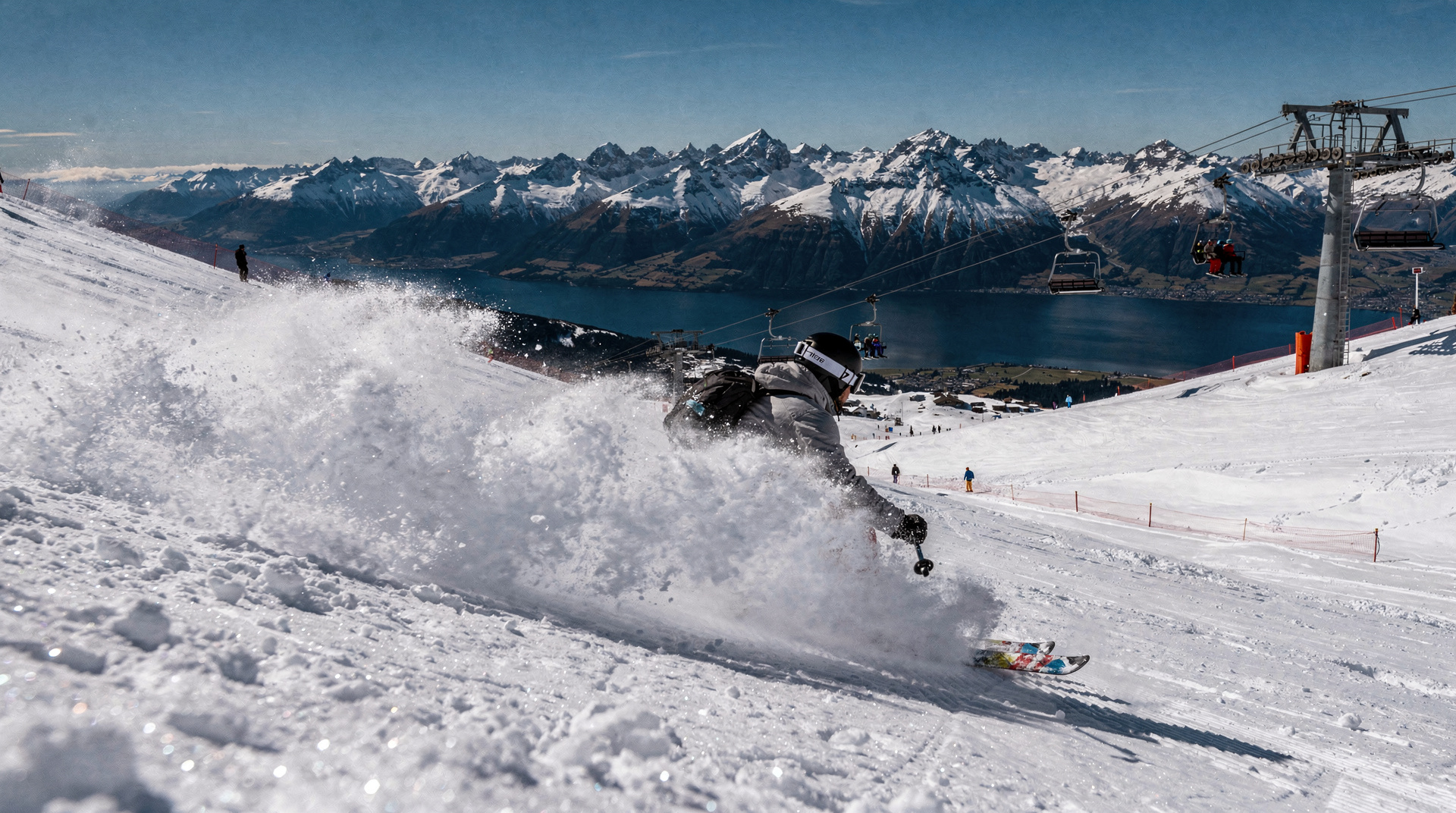
Skiing Coronet Peak — Queenstown's closest ski field
Coronet Peak ski guide: 23 km from Queenstown, night skiing, groomed runs. Day pass prices NZD/USD/EUR and honest comparison with The Remarkables.
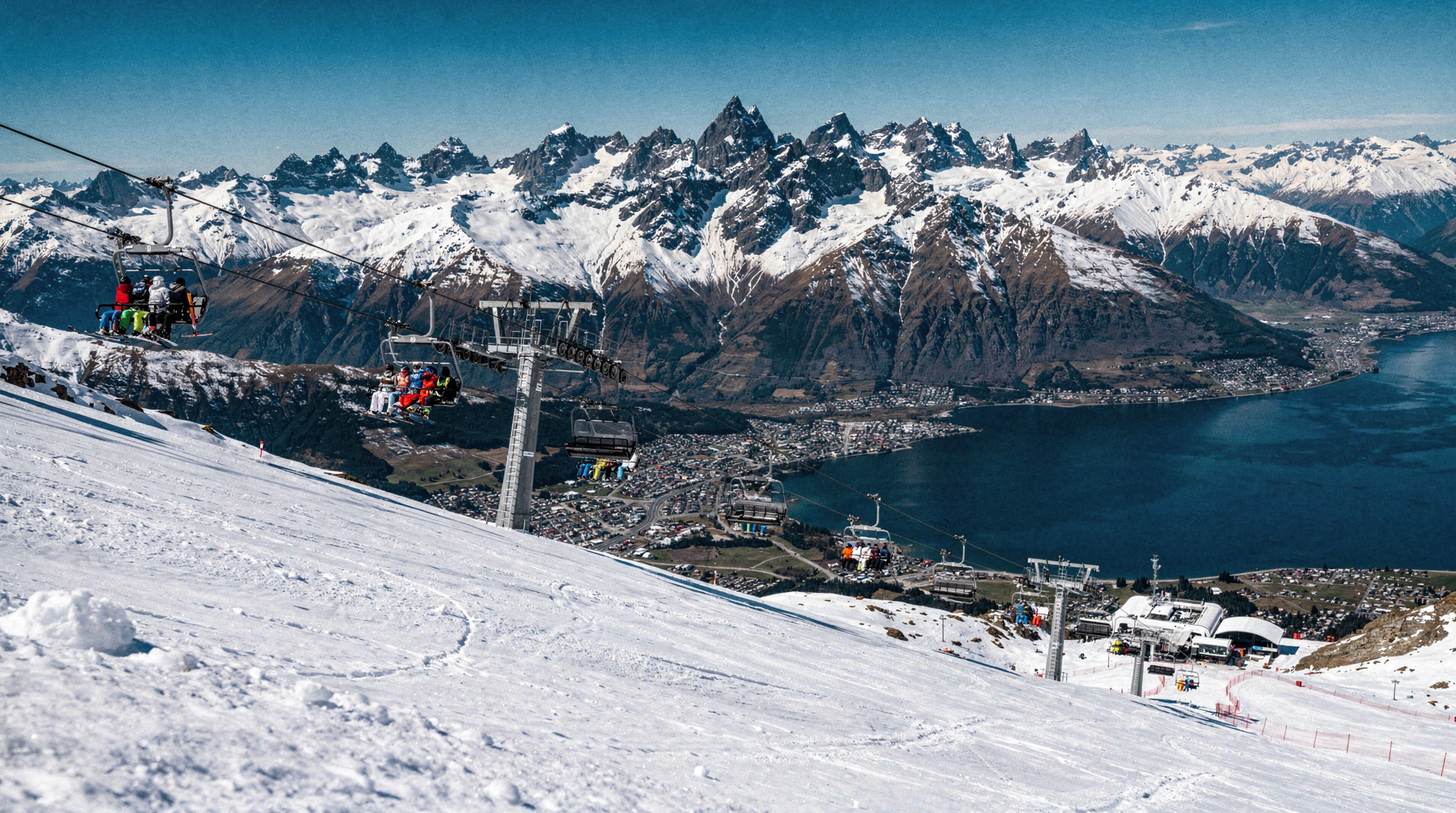
Skiing The Remarkables — Queenstown's scenic ski field
The Remarkables ski guide: 26 km from Queenstown, lake and mountain views, good beginner terrain. Day pass prices NZD/USD/EUR and comparison with Coronet Peak.
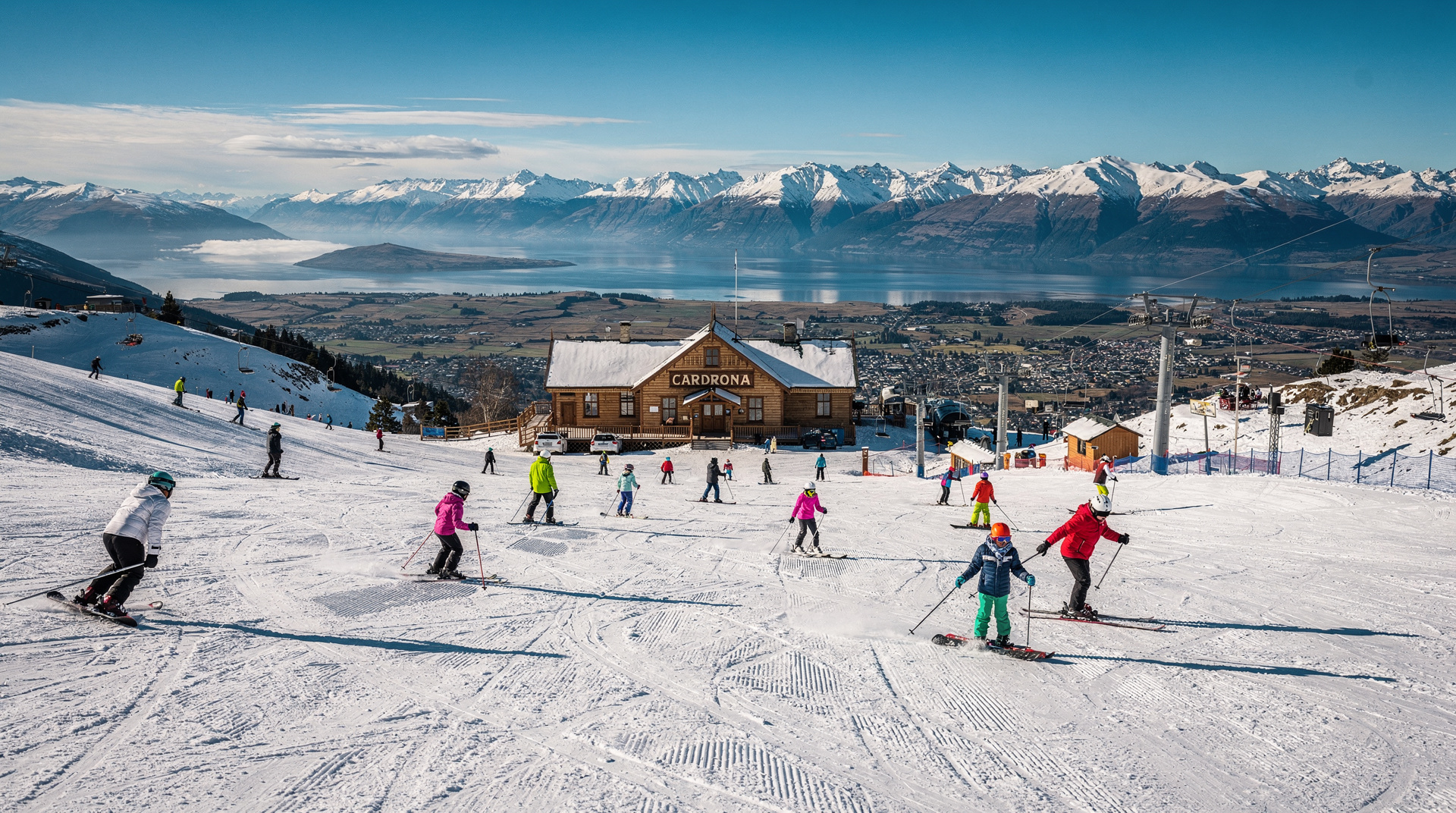
Skiing Cardrona — the best family ski field near Wanaka
Cardrona ski guide: 600m vertical, excellent beginner terrain, reliable snow near Wanaka. Day pass prices NZD/USD/EUR and comparison with Coronet Peak.
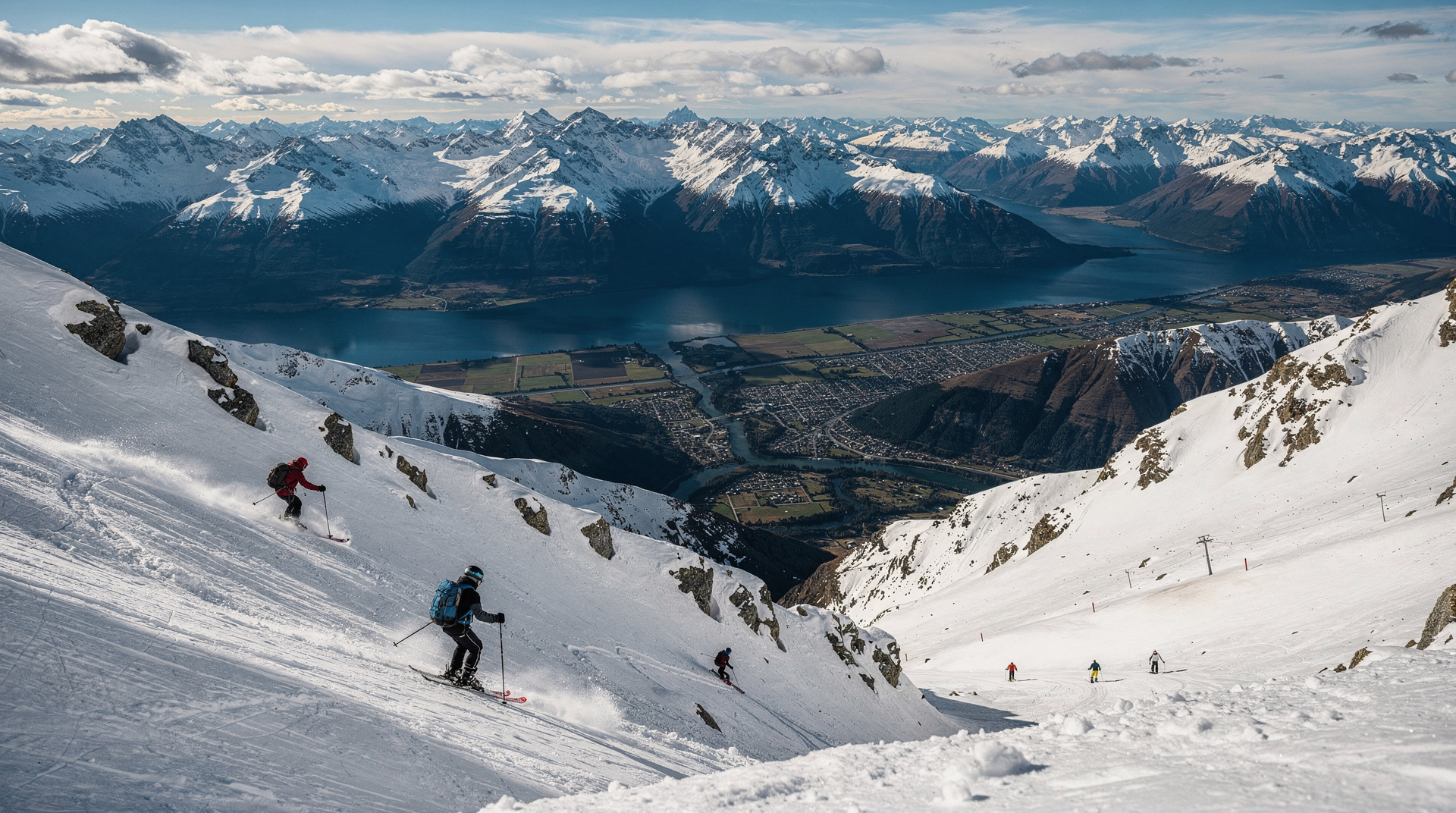
Skiing Treble Cone — New Zealand's best advanced ski field
Treble Cone ski guide: 700m vertical, South Island's largest ski area for advanced terrain, Lake Wanaka views. Prices NZD/USD/EUR and why it's worth the drive.
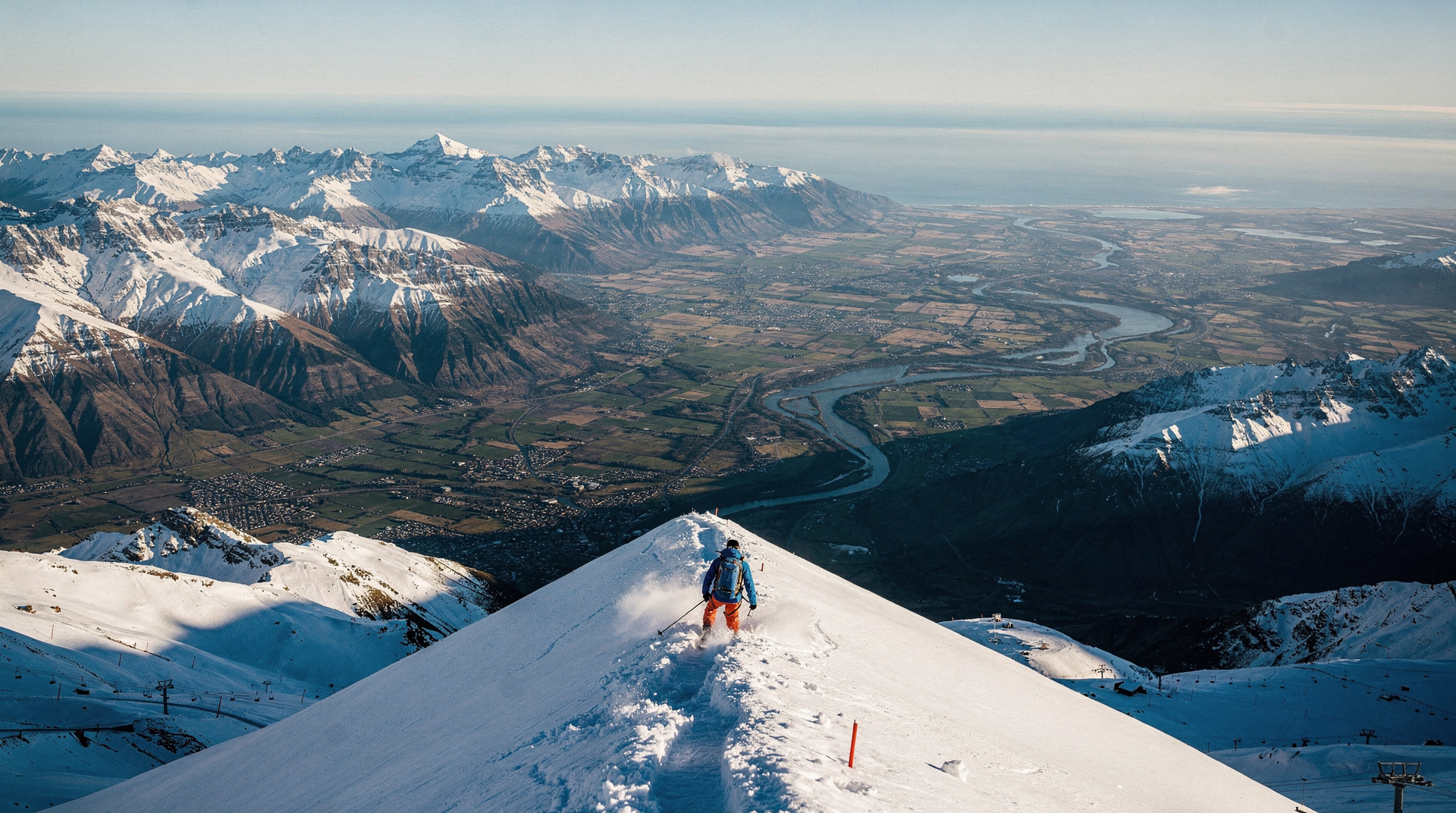
Skiing Mt Hutt — Canterbury's best-kept ski secret
Mt Hutt ski guide: 90 minutes from Christchurch, 672m vertical, NZ's longest season. Day pass prices NZD/USD/EUR and comparison with Queenstown fields.
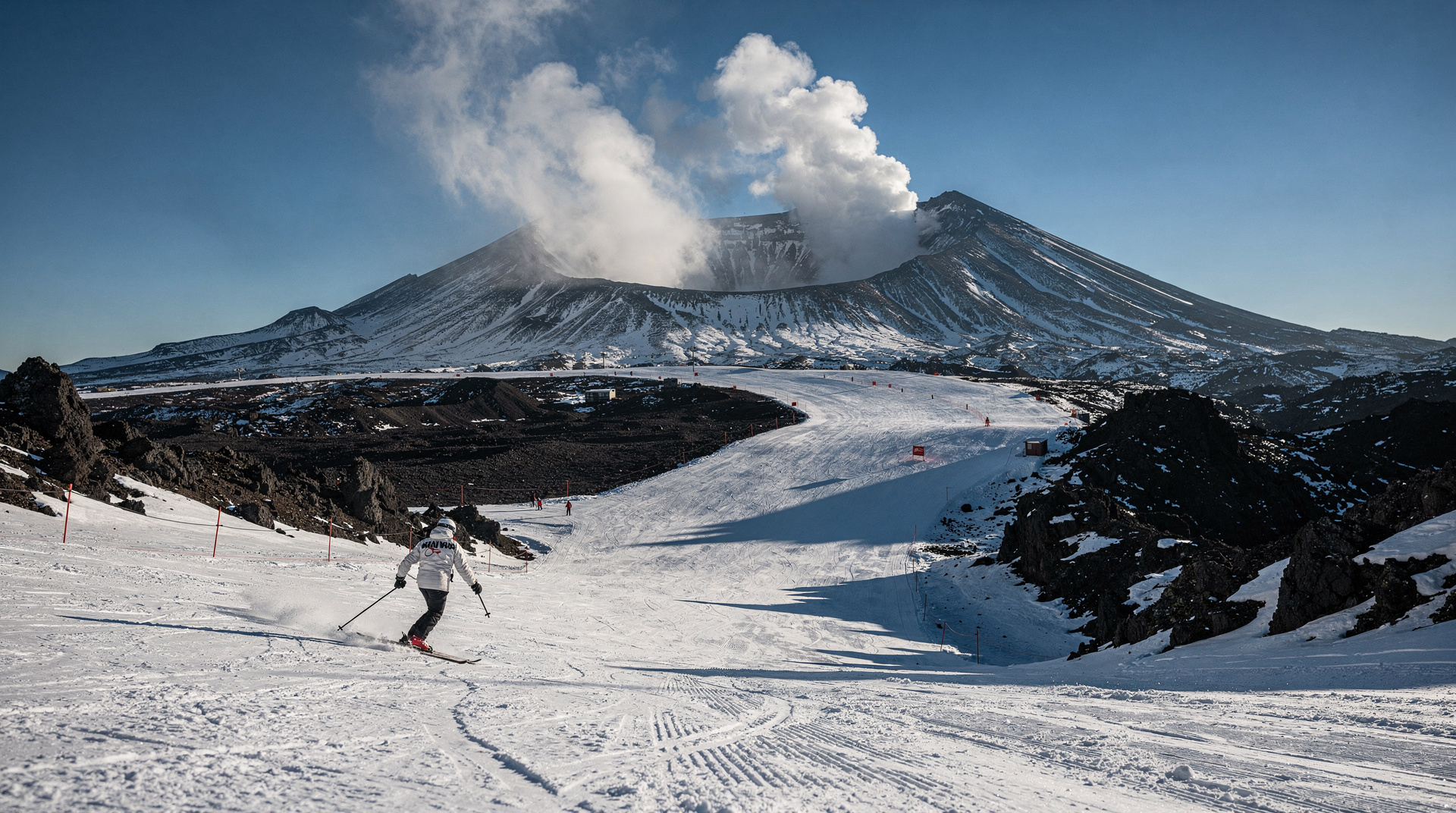
Skiing Mt Ruapehu — Whakapapa and Turoa on an active volcano
Mt Ruapehu ski guide: Whakapapa and Turoa fields on an active volcano in Tongariro NP. Restructuring context, prices NZD/USD/EUR, and volcanic risk explained.
Last reviewed: