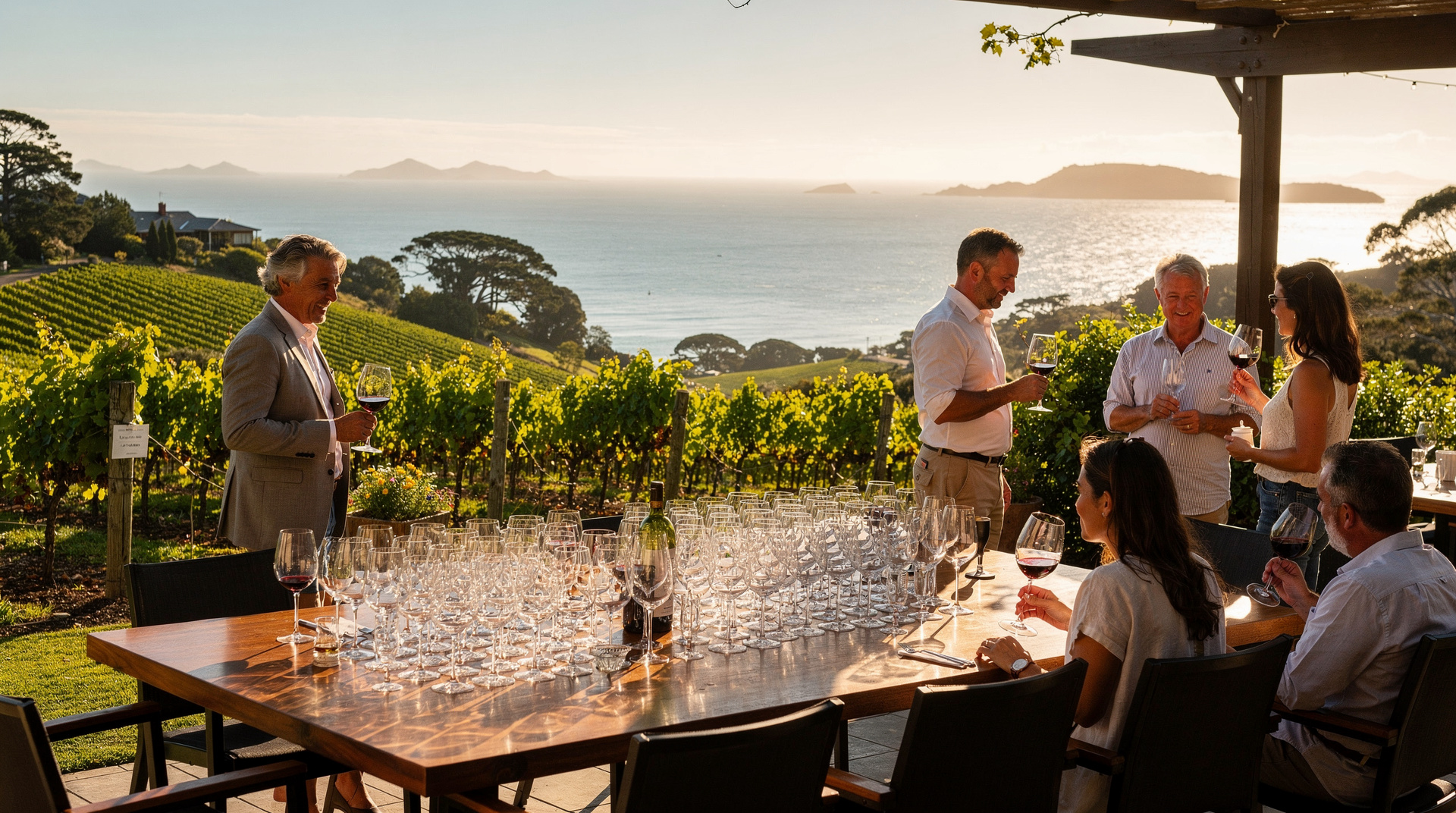
Waiheke Island wine tour
Is Waiheke Island worth visiting for wine?
Waiheke is New Zealand's most accessible wine island — 30+ boutique wineries 35 minutes from Auckland by ferry. It specialises in Bordeaux-style reds and rosé. Guided wine tours cost NZD 130–185 / USD 78–111 / EUR 72–102. The island also has excellent beaches and food.
Wine 35 minutes from Auckland
Waiheke Island sits in the Hauraki Gulf, 17 km from Auckland CBD, connected by a regular passenger ferry that runs approximately every 30 minutes in peak hours. The crossing takes 35 minutes. The island itself is 92 km² of hilly coastal terrain with white sand beaches, pohutukawa forest, and more than 30 boutique wineries spread across east-facing slopes.
| Where | Waiheke Island, 35 min ferry from Auckland |
| Cost | around NZD 130–185 guided full day incl. ferry |
| Time needed | Half-day (3-4h) to full day |
| Getting there | Fullers360 ferry from Auckland Pier 2 |
| Best time | February–April for harvest; December–January for sun and crowds |
Waiheke’s microclimate is notably warmer and sunnier than the Auckland mainland — the island sits in the “banana belt” of the gulf, shielded from west coast weather. This warmth, combined with free-draining clay-over-clay soils, suits red Bordeaux varieties: merlot, malbec, cabernet franc, and cabernet sauvignon. The resulting wines are rich, fruit-forward, and suited to the island’s casual al fresco drinking culture.
Waiheke is not competing with Marlborough for production volume or Central Otago for critical acclaim — it competes on experience. A wine day on Waiheke combines the island ferry (itself scenic, with harbour and gulf views), beautiful tasting room settings (many have veranda views over the gulf to the Auckland skyline), excellent food, and beach access. It’s one of the most hedonistically complete wine experiences in New Zealand.
Getting there
Ferry from Auckland: Fullers360 runs regular ferries from Auckland’s Pier 2 (Quay Street, opposite the Ferry Building). Journey: 35 minutes. Cost: NZD 40–50 / USD 24–30 / EUR 22–28 return. Ferries run frequently (every 30–60 minutes on weekdays, more on weekends in summer). Last ferries back to Auckland typically run until 10–11 pm — wine touring doesn’t require an early return.
Many guided wine tours include the ferry in the ticket price — check when booking.
Guided wine tours
The Waiheke wine essence tour is a popular half-day introduction covering 3 wineries with guide-led tasting sessions and transport between cellar doors. This is the entry-level guided option for first-time visitors.
The Waiheke gourmet food and wine tour extends the experience with a formal lunch at one of the island’s better restaurants, matched with the host winery’s wines. For a full-day immersion including food, this is the correct choice.
The Waiheke twilight wine and dine tour runs in the evening — a different experience using the last ferries, dinner at an island restaurant, and sunset over the gulf from a vineyard terrace. Romantically atmospheric; ideal for couples.
The Waiheke premium wine tour (max 11 passengers) limits group size for a more intimate experience at higher-quality producers. Worth the premium if the social experience of a large tour bus is not your idea of a good day.
For visitors who want a boutique-focused tour specifically curated around Waiheke’s smaller, less commercial producers, the Waiheke boutique winery tour skips the island’s most visited cellar doors in favour of the winemakers who are still small enough to pour for you themselves. A noticeably different experience from the standard circuit, and recommended for wine-literate travellers who’ve already visited the main names.
Price range (guided tours): NZD 130–185 / USD 78–111 / EUR 72–102 for full day with ferry; NZD 85–120 / USD 51–72 / EUR 47–66 for half-day.
Key wineries on Waiheke
Stonyridge Vineyard: The island’s most iconic producer. Larose, the flagship Bordeaux blend, is one of New Zealand’s most sought-after red wines — and most expensive (NZD 200+/bottle). The cellar door tasting experience is the most atmospheric on the island: an old olive grove, stone terrace, and views across the gulf. Booking essential; not walk-in friendly for tastings.
Mudbrick Vineyard and Restaurant: The most visitor-ready winery, with restaurant, olive grove, and stunning views of Auckland and the Waitematā Harbour. The wine is competent; the setting justifies the visit regardless. The Sunday brunch is a Waiheke institution.
Te Motu: Classic Waiheke producer specialising in Bordeaux varieties; the Dunleavy Merlot/Malbec is reliable year after year. More casual atmosphere than Stonyridge.
Cable Bay Winery: The most architecturally striking building on the island — a building designed to look like ship prows facing the water. Good restaurant; the pinot gris and malbec rosé perform well.
Wild Estate: Smaller, further east on the island (requires a deliberate drive); worth it for quieter tastings and genuinely interesting technical conversations with the winemaker.
Self-guided options
Waiheke’s hop-on hop-off bus passes allow flexible self-guided wine touring. The Waiheke Island ferry and hop-on hop-off bus includes the return ferry from Auckland and an all-day bus pass. You plan your own route and timing — the bus circuits the island’s main road, stopping at beach access points and winery entrances.
Price (ferry + bus pass): NZD 65–85 / USD 39–51 / EUR 36–47.
This is significantly cheaper than a guided tour but requires you to pre-plan winery stops (call ahead for cellar door hours), manage your own timing, and navigate the island’s sometimes confusing road layout. For confident self-planners, it’s excellent value.
Beaches combined with wine
Waiheke’s beaches are genuinely good — Oneroa, Palm Beach, and Onetangi are the main ones, with clean water and pohutukawa shade. A Waiheke day that combines 2–3 winery visits in the morning with an afternoon at Onetangi Beach is one of the most pleasant half-day combinations near Auckland.
The island is popular enough in summer that the ferries get crowded — avoid Saturday peak time (10 am–noon) if possible; go earlier or take a weekday trip.
Maori cultural tour option
The Waiheke Maori cultural tour is a distinct experience from the wine focus — a guided walk covering the island’s traditional Maori use, plant knowledge, and cultural heritage. Combine with a morning winery visit for a varied full day.
Costs summary (NZD / USD / EUR)
| Activity | NZD | USD | EUR |
|---|---|---|---|
| Auckland–Waiheke return ferry | 40–50 | 24–30 | 22–28 |
| Ferry + hop-on hop-off bus | 65–85 | 39–51 | 36–47 |
| Guided wine tour (half-day) | 85–120 | 51–72 | 47–66 |
| Guided wine tour (full day with lunch) | 130–185 | 78–111 | 72–102 |
| Premium small-group wine tour | 150–210 | 90–126 | 83–116 |
| Cellar door tastings | 15–30 | 9–18 | 8–17 |
Exchange rate: 1 NZD ≈ 0.60 USD ≈ 0.55 EUR.
Waiheke wine by season
| Season | Conditions | What to expect |
|---|---|---|
| Dec–Jan (summer) | Warm, dry, longest days | Peak crowds, full cellar door hours, best beach pairing |
| Feb–Apr (harvest/autumn) | Warm days, cooler evenings | Harvest energy at wineries, thinning crowds by March-April, arguably the best month overall |
| May–Aug (winter) | Mild but wetter | Reduced cellar door hours at some wineries, quiet tastings, lower accommodation prices |
| Sep–Nov (spring) | Warming, variable | Vines budding, good weather return, moderate crowds |
Tasting fees and how they work
Most Waiheke cellar doors charge a tasting fee of NZD 15–30 per person, which is typically waived or credited toward a bottle purchase if you buy wine on site. Some of the more exclusive producers, including Stonyridge, require advance booking for tastings and do not accommodate walk-ins during peak season — call or book online rather than turning up unannounced. Guided tours generally build the tasting fees into the overall tour price, so you won’t be asked to pay separately at each stop, which is one of the practical advantages of booking a tour over self-driving between cellar doors.
Driving yourself between wineries
If you’re not booking a guided tour or the hop-on hop-off bus, a rental car is an option, but Waiheke’s roads are narrow, hilly, and unfamiliar, and New Zealand’s drink-driving limits are strict and strictly enforced. Given that tasting wine is the entire point of the day, self-driving between cellar doors creates an obvious conflict — most visitors who drive themselves designate a non-drinking driver or limit themselves to one or two small tastes per stop. For this reason, the hop-on hop-off bus or a guided tour is the more sensible choice for most visitors, and is what the majority of first-time Waiheke wine visitors end up booking.
Honest verdict
Worth it — especially for visitors spending 2–3 days in Auckland who want a day trip that’s more distinctive than standard city sightseeing. The combination of ferry crossing, island scenery, good wine, and beach access in a 35-minute reach of a major city is genuinely rare. Waiheke’s wines are not the country’s most critically acclaimed, but the experience — al fresco, scenic, relaxed — is the best wine day trip in New Zealand.
Book the twilight tour if you’re a couple or small group; the daytime tour if you want the beaches; the hop-on hop-off if you want independence.
Frequently asked questions
How many wineries should I visit in a day?
3–4 is ideal. The ferry journey bookends the day; add winery travel time and you realistically have 5–6 hours on the island for winery visits. 3 visits allows genuine engagement at each stop; 4 is manageable with tight timing. Trying to do 6+ leads to rushed, superficial tastings.
What’s the last ferry back to Auckland?
Evening ferries run until approximately 10–11 pm (check Fullers360 for current schedules, which vary seasonally). This allows a generous wine day with dinner on the island and a comfortable return.
Is Waiheke better than Marlborough for wine?
They produce completely different wines. Marlborough is New Zealand’s global wine identity (sauvignon blanc at scale). Waiheke is boutique reds (Bordeaux varieties) in tiny volumes at relatively high prices. For wine quality per dollar, Marlborough wins; for wine experience (setting, food pairing, lifestyle), Waiheke wins. Do both if your itinerary allows.
When is Waiheke wine country best?
February–April: harvest season and autumn light. December–January: summer peak with good weather but maximum crowds. Avoid July–August unless you specifically want a quiet winter day — the island is beautiful but the contrast with summer is stark.
Related reading
Related guides
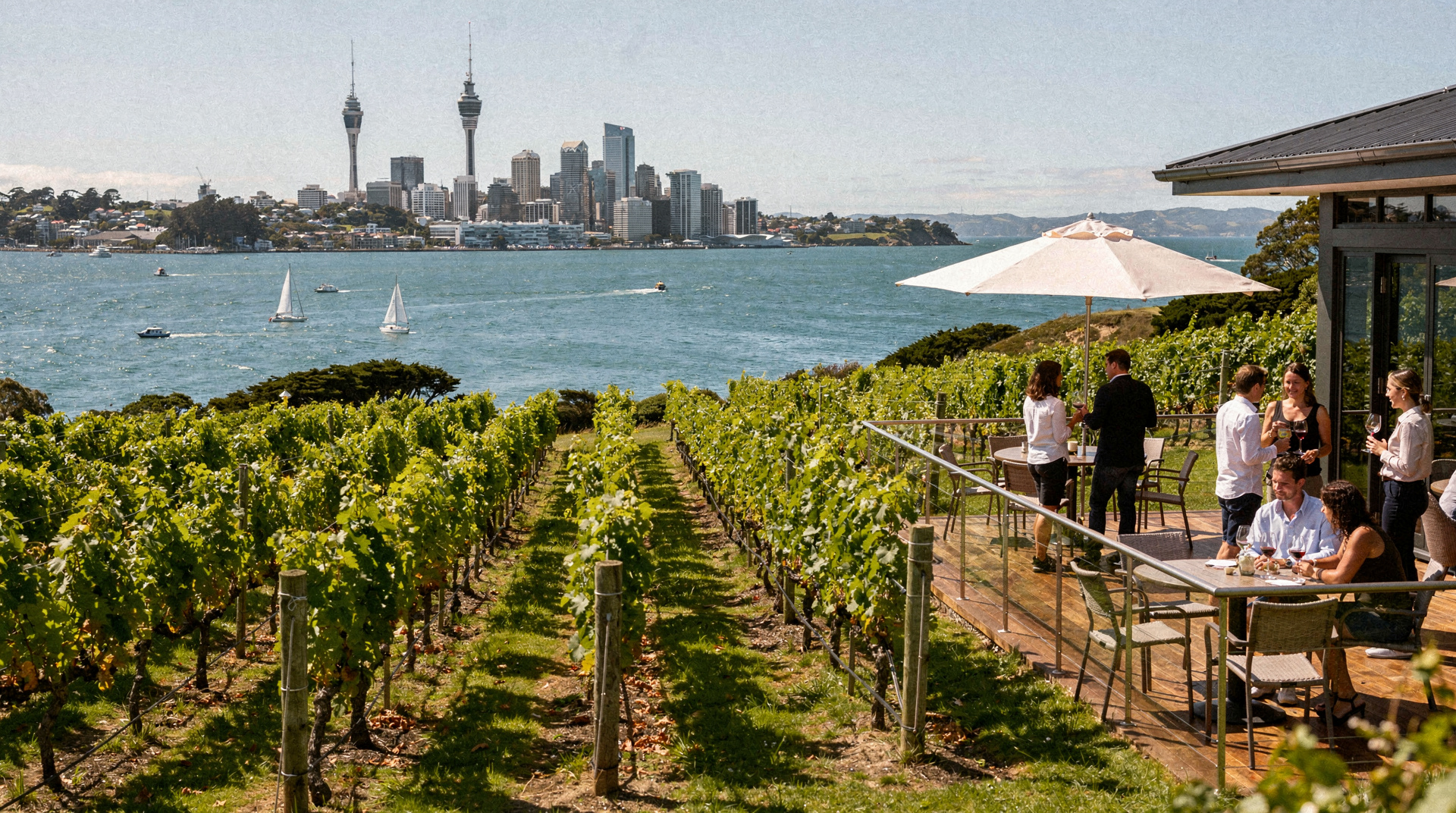
Waiheke Island
Waiheke Island honest guide: best wineries, beaches, ferry logistics, real costs NZD/USD/EUR, and how to spend one perfect day from Auckland.
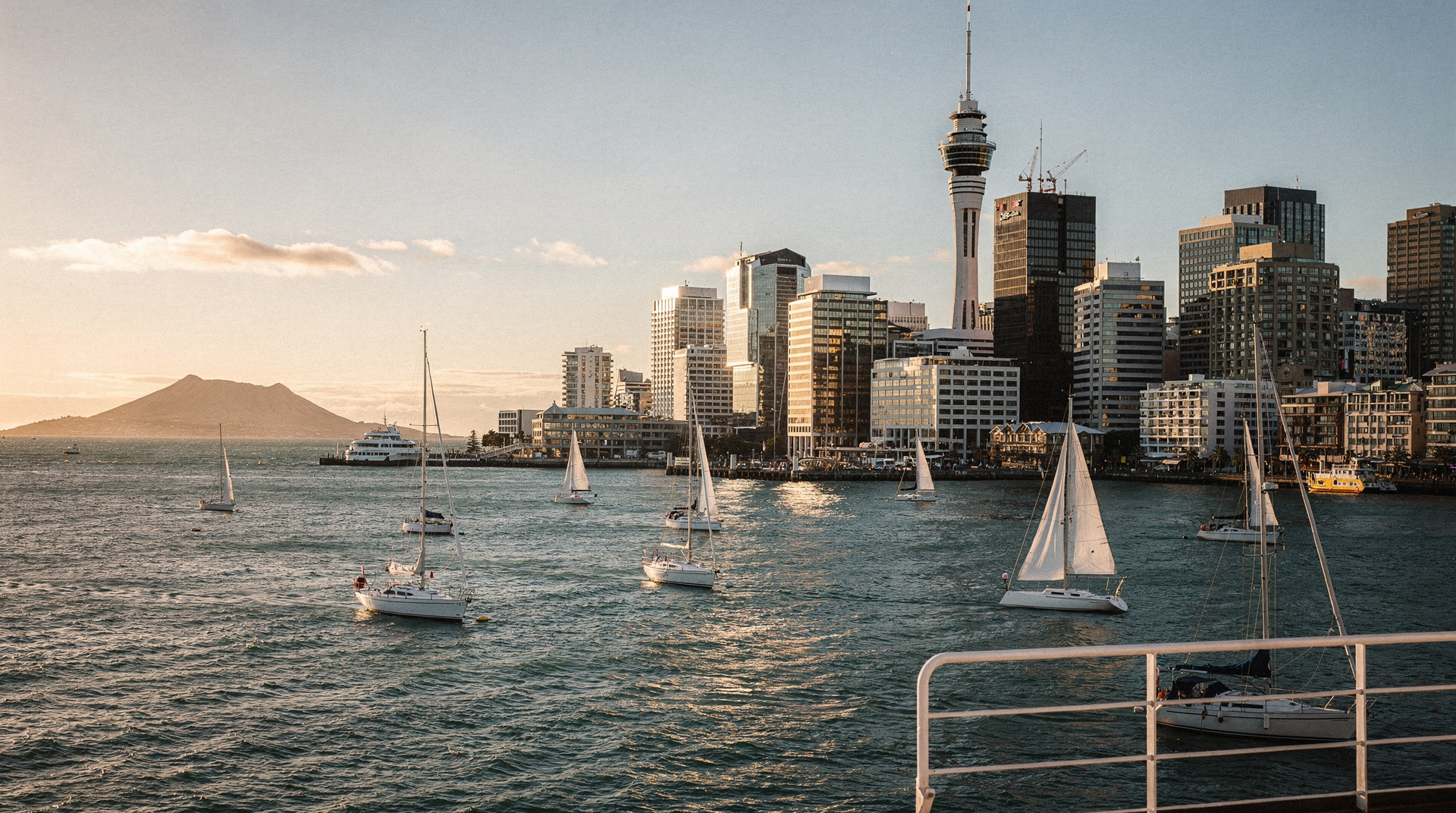
Auckland
Honest Auckland planner: harbour, Sky Tower, Waiheke wineries, day-trips to Hobbiton, real prices NZD/USD/EUR, and what's actually worth your time.
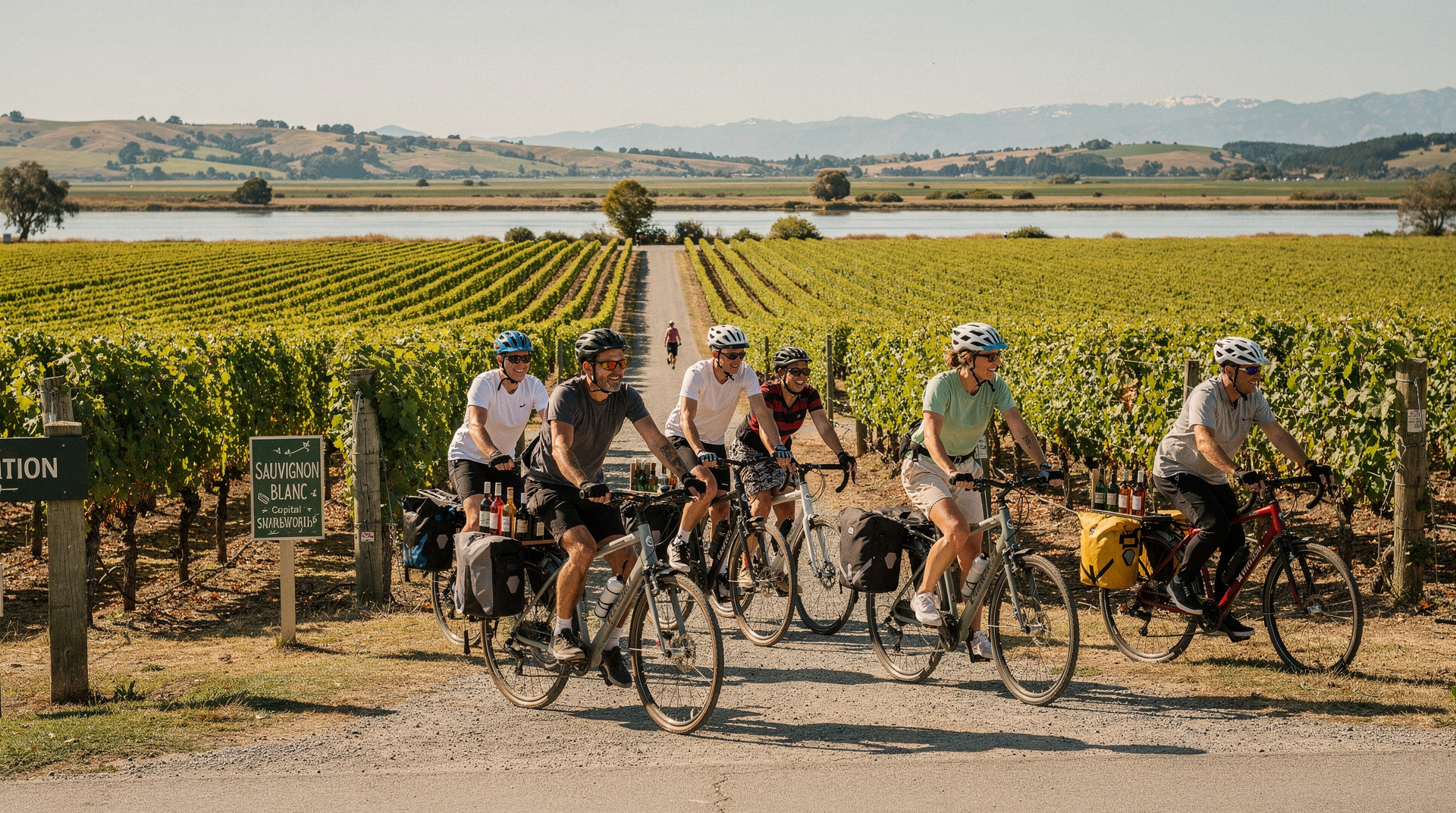
Marlborough wine tour guide
Marlborough produces 77% of NZ's wine. Self-drive routes, guided tours, top wineries around Blenheim — prices NZD/USD/EUR and drink-drive tips.
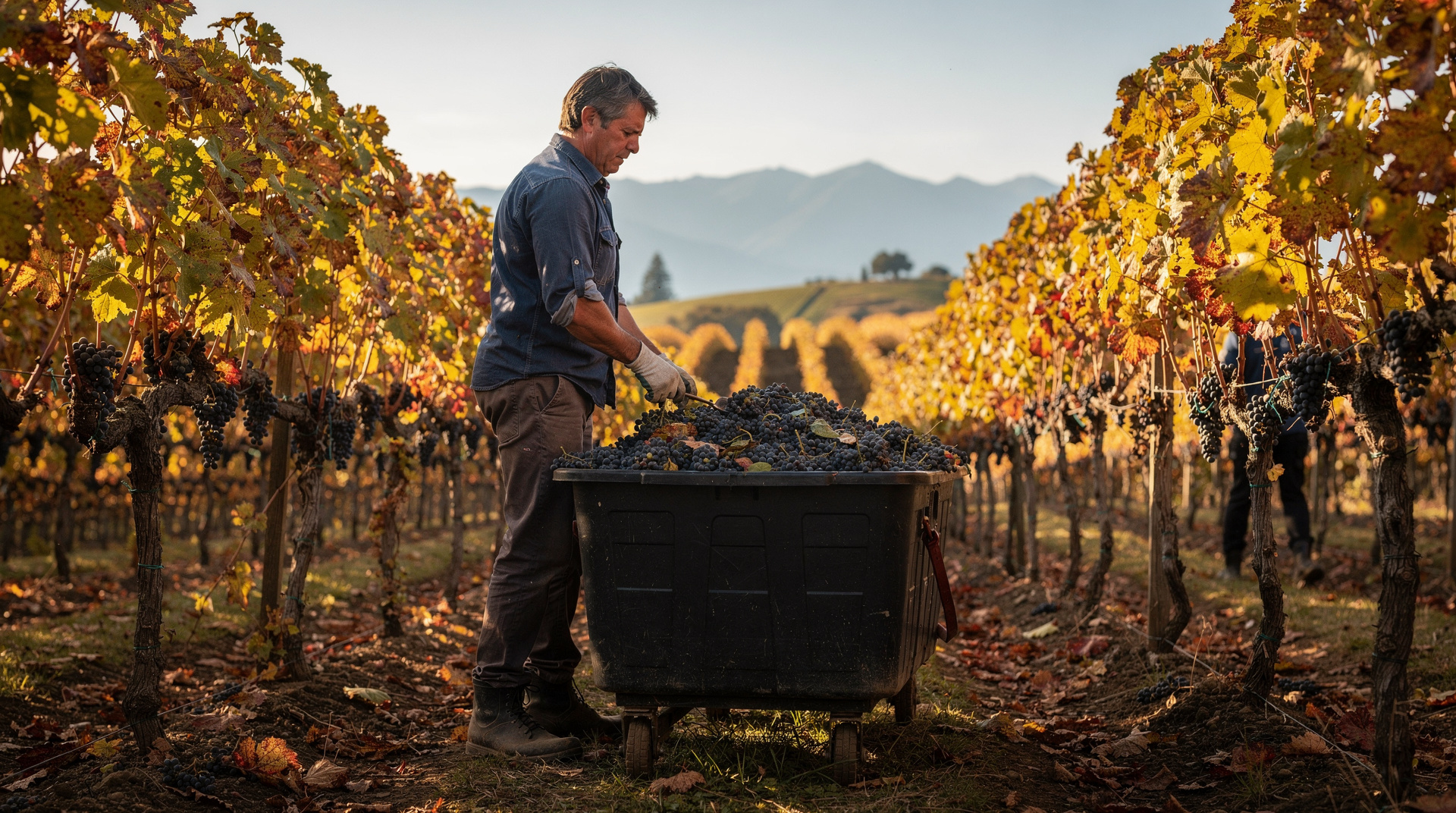
Martinborough wine tour guide
Martinborough is Wellington's boutique wine region — 30+ wineries, acclaimed pinot noir, walkable village. Tours, cycling, prices NZD/USD/EUR.
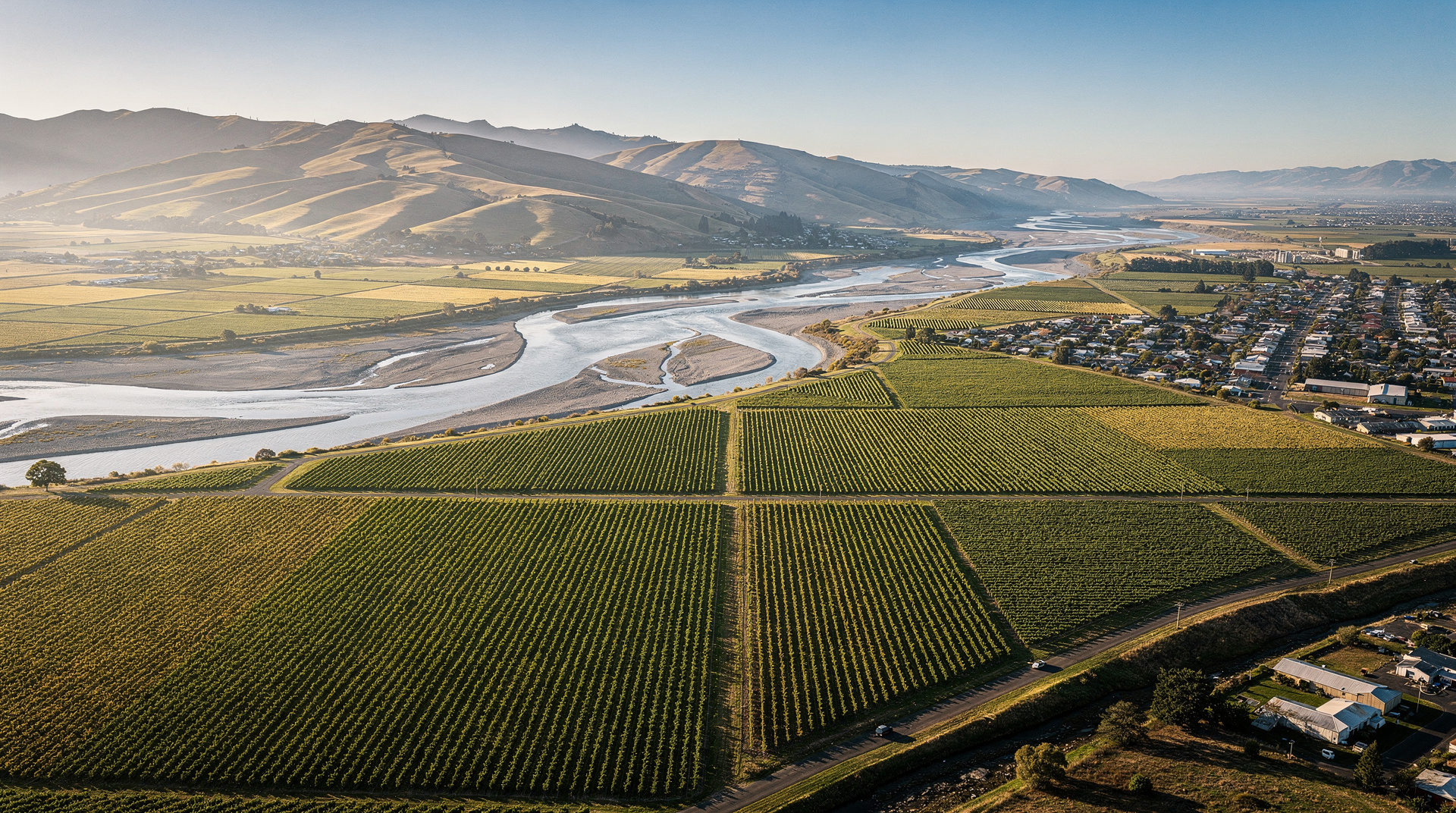
New Zealand wine regions — complete guide
Complete guide to New Zealand's 10 wine regions: Marlborough, Central Otago, Hawke's Bay, Martinborough and more. Which to visit, what to taste, prices.
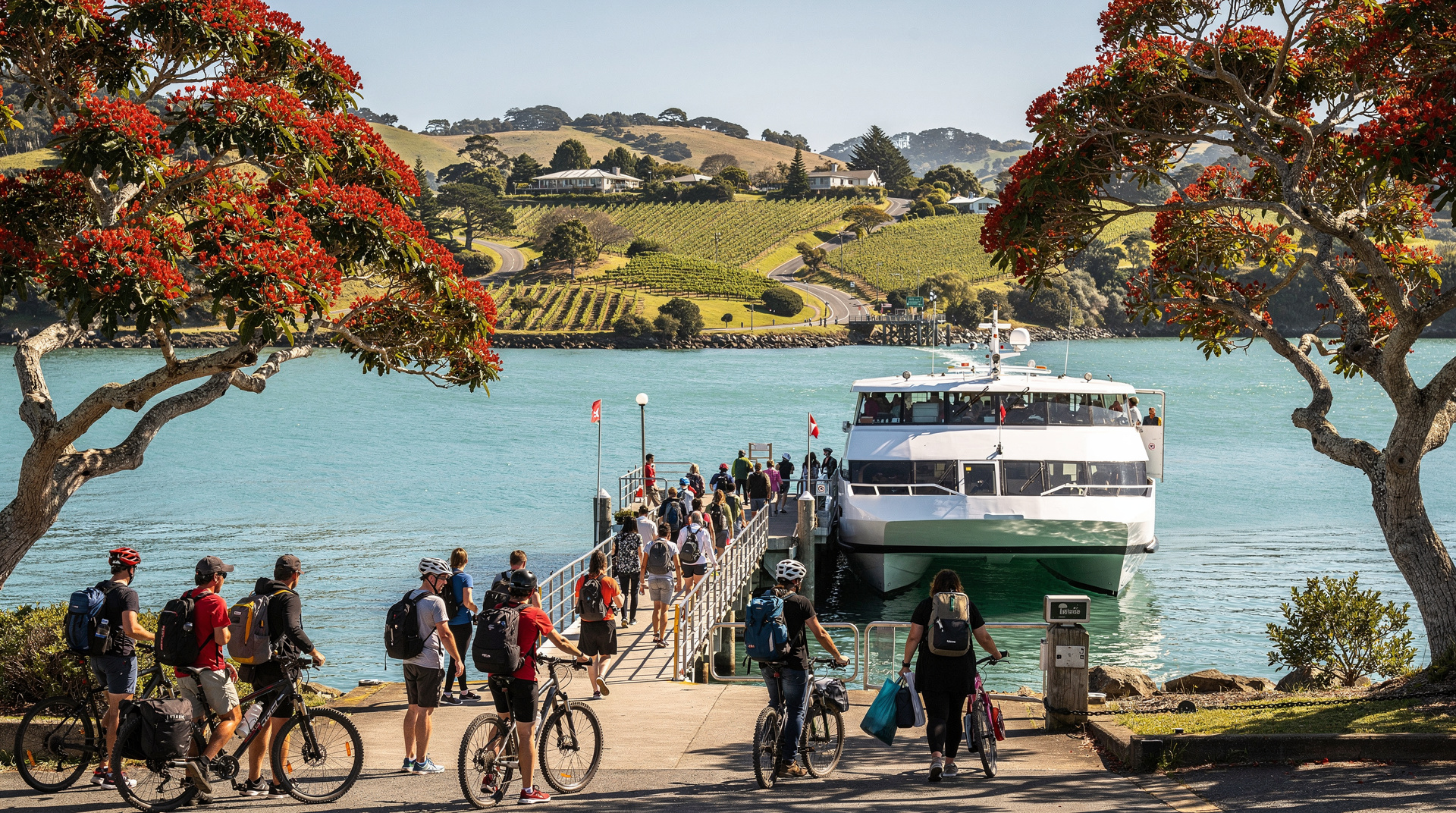
Waiheke Island day trip from Auckland
How to do a Waiheke Island day trip from Auckland: ferry times, best wineries, self-bike option, cost in NZD/USD/EUR, and what to skip.
Last reviewed: