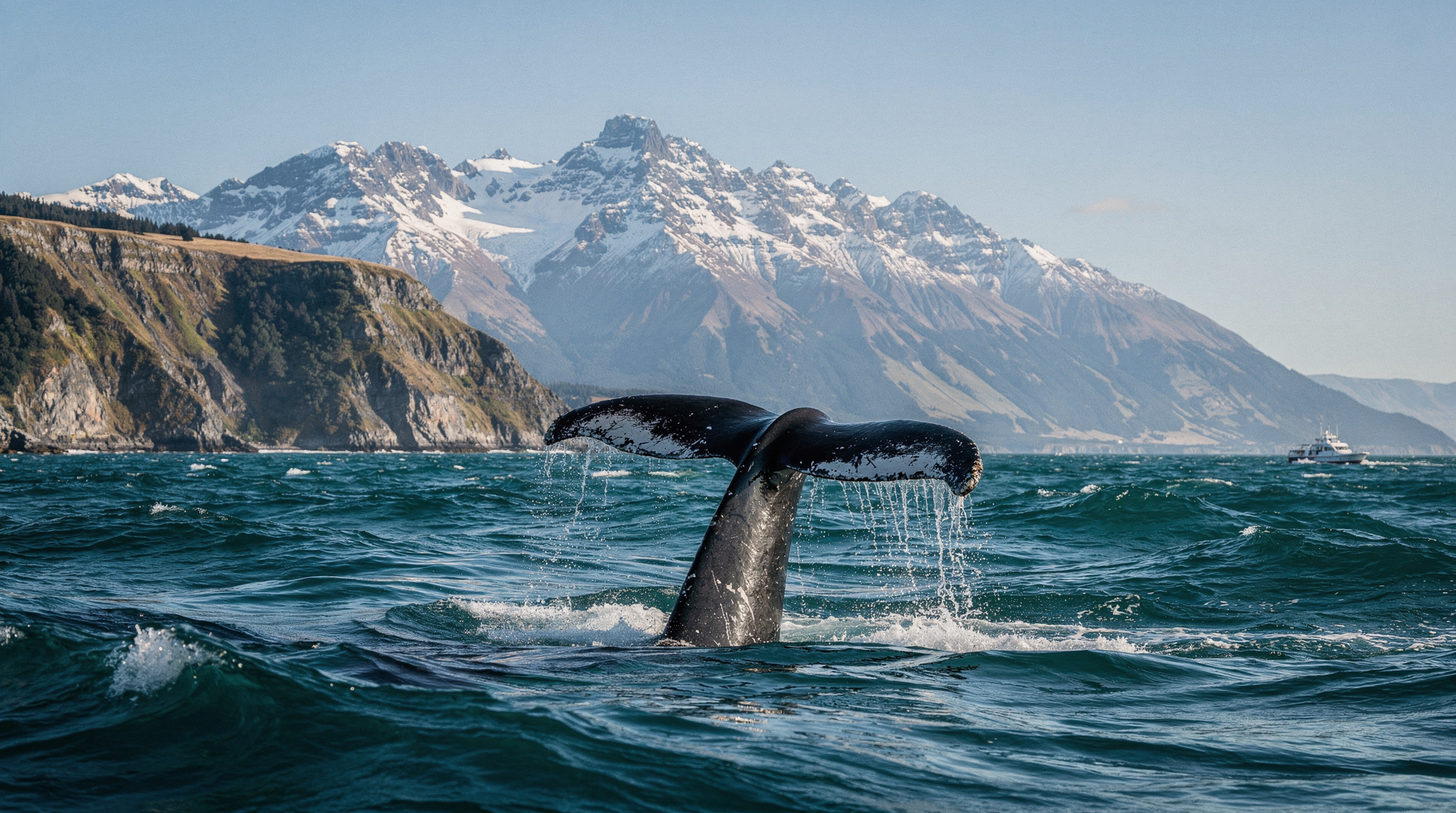
Whale watching — Kaikoura vs Bay of Islands
Kaikoura or Bay of Islands for whale watching in New Zealand?
Kaikoura for serious whale watching — sperm whales year-round, 95% encounter success rate, purpose-built industry. Bay of Islands for dolphins year-round and subtropical marine life, with whale sightings seasonal and less guaranteed.
Two very different wildlife experiences
| Dimension | Kaikoura | Bay of Islands |
|---|---|---|
| Primary whale species | Sperm whales (year-round resident population) | Bryde's whales (seasonal, Oct–May); orca occasionally |
| Encounter success rate | ~95% on boat tours; ~85% on scenic flights | No guaranteed whale sightings — more variable |
| Dolphin species | Dusky dolphins (500–1,000 individuals in local pods) | Common, bottlenose, and orca year-round |
| Year-round reliability | Yes — sperm whales present every month | Dolphins year-round; whales more seasonal |
| Tour options | Boat, scenic flight, helicopter — specialist operators | Day cruise, eco-tour, swimming with dolphins |
| Location from main centres | 2.5h from Christchurch, 3h from Picton | 3h from Auckland (or fly 40 min) |
| Surrounding scenery | Kaikōura Ranges behind, ocean in front — dramatic | Subtropical, 144 islands, golden beaches |
| Other wildlife | NZ fur seals (haul-out on rocks), shearwaters, albatross | Seabirds, stingray, reef fish, occasional sea turtle |
| Avg boat tour cost | NZD 170–195 / USD 102–117 / EUR 94–107 | NZD 95–130 / USD 57–78 / EUR 52–71 (dolphin cruise) |
| Book it | Book Kaikoura whale watching | Book Bay of Islands dolphin eco-tour |
Verdict: Kaikoura for dedicated whale watching — it's among the best accessible sperm whale encounters on earth. Bay of Islands for a broader subtropical marine experience with dolphins guaranteed and whales possible.
Kaikoura is one of the great whale-watching destinations on the planet. That statement is not tourism hyperbole — it’s a function of unusual oceanography. The Kaikōura Canyon, a submarine canyon that drops 1,000 metres within a few kilometres of the coast, creates an upwelling of nutrient-rich deep water. Giant squid — the primary prey of sperm whales — congregate here year-round. The sperm whale population that feeds in the canyon is effectively resident: these are not migratory animals passing through, but bulls establishing feeding territories in a permanent deep-water pantry.
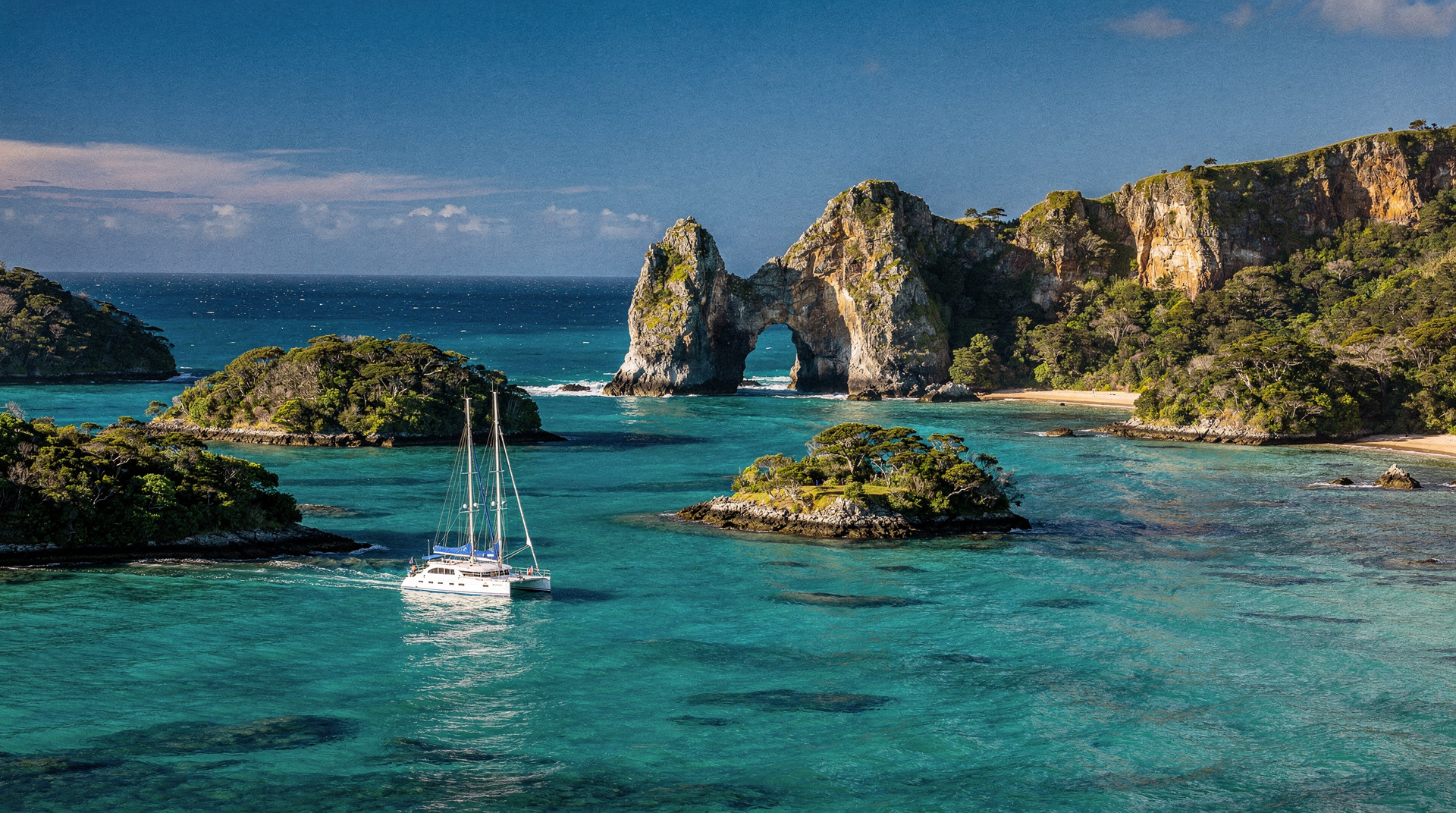
The Bay of Islands is a different proposition. It’s an extraordinarily beautiful subtropical archipelago — 144 islands, clear water, golden-sand beaches — with reliable dolphin encounters and a genuine coastal marine ecosystem. Whale sightings happen, particularly for Bryde’s whales between October and May. But you’re not booking Bay of Islands specifically for whale watching. You’re booking it for the full subtropical marine experience, and whales are a possible highlight rather than the centrepiece.
If seeing a whale is your primary reason for going somewhere, Kaikoura is the clear answer.
Kaikoura — where the canyon delivers
The geology is the explanation. The Kaikōura Canyon runs almost to the shoreline, bringing cold, oxygen-rich Antarctic water to the surface in a collision with the warmer Southland Current. This creates a marine productivity that is, by global standards, extraordinary: the food web here supports not just sperm whales but New Zealand fur seals, dusky dolphins in pods of 500 individuals, eight species of albatross, shearwaters in the millions, and — in season — humpback whales (May–July) and orca.
Sperm whales (Physeter macrocephalus, māori: paraoa) are the permanent residents. Adult male sperm whales feeding in the Kaikōura Canyon can be found year-round. The boat tour encounters a whale at surface — typically resting and breathing after a 40–60 minute dive — then watches the fluke-up dive before moving to the next located whale. A typical 2–2.5 hour tour will encounter 1–3 individual whales. Whale Watch Kaikōura (the primary operator, iwi-owned by Ngāi Tahu, established 1987) reports a 95% encounter success rate; on rare failure days, refunds are issued.
Kaikoura: Whale Watching Cruise (2-Hour)
2-hour sperm whale boat tour — the classic Kaikoura experience, 95% encounter rate, iwi-owned operator.
From NZD 170–195 / USD 102–117 / EUR 94–107
The scenic flight alternatives offer a different perspective — seeing the whale from above shows the full body clearly, including the extraordinary size (up to 18 metres, 57 tonnes) and the contrast between pale belly and dark back. Helicopters can hover and reposition faster than boats.
Kaikoura: Whale Watching Flight with Guided Commentary
Kaikoura premium whale watching scenic flight — aerial perspective on sperm whales and the canyon.
From NZD 195–250 / USD 117–150 / EUR 107–138
Dusky dolphins: The large pods of dusky dolphins (Lagenorhynchus obscurus) at Kaikoura are a separate attraction entirely. Pods of 300–1,000 individuals are not unusual. Swimming with dusky dolphins (a seasonal permit-controlled activity, typically October–April) is one of the more remarkable marine experiences available in New Zealand.
Kaikōura Ranges: Behind the town, the Seaward Kaikōura Range rises to 2,600m — snow-capped peaks rising directly from a town that’s at sea level. This backdrop is what makes Kaikoura visually distinctive even among New Zealand’s marine wildlife towns.
Kaikoura seals: The resident colony of New Zealand fur seals (kekeno) hauls out on the rocks at Ohau Point (2.5 km north of town) and the Peninsula Walkway. These animals are habituated to human presence and approachable on foot — the Peninsula Walkway gives close encounters at no cost.
Half-day wildlife kayak at Kaikoura — paddle among the fur seals, seabirds, and potentially dolphin pods from sea level. One of the more intimate Kaikoura wildlife experiences.
Kaikoura logistics: Kaikoura is 2.5 hours from Christchurch via the coastal SH1 — one of the finest coastal drives in New Zealand (repaired and reopened after the 2016 earthquake). It’s also 3 hours south of Picton via the same route. The train (Coastal Pacific, Picton–Christchurch) passes through Kaikoura — a useful option for those not driving.
Book whale watching well in advance in summer — December–February, January especially, tour spots fill days ahead. Allow a full day minimum; bad weather occasionally delays departures.
If you would rather not drive, a guided day from Christchurch that pairs the transport with a whale tour takes care of the logistics in one booking. For the town itself, see the Kaikoura destination guide, and for the wider picture of the area’s marine life, the Kaikoura vs Akaroa wildlife comparison is a useful companion. If you are still shaping the route, the Christchurch destination guide covers the usual starting point.
Bay of Islands — subtropical marine life with dolphin guarantee
The Bay of Islands (Te Pēwhairangi in te reo Māori) is New Zealand’s subtropical north — warm water, calm bays, and an island-studded seascape that bears no resemblance to the dramatic southern coasts. The 144 islands, clear water, and beaches of Northland draw a different traveler than Kaikoura: those who want sailing, snorkeling, island-hopping, and a marine environment that feels more Caribbean than Antarctic.
Dolphin encounters: Common dolphins (Delphinus delphis), bottlenose dolphins (Tursiops truncatus), and occasionally orca are present in the Bay of Islands year-round. The eco-tourism dolphin tours — run with DOC guidance and permitting — offer swimming with dolphins when conditions allow. This is a reliable, consistent experience.
Paihia: Bay of Islands Dolphin Eco Cruise & Island Stopover
Bay of Islands dolphin eco-tour — swim with wild dolphins in subtropical Northland waters.
From NZD 95–130 / USD 57–78 / EUR 52–71
Whale sightings: Bryde’s whales (Balaenoptera edeni, the only baleen whale that does not migrate from the tropics) are present in Northland waters, particularly October–May, and are sometimes encountered during day cruises. Orca (kāhawai in some regional dialects) pass through Bay of Islands waters seasonally. These sightings are genuine possibilities, not reliable targets — the distinction matters.
The Hole in the Rock: Piercy Island, at the far northern end of the Bay of Islands, has a cave driven through by wave erosion. Cruises passing through it in calm conditions are a classic Bay of Islands highlight.
Hole in the Rock Tour & Bay of Islands Cruise
Bay of Islands Hole in the Rock cruise — full-day island cruise, dolphin encounters, Piercy Island passage.
From NZD 115–145 / USD 69–87 / EUR 63–80
If a bigger boat feels too impersonal, a small-group cruise around the islands keeps the pace slower and gives you more time on deck looking for wildlife. Travellers who want to compare the options in more depth can read the Bay of Islands cruise guide, the dolphin swim guide and the Hole in the Rock review.
Snorkeling and diving: The warmer water temperatures (up to 22°C in summer vs Kaikoura’s 14°C) make Bay of Islands more accessible for water-based activities. Poor Knights Islands Marine Reserve, 24 km northeast of Whangarei (2 hours from Paihia), is rated among the world’s top ten dive sites by Jacques Cousteau.
Bay of Islands logistics: Paihia is the tour hub, 3 hours by road from Auckland or 40 minutes by flight to Kerikeri Airport (Bay of Islands Airport). The region is busiest in January–February (New Zealand school holidays, Waitangi Day on 6 February). Waitangi — where the Treaty of Waitangi was signed in 1840 — is 5 minutes from Paihia, with the Waitangi Treaty Grounds being the most significant historical site in New Zealand.
Verdicts by traveler profile
✓ Worth it Dedicated whale watcher on a South Island trip: Kaikoura is the answer — non-negotiable if sperm whales are on the list. Add a half-day from Christchurch or incorporate it in a Picton–Christchurch drive.
✓ Worth it North Island traveler with limited time: Bay of Islands for dolphin encounters, subtropical scenery, and Waitangi cultural history. Kaikoura is 8 hours from Auckland — not a logical excursion from the North Island.
◆ Hidden gem Kaikoura dusky dolphin swim (October–April): Permit-controlled, seasonal, genuinely exceptional. Three hundred dolphins swimming in formation beneath you is something else entirely. Don’t miss this if it’s in season.
✓ Worth it Families: Bay of Islands is more flexible and warmer — swimming, snorkeling, and the day cruise appeal to children across age ranges. Kaikoura’s boat tours suit older children (6+) but rough sea conditions occasionally limit participation.
★ Splurge Kaikoura helicopter whale watch: NZD 195–250, shorter duration but aerial perspective is genuinely different. Worth considering if you have the budget and want a different angle on the animals.
Kaikoura: 1-Hour Whale Watching Helicopter Tour
1-hour helicopter whale watching at Kaikoura — aerial views of sperm whales and the Kaikōura Canyon.
From NZD 220–280 / USD 132–168 / EUR 121–154
The science behind the Kaikoura encounter
Understanding why Kaikoura works as a whale-watching destination is useful context for setting expectations.
The Kaikōura Canyon is a submarine canyon with walls dropping more than 1,000 metres within a few kilometres of the coastline. The New Zealand continental shelf here is unusually narrow — the deep ocean is literally next to the town. Cold, nutrient-rich Antarctic water upwells along the canyon walls, creating a marine food chain of extraordinary productivity: phytoplankton → krill → fish → squid → sperm whales.
Sperm whales at Kaikoura are adult males — breeding females and calves do not come this far south. The males that feed in the canyon are large (15–18 metres) and behaviourally predictable: they dive for 40–60 minutes, surface to breathe for 8–12 minutes, then dive again. The boat operators use underwater hydrophones to locate whales in the dive phase and position the vessel for the surface interval. When conditions work, you may see the whale surface 100–200 metres from the vessel, breathe multiple times (the blow is audible from the boat), and then raise the flukes in the characteristic fluke-up dive.
The species is Physeter macrocephalus — the largest toothed predator on Earth. An 18-metre sperm whale weighs 57 tonnes. The brain is the largest of any animal that has ever lived, at up to 9 kg. They can dive to 2,000 metres and hold their breath for 90 minutes, though Kaikoura dives typically run 40–60 minutes at shallower depths (500–800m) where the giant squid are accessible.
Bay of Islands dolphins — particularly the bottlenose dolphin (Tursiops truncatus) — are behaviourally different. They are social, surface-active animals that actively approach and bow-ride vessels. The interaction has an immediacy and intimacy that is different from whale watching — the animals come to you, swim alongside at 5–10 knots, and often roll to observe the humans watching them. This is an active, responsive encounter rather than the patient observation of a large, partly-submerged animal.
Both are genuine wildlife encounters of high quality. They are not equivalents — they deliver different emotions and require different patience from the observer.
The 2016 Kaikōura earthquake — what changed
On 14 November 2016 at 12:02am, a magnitude 7.8 earthquake struck near Kaikōura. The resulting landslides closed SH1 and the main North Island rail line for months. Significant sections of coastline rose up to 2 metres, permanently altering the seabed topography near the harbour.
The fur seal population’s haul-out at Ohau Point was partially affected — rockfall killed some animals — but the population has recovered. The Kaikōura Canyon’s deep-water structure was not meaningfully altered by the earthquake; sperm whale foraging continued through the closure period and resumed at full capacity once boats could operate again.
The coastal road (SH1, Picton–Christchurch) was reopened in December 2017, partly via an inland detour. The full coastal route, including the Coastal Pacific train, reopened in December 2018. Kaikoura today is fully operational, with its tourist infrastructure rebuilt and in some respects improved.
The earthquake is relevant for one practical reason: the town’s shoreline appearance has changed. The old fur seal colony point (Ohau Point) now shows raised rock platforms. The rocky coastline walk to the peninsula seals passes over ground that is geologically brand new. It’s a reminder that this coastline is actively forming.
Booking timing for each
Kaikoura whale watching tours run multiple daily departures but genuinely sell out in the December-February peak — book at least a week ahead, and 2-3 weeks ahead if your dates are fixed around a specific day. Weather cancellations are the bigger practical risk: swells above 2 metres can cancel or delay tours with little notice, so building a buffer day into a Kaikoura stop (rather than a single tight window) reduces the chance of missing out entirely.
Bay of Islands dolphin cruises run more frequently and rarely sell out outside the January-February school holiday peak, but the Hole in the Rock passage itself is conditions-dependent — rough seas mean the boat approaches but doesn’t pass through the arch, so check the forecast if that specific moment matters to you.
What to combine with each
With Kaikoura: Christchurch (2.5h south) as the natural base. The Coastal Pacific train (Picton–Christchurch, daily in season) passes through Kaikoura — book a seat and plan a stop. Nelson (3h via Picton or 3.5h via Lewis Pass) works as an extension. Marlborough wine trails are 2–3 hours north via Blenheim.
With Bay of Islands: Auckland (3h south) as the main hub. Northland road trip: Bay of Islands → Cape Reinga (2.5h north, the northern tip of New Zealand, where the Tasman Sea meets the Pacific) → Ninety Mile Beach → back to Auckland via the Kaipara Harbour. This is a 4–5 day loop and one of the better self-drive itineraries in the North Island.
From Paihia: Cape Reinga & 90-Mile Beach Tour
Cape Reinga and Ninety Mile Beach full day from Paihia — the northern tip of New Zealand, sand dunes, and the sea meeting point.
From NZD 115–145 / USD 69–87 / EUR 63–80
Cost breakdown (NZD + USD + EUR)
Cost breakdown
Prices approximate 2026. Kaikoura whale watching is significantly more expensive than Bay of Islands dolphin encounters, reflecting the specialist infrastructure and the animals involved.
| Item | NZD | USD | EUR | Verdict |
|---|---|---|---|---|
| Kaikoura sperm whale boat tour (2h) | NZD 170–195 | USD 102–117 | EUR 94–107 | ✓ Worth it |
| Kaikoura whale scenic flight (30 min) | NZD 195–250 | USD 117–150 | EUR 107–138 | ✓ Worth it |
| Kaikoura whale helicopter (1h) | NZD 220–280 | USD 132–168 | EUR 121–154 | ★ Splurge |
| Kaikoura wildlife kayak (half day) | NZD 90–120 | USD 54–72 | EUR 50–66 | ✓ Worth it |
| Christchurch → Kaikoura day tour with whale watching Transport + whale tour combined | NZD 195–250 | USD 117–150 | EUR 107–138 | ✓ Worth it |
| Bay of Islands dolphin eco-tour | NZD 95–130 | USD 57–78 | EUR 52–71 | ✓ Worth it |
| Bay of Islands Hole in the Rock full-day cruise | NZD 115–145 | USD 69–87 | EUR 63–80 | ✓ Worth it |
| Bay of Islands day sailing catamaran | NZD 110–140 | USD 66–84 | EUR 61–77 | ✓ Worth it |
Frequently asked questions about Whale watching — Kaikoura vs Bay of Islands
What’s the best time of year for whale watching at Kaikoura?
Sperm whales are present year-round. Summer (December–February) has calmest seas and best visibility; winter (June–August) has rougher conditions but potentially more whale activity. The biggest constraint is weather — tours run in most conditions but can be delayed or cancelled in swells above 2 metres. November and March–April offer a good balance of conditions and fewer crowds.
Are there whales in the Bay of Islands all year?
Dolphins are present year-round in the Bay of Islands. Bryde’s whales are most reliably encountered October–May, when they’re feeding in northern New Zealand waters. Orca pass through unpredictably — sometimes in pods tracking stingray. Year-round whale guarantee: no. Year-round dolphin guarantee: yes.
Is Kaikoura suitable for travelers who get seasick?
Kaikoura boat tours operate in open water where conditions vary. The Kaikōura Canyon is close to shore but swells can reach 1–2 metres on windy days. The tours use purpose-designed stabilised vessels. Take seasickness medication if you’re prone — most boats request you do so. Scenic flights and helicopters completely avoid the sea-sickness question and offer a different (and equally spectacular) whale encounter.
Can I swim with whales at Kaikoura?
No. Sperm whales are protected under the Marine Mammals Protection Act 1978. Boats must maintain minimum distances, and swimming with sperm whales is not permitted. Swimming with dusky dolphins is seasonally permitted (October–April) under a DOC permit system — a completely different, excellent experience.
How far is Kaikoura from Queenstown?
Far — 9–10 hours by road via Christchurch, or fly Queenstown–Christchurch (1h) then drive (2.5h). Kaikoura is most naturally incorporated into a South Island itinerary as part of a Christchurch–Marlborough–Picton routing. It’s not a logical day trip from Queenstown.
Is it worth combining both Kaikoura and Bay of Islands on one New Zealand trip?
Yes, if you’re doing both islands — they’re not competing, they’re complementary. Most visitors do Bay of Islands as a North Island highlight (Northland loop from Auckland) and Kaikoura as a South Island stop (Christchurch or Marlborough routing). Both are full-day minimum commitments and both deliver wildlife experiences not easily replicated elsewhere.
Related guides
Related guides
Kaikoura
Honest Kaikoura guide: sperm whale tours, wildlife kayaking, crayfish — real prices and the best time to visit after the 2016 earthquake rebuild.
Bay of Islands
Honest Bay of Islands guide: Hole in the Rock cruise, dolphin swimming, Waitangi Treaty Grounds, Cape Reinga, real costs NZD/USD/EUR.
Whale watching — Kaikoura vs Bay of Islands
Kaikoura (year-round sperm whales, 95% success rate) vs Bay of Islands (subtropical dolphins, seasonal Bryde's whales) — which to choose.
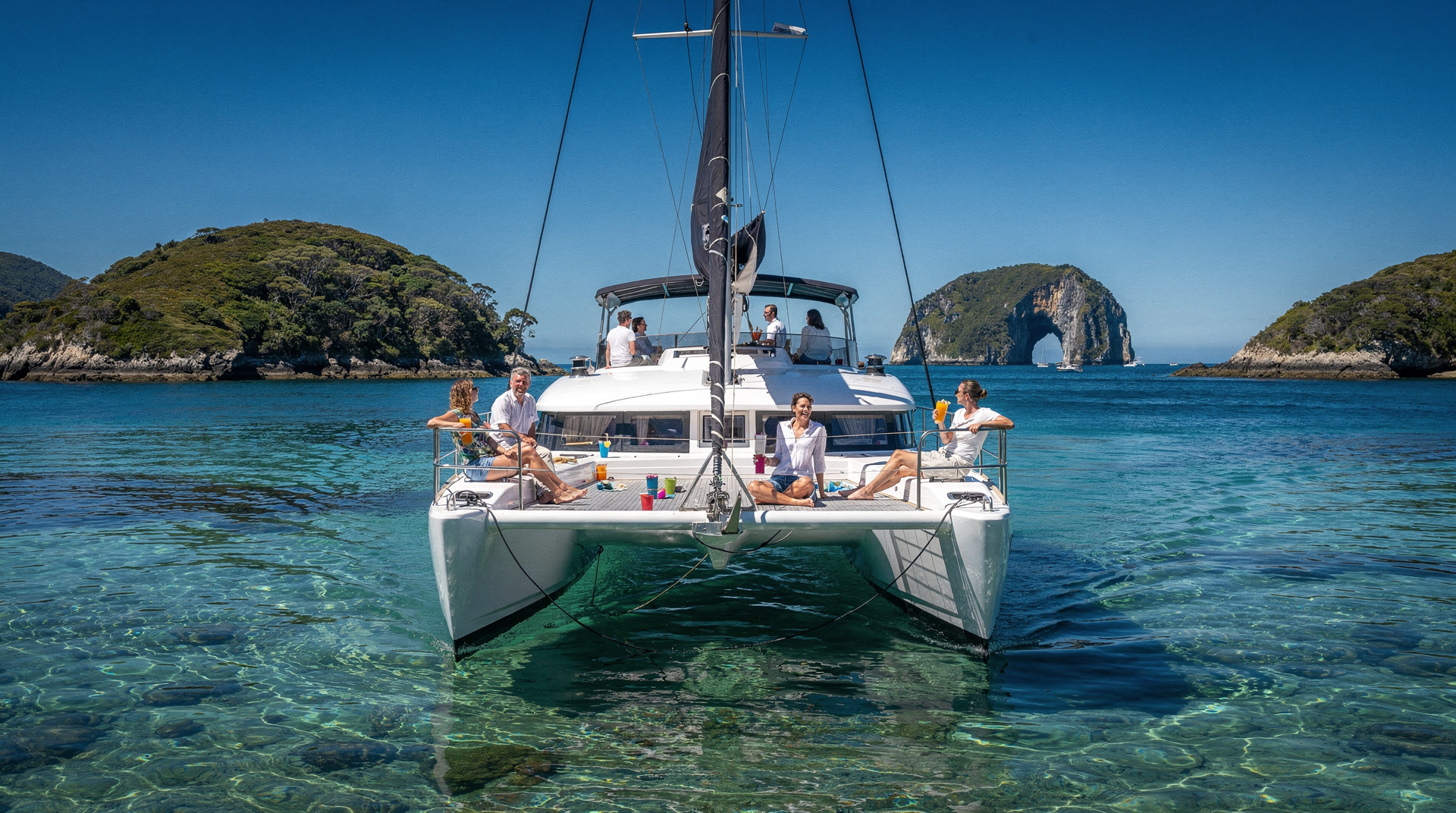
Bay of Islands cruise guide — Hole in the Rock and beyond
Bay of Islands cruise guide: Hole in the Rock fast boat, full-day sailing, dolphin encounters, island exploring. Costs NZD/USD/EUR from Paihia or Russell.
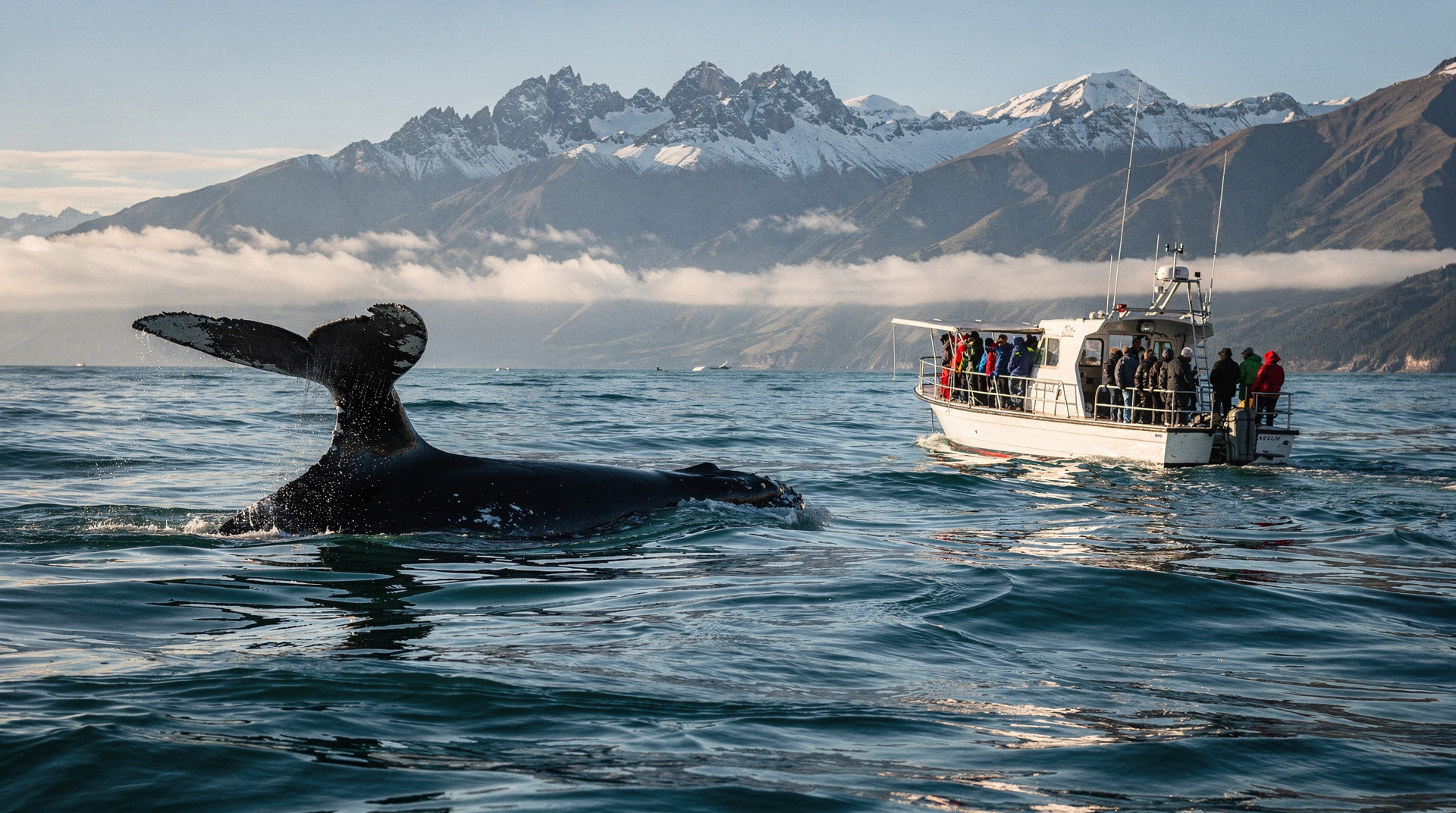
Kaikoura day trip from Christchurch
How to do a Kaikoura day trip from Christchurch: 1.5-hour drive, whale watching cruise, sperm whales year-round, costs in NZD/USD/EUR.