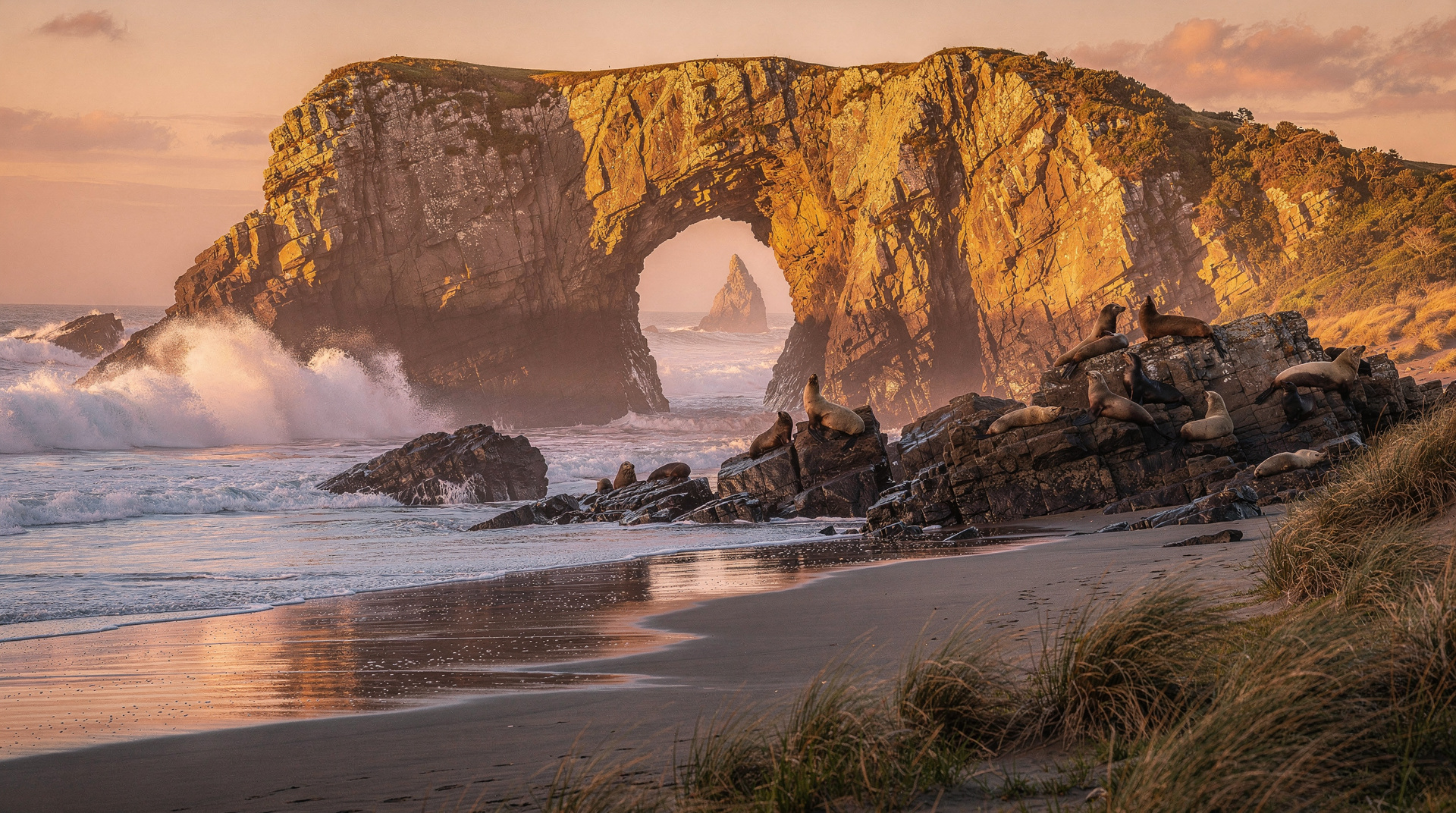
Wharariki Beach and the Archway Islands
What makes Wharariki Beach special?
Wharariki Beach near Cape Farewell is one of New Zealand's wildest and most remote beaches — accessible only by a 20-minute walk. The Archway Islands rock arches rise from the surf; fur seals breed on the beach year-round. No amenities, no lifeguard. Free access, no booking needed.
Golden Bay’s wild western frontier
Wharariki Beach sits at the far western tip of Golden Bay — 2 km north of Cape Farewell, at the end of a 30-minute drive on gravel roads from Collingwood. The beach is accessible only by a 20-minute walk across farmland and coastal scrub. When you emerge from the path onto the beach, the view is immediate and total: a 3 km arc of wild beach, Archway Islands rock stacks rising from the surf to the west, fur seals scattered across the sand, and the Tasman Sea running to the horizon.
There is nothing else here. No café, no surf patrol, no car park café. Just the beach, the seals, and the sea.
| Where | 30 min drive on gravel roads from Collingwood, Golden Bay |
| Cost | Free access; no booking needed |
| Time needed | 2-3 hours including the 20-min walk each way |
| Getting there | Self-drive, or a guided day tour from Nelson |
| Best time | Early morning or late afternoon for light; year-round for seals |
Golden Bay itself is the body of water north of Farewell Spit — a sheltered bay separated from the wider Tasman Sea by the extraordinary sand spit that extends 35 km from the tip of the South Island’s northwestern corner. The Farewell Spit area, Wharariki Beach, and the surrounding coastal farmland form a coherent wilderness zone that is one of New Zealand’s most beautiful and least visited coastal regions.
The Archway Islands
The Archway Islands are the photographic centrepiece of Wharariki — a series of rock stacks and arches that rise dramatically from the breaking surf at the beach’s western end. At low tide, you can walk around the base of the main formation (though not through the arches — they are sea-cave entrances, not through-passages) and examine the geological layering in the sandstone. Seals typically haul out on the rocks and on the sandy areas between the formations.
Photography: The Archway Islands shoot best in the late afternoon or early morning — the light from the north and west catches the arches. Sunset here is exceptional when the conditions are clear. The combination of the arches, the breaking waves, and the seal movement makes for interesting wildlife photography even in overcast conditions.
Tidal caves: The base of the Archway Islands has tidal cave systems accessible at low tide. Enter carefully — the rocks are slippery, the surf is unpredictable, and the cave passages can become isolated quickly with incoming tide. Never enter the caves at or above mid-tide.
Fur seal colony
New Zealand fur seals (kekeno, Arctocephalus forsteri) breed at Wharariki Beach. A permanent colony is present year-round; numbers increase significantly during the breeding season (November–January) when males establish territories and females give birth to single pups.
Viewing distance: Stay at least 10 metres from any seal. They are wild animals and will defend space aggressively if approached. Breeding males in November–January can be particularly aggressive — they weigh up to 185 kg and can move surprisingly quickly over short distances.
Pups: Seal pups are born November–December; they are born on the beach and learn to swim over the following weeks. They are extremely appealing and it is important to not approach them — mothers will not abandon pups for brief absence but prolonged human presence causes genuine distress.
Behaviour watching: Seals at Wharariki are habituated to walking visitors but not to direct approach. From 10+ metres, you can observe thermoregulation behaviour (raising a flipper to cool), social interactions, pup nursing, and grooming without disturbing the animals. The viewing experience at Wharariki — wild seals on an unmanaged beach, no infrastructure — is more authentic than any viewing hide.
Getting to Wharariki Beach
Wharariki Beach is at the end of Wharariki Road, 20 km north of Collingwood on Golden Bay’s western shore. Collingwood is 30 km from Takaka; Takaka is 55 km from Motueka (1.5 hours on winding roads that include the Takaka Hill).
From Nelson: Allow 2.5 hours to Wharariki Beach — 145 km but very slow mountain roads. This is a full-day round trip from Nelson.
From Abel Tasman/Marahau: Allow 2 hours — 90 km on the same winding roads.
Road conditions: Wharariki Road is sealed to the car park; the track from the car park is well-maintained across farmland (20 minutes). Walking shoes are sufficient; gumboots are useful in wet weather.
The Nelson to Golden Bay and Farewell Spit day tour includes Farewell Spit and the Golden Bay coastline — and sometimes includes Wharariki Beach as part of the day. Check with the operator when booking.
Farewell Spit
Farewell Spit is one of the world’s most remarkable natural sand spits — a 35 km hook of sand extending from the northwestern tip of the South Island. It’s a protected nature reserve; access beyond the public car park requires joining an eco-tour.
The Collingwood Farewell Spit eco-tour uses purpose-built vehicles to drive along the spit to the lighthouse at the tip. The spit is a critical migratory bird stopover — bar-tailed godwits from Alaska, knots, and numerous wader species use it as a refuelling site during migration. The numbers during peak migration (August–September, March–April) are genuinely spectacular.
Price: NZD 85–125 / USD 51–75 / EUR 47–69.
Combining Wharariki with Abel Tasman
The Golden Bay–Abel Tasman combination is the best 2–3 day loop in the top of the South Island:
- Day 1: Abel Tasman National Park (sea kayaking or walking)
- Day 2: Takaka and Golden Bay exploration
- Day 3: Wharariki Beach (morning) and Farewell Spit (afternoon)
This sequence uses Motueka or Marahau as a base for Abel Tasman and Collingwood or Takaka for the northern section. Drive time from Marahau to Wharariki Beach: approximately 1.5–2 hours.
What to bring and wear
Wharariki has no facilities beyond the car park toilet block, so come prepared. Walking shoes or boots are sufficient for the farmland track; gumboots help in wet weather, as the paddocks can be muddy after rain. Bring water, snacks, sun protection (there’s no shade on the beach), and a windproof layer — the west coast exposure means wind is a near-constant feature even on otherwise calm days. A tripod is worth the extra weight for sunset photography of the Archway Islands, since low-light conditions and slow shutter speeds work best for the sea-spray effect. Because there is no phone reception at the beach itself, tell someone your plan if walking alone, and download offline maps before leaving Collingwood or Takaka.
The scenic flight option
The Farewell Spit scenic flight from Takaka covers the spit and the Golden Bay coastline from the air. The spit’s shape — a perfect hook of sand in the Tasman Sea — is best understood from altitude.
Price: NZD 195–250 / USD 117–150 / EUR 108–138.
Costs summary (NZD / USD / EUR)
| Activity | NZD | USD | EUR |
|---|---|---|---|
| Wharariki Beach (self-guided) | 0 | 0 | 0 |
| Farewell Spit eco-tour | 85–125 | 51–75 | 47–69 |
| Golden Bay day tour from Nelson | 120–175 | 72–105 | 66–96 |
| Farewell Spit scenic flight | 195–250 | 117–150 | 108–138 |
Exchange rate: 1 NZD ≈ 0.60 USD ≈ 0.55 EUR.
Frequently asked questions
Is Wharariki Beach safe for swimming?
No — Wharariki Beach is an exposed west coast surf beach with strong rips, unpredictable shore break, and no lifeguard patrol. Do not swim here unless you are an experienced surf swimmer with local knowledge of the current conditions. The beach is for wildlife watching, photography, and walking.
Are there facilities at Wharariki Beach?
No facilities at the beach itself. The car park on Wharariki Road (a farm property) has a toilet block. There is no café, shop, or shelter beyond the farmland. Bring water and food; weather can change quickly.
How long is the walk to the beach?
20 minutes each way across private farmland on a well-maintained track. The track crosses stiles and open paddocks; keep dogs on lead (farm livestock present). The beach is clearly visible from the final approach; there is no navigation challenge.
When is the best time to visit?
Early morning or late afternoon for photography (best light on the Archway Islands). Year-round for seal viewing. November–January for seal pups. March–September for Farewell Spit migratory birds. July–August can have persistent westerly storms that make the beach experience challenging.
Related reading
Related guides
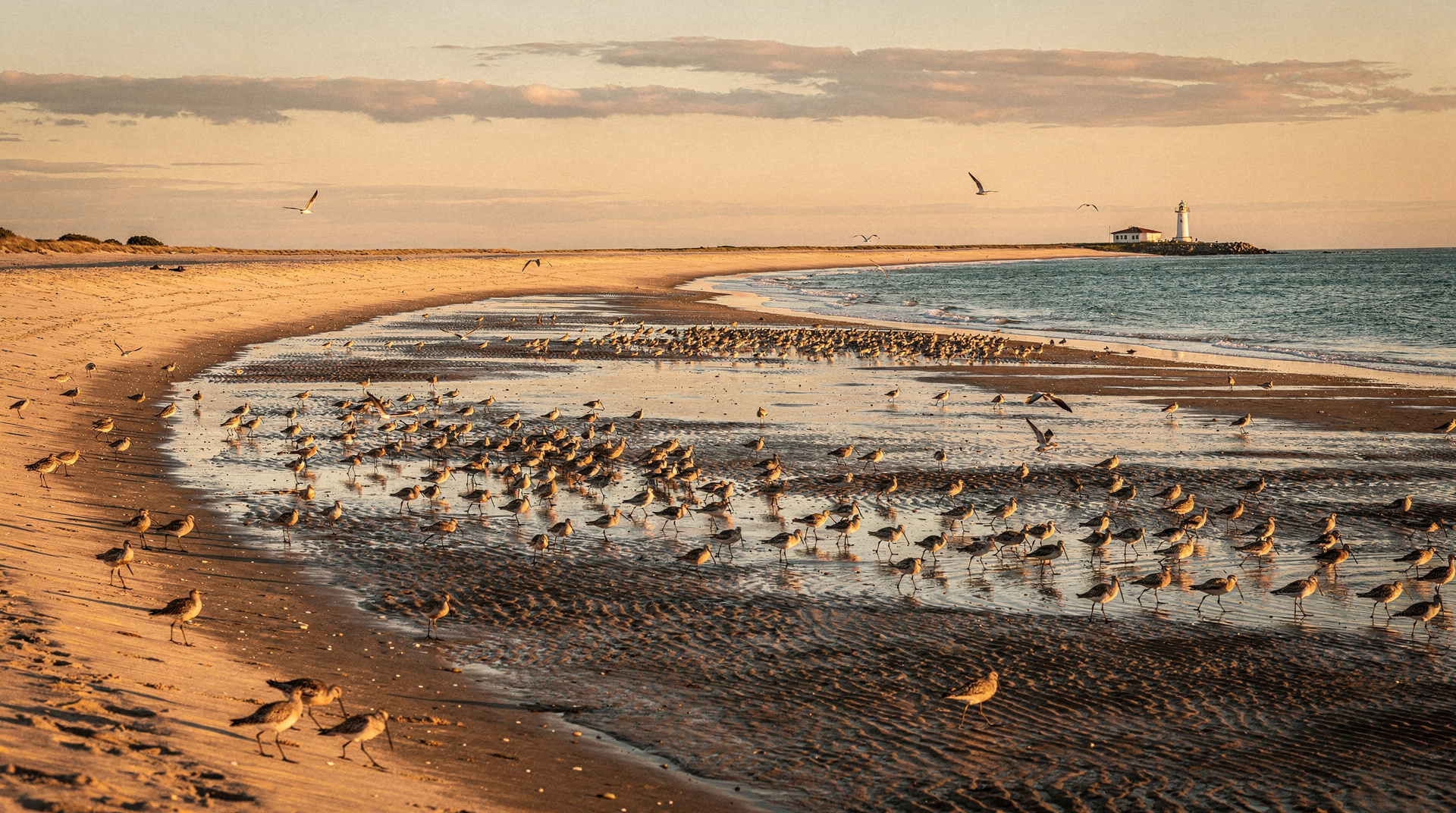
Golden Bay
Golden Bay: Farewell Spit, Wharariki Beach, freshwater Pupu Springs, and the alternative crowd. Honest guide with real costs NZD/USD/EUR.
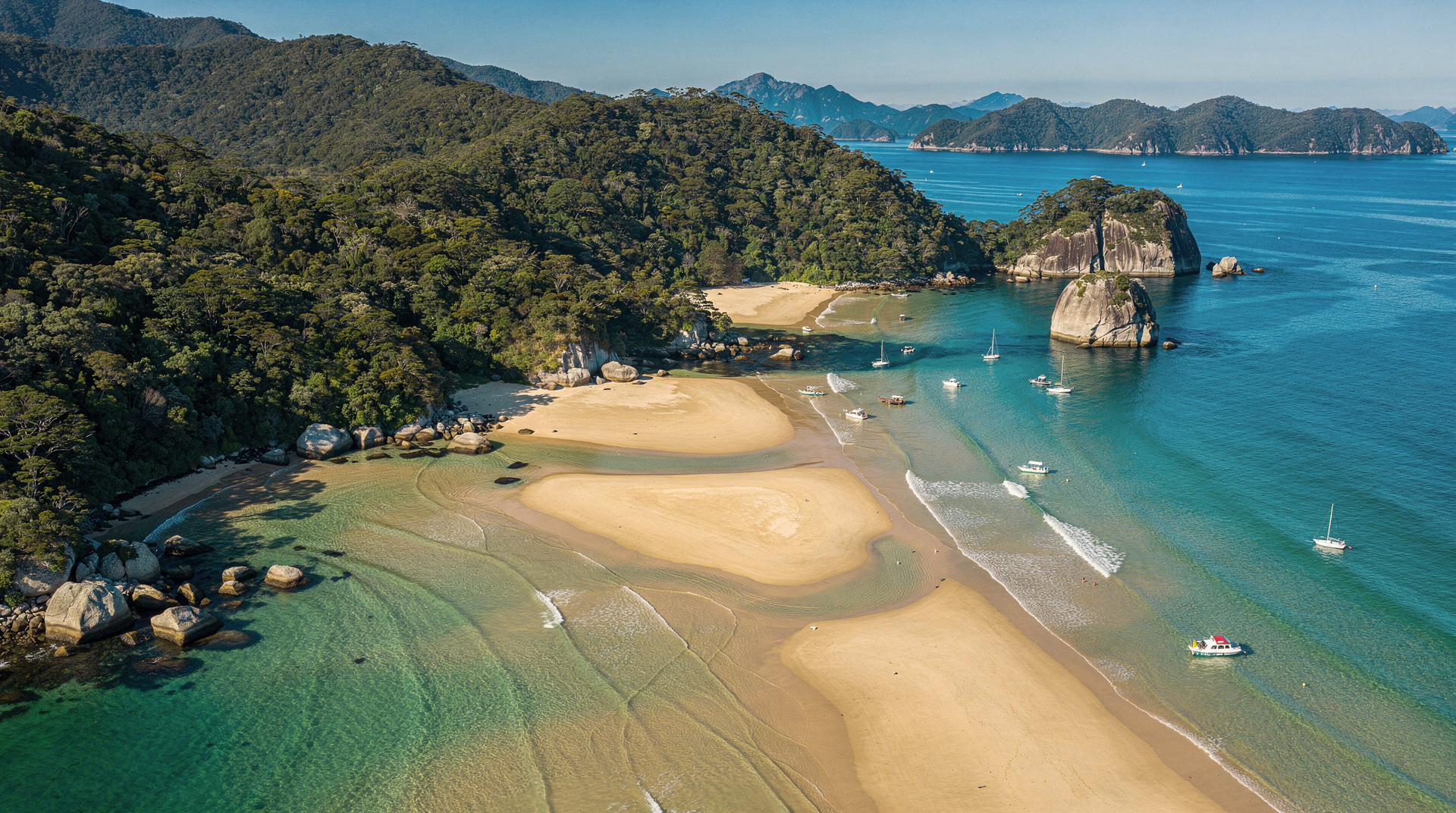
Nelson and Tasman
Honest Nelson-Tasman guide: Abel Tasman National Park, Golden Bay, Farewell Spit, Nelson wine. NZD/USD/EUR prices, kayak vs cruise, what to skip.
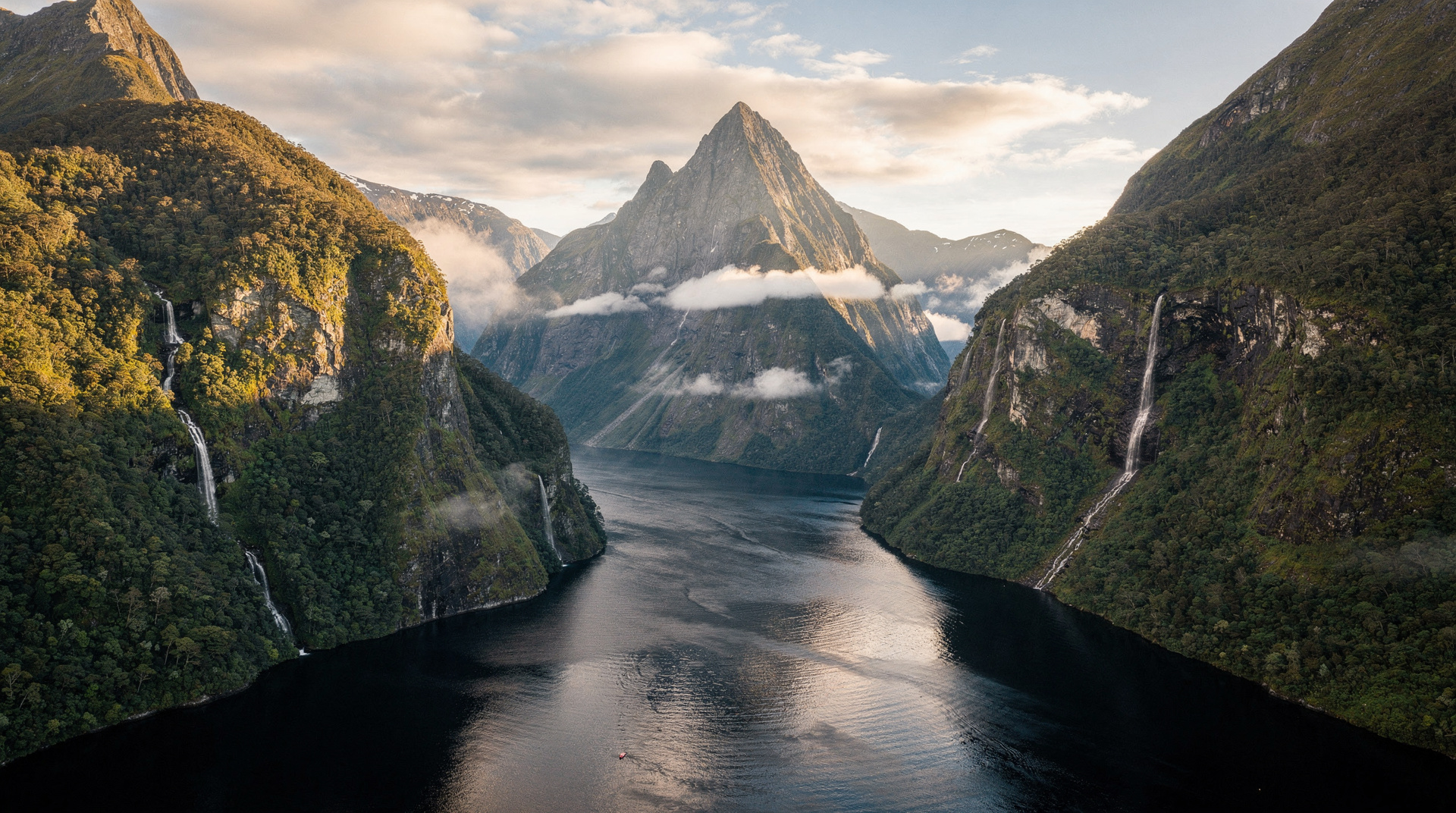
90 Mile Beach — Cape Reinga and Northland's wild coast
90 Mile Beach is 88 km of wild Northland surf coast. Why rental cars can't drive it, tour access, sand dune boarding, and Cape Reinga — prices NZD/USD/EUR.
The Catlins — beaches, wildlife, and waterfalls
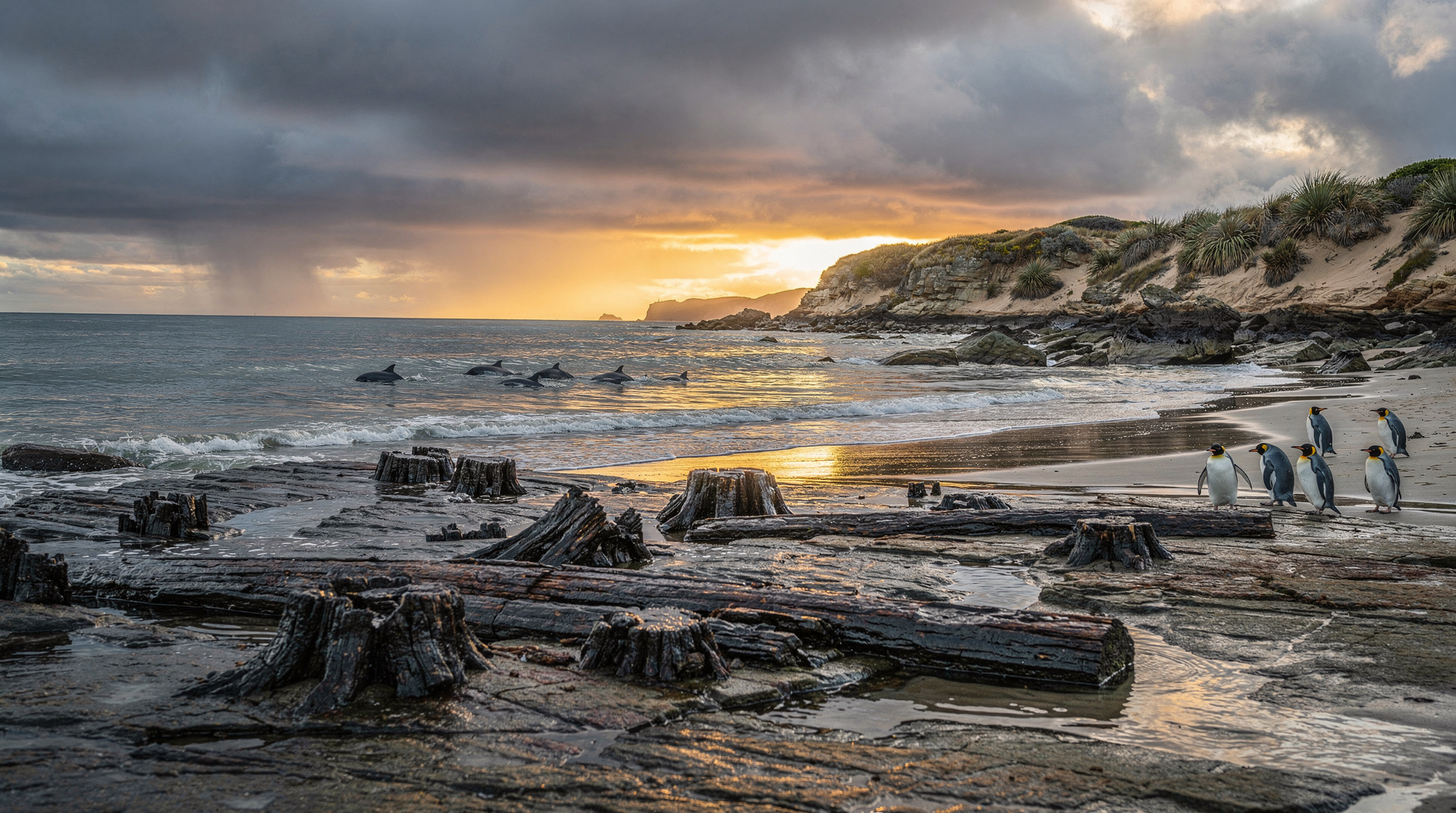
The Catlins is Southland's wild coastal drive — Hector's dolphins at Curio Bay, Cathedral Caves, Nugget Point penguins. Self-drive guide and costs.
Cathedral Cove, Coromandel
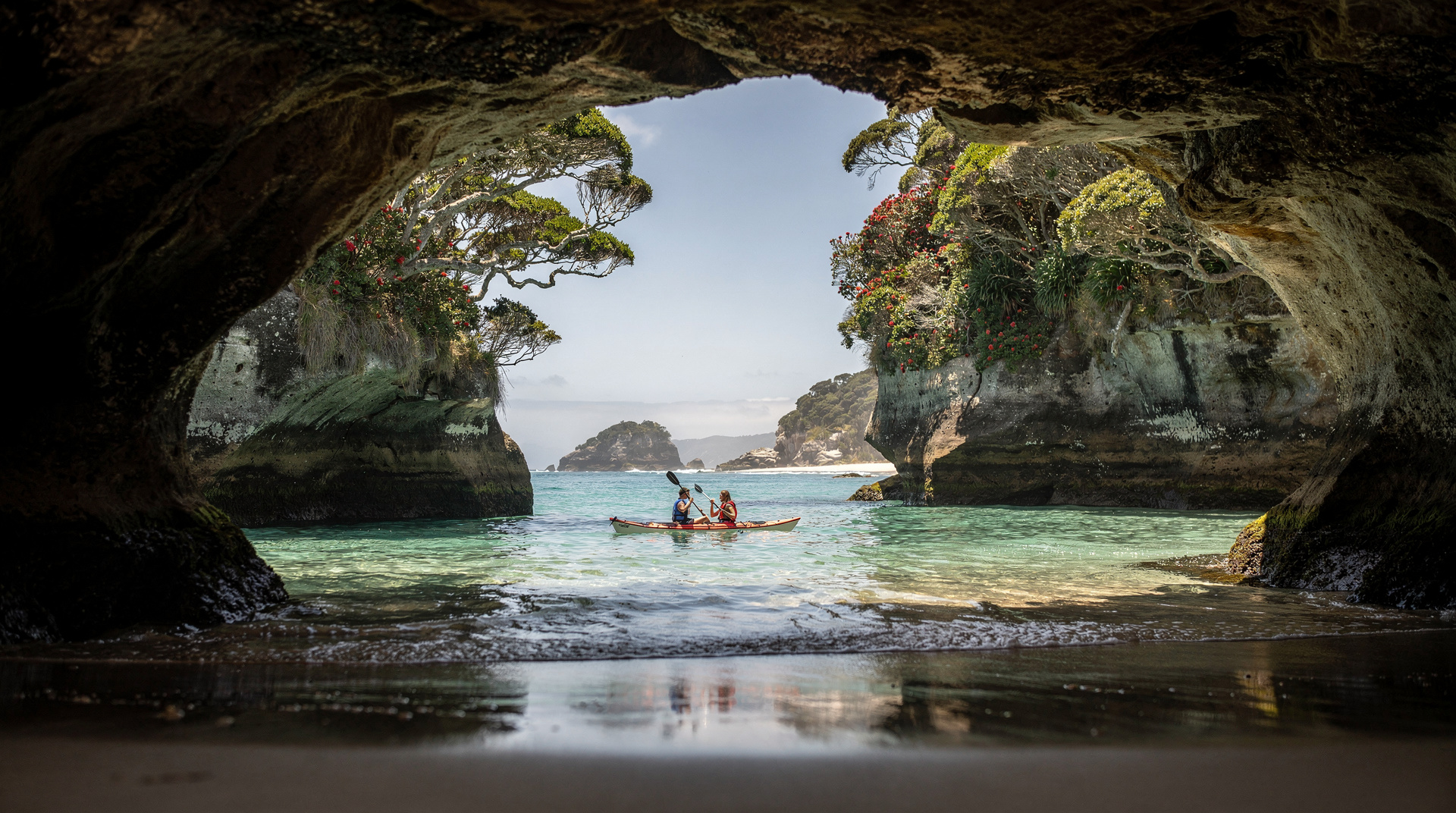
Cathedral Cove is Coromandel's most iconic beach. Track access after Cyclone Gabrielle, kayak tours, combining with Hot Water Beach — costs NZD/USD/EUR.
Last reviewed: