The Catlins — beaches, wildlife, and waterfalls
What is the Catlins in New Zealand?
The Catlins is a remote coastal region in Southland between Balclutha and Invercargill, with spectacular coastal scenery, wildlife (Hector's dolphins, yellow-eyed penguins, sea lions), Cathedral Caves, and Curio Bay. It's a self-drive area — no tour buses. Allow 2 full days.
| Where | Southland coast, between Balclutha and Invercargill (SH92) |
| Cost | Mostly free; Cathedral Caves ~NZD 10, guided day tours ~NZD 115–165 |
| Time needed | 2 full days minimum, 3 for a relaxed pace |
| Getting there | Self-drive from Invercargill or Dunedin; no tour buses on the coast road |
| Best time | Year-round, but check Cathedral Caves tide times and July–August closure |
New Zealand’s least-visited great coastal landscape
The Catlins occupies the southeastern corner of the South Island — the coastal land between Balclutha and Invercargill. It’s a region of podocarp forest, dramatic coastal cliffs, deserted beaches, waterfalls, and unexpectedly rich wildlife. It is also one of the least visited areas of comparable quality in New Zealand.
The reasons for the relative obscurity are practical: no major tourist infrastructure, no SH1 equivalent (the main road through the Catlins is SH92, which is sealed but winding and slow), and a reputation for wild, unpredictable weather. All of these are real. They are also exactly why the Catlins rewards the visitors who make the effort — the absence of tourist infrastructure means the wildlife is genuinely wild, the beaches are genuinely empty, and the experience feels genuinely adventurous rather than curated.
The Catlins is not a “stop for an hour” region — the distances between its highlights are significant and the roads are slow. Allow a minimum of 2 full days; 3 is better.
Curio Bay — Hector’s dolphins and a petrified forest
Curio Bay, 150 km from Invercargill on SH92, is the Catlins’ most famous single location. Two distinct things happen here:
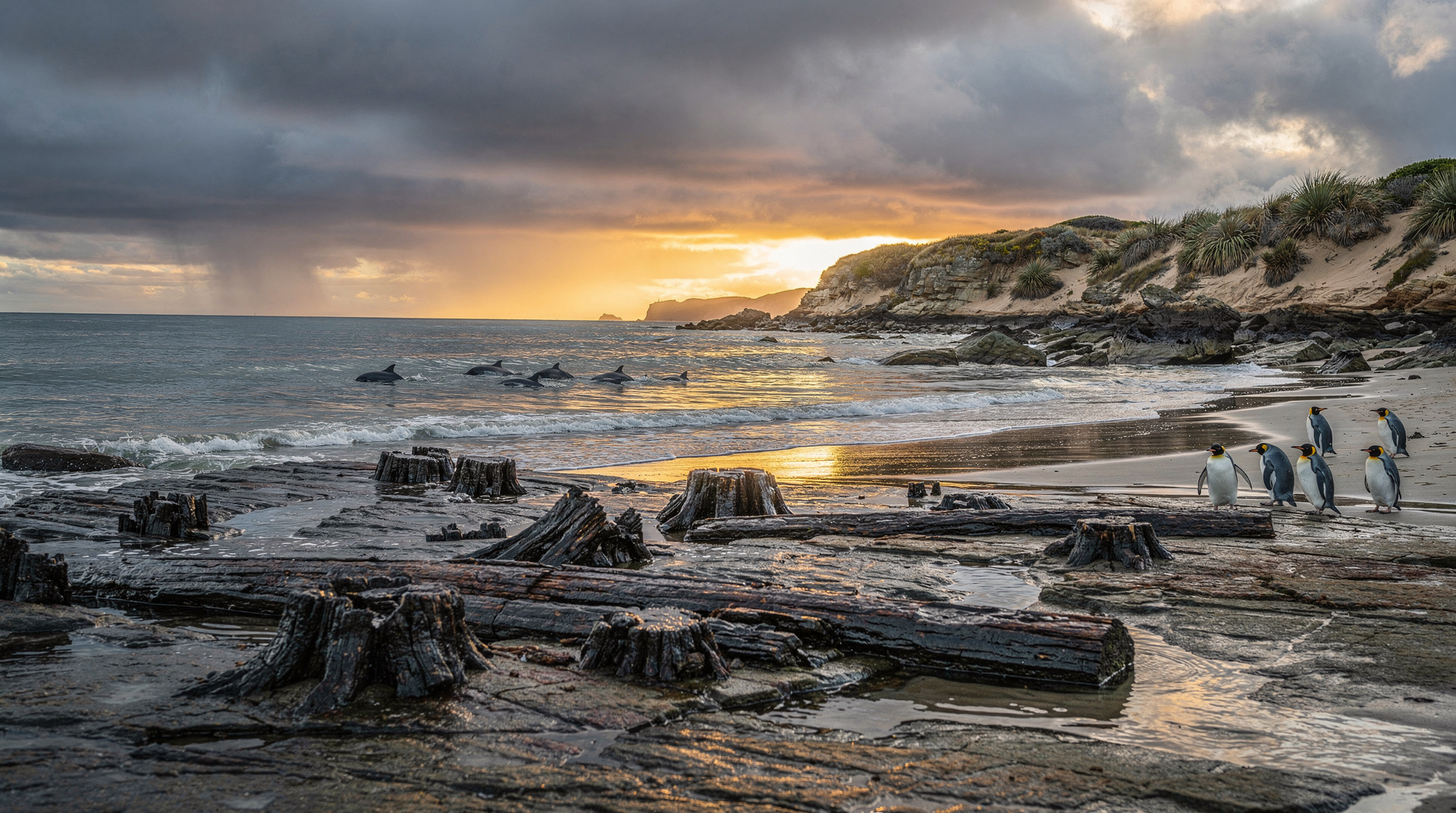
Hector’s dolphins: A resident pod of 10–15 Hector’s dolphins uses the bay year-round for shelter and feeding. These are the same critically endangered species as those in Akaroa. Unlike the Akaroa boat tours, the Curio Bay dolphins can be seen from shore — they enter the shallow bay particularly in the mornings and evenings. Watching from the viewing platform above the bay (5 minutes walk from the car park) is respectful and effective.
Important ethical note: Swimming with Curio Bay’s Hector’s dolphins without a DOC permit is illegal. Swimmers in the bay are regularly reported for approaching the dolphins. Do not enter the water when dolphins are present unless you are in a DOC-permitted operation. Observation from shore or the platform is both ethical and sufficient.
Petrified forest: At low tide, a 180-million-year-old petrified forest is exposed on the wave platform below the headland. The Jurassic-era tree stumps and log remnants are visible in the rock — the most accessible example of petrified forest in New Zealand. Check local tide tables; the forest is only accessible below mid-tide.
Nearby: Porpoise Bay (walking distance from Curio Bay) is a sheltered bay where Hector’s dolphins are sometimes seen from the sand; a simple DOC campsite makes this a beautiful overnight location.
Cathedral Caves
Cathedral Caves are one of New Zealand’s most dramatic sea caves — sea-carved limestone arches 30 metres high, accessible only at low tide across a beach walk (20 minutes from the car park). The caves extend about 200 metres into the cliff face; the interior is lit by filtered ocean light.
Important timing: Cathedral Caves are accessible only within 1–1.5 hours either side of low tide. The entrance becomes flooded at higher tide levels. Check tide times on the visitor board at the car park before heading down.
Access fee: NZD 10 / USD 6 / EUR 5.50 per adult (payable at the honesty box at the car park entrance).
The walk is 20 minutes each way through coastal forest and beach — allow 1.5 hours total including time in the caves. Wear shoes that can get wet (the beach section involves paddling).
Seasonal access: Cathedral Caves is closed July–August (sea conditions) and sometimes restricted after significant rainfall (cliff stability). Check the Catlins website or DOC before making a special trip.
Nugget Point (Tokatā)
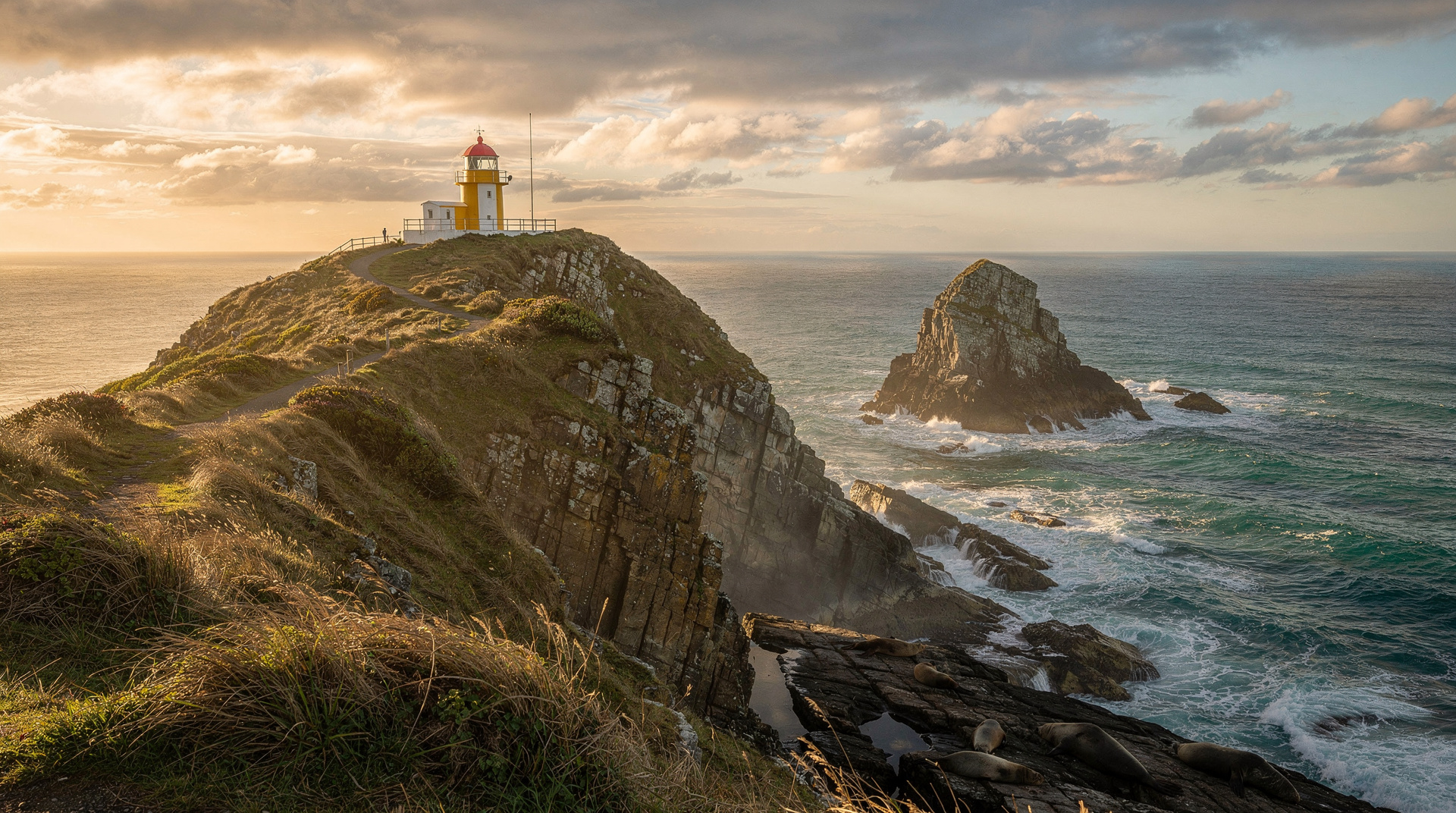
Nugget Point, at the northern end of the Catlins on SH92, is the most photogenic coastal formation in Southland: a lighthouse (1869) on a narrow headland above a series of rocky outcrops (“nuggets”) that rise from the sea. The lighthouse is a short walk from the car park; the viewing platform gives access to the lighthouse and the nugget panorama.
Wildlife at Nugget Point:
- New Zealand fur seals (kekeno): year-round on the rocks below the headland
- Elephant seals: occasional visitors, most commonly winter (June–August)
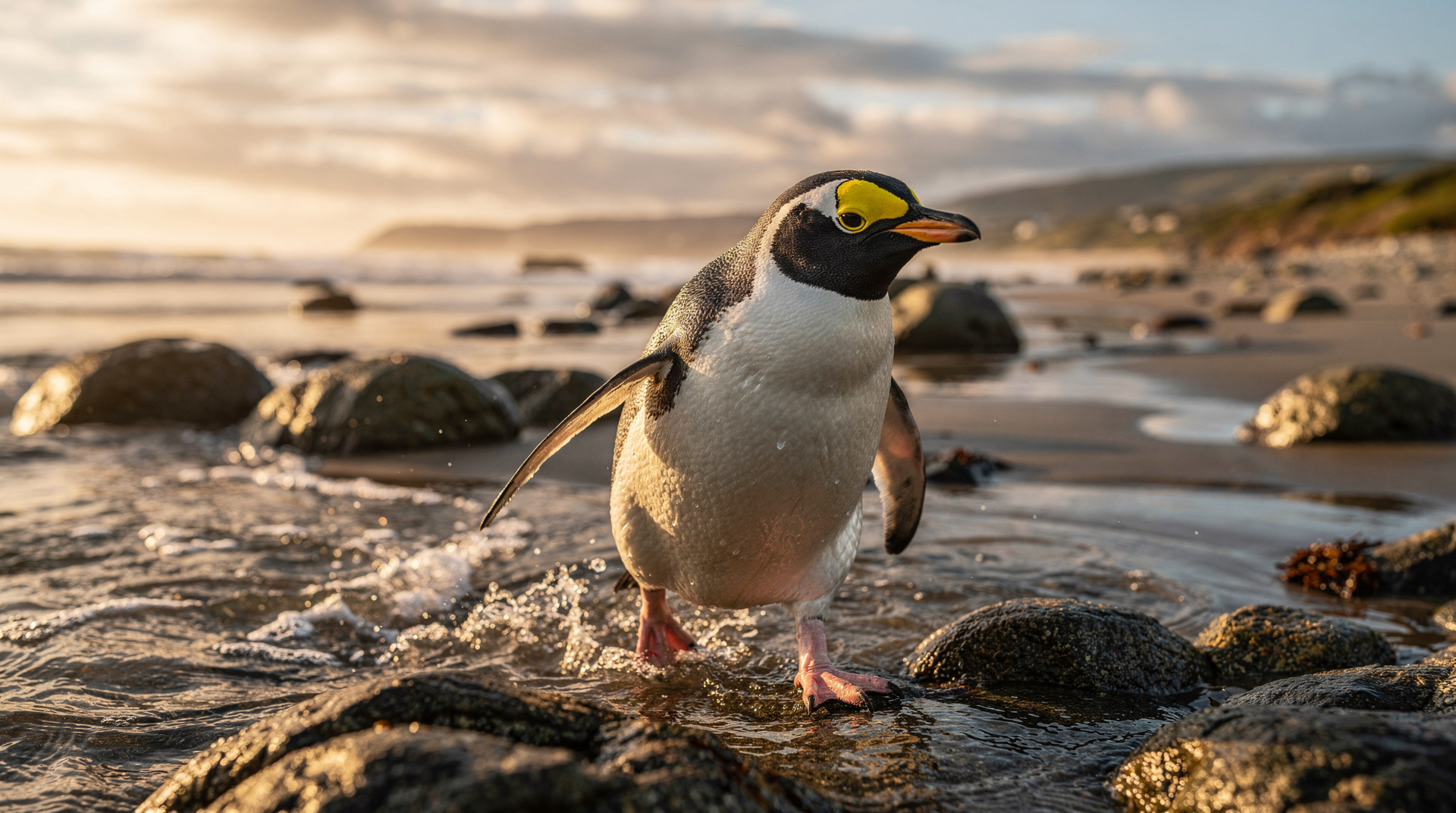
- Yellow-eyed penguins (hoiho): at Roaring Bay, 5 minutes drive from Nugget Point, a DOC hide allows dusk viewing of penguins returning to the beach
- Sperm whales: visible offshore on calm days (rare but documented)
The Roaring Bay penguin hide is free, self-guided, and one of the better penguin viewing spots outside Otago Peninsula — smaller numbers than the peninsula but no tour booking required.
Papatowai and the interior forest
Papatowai is a tiny village roughly in the middle of the Catlins coastal road — a good base for exploring the interior waterfalls (Matai Falls, Purakaunui Falls) that are 20–30 minutes drive into the bush. Purakaunui Falls is particularly photogenic — a tiered waterfall over rock platforms in native bush, 30 minutes walk from the car park.
The Catlins’ interior forests are dense podocarp-broadleaf — rimu, kahikatea, totara, and miro form the canopy, with ferns and moss below. Bellbirds and tui are loud throughout; fantails follow walkers along the tracks.
Guided Catlins tours
The Invercargill Catlins coast guided tour covers the main highlights in a day — Nugget Point, Cathedral Caves (tide-dependent), Curio Bay, and Owaka. This is the efficient option if you’re based in Invercargill or arriving from Queenstown with limited time.
The Invercargill to Dunedin one-way Catlins tour is the most logical format: one-way transport from Invercargill to Dunedin (or vice versa) via the Catlins, stopping at all key sites. This eliminates the backtracking that self-drive requires.
Price range: NZD 115–165 / USD 69–99 / EUR 63–91 for guided full day.
Accommodation in the Catlins
Options are limited and should be booked in advance (minimal walk-in availability):
Curio Bay Accommodation: Beachfront units; the best location for early morning dolphin watching and the petrified forest. Book 4–6 weeks ahead in summer.
Papatowai lodges: Several self-catering lodges in the village; good base for the interior falls and the middle section.
DOC campsites: Porpoise Bay and several other DOC campsites throughout the Catlins — basic facilities, spectacular locations, and very cheap (NZD 8–15 / USD 5–9 / EUR 4–8 per person).
Self-drive timing and practical notes
The Catlins coastal road (SH92) runs from Balclutha in the east to Invercargill in the west — approximately 170 km of driving between these end points. Allow 4–5 hours pure driving (stops add considerably). A 2-day circuit from Invercargill (out one day, back the next) or a one-way between Dunedin and Invercargill are the standard approaches.
Weather: The Catlins is genuinely wild weather territory — strong westerlies, rain at any time of year, and occasional horizontal hail. Pack all weather layers. The rain doesn’t typically stop the experience (Cathedral Caves is fine in rain; wildlife is often more active in overcast conditions) but it adds physical challenge.
Fuel: Fill up in Balclutha, Owaka, and Invercargill. The Catlins has no reliable fuel between these points.
For a fuller stop-by-stop route plan than this overview covers, the Catlins self-drive guide breaks the coastal road into a day-by-day itinerary with realistic driving times between each highlight — worth reading before you set off if this is your first time doing the route unguided.
Combining the Catlins with Dunedin and Invercargill
Most visitors approach the Catlins from one end or the other rather than as a standalone destination. If you’re coming from Dunedin, the day trips from Dunedin guide covers how far into the Catlins is realistic without an overnight, and Dunedin’s own Scottish heritage sites make a natural pairing for a longer Otago–Southland loop. Coming from Invercargill, the city makes the more practical overnight base for an early start toward Curio Bay, since it sits closer to the western end of the coastal road than Dunedin does.
Costs summary (NZD / USD / EUR)
| Activity | NZD | USD | EUR |
|---|---|---|---|
| Cathedral Caves entry | 10 | 6 | 5.50 |
| Guided Catlins day tour from Invercargill | 115–165 | 69–99 | 63–91 |
| Invercargill–Dunedin one-way Catlins tour | 130–185 | 78–111 | 72–102 |
| DOC campsite | 8–15 | 5–9 | 4–8 |
| Self-drive (fuel only, approx) | 30–50 | 18–30 | 16–28 |
Exchange rate: 1 NZD ≈ 0.60 USD ≈ 0.55 EUR.
Honest verdict
Frequently asked questions
How much time does the Catlins require?
Minimum 2 full days; 3 is better. The key highlights (Nugget Point, Cathedral Caves, Curio Bay, Purakaunui Falls) can be covered in a long 2-day circuit from Invercargill. Three days allows a more relaxed pace with morning dolphin watching at Curio Bay and dusk penguin viewing at Roaring Bay on separate days.
Can the Catlins be done as a day trip?
Only partially. A guided one-day Catlins tour from Invercargill covers the coastal highlights but is tightly timed around Cathedral Caves access and doesn’t allow for early morning or dusk wildlife viewing (the best times). For a first visit, the guided one-way between Invercargill and Dunedin is the most efficient format.
Are there any beaches safe for swimming in the Catlins?
Some of the more sheltered bays (Porpoise Bay, portions of Curio Bay in calm weather) are swimmable in summer. The open coast beaches are for walking and wildlife watching rather than swimming — strong currents and cold water (14–17°C in summer) make them unsuitable for casual swimming. No lifeguard patrols exist in the Catlins.
Related reading
Related guides
The Catlins
The Catlins: yellow-eyed penguins, Hooker's sea lions, the Curio Bay petrified Jurassic forest, and Nugget Point lighthouse. Honest guide NZD/USD/EUR.
Southland
Honest Southland guide: Invercargill, The Catlins wildlife coast, Bluff oysters, gateway to Stewart Island/Rakiura. NZD/USD/EUR costs and practical logistics.
Yellow-eyed penguins on the Otago Peninsula
Hoiho (yellow-eyed penguin) are the world's rarest penguin. Where to see them wild on Otago Peninsula, ethical viewing hides, prices, and best timing.
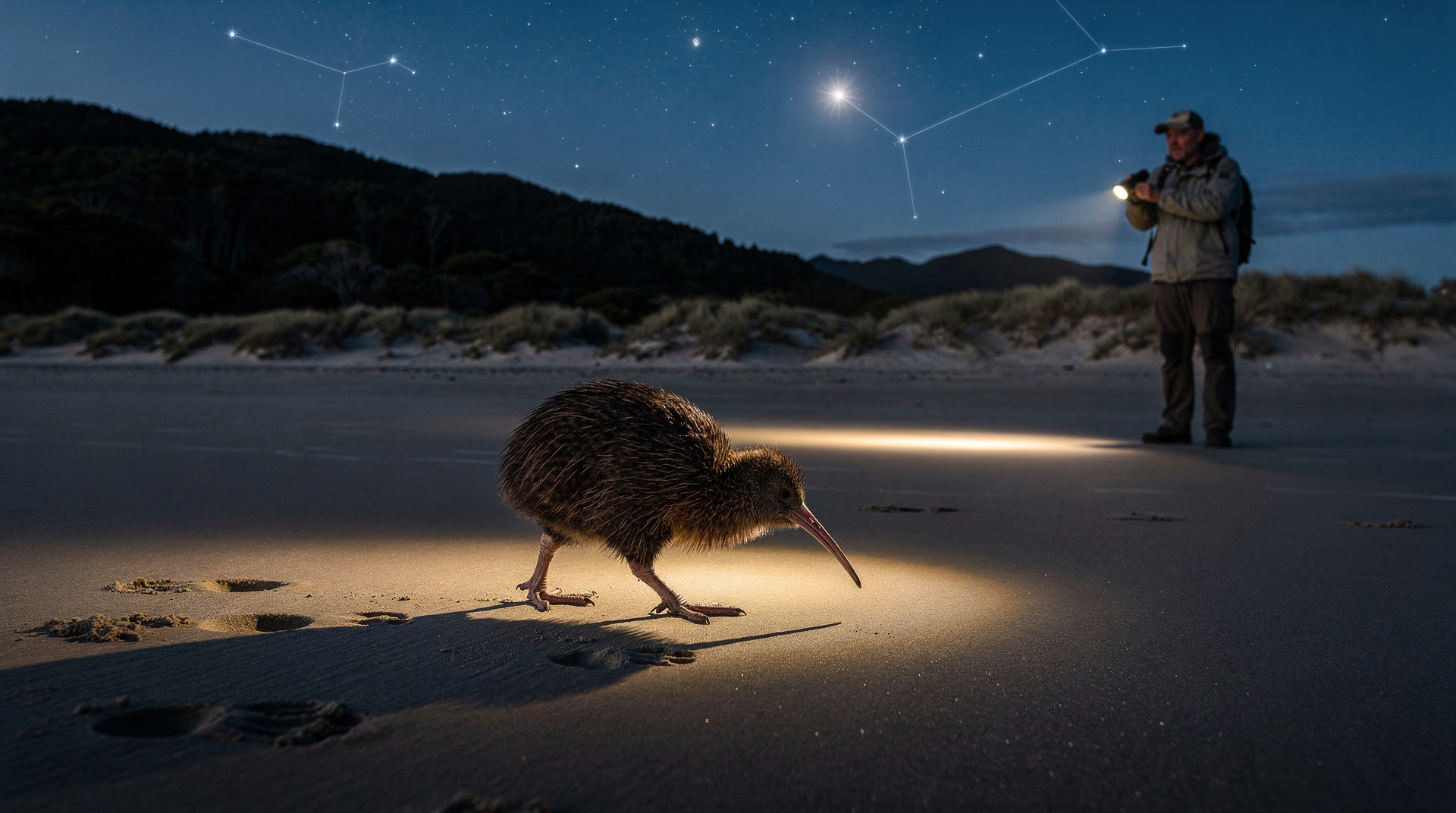
Kiwi spotting on Stewart Island/Rakiura
Stewart Island/Rakiura has New Zealand's highest kiwi density. Guided night tours, costs (NZD/USD/EUR), ferry access, and what to realistically expect.
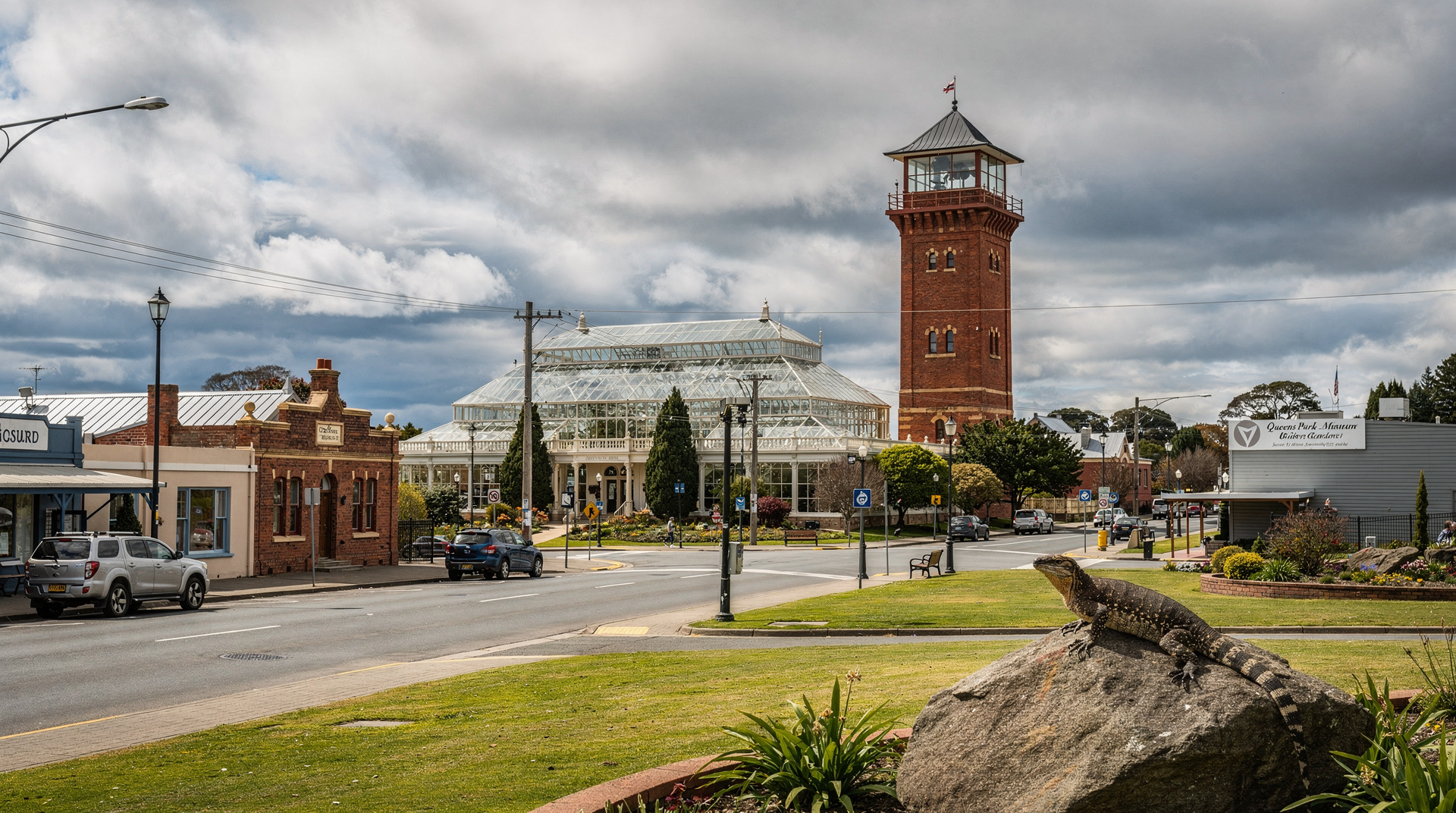
Invercargill
Invercargill: New Zealand's southernmost city, gateway to Stewart Island and the Catlins. Honest half-day guide with real costs NZD/USD/EUR.
Last reviewed: